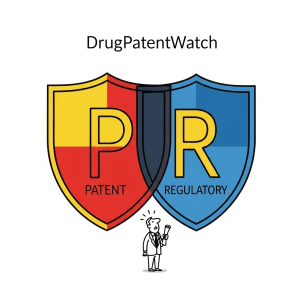
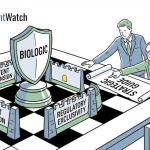
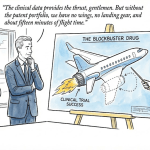
In the pharmaceutical industry, where the cost of bringing a single new drug to market can exceed $2.2 billion 1, the mechanisms that protect a company’s investment are paramount. This report provides an exhaustive analysis of the two primary forms of market protection in the United States: pharmaceutical patents and regulatory exclusivity. While often conflated, these two “shields” are fundamentally distinct, originating from different legal authorities, triggered by different events, and serving complementary strategic purposes. Patents, granted by the U.S. Patent and Trademark Office (USPTO), are a form of intellectual property right that allows an inventor to exclude others from making, using, or selling an invention for a limited time. Regulatory exclusivity, granted by the U.S. Food and Drug Administration (FDA), is a statutory provision that prevents the approval of competing drug applications for a set period.
This analysis dissects the legal foundations and strategic applications of both frameworks. It details the anatomy of a pharmaceutical patent portfolio—from the foundational “composition of matter” patent to the lifecycle-extending formulation and method-of-use patents. It also provides a comprehensive taxonomy of FDA exclusivities, revealing them not as blanket protections but as targeted policy instruments designed to incentivize specific public health goals, such as the development of drugs for rare diseases (Orphan Drug Exclusivity) or the study of medicines in children (Pediatric Exclusivity).
The report critically examines the strategic interplay between these two systems, highlighting how their concurrent and often overlapping nature creates a formidable barrier to generic and biosimilar competition. This dynamic is central to modern pharmaceutical lifecycle management, where innovator companies employ sophisticated strategies to maximize their period of market monopoly. Controversial tactics such as “evergreening”—obtaining secondary patents on minor modifications of existing drugs—and the creation of “patent thickets”—dense webs of overlapping patents designed to deter litigation—are analyzed through detailed case studies of blockbuster drugs like AbbVie’s Humira and Novartis’s Gleevec. These cases illustrate both the immense financial success of such strategies and the growing legal and regulatory challenges they face globally.
Finally, the report looks to the future, assessing the transformative impact of biologics, the disruptive potential of artificial intelligence on the very definition of inventorship, and the current wave of legislative and regulatory reforms aimed at rebalancing the scales between innovation and affordable access. The analysis concludes with a set of strategic recommendations for innovator and generic/biosimilar firms, as well as considerations for policymakers, navigating this complex and rapidly evolving landscape. In an era of unprecedented scientific advancement and intense public scrutiny over drug pricing, a nuanced understanding of these dual shields of innovation is essential for all industry stakeholders.
Section 1: The Patent Framework: The Right to Exclude
The patent system serves as the foundational pillar of intellectual property (IP) protection in the pharmaceutical industry. It is a system designed to foster innovation by granting inventors a temporary monopoly on their creations, thereby providing the economic incentive necessary to undertake the costly and high-risk process of drug discovery and development. This section establishes the fundamental principles of the patent system as a property right, detailing the legal requirements for obtaining a patent and the strategic composition of a robust pharmaceutical patent portfolio.
1.1 The Foundation of Pharmaceutical Patents
The legal basis for the U.S. patent system is rooted in the U.S. Constitution and codified in the Patent Act (Title 35 of the U.S. Code).2 Patents are a property right granted by a national authority, the U.S. Patent and Trademark Office (USPTO), to an inventor.2 A common misconception is that a patent grants the inventor the right to make, use, or sell their invention. In reality, what is granted is a “negative right”—the right to
exclude others from making, using, offering for sale, selling, or importing the patented invention into the United States for a limited time.3 This distinction is critical, as it establishes the patent as the legal instrument for creating a temporary monopoly, which is the primary mechanism for allowing pharmaceutical companies to recoup their substantial investments in research and development (R&D).6
The standard term for a new patent is 20 years from the date on which the first non-provisional application for the patent was filed.2 This 20-year clock begins ticking long before a drug is approved for market, a crucial factor that significantly shortens the effective commercial life of the patent. In exchange for this temporary right to exclude, the inventor must publicly disclose the invention in sufficient detail to enable others skilled in the field to understand and replicate it, a trade-off that contributes to the overall advancement of science and technology.4
For an invention to be granted a patent, it must satisfy three core statutory requirements, which form the basis of examination by the USPTO and are often the central issues in patent litigation 5:
Novelty: The invention must be new. It cannot have been previously disclosed to the public in any form, such as in a prior patent, scientific publication, or public use, before the effective filing date of the patent application.5
Non-Obviousness: This is often the most contentious criterion. The invention cannot be an obvious development or modification of existing technology (known as “prior art”) to a person having ordinary skill in the relevant technical field. This requirement prevents the patenting of trivial advancements and ensures that only genuine inventive leaps are rewarded.14
Utility: The invention must be useful; that is, it must have a practical application or purpose. This is a relatively low bar in the pharmaceutical context, as a new chemical compound with a demonstrated therapeutic effect will generally meet this standard.5
The legal standards for patentability, particularly the subjective nature of the non-obviousness requirement, create a complex and often ambiguous landscape. This ambiguity is not a flaw in the system but a central feature, representing the legal battleground where the line between legitimate incremental innovation and strategic patenting to extend a monopoly is drawn. For a new formulation of an existing drug, for example, its novelty and utility may be clear, but whether its development was a “non-obvious” inventive step is the multi-billion-dollar question. The interpretation of this single legal standard often determines the competitive fate of a blockbuster drug, pitting industry arguments of protecting valuable, patient-benefiting improvements 17 against criticisms of patenting trivial modifications designed solely to delay generic competition.18
1.2 Anatomy of a Drug Patent Portfolio
A successful pharmaceutical product is rarely protected by a single patent. Instead, it is shielded by a meticulously constructed portfolio—a “fortress” of IP—comprising various types of patents filed over the drug’s lifecycle.10 This layered approach is a deliberate strategy designed to create a comprehensive and durable barrier against competition. The various patent types are not merely descriptive categories; they function as distinct strategic instruments. An innovator company typically begins by securing the foundational patent on the core asset and then, over time, builds defensive fortifications around it through subsequent filings. This continuous process of strategic IP management is a core competency of successful pharmaceutical firms. The key components of this patent fortress include:
Composition of Matter Patents: These are universally regarded as the “gold standard” of pharmaceutical IP and the most valuable type of patent a company can obtain.12 A composition of matter patent protects the active pharmaceutical ingredient (API) itself—the novel chemical entity or molecule that produces the therapeutic effect.14 This type of patent provides the broadest and most powerful protection because it covers the molecule regardless of how it is made, formulated, or used. Any competitor product that contains the patented molecule is considered an infringement, making it a formidable barrier to entry.20 This category can also include more specific patents on different salt forms or crystalline structures (polymorphs) of the API, which may offer advantages in stability, solubility, or manufacturing but provide narrower protection than the patent on the base molecule.23
Method of Use & Treatment Patents: These patents do not protect the drug itself but rather a specific way of using it to achieve a therapeutic result.6 For example, a company might discover that a drug originally approved to treat heart disease is also effective against cancer. A method of use patent can be obtained to protect this new application, even if the composition of matter patent on the drug has expired or is held by another entity.11 These patents are a cornerstone of drug repurposing and lifecycle management, allowing companies to find new value and secure new periods of exclusivity for existing assets by discovering and patenting novel therapeutic uses.11
Formulation & Process Patents: These patents cover innovations beyond the core active ingredient.
Formulation Patents protect the specific combination of the API with other inactive ingredients (excipients), the final dosage form (e.g., a tablet, capsule, injectable solution), or a novel drug delivery system (e.g., an extended-release coating that allows for once-daily dosing, a transdermal patch).11 These innovations can improve patient compliance, enhance drug efficacy, or reduce side effects, and the patents protecting them are strategically vital for extending a drug’s commercial life.9
Process Patents protect a novel and non-obvious method of manufacturing a drug.11 While sometimes considered less powerful than a composition of matter patent, a process patent can be a significant barrier to entry, especially for complex biologics. If the patented process is the only commercially viable or most efficient way to produce the drug, it can effectively block competitors who cannot “invent around” the manufacturing method.21 In the U.S., a process patent also prevents the importation of a product made abroad using the patented process, adding another layer of global protection.21
Section 2: The Regulatory Framework: The Right to Market
Distinct from the patent system, which grants a property right to an inventor, the U.S. Food and Drug Administration (FDA) administers a parallel system of market protection known as regulatory exclusivity. This framework is not rooted in intellectual property law but is a direct creation of statute, designed as a policy instrument to achieve specific public health objectives. It functions not by granting a right to exclude competitors, but by creating a regulatory barrier that prohibits the FDA itself from approving certain competitor drug applications for a defined period.
2.1 The Genesis of FDA Exclusivity
The modern framework for FDA exclusivity was established by the landmark Drug Price Competition and Patent Term Restoration Act of 1984, more commonly known as the Hatch-Waxman Act.3 This legislation represented a grand compromise aimed at resolving a fundamental tension in the pharmaceutical market. On one side, innovator companies needed sufficient incentives to justify the enormous cost and risk of developing new drugs. On the other side, there was a growing public demand for access to more affordable medicines once those incentives had been realized.
The Hatch-Waxman Act addressed this by creating a carefully calibrated balance. It incentivized innovation by, among other things, establishing several types of market exclusivity for new drugs. Simultaneously, it created the modern abbreviated pathway for generic drug approval, allowing competitors to enter the market more quickly and at a lower cost once the innovator’s protections expired.16 The explicit purpose of this dual system was to promote a balance between new drug innovation and the societal benefit of generic drug competition.2 Unlike a patent, which is a property right, exclusivity is a statutory provision that attaches automatically upon the approval of a drug if it meets the specific criteria laid out in the Federal Food, Drug, and Cosmetic Act (FD&C Act).2
This reveals a core philosophical difference between the two systems. The patent system is a broad, invention-agnostic framework that rewards novelty and non-obviousness in any field. In contrast, each type of FDA exclusivity is a highly targeted policy lever, a form of industrial policy within healthcare designed to steer corporate R&D toward specific, socially desirable outcomes that the free market might otherwise neglect. The FDA is not rewarding invention in the abstract, but rather the act of fulfilling a specific public health mission, such as developing drugs for rare diseases or ensuring medicines are tested for children.
2.2 A Taxonomy of FDA-Granted Exclusivities
The FDA grants several distinct types of exclusivity, each with its own duration, eligibility criteria, and strategic implications. Understanding these different forms of protection is critical for both innovator and generic drug manufacturers.
New Chemical Entity (NCE) Exclusivity (5 Years): This is often considered the “holy grail” of small-molecule exclusivity.28 It is granted to a drug that contains a new chemical entity, defined as an active moiety that has never before been approved by the FDA in any other application.2 NCE exclusivity provides a five-year period of market protection from the date of the drug’s approval. During this time, the FDA is barred from even accepting for review an Abbreviated New Drug Application (ANDA) for a generic version or a 505(b)(2) application (a type of NDA that relies on data not developed by the applicant).3 A key exception allows a generic applicant to submit an application after four years if it contains a “Paragraph IV” certification, which is a legal challenge to one of the innovator’s listed patents.3 This exclusivity is particularly powerful because it blocks all competitors seeking to reference the innovator’s data for the same active moiety, regardless of the proposed indication or formulation.28 Recognizing the therapeutic value of combination therapies, the FDA has updated its interpretation to allow a drug to be eligible for NCE exclusivity if it contains at least one new active moiety, even if it is combined with a previously approved one.33
Orphan Drug Exclusivity (ODE) (7 Years): As a primary incentive of the Orphan Drug Act of 1983, ODE is designed to encourage the development of drugs for rare diseases and conditions.37 A rare disease is defined in the U.S. as one affecting fewer than 200,000 people.3 Upon approval, a drug that has received an orphan designation for a specific indication is granted seven years of market exclusivity. During this period, the FDA cannot approve another application for the same drug for the same orphan-protected use.3 This protection is not absolute; a competitor can overcome the exclusivity block if it can demonstrate that its drug is “clinically superior” to the approved orphan drug, for example, by showing greater efficacy or a significant safety advantage.32 The scope of ODE has been the subject of significant litigation, with courts and the FDA grappling with how broadly to interpret the “same disease or condition,” making it a dynamic and contested area of regulatory law.41
Pediatric Exclusivity (PED) (6-Month Add-On): Pediatric exclusivity is not a standalone protection but a powerful six-month extension that can be added to other existing protections. It is granted as an incentive for a sponsor to conduct pediatric studies of its drug in response to a formal “Written Request” (WR) from the FDA.44 The strategic value of PED lies in its unique mechanism: the six-month extension applies to all existing patents and regulatory exclusivities for all of the sponsor’s drug products that contain the same active moiety.2 For a blockbuster drug franchise with multiple patents and formulations, a single set of pediatric studies can effectively add six months of monopoly revenue across the entire product line, potentially translating into billions of dollars. This makes the decision to conduct pediatric trials a crucial financial calculation, as this regulatory incentive directly extends a property right—a rare and powerful interaction.
New Clinical Investigation Exclusivity (3 Years): This three-year exclusivity is granted for the approval of an application or a supplement to an existing application if it contains reports of new clinical investigations (other than bioavailability studies) that were conducted or sponsored by the applicant and were essential for the approval.2 This exclusivity commonly applies to changes made to a previously approved drug, such as the approval of a new indication (a new disease to be treated), a new dosage form (e.g., switching from a tablet to an extended-release capsule), or a switch from prescription to over-the-counter (OTC) status.26 It prevents the FDA from approving a generic application that relies on the new clinical data for three years.
Other Key Exclusivities:
GAIN Exclusivity (5-Year Add-On): The Generating Antibiotic Incentives Now (GAIN) Act provides an additional five-year period of exclusivity that is added to any qualifying NCE, ODE, or 3-year exclusivity for a drug designated as a Qualified Infectious Disease Product (QIDP). This is a powerful incentive aimed at stimulating R&D in the critical area of new antibiotics.2
180-Day Generic Drug Exclusivity: This is a crucial incentive for generic manufacturers. The first company to submit a substantially complete ANDA that includes a Paragraph IV certification—a legal challenge to an innovator’s patent—is rewarded with a 180-day period of marketing exclusivity for its generic drug. During this six-month period, the FDA cannot approve any other generic versions of the same drug, allowing the first challenger to capture a significant portion of the market.3
The definitions and criteria for these exclusivities are not immutable. They are subject to reinterpretation by the FDA and legal challenges in court, creating a dynamic environment of regulatory risk and opportunity. The FDA’s 2014 guidance changing its interpretation of NCE eligibility for fixed-combination drugs is a clear example of the agency proactively modifying its rules to incentivize the development of products it deems valuable.33 This malleability means that securing exclusivity is not the final step; companies must continually monitor the regulatory landscape and be prepared to defend the scope of their protections.
Section 3: A Comparative Analysis: Patents vs. Exclusivity
While both pharmaceutical patents and FDA regulatory exclusivity serve the broad goal of fostering innovation by providing periods of market protection, they are fundamentally different constructs. They originate from separate legal authorities, are triggered by different events in a drug’s lifecycle, and offer distinct scopes of protection. A thorough understanding of these differences is essential for grasping the complex, multi-layered shield that protects an innovator drug from competition.
3.1 Governing Bodies and Legal Statutes
The two systems are administered by entirely separate branches of the U.S. government under different legal frameworks.
Patents are granted by the U.S. Patent and Trademark Office (USPTO), an agency within the Department of Commerce.6 They are governed by the Patent Act (Title 35, U.S. Code), and their legal foundation is a property right derived from the U.S. Constitution’s mandate to “promote the Progress of Science and useful Arts”.2
Exclusivity is granted by the U.S. Food and Drug Administration (FDA), an agency within the Department of Health and Human Services.16 It is governed by the Federal Food, Drug, and Cosmetic Act (FD&C Act) and is not a property right but a regulatory provision designed to implement public health policy.3
This distinction is not merely administrative; it reflects their different purposes. Patents are a broad commercial tool to protect invention, while exclusivity is a targeted healthcare policy tool to incentivize specific types of drug development.50
3.2 Triggers and Timing
The most critical operational difference between patents and exclusivity lies in when their protection begins and ends.
Patent protection begins when a patent application is filed with the USPTO. The 20-year patent term starts from this filing date, meaning the clock is running throughout the entire, often decade-long, process of preclinical research, clinical trials, and FDA review.2 This leads to the crucial concept of “effective patent life”: the actual period of market monopoly a drug enjoys post-approval, which is consistently and significantly shorter than the statutory 20 years, typically averaging 7 to 12 years.12
FDA exclusivity, in stark contrast, is triggered only upon drug approval. It provides a guaranteed period of market protection that begins the day the drug is allowed to be sold, regardless of how much patent time has already elapsed.2
This timing gap is the central economic challenge for the pharmaceutical industry. A company may spend over a decade and billions of dollars developing a drug, all while its most valuable patent protection is eroding. FDA exclusivities, particularly the five-year NCE exclusivity, act as a crucial “safety net,” ensuring that an innovator receives at least a minimum period of post-approval protection to begin recouping its investment, even if its primary patent is nearing expiration by the time of launch.
3.3 The Interplay of Protection
Patents and exclusivities are not mutually exclusive; they often run concurrently and create overlapping periods of protection for a single drug product.2 A drug may be protected by a robust patent portfolio and one or more types of exclusivity, or it may have only one form of protection, or neither.2 The ultimate barrier to generic entry is determined by whichever protection—patent or exclusivity—is the last to expire.
This creates a synergistic and non-redundant system of protection. The two frameworks act as complementary shields protecting different aspects of a drug’s market position. A patent protects the invention from being copied, while exclusivity protects the innovator’s regulatory data by preventing the FDA from approving a competitor who relies on that data. A generic competitor must therefore navigate and overcome both systems to launch its product. This requires a comprehensive “freedom to operate” analysis that maps the entire landscape of an innovator’s patents and regulatory exclusivities to identify a viable path to market. The innovator’s strategic goal is to make this path as long, complex, and legally fraught as possible, thereby maximizing its period of monopoly returns.6 The total period of market protection is therefore not a single date but the result of a complex, multi-variable equation involving patent expiration dates, potential patent term extensions, and the duration of any applicable FDA exclusivities.
The following table provides a direct comparison of the key attributes of these two distinct but interacting systems of protection.
Feature
Pharmaceutical Patents
FDA Regulatory Exclusivity
Governing Body
U.S. Patent and Trademark Office (USPTO) 6
U.S. Food and Drug Administration (FDA) 16
Legal Basis
U.S. Constitution & Patent Act (35 U.S.C.) 2
Federal Food, Drug, and Cosmetic Act (FD&C Act) 3
Primary Purpose
To grant an inventor a property right to exclude others from practicing an invention 4
To incentivize specific drug development goals and balance innovation with generic access 2
Trigger for Protection
Filing of a patent application 2
FDA approval of a drug product meeting specific statutory criteria 2
Standard Duration
20 years from the earliest non-provisional filing date 2
Varies by type: 5 years (NCE), 7 years (ODE), 3 years (New Clinical Investigation), 6 months (PED add-on) 2
Scope of Protection
Protects the claimed invention (e.g., the molecule, its use, its formulation) from being made, used, or sold by others 3
Prohibits the FDA from approving certain competitor applications (e.g., ANDAs, 505(b)(2)s) for a set period 2
When It Can Be Lost
Expiration of term, failure to pay maintenance fees, or invalidation in court/PTAB 9
Expiration of the statutory period 2
Section 4: Strategic Lifecycle Management and the Patent Cliff
The theoretical frameworks of patents and exclusivity are translated into commercial reality through the practice of pharmaceutical lifecycle management (LCM). LCM encompasses the strategies that innovator companies employ to maximize the commercial value of a drug throughout its life, with a particular focus on extending its period of market monopoly. The primary driver for these strategies is the existential threat posed by the “patent cliff.”
4.1 The Economics of Exclusivity and the Patent Cliff
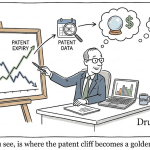
The “patent cliff” is the industry term for the sharp, precipitous, and often catastrophic decline in revenue that a company experiences when a blockbuster drug loses its market exclusivity and faces the entry of generic or biosimilar competition.56 Upon generic entry, a branded drug can lose up to 80-90% of its market share and revenue, often within the first year.56
The financial stakes are immense. The upcoming patent cliff, projected to occur between 2025 and 2030, is expected to put an estimated $200 billion to $300 billion in annual global revenue at risk.56 For companies heavily reliant on a single blockbuster product, this event can threaten their long-term stability and profitability.56 This immense financial pressure is the primary motivation for all LCM strategies, which are designed to delay the onset of the cliff for as long as legally possible. While often framed in pejorative terms, these strategies are a direct and rational economic response to the industry’s inherent business model, where a few highly successful products must fund a vast number of R&D failures. The debate is not about whether companies are acting rationally to protect their revenue, but whether the legal system permits strategies that may be detrimental to public health and market competition.
4.2 Extending the Monopoly: Evergreening and Patent Thickets
Two of the most prominent and controversial LCM strategies are “evergreening” and the creation of “patent thickets.” These tactics leverage the patent system to extend a drug’s monopoly far beyond the expiration of its original, foundational patent.
Evergreening: This is the practice of obtaining new, secondary patents on what are often minor modifications of an existing drug.6 Common evergreening tactics include:
New Formulations: Developing and patenting an extended-release version of a drug that was originally an immediate-release tablet.9
New Methods of Use: Patenting the use of an existing drug to treat a new disease.19
New Dosages or Routes of Administration: Patenting a different dosage strength or a new way to administer the drug, such as a nasal spray version of an injectable drug.9
Polymorphs or Isomers: Patenting a different crystalline form (polymorph) or a single active isomer from a previously patented mixture (a “chiral switch”).9
The industry defends these practices as the protection of valuable “incremental innovation” that can offer real benefits to patients, such as improved convenience, better safety profiles, or enhanced efficacy.17 Critics, however, argue that evergreening often involves patenting trivial changes with little to no therapeutic advantage, with the primary goal of blocking generic competition and maintaining high prices.6
Patent Thickets: This strategy involves creating a dense, overlapping web of dozens or even hundreds of patents around a single product.23 The primary goal of a patent thicket is not necessarily to win an infringement lawsuit on the merits of every single patent. Instead, the objective is to make the prospect of litigation so complex, time-consuming, and expensive that it deters potential generic or biosimilar competitors from even attempting to challenge the monopoly.70 A generic company must prove that every patent in the thicket is either invalid or not infringed to enter the market, a daunting and costly legal burden.76
4.3 Case Study – The Humira Fortress
AbbVie’s strategy for its blockbuster anti-inflammatory drug, Humira (adalimumab), is the archetypal example of a successful and highly scrutinized patent thicket.21
The Thicket: AbbVie and its predecessors constructed a formidable fortress of IP around Humira. The company filed over 247 patent applications in the U.S., ultimately securing more than 132 granted patents.21 This vast portfolio went far beyond the primary patent on the adalimumab molecule itself, including dozens of secondary patents covering specific formulations (e.g., a higher-concentration, citrate-free version that reduces injection pain), manufacturing processes, and methods of using the drug to treat its numerous approved indications.70
The Impact: This aggressive patenting strategy was remarkably successful. It delayed the launch of biosimilar competitors in the United States until 2023, a full five years after they entered the market in Europe, where AbbVie held a much smaller patent portfolio.70 This five-year delay in U.S. competition is estimated to have cost the American healthcare system tens of billions of dollars.70 Before facing biosimilar competition, Humira was generating revenue of approximately $57 million per day.73
Legal Challenges: AbbVie’s strategy faced numerous legal and antitrust challenges. However, it was largely upheld in U.S. courts. In a key 2022 decision, the Seventh Circuit Court of Appeals affirmed the dismissal of an antitrust lawsuit, ruling that simply accumulating a large number of valid patents, even if they are “weak” (i.e., narrow in scope), does not in itself constitute an illegal anticompetitive act under the Sherman Act.71 This ruling underscored the high legal bar for challenging patent thickets on antitrust grounds in the U.S.
The success of the Humira strategy, however, may not be universally replicable. Legal experts note that Humira’s position as one of the earliest and most innovative biologics allowed AbbVie to patent many genuinely novel aspects of its use and manufacturing.79 For later drugs entering more crowded therapeutic fields, the “prior art” landscape is denser, making it more difficult to meet the novelty and non-obviousness standards required for a large number of secondary patents. Furthermore, the intense public and legislative scrutiny that the Humira case generated has increased the legal and reputational risks associated with such aggressive strategies.
4.4 Case Study – The Gleevec Battle in India
The case of Novartis’s groundbreaking cancer drug Gleevec (imatinib) provides a crucial counterpoint to Humira, illustrating the legal limits of evergreening strategies, particularly in international jurisdictions with different patentability standards.18
The Strategy: As its primary patent on the imatinib molecule neared expiration, Novartis sought to obtain a new patent in India for a specific polymorphic form of the drug—the beta-crystalline form of imatinib mesylate. The company argued that this new form had improved properties, such as better stability and bioavailability, and thus represented a patentable invention.
The Challenge and Ruling: In a landmark 2013 decision, the Supreme Court of India rejected Novartis’s patent application.18 The court applied a stricter standard for patentability found in Section 3(d) of India’s Patents Act, which requires that a new form of a known substance must demonstrate a significant enhancement in “therapeutic efficacy” to be patentable. The court ruled that the improved properties of the beta-crystalline form did not translate to a proven increase in Gleevec’s effectiveness in treating cancer. Therefore, it was considered an unpatentable attempt at “evergreening” rather than a genuine invention.81
This decision had profound implications. It signaled a major divergence in patent law and policy between the United States and Europe, which have historically been more permissive in granting patents for such modifications, and key emerging markets like India, which have adopted a more public health-oriented approach to patentability. The Gleevec case demonstrates that a U.S.-centric IP strategy is no longer sufficient for global pharmaceutical companies. As emerging markets grow in economic importance, their distinct legal frameworks can create significant vulnerabilities in a product’s global lifecycle plan and present opportunities for generic manufacturers who can strategically exploit these legal differences.70
Section 5: The Evolving Landscape of Pharmaceutical IP
The strategic interplay of patents and exclusivity is not static. It is continually being reshaped by scientific advancements, new legislative frameworks, and evolving regulatory interpretations. This section explores the most significant contemporary trends and challenges that are redefining the rules of engagement for pharmaceutical IP, including the rise of biologics, the disruptive impact of artificial intelligence, and a new wave of legislative and regulatory scrutiny.
5.1 The Rise of Biologics and Biosimilars
Biologics—large, complex molecules such as monoclonal antibodies that are derived from living organisms—have become a dominant force in modern medicine. Their inherent complexity presents unique IP challenges that distinguish them from traditional, chemically synthesized small-molecule drugs.83
The BPCIA Framework: The regulatory pathway for “generic” versions of biologics, known as biosimilars, was established in the U.S. by the Biologics Price Competition and Innovation Act (BPCIA) of 2009.6 In recognition of the greater complexity and cost of developing biologics, the BPCIA provides innovator companies with a longer period of regulatory exclusivity: 12 years from the date of first licensure, during which the FDA cannot approve a biosimilar application.6 This is significantly longer than the five years of NCE exclusivity granted to small molecules.
Manufacturing Complexity and Patent Thickets: Unlike small molecules, which can be precisely replicated, biologics are inherently variable due to their production in living cell lines. This means that the manufacturing process is as critical to the final product as the molecule itself.84 Consequently, process patents and closely guarded trade secrets related to manufacturing are often as important, if not more so, than the composition of matter patent on the biologic’s primary structure.86 This manufacturing complexity naturally leads to denser and more intricate patent thickets. A biosimilar developer must not only create a molecule that is “highly similar” to the reference product but also independently develop a commercially viable manufacturing process that does not infringe on the innovator’s extensive portfolio of process patents.85 This creates multiple, overlapping barriers to market entry that are far higher than for a typical small-molecule generic drug.
The “Patent Dance”: The BPCIA also established a unique and complex, multi-step process for exchanging patent information and litigating disputes between innovator and biosimilar manufacturers, colloquially known as the “patent dance”.6 This formal, pre-litigation process governs which patents can be asserted and on what timeline, adding another layer of strategic complexity to biosimilar development.
The IP strategy for biologics thus represents a paradigm shift. The focus moves from protecting a single, well-defined chemical entity to protecting a complex, variable product and its highly proprietary and heavily patented manufacturing process. This makes the patent thicket for a biologic inherently more robust and difficult for competitors to penetrate.
5.2 The Impact of Artificial Intelligence
Artificial intelligence (AI) and machine learning (ML) are poised to revolutionize the drug discovery and development process, but they are also creating profound new challenges for the existing patent law framework.88
Inventorship and Patentability: A fundamental tenet of U.S. patent law is that an inventor must be a human being. The U.S. Supreme Court’s decision in Thaler v. Vidal affirmed that AI systems cannot be named as inventors on a patent.93 This creates a significant legal hurdle as AI plays an increasingly autonomous role in identifying novel drug targets and designing new molecules. An invention generated by an AI platform without “significant contribution” from a human may not be patentable at all under current law.93 This forces companies to develop rigorous internal protocols to document the specific, significant contributions of their human scientists in an AI-assisted discovery process to ensure their inventions remain eligible for patent protection.
The “Non-Obviousness” Standard: AI’s ability to rapidly analyze vast datasets of biological and chemical information and predict potential solutions may force a re-evaluation of the non-obviousness standard for patentability. An inventive step that would have been considered non-obvious to a human chemist—for example, identifying a novel compound to bind to a specific protein target—may become “obvious to one of ordinary skill in the art” when that “one” is equipped with a powerful AI platform capable of screening billions of compounds in silico.89 As AI tools become more widespread, the legal bar for what constitutes a patentable inventive leap is likely to rise, potentially leading to a future where fewer, but perhaps more truly groundbreaking, inventions are granted patents.
AI is a double-edged sword for pharmaceutical IP. It promises to dramatically accelerate R&D and reduce costs 90, but it simultaneously threatens to undermine the very patent system that incentivizes that R&D. The legal framework is lagging far behind the technology, creating a period of significant uncertainty and strategic opportunity for companies that can successfully navigate the intersection of human and machine invention.
5.3 The Legislative and Regulatory Horizon (2024-2025)
In recent years, there has been a significant and bipartisan push in the U.S. Congress and among regulatory agencies to reform the IP system to curb perceived abuses that delay generic and biosimilar competition and contribute to high drug prices.6 This new wave of legislative and regulatory activity represents a potential tipping point, suggesting a growing consensus that the balance between innovation and competition needs to be recalibrated.
Key Legislative Proposals: Several bills targeting specific LCM strategies are under active consideration in Congress:
Affordable Prescriptions for Patients Act (APPA): Passed by the Senate in July 2024, this bill directly targets the “patent thicket” litigation strategy by proposing to limit the number of patents an innovator company can assert in an infringement lawsuit against a biosimilar or generic competitor (e.g., to 20 patents).97
Promoting and Respecting Economically Vital American Innovation Leadership (PREVAIL) Act: This bill proposes significant reforms to the post-grant review proceedings at the Patent Trial and Appeal Board (PTAB), such as requiring standing for petitioners. Proponents argue it will protect valid patents from harassment, while opponents fear it will make it harder to invalidate weak patents, potentially strengthening patent thickets.99
Other Proposals: Legislation aimed at curbing “product hopping” (where a company makes a minor change to a drug and removes the old version from the market to thwart generic substitution) and “pay-for-delay” settlements (where an innovator pays a generic to delay market entry) also have bipartisan support.76
Increased Regulatory Scrutiny: Federal agencies are also taking a more active role. The Federal Trade Commission (FTC) has increased its scrutiny of patent listings in the FDA’s “Orange Book,” challenging over 100 patents in 2024 that it deemed to be improperly listed with the intent to block competition.89 The FDA and USPTO have also announced increased collaboration to prevent the granting of patents that do not meet the statutory requirements for patentability.101
This flurry of activity represents a potential paradigm shift. For decades, the strategic use of large patent portfolios to extend monopolies has operated in a legally ambiguous space. The current political climate indicates that these practices are now squarely in the crosshairs of policymakers. The outcome of these legislative and regulatory battles will directly shape the “rules of the game” for the next decade, potentially rendering strategies that were highly successful for drugs like Humira far riskier or even obsolete in the future.
Section 6: Conclusion and Strategic Recommendations
The intricate relationship between pharmaceutical patents and regulatory exclusivity forms the bedrock of the biopharmaceutical industry’s economic model. These are not redundant systems but twin pillars of protection, each with a distinct legal basis and strategic function. Patents, as a property right, provide the foundational “right to exclude” based on invention. Exclusivity, as a regulatory instrument, provides a guaranteed “right to market” based on the fulfillment of specific public health objectives. When combined with sophisticated legal strategy, these dual frameworks have enabled the development of life-saving medicines but have also given rise to complex commercial practices aimed at maximizing monopoly periods, often to the frustration of payers, patients, and policymakers.
As the industry stands at a crossroads—facing an imminent patent cliff, the transformative potential of AI, and a new era of legislative scrutiny—stakeholders must adapt their strategies to this evolving landscape. The following recommendations are offered for key players in this ecosystem.
6.1 Recommendations for Innovator Companies
Pivot from Patent Volume to Patent Quality: The era of building the largest possible patent thicket as a primary defense is facing significant legal and political headwinds. In the face of legislative proposals like the APPA, the strategic focus must shift from the quantity of patents to the quality and defensibility of the IP portfolio. Resources should be prioritized for securing and defending patents that represent genuine, clinically meaningful innovations—such as new formulations that demonstrably improve patient outcomes or new indications that address significant unmet medical needs—rather than on amassing a large volume of patents on minor variations that are vulnerable to legal and regulatory challenge.
Integrate AI with Legal Foresight: Innovator companies should aggressively embrace AI and ML to accelerate R&D and reduce costs. However, this technological adoption must be paired with a forward-looking legal strategy. Companies must develop rigorous internal protocols for documenting the “significant contribution” of human scientists in the inventive process. This will be critical for ensuring the patentability of AI-assisted discoveries and for withstanding future legal challenges to inventorship and non-obviousness that are certain to arise as these technologies become ubiquitous.
Globalize and Diversify IP Strategy: The Gleevec case in India was a clear signal that a U.S.-centric IP strategy is no longer sufficient. As emerging markets grow in importance, innovators must develop tailored patent filing and lifecycle management strategies that account for the divergent patentability standards and public health priorities of different jurisdictions. This requires a nuanced, country-by-country assessment of legal risk and commercial opportunity, rather than a one-size-fits-all approach to extending exclusivity.
6.2 Recommendations for Generic and Biosimilar Manufacturers
Adopt a Holistic “Thicket-Mapping” Approach: Success in the modern pharmaceutical market requires a comprehensive competitive intelligence strategy that goes beyond tracking the expiration date of the primary patent. Generic and biosimilar firms should utilize sophisticated intelligence platforms 103 to map and analyze an innovator’s entire portfolio of protections, including all secondary patents and all applicable regulatory exclusivities. The goal is to identify the weakest link in the chain of protection—whether it is a scientifically dubious secondary patent, an expiring period of exclusivity, or a vulnerability created by differing international patent laws—to define the most efficient and least risky path to market entry.
Leverage the PTAB and IPRs Strategically: The Patent Trial and Appeal Board (PTAB) and its Inter Partes Review (IPR) process remain a cost-effective and powerful tool for challenging the validity of weaker secondary patents that often populate a patent thicket.105 By strategically using IPRs to invalidate key blocking patents, generic and biosimilar companies can significantly reduce the scope, cost, and risk of subsequent district court litigation, thereby leveling the playing field against innovators with vast litigation budgets.
Monitor and Engage with Legislative Reform: The current legislative and regulatory push to curb patent abuses presents a significant opportunity for generic and biosimilar manufacturers. These firms should actively monitor, and where appropriate, support legislative efforts aimed at limiting patent thickets, product hopping, and other anti-competitive practices. The passage of such reforms could substantially lower the legal and financial barriers to market entry, accelerating patient access to affordable medicines.
6.3 Policy Considerations
The central challenge for policymakers is to refine the intellectual property system so that it continues to provide powerful incentives for truly groundbreaking R&D without rewarding legal gamesmanship that unnecessarily delays affordable access to medicines. The goal should be to rebalance the system, not to dismantle it. Future reforms should focus on several key areas: raising the substantive bar for non-obviousness for follow-on patents to ensure they represent meaningful improvements; streamlining patent litigation procedures to reduce the deterrent effect of patent thickets; and ensuring that the duration and scope of FDA regulatory exclusivities are precisely calibrated to meet their intended public health goals without providing excessive or unintended commercial windfalls. The objective is not to weaken the dual shields of innovation, but to ensure they protect genuine progress, not just entrenched market positions, thereby fostering a system that delivers both cutting-edge therapies and sustainable, competitive markets.