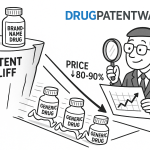
In the world of pharmaceuticals a patent represents the culmination of a decade or more of painstaking research, countless failed compounds, and an average investment that now tops $2 billion per new drug.1 This patent-driven exclusivity is the engine of innovation, the period during which a company has the chance to recoup its massive investment and fund the next generation of life-saving therapies.3
But this period of exclusivity is not guaranteed. It is a fortress under constant siege. On the other side of the wall are generic and biosimilar manufacturers, driven by an equally powerful incentive: a share of a market where today, an astonishing 90% of all prescriptions in the United States are filled by generics.5 The moment a blockbuster drug’s patents are vulnerable, the race to market begins, and with it, a legal battle that will determine the fate of billions in revenue.
For executives and in-house counsel, navigating this conflict requires choosing a battleground. For decades, the primary venue was the U.S. District Court, governed by the specific, intricate rules of the Drug Price Competition and Patent Term Restoration Act of 1984, better known as the Hatch-Waxman Act. It was a world unto itself, a highly structured duel with its own triggers, timelines, and rewards.
Then, in 2011, Congress passed the Leahy-Smith America Invents Act (AIA), a sweeping reform of U.S. patent law. The AIA created a new, alternative venue: the Patent Trial and Appeal Board (PTAB), an administrative tribunal within the U.S. Patent and Trademark Office (USPTO). It introduced a new proceeding, the Inter Partes Review (IPR), designed to be a faster, cheaper, and more efficient way to challenge and weed out “poor-quality patents” across all industries.5
This legislative layering created a fascinating and strategically complex dynamic. The highly specific, pharma-focused world of Hatch-Waxman was suddenly overlaid with the general-purpose, one-size-fits-all administrative process of the AIA. Congress did not create a seamless, integrated system; it created two parallel tracks, each with vastly different rules, standards, and strategic implications.6
This report is your guide to that complex terrain. We will dissect these two venues, not as abstract legal concepts, but as strategic choices. We will explore the procedural gauntlet of Hatch-Waxman litigation and the administrative crucible of the PTAB. We will compare the legal standards that can lead to starkly different outcomes for the very same patent. Most importantly, we will provide a framework for you, the business leader, to decide which path—or a combination of both—offers the greatest advantage for your company. This is not just about winning a lawsuit; it’s about turning patent data and legal procedure into a decisive competitive advantage. Let’s begin.
The Twin Pillars: Understanding the Legislative Foundations
To make strategic decisions, we must first understand the ground rules. The entire landscape of pharmaceutical patent challenges rests on two monumental pieces of legislation, enacted nearly three decades apart. Each was a product of its time, designed to solve a different problem, and their unintended interaction is what defines the modern battlefield.
The Grand Bargain: The Drug Price Competition and Patent Term Restoration Act of 1984 (Hatch-Waxman)
Picture the pharmaceutical world before 1984. Brand-name drug companies saw their effective patent life eroded by the lengthy FDA approval process, while generic companies faced the insurmountable hurdle of having to repeat expensive and time-consuming clinical trials to prove safety and efficacy for drugs that had already been on the market for years.11 The result? Stifled innovation and delayed access to affordable medicines. Only about 35% of top-selling drugs faced any generic competition at all.
The Hatch-Waxman Act was Congress’s ambitious solution, a “grand bargain” designed to balance two competing policy goals: encouraging pioneering drug development and facilitating the swift entry of low-cost generic alternatives.6 It was a masterclass in legislative compromise, giving something significant to both sides.
For Brand-Name Innovators: The Act was a lifeline. It created two powerful forms of protection to compensate for the time and money invested in innovation:
Patent Term Extension: Brands could apply to have the term of one key patent extended to restore some of the time lost during the FDA’s regulatory review, up to a maximum of five years.7
Regulatory Exclusivity: Separate from patent protection, the Act granted periods of FDA-administered market exclusivity. A New Chemical Entity (NCE), for instance, received a five-year data exclusivity period during which the FDA could not approve a generic application, providing a guaranteed window of competition-free sales.11
For Generic Manufacturers: The Act revolutionized their business model. It provided two critical tools that paved the way for the modern generic industry:
The Abbreviated New Drug Application (ANDA): This streamlined pathway allowed generics to get their products approved without conducting their own costly clinical trials. Instead, they could rely on the brand’s original safety and efficacy data and simply prove that their product was “bioequivalent” to the innovator drug.11
The “Safe Harbor” Provision: The Act created a statutory exemption from patent infringement (35 U.S.C. § 271(e)(1)) that allowed generics to use the patented drug for development and testing activities reasonably related to submitting an ANDA.12
The impact was immediate and profound. The Act successfully spurred robust competition between brand and generic companies. Today, thanks to this framework, generics account for 90% of prescriptions filled, saving the U.S. healthcare system hundreds of billions of dollars annually.5
The Efficiency Engine: The Leahy-Smith America Invents Act of 2011 (AIA)
Fast forward to the early 21st century, and a different problem dominated the patent landscape: the rising cost and complexity of patent litigation. Lawsuits could drag on for years and cost millions of dollars, creating uncertainty and draining resources that could be better spent on innovation and commercialization.5 Critics argued that many “poor-quality patents”—those that never should have been granted in the first place—were being used to extract nuisance-value settlements.
The America Invents Act (AIA) was Congress’s answer. Its primary goal was to improve patent quality and create a more efficient, expert-driven administrative alternative to the court system for resolving validity disputes.5 The centerpiece of this reform was the creation of the Patent Trial and Appeal Board (PTAB).
The PTAB is an administrative tribunal within the USPTO, effectively a specialized patent court.9 It is staffed by a corps of Administrative Patent Judges (APJs), many of whom possess advanced technical degrees and deep expertise in specific scientific fields, making them fundamentally different from the generalist federal judges and lay juries who hear cases in district court.19
The AIA empowered the PTAB to conduct several new types of post-grant proceedings to review the validity of issued patents. The most significant and widely used of these is the Inter Partes Review (IPR). An IPR allows a third party to petition the PTAB to take a “second look” at an issued patent and determine its validity based on prior art consisting of existing patents and printed publications.5 The process was intended to be a streamlined, cost-effective, and rapid alternative to district court litigation, with a statutory deadline to complete the entire proceeding within 18 months of filing.5
Crucially, the AIA did not carve out an exception for pharmaceutical patents, which were already subject to the bespoke litigation framework of Hatch-Waxman.6 This legislative silence had enormous consequences. It effectively “democratized” patent challenges. While Hatch-Waxman litigation is a closed loop, triggered only by a generic company filing an ANDA, the IPR statute allows
any person who is not the patent owner to file a petition. There is no requirement to have been sued or even threatened with a lawsuit, a key difference from the standing requirements in federal court.9
This seemingly small detail opened the door to entirely new types of challengers. The most famous example is that of hedge fund manager Kyle Bass, who, through his Coalition for Affordable Drugs, filed dozens of IPRs against pharmaceutical patents. His stated goal was to invalidate weak patents and lower drug prices, but critics alleged the strategy was a “devious attempt to profit by devaluing the stock of the pharmaceutical companies that own the patents”. Regardless of the motive, this episode demonstrated that the AIA didn’t just add a new venue; it fundamentally expanded the universe of potential adversaries a brand company might face, moving beyond direct commercial competitors to include financially motivated third parties with entirely different strategic objectives.
Venue 1: The District Court Gauntlet – A Deep Dive into Hatch-Waxman Litigation
To understand the strategic choice, we must first master the rules of the oldest and most established game: Hatch-Waxman litigation. This is not a typical patent lawsuit. It’s a highly ritualized process, a procedural gauntlet with specific steps, timelines, and incentives that have been honed over nearly four decades of high-stakes conflict.
The First Shot: The ANDA Filing and Paragraph IV Certification
The entire process begins not with a lawsuit, but with a regulatory filing. A generic manufacturer seeking to market a copy of a brand-name drug files an Abbreviated New Drug Application (ANDA) with the FDA.7 As part of this application, the generic company must address every patent that the brand company has listed in the FDA’s “Approved Drug Products with Therapeutic Equivalence Evaluations,” more famously known as the
Orange Book.25
The generic applicant has four choices, or “certifications,” for each listed patent 25:
Paragraph I: Certify that no patent information has been filed.
Paragraph II: Certify that the patent has already expired.
Paragraph III: Certify that they will wait to market their product until the patent expires.
Paragraph IV (PIV): Certify that the patent is invalid, unenforceable, or will not be infringed by their generic product.25
This Paragraph IV certification is the declaration of war. It is a direct challenge to the brand’s intellectual property. What makes it so unique is that Congress, in its wisdom, designated the very act of filing an ANDA with a PIV certification as a technical, or “artificial,” act of patent infringement under 35 U.S.C. § 271(e)(2).18 Why? This clever legal fiction was created to give federal district courts jurisdiction to hear the patent dispute
before the generic drug ever hits the market, allowing the conflict to be resolved proactively rather than after potential damages have already accrued.25
The Formal Challenge: The Notice Letter and the 45-Day Countdown
Once the FDA acknowledges that the ANDA is sufficiently complete for review, the clock starts ticking. The generic applicant has 20 days to send a formal notice letter to the brand-name company (the NDA holder) and the patent owner.25 This is no mere courtesy. The notice letter is a detailed legal document that must lay out the full factual and legal basis for the generic’s assertion that the patent is invalid or not infringed. It is the challenger’s opening argument, and while not strictly binding in the subsequent litigation, a poorly drafted or baseless letter can have serious consequences, including the potential for the brand to recover its attorney fees later on.25
Upon receiving this notice letter, the brand company faces a critical decision. A 45-day countdown begins.18 This is the window within which the brand must decide whether to sue the generic applicant for patent infringement. As one legal synopsis dryly notes, the brand nearly always sues. The reason for this is the powerful procedural weapon they gain by doing so.
The Strategic Pause: The 30-Month Stay of FDA Approval
If the brand company files its infringement lawsuit within that 45-day window, it triggers one of the most significant features of the Hatch-Waxman Act: an automatic 30-month stay of the FDA’s final approval of the generic’s ANDA.18
Let’s be clear about what this is and what it isn’t. The 30-month stay is not a preliminary injunction granted on the merits of the case. The brand doesn’t have to prove it’s likely to win. It is a statutorily guaranteed pause, an automatic delay designed to give the parties time to litigate the patent dispute in court before the generic product can be launched.25
From a strategic perspective, this stay is the brand’s most powerful tool. It provides a crucial 2.5-year period of certainty. During this time, the brand can continue to generate revenue from its product without generic competition, while simultaneously prosecuting the lawsuit, negotiating a favorable settlement, or even executing a “product hop”—transitioning the market to a new, differently patented version of the drug to blunt the impact of eventual generic entry.1 This stay fundamentally shapes the leverage and timeline of the entire dispute.
The Ultimate Prize: The 180-Day Generic Exclusivity
If the 30-month stay is the brand’s key incentive to litigate, the 180-day exclusivity period is the generic’s ultimate prize. To encourage generics to take on the immense risk and expense of challenging patents, Hatch-Waxman provides a powerful reward.26 The
first generic company to file a “substantially complete” ANDA with a Paragraph IV certification is granted a 180-day period of marketing exclusivity.7
During this six-month period, the FDA is barred from approving any other generic versions of the same drug. This effectively creates a highly profitable duopoly between the brand-name drug and the first generic challenger. For the generic company, this 180-day window is often the most lucrative phase of a product’s lifecycle, a potential windfall that can be worth hundreds of millions of dollars. This massive financial incentive is what turns generic manufacturers into active “patent watchdogs” and ensures that nearly every successful drug will face a patent challenge.32
The Courtroom Battle: Discovery, Trial, and Resolution
Once the lawsuit is filed and the stay is in place, the case proceeds like other complex federal litigation, but with a few unique features. Discovery is often extensive and expensive, involving the exchange of millions of documents and depositions of scientists and executives. The cases are complex, delving into the intricacies of chemistry, biology, and patent law.
One key difference is that Hatch-Waxman trials are bench trials, meaning they are decided by a district judge, not a jury. The litigation typically concludes within the 30-month stay period, but can be longer. While some cases go to a final judgment, many are resolved through settlement. These settlements can be complex, ranging from agreements on a future entry date for the generic to licensing deals for an “authorized generic”. However, they have also been a source of controversy, particularly “reverse payment” or “pay-for-delay” settlements, where the brand pays the generic to stay off the market. The Supreme Court’s landmark decision in FTC v. Actavis held that such payments can violate antitrust laws, adding another layer of risk and complexity to settlement negotiations.18
The Hatch-Waxman framework, therefore, is a double-edged sword for brand companies. On one hand, it provides the powerful 30-month stay, a procedural shield that is the envy of patent holders in every other industry. On the other hand, it creates a system of what is essentially compulsory, high-stakes litigation. The Act’s powerful incentives for challengers mean that a brand company with a successful drug loses control over the timing of litigation. Their most valuable assets will be put on trial, not on their own terms, but on a schedule dictated by their competitors’ regulatory filings. This reality makes a proactive, long-term defensive strategy not just a good idea, but an absolute necessity.
Venue 2: The PTAB Crucible – A Deep Dive into Inter Partes Review (IPR)
If Hatch-Waxman litigation is a traditional, sprawling battlefield, Inter Partes Review is a modern special forces operation: faster, more focused, and fought with different rules of engagement. It is an administrative trial held not in a courthouse, but within the walls of the USPTO itself.
The Administrative Alternative
As we’ve discussed, Congress created the IPR process as part of the AIA to provide a streamlined, efficient, and less expensive alternative to the perceived slog of district court litigation.5 It was designed to leverage the technical expertise of the USPTO to conduct a “second look” at issued patents and quickly dispose of those that are invalid based on specific types of prior art.
The IPR Process: A Step-by-Step Guide
The IPR process is a masterclass in procedural efficiency, governed by strict statutory timelines. From start to finish, the entire process is designed to conclude within 18 months.
The Petition
The challenge begins when a petitioner files an IPR petition with the PTAB. This is the single most important document in the entire proceeding. The petitioner must lay out its entire case for invalidity within a strict 60-page limit. The grounds for an IPR challenge are narrow: the petitioner can only argue that the patent is invalid for being anticipated (under 35 U.S.C. § 102) or obvious (under 35 U.S.C. § 103), and only on the basis of prior art consisting of patents or printed publications.23 Arguments about prior public use, on-sale bars, or inequitable conduct are not permitted in an IPR. The petition must identify every claim being challenged and provide a detailed explanation, often with expert declarations and claim charts, of why those claims are unpatentable in view of the cited prior art.
The Patent Owner’s Preliminary Response (POPR)
The patent owner gets one pre-emptive shot to defeat the petition before it even gets off the ground. They can file a Patent Owner’s Preliminary Response (POPR), arguing why the PTAB should deny the petition and refuse to institute a trial. This is a critical defensive opportunity, as a successful POPR ends the proceeding then and there.
The Institution Decision
This is the crucial gatekeeping step. Within six months of the petition filing, a panel of three APJs reviews the petition, the POPR, and the evidence. They must decide whether the petitioner has established a “reasonable likelihood” of prevailing on at least one of the challenged claims. If the answer is yes, the PTAB “institutes” the IPR trial. If the answer is no, the petition is denied, and the proceeding is over. This institution decision is a major hurdle; according to USPTO data, a significant percentage of petitions in the biopharma space are denied at this stage.
The Trial and Limited Discovery
If the IPR is instituted, a highly structured, 12-month trial phase begins. Unlike the sprawling discovery of district court, discovery in an IPR is extremely limited. It is generally confined to the routine production of documents cited in papers and the cross-examination (via deposition) of any experts who submitted declarations.4 There are no broad interrogatories, no wide-ranging document requests, and no depositions of fact witnesses. The case is argued primarily through a series of formal briefs filed by both sides.
The Final Written Decision (FWD)
At the end of the 12-month trial period (which is 18 months from the initial petition filing), the PTAB panel issues a Final Written Decision (FWD).5 This decision determines, on a claim-by-claim basis, whether the petitioner has proven the challenged claims to be unpatentable. This decision is binding and can be appealed by the losing party directly to the U.S. Court of Appeals for the Federal Circuit, the same court that hears appeals from district court patent cases.
The Judges: Technical Experts on the Bench
Perhaps the most defining characteristic of the PTAB is the nature of its judges. The APJs who decide IPRs are not generalist jurists; they are seasoned patent attorneys, and many hold PhDs or other advanced degrees in technical fields like chemistry, biology, and engineering.19
This technical expertise has profound strategic implications. It makes the PTAB an especially attractive forum for challengers who have complex technical arguments, particularly multi-reference obviousness arguments that might be difficult for a lay judge or jury to grasp. An argument that a combination of three obscure scientific papers renders a complex formulation patent obvious is more likely to find a receptive and understanding audience with a panel of PhD chemists than in a traditional courtroom.
This entire structure—the tight deadlines, the limited scope, the paper-based arguments, and the expert adjudicators—reveals the fundamental nature of an IPR. It is a highly focused, front-loaded proceeding. Success or failure hinges almost entirely on the quality and completeness of the initial petition. There is little to no opportunity to develop a case or discover new evidence as the proceeding unfolds. A challenger must put all their cards on the table from day one. This stands in stark contrast to district court litigation, where a case can evolve and be strengthened over months or years of discovery. In the PTAB crucible, your first shot is often your only shot.
A Tale of Two Standards: The Critical Differences That Shape Strategy
Why would a company choose one venue over the other? The answer lies not just in procedure, but in the fundamental legal standards that govern each forum. The very same patent, challenged with the very same prior art, can have a different fate depending on where the case is heard. This is because the PTAB and the district courts operate under different rules for interpreting patents and different standards for proving them invalid. This asymmetry is the engine of nearly all modern pharmaceutical patent strategy.
Claim Construction: Broadest Reasonable Interpretation (BRI) vs. Phillips Standard
The first and most fundamental difference lies in how the decision-maker reads the patent’s claims. The scope of a patent claim is everything; a broad claim is powerful but vulnerable, while a narrow claim is safer but less valuable.
IPR (The Phillips Standard, Formerly BRI): For years, the PTAB operated under the “Broadest Reasonable Interpretation” (BRI) standard. This standard required APJs to interpret the claims as broadly as they reasonably could, consistent with the patent’s specification.10 This was a massive advantage for challengers. Think of a patent claim as a target; the BRI standard made the target bigger, making it easier to hit with a piece of prior art. This historical context is vital because it shaped the strategies that are still in use today. In 2018, in a move to harmonize the forums, the USPTO changed its rules to adopt the same standard used in district courts for IPRs.
Hatch-Waxman (The Phillips Standard): Both the PTAB now and district courts have always used the standard established in the landmark case Phillips v. AWH Corp..21 The Phillips standard seeks to determine the “ordinary and customary meaning” of a claim term as it would be understood by a person of ordinary skill in the relevant art. This is a more holistic analysis, looking not just at the specification but also at the claim language itself and the patent’s prosecution history (the back-and-forth with the patent examiner). This often results in a narrower, more precise claim construction, which benefits the patent owner.
While the standards are now aligned, the legacy of the BRI standard and the technical nature of the APJs mean that the PTAB may still be perceived as a forum more inclined toward broader interpretations in practice.
Burden of Proof: Preponderance of the Evidence vs. Clear and Convincing Evidence
How much proof does a challenger need to invalidate a patent? The answer is dramatically different in the two venues.
IPR (Preponderance of the Evidence): In an IPR, the petitioner must prove a claim is unpatentable by a “preponderance of the evidence”.9 This is the standard civil burden of proof, meaning the petitioner must simply show that it is more likely than not (>50%) that the claim is invalid.
Hatch-Waxman (Clear and Convincing Evidence): In district court, the bar is set much higher. A challenger must prove invalidity by “clear and convincing evidence”. This standard requires the challenger to show that it is highly probable or substantially more likely to be true than not that the patent is invalid. It is a heavy burden to carry.
Presumption of Validity: Non-Existent vs. Statutorily Mandated
Finally, the starting point of the analysis is different.
IPR (No Presumption): When the PTAB reviews a patent, it does so with fresh eyes. An issued patent is not presumed to be valid. The proceeding is considered a “second look” by the same agency that granted the patent, and the playing field is level from the start.
Hatch-Waxman (Statutory Presumption): In district court, an issued U.S. patent is statutorily presumed to be valid under 35 U.S.C. § 282.6 The challenger bears the full burden of overcoming this presumption.
Let’s put this all together. In a district court, a challenger must climb a steep hill. They start with the patent presumed valid and must present “clear and convincing” evidence to prove otherwise, under a claim construction standard that often favors the patent owner. In the PTAB, the challenger starts on level ground. There is no presumption of validity, and they only need to prove their case by a “preponderance of the evidence.”
This combination of factors creates a legal environment that is, on paper, significantly more favorable to patent challengers. It is the primary reason that brand companies have often referred to the PTAB as a “death squad for patents” and why generic manufacturers have flocked to the venue since its creation.6 It is not a procedural quirk; it is a fundamental difference in the legal physics of the two forums, and it is the single most important driver of IPR’s popularity among challengers.
Industry Insight
To crystallize these differences, consider the following head-to-head comparison:
Table 1: IPR vs. Hatch-Waxman: A Head-to-Head Comparison
Attribute
Inter Partes Review (IPR)
Hatch-Waxman Litigation
Venue
Patent Trial and Appeal Board (PTAB)
U.S. District Court
Governing Law
America Invents Act (AIA)
Hatch-Waxman Act
Decision-Maker
Panel of 3 Administrative Patent Judges (APJs)
District Judge (Bench Trial)
Timeline to Final Decision
Approx. 18 months
30+ months
Typical Cost
Hundreds of thousands of dollars
Millions of dollars 9
Standing to Challenge
Any person (other than patent owner)
ANDA Filer with PIV Certification
Scope of Arguments
Invalidity under §102/103 based on patents & printed publications only
All invalidity defenses, non-infringement, unenforceability, etc.
Claim Construction
Phillips Standard (same as district court)
Phillips Standard
Burden of Proof
Preponderance of the Evidence
Clear and Convincing Evidence
Presumption of Validity
None
Yes, statutorily mandated
Discovery Scope
Extremely limited
Extensive and broad
Key Challenger Incentive
Speed, lower cost, favorable legal standards
180-Day Market Exclusivity
Key Patent Holder Defense
Patent Owner Preliminary Response (POPR)
Automatic 30-Month Stay of FDA Approval
Estoppel Risk for Loser
High; statutory estoppel on grounds that were or “reasonably could have been” raised
Lower; common law collateral estoppel on issues actually litigated
This table doesn’t just list features; it paints a strategic picture. The choice of venue is a trade-off. Do you want the speed, efficiency, and favorable odds of the PTAB, or do you want the massive commercial prize and broader strategic scope of the district court? The answer depends entirely on your goals, your resources, and your appetite for risk.
The Challenger’s Playbook: Strategizing for Generic and Biosimilar Success
For a generic or biosimilar manufacturer, the decision of where and when to challenge a patent is one of the most critical business judgments you will make. It dictates your budget, your timeline to market, and your chance at securing the coveted 180-day exclusivity period. There is no single right answer; the optimal strategy depends on your specific circumstances. Let’s break down the strategic calculus.
The Case for IPR: Speed, Cost, and Favorable Odds
The PTAB presents a compelling value proposition for any patent challenger, particularly in the pharmaceutical space.
Economic Efficiency
The most obvious advantages are time and money. An IPR is designed to reach a final decision within 18 months, compared to the 2.5 years or more that a Hatch-Waxman case can take in district court. The cost differential is even more stark: a typical IPR costs in the hundreds of thousands of dollars, whereas a full-blown Hatch-Waxman litigation can easily run into the millions, and for a high-value drug, significantly more.9 For a generic company challenging a “patent thicket” with dozens of patents, the cost savings of using IPRs can be the difference between a viable challenge and an impossible one.
The Technical Advantage
As we’ve discussed, arguing complex chemistry or biology before a panel of PhD-level APJs is often preferable to explaining it to a generalist judge. For challenges that hinge on nuanced interpretations of scientific literature or complex obviousness arguments combining multiple prior art references, the PTAB is a purpose-built forum. APJs are fluent in the language of science and patent law, which can make them more receptive to highly technical invalidity arguments.21
The Legal Gauntlet is Easier
This is the heart of the matter. The combination of a lower “preponderance of the evidence” burden of proof and the lack of a presumption of validity makes the PTAB a statistically more favorable forum for invalidating a patent.9 Data shows that a significant percentage of instituted IPRs on pharmaceutical patents result in at least some claims being invalidated.5
The Case for Hatch-Waxman: The Allure of the 180-Day Exclusivity
So, with all these advantages, why would a generic company ever choose the slower, more expensive, and more difficult path of district court litigation? The answer can be summed up in three words: 180-day exclusivity.
This powerful incentive is the crown jewel of the Hatch-Waxman Act, and it is only available to the first generic company to file an ANDA with a Paragraph IV certification and navigate the subsequent litigation process.25 You cannot obtain this exclusivity through an IPR. The potential for a six-month duopoly on a blockbuster drug, a period that can generate hundreds of millions in revenue, is a business prize so large that it often justifies the higher cost and lower odds of the district court gauntlet. It is a calculated risk, where the potential reward is commensurate with the challenge.
When to Choose Which Venue: A Strategic Framework
The decision of where to fight is a function of your goals, your resources, and the strength of your case. Here is a framework to guide your thinking:
Choose IPR as your primary venue when:
You are not the first-to-file. If another generic has already filed their ANDA, your chance at the 180-day exclusivity is gone. In this scenario, your goal is simply to invalidate the patents as quickly and cheaply as possible to clear the way for your own market entry after the first filer’s exclusivity expires. IPR is the perfect tool for this job.
Your budget is limited. If you are a smaller company or are challenging a dense patent thicket, the cost-effectiveness of IPR may be your only viable path.
Your case is highly technical. If your strongest invalidity argument is a complex obviousness combination of multiple scientific papers, the expert panel at the PTAB is your ideal audience.
Your goal is “freedom to operate” (FTO) clearance. If you are in the early stages of developing a product and want to proactively clear away a problematic patent before you even file an ANDA, an IPR can be a strategic tool to de-risk your pipeline.
Choose Hatch-Waxman as your primary venue when:
You are the first-to-file and the 180-day exclusivity is your primary goal. The potential reward is simply too great to ignore. The district court path is the only way to secure it.
Your strongest arguments are outside the scope of IPR. If your best defense is that your product does not infringe the patent, or that the patent is unenforceable due to inequitable conduct, or that it’s invalid based on a prior public use or on-sale bar, you must be in district court, as these arguments cannot be raised in an IPR.21
This strategic calculus can be summarized in the following decision framework:
The core argument (non-infringement) cannot be raised in an IPR. The focus must be on the district court case.
Higher cost and longer timeline of litigation; forgoing the chance to attack validity in the favorable PTAB forum.
Subsequent ANDA Filer, Limited Budget
Invalidate patents quickly & cheaply to enable market entry
IPR Only
The 180-day exclusivity is off the table. The goal is efficient path-clearing. IPR is faster, cheaper, and has better odds.
Forfeiting the ability to raise non-IPR arguments (e.g., non-infringement) in court; potential for IPR estoppel.
Challenging a “Patent Thicket”
Invalidate multiple patents to create a viable path to market
IPR-Focused (often in parallel with defensive Hatch-Waxman litigation)
IPR is the only economically feasible way to challenge dozens of patents. The strategy is to attack the weakest links in the thicket.
High aggregate cost even with IPRs; risk of discretionary denials on serial petitions; complex coordination.
Pre-ANDA “Freedom to Operate” Clearance
De-risk future product development by clearing a blocking patent
IPR Only
Challenge a patent before committing to the full ANDA process. No standing is required to file an IPR.
Tipping your hand to the patent owner early; potential “settled expectations” denial if you wait too long.
As the table shows, the most aggressive and complex strategy is the “dual-track” approach—fighting in both venues at once. This high-risk, high-reward gambit has become a central feature of modern pharmaceutical patent wars.
The Dual-Track Gambit: Waging War on Two Fronts
Why would any sane company choose to fight a war on two fronts, simultaneously litigating in district court and the PTAB? The logic is seductive: it’s an attempt to get the best of both worlds. A generic challenger files its ANDA and initiates Hatch-Waxman litigation to make itself eligible for the 180-day exclusivity prize. At the same time, it files an IPR on the same patent, hoping to leverage the PTAB’s faster timeline and more favorable invalidity standards to score a quick knockout blow. A win at the PTAB—a Final Written Decision invalidating the patent—can create immense settlement leverage or even be used to win the district court case outright.
For years, this dual-track strategy was a powerful weapon for challengers. But patent owners cried foul, arguing that it was unfair to force them to defend their patents in two forums simultaneously, a “second bite at the same apple” that disrupted the careful balance of Hatch-Waxman. The PTAB listened, and in recent years, it has pushed back, creating significant new hurdles for those attempting the dual-track gambit.
The PTAB Pushback: Discretionary Denials
The PTAB is not a passive tribunal. It has the authority to discretionarily deny institution of an IPR, even if the petition presents a strong case for invalidity. This power has become a key defensive tool for patent owners.
The Fintiv Doctrine
The most significant development was the PTAB’s 2020 precedential decision in Apple Inc. v. Fintiv, Inc. The Fintiv rule allows the PTAB to deny institution of an IPR if a parallel district court proceeding involving the same patent is too far advanced.42 The Board considers a set of factors, including the scheduled trial date in the court case, the degree of overlap between the issues, and the investment already made by the parties and the court in the parallel litigation.
This was a major blow to the dual-track strategy in the Hatch-Waxman context. Because Hatch-Waxman cases operate on a relatively fast 30-month clock, the district court trial is often scheduled to occur before or around the same time the PTAB would issue its Final Written Decision. Under Fintiv, this often leads the PTAB to deny institution to avoid duplicative effort and the risk of conflicting decisions.
The “Settled Expectations” Doctrine
More recently, a new and evolving basis for discretionary denial has emerged directly from the USPTO Director’s office: the concept of “settled expectations”. As demonstrated in the 2025 decisions of iRhythm and Dabico, the Director can deny institution if a patent has been issued and known to the challenger for a long time. The logic is that the challenger’s delay in bringing a challenge creates a “settled expectation” on the part of the patent owner and the public that the patent is valid and will not be attacked.
This doctrine is particularly potent in the Hatch-Waxman world. Brand companies are required to list their patents in the public Orange Book, providing clear notice to all potential challengers. A generic company that waits years after a patent is listed before filing an IPR now faces the risk of being denied on the grounds that they waited too long, disrupting the patent owner’s settled expectations.
Strategic Responses to Discretionary Denial Risk
The rise of discretionary denials has not killed the dual-track strategy, but it has made it far more complex. Challengers must now be much more sophisticated in how they approach it.
Timing is Everything
To get ahead of the Fintiv problem, challengers now often file their IPR petitions much earlier. The optimal strategy is often to file the IPR petition within 12 months of the brand receiving the PIV notice letter, or even concurrently with the notice letter itself, to ensure the PTAB proceeding is well underway before the district court case gains momentum.
The Fintiv Stipulation
To address the concern about overlapping issues, petitioners have developed a powerful tool: the Fintiv stipulation. The petitioner can formally stipulate, or promise, to the PTAB that if the IPR is instituted, they will not pursue the same invalidity grounds, based on the same prior art, in the parallel district court case. This demonstrates to the PTAB that the proceedings are not merely duplicative and has proven to be a highly effective way to avoid a Fintiv denial. One analysis found that 74% of institutions occur when petitioners use such stipulations to avoid overlapping arguments.
Venue Selection
The choice of district court can also play a role. Some federal districts are known for moving cases along more quickly than others. Filing the Hatch-Waxman suit in a district with a historically slower docket, such as the District of Delaware, can make a parallel IPR more viable by creating more separation between the two timelines.43
The PTAB’s use of discretionary denials represents a significant policy shift. It is a deliberate attempt by the USPTO to re-balance the scales, addressing the “second bite at the apple” criticism and forcing challengers to be more thoughtful. It raises the stakes of the dual-track strategy, transforming it from a routine tactic into a high-risk maneuver that requires careful planning and execution. The challenger must now not only prove the patent is invalid, but also convince the PTAB that their petition is an appropriate use of the Board’s limited resources. This shift in risk subtly favors the patent holder, who benefits from any friction that complicates the challenger’s path to victory.
The Brand’s Fortress: Defensive Strategies for Patent Holders
For a brand-name pharmaceutical company, the introduction of IPR changed the defensive playbook entirely. Facing a two-front war requires a two-front defense. The modern strategy is not just about having a single strong patent; it’s about building a multi-layered fortress of intellectual property that is too complex, too costly, and too time-consuming for a challenger to defeat.
Proactive Defense: The Patent Thicket
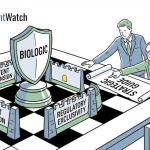
The cornerstone of modern pharmaceutical patent defense is the “patent thicket”. This is a proactive strategy that involves obtaining a dense, overlapping web of patents covering every conceivable aspect of a single drug product.1 The goal is to move far beyond the single, foundational “composition of matter” patent that covers the active pharmaceutical ingredient (API) itself. A robust thicket includes 1:
Formulation Patents: Covering specific dosages, extended-release mechanisms, or combinations with other inactive ingredients (excipients).
Method of Use Patents: Covering the use of the drug to treat specific diseases or patient populations.
Manufacturing Process Patents: Protecting the unique, proprietary methods used to synthesize and produce the drug.
Polymorph and Enantiomer Patents: Covering different crystalline structures or stereoisomers of the API, which might offer advantages in stability or bioavailability.
The strategic brilliance of the patent thicket is that its strength comes from the collective, not the individual. A challenger might be able to invalidate one or two patents in the thicket, but the prospect of having to file dozens of IPRs and fight multiple district court battles becomes economically and logistically daunting. Each additional patent is another hurdle, another lawsuit, another source of cost and delay for the challenger. This transforms legal protection into a powerful economic deterrent. The most famous example is AbbVie’s strategy for its blockbuster drug Humira, which was protected by a thicket of over 100 patents that successfully delayed biosimilar competition for years.
Lifecycle Management and “Evergreening”
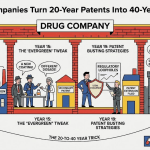
Closely related to the patent thicket is the strategy of “lifecycle management,” which aims to extend a drug’s market exclusivity for as long as possible. This often involves the controversial practice of “evergreening,” where companies obtain new patents on minor modifications to an existing drug as the original patents are about to expire.1 Developing a new extended-release formulation or a new method of administration can lead to a new patent and a new period of three-year regulatory exclusivity, forcing generics to reformulate or file new challenges.11
Beyond these strategies, savvy brand companies also meticulously plan to leverage every available regulatory exclusivity, such as the additional six months granted for conducting pediatric studies or the seven years of exclusivity for drugs designated to treat rare “orphan” diseases.1 These are not afterthoughts; they are critical “strategic bonus times” that are integrated into R&D and regulatory planning from the very beginning.
Defending in the PTAB
When an IPR is filed, the brand’s primary goal is to prevent institution. This is achieved by filing a powerful Patent Owner’s Preliminary Response (POPR) that meticulously dissects the petitioner’s arguments, highlights flaws in their evidence, and argues that there is no “reasonable likelihood” of invalidity. If the IPR is instituted, the defense shifts to a full-throated defense of the patent’s validity, attacking the petitioner’s expert testimony and potentially filing a motion to amend the patent claims to narrower, more defensible versions.
Defending in District Court
In the district court, the brand has the home-field advantage. The defense is built upon the statutory presumption of validity and the challenger’s high burden of proving invalidity by “clear and convincing evidence”.6 The brand’s legal team will conduct extensive discovery to find weaknesses in the generic’s case and will often assert infringement of multiple patents from its thicket, forcing the challenger to fight on many fronts at once.
The advent of IPR has fundamentally altered what constitutes a “strong” patent position. Before the AIA, a single, high-quality pioneer patent on a new compound could be a formidable defense. But IPR provided a cheap and efficient tool for challengers to pick off that single patent. In response, the brand’s strategy had to evolve. A defensible position today is no longer about the strength of a single patent, but about the collective complexity and cost of challenging an entire portfolio. The strategy has shifted from emphasizing “quality” to a more robust approach combining quality with “quantity and complexity.” This is a direct strategic evolution driven by the threat that IPR poses to a brand’s most valuable assets.
The Point of No Return: Understanding IPR Estoppel
For a generic challenger contemplating a dual-track strategy, there is one concept that should loom larger than any other: IPR estoppel. It is the “poison pill” hidden within the IPR process, a provision with the power to cripple a challenger’s entire litigation strategy if things go wrong. Understanding its nuances is absolutely critical.
The “Poison Pill” of IPR: 35 U.S.C. § 315(e)
The rule, found in 35 U.S.C. § 315(e), is deceptively simple. It states that if an IPR petition results in a Final Written Decision, the petitioner is legally barred—or “estopped”—from asserting in a later proceeding (like a district court case or another IPR) that the same patent claim is invalid on any ground that the petitioner “raised or reasonably could have raised” during that IPR.36
This creates a high-stakes, all-or-nothing gamble. A loss at the PTAB is not just a loss in one venue; it has preclusive, and potentially catastrophic, effects on the parallel, higher-stakes district court litigation. This risk must be the single most important consideration for any company contemplating a dual-track strategy.
Deconstructing “Raised or Reasonably Could Have Raised”
The scope of this estoppel hinges on the interpretation of that key phrase.
“Raised”
This part is relatively straightforward. It applies to any invalidity ground—meaning a specific prior art reference or combination of references—that was actually included in the IPR petition. Crucially, the Federal Circuit has held that this includes grounds that the petitioner raised in the petition but that the PTAB declined to institute a trial on.48 So, if you put a ground in your petition, you “own” it for estoppel purposes, whether the PTAB acts on it or not.
“Reasonably Could Have Raised”
This is the more complex and heavily litigated part of the rule. What grounds could you have raised? The general consensus among courts is that this applies to any prior art in the form of patents or printed publications that “a skilled searcher conducting a diligent search reasonably could have been expected to discover” at the time the IPR petition was filed.36
This creates a tricky factual question. If a challenger loses an IPR and then tries to use a new prior art reference in district court, the patent owner will argue they are estopped because a diligent search would have found that reference. The burden of proving that a diligent search would have uncovered the art falls on the patent owner, but it creates significant uncertainty for the challenger.
The “Grounds” vs. “Evidence” Distinction: A Strategic Escape Hatch?
For years, there was a fierce debate about the precise scope of estoppel. Did it bar all future arguments, or only those that were legally permissible in an IPR? The Federal Circuit provided critical clarity in its 2025 decision in Ingenico Inc. v. IOENGINE, LLC.52
The court drew a sharp distinction between invalidity “grounds” and the “evidence” used to support them. It held that IPR estoppel only applies to the specific grounds that can be raised in an IPR—that is, invalidity under §102 or §103 based on patents and printed publications.52
This means that other, distinct legal grounds for invalidity that cannot be raised in an IPR are not estopped. This includes arguments that a patent is invalid because the invention was in “public use” or “on sale” more than a year before the patent was filed.52 A challenger is free to make these arguments in district court, even if the
evidence they use to prove the prior use or sale (like a product manual or a technical document) is the very same printed publication that they used, or could have used, in the IPR.53
This creates a narrow but vital escape hatch. It allows a challenger who loses an IPR to “re-brand” their invalidity case in district court, using the same prior art evidence but asserting a different legal theory of invalidity.
Despite this escape hatch, the risk of estoppel remains profound. Imagine a generic company files an ANDA, triggering a Hatch-Waxman case where millions of dollars in potential damages are at stake if they launch their product “at-risk” and lose. They also file an IPR, hoping for a quick and cheap victory. The PTAB issues a Final Written Decision upholding the patent’s validity. Now, under § 315(e), the generic is estopped from arguing in district court that the patent is invalid based on any patent or printed publication they used, or could have found with a diligent search. This could wipe out their entire invalidity defense, leaving them with only potentially weaker non-infringement arguments. The decision to file an IPR is therefore not an independent, low-risk bet. It is a decision that can permanently foreclose your best defenses in the main event. It is, in many ways, a “bet the company” moment.
Data-Driven Decisions: Analyzing Outcomes and Success Rates
Strategic decisions cannot be made in a vacuum. To truly understand the risks and rewards of each venue, we must look at the data. How do pharmaceutical patents actually fare in the PTAB and in district court? The statistics reveal some fascinating and often counterintuitive trends.
IPR Statistics: A Look Inside the PTAB
The PTAB is often painted as a death knell for patents, but the data for pharmaceuticals is more nuanced.
Institution Rates: The likelihood of an IPR even being instituted against a biopharma patent can vary wildly from year to year. In some periods, institution rates have been quite high, with the PTAB finding a “reasonable likelihood” of invalidity in 60-80% of petitions reviewed.5 However, in other years, the rates have been much lower, dipping below 40% for Orange Book-listed patents. This volatility suggests that the PTAB’s appetite for these cases can be influenced by evolving policies, like the Fintiv rule.
Final Outcomes: Once a trial is instituted, the outcomes differ significantly between small-molecule drugs and biologics. One comprehensive study found that biologic patents fare much worse after institution. A staggering 70% of instituted IPRs against biologic patents resulted in all challenged claims being found unpatentable. In contrast, for small-molecule (Orange Book) patents, only 45% of instituted IPRs resulted in all claims being canceled. This suggests that biologic patents may be more vulnerable to the types of prior art challenges common in IPRs.
Hatch-Waxman Litigation Statistics: The District Court Battlefield
The picture in district court is almost the mirror image. While the overall “success rate” for generics is high when settlements are included, their performance at trial is much weaker.
Trial Outcomes: One study looking at cases from 2000-2009 found that while generics had an overall success rate of 76% (counting settlements and dropped cases as a “win”), their success rate in cases that actually went to trial was only 48%. More recent data from 2024 shows an even starker trend: innovator companies were considered to have prevailed on the issues 20% of the time, while generic companies prevailed only 2% of the time in decisions that went to a final resolution (excluding settlements).
Innovator Advantage at Trial: When cases go to trial, district courts find infringement of a valid patent more often than not. In 2024, district courts found infringement of valid patents in 69% of trials, and upheld the patent’s validity more frequently than they invalidated it.57 This demonstrates the power of the presumption of validity and the high “clear and convincing” evidence standard in the courtroom.
The Role of Settlement
The data on settlements tells a crucial story about risk and motivation. Hatch-Waxman litigation settles at a much higher rate than IPRs involving the same patents. One study directly comparing the two found that 45% of Hatch-Waxman cases settled, compared to only 25.6% of IPRs on Orange Book patents.
This disparity makes perfect sense. The high cost and “all or nothing” nature of district court litigation, combined with the immense financial risk for both the brand (loss of a blockbuster) and the generic (massive damages if they launch at-risk and lose), creates a powerful incentive for both sides to find a middle ground and achieve commercial certainty through a settlement. The IPR, with its lower cost and more limited scope, is often seen as a fight to the finish.
Leveraging Competitive Intelligence: The Role of DrugPatentWatch
Making these complex strategic decisions requires more than just an understanding of the law; it requires real-time, actionable intelligence. You need to know which patents protect which drugs, when they expire, who is challenging them, and where those challenges are taking place. This is where a dedicated business intelligence platform becomes an indispensable tool.
Services like DrugPatentWatch provide the critical data that fuels modern patent strategy. By tracking everything from Orange Book listings and patent term extensions to Paragraph IV filings, ongoing litigation, and IPR petitions, these platforms allow companies to 1:
Monitor Competitor Activity: Get early warnings when a competitor files an ANDA or an IPR against a key product.
Identify Challenge Opportunities: For generic companies, data on a drug’s market size—a key predictor of whether a patent will be challenged—can help identify promising targets for a PIV filing.15
Track Litigation Trends: Analyze outcomes in different district courts and before the PTAB to inform venue selection and strategy.
Coordinate Parallel Proceedings: For companies pursuing a dual-track strategy, having a centralized dashboard tracking the timelines of both the district court case and the IPR is essential for navigating the complexities of Fintiv and estoppel.
In today’s data-driven world, attempting to navigate the intersection of IPR and Hatch-Waxman without a robust competitive intelligence platform is like trying to navigate a minefield blindfolded. The winners will be those who can best leverage data to anticipate threats, identify opportunities, and choose the right battle, on the right ground, at the right time.
The Biologics Frontier: A Note on the BPCIA and the “Patent Dance”
While much of our discussion has focused on small-molecule drugs governed by Hatch-Waxman, it’s crucial to touch upon the parallel universe of large-molecule biologics. These complex therapies, derived from living organisms, are governed by a different law: the Biologics Price Competition and Innovation Act of 2009 (BPCIA).4 The BPCIA created a pathway for “biosimilars,” which are the biologic equivalent of generic drugs, but the dispute resolution mechanism it established is fundamentally different from Hatch-Waxman.
Different Molecules, Different Rules
The BPCIA framework is defined by strategic ambiguity and negotiation, a stark contrast to the rigid, trigger-based system of Hatch-Waxman. The key differences are profound:
No Orange Book: There is no public, centralized list of patents covering a biologic drug. This immediately creates a fog of uncertainty that does not exist for small molecules.63
No Automatic 30-Month Stay: A brand company suing a biosimilar applicant does not receive an automatic stay of FDA approval. The litigation proceeds on its own timeline, and the brand must seek a traditional preliminary injunction if it wants to keep the biosimilar off the market pending a trial decision.63
Different Exclusivities: The incentives are structured differently. A new biologic receives a much longer 12-year period of regulatory data exclusivity, compared to five years for a new small-molecule drug. And the market exclusivity is awarded not to the first challenger, but to the first product deemed “interchangeable” with the brand biologic.61
The “Patent Dance”
In place of the PIV certification and notice letter, the BPCIA created a complex, multi-step, and entirely optional private information exchange known as the “patent dance”.63 This is a highly choreographed process where:
The biosimilar applicant provides a copy of its confidential FDA application to the brand company.
The brand company then provides a list of patents it believes could be infringed.
The biosimilar applicant responds with its non-infringement and invalidity contentions.
The brand company provides its own rebuttal.
The parties then negotiate to determine which patents from the list will be part of the first wave of litigation.
This “dance” is a high-stakes negotiation that occurs entirely behind closed doors. The strategic choices made by both sides—whether to participate in the dance at all, what information to share, and which patents to prioritize for litigation—can dramatically shape the entire dispute. It is far more of a strategic negotiation than the procedural duel of Hatch-Waxman, reflecting the greater complexity and uncertainty inherent in biologic medicines.
Conclusion: Crafting Your Winning Strategy
The choice between an Inter Partes Review at the PTAB and a district court litigation under the Hatch-Waxman Act is one of the most consequential strategic decisions a pharmaceutical company can make. It is not a simple choice between two legal venues; it is a fundamental trade-off between the speed, efficiency, and favorable legal standards of the PTAB versus the powerful commercial incentives and broader strategic scope of the district court.
As we have seen, the landscape is a complex tapestry woven from two distinct legislative acts. Hatch-Waxman created a self-contained ecosystem for resolving patent disputes, a structured duel with clear rules and massive prizes. The America Invents Act then superimposed a general-purpose administrative tool, the IPR, on top of this specialized world, creating a parallel track that offered challengers a tantalizingly easier path to invalidity.
The rise of the dual-track strategy—waging war on both fronts simultaneously—was the natural result of this legislative layering. However, the PTAB’s recent and forceful pushback through discretionary denials like Fintiv and the “settled expectations” doctrine has significantly re-balanced the scales. This is not a procedural tweak; it is a major policy shift that has raised the stakes and the complexity for challengers, forcing them to be more strategic and less opportunistic.
For brand-name companies, the lesson is clear: defense begins years before a challenge is ever filed. The existence of IPR has rendered the single “golden” patent obsolete. A defensible position in the modern era requires a robust, multi-layered “patent thicket” and a proactive lifecycle management strategy designed to make a comprehensive challenge too costly and complex to be feasible.
For generic and biosimilar challengers, the calculus is equally sharp. The decision to file an IPR, particularly in parallel with Hatch-Waxman litigation, is a high-stakes gamble. The risk of IPR estoppel—losing at the PTAB and crippling your defense in district court—is a “poison pill” that must be carefully considered. Success requires a clear-eyed assessment of your goals, your budget, and the specific strengths of your case, informed by real-time competitive intelligence.
Ultimately, there is no one-size-fits-all answer. The winning strategy is not found in a legal textbook, but in a holistic approach that seamlessly integrates legal, regulatory, and business objectives. It requires building a strong patent portfolio from the ground up, leveraging data to understand the competitive landscape, and making a disciplined, informed choice about where to fight. In this high-stakes game of pharmaceutical chess, victory belongs to those who can choose the right battle, on the right ground, at the right time.
Key Takeaways
Two Venues, Two Worlds: Pharmaceutical patent challenges are primarily fought in two distinct venues: U.S. District Court under the Hatch-Waxman Act and the USPTO’s Patent Trial and Appeal Board (PTAB) via Inter Partes Review (IPR). The choice is a core business strategy, not just a legal tactic.
Hatch-Waxman is About Incentives: The Hatch-Waxman pathway is defined by powerful commercial incentives. For brands, the key tool is the automatic 30-month stay of generic approval. For generics, the ultimate prize is the 180-day market exclusivity for the first successful challenger.
IPR is About Efficiency and Favorable Standards: The IPR pathway at the PTAB is faster (18 months), cheaper, and historically has more challenger-friendly legal standards (lower burden of proof, no presumption of validity), making it statistically easier to invalidate a patent.
The Dual-Track Gambit is High-Risk, High-Reward: Many challengers pursue both pathways simultaneously to get the “best of both worlds.” However, the PTAB’s increasing use of discretionary denials (under the Fintiv and “settled expectations” doctrines) has made this strategy more complex and risky.
IPR Estoppel is a “Poison Pill”: A generic company that loses an IPR can be “estopped” (barred) from raising the same or similar invalidity arguments in its parallel district court case. This makes the decision to file an IPR a critical, high-stakes gamble that can cripple a litigation defense.
Brand Defense is a Fortress Strategy: In response to IPR, brand-name companies have shifted to a “patent thicket” strategy—building a dense web of patents around a single product to make a comprehensive challenge economically unfeasible for generics.
Data is Decisive: Success in this complex environment requires data-driven decision-making. Leveraging competitive intelligence platforms like DrugPatentWatch to track patent filings, litigation, and regulatory timelines is essential for crafting a winning strategy.
Frequently Asked Questions (FAQ)
1. If a generic company wins an IPR and invalidates a key patent, but the 30-month stay from the parallel Hatch-Waxman case is still in effect, can they launch their product?
No, not immediately. The IPR decision and the 30-month stay are independent processes. The 30-month stay is a function of the FDA’s regulatory process and is tied to the district court litigation. It prevents the FDA from granting final approval to the ANDA.18 A win at the PTAB, while a major victory, does not automatically terminate the 30-month stay. The generic company would need to take the PTAB’s Final Written Decision to the district court and file a motion for summary judgment or a similar motion to get a court order that terminates the stay. A district court judgment of invalidity or non-infringement is what officially ends the stay and allows the FDA to grant final approval.
2. What happens if a brand-name company lists a new patent in the Orange Book after a generic has already filed an ANDA and litigation has begun? Does that trigger a new 30-month stay?
Generally, no. Under the 2003 Medicare Modernization Act (MMA) amendments to Hatch-Waxman, the practice of “stacking” multiple 30-month stays was largely eliminated. If a patent is listed in the Orange Book after a generic has already submitted its ANDA, the generic filer must still certify to that new patent, but a subsequent lawsuit by the brand on that new patent will not trigger a new, separate 30-month stay. The litigation over the new patent will proceed, but it won’t provide the brand with an additional automatic delay of the generic’s approval. This was a key reform to prevent brands from gaming the system by continually listing new patents to delay generic entry indefinitely.
3. Can a settlement in a Hatch-Waxman case trigger the 180-day exclusivity for the first-filing generic? What are the antitrust risks of such a settlement?
Yes, a settlement can trigger the 180-day exclusivity, but it comes with significant antitrust risk. The 180-day clock starts upon the first commercial marketing by the first-filer or a court decision holding the patent invalid or not infringed. A settlement agreement that includes a consent judgment or dismissal containing a finding of non-infringement or invalidity can serve as the necessary “court decision” to trigger exclusivity. However, settlements, especially those involving a payment from the brand to the generic in exchange for a delayed entry (a “reverse payment” or “pay-for-delay” settlement), are under intense scrutiny from the Federal Trade Commission (FTC). Following the Supreme Court’s decision in FTC v. Actavis, such settlements are evaluated under a “rule of reason” antitrust analysis to determine if they are an unreasonable restraint of trade.29 A large, unjustified payment is seen as a strong indicator of an illegal agreement to share monopoly profits and keep a generic off the market.
4. As a brand company, if I see a competitor file an IPR against my patent, what are the first three things I should do?
First, immediately engage your legal and technical teams to conduct a rapid and deep analysis of the IPR petition. You have a very short window to prepare your Patent Owner’s Preliminary Response (POPR), and your primary goal is to defeat the petition at the institution stage. This means identifying every weakness in the petitioner’s arguments, from flawed claim constructions to misinterpretations of the prior art.
Second, evaluate the potential for a discretionary denial. Analyze the case under the Fintiv factors if there is parallel litigation and consider if a “settled expectations” argument is viable based on the patent’s age and the petitioner’s history.43 These arguments must be made early and persuasively to the PTAB.
Third, re-evaluate your entire litigation and business strategy for that product. An IPR filing is a serious threat that changes the risk calculus. You must consider its potential impact on any parallel litigation, the possibility of settlement, and even your long-term lifecycle management plans for the drug. It is a signal to prepare for a multi-front war.
5. Given the risk of IPR estoppel, is it ever strategically wise for a generic challenger to deliberately not use its best prior art in an IPR, saving it for the district court case?
This is a sophisticated and highly risky strategy, but it is one that is considered in certain situations. The logic would be to use a set of strong, but not “bet-the-company,” prior art references in the IPR. If you win, you’ve achieved your goal cheaply. If you lose, you are estopped on those grounds, but you have saved your very best prior art—your “silver bullet”—for the district court, where it has not been “raised or reasonably could have been raised” (assuming it was not discoverable in a diligent search, which is a high bar to clear). The primary risk is that courts generally interpret “reasonably could have been raised” broadly.36 If the patent owner can convince the court that a diligent search would have uncovered your “silver bullet” art, you will be estopped from using it anyway, and you will have wasted your IPR and lost your best defense. This is a very dangerous gambit that should only be contemplated with experienced counsel after a thorough risk analysis.
The Scope of IPR Estoppel: A Statutory, Historical, and Normative Analysis – UF Law Scholarship Repository – University of Florida, accessed August 8, 2025, https://scholarship.law.ufl.edu/flr/vol70/iss6/1/
Patent Punting: How FDA and Antitrust Courts Undermine the Hatch-Waxman Act to Avoid Dealing with Patents – University of Michigan Law School Scholarship Repository, accessed August 8, 2025, https://repository.law.umich.edu/mttlr/vol21/iss2/1/