The business of generic drug development is often misunderstood as a simple exercise in duplication. For many years, we operated under a straightforward mission: replicate a small-molecule drug and prove its bioequivalence.1 The primary metric was cost, and the reward was a share of the market once a brand’s patent expired.1 However, the economic reality of the modern pharmaceutical market has transformed this mission. Generic drugs are no longer mere copies; they are products of sophisticated scientific effort and strategic foresight.2 They represent a critical pillar of global healthcare, driving down costs and expanding patient access to essential medicines.2 To succeed in this environment, you must move beyond the “cheap drug” narrative and master the scientific rigor required to turn formulation hurdles into a powerful competitive advantage.3
When a generic drug enters the market, the price of that medication can drop by as much as 85% or more.3 This competition translates into immense savings for healthcare systems—generics saved the U.S. healthcare system approximately $2.2 trillion from 2009 to 2019.4 But for the manufacturer, this price erosion is a double-edged sword. It creates a “pressure-cooker” environment where every decision is critical and every delay costs millions in lost revenue.3 A flawed formulation or a failed bioequivalence study can mean missing a launch window and turning a potential blockbuster into a financial write-off.3
The financial logic of market entry
To understand why formulation is so vital, we must examine the economics of generic competition. The relationship between the number of competitors and the market price of a drug follows a non-linear curve.5 While a single generic competitor might lead to a 30% price reduction, the presence of ten or more labelers drives prices down by 70% to 95%.2 This rapid commoditization makes the timing of market entry the single most important factor for ROI.
Number of generic manufacturers
Generic price as % of brand price
Approximate price reduction
1 (First mover)
60% – 80%
20% – 40%
2
~50% – 55%
45% – 50%
3
~40% – 45%
55% – 60%
5
~15%
85%
10+
5% – 30%
70% – 95%
2
Because of this erosion, the “gold rush” in the generic world is the 180-day exclusivity period granted to the first generic applicant to successfully challenge a patent.5 During this window, you do not need to price at marginal cost.5 You can typically offer a modest discount of 15% to 25% off the brand price, allowing you to capture 60% to 80% of your total lifetime profit for that molecule in just six months.5 This period effectively subsidizes the development costs and the legal fees incurred to invalidate the brand’s patents.5
The reverse engineering paradox
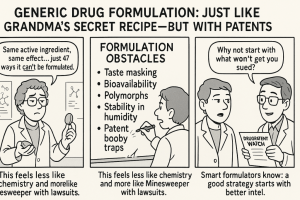
The core challenge for your team lies in replicating the performance of a Reference Listed Drug (RLD) without access to its proprietary manufacturing blueprints or the exact specifications of its raw materials.2 This process, known as de-formulation or reverse engineering, is a form of scientific detective work.3 We must use advanced analytical techniques to dissect the RLD, identifying the API and every excipient—the binders, fillers, disintegrants, lubricants, and coatings.3
“It’s akin to a master chef trying to replicate a secret recipe by tasting the dish and analyzing its texture, rather than having the ingredient list and cooking instructions.” 2
Success in de-formulation requires more than just an ingredient list. You must hypothesize the function of each component and understand how changes in formulation, even seemingly inert ones, influence the drug’s absorption, distribution, metabolism, and excretion (ADME) within the human body.2 This transforms generic development from a copying exercise into a sophisticated engineering challenge.2 If you cannot match the “bioequivalent fingerprint” of the innovator’s product, the regulator will deny your application.3
Mastering the solubility gauntlet
Poor solubility is the primary obstacle in early oral formulation development. Nearly 90% of the drugs in the current developmental pipeline consist of poorly soluble molecules.9 When a drug candidate has low solubility, it cannot be easily absorbed into the gastrointestinal tract, leading to clinical failures and added costs.9 We categorize these challenges using the Biopharmaceutical Classification System (BCS).
BCS Category
Solubility
Permeability
Formulation challenge
Class I
High
High
Minimal (Ideal candidates)
Class II
Low
High
Dissolution rate-limited absorption
Class III
High
Low
Permeability-limited absorption
Class IV
Low
Low
Significant bioavailability hurdles
9
To overcome these barriers, we apply various technological approaches. We can create solid dispersions by dispersing the API within a hydrophilic matrix, or we can use nano-suspensions to reduce the API particle size to the nanoscale.10 This increases the surface area and enhances the rate of dissolution.10 Other techniques include lipid-based delivery systems and the use of inclusion complexes to stabilize the molecule.9 If we do not focus on maintaining a supersaturated solubility state at the site of absorption, the generic product will likely fail to demonstrate bioequivalence.9
Solving stability and degradation issues
A generic drug must be more than just bioequivalent at the time of manufacture; it must remain safe and effective throughout its shelf-life.11 Stability is often challenged by interactions between the API and excipients or by environmental conditions like heat, light, and moisture.10 Chemical degradation, oxidation, and moisture sensitivity can compromise the drug’s integrity.10
Strategic stabilization involves the selection of appropriate polymers to maintain the amorphous nature of the API and the use of antioxidants to mitigate oxidative stress.9 We also use specialized packaging to protect the formulation from environmental triggers.10 For example, in the case of amorphous APIs, the primary risk is crystallization, which can drastically alter the solubility profile and render the drug ineffective.9 Your team must anticipate these issues years in advance to ensure the product remains compliant with regulatory standards until its expiration date.9
The move toward complex generics
As simple oral solids become commoditized, forward-thinking generic companies are shifting their focus to complex generics.2 These products have complexity in their active ingredients, formulations, routes of administration, or drug-device combinations.12 While they are harder to develop, they offer higher profit margins because there are fewer competitors.1
The market for complex generics is projected to grow from $84 billion in 2024 to $200 billion by 2035, with a compound annual growth rate (CAGR) of roughly 8% to 10.2%.14 Despite the high development costs—ranging from $10 million to $50 million per product—these drugs preserve 40% to 60% of the reference pricing, offering long-term margin stability.16
Market Segment
2024 Size (USD Billion)
2035 Projected (USD Billion)
CAGR (%)
Global Complex Generics
84
200
8.0 – 10.2
Pharmerging Markets
–
–
13.0
U.S. Generic Market
139.03 (2025)
231.69 (2030s)
5.24
1
However, the risk of failure is higher. Complex products like long-acting injectables and liposomes pose a significant challenge in demonstrating bioequivalence because the drug is not easily measured in the blood.1 This often necessitates alternative pathways, such as 505(b)(2) “hybrid” applications or extensive clinical endpoint studies.1
Bioequivalence as the bedrock of approval
The most critical task in generic development is demonstrating therapeutic equivalence through bioequivalence (BE) studies.2 We must prove that the generic product delivers the same amount of the active substance to the site of action at the same rate and to the same extent as the innovator drug.2
We measure this using two primary pharmacokinetic (PK) endpoints:
$C_{max}$ (Maximum Concentration): The peak concentration the drug reaches in the bloodstream.
$AUC$ (Area Under the Curve): The total extent of drug exposure to the body.17
For the FDA and EMA to approve a generic, the 90% confidence interval for the ratio of the geometric means of these parameters must fall within the range of 80.00% to 125.00%.17 This narrow window requires impeccable quality control. For certain high-solubility oral drugs, the FDA may grant a waiver for in vivo studies, but for the majority of products, a human trial is the only way to prove “sameness”.17
Navigating the manufacturing scale-up
A successful laboratory formulation is only half the battle. You must be able to manufacture the product at an industrial scale while maintaining its critical quality attributes (CQAs).2 This requires controlling the critical process parameters (CPPs) of the manufacturing process.3
In the case of tablets, we must optimize blending, granulation, and compression.3 Blending ensures the API is uniformly distributed, while granulation creates a wet mass that can be dried and compressed into tablets.3 In a high-shear granulator, the speed of the impeller and the rate of liquid addition are CPPs that dictate the density and flow of the granules.3 If the granules are not dried correctly in the fluid bed dryer, the tablets may fail dissolution tests or lack the strength to withstand packaging.3 For complex generics like liposomes, the process is even more sensitive to variations, requiring stringent validation protocols to ensure batch-to-batch consistency.12
Strategic intelligence for patent challenges
To gain early market access, you must navigate a complex patent landscape. Generic firms use DrugPatentWatch to identify which patents are the most significant barriers to entry and to find weaknesses in the innovator’s patent estate.3 The Hatch-Waxman Act allows you to file an Abbreviated New Drug Application (ANDA) with a Paragraph IV certification, asserting that the brand’s patents are invalid or not infringed.19
This filing often triggers a 30-month stay of FDA approval, giving the brand time to litigate the dispute.19 To win this “legal duel,” you must provide a detailed notice letter explaining the legal and factual basis for your challenge.20 A well-drafted letter can signal a strong position and influence the brand’s settlement posture.20 For innovators, the defense often involves building “patent thickets”—dozens or hundreds of secondary patents covering new formulations, dosages, or methods of use—to increase the cost and complexity of your challenge.21
The skinny label strategy and legal risks
One common tactic to bypass method-of-use patents is the “skinny label.” This involves carving out the patent-protected indications from your generic label so you can launch for the indications that have already expired.4 For example, if a drug is approved for both hypertension and heart failure, but only the heart failure patent is active, you can launch a generic labeled only for hypertension.23
However, the case of GSK v. Teva regarding the drug carvedilol has highlighted the risks of this approach.4 The court found that even with a skinny label, a generic manufacturer could be liable for “induced infringement” if its marketing materials or press releases encouraged doctors to use the drug for the carved-out indication.23 GSK argued that Teva’s promotion of its generic as “bioequivalent” to the brand led physicians to believe it was interchangeable for all uses, including the patented one.4 This makes it essential for your marketing and legal teams to coordinate every public statement to avoid any suggestion of promoting an infringing use.23
Economic impact of the Inflation Reduction Act
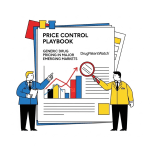
The Inflation Reduction Act (IRA) of 2022 has introduced significant uncertainty into the generic market. The law grants the government the authority to set “maximum fair prices” (MFPs) for certain high-spending drugs in Medicare.6 This creates a “pill penalty,” as small-molecule drugs (pills and capsules) can be subject to price controls nine years after launch, whereas large-molecule biologics are protected for thirteen years.28
For the generic industry, this is a major concern. If the brand drug’s price is already government-set and deeply discounted by the time a generic can launch, the incentive for you to enter the market is weakened.6 This price cap acts as a pricing anchor that generics are forced to compete with, potentially reducing the revenue potential of the 180-day exclusivity period.6 We have already seen a 70% drop in aggregate investments in small-molecule drug development since the IRA’s provisions were first drafted.28
Provision
Impact on generics
Potential outcome
Medicare price negotiation
Lowers the “anchor” price for generic entry
Reduced ROI for PIV challengers
Inflation rebates
Penalizes price increases faster than CPI-U
Compressed margins for existing generics
“Pill penalty”
Earlier price controls on small molecules
Shift in R&D away from oral solids
6
Leveraging AI for de-formulation and testing
To counter rising development costs and regulatory hurdles, the industry is turning to artificial intelligence (AI) and machine learning (ML).31 AI is being used across the lifecycle of generic drugs, from API synthesis and excipient selection to predictive modeling for bioequivalence.32
Machine learning algorithms can screen thousands of excipient and API combinations to predict their compatibility before we even step into the lab.31 We are also seeing the use of Wasserstein Generative Adversarial Networks (WGANs) to create virtual subjects for bioequivalence trials.34 This allows us to simulate different scenarios, increase sample sizes virtually, and reduce the number of real human participants needed.34 While these technologies are still in the early stages, they hold the promise of shortening development cycles and improving the accuracy of regulatory submissions.33
Case study: The complexity of Enoxaparin (Lovenox)
Enoxaparin is a classic example of how scientific innovation can overcome a complex formulation challenge. It is a low-molecular-weight heparin (LMWH) used to prevent blood clots.36 Because it is a naturally sourced product with a complex mixture of polysaccharide chains, it was once thought that a generic version could never be fully characterized.36
The FDA established five criteria for active ingredient sameness to ensure the generic was identical to Lovenox:
Equivalence of physicochemical properties: Ensuring the physical and chemical markers match.
Equivalence of source material and depolymerization: Using the same heparin source and chemical process to break up the chains.
Equivalence in disaccharide building blocks and sequences: Meticulous fragment mapping of the chains.
Equivalence in biological assays: Testing the drug’s activity in biochemical models.
Equivalence of in vivo pharmacodynamic (PD) profiles: Measuring Anti-Xa and Anti-IIa levels in human plasma.18
By meeting these rigorous standards, generic manufacturers proved that they could replicate the performance of a complex biological product, providing an affordable alternative that is fully substitutable for the brand.36
Case study: Advair Diskus and the drug-device challenge
Developing a generic version of Advair Diskus (fluticasone and salmeterol) requires mastering the interplay between a dry powder formulation and a complex delivery device.1 For a generic candidate like SOLIS, the manufacturer had to provide evidence of clinical bioequivalence at two specific time points:
Day 1: To show the immediate effect on lung function (measured by FEV1 AUC over 12 hours).
Week 4: To show the long-term effect of the corticosteroid (measured by trough FEV1).39
Because batch-to-batch variability in the brand product is substantial, the generic developer must prove that their manufacturing process is consistent enough to fall within the required confidence intervals.41 This requires large sample sizes—often over 800 patients—and a placebo-controlled design to demonstrate that the study has the sensitivity to detect differences between the products.39
The future of nanomedicine in generics
Looking toward 2025 and beyond, nanomedicine platforms are becoming a new frontier for generic development. Nanoparticles can be tailored to cross the blood-brain barrier, achieve site-specific targeting, and enhance the solubility of hydrophobic drugs.42 We are seeing the optimization of Lipid Nanoparticles (LNPs) for mRNA delivery and the development of “theranostic” platforms that combine treatment with real-time imaging.42
However, the industrial scalability of these systems remains a major hurdle. Producing nanoparticles requires precise control over emulsification and solvent removal.42 Maintaining batch-to-batch consistency in terms of particle size and surface charge is critical for safety.42 As these technologies mature, the companies that can standardize nanomedicine manufacturing will be best positioned to capture market share in high-value therapeutic areas like oncology and rare genetic disorders.42
Key Takeaways
The Timing Premium: The 180-day exclusivity period for Paragraph IV filers is the single most profitable window in a drug’s lifecycle, often representing 60% to 80% of total lifetime profit.5
Complexity as a Moat: Shifting to complex generics (liposomes, inhalers, nanoparticles) protects against rapid price erosion and creates a more resilient portfolio.1
Science of Sameness: Success in de-formulation requires identifying critical quality attributes (CQAs) and matching the RLD’s “bioequivalent fingerprint” through rigorous testing.2
Regulatory Navigation: Mastering the different requirements of the FDA and EMA—and engaging in early scientific advice—can accelerate market access and reduce review cycles.17
Legal and Labeling Vigilance: Skinny labels must be managed with extreme care to avoid induced infringement liability based on marketing and public statements.23
Digital Transformation: AI and machine learning are no longer optional; they are essential tools for optimizing formulations and predicting bioequivalence to lower development costs.31
Policy Awareness: The Inflation Reduction Act’s “pill penalty” and Medicare negotiations are reshaping the incentives for small-molecule generic development, requiring a shift in long-term strategy.6
FAQ
1. Why is the 180-day exclusivity period so important for generic firms? It creates a legally mandated duopoly where the first-to-file generic can charge prices much closer to the brand-name drug before full competition sets in. This period often generates the vast majority of the product’s total profit.5
2. What is an Authorized Generic (AG), and how does it affect ROI? An AG is the brand-name drug sold under a generic label by the innovator company. It competes directly with the first-filing generic during the 180-day exclusivity period, often reducing the generic’s revenue by 40% to 52%.5
3. How does the BCS classification system guide formulation strategy? It helps scientists predict how a drug will behave in the body. For Class II and IV drugs (low solubility), the formulation must focus on enhancing dissolution through methods like micronization, solid dispersions, or nanoparticle technology.9
4. What are the primary reasons for FDA “Refusal to File” letters? Common deficiencies include incomplete data on bioequivalence, inconsistencies in the Chemistry, Manufacturing, and Controls (CMC) section, and issues with data integrity or missing facility inspections.17
5. How can AI reduce the cost of clinical bioequivalence studies? AI can use generative models (like WGANs) to create virtual patients, allowing researchers to simulate drug performance across thousands of scenarios. This can help optimize the design of real-world trials and potentially reduce the number of human subjects required for approval.32
The Inflation Reduction Act and Drug Development: Potential Early Signals of Impact on Post-Approval Clinical Trials – PMC – PubMed Central, accessed January 28, 2026, https://pmc.ncbi.nlm.nih.gov/articles/PMC12181196/