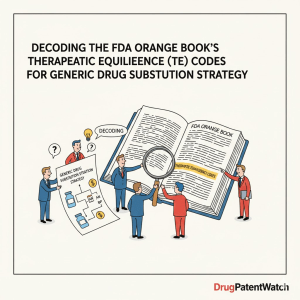
The regulatory framework of the United States pharmaceutical industry is governed by a complex interplay of scientific evaluation, legislative compromise, and commercial strategy, all of which converge in a single authoritative document: the Approved Drug Products with Therapeutic Equivalence Evaluations, universally known as the Orange Book.1 Published by the Food and Drug Administration (FDA) since 1980, the Orange Book serves as the definitive registry of drug products approved under the Federal Food, Drug, and Cosmetic Act (FD&C Act) on the basis of safety and effectiveness.1 Far from being a mere list of medications, the Orange Book is a strategic instrument that dictates the substitution rights of pharmacists, the litigation timelines of patent disputes, and the market entry pathways for generic competitors.4 The publication was born from the necessity to resolve a fundamental tension within public policy: the dual mandate of inducing pioneering research and development for new drugs while simultaneously enabling competitors to bring low-cost, high-quality generic copies to the market.1
The Regulatory Architecture and Historical Evolution
The origins of the Orange Book are rooted in the changing legal and medical landscapes of the late 1970s. Prior to the enactment of the Drug Price Competition and Patent Term Restoration Act of 1984, better known as the Hatch-Waxman Act, the pathway for generic drug entry was characterized by significant regulatory friction.7 Manufacturers seeking to market generic versions of brand-name drugs were essentially required to submit a full New Drug Application (NDA), conducting their own redundant clinical trials to prove safety and efficacy for molecules that had already been approved.8 This requirement created a de facto monopoly for brand manufacturers that often extended far beyond the expiration of their original patents.8
In the late 1970s, states began rethinking their laws to expand access to affordable drug products, shifting from “negative formularies” (prohibiting substitution for certain drugs) to “positive formularies” (allowing substitution for listed drugs).3 Recognizing the need for a unified national standard to assist states in these evaluations, the FDA Commissioner announced in May 1978 the agency’s intent to provide a comprehensive list of approved prescription drugs with therapeutic equivalence determinations.3 The first draft edition was distributed in January 1979, and the first official annual edition was published in October 1980.3
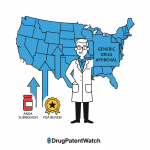
The Hatch-Waxman Act of 1984 codified the Orange Book’s role and introduced the Abbreviated New Drug Application (ANDA) process under Section 505(j) of the FD&C Act.1 This legislation established the mechanism whereby generic sponsors could rely on the FDA’s findings of safety and efficacy for a previously approved Reference Listed Drug (RLD) by demonstrating bioequivalence rather than conducting new clinical trials.4 The Act transformed the Orange Book into a central pillar of patent litigation, requiring NDA holders to list patents that cover their drug substance, formulation, or method of use.4
Milestone Legislative and Regulatory Developments
The evolution of the Orange Book reflects decades of refinement in drug regulation, as detailed in the following historical milestones:
Year
Event
Impact on Substitution and Strategy
1938
Federal Food, Drug, and Cosmetic Act
Required new drugs to be safe prior to marketing.7
1962
Kefauver-Harris Drug Amendments
Mandated that drugs be proven effective as well as safe.7
1970
Initial ANDA Pathway (Regulation)
Created a pathway for pre-1962 drugs via the DESI program.7
1979
Orange Book Proposal
First draft of the publication aimed at helping states standardize substitution.3
1980
First Official Orange Book
Established the TE coding system still in use today.7
1984
Hatch-Waxman Act
Codified ANDA pathways and required patent listings in the Orange Book.1
2009
BPCIA
Established the Purple Book for biological and biosimilar products.1
2017
GDUFA II Updates
Enhanced the FDA’s commitment to timely complex generic reviews.12
2025
45th Annual Edition
Includes updated legislative proposals for biosimilar interchangeability and skinny labeling.7
1
The Scientific Foundation of Pharmaceutical Equivalence
To navigate the Orange Book’s TE codes, one must first master the hierarchical definitions of equivalence that form the basis of the FDA’s evaluations. The agency distinguishes between pharmaceutical equivalents, pharmaceutical alternatives, and therapeutic equivalents, each representing a different level of clinical and chemical similarity.11
Pharmaceutical equivalents are drug products that contain identical amounts of the identical active pharmaceutical ingredient (API) in the identical dosage form and utilize the identical route of administration.3 These products must meet the same compendial standards for strength, quality, purity, and identity.14 However, the FDA allows pharmaceutical equivalents to differ in certain “non-functional” characteristics, such as the shape of a tablet, the scoring configuration, and the presence of specific excipients like colors, flavors, and preservatives.3
Pharmaceutical alternatives, by contrast, contain the same therapeutic moiety but not necessarily in the same amount or dosage form, or as the same salt or ester.11 For example, a tablet and a capsule containing the same active drug would be considered pharmaceutical alternatives rather than equivalents.11 Generally, pharmaceutical alternatives are not eligible for the ANDA pathway or an “A” rating in the Orange Book because they do not meet the “sameness” requirement mandated by Section 505(j).17
Therapeutic equivalence is the most rigorous standard and is essentially defined as the combination of pharmaceutical equivalence and bioequivalence.11 The FDA considers drug products to be therapeutically equivalent if they are pharmaceutical equivalents that can be expected to have the same clinical effect and safety profile when administered to patients under the conditions specified in the labeling.3 The fundamental premise of the Orange Book is that any drug product rated as therapeutically equivalent to another can be substituted with full clinical confidence.5
The Bioequivalence Framework and Pharmacokinetic Parameters
Bioequivalence serves as the critical bridge between the chemical sameness of a pharmaceutical equivalent and the clinical performance of a therapeutic equivalent.11 It is defined as the absence of a significant difference in the rate and extent to which the active ingredient becomes available at the site of drug action.11 For most drug products, this is measured through pharmacokinetic (PK) studies in healthy volunteers, which track the concentration of the drug in the blood over time.6
The FDA relies on two primary PK parameters to determine bioequivalence:
Area Under the Curve (AUC): This represents the total extent of drug exposure over time.10
Maximum Plasma Concentration ($C_{max}$): This represents the rate of absorption and the peak level reached in the bloodstream.10
For a generic drug to be deemed bioequivalent to an RLD, the manufacturer must demonstrate that the 90% confidence interval for the ratio of the generic’s mean $AUC$ and $C_{max}$ to the RLD’s mean $AUC$ and $C_{max}$ falls within the standard range of $[0.8, 1.25]$.14 This “80/125 rule” accounts for inherent biological variability and ensures that the generic drug performs within the same physiological window as the brand-name counterpart.6
In cases where systemic absorption is not the intended mechanism of action—such as with topical creams or inhaled corticosteroids—bioequivalence must be demonstrated through other scientifically valid measurements, such as pharmacodynamic clinical endpoints or specialized in vitro characterization.11
Parameter
Definition
Regulatory Significance
$AUC$
Area Under the Curve
Measures total drug exposure; critical for efficacy.10
$C_{max}$
Maximum Plasma Concentration
Measures rate of absorption; critical for safety/onset.10
$T_{max}$
Time to $C_{max}$
Indicates the speed of drug action.10
90% CI
90% Confidence Interval
Must fall between 0.8 and 1.25 for BE.14
10
The Taxonomy of Therapeutic Equivalence Rating Codes
The Orange Book utilizes a sophisticated coding system to communicate the FDA’s evaluation of therapeutic equivalence for multi-source prescription drug products.1 These codes are usually two characters, with the first letter indicating whether the product is therapeutically equivalent and the second letter providing information on the dosage form or the evidence used for the evaluation.5
The “A” Codes: Substitutable Equivalents
Drug products assigned an “A” code are those the FDA considers to be therapeutically equivalent to other pharmaceutically equivalent products.10 These ratings are the engine of generic substitution at the pharmacy level.5
AA: Assigned to products in conventional dosage forms that do not present actual or potential bioequivalence problems.16 This typically includes oral solutions and some immediate-release tablets.10
AB: This is the most strategically vital code, assigned to products that meet the necessary bioequivalence requirements.22 The “AB” rating often indicates that potential bioequivalence issues were identified but resolved through adequate in vivo or in vitro testing.10
AN: Solutions and powders for aerosolization.10
AO: Injectable oil solutions, where equivalence is based on the vehicle and active ingredient concentration.10
AP: Injectable aqueous solutions, which are generally deemed equivalent if their formulation is the same because they bypass the absorption phase.10
AT: Topical products, including creams, ointments, and ophthalmic solutions.10 Achieving an “AT” rating is notoriously difficult due to the complexity of local action bioequivalence.19
The “B” Codes: Non-Equivalent or Unresolved
Products assigned a “B” code are those that the FDA, at the time of evaluation, does not consider to be therapeutically equivalent to other pharmaceutically equivalent products.5 This is often due to differences in delivery mechanisms or unresolved bioequivalence questions.5
BC: Extended-release dosage forms (tablets, capsules, or injectables).10 Because these release drugs over time, they are prone to bioequivalence failures and are only upgraded to AB once rigorous testing is satisfied.10
BD: Products with documented bioequivalence problems that have not been resolved.10
BE: Delayed-release oral dosage forms, such as enteric-coated tablets.10
BN: Products in aerosol-nebulizer drug delivery systems.10
BP: Products with potential bioequivalence problems where the data is currently insufficient.10
BR: Suppositories or enemas for systemic use.10
BS: Products where the drug standards are deficient, preventing an FDA evaluation of equivalence.10
BT: Topical products with unresolved bioequivalence issues.10
BX: Products for which the data are simply insufficient to determine therapeutic equivalence.10
Three-Character Codes and Multi-Source Reference
When multiple reference products exist for the same ingredient and dosage form, or when generic products are not equivalent to each other, the FDA uses three-character codes (e.g., AB1, AB2, AB3).5 This ensures that a generic drug is only substituted for the specific brand-name drug against which its bioequivalence was actually tested.5
Abbreviated Approval Pathways: 505(j) versus 505(b)(2)
The strategic decision of which approval pathway to pursue is one of the most consequential for a pharmaceutical manufacturer, as it determines the eventual TE rating and the degree of market exclusivity.17
The Section 505(j) ANDA
The ANDA pathway is intended for “duplicates” of the RLD.18 To be approved under 505(j), a generic must be the “same” as the RLD in active ingredient, strength, dosage form, and route of administration.18 While the “sameness” requirement is stringent, the benefit is that an approved ANDA is by default considered therapeutically equivalent to the RLD and receives an “A” rating.5 This allows for seamless, automatic substitution in almost every state.5
The Section 505(b)(2) NDA
The 505(b)(2) pathway is a hybrid that allows a manufacturer to rely on the FDA’s findings of safety and efficacy for a listed drug while also providing its own clinical or non-clinical data to support changes to that drug.9 Common 505(b)(2) applications involve new formulations (e.g., changing from a tablet to an extended-release capsule), new salt forms, or new combinations of previously approved drugs.9
Unlike 505(j) products, 505(b)(2) drugs are not automatically rated for therapeutic equivalence.17 While a 505(b)(2) sponsor can petition the FDA for a TE rating, many companies choose this pathway specifically to create a “branded generic” that avoids automatic substitution.17 This allows the manufacturer to differentiate its product based on unique clinical features or improved convenience, commanding a price premium over commodity generics.17
Suitability Petitions
A suitability petition is a regulatory mechanism that allows a manufacturer to file an ANDA even if the product deviates slightly from the RLD in dosage form, route of administration, or strength.9 If the FDA determines that no additional clinical trials are needed to prove safety and efficacy for the proposed change, the petition is granted, allowing the product to enter the market via the “abbreviated” pathway.9 However, the first approved petitioned ANDA for a given change does not receive a TE rating to the RLD; instead, subsequent generics will be rated against that first petitioned ANDA.28
Feature
505(j) ANDA
505(b)(2) NDA
Suitability Petition
Sameness Requirement
Must be identical to RLD
Can vary from RLD
Slight variations allowed
Data Requirements
Bioequivalence only
Bridging clinical data
Bioequivalence + Justification
TE Rating
Automatic AB rating
Requires petition; rare
Not equivalent to RLD
Strategic Goal
High-volume substitution
Product differentiation
Fill niche market needs
9
Intellectual Property Dynamics and Paragraph IV Litigation
The Orange Book is the central battlefield for pharmaceutical patent disputes, functioning as the legal registry that triggers the high-stakes litigation known as Hatch-Waxman litigation.4
Patent Certifications
Every ANDA applicant must provide one of four certifications for each patent listed in the Orange Book for the RLD 1:
Paragraph I: The patent information has not been submitted to the FDA.8
Paragraph II: The patent has expired.8
Paragraph III: The generic will not launch until the patent expires.1
Paragraph IV: The patent is invalid, unenforceable, or will not be infringed.1
The Paragraph IV Gambit and 180-Day Exclusivity
A Paragraph IV certification is a bold declaration of war. By filing it, the generic manufacturer commits an “artificial act of infringement,” giving the brand-name company the right to sue immediately.8 If the brand files suit within 45 days of receiving notice, the FDA is automatically prohibited from granting final approval to the ANDA for 30 months, or until a court rules in favor of the generic.6
The incentive for this risk is the 180-day exclusivity period.15 The first generic manufacturer to file a substantially complete ANDA with a PIV certification is granted six months of market exclusivity during which no other generic can launch.8 During this window, the first-filer typically prices its drug at only a 15-25% discount to the brand, capturing nearly half the market and generating the vast majority of the product’s lifecycle ROI.15
Lifecycle Management: PTE and PTA
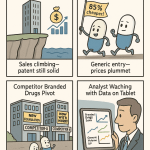
Brand-name companies utilize two primary mechanisms to extend their patents and delay the “patent cliff” 32:
Patent Term Extension (PTE): Enacted as part of Hatch-Waxman, PTE restores time lost during the FDA regulatory review process.32 PTE is capped at 5 years, and the total remaining patent term cannot exceed 14 years from the date of approval.8
Patent Term Adjustment (PTA): This compensates for delays caused by the USPTO during the patent examination process.33 Unlike PTE, PTA has no statutory cap and can add significant time to a patent thicket.33
State-Level Generic Substitution Laws and Policy Variations
While the FDA provides the scientific advice on equivalence, the authority to substitute is fundamentally a matter of state law.3 The 50 states represent a patchwork of regulations that significantly influence generic penetration rates.26
Mandatory versus Permissive States
States are broadly categorized by whether they require or merely allow a pharmacist to substitute an AB-rated generic.35
Mandatory States: (e.g., Florida, Kentucky, Massachusetts, Nevada) Pharmacists are legally required to substitute the less expensive generic unless the physician writes “Medically Necessary” or “DAW”.35 In Florida, the law explicitly requires the pharmacist to pass the full amount of savings on to the consumer.38
Permissive States: (e.g., Alabama, California, Georgia, Texas) Pharmacists may substitute the generic but have the professional discretion to dispense the brand name.35
Consent and Notification Requirements
The “presumed consent” law is a subtle but powerful driver of substitution.36 In states with presumed consent, the pharmacist can assume the patient wants the generic unless the patient explicitly objects.37 Other states require the pharmacist to explicitly ask the patient for consent before making the switch, a hurdle that studies show can reduce the generic penetration rate by over 3 percentage points.36
State
Substitution Rule
Required Hand-Written Phrasing
Florida
Mandatory
“MEDICALLY NECESSARY” 35
New York
Mandatory
“Dispense as Written” (Electronic or Hand-written) 36
California
Permissive
“Do not substitute” 35
Massachusetts
Mandatory
“No substitution” 35
Alabama
Permissive
“May not Substitute” 35
35
The Challenge of Narrow Therapeutic Index (NTI) Medications
Narrow Therapeutic Index (NTI) drugs represent the most significant scientific and regulatory exception to the standard AB-rating paradigm.14 These are drugs where small differences in dose or blood concentration may lead to serious therapeutic failures or adverse reactions.14
The FDA has historically maintained that its bioequivalence standards are robust enough to cover NTI drugs without special regulation.14 However, since 1995, the agency has developed a specific list of NTI drugs for internal purposes to guide the types of studies needed for bioequivalence.14 Many states, including North Carolina and Pennsylvania, have adopted their own NTI lists and prohibit or restrict the substitution of these drugs at the pharmacy level.14
Examples of NTI drugs commonly subject to these restrictions include:
Carbamazepine, Phenytoin, Valproic Acid: Antiepileptics where minor variances can trigger breakthrough seizures.14
Digoxin: A cardiac glycoside with a very narrow window before toxicity.14
Lithium: A mood stabilizer where sub-therapeutic levels lead to relapse and high levels lead to kidney toxicity.14
Warfarin: An anticoagulant where precise dosing is critical to prevent both clots and hemorrhages.42
Complex Generics and the Frontier of Drug-Device Combinations
As the patent cliff for simple small molecules has largely passed, the pharmaceutical industry has shifted its focus to complex generics (CGx).26 These are products where the drug’s effectiveness depends on a complex active ingredient, a complex formulation, or a complex route of delivery, such as metered-dose inhalers (MDIs) and dry powder inhalers (DPIs).21
The Wixela Inhub Case Study
The approval of Wixela Inhub (generic Advair Diskus) in 2019 was a watershed moment for complex generics.45 For years, the “device defense” had prevented generic entry because manufacturers could not achieve the “sameness” required by the ANDA pathway.45 To earn an AB rating, Wixela’s manufacturer, Mylan, had to demonstrate equivalent in vitro performance across all strengths and flow rates, measuring Aerodynamic Particle Size Distribution (APSD) and Emitted Dose (ED).21
In a clinical study of 80 patients, researchers found that Wixela Inhub provided comparable performance to Advair Diskus across all patient groups, including children (aged 4-7) with asthma and adults with COPD.45 The success of Wixela demonstrated that achieving therapeutic equivalence for inhaled products is possible but requires a massive investment in characterization and manufacturing precision.45
Technical Hurdles in Complex Equivalence
Demonstrating equivalence for complex products involves parameters far beyond simple blood concentration:
APSD: Ensures the drug particles are the right size to reach the intended site in the lung or nasal cavity.21
Plume Geometry: The shape and velocity of the spray from a nasal or aerosol product.21
Rheological Properties: The viscosity and flow of topical creams and gels.19
Morphology: The physical shape and crystalline structure of the drug particles.19
Strategic Maneuvers: Skinny Labeling and Product Hopping
Innovative companies employ sophisticated lifecycle management strategies to defend their market share against AB-rated generic entry.4
Product Hopping
Product hopping involves “switching” the market to a new, patented version of a drug just before the primary patent for the original version expires.15 A common example is shifting patients from an immediate-release tablet (facing generic competition) to a once-daily extended-release capsule (protected by new patents).6 Because the extended-release version is not a pharmaceutical equivalent to the immediate-release tablet, it receives a different TE code (e.g., BC or non-equivalent) and cannot be automatically substituted by the pharmacist.10
Skinny Labeling
Generic manufacturers utilize Section viii “skinny labeling” to enter the market for unpatented indications while carving out those indications still under patent protection.48 For decades, this was a routine pathway to early generic entry.50 However, the 2021 GlaxoSmithKline v. Teva decision fundamentally changed the risk profile.13 The court found that Teva could be liable for “inducing infringement” of GSK’s patented indication, even though it wasn’t on the label, because its marketing materials promoted the generic as “AB-rated” and “equivalent” to the brand.13 This has led to a “chilling effect,” with the proportion of first generic prescriptions using skinny labels declining annually from 2021 to 2023.50
The 2025 Regulatory Landscape and Market Access Trends
The landscape in 2025 is defined by several significant shifts in how the Orange Book is used to drive market access and reduce costs.7
The FY 2025 Legislative Proposals
The FDA has introduced several radical legislative proposals to further generic and biosimilar competition 13:
Safe Harbor for Skinny Labeling: A proposal to explicitly exclude skinny labeling and statements of therapeutic equivalence from being used as evidence of patent infringement.13
Deeming Biosimilars Interchangeable: A plan to eliminate the separate statutory standard for biosimilar interchangeability, deeming all approved biosimilars to be interchangeable with their reference products by default.13
Full Ingredient Disclosure: A requirement for brand manufacturers to disclose the names and amounts of all inactive ingredients in their products, helping generic firms meet the “sameness” requirements for non-oral dosage forms.13
Medicare Part D and Tiering Paradox
Despite the clinical equivalence of generics, market access remains a challenge. For the 2025 plan year, data indicates that only 43% of generic prescription drugs are placed on traditional generic tiers in Medicare Part D, a decline from 65% in 2016.51 Over 57% of generics are now placed on higher, non-preferred tiers (including specialty tiers), where patients face significantly higher cost-sharing.51 This “tiering creep” means that even an AB rating does not guarantee patient access to the lowest possible price.51
2025 Approval Statistics
As of September 2025, at least 63 first generics have been approved, a pace that is ahead of the previous year.53 Significant advancements have been made in biosimilars as well, with the 3Q 2025 approval of denosumab biosimilars (Aukelso, Bildyos) referencing the major osteoporosis and oncology drug Prolia/Xgeva.53
Category
2025 Approval Trends (to Sept)
Impact
First Generics
63 Approved
Higher pace than 2024; focuses on complex solids.53
Biosimilars
3Q Surge (Denosumab)
Expected to drive billions in savings in oncology.53
Part D Generic Tiers
43% of Generics on Tier 1/2
Indicates rising patient out-of-pocket costs.51
Skinny Labels
Declining Proportion
Reflects legal risk post-GSK v. Teva.50
50
Strategic Imperatives for the Generic Pharmaceutical Industry
The decoding of the Orange Book reveals that therapeutic equivalence is not merely a scientific status but a multifaceted strategic asset. For generic manufacturers, the path to market dominance requires a mastery of the “Paragraph IV Playbook”—identifying the right targets years before patent expiration and preparing for the inevitable 30-month stay.15 For brand-name manufacturers, the defense of market exclusivity increasingly depends on “device constituent” innovation and proactive lifecycle management to prevent generic “sameness”.6
The commercial reality of 2025 suggests that the simple AB rating is no longer enough to ensure success. Manufacturers must also navigate the complexities of PBM tiering, state-level NTI restrictions, and the emerging legal risks of skinny labeling.14 However, the ongoing regulatory reforms—particularly the FDA’s 2025 proposals to harmonize biosimilar interchangeability and protect skinny labeling—signal a continued commitment to the Hatch-Waxman legacy of promoting competition.13
Ultimately, the Orange Book remains the industry’s most critical source of truth. It provides the essential bridge between the laboratory and the pharmacy, ensuring that every time a substitution is made, it is supported by a robust foundation of scientific evidence and regulatory oversight. As the industry enters a new decade of biological and complex generic innovation, the TE coding system will continue to be the definitive standard for balancing the needs of medical innovation with the imperative of patient access.
Overview of in vivo Bioavailability (BA) and Bioequivalence (BE) Studies Supporting NDAs and ANDAs – FDA, accessed January 31, 2026, https://www.fda.gov/media/166003/download