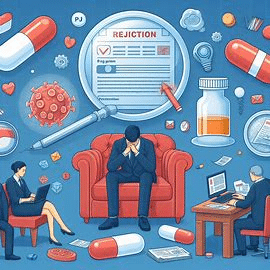
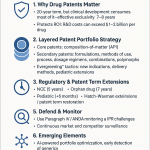
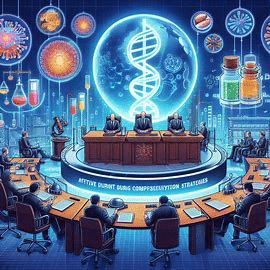
The pharmaceutical industry relies heavily on robust patent protection to incentivize the substantial research and development (R&D) investments required for novel drug discovery and development. However, securing and maintaining these patents is a complex process frequently challenged by various rejection grounds. This report identifies the most prevalent reasons for drug patent rejections—specifically, issues related to novelty, non-obviousness, and sufficiency of disclosure (encompassing written description and enablement). It also addresses rejections concerning utility, patent-eligible subject matter, and procedural technicalities. The analysis highlights that successful patent prosecution in this sector demands a dual approach: proactive measures during the application drafting phase and strategic reactive responses during examination. Ultimately, strong patent portfolios are not just legal safeguards but critical business assets that enable companies to recoup costs, secure market exclusivity, and fuel future innovation.
1. Introduction: The Critical Role of Patents in Pharmaceutical Innovation
The pharmaceutical landscape is characterized by immense financial outlays and protracted timelines for bringing new therapies to market. Patents serve as the cornerstone of this industry, providing the necessary incentive for companies to undertake the colossal R&D expenditures involved. A pharmaceutical patent grants exclusive rights to manufacture, use, and sell a drug for a specified period, typically 20 years from the date of filing.1 This temporary monopoly is crucial for recouping the substantial investments, which can exceed $2.6 billion per drug, and for incentivizing future innovation.2 Without this protection, the financial motivation for pharmaceutical companies to pursue R&D would significantly diminish, potentially leading to stagnation in medical advancements and the loss of socially valuable drugs that might otherwise not reach the public.5 This dynamic underscores the fundamental bargain at the heart of the patent system: in exchange for full public disclosure of an invention, the inventor receives a temporary market monopoly, allowing for economic return and encouraging further innovation.4
The journey to obtaining a pharmaceutical patent involves a rigorous examination process conducted by patent offices such as the United States Patent and Trademark Office (USPTO), the European Patent Office (EPO), and the Japan Patent Office (JPO). These offices meticulously assess whether an invention meets the stringent criteria of novelty, non-obviousness, and utility.1 Examiners review patent applications in conjunction with existing prior art to determine if the claimed invention is useful, new, non-obvious, and adequately described and enabled.7 A primary objective of this examination is to clearly articulate any rejection early in the prosecution process, providing the applicant with an opportunity to respond comprehensively and present evidence of patentability.7
2. Foundational Patentability Requirements and Common Rejection Grounds
Pharmaceutical patent applications frequently encounter rejections based on several core patentability requirements. Understanding these grounds is essential for developing effective prosecution strategies.
An invention is considered novel if it has not been previously known, used, or publicly disclosed before the patent application filing date.8 This means the invention must be substantially different from any existing public knowledge, including prior patents, publications, or products sold in the market.9 Under the America Invents Act (AIA) in the U.S., prior art is globally applicable, meaning disclosures anywhere in the world can impact novelty.8 Patent examiners evaluate the uniqueness of an application by comparing it against this existing body of prior art.8
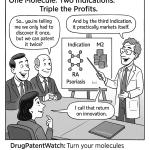
For drug patents, specific challenges arise, particularly with modifications to known compounds. Patenting different crystalline forms of a drug, known as polymorphs, is one such area. While polymorphs can offer significant advantages such as altered solubility, dissolution rates, stability, and bioavailability, demonstrating their novelty can be difficult.13 The challenge often lies in proving that the specific polymorph was not inherently disclosed by prior art processes.14 The burden rests on the applicant to show that a known process would not inevitably lead to the claimed polymorph.14 The strictness of novelty requirements, especially for modifications of existing drugs like new polymorphs or formulations, can create a tension with the significant scientific effort and potential clinical benefits these incremental innovations offer.10 Even if a polymorph demonstrates improved bioavailability, it may be deemed inherently anticipated or lacking sufficient “newness” if prior art implicitly covers it, placing a high evidentiary burden on the applicant.14 This stringent interpretation of novelty for incremental drug innovations can disincentivize pharmaceutical companies from pursuing valuable, albeit less radical, improvements to existing therapies, potentially limiting patient access to better formulations or delivery methods.5
A notable example is the Novartis v. Union of India case, where Novartis’s patent application for a beta-crystalline form of imatinib mesylate (Gleevec) was rejected in India. The rejection was based on Section 3(d) of Indian patent law, which requires new uses or modifications of known drugs to show a “significant difference in properties with regard to efficacy.” Despite demonstrating increased bioavailability in rats, Novartis failed to prove a difference in therapeutic efficacy, leading to the patent’s rejection.15 This case illustrates that even an improved property may not meet the novelty or inventive step threshold if the legal standard for “efficacy” is not explicitly met. Anticipation rejections under 35 U.S.C. § 102 are common, requiring every element of a claim to be found in a single prior art reference.16 Historically, over 70% of applications receiving a 102 rejection eventually proceed to allowance with a proper prosecution strategy.16
An invention is considered non-obvious if the differences between the claimed subject matter and the prior art would not have been apparent to a “person having ordinary skill in the art” (POSITA) at the time the invention was made.8 This assessment involves a highly fact-intensive analysis.19 Examiners consider several factors, including the scope and content of the prior art, the differences between the prior art and the claimed invention, the level of skill in the art, and objective indicia of non-obviousness (often called secondary considerations).18 These secondary considerations can include evidence of a long-felt but unresolved need, commercial success, unexpected results, copying by others, and skepticism from experts.18 Experimental data is frequently submitted to demonstrate unexpected results.23
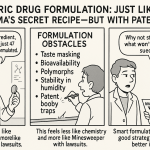
Incremental innovations in pharmaceuticals, such as new formulations or dosage regimens, often face significant obviousness challenges. Reformulating a drug for extended-release or improved stability, despite requiring substantial scientific effort, can be deemed obvious if the technical effect is considered predictable.10 However, if a new formulation provides a genuine technical advantage, such as reduced dosing frequency, it can be patentable.4 Similarly, claims directed to dosing regimens for known drugs present unique challenges, as courts may find a “reasonable expectation of success” in combining prior art elements.27 Nevertheless, a dosage regimen can be deemed non-obvious if it demonstrates a non-obvious balance of patient compliance, therapeutic efficacy, and side effects.28 The Federal Circuit has affirmed the non-obviousness of drug dosing regimen claims even when prior art described regimens for the same active ingredient.27
The Supreme Court’s KSR v. Teleflex decision (2007) significantly influenced the obviousness standard by moving away from a rigid “teaching, suggestion, or motivation” (TSM) test, generally making it easier for examiners to find obviousness. The ratio of obviousness rulings increased following this decision.19 The “obvious to try” doctrine, which gained prominence after KSR, can disproportionately affect pharmaceutical and biotechnology inventions. While intended to prevent the patenting of predictable outcomes, in unpredictable fields, logical research paths—such as screening known compounds or modifying formulations—might be deemed obvious in hindsight, even if the outcome was unexpected or required significant effort.19 This can potentially discourage “logically guided research”.29 The increased scrutiny of non-obviousness, coupled with the “obvious to try” doctrine, necessitates that pharmaceutical applicants not only demonstrate novelty but also provide robust evidence of unexpected results or significant advantages, such as experimental data, comparative studies, or expert testimonials.30 This increases the burden and cost of prosecution and can lead to valuable, but arguably “obvious,” inventions being discarded from R&D pipelines.5
Case examples further illustrate these complexities. In Genentech v. Sandoz, claims were rejected for obviousness because adjusting drug doses was considered routine.31 Conversely, in
Janssen Pharmaceuticals, Inc. v. Mylan Laboratories, the Federal Circuit upheld a pharmaceutical dosing claim as non-obvious, despite prior art describing regimens for the same active ingredient. The court found no motivation to combine valsartan and sacubitril with an expectation of success, particularly because sacubitril had not been administered to humans and other related compounds showed discouraging results.27 This case demonstrates the limits of the “obvious to try” doctrine when there is no reasonable expectation of success.19 Similarly, the
In re Bell and In re Deuel cases concerning DNA sequences highlighted that while knowing a protein’s amino acid sequence allows for hypothesizing gene structures, the degeneracy of the genetic code means a vast number of nucleotide sequences could code for it. The court determined that the specific claimed invention was not obvious without an articulated reason for selecting that particular sequence.19
2.3. Insufficient Written Description and Enablement (35 U.S.C. § 112(a) / EPC Article 83)
The written description and enablement requirements ensure that the patent application provides a sufficiently detailed disclosure of the invention. The written description mandates that the specification describe the claimed invention in enough detail to demonstrate that the inventor was in “possession” of the claimed invention at the time of filing.33 This requirement ensures that the inventor actually invented what is claimed.34
Enablement requires the patent application to adequately describe how to make and use the invention without “undue experimentation” by a person skilled in the art.1 The examiner bears the initial burden of establishing a reasonable basis to question the enablement provided.35
Broad claims, particularly those defining a genus by function, face significant enablement challenges. The specification must enable a person skilled in the art to make and use the entire class of the claimed invention, not just a few examples.35 For complex inventions, such as those involving antibodies or artificial intelligence, it is not sufficient to generally describe how to make or use them; the disclosure must enable the specific claimed invention across its full scope.37 Recent court decisions, particularly
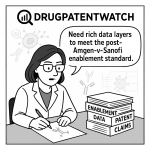
Amgen Inc. v. Sanofi et al., indicate a heightened scrutiny of enablement for functionally defined genus claims, especially in unpredictable fields like biotechnology and pharmaceuticals.35 This means that merely identifying a few working examples is often insufficient to support a broad functional claim, increasing the burden on applicants to demonstrate broad applicability without undue experimentation. This trend towards stricter enablement for broad claims could lead pharmaceutical companies to pursue narrower, more easily enabled patents, potentially fragmenting patent portfolios or disincentivizing early-stage, broad-scope research into new classes of drugs. It also underscores the critical need for comprehensive experimental data and detailed descriptions in the initial filing to support the full scope of desired protection.24
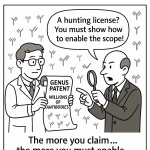
The Supreme Court’s decision in Amgen Inc. v. Sanofi et al. invalidated Amgen’s patents for its cholesterol drug (Repatha) due to lack of enablement. The patents claimed an entire genus of antibodies defined by their function (binding to PCSK9 and blocking its binding to LDLR). While 26 specific antibodies were disclosed, the patent failed to enable the full scope of the claimed genus without undue experimentation.35 The Court emphasized that a broader claim requires more enablement.36 Other cases highlight written description issues:
Novozymes A/S v. DuPont Nutrition Biosciences APS found claims for a specific enzyme species insufficiently described because they were not described as combined in the claim, even if individual limitations were present.38
ICU Med., Inc. v. Alaris Med. Sys., Inc. invalidated claims omitting a “spike” limitation for a medical valve, as the written description did not indicate the inventor possessed a spikeless valve.38 In
Novartis v. Torrent Pharma Inc., the Federal Circuit reversed a lower court’s finding of lack of written description for Novartis’s Entresto patent, clarifying that later-arising technology need not be described but can still be covered by claims. However, the district court initially found lack of written description for valsartan-sacubitril “complexes” because they were unknown at the priority date, illustrating the unpredictability of this requirement.32
For an invention to be patentable, it must serve a “useful” purpose, demonstrating a “credible, specific and substantial” utility.8 This requirement is particularly emphasized for pharmaceuticals and chemical compounds, where practical utility is essential and must be definitive and believable, not hypothetical or trivial.8 The responsibility to prove utility lies with the applicant, especially if the patent office expresses reservations about its value.8 While often straightforward for pharmaceuticals 10, the utility requirement is intertwined with enablement and non-obviousness. A drug’s utility must be demonstrated, and this often relies on experimental data that also supports enablement (how to
use it effectively) and non-obviousness (unexpected beneficial effects).24 Test data is usually necessary for supporting the utility of chemical compounds and compositions, especially where the effect cannot be readily expected from their chemical structure.24
Section 101 rejections frequently arise when claims are directed to abstract ideas, laws of nature, or natural phenomena.9 The
Mayo Collaborative Services v. Prometheus Laboratories, Inc. decision established that claims merely applying a law of nature or natural phenomenon are not patent eligible.1 This has significant implications for personalized medicine and diagnostic methods in the pharmaceutical industry.1 The evolving interpretation of patent-eligible subject matter, especially post-Mayo, creates uncertainty for pharmaceutical innovations that rely on natural phenomena, such as biological processes or diagnostic correlations. This compels applicants to frame their inventions as specific technical improvements that integrate the “judicial exception” into a practical application, rather than simply stating a discovery.40 Artificial intelligence (AI) related patents also frequently face § 101 rejections because AI is often viewed as an extension of mathematical models, which are considered abstract ideas under patent law. Consequently, around 25-40% of AI patent applications are rejected under § 101.41
2.6. Indefiniteness (35 U.S.C. § 112(b)) and Procedural Issues
Claims must “particularly point out and distinctly define the metes and bounds of the subject matter to be protected”.43 A lack of clarity or precision in the claims can lead to indefiniteness objections.45 For instance, a polymorph claim that does not specify a particular wavelength for X-ray powder diffraction (XRPD) peaks may lack clarity or sufficiency, making it difficult for a skilled person to determine if a given solid form meets the claim.14 While procedural issues, such as technical errors, incorrect terminology, or inadequate drawings, can also lead to rejection, these are often considered “informalities errors” that are relatively easy to fix.9 However, indefiniteness rejections under 35 U.S.C. § 112(b) can be more problematic, as they indicate a fundamental lack of clarity in defining the invention’s scope, which can be difficult to remedy without introducing “new matter” or significantly narrowing the claims.9 This can ultimately weaken the patent’s enforceability.14
3. Strategic Solutions for Overcoming Drug Patent Rejections
Navigating the complexities of pharmaceutical patent prosecution requires a combination of proactive planning and reactive adaptability.
3.1. Proactive Measures: Strengthening Applications from the Outset
A robust patent strategy begins long before an application is filed. Thorough prior art searching and analysis are essential for determining an invention’s uniqueness and avoiding potential obstacles early in the process.8 This involves comprehensive searches of existing patents, publications, and non-patent literature, such as scientific papers, books, and online disclosures.8 Such searches help identify potential anticipation (102) references, allowing applicants to draft claims that proactively avoid these issues.16 Specialized patent intelligence tools, such as DrugPatentWatch, offer capabilities for comprehensive prior art searches, including analysis of chemical structures, therapeutic areas, and global patent data, providing valuable competitive intelligence and landscape analysis.47 The “file early and file often” strategy, combined with comprehensive prior art searching, is critical. Early filing secures priority, while thorough searching allows for claims to be drafted that proactively avoid known prior art, thereby strengthening the application against novelty and obviousness rejections.4 This integrated approach minimizes the need for costly and potentially scope-limiting reactive measures later in prosecution.
Comprehensive and detailed patent drafting is crucial for securing patent eligibility.1 A well-drafted application ensures the invention is adequately described and enabled, with clear and concise claims.1 The application must include detailed descriptions, diagrams, and explanations of every aspect of the invention.40 It is vital to emphasize unique features and unexpected benefits that distinguish the invention from existing prior art.30 Including experimental data is indispensable to support utility and non-obviousness, particularly for chemical and pharmaceutical inventions where effects may not be readily predictable.23 It is generally best practice to include all available relevant data at the time of filing, as additional data submitted later may not fully integrate into the application.24 Claims should be crafted to be clear, comprehensive, and strategically worded, utilizing a variety of claim types such as compound claims, method of treatment claims, formulation claims, and dosage regimen claims.4
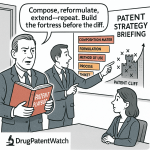
Strategic use of provisional and continuation applications can further enhance a pharmaceutical company’s patent strategy. Provisional patent applications offer a cost-effective way to secure an early priority date, which is paramount in a “first-inventor-to-file” system, providing flexibility during long R&D cycles.4 Continuation applications allow applicants to adapt to new discoveries or refine claims based on examiner feedback or evolving market insights.16 In the pharmaceutical industry, where R&D cycles are extensive and competition is intense, a multi-layered patent strategy that includes various claim types—such as composition, formulation, method of use, dosage regimen, and polymorphs—is essential. This approach creates a “web of protection” that is more challenging for competitors to navigate, thereby maximizing market exclusivity and return on investment.3 This also aligns with “evergreening” strategies, although these practices face increasing scrutiny.4
3.2. Reactive Measures: Navigating Office Actions
When a patent office issues a rejection, a well-planned reactive strategy is critical. The first step involves a detailed analysis of examiner rejections, thoroughly understanding the specific issues raised and the examiner’s underlying perspective.40
Crafting persuasive arguments is central to overcoming rejections. Applicants must distinguish their invention from prior art by highlighting unique features, functionalities, and unexpected results.30 This may involve arguing against the examiner’s interpretation of prior art.46 For obviousness rejections, it is crucial to argue that it would not have been obvious to combine the cited prior art references, or that the invention solves a problem in a non-obvious way, providing evidence of unexpected benefits.9 If a rejection relies on a “design choice” rationale, it can be argued that this is inapplicable if the claimed limitation provides a specific advantage or serves a purpose not found in the prior art.52
Strategic claim amendments are often necessary to address examiner concerns. This may involve adding limitations from dependent claims or the specification to distinguish the invention from prior art.16 While Requests for Continued Examination (RCEs) are popular responses, amending claims can be effective, though it might restrict the scope of protection.53
Leveraging examiner interviews effectively is often indispensable for advancing the prosecution of a patent application.54 Interviews can clarify specific issues, foster mutual understanding between the examiner and applicant, and help identify patentable subject matter.54 Notably, interviews are reported as the most successful response to a § 102 (anticipation) rejection, with a 67.6% success rate.53 Applicants should consider submitting an agenda or proposed amendment/argument in advance to maximize the efficiency of the interview.54 The strategic use of examiner interviews combined with compelling experimental data and expert declarations significantly increases the likelihood of overcoming rejections. Interviews facilitate direct communication and mutual understanding, while data provides the objective evidence needed to refute examiner assertions, especially concerning non-obviousness and enablement.
Submitting experimental data and expert declarations is a powerful reactive measure. Experimental data, such as pharmacological data, is indispensable for demonstrating that a pharmaceutical invention works for its intended purpose and exhibits improved or unexpected characteristics over previous technology.24 Post-filing experimental data is generally accepted by the USPTO to support claims.22 Affidavits or declarations submitted under 37 CFR 1.132, containing evidence of criticality, unexpected results, commercial success, long-felt but unsolved needs, or skepticism of experts, must be considered by the examiner when determining the obviousness of claims.22 Expert witnesses and declarations are critical in patent cases, particularly for issues of infringement, validity, and damages.55 The emphasis on detailed evidence and strategic engagement during prosecution highlights that patent prosecution is not merely a legal formality but a highly strategic and scientific endeavor. Companies that invest in strong patent counsel and robust R&D documentation are better positioned to defend their innovations and secure broader patent protection, ultimately impacting their competitive advantage and market share.3
3.3. Addressing Specific Pharmaceutical Challenges
Certain types of pharmaceutical inventions require tailored strategies to overcome patentability hurdles.
Strategies for patenting polymorphs, formulations, and extended-release forms often focus on demonstrating a technical advantage. For a new formulation of a known drug to be patentable, it must be novel and exhibit an inventive step, typically by providing a technical effect or advantage over existing formulations.4 For example, extended-release formulations that reduce dosing frequency from multiple times a day to once a day can represent a significant invention.25 When patenting polymorphs, it is crucial to devise an appropriate strategy from the outset, focusing on specific advantages not observed for other polymorphs of the same compound.14 Filing separate patent applications for distinct inventions arising from a polymorph screen can clarify the narrative and make it easier to establish inventive step.14 The success in patenting incremental pharmaceutical innovations often relies on demonstrating a
technical effect or unexpected advantage that goes beyond routine development.10 This is particularly true in the context of obviousness challenges, where showing a surprising benefit can overcome a prima facie case of obviousness.24
Overcoming challenges for methods of treatment and dosage regimens typically involves demonstrating non-obviousness. These claims frequently face obviousness challenges.27 Success hinges on demonstrating that the new regimen balances patient compliance, therapeutic efficacy, and side effects in a non-obvious way, a goal not always easily attained and requiring substantial skill.28 Evidence of unexpected results or significant advantages over prior art dosage regimens is key to securing patent protection for these types of claims.27 The ability to secure patents on these “secondary” inventions (often referred to as “evergreening” strategies) is critical for pharmaceutical companies to extend market exclusivity and maximize return on investment, especially given the lengthy development and regulatory approval processes for new chemical entities.4 This practice, while legally permissible if patentability criteria are met, remains a point of tension in public policy debates regarding drug pricing and accessibility.4
4. Statistical Landscape of Drug Patent Rejections and Success Rates
The patent examination landscape for pharmaceuticals varies across major jurisdictions, reflecting different procedural norms and legal interpretations.
Overview of Rejection Rates and Grant Rates
At the USPTO, the overall patent grant rate has recently hovered around 75-80%.58 However, patent applications, particularly in the pharmaceutical industry, face increased scrutiny, leading to a higher bar for patent eligibility.1 Approximately 50% of all patent applications are rejected due to prior art findings.12 For AI-related patent applications, initial rejection rates are even higher, ranging from 50-60%.41 Despite initial rejections, nearly half (48%) of applications that received final rejections in January 2024 eventually issued as patents or received a notice of allowance within one year, indicating that a final rejection is not necessarily the end of the road.59
The EPO received over 190,000 patent applications in 2023, with a grant rate of 68%.60 The EPO rejected 15% of all patent applications in 2023, with common issues including insufficient detail, lack of novelty, and non-obviousness.60 The average time from application to grant at the EPO was 32 months in 2023.60 Approximately 20% of granted patents at the EPO faced opposition in 2023, a post-grant challenge mechanism.60
The JPO received about 290,000 patent applications in 2022.62 The JPO aims to achieve “the world’s fastest and utmost quality patent examinations”.63 The grant rate at the JPO has remained very high, and the average first action pendency was 10.1 months in 2021, further improving to 9.4 months in FY2023.62
Success Rates for Overcoming Specific Rejection Types
§ 102 (Anticipation): Over 70% of applications receiving a 102 rejection ultimately proceed to allowance with a proper prosecution strategy.16 Examiner interviews are reported as the most successful response to a § 102 rejection, with a 67.6% success rate.53 Additionally, anticipation rejections are reversed more frequently than obviousness rejections when appealed to the Patent Trial and Appeal Board (PTAB).16
§ 103 (Obviousness): This is consistently one of the most common rejection grounds.53 Overcoming obviousness rejections often relies on presenting evidence of unexpected results or arguing against the motivation to combine prior art references.16
§ 112 (Written Description/Enablement/Indefiniteness): Rejections under § 112(b) for indefiniteness are the third most common type of rejection at the USPTO.44 For § 112 rejections, interviews are the most successful single response.44 Requests for Continued Examination (RCEs) are the most popular response for § 112 rejections and are comparatively more successful than for other rejection types.44
Trends in Patent Prosecution and Litigation
The USPTO has increased its scrutiny of patent applications, particularly in the pharmaceutical industry, leading to a higher bar for patent eligibility.1 This suggests that while overall grant rates may appear high, the unique challenges and high value of pharmaceutical inventions lead to more rigorous examination and frequent challenges.10
Inter Partes Review (IPR) proceedings at the PTAB are common challenges, especially from generic drug manufacturers targeting innovator patents.26 The PTAB has a high invalidation rate, finding claims invalid in approximately 60-70% of cases.31 However, Orange Book drug patents demonstrate a higher survival rate in IPRs, with 50% surviving with no claims invalidated (compared to less than 20% for other patents) and an 83% chance of surviving unscathed.66 The all-claims invalidation rate at the PTAB has increased from 55% to 70% between 2019 and 2024.65 The high success rate of Orange Book patents in IPR challenges suggests that pharmaceutical patents, despite facing intense scrutiny during prosecution and litigation, are often more robustly drafted and defended. This reinforces the importance of meticulous preparation and strategic prosecution to withstand challenges, as the stakes (market exclusivity, R&D recoupment) are exceptionally high in this industry.2
In the broader litigation landscape, the U.S. saw a sharp rise in patent lawsuits over generic drug disputes in 2024, primarily driven by the expiration of patents on several high-revenue drugs.67 Pharmaceutical companies are also settling more cases on more pharmaceutical products than before the
FTC v. Actavis decision, which addressed reverse payments in settlements.68
Data not explicitly stated, but high grant rate implies lower rejection.
Average Time to Grant/First Action
Varies; 3.4-4.4 years from filing to issue 2
32 months (2023, application to grant) 60
9.4 months (FY2023, First Action pendency) 64
§ 102 Rejection Success Rate
>70% proceed to allowance 16
Not specified, but novelty is a common rejection 60
Novelty is a common ground 39
§ 112 Rejection Success Rate
Interviews most successful single response 44
Not specified, but sufficiency is a common rejection 60
Insufficient disclosure is a common rejection 9
Orange Book Patent Survival in IPR
50% with no claims invalidated; 83% unscathed 66
N/A (specific to US Hatch-Waxman Act)
N/A
Opposition/Invalidation Rate (Post-Grant)
PTAB invalidates 60-70% of challenged claims 31
~20% of granted patents opposed (2023) 60
20.9% invalidated (2017-2021) 62
Pharma Applications as % of Total
~40% of patent term extension requests 69
8% (2023) 60
Not specified
5. Impact of Patent Rejections on Pharmaceutical R&D and Market Exclusivity
Patent rejections carry significant financial and strategic implications for pharmaceutical R&D and market exclusivity.
Financial Implications of Rejections and Prolonged Prosecution
Patent rejections inevitably increase patent pendency times, leading to unnecessary delays in the patent prosecution process and driving up associated costs.43 This inefficiency directly impacts the financial viability of drug development. Prolonged prosecution due to rejections can substantially shorten the effective market life of a patent, as many years are often spent in development and regulatory review before a drug can even reach the market.2 Furthermore, arguments and amendments made to overcome rejections become part of the patent’s prosecution history. This can sometimes lead to weaker, less defensible patents due to the doctrine of prosecution history estoppel, which limits the scope of claims based on arguments made during examination.43
Influence on R&D Investment Decisions and Pipeline Management
The stringent novelty and non-obviousness requirements, if not met, can prevent patents from being granted for drugs that are unlikely to reach the public without patent protection.5 This creates a critical gap in the patent system, leading pharmaceutical firms to discard drugs with weak patentability from their R&D pipelines.5 The potential harm to public health from the loss of these potentially valuable drugs is considerable.5 The increased scrutiny from patent offices, particularly in the pharmaceutical sector, means applicants must provide more detailed and robust evidence to support their claims.1 This translates into a more complex and time-consuming application process and a higher risk of rejection, influencing early-stage R&D decisions and potentially steering companies away from certain research avenues that might face significant patentability hurdles.
The inherent tension in the patent system between incentivizing innovation through temporary monopolies and promoting public access to affordable medicines by limiting exclusivity is exacerbated by patent rejections.2 Rejections, especially on novelty and non-obviousness grounds, can lead to the abandonment of drugs that might have social value but lack strong patentability, creating a “gap in the patent system” where valuable innovations are lost.5
Role of Patent Term Extensions (PTE) and Supplementary Protection Certificates (SPC)
To mitigate the impact of lengthy development and regulatory approval processes on effective patent life, mechanisms like Patent Term Extensions (PTEs) in the U.S. and Supplementary Protection Certificates (SPCs) in Europe exist.4 These extensions are designed to compensate for the time lost during regulatory review, allowing companies to recover some of the market exclusivity period.4 In the U.S., PTEs can add up to five years to a patent term, with approximately 40% of such requests being for pharmaceutical patents.69 The average extension granted is around 2.5 years in the U.S., 3 years in the EU, and 2 years in Japan.69 These extensions are crucial for maintaining market exclusivity and enabling companies to recoup their significant R&D investments.10 The existence of PTEs and SPCs is a direct acknowledgment by patent offices and governments of the lengthy regulatory approval processes unique to pharmaceuticals. These mechanisms attempt to mitigate the negative impact of delays on effective patent life. However, they also contribute to the “evergreening” debate, highlighting the continuous balancing act between innovation incentives and public health concerns, as generic companies often challenge these extensions to gain market share.4
6. Conclusion and Key Recommendations
Drug patent rejections are a common and significant hurdle in the pharmaceutical industry, primarily stemming from challenges related to novelty, non-obviousness, and sufficiency of disclosure. Pharmaceutical inventions, particularly incremental innovations and broad claims, face unique scrutiny. Despite frequent challenges, statistical data indicates that pharmaceutical patents, especially those listed in the Orange Book, demonstrate a remarkable resilience in post-grant challenges, underscoring their inherent value and the robust strategies employed in their prosecution and defense.
To enhance patentability and effectively overcome rejections, pharmaceutical companies should implement the following strategic recommendations:
Invest Heavily in Pre-Filing Due Diligence: Conduct exhaustive global prior art searches, including non-patent literature, to identify potential obstacles and inform claim drafting from the earliest stages.8 Utilizing specialized patent intelligence tools, such as DrugPatentWatch, for competitive intelligence and landscape analysis is crucial for understanding market opportunities and competitor activities.3 This proactive approach minimizes the need for costly and potentially scope-limiting reactive measures later in prosecution.
Prioritize Meticulous Patent Drafting: Ensure applications provide clear, comprehensive, and enabling disclosures, supported by robust experimental data.1 Draft claims with varying scope and emphasize specific technical advantages and unexpected results to differentiate the invention from prior art and overcome obviousness challenges.16
Adopt a Multi-Layered Filing Strategy: Employ provisional applications to secure early priority dates, which is paramount in a first-inventor-to-file system, and consider continuation applications to adapt to evolving R&D or market insights.3 This approach builds a “web of protection” around the core invention and its various aspects, including formulations, methods of use, dosage regimens, and polymorphs, making it harder for competitors to navigate.3
Engage Proactively in Patent Prosecution: Respond to Office Actions strategically, leveraging examiner interviews for clarification and negotiation. Interviews are demonstrably effective in advancing prosecution and overcoming rejections.51 Present strong legal arguments supported by compelling evidence, including post-filing experimental data and expert declarations where necessary, to substantiate claims of novelty, non-obviousness, and enablement.22
Monitor and Adapt to Legal and Regulatory Trends: Stay abreast of evolving patent eligibility standards, such as those related to Section 101 and enablement jurisprudence, and dynamic regulatory frameworks to proactively adjust intellectual property strategies.1 Working with experienced patent counsel is essential to navigate these complexities effectively.1
The most effective approach to overcoming drug patent rejections is a holistic one, integrating robust scientific R&D with sophisticated legal strategy from inception through post-grant defense. This involves not just meeting statutory requirements but anticipating examiner scrutiny and potential challenges, building a defensible patent “story” supported by data and expert testimony.1 As the pharmaceutical landscape becomes increasingly complex with advancements in personalized medicine, the integration of AI in drug discovery, and the rise of biosimilars, the need for adaptive and technologically-augmented patent strategies will only grow.1 Leveraging advanced analytics, AI tools for patent searching and drafting, and continuous competitive intelligence will be crucial for maintaining a competitive edge and ensuring sustained innovation in this vital industry.3
What Is Your Reasonable Expectation of Success in Obtaining Pharmaceutical or Biotechnology Patents Having Nonobvious Claimed Inventions That the Courts Will Uphold? An Overview of Obviousness Court Decisions – PubMed Central, accessed July 25, 2025, https://pmc.ncbi.nlm.nih.gov/articles/PMC4382726/
Identification of the factors that result in obviousness rulings for biotech patents: An updated analysis of the US Federal Circuit decisions after KSR, accessed July 25, 2025, https://pmc.ncbi.nlm.nih.gov/articles/PMC3981861/
2163-Guidelines for the Examination of Patent Applications Under the 35 U.S.C. 112(a) or Pre-AIA 35 U.S.C. 112, first paragraph, “Written Description” Requirement – USPTO, accessed July 25, 2025, https://www.uspto.gov/web/offices/pac/mpep/s2163.html