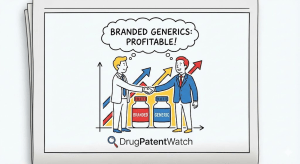
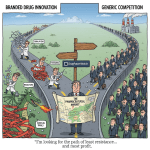
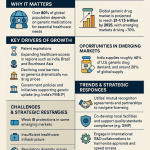
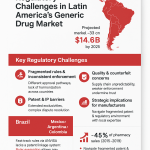
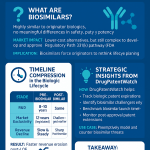
The pharmaceutical industry is frequently depicted as a binary ecosystem: the high-stakes, high-margin domain of patented “innovator” drugs, and the low-margin, high-volume commodity market of unbranded generics. This dichotomy, however, obscures a massive, structurally critical middle ground that generates hundreds of billions of dollars in global revenue: Branded Generics. These products—biologically equivalent to their originator counterparts yet marketed with the prestige and pricing power of a brand—represent one of the most resilient and profitable asset classes in modern healthcare.
This report offers an exhaustive analysis of the branded generics sector, dissecting the economic, regulatory, and psychological mechanisms that allow off-patent molecules to command premium prices. While the scientific premise of a generic drug is “sameness”—interchangeability with the reference product—the commercial reality of a branded generic is “differentiation.” This differentiation is constructed through a complex arbitrage of regulatory trust deficits, patient psychology, supply chain incentives, and strategic lifecycle management.
In emerging markets like India, China, and Latin America, branded generics are not merely an option; they are the standard of care, driven by out-of-pocket expenditure and a reliance on corporate reputation as a proxy for regulatory quality. In developed markets like the United States, they manifest as “Authorized Generics” (AGs) and complex niche products, serving as defensive moats for innovator companies facing the “patent cliff.”
Through a detailed examination of industry giants such as Abbott Laboratories, Sun Pharma, Viatris, and Teva, this analysis reveals how companies maintain operating margins in excess of 20%—rivaling those of innovator firms—by treating pharmaceuticals as Fast-Moving Consumer Goods (FMCG). The report further explores the “Trade Generic” phenomenon, the disruptive impact of Volume-Based Procurement (VBP) in China, and the future trajectory of the sector as it pivots toward biosimilars and digital health integration.
1. The Ontology of the Hybrid: Defining Branded Generics
To understand the economic vitality of branded generics, one must first navigate the nuanced taxonomy that defines them. The term itself is, in a strict regulatory sense, an oxymoron. A “generic” implies commoditization and equivalence, while a “brand” implies exclusivity and differentiation. The synthesis of these concepts creates a unique asset class that operates differently across global jurisdictions.
1.1 The Regulatory Baseline: The Science of “Sameness”
At the molecular level, the justification for any generic drug—branded or unbranded—rests on the principle of Bioequivalence (BE). Regulatory bodies such as the U.S. Food and Drug Administration (FDA), the European Medicines Agency (EMA), and India’s Central Drugs Standard Control Organization (CDSCO) mandate that a generic must be “pharmaceutically equivalent” to the Reference Listed Drug (RLD).1
To achieve this status, the generic must possess:
The identical Active Pharmaceutical Ingredient (API).
The same dosage form (e.g., tablet, capsule, injectable).
The same strength and route of administration.2
The same intended use (labeling) and performance characteristics.4
However, “pharmaceutically equivalent” does not mean “identical.” The FDA and other regulators permit differences in inactive ingredients (excipients), such as binders, fillers, flavoring agents, and preservatives.2 These differences are non-trivial in the context of branded generics, as they often form the basis for marketing claims regarding superior tolerability, stability, or palatability.
The Statistical Reality of Bioequivalence:
The regulatory threshold for bioequivalence is statistical. A generic manufacturer must demonstrate that the rate and extent of absorption of the drug—measured by the Area Under the Curve (AUC) and Maximum Concentration ($C_{max}$)—do not significantly differ from the innovator. Specifically, the 90% confidence interval for the ratio of the generic’s geometric mean to the innovator’s geometric mean must fall within the range of 80% to 125%.7
While regulators consistently affirm that this statistical range ensures no clinically significant difference in therapeutic effect 2, the existence of any range allows marketing teams of branded generic companies to sow seeds of doubt. In markets with lower regulatory trust, this mathematical allowance is frequently weaponized to suggest that cheaper, unbranded alternatives are “substandard” or “less potent,” thereby justifying the premium price of the branded generic.7
1.2 Taxonomy of the Off-Patent Market
The global market for off-patent drugs is not a monolith but is segmented into three distinct categories, each with a unique economic model and value proposition.
1.2.1 Unbranded Generics (The Commodity)
These drugs are sold under their International Nonproprietary Name (INN), such as “Atorvastatin” or “Metformin.” In markets like the US and UK, they are driven by the “substitution model,” where pharmacists are legally permitted or required to dispense the cheapest available version regardless of the brand prescribed.
Economic Driver: Price competition is the sole differentiator. Margins are razor-thin, often fractions of a cent per pill.
Manufacturer Profile: Manufacturers rely on massive volume and vertical integration (owning the API manufacturing) to survive.8
1.2.2 Branded Generics (The Hybrid)
These are off-patent drugs that are given a proprietary trade name by the manufacturer (e.g., Sun Pharma selling Rosuvastatin as “Rozavel” or Abbott selling Clarithromycin as “Klaricid”).
Marketing: Unlike commodities, these are actively promoted to physicians through a field force of medical representatives.
Pricing: They occupy a “mid-tier” strategy—priced significantly lower than the original innovator brand but commanding a premium (often 30-100%) over unbranded generics.8
Value Proposition: The brand serves as a guarantee of quality, supply reliability, and corporate accountability in markets where regulatory enforcement is perceived as variable.10
1.2.3 Authorized Generics (The Defensive Moat)
This category is specific to highly regulated markets like the US. An Authorized Generic (AG) is the exact same formulation as the brand-name drug, manufactured on the same production line by the innovator company, but repackaged and sold without the brand name.12
Strategic Function: Innovators launch AGs immediately upon patent expiry (or during the 180-day exclusivity period of the first generic competitor) to capture the price-sensitive segment of the market while retaining the “brand loyalist” segment. It is a mechanism for the innovator to compete with itself to crowd out generic competition.14
1.3 The Global Bifurcation: Geography Defines the Model
The definition of what constitutes a “generic” varies wildly depending on the maturity of the healthcare system. This geographic split is the single most important factor in understanding global pharmaceutical profitability.
In the US, “branded generics” are largely a niche phenomenon limited to dermatology, ophthalmology, or complex injectables where substitution is harder or bioequivalence is difficult to prove. In contrast, in India or Brazil, almost all drugs consumed are branded generics; the concept of an unbranded white pill in a bottle is virtually non-existent for the average consumer.8
2. The Economic Engine: Analyzing Profitability Drivers
The central paradox of the branded generic is its ability to generate high margins on a non-exclusive asset. Unlike a patented drug, which acts as a monopoly, a branded generic competes in an oligopoly where product differentiation is largely psychological or service-based.
2.1 The “Trust Premium” and Information Asymmetry
In emerging markets, the state’s capacity to enforce quality standards is often viewed with skepticism. Frequent reports of “spurious,” “substandard,” or counterfeit drugs create a climate of fear.18 In this vacuum of regulatory trust, the corporate brand acts as a proxy for the regulator.
The economic behavior here is rational but costly. A patient thinks: “I cannot verify if the government inspector ensured this factory is clean, but I trust Abbott/Pfizer/Sun Pharma to protect their global reputation.” This results in a Trust Premium. Patients are willing to pay significantly more out-of-pocket to avoid the perceived risk of ineffective medication.10
Studies in the Indian market have demonstrated that branded generics can be priced 30% to 100% higher than their unbranded or “trade generic” counterparts, yet they retain market dominance.20 This pricing power allows manufacturers to maintain healthy gross margins even without patent protection, effectively monetizing the trust deficit of the public sector.
2.2 Structural Cost Advantages
Branded generics enjoy a superior cost profile compared to both innovators and pure commodity generics, occupying a “Goldilocks” zone of profitability.
1. Versus Innovators (R&D Efficiency):
Innovator companies spend billions on drug discovery, risking capital on molecules that may fail in Phase I, II, or III clinical trials. Branded generic companies spend zero on discovery. Their R&D is strictly limited to formulation development and bioequivalence studies, which cost a fraction ($1-5 million vs. $2 billion for a new chemical entity).8 This absence of “sunk cost” risk allows for a much more predictable return on investment.
2. Versus Commodity Generics (Margin Resilience):
Commodity generic manufacturers operate on razor-thin margins and are highly vulnerable to fluctuations in the price of raw materials (Active Pharmaceutical Ingredients or APIs). Because branded generics command a higher price point, they have a thicker gross margin buffer. If API costs rise by 10% due to supply chain disruptions in China, a commodity player with 5% net margins faces an existential crisis; a branded player with 20% net margins absorbs the hit and maintains profitability.8
2.3 The Strategy of “Reverse Innovation”
Leading branded generic players do not simply copy; they “re-innovate.” This strategy, prominent in companies like Abbott’s Established Pharmaceuticals Division (EPD), involves incremental improvements that justify brand loyalty and prevent commoditization.17
Formulation Upgrades: Modifying a drug from a twice-daily dosage to a once-daily extended-release (XR) version. This improves patient compliance and allows the company to market a “new” product that is distinct from the sea of standard generics.
Packaging Innovation: Creating blister packs labeled with calendar days (Monday, Tuesday, etc.) to help patients track adherence.
Digital Integration: Adding QR codes to packaging that link to patient education portals or support programs. These low-cost innovations create “stickiness” with doctors and patients. A physician is more likely to prescribe a brand that helps their patient remember to take the medicine, creating a barrier to entry for cheaper competitors.11
2.4 Economies of Scale and Global Arbitrage
Branded generic giants like Teva, Viatris, and Sun Pharma operate massive global manufacturing networks. Teva, for instance, produces over 3,500 products and supplies nearly 200 million people daily.23 This scale provides critical economic advantages:
Purchasing Power: They negotiate significantly lower rates for APIs, excipients, and packaging materials than smaller regional players.
Manufacturing Efficiency: Running continuous manufacturing lines 24/7 reduces the unit cost of production to the theoretical minimum.
Geographic Arbitrage: They manufacture in low-cost jurisdictions (India/China) while selling in medium-price jurisdictions (LatAm, Eastern Europe, Southeast Asia), capturing the spread between developing world production costs and emerging world sale prices.
3. The Emerging Market Fortress: Where Brands Rule
While the US market struggles with deflationary pricing in generics driven by buying consortiums, emerging markets provide a fortress of profitability for branded generics. Data projects the sector to reach nearly $500 billion by 2031, driven almost entirely by these regions where the healthcare infrastructure favors brands.10
3.1 The “Out-of-Pocket” Payer Dynamic
In developed markets, third-party payers (insurers or governments) pay for drugs. Their primary incentive is cost containment, driving utilization of the cheapest unbranded generic via formularies.
In emerging markets, 60-80% of pharmaceutical expenditure is out-of-pocket (paid directly by the patient at the pharmacy counter).17
Psychology of the Self-Payer:
When a patient pays their own money for a heart medication or antibiotic, they become highly risk-averse. Unlike an insurer who looks at population-level statistics, the individual looks at personal survival. They prioritize perceived quality over the lowest price.
Doctor Influence: Patients in these markets rely heavily on physician recommendations. If a doctor prescribes a specific brand (e.g., “Augmentin” instead of Amoxicillin-Clavulanate), the patient buys that specific brand, fearing that substitution might compromise their health. Pharmacists often reinforce this by stocking trusted brands that guarantee repeat business rather than unknown generics that might cause complaints.25
3.2 India: The Pharmacy of the World & The Branded Anomaly
India serves as the archetype of the branded generic market. It is a market where “unbranded” generics barely exist in the retail channel, despite consistent government efforts to promote them.
Market Structure: The Indian pharmaceutical market is valued at over $50 billion, with branded generics constituting nearly 90% of the prescription market.27
The “Trade Generic” vs. “Branded Generic” Distinction: This is a critical nuance in the Indian ecosystem:
Branded Generics: These are promoted to Doctors by an army of Medical Representatives (MRs). They carry high prices to cover marketing costs and offer moderate trade margins to retailers.28
Trade Generics: These are sold directly to Distributors/Chemists without doctor promotion. They have a very low price to the retailer but allow for massive retailer margins (sometimes 500-1000%). The chemist is incentivized to push these products when a doctor writes a generic prescription or when a patient asks for a cheaper alternative.20
Profitability Analysis of the Indian Model:
Manufacturer Level: Branded generics yield net profit margins of 20-40% due to pricing power. Trade generics yield lower margins (5-15%) but operate on a high-volume, low-overhead model (no sales force required).22
Retailer Level: Retailers make 16-20% on branded drugs but can make 40-50% or more on trade generics. This creates a conflict of interest where the supply chain prefers trade generics while the doctor prefers branded generics.31
Case Study: Sun Pharma’s Domestic Dominance
Sun Pharma, India’s largest drugmaker, derives roughly 33% of its revenue from the domestic market, almost exclusively through branded generics.32 Their strategy relies on a massive field force covering specialists (cardiologists, neurologists). By building brands in chronic therapies, Sun creates annuity-like revenue streams. A patient put on Sun’s “Rosuvas” (Rosuvastatin) for cholesterol is likely to stay on it for decades, generating consistent cash flow that funds their specialty R&D.33
3.3 China: The Disruption of Volume-Based Procurement (VBP)
China has historically been a branded generic market similar to India, where multinational “off-patent” brands commanded huge premiums. However, the introduction of Volume-Based Procurement (VBP) has radically altered the landscape.16
The VBP Mechanism: The government tenders large contracts for specific molecules (e.g., Atorvastatin). Manufacturers bid for the right to supply entire hospital systems. Winners get access to massive volume but must slash prices by 50-90%.
Impact on Profitability: This has commoditized many legacy branded generics within the public hospital system. Multinational companies (MNCs) like Pfizer and AstraZeneca have seen their off-patent “originated” brands lose massive revenue in the public sector.
Strategic Response: Companies are pivoting to the retail pharmacy market (outside the hospital tender system) and the private healthcare market. Here, brand loyalty still exists among affluent Chinese consumers willing to pay out-of-pocket for the perceived quality of an imported brand over a domestic VBP winner.35
3.4 Latin America and Russia: The “FMCG” Approach
Abbott Laboratories has specifically targeted these regions with a unique strategy. In Russia and LatAm, the “pharmacy recommendation” is powerful, but brand recognition is paramount. Abbott’s strategy of “100% leadership in key emerging markets” relies on treating off-patent drugs like FMCG products—investing in heavy advertising (where legal), attractive packaging, and strong distribution networks to build brand equity directly with the consumer.17
4. Corporate Strategy: The “Second Act” for Big Pharma
For decades, the standard pharmaceutical lifecycle was: Launch -> Patent Cliff -> Revenue Collapse. Branded generics have rewritten this script, offering a “Second Act” for older drugs that allows them to remain cash cows long after exclusivity ends.
4.1 Abbott Laboratories: The Pure-Play EPD Model
Abbott is unique among major Western pharma companies. It spun off its proprietary R&D business (AbbVie) and retained its “Established Pharmaceuticals Division” (EPD). EPD is essentially a branded generic business focused entirely on emerging markets.
Financial Performance: Abbott’s EPD consistently delivers operating margins of 23-24% and sales growth in the mid-to-high single digits.37 This stability is prized by investors compared to the binary volatility of biotech.
Strategy: “Local but Global.” They manufacture locally to reduce tariff impacts and supply chain risks, but leverage global branding. They focus on “bread and butter” therapeutic areas: Gastroenterology, Women’s Health, and Cardiology, where chronic usage drives volume.17
The Strategic Insight: Abbott proved that profitability does not strictly require new molecules; it requires market access and trust. They monetized the “Abbott” corporate brand as a seal of quality in chaotic markets.
4.2 Viatris: The Scale and Legacy Play
Viatris was formed from the merger of Mylan (a generic giant) and Upjohn (Pfizer’s off-patent division).
The Logic: Combine Mylan’s pipeline of complex generics and manufacturing capacity with Upjohn’s iconic legacy brands (Viagra, Lipitor, Lyrica) and its massive emerging market commercial infrastructure.40
Performance: Viatris generates massive free cash flow ($2.0 billion+ annually), which it uses to pay down debt and fund dividends. While revenue growth has been challenged by divestitures and pricing pressure in the US, its emerging market brand business remains a stabilizer.41
Indore Impact: Recent regulatory challenges (e.g., the “Indore Impact” referring to observations at a key manufacturing facility) highlight the risks of this model—when a single massive facility faces compliance issues, it impacts the global supply chain and revenue guidance.43
4.3 Teva: The Pivot to Complexity
Teva, traditionally the world’s largest generic maker, faced significant headwinds from the commoditization of simple generics in the US.
Strategic Pivot: Teva is shifting its portfolio away from simple solids toward complex generics (injectables, inhalers) and biosimilars. These products act more like branded generics because they are harder to copy and often require clinical data or device training, creating barriers to entry.44
Goal: To arrest margin erosion by competing in segments where there are only 2-3 competitors rather than 10-15.
4.4 Authorized Generics: The Spoiler Strategy in the US
In the US, innovator companies use authorized generics (AGs) to retain profit from their own patent cliffs.
Mechanism: When a drug like “Lipitor” loses patent, generic competitors (like Teva) prepare to enter. Pfizer launches an “Authorized Generic” of Lipitor (often through a subsidiary like Greenstone).
Profitability: The AG captures the price-sensitive customers who want the “real thing” at a lower price. It also reduces the market share available to independent generics, discouraging them from entering or forcing them to compete more aggressively on price.
Data: AGs launch during the 180-day exclusivity period of the first generic filer. FTC data shows that the presence of an AG reduces retail prices by 4-8% and wholesale prices by 7-14%, effectively transferring profit from the first generic challenger back to the innovator.14
5. The Commercial Engine: Marketing, Sales, and Supply Chain
The profitability of branded generics is heavily dependent on a sophisticated sales machinery that differs significantly from the “scientific selling” of innovator drugs.
5.1 The Medical Representative (MR) Army
In India and other branded markets, companies employ armies of thousands of MRs.
Role: Their job is not just to explain the drug (doctors already know what Metformin does) but to persuade the doctor to write their brand of Metformin.
Tactics: This involves “Share of Voice” (frequency of visits), sampling, academic engagement (sponsoring conferences), and relationship building. The goal is to be “top of mind” when the doctor picks up the pen.46
The Cost: Marketing expenses in branded generics can be 15-20% of sales. However, this is still significantly lower than the 30%+ combined R&D/Marketing load of innovator companies, preserving net margins.22
5.2 Supply Chain Incentives (The “Push”)
While doctors provide the “pull” (prescription), the supply chain provides the “push.”
Stockist/Chemist Relationship: Companies offer “schemes” (e.g., “Buy 10 get 2 free”) to pharmacies. This effectively increases the retailer’s margin per unit, incentivizing them to stock that specific brand over a competitor’s.31
Substitution at the Counter: In markets with weak enforcement, if a doctor prescribes a brand the chemist doesn’t have, the chemist will substitute it with a brand that offers them a higher margin. This forces manufacturers to keep retailer margins competitive, balancing their profitability between the factory and the counter.29
6. Global Financial Analysis: Margins and Market Share
To substantiate the profitability claims, it is essential to examine the financial data of key players and the structural economics of the supply chain.
6.1 Comparative Operating Margins
The table below illustrates the divergence in profitability between pure innovative companies, branded generic divisions, and commodity generic players.
Company / Division
Primary Business Model
Approx. Operating Margin
Key Driver of Profitability
Eli Lilly / Novo Nordisk
Innovator (Patented)
30% – 40%+
Monopoly pricing power on novel therapies (e.g., GLP-1s).
Abbott (EPD)
Branded Generics (EM)
23% – 24%38
Brand equity, self-pay markets, scale efficiency.
Sun Pharma
Hybrid (Specialty + Branded Gx)
26% – 27%34
Dominance in chronic therapies in India; Specialty in US.
Teva
Diversified Generic
16% – 20%45
Volume leadership; dragged down by US commodity pricing.
Pure Commodity Players
Unbranded Generics
5% – 12%22
Razor-thin margins; dependent on manufacturing capacity.
Analysis:
Abbott’s EPD margins are particularly instructive. Despite selling off-patent drugs, they achieve margins that rival some innovator companies. This is because their Selling, General, and Administrative (SG&A) expenses are leveraged across a massive portfolio of established products that require no R&D amortization. They have effectively turned pharmaceuticals into a consumer brand business.17
6.2 The Supply Chain Profit Pool (The India Example)
In India, the profitability is not just captured by the manufacturer but is shared lucratively with the trade channel. This explains why the “Trade Generic” segment is booming.
Table: Price Build-up of a Hypothetical Drug (e.g., Cetirizine 10mg)
Component
Branded Generic Route
Trade Generic Route
Manufacturing Cost
₹ 3.00
₹ 3.00
Manufacturer Sale Price (to Stockist)
₹ 15.00
₹ 6.00
Manufacturer Gross Margin
400%
100%
Marketing/Promotion Cost
₹ 8.00 (High – MRs/Conferences)
₹ 0.50 (Low – Scheme only)
Manufacturer Net Profit
~₹ 4.00 (High)
~₹ 2.50 (Moderate)
Price to Retailer (PTR)
₹ 18.00
₹ 7.00
Maximum Retail Price (MRP)
₹ 25.00
₹ 25.00
Retailer Margin (Profit)
₹ 7.00 (~38%)
₹ 18.00 (~257%)
Insight: In the Trade Generic model, the manufacturer accepts a lower margin per unit but eliminates the massive cost of the medical sales force. They pass this “saved” value to the retailer in the form of a massive margin. The retailer, motivated by this profit, pushes the product to the consumer. This “Push” model is highly efficient for acute therapies (painkillers, antibiotics) where brand loyalty is lower. In contrast, the Branded Generic model relies on the manufacturer creating “Pull” via the doctor, allowing them to keep a higher chunk of the profit but necessitating higher overheads. This model dominates chronic therapies (diabetes, cardiac) where patients are afraid to switch brands.20
7. Regulatory Deep Dive: The Friction that Creates Value
The profitability of branded generics is partly an arbitrage of regulatory friction and the “Sameness” controversy.
7.1 The “Sameness” Controversy and Patient Perception
While the FDA asserts that generic variability (80-125% CI) translates to a clinical difference of less than 3-4% in actual absorption 2, this scientific nuance is often lost in translation to the patient.
The Narrow Therapeutic Index (NTI) Exception: For NTI drugs (e.g., warfarin, levothyroxine, anti-epileptics), small differences in bioavailability can have clinical consequences. In these categories, branded generics (or the original brand) maintain exceptionally high market share even in developed markets because doctors refuse to switch stable patients. The risk of breakthrough seizures or bleeding outweighs the cost savings.7
Inactive Ingredients as Differentiators: Generics are allowed to use different fillers and dyes. Patients with allergies or sensitivities to specific excipients often stick to the branded version (or a specific branded generic) that they tolerate well. This “tolerability lock-in” supports the branded model, creating a defensible niche.6
7.2 Intellectual Property & Lifecycle Management
Branded generics are often part of a sophisticated IP strategy known as Evergreening.
New Delivery Systems: A company might launch a “Branded Generic” version of a drug that uses a novel delivery technology (e.g., a transdermal patch instead of a pill). This new form can be patented, protecting the “Branded Generic” from further competition.
Fixed-Dose Combinations (FDCs): In markets like India, companies combine two off-patent drugs (e.g., Metformin + Glimepiride) into a single branded pill. These FDCs are often marketed as new proprietary brands, commanding a premium over the individual components and creating a new patent shield around the combination.48
8. Future Outlook: The Evolution of the Sector
Despite the current profitability, the sector faces existential headwinds and must evolve to survive.
8.1 The “Patent Cliff” Opportunity
The pharmaceutical industry is currently facing a massive patent cliff. Major biologics (e.g., Humira, Stelara) and small molecules are losing exclusivity, opening a $200 billion+ opportunity.49
Biotech-like Branded Generics: The next wave of branded generics will not be simple chemical pills, but Biosimilars. These require $100m+ to develop (vs $2m for a pill) and specialized manufacturing. Consequently, the market will be dominated by a few large players (Amgen, Pfizer, Sandoz, Teva) who will market them exactly like branded drugs. The “commodity” phase for biologics is decades away, promising high margins for early movers.16
8.2 Digital Health Integration
Companies are beginning to bundle branded generics with digital services to create value beyond the molecule.
Example: A branded generic inhaler that comes with a companion app to track usage and technique. This digital “wrapper” restores the differentiation that the molecule lost when the patent expired, allowing the manufacturer to charge a premium for the “solution” rather than just the drug.49
8.3 Geopolitical Supply Chain Shifts
The over-reliance on Chinese APIs and Indian formulations has alarmed Western governments, leading to a push for supply chain diversification.
Friend-shoring: There is a growing movement to bring generic manufacturing back to the US or EU. However, this increases costs.
Impact on Pricing: Higher cost of goods (COGS) for domestic generics may narrow the price gap between them and branded generics. Alternatively, branded generics may justify their price premium by touting “Western Quality Manufacturing” as a new differentiator in a world concerned about supply chain security.50
8.4 Regulatory Pressure for “True” Generics
Governments are increasingly hostile to the branded generic model, viewing it as an artificial inflation of healthcare costs.
India’s NMC Guidelines: The National Medical Commission in India recently pushed for mandatory prescribing of generic names (unbranded) to break the doctor-brand nexus.51 While this faced pushback and was deferred, the policy intent is clear: to commoditize the market and lower patient costs.
Impact: If strictly enforced, this would decimate the “Branded Generic” premium. The market would shift to “Trade Generics,” where power moves from the manufacturer (who controls the brand) to the retailer (who controls the substitution).
Conclusion
Branded generics represent a triumph of market strategy over regulatory theory. In a perfect world of seamless regulation and informed consumers, they would not exist—drugs would be pure commodities. However, in the real world of asymmetrical information, varying manufacturing standards, and trust deficits, branded generics provide a vital service: Standardization as a Service.
They are profitable because they sell certainty in uncertain markets. For the patient in Mumbai or Manila, the extra cost of a branded generic is an insurance premium paid to a multinational corporation to ensure the pill works. For the pharmaceutical company, they offer a sustainable, cash-rich business model that funds the high-risk ventures of the future. As long as the gap between regulatory promise and on-the-ground reality exists, the branded generic will remain one of the most durable and profitable assets in the global healthcare economy.
A comparative evaluation of price and quality of some branded versus branded–generic medicines of the same manufacturer in India – PubMed Central, accessed January 18, 2026, https://pmc.ncbi.nlm.nih.gov/articles/PMC3081449/
A price and use comparison of generic versus originator cardiovascular medicines: a hospital study in Chongqing, China – PubMed Central, accessed January 18, 2026, https://pmc.ncbi.nlm.nih.gov/articles/PMC3851002/
Doctors in India raise concerns about new mandate to prescribe generically or risk suspension | The BMJ, accessed January 18, 2026, https://www.bmj.com/content/382/bmj.p1930