A technical deep-dive into how biosimilar competition is reshaping R&D investment, patent strategy, and lifecycle management across the biopharmaceutical industry.
Introduction: A Market Restructuring, Not Just a Pricing Event
The pharmaceutical industry spent the better part of two decades treating biosimilars as a late-lifecycle annoyance, a commercial problem to be handled by rebate teams and legal departments long after the hard scientific work was done. That framing is now obsolete.
Biosimilar competition has become the single most powerful structural force shaping where biopharmaceutical R&D capital goes, which molecules get advanced to IND, how patent portfolios are architected from Day 1, and which corporate divisions grow or shrink. The Biologics Price Competition and Innovation Act (BPCIA) was signed in 2010. Over a decade later, the industry is still recalibrating to its full consequences.
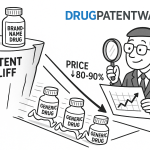
More than 55 blockbuster biologics with collective peak sales exceeding $270 billion face loss of exclusivity (LOE) by 2032. The immuno-oncology franchise alone, anchored by Keytruda (pembrolizumab) and Opdivo (nivolumab), with combined revenues well above $35 billion annually, will confront that reckoning before the end of the decade. What innovator companies do in their R&D organizations right now determines whether they are positioned ahead of or behind that curve.
This guide is written for the people making those decisions: IP team leads mapping secondary patent estates, portfolio managers stress-testing NPV models, R&D executives deciding between a bio-better program and a first-in-class moonshot, and institutional investors trying to distinguish durable biologic franchises from assets quietly walking toward a patent cliff.
<a name=”section-1″></a>
Section 1: The Science That Separates Winners from Losers
1.1 What a Biologic Is, and Why It Cannot Be Copied
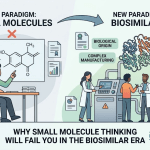
A biologic is not a drug in the way that ibuprofen or atorvastatin is a drug. Most pharmaceuticals are small molecules, synthesized through defined chemical reactions that produce an identical molecular structure batch after batch. A generic manufacturer can confirm identity by comparing molecular weight, NMR spectra, and chromatographic fingerprints. The structure is the same; the product is the same.
Biologics do not work that way. They are large, complex molecules, often proteins, produced by living cellular systems that have been genetically engineered to manufacture the desired therapeutic substance. A simple biologic, human insulin, has a molecular weight of approximately 5,808 daltons. A monoclonal antibody (mAb), the workhorse of the modern biologic franchise, exceeds 150,000 daltons and carries post-translational modifications, including glycosylation patterns on the Fc region, that no chemical synthesis can reproduce and no analytical instrument can completely characterize.
The canonical industry phrase “the process is the product” is not marketing language. It is a precise statement about the relationship between a manufacturer’s cell line, culture conditions, fermentation parameters, downstream purification train, and the final molecular product that emerges. Change the cell line from Chinese hamster ovary (CHO) to a murine hybridoma and you change the glycosylation signature. Change the pH gradient in the protein A affinity chromatography step and you alter the charge variant profile. Each of these changes can affect biological activity, immunogenicity, and ultimately clinical performance. The FDA does not approve a biologic molecule; it approves a manufacturing process that consistently produces a molecule within defined quality attribute ranges.
This manufacturing complexity is the root cause of biosimilar science. Regulatory agencies cannot require that a follow-on biologic be identical to the reference product, because the reference product itself is not perfectly identical between manufacturing lots. What they require is that the follow-on be ‘highly similar’ with ‘no clinically meaningful differences’ in safety, purity, and potency. That ‘highly similar’ standard is the entire scientific basis for the biosimilar development enterprise.
1.2 The Biosimilarity Demonstration: Totality of Evidence, Not Chemical Identity
Regulatory approval of a biosimilar rests on a comparability exercise built around what the FDA and EMA both call the ‘totality of the evidence.’ This phrase means that no single study proves biosimilarity. The cumulative weight of analytical, pharmacological, and clinical data must reduce residual uncertainty to a level where the regulator is confident the biosimilar performs the same as the reference product.
The development sequence operates in a formal hierarchy. It begins with extensive analytical characterization using state-of-the-art orthogonal methods: liquid chromatography-mass spectrometry (LC-MS), nuclear magnetic resonance (NMR) spectroscopy, differential scanning calorimetry (DSC) for thermal stability, and a battery of cell-based functional assays assessing receptor binding, effector function (ADCC, CDC), and apoptosis induction where relevant. This analytical package establishes the degree of structural and functional similarity at the molecular level. Regulators have been explicit: the stronger and more comprehensive this analytical comparability package is, the less clinical data they need.
Non-clinical studies, typically in vitro toxicology and pharmacology, follow to capture signals that analytical characterization may miss. Then come clinical pharmacology studies in human volunteers or patients, comparing pharmacokinetic (PK) profiles such as area under the curve (AUC), maximum concentration (Cmax), and time to maximum concentration (Tmax), as well as pharmacodynamic (PD) endpoints where measurable surrogates exist.
Immunogenicity assessment runs throughout. The potential for a biosimilar to elicit an anti-drug antibody (ADA) response, particularly one that could neutralize the drug or cross-react with an endogenous protein, is a primary safety concern. The BPCIA specifically flags immunogenicity as a critical parameter because even minor structural differences from the reference product, particularly in glycan composition, can alter the immunogenic potential in ways that only become apparent in long-term post-marketing surveillance.
If residual uncertainty remains after this cascade, the FDA or EMA may require comparative clinical efficacy studies. The sponsor’s job from the outset is to design an analytical program so comprehensive that the agency has no residual uncertainty requiring clinical confirmation. Every additional Phase III comparative trial adds $50 million to $150 million to the development cost and 12 to 18 months to the timeline, eroding the economic case for entry.
One structural component of the development cost that biosimilar sponsors cannot avoid is the reference product sourcing requirement. Under FDA rules, a sponsor must conduct comparative PK studies against a U.S.-licensed reference product. Most global biosimilar programs, however, use EU-sourced material in early development because European supply chains are more accessible. This creates the bridging study requirement: a three-way comparison of the proposed biosimilar against the U.S. reference, the EU reference, and a direct U.S.-versus-EU comparator. These bridging studies add roughly 12 to 18 months and $15 million to $30 million to the cost of any program targeting simultaneous FDA and EMA approval.
1.3 Bio-betters: The Offensive Counter-Move
A bio-better is not a regulatory category. The FDA and EMA have no ‘bio-better’ pathway; any developer of a bio-better files a full Biologics License Application (BLA) because the product is a novel molecular entity, not a highly similar copy. The term is commercial shorthand for a deliberate R&D strategy: take a well-validated biological target and a proven therapeutic scaffold, then engineer a meaningfully improved version before biosimilars can erode the original franchise.
The improvements pursued in bio-better programs fall into several technical categories. Extended half-life engineering is the most commercially consequential. Methods include fusion of the therapeutic protein to the Fc region of IgG1 (the neonatal Fc receptor recycling mechanism), attachment of polyethylene glycol (PEGylation), and albumin fusion. Each extends the drug’s circulating half-life, which translates directly to less frequent dosing, a benefit with high value to patients and a clear basis for premium pricing. Roche’s use of the M1268 half-life extension technology to create subcutaneous versions of intravenous-only mAbs is one of the cleaner examples of this engineering discipline applied defensively.
Glycoengineering is a second lever. Modifying the N-glycan composition on the Fc region of a mAb, for instance reducing core fucose content, dramatically enhances antibody-dependent cellular cytotoxicity (ADCC). Roche’s obinutuzumab (Gazyva) uses glycoengineering to increase ADCC over rituximab, producing a bio-better in the CD20 oncology space. The molecule is sufficiently different from rituximab that biosimilars of rituximab do not compete with it directly, even in overlapping indications.
The strategic logic of bio-better development is cleanest in the following scenario: a franchise drug with $5 billion or more in annual global sales is 5 to 7 years from its core composition of matter patent expiry. The originator company launches a bio-better with a superior clinical attribute, switches prescribers and patients to the new product, and files new patents on the improved molecule’s composition, manufacturing process, and formulation. When biosimilars of the original molecule arrive, they enter a market that has already transitioned to the successor product. The biosimilar is technically approved but commercially stranded. Executed well, this strategy can extend a franchise’s effective exclusivity by 8 to 12 years beyond the original core patent.
Key Takeaways: Section 1
The scientific distinction between biosimilars and small-molecule generics is not a technicality. It is the foundation of every patent strategy, regulatory timeline, and lifecycle management investment decision in the biologic space. Bio-betters are the most financially rational offensive response to patent expiry for any originator holding a franchise with more than $2 billion in annual revenues: the science is lower-risk than a first-in-class program, the IP clock resets fully, and the commercial transition to the superior product can strand incoming biosimilars before they gain volume.
<a name=”section-2″></a>
Section 2: IP Valuation Deep Dive — AbbVie’s Humira Patent Estate as the Industry Template
2.1 The Anatomy of a Hundred-Patent Fortress
Humira (adalimumab) was approved by the FDA in December 2002 for rheumatoid arthritis. Its core composition of matter patent, which covered the adalimumab antibody sequence itself, expired in 2016. By the standards of Hatch-Waxman small-molecule IP strategy, that expiry date should have triggered immediate generic-level competition. Biosimilars of adalimumab were already approved in Europe by 2018. U.S. biosimilars did not reach patients until January 2023, seven years after the core patent lapsed.
AbbVie did not get those seven years through luck. It built a patent estate of more than 100 individual patents covering adalimumab, which in litigation settlements with every biosimilar developer became the single most consequential series of biologic IP agreements in industry history. Understanding how AbbVie constructed that estate is essential for any IP team managing a multi-billion-dollar biologic franchise.
The estate layered patents across five distinct categories. First, formulation patents covered the specific citrate-free, high-concentration subcutaneous formulation of adalimumab that AbbVie developed to reduce injection-site pain. This formulation improvement was a genuine innovation, and the patent provided protection independent of the underlying antibody sequence. Second, manufacturing process patents covered the cell culture parameters, purification techniques, and viral clearance methods used in production. These are arguably the most defensible secondary patents in any biologic estate because they are closely tied to the ‘product is the process’ principle. Third, dosing regimen patents covered the specific dosing intervals and weight-based adjustments validated in AbbVie’s Phase III programs. Fourth, device patents protected the auto-injector pen and pre-filled syringe presentations that account for the majority of self-administered adalimumab prescriptions. Fifth, indication-specific method-of-use patents covered each approved indication obtained through label expansion, including juvenile idiopathic arthritis, uveitis, and hidradenitis suppurativa.
2.2 What AbbVie’s Estate Is Worth in Delayed Competition Revenue
The commercial value of those seven years of delayed U.S. entry is straightforward to estimate. Humira’s U.S. net revenue in 2022 was approximately $17 billion. Each year of delay from a hypothetical 2016 first-entry date to the actual 2023 entry date represented the difference between earning that revenue versus sharing it with multiple biosimilar competitors in a price-erosion environment where the originator’s net price drops by 25% to 40% in the first 24 months post-entry.
A conservative calculation puts the value of the delayed-entry IP strategy, from 2016 to 2023, at roughly $100 billion in preserved U.S. net revenue relative to a counterfactual where biosimilars entered at first core patent expiry. That figure places the Humira patent estate among the most valuable single IP assets in the history of any industry, not just pharmaceuticals.
2.3 IP Valuation Methodology for Biologic Portfolios
Pharma IP teams and institutional investors use three primary frameworks to value a biologic’s patent estate as a standalone asset.
The first is cash flow protection modeling. The analyst builds a base case revenue trajectory from peak sales to terminal decline under biosimilar entry scenarios. Then constructs alternative scenarios for each meaningful secondary patent or patent cluster: an early-entry scenario (all secondary patents fail at trial or are not asserted), a base-case scenario (selected cluster survives, entry delayed by 3 years), and a best-case scenario (full thicket holds, entry delayed by 6+ years). The net present value difference between scenarios, probability-weighted and discounted at the company’s WACC, is the value of that patent cluster. This approach is used by investment bank pharma equity teams to price LOE risk into a company’s forward earnings multiple.
The second framework is litigation posture analysis. Because most biosimilar entry in the U.S. is ultimately governed by settlement agreements arising from the BPCIA’s patent dance, the strength of the patent estate is not purely a matter of scientific validity. It is a function of the litigation burden the patent thicket imposes on a biosimilar challenger. An estate of 100 patents does not require AbbVie to win all 100. It requires every biosimilar developer to decide whether the cost and delay of challenging all 100 in Inter Partes Review (IPR) proceedings at the PTAB or in district court exceeds the economic value of early entry. In most cases, settlement with a delayed entry date is the rational outcome for both parties. The IP team’s job is to make the settlement offer, whatever delayed entry date it specifies, the more economical option for the challenger.
The third framework is freedom-to-operate cost modeling, used primarily by biosimilar developers. This is the mirror image: analysts map every patent in the estate, assess challenge costs, estimate litigation duration, and compare that total to the NPV of entry at various dates. When the cost of clearing the thicket exceeds the NPV of entry, the program either doesn’t start, targets a different reference product, or accepts a later entry date in settlement.
Investment Strategy: Section 2
For portfolio managers, the primary metric to track is not simply ‘when does the core patent expire.’ The operationally relevant number is the expected date of first commercially meaningful biosimilar entry in the U.S. market, probability-weighted across the full secondary patent landscape. Companies like AbbVie, Roche, and Amgen have demonstrated the ability to extend this date by 5 to 7 years post-core expiry through sophisticated patent thicket strategy. That capability is a durable competitive advantage worth paying a premium for in the equity.
Conversely, companies with thin secondary IP estates on major biologic franchises, even with strong core composition of matter patents, carry substantially higher LOE risk than their disclosed dates suggest.
<a name=”section-3″></a>
Section 3: The Regulatory Architecture — FDA vs. EMA and What the Gap Costs
3.1 The EMA Framework: Pioneering the Pathway Since 2005
The EMA established the world’s first biosimilar regulatory pathway in 2005. The first approval followed in 2006, when the CHMP granted marketing authorization for Omnitrope (somatropin), Sandoz’s biosimilar of Genotropin. The EU’s early move gave it the longest clinical experience base with biosimilars globally, and it shows in uptake rates. European countries have consistently achieved higher biosimilar market penetration for approved products than the U.S., driven by a combination of regulatory clarity and national procurement policies that favor cost containment.
Under the EMA’s centralized procedure, a single marketing authorization application covers all EU member states. The CHMP evaluates biosimilarity under the ‘similar biological medicinal product’ framework, applying scientific guidelines that have been updated multiple times since 2005 to reflect advances in analytical technology. The resulting authorization is valid EU-wide, giving successful applicants immediate access to a market of over 440 million people without parallel national filings.
The reference product exclusivity structure in the EU is the ‘8+2+1’ system. The originator receives 8 years of data exclusivity from first EU authorization, during which no biosimilar developer can reference the originator’s clinical data. This is followed by a 2-year market exclusivity period, creating a 10-year total protection floor from first authorization. An additional year of market exclusivity applies if the originator obtains a new therapeutic indication during the first 8 years that is assessed to produce significant clinical benefit.
On interchangeability, the EMA has taken a position of regulatory clarity that the FDA has not matched: any biosimilar approved in the EU is considered scientifically interchangeable with its reference product for the purposes of prescribing. Whether a pharmacist can substitute a biosimilar for the reference product at the dispensing level without physician consultation, however, remains a national decision. France, Germany, Finland, and Denmark all have different rules. This decentralized substitution policy creates variability in uptake across markets that biosimilar commercial teams must navigate product by product.
3.2 The BPCIA’s Architecture: Data Exclusivity, Interchangeability, and the Patent Dance
The U.S. Congress passed the BPCIA in 2010 as part of the Affordable Care Act. It created the abbreviated Biologics License Application pathway under Section 351(k) of the Public Health Service Act, modeled loosely on the Hatch-Waxman Act for small molecules. Three features of the BPCIA have the most significant impact on R&D pipeline economics: the 12-year data exclusivity provision, the interchangeability standard, and the pre-litigation patent resolution procedure known as the patent dance.
The 12-year data exclusivity period is one of the longest in global pharmaceutical regulation. No FDA biosimilar approval under 351(k) can occur until 12 years after the first U.S. licensure of the reference biologic, regardless of patent status. This timeline is entirely independent of the patent estate and provides a guaranteed minimum revenue runway that directly influences the NPV threshold for greenlit biologic R&D programs. When an R&D governance body models the return on a novel biologic investment, the 12-year floor is a baseline assumption; everything above it depends on patent strategy.
The FDA’s interchangeability designation requires data from switching studies, typically a three-period crossover design in which patients alternate between the reference biologic and the biosimilar, to demonstrate that the transition does not increase the risk of adverse events or diminish efficacy compared with continuous use of the reference product alone. An interchangeable designation permits automatic pharmacy-level substitution in states that allow it, which is the functional equivalent of a generic substitution right. This is commercially significant because pharmacy-level substitution is a primary uptake driver in the small-molecule generic market, and biosimilar manufacturers see interchangeability as essential to achieving volume penetration comparable to a generic.
The patent dance is among the more structurally complex legal procedures in pharmaceutical regulation. After a 351(k) application is accepted, the biosimilar applicant must provide the Reference Product Sponsor (RPS, i.e., the originator) with its application and manufacturing process description. The RPS then identifies patents it believes the biosimilar infringes. The biosimilar applicant responds with its non-infringement and invalidity arguments. Both parties exchange contentions on a timed schedule. The dance culminates in a defined list of patents to be litigated before launch, with the remaining patents reserved for potential post-launch litigation. The practical effect is to integrate IP counsel into the biosimilar development process from the moment of FDA acceptance, years before commercial launch.
3.3 Interchangeability: One Standard, Two Markets
The divergence between FDA’s two-tiered biosimilar/interchangeable system and the EMA’s unified framework has created a structural difference in competitive dynamics between U.S. and European markets. In the EU, approved biosimilars compete on price with the reference product from launch, supported by national formulary policies that actively promote substitution. In the U.S., a biosimilar without an interchangeability designation competes at the prescriber level only; it cannot substitute at the pharmacy counter. This means biosimilar uptake in the U.S. requires winning physician confidence, not just regulatory approval, which adds time and commercial expense to market entry.
The FDA has been moving toward reducing the gap between the two designations. Its 2022 guidance on interchangeability indicated that, for a number of therapeutic classes, the totality of evidence from the biosimilar application itself may satisfy the interchangeability standard without additional switching studies. If this interpretation expands, the practical difference between the two designations will narrow, accelerating biosimilar uptake in the U.S. and increasing the competitive pressure on innovators.
3.4 Bridging Studies: The Hidden Tax on Global Programs
Any biosimilar development program targeting both FDA and EMA approval must address the reference product sourcing problem explicitly. The FDA requires PK comparability studies against a U.S.-licensed reference product. Global programs routinely use EU-sourced reference material because it is more accessible from a supply chain standpoint. The FDA does not treat EU-sourced and U.S.-licensed reference products as interchangeable for bridging purposes.
A standard bridging study package for a mAb biosimilar, covering U.S.-versus-EU reference product comparability, adds approximately 12 to 18 months to the U.S. IND timeline and costs in the range of $15 million to $30 million in clinical study costs alone, before accounting for the additional analytical work required to support the three-way comparability package. For a biosimilar developer whose total program budget is $150 million to $250 million, the bridging requirement represents a meaningful fraction of total cost and a significant delay that reduces the time available for revenue recovery before the next wave of competitors arrives.
Regulatory harmonization between FDA and EMA on reference product sourcing would substantially reduce this burden and is a policy lever that could materially increase biosimilar competition in the U.S. by reducing the cost of entry.
Key Takeaways: Section 3
The 12-year U.S. data exclusivity provision is the most financially significant single regulatory parameter in biologic R&D economics. It functions as an absolute revenue floor, independent of patent strategy, and its existence makes U.S. approval the primary commercial target for any novel biologic program. The bridging study requirement adds meaningful cost and delay to global biosimilar programs, a structural inefficiency that regulatory convergence could resolve. For innovators, the EMA’s unified interchangeability position is an early warning signal for the direction the FDA appears to be moving.
Investment Strategy: Section 3
When assessing the LOE risk of a U.S.-marketed biologic, analysts should distinguish between data exclusivity expiry and likely first U.S. biosimilar entry. The two dates diverge by years for most large-market products due to patent thicket litigation timelines. The PTAB’s Inter Partes Review process can invalidate secondary patents faster than district court litigation, and biosimilar developers have become sophisticated users of IPR challenges. Companies whose secondary patent estates include patents with prior art exposure or obviousness vulnerabilities face earlier effective entry dates than their nominal IP coverage suggests.
<a name=”section-4″></a>
Section 4: The Economics — $100 Billion in Savings Nobody Is Pocketing
4.1 The Headline Numbers: System Savings vs. Market Reality
The economic case for biosimilars rests on projections that became ubiquitous in policy literature within years of the BPCIA’s passage. Estimates ranged from $54 billion in reduced biologic spending between 2017 and 2026 to over $133 billion through 2025. In Europe, the EMA and national health authorities cited cumulative savings exceeding €56 billion from biosimilar competition. These numbers are real, and they accrue primarily to hospital systems, pharmacy benefit plans, and government payers.
The price dynamics driving those savings follow a consistent pattern. Biosimilars enter at a list price 15% to 35% below the reference product. In highly competitive markets with multiple entrants, discounts escalate substantially: adalimumab biosimilars launched in 2023 with list prices as much as 85% below Humira’s list price. This list price competition then forces the originator to deepen its rebate structure to maintain formulary position, which reduces the net price the payer actually pays.
Projected savings figures, however, tell a more favorable story than realized market dynamics in the U.S. for the first decade of biosimilar competition. The gap between projected and realized savings traces directly to the role of Pharmacy Benefit Managers.
4.2 The PBM Rebate Wall: How Formulary Gatekeepers Blunt Competition
PBMs were not designed with biosimilar competition in mind. They emerged as intermediaries to manage drug benefit costs, and their revenue model in the specialty drug segment became heavily dependent on manufacturer rebates. A PBM negotiates a rebate from a drug manufacturer in exchange for preferred formulary placement, which drives volume to the rebated product. The rebate amount is confidential. The PBM’s clients, employers and insurers, receive a portion of the rebate but do not see the full negotiated terms.
In a market where the originator biologic carries a high list price, this architecture creates a mathematically perverse outcome. An originator with a $6,000-per-month list price can offer a $2,000-per-month rebate to a PBM while still netting $4,000. A biosimilar entering at a $1,500-per-month list price has a structurally limited ability to offer a comparable rebate because its entire list price is roughly equivalent to the originator’s rebate offer. The PBM’s financial incentive, under the traditional rebate-sharing model, favors the originator.
This dynamic played out in documented form in the Humira market. When multiple adalimumab biosimilars launched in January 2023, Humira retained approximately 97% of U.S. market volume through the end of that year. Biosimilar manufacturers responded with a dual-pricing strategy: a ‘high WAC’ version with a large rebate for PBM-managed formulary access and an ‘unbranded low WAC’ version aimed at patients with high out-of-pocket exposure and self-pay markets. The unbranded low WAC approach has generated volume in narrow segments but has not broken the formulary lock for the mass market.
4.3 The Cordavis-Sandoz Model: A New Architecture for PBM Alignment
The commercial arrangement that finally moved meaningful Humira biosimilar volume in the U.S. was not a better rebate or a deeper list price discount. It was a structural realignment of PBM incentives.
In 2024, Sandoz’s Hyrimoz (adalimumab-adaz) high-concentration, citrate-free formulation entered a co-promotion agreement with Cordavis, a subsidiary that CVS Caremark created specifically to manage biosimilar commercialization. CVS Caremark then moved Hyrimoz to preferred formulary status across its major commercial books and removed Humira from preferred status in the same formularies. The effect was immediate and large: Hyrimoz captured significant formulary-driven volume within quarters of the formulary change.
The Cordavis model is significant for what it reveals about the structural requirement for biosimilar success in the U.S. Competing on price alone is insufficient because the buyer (PBM) is not the end user and does not optimize for lowest net cost to the healthcare system. Market penetration requires aligning the PBM’s economic incentives directly with the biosimilar’s success. The model also signals that large PBMs themselves see a commercial opportunity in the biosimilar transition, not simply as pass-through savings to clients but as a distinct revenue stream from co-promotion and formulary management fees.
4.4 The Patient Cost Paradox: Why System Savings Don’t Reach Patients
A cohort analysis published in JAMA Health Forum evaluated claims data for seven biologics with biosimilar competition and found that annual patient out-of-pocket (OOP) spending did not decrease in the aggregate after biosimilar entry. For several drugs in the dataset, patient OOP costs were higher or unchanged relative to pre-biosimilar periods. The study found that while mean OOP cost per claim was lower for biosimilars than reference products ($707 versus $911), patients prescribed a biosimilar were more likely to incur any OOP cost than those remaining on the reference product.
The mechanism is formulary tiering and benefit design. Under medical benefit structures, which govern infused biologics administered in clinical settings, patient cost-sharing is typically a coinsurance percentage applied to the insurer’s allowed amount. A 20% coinsurance on a $3,000 infliximab infusion generates $600 in patient cost, regardless of whether the product is Remicade or its biosimilar. If the biosimilar and reference product carry the same allowed amount under the insurance contract, the patient’s cost does not change even as the system’s acquisition cost drops. Many insurance benefit designs have not been updated to pass the savings from lower biosimilar acquisition costs through to patient coinsurance.
Formulary tier assignment adds a second distortion. PBMs have, in documented cases, placed biosimilars on non-preferred tiers with higher patient cost-sharing as a mechanism to retain rebate-generating originator volume. This pricing structure directly inverts the patient incentive: the patient pays more for the lower-cost product.
The policy implication is that biosimilar competition delivers savings to the healthcare system primarily as insurer and employer surplus. Patients who bear coinsurance or deductibles do not capture proportional savings unless their benefit plans are specifically redesigned to do so. Absent that redesign, patient resistance to non-medical switching has a rational financial basis: the patient bears switching-related hassle and potential clinical uncertainty while capturing no meaningful cost reduction.
Key Takeaways: Section 4
Biosimilar competition generates substantial system-level savings that flow primarily to payers and PBMs rather than patients. The rebate wall remains the dominant structural barrier to U.S. biosimilar market penetration for physician-administered and specialty biologics. The Cordavis-Sandoz co-promotion model demonstrates that formulary realignment through PBM equity alignment, not price competition alone, is the lever that moves volume. Until benefit designs are restructured to pass acquisition savings to patient OOP costs, the patient cost paradox will persist.
Investment Strategy: Section 4
For biosimilar developers, the commercial model must account for PBM contracting strategy from the earliest financial models. Products that cannot offer a competitively structured rebate or co-promotion arrangement to a major PBM will face sustained formulary disadvantage regardless of their clinical profile or price point. The Cordavis model is likely to be replicated; developers should evaluate PBM partnership arrangements as a core go-to-market requirement rather than an optional commercial enhancement. For originator companies, the rebate wall is a temporary structural protection, not a permanent defense. As PBMs see increasing client pressure to demonstrate cost control, the co-promotion model will diffuse, and more originator franchises will face the formulary displacement that Humira experienced.
<a name=”section-5″></a>
Section 5: The R&D Pipeline Under Pressure — The Innovation Squeeze in Detail
5.1 The Patent Cliff as an NPV Variable in Target Selection
The most immediate consequence of a mature biosimilar market is that every biologic R&D investment decision now carries an explicit LOE scenario. The patent cliff is not a post-launch commercial problem; it is a pre-clinical portfolio management variable.
Standard NPV models for novel biologic programs use a 10-year development timeline from discovery to IND, plus a 7-to-10-year clinical and regulatory pathway to approval. Peak revenue typically builds over 5 to 7 years post-launch. For a molecule approved in year 17 post-program inception, the effective revenue peak may occur around year 22 to 25 post-inception. But if the core composition of matter patent was filed at program inception, that patent expires roughly 20 years after filing, or 3 to 6 years before the program has generated maximum cumulative revenue.
The net effect is that the NPV-maximizing strategy has shifted. Programs in crowded therapeutic classes, where the reference product is near LOE and the class mechanism is already well understood, face a compressed commercial window. The argument for greenlit ‘me-too’ mAbs in anti-TNF, anti-VEGF, or anti-CD20 spaces has weakened substantially. These are markets where the therapeutic rationale is proven and where multiple biosimilar developers will enter at any significant LOE event, compressing net prices rapidly.
A McKinsey analysis of leading biosimilar developer cost structures estimated that reducing the timeline from cell line transfection to IND by 30% to 50% through process optimization, parallelized development tracks, and proactive regulatory strategy is achievable with current technology. For an innovator, equivalent timeline compression in novel biologic programs translates directly to additional months of on-patent commercial runway, which the NPV model values as incremental revenue unchallenged by competitors.
5.2 The Acceleration Toolkit: From Transfection to IND in Compressed Timelines
Speed in biologic development is not a cultural aspiration; it is a financially quantifiable competitive advantage. Each month of development timeline reduction translates to a month of additional peak-sales-period revenue in the NPV model. For a biologic with $3 billion in projected peak annual revenues, one month of timeline compression is worth approximately $250 million in undiscounted cash flow.
Process parallelization is the most consistently high-impact acceleration strategy. Traditional biologic development runs upstream (cell culture, clone selection) and downstream (purification, formulation) activities sequentially. Modern accelerated programs overlap these tracks: downstream purification process development begins on early, non-final cell line clones while upstream clone selection continues. Formulation platform science developed for earlier molecules in the same therapeutic format, say, a standard IgG1 subcutaneous formulation, can be applied as a starting point rather than developed de novo. These efficiencies reduce the protein engineering to clinical candidate timeline from 4 to 5 years to as few as 2.5 to 3 years for programs leveraging well-established platforms.
CDMO and CRO partnerships are standard practice for capacity management but have evolved into strategic relationships for timeline compression. Companies like Samsung Biologics, Lonza, and WuXi Biologics offer integrated development and manufacturing platforms where a single partner can execute cell line development, process development, clinical manufacturing, and analytical characterization under one roof. Eliminating technology transfer steps between organizations, each of which requires 3 to 6 months, removes a structurally avoidable delay from the program timeline.
Proactive FDA engagement through pre-IND meetings and Type B meeting requests is the regulatory equivalent of process parallelization. Companies that bring a complete analytical and non-clinical package to the FDA early, rather than submitting an IND and waiting for clinical holds, can negotiate a clinical development strategy that minimizes Phase III requirements. The FDA’s 2023 guidance on extrapolation of biosimilar indications allows a biosimilar approved in one indication to gain approval in additional indications without conducting separate comparative clinical trials in each, provided the mechanism of action supports extrapolation. Originator companies pursuing bio-better programs can apply similar regulatory efficiency arguments to their BLA submissions.
5.3 The Modality Shift: ADCs, Bispecifics, and the Complexity Premium
Biosimilar pressure has accelerated the industry’s migration toward therapeutic formats that are inherently more difficult to copy. Antibody-drug conjugates (ADCs), bispecific antibodies, fusion proteins, and cell therapies all carry structural and manufacturing complexity that raises the bar for demonstrating the ‘high similarity’ required for a biosimilar approval.
An ADC combines a mAb targeting agent with a small-molecule cytotoxin linked through a chemical linker. Each component, the antibody, the linker, and the payload, must be characterized independently and then characterized as an assembled conjugate. The drug-to-antibody ratio (DAR), the linker stability in circulation, the payload potency and off-target toxicity profile, and the conjugation site distribution all contribute to the analytical characterization burden for a biosimilar applicant. No ADC biosimilar has been approved as of 2025. Roche’s Kadcyla (ado-trastuzumab emtansine), an ADC combining trastuzumab with the maytansine derivative DM1, faces its first LOE events by 2026, but the technical complexity of demonstrating biosimilarity to an ADC will likely delay competitive entry well beyond the LOE date. This is a deliberate modality choice that extends effective exclusivity.
Bispecific antibodies present similar challenges. A bispecific mAb must simultaneously engage two different antigens with correctly oriented binding domains, maintain stability across the dual-binding architecture, and carry a glycosylation profile comparable to the reference product. Analytical characterization of a bispecific biosimilar requires not just the standard mAb comparability package but additional assays confirming that each arm of the bispecific engages its target independently and simultaneously with the same kinetics and binding geometry as the reference. This doubled analytical burden translates to longer development timelines, higher costs, and greater regulatory uncertainty, all of which deter biosimilar entry.
The strategic implication for innovator R&D pipeline architecture is explicit: when a therapeutic program can be executed in a complex modality, the complexity itself has IP value. It is not that ADCs or bispecifics are inherently superior to conventional mAbs for every indication; in some cases they are not. The point is that the complexity creates a longer effective exclusivity window, which improves the program’s long-term NPV, all else equal.
5.4 Manufacturing Technology as IP: QbD, PAT, and Process Patents
Because the manufacturing process defines the biologic product, process innovations can be protected by patents that operate entirely independently of the molecule’s structure. This means a company’s process development investment creates both a manufacturing cost advantage and an IP barrier to biosimilar entry. The two outcomes reinforce each other.
Quality-by-Design (QbD) is the FDA’s recommended framework for process development in both novel biologics and biosimilars. Under QbD, the developer identifies Critical Quality Attributes (CQAs) of the product, defined as physical, chemical, biological, and microbiological properties that should be within an appropriate limit to ensure the desired product quality. The developer then designs a manufacturing process with Control Strategies that consistently produce product within those CQA ranges.
A fully implemented QbD program produces a Design Space: a multi-dimensional combination of input variables (temperature, pH, dissolved oxygen, media composition) within which the manufacturing process can be operated without triggering a need for regulatory notification. The Design Space is filed with the regulatory agency and becomes part of the approved manufacturing process. For an originator, the Design Space defines the process. For a biosimilar developer, the Design Space is proprietary information. The biosimilar developer must reverse-engineer not just the product’s molecular characteristics but the process parameters that produce it, then demonstrate that their independently developed process generates a product that is ‘highly similar’ to the originator’s.
Process Analytical Technology (PAT) refers to the real-time sensor and data analytics systems used to monitor CQAs in-process, rather than relying exclusively on end-product testing. A manufacturer with a fully deployed PAT infrastructure can detect and correct process deviations before they produce out-of-specification material, resulting in higher batch yields, lower variability, and a more defensible process patent estate. Each novel sensor application or algorithm implemented under PAT can generate its own intellectual property.
The patent landscape for biologic manufacturing processes includes thousands of filings on cell culture media compositions, gene expression systems, purification sequences, viral clearance methods, and fill-finish operations. These process patents are structurally difficult for biosimilar developers to design around because the physical chemistry of antibody purification, particularly protein A affinity chromatography followed by ion-exchange polishing, converges to a relatively small number of practical configurations. A biosimilar developer using a standard purification train may unknowingly infringe a process patent held by the originator or a third-party licensor. The cost and uncertainty of freedom-to-operate analysis for manufacturing processes adds to the overall IP litigation burden.
5.5 AI and In Silico Modeling: Speed and Precision as Competitive Weapons
Artificial intelligence and machine learning applications in biologic R&D are moving from pilot-stage curiosity to production deployment. The competitive advantage they confer is primarily speed and precision in tasks that were previously rate-limiting bottlenecks.
In antibody discovery, ML models trained on protein structural databases and binding affinity data can predict which sequence variants will improve binding affinity, thermal stability, or reduced immunogenicity before a single mutation is synthesized in the lab. Companies like AbSci and Generate Biomedicines use generative AI to design novel antibody sequences with target properties de novo, compressing the traditional 12-to-18-month lead optimization phase. An innovator deploying these tools can test 10 to 100 times more sequence variants computationally before committing to cell line development, increasing the probability that the selected candidate enters the clinic with optimized properties.
For biosimilar development, AI-powered analytical similarity scoring is becoming standard practice. ML models can process comprehensive analytical datasets comparing biosimilar and reference product characterization profiles across dozens of assay types, weight each assay type’s sensitivity to clinically relevant differences, and generate a quantitative similarity score that supports the ‘totality of the evidence’ submission package. This reduces the analytical interpretation time from months to weeks and allows the development team to identify which quality attributes require additional characterization before the regulatory submission, rather than discovering gaps during FDA review.
Digital twin modeling of manufacturing processes, using computational fluid dynamics and metabolic flux models, allows both innovators and biosimilar developers to simulate the effect of process parameter changes on product quality before committing to physical experiments. A digital twin of a bioreactor can predict how a shift in dissolved oxygen setpoint will affect glycosylation, guiding the development team to the optimal operating condition without the cost and time of physical experiments. For a biosimilar developer trying to match a reference product’s glycosylation profile, this capability can reduce process development timeline by 6 to 12 months.
Key Takeaways: Section 5
The R&D pipeline is restructuring around two responses to biosimilar pressure: investment in complex modalities with structural biosimilarity barriers and investment in process technologies that create proprietary manufacturing IP independent of the molecule itself. Timeline compression through process parallelization, CDMO partnership, and proactive regulatory engagement is financially quantifiable and should be a standard metric in program governance. AI tools in drug design and analytical characterization are no longer experimental; they are production-grade capabilities that reduce cost and timeline for developers across both originator and biosimilar programs.
Investment Strategy: Section 5
For institutional investors evaluating early-stage biotech with biologic assets, the relevant questions are: What is the program’s modality complexity relative to its therapeutic class? Does the company own proprietary manufacturing technology covered by its own process patents? Has the company demonstrated accelerated development timelines in prior programs, or is the current projected timeline based on historical industry averages? Companies that can answer these questions affirmatively carry lower LOE risk and higher probability of capturing full commercial potential before biosimilar entry.
<a name=”section-6″></a>
Section 6: The Innovator Playbook — Patent Thickets, Bio-betters, and the Biosimilar Pivot
6.1 Lifecycle Management Architecture: A Strategic Roadmap
Lifecycle management (LCM) in the biosimilar era is not a post-launch commercial function. It is an integrated R&D discipline that begins before Phase II completion for any biologic with blockbuster potential. The goal is to ensure that when the core composition of matter patent expires, the franchise is defended by a layered structure of legal, scientific, and commercial barriers that collectively delay or limit the commercial impact of biosimilar entry.
The architecture of modern biologic LCM rests on four interlocking components: a comprehensive secondary patent estate, a formulation or delivery innovation that captures the primary prescribed format before LOE, a bio-better successor product that is in late-stage development or already launched before the original faces biosimilar competition, and where relevant, an originator-operated biosimilar division that captures revenue from the off-patent biologic class through its own lower-cost products.
The table below maps each component to its R&D resource requirements, timeline, and IP output.
LCM Component
R&D Investment Required
Timeline Relative to LOE
IP Output
Primary Commercial Goal
Secondary Patent Estate
Formulation science, process engineering, analytical documentation
Ongoing; patents filed 3-10 years before LOE
20-100+ additional patents on formulation, process, device, indication
Delay first commercially meaningful biosimilar entry
Formulation/Device Innovation
Clinical pharmacology, human factors engineering, device development
Launch 5-7 years before LOE
Formulation and device patents; potential new BLA supplement
Shift market to non-biosimilar-exposed format
Bio-better Program
Full BLA development (preclinical through Phase III)
Launch 3-5 years before LOE
New composition of matter and process patents
Transfer market share to new, separately patented molecule
Biosimilar aBLA approvals; some process patents possible
Capture revenue from off-patent biologic classes
6.2 Patent Thicket Construction: Technical and Legal Strategy
A secondary patent estate for a biologic franchise is not built opportunistically. It is architected systematically against a threat model that identifies what a biosimilar developer will need to do to achieve regulatory approval and then creates IP barriers around each of those requirements.
The core technical categories of secondary patent coverage in a mature biologic estate include:
Formulation patents cover the specific excipient composition, pH, buffer system, and concentration of the drug product. AbbVie’s citrate-free, high-concentration adalimumab subcutaneous formulation was a clinically meaningful improvement over the original citrate-containing formulation, reducing injection-site pain. Protecting this formulation through patents effectively required any biosimilar developer targeting the dominant prescribed format to either infringe the formulation patent, design around it with a different formulation (which may have different clinical properties), or license the technology. Because physicians and patients had a strong preference for the citrate-free formulation, a biosimilar developer using a citrate-containing formulation faced a prescriber-level disadvantage in addition to a legal exposure.
Method-of-use patents covering approved indications and dosing regimens are defended through the doctrine of induced infringement: a biosimilar label with the same indication as the originator, and the prescribing patterns it generates, can constitute inducement to infringe a method-of-use patent even when the biosimilar itself does not infringe a composition patent. Originator companies actively seek to maximize the number of approved indications covered by method-of-use patents, particularly for chronic inflammatory diseases where adalimumab’s eight distinct FDA-approved indications provide multiple independent legal grounds for infringement assertions.
Device patents cover auto-injectors, pre-filled syringes, and on-body injection systems. The Neulasta Onpro (pegfilgrastim on-body injector) is one of the most commercially successful device-centered LCM strategies in biologic history. Amgen developed the Onpro delivery system, which allows patients to receive their pegfilgrastim injection the day after chemotherapy without a return clinic visit, and launched it before the core pegfilgrastim patents expired. When Coherus’s pegfilgrastim biosimilar Udenyca launched in 2019, it faced not just the device patents but a formulary landscape where payers had begun to reimburse the Onpro at higher rates because the device reduced nursing costs. By 2021, the Onpro accounted for more than half of total pegfilgrastim volume, protected by device patents independent of the molecule’s IP status.
6.3 The Bio-better Technology Roadmap: From Herceptin to Kadcyla
The development of Kadcyla (ado-trastuzumab emtansine) by Roche/Genentech is the clearest example of the bio-better strategy producing a commercially successful and separately patentable franchise extension.
Herceptin (trastuzumab) was approved for HER2-positive breast cancer in 1998. It was a transformative therapy and a major commercial franchise. Its core patents expired in the mid-2010s, and biosimilars began entering the market in the U.S. from 2019 onward. The Herceptin market, as a standalone product, was subject to biosimilar competition.
Genentech’s answer was not simply to defend Herceptin. It was to build a clinically superior product that used the trastuzumab antibody as a delivery vehicle for a potent cytotoxin. Kadcyla conjugates trastuzumab to DM1, a maytansinoid microtubule inhibitor, through a stable thioether linker. The conjugate binds to HER2-positive tumor cells through the trastuzumab antibody, is internalized, releases DM1 intracellularly, and produces cell death at concentrations that would be systemically toxic if DM1 were delivered as a free drug. Clinical trials demonstrated that Kadcyla improved progression-free survival compared with standard lapatinib/capecitabine regimens in HER2-positive metastatic breast cancer.
Kadcyla is a different molecule from trastuzumab. It requires a different analytical characterization, different manufacturing infrastructure for conjugation, and generates its own patents on conjugation chemistry, linker design, DAR specifications, and purification of the ADC product. A trastuzumab biosimilar does not compete with Kadcyla; they are different products in overlapping clinical settings. Roche created a clinically superior product that occupies distinct formulary and indication space from the biosimilar-exposed reference product.
The roadmap for a bio-better program is standardized in its general structure:
Identify the attribute of the reference biologic that limits its clinical performance (e.g., insufficient durability, required IV administration, dose-limiting toxicity)
Select an engineering approach that addresses that limitation with a demonstrably superior mechanism (e.g., ADC conjugation, Fc engineering for half-life extension, subcutaneous formulation development)
Validate the improved attribute in early clinical studies, generating head-to-head comparative data against the reference product
File composition of matter, process, and formulation patents on the bio-better molecule and its manufacture
Launch the bio-better with a clinical differentiation narrative 3 to 5 years before the reference product’s LOE
Execute a commercial transition strategy that moves prescribers and formulary payers to the bio-better before biosimilars of the reference product enter the market
6.4 The Dual-Track Model: Amgen as Case Study in Building Both Sides of the Market
Amgen manages what is arguably the most operationally complex R&D and commercial portfolio in the biopharmaceutical industry: a robust novel biologic pipeline alongside one of the industry’s largest biosimilar product portfolios. The company sells Amjevita (adalimumab biosimilar), Mvasi (bevacizumab biosimilar), Kanjinti (trastuzumab biosimilar), Riabni (rituximab biosimilar), and Wezlana (ustekinumab biosimilar), while simultaneously advancing novel biologics including Tezspire (tezepelumab, co-developed with AstraZeneca), BLINCYTO (blinatumomab), and Repatha (evolocumab).
Amgen’s CEO Bob Bradway has articulated the strategic rationale clearly: the company’s manufacturing expertise in producing complex recombinant proteins is a core competitive asset that can be deployed in both the biosimilar and novel biologic spaces. The manufacturing knowledge base, cell line development capabilities, analytical characterization infrastructure, and regulatory expertise developed over four decades of originator biologic production create a cost and quality advantage in biosimilar development. Amgen targets its biosimilar biosystems selection for products where its manufacturing expertise creates a meaningful production cost advantage over smaller, less experienced competitors.
The financial targets are ambitious. Amgen’s biosimilar portfolio was projected to reach $4 billion in annual revenues by the late 2020s. At those volumes, the biosimilar division is not a defensive hedge; it is a primary growth driver.
The internal tension in managing dual-track R&D is real. The scientific culture required to reverse-engineer a competitor’s product and demonstrate high similarity, which prizes precision, process rigor, and regulatory predictability, is different from the culture required to discover and advance first-in-class molecules, which prizes risk tolerance, creative hypothesis generation, and speed over completeness. Amgen manages this through structural separation: the biosimilar and novel biologic programs operate as distinct business units with separate R&D governance, resource allocation processes, and commercial organizations.
IP Valuation Deep Dive: Amgen’s Biosimilar Patent Position
Amgen has been on both sides of biologic IP litigation. The company won a substantial royalty stream from Roche in the erythropoietin patent dispute and holds composition of matter patents on several major biologics that have been the subject of Paragraph IV-style challenges under the BPCIA. Its own biosimilar programs have involved patent dance proceedings with AbbVie (adalimumab), Roche (bevacizumab and trastuzumab), and Johnson & Johnson (ustekinumab).
In the biosimilar portfolio context, Amgen’s IP position is primarily defensive: it holds manufacturing process patents and formulation patents on its biosimilar products that create barriers to commodity-level competition from subsequent biosimilar entrants. As the market for any reference biologic matures and multiple biosimilars enter, the commercial differentiation between biosimilar products narrows to manufacturing reliability, supply chain robustness, and payer contracting terms. Amgen’s manufacturing scale and quality track record constitute a form of durable competitive advantage that does not depend on patent exclusivity, which is a meaningfully different IP value driver than in the originator market.
Key Takeaways: Section 6
LCM architecture must be designed before launch, not after. The most durable LCM strategies combine a dense secondary patent estate, a formulation or delivery innovation that creates the dominant prescribed format, and a bio-better successor program that makes the reference product clinically obsolete on the originator’s own timeline. Companies that execute all three components simultaneously, as AbbVie did with Humira and Genentech did with Herceptin and Kadcyla, extract maximum commercial value from their biologic franchises.
Investment Strategy: Section 6
For companies with major biologics within 7 years of their first LOE event, the key analytical question is whether their LCM program is advanced enough to provide meaningful protection. Analysts should assess: the breadth and vulnerability of the secondary patent estate, whether a new delivery format has been launched and achieved significant market share, and whether a bio-better program is in Phase II or beyond. A company with a blockbuster biologic, no significant secondary IP, no delivery format innovation, and no bio-better program is facing a near-vertical patent cliff. A company with all three components in place may face a gentler slope.
<a name=”section-7″></a>
Section 7: Case Studies — Remicade and Humira as Market Blueprints
7.1 Remicade (Infliximab): What Happens When the Science Is Right but the Market Isn’t Ready
Remicade (infliximab, Johnson & Johnson and Merck) was the first major anti-TNF biologic to face biosimilar competition in the U.S. Pfizer’s Inflectra (infliximab-dyyb) was approved by the FDA in April 2016 and launched commercially in November 2016 following a patent settlement.
By the standards of the European biosimilar experience, U.S. Remicade biosimilar uptake should have been rapid. The NOR-SWITCH trial, conducted in Norway across 500 patients and presented in 2016, demonstrated that switching from originator infliximab to its biosimilar CT-P13 was non-inferior on the primary composite endpoint and produced no meaningful safety differences. This was robust clinical evidence supporting interchangeability. European health systems and hospital formularies moved quickly: in Norway, Denmark, and France, biosimilar infliximab market share exceeded 80% within 24 months of entry.
In the U.S., the trajectory was different. In the first two years post-launch, Inflectra captured only approximately 11% of U.S. infliximab volume. Physician and patient hesitancy was the dominant barrier. Gastroenterologists and rheumatologists, the primary prescribers, expressed concern about non-medical switching: the notion that patients who were stable on Remicade would be transitioned to a biosimilar for purely financial reasons, with the clinical justification constructed after the fact. A Veterans Affairs system study that found a notable proportion of patients who were switched to infliximab biosimilar eventually returned to Remicade, despite no clinical endpoint differences, illustrated the strength of prescriber confidence effects on real-world retention.
Patient support programs were a second factor. J&J maintained a robust Remicade patient support infrastructure including injection education, adherence monitoring, and patient financial assistance programs. The initial Inflectra patient support program was less developed, creating a prescriber perception of inferior service quality even where the clinical profiles were equivalent.
The Remicade case established several principles that every subsequent biosimilar commercial team has had to internalize: clinical evidence of biosimilarity is necessary but insufficient for uptake, physician education on switching safety requires dedicated investment and sustained effort, and parity or superiority in patient support services is not optional.
7.2 Humira (Adalimumab): Patent Thickets, Rebate Walls, and the 97% Retention Story
The Humira market remains the most closely studied and most complex biosimilar entry in U.S. history. The facts are largely agreed upon: AbbVie’s core composition of matter patent expired in 2016. Through a combination of secondary patent litigation, settlement agreements, and rebate-driven formulary strategy, AbbVie delayed first commercially meaningful U.S. entry until January 2023, seven years after the core patent lapsed. At peak, Humira was generating approximately $20 billion in annual global net revenues.
When the settlement agreements allowed entry in January 2023, eight biosimilar products launched in the same month. The list price strategies ranged from Pfizer’s Hadlima and Coherus’s Yusimry at steep discounts to the originator’s list price, to Amgen’s Amjevita and Sandoz’s Hyrimoz at both high-WAC (with rebates) and low-WAC (no rebate) price points.
After 12 months, Humira’s U.S. market volume share remained above 97%. The combined market share of all eight biosimilars was under 3%. This outcome was not a failure of the BPCIA’s competitive intent alone. It was a consequence of the PBM-rebate architecture described in Section 4: AbbVie’s rebate offers to major PBMs maintained Humira’s preferred formulary status across the majority of commercial insurance lives. Biosimilar manufacturers had no structurally comparable rebate capacity.
The inflection came with the Cordavis-Hyrimoz arrangement at CVS Caremark in 2024. When CVS Caremark moved Hyrimoz to preferred status and removed Humira from preferred formulary across major commercial books, Hyrimoz captured meaningful volume immediately. The commercial lesson is stark: the quality and price of a biosimilar are necessary but not sufficient conditions for market penetration. Formulary positioning is the determinative variable, and formulary positioning is determined by PBM contracting, not clinical attributes.
AbbVie’s strategy in response to the biosimilar entry was equally instructive. Rather than retreating on the U.S. franchise, the company accelerated transition to Skyrizi (risankizumab) and Rinvoq (upadacitinib) in the immunology space. These are separately patented next-generation immunology assets in different drug classes (anti-IL-23 biologic and JAK inhibitor, respectively), not biosimilar-exposed Humira line extensions. AbbVie’s investor communications through 2023 and 2024 framed the Humira LOE as a known, managed event in the context of a broader portfolio transition already in execution. Revenue losses from Humira were substantially offset by Skyrizi and Rinvoq growth. This is the franchise transition model operating at scale: the originator’s R&D organization had invested in the successor immunology franchise years before Humira’s U.S. biosimilar entry, enabling a revenue handoff rather than a revenue cliff.
7.3 What These Two Markets Tell Future Biosimilar Developers
Taken together, Remicade and Humira illustrate a consistent set of market entry principles for biosimilar developers:
Clinical evidence matters less than formulary positioning. The NOR-SWITCH data for infliximab biosimilars was excellent. Humira biosimilars had robust analytical and clinical comparability packages. Neither advantage translated to market penetration without formulary support from major PBMs.
Originator LCM strategies create compounding barriers. Each element of Humira’s defense, the secondary patent estate, the citrate-free formulation, the high-rebate structure, operated independently and cumulatively. Defeating any single component was insufficient.
Large PBMs are the decisive commercial stakeholder. Biosimilar commercial models that focus on physician detailing and patient education without securing PBM partnership are targeting the wrong lever. The Cordavis model redefined market entry requirements for high-volume specialty biologics in the U.S.
The originator’s transition strategy determines the post-LOE competitive landscape. AbbVie’s pre-investment in Skyrizi and Rinvoq changed the competitive dynamics of the immunology market. By the time biosimilar adalimumab entered at scale, AbbVie was already competing on a different product axis that biosimilars could not follow.
Key Takeaways: Section 7
Every biosimilar commercial model must prioritize PBM contracting strategy over clinical differentiation. Prescriber and patient confidence barriers are real and require sustained investment in education and support programs. Originator companies with well-executed franchise transition programs, backed by independently patented successor assets, mitigate LOE risk more effectively than those relying solely on patent thickets to defend a single product.
<a name=”section-8″></a>
Section 8: The $270 Billion Patent Cliff — What Loses Exclusivity by 2032
8.1 The Scale of the Impending LOE Wave
The LOE wave currently building in biologic portfolios across the industry is larger, by peak revenue exposure, than any prior period in pharmaceutical history. Small-molecule patent cliffs from the 2010s generated substantial generic competition in statins, antihypertensives, and SSRIs. The biologic LOE wave of the late 2020s and early 2030s involves more complex molecules, more expensive development programs, and far greater individual product revenues.
The five-year LOE calendar from 2025 to 2030 includes products that individually generate annual revenues exceeding $10 billion. Keytruda (pembrolizumab), Merck’s PD-1 checkpoint inhibitor, had 2024 global net revenues above $25 billion, making it the world’s best-selling pharmaceutical product. Its core U.S. data exclusivity expires in 2028. Opdivo (nivolumab, Bristol Myers Squibb) contributes another $9 billion-plus annually in the same checkpoint inhibitor class. Stelara (ustekinumab, J&J) generates more than $10 billion annually in immunology, with U.S. biosimilar entry already underway in 2025 following settlement agreements.
Dozens of developers; massive commercial prize; the largest individual biologic LOE in history
Opdivo (nivolumab)
BMS
$9B+
2028
Direct Keytruda competitive analog; overlapping developer pool
Stelara (ustekinumab)
J&J
$10B+
Active (2025)
Near-term test case for PBM co-promotion model post-Humira
8.2 The Keytruda Reckoning: A $25 Billion Patent Cliff
Keytruda’s approaching LOE is the single largest individual patent cliff in pharmaceutical history. Merck has built an extraordinary commercial position for pembrolizumab across more than 30 approved indications spanning lung cancer, melanoma, bladder cancer, gastric cancer, cervical cancer, and numerous other tumor types. Its annual revenue trajectory was still growing strongly through 2024, suggesting a peak sales base well above $25 billion when the U.S. LOE event occurs in 2028.
The implications for Merck’s R&D strategy are already apparent. Merck has accelerated investment in next-generation immuno-oncology programs, including LAG-3 combinations with MK-4280, TIGIT programs, and novel ADC assets through its Seagen acquisition. The Seagen acquisition, completed in 2023 for approximately $43 billion, is explicitly an R&D and franchise extension strategy: it brings a portfolio of ADC assets, led by Padcev (enfortumab vedotin) and Tukysa (tucatinib), that are separately patented, clinically validated in established indications, and structurally more complex than a conventional mAb. Merck’s investment thesis in Seagen is, at its core, a patent cliff hedge: new revenue from complex, biosimilarity-resistant ADCs to offset Keytruda LOE in the second half of the decade.
The biosimilar development community is already mobilizing for pembrolizumab. Multiple developers, including Samsung Bioepis, Formycon, and Celltrion, have announced pembrolizumab biosimilar programs. The analytical characterization challenge for a pembrolizumab biosimilar is substantial: it requires demonstrating that the PD-1 binding kinetics, Fc receptor engagement, complement activation profile, and immunogenicity risk are highly similar to the reference product across all of its approved indications. The extrapolation of biosimilar approval across 30+ indications without conducting clinical trials in each is theoretically supported by FDA guidance but will require rigorous mechanistic justification.
Merck’s secondary patent estate for Keytruda includes formulation patents on the pembrolizumab concentrate solution, method-of-use patents across individual indications, and combination therapy patents covering the use of pembrolizumab with chemotherapy backbones. Each patent layer adds litigation complexity for any biosimilar developer pursuing U.S. entry.
8.3 Stelara as the Post-Humira Test Case
Ustekinumab (J&J, Janssen) is the most important near-term test case for biosimilar uptake dynamics after the Humira experience. Stelara targets the shared p40 subunit of IL-12 and IL-23, approved for plaque psoriasis, psoriatic arthritis, Crohn’s disease, and ulcerative colitis, generating peak U.S. revenues above $7 billion annually.
U.S. biosimilar entry for ustekinumab began in 2025 under settlement agreements with J&J, with initial entrants including Amgen’s Wezlana, CVS’s Cordavis-commercialized Hadlima (in adalimumab) model potentially replicated for ustekinumab, and several others. The market structure parallels Humira in key respects: a PBM-managed specialty biologic with high rebate leverage and a prescriber base in gastroenterology and dermatology that has already navigated one biosimilar transition.
The commercial dynamics will test whether the Cordavis co-promotion model, and the formulary realignment it drove for Hyrimoz, can be replicated systematically. If PBMs pursue similar co-promotion arrangements for ustekinumab biosimilars, uptake should be meaningfully faster than the first-year Humira experience. If PBM rebate economics again favor originator retention, the Stelara LOE will follow the Humira script: limited year-one penetration followed by slow share accumulation as contracts renew. The outcome will calibrate market expectations for every subsequent large-molecule biosimilar entry through the end of the decade.
Key Takeaways: Section 8
Keytruda’s 2028 LOE is the single largest individual revenue event in biologic IP history and is already driving Merck’s M&A and R&D pipeline investments in ADCs and combination immuno-oncology. Stelara’s 2025-2026 entry dynamics will establish whether the Cordavis co-promotion model is replicable at scale and define the commercial template for all subsequent large-molecule biosimilar entries. ADC complexity provides a structural biosimilarity barrier for Kadcyla-class products that conventional mAbs do not carry.
Investment Strategy: Section 8
The Keytruda LOE in 2028 should be modeled in every Merck equity analysis with explicit probability-weighted biosimilar entry scenario assumptions, including early entry from aggressive PTAB challenges, base-case entry at 2028, and delayed entry from durable secondary patent protection. Merck’s Seagen ADC assets are the most clearly disclosed R&D hedge against the Keytruda cliff. Analysts should track pembrolizumab biosimilar program milestones across the development landscape as a leading indicator of competitive pressure. Companies competing against Keytruda in I-O, particularly those with next-generation checkpoint programs, may experience improved market positioning as Keytruda’s relative pricing power diminishes post-LOE.
<a name=”section-9″></a>
Section 9: Cell and Gene Therapy — The Next Biosimilar Frontier
9.1 Why CAR-T ‘Biosimilars’ Are a Decade Away, Minimum
The FDA approved Novartis’s Kymriah (tisagenlecleucel), the first CAR-T therapy, in August 2017. Gilead’s Yescarta (axicabtagene ciloleucel) followed in October 2017. These are autologous cell therapies: the patient’s own T cells are extracted via leukapheresis, shipped to a central manufacturing facility, transduced with a retroviral vector encoding a chimeric antigen receptor (CAR), expanded, cryopreserved, shipped back, and infused into the patient after lymphodepletion chemotherapy.
The concept of a biosimilar of this manufacturing process is, as of 2025, scientifically premature. Not because regulators have said they will not apply a comparability framework, but because the starting material for each product is the patient’s own cells, which are biologically unique. The T cell composition, activation state, exhaustion phenotype, and expansion capacity vary across patients and are influenced by the patient’s disease state, prior treatment history, and immune function at the time of collection.
A follow-on developer seeking to demonstrate ‘high similarity’ between their CAR-T therapy and a reference product faces an immediate conceptual problem: the reference product is not a fixed chemical entity. Each lot of Kymriah is personalized to a single patient and cannot be stored for comparative testing. What the FDA could potentially require is that the follow-on’s manufacturing process, viral vector, CAR construct design, expansion protocol, and product release specifications produce a T cell product with comparable clinical performance in the approved patient population. This is a comparability framework based on process and population-level outcome data, not analytical head-to-head product comparison.
The regulatory framework for cell and gene therapy follow-ons does not yet exist in comprehensive form. Both FDA and EMA have indicated they are developing guidance, but no formal ‘biosimilar-equivalent’ pathway for advanced therapy medicinal products (ATMPs) has been published as of 2025. This regulatory vacuum, combined with the manufacturing complexity and personalization of autologous therapies, means that first-mover CAR-T developers will likely enjoy a very long period of de facto exclusivity, effectively longer than any statutory period a regulatory framework could grant.
Allogeneic CAR-T therapies, derived from donor cells and manufactured at scale, present a somewhat more tractable comparability problem: the starting material is standardized, and the manufacturing process is more closely analogous to conventional biologics. If allogeneic CAR-T matures clinically, the follow-on development pathway will clarify. As of 2025, no allogeneic CAR-T product has achieved the commercial and clinical profile of the leading autologous therapies.
9.2 Gene Therapy: The Uniqueness Problem
Approved gene therapies, including Spark Therapeutics’ Luxturna (voretigene neparvovec) for RPE65-mutation-associated retinal dystrophy and Novartis’s Zolgensma (onasemnogene abeparvovec-xioi) for spinal muscular atrophy, face even greater conceptual challenges for follow-on development than cell therapies.
A gene therapy product is a viral vector, typically an adeno-associated virus (AAV), carrying a specific transgene cassette. The vector’s capsid serotype determines tissue tropism. The transgene promoter determines expression level and tissue specificity. The vector genome design, including ITRs, poly-A signals, and codon optimization, determines expression efficiency and immunogenicity of the expressed protein. Each of these elements is separately patentable and analytically characterizable, but the combination of all elements in a clinical-grade AAV product carries substantial manufacturing variability in empty-to-full capsid ratios, aggregate content, potency, and immunogenicity.
A follow-on gene therapy using a different AAV capsid or a different vector genome design would not be ‘highly similar’ to the reference product in any conventional sense. It would be a different gene therapy that achieves the same therapeutic goal by a related but distinct mechanism. The appropriate regulatory framework is a full BLA, not a biosimilar aBLA. This means that gene therapy competition, when it does materialize, will take the form of independent IND programs and full clinical development, not abbreviated pathways leveraging the reference product’s data package.
The practical implication for innovators is that the gene therapy space currently operates without the biosimilar competitive threat faced by conventional mAbs. The primary competitive risks are platform competition from other gene therapy developers using different delivery approaches and the emergence of allogeneic cell therapy as a competing modality for oncology and autoimmune indications. These are conventional competitive risks in a novel therapeutic space, not biosimilar-type threats. Companies developing AAV gene therapies can expect longer revenue runways from their compositions of matter patents, provided their clinical profiles are competitive against follow-on programs.
Key Takeaways: Section 9
Autologous cell therapies are effectively immune to biosimilar competition under any near-term regulatory framework because the personalized manufacturing process cannot produce a characterizable, comparable product. Gene therapy follow-on products require full BLA development and cannot leverage abbreviated pathways. The practical consequence is that cell and gene therapy innovators face competitive risks primarily from new independent programs in the same therapeutic space, not from biosimilar-type market entry. This structural protection makes the cell and gene therapy pipeline, despite its high development cost and clinical risk, attractive from a long-term exclusivity standpoint.
<a name=”section-10″></a>
Section 10: The Biosimilar Void — Where Competition Won’t Show Up
10.1 The Economic Threshold Problem for Small-Market Biologics
A biosimilar development program costs $100 million to $300 million and requires 6 to 9 years from IND to approval. This investment requires a market large enough to generate a sufficient return, which in practice means a reference product with sustained annual revenues above a minimum threshold. Industry analysts and IQVIA have identified this threshold at approximately $250 million in annual U.S. revenues as the rough floor below which biosimilar development programs are financially difficult to justify.
A large number of approved biologics fall below this threshold. Orphan biologics, drugs for rare diseases defined as affecting fewer than 200,000 patients in the U.S., often generate under $200 million in U.S. revenues even at premium prices, because the eligible patient population is small. For these products, even a 100% biosimilar market capture would not generate sufficient revenue to justify a $150 million development investment. The result is a systematic biosimilar void across a significant portion of the approved biologic landscape.
This void has a paradoxical effect on R&D strategy. The rare disease and orphan biologic space is, from an innovator’s perspective, a strategically attractive refuge from biosimilar competition. A biologic for a rare genetic disease with 5,000 annual patients in the U.S. may generate $300 million to $500 million in annual revenues at orphan drug pricing. It faces essentially no probability of biosimilar entry because no developer can recoup $150 million in development costs from the small market share of an orphan indication. The innovator’s de facto exclusivity period extends well beyond its statutory 12-year exclusivity and potentially for the life of the composition of matter patent, which may be 20 to 25 years from filing.
This dynamic is partially driving the industry’s strategic move toward rare disease biologics that has been evident over the last decade. It is not solely driven by the large regulatory incentives for orphan drug development, including 7-year market exclusivity, reduced FDA filing fees, and tax credits. It is also driven by the rational expectation that biosimilar competition is structurally unlikely in small markets, creating a more durable revenue stream from a successful development program.
10.2 Manufacturing Complexity as a Natural Barrier
For biologics where the indication is large enough to attract biosimilar interest but the manufacturing complexity is extreme, the biosimilar void can exist despite sufficient market size. This is the rationale behind the strategic push toward complex modalities discussed in Section 5.
The biosimilar development cost for a conventional IgG1 mAb is approximately $150 million to $200 million. For an ADC, the development cost is substantially higher due to the dual requirement to develop the antibody component and the conjugation chemistry, validate linker stability and DAR distribution, and demonstrate that the conjugation process produces a product that is both analytically similar and functionally comparable across the full range of biological activities. No ADC biosimilar has been approved anywhere in the world as of 2025.
For bispecific antibodies, the manufacturing complexity involves ensuring correct heavy chain pairing (for IgG-based bispecifics), validating independent binding activity of each arm, and demonstrating conformational stability of the dual-binding architecture under physiological conditions. The analytical package for a bispecific biosimilar would be substantially longer and more expensive to generate than for a monospecific mAb, which deters entry particularly from smaller biosimilar developers.
Fusion proteins present a similar complexity profile. Etanercept (Enbrel), a fusion of the TNF receptor with an IgG1 Fc domain, has attracted biosimilar entry in Europe but faced a more attenuated U.S. launch because of AbbVie’s and Amgen’s secondary patent positions, as well as the product’s complexity compared to a standard mAb. The fusion protein architecture requires demonstrating that both the receptor domain and the Fc domain maintain their individual functional activities after conjugation, and that the full fusion protein produces the same pharmacodynamic response as the reference product in both TNF-driven in vitro models and clinical pharmacology studies.
Key Takeaways: Section 10
The biosimilar void is a real structural feature of the biologic market, not a transitional phenomenon. It systematically protects small-market rare disease biologics and complex-modality products from biosimilar entry regardless of patent status. R&D organizations that explicitly incorporate biosimilar void analysis into their portfolio prioritization will systematically identify programs with superior long-term exclusivity profiles. Investors should distinguish between biosimilar-exposed blockbuster biologics and void-protected assets when modeling long-term revenue durability.
<a name=”section-11″></a>
Section 11: Strategic Recommendations
For R&D Leaders
Integrate patent cliff modeling into Phase I portfolio reviews. By the time a biologic program reaches Phase II, its core composition of matter patent has typically been filed for 7 to 10 years. The 20-year patent term means the development team is working with 10 to 13 years of remaining composition patent life as a maximum. Any Phase II investment decision should include an explicit projection of first biosimilar entry probability, estimated entry date range, and the NPV impact of that entry scenario on the program’s long-term commercial value. Programs in crowded therapeutic classes with limited secondary IP potential should be evaluated with compressed commercial runway assumptions.
Modality selection is IP strategy. When a therapeutic hypothesis can be executed across multiple modality formats, conventional mAb, bispecific, ADC, or fusion protein, the complexity and associated biosimilarity barrier of each format should be an explicit decision criterion alongside clinical profile and manufacturing feasibility. A conventional mAb approved in a large indication will face biosimilar competition. An ADC or bispecific in the same indication may not, at least not for the first decade post-approval.
Build process patents from the outset. Every novel element of a biologic’s manufacturing process, cell line, culture media composition, purification train, formulation, and device, should be systematically evaluated for patent eligibility as the program advances. Process IP is generated during development and is lost if not captured contemporaneously. Legal and R&D teams should run quarterly IP harvest reviews during clinical development programs.
Bio-better programs should be initiated no later than Phase III of the reference product. By the time the reference biologic is approved and generating peak revenues, the bio-better’s Phase I should be underway. The commercial transition timeline requires 3 to 5 years of co-marketing the reference product and bio-better before LOE, which puts the bio-better BLA filing in the 5-to-7-year pre-LOE window.
For Portfolio Managers and Institutional Investors
Differentiate between data exclusivity expiry and first commercially meaningful biosimilar entry. These are different dates, often by 3 to 7 years, and the difference represents recoverable earnings per share in company financial models. Analysts who model LOE risk at the data exclusivity expiry date systematically undervalue companies with strong secondary IP programs.
Assess formulary transition risk, not just IP risk. A biologic franchise with weak secondary IP but a dominant rebate position with major PBMs may retain volume longer than its IP profile suggests. Conversely, a franchise with strong secondary IP but a market that has already adopted the Cordavis co-promotion model may face faster formulary displacement than the patent calendar implies. Both dimensions, IP and PBM dynamics, must be modeled.
ADC acquirer premiums reflect biosimilarity barriers. The valuations paid by Merck for Seagen and AbbVie for ImmunoGen reflect, in part, the market’s recognition that ADC assets carry longer effective exclusivity than conventional mAbs in comparable indications. This biosimilarity premium is a durable feature of complex modality assets and should be incorporated into comparable company analysis and pipeline asset valuations.
For Policymakers
The patient cost paradox is the most consequential unresolved policy failure in the biosimilar market. Biosimilar competition has generated tens of billions of dollars in system savings that have not reduced out-of-pocket costs for patients on coinsurance-based benefit designs. Benefit design reforms that cap patient coinsurance for biologic drugs at a fixed dollar amount, rather than a percentage of allowed cost, would pass savings from biosimilar entry directly to patients, increase biosimilar utilization, and reduce patient financial barriers to initiating therapy for serious chronic diseases.
FDA-EMA regulatory convergence on reference product sourcing should be a formal harmonization priority. The requirement for bridging studies to qualify EU-sourced reference products for U.S. biosimilar submissions adds cost and time to development programs without generating new clinical insight into biosimilarity. Harmonization would reduce development costs, lower entry barriers for smaller biosimilar developers, and accelerate competition.
The PTAB Inter Partes Review process should be preserved as a cost-efficient mechanism for challenging weak secondary patents in the biologic estate. IPR challenges are the primary mechanism through which biosimilar developers can invalidate secondary patents without the cost and duration of full district court litigation. Restricting PTAB jurisdiction over pharmaceutical patents, as some originator companies have advocated, would entrench patent thicket protection and reduce the competitive effectiveness of the biosimilar pathway.
Conclusion
The biosimilar era is not ending, and its strategic consequences are not stabilizing. Over $270 billion in biologic revenues will face their first LOE events by 2032. The immuno-oncology franchise, anchored by Keytruda and Opdivo, will face biosimilar competition before the end of the decade. Cell and gene therapy will eventually confront a version of this reckoning, though the timeline and regulatory framework remain undefined.
The companies that emerge from this period with durable franchise value will be the ones that treated biosimilar competition as an R&D design parameter from the first day of program inception, not as a commercial problem to be managed at the end of the product lifecycle. Those that invested in complex modalities, built dense secondary patent estates, developed bio-better successors on parallel timelines, and structured PBM commercial relationships before LOE are the ones that will capture the most value from their assets. Those that relied on single-patent protection, ran undifferentiated clinical programs, and left commercial contracting entirely to the lifecycle management team are the ones that will face the steepest revenue declines.
The innovation squeeze is real. The middle ground between high-risk first-in-class science and defensive bio-better engineering is shrinking. R&D organizations that cannot decide which game they are playing will find themselves spending heavily on programs that generate neither breakthrough clinical value nor durable commercial exclusivity. That is the one outcome that benefits neither patients nor shareholders.
This analysis draws on publicly available regulatory filings, published clinical data, company disclosures, and industry research. It is intended for informational purposes for pharma/biotech IP professionals, portfolio managers, and R&D decision-makers. It does not constitute investment advice.