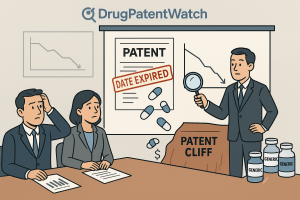
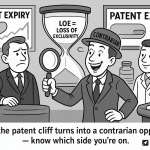
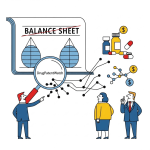
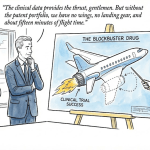
In the high-stakes world of pharmaceutical investing, no event is more predictable, more financially consequential, or more intensely scrutinized than the expiration of a blockbuster drug’s market exclusivity. For decades, this moment has been framed by a single, terrifying metaphor: the “patent cliff”.1 The term conjures images of a company’s flagship revenue stream plummeting into a chasm of generic competition, taking its stock price and future prospects with it. While this narrative captures the severity of the risk, it fundamentally misrepresents the nature of the event. A patent expiration is not a sudden, unforeseen accident; it is the predictable climax of a multi-year strategic battle, a known variable on a corporate calendar that dictates strategy from the moment a new molecule is discovered.
For the prepared investor, this recurring cycle of innovation, monopoly, and expiration is one of the most powerful and persistent sources of alpha in the healthcare sector. It is a market-altering process that reshapes revenue streams, redefines competitive landscapes, and dictates the flow of capital toward future innovation.2 The ability to accurately forecast the timing of this transition, dissect the defensive strategies of innovator companies, and evaluate the offensive maneuvers of generic and biosimilar challengers is what separates a successful sector specialist from the broader market. This dynamic creates clear winners and losers, rewarding strategic foresight and punishing complacency.
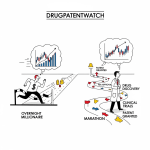
The central economic driver underpinning this entire ecosystem is the profound chasm between a drug’s nominal patent term and its actual commercial life. While a patent grants a statutory monopoly of 20 years from the date of its application, the grueling marathon of clinical development and regulatory review consumes the majority of this period.3 The result is a compressed window of on-market exclusivity—an “effective patent life” of often just 7 to 12 years—during which a company must recoup research and development (R&D) investments that can exceed $2 billion.2 This immense financial pressure is the crucible in which the industry’s aggressive pricing, massive marketing expenditures, and relentless focus on lifecycle management are forged.5
This report provides an exhaustive framework for understanding and investing around this critical inflection point. It deconstructs the intricate legal and regulatory pillars of market exclusivity, quantifies the staggering financial impact of their loss, and dissects the sophisticated corporate warfare that defines a drug’s lifecycle. Supported by detailed case studies of iconic blockbuster drugs—from the classic revenue collapse of Pfizer’s Lipitor to the masterful defensive campaign for AbbVie’s Humira—this analysis moves beyond the simplistic “patent cliff” narrative. It provides institutional-quality insights and actionable frameworks designed to equip the sophisticated investor with the tools necessary to navigate the risks and, more importantly, capitalize on the opportunities created by the industry’s most predictable disruption.
Part I: The Twin Pillars of Monopoly – Deconstructing Market Exclusivity
To accurately model a pharmaceutical company’s future revenue streams, an investor must first master the intricate and often misunderstood architecture of market protection. This protection rests on two distinct but parallel pillars: patents, which are property rights granted by the U.S. Patent and Trademark Office (USPTO), and regulatory exclusivities, which are marketing rights granted by the Food and Drug Administration (FDA). The interplay between these two systems defines the true duration of a drug’s monopoly and is the foundation upon which all subsequent financial and strategic analysis is built.
The 20-Year Illusion: Statutory vs. Effective Patent Life
The cornerstone of intellectual property (IP) protection for a new medicine is the patent. Under the World Trade Organization’s (WTO) Agreement on Trade-Related Aspects of Intellectual Property Rights (TRIPS), member nations, including the United States, grant a standard patent term of 20 years from the date the patent application was first filed.3 This filing is a critical first step, typically taken very early in the drug development process, often as soon as a promising molecule is identified, to secure the inventor’s rights against any subsequent claims.4
However, this 20-year figure creates a profoundly misleading impression of a drug’s monopoly sales period. The reality is that a substantial portion of this statutory term is consumed long before the drug generates a single dollar of revenue. The path from initial discovery to market launch is an arduous and capital-intensive marathon, averaging 12 to 15 years and costing anywhere from hundreds of millions to over $2 billion.3 This journey includes:
Discovery and Preclinical Research (4-7 years): Researchers screen thousands of compounds to identify potential therapeutic candidates and conduct extensive laboratory and animal testing to assess preliminary safety and biological activity.4
Clinical Research (6-7 years on average): This multi-stage process involves human testing. Phase I studies assess safety in a small group of healthy volunteers (20-80 participants) and can take up to a year. Phase II studies evaluate efficacy and side effects in a larger group of patients. Phase III studies are the most critical and expensive, involving hundreds to thousands of patients to confirm efficacy, monitor adverse reactions, and compare the drug to existing treatments.4
FDA Review (6 months to 2 years): After successful clinical trials, the company submits a New Drug Application (NDA) to the FDA, which then conducts a rigorous review of all the data before granting marketing approval.4
Consequently, by the time a drug is finally launched, 10 to 15 years of its 20-year patent term may have already elapsed.3 This leaves an “effective patent life”—the actual period of on-market sales without direct generic competition—of only 7 to 12 years in many cases.2
This discrepancy is not a mere footnote in pharmaceutical economics; it is the central organizing principle of the industry’s business model. The immense pressure to recoup staggering R&D investments within this severely compressed timeframe directly necessitates high launch prices, justifies massive marketing expenditures to accelerate sales uptake, and creates a powerful strategic imperative to extend this brief window of exclusivity through every available legal and regulatory means.
A Parallel Timeline: FDA-Granted Regulatory Exclusivity
Running concurrently with the patent timeline is a separate system of protection known as regulatory exclusivity. These are exclusive marketing rights granted by the FDA upon a drug’s approval if certain statutory criteria are met. They are fundamentally different from patents: patents are granted by the USPTO and give the owner the right to sue others for infringement, while exclusivities are granted by the FDA and prevent the agency from approving a competing generic or biosimilar application for a defined period.8 An investor must analyze both timelines, as the later of the two dates often determines the true loss of exclusivity (LOE).
The most significant types of regulatory exclusivity in the U.S. include:
New Chemical Entity (NCE) Exclusivity: A five-year period of data exclusivity granted to drugs containing an active moiety that has never before been approved by the FDA. During this time, the FDA cannot accept an Abbreviated New Drug Application (ANDA) from a generic manufacturer for the first four years if it contains a patent challenge (a Paragraph IV certification).3
Orphan Drug Exclusivity (ODE): A seven-year period of market exclusivity granted to a drug designated and approved to treat a rare disease or condition (affecting fewer than 200,000 people in the U.S.). This powerful incentive is designed to encourage R&D in commercially challenging areas.3
New Clinical Investigation Exclusivity: A three-year period of exclusivity granted for a “change” to a previously approved drug, such as a new indication, new dosage form, or new patient population, provided the application is supported by new clinical studies. This is a cornerstone of many “evergreening” strategies designed to extend a product’s lifecycle.8
Biologics Exclusivity: Under the Biologics Price Competition and Innovation Act (BPCIA), new biologic drugs receive 12 years of market exclusivity from the date of first licensure. This longer period reflects the greater complexity and cost associated with developing large-molecule drugs.3
Pediatric Exclusivity (PED): This is a uniquely powerful incentive. If a company conducts pediatric studies on an active moiety in response to a formal Written Request from the FDA, it is granted an additional six months of market protection. Crucially, this six-month period is added to the end of all existing patent and exclusivity periods for all of the sponsor’s drug products that contain the same active moiety.8 For a blockbuster drug generating billions in annual sales, this six-month extension can be worth several billion dollars in additional revenue, making it one of the most valuable and lowest-risk tools in a company’s lifecycle management arsenal.11
Reclaiming Lost Time: Patent Term Extensions (PTE)
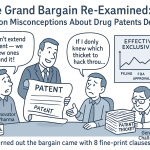
The landmark Drug Price Competition and Patent Term Restoration Act of 1984, commonly known as the Hatch-Waxman Act, struck a grand bargain. It created the modern abbreviated pathway for generic drugs, but in exchange, it offered innovator companies a mechanism to reclaim some of the patent life that was lost during the lengthy FDA review process.2 This mechanism is known as Patent Term Extension (PTE).
The calculation for PTE is complex but follows a specific formula designed to restore a portion of the time spent in regulatory review. The extension is generally equal to the full time the drug was under FDA review plus one-half of the time it was in clinical testing.14 However, this restoration is subject to two critical caps:
The total extension granted cannot exceed five years.14
The total remaining patent term after the extension is applied cannot exceed 14 years from the date of the drug’s approval.14
To be eligible, the patent must not have expired, must not have been previously extended, and the application must be submitted to the USPTO within a strict 60-day window following FDA approval.16 For any financial analyst modeling a drug’s revenue trajectory, accurately calculating the potential PTE is a critical step in determining the true patent expiration date.
Table 1: Key U.S. Market Protection Mechanisms
Protection Type
Granting Body
Standard Duration
Key Features & Notes
Composition of Matter Patent
USPTO
20 years from filing
The core patent covering the active pharmaceutical ingredient (API) itself. The most important patent for determining initial LOE.
New Chemical Entity (NCE) Exclusivity
FDA
5 years
For drugs with a never-before-approved active moiety. Blocks FDA from accepting a generic application for 4 years.
Orphan Drug Exclusivity (ODE)
FDA
7 years
For drugs treating rare diseases. Blocks FDA approval of another drug for the same orphan indication.
New Clinical Investigation Exclusivity
FDA
3 years
For new indications or formulations requiring new clinical trials. A key tool for lifecycle management.
Pediatric Exclusivity (PED)
FDA
6 months
Adds 6 months to all existing patents and exclusivities for the active moiety. Awarded for conducting requested pediatric studies.
Biologics Exclusivity (BPCIA)
FDA
12 years
Longer exclusivity period for complex biologic drugs, reflecting higher development costs and complexity.
Patent Term Extension (PTE)
USPTO & FDA
Up to 5 years
Restores a portion of patent life lost during the FDA review process. Capped at a total of 14 years of remaining patent life post-approval.
Part II: The Patent Cliff – Anatomy of a Financial Cataclysm
The term “patent cliff” is more than just industry jargon; it is a vivid and accurate depiction of the financial precipice that awaits a pharmaceutical company at the end of its market exclusivity period.1 This section quantifies the magnitude of this threat, translating the abstract concept of patent loss into the tangible reality of revenue erosion and market disruption, and provides a forward-looking analysis of the next major wave of expirations that will reshape the industry.
Defining the Precipice and Quantifying the Impact
The patent cliff refers to the sharp, sudden, and often catastrophic decline in revenue that occurs when a blockbuster drug loses its patent protection and is subsequently inundated with lower-cost generic or biosimilar competition.5 This is not a gradual erosion but a rapid collapse. It is a well-established industry benchmark that a branded drug can lose 80% to 90% of its revenue within the first year of generic entry.2
This dramatic revenue loss is a direct consequence of price competition. Generic drug manufacturers have significantly lower overhead; they do not bear the immense R&D costs of the innovator and can leverage an abbreviated regulatory pathway that requires them only to prove bioequivalence, not to repeat extensive clinical trials.1 This allows them to price their products at a steep discount, often 80% to 85% below the brand-name drug’s price.1 In the United States, where pharmacy-level substitution is highly efficient and encouraged by payers, the market share shift from brand to generic is exceptionally swift and brutal.20
The impact of this price collapse varies internationally. A systematic review of studies found that while drug prices decrease significantly after patent expiry in all markets, the extent and speed of this reduction vary greatly between countries.21 The U.S. market typically experiences the most severe price drops, while generic uptake and price erosion can be more gradual in some European countries and Japan due to different reimbursement systems, prescribing habits, and regulatory policies.22 This geographic variation is a critical factor for investors assessing companies with a global sales footprint; a diversified revenue base can help cushion the blow from a U.S. patent cliff.
The Next Tectonic Shift: The 2025-2030 Patent Cliff
The pharmaceutical industry is perpetually staring down this precipice, but the period between 2025 and 2030 is poised to be one of the most disruptive in history. Industry analysts project that a colossal wave of patent expirations will put an estimated $236 billion in annual branded drug sales at risk globally.5 Some forecasts place the total value even higher, approaching $400 billion.25 This period will see approximately 190 drugs lose market exclusivity, a cohort that includes 69 blockbuster products—those with annual sales exceeding $1 billion.2
This impending wave of expirations is forcing companies to aggressively restock their pipelines by investing in R&D, licensing experimental therapies, or acquiring other drugmakers.5 The pressure to act is immense, as the revenue holes left by these expiring blockbusters are often too large to be filled by internal R&D alone. Consequently, the 2025-2030 patent cliff is expected to be a primary catalyst for a surge in merger and acquisition (M&A) activity across the biopharmaceutical sector.18 Companies facing the most significant LOE exposure, particularly those with strong balance sheets, are highly incentivized to “buy growth” by acquiring smaller, innovative biotech firms with promising late-stage assets. For investors, a company’s patent expiration schedule thus becomes a powerful predictive tool for its likely M&A strategy.
The list of drugs facing this cliff reads like a who’s who of the industry’s most successful products, with several of the world’s largest pharmaceutical companies facing an existential threat to their current revenue bases.
Table 2: The $200 Billion Hit List: Major Drugs Facing U.S. Patent Expiration (2025-2030)
Drug Name (Brand)
Innovator Company
Primary Indication
2023 Sales (USD)
Key U.S. Patent Expiration Year
Keytruda (pembrolizumab)
Merck
Multiple Cancers (Immunotherapy)
~$25.0 Billion
2028
Eliquis (apixaban)
Bristol Myers Squibb / Pfizer
Blood Thinner (Atrial Fibrillation)
~$12.0 Billion
~2026-2028
Stelara (ustekinumab)
Johnson & Johnson
Autoimmune Diseases
~$10.9 Billion
2025
Opdivo (nivolumab)
Bristol Myers Squibb
Multiple Cancers (Immunotherapy)
~$9.0 Billion
~2026-2028
Trulicity (dulaglutide)
Eli Lilly
Type 2 Diabetes
~$7.0 Billion
2027
Farxiga (dapagliflozin)
AstraZeneca
Type 2 Diabetes, Heart Failure
~$6.0 Billion
2025
Eylea (aflibercept)
Regeneron / Bayer
Eye Diseases (AMD)
~$5.9 Billion
~2027-2028
Xarelto (rivaroxaban)
Bayer / Johnson & Johnson
Blood Thinner (Thrombosis)
~$4.5 Billion
~2025-2026
Yervoy (ipilimumab)
Bristol Myers Squibb
Cancer (Immunotherapy)
~$2.2 Billion
2025
Xolair (omalizumab)
Novartis / Genentech
Asthma
~$3.9 Billion
2025
Note: Sales figures are approximate based on 2023 reports. Expiration years can be subject to change due to litigation, patent extensions, and other factors.
Sources: 5
Part III: The Strategic Playbook – Corporate Warfare Over Market Exclusivity
The period leading up to and immediately following a patent expiration is not a passive waiting game but an active, multi-front war. Innovator companies deploy a sophisticated arsenal of defensive strategies to protect their revenue streams for as long as possible, while generic and biosimilar challengers mount a coordinated assault to capture market share. Understanding these strategic playbooks is essential for any investor seeking to anticipate market dynamics and predict the winners and losers of this high-stakes conflict.
The Innovator’s Fortress: Defensive Lifecycle Management
For an innovator company, defending a blockbuster franchise is a strategic imperative. The goal is twofold: maximize the duration of the monopoly and minimize the revenue erosion once competition arrives. This is achieved through a set of proactive lifecycle management (LCM) strategies.
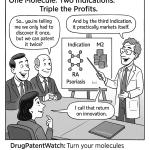
“Evergreening” and the “Patent Thicket”: The most powerful and controversial defensive strategy is known as “evergreening.” This involves filing for and obtaining numerous secondary patents on a single drug, covering not just the core active ingredient but also minor modifications such as new formulations, different dosages, alternative delivery systems (e.g., switching from a vial to a pre-filled syringe), or new methods of use.30 While each individual patent may seem trivial, collectively they create a formidable “patent thicket”—a dense, overlapping web of IP that is incredibly difficult, time-consuming, and expensive for a potential competitor to navigate or litigate.6 The canonical example of this strategy is AbbVie’s Humira, for which the company filed over 247 patent applications, with the vast majority (89%) filed after the drug was already on the market, effectively extending its U.S. monopoly for years.34
“Product Hopping”: This is a commercially focused tactic that leverages the IP generated through evergreening. Shortly before the original version of a drug is set to lose patent protection, the innovator company will launch a “new and improved” version (e.g., a once-daily extended-release formulation to replace an older twice-daily pill).35 The company then deploys its entire sales and marketing force to switch physicians and patients to the new, patent-protected product. By the time the generic version of the original drug launches, a significant portion of the market has “hopped” to the new product, leaving the generic competitor with a much smaller and less profitable target.30
The Authorized Generic (AG) Gambit: This is one of the most sophisticated and counter-intuitive defensive moves. An authorized generic is a version of the branded drug that is marketed by the innovator company itself (or a subsidiary) but sold as a generic.36 It is launched under the brand’s original NDA, not a generic ANDA, meaning it is not subject to the same regulatory hurdles as an independent generic.36 The strategic brilliance of the AG lies in its ability to undermine the primary incentive for generic competition. The Hatch-Waxman Act rewards the first generic company to successfully challenge a brand’s patents with a 180-day period of market exclusivity, during which no other ANDAs can be approved.37 This creates a highly lucrative duopoly between the brand and the first generic. However, an AG is not blocked by this 180-day exclusivity.38 By launching its own AG during this period, the innovator company intentionally shatters the duopoly, turning it into a three-player market and drastically reducing the first generic’s potential profits. This acts as a powerful deterrent, signaling to the entire generic industry that the reward for challenging the innovator’s patent fortress will be severely diminished, thereby discouraging future litigation.38
The Challenger’s Assault: Generic and Biosimilar Entry Strategies
While innovators build their defenses, generic and biosimilar manufacturers are constantly probing for weaknesses, seeking the fastest path to market. Their strategies are codified in the very legislation that governs the industry.
The Hatch-Waxman Pathway and the ANDA: The Hatch-Waxman Act created the Abbreviated New Drug Application (ANDA) process, the primary vehicle for generic market entry. This pathway allows a generic manufacturer to gain FDA approval by demonstrating that its product is bioequivalent to the innovator’s drug (the “Reference Listed Drug”), thereby forgoing the need to conduct new, costly, and time-consuming clinical trials for safety and efficacy.12
Paragraph IV Certification: A Declaration of War: The most aggressive—and potentially most lucrative—part of the ANDA process is the “Paragraph IV certification.” When filing an ANDA, the generic company must make a certification for each patent listed in the FDA’s Orange Book for the reference drug. A Paragraph IV certification is a bold legal assertion that the innovator’s patent is invalid, unenforceable, or will not be infringed by the generic product.8 This filing is considered a technical act of patent infringement and serves as a formal declaration of war, initiating a predictable legal cascade.
The Litigation Cascade and the 30-Month Stay: Upon receiving a Paragraph IV notice letter, the brand-name company has 45 days to file a patent infringement lawsuit against the generic applicant. If a suit is filed within this window, the FDA is automatically barred from granting final approval to the ANDA for up to 30 months.43 This stay provides a crucial period for the patent dispute to be litigated in court. The outcome of this litigation is a major stock-moving catalyst for both the innovator and the generic challenger.
The Prize: 180-Day Exclusivity: The structure of the Hatch-Waxman Act creates a powerful incentive for generic companies to be the first to challenge a patent. The law grants a “brass ring”—180 days of marketing exclusivity—to the first applicant (or applicants) to submit a substantially complete ANDA containing a Paragraph IV certification.37 During this six-month period, the FDA cannot approve any subsequent generic applications for the same drug. This creates a temporary duopoly (or oligopoly, if an AG is launched) that allows the first-to-file generic to capture significant market share at a higher price point than would exist under full generic competition, making it an immensely profitable prize.2 This “race to file” dynamic creates a predictable sequence of events—a flurry of Paragraph IV filings followed by a 45-day litigation window—that provides clear, public catalysts for investors to monitor.
The Biosimilar Battlefield: For complex biologics, the path to market is even more arduous. Governed by the BPCIA, biosimilar development is far more expensive (often exceeding $100 million) and scientifically challenging.46 Challengers must navigate not only the patent thicket but also a complex information-sharing process with the innovator known as the “patent dance”.44 Furthermore, achieving “interchangeability” status—which allows a pharmacist to substitute the biosimilar for the reference biologic without a new prescription—requires additional, costly switching studies, representing another significant barrier to entry.46
Part IV: Case Studies in Value Creation and Destruction
Applying the theoretical frameworks of market exclusivity and corporate strategy to real-world examples provides invaluable insight into the financial consequences of success and failure. The following case studies of three iconic blockbuster drugs—Lipitor, Humira, and Keytruda—illustrate the evolution of patent cliff dynamics and the immense value at stake.
The Classic Fall – Pfizer’s Lipitor
Pfizer’s Lipitor (atorvastatin) stands as the archetypal case study of the devastating financial impact of a small-molecule patent cliff. For over a decade, it was the best-selling drug in history, a cholesterol-lowering statin that generated peak annual sales of approximately $13 billion and cumulative lifetime sales exceeding $125 billion.5 The expiration of its primary U.S. patent in November 2011 was one of the most anticipated events in pharmaceutical industry history.
Pfizer’s Strategy: In the years leading up to the loss of exclusivity (LOE), Pfizer executed a classic defensive playbook. It invested heavily in direct-to-consumer advertising to build unparalleled brand loyalty and engaged in legal battles to delay generic entry as long as possible.48 As the date neared, the company negotiated aggressive rebate contracts with pharmacy benefit managers (PBMs) and health insurers to maintain preferred formulary status. Immediately following the patent expiration, Pfizer deployed a multi-pronged strategy to minimize the initial damage during the 180-day exclusivity period granted to the first generic filer, Watson Pharmaceuticals (along with an authorized generic from Ranbaxy). Pfizer launched its own authorized generic, offered deep discounts through its “Lipitor for You” program, and provided copay cards to reduce patient out-of-pocket costs to as low as $4 per month, making the branded drug competitive with the new generic on price.49
The Financial Aftermath: Despite these valiant and innovative efforts, the financial cliff was steep and unforgiving. The market forces of generic substitution proved overwhelming. Pfizer’s global Lipitor revenues plummeted by 59%, falling from $9.6 billion in 2011 to just $3.9 billion in 2012.5 The impact on the company’s overall performance was immediate; Pfizer’s total revenue declined by 10% in 2012, a drop primarily attributed to the loss of Lipitor’s exclusivity.52 The Lipitor case remains the benchmark for the speed and severity of revenue erosion for a small-molecule drug and serves as a cautionary tale for any company heavily reliant on a single product.
The Masterful Defense – AbbVie’s Humira
If Lipitor represents the classic patent cliff, AbbVie’s Humira (adalimumab) represents the modern masterclass in defensive strategy. As a complex biologic for autoimmune diseases, Humira surpassed Lipitor to become the world’s new best-selling drug, with peak annual sales exceeding $21 billion.5 Its story demonstrates how a sophisticated, multi-layered IP strategy can fundamentally alter the timeline and impact of biosimilar competition.
The “Patent Thicket” Strategy: AbbVie’s core defense was the construction of an unprecedented IP fortress. The company strategically filed a staggering 247 patent applications related to Humira in the U.S. An astonishing 89% of these were filed after the drug was first approved and on the market, with nearly half filed after 2014.33 These secondary patents covered everything from manufacturing processes and formulations to specific methods of use, creating a dense and overlapping “patent thicket” that presented an almost insurmountable legal challenge for would-be biosimilar competitors.55
A Tale of Two Continents: The effectiveness of this strategy is starkly illustrated by comparing the market dynamics in Europe and the United States. In Europe, where the patent system is less permissive of secondary patents, Humira’s primary protection expired in October 2018. Biosimilars launched immediately, leading to intense price competition and discounts of up to 80-90% in some national tenders.56 In the U.S., however, the patent thicket proved decisive. Despite the primary patent expiring in 2016, AbbVie used its web of secondary patents to fend off challengers in court, ultimately forcing them into settlement agreements that delayed the launch of the first U.S. biosimilar until January 2023—nearly five years after European entry.34
The Financial Windfall: This five-year delay was a monumental financial victory for AbbVie. It is estimated that the extended U.S. monopoly cost the American healthcare system an excess of $14.4 billion.34 For AbbVie, it translated into five additional years of monopoly pricing on a drug that was generating over $18 billion in U.S. sales at its peak.18 Even after biosimilars finally entered the U.S. market in 2023, the revenue decline was more controlled than Lipitor’s precipitous fall. Global Humira sales fell 32.2% in 2023 to $14.4 billion, and in the first quarter of 2024, U.S. sales were down 39.9% year-over-year.59 While significant, this managed erosion, cushioned by the growth of its next-generation immunology drugs Skyrizi and Rinvoq, demonstrates the power of a well-executed, long-term defensive strategy for a biologic asset.
The Looming Battle – Merck’s Keytruda
The next great patent cliff battle is already on the horizon, and it promises to be the largest in history. Merck’s revolutionary cancer immunotherapy, Keytruda (pembrolizumab), has become the industry’s top-selling product, with 2023 sales of $25 billion and 2024 sales projected to approach $30 billion.24 With its key U.S. patents set to expire in 2028, Merck is facing a revenue gap of unprecedented scale.
Merck’s Proactive Strategy: Learning from the lessons of Lipitor and Humira, Merck is not waiting for the cliff to arrive. The company’s leadership, including CEO Rob Davis, has been transparent with investors about its proactive, multi-pronged strategy to mitigate the 2028 LOE. Davis has explicitly framed the event not as a “cliff,” but as a manageable “hill”.62 The strategy includes:
Aggressive M&A: Davis has stated that Merck remains an active dealmaker, with an interest in acquisitions valued up to $15 billion to acquire new, external sources of revenue and innovation.63
Strategic “Product Hop”: Merck is expediting the development of a subcutaneous (under-the-skin) formulation of Keytruda. The goal is to file for approval and launch this more convenient version by the end of 2025, years ahead of the 2028 LOE for the current intravenous formulation.61 This will allow the company to switch a significant portion of the market to a new, patent-protected product before biosimilars can even launch.
Forward-Looking Pricing: Acknowledging the inevitability of competition, Davis has indicated that Merck will “price to drive the adoption” of the subcutaneous version, with an eye toward where biosimilar pricing for the intravenous version will eventually land.62
Pipeline Development: Beyond Keytruda, Merck is banking on new growth drivers, such as its pulmonary hypertension therapy Winrevair, to help offset the future revenue loss.29
Merck’s approach to the Keytruda LOE represents the new paradigm in patent cliff defense. It is a highly integrated, forward-looking strategy that combines IP creation (patenting the new formulation), commercial execution (switching patients well in advance), and corporate finance (M&A) to reshape the post-2028 landscape. For investors, monitoring Merck’s execution of this complex plan over the next four years will be a critical case study in modern lifecycle management.
Part V: The Investor’s Toolkit – From Data to Decision
Navigating the complexities of pharmaceutical patent expirations requires more than just a conceptual understanding; it demands access to the right data and a disciplined analytical framework. This section provides a practical toolkit for investors, detailing the essential public and commercial resources for tracking market exclusivity and outlining a systematic approach for assessing a company’s vulnerability and preparedness for a patent cliff.
The Source Code: Navigating the FDA’s Orange Book
The single most important primary source for U.S. patent and exclusivity data is the FDA’s publication, Approved Drug Products with Therapeutic Equivalence Evaluations, colloquially known as the “Orange Book”.64 Named for the color of its original print cover, this publicly accessible database is the official repository of all FDA-approved drugs, the patents asserted by their manufacturers, and any FDA-granted regulatory exclusivities.66
For an investor, the electronic Orange Book is an indispensable due diligence tool. A typical workflow involves:
Searching for the Drug: An investor can search by the proprietary (brand) name, such as “Brilinta,” or by the active ingredient.68
Identifying Exclusivity Status: The search results immediately indicate whether generic equivalents exist. A blank “TE Code” (Therapeutic Equivalence Code) column signifies that no therapeutically equivalent generics have been approved.68
Analyzing Patent and Exclusivity Data: By clicking on the drug’s application number, the user can access a detailed page listing every patent the innovator company has associated with the drug, along with their respective expiration dates. This same page will also list any and all FDA-granted exclusivities (e.g., NCE, ODE, PED) and their expiration dates.68
This data allows an investor to construct a precise timeline of a drug’s market protection. It is crucial to examine all listed patents, as later-expiring formulation or method-of-use patents can extend exclusivity long after the primary composition of matter patent expires. The Orange Book provides the raw data needed to map out the multiple layers of a drug’s IP fortress.
The Intelligence Layer: Using Commercial Data Platforms
While the Orange Book is the foundational source of truth, it is a raw government database that can be cumbersome to use for broad market analysis. To bridge the gap between raw data and actionable intelligence, sophisticated investors turn to commercial data platforms like DrugPatentWatch.69
These platforms provide a critical intelligence layer by:
Aggregating Global Data: They consolidate patent information not just from the U.S. but from over 130 countries, providing a comprehensive global view of a drug’s IP portfolio.69
Tracking Litigation and Regulatory Events: They actively monitor and provide real-time alerts on key events that are not captured in the static Orange Book, such as the filing of Paragraph IV challenges, the initiation of patent infringement lawsuits, and the outcomes of court decisions.70
Providing Analytical Tools: These services offer dashboards, custom reports, and forecasting tools that help users identify market entry opportunities, analyze competitive landscapes, and manage investment portfolios based on upcoming patent expirations.70
By integrating data from the FDA, USPTO, and global patent offices with litigation tracking and analytical features, these platforms transform raw data into the high-value, timely market intelligence required for professional investment decision-making.69
An Analyst’s Framework for Assessing Patent Cliff Risk
Armed with the right data, an investor can apply a systematic framework to evaluate any pharmaceutical company’s exposure to and preparation for a patent cliff. This five-lens analysis provides a structured approach to move from data to a well-reasoned investment thesis.26
Revenue Concentration: The first and most critical question is: how dependent is the company on a single drug? If a product facing LOE accounts for over 30% of a company’s total revenue, it represents a significant concentration risk and a major red flag. For example, Keytruda accounts for nearly half of Merck’s total sales, making its 2028 LOE an event of paramount strategic importance.62
Pipeline Robustness: A company’s R&D pipeline is its most effective long-term defense against a patent cliff. An investor must critically assess the strength of the late-stage pipeline (Phase III assets or those awaiting approval). Are there potential blockbusters in development capable of replacing the billions in lost revenue? A company with a deep, innovative pipeline is far better positioned to weather the storm than one with a sparse or high-risk portfolio.26
Balance Sheet Strength: The financial capacity to execute a defensive strategy is crucial. A company with a strong balance sheet—large cash reserves and low debt—has the flexibility to absorb a temporary revenue shock, invest heavily in R&D, or, most importantly, make strategic acquisitions to buy new growth.26 A heavily leveraged company facing a patent cliff is in a much more precarious position.
Management Strategy and Track Record: Is management transparently communicating a clear, credible, and proactive plan to navigate the upcoming LOE? As seen with Merck’s CEO, a well-articulated strategy can bolster investor confidence. Furthermore, an investor should evaluate the leadership team’s historical performance. Have they successfully managed past patent cliffs? A proven track record is a powerful indicator of future resilience.26
Monitoring Key Catalysts: The analysis is not a one-time event. Investors must continuously monitor the key leading indicators that will shape the post-LOE landscape. These include tracking ANDA and BLA filings for new challengers, following the outcomes of patent litigation in the courts, and watching for M&A activity, as these events often serve as the most significant near-term catalysts for a company’s stock price.26
Conclusion: Profiting from Predictable Disruption
The patent cliff is one of the most powerful, predictable, and disruptive forces in the healthcare sector. It is not an unforeseen catastrophe but a fundamental and recurring feature of the pharmaceutical industry’s business cycle, born from the inherent tension between the need to incentivize costly innovation and the societal demand for affordable medicines. The immense financial stakes—with hundreds of billions of dollars in revenue set to change hands between 2025 and 2030—have given rise to a sophisticated and high-stakes game of strategic offense and defense between innovator and generic firms.
For the untrained observer, this landscape can appear chaotic and fraught with risk. However, for the diligent investor, it is a realm of unparalleled opportunity. The path of a drug from monopoly to competition follows a well-defined sequence of legal, regulatory, and commercial events that generate clear, publicly available catalysts. The expiration dates are known years in advance. The defensive maneuvers of innovators and the legal challenges of generics are trackable through public databases and specialized intelligence services.
The investor’s edge, therefore, comes not from fearing the cliff, but from understanding its mechanics. Success in this sector requires a nuanced appreciation of the dual systems of patents and regulatory exclusivities, a quantitative grasp of the financial impact of their expiration, and a qualitative assessment of corporate strategy. By meticulously tracking patent timelines, scrutinizing R&D pipelines, evaluating balance sheet strength, and analyzing management’s strategic acumen, an investor can effectively differentiate between the companies that are prepared to weather the storm and those that will be swept away by it. The patent expiration calendar is far more than a schedule of risks; for those who know how to read it, it is a map to significant and predictable investment opportunities.
Strategic behavior and entry deterrence by branded drug firms: the case of authorized generic drugs – PubMed, accessed August 15, 2025, https://pubmed.ncbi.nlm.nih.gov/39316276/