Swiss Pharmaceutical Hegemony: Intellectual Property Architecture and Global R&D Dominance
Switzerland controls a disproportionate share of global pharmaceutical value. While the nation represents a small fraction of the global population, chemicals and medicines account for approximately 40% of its total export economy. This concentration of industrial power is not accidental. It results from a regulatory and legal environment designed to maximize the net present value (NPV) of therapeutic assets. The Swiss model prioritizes the “molecule-to-market” lifecycle by providing a predictable framework for patent enforcement, high-density capital access, and a specialized labor pool. This article analyzes the technical components of Switzerland’s pharmaceutical infrastructure and the strategies used by its lead firms to maintain market exclusivity.
Structural Assets of the Swiss Intellectual Property Framework
The Swiss legal system provides some of the most robust protections for pharmaceutical intellectual property in the world. This framework is the primary driver for multinational corporations to headquarter their global IP management operations within the country.
Supplementary Protection Certificates (SPCs) and Patent Extension
Switzerland allows for the extension of patent terms through Supplementary Protection Certificates. Since pharmaceutical research involves lengthy clinical trial phases and rigorous Swissmedic approval processes, the effective patent life of a drug is often reduced to less than 12 years by the time it reaches the market. The SPC mechanism compensates for this by granting up to five additional years of protection. This extension is a core component of the valuation of Swiss-held assets. For a blockbuster drug generating 2 billion dollars in annual revenue, an SPC extension represents 10 billion dollars in protected top-line growth that would otherwise be lost to generic erosion. Swiss law also provides a six-month pediatric extension if the manufacturer conducts specific studies for younger populations. This adds another layer of revenue protection that analysts use to justify higher terminal value in discounted cash flow (DCF) models.
The Swiss Federal Institute of Intellectual Property (IPI) and Regulatory Precision
The IPI manages the registration and enforcement of patents with a level of technical precision that reduces litigation risk. Unlike jurisdictions with backlogged patent offices, the IPI provides clear guidance on “evergreening” strategies. This involves filing secondary patents for novel formulations, dosages, or delivery mechanisms. Swiss companies use these filings to create “patent thickets” around a primary molecule. This strategy complicates the entry of biosimilars and generics. The predictability of the IPI allows firms to forecast their market exclusivity periods with higher confidence. This stability attracts institutional investors who require low-volatility returns on R&D expenditures.
Investment Strategy: Assessing Swiss IP Portfolios
Investors should evaluate Swiss pharma companies based on their “patent cliff” exposure relative to their SPC pipeline. A high ratio of products with pending SPC extensions indicates a lower risk of immediate revenue decay. Analysts must also track the IPI filing rate for secondary patents. A high density of secondary filings around a lead compound suggests a management team that is aggressively defending the asset’s NPV.
Key Takeaways
SPCs provide up to five years of additional market exclusivity to offset regulatory delays.
Pediatric extensions offer a 0.5-year revenue tailwind for compliant manufacturers.
The IPI offers a stable environment for filing secondary patents and building patent thickets.
Predictable IP laws reduce the discount rate applied to Swiss pharmaceutical assets by institutional investors.
Corporate Asset Valuation: The Basel Cluster and Global Revenue Streams
The city of Basel is the highest-density pharmaceutical hub in the world. It serves as the operational base for Novartis and Roche, two firms that dictate global standards for drug pricing and R&D allocation. The valuation of these companies depends on their ability to transition from legacy small-molecule drugs to complex biologics and cell therapies.
Roche and the Biologic Dominance Model
Roche is the world leader in oncology and in-vitro diagnostics. Its valuation is tied to its mastery of biologic manufacturing. Biologics are harder to replicate than traditional chemical drugs, which provides a natural barrier to entry even after patents expire. Roche’s IP strategy focuses on the integration of diagnostics and therapeutics. By developing a diagnostic test that identifies which patients will respond to a specific drug, Roche secures a “companion diagnostic” patent. This ties the use of the drug to their proprietary testing platform. This creates a closed-loop revenue model. Analysts value Roche’s diagnostic division as a hedge against the volatility of the drug development pipeline. The company’s focus on large-molecule drugs ensures that biosimilar competition is slower and more capital-intensive than generic competition.
Novartis and the Pivot to Advanced Therapy Medicinal Products (ATMPs)
Novartis has shifted its capital allocation toward “platforms” rather than individual pills. This includes investments in mRNA, gene therapy, and radioligand therapy. The IP valuation for an ATMP is different from a traditional drug. Because these therapies are often curative or require specialized administration, Novartis can command higher prices. Their asset Kymriah, a CAR-T cell therapy, represents a shift in the IP landscape. The value lies not just in the genetic sequence but in the proprietary manufacturing process used to modify a patient’s cells. Novartis protects these processes as trade secrets and “process patents,” which are harder for competitors to circumvent than product patents. This creates a “moat” around their high-margin specialty medicines.
IP Asset Valuation: The Impact of Secondary Patents and Evergreening
Both Roche and Novartis use “evergreening” to extend the lifecycle of their most profitable assets. This is done by launching a “follow-on” product just before the original patent expires. For example, if a firm moves patients from an older intravenous version of a drug to a newer, patented subcutaneous injection, they can preserve market share. The valuation of the new subcutaneous version is higher because it offers better patient compliance and a fresh 20-year patent clock. Swiss firms are experts at this transition. They use their vast R&D budgets to ensure the “new” version provides enough clinical benefit to satisfy payers while maintaining the company’s pricing power.
Investment Strategy: Evaluating Pipeline Depth
When analyzing Basel-based firms, investors must distinguish between “incremental” and “transformational” R&D. Incremental R&D focused on evergreening protects existing revenue. Transformational R&D in ATMPs creates new revenue streams. A balanced portfolio includes both. Investors should look for companies where at least 30% of the pipeline consists of novel platforms like radioligands or RNA-based therapies, as these assets have higher long-term IP defensibility.
Key Takeaways
Roche utilizes companion diagnostics to create proprietary, closed-loop treatment ecosystems.
Novartis focuses on process patents for ATMPs to build high-barrier-to-entry manufacturing moats.
Evergreening via subcutaneous delivery or new formulations is a standard tactic to mitigate patent cliffs.
The Basel cluster provides a synergistic environment that lowers the cost of R&D through shared infrastructure and specialized labor.
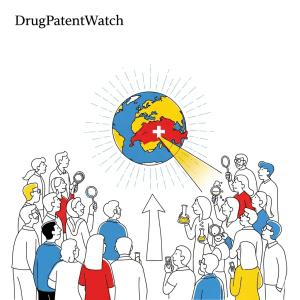
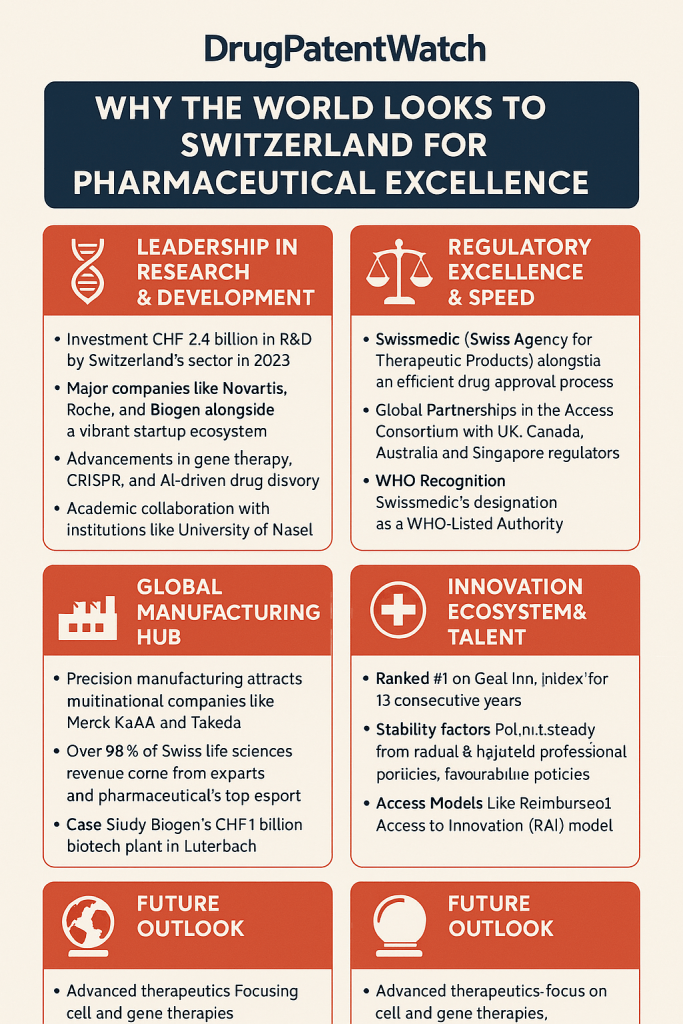
The world doesn’t just look to Switzerland for high-quality medicines; it looks to Switzerland as a blueprint for how to build a knowledge-based economy that consistently delivers life-changing innovation. For business leaders, strategists, and investors in the pharmaceutical and life sciences sectors, understanding the anatomy of this success is not merely an academic exercise. It is a masterclass in turning national characteristics into a global competitive advantage. How did a nation known for watches and banking become the world’s pharmacy? What are the interlocking gears of this innovation engine, and what can they teach us about building resilient, high-value enterprises?
This report will dissect the Swiss pharmaceutical model, moving beyond surface-level praise to uncover the strategic decisions, structural advantages, and cultural drivers that underpin its global leadership. We will journey through its history, from its origins in the textile dye industry to its modern-day dominance. We will deconstruct the contemporary pillars of its success—the innovation clusters, the regulatory framework, the IP strategy, and the talent engine. Finally, we will analyze its profound global impact, confront the significant challenges on the horizon, and chart its likely future trajectory. The objective is to provide a comprehensive, strategic analysis that equips professionals with the nuanced understanding needed to navigate, compete, and collaborate within the sphere of influence of this remarkable pharmaceutical superpower.
Part I: The Foundations of a Pharmaceutical Superpower
To comprehend the sheer scale and resilience of Switzerland’s pharmaceutical sector today, one must first appreciate its deep historical roots and the strategic choices that shaped its evolution. The industry was not born overnight but forged over more than a century of industrial adaptation, economic pragmatism, and a conscious, high-stakes pivot from imitation to world-leading innovation. This history, combined with its staggering economic weight, provides the foundational context for its current global standing.
From Dyes to Drugs: A History of Strategic Evolution
The story of Swiss pharma begins not in a sterile laboratory, but in the vibrant, colorful world of 19th-century textile manufacturing. The industry’s earliest ancestors were chemical companies focused on producing synthetic dyes.2 Firms like J.R. Geigy (a predecessor to Novartis, founded in 1857) and Hoffmann-La Roche (founded in 1896) discovered that certain chemical compounds created for dyes also possessed medicinal properties, sparking the creation of standalone pharmaceutical ventures.1 This origin story is crucial; it endowed these early companies with a deep-seated expertise in industrial chemistry, a foundation upon which they would build their pharmaceutical empires.
In its nascent stages, the industry’s growth was strategically, and perhaps opportunistically, accelerated by a notably relaxed approach to intellectual property. For decades, Swiss patent laws were lax, allowing local firms to legally replicate and improve upon innovations developed in other countries, particularly neighboring Germany. This period of legally sanctioned imitation was not a sign of weakness but a brilliant, pragmatic strategy. It allowed Swiss companies to build technical expertise, manufacturing capacity, and market knowledge without bearing the immense upfront costs and risks of original R&D. They learned to make complex products, established global distribution channels, and accumulated the capital that would be essential for the next phase of their evolution.
The most pivotal moment in this history arrived in the 1970s. In a move that would define its future, Switzerland deliberately abandoned its imitation-friendly model and embraced a robust patent protection regime, aligning with global standards. This was far more than a simple act of international compliance; it was a conscious and audacious strategic pivot. By closing the door on replication, the Swiss government and its industrial leaders effectively forced the industry to innovate or perish. There was no longer a low-cost path to success. The future lay in creating novel, high-value intellectual property. This singular decision was the catalyst that transformed the Swiss pharmaceutical sector from a skilled follower into a world-leading innovator. It sent an unambiguous signal to the global scientific and financial communities: Switzerland was the place to create value, not just copy it.
This strategic shift was complemented by another unique national characteristic: political neutrality. While often cited for providing a stable business environment, Switzerland’s neutrality had a profound historical commercial advantage.6 Throughout the tumultuous first half of the 20th century, as world wars ravaged the economies and industries of its European neighbors, Swiss companies were able to maintain commercial operations and supply chains with nations on all sides of the conflicts. This unique position allowed them to build a truly global business footprint and an unparalleled level of international market expertise decades before many of their competitors. This legacy of global acumen and supply chain resilience remains a core part of the industry’s DNA, shaping its export-oriented focus to this day. The merger of Ciba-Geigy and Sandoz in 1996 to form Novartis—at the time the largest corporate merger in history—was the culmination of this century-long evolution, creating a global giant with the scale and R&D firepower to dominate the modern pharmaceutical landscape.1
The Economic Engine: Quantifying Switzerland’s Pharma Dominance
The pharmaceutical industry is not just a sector within the Swiss economy; it is its undisputed engine. Its contribution is so immense that the health of the nation’s economy is inextricably linked to the health of its pharma giants. The numbers are staggering and paint a clear picture of an industry that functions as the country’s economic backbone.
The sector contributes between 5.4% and 7% of Switzerland’s entire gross domestic product (GDP), with total value-added effects reaching an immense CHF 74.5 billion.2 It is a major employer, providing jobs for over 46,000 people directly. When the ripple effects through adjacent sectors like logistics, academia, and specialized suppliers are considered, the industry supports a staggering quarter of a million jobs nationwide.4
However, the industry’s true economic might is most vividly illustrated by its export performance. It is Switzerland’s leading exporter by a massive margin, generating well over CHF 100 billion in annual exports—a figure that has recently climbed as high as CHF 135.5 billion.2 This represents between 40% and 50% of Switzerland’s
total annual exports across all industries.2 The industry is fundamentally global in its orientation, with over 98% of all pharmaceutical products manufactured in Switzerland destined for foreign markets.4 The primary destinations for these high-value goods are the European Union, which receives nearly half of all pharma exports (CHF 69.1 billion), and North America. The United States stands as the single most important country market, absorbing over CHF 30 billion in Swiss pharmaceutical products annually.10
The Swiss Pharmaceutical Industry by the Numbers (Economic Impact)
Metric
Value / Contribution
GDP Contribution
5.4% – 7.0% 2
Total Value-Added
CHF 74.5 billion
Direct Employment
~46,000 4
Total Supported Jobs
~250,000 4
Annual Exports
CHF 105.5 billion – 135.5 billion 8
Share of Total Swiss Exports
38.5% – 50% 2
This remarkable economic profile provides more than just wealth; it offers stability. According to the KOF Economic Institute, the pharmaceutical sector is “relatively insulated from the ebbs and flows of economic cycles”. This resilience is not merely because medicine is a basic necessity. It stems from the industry’s strategic focus on developing innovative, patent-protected drugs for severe and life-threatening conditions, particularly in areas like oncology and immunology. The demand for these transformative therapies is highly inelastic compared to consumer goods or even commoditized primary care medicines. As a result, the Swiss pharma sector acts as a powerful economic stabilizer, delivering consistent growth, employment, and tax revenue even during periods of global recession, providing a crucial buffer for the wider national economy.
Yet, this export-driven success story contains a hidden vulnerability. The industry’s profound reliance on a few key markets, especially the United States, exposes the entire Swiss economy to significant geopolitical risk. This was thrown into sharp relief during the Trump administration’s threats of punitive tariffs. The prospect of high tariffs on pharmaceutical imports was not just a trade issue; it was a potential body blow to the Swiss economic model. The response from the industry was swift and decisive. Roche pledged a staggering $50 billion and Novartis $27 billion in new investments into their US-based production and R&D facilities. These were not routine capital expenditures. They were high-stakes, strategic maneuvers designed to de-risk this critical market dependency by appeasing US policymakers, localizing supply chains, and demonstrating a commitment to the American economy. This episode reveals a crucial truth: for all its domestic strengths, the Swiss pharmaceutical industry’s fortunes are inextricably tied to, and vulnerable to, the shifting winds of global politics.
Part II: The Pillars of Excellence – Deconstructing the Swiss Advantage
Switzerland’s pharmaceutical dominance is not built on a single foundation but on a set of mutually reinforcing pillars. These pillars—a hyper-concentrated innovation ecosystem, a globally respected regulatory body, a formidable intellectual property regime, a superior talent pipeline, a favorable business climate, and an unwavering commitment to manufacturing quality—work in concert to create a competitive advantage that is difficult for any other nation to replicate. Deconstructing these elements reveals the intricate machinery behind the “Swiss Made” promise.
The Innovation Crucible: R&D, Academia, and the “Bio-Valley” Ecosystem
At the very heart of Switzerland’s success lies an innovation ecosystem of extraordinary density and dynamism. It is a crucible where immense capital investment, world-class academic research, and commercial ambition are forged together, often within just a few square kilometers. This ecosystem is characterized by its powerful geographic clusters, its unparalleled commitment to R&D, and a deeply symbiotic relationship between academia and industry.
Geographic Clusters: The Power of Proximity
The Swiss life sciences industry is not spread thinly across the country; it is concentrated in a few hyper-dense, world-leading clusters that create powerful network effects.1 This geographic proximity fosters collaboration, accelerates knowledge transfer, and creates a deep pool of specialized talent and services.
The largest and most famous of these is the Basel region. Often referred to as the heart of the “BioValley” that straddles the borders of Switzerland, France, and Germany, Basel is a global pharmaceutical command center. It is home to the global headquarters of giants like Roche and Novartis, and hosts major operations for numerous other multinationals, including Bayer, Johnson & Johnson, and Moderna. With an estimated 900 pharmaceutical and medtech companies, the Basel cluster is defined by large-scale R&D, global strategic management, and high-volume, high-quality manufacturing.1
The second major hub is the Zurich-Zug-Lucerne-Schaffhausen cluster. While also home to major players like Pfizer, Amgen, and AstraZeneca, this region has carved out a distinct identity as a hotspot for biotechnology startups and medical technology. It benefits enormously from its proximity to the world-renowned Swiss Federal Institute of Technology (ETH Zurich) and the University of Zurich, which act as powerful engines for creating spin-off companies. The Bio-Technopark in Schlieren-Zurich serves as a key incubator, facilitating the crucial transfer of knowledge and technology from academic labs to commercial ventures.
The third critical cluster is the Espace Mittelland-Bassin Lémanique, which includes the Lake Geneva region and is often branded as “Health Valley.” Anchored by the Swiss Federal Institute of Technology in Lausanne (EPFL), this area is a vibrant ecosystem for both established companies like Merck and Biogen and a burgeoning startup scene. Its Biopôle campus in Lausanne is a testament to the power of curated ecosystems, hosting over 150 life sciences organizations and boasting a remarkable 60%+ collaboration rate among its academic and industry members.17
Major Pharmaceutical Clusters in Switzerland
Cluster Name
Key Geographic Area
Major Companies
Ecosystem Strengths & Character
Basel Region
Basel, Northwestern Switzerland
Roche, Novartis, Moderna, Bayer, Johnson & Johnson
Global HQs, large-scale manufacturing, established pharma giants, deep history, core of the trinational “BioValley” 1
Highly collaborative campus model (Biopôle), strong academic anchor (EPFL), focus on biotech and medtech innovation 17
For any strategist, investor, or business development professional, this map of the innovation landscape is critical. It shows precisely where to go to find different types of opportunities: Basel for major strategic partnerships with established giants, Zurich for scouting cutting-edge biotech and medtech spin-offs, and the Lemanic region for tapping into a uniquely collaborative and dynamic campus environment.
Unparalleled R&D Investment
The fuel for this innovation engine is a torrent of R&D investment, overwhelmingly driven by the private sector. Swiss companies are responsible for funding two-thirds of the nation’s total annual R&D spend of over CHF 25 billion. Within this, the pharmaceutical industry is by far the biggest spender, investing CHF 6.2 billion in R&D in 2021 alone, a 10% increase over 2019.
The most telling statistic, however, is this: pharma giants like Novartis and Roche collectively invest around CHF 9.6 billion annually into their Swiss-based R&D operations—an amount that is nearly double the revenue they generate from the Swiss market itself. This single data point reveals a profound strategic truth. These companies do not view Switzerland as just another national market; they operate it as their global R&D headquarters. The research conducted and the discoveries made in the labs of Basel and Zurich are not primarily for Swiss patients; they are destined for the global market. This positions Switzerland at the very genesis of the value chain for pharmaceutical innovation, making it a place where the world’s future medicines are born.
The Academia-Industry Symbiosis
This industrial R&D firepower does not operate in a vacuum. It is deeply and strategically interwoven with Switzerland’s world-class academic institutions. Universities like ETH Zurich and EPFL are not ivory towers of pure research; they are active and essential partners in the commercial innovation process. The connections are tangible and structural. The Roche Innovation Center Zurich, a global center of excellence for cancer immunotherapy research, was born as a spin-off from ETH Zurich and remains a key part of Roche’s early development pipeline.
In recent years, these collaborations have become even more ambitious and strategic. The new ETH-HSG Manufacturing Alliance is a prime example, uniting 13 major industrial partners—including Roche, Novartis, Johnson & Johnson, and Takeda—with leading academics from ETH Zurich and the University of St. Gallen (HSG). Their goal is to conduct joint research on critical future topics like the use of artificial intelligence in production, global supply chain optimization, and sustainable manufacturing practices. Similarly, Debiopharm’s IDEAL (Innovation Debiopharm Academia Léman) initiative creates a direct bridge with the University of Geneva, providing funding and R&D expertise to accelerate promising academic discoveries in oncology and antibiotics, moving them more quickly toward clinical development. These partnerships are designed to shorten the perilous journey from a scientific concept at the lab bench to a viable therapy at the patient’s bedside.
However, beneath this vibrant surface of collaboration lies a potential long-term risk. A striking trend emerged in a recent analysis by the country’s Federal Statistical Office: the share of corporate R&D spending dedicated to fundamental research plummeted from a steady level of around 25% to just 8% between 2015 and 2021. While the report partly attributes this to the natural investment cycle, where costly late-stage clinical development follows less expensive early discovery, it calls the drop “striking.” This signals a potential strategic vulnerability for the entire ecosystem. The Swiss model has long relied on a steady stream of basic science breakthroughs from publicly funded academic research (supported by institutions like the Swiss National Science Foundation ), which industry then translates and develops. If corporate capital becomes increasingly focused only on late-stage, de-risked assets, the crucial bridge between foundational science and applied medicine could weaken. Over the long term, this could starve the pipeline of the truly novel, disruptive ideas needed to generate the next generation of blockbuster drugs, subtly undermining the very foundation of the innovation crucible.
Regulatory Rigor and Global Trust: The Swissmedic Gold Standard
A world-class innovation engine is of little use if its products cannot reach patients. Here, Switzerland possesses another key pillar of its success: the Swiss Agency for Therapeutic Products, or Swissmedic. Far from being a mere bureaucratic hurdle, Swissmedic functions as a strategic enabler, whose reputation for rigor, efficiency, and global collaboration builds trust and facilitates market access worldwide.25
Swissmedic’s core mandate is to ensure that all drugs and medical devices available in Switzerland meet the highest standards of safety, efficacy, and quality. However, its true strategic value lies in its outward-facing approach. The agency actively harmonizes its regulatory processes with those of the world’s most important health authorities, including the European Medicines Agency (EMA) and the U.S. Food and Drug Administration (FDA). This alignment is critical, as it reduces regulatory friction and streamlines the process for Swiss-made drugs to enter the largest global markets. Swissmedic is also a leading member of the Access Consortium, a collaborative work-sharing initiative with the regulators of Australia, Canada, Singapore, and the United Kingdom, further enhancing its global reach and efficiency.
This global standing was powerfully reinforced in early 2023 with the signing of a Mutual Recognition Agreement (MRA) on Good Manufacturing Practices (GMP) with the US FDA. This landmark agreement means that Swissmedic and the FDA formally recognize the validity of each other’s factory inspections. For manufacturers, this is a game-changer. It eliminates the need for costly, redundant, and time-consuming inspections by the importing authority, saving millions of dollars and months of delay. More importantly, it serves as a powerful international endorsement of Swiss manufacturing quality, placing it on par with the FDA’s own gold standard. This regulatory diplomacy is a perfect example of how Switzerland turns a potential administrative burden into a tangible commercial advantage, directly supporting its export-driven economic model.
Yet, the narrative of Swiss regulatory efficiency is not without its complexities. While Swissmedic itself can be highly efficient, a 2023 benchmarking study co-sponsored by the industry association Interpharma revealed a surprising paradox. On average, pharmaceutical companies are submitting their applications for marketing authorization to Swissmedic a full 244 days later than they do to the EMA. The result is that a new drug is, on average, approved for patients in Switzerland 249 days later than in the EU. This seems to contradict the reputation for speed. The underlying cause is not a slow-down at Swissmedic, but the complexities of Switzerland’s subsequent pricing and reimbursement negotiations. The country employs rigorous cost-containment measures, including external reference pricing and confidential rebates, which can prolong the process of getting a drug onto the national list of reimbursed therapies.4 This creates a critical distinction for any business operating in the market: regulatory approval of a drug’s safety and efficacy is not the same as securing market access and revenue. The path from approval to patient can still be a long and challenging one.
An Impenetrable Fortress: Intellectual Property as a Core Strategy
If R&D is the engine of Swiss pharma, then intellectual property is the fortress that protects its most valuable creations. The country’s legal framework for IP is one of the most robust in the world, designed explicitly to provide the security and incentive needed to justify the billion-dollar, decade-long gambles of modern drug development. Interpharma describes comprehensive patent protection as being “of fundamental importance” to the entire Swiss research hub.
The first and most well-known layer of this fortress is the patent system. A patent grants an inventor the exclusive right to commercially exploit their invention for a period of up to 20 years from the filing date. In return for this temporary monopoly, the inventor must publicly disclose the details of the invention, adding to the collective pool of scientific knowledge. In the pharmaceutical sector, this protection is the essential mechanism that allows companies to recoup their massive R&D investments before competitors can enter the market with cheaper generic versions.
However, Switzerland’s IP landscape features a powerful second layer of defense that provides an additional, and sometimes even more critical, form of protection: “first applicant protection” (also known as data exclusivity). This legal instrument is entirely separate from patent law. It grants the first company to submit a full dossier of preclinical and clinical trial data for a new drug a period of exclusivity during which competitors cannot rely on that data to get their own generic versions approved. This is profoundly important because generating this data is an enormously expensive and time-consuming endeavor. In many situations, particularly for new uses of existing molecules where a composition-of-matter patent may be weak or non-existent, this data protection is the only meaningful incentive for a company to invest in the necessary clinical trials. This multi-layered defense system—combining strong patents with robust data exclusivity—acts as a powerful magnet for R&D investment and venture capital. It provides innovators with the long-term confidence that their high-risk, high-cost discoveries will be shielded from premature competition, allowing them to realize a return on their investment.
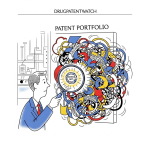
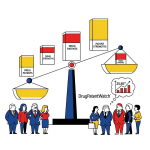
The very strength and complexity of this IP fortress make sophisticated business intelligence an indispensable tool for any company looking to compete. Navigating this landscape requires more than a simple calendar of patent expiries. A branded drug is rarely protected by a single patent. It is typically surrounded by a “patent thicket”—a complex web of overlapping patents covering not just the core molecule, but also specific formulations (e.g., an extended-release tablet), methods of use (e.g., for a new disease), and manufacturing processes.
This is where platforms like DrugPatentWatch become mission-critical. For a generic or biosimilar manufacturer planning a market entry strategy, such a tool is essential for dissecting this complex IP landscape.33 It allows them to move beyond the headline composition-of-matter patent and analyze the entire portfolio of protections, including secondary patents and regulatory exclusivities like first applicant protection.32 A company might see that a drug’s main patent is expiring, but without this deeper intelligence, they could miss a crucial formulation patent that doesn’t expire for another three years, or a period of data exclusivity that blocks their path. Attempting to launch without this comprehensive view is a recipe for costly litigation, injunctions, and ultimately, a failed market entry. Gaining a competitive edge against a Swiss-based innovator, therefore, requires mastering this intelligence game.
Of course, the very system that so effectively fuels innovation also creates a fundamental and persistent socio-economic tension. The explicit goal of a strong IP regime is to delay competition. Critics argue that this power is used to maintain high drug prices, and that practices like confidential rebates and settlements with generic manufacturers further obscure true costs and limit patient access.4 This inherent trade-off—fostering breakthrough innovation through the promise of monopoly profits versus ensuring broad and affordable access to medicines—is the central, unresolved dilemma at the heart of the Swiss pharmaceutical model and, indeed, the global pharmaceutical industry.
The Human Capital Advantage: Cultivating a World-Class Workforce
Advanced laboratories and strong patents are worthless without the brilliant minds to put them to use. Switzerland’s enduring success is built upon a foundation of exceptional human capital, cultivated through a unique educational system and supplemented by a powerful ability to attract top talent from around the globe.
A cornerstone of its domestic talent pipeline is the renowned Swiss “dual” Vocational Education and Training (VET) system. This model, which serves approximately 70% of all young people in the country, is a departure from purely academic tracks. It ingeniously combines classroom-based learning at a vocational school with several days a week of paid, practical, on-the-job training inside a host company. This is not a peripheral program; it is the mainstream pathway to a skilled career.
The pharmaceutical industry is deeply embedded in and committed to this system. Global giants like Roche actively recruit and train apprentices in key locations like Basel and Rotkreuz, offering programs that can lead all the way to a Master’s degree-level qualification. The contract manufacturing leader Lonza provides apprenticeships in 16 different technical professions at its major production site in Visp, including highly specialized roles like “Chemical and Pharmaceutical Technologist” and “Apparatus Glassblower.” Lonza currently trains around 250 apprentices at this single site and notes that many of its senior business leaders began their careers in these very programs. The VET system is the mechanism that translates the abstract concept of “Swiss Quality” into a tangible reality on the factory floor. It produces a continuous stream of highly skilled technicians and specialists who possess not only theoretical knowledge but also years of practical, hands-on experience with the specific equipment and processes of the companies that will later employ them. This creates a workforce that is uniquely prepared for the demands of high-precision pharmaceutical manufacturing, a profound competitive advantage over systems that rely solely on academic degrees.
Alongside this formidable homegrown talent base, Switzerland operates as a powerful magnet for the world’s best and brightest. Its high quality of life, competitive salaries, and concentration of world-class research opportunities make it a top destination for global experts. The statistics are telling: 38.4% of all doctors practicing in Switzerland are foreign-trained. Even more remarkably, in the dynamic biotech sector, a full 56% of all startup founders are foreign nationals.
This reveals a sophisticated, two-tiered talent strategy. The VET system provides the deep bench of world-class domestic talent needed for the technical and operational backbone of the industry—the skilled workers who ensure that manufacturing and quality control are second to none. Simultaneously, the cutting edge of innovation—the leadership of new biotech ventures, the professorships at top universities, and the senior scientists in corporate R&D—is heavily powered by attracting the best minds from across the globe. This creates a powerful symbiotic relationship. However, it also highlights a critical dependency. The ecosystem’s ability to continue pushing the boundaries of science relies on Switzerland remaining an open, welcoming, and attractive place for international talent. Therefore, national policies on immigration, labor, and research collaboration are not peripheral issues; they are central to the long-term health of its most important industry.
A Favorable Business Climate: The Role of Tax and Policy
A stable government, sound infrastructure, and a predictable legal system are table stakes for any advanced economy. Switzerland, however, goes a step further, deliberately crafting a tax and policy environment designed to attract and retain the highly mobile, innovation-intensive industries that are the lifeblood of its economy. This favorable business climate, particularly its targeted incentives for research and development, is a key pillar of its pharmaceutical success.
While corporate tax rates vary between the 26 cantons, the overall environment is highly competitive. For certain types of international trading companies, the effective corporate income tax rate can be as low as 8.5%.40 But the real strategic advantage lies in the specific tax instruments aimed directly at fostering innovation.
The first of these is the “patent box”. Implemented at the cantonal level, this powerful incentive allows companies to receive a tax exemption of up to 90% on the net profits they derive from patents and other comparable IP rights.42 This directly rewards the successful outcome of R&D, creating a powerful financial motive to not only conduct research in Switzerland but also to house the resulting intellectual property there.
The second key instrument is the “R&D super-deduction”. This allows companies to deduct more than 100% of their qualifying R&D expenditures from their taxable income. Most cantons permit an additional deduction of up to 50%, meaning a company can deduct CHF 1.50 for every CHF 1.00 it spends on eligible R&D activities conducted within Switzerland.43 This incentive is particularly broad, covering not just fundamental scientific research but also applied research and the development of new products and processes. Critically, it is available regardless of whether the research ultimately results in a patent, thereby reducing the financial risk of R&D activities that may not succeed.
Key R&D Tax Incentives for Swiss Pharma
Incentive
Description of Mechanism
Potential Benefit
Patent Box
A special tax regime for profits derived from patents and similar IP rights.
Up to a 90% tax exemption on qualifying net profits at the cantonal/communal level. 42
R&D Super-Deduction
An additional tax deduction for qualifying R&D expenses incurred in Switzerland.
Allows companies to deduct up to 150% of their R&D spending from their taxable income. 43
Qualified Refundable Tax Credit (QRTC)
A newer incentive being introduced by cantons (e.g., Lucerne) to align with global tax rules (Pillar Two).
Provides a direct refundable credit for R&D expenses, beneficial for companies in a low-profit or loss-making phase.
These incentives are not just abstract policies; they have a direct and quantifiable impact. For example, a profitable company in Zurich with CHF 1 million in qualifying R&D expenses could realize an annual tax benefit of approximately CHF 72,000, effectively reducing its R&D costs by 7.2%. For a company spending hundreds of millions or even billions on R&D, these savings are substantial. Furthermore, Switzerland is proactively adapting its tax regime to remain competitive in the face of new global standards like the OECD’s Pillar Two framework. Cantons such as Lucerne, Zug, and Basel-Stadt are introducing new measures like Qualified Refundable Tax Credits (QRTCs), which are designed to provide benefits even to companies that may not be profitable, such as early-stage biotechs, ensuring the country remains an attractive location for the full spectrum of life sciences companies. For any CFO or investment analyst conducting a site selection analysis, these concrete, innovation-focused financial incentives make a powerful case for choosing Switzerland.
The “Swiss Made” Guarantee: Manufacturing, Quality, and Supply Chain Prowess
In the world of high-value goods, brand matters. And few national brands are as powerful as “Swiss Made.” For the pharmaceutical industry, this is more than just a marketing slogan; it is a tangible commercial asset synonymous with precision, reliability, and uncompromising quality. This reputation is so strong that it allows companies to command premium prices for therapies manufactured in Switzerland, as the label itself serves as a global guarantee of excellence.
This guarantee is underpinned by a rigorous system of quality control and a deep, resilient supply chain. The high standards are set and enforced by Swissmedic, whose oversight of Good Manufacturing Practices (GMP) is globally respected. This respect is formalized through international agreements, most notably the MRA with the US FDA, which serves as a global validation that Swiss manufacturing quality is in the very top tier.
However, the giants like Roche and Novartis do not achieve this quality in isolation. The Swiss ecosystem is bolstered by a network of what are often called “hidden champions”—highly specialized, world-class small and medium-sized enterprises (SMEs) that provide mission-critical products and services to the broader industry. These firms are the unsung heroes of the Swiss supply chain. Examples include companies like Medistri, which provides essential sterilization services for medical devices and ensures compliance with stringent global safety standards, and Cicor, a top-tier industrial supplier that manufactures the high-precision electronic and plastic components that are vital for modern drug delivery devices and manufacturing equipment.
This deep, localized network of specialized suppliers is a profound strategic advantage. It allows the large pharmaceutical companies to remain agile and focused on their core competencies—R&D, clinical development, and global marketing—while relying on trusted local partners for essential, highly technical supporting services. This intricate web of expertise, built over decades, is a significant barrier to entry for other regions attempting to replicate the Swiss model. A state-of-the-art factory can be built anywhere in the world, but the dense, high-quality, and collaborative supplier ecosystem that surrounds it cannot be created overnight. It is this network that gives the “Swiss Made” guarantee its true depth and resilience.
Part III: Global Impact, Challenges, and the Path Forward
Having established its domestic pillars of excellence, the Swiss pharmaceutical industry projects its influence globally. Its business model is fundamentally international, its reach extends into the most pressing global health challenges, and its environmental impact is felt far beyond its borders. However, this global position is not without significant responsibilities and formidable challenges. Navigating the headwinds of pricing pressure, geopolitical risk, and intensifying competition will require the same strategic acumen that fueled its rise, as it charts a course toward the next frontier of medicine.
A Global Reach with Global Responsibilities
The Swiss pharma sector is, by its very nature, a global enterprise. Its domestic market is simply too small to sustain its immense R&D engine. This has instilled a global mindset from its earliest days, shaping its market strategy, its role in international health initiatives, and, increasingly, its environmental accountability.
Export Dominance and Market Strategy
With over 98% of its life sciences turnover generated abroad, the industry’s strategy is inherently and aggressively export-oriented. Success is defined by its ability to penetrate and thrive in foreign markets. This strategy is built on the pillars of quality and innovation, which allow it to compete on value rather than price, and is enabled by the regulatory harmonization and global trust cultivated by Swissmedic. Its central location in Europe provides a logistical advantage for serving the continent, while deep historical and commercial ties make North America its single most important market region. The entire ecosystem, from R&D to manufacturing, is geared towards serving a global patient population.
Leadership in Global Health
This global reach comes with significant global responsibilities, and Swiss pharmaceutical companies have become major players in addressing some of the world’s most difficult health challenges, particularly in low- and middle-income countries (LMICs). These initiatives are far more than simple philanthropy; they are sophisticated, long-term strategic programs designed to build healthcare capacity and sustainable markets.
Novartis, for example, runs a portfolio of global health flagship programs targeting diseases that have suffered from market failure and a lack of R&D investment, including malaria, leprosy, Chagas disease, and sickle cell disease. Its most prominent initiative is Novartis Access, an innovative business model that offers a portfolio of 15 on- and off-patent medicines for noncommunicable diseases (NCDs) like diabetes and cardiovascular disease to governments and NGOs in lower-income countries at affordable prices. The program goes beyond just supplying drugs, offering capacity-building activities to help local healthcare systems better prevent, diagnose, and treat these chronic conditions.
Similarly, Roche has made diagnostics a cornerstone of its global health strategy. Its Global Access Program, launched in 2014, now operates in 89 LMICs. The program focuses on providing reliable and affordable diagnostic tests for high-burden diseases like HIV, tuberculosis, hepatitis B and C, and cervical cancer (HPV).21 Roche partners with local governments and NGOs to not only supply the tests but also to build the laboratory infrastructure and train the healthcare workers needed to create a sustainable diagnostic ecosystem. The logic is clear: even the most effective medicine is useless if patients are never accurately diagnosed in the first place. By working to close this “diagnostic gap,” Roche is addressing a fundamental barrier to care.
These extensive programs function as a form of strategic soft power. By investing in healthcare infrastructure, training local professionals, and improving access to essential medicines and diagnostics, these companies build immense goodwill and foster the development of future markets. This proactive engagement also creates a powerful counter-narrative to the persistent and often damaging criticism they face over high drug prices in developed nations. It is a sophisticated, long-term strategy that simultaneously addresses pressing humanitarian needs and serves the companies’ own strategic interests.
The Hidden Environmental Footprint
The globalization of the Swiss pharma supply chain, however, has a significant and often overlooked consequence: a massive environmental footprint that is largely externalized to other parts of the world. An in-depth analysis commissioned by Swiss media revealed a stark reality: while the industry’s emissions are shrinking within Switzerland, its true global impact is five times larger.
In 2023, the industry’s worldwide activities were estimated to have generated approximately 27 million tonnes of CO2-equivalent emissions. To put that in perspective, this figure is equivalent to roughly two-thirds of the entire annual emissions produced by all people and all companies within Switzerland’s borders. The vast majority of these emissions—95% in the case of Roche—are so-called Scope 3 emissions. These are not generated by the companies’ own factories in Switzerland but occur up and down their vast international supply chains: in the manufacturing of raw materials, the production of packaging, and the transportation of goods.
The geographic distribution of this footprint is telling. The largest shares of supply chain emissions are generated in Germany, China, the United States, and India—countries that have specialized industries for manufacturing chemical precursors and other components, and where energy production is often more carbon-intensive. Transport alone is a massive contributor, accounting for about 25% of the total global footprint, or 6.7 million tonnes of CO2.
This “hidden footprint” represents a significant strategic risk for the future. As global consumers, investors, and regulators place increasing emphasis on supply chain transparency and Scope 3 emissions, this could become a major competitive and reputational liability. However, it also presents an opportunity. The company that can most effectively innovate to decarbonize its global supply chain—through green chemistry, sustainable logistics, and partnerships with low-carbon suppliers—will gain a powerful advantage. This transforms sustainability from a peripheral corporate social responsibility issue into a core strategic and competitive battleground for the coming decade.
Navigating the Headwinds: The Challenges on the Horizon
Despite its formidable strengths, the Swiss pharmaceutical industry is sailing into increasingly strong headwinds. The coming years will be defined by its ability to navigate a complex and often hostile landscape of intense pricing pressures, rising geopolitical risks, and ever-fiercer international competition.
The most immediate and persistent challenge is pricing pressure and public scrutiny. The industry’s business model, which relies on high prices for innovative drugs to fund future R&D, is under constant attack from governments, payers, and patient advocates. In Switzerland itself, the system of confidential rebates, while intended to control costs, is criticized for obscuring the true prices of medicines and distorting the market.4 The biggest external threat comes from its largest market, the United States. The
Inflation Reduction Act (IRA) fundamentally changes the landscape by allowing the government to negotiate prices for certain high-cost drugs and shortening the period during which a new drug can enjoy free pricing. Novartis CEO Vas Narasimhan has voiced a common industry concern: that this will “inhibit innovation” by making it financially unviable to develop certain types of medicines.
Geopolitical risks have also moved from the theoretical to the tangible. The threat of US tariffs under the previous administration demonstrated just how vulnerable the export-dependent sector is to international trade disputes.14 While a direct tariff on pharmaceuticals was ultimately averted, the episode showed that the industry is a key bargaining chip in broader negotiations between Switzerland and its most important trading partners. Roche’s CEO, Thomas Schinecker, has highlighted the intense, high-level diplomatic efforts required to manage these relationships, noting that an agreement to avert tariffs was a matter of “days, if not hours”.
Finally, Switzerland can no longer take its position as the world’s most attractive life sciences hub for granted. Intensifying international competition is a major concern. Other countries and regions, notably the European Union, are actively studying the Swiss model and developing their own comprehensive strategies to attract pharmaceutical investment, talent, and R&D. As Nathalie Moll, Director General of the European pharmaceutical body EFPIA, stated, it is “vital that Europe and Switzerland advance their structured collaboration” to ensure the entire region remains competitive in the global innovation race. The status quo is not an option; Switzerland must continually innovate not just its medicines, but its own framework conditions to stay ahead.
These challenges all point to one central, overriding imperative: the relentless need for game-changing innovation. The entire Swiss model is predicated on its ability to produce a steady stream of high-value, patent-protected blockbuster drugs that can command premium prices and justify the high-cost structure of operating in Switzerland. This reality was perfectly encapsulated by the CEO of Novartis.
“The bigger challenge is to replenish the mid- and late-stage development pipeline so that we can grow until 2030 and beyond.”
— Vas Narasimhan, CEO of Novartis
This statement cuts to the heart of the matter. The greatest long-term threat to the Swiss pharmaceutical industry is not any single pricing law or tariff threat. It is the existential risk of the innovation pipeline running dry. The industry must constantly invent its way out of the challenges posed by patent cliffs and pricing pressures. This makes the previously noted “striking” drop in corporate funding for fundamental research a critical vulnerability to monitor. If the wellspring of basic science from which future blockbusters emerge begins to dry up, the entire edifice of Swiss pharmaceutical excellence could be at risk.
The Future of Swiss Pharma: Charting the Next Decade
Faced with these challenges, the Swiss pharmaceutical industry is not standing still. It is actively charting its course for the next decade, doubling down on its core strengths in cutting-edge science and high-quality manufacturing while adapting to the new realities of medicine and the global market. The future will be defined by a decisive shift toward even more complex and personalized therapies, a continued flow of investment into its vibrant biotech sector, and a renewed appreciation for manufacturing as a strategic pillar.
The clearest trend is the industry’s deep investment in the next generation of advanced therapeutics. The era of the simple small-molecule pill is giving way to far more complex biological treatments. Nearly half of all drugs developed in Switzerland are already biologics, such as monoclonal antibodies. The future focus is on even more sophisticated platforms. Novartis, for instance, has publicly staked its future on five core technology platforms: chemistry and biotherapeutics (the established pillars), and three advanced platforms it believes will drive future growth—xRNA (including siRNA and mRNA), radioligand therapy, and cell and gene therapy. Roche is similarly focused, with its Zurich Innovation Center serving as a global hub for cancer immunotherapy research. The approval of Casgevy, a groundbreaking gene-editing therapy developed by the Swiss-based company CRISPR Therapeutics, is a powerful real-world example of this cutting-edge innovation taking flight.
This focus on high-science is attracting significant capital. Despite a difficult global environment for biotech financing, investment in the Swiss sector remains remarkably robust. In 2024, capital investment into Swiss biotech companies surged by 22% to reach CHF 2.5 billion. Private companies had a particularly strong year, raising a record CHF 833 million. Major funding rounds for innovative firms like Alentis Therapeutics (CHF 163 million) and SixPeaks Bio (CHF 102 million) demonstrate that investors continue to see immense potential in the Swiss pipeline. This steady flow of capital is the lifeblood that allows early-stage ideas to mature into clinical candidates.
Finally, the shift toward complex biologics and cell therapies is elevating the strategic importance of manufacturing. For decades, many industries viewed manufacturing as a cost center to be offshored. But for these new modalities, the manufacturing process is incredibly complex, sensitive, and integral to the final product. In many cases, the process is the product. This plays directly to Switzerland’s strengths. The country’s deep well of technical talent, cultivated by the VET system, and its long-established, GMP-quality manufacturing base make it one of the few places in the world that can reliably and safely produce these next-generation medicines at scale.
This is giving rise to the strategic importance of Swiss-based Contract Development and Manufacturing Organizations (CDMOs). Companies like Lonza have become global leaders in this space. Lonza’s role in manufacturing Moderna’s complex mRNA-based COVID-19 vaccine at its site in Visp is a prime example. As more and more companies, from small biotechs to big pharma, develop therapies that require highly specialized manufacturing capabilities, they are turning to expert partners like Lonza. This trend is repositioning Switzerland as a hub not only for discovering new medicines but also for being one of the few places capable of actually making them. This manufacturing prowess is evolving from a supporting capability into a core strategic pillar for the industry’s future.
Conclusion: Why Switzerland Will Continue to Lead
Switzerland’s position as a global leader in the pharmaceutical industry is the product of a century of strategic cultivation. It is not built on any single advantage, but on the powerful, synergistic interplay of a complete and self-reinforcing ecosystem. Its journey from a 19th-century dye maker to a 21st-century innovation powerhouse was driven by a deliberate pivot from imitation to invention. This foundation was then built upon by interlocking pillars of excellence: hyper-dense innovation clusters like the Bio-Valley that foster collaboration; a formidable, multi-layered intellectual property fortress that incentivizes high-risk research; a dual-track talent pipeline that produces both world-class technicians and attracts elite global scientists; and a stable, supportive government that uses targeted tax policy and globally-minded regulation to turn bureaucracy into a commercial advantage.
The result is an economic engine of staggering proportions, one that is fundamentally export-oriented and whose influence is felt in healthcare systems around the world. This global reach, however, brings with it significant challenges. The industry must constantly navigate intense pricing pressures, mitigate geopolitical risks tied to its market dependencies, and fend off intensifying competition from other nations eager to replicate its success. Its vast global supply chain also carries a hidden environmental footprint that is coming under increasing scrutiny.
Ultimately, however, the Swiss model is built for this environment. Its core competency is not just manufacturing or marketing, but relentless innovation. The close, structural integration of its industry, its world-class academic institutions, and its pragmatic government has created an ecosystem that is remarkably adaptable and resilient. While the headwinds are real and significant, the fundamental strengths of the Swiss system—its unparalleled concentration of talent, capital, and scientific expertise—position it perfectly to lead the charge into the next era of medicine. As the industry moves toward ever more complex and personalized treatments like cell and gene therapies, the very capabilities that define Swiss excellence—precision, quality, and deep scientific know-how—will become more critical than ever. The Swiss pharmaceutical sector will continue to lead not because it is immune to challenges, but because its entire ecosystem is designed to innovate its way through them.
Key Takeaways
Ecosystem Over Individual Strengths: Switzerland’s dominance stems from a self-reinforcing ecosystem, not a single factor. The interplay between R&D investment, IP protection, talent development, regulatory strategy, and government policy creates a competitive advantage that is extremely difficult to replicate.
Innovation is a Deliberate Strategy: The country’s shift from an imitation-based to an innovation-based model in the 1970s was a conscious, strategic choice. This pivot, enforced by strong patent laws, is the single most important decision that set the stage for its current leadership in original R&D.
Global R&D Hub, Not Just a National Industry: Swiss-based pharmaceutical companies invest nearly double in local R&D what they earn in local sales. This proves Switzerland functions as a global R&D headquarters, with innovations developed there intended for worldwide markets.
Regulation and Tax as Commercial Enablers: Swissmedic’s global harmonization and the MRA with the FDA turn regulatory compliance into a commercial advantage by streamlining global market access. Similarly, targeted tax incentives like the patent box and R&D super-deduction make Switzerland a financially attractive location for innovation.
Dual-Layered Talent Pipeline is a Key Asset: The VET system produces a world-class technical workforce for high-quality manufacturing, while favorable policies attract elite foreign scientists and entrepreneurs to lead cutting-edge research. This two-pronged approach is a critical human capital advantage.
Export Dependency Creates Geopolitical Vulnerability: With over 98% of pharma products exported and heavy reliance on the US market, the industry is highly sensitive to international trade disputes and pricing policies like the US Inflation Reduction Act.
The Future is Complex Manufacturing: As medicine moves toward advanced biologics and cell/gene therapies, the highly specialized manufacturing process becomes a strategic asset. Switzerland’s expertise in this area, embodied by its leading CDMOs, positions it to capture immense value in the next wave of healthcare.
Patent Intelligence is Non-Negotiable: The complexity of the Swiss IP fortress, with its “patent thickets” and data exclusivity rules, makes sophisticated competitive intelligence tools like DrugPatentWatch essential for any company planning to compete in this space.
Frequently Asked Questions (FAQ)
1. If Swiss drug approvals are so efficient, why does data show it can take longer for a new medicine to reach patients in Switzerland than in the EU?
This is a critical paradox that highlights the difference between regulatory approval and market access. While Swissmedic is known for its efficiency in evaluating a drug’s safety and efficacy, the overall time to patient access can be prolonged by Switzerland’s subsequent, and separate, pricing and reimbursement process. The Federal Office of Public Health (FOPH) engages in rigorous price negotiations with manufacturers, using tools like external reference pricing (comparing costs to other countries) and demanding confidential rebates to contain healthcare spending. This negotiation phase can be lengthy and complex, meaning that even after Swissmedic has given a drug the green light, it can take many more months before a final price is agreed upon and the drug is added to the list of therapies covered by mandatory health insurance. So, the bottleneck is often economic, not regulatory.
2. The report mentions “hidden champions” or SMEs. How important are they really compared to giants like Roche and Novartis?
They are fundamentally important and represent an unsung pillar of the ecosystem’s success. While Roche and Novartis are the public face of the industry, their operations depend on a deep and highly specialized local supply chain of SMEs. These “hidden champions” provide mission-critical, niche services—like high-precision manufacturing components, specialized sterilization, or logistics for temperature-sensitive biologics—that the larger companies cannot or choose not to perform in-house. This allows the giants to remain agile and focused on their core competencies of R&D and marketing. This dense, reliable network of world-class local suppliers is a major competitive advantage and a significant barrier to entry for other regions trying to build a similar life sciences hub from scratch.
3. How does Switzerland’s robust IP protection and high drug prices reconcile with its global health initiatives in lower-income countries?
This reflects a sophisticated and pragmatic dual-strategy. In high-income markets like the US and Europe, Swiss companies leverage their strong IP protection to command premium prices, which they argue are necessary to fund the high cost of innovation. This model is a frequent source of controversy and pricing pressure. Simultaneously, they run large-scale global health programs (like Novartis Access or the Roche Global Access Program) that provide diagnostics and medicines to low- and middle-income countries at significantly lower prices, or sometimes as donations. This is not just altruism; it is strategic. These programs build goodwill, create future markets, address humanitarian needs, and provide a powerful counter-narrative to criticism over high prices in the developed world. It allows them to operate under two very different models tailored to the economic realities of different parts of the world.
4. With 56% of biotech founders being foreign nationals, isn’t the Swiss innovation system highly vulnerable to changes in immigration policy?
Yes, absolutely. This is a critical and often underestimated vulnerability. The data clearly shows a two-tiered talent system: a strong domestic pipeline from the VET system for technical roles, and a heavy reliance on attracting elite global talent for leadership and cutting-edge research roles, especially in the startup ecosystem. The continued success of the Swiss innovation engine is therefore highly dependent on the country remaining an open and attractive destination for the world’s best scientists, entrepreneurs, and researchers. Any significant tightening of immigration laws, changes to research funding for non-nationals, or a decline in the country’s overall quality of life could quickly choke off this vital flow of international talent and severely hamper the industry’s ability to innovate at its current pace.
5. Why is the rise of Swiss CDMOs like Lonza considered a key future trend? Doesn’t this just mean they are outsourcing manufacturing?
The rise of CDMOs is not about outsourcing in the traditional sense of finding cheaper labor. It’s about partnering for extreme specialization. The next generation of medicines—cell therapies, gene therapies, and complex biologics like mRNA vaccines—have incredibly complex and sensitive manufacturing processes. Unlike a simple chemical pill, the manufacturing process for these therapies is often integral to the product’s safety and efficacy. Very few companies in the world have the technical expertise and specialized facilities to produce them at GMP quality and scale. Swiss CDMOs like Lonza are global leaders in this highly specialized field. Their rise signifies that Switzerland’s competitive advantage is expanding from just discovering new drugs to being one of the few places in the world that can reliably manufacture them. This captures a huge amount of value and makes the Swiss ecosystem even more central to the future of medicine.
Patients’ access to drugs with rebates in Switzerland – Empirical analysis and policy implications for drug pricing in Europe – PubMed Central, accessed August 5, 2025, https://pmc.ncbi.nlm.nih.gov/articles/PMC7610666/
Vasant Narasimhan – CEO of Novartis | Podcast | In Good Company | Norges Bank Investment Management – YouTube, accessed August 5, 2025, https://www.youtube.com/watch?v=A_z4Jow0c7A