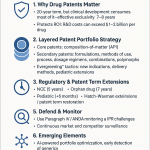
Patent Term Extensions (PTEs) represent a significant, yet often underutilized, strategic asset for medical device innovators, offering critical compensation for the lengthy U.S. Food and Drug Administration (FDA) regulatory review periods. While commonly leveraged in the pharmaceutical sector, medical device companies have historically lagged in maximizing these opportunities, particularly for high-risk Class III devices.
This report details the legal framework established by the Hatch-Waxman Act (35 U.S.C. § 156), the specific FDA pathways eligible for PTE (Premarket Approval or PMA), the methodologies for calculating extension periods, and the substantial economic benefits that accrue from securing these extensions. It highlights the primary reasons for historical underutilization, including the unique regulatory nuances of devices compared to drugs and potential oversights in integrated intellectual property (IP) and regulatory planning.
By adopting best practices in IP portfolio management, maintaining meticulous regulatory documentation, and ensuring timely application, medical device companies can unlock significant market exclusivity, foster sustained innovation, and enhance their competitive positioning. The analysis underscores the imperative for proactive, cross-functional collaboration between legal, research and development (R&D), and regulatory teams to identify and secure these valuable extensions effectively.
1. Introduction: The Strategic Imperative of Patent Term Extensions for Medical Devices
1.1. Overview of Patent Term Extension (PTE)
Patent Term Extension (PTE) under 35 U.S.C. § 156 is a statutory program designed to restore a portion of the patent term effectively lost while a covered product undergoes mandatory regulatory review and cannot be commercially marketed.1 This mechanism, established by the Drug Price Competition and Patent Term Restoration Act of 1984, commonly known as the Hatch-Waxman Act, aims to balance innovation incentives with the need for generic competition by compensating for time consumed during product development and approval processes.3
The scope of PTE application is broad, extending to patents covering various regulated products, including human drugs, food or color additives, animal drugs, veterinary biological products, and, critically, medical devices.1 The impact of a granted PTE can be substantial. For pharmaceuticals, a successful application typically adds approximately 1059 days, or nearly three years, to a patent’s term.1 More generally across all eligible products, the average length of a PTE granted by the U.S. Patent and Trademark Office (USPTO) is about 2.5 years.14 This extension directly impacts a product’s commercial lifespan, providing a crucial window for innovators to maximize revenue and enhance their return on investment.3
1.2. The Unique Regulatory Landscape for Medical Devices
The regulatory environment for medical devices is distinct, primarily governed by the FDA’s classification system. Medical devices are categorized into Class I, II, or III based on their inherent risks and the level of regulatory control required to ensure their safety and effectiveness.23 This classification directly dictates the appropriate FDA marketing approval pathway a device must follow.23
There are three primary regulatory pathways for medical devices:
510(k) Premarket Notification: This is the most common route for low to moderate risk devices. It requires manufacturers to demonstrate “substantial equivalence” to a legally marketed predicate device, meaning it is as safe and effective as a device already on the market.23 The typical timeline for 510(k) clearance ranges from 90 to 180 days.23
De Novo Classification Pathway: This streamlined pathway is designed for novel, low to moderate risk devices that have no existing equivalent predicate device.23 Initially, such novel devices are automatically classified as Class III (high-risk), but the De Novo process allows for reclassification to Class I or II if appropriate controls can ensure safety and effectiveness.25 Upon successful approval, the device can then serve as a predicate for future 510(k) submissions, thereby facilitating subsequent market entries for similar devices.23 De Novo submissions typically take approximately 150 to 270 days for approval.23
Premarket Approval (PMA): This represents the most rigorous regulatory pathway and is exclusively mandated for high-risk, Class III medical devices.23 The PMA process involves a comprehensive review of the device’s design, manufacturing processes, extensive clinical data, and labeling, often culminating in pre-approval inspections to ensure the highest level of safety and effectiveness.23
The impact of these regulatory processes on patent life is significant. Patents are typically filed early in the medical device development cycle, meaning the standard 20-year patent term begins running well before a device can be commercially marketed.24 The protracted regulatory review period, particularly for Class III devices undergoing PMA, can substantially erode this effective patent life, thereby limiting the innovator’s period of market exclusivity and opportunity to recoup substantial R&D investments.3
1.3. Why PTEs Remain Underutilized in the Medical Device Sector
Despite the clear benefits, PTEs remain notably underutilized in the medical device sector when compared to pharmaceuticals. A recent study (2024) highlighted this disparity, indicating that between 1984 and 2024, only 178 medical device submissions were linked to a PTE application.19 In stark contrast, approximately 80% of all PTE requests in the U.S. are for pharmaceutical patents, while medical devices account for only about 10%.14 This substantial difference underscores a missed opportunity for many medical device innovators.
The reasons for this underutilization are multifaceted. It remains unclear whether this stems from a lack of awareness among medical device companies regarding PTE opportunities or if the program, as currently structured, simply does not align with their business needs.19 The distinct business features and marketing strategies prevalent in the medical device sector, compared to pharmaceuticals, may contribute to a decreased perceived usefulness of the PTE program.19
A fundamental reason for the lower utilization rate is the regulatory pathway limitation. PTE eligibility for medical devices is strictly limited to those approved under Section 515 of the FFDCA, which corresponds exclusively to Class III devices requiring Premarket Approval (PMA).9 Devices approved via the more common 510(k) or De Novo pathways are generally not eligible for PTE, significantly narrowing the pool of potentially eligible devices.9 This structural limitation means that the “underutilization” of PTE for medical devices is not merely a matter of companies failing to recognize an opportunity. Instead, it is fundamentally constrained by a legal framework that excludes a significant portion of the medical device market from eligibility. This implies that the original legislative intent of compensating for regulatory review periods for
all regulated products is less effectively realized for medical devices due to their diverse and often less stringent approval pathways compared to drugs. This also suggests a potential area for legislative advocacy if the goal is to broaden PTE applicability for devices.
Furthermore, medical devices often experience much shorter commercial lifecycles than drugs. Competitors can frequently design alternative devices that achieve the same clinical outcome within a few years. For drugs, the critical lifecycle moment is typically tied to the expiry of the active ingredient patent, which generally occurs later.30 This potentially reduces the perceived long-term value of extending patent terms for devices. The underutilization is therefore a complex interplay of both factors. While systemic limitations restrict the
overall number of medical devices eligible for PTE, there has been an “increasing trend” in PTE applications over the last decade for medical devices.19 This trend, coupled with “heightened PTE filings for medical devices entering highly competitive markets” 26, suggests that for those devices that
are eligible (i.e., Class III PMA-track devices), awareness and strategic pursuit of PTE are indeed growing. This indicates that the “underutilized opportunity” is most pronounced and strategically critical within the Class III device space, where companies are increasingly leveraging PTE for competitive advantage.
2. Understanding Patent Term Extension (PTE) for Medical Devices
2.1. Legal Basis: The Hatch-Waxman Act (35 U.S.C. § 156)
The Drug Price Competition and Patent Term Restoration Act of 1984, commonly known as the Hatch-Waxman Act, introduced 35 U.S.C. § 156, establishing the specific legal framework for Patent Term Extensions.2 The primary goal of this legislation was to compensate patent holders for the erosion of effective patent life caused by the mandatory premarket regulatory approval process.1
Beyond compensating innovators, the Act also addressed a secondary distortion in the market: the inability of generic manufacturers to begin testing or seeking FDA approval until the innovator’s patent expired. This created an additional lag in generic market entry, even after patent expiry.3 While the Act sought to balance these interests, PTE primarily mitigates the first distortion by restoring lost patent term.
The administration of the PTE regime falls under the purview of the U.S. Patent and Trademark Office (USPTO). For medical devices, the USPTO collaborates closely with the FDA to determine eligibility and calculate the appropriate extension periods.2 This inter-agency coordination is essential for processing PTE applications, as the FDA provides the necessary regulatory review period data to the USPTO for calculation.
2.2. Eligibility Criteria for Medical Device Patents
To be eligible for a Patent Term Extension, several statutory conditions under 35 U.S.C. § 156(a) must be met:
The term of the patent must not have expired before the PTE application is submitted.2
The patent term must never have been extended under this specific section previously.2
The application for extension must be submitted by the owner of record of the patent or its authorized agent.2
The product must have been subject to a regulatory review period before its commercial marketing or use, and the permission for commercial marketing or use must represent the first such permitted marketing under the relevant law.2
The patent must claim the approved product, a method of using the product, or a method of manufacturing the product.2
Crucially, for medical devices, PTE eligibility is strictly limited to those approved under Section 515 of the FFDCA, which primarily corresponds to Class III devices requiring Premarket Approval (PMA).9 Devices cleared via the 510(k) or De Novo pathways are generally ineligible for PTE.9
A critical limitation is the “one patent, one product, one extension” rule: only one patent can be extended for the same regulatory review period for any given product.2 If multiple patents cover an approved product, the patent owner must strategically elect which single patent to extend.2 Conversely, a single patent can only receive one term extension, even if it covers multiple products or uses.4
The application deadline for PTE is exceptionally strict: it must be submitted within a 60-day period, commencing on the date the product received permission for commercial marketing or use.2 This is a rigid, non-negotiable deadline, and missing it results in forfeiture of the opportunity.9 To prevent a patent from expiring while a PTE application is being processed, interim extensions of up to one year are available. However, a full PTE application must be submitted within 60 days of product approval for the interim extension to remain in effect.2
Table 1: Key Eligibility Criteria for Patent Term Extension (PTE) for Medical Devices
Criterion
Requirement/Description
Relevant Statute/Regulation
Patent Status
The patent must be unexpired at the time of PTE application submission.
35 U.S.C. § 156(a)(1)
Previous Extension
The patent term must never have been extended under 35 U.S.C. § 156 previously.
35 U.S.C. § 156(a)(2)
Applicant
Application must be submitted by the owner of record of the patent or its authorized agent.
35 U.S.C. § 156(d)(1), 37 C.F.R. § 1.730(a)
Regulatory Review Status
The product must have been subject to a regulatory review period before its commercial marketing or use.
35 U.S.C. § 156(a)(4)
Product Claim Coverage
The patent must claim the approved product, a method of using the product, or a method of manufacturing the product.
35 U.S.C. § 156(a)
FDA Approval Pathway
For medical devices, approval must be under Section 515 of the Federal Food, Drug, and Cosmetic Act (FFDCA), corresponding to Premarket Approval (PMA) for Class III devices.
35 U.S.C. § 156(f)(1)(B), 13
First Commercial Marketing
The permission for commercial marketing or use of the product must be the first permitted commercial marketing or use under the relevant law.
35 U.S.C. § 156(a)(5)
Number of Extensions
Only one patent can be extended for the same regulatory review period for any product. A single patent can only receive one term extension.
35 U.S.C. § 156(c), 4
2.3. Calculating the Extension Period: Key Factors and Limitations
The length of a Patent Term Extension is generally determined as the sum of two key periods: the “testing period” and the “approval period,” subject to specific reductions and statutory caps.2
For medical devices, the testing period commences on the date a clinical investigation on humans involving the device was begun (or the Investigational Device Exemption (IDE) became effective) and concludes on the date the Premarket Approval (PMA) application was initially submitted.2 The
approval period then begins on the date the PMA application was initially submitted and ends on the date such application was approved by the FDA.2
The calculated extension period is subject to several crucial deductions:
Any days in the regulatory review period that occurred before the patent was issued are subtracted.2
Any days during which the applicant did not act with “due diligence” during the regulatory review period are also deducted.2 This “due diligence” provision is not merely a procedural requirement but a critical strategic vulnerability. Companies must not only meticulously document every step of their regulatory journey but also actively demonstrate and be prepared to defend continuous, diligent efforts to advance their product through the approval process. Any perceived or actual delay attributable to the applicant can be exploited by competitors, as third parties have the right to petition the FDA for a determination regarding the applicant’s due diligence, which could reduce the extension period.2 This necessitates a robust, proactive internal compliance system and close legal oversight throughout the entire regulatory review period, ensuring that all actions are defensible against potential challenges.
One-half of the testing period is also subtracted from the total.2
Beyond these deductions, statutory caps impose further limitations on the maximum allowable extension:
The granted PTE cannot exceed 5 years, irrespective of the actual length of the regulatory review process.2
The total effective patent term (original patent term plus the extension period) cannot exceed 14 years from the date of FDA approval of the product.2 This 14-year cap introduces a significant strategic constraint, particularly for medical devices with exceptionally long development and regulatory timelines, or for foundational patents filed very early in the R&D process. Even if a device qualifies for a full 5-year PTE, this cap might prevent the innovator from fully recouping the “lost time” if the original patent issued many years before FDA approval. Companies must carefully model the interaction between their patent’s issue date, the regulatory review period, and the FDA approval date to determine the actual potential for extended exclusivity. This cap might inadvertently disincentivize certain very long-term, high-risk R&D projects if the ultimate effective market exclusivity period remains limited, potentially impacting the overall return on investment calculations for breakthrough innovations.
Table 2: Calculation Components and Statutory Caps for PTE Length
Component/Factor
Description/Formula
Relevant Statute/Regulation
Testing Period
Time from the date a clinical investigation on humans involving the device was begun (or IDE effective date) to the date the PMA application was initially submitted.
35 U.S.C. § 156(g)(3)(B)(i), 2
Approval Period
Time from the date the PMA application was initially submitted to the date such application was approved by the FDA.
35 U.S.C. § 156(g)(3)(B)(ii), 2
Pre-Patent Issuance Deduction
Number of days of the regulatory review period that occurred before the patent was issued.
35 U.S.C. § 156(c)(1), 12
Lack of Due Diligence Deduction
Number of days during which the applicant did not act with due diligence during the regulatory review period.
35 U.S.C. § 156(c)(2), 12
Half Testing Period Deduction
One-half the number of days of the testing period after the patent issued.
35 U.S.C. § 156(c)(2), 12
Maximum Extension Cap
The granted PTE cannot exceed 5 years.
35 U.S.C. § 156(g)(3)(B)(ii), 2
Total Effective Term Cap
The total patent term (original + extension) cannot exceed 14 years from the date of FDA approval.
35 U.S.C. § 156(c)(3), 2
3. Navigating the FDA Approval Pathways: A Prerequisite for PTE
Understanding the FDA approval pathways is paramount for any medical device company, as it directly impacts market entry and, for a select few, eligibility for Patent Term Extension.
3.1. Premarket Approval (PMA) for Class III Devices
Premarket Approval (PMA) is the most rigorous and demanding regulatory pathway, exclusively required for high-risk, Class III medical devices.23 This process involves an exhaustive review of the device’s design, manufacturing processes, extensive clinical data, and labeling, often culminating in pre-approval inspections.23 It is designed to ensure the highest level of safety and effectiveness for devices posing significant potential risks to patients.
PMA applications necessitate comprehensive and robust clinical data and evidence to conclusively demonstrate the device’s safety and effectiveness for its intended use.23 The review process is inherently lengthy, typically taking 180 days to a year or even longer for approval.23 This prolonged period of regulatory review is precisely the “lost time” that Patent Term Extension (PTE) is designed to compensate for, as the patent clock continues to tick while the device cannot be commercially marketed.7 Crucially, only patents covering medical devices approved under Section 515 of the FFDCA (which specifically applies to Class III devices requiring PMA) are eligible for PTE.9
3.2. 510(k) Premarket Notification
The 510(k) pathway is the most common route for marketing approval for low to moderate risk medical devices. It requires manufacturers to demonstrate “substantial equivalence” to a legally marketed predicate device, meaning the new device is as safe and effective as one already on the market.23 This pathway is less burdensome than PMA as it often does not require new, extensive clinical trials if substantial equivalence can be demonstrated through other data. On average, 510(k) submissions typically take between 90 to 180 days for clearance 23, making it a significantly faster route to market compared to PMA. However, patents covering medical devices cleared via the 510(k) premarket notification process are
not eligible for PTE.9
3.3. De Novo Classification Pathway
The De Novo pathway offers a streamlined route for novel, low to moderate risk devices that do not have an existing predicate device.23 It effectively establishes a new classification for the device. Initially, such novel devices are automatically classified as Class III (high-risk) due to the absence of a predicate, but the De Novo process allows for reclassification to Class I or II if appropriate general and special controls can ensure safety and effectiveness.25
This pathway provides a beneficial alternative to PMA for novel devices, potentially reducing the time and resources required to obtain FDA approval.23 A key advantage is that once a De Novo device is approved, it can then serve as a predicate device for future 510(k) submissions by other manufacturers, facilitating subsequent market entries for similar devices.23 While less extensive than PMA, most De Novo requests (approximately 80%) still require clinical data to support the submission.23 De Novo submissions typically take approximately 150 to 270 days for approval 23, falling between 510(k) and PMA timelines. Despite involving clinical data and a regulatory review period, devices approved via the De Novo pathway are generally
not eligible for PTE.9
The explicit and unwavering limitation of PTE eligibility to PMA-approved devices creates a profound strategic dilemma for innovators of novel medical devices. A company developing a new device that could potentially qualify for the De Novo pathway (which is often faster and less expensive, and for moderate-risk devices) must weigh the benefits of quicker market entry against the forfeiture of PTE. Conversely, pursuing the more arduous and costly PMA route, solely to secure PTE, means accepting significantly longer development timelines. This forces a critical, early-stage strategic fork in the road. The decision between pursuing PMA for PTE potential and De Novo for faster, cheaper market access is a complex trade-off that demands a holistic assessment of market opportunity, competitive landscape, R&D investment, and long-term IP value. This choice must be proactively integrated into the overall business strategy, not merely treated as a regulatory compliance exercise. This also implies that the current PTE framework might inadvertently disincentivize the adoption of more streamlined regulatory pathways for novel devices that could otherwise benefit from extended market protection, potentially slowing the availability of certain innovations.
The Angiotech case involving the ZILVER PTX drug-eluting stent 35 provides a salient illustration of a potential pitfall. Despite being a drug-device combination product whose primary mode of action was determined to be a medical device by the FDA (and thus reviewed via PMA by CDRH), the PTE application was denied. The core issue was the court’s interpretation that the patent’s claim (a “method for biologically stenting a mammalian blood vessel”) did not directly claim a “method of using a medical device” as strictly required by 35 U.S.C. § 156.35 This case underscores the paramount importance of extreme precision in patent claim drafting, particularly for complex combination products. It is not sufficient for the product to be regulated as a device and undergo a PMA; the patent claims themselves must explicitly and unequivocally align with the statutory language for PTE eligibility, directly claiming the
approved medical device or a method of using or manufacturing the approved device in a manner consistent with the FDA’s regulatory approval. This represents a subtle yet critical distinction that can be a significant pitfall, potentially negating years of R&D and regulatory effort if not meticulously addressed during patent prosecution.
Table 3: Comparison of FDA Medical Device Approval Pathways (PMA, 510(k), De Novo)
Pathway
Device Risk Class
Description/Key Feature
Typical Timeline
PTE Eligibility
Key Data Requirement
Premarket Approval (PMA)
Class III (High-Risk)
Most rigorous pathway; requires extensive clinical data and pre-approval inspections.
180 days to 1+ year
Yes
Extensive clinical data
510(k) Premarket Notification
Class I/II (Low-Moderate Risk)
Demonstrates substantial equivalence to a predicate device.
90-180 days
No
Comparison to predicate device
De Novo Classification Pathway
Class I/II (initially III, Low-Moderate Risk)
For novel devices with no existing predicate; establishes new classification.
150-270 days
No
Clinical data often required
4. Unlocking Underutilized Opportunities: Strategic Value of PTEs
4.1. Mitigating “Lost Time” and Maximizing Market Exclusivity
Patent Term Extension directly addresses the “lost time” dilemma, where the standard 20-year patent term is significantly eroded during the lengthy R&D and mandatory regulatory review periods.3 By restoring a portion of this lost time—averaging 2.5 years, with a maximum statutory cap of 5 years 14—PTE enables innovators to realize a more meaningful period of market exclusivity post-approval.1
This extended exclusivity is critical for companies to recoup the substantial R&D investments, which can exceed $100 million for medical devices requiring extensive clinical trials.9 It allows them to generate significant revenue before generic or competitive devices can enter the market, thereby ensuring the economic viability of their innovations.3
4.2. Incentivizing Innovation and R&D Investment
The prospect of extended market exclusivity through PTE significantly mitigates the inherent financial risks associated with developing new, high-risk medical devices that necessitate extensive clinical trials and rigorous regulatory scrutiny.2 By ensuring a more complete period to profit from their inventions, PTE encourages companies to invest in groundbreaking and complex therapies and technologies that address critical unmet medical needs, ultimately benefiting patients through the availability of advanced treatments.2
PTE, when combined with FDA approval, creates a robust barrier to entry for competitors. This allows innovators to solidify their market position and deter competition, particularly in highly competitive markets. The extended exclusivity provides a longer period for the innovator to establish market dominance, build brand loyalty, and optimize pricing strategies, making it significantly harder for follow-on products to gain traction. This is a powerful mechanism for protecting the significant investments made in R&D and regulatory compliance.
Furthermore, extended exclusivity enhances the perceived value of intellectual property assets, which can significantly attract investment and improve financial metrics for medical device companies. Investors are more likely to fund ventures with a clear path to market exclusivity and a longer period to generate returns. The ability to secure a PTE signals a strong, defensible market position, translating into higher valuations and greater investor confidence, which in turn fuels further R&D.
4.3. Competitive Advantage in Highly Competitive Markets
A study indicated that PTE filings are particularly heightened for medical devices entering highly competitive markets.19 This suggests that companies strategically pursue PTEs to gain a competitive advantage and protect their investments in innovative products.26 The ability to maintain a monopoly for an extended period allows companies to sustain higher pricing and generate greater revenue than would be possible if the product were off-patent, thereby strengthening their market position.1
Given the “one patent per product” rule, identifying the most valuable patent for extension from a company’s portfolio is a critical strategic decision. This choice is not merely about which patent offers the longest potential extension, but rather which patent provides the broadest, most defensible coverage for the approved use during the extended period. Factors such as the patent’s scope, its expiration date, its enforceability, its validity against potential challenges, and the difficulty for competitors to design around its claims must all be meticulously considered.2 The USPTO provides a period (usually one month) for the patent owner to elect the patent for which extension is desired, allowing for a thoughtful, data-driven decision.2
While historically associated with “new chemical entities” (NCEs) in the pharmaceutical sector, the scope of PTE has expanded to encompass a broader range of drug innovations, including new formulations, novel drug delivery systems, and biologics.6 This principle applies by analogy to medical devices. This broader applicability encourages diverse innovation, recognizing the value of incremental improvements that can significantly enhance patient care, such as extended-release formulations, improved bioavailability, or reduced side effects.39 By extending patent protection to these varied innovations, the system incentivizes companies to explore different avenues for improving patient care beyond just entirely novel products, compensating for the time and resources invested in bringing these advancements to market.39
5. Best Practices for Securing and Maximizing PTE for Medical Devices
Securing and maximizing Patent Term Extensions for medical devices requires a sophisticated, multi-faceted approach that integrates legal, regulatory, and business strategies from the earliest stages of product development.
5.1. Integrated IP and Regulatory Strategy from Early Development
A proactive and cohesive approach to intellectual property (IP) and regulatory strategy is paramount. Companies should align their patent filings with their FDA submission roadmap from early development.24 This involves crafting broad, enforceable claims that directly cover the approved product or its method of use/manufacture, ensuring that the patent claims explicitly align with the commercial product that will undergo regulatory review.24 It is particularly important to reassess patent coverage just before FDA submission to ensure the patents adequately protect the specific product seeking market authorization.32
A comprehensive strategy extends beyond a single patent. Companies should consider a “continuum of IP protection” strategy, developing a multi-layered patent portfolio that covers not only the core technology but also subsequent improvements, alternative designs, and new methods of use. This approach ensures continued protection even as earlier patents expire, which is especially critical for medical devices that often undergo iterative design refinements and functional enhancements throughout their lifecycle. A robust use of continuation patent applications can help maintain adequate protection as the product evolves.32
5.2. Meticulous Documentation and Due Diligence
Detailed record-keeping of all regulatory activities and significant dates throughout the development process is essential for PTE applications. This includes precise dates for the commencement of clinical investigations (testing phase) and the initial submission and approval of the PMA application (approval phase).2 This meticulous documentation is crucial for demonstrating “due diligence” during the regulatory review period, a statutory requirement for PTE eligibility.2 Any periods where the applicant did not act with due diligence can lead to deductions from the potential extension period. The importance of this is underscored by the fact that third parties have the right to petition the FDA for a determination regarding the applicant’s due diligence, potentially challenging and reducing the granted extension.2 Therefore, companies must ensure all actions are defensible against such scrutiny.
5.3. Timely and Accurate Application Submission
Adherence to the strict 60-day deadline for filing a PTE application is non-negotiable. This period commences on the date the product received permission for commercial marketing or use from the FDA.2 Missing this “60-day cliff” results in the forfeiture of the PTE opportunity, irrespective of the merits of the underlying innovation or the length of the regulatory delay.9 This necessitates proactive internal processes and close monitoring of regulatory timelines to ensure timely submission.
The application itself must be comprehensive and accurate, containing specific details such as the identity of the approved product and the relevant federal statute, the identity of the patent sought for extension (including claims covering the product), information for determining eligibility and the extension period, and a brief description of significant activities and dates during the regulatory review period.2 Accurate calculation of the extension length, based on the statutory formula and deductions, is also critical.2
5.4. Strategic Selection of the Patent for Extension
Given the “one patent per product” rule, where only one patent can be extended for a single regulatory review period 2, the strategic selection of which patent to extend is a crucial decision that can significantly impact long-term market exclusivity and value. This choice is not solely about which patent has the longest remaining term, but rather which patent offers the broadest and most defensible coverage for the
approved use during the extended period.
Factors to consider include the scope of protection afforded by each patent, its expiration date, its enforceability against potential infringers, its validity against possible challenges, and the difficulty a competitor would have in designing around its claims.2 The USPTO typically provides a period (usually one month) for the patent owner to elect the patent for which extension is desired, allowing for a thoughtful, data-driven decision.2 This process requires a deep understanding of both the patent portfolio and the commercial landscape. Maximizing value from a patent portfolio involves a careful assessment of which patent provides the most robust and commercially relevant protection during the extended period, ensuring that the chosen patent effectively blocks competition for the approved product.
5.5. Leveraging Expert Counsel and Patent Intelligence Platforms
Navigating the complexities of PTE eligibility, calculation, and application requires specialized expertise. Engaging patent attorneys specializing in PTE, who possess a unique blend of regulatory processes and patent law knowledge, is highly recommended.4 These legal experts can provide strategic guidance on maximizing PTE benefits, navigating potential challenges in the application process, and coordinating filings across jurisdictions where Supplementary Protection Certificates (SPCs) or similar extensions are available.4
Furthermore, leveraging patent intelligence platforms can significantly enhance a company’s ability to identify PTE opportunities. Platforms like DrugPatentWatch offer deep knowledge of patent landscapes, including international drug patents, generics, and formulation data.41 Such platforms can assist in predicting patent expiration dates, identifying potential suppliers, and analyzing market trends and competitor activities to pinpoint strategic opportunities for PTE.3 This data-driven approach allows for a more informed and proactive IP management strategy.
6. Case Studies and Trends in Medical Device PTE
6.1. Notable Medical Device PTE Examples
Several cases illustrate the complexities and strategic value of PTE for medical devices:
Edwards Lifesciences (SAPIEN 3 Transcatheter Heart Valve System): Edwards Lifesciences successfully secured a Patent Term Extension for U.S. Patent No. 7,780,723, which covers the SAPIEN 3 ULTRA TRANSCATHETER HEART VALVE SYSTEM. This device, indicated for severe native calcific aortic stenosis and failing bioprosthetic valves, underwent the rigorous Class III Premarket Approval (PMA) process, making its underlying patent eligible for PTE.34 This case exemplifies a successful application of PTE for a high-value, high-risk medical device.
Edwards Lifesciences (MitraClip/PASCAL): While specific PTE details for MitraClip were not fully provided in the snippets, related litigation involving Edwards Lifesciences and Evalve (Abbott group) over transcatheter mitral valve repair devices (MitraClip and PASCAL) highlights the immense value of patents in this space. Edwards agreed to pay over $1 billion in a settlement involving an Edwards patent that had been extended under PTE.9 This demonstrates the significant financial stakes and the competitive leverage that extended patent protection can provide in the medical device market.
ZILVER PTX Drug Eluting Peripheral Stent (Angiotech/Cook Medical): This case serves as a cautionary tale. Angiotech, on behalf of the patent owner, sought a 5-year PTE for U.S. Patent No. 5,811,447, covering the ZILVER PTX Drug Eluting Peripheral Stent. Despite the device being a drug-device combination product whose primary mode of action was determined to be a medical device by the FDA (and thus approved via PMA), the PTE application was denied.35 The core issue was the court’s interpretation that the patent’s claim, directed to a “method for biologically stenting a mammalian blood vessel,” did not directly claim a “method of using a medical device” as strictly required by 35 U.S.C. § 156.35 This underscores the critical importance of precise patent claim drafting that explicitly aligns with the statutory language for PTE eligibility, particularly for complex combination products.
6.2. Trends in Medical Device PTE Applications
Despite historical underutilization compared to pharmaceuticals, there has been a significant increase in the number of medical device PTE applications over the past decade.19 This trend suggests a growing awareness or recognition of the benefits of PTEs among medical device companies.26
A study examining PTE use between 1984 and 2024 found that the 178 medical device submissions linked to PTE applications were mostly concentrated in 116 product codes across 15 medical specialties.27 Notably, nearly half of these applications were associated with cardiovascular devices.27 This disproportionate representation of cardiovascular devices in PTE applications is likely due to several factors. Many cardiovascular devices, such as heart valves and stents, are classified as Class III devices, inherently requiring the lengthy and data-intensive PMA pathway, which is the sole route to PTE eligibility. Furthermore, the high R&D costs, significant market potential, and intense competition within the cardiovascular device sector make extended market exclusivity particularly valuable for recouping investments and maintaining a competitive edge.
Successful medical device PTE applications have, on average, restored 987 days of patent term.27 This average restoration of nearly three years can provide a substantial competitive advantage, particularly in competitive markets where PTE filings are heightened.26
6.3. Distinguishing PTE from “Evergreening”
It is important to distinguish Patent Term Extension from “evergreening” strategies, though both aim to prolong market exclusivity. “Evergreening” refers to a strategy where companies seek to extend commercial exclusivity by securing new patents for minor modifications, improvements, or new applications of existing products, often without creating an entirely new technical solution.18 This practice, while legal, is often controversial, with critics arguing it stifles competition and keeps drug prices high.48
A prominent example of evergreening, particularly relevant to medical devices, is the EpiPen. The original EpiPen was approved in 1987. However, Mylan introduced a new version in 2011, protected by new patents set to expire in 2025.50 Crucially, these new patents pertained
only to the injector pen’s delivery device (e.g., specific locking assemblies), not the underlying epinephrine medication, which is off-patent.50 This allowed for extended market exclusivity for the combination product, even though the drug itself was no longer patented. The study found 14 other FDA-approved medicine-device combination products with patent protection solely for the delivery device, extending market exclusivity by a median of 9.0 years.50
In contrast, PTE is a statutory compensation for lost regulatory review time for the first approved commercial marketing of a product.2 It has strict eligibility criteria and statutory caps on the extension period (maximum 5 years, total effective term not exceeding 14 years from FDA approval).2 While both mechanisms extend market exclusivity, their legal bases and intent differ significantly. PTE is a direct statutory remedy for the unique challenge of regulatory delays, whereas evergreening involves obtaining new, distinct patents on incremental innovations or modifications.
7. Conclusions and Recommendations
Patent Term Extensions represent a powerful, albeit historically underutilized, strategic tool for medical device innovators. The analysis reveals that the underutilization is not solely due to a lack of awareness but is significantly influenced by the current legal framework, which limits PTE eligibility almost exclusively to Class III medical devices requiring Premarket Approval (PMA). This creates a strategic dilemma for companies developing novel devices, forcing a trade-off between the faster market access offered by De Novo pathways and the long-term exclusivity potential of PTE via PMA.
Despite these limitations, for eligible Class III devices, PTE offers substantial economic benefits by compensating for the extensive time lost during regulatory review, thereby maximizing market exclusivity and enabling innovators to recoup significant R&D investments. The increasing trend of PTE applications in competitive medical device markets, particularly for cardiovascular devices, underscores a growing recognition of its strategic value in securing a competitive advantage.
To effectively leverage these opportunities, medical device companies should consider the following recommendations:
Proactive IP-Regulatory Alignment: Integrate patent strategy with the regulatory roadmap from the earliest stages of device development. This includes drafting patent claims with precision to ensure they explicitly cover the approved medical device or its method of use/manufacture, anticipating future regulatory requirements and potential pathways.
Meticulous Documentation and Due Diligence: Maintain comprehensive and detailed records of all regulatory activities and their associated dates. This is critical for demonstrating continuous “due diligence” during the regulatory review period, which is essential to avoid deductions from the PTE calculation and to defend against potential third-party challenges.
Timely Filing: Establish robust internal processes to monitor FDA approval timelines closely and ensure strict adherence to the 60-day deadline for submitting PTE applications. Missing this inflexible deadline will result in forfeiture of the extension opportunity.
Strategic Patent Selection: For products covered by multiple patents, carefully select the single patent that offers the broadest and most defensible scope of protection for the approved use during the extended period. This requires a thorough analysis of the patent portfolio’s strength, remaining terms, and commercial relevance.
Leverage Expert Counsel: Engage specialized intellectual property and FDA regulatory counsel with deep expertise in medical devices. Their guidance is invaluable for navigating the complex eligibility criteria, calculation methodologies, application procedures, and potential legal challenges associated with PTE.
Advocacy for Policy Reform: For the broader medical device industry, consideration should be given to advocating for policy reforms that might expand PTE eligibility beyond Class III PMA devices, potentially to certain De Novo approved devices that undergo significant clinical review, thereby better aligning the legislative intent of compensating for regulatory delays with the diverse realities of medical device innovation.
Use of patent term extensions to restore regulatory time for medical devices in the United States – PubMed, accessed July 18, 2025, https://pubmed.ncbi.nlm.nih.gov/38831711/