Introduction: Licensing as the Lifeblood of Biopharmaceutical Innovation
In biopharmaceutical innovation the drug patent licensing agreement stands as the central, dynamic engine driving the industry forward.1 Far more than a simple legal contract, these agreements represent a critical strategic response to a confluence of immense and unrelenting pressures: the staggering cost and timeline of research and development (R&D), punishingly high clinical failure rates, and the looming “patent cliff” that threatens the multi-billion-dollar revenue streams of established blockbuster drugs.2 Licensing is the primary mechanism that enables the translation of scientific potential into patient reality, providing a formal pathway for new discoveries to enter the marketplace with the requisite development support and commercial expertise.4
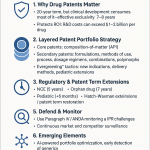
The economic realities of the industry underscore the necessity of this approach. Bringing a single new medicine to market is a monumental undertaking, requiring an average of 10 to 15 years and an investment that can exceed $2.6 billion, including the cost of the many failures along the way.5 This journey is fraught with uncertainty; only about 10% to 12% of new molecular entities that enter clinical trials will ultimately receive approval from the U.S. Food and Drug Administration (FDA).5 For every ten drugs that begin human testing, nine will fail, representing a significant loss of investment and a delay in addressing patient needs.9 This unforgiving landscape makes a purely in-house R&D model an increasingly untenable strategy for sustained growth.
Consequently, external innovation, accessed primarily through in-licensing, has transitioned from an opportunistic tactic to a strategic imperative. For large pharmaceutical companies facing the erosion of revenue from patent expiries, in-licensing is the most effective tool for pipeline replenishment and portfolio expansion.2 For the smaller, innovative biotechnology firms that are often the source of breakthrough science, out-licensing provides a vital pathway to commercialization, offering non-dilutive funding and access to the vast resources required for late-stage trials and global marketing.1 This report serves as a comprehensive strategic playbook for navigating this complex ecosystem, providing a detailed roadmap for identifying, evaluating, and securing high-value drug patent licensing opportunities.
Section 1: The Strategic Imperative of Drug Patent Licensing
The modern biopharmaceutical landscape is defined by a set of powerful economic and operational forces that have elevated patent licensing from a secondary business activity to a cornerstone of corporate strategy. A data-rich analysis of these forces reveals why both large and small players increasingly rely on licensing to mitigate risk, accelerate growth, and ensure long-term viability.
1.1 The Economic Landscape: A Market Fueled by Necessity
The sheer scale of the pharmaceutical market underscores the value of the assets at stake. The U.S. market alone was estimated at USD 634.32 billion in 2024, with projections to reach nearly USD 884 billion by 2030.12 The global biopharmaceuticals market is even larger, valued at USD 616.94 billion in 2024 and forecasted to grow at a compound annual growth rate (CAGR) of 8.6% to over USD 1.18 trillion by 2032.13 Within this massive industry, the patent licensing market is a critical sub-sector, with the pharmaceutical industry alone accounting for 25% of all patent licensing revenues, a testament to the high value placed on its intellectual property.14 This immense market potential, however, is counterbalanced by profound and escalating challenges in R&D.
A central challenge is the R&D productivity crisis. Despite unprecedented levels of investment—PhRMA member companies have invested over $1 trillion in R&D since 2000—the efficiency of these expenditures has declined.5 The inflation-adjusted cost to develop a new drug has soared, with some estimates ranging from under $1 billion to more than $2 billion per approved medicine.6 Concurrently, the number of new drugs approved per billion dollars of R&D spending has steadily decreased since the 1980s.2 This trend indicates that simply increasing internal R&D budgets is no longer a sustainable or effective strategy for maintaining a robust pipeline.
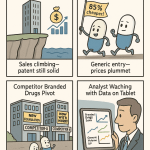
Compounding this productivity challenge is the ever-present threat of the “patent cliff.” In the pharmaceutical industry, a patent grants a temporary monopoly that allows a company to recoup its vast R&D investment.15 When this protection expires, generic competition enters the market, often leading to a rapid and severe decline in sales for the originator drug. The scale of this threat is staggering: between 2024 and 2028, drugs with combined sales of nearly $300 billion are set to lose patent protection.2 This creates an urgent and quantifiable need for companies to in-license new assets to fill these impending revenue gaps and prevent significant value erosion.
The convergence of these factors—a less efficient internal R&D engine and a massive, looming revenue cliff—has fundamentally altered the dynamics of the licensing market. It has created a buyer’s market where large pharmaceutical companies are under intense pressure to acquire external assets but are simultaneously highly risk-averse due to investor scrutiny and the high cost of failure. This dynamic directly explains the observable trend in modern deal-making: a structural shift that pushes a larger portion of the total deal value into back-end, success-based milestone payments, while upfront payments constitute a smaller share, often just 6-7% of the total announced deal value.17 This architecture allows the licensee to secure access to a promising asset while compelling the licensor to share in the substantial risks of clinical development, effectively making the deal a long-term, risk-aligned partnership rather than a simple upfront purchase.11
1.2 Strategic Rationale: In-Licensing vs. Out-Licensing
Within this economic context, licensing serves two primary strategic functions, which are two sides of the same coin: in-licensing and out-licensing.
In-Licensing as a Growth Engine
In-licensing is the process by which a company acquires the rights to develop and commercialize an asset or technology from an external party.19 For many pharmaceutical companies, particularly large, established ones, in-licensing is the primary engine for growth and portfolio replenishment. The strategic drivers are compelling. It allows a company to accelerate market entry by acquiring an asset that has already undergone years of development, thereby bypassing the riskiest and most time-consuming stages of drug discovery.18 This is a powerful risk-mitigation tool, as it allows the licensee to make an investment decision based on promising preclinical or early clinical data, rather than starting from scratch.18 Furthermore, in-licensing enables strategic expansion into new therapeutic areas where a company may lack internal expertise and provides a direct solution to filling the pipeline gaps created by the patent cliff.2 Approximately 45% of pipeline assets of the top 20 pharmaceutical companies now originate from external innovation, highlighting its central role in modern strategy.3
Out-Licensing as a Value Maximization Tool
Out-licensing is the inverse process: granting rights to an asset or technology to another company.19 This strategy is not merely for small biotechs seeking a larger partner. It is a sophisticated tool used by companies of all sizes to maximize the value of their intellectual property. Large pharmaceutical companies frequently out-license assets that, while promising, no longer align with their core therapeutic focus, thereby monetizing an otherwise under-utilized asset.19 For smaller biotechs, out-licensing is often the primary business model, providing a crucial source of non-dilutive revenue through upfront fees, milestones, and royalties, which can then be reinvested into their core R&D platforms.25 It also allows them to leverage a partner’s established global infrastructure and expertise in late-stage development, regulatory affairs, and commercialization, enabling their innovations to reach markets they could not access on their own.11
The following table provides a clear, at-a-glance summary of the strategic objectives, benefits, and typical use cases for both in-licensing and out-licensing, codifying this fundamental distinction into a framework for strategic decision-making.
Table 1: Strategic Comparison of In-Licensing vs. Out-Licensing
Revenue generation; value maximization; market expansion.19
Key Benefits
Accelerated market entry; access to external innovation; reduced R&D risk; entry into new therapeutic areas.18
Non-dilutive funding (upfronts, milestones, royalties); risk sharing of development costs; access to partner’s commercial infrastructure and geographic reach.11
Typical User Profile
Large pharmaceutical company facing patent cliffs; mid-sized company looking to enter a new therapeutic area.2
Small biotech with a novel asset but limited capital; university/research institution; large pharma monetizing non-core assets.10
Primary Value Proposition
Gaining access to de-risked innovation and future revenue streams.2
Gaining access to capital, development expertise, and global market infrastructure.1
Section 2: The Licensing Landscape: Mapping the Sources of Innovation
Identifying high-potential licensing opportunities requires a deep understanding of the diverse ecosystem where innovation originates. Each source—from academic labs to multinational corporations—possesses unique characteristics, motivations, and processes that profoundly influence the nature of the assets they produce and the structure of the deals they are willing to negotiate. A successful scouting strategy depends on tailoring the approach to the specific source.
2.1 University Technology Transfer Offices (TTOs): The Fountainhead of Early-Stage Innovation
University research laboratories are a primary source of foundational scientific breakthroughs and novel drug targets.3 The bridge between this academic discovery and commercial application is the Technology Transfer Office (TTO).27 The legal framework governing this process in the United States is the Bayh-Dole Act of 1980. This landmark legislation allows universities and other non-profit institutions to retain ownership of and license inventions that arise from federally funded research, with the explicit mandate to promote the utilization and public availability of these inventions.27
The typical university tech transfer process is systematic and begins long before a potential licensee is involved. It starts when a researcher submits a formal Invention Disclosure to the TTO.33 The TTO then conducts an
Assessment, often involving a patent committee, to evaluate the invention’s commercial potential and patentability.33 If the assessment is positive, the university will invest in securing
Patent Protection.34 Only then does the TTO begin
Marketing the technology to potential industry partners to secure a license.33 It is crucial to recognize that most university inventions are very early-stage—often at the target validation or lead compound stage—and require substantial subsequent investment and development to become a viable product.33
This early stage and the public-benefit mandate of the Bayh-Dole Act directly shape the structure of university licensing agreements. Financial terms are often more modest compared to deals with commercial entities. A study comparing academic and corporate licenses found that academic deals had significantly lower median effective royalty rates (3% vs. 8%), total deal sizes, and precommercial payments.37 Furthermore, these agreements frequently include non-financial clauses that reflect their public-interest mission, such as requirements for diligent development to ensure the technology is not shelved, a preference for U.S.-based manufacturing for products sold in the U.S., and sometimes “global access” provisions to promote affordability in developing countries.27
2.2 Government Research Institutions: Public Science for Commercial Application
Similar to universities, government laboratories are a significant source of publicly funded innovation. In the U.S., key players include the National Institutes of Health (NIH), the Centers for Disease Control and Prevention (CDC), and the Food and Drug Administration (FDA), all of which have active technology transfer programs to license their discoveries to the private sector for commercial development.39 The NIH alone is responsible for hundreds of new inventions each year that are made available for licensing.39
The process for licensing a government invention is formal, requiring the submission of a detailed license application that outlines the company’s development and commercialization plans.39 This application is rigorously reviewed to ensure the proposed partnership serves the public interest. Government licensing policy often favors non-exclusive licenses to allow multiple parties to develop a technology, thereby maximizing its dissemination.4 However, exclusive licenses can be granted, particularly when an invention requires significant private investment to reach the market, as is often the case with new therapeutics.4
The financial terms of government licenses are structured to prioritize public benefit over revenue maximization. Royalty rates are typically modest, often in the range of 2% to 10% of net sales.4 A critical and unique feature of many government licenses is the retention of “march-in rights.” This provision allows the government to grant additional licenses to other parties if it determines that the original licensee is not taking effective steps to achieve practical application of the invention or if the license is needed to alleviate health or safety needs.4
2.3 Small and Mid-Sized Biotechnology Companies: The Engine of Applied Innovation
Small and mid-sized biotechnology companies represent the engine of applied innovation in the pharmaceutical industry. They are a primary source of assets that have been advanced beyond the initial discovery phase and partially de-risked through preclinical or early clinical development. These companies often excel at nimble, focused R&D within a specific technological platform or therapeutic area, but they typically lack the substantial capital and global infrastructure required for large-scale, late-stage clinical trials and worldwide commercialization.10 For this reason, out-licensing their lead assets to a larger pharmaceutical partner is not just a strategic option but often their core business model.
Deals with biotech companies are fundamentally different from those with academic or government institutions. They are purely commercially driven, highly negotiated, and structured to maximize financial returns for the biotech’s investors. These agreements almost always involve an exclusive license to provide the licensee with a competitive advantage and justify the massive investment required to bring a drug to market.1 Consequently, the financial terms are significantly higher than those from public-sector licensors. They typically feature substantial upfront payments, a series of large development, regulatory, and sales-based milestone payments, and royalty rates that can range from 5% to as high as 20% of net sales, depending on the asset’s stage of development and market potential.4
2.4 Large Pharmaceutical Companies and Distressed Assets
While often viewed as the primary in-licensers, large pharmaceutical companies can also be a valuable source of licensable assets. Through strategic portfolio reviews, these companies often identify promising drugs that are no longer aligned with their core therapeutic areas or commercial priorities. Rather than terminating these programs, they may choose to out-license them to other companies that are better positioned to carry them forward, creating a win-win scenario that generates revenue from a non-core asset.19
Additionally, a niche but potentially high-value source of opportunities lies in discontinued or distressed assets. Specialized scouting efforts can uncover assets that were shelved not because of scientific or clinical failure, but for strategic or financial reasons, such as a company merger, a shift in corporate strategy, or a lack of funding.42 These “hidden gems” can often be licensed on favorable terms and represent a significant opportunity for a company with the right expertise and resources to resurrect their development.
The choice of where to source an asset is a critical strategic decision, as the nature of the licensor fundamentally shapes the entire licensing process. The following table provides a comparative framework to help match a company’s strategic needs with the most appropriate source of innovation, highlighting the key trade-offs involved.
Table 2: Key Sources of Licensable Drug Patents: A Comparative Analysis
Attribute
University TTOs
Government Research Labs
Biotechnology Companies
Large Pharma (Out-License)
Typical Asset Stage
Early (Target ID, Preclinical) 33
Early to Mid (Preclinical, Phase I) 4
Mid to Late (Preclinical, Phase I-III) 10
Varies (Preclinical to Marketed) 19
Primary Motivation
Public Benefit & Utilization 27
Public Benefit & Tech Transfer 4
Profit Maximization & Funding R&D 4
Monetize Non-Core Assets 19
Typical License Type
Non-Exclusive or Exclusive 38
Often Non-Exclusive, Exclusive possible 4
Almost Always Exclusive 1
Typically Exclusive 4
Royalty Rate Range
Low (e.g., 2-5%) 37
Modest (e.g., 2-10%) 4
High (e.g., 5-20%) 4
Varies, Commercially Driven 4
Key “Strings Attached”
Diligence milestones, US manufacturing preference, retained research rights 27
Acquiring novel platform technologies or very early-stage assets 3
Accessing foundational public research, often with lower financial entry barriers 4
In-licensing partially de-risked clinical candidates to fill pipeline gaps 2
Acquiring de-prioritized assets with existing data packages 42
Understanding these distinctions is paramount. The institutional mandate of the licensor—whether it is driven by a public benefit mission or a purely commercial one—is deeply embedded in the structure and terms of the licensing agreement. A business development executive who recognizes this can anticipate the fundamental dynamics of the negotiation from the outset. An approach focused solely on maximizing net present value (NPV), which might be appropriate for a deal with a biotech, is likely to fail in negotiations with a university TTO if it neglects the crucial requirements for diligent development and public benefit. This tailored understanding allows for a more effective and successful partnership-building strategy across the entire innovation landscape.
Section 3: The Search and Scouting Playbook: A Practical Guide to Opportunity Identification
Actively finding and securing the right licensing opportunities requires a systematic and multi-pronged approach. The modern paradigm has shifted from passive evaluation to proactive, intelligence-driven scouting. An effective search strategy combines the power of sophisticated digital platforms with the nuanced insights gained from human intelligence networks, ensuring a steady flow of both publicly disclosed and proprietary deal opportunities.
3.1 Leveraging Patent Intelligence Platforms and Databases
The practice of patent searching has undergone a significant evolution. Once viewed as a defensive legal check to avoid infringement, it is now a core strategic function for gathering competitive intelligence, mapping technological landscapes, and identifying untapped market opportunities.16
While free public databases like those from the USPTO or Espacenet are useful for basic lookups, specialized pharmaceutical intelligence platforms offer a decisive advantage.16 Their key value lies in the integration of patent data with other critical datasets. These platforms connect a patent directly to its associated FDA regulatory data (such as Orange Book listings and exclusivity periods), ongoing litigation records (including Paragraph IV challenges), and clinical trial information.16 This creates a holistic view of an asset’s legal, regulatory, and developmental status, which is essential for a preliminary evaluation.
Several platforms are indispensable tools for the biopharmaceutical business development professional:
DrugPatentWatch: This platform is specifically designed for pharmaceutical competitive intelligence. Its features are tailored to support licensing and portfolio management decisions. Users can identify generic and biosimilar entry opportunities, track patent litigation to anticipate early market entry, find suppliers of active pharmaceutical ingredients (APIs), and monitor the development of new formulations and indications.46 With patent data covering 134 countries and an AI-powered research assistant for deeper queries, it provides a global view of commercial opportunities.46
Clarivate (Derwent Innovation): Clarivate offers a suite of powerful patent intelligence tools, with Derwent Innovation being a flagship product. Its strength lies in its enhanced global patent data, which is used by over 40 patent offices worldwide.49 The platform features manually curated invention summaries (DWPI abstracts) that clearly state an invention’s novelty and use, saving significant time in analysis. It also integrates patent data with litigation records from over 140 jurisdictions and scientific literature from the Web of Science, providing comprehensive prior art and competitive context.49
PatSnap: This platform is noted for its use of AI-driven analytics and semantic search capabilities. AI-powered tools are revolutionizing the field by moving beyond simple keyword matching to understanding concepts, which dramatically increases the speed and accuracy of prior art and FTO searches.44
IQVIA (Ark Patent Intelligence): IQVIA provides intelligence solutions that connect patent data with deep commercial and clinical data. Their platform tracks over 60,000 patent families and covers more than 2,500 small molecules and 700 biologics, linking them to litigation cases, patent extensions, and regulatory exclusivities. This allows users to model the impact of patent expiries and prepare for generic entry across global markets.45
In addition to these commercial platforms, non-profit databases provide valuable information. The World Intellectual Property Organization’s (WIPO) Pat-INFORMED initiative, for example, is a public resource that provides patent status information for essential medicines, facilitating procurement for global health agencies.52
3.2 The Art of Networking: Partnering and Scientific Conferences
While digital platforms provide the “what,” industry conferences provide the “who” and “why.” These events are a primary venue for identifying promising assets that have not yet appeared in public databases and for building the personal relationships that are the foundation of successful deals.42 A well-executed conference strategy is essential.
It is important to differentiate between two main types of events:
Business Development & Partnering Conferences: Events like the BIO International Convention are explicitly designed for deal-making. They feature structured partnering systems that allow attendees to schedule dozens of one-on-one meetings to discuss specific in-licensing and out-licensing opportunities.
Scientific & Medical Conferences: Meetings such as the American Society of Clinical Oncology (ASCO) or the American Association for Cancer Research (AACR) are where the latest, often pre-publication, scientific and clinical data is presented. Monitoring poster sessions and oral presentations at these events can provide a crucial early look at groundbreaking science and emerging drug targets, offering a significant first-mover advantage.
Effective conference participation requires meticulous preparation. This includes identifying and researching potential partners well in advance, using the conference’s partnering system to request meetings with a clear agenda, and having a well-defined set of strategic criteria to quickly assess opportunities. Equally important is a systematic follow-up strategy to nurture the connections made at the event.54
3.3 Proactive Scouting and Intelligence Gathering
The most sophisticated licensing teams do not wait for opportunities to come to them. They engage in proactive, continuous scouting and intelligence gathering to generate a proprietary deal flow. This goes beyond simply monitoring databases and attending conferences.
Key activities in a proactive scouting program include:
Systematic Literature and Grant Scanning: Regularly scanning new publications in top-tier scientific journals and monitoring public grant databases, such as the NIH RePORTER system, can reveal emerging areas of research and identify the key opinion leaders (KOLs) and academic labs producing the most promising science.42
Engaging Specialized Consultants: Asset scouting firms can act as an extension of an internal business development team. These consultants maintain extensive networks within academia and the biotech industry and can provide a constant, curated flow of opportunities that are tailored to a company’s specific strategic interests and have been pre-vetted for quality.42
Monitoring Industry News and Deal Flow: Closely following industry news outlets like FierceBiotech and BioSpace is essential. Tracking deal announcements provides real-time intelligence on which therapeutic areas are “hot,” which companies are actively in-licensing, the financial terms of recent transactions, and emerging technologies that are attracting investment.56
A truly effective scouting strategy operates on two complementary tracks. The first is a “wide-net” digital approach, using the powerful patent and intelligence platforms to map the known universe of disclosed assets. This is fundamental for landscape analysis and identifying public opportunities. The second is a “deep-dive” human intelligence approach, which is necessary to access the most valuable, and often proprietary, information. This information resides in the pre-publication data presented at scientific meetings, in the unpublished work of leading academic labs, and within the confidential pipelines of small biotech companies. Accessing this requires building a robust network through active conference participation and direct engagement with TTOs and KOLs. The digital approach provides the map of the known world, while the human intelligence approach provides the means to explore the uncharted territories where the most significant value often lies.
Section 4: The Comprehensive Due Diligence Framework: From Scientific Validation to Commercial Viability
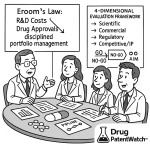
Once a promising licensing opportunity has been identified, it must be subjected to a rigorous and systematic due diligence process. This is the most critical phase of the licensing lifecycle, designed to meticulously evaluate the asset’s strengths and weaknesses across multiple domains. A comprehensive framework, built on four distinct but interconnected pillars—Intellectual Property, Scientific & Clinical, Commercial, and Regulatory—is essential to de-risk the investment and build a robust foundation for a successful partnership. Failure to conduct thorough diligence is one of the most common and costly mistakes in pharmaceutical licensing.
The intellectual property, particularly the patent portfolio, is the core asset being licensed. The objective of IP diligence is to confirm the strength, validity, scope, and defensibility of this asset.58
Key steps in IP diligence include:
Verify Ownership and Chain of Title: The first and most fundamental step is to confirm that the licensor has the undisputed right to grant the license. This involves a meticulous audit of the patent’s ownership history, tracing the “chain of title” from the original inventors through every subsequent assignment to the current owner. All assignment documents must be reviewed to ensure they were properly executed and recorded with the relevant patent offices.59 It is also critical to uncover any “encumbrances”—such as liens, security interests, or pre-existing licenses—that could restrict the licensee’s rights or create future legal complications.59 Joint ownership of a core patent is a significant red flag that requires careful legal analysis, as it can severely complicate enforcement and sublicensing.
Assess Patent Validity and Enforceability: A patent is only valuable if it is valid and enforceable. This assessment involves conducting a comprehensive prior art search to challenge the patent’s claims on the grounds of novelty and non-obviousness.58 The patent’s “file wrapper,” which is the complete record of communication between the applicant and the patent office during prosecution, must be analyzed for any statements or amendments that may have narrowed the scope of the claims (a concept known as prosecution history estoppel).59 The patent’s vulnerability to post-grant challenges, such as an inter partes review (IPR) before the Patent Trial and Appeal Board (PTAB) in the U.S., must also be evaluated, as these proceedings can be a cost-effective way for competitors to invalidate a patent.59
Conduct Freedom-to-Operate (FTO) Analysis: This is a critical, forward-looking analysis to determine whether the planned development, manufacturing, and commercialization of the licensed technology would infringe on any valid, in-force patents held by a third party.59 A “blocking” third-party patent can completely derail a project. The FTO analysis must be conducted for every jurisdiction where the company plans to operate, as patent rights are territorial.59
Analyze the Full IP “Package”: A pharmaceutical license is rarely for a single patent alone. It is typically a bundle of interrelated IP rights, which often includes unpatented but proprietary “know-how” and trade secrets, preclinical and clinical data, and sometimes trademarks.1 The accompanying know-how—which can include manufacturing processes, formulation details, and unpublished experimental data—is often as valuable as the patent itself. Diligence must therefore assess the value, secrecy, and transferability of this critical supporting information.25
4.2 Pillar 2: Scientific & Clinical Diligence
The objective of scientific and clinical diligence is to independently validate the underlying science of the asset and critically assess its probability of technical and regulatory success. This requires deep scientific and medical expertise in the relevant therapeutic area.
Key steps in scientific and clinical diligence include:
Evaluate Unmet Medical Need: This is the foundational question for any therapeutic program.63 Does the drug candidate address a significant unmet medical need? Does it offer a clear and compelling advantage over the existing standard of care? A product that offers only a marginal improvement will face significant hurdles in gaining regulatory approval, securing reimbursement, and achieving market adoption.63
Scrutinize Proof-of-Concept (POC) Data: This involves a deep and critical dive into all available preclinical and clinical data.1 The diligence team must go beyond the licensor’s summary presentations and review the raw data from key experiments. This analysis requires the expertise to interpret complex data packages, assess the robustness of experimental models, and determine whether the evidence compellingly supports the claimed mechanism of action and therapeutic effect.63 For early-stage academic discoveries, it is particularly important to verify that the claims made in the patent application are adequately supported by the included experimental data, as patent examiners will not grant broad claims without sufficient evidence.36
Assess Patentability Requirements from a Scientific Standpoint: The scientific data must support the legal requirements for patentability. The invention must be novel (never publicly disclosed before), useful (possess a practical utility), and non-obvious (not an obvious progression to someone with ordinary skill in the field).64 The scientific diligence team must assess whether the data package convincingly demonstrates these attributes.
4.3 Pillar 3: Commercial Diligence
The objective of commercial diligence is to build a robust, data-driven business case for the asset and to arrive at an accurate valuation, which will inform the negotiation of financial terms.
Key steps in commercial diligence include:
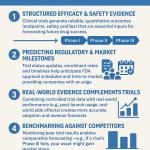
Market and Competitive Landscape Analysis: This involves defining the total addressable market, segmenting the relevant patient population, and analyzing the competitive environment. This analysis must account for not only currently marketed products but also the pipeline of competing drugs in development that could enter the market during the asset’s commercial life.58
Pricing and Reimbursement Analysis: A drug’s value is ultimately determined by what payers—governments and private insurers—are willing to pay for it. This analysis involves projecting a realistic price range for the drug based on its clinical value and the prices of comparable products, and assessing the likelihood of securing favorable reimbursement status. This is a critical and often complex analysis that is a major driver of the asset’s overall value.
Asset Valuation: The culmination of the diligence process is the financial valuation of the asset. The predominant methodology used in the pharmaceutical industry is the risk-adjusted Net Present Value (rNPV) model.59 This model projects the future cash flows from the product (based on sales forecasts and pricing assumptions) over its expected commercial life and then discounts those cash flows back to their present value. Crucially, the cash flows at each stage of development are “risk-adjusted” by multiplying them by the statistical probability of successfully advancing to the next stage. This method explicitly accounts for the high rate of clinical trial failure and provides a more realistic valuation than a standard discounted cash flow (DCF) analysis.59
4.4 Pillar 4: Regulatory Diligence
The objective of regulatory diligence is to understand the likely pathway to approval and, most importantly, to determine the true period of market protection by analyzing the complex interplay between patent rights and non-patent regulatory exclusivities.
Key steps in regulatory diligence include:
Mapping the Regulatory Pathway: The diligence team must assess the licensor’s proposed clinical development plan and its alignment with regulatory requirements in key markets (e.g., FDA, EMA). This includes evaluating the potential for the drug to qualify for expedited review programs, such as Fast Track, Breakthrough Therapy, or Accelerated Approval, which can shorten development timelines and enhance the asset’s value.63
Calculating Effective Market Exclusivity: This is one of the most critical and often misunderstood aspects of pharmaceutical diligence. A drug’s period of monopoly protection is not simply its patent expiration date. It is a complex fabric woven from both patent rights and various forms of regulatory exclusivity granted by health authorities. These regulatory exclusivities run independently of the patent term and can sometimes extend market protection beyond the life of the core patent. Key forms of regulatory exclusivity in the U.S. include New Chemical Entity (NCE) exclusivity (5 years), Orphan Drug Exclusivity (ODE) (7 years for rare diseases), Biologics Exclusivity (12 years), and Pediatric Exclusivity (a 6-month extension added to existing patents and exclusivities).65 A thorough analysis requires creating a consolidated timeline that maps the expiration dates of all relevant patents (including any potential Patent Term Extensions (PTE) granted under the Hatch-Waxman Act to compensate for regulatory delays) against the expiration dates of all applicable regulatory exclusivities.15 The effective period of market exclusivity, which is the timeframe used in the rNPV valuation model, is the period protected by whichever of these rights—patent or regulatory—expires last.
The failure to conduct this integrated analysis is a significant and potentially multi-billion-dollar error. A team focused only on patents might undervalue an orphan drug by missing the two years of monopoly protection that its 7-year ODE provides after the core patent expires. Conversely, a team might overvalue an asset by relying on a long patent term without realizing that the patent is highly vulnerable to an invalidity challenge, leaving only a shorter period of regulatory exclusivity as the true backstop. A successful diligence process requires a cross-functional team that can seamlessly integrate all four pillars of this framework.
To facilitate this systematic approach, the following checklist provides a structured guide for a comprehensive due diligence process.
Table 3: The Four Pillars of Due Diligence: A Comprehensive Checklist
Pillar
Key Questions to Answer
Data/Documents to Request
Potential Red Flags
I. Intellectual Property
Is the chain of title clean and unbroken? 59
Is the patent valid over the prior art? 58
Is there freedom to operate in key markets? 59
What is the full scope of the licensed IP package (patents, know-how, data)? 1
All patent assignment records; full prosecution history (“file wrapper”); prior art search reports; FTO analysis opinions; list of all licensed know-how and trade secrets 59
Gaps in assignment chain; joint ownership of core patent; highly relevant prior art not disclosed to patent office; blocking third-party patents; vague definition of licensed know-how
II. Scientific & Clinical
Does the asset address a significant unmet medical need? 63
Is the proof-of-concept data robust and reproducible? 63
Is the mechanism of action well-understood and supported by evidence?Are there any potential safety signals in the preclinical or clinical data? 1
Full preclinical data package (toxicology, pharmacology); all clinical trial protocols, investigator brochures, and study reports; all correspondence with regulatory agencies 1
Inconsistent or inconclusive data; unexpected toxicity signals; efficacy not superior to standard of care; poorly designed clinical trials
III. Commercial
What is the size of the addressable patient population? 59
What is the competitive landscape (current & future)? 63
What is a realistic pricing and reimbursement scenario?What are the projected peak sales and what is the rNPV of the asset? 59
Market research reports; competitor pipeline analysis; pricing and reimbursement studies for analogous products; detailed financial model with all assumptions 58
Overly optimistic market size or penetration assumptions; failure to account for future competitors; unrealistic pricing expectations; valuation highly sensitive to minor changes in assumptions
IV. Regulatory
What is the proposed regulatory pathway in key jurisdictions?Is the asset eligible for any expedited review programs? 63
What is the integrated timeline of all patent and regulatory exclusivities? 59
What is the true effective period of market protection? 59
Regulatory strategy documents; minutes from meetings with FDA/EMA; analysis of all applicable regulatory exclusivities (NCE, ODE, etc.); calculation of potential Patent Term Extension (PTE) 67
Unclear regulatory strategy; negative feedback from regulatory agencies; miscalculation of patent term or exclusivity periods, leading to a shorter-than-expected monopoly period
Section 5: Structuring the Deal: Anatomy of a Pharmaceutical Licensing Agreement
Following a successful due diligence process, the focus shifts to negotiating and structuring the licensing agreement. This legal document is far more than a simple permission to use intellectual property; it is a complex business arrangement that defines the boundaries of a long-term partnership, delineates responsibilities, and establishes a financial framework that allocates risk and reward between the licensor and licensee.1 Understanding the key legal clauses and the financial architecture of these deals is essential for crafting an agreement that protects interests and maximizes the asset’s commercial potential.
5.1 Key Legal Clauses: Defining the Boundaries of the Partnership
A well-drafted pharmaceutical licensing agreement contains several critical clauses that govern the operational and strategic aspects of the collaboration.
Grant of Rights: This is the foundational clause of the agreement, precisely defining the scope of the rights being transferred from the licensor to the licensee.1 It has several key components:
Exclusivity: This term specifies the competitive landscape. An exclusive license grants the rights solely to one licensee within the defined scope, prohibiting the licensor from granting other licenses or exploiting the IP itself. This is the most common arrangement for drug development candidates, as it provides the powerful competitive advantage needed to justify the massive investment required to bring a product to market.1 A non-exclusive license allows the licensor to grant similar licenses to multiple parties, which is more common for platform technologies or research tools where broad adoption is desired.1 A sole or co-exclusive license is a middle ground where the licensor agrees not to license to other third parties but reserves the right to exploit the IP itself alongside the licensee.1
Territory: This clause defines the specific geographic boundaries where the license is valid, such as worldwide, North America only, or ex-U.S..19
Field of Use: This provision restricts the licensee’s use of the IP to specific applications, for example, for the treatment of oncology indications only, or for human therapeutic use as opposed to veterinary use.19
Diligence and Performance Obligations: To ensure that a licensed asset is actively developed and not left to languish, agreements include performance obligations, often referred to as diligence clauses. These provisions establish specific development and commercialization benchmarks that the licensee must meet, such as deadlines for filing an Investigational New Drug (IND) application, initiating clinical trials, or achieving regulatory approval.4 Failure to meet these obligations can trigger penalties, such as the conversion of an exclusive license to a non-exclusive one, or even termination of the agreement.
IP Management and Prosecution: This section delineates which party has the responsibility and control over filing, prosecuting, maintaining, and defending the licensed patents. It also specifies how the costs associated with these activities will be shared.4
Sublicensing Rights: This clause is critical for commercial flexibility, as it determines whether the licensee has the right to grant sublicenses to third parties. This right is often necessary to engage local partners for commercialization in specific territories or to collaborate with other companies on combination therapies.4
Confidentiality, Duration, and Termination: These clauses, while standard in many contracts, are of particular importance in pharmaceutical licensing. Confidentiality provisions protect the proprietary know-how and data that are often transferred alongside the patents. The duration and termination clauses specify the term of the agreement (often tied to the life of the licensed patents) and the precise circumstances under which either party can terminate the contract, such as for a material breach or insolvency.19
5.2 The Financial Architecture: A Narrative of Risk and Reward
The financial structure of a licensing deal is the primary mechanism for allocating the immense risk and potential reward of drug development. The modern deal is typically a three-part tariff consisting of an upfront payment, a series of milestone payments, and ongoing royalties.72 This structure is not merely a payment schedule; it is a sophisticated tool designed to align the incentives of the licensor and licensee throughout a long and uncertain partnership.
The upfront payment provides the licensor with immediate compensation for past R&D efforts and grants the licensee access to the technology. The milestone payments function as a series of call options, where the licensee pays for success only as the asset is progressively de-risked at key clinical and regulatory inflection points. This protects the licensee’s capital from early-stage failures. Finally, the royalties allow both parties to share in the ultimate commercial success of the product, ensuring their long-term interests remain aligned.
Upfront Payments: This is an initial, non-refundable payment made upon the signing of the agreement to secure access to the technology.25 The size of the upfront payment is highly variable and depends on the asset’s stage of development, the strength of its data package, and the level of competition for the deal. It represents a portion of the asset’s value that is realized immediately by the licensor.26
Milestone Payments: In modern biopharma deals, milestone payments often constitute the largest portion of the total potential deal value. These are payments that are triggered upon the achievement of specific, pre-defined events.19 They are typically categorized into two types:
Development & Regulatory Milestones: These payments are tied to key R&D and regulatory achievements, such as the successful completion of preclinical toxicology studies, the filing of an IND, the initiation of Phase I, Phase II, and Phase III clinical trials, and the submission and subsequent approval of a New Drug Application (NDA) in major markets.1
Commercial & Sales Milestones: These are payments that are triggered after the product is on the market and achieves pre-specified annual net sales targets, for example, payments due upon reaching $500 million, $1 billion, and $2 billion in global sales.1
Royalties: Royalties are ongoing payments made by the licensee to the licensor, calculated as a percentage of the product’s net sales.19
Typical Rates: Royalty rates vary significantly based on the licensor’s type (academic vs. corporate) and the asset’s stage at the time of the deal. Licenses from government labs or universities typically command lower rates, in the range of 2% to 10%.4 In contrast, deals for clinical-stage assets from private biotech or pharmaceutical companies command higher rates, generally ranging from 5% to 20%.4 A study of multiple pharmaceutical licensing agreements found an interquartile range of 6.5% to 8.1%.74
Common Structures: The royalty can be a flat rate (a single percentage that applies to all sales) or, more commonly, a tiered rate, where the royalty percentage increases as sales volumes cross certain thresholds (e.g., 8% on the first $500 million in sales, 10% on sales from $500 million to $1 billion, and 12% on sales above $1 billion).26
The following table synthesizes data from multiple sources to provide industry benchmarks for the financial terms of licensing deals, segmented by the asset’s stage of development. This provides a valuable framework for valuing assets and negotiating deal terms.
Table 4: Benchmark Financial Terms in Pharmaceutical Licensing by Development Stage
Development Stage
Typical Upfront Payment Range
Typical Total Deal Value Range (Upfront + Milestones)
Mid single digits to low double digits (e.g., 6-12%)
Phase II
Significant (e.g., $50M – $250M+) 17
High (e.g., $1B – $3B+) 56
High single digits to mid-teens (e.g., 8-16%)
Phase III / Pre-registration
Substantial (e.g., $100M – $350M+) 17
Very High (e.g., $1.5B – $6B+) 75
Mid-teens to low 20s (e.g., 12-22%)
Note: The ranges provided are illustrative and can vary significantly based on therapeutic area, market potential, and competitive dynamics. Total deal values are “biobucks” and are contingent on achieving all milestones. Academic/government licenses typically fall at the lower end of these ranges, especially for upfront payments and royalty rates.4
Section 6: Actionable Intelligence: Case Studies and Strategic Recommendations
Synthesizing the principles of sourcing, evaluation, and deal structuring into a coherent strategy is the final step in building a successful in-licensing program. Examining a landmark case study provides a real-world illustration of these principles in action, while a set of clear, actionable recommendations can serve as a guide for implementation.
6.1 Case Study in Symbiotic Licensing: The Pliva-Pfizer Deal for Azithromycin
The licensing agreement for the antibiotic Azithromycin stands as an archetypal example of a successful, symbiotic partnership that created immense value that neither party could have achieved alone. It perfectly illustrates how intellectual property can bridge the gap between a small innovator with a groundbreaking discovery and a large commercial entity with the resources to bring it to the world.
The Innovation and the Challenge: In the late 1970s and early 1980s, researchers at Pliva, a relatively small pharmaceutical company in Croatia, discovered Azithromycin, a novel and highly effective antibiotic.76 Early studies showed that the compound had a unique ability to remain in body tissues for longer periods than similar antibiotics, suggesting significant therapeutic potential. However, Pliva lacked the capital, global infrastructure, and commercial expertise necessary to conduct large-scale international clinical trials and market the drug worldwide.78
The Crucial Role of Intellectual Property: Pliva’s most critical strategic decision was to secure robust intellectual property protection for its discovery. In 1981, the company filed a patent application in the former Yugoslavia and subsequently patented Azithromycin worldwide, including in the United States.78 This act proved to be the key that unlocked the drug’s global potential. It transformed an internal research project into a visible, defensible, and licensable asset. It was precisely through a search of the U.S. Patent and Trademark Office (USPTO) database that scientists at the multinational giant Pfizer discovered Pliva’s patent and recognized the enormous commercial potential of the antibiotic.76
The Deal and its Transformative Outcome: The shared interest led to negotiations, culminating in a landmark licensing agreement in 1986. Under the terms of the deal, Pfizer acquired the exclusive rights to sell Azithromycin worldwide, with the exception of Central and Eastern Europe, where Pliva retained the rights. In exchange, Pliva would receive ongoing royalties on Pfizer’s global sales.77 This structure was a classic win-win. Pfizer gained a blockbuster product, which it marketed as Zithromax®. The drug became one of the best-selling antibiotics in history, with peak annual sales reaching $2 billion in 2005.78 For Pliva, the royalty stream was transformative, providing a massive influx of revenue that funded its expansion and established it as a major pharmaceutical player in its region.78
Key Lesson: The Azithromycin case demonstrates the profound power of licensing. Pliva’s innovation would have likely remained a regional product without Pfizer’s global reach. Pfizer would have never had the blockbuster drug without Pliva’s foundational discovery and, crucially, its decision to protect that discovery with patents. The patent served as the legal and commercial bridge, enabling a partnership that delivered immense value to both companies and, most importantly, to patients around the globe.
6.2 Strategic Recommendations for a Successful In-Licensing Program
Building a sustainable and value-creating in-licensing capability requires a disciplined and strategic approach. The following recommendations synthesize the key themes of this report into an actionable framework.
Develop a Strategically Aligned Search Thesis: Do not engage in opportunistic or scattershot asset scouting. A successful program begins with a clearly defined strategy. Before initiating any search, define specific criteria based on your company’s core therapeutic area focus, identified gaps in the existing portfolio, and an explicit tolerance for risk (e.g., preference for early-stage platform technologies vs. late-stage clinical assets). This “search thesis” will guide all subsequent activities, ensuring that the team’s efforts are focused on opportunities that can create genuine strategic value.
Build a Multi-Channel Scouting Engine: Relying on a single source of opportunities is a critical mistake. The most effective programs build a multi-channel scouting engine that combines the breadth of digital intelligence with the depth of human networks. This means investing in and mastering the use of sophisticated patent and biopharmaceutical intelligence platforms to map the known landscape, while simultaneously cultivating a robust human intelligence network through active participation in scientific and business development conferences, and by building direct relationships with key TTOs and industry KOLs. This dual approach ensures a steady flow of both publicly available and proprietary, under-the-radar opportunities.
Execute a Rigorous, Cross-Functional Due Diligence Process: Institutionalize the four-pillar due diligence framework—Intellectual Property, Scientific & Clinical, Commercial, and Regulatory—as a core business process. Due diligence should not be an ad-hoc review; it must be a systematic, data-driven investigation conducted by a dedicated, cross-functional team comprising legal, scientific, commercial, and regulatory experts. This integrated approach is the only way to uncover the complex interplay between different risk factors, such as the relationship between patent validity and regulatory exclusivity, and to arrive at a holistic and accurate assessment of an asset’s true value and risk profile.
Negotiate Risk-Aligned Deal Structures: View the financial architecture of a licensing agreement as the primary tool for managing risk and aligning incentives in a long-term, uncertain partnership. Do not focus solely on minimizing the headline “biobucks” value. Instead, focus on structuring the upfront, milestone, and royalty payments to accurately reflect the asset’s specific risk profile at its current stage of development. Understand industry benchmarks, but tailor each deal to ensure that significant payments are tied to the achievement of meaningful value-inflection points, thereby protecting capital while rewarding the licensor for genuine progress.
View Licensing as a Partnership, Not a Transaction: The signing of the licensing agreement is the beginning of the relationship, not the end. The ultimate success of a licensed product depends on a long-term, collaborative partnership between the licensor and licensee. This requires establishing strong governance structures, open lines of communication, and a relationship built on mutual trust and the shared objective of bringing a valuable new medicine to patients. A transactional mindset can lead to a dysfunctional partnership that ultimately destroys the value of the asset. A partnership mindset is essential for navigating the inevitable challenges of drug development and maximizing the probability of commercial success.
Comparing the economic terms of biotechnology licenses from academic institutions with those between commercial firms – PMC – PubMed Central, accessed August 19, 2025, https://pmc.ncbi.nlm.nih.gov/articles/PMC10065281/