How the Hybrid Regulatory Strategy Cuts Risk, Compresses Timelines, and Unlocks Pipeline Value for Pharmaceutical Executives
Why Most Drug Developers Leave Value on the Table
The typical large pharmaceutical company spends between $2.5 billion and $2.8 billion to bring a single new molecular entity from discovery to approval. That figure, widely cited from a 2022 analysis published in JAMA [1], has become a kind of sacred number in the industry. It is invoked at investor days, repeated in board presentations, and used to justify pricing decisions that later attract congressional scrutiny. What that number rarely prompts is a serious question about whether the underlying development model is the right one.
It often is not.
For a substantial category of drug candidates, a different path exists: one grounded in established safety and efficacy data, capable of compressing timelines by three to five years, and structured to reach patients faster while protecting intellectual property against generic erosion. That path is the 505(b)(2) regulatory approval route. Despite existing since 1984, it remains systematically underused by companies that default to the full New Drug Application (NDA) without examining whether they need to.
This article examines every material dimension of the 505(b)(2) strategy: the statutory mechanics, the commercial logic, the intellectual property architecture, the competitive intelligence tools, the failure modes, and the real-world case outcomes. The goal is not to provide a regulatory overview. There are dozens of those. The goal is to give pharmaceutical executives, venture-backed biotechs, and their legal and commercial advisors the analytical foundation to decide, quickly and accurately, whether 505(b)(2) should anchor their next pipeline program.
The short answer for many programs is yes. The longer answer requires understanding exactly how this mechanism works, where it creates durable value, and where it does not.
The Regulatory Foundation: What Section 505(b)(2) Actually Says
The Three NDA Pathways in Plain Language
The Federal Food, Drug, and Cosmetic Act (FD&C Act) provides three distinct pathways for new drug applications in the United States. Section 505(b)(1) covers a full NDA where the applicant conducts and relies entirely on its own studies. Section 505(j) covers the Abbreviated New Drug Application (ANDA), the generic drug pathway, where the applicant demonstrates bioequivalence to a reference listed drug without new clinical data. Section 505(b)(2) sits between them.
Under 505(b)(2), an applicant submits an NDA that relies, at least in part, on data or information from studies the applicant did not conduct and for which the applicant has not obtained a right of reference. That means the applicant can point the FDA toward published literature, the agency’s prior findings of safety and efficacy for an approved drug, or both, to support approval of a modified or new version of an existing compound.
The statutory text does not limit what kinds of modifications qualify. In practice, the FDA accepts 505(b)(2) applications for a range of product types, including new formulations, new dosage forms, new routes of administration, new indications, new combinations of previously approved active ingredients, new salts or esters of approved compounds, and even new molecular entities whose development programs can partially reference publicly available safety data.
The Hatch-Waxman Connection
The 505(b)(2) pathway emerged from the Drug Price Competition and Patent Term Restoration Act of 1984, commonly called Hatch-Waxman. The legislation had two primary goals that appear contradictory on the surface. It accelerated generic entry by creating the ANDA pathway, and it simultaneously strengthened brand protection by creating patent term restoration and new exclusivity periods.
Section 505(b)(2) was the mechanism designed to handle a middle category: drugs that were neither purely new nor simple generics. The drafters anticipated that companies would develop products that built on existing compounds rather than creating entirely novel ones, and that requiring full independent clinical programs for such products would be inefficient, redundant, and ethically problematic given existing human safety data.
The FDA’s initial interpretation of 505(b)(2) was narrow. The agency issued a proposed rule in 1999 and a final rule in 2003 clarifying the scope of the pathway [2]. Those rules, combined with subsequent guidance documents and advisory opinion letters, have expanded its practical utility considerably. Today, approximately 40 to 45 percent of all NDA approvals use the 505(b)(2) pathway [3].
What “Relied Upon” Means and Why It Matters
The phrase “relies, in whole or in part” in the statute is the operative concept. An applicant relying on a prior drug approval is essentially leveraging the FDA’s own historical determination that the reference compound is safe and effective. The applicant does not need to recreate that finding. What the applicant must do is bridge from the known compound to its new product, demonstrating that the modifications it has made do not alter the safety profile in adverse ways and that the product achieves its intended clinical purpose.
This bridging requirement is where most 505(b)(2) programs succeed or fail. A bridging study might be a pharmacokinetic (PK) study showing that a new extended-release formulation achieves comparable systemic exposure to the immediate-release reference. It might be a bioavailability study comparing a liquid formulation to an approved tablet. It might be clinical data from a shorter, more targeted trial than would be required for a full NDA.
The FDA’s guidance on 505(b)(2) applications published in May 1999 and subsequently updated [4] provides the clearest articulation of what bridging looks like in practice. Companies that skip careful review of that guidance before designing their programs frequently find themselves in cycle-one complete response letters asking for data they could have anticipated generating.
The “Right of Reference” Distinction
A persistent source of confusion is the distinction between a 505(b)(2) application and an application under 505(b)(1) that cites published literature. Both can reference scientific literature. The distinction is that under 505(b)(2), the applicant explicitly relies on the FDA’s prior findings about a specific approved drug. That reliance triggers the Hatch-Waxman certification and litigation framework described in detail later in this article.
An applicant may also secure a right of reference from another company, allowing it to directly access the referenced company’s proprietary data. In that case, the application technically remains under 505(b)(2) but operates more like a 505(b)(1) application with licensed data. That structure is common in certain licensing arrangements but does not alter the patent certification obligations.
The Commercial Case: Where 505(b)(2) Creates Measurable Value
Cutting the Cost and Time Equations
The cost savings from a well-designed 505(b)(2) program are genuine but not automatic. They depend on how much Phase I safety work the applicant avoids, how targeted the bridging studies are, and whether the product’s differentiation is sufficient to secure meaningful market exclusivity.
Development timelines for 505(b)(2) products typically run seven to ten years from initiation to approval, compared to twelve to fifteen years for full NDAs covering truly novel mechanisms. The cost differential is proportional but not linear. Companies can save $400 million to $800 million in development costs for programs where Phase I safety can be substantially bridged from existing data, but that figure assumes competent program design. A poorly designed 505(b)(2) program that generates redundant data or miscalculates the bridging requirement can cost more than a full NDA if it requires remedial studies after a complete response letter.
“The 505(b)(2) pathway is not a shortcut. It is a precision instrument. Companies that treat it as a cost-cutting measure without understanding its mechanics tend to discover their mistake at the worst possible time — during FDA review.” — Former FDA Division Director, speaking at the Drug Information Association Annual Meeting, 2023
The Exclusivity Architecture
Commercial viability for a 505(b)(2) product rests on two overlapping protection mechanisms: regulatory exclusivity and patent coverage. Understanding how they interact is not optional for anyone trying to build a durable franchise around a 505(b)(2) approval.
Three-Year Exclusivity
The FDA grants three years of exclusivity to 505(b)(2) applications that include new clinical investigations essential to approval. This exclusivity blocks the approval of ANDAs and competing 505(b)(2) applications referencing the same product. It does not block competitors from seeking their own independent NDA approvals, and it does not protect against products with different formulations or delivery mechanisms.
Three-year exclusivity is narrower than it sounds. It applies only to the specific condition of use, dosage form, route, or strength for which the new clinical data were essential. A competitor can still obtain approval for a different formulation of the same active ingredient without reference to the protected product’s clinical data. The exclusivity period provides meaningful but limited protection.
Five-Year New Chemical Entity Exclusivity
If a 505(b)(2) application covers a new chemical entity (NCE) as defined by the FDA, specifically, an active moiety not previously approved in any form, the applicant receives five years of exclusivity rather than three. That distinction can matter considerably for certain salt modifications, prodrug strategies, or enantiomer development programs. Whether a given compound qualifies as an NCE requires careful legal and regulatory analysis; it is not self-evident.
Seven-Year Orphan Drug Exclusivity
505(b)(2) applications for rare disease indications can qualify for orphan drug exclusivity under the Orphan Drug Act, provided the sponsor obtains orphan designation before approval. Seven-year orphan exclusivity blocks FDA approval of the same drug for the same indication, with important exceptions for clinical superiority. For 505(b)(2) programs targeting rare conditions, combining orphan designation with patent protection can create a highly durable competitive position.
The ROI Math for Specialty Pharma and Biotechs
The return-on-investment case for 505(b)(2) products is strongest in three commercial contexts. First, products targeting specialty indications with modest market sizes where a full NDA program would be economically unjustifiable but where a condition of significant unmet need exists. Second, reformulation programs in markets currently dominated by off-patent small molecules where improved patient adherence, safety, or convenience can justify a premium price. Third, life-cycle management programs for companies holding patents on primary compounds who want to extend their commercial runway before generic entry.
The financial modeling for 505(b)(2) programs should account for four variables that are often underweighted in early-stage analyses: the probability of patent litigation triggered by paragraph IV certifications, the cost of that litigation if it occurs, the price premium achievable relative to the reference compound’s generic price, and the timing of generic entry for the reference compound itself.
Companies that perform this analysis rigorously before committing to program design tend to make better decisions about whether to pursue a 505(b)(2) path at all, and if they do, which features to emphasize in product development to maximize the defensibility of their competitive position.
Lifecycle Management: The Real Driver for Large Pharma
The 505(b)(2) pathway is the primary mechanism by which large pharmaceutical companies extend the commercial lives of their blockbuster products. When a company’s primary compound patent expires, an approved 505(b)(2) product with improved delivery, a new indication, or a pediatric extension can maintain revenue while generic versions of the original compound enter the market.
The strategy has critics. Some health economists argue that 505(b)(2)-based lifecycle management delays cost competition without providing proportionate clinical benefit. That debate is real and ongoing. It does not change the legal and commercial reality: 505(b)(2) lifecycle management is widely practiced, FDA-compliant, and financially effective when executed well.
AstraZeneca’s development of esomeprazole (Nexium) from omeprazole’s racemate is the most-cited example, though the degree to which esomeprazole provided clinical improvements over omeprazole remains contested in the medical literature. Purdue Pharma’s Oxycontin reformulation to deter abuse is a more recent and more defensible example of lifecycle management delivering genuine patient benefit through the 505(b)(2) pathway. Forest Laboratories’ development of escitalopram from citalopram is another, where the single enantiomer demonstrated both a cleaner side-effect profile and equivalent or superior efficacy in head-to-head trials.
Building the Program: Design Principles That Determine Outcome
Starting From the Reference Listed Drug
Every 505(b)(2) program begins with the selection of an appropriate reference listed drug (RLD). The RLD is the approved drug product from which the applicant is seeking approval, and it is the product against which FDA will compare the 505(b)(2) application. The choice of RLD determines the bridging strategy, the patent certification obligations, and the exclusivity landscape the applicant will face.
Selecting the wrong RLD is a more common mistake than it should be. Companies sometimes choose an RLD based on therapeutic familiarity rather than regulatory strategy, missing opportunities to reference older products with thinner patent portfolios or to reference products whose patents have already expired.
The FDA maintains the Orange Book, formally the Approved Drug Products with Therapeutic Equivalence Evaluations, as the authoritative source for RLD identification. The Orange Book lists all currently marketed brand-name and generic drugs, their therapeutic equivalence ratings, their associated patents, and their exclusivity expirations. Comprehensive analysis of the Orange Book data is a prerequisite for any serious 505(b)(2) program.
Tools like DrugPatentWatch provide structured access to Orange Book data along with prosecution history, patent term calculations, and competitor product information. For competitive intelligence teams at pharmaceutical companies and the IP analysts and attorneys advising them, platforms like DrugPatentWatch are standard workflow tools for understanding which patents are attached to reference products, when those patents expire, and whether there are design-around opportunities or freedom-to-operate gaps in the existing IP landscape.
The Bridging Study Matrix
Designing the right set of bridging studies is the most consequential scientific decision in a 505(b)(2) program. Get it right and you file an application the FDA can approve without requesting additional data. Get it wrong and you face an 18-to-24-month delay while you conduct the studies you should have designed from the start.
The FDA expects 505(b)(2) applicants to bridge across four dimensions: pharmacokinetics, pharmacodynamics (where relevant), safety, and efficacy. The extent of bridging required in each dimension depends on the nature and magnitude of the modification being made.
PK Bridging: The Most Common Study Type
For formulation changes, route-of-administration changes, and strength modifications, pharmacokinetic bridging studies are typically the primary requirement. A PK bridging study compares the systemic exposure of the new product to that of the RLD, measuring area under the curve (AUC), maximum concentration (Cmax), and time to maximum concentration (Tmax) under fasted and fed conditions as appropriate.
The FDA’s criteria for acceptable PK bridging are similar to but not identical with the bioequivalence criteria for generics. A 505(b)(2) applicant does not need to demonstrate bioequivalence in the technical sense required for an ANDA. It needs to demonstrate that the PK profile of its product is appropriate for the intended therapeutic use, which is a more flexible standard that accommodates modified-release products, combination products, and products with intentionally altered PK profiles.
Efficacy Bridging: When New Data Are Required
For new indications, efficacy bridging from the reference drug’s approved indication to the new one is generally not possible through literature review alone. The applicant typically needs controlled clinical data. The key leverage point here is that Phase I safety data can often be bridged from the reference drug, allowing the applicant to go directly to Phase II or abbreviated Phase III without repeating toxicology or first-in-human studies.
The FDA has approved 505(b)(2) applications for new indications where the clinical program consisted of a single well-designed Phase II study supplemented by robust PK modeling and extrapolation from the existing safety database. Those cases involve drugs with long post-marketing safety records and new indications mechanistically similar to approved ones. They are the exception, not the norm, but they illustrate the spectrum of what the pathway can accommodate.
The reference drug’s post-marketing safety record is one of the most valuable assets in a 505(b)(2) program. A compound with ten or fifteen years of post-marketing data and a well-characterized adverse event profile provides a foundation that no Phase I program can replicate. The applicant’s task is to demonstrate that its modifications do not introduce new safety signals not present in the reference compound’s profile.
For minor formulation changes, this typically requires only a small safety study, often combined with the PK bridging study. For major structural modifications or prodrug strategies, more extensive safety evaluation may be needed. The FDA’s pre-NDA meeting process, discussed below, is the best mechanism for aligning on safety bridging requirements before committing to a study design.
The Pre-NDA Meeting: Your Most Important Investment
The FDA’s Type B pre-NDA meeting is not optional for any well-run 505(b)(2) program. It is the mechanism by which the applicant gets explicit FDA feedback on its proposed bridging strategy before executing studies that may or may not satisfy the agency’s requirements.
Companies that skip this meeting, or submit inadequate pre-meeting briefing books, routinely discover at the time of NDA submission that their bridging strategy contained gaps the FDA will not overlook. The cost of a cycle-one complete response letter in terms of time, resources, and investor confidence often exceeds the cost of ten pre-NDA meetings.
The pre-NDA meeting is also the right forum for resolving ambiguous questions about which pathway applies to a given product. Some programs sit on the boundary between 505(b)(1) and 505(b)(2), and the FDA’s determination of which pathway governs has significant downstream implications for exclusivity, patent certification requirements, and competitive timing.
Common Pre-NDA Meeting Objectives for 505(b)(2) Programs
Confirm the acceptability of the proposed RLD and the scope of data the FDA will accept as bridging.
Align on the specific PK parameters and acceptance criteria for bridging studies.
Clarify whether a clinical endpoint study is required or whether PK-PD modeling will suffice.
Discuss the basis for any proposed waivers of in vivo bioavailability studies.
Formulation Science as Competitive Moat
Companies that treat formulation development as a purely technical exercise miss an important strategic dimension. The formulation decisions made in a 505(b)(2) program determine not only whether the product works clinically but whether it can be protected from generic competition for a meaningful period.
A reformulation that creates a genuinely difficult-to-replicate delivery system generates both regulatory and competitive barriers. The regulatory barrier is the need for any generic applicant to demonstrate bioequivalence to a complex formulation, which is substantially harder than demonstrating bioequivalence to a simple immediate-release tablet. The competitive barrier is the time and cost required to develop a comparable formulation, even after patent expiry.
The FDA’s guidance on complex drug products, including liposomal formulations, abuse-deterrent opioids, locally-acting products, and complex mixtures, explicitly recognizes the scientific challenges of demonstrating bioequivalence for these product types. Choosing formulation strategies that fall within the FDA’s definition of complex drug products is a deliberate IP strategy, not just a science decision.
The Patent Landscape: Certifications, Litigation, and Competitive Intelligence
The Orange Book Patent Listing System
Patents covering approved drug products are listed in the Orange Book by the NDA holder. The FDA does not independently verify the accuracy or scope of Orange Book patent listings, a fact that has led to persistent criticism that brand companies list patents of questionable relevance to delay generic entry. Congress addressed this partially in the 2003 Medicare Modernization Act, but over-listing remains a topic of regulatory and litigation debate.
For 505(b)(2) applicants, the Orange Book listing represents both an obligation and an intelligence opportunity. The obligation is to certify with respect to every patent listed in the Orange Book for the reference drug at the time of application. The intelligence opportunity is that a careful analysis of listed patents reveals exactly which aspects of the reference product are protected and which are not, illuminating the design space available for a competing 505(b)(2) program.
The Four Patent Certifications
The Hatch-Waxman certification framework requires every ANDA and 505(b)(2) applicant to make one of four certifications with respect to each Orange Book patent for the reference drug.
A Paragraph I certification states that the relevant patent information has not been filed with the FDA. This certification is rare for active brand products.
A Paragraph II certification states that the patent has expired. This certification allows immediate approval without litigation exposure.
A Paragraph III certification states that the applicant will not seek approval before the patent expires. This certification effectively delays approval to the patent expiry date.
A Paragraph IV certification states that the listed patent is either invalid, unenforceable, or will not be infringed by the manufacture, use, or sale of the new product. This certification triggers a mandatory notification to the patent holder and the NDA holder, which in turn triggers a 45-day window in which the patent holder may bring an infringement suit.
The Paragraph IV Litigation Trigger: Calculating the Exposure
If the patent holder files suit within 45 days of receiving the Paragraph IV notice, the FDA is automatically stayed from approving the 505(b)(2) application for 30 months from the date of the notice, or until the court issues a final decision on patent validity and infringement, whichever comes first. This 30-month stay is the single most consequential element of 505(b)(2) patent strategy for most programs.
Companies that file Paragraph IV certifications without a well-developed litigation strategy are taking a risk they may not have fully quantified. The patent holder’s decision to sue does not require them to believe they will win. Filing suit is cheap relative to the commercial stakes, and the 30-month stay provides the brand company with significant delay even if the litigation ultimately resolves in the 505(b)(2) applicant’s favor.
The strategic calculus depends on the nature of the patent claims, the strength of the invalidity or non-infringement argument, the commercial value of early launch, and the resources available for protracted litigation. Companies that have strong non-infringement positions and large commercial opportunities may find Paragraph IV litigation worth pursuing. Those with weaker positions or smaller markets may prefer to accept delayed approval through a Paragraph III certification.
Paragraph IV First-Filer Status for 505(b)(2) Applicants
The 180-day generic exclusivity that applies to the first ANDA filer of a Paragraph IV certification does not apply to 505(b)(2) applicants in the same way. 505(b)(2) applicants are NDA holders, not ANDA applicants, and they do not qualify for 180-day exclusivity under the Hatch-Waxman framework. This is a meaningful distinction: a 505(b)(2) product must rely on its own regulatory exclusivity periods and patents rather than on first-filer status to delay competition.
For companies considering whether to pursue a 505(b)(2) NDA or a full 505(b)(1) NDA, the absence of first-filer exclusivity in the 505(b)(2) pathway is rarely the deciding factor. The commercial differentiation of a well-designed 505(b)(2) product, combined with its own patent protection, generally provides a stronger competitive position than 180-day exclusivity would for a generic.
Building a 505(b)(2)-Specific Patent Portfolio
The IP strategy for a 505(b)(2) product cannot simply copy the patent approach for a novel molecular entity. The applicant does not own the underlying chemistry of the active ingredient, and the fundamental mechanism of action patents held by the reference drug’s originator are generally not available to license at reasonable terms for competitive products.
What the 505(b)(2) applicant can patent is substantial. Formulation patents covering the specific excipient combinations, polymer systems, or delivery mechanisms of the new product. Process patents covering manufacturing methods unique to the new product. Use patents covering new clinical applications not covered by the originator’s patents. Method-of-treatment patents specifically claiming the combination of features that characterize the improved product.
The depth of this portfolio determines how defensible the 505(b)(2) product will be once its regulatory exclusivity expires. A product with robust formulation and use patent coverage can remain protected well past its three- or five-year regulatory exclusivity period. A product that relies solely on regulatory exclusivity has a defined horizon after which generic entry is open.
Using Competitive Intelligence to Map the Patent Landscape
Understanding the existing patent landscape for a 505(b)(2) program requires systematic analysis of the Orange Book listings, the USPTO prosecution history, expired patents that may have relevant claims, and pending applications that could create future blocking positions.
DrugPatentWatch aggregates this information in a format designed for pharmaceutical IP analysts, providing patent term calculations, litigation history, exclusivity expiry dates, and comparative analysis across therapeutic categories. For companies evaluating multiple potential 505(b)(2) programs in parallel, the ability to quickly assess the patent risk profile of each candidate is commercially valuable. Understanding which reference products have relatively clean patent landscapes versus which ones present Paragraph IV litigation exposure is foundational competitive intelligence.
The Orange Book data alone is insufficient for this analysis. Orange Book listings do not include method-of-use patents that may not be listable but could still create infringement exposure. A full freedom-to-operate analysis for a 505(b)(2) program requires review of the Orange Book, non-Orange Book patents held by the reference drug’s originator, divisional and continuation applications in prosecution, and foreign patent coverage in relevant commercial markets.
The Competitive Intelligence Imperative
What You Need to Know Before You Commit
Companies that commit to a 505(b)(2) program without completing competitive intelligence work are betting that the landscape will not change between program initiation and product launch, a bet that pharmaceutical development timelines of five to eight years make particularly risky.
Competitive intelligence for a 505(b)(2) program has four components. First, understanding what products are already approved in the target product space and what their commercial performance reveals about market dynamics. Second, understanding what products are in development, both through the FDA pipeline and through competitor press releases and clinical trial registry data. Third, understanding the patent landscape for both the reference compound and the target therapeutic space. Fourth, understanding the regulatory precedents the FDA has set in approving earlier 505(b)(2) applications in the same therapeutic category.
FDA Approval Precedents: The Underused Research Asset
The FDA’s previous approval decisions for 505(b)(2) applications in a given therapeutic category are among the most valuable research assets available to a company designing its own program. Those decisions reveal what bridging the FDA has accepted, what clinical endpoint evidence it has required, and what safety concerns it has flagged for the compound class.
FDA review documents for approved NDA products are publicly available through the FDA’s database after approval. The clinical pharmacology reviews, in particular, describe in detail how the FDA evaluated the bridging evidence and what specific studies were pivotal to approval. Companies that read these reviews before designing their own studies save significant time and money.
The FDA’s 505(b)(2) approval database is also the right place to identify which bridging packages have been insufficient. Complete response letters, when publicly disclosed through securities filings or FDA communications, reveal the specific deficiencies the agency found, creating a checklist of what not to do for programs targeting the same compound class.
Clinical Trial Registry Intelligence
ClinicalTrials.gov listings for competitors’ programs provide real-time intelligence about what development activities are occurring in the market. A well-monitored ClinicalTrials.gov search can reveal that a competitor is running a PK study for a 505(b)(2) application targeting the same RLD, that a large pharma company is in Phase III with a formulation that would compete directly with your planned product, or that no one is actively developing the program you are considering.
The limitation of ClinicalTrials.gov is that registration is mandatory only for Phase II and later clinical trials, and pre-clinical or Phase I studies may not appear. Companies that rely solely on ClinicalTrials.gov for competitive intelligence miss early-stage activity that could become commercially significant.
Patent Prosecution Monitoring
For 505(b)(2) programs with long development timelines, the patent landscape at the time of application filing will differ from the landscape at the time you began your competitive analysis. Patent applications that were pending when you started will have issued or been abandoned. New applications may have been filed. Continuation applications from the reference drug’s originator may have extended protection into new claim areas.
Monitoring the prosecution of relevant patent families is standard practice for large pharma IP departments but is often neglected by smaller biotechs and specialty pharma companies. The cost of building a monitoring program is modest relative to the cost of discovering at the time of NDA filing that a new patent has issued that creates infringement exposure you did not anticipate.
505(b)(2) Across Product Categories: Where the Strategy Works Best
Extended-Release and Modified-Release Formulations
Extended-release formulations represent the largest single category of approved 505(b)(2) products. The rationale is straightforward: the active ingredient’s safety profile is established, the mechanism of action is understood, and the clinical question is whether the modified delivery achieves the desired PK profile with an acceptable safety and tolerability profile. The bridging package for a well-designed extended-release product is typically a single clinical study.
The commercial case for extended-release formulations depends heavily on the active ingredient’s dosing frequency in its immediate-release form. A drug requiring four-times-daily dosing where an extended-release version achieves once-daily dosing has a straightforward adherence argument. A drug already dosed once daily in its immediate-release form has a much harder commercial case for an extended-release version, and the FDA has shown increasing skepticism about the clinical benefit justification for such products.
Key Extended-Release Approval Precedents
Metformin extended-release (Glucophage XR) represented one of the earlier high-profile 505(b)(2) extended-release approvals. The product’s approval was based on PK bridging demonstrating comparable AUC with a reduced Cmax, the clinical benefit being reduced gastrointestinal side effects that are concentration-dependent. That approval set a template for subsequent 505(b)(2) extended-release programs in the metabolic disease space.
Oxybutynin extended-release (Ditropan XL) similarly used 505(b)(2) to demonstrate that reduced peak plasma concentrations of the immediate metabolite desethyloxybutynin correlated with reduced anticholinergic side effects. The commercial success of that program, and of subsequent extended-release anticholinergic products using similar PK arguments, validated the strategy for the overactive bladder category.
New Salts, Esters, and Polymorphs
Pharmaceutical salt forms of approved active ingredients represent a technically straightforward but commercially nuanced category of 505(b)(2) applications. A salt with improved solubility, stability, or manufacturability may justify a 505(b)(2) submission if it provides meaningful advantages over the reference compound’s existing salt form.
The regulatory and patent strategy for new salt forms requires careful attention to three questions. First, does the new salt form qualify as an NCE for five-year exclusivity purposes? The FDA’s answer to this question has evolved over time and requires case-specific analysis. Second, what claims can legitimately be made in patents covering the new salt form, and how defensible are those claims against validity challenge? Third, what bridging data does the FDA require to confirm that the PK profile of the new salt form is appropriate for the intended use?
New Indications for Approved Compounds
Developing a new indication for an approved active ingredient through the 505(b)(2) pathway is both commercially attractive and scientifically rigorous. The applicant cannot avoid conducting clinical trials to support the new indication. What it can do is use the reference compound’s established safety record to justify a compressed Phase I program, or in some cases to skip Phase I entirely and move directly into Phase II.
The most commercially significant examples of this strategy involve drugs originally approved for one psychiatric or neurological indication being approved through 505(b)(2) for a second indication with an overlapping target population. Antidepressants approved for anxiety disorders, antiepileptics approved for neuropathic pain, and antipsychotics approved for bipolar disorder have all followed this pattern.
The FDA’s review of new indication 505(b)(2) applications focuses intensely on whether the new indication’s clinical trial design adequately characterizes efficacy for the specific patient population and whether the safety evaluation captured adverse events relevant to that population. Applicants who design their trials based on the reference drug’s safety profile rather than the target indication’s specific safety considerations are the ones most likely to receive complete response letters.
Pediatric Formulations
The FDA’s regulatory framework for pediatric drug development creates particularly strong incentives for 505(b)(2) programs. The Pediatric Research Equity Act (PREA) requires that most new drug applications include pediatric studies, but for 505(b)(2) programs seeking approval in adult populations with reference to adult-indicated drugs, the pediatric study requirement may apply differently.
More relevant is the Best Pharmaceuticals for Children Act (BPCA), which provides six months of additional exclusivity for voluntarily conducted pediatric studies under an FDA Written Request. A 505(b)(2) applicant that conducts qualifying pediatric studies can add six months to all existing patents and regulatory exclusivity periods. For products with substantial annual revenue, six months of additional exclusivity can be worth several hundred million dollars.
The pediatric formulation opportunity is also standalone: many approved adult drugs lack appropriate pediatric formulations, creating a 505(b)(2) opportunity independent of any new adult indication. Developing a liquid or dispersible tablet formulation of an approved adult drug for pediatric patients requires establishing the dose and safety profile in the target age group, but can reference the adult drug’s safety data as a foundation.
Abuse-Deterrent Formulations
The FDA has approved a number of 505(b)(2) applications for abuse-deterrent formulations (ADF) of opioid analgesics under a specific guidance framework published in 2015 [5]. ADFs represent a category where the clinical benefit argument is clear, the bridging strategy is well-defined, and the patent strategy, including formulation patents on the deterrent technology, can create strong protection.
The commercial landscape for ADFs has become more challenging as prescribing pressures on opioids have intensified and as payer resistance to premium pricing for ADFs relative to non-deterrent opioids has grown. The FDA’s position that ADF labeling may include statements about reduced abuse potential has created some marketing clarity, but the commercial execution challenges remain real.
Fixed-Dose Combinations
Fixed-dose combinations (FDCs) of two or more approved active ingredients represent one of the most versatile categories of 505(b)(2) applications. The FDA approves FDCs under 505(b)(2) when the applicant can demonstrate that each component contributes to the claimed effects and that the combination does not create new safety concerns not present with the individual components.
The commercial rationale for FDCs is typically adherence-driven. Reducing the pill burden for patients on multiple chronic therapies is a well-documented adherence intervention. The FDA has approved numerous FDCs in the cardiovascular, metabolic, and infectious disease spaces on the basis of this rationale combined with PK bridging showing no clinically significant interactions.
Intellectual property protection for FDCs requires particular attention because competitors may be able to combine the individual components as generics and effectively replicate the clinical benefit of the FDC without infringing FDC-specific patents. Companies developing FDC programs need to evaluate whether their formulation creates barriers beyond the simple combination of components.
Real-World Case Studies: Programs That Worked and Programs That Did Not
Horizon Pharma and Vimovo: The Combination Trap
Vimovo, a fixed-dose combination of naproxen and esomeprazole magnesium, was approved through the 505(b)(2) pathway in 2010. The product’s premise was that combining a proton pump inhibitor with an NSAID in a single tablet would reduce upper gastrointestinal adverse events associated with NSAID use while maintaining analgesic efficacy.
The clinical program demonstrated the GI benefit through a Phase III trial showing a lower incidence of ulcers compared to naproxen alone. The product was approved, patented, and marketed at a price point substantially above the generic cost of naproxen and omeprazole combined.
The resulting controversy, including FTC scrutiny and multiple antitrust suits over the patent protection strategy, illustrated a risk specific to combination products: when the individual components are available cheaply as generics, payers and physicians may resist the premium regardless of regulatory exclusivity. Vimovo’s commercial trajectory was fundamentally limited by payer pushback rather than by competitive entry.
The lesson is not that FDC 505(b)(2) programs cannot work. It is that commercial viability requires payers to agree that the combined formulation provides value they cannot obtain by prescribing the components separately. Programs where that argument is weak before product launch will struggle commercially regardless of regulatory approval.
Jazz Pharmaceuticals and Xyrem: New Indication Strategy
Xyrem (sodium oxybate) received its initial FDA approval in 2002 for cataplexy in narcolepsy. Jazz Pharmaceuticals subsequently obtained additional 505(b)(2) approvals for excessive daytime sleepiness in narcolepsy and pursued additional indications. The company’s lifecycle management strategy, built in part on 505(b)(2) applications for new indications and formulations, is widely studied in pharmaceutical business school curricula as an example of sustained portfolio value extraction from a single active ingredient.
The Xyrem strategy demonstrates how a 505(b)(2)-based lifecycle program can extend commercial viability when the active ingredient has a unique mechanism of action with potential utility across multiple indications within the same underlying condition. The strategy requires genuine clinical development investment and is not simply a repackaging exercise.
Purdue Pharma and OxyContin Reformulation: Clinical Benefit and Controversy
Purdue Pharma’s reformulation of OxyContin using a polyethylene oxide matrix system that resists crushing and dissolution was approved by the FDA in 2010 under the 505(b)(2) pathway. The reformulation was the most prominent early approval under the FDA’s abuse-deterrent formulation program.
The FDA’s decision to add abuse-deterrent labeling and later to remove the original OxyContin from the Orange Book as having been voluntarily withdrawn from sale created a competitive barrier for generic versions of the original formulation. The mechanism was controversial because it effectively used the regulatory system to delay generic entry on safety grounds while the branded reformulation retained market exclusivity.
The commercial and regulatory events surrounding OxyContin’s reformulation, regardless of one’s views on the broader opioid crisis context, illustrate with precision how 505(b)(2) formulation strategy combined with Orange Book management and FDA labeling negotiations can create a competitive position that outlasts the nominal patent expiry dates.
Smaller Biotech Success: Noven Pharmaceuticals and Transdermal Development
Noven Pharmaceuticals built an entire business model around 505(b)(2) transdermal formulation development, partnering with brand companies to develop and manufacture patch formulations of approved active ingredients. Programs including methylphenidate patches for ADHD and hormone therapy patches for menopausal symptoms were developed through the 505(b)(2) pathway using bridging studies showing comparable systemic exposure through the transdermal route.
The Noven model demonstrates that 505(b)(2) strategy is accessible to companies without large clinical development organizations. A well-chosen formulation technology platform, combined with disciplined regulatory strategy and patent filing, can create a durable business in specialty pharmaceutical development.
505(b)(2) Outside the United States: Parallel Pathways in Other Markets
The European Hybrid Application
The European Medicines Agency (EMA) has a regulatory mechanism analogous to 505(b)(2) called the Hybrid Application pathway. Under Article 10(3) of Directive 2001/83/EC, an applicant may submit an application that references an authorized reference medicinal product while providing results of new pre-clinical tests or clinical trials where there are differences in terms of active substance, indication, strength, pharmaceutical form, or route of administration.
The EMA hybrid pathway is functionally similar to 505(b)(2) but with some meaningful structural differences. The data exclusivity periods differ from U.S. regulatory exclusivity. The patent certification and litigation framework does not exist in the same form. The marketing authorization applicant needs to evaluate freedom to operate under European patent law separately from the regulatory approval process, as the EMA does not maintain a patent listing analogous to the Orange Book.
Japan’s Article 14 and Similar Indications Framework
Japan’s Pharmaceuticals and Medical Devices Agency (PMDA) permits applicants to reference approved products when applying for related products under certain conditions. The bridging requirements in Japan tend to be more extensive than in the United States, reflecting the PMDA’s historical emphasis on Japanese-population-specific data. Companies pursuing 505(b)(2)-like strategies in Japan should plan for the possibility that additional Japanese-specific clinical studies will be required even for products with robust U.S. bridging data.
Global Filing Strategies
Companies pursuing simultaneous U.S. 505(b)(2) and European Hybrid Applications benefit from a degree of alignment between the two frameworks but should not assume that a bridging package acceptable to the FDA will automatically satisfy the EMA, or vice versa. The most efficient global filing strategies involve early pre-submission meetings with both agencies to align on a single integrated clinical program that satisfies both requirements, avoiding duplicative study designs that address the same question using different protocols.
Where 505(b)(2) Fails: Avoidable Mistakes and Structural Limitations
Choosing the Wrong RLD
The most common strategic error in 505(b)(2) program design is selecting a reference listed drug based on therapeutic familiarity rather than regulatory and patent strategy analysis. A company that chooses the market-leading brand product as its RLD without analyzing whether an older, patent-expired generic product would serve as an equally acceptable reference is potentially subjecting itself to Paragraph IV litigation it could have avoided.
For many product categories, multiple products are listed in the Orange Book as potential references. A systematic analysis of the patent landscape for each potential RLD, combined with an assessment of which RLD’s approval provides the most useful bridging foundation, can significantly alter the risk profile of a program before any development spending occurs.
Underestimating the Bridging Gap
Some 505(b)(2) programs fail not because they chose the wrong approach but because they underestimated the magnitude of bridging required for a specific modification. A formulation change that the applicant considered minor may create a PK profile different enough from the RLD that the FDA requires clinical endpoint data rather than accepting PK bridging. An active metabolite formed in substantially different proportions by the new formulation may require a dedicated safety evaluation.
The FDA’s expectations for bridging evidence are not always predictable from first principles. They are informed by the agency’s historical experience with the compound class, by its assessment of the clinical significance of PK differences, and by whatever specific concerns the reviewing division has developed from prior experience with similar products. The pre-NDA meeting is the mechanism for surfacing those expectations before program execution, not after.
Patent Portfolio Weakness
A 505(b)(2) product that relies entirely on its three or five years of regulatory exclusivity for competitive protection is a product that will face generic entry as soon as that exclusivity expires. Companies that do not file patents on the formulation, the manufacturing process, and the use of their 505(b)(2) product during development are leaving the competitive moat half-dug.
The window for filing these patents is limited by the regulatory exclusivity clock and by the general patent law requirement to file within one year of public disclosure. Companies that delay patent filing while they complete clinical trials may find that their own clinical study reports and conference presentations have created prior art barriers to the broadest claims they would otherwise pursue.
Insufficient Commercial Differentiation
Regulatory approval of a 505(b)(2) product does not guarantee commercial success. The FDA approves products based on safety and efficacy standards, not on comparative commercial value relative to available alternatives. A 505(b)(2) product that offers only marginal improvement over the reference drug’s generic version will face intense pricing pressure from payers regardless of its approval status.
The commercial differentiation argument must be built into the product design from the start. If the value proposition is improved adherence, the product design and clinical program need to generate data on adherence outcomes, not just PK bridging. If the value proposition is reduced adverse events, the bridging program needs to prospectively capture the relevant safety endpoints in a way that supports label language, not just informal clinical impressions.
Timing Errors in Competitive Markets
505(b)(2) programs with development timelines of five to seven years are exposed to competitive changes that are difficult to predict at initiation. A product that enters development when the reference compound is a commercially dominant brand may reach the FDA review stage just as that compound’s primary patents expire and generic entry drives its price to near-commodity levels. The commercial rationale that justified program initiation may no longer hold.
Scenario planning for the competitive landscape at the anticipated approval date, rather than at program initiation, is a standard element of rigorous program design that many companies skip. The scenario planning requires assumptions about which competing programs will succeed or fail, which reference products will face generic entry during the development timeline, and how payer policies will evolve for the therapeutic category. Those are uncertain assumptions, but explicitly surfacing them is better than discovering the competitive reality at launch.
The 505(b)(2) Decision Framework: A Practical Evaluation Template
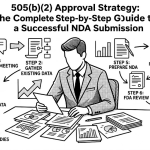
Step 1: Define the Product Concept and Target Product Profile
Before evaluating the 505(b)(2) pathway, the product concept needs to be defined with enough specificity to determine what reference data would be needed and what modifications to the reference compound the new product represents. A target product profile (TPP) that specifies the dosage form, route, indication, patient population, and key clinical differentiation points is the minimum input for a useful regulatory pathway analysis.
Companies that cannot articulate a clear TPP before conducting regulatory pathway analysis tend to receive unfocused regulatory advice that cannot account for the specific bridging requirements of their actual product. The TPP is not a commitment; it is a planning document that structures the analysis.
Step 2: Screen the Orange Book for Potential Reference Products
Using the TPP, screen the Orange Book for products that could serve as potential reference listed drugs. For each candidate RLD, document the approved indication, the dosage form and route, the listed patents and their expiration dates, and the existing exclusivity periods. This analysis takes days, not weeks, and establishes the factual foundation for the remainder of the evaluation.
Tools like DrugPatentWatch make this screening process substantially more efficient by aggregating Orange Book data, patent prosecution information, litigation history, and exclusivity tracking in a single searchable interface. An analyst who might spend a week manually compiling Orange Book data can complete the initial screen in hours using a purpose-built platform.
Step 3: Evaluate Patent Exposure for Each Candidate RLD
For each potential RLD, map the patent landscape with enough detail to estimate Paragraph IV litigation exposure. Identify the strongest patents listed in the Orange Book, assess the plausibility of non-infringement arguments based on the planned product design, and identify any pending continuation applications that could expand patent coverage before the anticipated application filing date.
This analysis requires both IP legal expertise and technical formulation knowledge. The IP attorney needs to assess claim scope and validity. The formulation scientist needs to identify whether the planned product can be designed around the relevant claims. These two workstreams need to interact early and continuously.
Step 4: Define the Bridging Package and Estimate Study Costs
Based on the nature of the modification and the FDA’s published guidance for the relevant product type, outline the bridging package required for the selected RLD. Estimate the cost and timeline for each study. Include contingencies for FDA requests for additional data based on the outcomes of prior applications in the same product category.
The bridging package estimate is an input to the financial model, not an output. It needs to be developed before the final go/no-go decision on program investment, not after.
Step 5: Request a Pre-NDA Meeting with the FDA
With a well-developed TPP, a draft bridging package, and a specific RLD selected, request a Type B pre-NDA meeting with the FDA. Submit a briefing document that clearly articulates the product concept, the proposed regulatory approach, the planned bridging studies, and the specific questions you need the agency to answer. Use the meeting to confirm the bridging strategy before committing to study execution.
Step 6: Build the Commercial Model from the Launch Date Back
The commercial model for a 505(b)(2) program should be built from the anticipated launch date backward, incorporating the competitive landscape that will exist at launch rather than the landscape that exists at program initiation. Model the price premium achievable given the differentiation relative to available alternatives, the volume capture trajectory given payer dynamics, and the patent exclusivity runway available after regulatory exclusivity expires.
This reverse-engineering of the commercial model from the competitive reality at launch is a discipline that produces better investment decisions than forward-projecting from current market conditions.
Regulatory Trends and the Evolving 505(b)(2) Environment
FDA’s Increasing Sophistication About Bridging Evidence Quality
The FDA’s review standards for 505(b)(2) bridging studies have become more rigorous over the past decade. The agency has issued guidance on specific product categories including abuse-deterrent opioids, complex drug products, locally-acting drugs, and ophthalmic products that articulates precisely what bridging evidence it will and will not accept. Applicants who design programs based on older precedents without accounting for more recent guidance documents risk designing programs the FDA will find insufficient.
The FDA’s commitment to real-time guidance updates means that the most relevant guidance documents are often the most recent ones. A company beginning a 505(b)(2) program in 2025 should prioritize guidance documents issued in the past three to five years over earlier guidance, supplemented by direct FDA engagement through the pre-NDA meeting process.
PDUFA VII and Review Timelines
The Prescription Drug User Fee Act (PDUFA) framework governs the FDA’s review timelines for NDA submissions, including 505(b)(2) applications. Under PDUFA VII, effective through fiscal year 2027, the FDA commits to a 12-month review timeline for standard applications and a 6-month timeline for applications granted priority review designation [6].
Priority review designation is available to 505(b)(2) applications that offer a significant improvement in the treatment, diagnosis, or prevention of a serious condition compared to available therapy. Companies developing 505(b)(2) products for indications with significant unmet need should evaluate priority review eligibility early in the program; accelerated review can be worth several months of commercial opportunity.
Real-World Evidence and 505(b)(2) Bridging
The FDA’s 2018 framework for real-world evidence and its subsequent guidance on using real-world data to support regulatory decisions have opened new possibilities for 505(b)(2) bridging, particularly for new indication applications. An applicant with a strong safety argument based on the reference compound’s post-marketing experience can potentially supplement limited prospective clinical data with real-world evidence analyses, subject to FDA acceptance of the data quality and relevance.
This is an evolving area where early FDA engagement is especially important. The agency’s acceptance of real-world evidence for bridging in 505(b)(2) applications is case-by-case and depends heavily on the quality of the underlying data source, the appropriateness of the analytical approach, and the strength of the argument that the evidence is sufficient to support the specific regulatory conclusion sought.
The Biosimilar Parallel: 351(k) and 505(b)(2) Structural Similarities
The Biologics Price Competition and Innovation Act of 2009 created a pathway for biosimilar approvals under Section 351(k) of the Public Health Service Act that is structurally analogous to 505(b)(2) in important ways. Biosimilar applicants reference a licensed biological product rather than conducting independent clinical programs, relying on the FDA’s prior findings about the reference product’s safety and efficacy.
Pharmaceutical companies with experience in 505(b)(2) strategy often find that the analytical skills, regulatory expertise, and competitive intelligence approaches developed for small-molecule 505(b)(2) programs transfer to biologics lifecycle management through 351(k). The specific technical requirements differ substantially, but the strategic framework, reference product selection, bridging evidence design, and patent certification considerations, has meaningful structural overlap.
Building Organizational Capability for 505(b)(2) Excellence
The Multidisciplinary Team Structure
Successful 505(b)(2) programs require genuine integration across functions that in many pharmaceutical companies operate in relative isolation. Regulatory affairs, IP legal, formulation science, clinical pharmacology, and commercial strategy all contribute inputs that are interdependent, and a weakness in any one area propagates through the program.
Companies that run 505(b)(2) programs with a project team structure where each function operates independently and connects only at formal governance checkpoints tend to have slower, more expensive programs than companies where these functions engage continuously from program initiation through NDA filing. The pre-NDA meeting briefing book, for example, needs to integrate regulatory, clinical, and IP perspectives in a way that requires actual collaboration rather than sequential document review.
Regulatory Intelligence as a Standing Capability
Monitoring the FDA’s 505(b)(2) approval landscape continuously, not just at the initiation of individual programs, provides a competitive intelligence advantage that isolated program-specific research cannot replicate. Companies that maintain a systematic monitoring function tracking 505(b)(2) approvals in their therapeutic areas of focus, new FDA guidance documents, complete response letters disclosed through public sources, and patent listing activity in the Orange Book accumulate knowledge that makes individual program analysis faster and more accurate.
This standing capability can be built through a combination of in-house resources and third-party tools. DrugPatentWatch, for instance, provides alert functionality for patent expiry events, new Orange Book listings, and approval status changes that can feed a regulatory intelligence monitoring program without requiring manual database monitoring. The commercial teams, IP attorneys, and regulatory affairs specialists who receive these alerts can integrate them into ongoing program analysis rather than starting from scratch each time.
Managing FDA Relationships for 505(b)(2) Programs
The FDA’s division-specific character matters considerably for 505(b)(2) programs. Different review divisions have developed distinct approaches to bridging evidence evaluation, to the weight they give PK data versus clinical endpoint data, and to their interpretation of what constitutes an acceptable bridging package. Companies with experience submitting 505(b)(2) applications to a specific FDA division develop institutional knowledge about that division’s expectations that is genuinely valuable.
Companies pursuing their first 505(b)(2) application in a new therapeutic area should invest in securing regulatory consulting support from professionals who have recent experience with the specific FDA division that will review the application. The cost of this investment is small relative to the cost of misaligned expectations that produce a complete response letter.
Financial Modeling for 505(b)(2) Programs: Key Variables and Benchmarks
Development Cost Benchmarks by Program Type
The financial case for a 505(b)(2) program varies by program type, and applying generic cost assumptions without calibrating them to the specific program type produces inaccurate analyses.
Program Type
Avg Dev Cost
Typical Timeline
Key Bridging Study
Extended-Release Reformulation
$50M – $150M
4 – 6 years
PK bridging study (2 arms)
New Salt/Ester Form
$30M – $100M
3 – 5 years
BA/BE study + stability
New Indication (established drug)
$100M – $400M
6 – 9 years
Phase II/III clinical trial
Fixed-Dose Combination
$80M – $250M
5 – 7 years
DDI study + PK bridging
Abuse-Deterrent Formulation
$150M – $350M
6 – 9 years
In vitro/in vivo ADF studies
Pediatric Formulation
$20M – $80M
3 – 5 years
Pediatric dose-finding study
Valuing the Exclusivity Period
The net present value of a 505(b)(2) product’s exclusivity period depends on four inputs: the annual revenue during the exclusivity period, the margin on that revenue, the probability of maintaining exclusivity through patent litigation if Paragraph IV certifications are filed, and the timing of generic entry after exclusivity expiration.
The revenue estimate should reflect realistic payer dynamics, including the probability of formulary placement at the desired tier, the speed of market access negotiations, and the expected price erosion from competing branded products during the exclusivity window. Companies that model exclusivity value using list price and 100 percent market share routinely produce optimistic valuations that do not survive contact with commercial reality.
Probability-weighting the patent litigation outcome is essential for any program where Paragraph IV certifications are likely. A product with three years of regulatory exclusivity and a 70 percent probability of prevailing in Paragraph IV litigation has a very different expected exclusivity value than a product with five years of regulatory exclusivity and a 40 percent litigation success probability. The expected value calculation requires explicit assumptions about both variables.
The Option Value Perspective
Pharmaceutical companies increasingly evaluate 505(b)(2) programs not just as standalone development investments but as options on larger platform strategies. A successful 505(b)(2) approval for a formulation in one dosage form creates credibility with the FDA, establishes a development team with relevant expertise, and generates clinical pharmacology data that can support subsequent applications in adjacent dosage forms or indications.
The option value of a 505(b)(2) platform program, specifically the present value of the follow-on program opportunities enabled by the initial approval, can be substantial. It is routinely undervalued in single-program NPV analyses that treat each application in isolation.
Negotiating Licensing and Partnership Deals Around 505(b)(2) Programs
The Licensing Value of 505(b)(2) Programs
505(b)(2) programs are frequently licensed between companies at multiple stages of development. An early-stage company with a proven formulation technology may license a program to a large pharma company with the commercial infrastructure to launch in multiple markets. A large pharma company may out-license a non-core 505(b)(2) lifecycle management program to a specialty pharma company better positioned to commercialize it in a niche market.
The valuation of a 505(b)(2) license depends on the same variables as direct development: the strength of the bridging data, the defensibility of the patent portfolio, the commercial differentiation relative to alternatives, and the probability of approval based on the completeness of the development program. Programs that are further along in development, particularly those that have completed successful pre-NDA meetings with the FDA, command premium valuations because they have lower regulatory risk.
Structuring the Term Sheet
505(b)(2) license agreements typically include an upfront payment reflecting the cost of work already completed, development milestones tied to specific regulatory events (IND filing, completion of bridging studies, NDA filing, FDA approval), and commercial milestones tied to revenue thresholds. Royalty rates for 505(b)(2) licenses tend to be lower than for novel compound licenses because the licensor’s technical contribution is formulation and development rather than fundamental invention.
The most contentious term sheet issues in 505(b)(2) transactions are typically the scope of the IP warranty, the treatment of patent litigation costs if Paragraph IV certifications are filed after commercialization, the performance obligations that trigger milestone payments, and the territory scope.
Co-Development Structures
Some 505(b)(2) programs benefit from co-development structures where the formulation technology company and the commercialization partner share development costs and revenue rather than transacting on a license basis. Co-development structures align incentives more closely than royalty arrangements in markets where the development decisions made by the technology company have significant consequences for the commercial outcome.
The governance of co-development agreements for 505(b)(2) programs needs to address specifically how decisions about bridging study design, RLD selection, patent filing, and FDA interaction are made. These are technical decisions with large commercial consequences, and the allocation of decision authority in the agreement needs to reflect the parties’ relative expertise.
Global IP Strategy for 505(b)(2) Products
Filing Strategy for Key Markets
U.S. 505(b)(2) approval does not automatically confer approval rights in other major markets. The European, Japanese, Canadian, and other regulatory authorities each require separate submissions that must satisfy their own bridging and safety requirements. For products targeting global markets, the regulatory filing strategy should be developed in parallel with the U.S. program to identify opportunities to use the same clinical data across multiple submissions.
The International Council for Harmonisation of Technical Requirements for Pharmaceuticals for Human Use (ICH) guidelines provide a common framework for clinical pharmacology studies that can support regulatory submissions in multiple regions. ICH M9 on biopharmaceutics classification system-based biowaiver, for example, establishes conditions under which in vivo bioavailability studies may be waived in favor of in vitro dissolution testing. Designing studies to ICH standards from the start avoids costly remediation when preparing submissions for ex-U.S. markets.
Patent Filing Timing and PCT Applications
The Patent Cooperation Treaty (PCT) system allows pharmaceutical companies to file a single international patent application that establishes a priority date in 150+ countries, with the national phase entry required within 30 months from the priority date. For 505(b)(2) programs where the formulation technology is patentable, filing a PCT application at program initiation, before any public disclosure of the technology, is standard practice.
Companies that delay patent filing until after their first pre-NDA meeting with the FDA are risking that the meeting itself, which involves disclosure of the product concept, may create prior art under some jurisdictions’ standards. Briefing books submitted to the FDA are not publicly disclosed, but the risk of inadvertent disclosure through a public FDA communication motivates early filing.
Supplementary Protection Certificates in Europe
The European Supplementary Protection Certificate (SPC) system provides an extension of patent protection, up to five years beyond patent expiry, for medicinal products that were the subject of a marketing authorization in Europe. The SPC effectively compensates for the time spent in regulatory development that cannot be commercially exploited.
505(b)(2) products approved in Europe as Hybrid Applications can qualify for SPC protection on the same basis as other authorized medicinal products. The calculation of SPC duration is based on the difference between the date of the first authorization in the European Economic Area and the patent filing date, minus five years, subject to a five-year maximum. For programs with long development timelines, SPC protection can add meaningful commercial exclusivity beyond the base patent term.
Key Takeaways
The 505(b)(2) pathway offers a legitimate and often superior alternative to full NDA development for a wide range of product concepts. Here are the eleven points that matter most:
505(b)(2) allows NDA applicants to rely on the FDA’s prior findings about approved drugs, enabling targeted bridging programs rather than full independent clinical development. The pathway covers new formulations, new indications, new routes, new salts, fixed-dose combinations, and more.
The bridging package design is the most consequential technical decision in the program. Underestimating bridging requirements is the most common cause of cycle-one complete response letters.
Selecting the right reference listed drug requires patent analysis, not just therapeutic analysis. Different RLDs present different patent certification obligations and litigation exposure.
Orange Book patent certifications trigger mandatory litigation exposure under Paragraph IV. Every 505(b)(2) program needs a documented patent litigation strategy before NDA filing.
Regulatory exclusivity (three years, five years for NCEs, seven years for orphan designation) provides temporary competitive protection. A patent portfolio covering formulation, process, and use is required for durable protection beyond the exclusivity window.
The FDA’s pre-NDA meeting is not optional. It is the mechanism for aligning bridging strategy before executing studies that cannot be changed after initiation.
Commercial differentiation must be built into the product design from day one. Regulatory approval does not guarantee payer acceptance or a price premium over generic alternatives.
Competitive intelligence using tools like DrugPatentWatch, ClinicalTrials.gov monitoring, and FDA approval precedent analysis should precede any significant development spending.
Global programs benefit from ICH-aligned study designs and PCT patent filing to ensure that U.S. development work can support ex-U.S. regulatory submissions with minimal remediation.
The financial model should be built from the expected launch-date competitive landscape backward, not from current market conditions forward. Scenario planning for competitive changes during the development timeline is essential.
505(b)(2) licenses and co-development deals require careful term-sheet design around IP warranties, patent litigation cost allocation, development decision authority, and performance milestone definitions.
Frequently Asked Questions
1. Can a 505(b)(2) application cover a drug with an entirely new active ingredient that has never been approved?
Yes, but only partially. A 505(b)(2) application for a new molecular entity (NME) can reference published literature and the FDA’s prior findings about related approved compounds to support parts of the safety assessment, particularly early toxicology data that may be extrapolated from a pharmacologically similar approved compound. However, the applicant still needs to conduct a full first-in-human program, and the FDA will require adequate studies to characterize the NME’s own safety and efficacy profile. The more common 505(b)(2) scenario involves modifications to existing compounds where the safety foundation is substantially established. For true NMEs, the incremental benefit of 505(b)(2) versus a full 505(b)(1) NDA is typically modest and the decision to invoke 505(b)(2) depends on whether specific published data relevant to the compound can materially reduce the Phase I program scope.
2. What happens if the reference drug is withdrawn from the market for safety reasons after a 505(b)(2) application is filed?
This scenario has significant regulatory and commercial consequences. If the FDA withdraws or suspends the approval of a reference listed drug for safety reasons, the FDA must determine whether existing 505(b)(2) applications referencing that drug can proceed. The FDA’s general position is that a 505(b)(2) application that relied on the safety findings for a subsequently withdrawn drug may require additional data demonstrating that the safety concerns leading to withdrawal do not apply to the 505(b)(2) product. In practice, safety-based market withdrawals are rare for NMEs, and the more common scenario is voluntary withdrawal for commercial reasons. Voluntary commercial withdrawal does not affect the 505(b)(2) applicant’s ability to reference the drug, as the FDA distinguishes between safety-based and commercially-based withdrawals in determining whether a product remains eligible as a reference.
3. How does the FDA determine whether a 505(b)(2) product qualifies as a New Chemical Entity for five-year exclusivity purposes?
The FDA’s determination of NCE status for 505(b)(2) products turns on the concept of “active moiety,” defined as the molecule responsible for the physiological or pharmacological action of the drug substance. A new salt, ester, or complex of an approved drug shares the same active moiety as the approved drug and does not qualify as an NCE. A prodrug that is converted in vivo to an active moiety that was previously approved, as a free acid or different salt, also does not qualify. A drug that is a true new molecular entity whose active moiety has never been approved in any form qualifies for five-year NCE exclusivity even when the 505(b)(2) pathway is used. The boundary cases involve enantiomers of racemic approved drugs, where the FDA has ruled that the single enantiomer shares the active moiety of the racemate and therefore does not qualify as an NCE, a determination that was commercially consequential for several enantiomer development programs.
4. Is a 505(b)(2) application the right choice for a program where the developer needs to protect the clinical data from competitors who might file their own 505(b)(2) applications referencing the new product?
This is a concern with real commercial substance. Once a 505(b)(2) product is approved and listed in the Orange Book, it becomes a potential reference listed drug for subsequent applicants, including those filing 505(b)(2) applications that reference the new product’s safety and efficacy data rather than the original reference compound. The protections available against this are regulatory exclusivity, which blocks the FDA from approving competing applications that rely on the protected product’s clinical data, and patents, which may prevent competitors from commercializing products that infringe. Companies in markets where a competitor might follow quickly with a referencing application should ensure that their exclusivity strategy accounts for this possibility. Three-year exclusivity provides temporary but not permanent protection, and the patent portfolio is the primary long-term barrier.
5. How should a company approach 505(b)(2) strategy differently for an orphan indication versus a large commercial indication?
The differences are substantial enough to warrant separate strategic frameworks. For orphan indications, the combination of seven-year orphan drug exclusivity and 505(b)(2) regulatory exclusivity creates a protection stack that is often more valuable than patents alone, particularly given that orphan markets are frequently too small to attract well-capitalized patent challengers. The development program for an orphan-indication 505(b)(2) application also benefits from FDA incentives including fee waivers, faster review timelines, and qualification for accelerated approval in some cases. The commercial model for orphan indications focuses on pricing to value in small patient populations rather than volume-based market capture, and the payer dynamics, particularly for rare diseases where treatment alternatives are limited, are typically more favorable than in large general medicine markets. For large commercial indications, the development investment is justified by higher revenue potential, but the competitive exposure is correspondingly greater. Paragraph IV litigation from generic applicants is more likely because the commercial stakes justify the investment. The patent portfolio and exclusivity strategy need to be calibrated to a competitive environment where well-resourced generic and specialty pharma companies will challenge the commercial position as soon as they can.
References
[1] Wouters, O. J., McKee, M., & Luyten, J. (2020). Estimated research and development investment needed to bring a new medicine to market, 2009-2018. JAMA, 323(9), 844-853. https://doi.org/10.1001/jama.2020.1166
[2] U.S. Food and Drug Administration. (2003). Applications for FDA approval to market a new drug: 21 CFR Part 314. Federal Register, 68(28), 36676-36706.
[3] Eban, K. (2023). 505(b)(2) pathway utilization trends 2015-2022. FDA Drug Review Data. U.S. Food and Drug Administration. https://www.fda.gov/drugs/drug-approvals-and-databases
[4] U.S. Food and Drug Administration. (1999). Guidance for industry: Applications covered by section 505(b)(2). FDA Guidance Document, May 1999. https://www.fda.gov/media/72419/download
[5] U.S. Food and Drug Administration. (2015). Guidance for industry: Abuse-deterrent opioids – evaluation and labeling. FDA Guidance Document, April 2015. https://www.fda.gov/media/84819/download
[6] U.S. Food and Drug Administration. (2022). PDUFA VII: Fiscal years 2023-2027 performance goals and procedures. U.S. Food and Drug Administration. https://www.fda.gov/media/151712/download
—
This article was produced for informational purposes for pharmaceutical executives and IP professionals.
It does not constitute legal, regulatory, or investment advice.