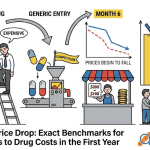
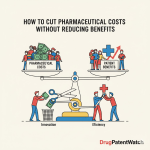
The ‘Rule of Three’ is not an FDA regulation. It is a market dynamic: three or more generic entrants in a single drug market routinely cut prices 20-40%, and five or more competitors push reductions past 85%.
The FDA’s core toolkit for triggering this dynamic runs from the 1984 Hatch-Waxman Amendments through the 2010 BPCIA, the 2017 Drug Competition Action Plan (DCAP), and now Commissioner Marty Makary’s 2025 National Priority Voucher program, which ties expedited regulatory review directly to price commitments.
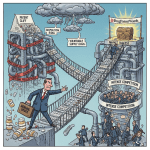
Brand-name companies have systematically exploited every mechanism in the Hatch-Waxman framework: citizen petitions that cost society an estimated $1.9 billion in delays for just four products, Orange Book listings that trigger unwarranted 30-month stays, REMS programs repurposed as access blockers, and patent thickets that extend median market exclusivity by 4.7 years per drug-device combination product.
The Inflation Reduction Act’s asymmetric negotiation timelines (9 years for small molecules, 13 years for biologics) are already redirecting R&D investment toward large-molecule programs. Any IP team that isn’t stress-testing small-molecule pipeline assets against IRA negotiation schedules is making a planning error.
Biosimilar interchangeability reform, proposed in the FDA’s FY2026 legislative request, would collapse the two-tier approval structure that currently depresses biosimilar uptake. If enacted, it restructures the competitive calculus for every biologic franchise with patent expiries in the 2026-2032 window.
1. What the Rule of Three Actually Is (and What It Isn’t)
1.1 The Economic Premise
The ‘Rule of Three’ describes an observed price-competition threshold in the U.S. pharmaceutical market: once at least three manufacturers sell a given generic drug, sustained downward price pressure becomes self-reinforcing. At that point, no single competitor can hold price above the competitive floor without losing volume, and the price decline accelerates rather than stabilizing.
This is not a statutory standard. The FDA has no regulation that triggers at three competitors. The principle derives from market structure research, replicated across multiple HHS ASPE analyses, IQVIA longitudinal studies, and FDA internal data. It is an empirical observation that policymakers have reverse-engineered into a regulatory objective.
The distinction matters for IP and commercial teams. The FDA’s job is to create the conditions under which three or more competitors reach a specific market. The agency does that through ANDA approval speed, product-specific guidance (PSG) issuance, fee structures under GDUFA, and aggressive action against delay tactics. None of those levers directly set prices. All of them directly shape the timeline and probability of price collapse.
1.2 The Regulatory Logic
The FDA’s indirect price influence operates through two channels. The first is market structure: the agency accelerates generic approval to increase the number of competitors. The second, newer and more contentious, is economic conditioning: tying regulatory advantages such as priority review timelines to explicit price commitments. The Makary-era National Priority Voucher program (discussed in Section 14) crosses the line between the first channel and the second. That crossing is the most operationally significant regulatory development in FDA history for pricing strategy.
Key Takeaways: Section 1
The Rule of Three is a market dynamic, not a rule. The FDA’s strategies to reach it have shifted from purely structural (approve more ANDAs faster) to conditional (accelerate review for companies that commit to pricing behavior). Both channels are now active simultaneously, which creates a more complex regulatory risk environment than at any prior point in the post-Hatch-Waxman era.
2. Hatch-Waxman at 40: The Architecture of Generic Entry
2.1 Why the 1984 Amendments Were Structurally Necessary
Before the Drug Price Competition and Patent Term Restoration Act of 1984, generic drug manufacturers had no clear pathway to market without conducting full clinical trials, even when the safety and efficacy of the reference listed drug (RLD) had already been established. The result was a market where generic drugs accounted for just 19% of all U.S. prescriptions. Brand manufacturers held effective monopolies long after their original compound patents should have permitted competition.
Hatch-Waxman resolved this by creating the Abbreviated New Drug Application (ANDA) under Section 505(j) of the FD&C Act. The ANDA pathway allows generic applicants to reference the FDA’s existing safety and efficacy determination for the RLD rather than replicating it. The generic manufacturer must demonstrate bioequivalence, pharmaceutical equivalence, and an appropriate response to any listed patents. That is the complete scientific burden, which compresses development timelines from the decade-plus required for an NDA to a far shorter preparation and review cycle.
Generic drugs now fill over 90% of U.S. prescriptions. The trajectory from 19% to over 90% is a direct consequence of the ANDA pathway.
2.2 The Orange Book: Patent Intelligence Infrastructure
The Orange Book, formally ‘Approved Drug Products with Therapeutic Equivalence Evaluations,’ is the operational backbone of generic competition strategy. Every ANDA filer must consult it. Every IP team defending a branded product should treat it as the primary map of their vulnerability.
The Orange Book lists all patents a brand manufacturer has submitted as covering the approved product or its approved methods of use. For each listed patent, a generic applicant must file one of four certifications:
Paragraph I: no such patent exists
Paragraph II: the patent has expired
Paragraph III: the generic will not market until after the patent expires
Paragraph IV: the listed patent is invalid, unenforceable, or will not be infringed by the proposed generic
The Paragraph IV certification is the central mechanism for early generic entry. Filing one is both a legal act and an IP challenge. It triggers the 30-month stay provision under which the brand manufacturer can maintain its monopoly during litigation, provided it files an infringement suit within 45 days of receiving notice. The 30-month clock runs from the date the brand receives notice of the Paragraph IV, not from when litigation concludes.
2.3 What the Orange Book Does Not Capture
The Orange Book has structural blind spots that brand manufacturers and generic challengers both exploit. It does not systematically list process patents, meaning patents covering the manufacturing method rather than the compound itself. A generic manufacturer can design around a product patent, achieve bioequivalence, and then discover during manufacturing that the most efficient synthesis route is blocked by an unlisted process patent.
Device-related patents are a more contentious gap. Drug-device combination products, particularly inhalers, auto-injectors, and prefilled syringes, often carry device patents that cover the delivery mechanism rather than the active pharmaceutical ingredient. Brand manufacturers have listed these device patents in the Orange Book, triggering 30-month stays that the FDA now acknowledges ‘may delay generic market entry.’ A 2023 GAO report documented a median 28 years of effective market protection for 14 inhalers analyzed, in part because generic manufacturers could not access the older device designs needed for comparative testing.
Ambiguous or overly broad ‘use codes’ in the Orange Book create a parallel problem. Use codes describe the approved method-of-use that a listed patent covers. When they are written broadly, they complicate a generic applicant’s ability to develop a ‘skinny label,’ meaning an ANDA that omits patented indications while covering the non-patented ones. The FDA has acknowledged that broad use codes impede skinny-label strategies, and has planned a multidisciplinary workgroup to establish clearer patent information standards.
2.4 IP Valuation Dimension: What Orange Book Position Is Worth
From an IP valuation standpoint, Orange Book listing position is a quantifiable asset. Each listed patent with a non-expired term extends the effective protected revenue window. The financial model is straightforward: take the annual net sales of the reference product, apply the price premium the brand maintains over the counterfactual generic price, and discount over the remaining patent term, adjusted for litigation risk.
For a product with $2 billion in annual U.S. net sales, even a 12-month delay in generic entry is worth approximately $1.5 to $1.8 billion in present-value brand revenue, net of litigation costs and the operating costs of maintaining market exclusivity. This is why brand manufacturers treat citizen petition filings, patent term extension (PTE) applications, and Orange Book listing strategy as core IP assets rather than administrative exercises.
The inverse is true for generic entrants. The first company to achieve ANDA approval for a Paragraph IV challenge and launch ‘at risk’ (before patent litigation concludes) can capture 60-80% of the generic market before competitors enter, during the 180-day exclusivity window. Section 4 covers the economics of that window in detail.
Key Takeaways: Section 2
Hatch-Waxman remains the structural foundation of generic competition. Its ANDA pathway and Orange Book infrastructure determine when, how, and at what risk level generic competition enters any given market. The same provisions designed to facilitate competition, particularly the 30-month stay and the use-code system, are the primary levers brand manufacturers pull to delay it. Every IP team managing a Hatch-Waxman-listed product should have a current valuation model attached to each listed patent.
3. Paragraph IV Certification: The Litigation Engine Behind Generic Competition
3.1 Mechanics of a Paragraph IV Challenge
When a generic applicant files a Paragraph IV certification, it serves written notice on both the NDA holder and each patent owner listed in the Orange Book. The notice must include a detailed statement of factual and legal bases for why the listed patent is invalid, unenforceable, or will not be infringed. That detailed statement is effectively the opening brief of patent litigation before any lawsuit has been filed.
The brand manufacturer then has 45 days to file suit in federal district court. If it does, the FDA’s approval of the ANDA is automatically stayed for 30 months, with the stay running from the date the brand received the Paragraph IV notice. If the brand wins the litigation, the stay extends until the contested patent expires. If the generic wins or the litigation concludes via settlement, the ANDA can proceed to approval.
The 30-month stay is the most commercially consequential provision in the Hatch-Waxman framework. It transforms patent validity determinations from an abstract legal question into a direct revenue protection mechanism worth hundreds of millions to billions of dollars annually.
3.2 Multi-Patent Stacking and Its Effect on Timelines
Hatch-Waxman originally allowed brand manufacturers to trigger consecutive 30-month stays by listing new patents after an ANDA was filed. The Medicare Modernization Act of 2003 closed this specific loophole, restricting brand manufacturers to one 30-month stay per ANDA, based on patents listed at the time of the original NDA approval. New patents listed after the ANDA is filed still require a Paragraph IV certification if the generic wishes to market during the patent term, but they do not automatically trigger a second stay.
Despite this reform, brand manufacturers still build multi-patent portfolios around lead compounds specifically to require multiple sequential litigation cycles. Each cycle consumes legal resources, delays market entry, and raises the settlement value for the brand. The practice is known as patent stacking: accumulating patents on formulation, dosage form, manufacturing process, metabolite, polymorph, and delivery device around a single chemical entity. Section 8 covers the full evergreening technology roadmap.
3.3 IP Valuation: Estimating the Value of a Contested Patent
For IP valuation purposes, a patent under Paragraph IV challenge has a probability-weighted value. Analysts should model three scenarios: brand wins litigation (full remaining patent term preserved, value = NPV of protected revenue stream); generic wins (patent term effectively zero, value = litigation costs incurred); and settlement (typically involves an authorized generic launch date, with the value split between the parties based on the negotiated entry date and any reverse payment).
The FTC has tracked reverse payment settlements since FTC v. Actavis (2013) established that pay-for-delay agreements are subject to antitrust scrutiny under a rule-of-reason standard. The settlement structure, specifically the agreed generic entry date, is the key valuation input. A settlement that allows generic entry 18 months before patent expiry cuts brand protected revenue by a calculable amount; the value transferred to the generic challenger implicitly represents the estimated litigation risk the brand faced.
4. 180-Day Exclusivity: IP Valuation and First-Filer Economics
4.1 The First-Filer Incentive
The 180-day exclusivity provision grants the first generic applicant to file a Paragraph IV certification a 180-day period during which the FDA cannot approve any other ANDA for the same drug. The exclusivity runs from either the date of first commercial marketing or the date of a court decision holding the contested patents invalid or not infringed, whichever comes first.
The commercial value of first-filer exclusivity is substantial. During those 180 days, the first-filer competes against only the brand product, not other generics. Pricing dynamics allow the first generic to enter at a discount of roughly 20-40% below the brand price rather than the 80-90% discount that prevails once six or more competitors are in the market. The revenue captured during exclusivity often determines whether a Paragraph IV challenge delivers an acceptable return on litigation investment.
4.2 Quantifying First-Filer Revenue
For a reference product with $1 billion in annual U.S. sales and a first-filer generic priced at 25% below the brand, assume the generic captures 50% market share during the 180-day exclusivity period. That produces approximately $187 million in first-filer revenue during exclusivity. After exclusivity expires and additional generics enter, the market price typically falls to 15-25% of the original brand price within two years, compressing per-unit economics but maintaining volume-driven total revenue for established manufacturers.
First-filer exclusivity is forfeitable. The FDA can declare exclusivity forfeited if the first filer fails to market within 75 days of ANDA approval or final court decision, fails to obtain tentative approval within 30 months of ANDA filing, or does not market within a commercially reasonable time after the stay period. Forfeiture determinations have become litigation targets in their own right.
4.3 Shared Exclusivity and Competitive Dynamics
When multiple generic applicants file substantially complete ANDAs on the same day, they share the 180-day exclusivity. Shared exclusivity dilutes individual revenue per filer but preserves the structural advantage over late-filer generics. The FDA’s practice of granting shared exclusivity to same-day filers has prompted brand manufacturers to use citizen petitions and other delay tactics specifically to block ANDA acceptance on the filing date, with the goal of preventing a large cohort of ANDAs from qualifying for shared exclusivity and thereby slowing competitive entry.
Key Takeaways: Sections 3-4
Paragraph IV certification and 180-day exclusivity together form the IP litigation economy of the U.S. generic drug market. The first-filer window, when modeled correctly, can produce nine-figure revenue from a single successful challenge. Brand manufacturers’ counter-strategy, multi-patent stacking and delay tactics, directly targets the timeline and probability of that payoff. Every generic development portfolio should include a litigation probability model for each prospective Paragraph IV target.
Investment Strategy: Paragraph IV Pipeline Valuation
Institutional investors evaluating generic pharmaceutical companies should weight pipeline assets by first-filer probability, adjusted for patent contest complexity and expected litigation duration. The most valuable pipeline positions combine a reference product with $500 million or more in annual U.S. sales, a limited number of Orange Book patents (reducing litigation surface area), a reasonably near patent expiry (reducing time-to-revenue), and a small number of competing ANDA filers (maximizing exclusivity value). DrugPatentWatch and FDA ANDA data allow systematic screening against all four criteria.
5. The Biosimilar Frontier: BPCIA, Patent Thickets, and the Interchangeability Fight
5.1 The BPCIA Framework
The Biologics Price Competition and Innovation Act of 2010, enacted as part of the Affordable Care Act, created a dedicated approval pathway for biosimilars under Section 351(k) of the Public Health Service Act. It was modeled on Hatch-Waxman’s logic: allow abbreviated scientific review for products that demonstrate biosimilarity or interchangeability with an FDA-approved reference biologic (the reference product, or RP), rather than requiring full independent clinical development.
The BPCIA created two tiers of approval. A ‘biosimilar’ designation requires demonstration that the product is highly similar to the RP and has no clinically meaningful differences in safety, purity, or potency. An ‘interchangeable’ designation requires the higher standard that the biosimilar produces the same clinical result as the RP in any given patient and, for products administered more than once, that switching between the RP and the biosimilar does not produce greater risk than continued use of the RP. Only an interchangeable biosimilar can be substituted by a pharmacist without prescriber intervention, a distinction that materially affects uptake.
5.2 The BPCIA Patent Dance
The BPCIA patent resolution mechanism, known colloquially as the ‘patent dance,’ is procedurally more complex than Hatch-Waxman’s Paragraph IV process. The biosimilar applicant must provide the RP holder with its complete Biologics License Application (BLA) and manufacturing information within 20 days of FDA acceptance. The RP holder then identifies the patents it believes cover the product or its use, and the parties negotiate a list of patents to litigate in a phased process.
The patent dance is optional for biosimilar applicants after the Federal Circuit’s decision in Amgen Inc. v. Sandoz (2017). A biosimilar applicant can skip the exchange, accept a potential immediate infringement suit, and proceed to market after providing 180-day notice of commercial marketing. Many biosimilar applicants have elected to bypass the dance entirely, accepting the litigation risk as preferable to the disclosure requirements.
5.3 Biosimilar Price Impact and Its Structural Limits
Biosimilars launch at initial list prices 15% to 35% below the reference product, compared to the 80-90% discounts seen in mature small-molecule generic markets. The differential reflects structural differences between the two markets. Manufacturing a biologic requires maintaining a specific cell line and upstream fermentation process, and the capital requirements for a biosimilar manufacturing facility run into hundreds of millions of dollars. That cost base sets a floor on sustainable pricing well above the marginal cost floor in small-molecule generics.
Biosimilars generated approximately $8 billion in system-wide savings in 2020. RAND projected $44.2 billion in reduced direct biologic spending between 2014 and 2024. Those are material numbers, but the per-product competitive dynamics remain structurally different from generics. The absence of a perfect substitutability presumption, particularly the interchangeability gap, means biosimilar market penetration tends to be slower and more payer-and-formulary-dependent than generic penetration.
5.4 FDA’s Proposed Interchangeability Reform
The FDA’s FY2026 legislative request proposes eliminating the separate ‘interchangeable’ designation entirely. Under the proposed change, all approved biosimilars would be treated as substitutable at the pharmacy level without prescriber intervention. The FDA’s stated rationale is that the scientific distinction between ‘biosimilar’ and ‘interchangeable’ does not reflect a real clinical difference meaningful enough to support a separate regulatory category. The European Medicines Agency has never maintained such a distinction, and European biosimilar penetration consistently outpaces U.S. penetration for equivalent products.
If enacted, this reform would remove a structural barrier that brand biologic manufacturers have used to slow biosimilar adoption. It would require label revisions across the entire approved biosimilar portfolio, but it would also expand the automatic substitution pool at the pharmacy level, accelerating volume uptake for approved biosimilars. For brand biologic manufacturers protecting high-revenue franchises, this reform represents a direct threat to the soft moat that the two-tier system provided.
Key Takeaways: Section 5
The BPCIA framework is younger, structurally more complex, and produces smaller price reductions than Hatch-Waxman. The interchangeability reform proposed for FY2026 is the single highest-impact near-term regulatory development for the biologic/biosimilar competitive landscape. IP and commercial teams managing biologic franchises should model two scenarios: interchangeability reform passes (accelerated volume erosion beginning 12-18 months post-enactment), and reform fails (current two-tier substitution dynamics persist). The probability-weighted outcome should drive near-term lifecycle management decisions.
6. Humira’s Patent Estate: A Case Study in Biologic IP Fortification
6.1 The Patent Thicket in Numbers
AbbVie’s adalimumab franchise, marketed as Humira, generated over $20 billion in annual global revenues at its peak and held the position of the world’s top-selling drug for multiple consecutive years. It is the most thoroughly documented example of biologic patent fortification in U.S. pharmaceutical history.
AbbVie built a portfolio of over 130 U.S. patents covering adalimumab’s compound, formulations, manufacturing processes, dosing regimens, and methods of use across its approved indications. The core compound patent expired in 2016. AbbVie then used the broader portfolio to block biosimilar entry in the U.S. until 2023, a seven-year extension of effective market exclusivity that the compound patent alone would not have provided.
The first adalimumab biosimilar approvals came well before 2023. Amgen’s ABP 501 (Amjevita) received FDA approval in 2016, the same year the compound patent expired. Samsung Bioepis, Sandoz, Pfizer, and multiple other applicants received approvals in subsequent years. Every one of them agreed to delayed U.S. launch dates as part of patent litigation settlements with AbbVie, accepting launch rights in Europe years earlier than in the U.S. in exchange for the AbbVie settlements.
6.2 IP Valuation of the AbbVie Thicket
From an IP valuation perspective, AbbVie’s secondary patent portfolio produced a present-value revenue extension worth an estimated $50-60 billion in U.S. net sales between 2016 and 2023, relative to the counterfactual of immediate biosimilar entry at the compound patent expiry. The cost of maintaining that portfolio, litigation expenses, settlements, and patent prosecution, represented a fraction of the value protected.
This calculus drives the industry-wide behavior. A $200 million investment in secondary patent prosecution, REMS maintenance, and litigation can protect a $3-5 billion annual revenue stream for five to seven years. The return on IP defensive investment for top-selling biologics routinely exceeds the return on incremental clinical investment in new indications.
6.3 The Post-2023 Adalimumab Market
Once adalimumab biosimilars launched in 2023, the U.S. market entered a competitive phase that illustrates the specific dynamics of biologic competition. By mid-2024, biosimilar market share reached approximately 35-40% of adalimumab prescriptions, with penetration highest in new-to-therapy patients and lower in patients already stabilized on Humira, where prescriber and patient inertia remained substantial. Pricing discounts on biosimilars ranged from 5% at list price (the ‘high-list’ strategy designed to maximize rebate capture) to 85% below list price for ‘low-list’ competitors targeting formulary exclusivity.
The fragmented pricing structure itself reflects a biosimilar competitive dynamic distinct from small-molecule generics: the rebate architecture of pharmacy benefit management means list price discounts and net price discounts are not the same number, and biosimilar manufacturers must price against the payer’s net cost of Humira rather than its publicly listed price. This complexity slows the simple price collapse that the Rule of Three produces in small-molecule markets.
Portfolio managers evaluating biosimilar-developer equities should model net price, not list price, as the competitive metric. The relevant discount is the payer’s net cost of the reference biologic after rebates. Published list-price discounts for biosimilars systematically overstate the competitive pricing advantage. Companies with established payer relationships and formulary access capabilities will extract more value from biosimilar launches than those relying on list-price competition alone.
7. The Drug Competition Action Plan: Anatomy of a Regulatory Counteroffensive
7.1 DCAP’s Origins and Mandate
The FDA launched the Drug Competition Action Plan in 2017 under then-Commissioner Scott Gottlieb, explicitly acknowledging that the regulatory framework established by Hatch-Waxman had been exploited in ways its drafters did not anticipate. DCAP is not legislation. It is an internal operational commitment to use existing FDA authority more aggressively to counter delay tactics and reduce barriers to generic and biosimilar entry. Its three core workstreams address complex generic development standards, citizen petition abuse, and ANDA review process improvements.
7.2 Complex Generic Drugs: Regulatory Uncertainty as a Barrier
Complex generic products include non-oral dosage forms (inhalation products, transdermal patches, injectable suspensions, complex topicals), drug-device combination products, and drugs with complex active moieties such as polymers, proteins, and liposomes. They account for a disproportionate share of high-priced generic markets with limited competition, precisely because the regulatory science needed to demonstrate bioequivalence is unsettled, inconsistently applied, or resource-intensive enough to deter all but the most capitalized developers.
DCAP addresses this through expanded product-specific guidance (PSG) issuance. PSGs tell ANDA applicants exactly what bioequivalence data the FDA will require for a specific product, reducing the regulatory uncertainty that functions as a de facto entry barrier. In October 2024, the FDA revised 814 draft PSGs for immediate-release oral drug products, updating bioequivalence study requirements to require a single study (rather than two) for products with non-high risk of bioinequivalence due to food effect. That revision reduces development cost and timeline for a large fraction of pending ANDAs.
For complex non-oral products, the FDA has also issued a series of guidance documents addressing specific formulation types. The 2023 FDA guidance on transdermal delivery systems and the ongoing PSG development for complex inhalation products are direct outputs of DCAP’s mandate to reduce regulatory ambiguity as a competitive barrier.
7.3 Citizen Petition Abuse: The Cost Quantified
Citizen petitions are a legally available mechanism for any party to request FDA action or inaction on a regulatory matter. Congress intended them as a public health safety valve. In practice, brand manufacturers file the majority of petitions targeted at generic drugs specifically to trigger a review obligation that delays ANDA approval, even when the FDA ultimately denies the petition at rates exceeding 80%.
The economic cost of this tactic is documented. A study published in Health Affairs found that citizen petition-induced delays for four specific products cost the U.S. healthcare system $1.9 billion in total, with $782 million absorbed by government insurance programs. The per-product cases are more striking: one petition delayed a generic antidepressant by 133 days, during which the brand product generated $600 million in sales; another delayed a generic sleep drug by 1,225 days, enabling the brand manufacturer to collect $3.1 billion.
The FDA’s 2019 final guidance on petitions under Section 505(q) limits the impact by requiring the agency to respond to petitions received within 150 days of an application’s goal date within that same 150-day window, and by committing to publicly identify petitions determined to have been submitted primarily for delay purposes and refer them to the FTC. Neither commitment eliminates the tactic, but both raise its cost and reputational risk for brand manufacturers.
Key Takeaways: Section 7
DCAP is the FDA’s operational response to the regulatory loopholes that Hatch-Waxman created unintentionally. Its PSG expansion program directly reduces complex generic development risk. Its citizen petition framework raises the cost of abuse without eliminating the mechanism. Neither effort is sufficient on its own, but together they represent a measurable reduction in the average timeline and cost of generic ANDA approval for complex products.
8. Evergreening Technology Roadmap: How Brand Companies Extend Market Exclusivity
8.1 The Strategic Imperative
Pharmaceutical companies face a fundamental lifecycle problem: a compound patent provides roughly 20 years of protection from filing, but drug development consumes 10-14 years of that protection, leaving 6-10 years of effective market exclusivity after launch. Evergreening describes the set of strategies a brand manufacturer uses to extend practical market exclusivity beyond the compound patent’s expiry, using secondary IP filings, formulation changes, new indications, regulatory exclusivities, and device integration.
No individual evergreening tactic is illegal. Some produce genuine patient benefit. Many produce marginal clinical improvement that exists primarily to support a secondary patent claim. The policy debate centers on where the line falls between legitimate innovation and exclusivity extension without commensurate clinical value.
8.2 The Full Technology Roadmap
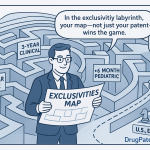
The following roadmap represents the sequence of IP strategies deployed across a drug’s lifecycle, from compound patent filing through post-expiry market defense.
Phase 1: Compound Patent and Core Clinical Development (Year 0-14) The company files the compound patent covering the novel active pharmaceutical ingredient (API). Typically filed early in the discovery process, this patent starts the 20-year clock. Patent term extension (PTE) under 35 U.S.C. Section 156 can restore up to 5 years of patent term consumed during clinical development and FDA review. The maximum term with PTE is 14 years from NDA approval. If Hatch-Waxman PTE is applied, the FDA must certify the regulatory review period. Maximum combined term: 14 years post-approval.
Phase 2: Formulation and Delivery Innovation (Year 8-16) Before the compound patent expires, the company files secondary patents on: extended-release formulations, immediate-release tablets with specific excipient compositions, alternative salt forms or polymorphs, specific crystalline forms, fixed-dose combinations with a second compound, and novel delivery systems such as auto-injectors, pre-filled syringes, or inhalers. These patents, filed on average 4-6 years before compound patent expiry, are listed in the Orange Book and can trigger Paragraph IV litigation if challenged.
The median term extension from secondary patent filings is approximately 4.7 years for drug-device combination products, based on GAO analysis. For inhalers, the documented protection period extends to a median 28 years from first approval across 14 products studied, with device patents as the primary extension mechanism.
Phase 3: New Indications and Method-of-Use Patents (Year 10-18) FDA approval for a new indication generates three years of new clinical investigation exclusivity under the Hatch-Waxman framework, provided the approval required new clinical trials. Method-of-use patents covering the new indication are listed in the Orange Book. A generic seeking to market a ‘skinny label’ that excludes the patented indication can do so only if the use codes are narrowly written. Broad use codes effectively force the generic to either accept a Paragraph IV challenge on the method-of-use patent or wait for its expiry.
Phase 4: Pediatric Exclusivity (Year 12-18) Best Pharmaceuticals for Children Act (BPCA) pediatric exclusivity attaches 6 months of additional exclusivity to any regulatory exclusivity or listed patent in the Orange Book, when the NDA holder conducts FDA-requested pediatric studies. A brand manufacturer with a compound patent expiring in year 16 and six months of pediatric exclusivity effectively delays generic entry to year 16.5. On a $2 billion annual revenue product, that additional six months is worth approximately $1 billion in protected revenue.
Phase 5: Product Hopping (Year 14-20) In the 12-24 months before compound patent expiry, brand manufacturers introduce a ‘next-generation’ version of the product: a modified-release formulation, a new salt form, a new delivery device, or a fixed-dose combination. They then aggressively migrate patients to the new version through prescriber detailing, patient co-pay assistance programs, and in some cases, withdrawal of the original product from the market. When the original compound patent expires and generics enter, the market has been substantially shifted to a new product for which equivalent generic versions are years away from approval.
Phase 6: REMS as Market Exclusivity (Year 16-25) Risk Evaluation and Mitigation Strategies (REMS) are FDA-required safety programs for drugs with serious known or potential risks. Legitimately, they exist to manage patient safety. Brand manufacturers have exploited REMS by refusing to provide generic applicants with the small quantities of the RLD needed for bioequivalence testing, citing the restricted distribution requirements of the REMS program. Section 11 covers REMS-as-weapon in detail.
8.3 IP Valuation of the Evergreening Stack
The combined present value of a well-executed evergreening strategy is calculable. Using a $2 billion annual revenue baseline and assuming each tactic generates the documented average extension period, the value contribution of each element is:
New formulation patent with clean Paragraph IV defense: $1.4-2.1 billion (assumes 18-month successful defense). Pediatric exclusivity: $1.0 billion (six months on $2B annual revenue). New indication with broad use codes and method-of-use patent: $800 million to $1.5 billion depending on prescribing shift. Product hop with successful market migration: $3.0-5.0 billion in present value, representing the revenue from the new product before a generic equivalent enters. REMS-based testing delay: $400-900 million, with significant legal risk post-FDCA Section 314.107 reform.
The total potential value of a complete evergreening stack for a $2 billion product exceeds $7 billion, before discounting for litigation risk and execution probability. That is why the pharmaceutical industry’s IP defense budget consistently allocates more to lifecycle management than to early-stage patent prosecution.
Key Takeaways: Section 8
Evergreening is not a single tactic. It is a multi-phase, multi-mechanism IP strategy with a documented technology roadmap and quantifiable financial return at each stage. IP teams should map every product in their portfolio against this roadmap, identifying which phases are complete, which are in progress, and where competitive exposure remains. Generic challengers should do the same in reverse, identifying which stage of the roadmap each target product has reached and which remaining patents are most vulnerable to Paragraph IV challenge.
9. Patent Thickets, Orange Book Gaming, and Product Hopping
9.1 Patent Thickets: Construction and Effect
A patent thicket is a dense web of overlapping patents surrounding a single pharmaceutical product, designed so that any generic or biosimilar entrant must either challenge all of them through expensive litigation or license its way through. Thickets are not built around single compounds. They cover every technically plausible variation of the product: salt forms, polymorphs, hydrates, enantiomers, prodrugs, metabolites, dosage forms, particle size distributions, and drug-device integration.
The construction of a patent thicket follows a systematic prior art analysis combined with a freedom-to-operate gap-filling strategy. IP teams identify every structural variation of the lead compound that could be therapeutically active or bioequivalent, file patent applications covering each, and build a timeline that staggers expiry dates across the protection window. The goal is to ensure no generic entrant can design around the compound patent without colliding with a formulation patent, and no formulation-patent workaround exists without encountering a manufacturing-process patent.
The FTC has identified 74 pharmaceutical products between 2005 and 2015 that faced Paragraph IV challenges and involved at least one secondary patent listed after the ANDA filing. In multiple cases, the secondary patent listings triggered a second wave of litigation after the first round settled, effectively resetting the competitive timeline.
9.2 Product Hopping: Mechanics and the Antitrust Boundary
Product hopping is the practice of switching patients from an off-patent formulation to a newly patented one before generic entry. Courts have distinguished between ‘hard switches,’ where the original product is withdrawn from the market, and ‘soft switches,’ where the original remains available but the brand manufacturer redirects prescribing through detailing and market access strategies.
The Second Circuit’s decision in New York v. Actavis PLC (2015), involving Namenda (memantine), established that a hard switch executed for the primary purpose of disrupting generic substitution can constitute anticompetitive conduct under Section 2 of the Sherman Act. The case produced a preliminary injunction preventing Actavis from withdrawing the immediate-release formulation before generic entry. That decision is the primary antitrust constraint on aggressive product hopping, though its scope is fact-specific and litigants continue to test its boundaries.
From an IP valuation standpoint, a successful product hop permanently transfers revenue from the patent-expired formulation to a newly protected one, restarting the exclusivity clock. The risk is antitrust exposure, regulatory scrutiny, and prescriber backlash if the clinical basis for the new formulation is perceived as inadequate.
10. Pay-for-Delay: Reverse Payment Settlements After FTC v. Actavis
10.1 The Structure of a Reverse Payment
A reverse payment settlement, also called a pay-for-delay agreement, occurs when a brand manufacturer settles Paragraph IV litigation by paying value to the generic challenger in exchange for the generic’s agreement to delay market entry until a specified date, typically near or at the patent expiry. The ‘payment’ is often not cash. It takes the form of authorized generic licenses, co-promotion agreements, services contracts, or other arrangements that transfer economic value from the brand to the generic.
Before FTC v. Actavis (2013), courts were divided on whether reverse payments were presumptively illegal. The Supreme Court resolved the question under the rule of reason: reverse payment settlements are subject to antitrust scrutiny, but they are not per se illegal. A plaintiff must demonstrate that the payment is large and unjustified enough to constitute an anticompetitive restraint that the patent’s exclusivity rights do not justify.
10.2 Post-Actavis Settlement Dynamics
FTC reporting indicates that the number of potential pay-for-delay settlements decreased substantially in the years following Actavis. Brand manufacturers and generic challengers shifted toward structured settlements with earlier-than-patent-expiry entry dates and no explicit cash transfer, making the antitrust analysis more complex. The FTC has continued to bring enforcement actions and has advocated for legislation that would presumptively prohibit reverse payments.
From an IP valuation standpoint, a reverse payment settlement represents a brand manufacturer’s revealed preference for certainty over litigation risk. The agreed entry date is the critical variable. A settlement allowing entry 18 months before patent expiry, on a $2 billion revenue product, transfers approximately $3 billion in revenue potential to the post-settlement competitive market, with the generic challenger capturing the first-mover advantage during its 180-day exclusivity window.
For analysts valuing brand pharmaceutical assets, any disclosed settlement with a delayed generic entry date embedded in it should be modeled as a contingent liability: the brand is effectively renting its exclusivity from the settled generic until the agreed entry date, and that rental cost (the value transferred in the settlement) should be included in the IP asset’s valuation discount.
11. REMS as a Competitive Weapon
11.1 REMS Legitimacy and REMS Abuse
Risk Evaluation and Mitigation Strategies are FDA-mandated safety programs for drugs with serious known risks. A REMS may require patient enrollment in a registry, prescriber certification, pharmacy certification, or elements to assure safe use (ETASU) that restrict distribution. Thalidomide-derivative immunomodulators like lenalidomide (Revlimid) and pomalidomide carry REMS programs because of severe teratogenicity.
The abuse case is specific: brand manufacturers have refused to sell small quantities of the RLD to generic applicants for bioequivalence testing, citing REMS-restricted distribution requirements. The FDA clarified in 2014 guidance that brand manufacturers are not required to sell samples for BE testing, and it took years of legislative effort to codify a solution. The FDA Safety and Innovation Act of 2012 prohibited brand manufacturers from using REMS as a tool to block shared REMS negotiations, but did not resolve the sampling problem directly.
The CREATES Act, signed into law in 2019, finally addressed the problem by creating a private right of action for ANDA applicants who are unable to obtain RLD samples needed for BE testing because of REMS-related refusals. Under CREATES, a generic or biosimilar applicant can sue to obtain access to RLD samples, with courts authorized to order that the brand provide them. The law also allows eligible product developers to seek a license to conduct studies with a REMS-covered product using a single, shared REMS.
11.2 Quantifying REMS Delay Costs
Before the CREATES Act, REMS-related access barriers delayed generic entry for an estimated 40+ products. Individual delay periods ranged from 18 months to over 5 years. For products with revenues in the hundreds of millions to billions, these delays produced costs structurally similar to those of citizen petition abuse. The full economic accounting has not been published as a single consolidated study, but FTC testimony to Congress estimated the aggregate competitive harm in the billions of dollars annually.
Post-CREATES litigation is now producing a track record. Alvogen’s case against Serenity Pharmaceuticals involving the REMS-restricted desmopressin product produced a settlement. Multiple other CREATES Act cases are in active litigation as of early 2026. The law has materially increased the cost of REMS abuse and created a litigation pathway that did not previously exist, but it has not eliminated the tactic entirely.
Key Takeaways: Sections 9-11
Patent thickets, product hopping, pay-for-delay settlements, and REMS abuse are the four primary mechanisms through which brand manufacturers extract value beyond the compound patent’s intended scope. Each has a documented cost, a legal constraint, and a current enforcement status. IP teams managing generic pipelines should track all four for each target product. Brand teams managing lifecycle assets should assess their exposure to CREATES Act litigation and antitrust scrutiny on product-hop strategies before committing to them.
12. Quantifying the Rule of Three: Full Price Curves and Market Data
12.1 Price Reduction by Number of Competitors
The empirical price-competition data from HHS ASPE, FDA manufacturer price analyses, and IQVIA longitudinal studies shows a consistent, non-linear relationship between the number of generic competitors and price reduction. The curve steepens sharply between one and five competitors, then flattens.
Number of Generic Competitors
Average Price vs. Brand Reference
1 (first generic)
94% of brand (6% reduction)
2 competitors
48% of brand (52% reduction)
3 competitors
60-80% of brand (20-40% reduction, varies by market)
4 competitors
21% of brand (79% reduction)
5 competitors
~15% of brand (85% reduction)
6+ competitors
~5% of brand (95% reduction)
10+ competitors
20-30% of brand, stabilizing after 3 years
The first generic entry produces a modest 6% discount because, during the 180-day exclusivity period, the first filer faces only brand competition and can maintain a price close to the brand’s level. The steep drop from one to two competitors reflects the end of the exclusivity period and the entry of the first post-exclusivity competitor. The near-linear decline from two through five competitors follows the standard oligopoly-to-competitive pricing transition.
The pattern has remained stable across market entry cohorts studied from 2007 through 2019, suggesting the underlying dynamic is structural rather than dependent on market conditions in any specific period.
12.2 System-Wide Savings
Generic drugs generated approximately $2.2 trillion in total U.S. healthcare savings from 2009 through 2019, per IQVIA data. In 2022, generics filled over 91% of all U.S. prescriptions, despite representing a fraction of total drug spending by dollar value. The inversion of volume share (over 90%) versus spending share (under 25%) captures the core economic function of the generic market: it allows the healthcare system to achieve massive volume at low unit cost while concentrating spending on the smaller number of branded products for which no generic yet exists.
Biosimilars produced approximately $8 billion in 2020 savings. RAND projected cumulative savings of $44.2 billion across biologics from 2014 to 2024. Those figures are material but represent a much smaller share of the reference biologic market than generic savings represent of the small-molecule market, reflecting both the structural pricing floors described in Section 5 and the slower market penetration driven by the interchangeability gap.
Portfolio managers should track the number of approved ANDAs per product, not just the number of marketed generics, as the leading indicator of competitive price inflection. FDA approval data is publicly available by product through the Orange Book and FDA ANDA reporting. A product approaching three or more approved ANDAs simultaneously, particularly after 180-day exclusivity expiry, is within 6-18 months of the steepest portion of the price-reduction curve. That timing signal is relevant for both brand-product revenue model adjustments and generic-company margin forecasting.
13. Case Studies: Daraprim, EpiPen, Ursodiol, and What They Actually Prove
13.1 Daraprim (Pyrimethamine): The Absence of Competition
Pyrimethamine is an antiparasitic drug developed in the 1950s, used primarily to treat toxoplasmosis in immunocompromised patients. Its compound has been off-patent for decades. When Turing Pharmaceuticals acquired the U.S. marketing rights in 2015 and raised the price from $13.50 per tablet to $750 per tablet, the immediate question was: why did no generic entrant exist to prevent this?
The answer is market size. Toxoplasmosis is a rare indication with a small patient population. At a pre-hike price of $13.50, the annual U.S. market was too small to justify the cost of developing and maintaining a generic product through the ANDA process, including bioequivalence studies, manufacturing validation, and ongoing regulatory compliance. The absence of competition was not the result of any patent protection. It was the result of the economic calculus that governs generic market entry.
Turing’s price hike illustrated that the Rule of Three requires not just regulatory pathways but also commercial incentives for manufacturers to enter. In markets below a certain revenue threshold, even an unprotected product can sustain monopoly pricing indefinitely. The FDA’s Competitive Generic Therapy (CGT) designation, created by the FDA Reauthorization Act of 2017, addresses this by granting expedited review and 180-day exclusivity to the first approved ANDA for products where there is inadequate generic competition, even for off-patent drugs with limited revenue appeal.
13.2 EpiPen (Epinephrine): Device Lock-In and Regulatory Capture
Epinephrine itself has no patent protection and costs pennies per dose to manufacture. The EpiPen’s list price increased approximately 400% between 2007 and 2016. The product protection derived entirely from the auto-injector device design, the brand’s formulary position, and the specific FDA-approved device labeling that required a new ANDA for any competing auto-injector, rather than a simple bioequivalence study for the drug alone.
Mylan, the EpiPen’s brand manufacturer at the time of the price escalation, also held a contract through which EpiPen was specified in many school epinephrine stockpile programs, reinforcing the brand lock-in at the formulary and institutional level. A generic epinephrine auto-injector from Teva received FDA approval in 2018, but Mylan’s rebate structure and formulary position limited its market penetration in the near term.
The EpiPen case demonstrates that the Rule of Three applies to the complete drug-device combination product, not just the API. Where the delivery system is patented or requires separate device-specific bioequivalence data, generic entry faces the full development timeline for a complex generic product, not a simple ANDA. The FDA’s PSG issuance and complex generic guidance programs under DCAP are the regulatory tools designed to accelerate this type of entry.
13.3 Ursodiol: Why the Rule of Three Fails Sometimes
Ursodiol, used to dissolve gallstones and treat primary biliary cholangitis, has eight manufacturers in the U.S. market. Standard Rule of Three economics predict substantial price competition with eight competitors. In practice, prices for ursodiol did not fall in the expected pattern.
The explanation involves two factors. First, contract and formulary dynamics among pharmacy benefit managers can produce concentrated purchasing even in nominally competitive markets. Second, ursodiol has a complex manufacturing supply chain involving a natural bile acid precursor with limited global sources. API supply concentration can produce soft price floors even when downstream formulation manufacturers are numerous.
Ursodiol establishes a qualified boundary condition for the Rule of Three: it applies fully when the upstream API supply chain is also competitive. When API supply is concentrated, three or more ANDA holders may exist on paper while facing the same input cost from a single or dual supplier, limiting the competitive price pressure that multiple formulation manufacturers would otherwise generate. Generic drug companies with vertically integrated API manufacturing have a structural cost advantage in these markets.
14. The Makary Doctrine: Priority Vouchers, MFN Pricing, and the FDA’s Economic Turn
14.1 The Structural Shift
Prior FDA commissioners acknowledged the agency’s indirect effect on drug pricing while maintaining a clear separation between FDA’s regulatory function and pricing policy. Makary’s approach crosses that line explicitly. His 2025 proposal to incorporate international price alignment as a formal consideration during NDA and BLA review attaches economic conditionality to the core regulatory function of drug approval, something no prior FDA commissioner has attempted at this level of formality.
14.2 The National Priority Voucher Program: Mechanics
The National Priority Voucher program, for which FDA opened a pilot run in 2025, creates a new class of regulatory benefit: accelerated review timelines of 1-2 months rather than the standard 10-12 months, granted to companies that commit to one or more ‘national priority’ objectives. The current defined priorities include pricing alignment with Most Favored Nation standards (broadly, aligning U.S. net prices with prices in other high-income OECD nations), domestic manufacturing investment for API and drug product supply chain onshoring, and contributions to reducing downstream medical utilization costs.
The voucher mechanism is legally distinct from existing priority review vouchers (PRVs) issued for rare pediatric disease and tropical disease drugs. Those PRVs are awarded retrospectively, after FDA review. The National Priority Voucher is conditioned prospectively on economic commitments made before or during review. This prospective conditioning is the legally novel element. It transforms the FDA’s approval timeline from a purely scientific resource allocation decision into a conditional incentive, creating a formal quid pro quo between regulatory speed and economic behavior.
14.3 MFN Pricing: Implications for Global IP Strategy
Most Favored Nation pricing for pharmaceuticals means the U.S. net price for a drug would not exceed the lowest price paid in any comparable high-income country. As a formal FDA consideration during NDA review, MFN commitments would force NDA applicants to model their global pricing strategy before U.S. approval, rather than treating the U.S. as an independently priced market.
The commercial impact is significant. The U.S. premium over other high-income markets averages 2.5-4x for brand pharmaceuticals. A drug priced at 80,000 EUR per year in Germany and 250,000 USD in the U.S. would face pressure to reduce U.S. net price toward the German level as a condition of priority review. The full adoption of MFN pricing into standard NDA review, which the current pilot does not mandate, would compress brand margins on U.S. revenue by an estimated 30-60% depending on therapeutic category and reference country.
The IP asset valuation implication is direct: any IP portfolio whose terminal value depends on sustained U.S. price premiums above MFN levels should be stress-tested against an MFN scenario. The probability of full MFN adoption is not high in the near term given the legislative changes it would require, but the directional signal from the Makary administration is clear, and the National Priority Voucher pilot creates a market for voluntary compliance before any mandate exists.
14.4 FY2026 Legislative Requests: Supply Chain Transparency and Data Integrity
The FDA’s FY2026 legislative package includes proposals beyond the biosimilar interchangeability reform discussed in Section 5. The agency is requesting authority to require drug labels to identify API original manufacturers, final dosage form producers, and distributors, potentially through QR codes linking to real-time supply chain data. It is also requesting authority to require manufacturers to report supplier identity and degree of reliance on each supplier for each marketed drug.
The stated purpose is supply chain fragility detection and shortage prevention. The operational consequence for IP and commercial teams is that U.S. drug label disclosures would include supply chain provenance information that is currently confidential. Companies with heavy API dependence on single-source suppliers in India or China would face increased regulatory and reputational scrutiny. Companies with domestic or diversified API supply chains would have a documentable competitive differentiator.
The FDA is separately requesting enhanced data integrity authority: the ability to withdraw approvals, impose monetary penalties, and initiate injunction proceedings for false or unreliable data in product applications. The current enforcement toolkit is slower and less financially punitive than what the FY2026 request describes.
Key Takeaways: Section 14
The Makary-era FDA is no longer a passive structural facilitator of market competition. It is actively conditioning regulatory advantages on economic behavior, testing a prospective voucher model that links approval speed to pricing commitments, and building a legislative package that would give it supply chain visibility and data integrity enforcement tools it currently lacks. For IP and commercial teams, this means the FDA’s regulatory timeline is no longer a fixed variable in pipeline NPV models. It is a negotiable parameter whose value depends on a company’s pricing and manufacturing choices.
Investment Strategy: Regulatory Timeline as a Financial Variable
Drug developers whose pipeline assets qualify for National Priority Voucher acceleration should model the NPV impact of an 8-10 month reduction in review timeline for assets with high peak sales projections. For a drug projected to reach $500 million in annual sales in year 3 post-launch, an 8-month earlier launch approval is worth approximately $330 million in present value at a 10% discount rate. That voucher value should be compared against the revenue concession required by an MFN pricing commitment to determine whether participation in the program creates positive NPV. The calculus varies significantly by therapeutic category and target market geography.
15. The IRA’s Structural Impact on Pipeline Strategy
15.1 The Negotiation Timeline Asymmetry
The Inflation Reduction Act of 2022 empowers the Department of Health and Human Services to negotiate a ‘maximum fair price’ (MFP) for high-spend brand-name drugs covered under Medicare. The selection criteria prioritize drugs with high Medicare Part B and Part D spending, no available generic or biosimilar alternatives, and post-approval market age exceeding the negotiation-free window.
That window differs by molecule type: 9 years from first approval for small-molecule drugs, 13 years for biologics. The 4-year gap was a legislative compromise, but it has produced an immediate, measurable R&D allocation effect. Companies developing small-molecule drugs in oncology and other high-spending categories face IRA price negotiation nearly a decade earlier than biologic competitors in the same indication. The return on a small-molecule oncology investment now includes a probability-weighted IRA haircut that biologic developers do not face on the same timeline.
15.2 Observable R&D Reallocation
At least one major pharmaceutical company publicly cited the IRA as a reason for discontinuing a small-molecule cancer drug development program after the law passed. Internal portfolio reviews across the industry systematically show weighting toward large-molecule programs in oncology, rare disease, and other high-value categories where the 13-year biologic window provides a longer undisturbed revenue period before MFP negotiation begins.
This reallocation has downstream implications for generic market competition. Small-molecule pipeline attrition reduces the number of future generic drug markets. Fewer new small molecules entering the market means fewer ANDA opportunities for generic companies over the next decade. For biosimilar developers, the biologic-heavy pipeline creates more future reference product targets, though the long development timelines of biologics mean the competitive landscape shifts slowly.
15.3 Launch Price Inflation
IRA provisions also create incentives to set higher launch prices for new drugs, to preserve headroom before negotiated MFP reductions take effect. Brand manufacturers that anticipate 30-50% price reductions at year 9 or 13 need to price at launch high enough that the post-negotiation price still delivers an acceptable return. This launch price inflation is both economically rational from the manufacturer’s perspective and directly contrary to the IRA’s affordability objective.
The CBO estimated that the IRA would result in approximately 30 fewer new drugs entering the market over multiple decades as a consequence of reduced pharmaceutical industry revenues. That estimate is disputed by industry analysts who argue the projection overstates the link between negotiated MFPs and forward R&D investment. What is not disputed is that the IRA changes the financial model for any drug that will still be under brand protection at year 9 or 13, and that change is already altering portfolio decisions.
Key Takeaways: Section 15
The IRA’s small-molecule/biologic timeline asymmetry is not a minor regulatory adjustment. It is a structural repricing of the R&D risk-return profile across molecule types. IP teams building long-range portfolio strategy should model every clinical-stage asset against the IRA negotiation timeline. Any small-molecule program projected to reach peak sales after year 9 in a high-Medicare-spend indication should include an MFP haircut in its NPV calculation. Investors evaluating pharma equities should distinguish between companies with biologic-heavy pipelines (structurally advantaged under IRA) and small-molecule-heavy pipelines (structurally disadvantaged).
16. The Innovation-Affordability Tension: What the Data Actually Shows
16.1 The CBO Trade-Off Model
The standard industry argument against price controls is that reduced revenue equals reduced R&D investment equals fewer new drugs. The CBO’s analysis of H.R.3, a House bill with extensive drug pricing reform provisions, estimated nearly $500 billion in public-sector savings over 10 years and projected 30 fewer new drugs over multiple decades as a consequence. The 30-drug estimate became the most cited number in industry advocacy against the IRA and similar legislation.
The number deserves closer examination. The CBO projection covers multiple decades and represents a statistical distribution around a central estimate, with substantial uncertainty bounds. The 30-drug projection also assumes the pharmaceutical industry does not adjust its R&D productivity in response to price reform, an assumption that is historically questionable given the industry’s documented capacity to maintain pipeline volume despite multiple prior changes in market conditions.
16.2 The Value Mismatch Problem
The more substantive critique of current U.S. drug pricing is not that prices are high, but that prices are often poorly correlated with clinical value. Among new drugs launched in the U.S. where effectiveness was evaluated by comparative effectiveness bodies in other countries, only 37% showed consistent agreement on superiority to existing treatments. The remaining 63% showed either inconsistent evidence of advantage or no health advantage over existing therapies.
U.S. drug pricing relies on market power derived from IP protection and insurance insulation rather than value-based negotiation. A drug that is marginally better than an existing therapy, or better only on a surrogate endpoint approved through the FDA’s Accelerated Approval pathway, can be priced at multiples of the existing standard of care without any market mechanism to price it to its incremental clinical value. This is the fundamental dysfunction that the IRA’s negotiation authority is designed to address, and that some analysts argue makes the ‘innovation investment’ defense of current pricing inadequate.
16.3 Unaddressed Therapeutic Areas
The pharmaceutical industry systematically underinvests in therapeutic areas with limited commercial return, regardless of clinical need. Antimicrobial resistance is the most documented example. Nearly 700,000 deaths annually are attributed to drug-resistant infections worldwide, with projections of 10 million annual deaths by 2050 and potential economic losses of up to $3.4 trillion per year by 2030. Despite this, the antibiotic pipeline is thin and several major manufacturers have exited the space because the commercial model for antibiotics, which should be used as sparingly as possible to preserve efficacy, is incompatible with the revenue maximization model that justifies high drug development costs.
This failure is not addressable through the Rule of Three or generic competition policy. It requires either direct public funding for antimicrobial R&D or new reimbursement models that decouple antibiotic revenue from volume. The PASTEUR Act, which would create a ‘subscription’ payment model for novel antibiotics, has been introduced in multiple congressional sessions but not enacted.
17. Stakeholder Positions and the Political Economy of Drug Pricing
17.1 Pharmaceutical Manufacturers
Brand pharmaceutical companies’ core concern with IRA-style pricing reform centers on the MFP mechanism’s functional resemblance to a price ceiling rather than a negotiation. They argue that the government’s ability to impose excise taxes of 65-95% of non-exempt sales revenue if a manufacturer refuses to participate makes the ‘negotiation’ a structural coercive act, not a genuine bilateral discussion. Multiple manufacturers filed constitutional challenges to the IRA’s negotiation authority on First Amendment and Fifth Amendment takings grounds. Courts have so far rejected these challenges, but the litigation continues.
The industry’s stated concern about generic market effects, specifically that MFP provisions reduce the price gap between branded and generic drugs, thereby reducing the commercial incentive for generic manufacturers to enter markets, deserves analytical attention. If an IRA-negotiated brand price falls to a level close to the generic floor, the first-filer exclusivity premium effectively disappears for that product. The empirical evidence for this concern is still limited given how recently the first IRA negotiations concluded, but it is a structurally sound concern in theory.
17.2 Generic and Biosimilar Manufacturers
Generic manufacturers broadly support competition-facilitating policies but have specific concerns about ANDA program resource allocation, GDUFA fee structures, and the FDA’s capacity to process complex generic applications within PDUFA-equivalent timelines. The Generic Pharmaceutical Association (GPhA) consistently advocates for increased FDA resources for the Office of Generic Drugs, arguing that ANDA review backlogs limit the speed at which generic competition develops even when ANDA filers are ready to proceed.
Biosimilar manufacturers have advocated strongly for the interchangeability reform proposed in the FY2026 legislative request. The two-tier system has required biosimilar manufacturers to conduct additional clinical studies to achieve the interchangeable designation, adding cost and timeline without a clear clinical benefit that would justify the regulatory burden.
17.3 Payers and Pharmacy Benefit Managers
Payers and PBMs occupy a structurally ambiguous position in drug pricing debates. They negotiate rebates from brand manufacturers that reduce net prices below list prices, a system that benefits payer gross margins but simultaneously reduces the price gap between branded drugs and their generic competitors. A brand drug with a 40% rebate to the PBM has a net cost to the payer that may be close to or below the generic price, particularly if the generic has limited competition and has not yet reached the deep discount level of a six-plus competitor market.
This formulary optimization against net costs rather than list prices creates perverse incentives that have been documented extensively. The FTC’s 2024 study on PBM practices identified specific formulary structures where branded drugs with large rebates were preferred over generic equivalents, to the direct financial disadvantage of patients paying cost-sharing based on list price rather than net price. The FTC’s July 2025 listening session on ‘Formulary and Benefit Practices and Regulatory Abuse Impacting Drug Competition’ indicates active enforcement attention to these practices.
17.4 Patient Advocacy Organizations
Patient organizations occupy a wide spectrum in pricing debates. Those with pharmaceutical industry funding have tended to focus on concerns about access disruption from price controls, while those with member-driven funding models have consistently advocated for affordability measures. The distinction matters for evaluating advocacy claims: a ‘patient group’ whose operating budget comes primarily from brand pharmaceutical manufacturers has an institutional interest in outcomes that protect those manufacturers’ revenue.
18. Investment Strategy: Portfolio Implications Across the Competitive Landscape
18.1 Brand Pharmaceutical Companies
For equity analysts and portfolio managers evaluating brand pharmaceutical company positions, the key variables in the current regulatory environment are: IRA negotiation exposure by product (small molecules in high-Medicare-spend categories face the earliest and most consequential negotiations), patent estate depth and litigation risk across each major product (evergreening viability per the roadmap in Section 8), biosimilar entry probability and timing for biologic franchises (with interchangeability reform probability now elevated), and manufacturing supply chain dependence on single-source API suppliers (given FY2026 transparency proposals).
Revenue models that project brand product sales through 2030-2035 without embedding IRA MFP haircuts, biosimilar penetration curves adjusted for interchangeability reform probability, and regulatory pipeline risk from DCAP’s complex generic acceleration are structurally incomplete.
18.2 Generic Pharmaceutical Companies
Generic company valuations depend heavily on the Paragraph IV pipeline, specifically the number of first-filer positions with unchallenged exclusivity prospects. Companies with complex generic development capabilities, particularly in inhalation, injectable, and ophthalmic dosage forms, have structural advantages in the markets where PSG issuance under DCAP is actively reducing barriers to entry. The highest-value pipeline positions in 2026-2030 involve large-molecule reference products approaching the 12-year biologic exclusivity expiry under BPCIA and high-revenue small-molecule products whose evergreening stack is nearing full expiry.
Operational efficiency at the ANDA manufacturing level matters more than in any prior period given the increased use of API concentration reporting proposed in FY2026 legislation. Generic companies with vertically integrated API manufacturing in domestic or non-concentrated supply chains will face less disclosure risk and have more stable cost structures than those relying on single-source external API suppliers.
18.3 Biosimilar Developers
The biosimilar opportunity set is front-loaded in the 2026-2032 period. Major biologic franchises with combined annual revenues exceeding $100 billion globally are approaching or within their BPCIA exclusivity windows. The adalimumab market is already in competitive phase. The next wave includes ustekinumab (Stelara), ranibizumab (Lucentis), aflibercept (Eylea), and several immunology biologics with combined U.S. revenues in the tens of billions.
The interchangeability reform is the single highest-leverage regulatory development for biosimilar company NPV models. A company whose approved biosimilars currently lack the interchangeable designation would gain pharmacy-level substitution rights across its full portfolio if the reform passes, materially accelerating volume penetration without requiring additional clinical development investment. That optionality should be priced into biosimilar developer valuations, with probability weights reflecting the current legislative status of the FY2026 request.
19. The Future Regulatory Architecture of U.S. Drug Pricing
19.1 Convergence of Structural and Conditional Mechanisms
The U.S. pharmaceutical pricing regulatory landscape in 2026 contains two distinct but simultaneously active mechanisms. The structural mechanism, Hatch-Waxman, BPCIA, and DCAP, operates by creating conditions for market competition to develop. The conditional mechanism, the IRA’s negotiation authority, the National Priority Voucher program, and the proposed MFN considerations during NDA review, operates by attaching economic conditions to regulatory functions that were previously based purely on scientific merit.
The coexistence of these mechanisms creates a more complex strategic environment than any prior period. Brand manufacturers face structural competition pressure from an FDA actively working to accelerate generic and biosimilar entry, conditional price pressure from IRA negotiation and MFN proposal, and compliance pressure from enhanced supply chain transparency and data integrity enforcement proposals. The net effect on any individual product depends on its molecule type, market size, patent estate stage, and Medicare spending volume.
19.2 The Domestic Manufacturing Dimension
The National Priority Voucher program’s manufacturing priority is not purely a pricing story. The COVID-19 pandemic exposed the U.S. drug supply chain’s dependence on API manufacturing concentrated in India and China. FDA data indicates that approximately 80% of active pharmaceutical ingredients used in U.S.-marketed drugs are manufactured abroad, with a substantial fraction sourced from China. That concentration creates supply chain fragility, as documented by drug shortage data across both the COVID period and subsequent years.
The FDA’s FY2026 supply chain transparency proposals, combined with the manufacturing priority in the voucher program, represent a coordinated push toward domestic API production. Companies that invest in domestic or allied-nation API manufacturing before any mandate exists may find those investments qualify for voucher acceleration. The cost of domestic API manufacturing currently exceeds offshore alternatives, but that differential narrows when regulatory risk, supply disruption risk, and potential voucher benefits are included in the full cost comparison.
19.3 What Doesn’t Change
Several features of the pharmaceutical competitive landscape are stable despite all of the above. The basic patent system, compound patent, PTE, and regulatory exclusivity stacking, remains the foundation of pharmaceutical innovation incentives. No current proposal eliminates or fundamentally restructures it. Generic competition through the ANDA pathway will continue to be the primary price-reduction mechanism for small-molecule drugs, with the Rule of Three operating as described. Biosimilar competition will continue to develop more slowly than small-molecule generics, regardless of interchangeability reform, because biologic manufacturing complexity sets a floor on both development cost and market entry speed.
The regulatory environment is evolving rapidly at the margin, but the structural architecture of pharmaceutical IP protection, competition facilitation, and pricing operates on decade-long timescales. Companies that understand the full stack, from compound patent filing through evergreening roadmap to IRA negotiation exposure, manage their IP portfolios and competitive strategy more effectively than those optimizing for any single regulatory development.
Final Key Takeaways: Full Article
The Rule of Three is the empirical result of a 40-year regulatory project to create competitive drug markets where the economics of pharmaceutical R&D historically produced monopoly pricing. It works when it can work: competitive generic markets for off-patent small molecules now drive over 90% of prescription volume at a fraction of brand costs. It works imperfectly in biologics, complex generics, and markets too small to attract multiple manufacturers without explicit incentive.
The FDA’s evolving role from structural enabler to conditional pricing influencer is the defining regulatory trend in U.S. pharmaceuticals for 2025-2030. The National Priority Voucher program, MFN pricing considerations, biosimilar interchangeability reform, and IRA negotiation dynamics all operate simultaneously, in ways that interact with each other and with the underlying patent and exclusivity framework. Any IP team, commercial organization, or investment portfolio that analyzes these mechanisms in isolation will miss the compound effects.
The most durable insight from the Rule of Three is also the simplest: in pharmaceutical markets, competition drives prices down, and the FDA’s primary lever is controlling the speed and completeness of competitive entry. Every policy debate in this space, from pay-for-delay enforcement to REMS reform to voucher conditionality, is ultimately a debate about that speed and completeness.
This page was prepared for informational purposes for pharmaceutical IP teams, portfolio managers, and institutional investors. It does not constitute legal, regulatory, or investment advice. Patent status, regulatory exclusivity, and pricing data change continuously; readers should verify current status through primary sources including the FDA Orange Book, USPTO patent database, and SEC filings.