1. Why the Generic Market Runs on Partnerships, Not Margins
Generics and biosimilars filled 90% of all U.S. prescriptions dispensed in 2023 while accounting for just 13% of total prescription drug spending. The Association for Accessible Medicines calculated $445 billion in savings from generics and biosimilars in 2023 alone, part of a $3.1 trillion cumulative figure over the prior decade. Those numbers are enormous at the system level and brutal at the manufacturer level.
The economics that produce such large aggregate savings also produce thin, often razor-thin, per-unit margins for the companies making those drugs. A typical small-molecule generic ANDA costs between $2 million and $10 million to develop depending on formulation complexity, bioequivalence study requirements, and patent litigation exposure. That investment competes in a market where the FDA regularly approves multiple manufacturers for a single molecule, and where wholesale buying consortia, Pharmacy Benefit Managers, and Group Purchasing Organizations have consolidated enough purchasing leverage to push prices down 85% or more from brand-name levels.
What follows is a structural consequence: generic drug development is not economically viable as a standalone, fully internal endeavor for most molecules. Strategic partnerships are not a feature of the business; they are the operating architecture. Without CRO partners to run bioequivalence studies efficiently, CMO/CDMO partners to absorb capital expenditure on manufacturing infrastructure, and licensing arrangements to share IP risk, the cost structure does not work. The companies that treat partnerships as an option rather than a design principle tend to run into the problems that cause drug shortages, quality recalls, and market exits.
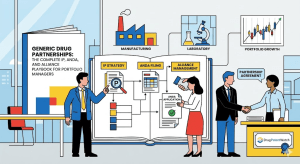
This pillar page covers the full architecture of generic drug development partnerships, from IP valuation through ANDA mechanics, CDMO contract anatomy, biosimilar economics, and KPI governance, with specific depth on the elements that determine whether a collaboration creates or destroys value.
Key Takeaways, Section 1
Generics generated $445 billion in U.S. savings in 2023; per-manufacturer margins remain thin due to buyer consolidation and multi-source competition.
ANDA development costs run $2M-$10M per molecule before litigation exposure.
Partnerships are not optional efficiency gains; they are the structural mechanism that makes generic development economically viable.
The FTC and DOJ increasingly scrutinize collaborations that constrain competition, including pay-for-delay settlements and product-hopping tactics.
2. The Five Partnership Models That Actually Move Product
2.1 Contract Research Organizations (CROs)
CROs provide outsourced research and development services across the full development lifecycle: clinical trial management, regulatory strategy, bioequivalence study design and execution, pharmacovigilance, and data management. For generic developers, the most operationally critical CRO function is bioequivalence testing. An ANDA requires pharmacokinetic studies that demonstrate the generic’s rate and extent of absorption are not significantly different from the Reference Listed Drug (RLD), typically within the 80-125% confidence interval for AUC and Cmax.
CROs bring value through established site networks that compress trial start-up time, therapeutic area expertise that informs study design for complex formulations (modified-release, transdermal, inhaled), and global regulatory knowledge that matters when an ANDA filer is simultaneously pursuing submissions in Canada, the EU, or Japan. The scalability argument is real: a generic developer without its own clinical operations infrastructure can engage a CRO for a single study without carrying permanent headcount or fixed overhead, which matters when the molecule-specific ROI is uncertain.
The critical due diligence variables for CRO selection include the organization’s bioanalytical lab accreditation (21 CFR Part 11 compliance, ISO 17025), its track record of FDA inspection outcomes, its data integrity audit history, and its experience with the specific dosage form being studied. A CRO with strong oral solid bioequivalence capabilities may have minimal experience with inhalation products or complex injectables, and the gap matters significantly for ANDA approval timelines.
2.2 CMOs and CDMOs
Contract Manufacturing Organizations handle drug production, from API synthesis through finished dosage form manufacturing and packaging. CDMOs extend that scope to include formulation development, analytical method development, and regulatory filing support, which makes them a more integrated partner for complex generics.
The primary asset a CDMO brings is capital-intensive infrastructure that a generic developer does not need to own. Sterile injectable manufacturing, continuous manufacturing suites, high-potent compound handling, and biologics manufacturing facilities require hundreds of millions in capital investment, extensive regulatory qualification, and substantial ongoing GMP maintenance costs. Accessing that infrastructure through a CDMO converts fixed capital costs into variable contract costs, which matters for portfolio companies managing multiple product candidates simultaneously.
CMO selection criteria must include GMP compliance history, warning letter and Form 483 records from FDA inspections, manufacturing capacity and scheduling flexibility, technology transfer capabilities for scale-up, and supply chain redundancy for critical raw materials. The valsartan contamination crisis of 2018, which traced to N-nitrosodimethylamine (NDMA) formation in API manufacturing at facilities in China and India, resulted in a multi-year shortage that caused measurable increases in cardiac events for patients who could not access the drug. That episode was a direct consequence of insufficient supply chain due diligence and over-concentration of API sourcing.
2.3 Licensing Agreements
Pharmaceutical licensing agreements grant rights from a licensor to a licensee to develop, manufacture, or commercialize a drug product or underlying technology, in exchange for financial consideration structured as upfront payments, development milestones, and running royalties.
In-licensing for a generic developer typically means acquiring rights to a proprietary formulation technology, a novel drug delivery platform, or a manufacturing process patent that enables the development of a complex generic without infringing the brand’s active IP. AstraZeneca’s in-licensing of CMG901 and AbbVie’s in-licensing of CUG252 illustrate the innovator side of the market; on the generic side, in-licensing of particle engineering technology for inhalation products or of polymer systems for extended-release formulations is common.
Out-licensing from a brand manufacturer to a generic company can take the form of an authorized generic arrangement, where the brand company licenses a subsidiary or independent generic manufacturer to sell a generic version of its own product, typically timed to coincide with or just before patent expiry. Authorized generics are chemically identical to the brand and carry no formulation or regulatory risk for the licensee, but they also foreclose the licensee from independently challenging the brand’s patents, which eliminates the 180-day exclusivity opportunity. That trade-off requires specific analysis for each molecule.
2.4 Co-Development and Co-Commercialization Agreements
Co-development agreements involve two or more parties jointly funding and executing the development of a drug product, sharing both intellectual property contributions and the resulting IP ownership. Co-commercialization extends that model to include shared marketing, sales infrastructure, and revenue.
The RareGen/Carelife USA collaboration for a pulmonary arterial hypertension generic, and the long-running Pfizer/Bristol-Myers Squibb joint development of Eliquis, illustrate different ends of the complexity spectrum. For generic developers, the relevant structure is typically a smaller company with a proprietary formulation technology or API supply advantage co-developing with a larger company that has established ANDA infrastructure and commercial distribution. The smaller party brings the differentiating technical asset; the larger party brings scale and regulatory bandwidth.
IP ownership in co-development agreements requires explicit contractual treatment. The default rule in most jurisdictions, including the U.S., grants each co-owner independent exploitation rights without accounting to the other, which creates significant problems when one party wants to license the jointly-developed IP to a third party. Agreements must specify whether jointly-developed IP is owned by one party with a license back to the other, held in a joint ownership structure with specific exploitation restrictions, or assigned to a holding entity.
2.5 Strategic Alliances and Joint Ventures
Joint ventures in the generic drug sector frequently take the form of buying consortia rather than development entities. Red Oak Sourcing (CVS Health and Cardinal Health), ClarusOne (Walgreens Boots Alliance plus several other buyers), Ascent Health (Express Scripts), and McKesson OneStop aggregate purchasing volumes to negotiate lower acquisition costs from generic manufacturers.
From the manufacturer’s perspective, these consortia represent concentrated counterparties with substantial downward price pressure. The consolidation of buying power among five or six entities that collectively represent a large fraction of U.S. generic dispensing volume has compressed manufacturer margins further. Responding to that pressure requires either scale in manufacturing (to compete on cost), differentiation in product complexity (to avoid commodity pricing), or diversification into higher-margin specialty or complex generics where fewer competitors exist and the buying consortia have less leverage.
Key Takeaways, Section 2
CRO selection must go beyond capability lists to include 21 CFR Part 11 compliance history, FDA inspection outcomes, and dosage-form-specific experience.
CDMO partnerships convert manufacturing capital expenditure into variable costs, but vetting GMP compliance history and API sourcing geography is non-negotiable.
In-licensing for a generic developer typically targets formulation technology or delivery platforms rather than active molecules.
Co-development IP ownership must be explicitly contracted; default joint ownership rules in U.S. law create exploitation conflicts.
Buying consortia represent concentrated negotiating pressure that mandates either scale, complexity differentiation, or both.
3. IP Valuation as a Core Partnership Asset: What Analysts Miss
3.1 How Patent Portfolios Drive Partnership Economics
When two generic developers evaluate a co-development opportunity, or when a portfolio manager assesses a potential licensing deal, the IP portfolio of each party is not background information, it is the primary economic variable. A generic company’s ability to develop and sell a specific product depends entirely on its freedom to operate, which is determined by the patent landscape around that molecule, its formulations, its manufacturing processes, and its delivery systems.
Standard financial due diligence applies DCF models to projected revenue streams, peak sales estimates, and probability of technical and regulatory success. That analysis is incomplete without a corresponding assessment of patent risk, specifically: how many patents are listed in the Orange Book for the RLD, what are their expiration dates, what has been the litigation history on those patents, and what Paragraph IV certifications have already been filed or settled.
A molecule with 12 Orange Book-listed patents, a history of successful 30-month stays, and three prior generics that settled for authorized generic arrangements presents a very different risk profile than a molecule with two expiring composition-of-matter patents and no prior litigation. The financial model must price that risk explicitly.
3.2 IP Valuation Methodologies for Generic Drug Assets
Three primary methodologies apply to generic drug IP valuation: income-based, market-based, and cost-based approaches.
The income approach, specifically the relief-from-royalty method, calculates the value of an IP asset by estimating the royalty rate the company would pay to license the IP if it did not own it, then discounting that royalty stream at an appropriate rate. For generic drug formulation patents, royalty rates in comparable arm’s-length transactions typically range from 3% to 8% of net sales depending on the complexity of the technology and the breadth of the patent claims. Process patents generally command lower rates than formulation or composition patents.
The market approach identifies comparable transactions, licensing deals, or acquisitions involving similar IP assets and adjusts for differences in scope, term remaining, and litigation risk. The challenge in generic drug IP is that many settlements are confidential, which limits the comparables database. Platforms like DrugPatentWatch provide transaction and litigation data that partially addresses this gap by cataloguing Orange Book listings, litigation outcomes, and ANDA filing histories.
The cost approach estimates the replacement cost of creating equivalent IP, which for a complex generic formulation patent might include the R&D spending required to develop and validate an alternative bioequivalent formulation. This approach is most useful as a floor value check rather than a primary methodology.
3.3 Freedom-to-Operate Analysis as a Partnership Input
Before executing any co-development, licensing, or CDMO engagement for a complex generic, the developing company must complete a freedom-to-operate (FTO) analysis. FTO determines whether practicing the generic product will infringe unexpired, valid, and enforceable patents owned by third parties, most often the brand manufacturer.
FTO analysis for a generic involves claim-by-claim mapping of the candidate product’s proposed formulation, manufacturing process, and packaging against Orange Book-listed patents and any non-listed patents the brand may hold. Non-listed patents are particularly dangerous because they are not subject to the Hatch-Waxman notice-and-stay mechanism, meaning infringement litigation can be filed without triggering the 30-month automatic stay on ANDA approval, which compresses the litigation timeline significantly.
A co-development partner that has not conducted FTO analysis introduces legal liability into the collaboration. The contractual allocation of IP indemnification, which must appear in every co-development agreement, determines which party bears the financial consequences if a third-party patent is asserted after the product launches.
Key Takeaways, Section 3
IP portfolio strength, not just financial projections, determines whether a generic partnership creates value.
Orange Book patent count, litigation history, and prior settlement terms must be priced into DCF models explicitly.
Relief-from-royalty rates for generic drug formulation patents typically run 3-8% of net sales; process patents command lower rates.
FTO analysis is a prerequisite for any co-development execution, and IP indemnification must be explicitly allocated in the agreement.
Investment Strategy Note: For institutional investors evaluating generic drug companies, the quality of a company’s patent challenge pipeline, specifically its Paragraph IV certification history and litigation win rate, is a leading indicator of future revenue diversification and pricing power. A company with multiple first-to-file Paragraph IV certifications pending has a time-limited but potentially high-margin revenue opportunity that does not appear in current financials.
4. Hatch-Waxman Architecture: The Rules Every Generic Partner Must Internalize
The Drug Price Competition and Patent Term Restoration Act of 1984, universally called Hatch-Waxman, is the statutory framework that makes U.S. generic drug development possible and simultaneously structures every major strategic decision a generic developer and its partners make.
4.1 The ANDA Pathway
An Abbreviated New Drug Application (ANDA) does not require the applicant to repeat the full safety and efficacy studies that supported the original New Drug Application (NDA). Instead, the ANDA applicant must demonstrate pharmaceutical equivalence, meaning the same active ingredient, strength, dosage form, route of administration, and labeling conditions, and bioequivalence, meaning the rate and extent of absorption of the generic is not significantly different from the RLD.
The FDA reviews ANDAs under the GDUFA (Generic Drug User Fee Amendments) framework, which sets performance goals for review timelines. The GDUFA III agreement, covering fiscal years 2023 through 2027, targets a median time from ANDA submission to first action of ten months for standard applications, with expedited pathways for certain competitive generic therapy (CGT) designations.
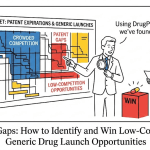
CGT designation, established under GDUFA II and continued under GDUFA III, provides priority review for generics where the RLD has fewer than three approved competitors. This designation compresses the FDA review timeline and can accelerate market entry by six to twelve months relative to standard review. For a molecule with thin competition and strong pricing, CGT designation is a significant commercial variable that should factor into a partnership’s product selection strategy.
4.2 Orange Book Patent Listing and Its Strategic Implications
Brand manufacturers are required to list in the FDA’s Approved Drug Products with Therapeutic Equivalence Evaluations, the Orange Book, all patents that claim the approved drug, its formulations, or its methods of use, and whose infringement could reasonably be asserted against an ANDA applicant. This listing requirement is the mechanism that links patent status to ANDA approval.
Orange Book listing is itself a strategic tool for brand manufacturers. Listing a patent, whether or not it would survive litigation, triggers the Hatch-Waxman notice and litigation machinery, including the 30-month stay, when a Paragraph IV certification is filed. Brand companies have listed patents covering minor formulation variations, polymorphs, salt forms, and methods of treatment that may not survive validity challenges, but that provide 30-month periods of additional exclusivity during litigation. The FTC and courts have increasingly scrutinized improper Orange Book listing, and the FDA’s 2021 proposed rule on Orange Book delisting gave the agency broader authority to require removal of patents that do not meet listing criteria.
4.3 Data Exclusivity and Its Interaction with Patent Protection
Beyond patent protection, the FDA grants new chemical entities five years of data exclusivity during which no ANDA may be submitted or approved. New clinical investigations exclusivity grants three years to supplements that required clinical studies. The interaction between data exclusivity and patent protection can extend effective market exclusivity beyond what either mechanism provides alone.
For a generic partnership, data exclusivity is a hard constraint on ANDA submission timing. A generic developer cannot file an ANDA for a new chemical entity for five years from the original NDA approval date, with a limited exception allowing ANDA filing after four years if a Paragraph IV certification is included. This exception is the primary mechanism through which early patent challenges are mounted.
Key Takeaways, Section 4
CGT designation should factor into product selection analysis; it provides priority review and can deliver a six to twelve-month timeline advantage.
Orange Book patent listing is a brand strategy tool as well as a legal requirement; improper listing is increasingly subject to FTC and FDA challenge.
Data exclusivity runs independently of patent protection; for new chemical entities, the five-year bar on ANDA submission is absolute, with a limited exception at four years for Paragraph IV filers.
5. Paragraph IV Strategy: Filing, Litigation, and the 30-Month Stay
5.1 The Mechanics of a Paragraph IV Certification
When an ANDA applicant certifies under Paragraph IV that a listed Orange Book patent is invalid, unenforceable, or will not be infringed by the manufacture, use, or sale of the generic drug, U.S. law treats that certification as a constructive act of patent infringement. This legal fiction exists to allow patent disputes to be adjudicated before the generic enters the market, protecting both parties from the uncertainty of post-launch damages calculations.
The ANDA applicant must send a detailed written notice to both the NDA holder and the patent owner, explaining the legal and factual basis for the Paragraph IV certification. The notice must be sufficiently detailed to allow the brand to assess whether to file suit, and courts have found inadequate notices to be procedurally deficient.
If the brand files a patent infringement lawsuit within 45 days of receiving the Paragraph IV notice, the FDA automatically imposes a 30-month stay on ANDA approval. The stay runs from the date the brand received the notice, not from the date of suit. This 30-month period is the brand’s primary tool for extending market exclusivity beyond patent expiry through the litigation process. The stay can be shortened if a court enters a judgment of patent invalidity or non-infringement, or extended if the court finds the filer delayed the resolution of the case.
5.2 First-to-File Advantage and 180-Day Exclusivity
The first generic manufacturer to file a substantially complete ANDA with a Paragraph IV certification against a listed patent is eligible for 180-day exclusivity. During that period, the FDA cannot approve any other ANDA for the same drug that also contains a Paragraph IV certification against the same patent, creating a temporary duopoly between the brand and the first filer.
The commercial value of 180-day exclusivity is molecule-specific and depends on the brand’s sales volume, the extent to which the market will shift to generic upon launch, and whether an authorized generic enters simultaneously. For high-volume brand drugs, 180-day exclusivity can generate hundreds of millions in revenue during the exclusivity window. For lower-volume brands, the value may not justify the cost and risk of Paragraph IV litigation.
Failure to launch forfeiture provisions under Hatch-Waxman can cause a first filer to lose 180-day exclusivity if it does not market the generic within a specified period of triggering its eligibility. These forfeiture provisions require active commercial execution planning at the time of ANDA filing, not at approval.
5.3 Pay-for-Delay Settlements and FTC Enforcement
Brand manufacturers and first-filing generic applicants have historically resolved Paragraph IV litigation through settlement agreements in which the brand pays the generic company, in cash or in other valuable consideration, to delay launching its generic product. These reverse payment settlements, colloquially called pay-for-delay agreements, effectively buy out the generic’s litigation challenge while preserving the brand’s market exclusivity.
The Supreme Court’s 2013 decision in FTC v. Actavis established that reverse payment settlements can violate antitrust law under a rule of reason analysis, rejecting the previous circuit split on whether such settlements were presumptively lawful. The FTC estimates that pay-for-delay settlements have historically cost consumers and taxpayers billions of dollars annually by delaying generic competition that would otherwise reduce drug prices.
Notable enforcement actions include the FTC’s case against Cephalon and Teva over modafinil (Provigil), which resulted in a $1.2 billion settlement. That case established the pattern: a brand pays a first-filing generic to delay, the generic retains its 180-day exclusivity blocking other generic entry, and the brand maintains pricing power for a period substantially longer than its valid patent life would otherwise support.
For generic developers evaluating partnership opportunities that involve Paragraph IV certifications, the antitrust implications of any settlement terms must be analyzed before execution. Settlements that include value transfers from brand to generic, whether in the form of cash, royalty waivers, co-promotion rights, or authorized generic arrangements, require careful legal review under the post-Actavis framework.
Key Takeaways, Section 5
A Paragraph IV notice must be sufficiently detailed; procedurally deficient notices create litigation risks before the case even begins.
The 30-month stay runs from the date the brand received the Paragraph IV notice, not from the date of suit.
Failure-to-launch forfeiture of 180-day exclusivity requires commercial execution planning at the time of filing, not at approval.
Post-Actavis, any reverse payment settlement that transfers value from brand to generic faces rule-of-reason antitrust scrutiny; settlements must be constructed to demonstrate pro-competitive justifications.
Investment Strategy Note: First-to-file Paragraph IV certifications on high-revenue brand drugs represent contingent assets that do not appear on generic company balance sheets. Analysts tracking ANDA filings through the FDA’s public database or platforms like DrugPatentWatch can identify these contingent value events before they are reflected in consensus earnings estimates.
6. Evergreening Counter-Tactics: Reading the Brand Playbook
6.1 What Evergreening Is and How It Works
Evergreening refers to the practice by which brand pharmaceutical companies obtain additional patents covering minor modifications to an existing drug, for the purpose of extending market exclusivity beyond the expiration of the original composition-of-matter patent. The modifications that support evergreening patents can include new salt forms of the active ingredient, new polymorphs, new formulations (modified-release, combination products), new routes of administration, new dosage strengths, new methods of use (second medical use patents), new patient populations, and new dosing regimens.
Each of these additional patents, if listed in the Orange Book, triggers the Paragraph IV certification and 30-month stay machinery when a generic files its ANDA. A brand with a well-constructed patent thicket can force generic developers into years of sequential or parallel litigation against multiple patents, substantially increasing the cost and risk of generic development even after the original composition-of-matter patent expires.
AstraZeneca’s transition from omeprazole (Prilosec) to esomeprazole (Nexium) is the paradigmatic example of product-hopping used as an evergreening tactic. Esomeprazole is the S-enantiomer of omeprazole, a minor structural modification that supported new patent coverage. AstraZeneca launched Nexium before Prilosec’s patent expiration, transferred approximately 40% of its Prilosec patient base to Nexium through an aggressive marketing campaign, and then allowed Prilosec generics to enter a market that had been substantially vacated. The brand retained pricing power for the premium product while the generic market captured the lower-value molecules.
6.2 Technology Roadmap: How Brands Build Patent Thickets
A sophisticated brand company typically executes patent thicket construction across four layers of IP protection:
The first layer is the composition-of-matter patent covering the active ingredient, typically the broadest and most valuable patent, expiring 20 years from filing with potential extensions under Hatch-Waxman’s patent term restoration provisions. Patent term restoration can add up to five years of exclusivity to account for the FDA review period, subject to a maximum post-restoration term of 14 years from approval.
The second layer is formulation patents covering specific pharmaceutical compositions, excipient combinations, particle size ranges, or controlled-release mechanisms. These patents are filed during the NDA development process and may expire several years after the composition-of-matter patent.
The third layer is process patents covering manufacturing methods for the API or the finished dosage form. These patents may not be Orange Book-listed (process patents are only listable if they meet specific criteria), but they can form the basis of separate infringement litigation that is not subject to the 30-month stay mechanism.
The fourth layer is use patents covering new therapeutic indications, patient populations, dosing regimens, or methods of administration that are discovered post-launch through Phase IV studies or investigator-initiated research. Use patents are listable in the Orange Book and can force Paragraph IV certifications for each listed indication.
6.3 Counter-Tactics for Generic Developers and Their Partners
Generic developers and their partners can employ several strategies to navigate or dismantle patent thickets.
Inter partes review (IPR) petitions before the Patent Trial and Appeal Board (PTAB) allow generic companies to challenge the validity of Orange Book-listed patents on the basis of prior art, without waiting for litigation to be filed. A successful IPR canceling a patent eliminates the Orange Book listing and the associated 30-month stay, potentially accelerating generic entry by years. IPR petitions are particularly effective against secondary patents with narrow claims, such as polymorph or formulation patents, where prior art may have been available but not before the patent examiner during prosecution.
Designing around existing patents, particularly formulation patents, is a formulation science challenge that CDMOs and co-development partners with deep pharmaceutical sciences capabilities can address. A generic formulation that achieves bioequivalence without using the specific polymer, excipient combination, or process covered by the brand’s patent avoids infringement entirely, eliminating the litigation risk.
Coalition patent challenges, where multiple generic developers collectively fund PTAB proceedings or litigation against a shared patent obstacle, distribute the cost of invalidity challenges across the beneficiaries. This structure appears most often for very broadly held secondary patents that block multiple generic entrants simultaneously.
Key Takeaways, Section 6
Evergreening patent thickets operate across four layers: composition-of-matter, formulation, process, and use patents, each with distinct Orange Book listing rules and litigation mechanisms.
Product-hopping, illustrated by AstraZeneca’s Prilosec-to-Nexium transition, shifts the patient base to a new patent-protected product before generics enter, leaving generic developers with a shrinking market.
IPR petitions at PTAB are the most cost-effective tool for challenging secondary patents before litigation is filed.
Coalition patent challenges spread the cost of invalidity proceedings across multiple generic developers who share the blocking patent problem.
7. CDMO Selection and Contractual Anatomy
7.1 Strategic CDMO Selection Criteria
Selecting a CDMO is not a procurement exercise; it is a strategic IP and operational decision. The CDMO becomes the manufacturing home for a product that may generate revenues for a decade or more, and switching CDMOs after ANDA approval requires a Prior Approval Supplement (PAS) that can take 12 to 24 months to receive FDA clearance, creating an interim period during which supply disruptions are possible.
Selection criteria must include: GMP compliance history across the CDMO’s relevant facilities, including any Form 483 observations or Warning Letters from the FDA; manufacturing capacity and scheduling flexibility for the specific dosage form; technology transfer capability for scale-up from development batches to commercial production; supply chain resilience for critical raw materials and components; and track record of regulatory submissions (Drug Master Files, PAS supplements) with positive outcomes.
For complex generics, additional technical criteria apply. Inhalation product manufacturing requires DPI or MDI-specific equipment validated for particle size distribution control. Sterile injectable manufacturing requires compliant fill-finish facilities with demonstrated particulate control. Modified-release oral solid manufacturing requires validated coating equipment and dissolution testing capabilities tied to the product’s release specifications.
7.2 CDMO Contract Architecture: The Seven Critical Clauses
The contractual anatomy of a CDMO agreement must address seven categories of terms that determine whether the partnership creates or destroys value:
Scope of work and deliverables must define with specificity the manufacturing services to be provided, the batch sizes, the product specifications, and the acceptance criteria. Vague scope definitions are the primary source of dispute in CDMO relationships because they create room for different interpretations of what constitutes satisfactory performance.
Intellectual property ownership must distinguish between background IP, which each party brings to the relationship, and foreground IP, which is developed during the collaboration. CDMO agreements frequently contain provisions granting the CDMO a license to use foreground process improvements across its broader manufacturing platform. Generic developers must negotiate restrictions on how the CDMO can use process knowledge developed specifically for their product, particularly if the manufacturing process is itself a source of competitive differentiation.
Technology transfer provisions must specify the conditions under which the generic developer can transfer manufacturing to a different CDMO or to its own facilities, including the documentation the CDMO must provide, the timelines for that documentation transfer, and whether any compensation is required for know-how that was developed during the relationship.
Quality agreement terms must define each party’s quality responsibilities, the procedures for batch release, the handling of out-of-specification results, and the deviation and CAPA management process. The quality agreement is often a separate document from the commercial supply agreement but must be drafted simultaneously, because the operational quality obligations determine the commercial obligations.
Supply commitments and capacity allocation must specify the CDMO’s obligation to maintain capacity for the generic developer’s products, the ordering lead times required, the minimum purchase commitments that guarantee the CDMO’s capacity reservation, and the consequences of capacity shortfalls on either side.
Pricing structure must address the basis for manufacturing cost calculations, whether cost-plus or fixed-price, the conditions under which prices can be adjusted (typically annual CPI adjustments with a cap), and the treatment of cost reductions from process improvements.
Termination provisions must specify the notice periods required for termination by either party, the conditions that constitute material breach (as distinct from non-material deficiencies), the remedies available on breach, and the post-termination obligations for technology transfer and supply continuity.
Key Takeaways, Section 7
CDMO selection is a ten-year strategic commitment; switching CDMOs post-approval requires a PAS that can take 12-24 months for FDA clearance.
Foreground IP ownership in CDMO agreements requires explicit negotiation; default provisions often grant CDMOs broad rights to use process knowledge developed during the engagement.
The quality agreement and the commercial supply agreement must be drafted simultaneously; operational quality obligations determine commercial performance standards.
8. CRO Engagement for Bioequivalence: Scope, Cost, and Regulatory Fit
8.1 Bioequivalence Study Design for ANDAs
The FDA’s bioequivalence requirements for ANDA approval depend on the dosage form, the drug’s pharmacokinetic characteristics, and the presence of any product-specific guidance. The FDA publishes product-specific guidance documents that specify the recommended study design, the appropriate reference standard, and any specific bioequivalence metrics that apply.
For orally administered immediate-release products with non-complex formulations, a single-dose, two-way crossover study in healthy adult volunteers comparing the test product to the RLD is typically sufficient. The primary pharmacokinetic parameters assessed are Cmax (maximum observed concentration) and AUC (area under the concentration-time curve), with bioequivalence demonstrated when the 90% confidence intervals for the geometric mean ratios fall within the 80-125% limits for both parameters.
For modified-release products, the study design typically requires both fasting and fed conditions, because food effects can alter the release kinetics of controlled-release formulations in ways that differ between the generic and the RLD. For products with narrow therapeutic indices, such as certain anticoagulants, immunosuppressants, and antiepileptics, the FDA may apply tighter bioequivalence criteria or require additional pharmacodynamic endpoints.
8.2 Bioanalytical Method Development and Validation
The bioanalytical method that quantifies drug concentrations in plasma or blood samples is the technical foundation of every pharmacokinetic study. FDA Bioanalytical Method Validation (BMV) guidance, updated in 2018, requires demonstration of selectivity, accuracy, precision, matrix effects, stability, and dilutional integrity for each validated method.
CRO selection for bioequivalence studies must evaluate the quality of the bioanalytical laboratory separately from the clinical site network. A CRO with excellent clinical site coordination but weak bioanalytical capabilities creates risk; method failures discovered during the study, or data integrity issues identified in FDA inspection of the bioanalytical records, can invalidate the entire study and require a complete repeat at significant cost.
8.3 FDA Inspection History as a CRO Selection Filter
The FDA inspects CRO facilities under the bioresearch monitoring (BIMO) program, which covers clinical investigators, IRBs, and sponsors and monitors. FDA inspection outcomes are publicly available through the FDA’s Establishment Inspection Report (EIR) database, and CROs that have received Warning Letters or Official Action Indicated (OAI) classifications face delays in their clients’ ANDA approvals until the observations are resolved.
Generic developers should require CROs to provide their FDA inspection history, including all Form 483 observations and the CRO’s responses, as part of the qualification process. A CRO that resists this transparency in qualification discussions will resist it in operational governance, which is a leading indicator of future problems.
Key Takeaways, Section 8
Product-specific FDA guidance documents must be reviewed before study design begins; deviations from published guidance require pre-submission agreement with the FDA.
Bioanalytical laboratory quality is a distinct CRO evaluation criterion from clinical site network quality; both must be assessed separately.
FDA BIMO inspection history is publicly available and must be reviewed as part of CRO qualification; OAI classifications at a CRO facility delay ANDA approvals for all affected submissions.
9. Co-Development Structures: IP Ownership, Milestone Design, and Royalty Stacks
9.1 IP Ownership Frameworks in Generic Co-Development
Co-development agreements in the generic space frequently involve one party contributing proprietary formulation technology or a process innovation, and another contributing clinical development infrastructure, ANDA regulatory expertise, or commercial distribution. The asymmetric contributions create asymmetric IP ownership questions.
Three principal structures exist for handling jointly-developed IP. The first is assigned ownership, where all foreground IP developed during the collaboration is assigned to one party, typically the party with the larger commercial role, with a license back to the other party for its own use. This structure simplifies licensing and enforcement decisions but requires the licensee to be comfortable with its dependency on the licensor’s enforcement choices.
The second is joint ownership with a joint exploitation agreement that specifies how each party may use, license, and enforce the jointly-owned IP. This structure requires detailed governance around consent rights, licensing approval, and revenue sharing from third-party licenses. It is operationally complex but appropriate when both parties are making substantial and roughly equivalent IP contributions.
The third is a holding entity structure, where a jointly owned LLC or similar entity holds the foreground IP, with each party holding an interest in the entity. This structure is administratively intensive but provides clarity on enforcement and sublicensing decisions through the entity’s governance documents.
9.2 Milestone Architecture and Royalty Stacking
Co-development agreements in the pharmaceutical space typically include milestone payments triggered by regulatory and commercial events: ANDA filing acceptance, receipt of tentative approval, receipt of final approval, and first commercial sale. Commercial milestones may be tied to cumulative net sales thresholds.
Royalty stacking is a practical problem in generic drug co-development when the product requires licenses from multiple IP holders, for example, a complex generic that uses a licensed formulation platform, a licensed manufacturing process, and a licensed analytical method. Each licensor expects a royalty, and the aggregate royalty burden can erode the generic developer’s margin to the point where the product is not commercially viable at any realistic price point.
Before executing a co-development agreement that will require multiple IP licenses, the parties must model the royalty stack explicitly, including any royalty that will be owed if a Paragraph IV challenge fails and the product must be positioned as a non-infringing design-around. The model should stress-test margin viability at multiple price points, from the expected immediate post-launch price with limited competition through the fully competitive multi-source price several years after launch.
Key Takeaways, Section 9
IP ownership structure in co-development must be selected based on the symmetry of contributions and the parties’ relative enforcement capabilities, not on administrative convenience.
Royalty stacking must be modeled before agreement execution; aggregate royalty burdens above 10-12% of net sales typically make generic products commercially unviable at competitive price points.
Milestone structures should be negotiated to align with regulatory certainty events (ANDA filing acceptance, final approval) rather than with internally managed development milestones that are subject to delay without a clear external trigger.
10. Biosimilar Partnership Economics: A Different Asset Class
10.1 Why Biosimilars Are Not Complex Generics
Biosimilars are biotherapeutic products that are highly similar to an approved reference biologic, with no clinically meaningful differences in safety, purity, or potency. The distinction from small-molecule generics is not semantic; it is scientific and economic. A small-molecule generic can be demonstrated to be pharmaceutically and biologically equivalent through pharmacokinetic studies in healthy volunteers at a cost of $2-10 million over a development period of two to four years. A biosimilar development program runs $100-250 million over seven to eight years, including extensive analytical characterization, functional assays, comparative preclinical studies, and clinical immunogenicity and pharmacokinetic/pharmacodynamic studies.
The analytical challenge is intrinsic to the nature of biologics. Monoclonal antibodies, for example, are large, complex glycoproteins with primary, secondary, tertiary, and quaternary structural features, post-translational modifications including glycosylation patterns, and three-dimensional conformations that determine both efficacy and immunogenicity. Manufacturing process changes, even minor ones, can alter glycosylation profiles in ways that affect the product’s clinical performance. This is why biosimilars require substantially more analytical characterization and clinical data than small-molecule ANDAs.
U.S. biosimilars are approved under Section 351(k) of the Public Health Service Act, which requires demonstration of biosimilarity through a totality-of-evidence approach. The FDA evaluates structural and functional comparability data, pharmacokinetic and pharmacodynamic data, and clinical safety and efficacy data in the context of the overall scientific weight of evidence.
The highest regulatory designation, interchangeability, requires additional switching studies demonstrating that alternating between the biosimilar and the reference biologic does not produce greater risks in terms of safety or diminished efficacy compared to using the reference product alone. Interchangeability designation permits pharmacist-level substitution without physician intervention in states that have enacted automatic substitution laws, which is a critical commercial variable for biosimilar market penetration.
10.3 Partnership Models Specific to Biosimilars
The cost and complexity of biosimilar development requires partnership structures that are more capital-intensive and longer-duration than small-molecule generic partnerships. The primary partnership models in the biosimilar space include:
CDMOs with biologics manufacturing capability are a prerequisite for most biosimilar development programs. Very few organizations have the cell culture, purification, fill-finish, and analytical capabilities required for biologics manufacturing, and the capital investment to build that capability is measured in hundreds of millions of dollars. Companies like Samsung Bioepis, Celltrion, and Boehringer Ingelheim Biopharmaceuticals (now Fresenius Kabi) have built large-scale biologics manufacturing platforms that serve as CMO partners for biosimilar developers.
Licensing arrangements between reference biologic manufacturers and biosimilar developers have become increasingly common as biologic patents expire. The reference biologic manufacturer may out-license manufacturing know-how or cell line technology in exchange for royalties, effectively converting a competitive threat into a revenue stream. Pfizer’s collaboration with Medicines Patent Pool for certain biologics illustrates the payer-facing version of this model.
Payer partnerships and formulary positioning strategies are disproportionately important in biosimilars compared to small-molecule generics. Unlike a generic that can substitute automatically at the pharmacy, a biosimilar requires active payer and prescriber adoption. Biosimilar-first formulary policies, where payers require biosimilar use before the reference biologic will be covered, have become a key commercial driver. PBMs and health plans that have adopted these policies have driven biosimilar penetration rates that substantially exceed what unrestricted choice markets achieve.
10.4 Biosimilar IP Exclusivities: 12-Year Reference Product Exclusivity
The Biologics Price Competition and Innovation Act of 2009 (BPCIA) grants reference biologics 12 years of exclusivity from the date of first licensure during which no 351(k) biosimilar application may be approved. This is independent of patent protection and cannot be contracted around.
The BPCIA also established the so-called “patent dance,” a formal process for biosimilar and reference product sponsors to disclose and resolve patent disputes. The patent dance is optional for biosimilar applicants and complex in its execution; many biosimilar developers have opted out of the dance and litigated patents separately, which has generated substantial case law defining the boundaries of each party’s obligations.
Key Takeaways, Section 10
Biosimilar development runs $100-250 million over 7-8 years, requiring partnership structures with substantially more capital commitment than small-molecule generic development.
Interchangeability designation is a commercial imperative for biosimilars, not merely a regulatory distinction; it determines whether pharmacist-level substitution is available.
Biosimilar-first formulary policies by payers are the single most powerful driver of biosimilar market penetration, more so than price differentials alone.
The BPCIA’s 12-year reference product exclusivity is independent of patent protection and cannot be contracted around.
Investment Strategy Note: Biosimilar companies with interchangeability designations trade at premium multiples relative to those without, because interchangeability directly enables the formulary and substitution economics that drive market share. Analysts should track 351(k) BLA submissions and FDA interchangeability decisions as leading indicators of future biosimilar market position.
11. AI and MIDD: Embedding Technology Into Partnership Architecture
11.1 What AI Actually Does in Generic Drug Development
AI in pharmaceutical development covers a range of capabilities from narrow predictive models for specific tasks to broader generative and analytical platforms. The FDA has catalogued AI applications across the drug product lifecycle, including nonclinical screening, clinical trial design optimization, manufacturing process monitoring, and postmarketing pharmacovigilance.
For generic drug development, the highest-value AI applications are concentrated in four areas. Formulation optimization uses machine learning models trained on historical formulation databases to predict the physical and chemical properties of candidate formulations, including solubility, dissolution rate, stability, and bioavailability, based on excipient compositions and manufacturing parameters. This can reduce the number of experimental formulation iterations required before a viable candidate is identified.
Bioequivalence prediction using physiologically-based pharmacokinetic (PBPK) modeling can simulate drug absorption, distribution, metabolism, and excretion for candidate formulations and predict whether a proposed generic will meet bioequivalence criteria before in vivo studies are conducted. The FDA has accepted PBPK modeling as a basis for bioequivalence waivers (biowaivers) for BCS Class I and III compounds, and increasingly considers PBPK data to inform study design for complex formulations.
Manufacturing process optimization through AI-enabled Process Analytical Technology (PAT) monitors critical process parameters in real time during manufacturing, detects deviations before they result in out-of-specification batches, and adjusts process parameters to maintain product quality. This reduces batch failure rates and cycle times, which directly affects CDMO contract economics.
Regulatory submission preparation using natural language processing and large language model technology automates the compilation, consistency checking, and formatting of CTD (Common Technical Document) submissions. The FDA has explicitly recognized AI-assisted regulatory document preparation and is developing guidance on the validation requirements for AI tools used in regulatory submissions.
11.2 Model-Informed Drug Development (MIDD) for Complex Generics
MIDD is the FDA’s framework for using quantitative models derived from pharmacokinetic, pharmacodynamic, and biological data to inform drug development and regulatory decision-making. For generic drugs, MIDD applications include PBPK modeling for biowaivers, population PK modeling to establish dosing recommendations for specific patient populations (pediatric, renal impairment, hepatic impairment), and mechanistic absorption modeling for modified-release products.
The FDA’s MIDD Pilot Program, established under PDUFA VI and continued under PDUFA VII, allows sponsors to request early engagement with FDA reviewers on MIDD approaches before submitting a full ANDA. This early engagement can resolve methodological questions about model structure, input data requirements, and acceptance criteria before the submission, reducing the probability of Complete Response Letters based on MIDD-specific deficiencies.
For co-development partnerships that include complex generics in their pipeline, establishing a joint MIDD strategy early in the development program, with clear agreement on which party is responsible for model development, validation, and FDA interaction, is a material planning requirement.
11.3 Technology Partnership Structures for AI Capabilities
Generic developers that do not have in-house AI or MIDD capabilities can access them through technology partnerships with specialized vendors, academic institutions with quantitative pharmacology programs, or CROs that have built internal MIDD practices. The contractual structure for these arrangements must address IP ownership of any models developed during the engagement, the validation documentation required to support regulatory use of the models, and the data sharing arrangements that allow the models to be trained on proprietary formulation and clinical data.
Key Takeaways, Section 11
PBPK modeling is FDA-accepted for BCS Class I and III biowaivers; for complex generics, PBPK models can inform study design and reduce in vivo study costs.
The FDA’s MIDD Pilot Program allows pre-submission engagement on quantitative modeling approaches, reducing Complete Response Letter risk.
AI-enabled PAT in CDMO manufacturing directly reduces batch failure rates and affects contract economics.
12. Global Regulatory Harmonization: FDA, EMA, PMDA, CDSCO
12.1 The Generic Drug Cluster and International Regulatory Alignment
The FDA leads the Generic Drug Cluster, a multi-country forum that facilitates scientific and regulatory information sharing among leading regulatory agencies. Current participants include the EMA, Health Canada, the UK’s MHRA, Australia’s TGA, and several other agencies. The forum focuses on complex generic product standards, bioequivalence methodology alignment, and mutual recognition of inspection data.
For generic developers with international ambitions, the Generic Drug Cluster’s outputs directly affect development strategy. When participating agencies align on bioequivalence study design requirements for a specific complex generic, developers can design a single study that supports multiple regulatory submissions simultaneously, rather than designing sequential market-specific studies.
12.2 Regulatory Requirements by Market
The U.S. ANDA pathway requires bioequivalence demonstration to the Orange Book RLD, adherence to FDA Current Good Manufacturing Practice regulations, and, for complex generics, compliance with product-specific guidance documents. The GDUFA III review timeline targets ten months from submission to first action for standard ANDAs.
In the European Union, generic marketing authorization applications follow the Article 10(1) hybrid pathway, demonstrating pharmaceutical equivalence and bioequivalence to an EMA-approved reference medicinal product. Data exclusivity in the EU runs eight years from the original marketing authorization, during which a generic application may be submitted but not approved. A further two years of market exclusivity applies after initial approval, with a potential additional year for new therapeutic indications supported by significant clinical benefit.
In Japan, the PMDA regulates generic approvals under a system that allows different hydrate forms, crystalline forms, or particle sizes of the active pharmaceutical ingredient if bioequivalence is demonstrated. Japan’s National Health Insurance pricing system provides a reference price for generics, typically set at around 60% of the originator price, which determines the commercial economics of market entry. Japan’s generic market penetration has historically lagged the U.S. and Europe but has accelerated following government policy changes promoting generic use.
In India, CDSCO regulates generic drug approvals under the New Drugs and Clinical Trials Rules of 2019. Generics approved in India require bioequivalence data, and local clinical trials are often required unless waived on specific grounds. GMP compliance certification is required for manufacturing facilities, and site inspections are conducted before approval. India’s generic market is both a major production source for global supply and a domestic market with its own regulatory requirements.
12.3 Supply Chain Diversification as Regulatory Strategy
Post-pandemic supply chain analysis has driven regulatory and legislative attention to geographic concentration in API manufacturing. FDA Commissioner statements, Congressional testimony, and the European Commission’s Critical Medicines Alliance report have all identified concentration of API production in China and India as a systemic supply chain risk.
For generic developers, the regulatory response to this risk takes two forms. Several countries have enacted or proposed incentives for domestic or diversified-source API manufacturing, including tax credits, grant programs, and preferential procurement rules. The EU’s Critical Medicines Alliance has identified categories of essential medicines where European API manufacturing should be maintained or restored.
From a partnership strategy perspective, generic developers building supply chains primarily around low-cost API sources in a single geography face increasing regulatory and commercial risk. Building partnerships with API manufacturers across multiple geographies, at a potential cost premium, is increasingly a requirement for supply chain resilience rather than an optional quality improvement.
Key Takeaways, Section 12
Generic Drug Cluster alignment on complex generic standards allows single-study designs to support multiple international regulatory submissions simultaneously.
EU generic applications face an eight-year data exclusivity period plus two years of market exclusivity post-approval; EU market entry planning must account for this timeline.
Geographic concentration of API manufacturing is receiving legislative and regulatory attention in the U.S., EU, and Japan; partnerships with diversified-source API manufacturers are increasingly a compliance consideration.
13. Due Diligence Protocols for Generic Drug Partnerships
13.1 IP Due Diligence: What to Examine
Patent portfolio due diligence for a generic drug partnership requires systematic examination of five categories of information: patent ownership and chain of title, patent validity and enforceability, freedom-to-operate analysis, litigation history, and Orange Book listing status.
Chain of title verification confirms that the patents are properly owned by the party asserting ownership, with all assignments recorded at the USPTO and no liens or encumbrances outstanding. This step catches problems that occur frequently in academic spinout or startup situations where early-stage IP assignments were improperly documented.
Validity and enforceability assessment involves prior art searching against the asserted patent claims to identify art that was not before the patent examiner during prosecution. A patent with a prior art problem is a liability in a Paragraph IV context; the generic developer will face Paragraph IV litigation on that patent, and if the brand wins, the generic is blocked. If the generic developer’s own co-development partner holds a patent with validity issues, the FTO analysis of the partner’s portfolio becomes a financial risk.
13.2 Operational and Manufacturing Due Diligence
Manufacturing due diligence must cover the CDMO’s or CMO’s full GMP compliance history, not just the most recent FDA inspection. Warning Letters and OAI inspection classifications at a potential manufacturing partner should trigger intensive review of the observations and the corrective actions taken. Warning Letters that include data integrity findings are particularly serious; the FDA’s data integrity enforcement program has resulted in import alerts and lengthy remediation processes at several major API and finished dose manufacturers.
Supply chain due diligence maps the full manufacturing chain from raw material to finished product, identifying single points of failure where a supplier disruption could halt production. For APIs sourced from a single geographic region, the analysis must include geopolitical risk assessment and the logistics alternatives available if the primary supply route is disrupted.
13.3 Financial and Commercial Due Diligence
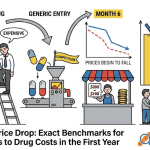
Financial due diligence for a generic drug partnership must address the commercial viability of the target product at post-entry competitive pricing levels, not just at the first-generic premium pricing that applies during 180-day exclusivity. Generic drug prices typically decline 80-90% from brand levels within two to three years of multi-source entry, and the financial model must show that the partnership’s cost structure is viable at the fully competitive price.
Patent cliff risk analysis must model the impact on a potential licensing partner’s revenue when its existing brand products face generic entry. A brand company that is relying on a licensing arrangement to extend revenue from a product facing patent expiry may have divergent commercial incentives from the generic developer, particularly around authorized generic decisions and settlement terms.
Key Takeaways, Section 13
Warning Letters with data integrity findings at manufacturing partners trigger FDA import alert risk; this is a go/no-go due diligence finding.
Commercial viability modeling must be run at fully competitive multi-source pricing levels, not at first-generic premium pricing; most products face 80-90% price declines within two to three years of multi-source entry.
Chain of title verification is frequently neglected in pharma due diligence; improperly documented early-stage IP assignments create ownership uncertainty that can delay or block transactions.
14. Antitrust Exposure in Generic Collaborations
14.1 Joint Ventures and Information Sharing
Pharmaceutical joint ventures, including co-development agreements, manufacturing alliances, and buying consortia, can attract antitrust scrutiny when they involve competitors sharing commercially sensitive information. The antitrust risk is highest when the parties to a joint venture also compete in other product markets and the information shared within the joint venture, such as cost data, pricing strategies, or pipeline information, could facilitate coordination in those competing markets.
The DOJ and FTC withdrew the 1995 Antitrust Guidelines for the Licensing of Intellectual Property and the 2000 Competitor Collaboration Guidelines in 2023, signaling a more aggressive enforcement posture toward pharmaceutical collaborations that the agencies view as anticompetitive. Generic drug developers structuring joint ventures or co-development agreements must build information barriers between the collaboration and their competing commercial operations.
14.2 Product-Hopping and Market Exclusion
Product-hopping, the practice of reformulating a drug product to trigger new patent coverage and regulatory exclusivity periods before the original product’s exclusivity expires, is subject to growing antitrust scrutiny under Section 2 of the Sherman Act. The key antitrust question is whether the reformulation provides sufficient therapeutic benefit to justify its exclusionary effects on generic competition, or whether it is a pretextual change designed solely to extend market exclusivity.
New York v. Actavis PLC established that a brand manufacturer’s withdrawal of the original product from the market simultaneous with launching a reformulated version, to prevent generic-to-brand substitution, can constitute monopolization under the Sherman Act. Subsequent cases have refined the analysis but the core principle holds: product-hopping that lacks independent clinical justification and that removes the market for the generic product faces antitrust liability.
For generic developers whose pipeline is disrupted by a brand’s product-hopping strategy, private antitrust litigation is a potential remedy. The evidentiary burden requires demonstrating anticompetitive effect and the absence of legitimate business justification for the product change.
Post-FTC v. Actavis (2013), every reverse payment settlement between a brand manufacturer and a Paragraph IV filer must be analyzed under a rule of reason framework. The Actavis decision defined “large and unexplained” reverse payments as a proxy for anticompetitive harm, based on the theory that a payment from plaintiff to defendant in patent litigation is economically anomalous and suggests the brand is paying to maintain its monopoly rather than to resolve a genuinely disputed patent claim.
Post-Actavis settlements are structured to avoid obvious cash transfers by substituting other valuable consideration, such as authorized generic licenses, royalty-free periods, marketing services agreements, or co-promotion rights. Courts and the FTC assess the total value of all consideration flowing from brand to generic and compare it to the value that could be explained by the litigation risk reduction the settlement provides. Settlements where the unexplained value transfer substantially exceeds the avoided litigation costs face the highest antitrust risk.
Key Takeaways, Section 14
The DOJ/FTC withdrawal of the 1995 IP licensing guidelines and the 2000 competitor collaboration guidelines signals a more aggressive posture; collaborative structures that would have been safe harbors under those guidelines require fresh antitrust analysis.
Product-hopping strategies that withdraw the original product from the market to eliminate the generic’s substitution opportunity face Sherman Act Section 2 monopolization liability.
Post-Actavis reverse payment settlements must be analyzed for the total value of all consideration, not just cash, flowing from brand to generic.
Investment Strategy Note: FTC enforcement actions against pay-for-delay settlements and product-hopping create event-driven investment opportunities. When enforcement action is filed against a brand’s monopolization strategy, the expected date of generic entry moves forward, which is negative for the brand and positive for the generic developer. Monitoring FTC docket activity through the agency’s public records is a free source of pipeline intelligence.
15. KPI Architecture for Partnership Governance
15.1 Development and Regulatory KPIs
Partnerships without explicitly defined and jointly monitored KPIs tend to generate disputes about whether performance obligations have been met, because each party’s internal assessment of progress is shaped by its own organizational priorities. Joint Steering Committees must establish KPIs at the outset of the collaboration and review them at each governance meeting.
Development KPIs for generic drug partnerships include ANDA submission date (target vs. actual), FDA first action date, number of Complete Response Letters received, resolution time for FDA deficiencies, and ANDA approval date. These KPIs are largely time-based and unambiguous, which makes them useful for governance because they do not require subjective interpretation.
Bioequivalence study KPIs include study initiation date, enrollment completion date, bioanalytical method validation completion, data quality metrics (percentage of samples meeting acceptance criteria), and pharmacokinetic data reporting date. Quality metrics for clinical studies should include protocol deviation rates and the percentage of samples excluded from pharmacokinetic analysis.
15.2 Manufacturing and Supply Chain KPIs
CDMO manufacturing KPIs include batch right-first-time rates (the percentage of batches that meet all specifications on the first manufacturing attempt), cycle time from batch initiation to release, batch failure rate and root cause analysis completion time, and regulatory inspection readiness metrics including GMP compliance scores from internal audits.
Supply chain KPIs include API lead time variance (actual lead time versus contracted lead time), inventory coverage days for API and finished product, number of supply disruptions resulting in stockouts, and geographic diversification index for critical raw materials. The valsartan shortage demonstrated that supply chain KPIs focused solely on cost and lead time without geographic risk metrics are structurally incomplete.
15.3 Commercial KPIs
Commercial KPIs for generic drug partnerships include market share at six months, 12 months, and 24 months post-launch, average selling price versus target, gross margin by product, channel performance by customer segment, and formulary win rate. For biosimilars, additional KPIs include interchangeability designation status, biosimilar-first formulary adoption rate, and payer contracting success rate.
Patient access KPIs, which are increasingly required by payers and relevant to contract terms in some markets, include out-of-pocket cost per prescription, dispense rate by commercial versus government payer, and medication adherence rates for products where adherence data is available.
Key Takeaways, Section 15
KPIs established at JSC inception must be jointly defined, objectively measurable, and reviewed at every governance meeting; retrospectively defined KPIs create disputes rather than resolve them.
Supply chain KPIs must include geographic concentration metrics, not just lead time and cost; purely efficiency-focused supply chain KPIs failed to predict the valsartan shortage.
Biosimilar KPIs must track interchangeability designation status and payer formulary adoption separately from market share, because these are leading indicators that precede commercial performance.
16. Case Studies: Teva, Mylan, AstraZeneca, and Valsartan
Teva’s 2019 launch of generic epinephrine auto-injector captured over 30% market share within six months of launch. The commercial outcome was a function of specific strategic execution: precise ANDA filing timing that positioned Teva to enter when competition was minimal, manufacturing scale-up that avoided launch-period supply constraints, and a pricing strategy that undercut the brand significantly while maintaining margin.
The IP backdrop was material. Pfizer’s EpiPen (licensed from Meridian Medical Technologies) carried multiple Orange Book-listed patents, but the compound patent on epinephrine itself had long since expired. The relevant barriers were device patents covering the auto-injector mechanism. Teva’s Paragraph IV challenge required demonstrating that its device design did not infringe Pfizer’s device patents, a complex FTO analysis involving both pharmaceutical and mechanical engineering expertise.
16.2 Mylan’s Generic Advair Diskus (2018): Regulatory Complexity as a Moat
Mylan’s launch of generic fluticasone propionate/salmeterol (Advair Diskus) illustrates how regulatory complexity functions as a temporary competitive moat. The FDA’s product-specific guidance for complex inhalation products requires demonstration of sameness in device, formulation, and clinical performance, creating a scientific burden that eliminated most potential generic entrants and left Mylan with limited competition at launch.
The IP dimension of the Advair generic story is the mechanism of the moat. GlaxoSmithKline held multiple patents covering the DPI device mechanism, the formulation, and specific dosing characteristics of Advair. Mylan’s development program required designing around those device patents while maintaining in vitro and in vivo performance equivalence to the reference product, a process that took approximately eight years and cost several hundred million dollars.
The commercial lesson for partnership strategists is that regulatory and IP complexity in complex inhalation products, sterile injectables, and certain transdermal products creates durable competitive advantage for the first generic entrant, justifying the substantial development investment and the partnership structures needed to absorb it.
16.3 AstraZeneca’s Prilosec-to-Nexium Transition: The Brand Counter-Move
AstraZeneca’s product-hopping from omeprazole (Prilosec) to esomeprazole (Nexium) remains the textbook example of evergreening strategy executed at scale. Esomeprazole is the S-enantiomer of racemic omeprazole, a single-stereoisomer development that generates new composition-of-matter patent coverage.
AstraZeneca launched Nexium in 2001 before Prilosec’s main patents expired and committed approximately $500 million to the Nexium marketing campaign. By transferring the patient base from Prilosec to Nexium before generics entered the omeprazole market, AstraZeneca ensured that when generic omeprazole launched, it entered a market of patients whose physicians had already shifted prescribing to the next-generation product. Generic omeprazole captured its market efficiently, but Nexium continued at brand prices.
For generic developers, this case illustrates why monitoring brand companies’ pipeline filings and NDA supplements is a core competitive intelligence function. A brand company that files an NDA supplement for a new salt, enantiomer, or fixed-dose combination of an approaching patent-expiry molecule is telegraphing a product-hopping strategy. Generic developers can respond by timing their ANDA for the original molecule to capture the patients who have not switched, or by developing their own version of the new formulation.
16.4 Valsartan NDMA Contamination (2018): Supply Chain Failure and Its Consequences
The valsartan contamination crisis originated at Zhejiang Huahai Pharmaceutical’s API manufacturing facility in China, where a process change introduced N-nitrosodimethylamine (NDMA) contamination. NDMA is a probable human carcinogen, classified by the International Agency for Research on Cancer as Group 2A.
The FDA recall covered valsartan products from multiple finished dose manufacturers who had sourced API from the contaminated facility. The resulting shortage lasted multiple years in some formulations and was associated with a statistically significant increase in cardiac events among patients who had been taking valsartan at the time of the shortage and could not access a replacement.
The supply chain lesson is specific: single-source API procurement from a geographically concentrated manufacturing base creates correlated risk that cannot be diversified away by holding inventory. The risk is not just that one supplier fails, but that the failure affects all finished dose manufacturers simultaneously, triggering a system-wide shortage.
Partnership strategies that require generic developers to maintain relationships with multiple qualified API suppliers in different geographic regions, at a cost premium over single-source procurement, are the correct risk management response to this structural vulnerability.
Key Takeaways, Section 16
Teva’s EpiPen generic required FTO analysis spanning both pharmaceutical and mechanical engineering disciplines; complex generic IP due diligence cannot be siloed by technical domain.
Regulatory complexity in inhalation products and sterile injectables creates durable first-generic competitive moats that justify the higher development investment.
Brand pipeline monitoring is a core counter-evergreening intelligence function; product-hopping strategies are telegraphed through NDA supplements filed two to four years before the target patent expiration.
The valsartan shortage demonstrates that single-source, geographically concentrated API procurement creates correlated supply failure risk that inventory buffers cannot mitigate.
17. Investment Strategy for Portfolio Managers and IP Teams
Generic drug pipeline analysis requires tracking ANDA submissions and approvals through the FDA’s ANDA database, which is publicly available, alongside patent litigation filings through PACER and Orange Book monitoring through platforms like DrugPatentWatch. The combination of these data sources allows analysts to identify molecules where:
First-to-file Paragraph IV certifications have been filed against high-revenue brands. The brand’s revenue, combined with the probability of patent challenge success based on prior litigation outcomes for the same or similar patents, gives an order-of-magnitude estimate of the 180-day exclusivity value. That value is a contingent asset not reflected in the generic developer’s current financials.
Patent expiration clusters indicate periods when multiple high-revenue brands will face generic entry simultaneously, compressing industry margins but creating volume opportunities for well-positioned generic manufacturers. KPMG’s Generics 2030 analysis identifies specific therapeutic categories where patent expiration clustering will reshape competitive dynamics.
Regulatory complexity creates moats that delay multi-source competition and support sustained margins for first-generic entrants. Products where the FDA has published product-specific guidance requiring complex study designs or where the product’s characteristics (particle size, device integration, narrow therapeutic index) create inherent development barriers attract fewer ANDA filers and support better commercial economics.
17.2 Evaluating Partnership Quality as an Investment Signal
The quality of a generic developer’s partnerships is a leading indicator of its R&D productivity and pipeline execution capability. Analysts evaluating generic drug companies should assess the number and depth of CDMO relationships the company has established, its track record of ANDA approvals through those relationships, its CDMO switching frequency (high switching frequency suggests quality management problems), and its litigation win rate on Paragraph IV certifications.
The composition of a company’s partnership network also signals its capability in specific product categories. A company with deep CDMO relationships in biologics manufacturing and co-development agreements with biosimilar-experienced partners is positioned to compete in the biosimilar market. A company without those partnerships is not, regardless of its stated biosimilar pipeline.
17.3 Patent Cliff Event-Driven Opportunities
The pharmaceutical patent cliff, the period when multiple major brand products lose exclusivity in a compressed timeframe, creates event-driven investment opportunities in both brand and generic companies. Brand companies facing patent cliffs trade at discounts to pre-cliff multiples; generic companies positioned to capture those molecules trade at premiums.
The key analytical variable is competitive intensity: how many ANDAs have been filed for the target molecule, what is the probability that any first-to-file generic has established 180-day exclusivity, and what is the brand company’s authorized generic strategy? A molecule with one filed ANDA, a Paragraph IV litigation under way, and no indication of an authorized generic strategy is a higher-value target than one with eight filed ANDAs and an authorized generic already licensed.
Tracking these variables requires continuous patent and ANDA monitoring, which is the primary use case for pharmaceutical patent intelligence platforms. The time advantage of identifying a Paragraph IV filing or settlement before it is reflected in consensus estimates can be measured in quarters, which is substantial in a market that prices generics companies primarily on near-term pipeline execution.
Key Takeaways, Section 17
First-to-file Paragraph IV certifications are contingent assets not in current financials; tracking ANDA filings relative to brand revenue creates alpha-generating intelligence.
CDMO switching frequency is an inverse signal of R&D productivity; high switching rates suggest quality management problems that will manifest in ANDA approval timelines.
Patent cliff competitive intensity analysis, combining ANDA count, 180-day exclusivity status, and authorized generic risk, determines the actual commercial opportunity for the first generic entrant.
18. Actionable Recommendations
Conduct structured IP due diligence before any partnership execution. Every co-development agreement, CDMO engagement, and licensing arrangement requires FTO analysis, Orange Book landscape review, and litigation history assessment before the contract is signed. The cost of this analysis is trivial relative to the cost of discovering a patent problem after a product launch.
Build royalty stack models before agreeing to co-development economics. Aggregate royalty burdens above 10-12% of net sales in a multi-source generic market make a product commercially unviable. Model the full royalty stack at fully competitive pricing levels before committing to a co-development structure.
Qualify multiple API suppliers across different geographies. The valsartan crisis established the public health and commercial consequences of single-source, geographically concentrated API procurement. The cost premium of maintaining qualified backup suppliers is insurance against a correlated supply failure that inventory buffers cannot prevent.
Establish Joint Steering Committee governance at collaboration inception, not after problems arise. JSCs with research-supported effectiveness advantages of up to 50% over ad hoc governance work because they create structured accountability for decision-making. Define KPIs, escalation thresholds, and conflict resolution procedures before the first operational dispute.
Monitor FDA BIMO inspection records for CRO qualification. OAI classifications at a CRO’s bioanalytical laboratory delay ANDA approvals for all clients whose studies are under review. This information is publicly available and costs nothing to check; not checking it is an unforced error.
Track Paragraph IV filings and settlements as a competitive intelligence function. ANDA filings with Paragraph IV certifications are public notices that identify which molecules are under challenge, which companies have first-to-file status, and when 30-month stay periods expire. This information, combined with brand revenue data, allows systematic pipeline intelligence at no cost beyond the analytical effort.
Analyze reverse payment settlement terms before execution under the post-Actavis framework. Every element of value flowing from brand to generic in a settlement requires antitrust analysis. Settlements structured around authorized generics, royalty waivers, or marketing agreements carry the same antitrust risk as cash payments when the total value is disproportionate to the litigation risk being resolved.
Build MIDD capabilities or partner for them. PBPK modeling for biowaivers and bioequivalence prediction is now a standard tool in complex generic development. Companies without internal MIDD capabilities can access them through CRO partnerships, but the CRO’s modeling methodology and FDA acceptance history must be evaluated as rigorously as its clinical site network.
Develop a biosimilar market entry strategy before the reference biologic’s 12-year exclusivity window closes. Biosimilar development programs run 7-8 years and require manufacturing partnerships that take years to qualify. Companies that begin planning at year ten of the reference product’s exclusivity are already behind. The interchangeability designation requires additional switching studies that must be designed into the original development program.
Data sources and references include FDA Orange Book, Association for Accessible Medicines 2024 Generic and Biosimilar Medicines Savings Report, FTC pay-for-delay enforcement actions, KPMG Generics 2030, FDA GDUFA program documents, EMA data exclusivity guidance, PTAB IPR statistics, and DrugPatentWatch patent intelligence platform.