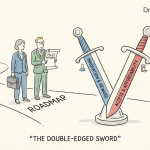
On July 24, 2025, the Acting Director of the U.S. Patent and Trademark Office denied two of Amgen’s three petitions challenging Bristol-Myers Squibb’s Opdivo patents. She did not rule that Amgen’s prior-art arguments were weak. She ruled that the patents were six and seven years old and that Bristol-Myers Squibb’s “settled expectations” in a mature patent outweighed Amgen’s right to a merits review [1]. A third Opdivo patent, issued only three years earlier, was sent to the Board for normal handling.
That single decision, split three ways inside one case, is the clearest picture available of what has happened to pharmaceutical patent challenges at the Patent Trial and Appeal Board (PTAB) since early 2025. Institution decisions increasingly turn on the calendar and on litigation posture, not only on the strength of the prior art. This article works through the policy memos that caused the shift, the pharmaceutical and biosimilar cases that show the doctrine in action, and the reason five different trackers report five different “denial rates” for the same twelve months.
From May through September 2025, the PTAB granted 60 percent of the 506 requests for discretionary denial it received, roughly triple the historical rate, and one third of those requests involved drug patents.[2]
The Short Answer: What’s Actually Rising
Three different things move under the single label “PTAB denial rate,” and conflating them is the single biggest source of confusion in coverage of this topic.
Institution Denial vs. Discretionary Denial vs. Merits Denial
A petition for inter partes review (IPR) or post-grant review (PGR) can fail to reach a full trial in three distinct ways, and the fiscal 2025 data from the USPTO’s own year-end report separates them for the first time in the agency’s history [3].
Institution Denied
The Board or the Director declines to open a trial at all. No hearing on validity ever happens.
Discretionarily Denied (DSCO)
Short for Director Discretionary Considerations, this is a denial based on factors unrelated to patentability: the patent’s age, a parallel court case’s timing, or the petitioner’s litigation choices. In fiscal 2025, the USPTO logged 505 of these decisions, denying 304 (60 percent) and referring the remaining 201 (40 percent) to a three-judge panel for further review [3].
Denied on the Merits
Of the 935 petitions that reached the Board for a standard institution decision in fiscal 2025 (including the 201 referred out of the DSCO process), 620 (66 percent) were instituted and 315 (34 percent) were denied for reasons tied to the strength of the petition itself [3].
The Headline Numbers, Fiscal Year by Fiscal Year
The USPTO’s official year-end reports give a consistent, apples-to-apples series for Bio/Pharma institution rates, calculated the same way every year: petitions instituted divided by petitions instituted plus petitions denied, excluding rehearing outcomes [3][4][5].
Period
Bio/Pharma Institution Rate
Source
FY2021 (full year)
58% (42 of 72)
USPTO FY21 Roundup [49]
FY2023 (full year)
52% (43 of 82)
USPTO FY23 Roundup [4]
FY2024 (through Q2 only)
69% (35 of 51)
USPTO FY24 Q2 Roundup [5]
FY2025 (full year)
65% (51 of 78)
USPTO FY25 Roundup [3]
FY2026 (first two months, Oct-Nov 2025)
67%
PTAB Litigation Blog, citing USPTO data [6]
Read only that table, and pharmaceutical patents look stable, even resilient, through the exact period when the rest of the patent system was convulsing. That stability is real, and it is also incomplete. It describes an annual average built from decisions made under two different legal regimes stitched together, and it says nothing about which specific pharmaceutical patents lost their shot at review, or why. The rest of this article works through both layers: the aggregate numbers, and the individual cases the aggregate numbers hide.
The Memo That Restarted Fintiv
The Vidal Memo and Its Rescission
Discretionary denial is not new. A precedential 2020 PTAB decision, Apple Inc. v. Fintiv, Inc., set out factors for denying institution when a parallel district court case was moving faster than the PTAB could [7]. In June 2022, then-Director Kathi Vidal issued a memorandum narrowing Fintiv’s reach: petitioners who signed a Sotera stipulation (agreeing not to raise the same invalidity arguments in court), petitions with compelling merits, and any case involving a parallel International Trade Commission proceeding were effectively shielded from discretionary denial [7][8]. That guidance made strong IPR petitions close to immune from timing-based denials for nearly three years.
On February 28, 2025, Acting Director Coke Morgan Stewart rescinded the Vidal memo entirely [7]. Two related memos followed within a month: Chief Administrative Patent Judge Scott Boalick’s March 24 memo restoring Fintiv’s application to ITC proceedings and downgrading Sotera stipulations from dispositive to merely “highly relevant,” and Stewart’s own March 26 memorandum, described next [8].
The March 26, 2025 Workload-Management Memo
Titled “Interim Process for PTAB Workload Management,” Stewart’s memo did two things. First, it bifurcated every institution decision into two separate stages: a discretionary-considerations stage decided by the Director in consultation with at least three judges, and, only if discretionary denial is not warranted, a merits stage handled by a normal three-judge panel [9][10]. Second, it added new factors to the discretionary analysis, including whether the challenged patent had already been through litigation, how much the petition relied on expert testimony, and, most consequentially, the settled-expectations doctrine, which weighs a patent owner’s reliance interest against how long the patent had been in force [10][11].
The USPTO framed the changes as temporary, tied to the PTAB’s ex parte appeals backlog. Acting Vice Chief Judge Stacey White later credited the reforms with cutting average appeal pendency from 28 months in May 2025 to roughly nine months by April 2026 [12]. The memo itself does not say when, or whether, the interim process will end [9].
Timeline: From Rescission to Manufacturing Factors
Date
Event
Feb 28, 2025
Acting Director Stewart rescinds the 2022 Vidal Fintiv memo [7]
Stewart’s workload-management memo bifurcates institution decisions and adds the settled-expectations doctrine [9][10]
Jun 2, 2025
Samsung Bioepis and Formycon’s Eylea IPRs discretionarily denied [13]
Jul 24, 2025
Two of three Amgen v. Bristol-Myers Squibb (Opdivo) IPRs discretionarily denied [1]
Sep 18, 2025
Senate confirms John Squires as USPTO Director, 51-47 [14]
Sep 19, 2025
Sun Pharm. v. Nivagen IPR discretionarily denied [15]
Oct 2025
Squires takes personal control of all institution decisions [16]
Oct 31, 2025
Squires issues a one-page notice denying 13 IPRs with no reasoning [16]
Nov 6, 2025
Federal Circuit denies three mandamus petitions challenging the framework [17]
Jan 9, 2026
USPTO designates 4 decisions precedential and 9 informative on discretionary denial [18]
Feb 24-27, 2026
Federal Circuit denies five more mandamus petitions [19]
Mar 11, 2026
Squires adds U.S. manufacturing footprint and small-business status as new factors [20]
Who Signs the Denial: Director-Level Control
The Two-Step Bifurcated Process
Under the March 2025 framework, every IPR or PGR petition now passes through the Director’s office before it can reach a normal panel. Step one asks only whether discretionary denial is appropriate. Step two, reached only if the answer is no, asks the ordinary questions about prior art and claim construction [9]. Petitioners no longer need to preemptively argue against discretionary denial inside the petition itself; instead, a separate discretionary-denial brief is filed after the patent owner raises the issue [21].
The October 31, 2025 Notice: Denials Without Reasons
After taking over institution decisions in October 2025, Director Squires issued a one-page Notice of Decisions on Institution denying thirteen pending IPR petitions filed by Apple, Snap, Amazon, and AT&T. The notice listed only docket numbers and a bare citation to 35 U.S.C. Section 314(a), with no reasoning and no indication that any PTAB judge had reviewed the petitions. Patently-O described the notice as opening “a new era of opacity” in PTAB practice [16]. Subsequent notices in November and December 2025 followed the same terse format, though Squires began separately listing petitions that survived discretionary review for merits consideration [21].
Definitions: The Vocabulary of Discretionary Denial
Fintiv Factors
A six-factor test from the 2020 Apple v. Fintiv decision weighing whether a parallel court case is moving fast enough, and covers enough of the same ground, to make a PTAB trial an inefficient use of resources [7].
Sotera Stipulation
A petitioner’s promise not to raise in district court any invalidity ground it could have raised, or did raise, in its IPR petition. Named for Sotera Wireless, Inc. v. Masimo Corp., a 2020 precedential decision. Once treated as close to dispositive against denial, now an important but non-controlling factor [8].
Settled Expectations
A doctrine introduced in the March 2025 memo holding that the longer a patent has survived unchallenged, the more a patent owner’s reliance interest in its validity counts against discretionary institution. Practitioners have observed that patents six or more years old are typically denied under this rationale, while patents five years old or younger are typically referred for merits review, though the USPTO has not published a bright-line rule [11].
General Plastic Factors
A separate, older test (from General Plastic Industrial Co. v. Canon Kabushiki Kaisha) used to deny serial or “copycat” petitions that repeat arguments from an earlier, unsuccessful petition against the same patent. One of the fifteen decisions the USPTO designated precedential or informative in January 2026 addressed exactly this scenario for petitions filed alongside a motion to join a pending trial [22].
Settled Expectations in Practice: Amgen v. Bristol-Myers Squibb
Three Opdivo Patents, Two Outcomes
On February 28, 2025, Amgen filed three IPR petitions challenging Bristol-Myers Squibb patents covering methods of administering Opdivo, the companies’ anti-PD-1 and anti-CTLA-4 antibody combination therapy for cancer: U.S. Patent 9,856,320 (immunotherapy administration), U.S. Patent 10,174,113 (melanoma treatment), and U.S. Patent 11,332,529 (colorectal cancer treatment) [23]. Amgen argued the claims recited nothing beyond dosing regimens already disclosed in the prior art, writing in one brief that any differences from the prior art were “trivial” and did not justify extending Opdivo’s protection by another nine years [24].
Acting Director Stewart denied institution of the petitions against the ‘320 and ‘113 patents, finding that patents in force for seven and six years, respectively, had developed a strong reliance interest for the patent owner under the settled-expectations doctrine [23]. She referred the third petition, against the ‘529 patent, to the Board, explaining that a patent issued only three years earlier had not yet accumulated the same reliance interest, absent some other showing [25]. The composition-of-matter patent covering Opdivo itself, not among the three challenged, is set to expire in December 2028 [1].
What a Young Patent Needs to Show Instead
Stewart’s decision on the referred ‘529 patent is itself a piece of guidance: even a patent in force for only three years could support settled expectations if the patent owner documents an exceptionally large, well-evidenced commitment of money, time, and effort across research, development, clinical trials, and regulatory approval [25]. Bristol-Myers Squibb had not made that showing in sufficient detail, so the petition proceeded to the Board rather than being denied outright. On October 5, 2025, before a merits decision issued, the Board granted Amgen’s own request for adverse judgment in that proceeding, closing the case without a ruling on validity [26].
Biosimilars Aren’t Exempt: The Eylea Denials
Samsung Bioepis and Formycon v. Regeneron
Two biosimilar developers, Samsung Bioepis and Formycon, separately petitioned to challenge Regeneron’s U.S. Patent 11,084,865, covering formulations of Eylea (aflibercept), a treatment for retinal disease [27]. On June 2, 2025, the Board denied institution of both petitions, IPR2025-00176 and IPR2025-00233, as part of what one law firm tracker called a wave of Fintiv-based denials following the Vidal memo’s rescission [13][28].
BPCIA Litigation Is Now a Fintiv Factor
The Eylea denials matter because they show discretionary denial reaching biologics litigated under the Biologics Price Competition and Innovation Act (BPCIA), not just small-molecule Hatch-Waxman disputes. Biosimilar and biologic activity at the PTAB actually rose in 2025: 18 IPR petitions and 13 PGR petitions were filed against biologic patents that year, compared to 11 IPR and 4 PGR petitions in 2024 [29]. Most of that PGR increase came from a single company, Halozyme, defending its enzyme-delivery patents, and the Director instituted 14 of Halozyme’s 15 petitions, a reminder that discretionary denial is not applied uniformly even within biologics [29]. Denosumab, sold as Prolia and Xgeva, remained the single most litigated biologic under the BPCIA in 2025, with Amgen filing eleven separate infringement suits against denosumab biosimilar developers [29].
When Litigation Strategy Backfires: Sun Pharma v. Nivagen
The Phenobarbital Sodium Dispute
Not every pharmaceutical discretionary denial involves a biologic or a blockbuster. Nivagen Pharmaceuticals sued Sun Pharmaceutical Industries in the Eastern District of Texas over Sun’s phenobarbital sodium injectable product, asserting U.S. Patent 11,878,076, which covers a storage-stable, freeze-dried formulation with specified purity levels [30][31]. Sun filed an IPR petition against the ‘076 patent on April 22, 2025, exactly one year after being served with the lawsuit and in the middle of claim-construction proceedings in the district court [32].
On September 19, 2025, Acting Director Stewart denied institution. The decisive factor was not the patent’s age but Sun’s own litigation conduct: Sun had taken one claim-construction position in the district court while telling the PTAB that no claim terms required construction at all, and it never offered a Sotera stipulation narrowing the overlap between the two proceedings [15][32]. The USPTO later designated the decision informative on January 9, 2026, as part of the same fifteen-decision package that included the Amgen and General Plastic rulings [18][22].
An Original Taxonomy: Three Ways Pharma IPRs Get Denied Now
These three cases, taken together, map onto three distinct and largely independent mechanisms by which a pharmaceutical or biosimilar IPR can now fail before reaching the merits.
Age-Driven Denial
The Opdivo pattern: a patent old enough (roughly six years or more, based on decisions to date) generates settled expectations regardless of the litigation posture. This mechanism requires no parallel court case at all; the Amgen petitions were denied even though Stewart acknowledged that the absence of any parallel proceeding actually cut against denial [24].
Litigation-Posture Denial
The Eylea pattern: a fast-moving parallel proceeding, whether in district court or before the ITC, combined with the absence of a sufficiently broad Sotera stipulation, triggers a classic Fintiv-style denial regardless of the patent’s age.
Consistency-Driven Denial
The Sun Pharma pattern: a petitioner who argues inconsistent legal positions between the district court and the PTAB, or who otherwise appears to be using the IPR tactically rather than efficiently, can be denied even on a comparatively young patent with a case still in early stages.
No prior published framework separates these three mechanisms explicitly for pharmaceutical patents; most commentary treats “discretionary denial” as a single undifferentiated risk. For a company assessing whether its own patent, or a competitor’s, is exposed, the three questions are different: how old is the patent, how close is trial in any parallel case, and has either side taken a position it cannot defend consistently in both forums.
Pharma’s Numbers Look Better Than Tech’s. Why?
Bio/Pharma vs. Electrical/Computer Institution Rates, FY23-FY26
The official USPTO breakdown by technology center shows Bio/Pharma consistently outperforming Electrical/Computer on institution rate, a gap that predates the 2025 policy changes and has persisted through them.
Period
Bio/Pharma
Electrical/Computer
FY2023
52% (43 of 82)
70% (492 of 701)
FY2024 (through Q2)
69% (35 of 51)
66% (272 of 410)
FY2025
65% (51 of 78)
45% (389 of 860)
The gap widened sharply in fiscal 2025, not because pharmaceutical patents became more favored, but because Electrical/Computer petitions, which make up two thirds of the PTAB’s entire docket and carry the heaviest concentration of parallel litigation in fast venues like the Eastern District of Texas, absorbed most of the new Fintiv-driven denials [33]. Bio/Pharma’s smaller docket, and its comparative lack of the serial-petition and multi-defendant patterns that trigger General Plastic denials, left more room for individual patents to be instituted even as the categorical settled-expectations and litigation-posture denials described above hit specific, high-profile cases.
The Manufacturing Factor Added in March 2026
On March 11, 2026, Director Squires issued a memorandum adding domestic manufacturing and small-business status to the discretionary-denial analysis, applying immediately to any pending petition where the patent owner’s discretionary brief was not yet due [20][34].
The Three New Factors
The memo directs the Board to consider, first, whether products accused of infringement in a parallel proceeding are manufactured in the United States or tied to U.S. manufacturing investment; second, whether the patent owner’s own competing products are manufactured in the United States; and third, whether the petitioner is a small business that has itself been sued for infringement [20][35].
As of mid-2026, Squires had not yet issued a discretionary decision applying the new factors, so their practical weight in pharmaceutical cases remains untested [35]. The factors are, however, a plausible new front for disputes over active pharmaceutical ingredient sourcing and domestic biologics manufacturing capacity, an area already under separate policy pressure from the BIOSECURE Act and reshoring incentives.
Why Nobody Agrees on the Exact Number
Five Trackers, Five Numbers
Ask five different sources for “the PTAB institution rate” covering roughly the same period, and the answers will not match, because each source measures a different thing.
Source
Period
What It Measures
Reported Rate
USPTO official year-end report
FY2025 (full year)
All-technology institution rate, by petition
58%[3]
PTAB Litigation Blog, citing later USPTO data
FY2025 (full year, revised)
All-technology institution rate, by petition
50%[36]
Unified Patents
January 2025 (single month)
All-technology IPR institution rate
81.8%[37]
Unified Patents
August 2025 (single month)
All-technology IPR institution rate
19.4% (all-time low)[37]
GreyB
Q1 2026 (quarter)
Bio/Pharma-specific institution rate
50%, recovering from 43% in Q4 2025[33]
USPTO official year-end report
FY2025 (full year)
Bio/Pharma-specific institution rate
65% (51 of 78)[3]
Even the USPTO’s own number for the same fiscal year moved: the agency’s fall 2025 year-end report listed the full-year, all-technology, by-petition institution rate at 58 percent, with a footnote stating that outcome data had been revised in November 2025 [3]; a mid-2026 legal-blog analysis citing subsequent USPTO reporting put the same full-year figure at 50 percent [36]. Neither source is wrong; the underlying dataset was updated between the two publication dates, a routine occurrence for an agency reporting on proceedings that can settle, get dismissed, or reach late decisions well after a fiscal year closes.
Denominator Games
Beyond simple data revisions, three structural choices explain most of the remaining disagreement. First, per-petition versus per-patent rates differ because a single patent can be the subject of multiple petitions with different outcomes. Second, monthly snapshots (like Unified Patents’ January and August 2025 figures) are far more volatile than fiscal-year averages, because a handful of large or small months can swing a percentage sharply; the PTAB’s own quarterly reports show institution decisions clustering unevenly across a fiscal year. Third, some trackers report the share of petitions denied outright at any stage, including settlements and dismissals in the denominator, while others report only the subset of petitions that received a formal institution decision, excluding cases that settled before the Board ever ruled. Calculated directly from the USPTO’s own fiscal 2025 and fiscal 2026 outcome data, the share of all concluded petitions denied institution outright rose from roughly 44 percent (644 of 1,470) in fiscal 2025 to 52 percent through the second quarter of fiscal 2026 and 50 percent through the third quarter, a modest but real increase, and a different (and more conservative) calculation than either headline figure in the table above [3][38][39].
The practical lesson for anyone tracking a specific drug’s patent exposure: a single “PTAB denial rate” is not a reliable input for portfolio modeling. The relevant question is not the economy-wide average but the specific technology center, fiscal period, and denominator that apply to a given patent’s own petition history, which is why teams doing freedom-to-operate work on a specific drug increasingly cross-reference PTAB docket data against Orange Book listings and patent-family records on platforms like DrugPatentWatch rather than relying on a headline percentage from any single tracker.
Can Anyone Challenge This? The Mandamus Wall
In re Motorola and the Federal Circuit’s Position
Because 35 U.S.C. Section 314(d) makes institution decisions “final and nonappealable,” and the Supreme Court confirmed in Thryv, Inc. v. Click-To-Call Technologies (2020) and SAS Institute Inc. v. Iancu (2018) that these decisions sit within the Director’s unreviewable discretion, ordinary appeals are unavailable. Aggrieved petitioners have instead sought writs of mandamus at the Federal Circuit [40]. On November 6, 2025, the court denied three such petitions in a single day, including In re Motorola Solutions, Inc., a precedential decision rejecting arguments that retroactively applying the new discretionary-denial framework violated due process or the Administrative Procedure Act [17][40]. The court held that reliance on the Vidal memo’s interim guidance did not create a due-process right, because the memo itself said it applied “until further notice” [41].
Kahoot!, Intel, Tesla, and the Pattern That Followed
The Motorola decision was not an outlier. Between June 2025 and February 2026, the Federal Circuit denied at least ten mandamus petitions challenging discretionary-denial decisions, including from Apple-adjacent petitioners, Google, HighLevel, SanDisk, and, in a nonprecedential batch issued between February 24 and 27, 2026, Intel, Tesla, Kangxi Communication Technologies, Kahoot!, and Tessell [19][40]. In the Kahoot! decision, the court held that even an argument that the Director acted “ultra vires,” beyond her legal authority, cannot support mandamus relief when Congress has committed the underlying decision to the Director’s discretion [42]. No pharmaceutical petitioner has yet brought one of these challenges to a Federal Circuit decision, but the court’s reasoning does not carve out an exception for drug patents, and the same statutory bar would apply.
The Escape Valve: Ex Parte Reexamination
IPR vs. Reexam at a Glance
Ex parte reexamination, an older and less-used procedure than IPR, has no institution-stage discretionary denial framework, no Fintiv factors, and no settled-expectations doctrine. It is also more limited: the challenger has no deposition rights, no oral hearing, and only a subordinate role once the examiner takes over, and the resulting proceeding cannot invoke the estoppel provisions that make IPR attractive to litigants [43].
Despite those limits, reexamination filings reached an all-time quarterly high of 336 requests in the second quarter of 2026, while IPR petitions across all technologies fell to an all-time quarterly low of 57 in the same period, giving reexamination a 74.7 percent share of post-grant filings, almost the exact inverse of its 23.6 percent share one year earlier [44]. New IPR and PGR filings overall dropped from 135 petitions in May 2025 to just 20 combined (15 IPR, 5 PGR) in April 2026 [35][45].
Is Pharma Actually Shifting?
The available reexamination data does not show pharmaceutical companies driving this migration. Unified Patents’ analysis of the most-reexamined patent owners in the first half of 2026 lists non-practicing entities and technology operating companies, not pharmaceutical or biosimilar names [44]. That is a meaningful, if negative, finding: pharmaceutical and biosimilar challengers appear to be absorbing the higher discretionary-denial risk within the IPR system, at least so far, rather than following the broader market toward reexamination. Whether that holds if discretionary denial rates for Bio/Pharma converge further toward the Electrical/Computer numbers is, at this point, a genuinely open question, not something the current data can answer.
What This Means for Biosimilar and Generic-Entry Timelines
The health-economics argument for keeping IPR accessible rests on documented outcomes from before the 2025 policy shift. Administrative review of biologic patents historically invalidated 14 of 20 (70 percent) of the patents blocking biosimilar market entry that were challenged, and branded-drug revenue fell by a median of 79 percent in the year following a successful IPR-driven invalidation [2]. Life-sciences patent challenges at the PTAB have also run far cheaper and faster than litigation: roughly $725,000 and twelve months for an administrative review, against roughly $6.1 million and several years for equivalent district court litigation [2]. Whether those savings continue to materialize at the same rate depends directly on how many biosimilar-relevant patents clear the new discretionary-denial stage in the first place, which is precisely what the Eylea and Opdivo cases described above call into question for individual products, even as the Bio/Pharma category-wide institution rate has, so far, held up better than the rest of the docket.
Is Relief Coming? The PREVAIL Act
What the PREVAIL Act Would Change
The Promoting and Respecting Economically Vital American Innovation Leadership Act, reintroduced in both chambers on May 1, 2025, would require standing for PTAB petitioners, limit repeated petitions against the same patent, harmonize PTAB claim construction and burden of proof with district courts, force petitioners to choose between challenging validity at the PTAB or in court rather than pursuing both, and, notably, prohibit the Director from influencing panel decisions on institution [46][47]. That last provision would directly undo the centralized, Director-controlled institution process at the center of this article, though the bill’s supporters frame it as a response to the opposite complaint, that the PTAB has invalidated patent claims too readily rather than too rarely [47].
Where the Bill Stands in Congress
The PREVAIL Act has advanced further than most prior PTAB-reform efforts, including the STRONG Patents Act of 2015 and the STRONGER Patents Acts of 2017 and 2019, none of which reached a floor vote. It passed the Senate Judiciary Committee with bipartisan support and has been endorsed by the Biotechnology Innovation Organization, the Council for Innovation Promotion, and the Innovation Alliance [48]. As of this writing, it has not passed either full chamber, and its interaction with the USPTO’s own 2025 and 2026 discretionary-denial memos, which achieve some of the same patent-owner-favorable outcomes administratively, may reduce the urgency some stakeholders feel toward pushing it to a vote.
What Happens Next
Practical Takeaways for Petitioners
A generic or biosimilar developer evaluating an IPR against a branded patent now needs to answer three separate questions before filing: how long has the target patent been in force, and has the patent owner already built a settled-expectations record around it; how mature is any parallel Hatch-Waxman or BPCIA litigation, and would a genuinely broad Sotera stipulation remove the overlap; and can the petitioner maintain one consistent claim-construction position across every forum where it is contesting the patent. Ex parte reexamination remains available as a fallback where all three answers point toward denial, at the cost of losing deposition rights, oral argument, and estoppel benefits.
Practical Takeaways for Patent Owners
Patent owners defending against a petition now have a real incentive to build the settled-expectations record proactively, documenting investment, regulatory approval timelines, and the absence of prior challenges, rather than waiting until a discretionary-denial brief is due. For patents under six years old, where age alone will not carry the argument, the Amgen decision’s own language about exceptionally large investment and development costs is the template to follow [25]. Owners of U.S.-manufactured biologics or APIs should also begin tracking the practical application of the March 2026 manufacturing factors, since no precedential decision has yet applied them and early cases will likely set the template other patent owners rely on.
Key Takeaways
Bio/Pharma patents were instituted at 65 percent in fiscal 2025 and roughly 67 percent in the first two months of fiscal 2026, both higher than the Electrical/Computer rate over the same periods, even as the PTAB’s overall institution rate fell sharply following the March 26, 2025 discretionary-denial memo [3][6][33].
From May through September 2025, the PTAB granted 60 percent of 506 discretionary-denial requests, roughly triple the historical rate, with one third involving drug patents [2].
Two of Bristol-Myers Squibb’s three challenged Opdivo patents survived IPR review in 2025 purely on settled-expectations grounds tied to patent age, not on the merits [23].
Samsung Bioepis and Formycon’s IPR petitions against Regeneron’s Eylea patent were both discretionarily denied on June 2, 2025, showing biosimilar challenges are not exempt from Fintiv-based denial [13][28].
Sun Pharmaceutical’s IPR against a Nivagen phenobarbital sodium patent was denied over inconsistent claim-construction positions, a third, independent mechanism separate from patent age or litigation timing [15][32].
The Federal Circuit has denied at least ten mandamus petitions challenging the discretionary-denial framework since June 2025, confirming institution decisions remain judicially unreviewable [17][19][40].
Ex parte reexamination filings surpassed IPR filings for the first time since 2012 in the second quarter of 2026, though the shift so far appears concentrated outside pharma [44].
Different trackers report institution rates for the same period that differ by as much as sixty percentage points, driven by denominator choices and revision timing rather than any single error [3][36][37].
FAQ
What is a PTAB discretionary denial?
It is a decision by the USPTO Director, or by a panel acting under the Director’s guidance, not to institute an inter partes review or post-grant review for reasons unrelated to the technical merits of the challenge, such as a patent’s age, overlapping litigation timing, or a petitioner’s prior conduct [9][10].
What is the “settled expectations” doctrine?
Introduced in the USPTO’s March 26, 2025 memo, it holds that the longer a patent has survived unchallenged, generally six years or more based on decisions issued so far, the more weight its owner’s reliance interest carries against institution, independent of any parallel litigation [10][11].
Has the PTAB’s institution rate for pharmaceutical patents actually fallen in 2026?
Not at the category-wide level shown in official USPTO data: Bio/Pharma institution rates have stayed in the 50 to 69 percent range across fiscal 2023 through the start of fiscal 2026, generally above the Electrical/Computer rate. Individual high-profile cases, including Opdivo, Eylea, and phenobarbital sodium patents, have been denied under the new discretionary framework, but the aggregate pharmaceutical numbers have not collapsed the way the all-technology average did [3][6][33].
Can a petitioner appeal a PTAB discretionary denial?
Not through a normal appeal. 35 U.S.C. Section 314(d) makes institution decisions final and nonappealable, and the Federal Circuit has denied every mandamus petition raised against the 2025-2026 discretionary-denial framework, including due-process, Administrative Procedure Act, and ultra vires arguments [17][19][40][42].
What is a Sotera stipulation, and does it still protect petitioners?
It is a petitioner’s agreement not to raise in district court any invalidity ground it raised or could have raised in its IPR petition. Under the 2022 Vidal memo it was close to dispositive against denial; since March 2025 guidance, it remains an important factor but no longer guarantees institution on its own [8][11].
How does discretionary denial affect biosimilar litigation specifically?
BPCIA litigation timing now functions as a Fintiv factor the same way Hatch-Waxman litigation does, as shown by the June 2025 denial of Samsung Bioepis and Formycon’s Eylea IPR petitions. Biosimilar-related PTAB filings actually increased in 2025, but institution outcomes now depend heavily on the maturity of the parallel BPCIA case [13][27][29].
What is ex parte reexamination, and why are more challengers using it?
It is an older USPTO procedure where a patent examiner, not a PTAB panel, reconsiders a patent’s validity based on prior art submitted by a third party or the patent owner. It has no discretionary-denial framework, but also no deposition rights, oral hearing, or estoppel benefits. Reexamination filings hit an all-time quarterly high in the second quarter of 2026 as IPR filings fell to an all-time low, though pharmaceutical challengers do not yet appear to be leading that shift [43][44].
Who decides whether a pharma patent IPR gets discretionarily denied?
Since October 2025, USPTO Director John Squires personally makes every institution decision involving discretionary considerations, a centralization of authority that began under his predecessor, Acting Director Coke Morgan Stewart, in March 2025 [16][21].
Will the PREVAIL Act change any of this?
If enacted, the PREVAIL Act would prohibit the Director from influencing panel institution decisions, directly reversing the centralized process described in this article, alongside standing requirements and limits on repeated petitions. It has passed the Senate Judiciary Committee but has not reached a floor vote in either chamber as of this writing [46][47][48].
What is the new “manufacturing factor,” and does it apply to pharma companies?
Effective March 11, 2026, the USPTO added U.S. manufacturing footprint and small-business status as discretionary-denial factors, applicable to any industry, including pharmaceutical and biologics manufacturing. No precedential decision has yet applied the factors, so their practical effect on API sourcing or biologics manufacturing disputes remains untested [20][34][35].
References
IPWatchdog. (2025, July 28). Stewart’s denial of institution on two Amgen IPRs highlights possible tension between drug pricing and USPTO priorities. https://ipwatchdog.com/2025/07/28/stewarts-denial-institutionamgen-iprs-highlights-tension-drug-pricing-uspto-priorities/id=190683/
Health Affairs Scholar. (2025, November 4). Recent changes in discretionary denials of drug patent challenges. Oxford Academic. https://academic.oup.com/healthaffairsscholar/article/3/11/qxaf215/8320352
United States Patent and Trademark Office. (2025). PTAB Trial Statistics: FY2025 End of Year Outcome Roundup. https://www.uspto.gov/sites/default/files/documents/Trial_StatsFY25_Q4.pdf
United States Patent and Trademark Office. (2023). PTAB Trial Statistics: FY2023 End of Year Outcome Roundup. https://www.uspto.gov/sites/default/files/documents/ptab_aia_fy2023__roundup.pdf
United States Patent and Trademark Office. (2024). PTAB Trial Statistics: FY2024 Q2 Outcome Roundup. https://www.uspto.gov/sites/default/files/documents/ptab_aia_fy2024_q2_roundup.pdf
PTAB Litigation Blog. (2026, January 15). PTAB statistics through two months of FY 2026. https://www.ptablitigationblog.com/ptab-statistics-through-two-months-of-fy-2026/
Pearl Cohen. (2025, April 9). PTAB guidance following withdrawal of Fintiv memo will increase discretionary IPR denials. https://www.pearlcohen.com/ptab-guidance-following-withdrawal-of-fintiv-memo-will-increase-discretionary-ipr-denials-layoffs-and-more-from-the-ptab-in-march-2025/
Holland & Knight. (2025, March 28). New guidance regarding Fintiv discretionary denial at the PTAB. https://www.hklaw.com/en/insights/publications/2025/03/new-guidance-regarding-fintiv-discretionary-denial-at-the-ptab
Wilmer Hale. (2025, March 31). USPTO issues memo on interim process for PTAB discretionary denial evaluation. https://www.wilmerhale.com/en/insights/client-alerts/20250331-uspto-issues-memo-on-interim-process-for-ptab-discretionary-denial-evaluation
Bracewell LLP. (2025). USPTO memorandum bifurcating PTAB institution process signals shift toward increased discretionary denials in IPR and PGR. https://www.bracewell.com/resources/uspto-memorandum-bifurcating-ptab-institution-process-signals-shift-toward-increased-discretionary-denials-in-ipr-and-pgr/
Lexology. (2025, August 29). Unpacking the PTAB’s patent age denial doctrine data. https://www.lexology.com/library/detail.aspx?g=454b47d1-84e2-4300-b3b1-1d950a8bbdd2
IPWatchdog. (2026, April 8). USPTO stats show IPR institution rate has plummeted by 43%. https://ipwatchdog.com/2026/04/08/uspto-stats-show-ipr-institution-rate-plummeted/
Fish & Richardson. (2025, September 19). Senate confirms John Squires as USPTO Director. https://www.jdsupra.com/legalnews/senate-confirms-john-squires-as-uspto-6555289/
PTAB Litigation Blog. (2025, October 29). Divergent claim construction results in discretionary denial. https://www.ptablitigationblog.com/divergent-claim-construction-results-in-discretionary-denial/
Pearl Cohen. (2025, November 6). New USPTO Director John Squires increases patent eligibility for AI-enabled inventions and decreases patent challenges at the PTAB. https://www.pearlcohen.com/new-uspto-director-john-squires-increases-patent-eligibility-for-ai-enabled-inventions-and-decreases-patent-challenges-at-the-ptab/
Honigman LLP. (2025, November 7). Federal Circuit denies mandamus petitions challenging new Patent Office discretionary denial scheme. https://www.honigman.com/alert-3129
Sterne, Kessler, Goldstein & Fox. (2026, January 14). USPTO designates as precedential or informative fifteen AIA decisions on discretionary institution considerations. https://www.sternekessler.com/news-insights/client-alerts/uspto-designates-as-precedential-or-informative-fifteen-aia-decisions-on-discretionary-institution-considerations/
Patently-O. (2026, February 28). Five petitions, five denials: The Federal Circuit’s mandamus wall grows higher. https://patentlyo.com/patent/2026/02/five-petitions-five-denials-the-federal-circuits-mandamus-wall-grows-higher.html
National Law Review. (2026, March 13). USPTO expands PTAB discretion to U.S. manufacturing and small business. https://natlawreview.com/article/uspto-expands-ptab-discretion-us-manufacturing-and-small-business
Morgan Lewis. (2025, December 18). First institutions under Squires: Trends, impact of stipulations, and practice pointers. https://www.morganlewis.com/pubs/2025/12/first-institutions-under-squires-trends-impact-of-stipulations-and-practice-pointers
United States Patent and Trademark Office. (2026, January 9). Precedential and informative decisions. https://www.uspto.gov/patents/ptab/precedential-informative-decisions
Goodwin LLP / Big Molecule Watch. (2025, August 18). PTAB discretionarily denies two petitions, refers a third to the Board in Amgen v. Bristol-Myers Squibb. https://www.bigmoleculewatch.com/2025/08/18/ptab-discretionarily-denies-two-petitions-refers-a-third-to-the-board-in-amgen-v-bristol-myers-squibb/
United States Patent and Trademark Office. (2025). IPR2025-00601, Amgen Inc. v. Bristol-Myers Squibb Co., Paper 9. https://www.uspto.gov/sites/default/files/documents/IPR2025_00601_paper_9.pdf
Mondaq. (2025, September 1). Acting Director gives guidance on how to argue “settled expectations” exist for young patents. https://www.mondaq.com/unitedstates/patent/1672496/acting-director-gives-guidance-on-how-to-argue-settled-expectations-exist-for-young-patents
Venable LLP / BiologicsHQ. (2026, March 10). Bristol-Myers Squibb. https://biologicshq.com/company/bristol-myers-squibb/
JDSupra. News & analysis: BPCIA, inter partes review proceeding, biosimilars. https://www.jdsupra.com/topics/bpcia/inter-partes-review-ipr-proceeding/biosimilars
Fish & Richardson. (2026, March 9). 2025 Biologics & Biosimilars landscape: IP, policy & market trends. https://www.fr.com/insights/thought-leadership/blogs/biologics-and-biosimilars-landscape-2025-ip-policy-and-market-developments/
Ex Parte AI Lab. (2025, September 18). Petition analysis: IPR2025-00893, Sun Pharmaceutical Industries Inc. v. Nivagen Pharmaceuticals Inc. https://ai-lab.exparte.com/case/ptab/IPR2025-00893/doc/summary/1
United States Patent and Trademark Office. (2025). IPR2025-00893, Sun Pharmaceutical Industries, Inc. v. Nivagen Pharmaceuticals, Inc., Paper 18. https://uspto.gov/sites/default/files/documents/IPR2025_00893_paper_18.pdf
United States District Court for the Eastern District of Texas. (2025). Nivagen Pharmaceuticals, Inc. v. Sun Pharmaceutical Industries, Inc., Case No. 2:24-cv-00036. Court filing accessed via USPTO PTACTS. https://ptacts.uspto.gov/ptacts/public-informations/petitions/1557773/
GreyB. (2026, July 7). Why the PTAB denied 60% of Q1 2026 IPR petitions before reading a single reference? https://greyb.com/blog/ptab-denied-ipr-petitions
Brownstein Hyatt Farber Schreck. (2026, March 16). USPTO’s new PTAB discretion policy marks a major shift for U.S.-manufactured IP. https://www.bhfs.com/insight/usptos-new-ptab-discretion-policy-marks-a-major-shift-for-u-s-manufactured-ip/
Willkie Farr & Gallagher. (2026, March). USPTO Director to consider new factors for discretionary denial analysis. https://www.willkie.com/-/media/files/publications/2026/03/uspto-director-to-consider-new-factors-for-discretionary-denial-analysis.pdf
ReexamLink. (2026, September). Institution discretion and the 2026 AIA docket. https://reexamlink.com/2026/09/institution-discretion-and-the-2026-aia-docket/
United States Patent and Trademark Office. (2026). PTAB Trial Statistics: FY2026 Q2 Outcome Roundup. https://www.uspto.gov/sites/default/files/documents/trial-stats-fy26q2-outcome-roundup.pdf
United States Patent and Trademark Office. (2026). PTAB Trial Statistics: FY2026 Q3 Outcome Roundup. https://www.uspto.gov/sites/default/files/documents/TrialsOutcomeRoundupFY26Q3.pdf
National Law Review. (2025, November 7). Federal Circuit denies challenges to USPTO Director’s discretionary denial decisions. https://natlawreview.com/article/federal-circuit-denies-challenges-uspto-directors-discretionary-denial-decisions
ArentFox Schiff. (2025, November 11). Federal Circuit denies mandamus: USPTO discretionary denial, Fintiv, and Sotera stipulations in Motorola-Stellar IPRs. https://www.afslaw.com/perspectives/alerts/federal-circuit-denies-mandamus-uspto-discretionary-denial-fintiv-and-sotera
IPWatchdog. (2026, February 26). Federal Circuit denies another mandamus petition challenging USPTO’s ‘settled expectations’ doctrine. https://ipwatchdog.com/2026/02/26/federal-circuit-denies-mandamus-petition-challenging-usptos-settled-expectations-doctrine/
Patent Review Pro. (2026, August 5). Why patent prices are rising as PTAB access shrinks. https://patentreviewpro.com/blog/why_patent_prices_are_rising_as_ptab_access_shrinks.php
Lot Net. (2026, June 1). PTAB practice under current leadership: Key changes and implications for patent challenges (Part 3 of 3). https://lotnet.com/ptab-practice-under-current-leadership-key-changes-and-implications-for-patent-challenges-part-3/
Office of Senator Chris Coons. (2025, June 27). Senators Coons, Tillis, colleagues introduce bipartisan bill to support American inventors by reforming Patent Trial and Appeal Board. https://www.coons.senate.gov/news/press-releases/senators-coons-tillis-colleagues-introduce-bipartisan-bill-to-support-american-inventors-by-reforming-patent-trial-and-appeal-board
Office of Senator Chris Coons. (2025). Senators Coons, Tillis celebrate bipartisan passage of their PREVAIL Act by the Senate Judiciary Committee. https://www.coons.senate.gov/news/press-releases/senators-coons-tillis-celebrate-bipartisan-passage-of-their-prevail-act-by-the-senate-judiciary-committee
United States Patent and Trademark Office. (2021). PTAB Trial Statistics: FY2021 End of Year Outcome Roundup. https://www.uspto.gov/sites/default/files/documents/ptab_aia_fy2021__roundup.pdf