For most of the past four decades, pharmaceutical patent challenges were a game played by one set of actors: generic drug companies filing Paragraph IV certifications and betting their balance sheets on Hatch-Waxman litigation. Payers — health insurers, PBMs, employer coalitions — watched from the sidelines. They absorbed the costs of prolonged brand monopolies, passed them along to plan sponsors and members, and occasionally complained to Congress.
That arrangement has ended.
Starting around 2022 and accelerating sharply through 2024 and 2025, health plans, PBMs, large employer groups, and purchaser coalitions have moved from passive price-takers to active participants in the patent challenge ecosystem. They file formal comments at the USPTO. They lobby the PTAB on procedural rules. They fund multi-million-dollar advocacy campaigns targeting specific patent thickets. They petition the FTC. They exclude reference products from formularies as a financial pressure lever, and in doing so they directly influence which biosimilar challengers have the economic runway to sustain patent litigation. Some have gone further, filing their own citizen petitions at the FDA and building in-house IP intelligence operations that rival what generic manufacturers deployed a generation ago.
The shift is not symbolic. Between 2025 and 2030, nearly 200 blockbuster drugs face patent expiration, with estimates from multiple research organizations placing total branded revenue at risk at $200–$300 billion. That is the raw financial exposure sitting on payers’ books, spread across formularies covering tens of millions of lives. At those numbers, patent law stops being an abstraction and starts being a core cost-management discipline.
This article maps the mechanisms payers are using, the specific drug franchises driving their engagement, the legal and regulatory landscape they are navigating, and the commercial implications for every stakeholder in the pharmaceutical supply chain.
Why Payers Stopped Waiting for Generic Companies to Do the Work
The Economics of Watching a Monopoly: What Patent Thickets Actually Cost Payers
The standard argument for why payers should care about pharmaceutical patent quality runs like this: every month a brand drug faces no competition is a month payers pay monopoly prices. That framing understates the problem. The real issue is not just the absence of competition — it is the structural design of patent thickets to push that absence out by a decade or more beyond what primary patent protection provides.
AbbVie’s Humira (adalimumab) is the reference case. AbbVie filed more than 311 patent applications for Humira in the United States, with approximately 90% of them submitted after the drug received FDA approval in 2002. While the primary composition patent expired in 2016, a thicket of add-on patents delayed biosimilar competition until 2023, and the most commonly used formulation faced no competition until 2024.
What did that delay cost? When competition finally entered the market in 2023, Humira’s effective price decreased by an estimated 38%, and 2024 was the first year that Humira did not come with a list price increase. The roughly seven years of excess exclusivity — from 2016 to 2023 — had a direct dollar value to payers. Multiply that across a drug class generating $20 billion per year in U.S. sales and the arithmetic becomes impossible to ignore.
According to analysis from the Initiative for Medicines, Access, and Knowledge (I-MAK) and American Economic Liberties Project, patent thicket tactics cost consumers more than $40 billion in just one year, amounting to each American paying an additional $120 on prescription drugs annually.
For plan sponsors bearing the direct cost of specialty drug benefit expenditure, those figures are not background statistics. According to the Business Group on Health’s 2026 Employer Health Care Strategy Survey, the median percentage of employers’ health care dollars spent on pharmacy increased from 21% in 2021 to 24% in 2024, with specialty drugs representing 50% of total drug spending.
How Patent Thicketing Works: Evergreening, Secondary Patents, and Orange Book Manipulation
Pharmaceutical patent thicketing operates through several documented strategies, each exploiting a different regulatory mechanism. Understanding how each works is essential context for understanding why payers are targeting them.
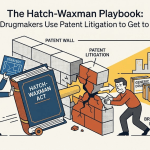
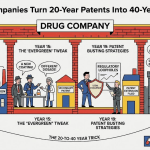
Evergreening refers to the practice of filing new patents on incremental changes to an existing drug — reformulations, new delivery devices, new dosage forms, extended-release versions — to generate a fresh set of 20-year patent terms tied to characteristics that provide little or no clinical advancement. The legal term for one common mechanism is obvious-type double patenting (OTDP), where a manufacturer files continuation applications on the same underlying invention to build a cascade of patent expiration dates well beyond the primary patent’s life.
Orange Book manipulation adds a second dimension. Under the Hatch-Waxman Act, brand manufacturers must list patents for their drug products in the FDA’s Orange Book. Generic manufacturers filing Abbreviated New Drug Applications (ANDAs) must then certify their relationship to those listed patents — and a Paragraph IV certification (asserting that the listed patents are invalid or not infringed) triggers automatic patent litigation and a 30-month stay of FDA approval.
The systemic abuse identified by the FTC involves listing patents in the Orange Book that have no legitimate claim to trigger that 30-month stay — device patents, REMS patents, delivery mechanism patents that are unrelated to the drug’s active ingredient or approved method of use. The FTC found Orange Book listings covering eye dropper dispenser caps and straps on inhalers that keep them in place — the kind of peripheral hardware that was never intended to control market entry for the underlying drug.
In April 2024, the FTC announced it had challenged an additional 300 Orange Book patents as improperly listed and sent new warning letters to drug companies concerning 20 different brand-name drugs. These new challenges included patents relating to asthma and COPD inhalers and patents on devices to deliver injectable weight-loss and diabetes treatments. In May 2025, the FTC challenged an additional 200 Orange Book patents relating to 17 different drug products. Several hundred patents have been removed from the Orange Book following FTC’s actions.
Why Generic Companies Alone Cannot Fix the Problem: Market Size Bias in Patent Challenges
Generic pharmaceutical companies are economically rational actors. They challenge patents when the expected financial return on successful generic entry exceeds the cost and risk of litigation. That logic produces a systematic gap: drugs with smaller markets, drugs in therapeutic categories with complex patient populations, and drugs where the primary challenge is a device or formulation patent rather than a composition-of-matter patent tend to go unchallenged.
A cross-sectional study published in PLOS Medicine in February 2025 found that market value was the most important predictor of patent challenges, with larger markets being more likely to be associated with challenges. Of the 210 new small-molecule drugs included, 55% experienced initiation of patent challenge within the first year of eligibility — but drugs in the anti-infective therapeutic class or those with fast-track approval were less likely to be challenged.
That market-size bias means that patent thickets on mid-tier specialty drugs — the kind generating $500 million to $2 billion in annual revenue — can persist for years without a challenger willing to absorb litigation risk. Payers bear those costs directly. For them, the calculation is different: a health plan paying for a specialty drug for 50,000 covered lives has a financial interest in challenge even where no individual generic manufacturer does.
The Payer Patent Watchdog Toolkit: What Health Plans and Employer Groups Are Actually Doing
USPTO Comment Campaigns: How Employer Coalitions Are Shaping Patent Rules
The most direct mechanism payers have used to influence the patent system is formal participation in USPTO rulemaking. This is not lobbying in the conventional sense — it is legally cognizable participation in administrative proceedings that shape the ground rules for patent prosecution and post-grant review.
The ERISA Industry Committee (ERIC), which represents Fortune 500 employer plan sponsors, has built one of the most active employer-side patent policy programs in Washington. In February 2023, ERIC called on the USPTO to limit or eliminate patent policies that allow drug manufacturers to extend monopolies for certain prescription drugs for longer than 20 years, saying the USPTO ‘must take steps to eliminate abuse of the patent system, which is harmful to competition in the American health care system.’ ERIC specifically called on the USPTO to address obvious-type double patenting and terminal disclosures.
When the USPTO proposed a rule in 2024 to reform terminal disclaimer practice — the mechanism by which manufacturers link continuation patents to extend their effective term — ERIC praised it directly. ERIC’s Senior Vice President of Health Policy Melissa Bartlett said: ‘Today’s patent system is supposed to balance innovation and competition, but too often, the only innovation that seems to emerge is another gimmick used to extend a patent.’
When the Trump administration’s USPTO proposed restricting IPR access in late 2025, ERIC reversed field and opposed that rule as well. ERIC called for the USPTO to withdraw its proposed rule revising PTAB procedures, arguing it would limit access to the inter partes review (IPR) process, which it called ‘an essential mechanism for challenging low-quality patents that keep drug prices artificially high by delaying competition from lower-cost generic and biosimilar medications.’
The pattern is consistent: payers engage wherever the regulatory rules governing patent quality or patent challenge access are in play, regardless of which administration is in office or which direction the proposed rule runs.
The Campaign for Sustainable Rx Pricing: Payer-Funded Patent Advocacy at Scale
The Campaign for Sustainable Rx Pricing (CSRxP) is the most visible payer-funded coalition operating in the pharmaceutical patent space. Its membership includes America’s Health Insurance Plans (AHIP), the Blue Cross Blue Shield Association, and the major PBM-affiliated organizations — effectively the institutional voice of the commercial payer side of the healthcare system.
A January 2023 report from Matrix Global Advisors commissioned by CSRxP, titled ‘Patent Thickets and Lost Drug Savings,’ quantified the one-year cost of lost savings on five brand-name drugs around which Big Pharma built especially large patent thickets. The five drugs analyzed were AbbVie’s Humira and Imbruvica, Regeneron’s Eylea, Amgen’s Enbrel, and Bristol Myers Squibb’s Opdivo. The report’s methodology — projecting savings based on generic/biosimilar discount and uptake rates observed in competitive markets — gave payers a replicable analytical framework to attach dollar figures to specific patent thickets.
CSRxP moved beyond the analytical phase in 2025. The organization launched a new multi-million-dollar initiative aimed at exposing how pharmaceutical companies manipulate the patent system, identifying it as a key driver of high prescription drug prices in the United States.
The political arithmetic behind the campaign is worth noting. CSRxP polling found that 89% of all voters — including Trump voters — reported concern with the statement that ‘Big Pharma has a long history of price-gouging American patients through tactics designed to game the U.S. patent system and block competition from more affordable alternatives.’ That near-universal voter sentiment across party lines gives payer-funded patent campaigns an unusually broad political runway.
The Affordable Prescriptions for Patients Act: Payers’ Legislative Crowbar Against Patent Thickets
On the legislative front, payers and their coalition allies concentrated effort on the Affordable Prescriptions for Patients Act, introduced by Senators John Cornyn (R-TX) and Richard Blumenthal (D-CT). The bill limits the number of patents a manufacturer can assert in Hatch-Waxman or BPCIA litigation — specifically targeting the patent thicket strategy of forcing generic and biosimilar challengers to invalidate dozens of patents simultaneously.
The bill was unanimously passed by the U.S. Senate in July 2024 and reintroduced in the Senate in March 2025. The nonpartisan Congressional Budget Office estimated the bill would save $1.8 billion.
CSRxP joined AARP, the ERISA Industry Committee, the National MS Society, the Purchaser Business Group on Health, and Patients for Affordable Drugs on a letter encouraging the House Judiciary Committee to advance bipartisan, market-based solutions to hold Big Pharma accountable for abuse of the patent system, specifically citing tactics including evergreening, patent thicketing, anti-competitive pay-for-delay deals, manipulation of the FDA’s citizen petition process, and product hopping.
The House Judiciary Committee did not advance the bill before the 118th Congress closed, which prompted a direct response from CSRxP. When the USPTO separately withdrew a proposed rule aimed at curbing patent thicketing, CSRxP executive director Lauren Aronson stated: ‘Big Pharma’s patent thickets protect drug company profits not innovation, while keeping drug prices high for millions of American patients.’
Orange Book Challenges: The FTC as Payer Proxy
Payers cannot directly challenge Orange Book patent listings — that authority belongs to the FDA and the FTC. But payer organizations have been consistently vocal about directing the FTC to use that authority, and the agency’s actions from 2023 through 2025 tracked closely with payer advocacy priorities.
In 2023, 2024, and 2025, the FTC asserted that hundreds of patents were improperly listed in the Orange Book, meaning the agency disputed the accuracy or relevance of the patent listings, which it said resulted in higher costs and disincentivizes that delayed generic competition.
A notable case emerged around Novo Nordisk’s semaglutide franchise. In April 2024, the FTC announced that it suspected Novo Nordisk of improperly listing 17 patents for Ozempic. Ozempic (semaglutide) and Wegovy are the most commercially significant drugs in the United States by market cap, generating approximately $21 billion in revenue from the first three quarters of 2024 alone. The FTC challenge targeted device-related patents that, if removed from the Orange Book, would remove automatic litigation triggers against any generic semaglutide developer.
By December 2025, Teva had removed over 200 improper patent listings under pressure from the FTC. The cumulative removal of improper listings accelerates potential generic entry timelines for dozens of drugs simultaneously — the kind of system-level impact that payer advocacy cannot produce through any other channel.
Formulary Exclusion as a Patent Litigation Financing Mechanism
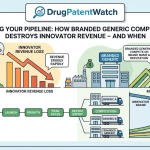
The most financially impactful tool payers wield is not a legal filing or a comment letter — it is formulary design. When a major PBM excludes a reference product from its formulary in favor of a biosimilar, it creates the revenue base that makes biosimilar manufacturer viability possible. And biosimilar manufacturer viability is the precondition for sustained patent litigation.
The Humira case again illustrates the mechanism. Express Scripts announced it would exclude Humira on its largest commercial formularies beginning in 2025 and support access to lower-cost biosimilars. CVS launched Cordavis in April 2024 and altered its coverage policy to exclude branded Humira in favor of a co-licensed biosimilar. By August 2024, CVS had converted 97% of all Humira use by its commercial customers to biosimilars, mostly Cordavis-branded.
The downstream effect on patent litigation dynamics is direct. Biosimilar manufacturers who secure formulary placement have predictable revenue; those who do not face an uncertain market even after winning a patent challenge. A branded manufacturer that understands this can use settlement offers and authorized generic agreements to fracture the biosimilar coalition — some manufacturers take the deal, reducing market pressure on the originator brand.
PBMs’ increasing use of private-label biosimilars complicates this dynamic. For 2025, the Big Three PBMs shifted national formularies to favor their private-label biosimilars over Humira and its many biosimilar competitors. Nearly all marketed Humira biosimilars are excluded from the larger PBMs’ 2025 formularies. This concentrates formulary power with the PBM-affiliated private-label product rather than distributing market share among independent biosimilar manufacturers — creating a different set of market distortions that payer advocates have not yet fully engaged.
The PTAB Battleground: Payers’ Fight to Preserve IPR Access
What Inter Partes Review Means for Drug Pricing — and Why Payers Are Defending It
The Patent Trial and Appeal Board (PTAB) and its inter partes review (IPR) procedure sit at the intersection of pharmaceutical patent strategy and drug pricing. Created by the America Invents Act in 2012, the PTAB allows any person to challenge an already-issued patent’s validity on grounds of novelty or obviousness based on prior art — at a lower burden of proof and faster timeline than district court Hatch-Waxman litigation.
For generic and biosimilar manufacturers, IPR provides leverage. A credible IPR petition can force the brand manufacturer into settlement on terms more favorable than they would accept without the threat of PTAB invalidation. For payers watching these dynamics, IPR access is not an abstraction — it is a mechanism that produces generic competition years earlier than district court litigation would allow, with corresponding formulary savings.
The PTAB’s historical performance in pharmaceutical cases has been strong for challengers. Across all technologies, the rate at which PTAB final written decisions find all challenged claims unpatentable has been rising, from 55% in 2019 to 70% in 2024. On a per-claim basis, nearly 78% of all claims that went to a final decision in 2024 were found invalid.
Platform intelligence tools like DrugPatentWatch track PTAB petition filing activity, institution decisions, and final written decisions as leading indicators of biosimilar and generic entry timelines — data that payers increasingly incorporate into formulary planning models. The ability to map a drug’s IPR exposure several years before patent expiration changes how payers negotiate rebate contracts and plan formulary redesigns.
The PREVAIL Act vs. Payer Interests: Standing Requirements and the IPR Access Debate
Payers’ engagement with PTAB became urgently defensive in 2025 when two forces converged: proposed legislation that would restrict IPR access and a dramatic shift in PTAB institution policy under new USPTO leadership.
The PREVAIL Act, introduced in Congress, would raise the IPR burden of proof to clear and convincing evidence (matching district court), impose standing requirements limiting who can petition, and restrict multiple petitions against the same patent. The legislative outcome is uncertain as of 2025. Generic industry and patient advocacy groups argue that the PTAB is functioning as intended — weeding out low-quality patents that the USPTO issued in error. Brand industry groups argue that IPR creates duplicative, unpredictable proceedings that disrupt innovation investment.
For payers, standing requirements are the most commercially dangerous provision. Under current law, any person can file an IPR petition — including organizations with no direct commercial interest in generic entry. That openness allows payer organizations, employer groups, or patient advocacy coalitions to theoretically file petitions against patents that generic manufacturers have chosen not to challenge due to market-size economics. The PREVAIL Act’s standing requirements would foreclose that option.
ERIC’s November 2025 letter to the USPTO opposing the proposed rule revising PTAB procedures explicitly invoked drug pricing policy: ERIC argued that limiting access to the IPR process ‘will not only undermine efforts to lower health care costs, but this action will directly contradict President Trump’s stated priority to make prescription drugs more affordable for Americans.’
The 2025–2026 PTAB Institution Rate Collapse: What It Means for Drug Patent Challenges
Even without PREVAIL Act passage, PTAB access has narrowed dramatically under the USPTO’s current leadership. Acting Director Coke Morgan Stewart introduced the doctrine of ‘settled expectations’ — denying institution of IPRs against patents that had been in force for many years on the grounds that the patent owner and the public had developed reasonable reliance on the patent’s validity.
Recent statistics show that for IPR petitions filed since October 1, 2024, 72% have been denied, while IPR petitions filed between January and August of that same year enjoyed a 61% institution rate — a dramatic shift that has effectively turned traditional IPR institution expectations on their head.
USPTO Director John Squires has issued 34 decisions on IPR institution since assuming personal control of the institution process in October 2025, with all 34 petitions denied. The Director appears to be using institutional silence as a policy instrument to strengthen patent rights by avoiding substantive review. The current 0% institution rate stands in sharp contrast to the PTAB’s historic institution rate of approximately 67%.
The implications for pharmaceutical patent challenges are asymmetric. Secondary pharmaceutical patents — the kind used in thickets — tend to be the oldest, having been filed shortly after a drug’s initial approval. Those are precisely the patents most likely to fall under the ‘settled expectations’ doctrine. A drug with a six-year-old formulation patent built on top of a core composition patent is now substantially harder to challenge at the PTAB than it was 18 months ago.
As IPR institution rates have collapsed, ex parte reexamination (EPR) has emerged as the primary alternative. EPR requests increased by 66.1% over 2024, reaching 726 requests, and 92–95% of those requests are being granted, compared with the institution rate of 21% for IPR petitions. But EPR does not offer the same settlement leverage as IPR — there is no adversarial hearing, no PTAB judge scrutinizing brand patent claims in real time. For payer organizations and generic manufacturers alike, the PTAB’s pivot toward patent owners represents a genuine constraint on the patent challenge toolkit.
Director Review and Political Risk: A New Variable in Pharmaceutical IP Valuation
The post-Arthrex PTAB framework — in which the USPTO Director can directly review and override PTAB institution decisions — introduces a political risk variable that did not previously exist in pharmaceutical IP models. A biologic patent thicket that survived several rounds of IPR challenges under one administration’s PTAB policy may face a different risk profile under a Director whose institution framework is calibrated differently.
An administration focused on drug access could cite public health interests to grant institution of pharmaceutical IPRs over procedural objections. Arthrex resolved an Appointments Clause violation by vesting Director Review authority in the USPTO Director, creating a mechanism by which a political appointee can directly shape what petitions the PTAB will and will not institute.
For portfolio managers holding pharmaceutical equity, this means PTAB exposure is now partly a function of electoral cycles. That is a new risk factor — one that patent cliff models built before 2021 were not designed to capture.
Drug-by-Drug: Payer Patent Pressure on the Highest-Stakes Franchises
Dupixent Patent Thicket: Sanofi’s Strategy to Hold Biosimilar Entry Until the 2040s
Dupixent (dupilumab), Sanofi and Regeneron’s interleukin-4/13 antagonist for atopic dermatitis, asthma, and related Type 2 inflammatory conditions, generated $14.7 billion in 2024 global revenues. It is one of the most commercially successful biologics ever launched.
Sanofi has been explicit with investors about its patent strategy. CSRxP highlighted that Sanofi has touted its patent thickets and legal strategy as a mechanism to block competition to Dupixent into the 2040s. The company’s investor communications treat the patent estate as a durable competitive moat — an unusual degree of candor that payer advocates have used as primary source material in reform campaigns.
Dupixent has two method-of-use patents expiring in October 2030 and another in April 2031. Those dates do not represent the full exclusivity picture, as Dupixent’s multi-indication status across chronic conditions means biosimilar uptake will move through payer contracts and prescribing habits across a longer transition window.
In November 2025, Formycon announced progress with FYB208, a dupilumab biosimilar candidate, including completed preclinical development and preparation for clinical studies. Payer organizations are tracking biosimilar development pipelines at a granular level because the timing of biosimilar entry triggers formulary planning cycles. A biosimilar with Phase I data in 2025 and a plausible 2029–2030 approval timeline changes formulary negotiations with Sanofi starting now, not in 2029.
Ozempic and Wegovy Semaglutide Patent Status: What Payers Need to Know About Novo Nordisk’s IP Strategy
The GLP-1 franchise built around semaglutide is the single most commercially significant pharmaceutical patent situation in the world right now. Ozempic and Wegovy collectively generated approximately $29 billion in 2024 revenues for Novo Nordisk. The compound patent for semaglutide expires in 2032 in the United States — but that is not the only relevant date.
Novo Nordisk has increased the price of Ozempic by more than 40% since its 2017 approval, from $676 for a four-week supply to $969 for a four-week supply in 2024. In April 2024, the FTC announced that it suspected Novo Nordisk of improperly listing 17 patents for Ozempic, covering GLP-1 delivery devices rather than the compound itself.
The FTC’s device patent challenge targeting semaglutide is the most commercially significant Orange Book action the agency has taken to date. If device patents are delisted, the 30-month stay mechanism cannot be triggered by those patents in future ANDA litigation — potentially accelerating generic entry by one to three years beyond what the patent expiration date alone would imply.
For payers currently spending between $15,000 and $20,000 annually per GLP-1 patient in commercial plans, even a six-month acceleration in generic semaglutide entry translates to hundreds of millions of dollars in aggregate savings. That financial stake explains why payer-funded coalitions have been publicly vocal about the FTC’s Ozempic patent challenge in a way that previous device patent actions did not generate.
Merck’s pembrolizumab (Keytruda) is the world’s top-selling drug by revenue, generating approximately $25 billion in 2023. Its primary patent situation is directly analogous to what Humira presented a decade earlier: a composition-of-matter patent cliff approaching, surrounded by a growing set of secondary patents on formulations, dosage forms, and delivery systems.
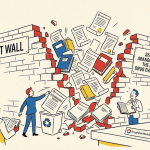
I-MAK’s analysis ‘Overpatented, Overpriced: Keytruda’s Patent Wall’ documented the scope of Merck’s patent filing activity around pembrolizumab. The structure of the Keytruda patent estate provides a template for what payer-funded patent monitoring organizations are watching across the oncology sector.
The oncology biosimilar market is still early relative to immunology. But payers running oncology benefit carve-outs are already building the analytical infrastructure to track Keytruda’s patent expiration timeline and the PTAB petition activity around its secondary patents. Tools like DrugPatentWatch allow payers to monitor every Orange Book listing, every Paragraph IV certification filed against Keytruda, and every PTAB petition filed against its patents — data that drives rebate negotiation strategy in parallel with biosimilar development timelines.
Eylea Patent Dispute: Regeneron’s High-Dose Reformulation as LOE Defense
Regeneron’s Eylea (aflibercept), an anti-VEGF agent for neovascular age-related macular degeneration (nAMD) and other retinal conditions, illustrates one of the most common patent lifecycle management (LCM) strategies: launching a new formulation as the original product approaches loss of exclusivity (LOE), then building a patent thicket around the new formulation to extend revenue protection.
Regeneron launched Eylea HD (aflibercept 8 mg), a high-dose formulation requiring less-frequent dosing, in advance of biosimilar entry into the original Eylea market. The company’s patent strategy around Eylea HD — including both composition and method-of-use patents — will determine whether biosimilar developers entering on the original product are locked out of the more-dosed high-dose market. Payer organizations tracking this dynamic have flagged it in filings to the FTC and in congressional testimony as an example of the ‘product hopping’ strategy that reform legislation targets.
The commercial consequence for payers is direct: if Eylea HD achieves prescribing dominance before biosimilar entry into the original Eylea market, the formulary savings from original Eylea biosimilars will be substantially reduced by the shift in clinical practice to the new formulation — which carries a new, independently protected patent life.
What PTAB Standing Reform Would Mean for Payer Patent Challenges
Can Payers File IPR Petitions? Current Law, PREVAIL Act Risks, and the Standing Question
Under the current AIA framework, any person may file an IPR petition — there is no standing requirement tied to commercial injury or market participation. This openness is the legal foundation for payer-side patent challenges at the PTAB. A health plan, a pharmacy benefit manager, or an employer coalition could theoretically file IPR petitions against pharmaceutical patents on drugs they cover, seeking to clear the IP landscape for generic or biosimilar competition.
In practice, very few payer organizations have directly filed IPR petitions against pharmaceutical patents. The cost of a full IPR proceeding — between $500,000 and $2 million including expert fees and legal costs — is not prohibitive for large health plans, but the organizational incentive structure has not yet matured to the point where payers have dedicated IP challenge functions staffed to litigate PTAB cases. The current model is advocacy (comments, coalitions, legislative campaigns) rather than direct litigation.
The PREVAIL Act would change the math decisively. By requiring petitioners to demonstrate that they are real parties in interest with a commercial stake in the litigation outcome, it would effectively exclude payer organizations from direct IPR petitioning. Whether health plans would have standing as ‘real parties in interest’ because they pay for the covered drugs is a legal question PREVAIL does not cleanly resolve — which means any payer that had begun building a direct challenge capability would face years of standing litigation before getting to the merits.
Citizen Petitions: The FDA Channel Payers Have Used Most Aggressively
The FDA citizen petition process is a different mechanism — and one payers have used both offensively and defensively. Under 21 C.F.R. § 10.30, any person may petition the FDA to take or refrain from taking action. In the pharmaceutical context, citizen petitions are most commonly used to delay generic approval by raising safety or manufacturing concerns that require FDA review before granting an ANDA.
Brands have historically weaponized the citizen petition process to delay generic competition, filing petitions shortly before anticipated ANDA approvals and requesting FDA action that may take 12 to 24 months to resolve. The Stop STALLING Act, introduced in the Senate in March 2025 by Senators Grassley and Klobuchar, targets branded drug companies’ use of sham citizen petitions that are designed to delay generic approvals rather than address legitimate safety concerns.
Payer coalitions have supported the Stop STALLING Act and its predecessors in prior Congressional sessions, treating citizen petition reform as a companion to patent thicket reform. Together, the two reforms address the dual delay mechanisms brands deploy: the litigation stay triggered by Orange Book patents and the administrative delay triggered by citizen petitions.
The Inflation Reduction Act’s Interaction With Payer Patent Strategy
Medicare Drug Price Negotiation: Does IRA Replace the Need for Patent Challenges?
The Inflation Reduction Act’s Medicare Drug Price Negotiation Program, which allows CMS to negotiate prices for a subset of high-expenditure drugs in Medicare Part D and Part B, is often described as an alternative to the patent challenge ecosystem. If the government can simply negotiate a lower price for a high-cost drug, the argument goes, the patent duration is less commercially important.
That framing misunderstands the mechanics. The IRA negotiation program applies to Medicare — and only to a specific set of drugs selected each year. Commercial payers, Medicaid managed care organizations, and self-funded employer plans are entirely outside the IRA negotiation framework. For them, the IRA does nothing directly to reduce drug costs.
The IRA caps annual price increases of branded prescription drugs paid by Medicare at the level of inflation and carves out an exemption to the prior prohibition on federal government involvement in Medicare drug price negotiations. As of August 2024, CMS published Maximum Fair Prices (MFPs) for the 10 drugs selected for negotiations completed in 2024.
The IRA actually sharpens payer interest in patent challenges by creating a pricing disparity: IRA-negotiated Medicare prices may fall below commercial payer prices, making commercial payers the last constituency paying full monopoly prices. That disparity concentrates the financial incentive for patent challenges in the commercial payer community.
IRA Small-Molecule Penalty and the Biosimilar Cliff: A New LOE Dynamic Payers Must Model
The IRA creates a structural distortion in small-molecule drug development that has direct implications for patent challenge economics. Small molecules that remain on the market longer become eligible for Medicare negotiation sooner than biologics under the IRA’s differential exclusivity framework. This gives manufacturers an incentive to shift investment from small-molecule oral drugs toward biologics, where the 13-year exclusivity runway before IRA negotiation eligibility provides longer protection.
The downstream consequence for payers: the generics-dependent cost management model that works well for small-molecule drugs faces a new headwind as manufacturers shift composition toward biologics. That shift makes biosimilar-based payer savings — and the patent challenge strategies that accelerate them — more commercially important, not less, over the 2025–2035 horizon.
Pay-for-Delay Settlements: Payers’ Long-Running Battle Against Reverse Payments
How Authorized Generic Agreements Undermine the Payer Savings Model
Pay-for-delay settlements — also called reverse payment settlements under the framework established by the Supreme Court’s 2013 FTC v. Actavis decision — remain a contested mechanism in pharmaceutical patent litigation. A branded manufacturer pays a generic challenger to delay market entry, typically including the grant of an ‘authorized generic’ license that allows the generic company to sell a brand-approved copy at a reduced price while the brand retains most of its market.
From a payer perspective, authorized generic settlements are structurally problematic even when they produce some price reduction. The first-filer generic in a Hatch-Waxman challenge is entitled to 180 days of market exclusivity before other generics can enter. When a brand resolves litigation with the first-filer through an authorized generic agreement, the competitive market that eventually produces 80–90% price reductions is delayed. Authorized generics are legal; they are also structurally designed to reduce the reward for patent challenges that Hatch-Waxman was designed to encourage.
In 2025, the Association for Accessible Medicines and the IQVIA Institute for Human Data Science collaborated on a study of every patent settlement entered since the Supreme Court’s 2013 decision in FTC v. Actavis. Their analysis found that generics and biosimilars entering the market early due to settlements have generated a mean of $5 billion in savings per molecule, and that in total the healthcare system has saved $423 billion due to settlements.
That figure is real, but it benchmarks against the counterfactual of no early entry — not against the counterfactual of full competitive entry. Payer advocates argue the $423 billion represents settlements where generics took money to delay; the question is how much larger the number would be if settlements were prohibited and generic challengers had to litigate to judgment.
FTC v. Express Scripts: The Landmark February 2026 Settlement and What It Signals
In February 2026, the FTC secured a landmark settlement with Express Scripts described as being designed to lower drug costs for American patients. While specific terms were not fully disclosed at the time of this analysis, the settlement followed the FTC’s multi-year investigation of PBM practices and represents the most significant regulatory action targeting payer-side drug cost dynamics since the ACA.
The settlement signals that the FTC under Chairman Andrew Ferguson — whose appointment initially raised concerns among drug pricing reformers given his anti-regulation posture — is willing to use enforcement against PBM practices as a vehicle for drug cost reduction. Whether that enforcement is structurally aligned with payer patent challenge strategies remains to be seen, but the FTC’s dual role (challenging Orange Book patent listings and policing PBM conduct) positions it as the most consequential regulatory actor in the payer-patent intersection.
Biosimilar Market Entry Timelines: How Payer Advocacy Moves the Generic Entry Clock
What Happens When Payers Win: Generic Entry Savings Models for the 2025–2030 Patent Cliff
The commercial payoff from payer patent advocacy is ultimately measured in formulary savings after generic or biosimilar entry. The Humira biosimilar market provides the most recent at-scale example of what that payoff looks like.
Nearly all Part D Prescription Drug Plans (96%) and 88% of Medicare Advantage Prescription Drug plans covered at least one of the 10 available Humira biosimilars on their 2025 formulary. This represents substantial growth from 2024, when only 65% of PDPs and 52% of MAPD plans covered at least one biosimilar.
Formulary coverage translates directly to savings only when cost-sharing structures encourage biosimilar selection. Almost none of the formularies that covered both Humira and its biosimilars used preferential tier placement to encourage biosimilar use. Ninety-nine percent placed Humira and its biosimilars on the same cost-sharing tier. That gap between coverage and utilization is a recognized implementation problem that payer advocates are now targeting directly — pushing CMS and commercial plan guidance to require differential cost-sharing for biosimilars where interchangeability designation applies.
The savings projection for the broader 2025–2030 patent cliff is substantial. Generics and biosimilars saved the U.S. healthcare market more than $400 billion in 2022, and estimates suggest that use of biosimilars could save at least $38 billion and as much as more than $120 billion over five years. Payer advocacy that accelerates entry by even 12 months across multiple blockbuster drugs translates to meaningful percentages of that figure.
The Stelara Biosimilar Launch: A 2025 Case Study in Payer-Driven Market Transition
Ustekinumab (Stelara), Johnson & Johnson’s interleukin-12/23 antagonist for plaque psoriasis and Crohn’s disease, became the major biosimilar launch of 2025. Its transition illustrates both the power of payer formulary pressure and the complications introduced by PBM private-label dynamics.
For the 2025 launch of Stelara biosimilars, Express Scripts announced it would remove the reference product from its 2026 formulary while supporting biosimilar access — though at pricing still structured around list prices substantially below the reference.
The Stelara situation also demonstrates the limits of patent challenge victories without parallel formulary strategy. J&J settled biosimilar patent litigation with Amgen and other manufacturers, allowing entry at patent-defined dates rather than through court-ordered early access. Payer formulary pressure — excluding the reference product — is what converts that patent settlement into actual market share transition. Without the formulary lever, patent challenge victories can produce approved biosimilars that sit on shelves while physicians continue prescribing the reference product.
Biosimilar Interchangeability and Automatic Substitution: The Payer Policy Prize
The FDA’s interchangeability designation for biosimilars — which permits pharmacist-level substitution without a new physician prescription in states that allow it — is one of the most commercially significant downstream consequences of patent challenge activity. Once a biosimilar achieves interchangeability, payers can drive substitution through formulary design without requiring physician engagement at the point of prescribing.
As of 2025, the FDA has granted interchangeability designation to more than 15 products, predominantly insulin analogs and adalimumab biosimilars. But the path to interchangeability requires biosimilar manufacturers to demonstrate switching equivalence — data that takes time and resources to generate, typically adding 12 to 24 months to the development timeline beyond basic biosimilar approval.
Payer groups have advocated for accelerated FDA guidance on interchangeability standards, arguing that the current data requirements add cost without meaningful clinical benefit in most cases. That argument has gained ground in FDA’s internal deliberations, with recent guidance documents providing clearer pathways for biosimilar manufacturers to design switching studies.
The Role of DrugPatentWatch in Payer Patent Intelligence
How Payers Use Patent Database Tools to Build Formulary Strategy
The operational foundation of payer patent watchdog activity is patent data intelligence. To challenge a patent, advocate for regulatory action, or design a formulary strategy around anticipated generic entry, a payer needs accurate, real-time information about a drug’s full IP estate: every Orange Book listing, every PTAB petition, every Paragraph IV certification, every district court case status, and every FDA exclusivity designation that affects entry timing.
DrugPatentWatch has become a central reference tool in this ecosystem, offering pharmaceutical patent expiration data, Orange Book analysis, PTAB petition tracking, and Hatch-Waxman litigation databases that allow payer IP teams to build multi-year formulary scenarios around specific drugs. For a health plan modeling its Dupixent formulary strategy through 2032, the ability to cross-reference Sanofi’s patent thicket map against active biosimilar development pipelines and PTAB petition history is not optional — it is the analytical foundation for every negotiation with the manufacturer.
The same data set drives payer advocacy. When CSRxP commissions analysis quantifying the cost of a specific patent thicket, the primary data source is the Orange Book and patent filing databases. When ERIC files comments at the USPTO targeting terminal disclaimer practice, the specific patent examples cited come from pharmaceutical patent databases that map continuation practice across blockbuster drug franchises.
‘The pharmaceutical patent system isn’t a side issue for payers — it is the mechanism that sets the clock on when they can buy generic instead of brand. Every year of additional exclusivity has a direct dollar value. Payers who don’t track the patent clock are making formulary decisions blind.’ — Analysis framework, DrugPatentWatch [1]
What Pharma Companies Are Doing in Response: Defensive Strategies Against Payer Patent Pressure
PhRMA’s Counter-Argument: Innovation Incentives vs. Patent Thicket Characterization
The pharmaceutical industry’s primary response to payer patent challenges runs through PhRMA, the industry’s lobbying organization. PhRMA’s argument has two components: first, that what payers call ‘thickets’ are legitimate portfolio protection strategies that reflect genuine incremental innovation; second, that weakening patent protection will reduce R&D investment and slow the development of future medicines.
PhRMA has repeatedly tried to dispel the ‘myths’ surrounding ‘so-called patent thickets’ and ‘unsubstantiated allegations’ about Big Pharma’s abuses of the U.S. patent system, writing in comments to the USPTO: ‘Narratives about the quantity of patents and the families of patents comprising so-called patent thickets are driven by questionable data and misunderstandings about patent coverage.’
The strength of the PhRMA argument depends heavily on which patents are at issue. For composition-of-matter patents that protect genuine molecular innovation, the incentive-for-innovation argument is strong. For continuation patents covering delivery devices, patient titration guides, or minor formulation changes, the argument is weaker — and the patent quality data the FTC has developed through its Orange Book challenges is specifically designed to separate these categories.
Authorized Generic Deals, Pay-for-Delay, and Settlement Strategy: Pharma’s Litigation Endgame
When litigation proceeds and brand manufacturers face credible patent challenge risks, the standard defensive playbook involves settlement offers designed to resolve litigation short of a court ruling on patent validity. From a brand perspective, settlement is superior to a validity ruling: a final written decision at the PTAB canceling patent claims is a permanent loss that affects all subsequent generic challengers, while a settlement can include terms that limit market entry to a single challenger for a defined period.
Statistics from 2024 show a clear advantage for innovators in resolved Hatch-Waxman court cases. Innovator companies prevailed on the issues 20% of the time, while generic companies prevailed in only 2% of cases — though these figures exclude the large number of cases that are settled. However, some analyses suggest that when generic companies challenge secondary patents and see the litigation through to a final decision, they win most of the time.
That pattern — secondary patent challenges succeeding at trial while rarely reaching trial — is the structural feature payer advocates want to change. Legislative proposals limiting patent assertions per litigation, combined with FTC Orange Book enforcement that removes improper listings before litigation is triggered, are designed to reduce the settlement leverage brand manufacturers derive from forcing multi-patent litigation gauntlets.
Product Hopping and the New Formulation Defense: How Brands Shift the Formulary Playing Field
Product hopping — launching a new formulation of an existing drug and driving prescriber migration before generic entry into the original formulation — is one of the most commercially effective patent lifecycle management strategies available to brand manufacturers. The strategy exploits a gap in generic substitution law: even if an interchangeable generic exists for the original formulation, pharmacists cannot automatically substitute it for a prescription written for the new formulation unless an interchangeable generic for the new formulation also exists.
The lag between new formulation launch and generic entry into that formulation can be seven to ten years, depending on the patent estate supporting the new product. During that window, prescriber practice shifts to the new formulation, reference product market share migrates, and the generic entering against the original formulation faces a contracting patient population.
Payer formulary responses to product hopping include prior authorization requirements on new formulations, step therapy protocols that require the original formulation first, and tiered cost-sharing that places the new formulation at a higher tier than the original. These formulary levers push back on the market migration that makes product hopping effective — but they require payers to identify the strategy early enough to implement formulary controls before migration reaches a tipping point.
Regulatory and Legislative Horizon: What Payers Are Watching in 2025–2027
The Cornyn-Blumenthal Act Reintroduction: Timeline and Commercial Implications for Patent Thickets
Senators Cornyn, Blumenthal, Grassley, and Durbin reintroduced the Affordable Prescriptions for Patients Act in March 2025. The Congressional Budget Office estimated that enacting the bill would reduce direct spending by $2.4 billion and increase revenues by $585 million over the 2024–2034 period, for a net deficit reduction of $3.0 billion.
The bill’s commercial implications, if enacted, are specific to patent thicket cases: it limits each biologic litigation to a single patent per terminal disclaimer group, which prevents the serial assertion of 20, 30, or 40 continuation patents in a single case. That limit would not affect composition-of-matter patents — it targets specifically the continuation thicket built around an approved drug after its first-generation patent is secured.
For branded manufacturers with large continuation estates around biologics — AbbVie, Regeneron, Sanofi, Amgen, Bristol Myers Squibb — the bill represents a material change to their biosimilar litigation strategy. The Cornyn-Blumenthal framework would force manufacturers to select their strongest patent for each case rather than exhausting biosimilar challengers through volume.
March-In Rights and Bayh-Dole: The Government Patent Leverage Payers Are Not Using Yet
The Bayh-Dole Act’s march-in rights provision gives the federal government the ability to license a patent to third parties when the patent was developed with federal funding and the patent owner fails to make the invention available on reasonable terms. No administration has ever exercised march-in rights, but the Biden administration’s NIST guidance in 2023–2024 proposed including price as a factor in march-in determinations — a framing that would make march-in rights practically available for high-priced drugs with federal research origins.
A bipartisan coalition in Congress recognized and appeared to support the use of drug pricing as a factor in NIST’s draft guidance. The question remains whether the proposed expansion of march-in rights is merely political saber rattling or will result in reduced drug prices.
Payer organizations have not yet made march-in rights a primary advocacy priority, in part because the Trump administration’s posture on drug-price-linked march-in rights has been skeptical. But the legal framework exists, and a future administration or Congressional action could activate it. Payer IP teams that have not modeled march-in risk for their high-exposure drugs are working with an incomplete picture.
Trump Administration Drug Pricing Executive Orders: Interplay With Patent Challenge Strategy
President Trump escalated pressure on the pharmaceutical industry by sending letters to 17 major drug companies demanding they lower U.S. drug prices to match international levels, requiring them to provide their full drug portfolios to Medicaid patients at prices aligned with other wealthy countries and guarantee new drugs will be offered at these lower prices to Medicare, Medicaid, and commercial payers.
The most-favored-nation pricing pressure from the executive branch and the patent challenge ecosystem from payer advocacy are pursuing the same commercial outcome through different mechanisms. When both converge on the same drug franchise — as they have on Ozempic, Humira, and the broader GLP-1 class — manufacturers face simultaneous regulatory pressure on list prices and IP infrastructure pressure on exclusivity duration. That combination is more commercially damaging than either pressure alone.
State-Level Action: PBM Transparency Laws and Patent Reform at the State Level
Multiple states passed PBM transparency and spread pricing prohibition legislation between 2023 and 2025, requiring PBMs operating in their markets to disclose rebate retention rates and prohibiting profit-taking on the spread between plan charges and pharmacy reimbursement.
State-level patent reform is more constrained because patent law is fundamentally federal — the USPTO and federal courts control the terrain. But states have moved on parallel fronts: state drug pricing transparency requirements, automatic substitution laws for interchangeable biosimilars, and step therapy reform statutes that facilitate biosimilar utilization by reducing administrative barriers to physician-authorized brand-to-biosimilar switching.
Commercial Intelligence: What This Means for Pharma Investors and IP Teams
Pharma IP Valuation in a Payer-Challenge World: Adjusting Patent Cliff Models
The emergence of payers as active patent system participants changes the risk calculus for pharmaceutical IP valuation models. Patent analysts historically modeled LOE risk based on: (1) the patent expiration dates of Orange Book listings; (2) the presence of filed Paragraph IV certifications; and (3) the litigation track record of the parties involved. Payer activism adds a fourth variable: the organizational incentive and financial capacity of the commercial purchaser community to accelerate or amplify the challenge process.
A drug whose patent thicket is specifically targeted by CSRxP, ERIC, and AARP simultaneously faces a materially different regulatory risk profile than a drug generating similar monopoly rents but attracting less payer advocacy attention. The former is more likely to face FTC Orange Book challenges, more likely to be cited in congressional testimony, and more likely to be the subject of PTAB reform arguments that accelerate its secondary patent exposure.
For investors modeling companies like AbbVie, Sanofi, Novo Nordisk, or Regeneron, incorporating payer advocacy intensity as a patent risk variable is no longer optional. The Humira situation — where $7 billion in annual U.S. revenues collapsed by more than a third within 24 months of biosimilar entry — is now the data point that quantifies what coordinated payer-driven competition looks like at scale.
Generic and Biosimilar Manufacturers: How to Use Payer Patent Intelligence
Generic and biosimilar manufacturers have the most direct operational interest in payer patent challenge activity. Payer advocacy that removes an improper Orange Book listing eliminates a 30-month stay trigger — reducing litigation risk for ANDA filers at no cost to the generic manufacturer. Payer advocacy that defeats a patent thicket reform rule at the USPTO preserves IPR access as a litigation tool. Payer formulary exclusion of reference products guarantees the revenue base that makes biosimilar market entry economically viable.
The strategic implication: generic and biosimilar manufacturers should be treating payer coalitions as intelligence sources and coordination partners rather than passive beneficiaries. Where payer advocacy is targeting a specific patent thicket — Dupixent, Ozempic, Keytruda — the legal basis for an IPR petition against the same patents is stronger because payer-funded economic analysis has documented the competitive harm and the FTC is already scrutinizing the relevant Orange Book listings.
Branded Pharma Risk Scenarios: How to Model Payer Patent Pressure in Revenue Forecasts
The following scenarios represent the spectrum of payer patent challenge outcomes for branded manufacturers defending large thickets:
Best case (brand perspective): PREVAIL Act passes, PTAB institution rates remain suppressed, and FTC Orange Book challenges are stayed pending litigation. Secondary patents hold through negotiated settlements with first-filer generic manufacturers, and authorized generic agreements limit market disruption.
Base case: FTC continues Orange Book enforcement removing device and REMS patents. PTAB remains accessible at reduced institution rates for composition and formulation patents. Cornyn-Blumenthal passes, limiting patent assertions in biosimilar litigation. Biosimilar entry occurs 12–24 months earlier than pre-reform models projected for 2–3 major franchises per year.
Stress case (brand perspective): PREVAIL Act fails. PTAB institution rates recover under a new Director. March-in rights guidance is revived under a different administration. Payer organizations develop direct IPR filing capabilities targeting secondary pharmaceutical patents on drugs generating over $2 billion in annual U.S. revenue.
Paragraph IV Certification Strategy in a Payer-Influenced Landscape
How Payer-Driven FTC Enforcement Changes the Paragraph IV Litigation Calculus
The Paragraph IV certification system — under which generic filers certify that listed Orange Book patents are invalid or not infringed — is the primary trigger for Hatch-Waxman litigation. When the FTC removes improper Orange Book listings, it removes the legal trigger for that litigation entirely. Generic manufacturers no longer need to certify against a delisted patent, and brands can no longer obtain the automatic 30-month stay that the listing previously provided.
The operational impact is a reduction in the number of patents each ANDA filer must navigate before receiving FDA approval. For drugs like Ozempic, where the FTC targeted 17 device-related Orange Book patents, the removal of those listings potentially reduces the litigation burden for generic semaglutide filers by a proportional amount — freeing legal resources to contest remaining composition and formulation patents rather than fighting device patents that should never have been listed.
Payer organizations understand this mechanism well enough to have made FTC Orange Book enforcement a primary advocacy priority. The Commonwealth Fund analysis noted that the FTC’s challenge authority could allow PTAB decisions to be sufficient for ANDA certification and could allow any person to file a challenge to a patent — reforms that would directly expand the universe of actors who can influence the Paragraph IV process.
Settlement Timing and 180-Day Exclusivity: How Payer Advocacy Affects First-Filer Economics
The 180-day exclusivity period granted to the first generic filer in a successful Paragraph IV challenge is the primary economic incentive that drives generic investment in patent challenges for high-revenue drugs. During the exclusivity window, the first-filer is the only generic competitor in the market, commanding a price premium above the eventual generic floor.
Payer advocacy that removes Orange Book patents through FTC enforcement can affect the 180-day exclusivity calculation. If the patents against which a first-filer certified are removed from the Orange Book, the certification technically becomes moot — raising questions about whether the first-filer’s exclusivity entitlement survives the delisting. This is an open legal question the FDA has not fully resolved, and payer groups have flagged it as a potential unintended consequence of aggressive Orange Book enforcement.
The Future State: Where Payer Patent Challenges Go From Here
Direct IPR Filing by Health Plans: Is It Coming?
The organizational preconditions for payers to file their own IPR petitions are gradually developing. Large self-insured employers and health plans now have internal pharmacy intelligence teams tracking patent expiration data, some using platforms like DrugPatentWatch to map IP estates. The transition from passive monitoring to active filing requires legal infrastructure — IPR proceedings require specialized patent law expertise that most health plan legal departments do not have in-house.
A plausible intermediate step is the formation of patent challenge consortia — structures through which multiple payers pool resources to fund IPR petitions filed by a dedicated entity. The model is not unprecedented: research coalitions and advocacy organizations have funded PTAB proceedings in other technology sectors. In pharmaceuticals, the challenge is finding the organizational form that preserves payer standing if PREVAIL Act-style standing requirements are enacted.
The PTAB’s current 0% institution rate under Director Squires diminishes the immediate incentive for payers to build direct filing capability. But that rate will shift with the next administration or the next Director. Payers building patent challenge infrastructure now are positioning for the next permissive PTAB cycle rather than the current restrictive one.
AI-Powered Patent Analysis: How Machine Learning Is Changing Payer IP Intelligence
The emergence of AI-assisted patent analysis tools is reducing the cost barrier for payers to conduct the kind of deep patent estate analysis that previously required specialist law firm engagements. Large language model-based tools can now process the full Orange Book listing set for a drug franchise, identify continuation patterns, flag potential double-patenting issues, and generate preliminary invalidity arguments based on prior art databases — in a fraction of the time that manual analysis required.
For payer IP teams, this means that the analytical foundation for an advocacy campaign or IPR petition can be assembled at substantially lower cost. The transition from ‘this drug has a complex patent thicket’ to ‘here are five specific continuation patents that appear vulnerable to an obviousness-type double patenting challenge with these specific prior art references’ is now achievable with internal resources rather than requiring six-figure external counsel engagement.
The same technology is available to branded manufacturers defending their thickets — AI tools are helping brands build more robust prosecution records and anticipate challenge arguments. But the cost reduction advantages flow more strongly to challengers, who must prove invalidity against a presumption, than to patent holders, who benefit from that presumption regardless of the cost of maintaining it.
What the Next Patent Thicket Target Looks Like: Forecasting Where Payer Pressure Moves After GLP-1
The GLP-1 franchise has concentrated payer patent attention in 2024–2025. What comes next depends on two factors: which drugs are approaching the point where secondary patents represent the primary barrier to biosimilar entry, and which drugs have the revenue scale to justify the organizational investment in patent challenge campaigns.
The obvious candidates in the 2026–2030 window are:
Dupixent (dupilumab) — Sanofi’s publicly stated thicket-to-2040s strategy makes it the highest-profile near-term target.
Keytruda (pembrolizumab) — revenue scale and the Humira precedent make it the likely center of the next oncology biosimilar patent campaign.
Ibrance (palbociclib) — CDK4/6 inhibitor class with approaching primary patent cliff and growing secondary patent estate.
Entresto (sacubitril/valsartan) — Novartis’s heart failure combination product with LOE approaching and a device-delivery component that has already attracted FTC scrutiny.
The unifying characteristic across all these franchises: large commercial payer expenditure, complex secondary patent estates, and active biosimilar or generic development pipelines that need payer formulary backing to be commercially viable.
Key Takeaways
Payers have moved from passive observers to active participants in the pharmaceutical patent challenge ecosystem through USPTO comment campaigns, FTC advocacy, legislative lobbying, direct IPR standing preservation fights, and formulary exclusion as a financial enabler of biosimilar competition.
The ERISA Industry Committee, Purchaser Business Group on Health, Campaign for Sustainable Rx Pricing, and AARP collectively represent more covered lives and more drug expenditure than any single generic manufacturer — their advocacy has the scale to influence regulatory outcomes that individual generic challengers cannot.
The FTC’s Orange Book enforcement campaign — removing hundreds of device and REMS patents improperly listed by brands including Novo Nordisk, Teva, and inhaler manufacturers — is the most direct regulatory mechanism payers have successfully activated, with several hundred patents removed by December 2025.
The PTAB’s 2025–2026 institution rate collapse under Director Squires materially reduces the challenge toolkit for secondary pharmaceutical patents, making Orange Book enforcement and legislative reform more important in the near term than IPR-based strategies.
The Cornyn-Blumenthal Affordable Prescriptions for Patients Act, passed by the Senate in July 2024 and reintroduced in March 2025, is the most commercially significant pending pharmaceutical patent legislation for biosimilar market access.
Payer formulary exclusion of reference products is both a cost-management tool and a patent challenge financing mechanism — without it, biosimilar manufacturers lack the revenue certainty to sustain the litigation that clears IP barriers.
GLP-1 receptor agonists (Ozempic, Wegovy) and the interleukin biologics (Dupixent) are the highest-priority targets for payer patent advocacy through 2030, given revenue scale and the documented secondary patent strategies of Novo Nordisk and Sanofi.
AI-powered patent analysis tools are reducing the cost of payer IP intelligence, making direct IPR filing by health plans or purchaser consortia operationally plausible within the next three to five years.
Frequently Asked Questions
Can health plans or insurers directly file inter partes review petitions against pharmaceutical patents?
Yes, under current law. The America Invents Act allows any person to file an IPR petition at the PTAB — there is no standing requirement tied to commercial participation in a drug market. Health plans, employer coalitions, and other payer organizations could file IPR petitions today. In practice, most payer patent challenge activity remains in advocacy, lobbying, and coalition-building rather than direct PTAB filings, due to cost and organizational structure. If the PREVAIL Act passes with standing requirements, this would change materially.
What is a pharmaceutical patent thicket and why do payers care about it?
A patent thicket is a dense web of overlapping patents on a single drug product — covering the molecule, its formulations, its delivery devices, its manufacturing processes, and its methods of use — designed so that a generic or biosimilar entrant must invalidate dozens of patents simultaneously to enter the market. Payers care because each successfully defended patent in the thicket extends the period of brand-only pricing, directly increasing pharmacy benefit costs for plan sponsors, premium payers, and patients.
What drugs are most targeted by payer patent advocacy in 2025–2026?
The highest-profile current targets are semaglutide (Ozempic, Wegovy) — where the FTC targeted 17 improper Orange Book patents in 2024 — and dupilumab (Dupixent), where Sanofi has publicly described a thicket strategy extending into the 2040s. Pembrolizumab (Keytruda) and adalimumab (Humira/biosimilars) are also central, with Humira having already experienced biosimilar entry and serving as the reference model for payer formulary transition strategies.
How does Orange Book patent delisting affect generic drug approval timelines?
When the FTC successfully challenges a patent listing and it is removed from the Orange Book, generic manufacturers filing ANDAs against that drug no longer need to certify against the delisted patent. This eliminates the 30-month stay trigger tied to that patent, meaning the FDA can approve the ANDA without waiting for litigation to resolve. For drugs where device or REMS patents were the primary stay triggers, delisting can accelerate generic approval by one to three years.
What is the Affordable Prescriptions for Patients Act (Cornyn-Blumenthal) and what would it do?
The Affordable Prescriptions for Patients Act limits the number of patents a brand manufacturer can assert in biosimilar or generic litigation — specifically restricting patent thickets by requiring manufacturers to select a single representative patent per continuation group rather than asserting all linked patents simultaneously. It passed the U.S. Senate unanimously in July 2024 and was reintroduced in March 2025. The CBO estimated a net deficit reduction of $3 billion over 10 years from the bill’s enactment.
How does payer formulary exclusion of reference products affect biosimilar patent litigation?
Formulary exclusion by major PBMs (Caremark, Express Scripts, Optum Rx) guarantees biosimilar manufacturers a minimum market share, which provides revenue certainty during the multi-year horizon of patent litigation. Without formulary backing, a biosimilar manufacturer that wins a patent challenge may enter a market where prescribing inertia keeps brand market share above 70% — reducing the financial return on the litigation investment. PBM formulary exclusion converts patent challenge victories into actual market transitions.
What is the PREVAIL Act and why are payer groups opposing it?
The PREVAIL Act would raise the burden of proof in IPR proceedings from ‘preponderance of the evidence’ to ‘clear and convincing evidence,’ impose standing requirements limiting who can file petitions, and restrict multiple petitions against the same patent. Payer groups, led by ERIC and PBGH, oppose it because it would reduce access to the primary administrative mechanism for invalidating low-quality secondary patents — effectively protecting the patent thicket strategies that drive up drug costs for employer plan sponsors and their covered employees.
How does the IRA Medicare Drug Price Negotiation interact with payer patent challenge strategy?
The IRA’s negotiation program applies only to Medicare Part D and Part B, not to commercial insurance or self-funded employer plans. Commercial payers are therefore the last market segment paying full monopoly prices for blockbuster drugs. This dynamic concentrates the financial incentive for patent challenges in the commercial payer community — making payer-funded advocacy for faster generic and biosimilar entry more valuable, not less, as the IRA reduces prices only for the Medicare portion of drug expenditure.
What happened to PTAB pharmaceutical patent institution rates in 2025–2026?
Institution rates collapsed sharply beginning in late 2024 under Acting Director Coke Morgan Stewart, who introduced the ‘settled expectations’ doctrine denying IPR institution for patents in force for six or more years. Under Director John Squires, who assumed personal control of institution decisions in October 2025, the institution rate briefly hit 0%, with 34 consecutive petitions denied without substantive analysis. The historic institution rate for pharmaceutical IPR petitions had been approximately 61–73%, making the 2025–2026 period a dramatic reversal that has pushed patent challengers toward ex parte reexamination and district court strategies.
What is the payer business case for investing in patent challenge infrastructure?
For a large commercial health plan covering 500,000 lives on a drug like Dupixent at a net cost of $20,000 per patient per year, even 5,000 patients represents $100 million in annual pharmacy spend. A one-year acceleration in biosimilar entry for a drug of that scale, producing a 40% price reduction consistent with the Humira precedent, translates to $40 million in annual savings. Against that, the cost of participating in patent challenge advocacy — including legal fees for PTAB comment filings, coalition dues, and analytical staff — is an order of magnitude smaller. The financial case is straightforward for any plan with significant specialty drug exposure.
Sources
DrugPatentWatch. (2026, March 13). The $80 Billion Patent Game: What Drug Prices Actually Cost You. https://www.drugpatentwatch.com/blog/balancing-patents-drug-prices/
DrugPatentWatch. (2026, March 20). The Complete Architecture of Pharmaceutical Drug Pricing. https://www.drugpatentwatch.com/blog/deconstructing-drug-pricing-strategy-for-big-pharma/
Campaign for Sustainable Rx Pricing. (2026, March 11). Fact Sheet: Big Pharma’s Patent Abuse Costs American Patients. https://www.csrxp.org/fact-sheet-big-pharmas-patent-abuse-costs-american-patients-taxpayers-and-the-u-s-health-care-system-billions-of-dollars-2/
Commonwealth Fund. (2025, November 13). How Drugmakers Use the Patent Process to Keep Prices High. https://www.commonwealthfund.org/publications/explainer/2025/nov/how-drugmakers-use-patent-process-keep-prices-high
Evernorth. (2025, June 4). How Drugmakers Exploit the Patent System to Delay Competition and Inflate Prices. https://www.evernorth.com/articles/how-drugmakers-exploit-patent-system-delay-competition-and-inflate-prices
Mintz. (2025, August 28). The PTAB Pendulum Swings: How IPR Denials Are Reshaping Patent Owner and Challenger Strategies. https://www.mintz.com/insights-center/viewpoints/2231/2025-08-28-ptab-pendulum-swings-how-ipr-denials-are-reshaping
Patently-O. (2025, November 14). An Era of No: The USPTO’s New 0% Institution Rate. https://patentlyo.com/patent/2025/11/usptos-institution-rate.html
GreyB. (2026, April 2). PTAB New Rules in 2026: Trends, Tensions & the Future of Patent Disputes. https://greyb.com/blog/ptab-reality-2026
The Regulatory Review. (2024, May 28). Challenging Drug Patents to Lower Prices. https://www.theregreview.org/2024/05/28/challenging-drug-patents-to-lower-prices/
The ERISA Industry Committee. (2023, February 1). ERIC Calls on the USPTO to Improve the Patent Access Process. https://www.eric.org/press_release/the-erisa-industry-committee-calls-on-the-u-s-patent-and-trademark-office-to-improve-the-patent-access-process-to-enhance-prescription-drug-competition/
The ERISA Industry Committee. (2025). Advancing Patent Policies. https://www.eric.org/advancing-patent-policies/
The ERISA Industry Committee. (2024, July 11). ERIC Praises USPTO Proposed Rule to Reform Patent Process. https://www.eric.org/press_release/the-erisa-industry-committee-praises-u-s-patent-and-trademark-office-proposed-rule-to-reform-patent-process-improve-competition-and-make-prescription-drugs-more-affordable/
Campaign for Sustainable Rx Pricing. (2024, September 24). CSRxP Joins Fellow Advocates to Urge House Judiciary Committee to Crack Down on Patent Abuse. https://www.csrxp.org/csrxp-joins-fellow-advocates-for-lower-drug-prices-to-urge-house-judiciary-committee-to-crack-down-on-big-pharmas-patent-abuse/
Campaign for Sustainable Rx Pricing. (2024, December 5). USPTO Withdrawal of Patent Thicket Rule Adds to Urgency for Congress to Pass Cornyn-Blumenthal. https://www.csrxp.org/csrxp-uspto-withdrawal-of-patent-thicket-rule-adds-to-urgency-for-congress-to-pass-cornyn-blumenthal/
Business Group on Health. (2026). Prescription Drug Pricing and Pharmaceutical Supply Chain Reform Policy Position Statement. https://www.businessgrouphealth.org/en/resources/business-group-on-healths-position-statement-on-drug-pricing
Congressional Research Service. (2026, January 21). Patent Listing in FDA’s Orange Book. https://www.congress.gov/crs-product/IF12644
BioSpace. (2024, October 3). Patent Thickets in Federal Government’s Crosshairs as Election 2024 Looms. https://www.biospace.com/policy/patent-thickets-in-federal-governments-crosshairs-as-election-2024-looms
Association for Accessible Medicines. (2026). Intellectual Property & Patent Reform. https://accessiblemeds.org/advocacy/intellectual-property-patent-reform/
Drug Channels. (2025, April 1). The Big Three PBMs’ 2025 Formulary Exclusions. https://www.drugchannels.net/2025/04/the-big-three-pbms-2025-formulary.html
Office of Inspector General, HHS. (2025, May 7). Most Medicare Part D Plans’ Formularies Included Humira Biosimilars for 2025. https://oig.hhs.gov/reports/all/2025/most-medicare-part-d-plans-formularies-included-humira-biosimilars-for-2025/
Federal Trade Commission. (2025–2026). Health Care Competition. https://www.ftc.gov/news-events/topics/competition-enforcement/health-care-competition
PMC / PLOS Medicine. (2025, February 12). Predicting Patent Challenges for Small-Molecule Drugs: A Cross-Sectional Study. https://pmc.ncbi.nlm.nih.gov/articles/PMC11867330/
DrugPatentWatch. (2026, March 4). Predict the Patent Cliff. https://www.drugpatentwatch.com/blog/predict-the-patent-cliff/
Mintz. (2025, November 4). PBM Policy and Legislative Update — Summer/Fall 2025. https://www.mintz.com/insights-center/viewpoints/2025-11-04-pbm-policy-and-legislative-update-summer-fall-2025
American Medical Association. (2026, March 10). Targeted PBM Reforms Aim to Boost Fairness, Lower Costs. https://www.ama-assn.org/public-health/behavioral-health/targeted-pbm-reforms-aim-boost-fairness-lower-costs