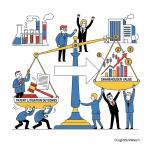
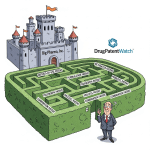
A courtroom win in Hatch-Waxman litigation only resolves the specific patent claims that went to trial. It does not resolve the underlying commercial dispute, and it does not stop a brand company from filing a new continuation patent and starting the fight over again. Sandoz won three separate rounds of litigation over Allergan’s eyelash-growth drug Latisse (bimatoprost) between 2014 and 2017, launched its generic in December 2016, and then lost a fourth round outright: a Colorado jury ordered it to pay $39 million in May 2023.[1][2] The Federal Circuit did not reverse that verdict until November 18, 2025 — two and a half years later, and roughly fifteen years after the first Paragraph IV certifications were filed.[1] The lesson for generic challengers is not that winning is worthless. It is that a single win is rarely the last word, and the balance-sheet math has to account for the rounds still to come.
The Findings That Matter
Sandoz needed four separate rounds of litigation and roughly fifteen years — 2010 to November 2025 — to fully close out Allergan and Duke University’s patent claims on generic bimatoprost, despite winning the first three rounds outright.[1][3][4]
The one round Sandoz lost, a rare jury trial in the District of Colorado, cost it $39 million in damages — a verdict that stood on the books for over two years before the Federal Circuit reversed it without remand.[1][2]
R Street Institute estimates a single Hatch-Waxman patent case costs a generic company $6.2 million on average, while a brand can obtain a new continuation patent capable of supporting another lawsuit for as little as $25,000 — a roughly 250-to-1 cost asymmetry.[5]
In the parallel case of Astellas’s overactive-bladder drug Myrbetriq (mirabegron), nine generic companies initially challenged the brand’s patents; after five separate waves of litigation, a settlement, and two trial wins for the generics, only two companies had actually reached the market by 2024.[5][6]
An NBER-published empirical study found that among first-filer generics that did not settle, 100% of those that had already received FDA approval before winning at the district court launched at risk immediately — meaning the launch decision is close to automatic, even though the appeal has not yet been decided.[7][8]
FDA pricing data show that generic prices fall roughly 39% versus the brand price with one competitor, 54% with two, 79% with four, and more than 95% with six or more — so the commercial value of “winning” the right to be first keeps shrinking for every year the underlying fight drags on and invites more entrants.[9]
What “Winning” Actually Means in Hatch-Waxman Litigation
Generic drug patent litigation runs through a specific statutory pathway: the Hatch-Waxman Act’s Abbreviated New Drug Application (ANDA) process. A generic company files a Paragraph IV certification asserting that a patent listed in FDA’s Orange Book is invalid or won’t be infringed; the brand has 45 days to sue, and doing so triggers an automatic 30-month stay of FDA approval, regardless of the merits.[10] The first company to file such a certification is eligible for 180 days of exclusivity as the only generic on the market — a valuable prize, but a conditional one.[10]
“Winning” this process can mean several different things, and they are not interchangeable:
A Bench-Trial Invalidity or Non-Infringement Ruling
A district court, after a bench trial, finds the asserted patent claims invalid (for obviousness, lack of written description, or another ground) or finds that the generic’s product doesn’t infringe. This clears the specific claims litigated — nothing more.
An Appellate Reversal
The Federal Circuit reverses a district court that had ruled for the brand. This is what happened to the original Latisse patents in 2014: the generics had lost at the district court and won on appeal.[4] An appellate win is procedurally final for that patent, but it can take years to arrive, and it says nothing about patents not yet asserted.
Winning a Later Round Against a Continuation Patent
A brand can file new patents — often continuations of the same original application, covering slightly different claim language, formulations, or uses — and assert them years after the first fight ends. Winning against the second or third wave closes out those specific claims, but it doesn’t retire the brand’s ability to file a fourth.
A Settlement-Embedded Entry Date
Not a litigated win at all, but often mistaken for one: the parties agree on a licensed entry date before any court rules on the merits. This is the most financially predictable outcome, but it isn’t the subject of this analysis — the question here is what happens when a generic actually wins in court, repeatedly, and still ends up litigating for over a decade.
The Latisse Case Study: Three Wins, One Loss, and Fifteen Years to Find Out Who Was Right
Latisse (bimatoprost 0.03% ophthalmic solution) won FDA approval in 2008 to treat hypotrichosis — inadequate eyelash growth. It was the first drug approved for that specific indication and only the third approved to stimulate hair growth of any kind, after Merck’s Propecia and Johnson & Johnson’s Rogaine.[3] Allergan’s U.S. sales of the product ran a little over $70 million a year from 2009 through 2018, with 2014 company guidance projecting $100 million to $110 million for that year — a real but genuinely modest product next to Allergan’s Botox and Restasis franchises.[3][11]
Round One: A District Court Loss, an Appellate Win (2010–2014)
In 2010, several generic companies — Apotex, Sandoz, Hi-Tech Pharmacal, and Actavis/Watson — filed ANDAs for generic bimatoprost. Allergan, together with Duke University as co-owner of one of the asserted patents, sued under 35 U.S.C. § 271(e)(2)(A), triggering the 30-month stay.[4] After a consolidated bench trial, the district court ruled for Allergan in January 2013, finding U.S. Patents No. 7,388,029 and No. 7,351,404 not invalid and infringed by every defendant.[4] The generics appealed, and on June 10, 2014, the Federal Circuit reversed, holding both patents obvious.[4] That ruling opened the door to generic entry — and it took four more years, and two more rounds of litigation, before Sandoz actually walked through it.
Rounds Two and Three: New Patents, Same Result (2014–2016)
While the first appeal was still pending, Allergan filed a second suit asserting three more patents from the same family — U.S. Patents No. 8,263,054, No. 8,038,988, and No. 8,101,161 — covering substantially similar claim territory.[12] That case was stayed pending the outcome of the first appeal, then proceeded once the Federal Circuit ruled; the courts found the newly asserted claims were “substantially identical” to the ones already invalidated and barred Allergan from relitigating them.[12] According to R Street Institute’s account of the docket, Allergan sued the same generics again on a third round of continuation patents filed while the earlier appeal was still pending, and lost again, with the newly asserted claims found invalid on the same reasoning.[5] Sandoz launched its generic bimatoprost product in December 2016 — six years after the first ANDA, and after winning three consecutive rounds of litigation.[1]
Round Four: The Jury Trial Sandoz Lost (2017–2023)
About six months after Sandoz’s launch, Duke University — joined by Allergan Sales, LLC — filed a new infringement suit in the Eastern District of Texas, this time asserting U.S. Patent No. 9,579,270, which had issued earlier that year with a priority date reaching back to 2000.[1][13] Sandoz filed its own declaratory-judgment action in North Carolina calling the new suit a sham; the Texas case was eventually split, with the portion against co-defendant Alcon transferred to Delaware (where it settled) and the portion against Sandoz transferred to the District of Colorado.[13] Sandoz argued that the Federal Circuit’s earlier obviousness rulings should collaterally estop Duke and Allergan from relitigating the same underlying chemistry against the new patent; the district court disagreed, finding the ‘270 patent’s claim scope narrower than what the Federal Circuit had already decided, and let the case proceed toward trial.[14]
In May 2023, the case went to a jury — one of fewer than five Paragraph IV cases to reach a jury verdict in roughly two decades of Hatch-Waxman litigation.[2] Sandoz stipulated to infringement and argued invalidity on three separate grounds: lack of written description, obviousness, and lack of enablement.[15] The jury rejected all three and awarded $39 million in damages — $37.7 million to Allergan and $1.3 million to Duke — and the court tacked on roughly $90,000 more two months later.[2] The district court denied Sandoz’s motions for a new trial and for judgment as a matter of law.[15]
The Reversal That Took Two and a Half Years (2023–2025)
Sandoz appealed. On November 18, 2025, a Federal Circuit panel (Judges Dyk, Stoll, and Stark, with Stark writing) reversed the judgment outright, with no remand.[1] The court held that claim 30 of the ‘270 patent failed the written-description requirement under 35 U.S.C. § 112(a): the patent specification described a broad genus of prostaglandin compounds — Sandoz’s expert testified to more than 4,000 possible structures — without adequate “blaze marks” pointing a skilled chemist toward the specific narrower subgenus that includes bimatoprost.[9][16] The panel found the specification’s own language actually pointed away from the claimed structure, since it described a different chemical arrangement as “preferred.”[9] Sandoz’s counsel at Steptoe LLP characterized the ruling as the fourth consecutive win for Sandoz across the Allergan/Duke bimatoprost litigation.[2]
The timing matters for the balance-sheet question this piece is asking. Novartis spun off Sandoz as an independent, separately listed company on October 3–4, 2023 — five months after the jury verdict and two years before the reversal.[17][18] Sandoz launched its post-spinoff life as a roughly $9 billion-revenue standalone generics company carrying a real, collectible $39 million liability from a fight over a drug that, at its peak, generated well under $200 million a year for its own branded competitor.[3][19] One industry analysis, citing Novartis’s own 2022 segment reporting, put the verdict at roughly 17% of the relevant business unit’s annual operating income — not existential, but not a rounding error either.[2]
Round
Years
Forum
Patents at Issue
Outcome
Source
1
2010–2014
D.N.J. / Fed. Cir.
‘029, ‘404
District court for Allergan; Federal Circuit reversed, patents held obvious
[4]
2–3
2014–2016
Fed. Cir. (stayed, then decided)
‘054, ‘988, ‘161
Claims found substantially identical to invalidated claims; Allergan barred from relitigating
[5][12]
—
Dec. 2016
—
—
Sandoz launches generic bimatoprost
[1]
4
2017–2023
D. Colo. (jury trial)
‘270
Jury sides with Allergan/Duke; $39.09 million awarded
[1][2]
4 (appeal)
2023–2025
Fed. Cir.
‘270
Reversed without remand; claim 30 invalid for lack of written description
[1][9]
Why a Win Doesn’t Retire the Risk: The Continuation-Patent Cost Asymmetry
Nothing in the Latisse saga required Allergan to prevail. R Street Institute’s analysis of the case makes the structural point directly: the brand doesn’t need to win every round to make serial litigation pay off, because the cost of filing is so much lower than the cost of defending.[5] A brand can obtain an additional continuation patent — a new claim set built on an existing specification — for as little as $25,000 in prosecution costs, and FDA’s Orange Book listing process does not screen those patents for quality or relevance before they become the basis for a new 30-month stay.[5] R Street puts the average cost of a single Hatch-Waxman case to the generic defendant at $6.2 million.[5] Run that math across four rounds and the pattern becomes clear: the brand’s incremental cost of trying again is a rounding error, while the generic’s cost of showing up to defend is not.
DrugPatentWatch’s own tracking of 180-day exclusivity forfeiture mechanics covers the regulatory side of this dynamic in more depth — specifically what happens when a first filer wins early but other patents in the same family still block the market.[20] The Latisse case illustrates the litigation side of the same problem: winning early doesn’t close the file if the brand still holds unlitigated continuation patents in reserve.
The Myrbetriq Parallel: When Winning Three Times Still Leaves Two Companies on the Market
Astellas Pharma’s overactive-bladder drug Myrbetriq (mirabegron), launched in 2012, produced a strikingly similar pattern, documented in a December 2025 Health Affairs Scholar analysis by researchers at Brigham and Women’s Hospital, Harvard Medical School, and the University of Alabama School of Law.[6] In 2016, Astellas sued nine generic companies over Paragraph IV certifications, triggering the 30-month stay.[5][6] After four years of litigation, the parties settled on a future entry date — only for Astellas to sue all nine companies again after that first case was dismissed, this time over a new formulation patent not set to expire until 2030.[5] Six of the nine settled again, pushing back their previously negotiated entry dates; the three that went to trial — Federal Circuit records identify Sandoz as one of them — won in 2023.[5][21] Astellas sued those same three winners again over yet another new formulation patent. That effort also failed, and two of the generics finally launched at risk in 2024.[5][6] Astellas then filed two more lawsuits over additional formulation patents, for five total waves of litigation.[5] A court later found four of Astellas’s remaining patents valid and infringed — a ruling that arrived ten years and five rounds after the first ANDA was filed.[5]
Sandoz’s appearance in both sagas is not a coincidence worth dwelling on for its own sake, but it does reinforce the point: this is not a one-drug anomaly. It is a repeatable pattern available to any brand holding a patent family deep enough to support more than one round of litigation, and it can catch the same generic company twice, in two unrelated therapeutic areas, within the same decade.
The At-Risk Launch Calculus After a District Court Win
Winning at the district court creates an immediate, high-stakes decision: launch immediately and start generating revenue, or wait for the appeal to resolve and forgo months or years of sales. A National Bureau of Economic Research working paper by Keith Drake, Robert He, Thomas McGuire, and Alice Ndikumana — later published in the International Journal of the Economics of Business — modeled this decision directly and tested it against real first-filer generic drug applications.[7][8] Their empirical finding is close to categorical: among first-filer generics in their dataset that did not settle and that already held FDA approval at the time of a favorable district court ruling, 100% launched at risk.[7][8] Their model explains why: at-risk entry after a district-court win is “generally profitable and will occur quickly unless the cost of waiting for the appeal is very low.”[7]
That means most generics that win at the district court are, as a matter of observed practice, already committed to the market before the appeal is decided. The Latisse case shows what the other side of that bet looks like when it doesn’t fully pay off: Sandoz had already been shipping generic bimatoprost for years by the time the jury handed Allergan and Duke a $39 million verdict on a patent that hadn’t even been part of the original fight it won. The exposure didn’t come from reversing a win Sandoz had already banked — it came from a new patent asserted after the fact. The NBER model’s logic about appellate reversal risk on an already-litigated patent still applies with equal force to that separate exposure: a generic operating in the market after a win has to price in the ongoing possibility of a new assertion, not just the appeal of the one it already survived.
What Happens After You Win: Price Erosion and the Multi-Filer Problem
Even a fully closed-out win loses commercial value on a clock the litigation doesn’t control. FDA’s Center for Drug Evaluation and Research has published data, using both average manufacturer prices reported to CMS and invoice-based wholesale prices, tracking how generic pricing responds to the number of competitors in the market.[9] For products with a single generic producer, average manufacturer prices run about 39% below the pre-generic brand price; with two competitors, about 54% below; with four, about 79% below; and with six or more, price reductions exceed 95%.[9]
Number of Generic Competitors
Price Reduction vs. Brand (AMP basis)
Source
1
~39%
[9]
2
~54%
[9]
4
~79%
[9]
6 or more
>95%
[9]
A generic that spends four rounds and a decade-plus fighting to a “win” is not fighting to preserve 2010-era exclusivity economics. It is fighting to be first into whatever competitive structure exists by the time the last appeal resolves — and every additional year of litigation is a year in which other applicants can be filing, settling, or preparing their own launches for the moment the field finally clears.
Original Analysis: Estimating the Cost of “Winning” the Latisse Fight
Methodology: This estimate applies R Street Institute’s reported average cost of a single Hatch-Waxman case ($6.2 million) to the four distinct rounds of litigation identifiable in the public record for the Allergan/Duke-Sandoz bimatoprost dispute: the original ‘029/’404 suit and appeal, the ‘054/’988/’161 suit, the ‘270 patent suit through jury trial, and the appeal of the jury verdict. This is an illustrative estimate built from an industry-wide average, not a reported or disclosed Sandoz-specific litigation budget, and it does not include Sandoz’s own declaratory-judgment filing in North Carolina, expert witness costs specific to a genus-claim written-description defense, or any amounts related to co-defendants Apotex, Hi-Tech, or Actavis/Watson in the earlier rounds.
Applying that average across four rounds puts Sandoz’s own cumulative Latisse litigation spend in a rough range of $20–$25 million before any of those excluded categories — against a branded product whose own U.S. sales never reached $110 million in a single year.[3][11] Layer in the $39 million verdict Sandoz carried on its books for over two years, and the arithmetic behind “winning” this fight looks very different from the arithmetic behind the single 2014 appellate victory that generic-industry coverage treated as the end of the story at the time.[22]
A Taxonomy: Four Grades of Litigated “Win,” Ranked by Durability
Based on the pattern across the Latisse and Myrbetriq dockets, litigated Hatch-Waxman wins fall into roughly four categories, in descending order of how safely a generic company can treat them as final:
Closed-family win. The brand’s entire patent family covering the product has been litigated and exhausted, with no unasserted continuation patents pending. This is rare to confirm with certainty in real time, since a brand’s unfiled or unissued continuations aren’t visible until they appear in the Orange Book.
Appellate-final win, open family. A specific patent has been finally invalidated on appeal, but the brand holds other issued or pending patents in the same family that have not yet been asserted — Sandoz’s actual position after 2014 and again after 2017.
District-court win, pending appeal. The generic has prevailed at trial but the brand has appealed; the NBER data suggest most generics in this position launch immediately anyway, accepting the appellate reversal risk as a cost of doing business.[7][8]
Interim-round win, active continuation litigation. The generic has won the current round, but the brand has already filed or signaled a new patent covering the same product. This is the least durable category and the one that produced the $39 million verdict in Latisse and the repeated re-filings in Myrbetriq.
What This Means for Generic Challengers
A litigation budget built around a single expected trial, rather than a range of possible rounds, will systematically understate the cost of a serial-litigation target. The R Street cost-asymmetry figures suggest that a brand with a deep continuation-patent family can afford to lose repeatedly and still come out ahead on legal spend alone, which means a generic’s win probability in any one round is not the only number that matters — the number of rounds the brand can plausibly fund is just as important to the underlying economics.
What This Means for Brand Manufacturers
The same asymmetry that makes serial litigation attractive also means a brand doesn’t need a strong final patent to extract years of delay; the R Street analysis notes that a court found four of Astellas’s Myrbetriq patents valid only after five rounds and ten years, a result achieved regardless of how the earlier rounds had gone.[5] That said, each new continuation patent still carries litigation and reputational cost, and the November 2025 Duke v. Sandoz reversal is a reminder that a jury verdict secured mid-saga is not a safe harbor from a subsequent, more rigorous appellate review of the same patent’s validity.[1]
What This Means for Investors and Licensing Partners
A press release announcing a generic drugmaker’s “patent win” is describing one data point, not a closed file. Diligence on a company’s litigation exposure to a given molecule should look for the full Orange Book patent family — including unexpired, unlitigated continuation patents — rather than relying on the most recent court outcome as evidence the fight is over.
Methodology
This analysis draws on Federal Circuit and district court opinions and dockets (Duke University v. Sandoz Inc., Allergan v. Apotex, and related filings), SEC filings and press releases from Allergan and Novartis/Sandoz, FDA’s published generic-competition pricing analysis, a National Bureau of Economic Research working paper and its peer-reviewed published version, a peer-reviewed Health Affairs Scholar article on serial patent litigation, and a 2026 policy analysis from R Street Institute. Dollar figures are drawn from primary court records and company filings where available and are flagged as third-party estimates where sourced from industry or policy analysis rather than a court judgment or disclosed company figure. The single calculated figure original to this analysis — the $20–$25 million estimated Latisse litigation cost — is explicitly labeled as an illustrative estimate built from a published industry average, not a disclosed or audited company figure, and should be read with that limitation in mind.
Reverse-payment and delay tactics aside, FTC staff have separately estimated that settlement-driven delay in generic entry costs American consumers roughly $3.5 billion a year — a reminder that every additional year a molecule stays contested, through any mechanism, has a price tag attached for someone.[23]
Key Takeaways
Sandoz won three consecutive rounds of Hatch-Waxman litigation over Latisse (bimatoprost) between 2014 and 2017, then lost a fourth round outright in a rare jury trial, paying $39 million before the Federal Circuit reversed the verdict in November 2025.[1][2][4]
The full dispute ran roughly fifteen years, from the first 2010 ANDA filings to the final November 2025 appellate reversal.[1][5]
R Street Institute estimates a generic company’s average Hatch-Waxman case costs $6.2 million, against a brand’s cost of as little as $25,000 to obtain a new continuation patent capable of supporting another suit.[5]
In the Myrbetriq (mirabegron) dispute, nine generic companies initially challenged Astellas’s patents; after five rounds of litigation across roughly a decade, only two had launched by 2024.[5][6]
NBER-published research found that first-filer generics who don’t settle and already hold FDA approval launch at risk 100% of the time after winning at the district court — the appeal decision comes later, and the exposure runs the whole time.[7][8]
FDA pricing data show generic prices fall from about 39% below brand with one competitor to more than 95% below brand with six or more — meaning a win’s commercial value erodes independent of how the litigation itself resolves.[9]
FAQ
What does it mean for a generic drug company to “win” a Hatch-Waxman patent case?
It means a court found the specific patent claims at issue invalid or not infringed by that specific generic product. It does not mean every patent covering the drug has been resolved, and it does not bind a brand company from asserting a different, later-issued patent against the same product.
Can a brand company sue a generic again after already losing a patent case on the same drug?
Yes, if the brand asserts a different patent — commonly a continuation patent from the same family, covering different claim language, a formulation, or a method of use. This happened three times in the Latisse dispute after the original 2014 loss.[1][5][12]
What is an “at-risk” launch, and why do generics do it right after winning at the district court?
An at-risk launch means selling the generic product before all appeals are resolved, accepting the risk of paying damages if the ruling is later reversed. Empirical research shows generics in this position launch almost automatically once they hold both FDA approval and a favorable district court ruling, because waiting for the appeal has its own costs in lost sales and lost first-mover position.[7][8]
What happened in the Duke University v. Sandoz Latisse case?
Duke University and Allergan Sales sued Sandoz over a bimatoprost patent (the ‘270 patent) years after Sandoz had already won three earlier rounds of litigation and launched its generic. A Colorado jury sided with Duke and Allergan in May 2023, awarding $39 million; the Federal Circuit reversed that verdict on November 18, 2025, finding the patent claim invalid for lack of written description.[1][2]
Why did Sandoz have to pay $39 million after already winning three earlier rounds?
Because the fourth round involved a different, later-issued patent that had not been part of the earlier litigation. Winning against one set of patents does not immunize a generic against a new patent asserted later, even against the identical product.[1]
What is a continuation patent, and why does it matter in generic drug litigation?
A continuation patent is a new patent filed from an existing patent application, often with different or narrower claims. Because it can issue years after the original patent and be added to the Orange Book at any time, it lets a brand start a new round of Hatch-Waxman litigation against a generic that already won the earlier rounds.[5]
How much does Hatch-Waxman patent litigation typically cost?
R Street Institute puts the average cost of a single case to the generic defendant at $6.2 million.[5] AIPLA’s separate economic survey data, cited across the industry, shows litigation costs scaling with the amount at risk in the case, from the low hundreds of thousands of dollars for smaller disputes to several million dollars for cases with larger sales exposure.[24]
Does winning a patent invalidity ruling help other generic companies too?
It can, if a later applicant successfully argues the earlier ruling should apply to substantially identical claims — which is what happened in the second and third rounds of the Latisse dispute. But it isn’t automatic, and a brand can often draft new claims specifically to avoid being bound by the earlier result, as Duke and Allergan did with the ‘270 patent.[5][12][14]
Is a first-filer’s 180-day exclusivity guaranteed once it wins at trial?
No. Exclusivity is a separate, conditional statutory right under 21 U.S.C. § 355(j)(5)(D) that can be forfeited through failure to market, failure to obtain timely tentative approval, or other statutory triggers, independent of how the underlying patent litigation is decided.[10] DrugPatentWatch’s own coverage of these forfeiture triggers goes into the specific deadlines and exceptions in more detail.[20]
What should a generic company’s legal budget assume going into a Paragraph IV challenge against a brand with a deep patent portfolio?
Based on the Latisse and Myrbetriq patterns, a budget built around a single trial and a single appeal is likely to understate the real cost. Both disputes ran to four and five rounds respectively, and in both cases the generic side won most of the individual rounds without that resolving the underlying dispute.[1][5][6]
References
Duke University v. Sandoz Inc., No. 24-1078, 2025 WL 3210322 (Fed. Cir. Nov. 18, 2025). Retrieved from https://www.courtlistener.com/opinion/10737955/duke-university-v-sandoz-inc/
Steptoe LLP. (2025, November 24). Federal Circuit Overturns Jury Verdict in Favor of Sandoz in Latisse® Patent Dispute. Retrieved from https://www.steptoe.com/en/news-publications/federal-circuit-overturns-jury-verdict-in-favor-of-sandoz-in-latisse-patent-dispute.html
Fierce Pharma. (2023, April 4). Novartis’ Sandoz must cough up $39M after losing patent fight with Allergan and Duke University. Retrieved from https://www.fiercepharma.com/pharma/sandoz-loses-patent-fight-allergan-and-duke-u-must-cough-39m
Allergan, Inc. v. Apotex, Inc., No. 2013-1245 (Fed. Cir. June 10, 2014). Retrieved from https://caselaw.findlaw.com/court/us-federal-circuit/1669302.html
R Street Institute. (2026). The Process Is the Penalty: How Serial Patent Litigation Delays Low-Cost Drugs. Retrieved from https://www.rstreet.org/commentary/the-process-is-the-penalty-how-serial-patent-litigation-delays-low-cost-drugs
Bonis, T., Kesselheim, A. S., & Tu, S. (2025). Serial patent litigation: an emerging strategy to delay entry of generic competition. Health Affairs Scholar, 3(12), qxaf240. https://doi.org/10.1093/haschl/qxaf240
Drake, K. M., He, R., McGuire, T., & Ndikumana, A. K. (2021). No Free Launch: At-Risk Entry by Generic Drug Firms (NBER Working Paper No. 29131). National Bureau of Economic Research. Retrieved from https://www.nber.org/papers/w29131
Drake, K. M., He, R., McGuire, T. G., & Ndikumana, A. (2022). No Free Launch: At-Risk Entry by Generic Drug Firms. International Journal of the Economics of Business, 29(3), 301–315. https://doi.org/10.1080/13571516.2022.2132808
U.S. Food and Drug Administration. (2019, December 13). FDA In Brief: New analysis highlights link between generic drug competition and lower drug prices. Retrieved from https://www.fda.gov/news-events/fda-brief/fda-brief-new-analysis-highlights-link-between-generic-drug-competition-and-lower-drug-prices
21 U.S.C. § 355(j)(5)(B)(iv), (D). Retrieved from https://www.law.cornell.edu/uscode/text/21/355
Allergan, Inc. Form 8-K, Q2 2014 Financial Results and Guidance. U.S. Securities and Exchange Commission EDGAR. Retrieved from https://www.sec.gov/Archives/edgar/data/0000850693/000119312514036103/d667960dex991.htm
Robins Kaplan LLP. (2017, April 26). Allergan, Inc. v. Sandoz, Inc. Retrieved from https://www.robinskaplan.com/newsroom/insights/allergan-inc-v-sandoz-inc
Patent Panorama. (2026, February). Federal Circuit Reverses Jury Verdict: Allergan’s Latisse Patent Claims Invalid for Lack of Written Description in Duke University v. Sandoz Inc. Retrieved from https://patentpanorama.com/blogs/federal-circuit-reverses-jury-verdict-allergans-latisse-patent-claims-invalid-for-lack-of-written-description-in-duke-university-v-sandoz-inc
United States District Court for the District of Colorado. Duke University v. Sandoz Inc., No. 1:18-cv-00997-RM-KLM, order on collateral estoppel (2019). Retrieved from https://www.govinfo.gov/content/pkg/USCOURTS-cod-1_18-cv-00997/pdf/USCOURTS-cod-1_18-cv-00997-0.pdf
Justia. (2025). Duke University v. Sandoz Inc., No. 24-1078 (Fed. Cir. 2025) case summary. Retrieved from https://law.justia.com/cases/federal/appellate-courts/cafc/24-1078/24-1078-2025-11-18.html
Federal Circuit Precedential. (2025, November 18). Duke University v. Sandoz Inc. Retrieved from https://federalcircuitprecedential.com/2025/11/18/duke-university-v-sandoz-inc/
Novartis. (2023, October 4). Novartis executes Sandoz Spin-off, completing strategic transformation into a leading, focused innovative medicines company. Retrieved from https://www.novartis.com/news/media-releases/novartis-executes-sandoz-spin-completing-strategic-transformation-leading-focused-innovative-medicines-company
BioPharma Dive. (2023, October 4). Sandoz spins out of Novartis as standalone generic drugmaker. Retrieved from https://www.biopharmadive.com/news/sandoz-novartis-spin-off-separation-generic-drug/695610/
Fierce Pharma. (2014, June 11). Allergan loses Latisse patent fight, jeopardizing up to $200M in sales. Retrieved from https://www.fiercepharma.com/m-a/allergan-loses-latisse-patent-fight-jeopardizing-up-to-200m-sales
DrugPatentWatch. Launch or Lose: Master the 180-Day Generic Forfeiture Rules. Retrieved from https://www.drugpatentwatch.com/blog/launch-or-lose-master-the-180-day-generic-forfeiture-rules/
Astellas Pharma, Inc. v. Sandoz Inc., 117 F.4th 1371 (Fed. Cir.), as cited in Bonis, Kesselheim & Tu (2025), reference list, PubMed. Retrieved from https://pubmed.ncbi.nlm.nih.gov/41487439/
Optometry Times. Federal court finds two Latisse patents invalid. Retrieved from https://www.optometrytimes.com/view/federal-court-finds-two-latisse-patents-invalid
Federal Trade Commission. (2010, January). Pay-for-Delay: How Drug Company Pay-Offs Cost Consumers Billions. Retrieved from https://www.ftc.gov/sites/default/files/documents/reports/pay-delay-how-drug-company-pay-offs-cost-consumers-billions-federal-trade-commission-staff-study/100112payfordelayrpt.pdf
American Intellectual Property Law Association. (2023). Report of the Economic Survey 2023. Retrieved from https://www.aipla.org/detail/journal-issue/2023-report-of-the-economic-survey