In September 1984, President Reagan signed two pieces of legislation that had been quietly bundled into a single compromise bill. One was the Drug Price Competition and Patent Term Restoration Act, co-sponsored by Representative Henry Waxman and Senator Orrin Hatch. The other was a completely unrelated provision. The combination attracted little fanfare at the time [1].
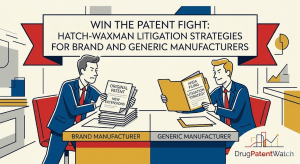
What the Hatch-Waxman Act created was a legal architecture so precisely balanced between competing commercial interests that every pharmaceutical company operating in the United States today — brand or generic — runs its litigation strategy through a framework written forty years ago. Brand manufacturers received patent term extensions to compensate for time lost in FDA review. Generic manufacturers received an abbreviated pathway to market that let them rely on a brand drug’s established safety and efficacy data without repeating the clinical trial process. Both sides received a litigation mechanism — the Paragraph IV process — that forces them to fight out patent validity and infringement disputes before a single generic tablet reaches a pharmacy shelf.
The balancing act has worked, imperfectly and contentiously, for four decades. It has also produced a body of litigation strategy that is among the most sophisticated in American law. The lawyers and executives who understand that strategy — specifically, who understand how each procedural choice in a Hatch-Waxman case ripples through commercial outcomes years later — make better decisions than those who treat the litigation as a narrow legal dispute rather than a commercial negotiation conducted through federal courts.
This article covers the full strategic landscape for both sides. It addresses the brand manufacturer’s offensive toolkit: Orange Book listing strategy, the 30-month stay, citizen petition timing, and the continuation prosecution practices that can preserve exclusivity long after the original compound patent expires. It addresses the generic manufacturer’s attack framework: the Paragraph IV certification, IPR petitions as a pre-litigation weapon, the value of first-filer exclusivity, and the evidentiary strategies that have most reliably invalidated pharmaceutical patents. It addresses the settlement landscape: what FTC v. Actavis actually permits, how consent judgments are structured, and when settlement creates more value than litigation victory. And it addresses the structural features of the system that neither side fully controls but both sides must understand — PTAB, the FDA’s exclusivity architecture, and the post-Braidwood regulatory environment that is actively reshaping Orange Book practice.
Throughout, this article draws on patent filing data, litigation records, and the pharmaceutical-specific patent databases — including DrugPatentWatch, which tracks the full stack of Orange Book patents, exclusivity periods, ANDA filings, and Paragraph IV certification activity — that serious practitioners use to build and monitor their positions.
The Hatch-Waxman Machinery: How It Actually Works
Before strategy, mechanics. The Hatch-Waxman framework is frequently described at a high level in ways that obscure the procedural details that actually determine outcomes.
The Abbreviated New Drug Application and Its Four Certifications
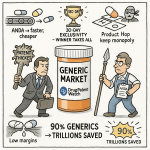
A generic manufacturer seeking FDA approval for a drug that is the therapeutic equivalent of an already-approved brand product files an Abbreviated New Drug Application (ANDA). The ANDA relies on the brand product’s established safety and efficacy data rather than submitting independent clinical trials — a provision that reduces the cost of generic development from hundreds of millions of dollars to roughly $1-5 million in many cases [2].
Every ANDA must include a certification addressing each patent listed in the FDA’s Orange Book for the reference listed drug (RLD). There are four possible certifications:
A Paragraph I certification states that no patent information has been submitted for the drug.
A Paragraph II certification states that the listed patents have expired.
A Paragraph III certification states that the applicant will not market its product until the listed patents expire.
A Paragraph IV certification — the one that initiates litigation — states that the listed patents are invalid, unenforceable, or will not be infringed by the generic product.
A generic manufacturer may file different certifications for different listed patents. An ANDA might include Paragraph III certifications for patents with strong claims and near-term expiration, while simultaneously filing a Paragraph IV certification against a specific method-of-treatment patent the applicant believes is both invalid and readily designable around. The combination of certifications in a single ANDA shapes the entire litigation and commercial timeline.
The 30-Month Stay: The Brand Manufacturer’s Automatic Weapon
When a generic manufacturer files a Paragraph IV certification, it must notify the patent owner and the NDA holder within 20 days [3]. If the brand manufacturer files an infringement suit within 45 days of receiving that notice, FDA approval of the ANDA is automatically stayed for 30 months. The stay runs from the date the brand manufacturer received notification, not the date of suit filing.
The 30-month stay is the single most commercially significant procedural feature of the Hatch-Waxman framework. It translates the filing of an infringement suit — an act requiring no showing of actual merit — into roughly two and a half years of continued exclusivity. For a drug generating $1 billion in annual revenue, 30 months of extended exclusivity is worth approximately $2.5 billion in pre-tax revenue before erosion effects, which is why brand manufacturers have historically filed within the 45-day window for virtually every Paragraph IV notification they receive, regardless of the underlying strength of their patent position.
The Medicare Modernization Act of 2003 narrowed the stay’s availability after documented abuse of multi-patent Orange Book listings produced stacked stays [4]. Under current law, only one 30-month stay is available per ANDA, triggered by patents listed before the ANDA was filed. Patents listed after ANDA filing can generate infringement suits but no additional stays. This change fundamentally altered the brand strategy calculus around Orange Book listing timing — and created the strategic incentive to list as many patents as possible before generic manufacturers file their first ANDA.
First-Filer Exclusivity: The Generic Manufacturer’s Prize
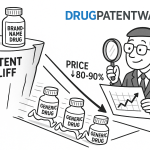
The first ANDA applicant to file a Paragraph IV certification against a listed patent receives 180 days of market exclusivity upon FDA approval — a period during which FDA will not approve any other ANDA applicant’s product [5]. During those 180 days, the first filer is the only generic product on the market, and prices typically hold at 30-40 percent below brand price rather than the 80-90 percent discount that emerges when multiple generics compete.
The economics of first-filer exclusivity make it the primary commercial driver of Paragraph IV litigation decisions for large-revenue brand products. A drug generating $1 billion annually gives a first-filing generic manufacturer 180 days of semi-exclusive competition, during which it can capture $150-200 million in revenue. That revenue stream more than justifies the cost of Paragraph IV litigation, which runs $5-15 million per case for a well-funded generic manufacturer [6].
The exclusivity calculation is more complex than it appears. First-filer exclusivity only triggers upon commercial launch or a court decision of invalidity or non-infringement. If the first filer settles with the brand manufacturer without a court decision, the 180-day exclusivity clock does not start — a feature that created the strategic dynamic underlying pay-for-delay settlements, which the Supreme Court addressed in FTC v. Actavis [7].
Forfeiture of first-filer exclusivity can occur under several conditions, including failure to commercially market within 75 days of a final court judgment or FDA approval, withdrawal of the Paragraph IV certification, or failure to obtain final FDA approval within 30 months of the filing date. These forfeiture provisions have been litigated extensively and create planning complexity for first-filer applicants whose litigation progresses slowly.
The Brand Manufacturer’s Playbook
Brand pharmaceutical manufacturers do not simply defend patents in Hatch-Waxman litigation — they build positions, over years, that are designed to make litigation as favorable as possible before the first ANDA arrives.
Orange Book Listing Strategy: What to List and When
The Orange Book is the FDA’s publication of approved drug products and their associated patents. Listing a patent in the Orange Book is a self-certification by the NDA holder that the patent “claims the approved drug product or an approved method of using the drug product” [8]. The legal threshold is not high, but the consequences of listing are significant: each listed patent requires a certification from every ANDA filer, and each Paragraph IV certification against a listed patent can generate a 30-month stay.
Brand manufacturers face two strategic questions about Orange Book listing:
First, which patents qualify for listing? The FDA’s implementing regulations specify three categories of listable patents: drug substance (active ingredient) claims, drug product (formulation or composition) claims, and method-of-use claims for approved indications [9]. Process patents, metabolite patents, and patents on intermediates do not qualify. The line between a qualifying and non-qualifying patent is fact-specific, and manufacturers have historically pushed that line aggressively.
The FTC’s 2023 policy statement on improper Orange Book listings [10] and its subsequent challenge actions against manufacturers who listed device patents for combination drug-device products (autoinjectors, inhalers, metered dose devices) specifically targeted this aggressive listing practice. Manufacturers listing device-only patents — patents claiming the delivery device without claiming the drug itself — face increasing risk that those listings will be challenged and withdrawn, eliminating the Hatch-Waxman procedural advantages for those patents entirely.
Second, when should patents be listed? Under current law, only patents listed before an ANDA is filed can trigger a 30-month stay. This creates a structural incentive to list patents as soon as possible after they issue, even if the commercial product covered by the patent has been on the market for years. Brand manufacturers with active continuation prosecution programs — filing divisional and continuation applications that issue years after the original compound patent — must list each newly-issued patent promptly to preserve stay rights against pending ANDAs.
For drugs approaching patent expiration, the listing calendar for continuation patents has become a sophisticated operational function. Patent prosecution timelines, NDA submission schedules, and ANDA filing probability windows are tracked together, because a continuation patent that issues after a major generic manufacturer files its ANDA loses its 30-month stay trigger. Databases like DrugPatentWatch track both the patent listing history for Orange Book products and ANDA filing activity, giving brand manufacturers a real-time picture of which of their patents have stay-triggering capacity against pending applications.
The Continuation Patent Strategy
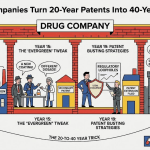
No single strategic innovation has extended pharmaceutical exclusivity more effectively than the systematic use of continuation applications — and none has attracted more regulatory criticism. A continuation application claims the same invention as a parent patent but includes new or modified claims that may be drafted to cover aspects of the commercial product that the original patent did not explicitly claim, or to specifically cover competitive products that have entered the market.
The mechanics are straightforward. A patent application can spawn continuation applications at any time while the parent application is pending. Each continuation inherits the parent’s priority date but is a separate patent with its own claims, its own prosecution, and its own patent term calculated from the same original filing date. Under the 20-years-from-filing rule, all continuations from the same application family share the same expiration date — but continuation applications filed near the end of a parent’s prosecution period can issue years after the parent, creating newly-issued patents with only a few years of remaining term but still capable of triggering Orange Book listing and Hatch-Waxman stay rights.
AbbVie’s Humira patent strategy, now extensively documented in academic literature [11] and the focus of multiple regulatory proceedings, built more than 130 U.S. patents from a core family of antibody applications. The continuation strategy kept patent prosecution open and active for well over a decade after initial FDA approval, producing newly-issued patents that were listed in the Orange Book and required certification from biosimilar applicants through the BPCIA process. The result was that biosimilar competition in the United States arrived roughly seven years after European biosimilar entry — a gap that Feldman [12] estimated was worth tens of billions in additional revenue.
The strategic challenge for brand manufacturers running continuation programs is managing prosecution consistency. Continuation claims must be supported by the original specification — they cannot introduce new matter. The prosecution history of continuation applications is scrutinized even more carefully than original patents in Paragraph IV litigation, because generic manufacturers will argue that the continuation claims are either invalid as obvious in light of the parent patent’s disclosures, or that prosecution history estoppel from the parent prosecution limits the continuation’s effective scope.
Formulation Patent Strategy: The Secondary Patent Tier
When a compound patent is approaching expiration, brand manufacturers frequently turn to formulation patents — patents covering specific pharmaceutical preparations, extended-release delivery systems, dosage forms, or stability enhancements — as the secondary layer of Hatch-Waxman protection.
The strategic logic is sound: formulation patents can be filed and obtained well after the original compound patent, giving them a later expiration date. They can cover the specific commercial product as actually marketed rather than the broad compound class. And because generic ANDAs must be for therapeutically equivalent products, a generic applicant seeking AB-rated equivalence (the rating that permits automatic substitution at pharmacy) must often match not just the active ingredient but also key formulation characteristics.
The litigation vulnerability of formulation patents is real, though. Research by Hemphill and Sampat [13] documented that generic manufacturers prevail in Paragraph IV litigation against formulation patents at a substantially higher rate than against compound patents. The primary doctrinal reason is obviousness: courts frequently find that formulation improvements — switching from immediate-release to extended-release, for instance, or optimizing a salt form for bioavailability — represent routine pharmaceutical science that a skilled formulator would have tried. The patent’s validity depends on demonstrating that the formulation improvement was non-obvious, which requires evidence of unexpected results and often faces skepticism from technically trained judges.
Brand manufacturers seeking to maximize formulation patent strength should focus prosecution on generating a clear experimental record of unexpected results — unexpected stability, unexpectedly high bioavailability, unexpected reduction in side effects — before the patent issues. Post-grant experimental evidence of unexpected results is generally not available to rebut an obviousness challenge, because courts limit the record to evidence contemporaneous with the patent’s effective filing date.
Citizen Petitions as a Delay Tool
The FDA’s citizen petition process allows any person to ask the agency to take or refrain from taking action on a regulatory matter. In the pharmaceutical context, brand manufacturers have used citizen petitions to raise safety and manufacturing questions about generic ANDA applications, requesting that FDA delay approval while it considers the petition.
The data on citizen petition timing is striking. A 2012 FTC study [14] found that citizen petitions filed within six months of anticipated generic entry were substantially more likely to be denied than petitions filed earlier, and that the filing of a petition nonetheless delayed FDA action for an average of several months regardless of ultimate disposition. The correlation between petition filing timing and competitive entry suggested that at least some petitions were filed with delay as a primary objective.
Congress addressed the most egregious petition-timing patterns in the Food and Drug Administration Amendments Act of 2007, which required FDA to take final action on citizen petitions before approving any 505(b)(2) or ANDA application that would be the subject of the petition, while simultaneously authorizing FDA to deny petitions that appear designed primarily to delay approval [15]. The result is a framework in which genuine safety and scientific petitions retain their utility, but petitions filed transparently close to a generic launch date face heightened scrutiny.
For brand manufacturers, the strategic guidance is clear: legitimate scientific or regulatory concerns about a pending ANDA should be raised early in the petition process, with full evidentiary support. Petitions filed within 30-60 days of anticipated ANDA approval carry a high risk of rapid denial under the amended standards, and a denied citizen petition creates a public record that may be used in antitrust proceedings if the petition is later characterized as part of a monopolization scheme.
Claim Construction Strategy in Litigation
Once Paragraph IV litigation is filed, both parties’ strategies converge on the Markman hearing — the district court proceeding in which the judge construes the disputed patent claims. Claim construction rulings determine the actual scope of the patent, and the outcome of most Hatch-Waxman cases traces directly to what the court decided at Markman.
Brand manufacturers typically advocate for broader claim constructions that capture the generic product’s formulation or active ingredient within the claim scope. Broader construction maximizes infringement coverage but creates exposure on validity — the broader the claim, the more likely it encompasses prior art that can render it invalid.
The Federal Circuit’s oscillation on claim construction methodology has created persistent uncertainty. The court’s 2015 decision in Teva Pharmaceuticals USA, Inc. v. Sandoz, Inc. [16] changed the appellate standard of review for district court claim construction, holding that factual findings underlying claim construction (such as determinations about the meaning of technical terms to a skilled artisan) receive deferential clear-error review rather than de novo review. This change materially affects appellate strategy: brand manufacturers who win a favorable broad construction at the district court now have a stronger presumption of correctness on appeal than they did under the prior rule.
For claim construction briefing, brand manufacturers should invest heavily in expert declaration practice during the Markman phase. Technical experts who can explain — credibly, in accessible terms — why a particular claim term carries a specific meaning in the art carry outsized weight in proceedings where the judge is not a trained scientist. The expert’s qualifications, publication record, and absence of prior inconsistent statements are the variables that determine how much weight the court assigns to competing interpretations.
The Generic Manufacturer’s Attack Framework
Generic pharmaceutical manufacturers approach Hatch-Waxman litigation from a fundamentally different posture. They are plaintiffs seeking to enter a market, not defendants protecting existing revenue. Their strategic calculus is shaped by the first-filer exclusivity premium, the cost of multi-year litigation, and the availability of PTAB proceedings that offer an alternative to district court invalidity challenges.
Selecting the Right Patent Attack: Invalidity vs. Non-Infringement
Every Paragraph IV certification must allege either invalidity, non-infringement, or both. These are distinct legal theories with different evidentiary standards and different strategic implications for the generic manufacturer.
An invalidity defense — arguing that the patent never should have issued — requires overcoming the presumption of validity under 35 U.S.C. § 282, which demands clear and convincing evidence. The invalidity arguments most frequently raised against pharmaceutical patents are:
Anticipation: A single prior art reference discloses every element of the patent claim. For pharmaceutical compound patents, this requires finding a prior reference that literally discloses the specific chemical structure claimed — a high bar that is rarely met.
Obviousness: The claimed invention would have been obvious to a person skilled in the art at the time of filing, in light of the prior art as a whole. This is the dominant invalidity theory in pharmaceutical patent cases, and it turns on the KSR International Co. v. Teleflex Inc. [17] framework: whether there was a motivation to combine the prior art references, a reasonable expectation of success, and no unexpected results sufficient to overcome the prima facie case.
Written description and enablement: The patent specification does not adequately describe the full scope of the claims or does not enable a skilled artisan to make and use the full scope of the claimed invention without undue experimentation. This ground is particularly relevant for antibody patents, broad genus claims, and functional claiming.
A non-infringement defense — arguing that the generic product does not practice the claimed invention — requires claim construction first. If the claims are construed broadly enough to cover the generic product, the generic applicant either needs a validity defense or a design-around modification to its product. If the claims are construed narrowly (perhaps because of prosecution history estoppel), the generic product may fall outside even literal infringement, and the brand’s doctrine of equivalents arguments can be tested.
The strategic choice between leading with invalidity or non-infringement depends on the specific patent and product:
For a compound patent where the generic product is admittedly a structural analog, invalidity (specifically obviousness) is typically the primary theory, because non-infringement is difficult when the generic compound is structurally similar to the claimed compound.
For a method-of-treatment patent where the generic product’s labeling does not carve out the patented indication, non-infringement combined with a label carving strategy often provides a cleaner path to market than pure invalidity arguments.
For a formulation patent where the generic’s formulation is materially different in composition or process, non-infringement may be available even under a broad claim construction.
Sophisticated generic manufacturers run this analysis before filing the ANDA certification, not after the brand manufacturer files suit. The legal theory determines the type of prior art searches required, the technical experts that will be needed, and the length of time the litigation will require — all of which feed back into the economic model that determines whether the Paragraph IV strategy is worth pursuing.
The PTAB IPR Route: Parallel Attack Strategy
The America Invents Act’s creation of inter partes review at the Patent Trial and Appeal Board gave generic manufacturers a second battlefield for patent challenges — one that operates on a different legal standard, a different evidentiary record, and a faster timeline than district court litigation.
IPR petitions at the PTAB apply the preponderance of the evidence standard, not the clear and convincing standard required in district court. The technical decision-makers are administrative patent judges — typically engineers and scientists with technical backgrounds — rather than generalist district court judges or lay juries. The record is largely expert-driven and paper-based. And the timeline from petition filing to final written decision runs approximately 18 months, compressed relative to district court patent trials that may require 3-4 years from suit filing to verdict.
The empirical track record for generic manufacturers at the PTAB has been broadly favorable. From 2012 through 2023, the PTAB instituted review in roughly 60 percent of pharmaceutical patent IPR petitions and found all or some challenged claims unpatentable in approximately 65 percent of cases that reached final written decision [18]. These are aggregate statistics with significant variation by patent type — compound patents survive at higher rates than formulation patents, and secondary patents (dosage, method, combination) show higher cancellation rates than composition claims.
The strategic interaction between IPR petitions and district court litigation is complex. Filing an IPR petition does not automatically stay the parallel district court litigation, and courts have discretion on whether to grant stays pending PTAB resolution. Some courts — notably the Western District of Texas and the District of Delaware, which handle a disproportionate share of pharmaceutical patent cases — have different institutional dispositions toward staying litigation pending IPR, and practitioners need to account for the specific judge’s track record when modeling the interaction.
Estoppel is the critical limitation on the combined district court/IPR strategy. Under 35 U.S.C. § 315(e), a party that participates in a final IPR proceeding is estopped in district court from raising any ground that was raised or “reasonably could have been raised” during the IPR [19]. This means a generic manufacturer who wins cancellation of some claims in IPR but fails to challenge other claims in the same petition cannot later raise those unchallenged claims as invalidity arguments in district court. Petition crafting — selecting which claims and which prior art grounds to include — is therefore both a tactical IPR decision and a long-term strategic decision about preserving district court arguments.
Designing the Paragraph IV Notice Letter
The Paragraph IV notice letter is the document that starts the 45-day clock for the brand manufacturer to sue and trigger the 30-month stay. It is also one of the most consequential documents a generic manufacturer files in the entire Hatch-Waxman process, because it defines the scope of the dispute and, depending on its content, may affect the generic manufacturer’s ability to raise arguments in subsequent litigation.
The content requirements for a Paragraph IV notice letter are specified in 21 C.F.R. § 314.95: the letter must include a detailed statement of the factual and legal basis for the opinion that each listed patent is invalid, unenforceable, or will not be infringed. “Detailed” has been interpreted to require enough specificity that the brand manufacturer can assess its litigation position.
Generic manufacturers face a tension in crafting this letter. A thorough, detailed letter that fully discloses the invalidity and non-infringement theories gives the brand manufacturer maximum information to prepare its response — potentially making the litigation harder. A letter that meets the regulatory requirement minimally preserves some strategic surprise but may be challenged as insufficient, with consequences for the timing of the ANDA approval process.
Post-filing, the notice letter content cannot be easily supplemented. If a generic manufacturer discovers a strong prior art reference after filing the notice letter, it can attempt to amend its certifications, but the amendment triggers new notice requirements and may restart the 45-day window. Thorough prior art searching before the notice letter is filed — not after — is the only reliable way to preserve flexibility.
First-Filer Strategy: Maximizing the 180-Day Exclusivity Window
First-filer exclusivity is not guaranteed to any generic manufacturer that files a Paragraph IV certification — it attaches only to the first applicant to file a substantially complete ANDA with a Paragraph IV certification. When multiple generic manufacturers file Paragraph IV certifications on the same day (which happens frequently for high-revenue products), all same-day filers share the 180-day exclusivity period.
The commercial implications of same-day filing are significant. When two or three generic manufacturers share first-filer exclusivity, the pricing competition between them during the 180-day period drives prices down faster and further than when a single manufacturer holds exclusive first-filer status. Revenue capture during the exclusivity period falls accordingly.
Brand manufacturers actively track ANDA filing activity against their products through FDA’s public Orange Book data and through commercial databases like DrugPatentWatch, which aggregates ANDA submission information and Paragraph IV certification notices. When a brand manufacturer sees multiple Paragraph IV certifications arriving simultaneously for the same product, it understands that first-filer exclusivity will be split and that the competitive landscape upon patent expiration (or earlier if the brand loses litigation) will be more aggressively competitive than if a single generic manufacturer held all the leverage.
Generic manufacturers seeking to maximize first-filer value should complete ANDA preparation and submit as early as possible for high-revenue products with approaching patent expiration dates. The competitive window for being a sole first filer is narrow — the generic community shares intelligence about upcoming ANDA opportunities — and losing first-mover advantage on a major product by weeks or months can cost hundreds of millions in foregone exclusivity-period revenue.
Carving Out the Label: The Section viii Statement
Not every method-of-treatment patent requires a Paragraph IV certification. An ANDA filer can instead file a Section viii statement (named for 21 U.S.C. § 355(j)(2)(A)(viii)) asserting that the generic product will not be manufactured or marketed for the patented indication [20]. This “label carving” approach allows the generic manufacturer to avoid challenging the method patent entirely by obtaining FDA approval only for the non-patented indications.
The practical utility of label carving depends on whether the patented indication constitutes a substantial portion of the drug’s clinical use. If the patented indication represents 80 percent of prescriptions and the non-patented indications represent the remaining 20 percent, a carved label still leaves the generic manufacturer with access to most of the market — doctors can legally prescribe the generic for the patented indication (off-label) even if the generic label does not include that indication, and pharmacists can substitute the generic for the brand even when the patented indication is the prescribed use, unless the brand is specifically dispensed as written.
The induced infringement risk associated with label carving has been addressed in significant litigation. In Allergan v. Teva Pharmaceuticals USA [21], and in the subsequent Federal Circuit jurisprudence on skinny labels, courts have worked through whether generic manufacturers can be held liable for induced infringement of method patents when their label, while technically carved, is allegedly functionally equivalent to the brand label for the patented indication. The Amarin Pharma, Inc. v. Hikma Pharmaceuticals USA Inc. [22] litigation over the icosapentaenoic acid drug Vascepa highlighted these tensions acutely, with the brand manufacturer arguing that the generic’s carved label still effectively induced infringement of the method patents.
Generic manufacturers relying on label carving should obtain written opinions of counsel on induced infringement risk, review the draft label with patent counsel before finalizing the ANDA, and document the commercial rationale for serving only the non-patented indications.
The Obviousness Case: Building a Winning Prior Art Record
Because obviousness is the dominant invalidity theory in pharmaceutical patent cases, understanding how courts evaluate it is essential to generic manufacturers’ litigation strategy. The Supreme Court’s KSR International Co. v. Teleflex Inc. [23] decision in 2007 rejected a rigid application of the teaching-suggestion-motivation test and embraced a more flexible, common-sense analysis of whether a skilled artisan would have been motivated to combine prior art references to reach the claimed invention.
For pharmaceutical compound patents, the obviousness analysis typically proceeds through three stages:
First, identifying the lead compound: the prior art reference that would have been the most promising starting point for a medicinal chemist seeking to develop a compound with the claimed biological activity. Courts look for lead compounds that share structural similarities with the claimed compound and have demonstrated activity in the relevant biological system.
Second, identifying the motivation to modify: the prior art evidence that would have directed a medicinal chemist to make specific structural changes to the lead compound to reach the claimed structure. This includes structure-activity relationship (SAR) data, literature on preferred structural modifications in the relevant compound class, and general medicinal chemistry principles.
Third, a reasonable expectation of success: whether the prior art gave a skilled chemist reasonable confidence that the specific modifications would preserve or enhance the desired biological activity without unacceptable side effects.
The brand manufacturer rebuts this framework primarily with unexpected results — evidence that the claimed compound showed activity, selectivity, potency, or pharmacokinetic properties that were materially better than the prior art would have predicted. Unexpected results are the most powerful and most contested feature of pharmaceutical obviousness litigation.
Generic manufacturers should commission thorough lead compound searches before filing the Paragraph IV notice. A poorly-chosen lead compound that does not closely resemble the claimed structure makes the motivation-to-modify analysis harder and gives the brand manufacturer space to argue that the gap between lead compound and claimed compound required inventive activity. Finding the most structurally proximate prior art compound — even if it appears in an obscure conference abstract or foreign patent application — is worth the search investment.
Settlement: The Shadow Game
Most Hatch-Waxman cases settle before trial. This is not a neutral fact — it is the dominant commercial outcome of the system, and understanding the legal and commercial landscape of Hatch-Waxman settlements is as important as understanding trial strategy.
Post-Actavis Settlement Legality
The Supreme Court’s 2013 decision in FTC v. Actavis, Inc. [24] addressed the antitrust legality of “pay-for-delay” settlements in which brand manufacturers paid generic manufacturers to delay their market entry. Before Actavis, the Eleventh Circuit had applied a scope-of-the-patent test — settlements within the exclusionary scope of the patent were presumptively legal. The Supreme Court rejected this test by a 5-3 majority and held instead that pay-for-delay settlements are subject to the rule of reason antitrust standard.
The practical import of Actavis was less a ban on settlements and more a transformation of what is explicitly permissible in settlement terms. Pure cash payments from brand to generic manufacturer in exchange for market entry delay are presumptively anticompetitive under the Actavis framework, because such payments are “big, unjustified” transfers of value from the brand (sharing monopoly profits) to the generic (agreeing to remain out of the market) [25].
Settlements that are not purely cash transfers are analyzed under the rule of reason and may survive antitrust challenge depending on their terms and market effects. Settlements that include:
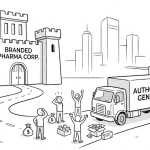
An authorized generic license (where the brand manufacturer grants the generic manufacturer a license to sell the brand manufacturer’s own generic product, typically through a subsidiary) have been scrutinized for potentially being a disguised cash transfer, but have been upheld in some circumstances.
Patent licenses with reasonable royalties that do not exceed the brand manufacturer’s anticipated litigation savings.
Entry dates modestly earlier than patent expiration but well beyond the expected litigation resolution date.
These terms are not automatically safe — each must be analyzed under the rule of reason for net competitive effects — but they fall outside the core of what Actavis identified as presumptively suspicious.
Structuring the Consent Judgment
When brand and generic manufacturers settle a Hatch-Waxman case through a consent judgment rather than a confidential agreement, the terms are public and the judgment has legal consequences beyond the specific parties. Specifically, a consent judgment of patent invalidity or non-infringement can trigger first-filer exclusivity — starting the 180-day clock — even without commercial launch.
The brand manufacturer’s primary interest in settlement is typically the entry date: the date on which the generic manufacturer is permitted to launch. The generic manufacturer’s primary interest is typically the licensing terms: either a royalty-free license that permits it to launch at the negotiated entry date, or a royalty-bearing license that reduces its margin but permits earlier entry.
Secondary terms that require careful attention in both directions include:
Authorized generic provisions: Whether the brand manufacturer reserves the right to launch an authorized generic simultaneously with the first-filer generic, which materially reduces the first-filer’s exclusivity-period profits.
“Most-favored nation” provisions: Whether the settling generic manufacturer receives any benefit if the brand manufacturer subsequently settles with other generic filers on more favorable terms.
Challenge provisions: Whether the settling generic manufacturer is contractually prohibited from challenging the patent’s validity after settlement, and how this interacts with the estoppel provisions of any concurrent PTAB proceedings.
Patent license scope: Whether the license covers only the specific ANDA product or also covers future formulations, combination products, or biosimilar products.
The At-Risk Launch Decision
When a brand manufacturer files a Paragraph IV infringement suit but litigation will not resolve before the 30-month stay expires, the generic manufacturer faces a pivotal commercial decision: whether to launch “at risk” before the litigation is resolved.
An at-risk launch means entering the market before a court has ruled that the patent is invalid or non-infringing. If the brand manufacturer subsequently obtains an injunction, the generic manufacturer must withdraw from the market, potentially destroying inventory, disrupting supply chains, and facing substantial damages. If the brand manufacturer’s requested injunction is denied or the litigation resolves in the generic manufacturer’s favor, the at-risk launch captured months or years of market revenue that would have been lost waiting for a final judgment.
The legal framework for at-risk launch decisions centers on whether the brand manufacturer can obtain a preliminary injunction requiring the generic to cease sales before final judgment. Post-eBay Inc. v. MercExchange, L.L.C. [26], the four-factor test for preliminary injunctions requires showing likelihood of success on the merits, irreparable harm, that the balance of equities favors an injunction, and that the public interest supports one. Courts applying this test in Hatch-Waxman cases have been divided on whether lost brand revenue constitutes irreparable harm when it is quantifiable and recoverable in damages.
The commercial analysis for an at-risk launch weighs the expected profits during the at-risk period against the probability-weighted cost of forced withdrawal and damages exposure. For a drug generating $1 billion annually where the litigation resolution is 18 months away, the foregone revenue of waiting exceeds $1.5 billion, creating a powerful economic argument for at-risk launch even with material uncertainty about the outcome.
The PTAB as a Strategic Asset
The Patent Trial and Appeal Board has become central to pharmaceutical patent strategy for both brand and generic manufacturers — as an offensive weapon for generics, as a defensive challenge for brands, and as a variable that affects every settlement negotiation.
Institution Decisions and Their Predictive Value
The PTAB’s decision whether to institute an IPR petition — made approximately three months after the petition is filed — is not merely a threshold procedural ruling. The institution decision’s written analysis provides a roadmap of how the PTAB currently views the petition’s strongest arguments, which prior art combinations the Board finds most compelling, and which claim constructions it is likely to adopt.
Brand manufacturers defending against an instituted IPR petition can read the institution decision as the Board’s preliminary assessment and calibrate their patent owner response accordingly. The arguments the Board found compelling at institution are the ones that need to be most thoroughly rebutted in the patent owner’s response. Arguments the Board found less persuasive at institution need less space in the response, allowing the brand manufacturer to focus rhetorical resources where they will have the most impact.
Generic manufacturers who receive a favorable institution decision should resist the temptation to repeat the petition’s analysis in their reply brief. The standard for petitioner reply briefs is strict — replies may respond to arguments raised in the patent owner’s response but generally may not present new evidence or arguments. The prior art case needs to be fully built in the petition; the reply is primarily a consolidation and response document.
The Director Review Process
Post-Arthrex Inc. v. Smith & Nephew, Inc. [27], the Supreme Court held that the PTAB’s administrative patent judges, as appointed officers of the United States, required review authority to be vested in a principal officer — namely, the USPTO Director. The resulting Director review process allows the Director to review any PTAB final written decision on petition.
For pharmaceutical patent litigants, Director review has practical implications for high-value cases. Where a PTAB panel reaches a decision that seems inconsistent with prior PTAB precedent or with patent policy, the losing party may petition for Director review. The Director’s discretionary authority to intervene and modify, vacate, or affirm panel decisions has introduced a new layer of appellate complexity that litigants in high-value cases need to plan for, both in terms of timeline and in terms of the arguments preserved for Director review versus those better presented to the Federal Circuit.
PTAB Estoppel in District Court: The Landmine to Avoid
The estoppel consequences of IPR proceedings for district court litigation are the most dangerous feature of the combined PTAB/district court strategy for generic manufacturers. Under 35 U.S.C. § 315(e)(2), a petitioner who receives a final written decision from the PTAB is estopped in district court from asserting that a claim is invalid on grounds that were raised or “reasonably could have been raised” during the IPR.
The phrase “reasonably could have been raised” has been interpreted broadly by most district courts, extending estoppel to prior art that was publicly available and presumably accessible to a skilled searcher, even if the petitioner did not specifically include it in the IPR petition. This means a generic manufacturer who files an IPR petition and receives a final written decision — even a favorable one — may have narrowed its district court invalidity case significantly if the IPR did not address all available prior art.
The strategic implication is that generic manufacturers should think carefully before filing IPR petitions in cases where the patent at issue has multiple known prior art references. A targeted IPR petition that includes only the best two or three prior art arguments may estop the petitioner from raising additional strong arguments in district court. In some cases, forgoing IPR entirely and relying solely on district court invalidity arguments — with the higher clear-and-convincing standard but no estoppel limitation — is the better strategic choice.
Federal Circuit Jurisprudence: The Rules That Govern Everything
The Federal Circuit has exclusive appellate jurisdiction over patent cases from district courts and appeals from PTAB decisions. Its decisions on claim construction, obviousness, and the specific standards applicable to pharmaceutical patents shape every aspect of Hatch-Waxman strategy.
The Doctrine of Equivalents: A Limited but Real Threat
Brand manufacturers who lose a literal infringement argument can fall back on the doctrine of equivalents, arguing that the generic product performs substantially the same function in substantially the same way to achieve substantially the same result as the claimed invention. In pharmaceutical cases, the doctrine of equivalents has limited reach because prosecution history estoppel, which limits equivalents claims for subject matter surrendered during prosecution, applies to nearly every pharmaceutical patent that has undergone examination.
Where prosecution history estoppel does not preclude the argument, doctrine of equivalents claims require element-by-element analysis showing equivalence for each claim limitation. For pharmaceutical compound claims, the doctrine is particularly difficult to apply because molecular structure differences that appear minor to a non-chemist may represent significant chemical and pharmacological distinctions that defeat the “substantially the same” analysis.
Generic manufacturers seeking to manage doctrine of equivalents risk should structure their products to be as structurally distinct from the claimed compound as the design-around space allows. A generic product whose active ingredient differs from the claimed compound by a single functional group substitution creates a stronger doctrine of equivalents argument for the brand manufacturer than one that differs by multiple structural modifications.
Genus and Species Claims: The Critical Scope Issue
Many pharmaceutical compound patents claim a genus — a chemical class defined by a core structure and permissible substituents — rather than a specific molecule. Genus claims can cover thousands of compounds under a single patent, providing broad protection against structurally related competitors.
The Federal Circuit’s genus claim jurisprudence has tightened considerably in recent years. In Idenix Pharmaceuticals LLC v. Gilead Sciences Inc. [28], the court applied a rigorous enablement analysis to a genus claim covering nucleoside compounds and held that the specification did not enable the full scope of the claimed genus. The decision accelerated a trend toward rigorous enablement challenges against broadly-worded genus claims — a trend that is directly relevant to pharmaceutical patent litigation where compound genus claims are common.
Generic manufacturers challenging genus claims should evaluate both obviousness and enablement as parallel invalidity theories. An enablement challenge against a genus claim does not require finding a specific prior art reference — it requires showing that the specification, as written, would require a skilled chemist to undertake undue experimentation to make and use all the compounds falling within the claim scope. For very broad genus claims, this can be a powerful argument that operates independently of any specific prior art.
Written Description and the Blaze Marks Requirement
Related to enablement, the written description requirement requires that the specification, as filed, clearly convey that the inventor had possession of the full claimed invention at the time of filing. For continuation applications — which are filed after the parent and may include claims that did not appear in the parent application — written description is frequently contested on the grounds that the parent specification did not describe the specific continuation claims.
In pharmaceutical patent cases, written description challenges to continuation claims are particularly relevant to the brand manufacturer’s continuation prosecution strategy. If a continuation claim was drafted specifically to cover a competitor’s product that emerged years after the parent was filed, a written description challenge can defeat the claim even if there is adequate prior art support for the original invention. The Federal Circuit’s application of the “blaze marks” doctrine — requiring that the specification provide clear direction to the specific claimed subject matter — has made written description a viable invalidity theory for generic manufacturers attacking well-crafted continuation claims.
Anti-Evergreening Policies and Regulatory Pushback
The policy debate over pharmaceutical patent practices has been active for two decades, producing both legislative interventions and aggressive regulatory enforcement that directly affect Hatch-Waxman strategy.
FDA Orange Book Reform: The 2023 Turning Point
The FTC’s September 2023 policy statement on improper Orange Book listings [29] was accompanied by a mass challenge action in which the agency sent nearly 100 challenge letters to pharmaceutical manufacturers asserting that listed patents did not qualify for Orange Book listing. The targeted patents were primarily those claiming drug delivery devices — autoinjector pens, nasal spray devices, prefilled syringes — without claiming the drug product itself.
The legal mechanism available to the FTC was 21 U.S.C. § 355(j)(5)(C)(ii)(I), which permits the FDA to remove a patent from the Orange Book upon request from any person, including the FTC, if the FDA determines that the patent does not claim the approved drug. The FDA ultimately acted on a significant portion of the FTC’s challenges, removing device patents that had been listed for drugs including the EpiPen, Ozempic, Victoza, and others.
For brand manufacturers, the delisting of device patents has immediate and ongoing commercial consequences. A delisted patent can no longer trigger a 30-month stay when challenged by an ANDA or 505(b)(2) filer. It can still be enforced in district court, but without the Hatch-Waxman procedural framework — meaning the brand manufacturer loses the automatic stay right and must pursue a preliminary injunction on the merits to block generic entry pending litigation.
The practical implication for brand manufacturers managing combination drug-device products is a reassessment of whether device patents that claim only the delivery device, with no chemical or biological claims covering the active ingredient, should be listed. Post-2023, the risk-benefit calculus has shifted: listing a device-only patent exposes the brand manufacturer to FTC challenge and potential delisting, while the same patent can be enforced in a separate district court action without the Hatch-Waxman framework.
The Inflation Reduction Act and Exclusivity Value Erosion
The Inflation Reduction Act of 2022 introduced Medicare drug price negotiation, beginning with small-molecule drugs nine years after initial FDA approval and biologics thirteen years after initial approval [30]. The negotiated prices apply to the manufacturer’s Medicare sales and are enforced through an excise tax on revenues from sales that do not comply with the negotiated price.
The IRA interacts with Hatch-Waxman strategy in a specific way: it reduces the economic value of extended patent exclusivity for drugs that will be subject to negotiation. For a small-molecule drug with compound patent expiration at year twelve post-approval and formulation patent expiration at year seventeen, the IRA means that Medicare revenues during years nine through twelve (before generic entry) will be at negotiated prices, not brand prices. The formulation patent’s extension of exclusivity from year twelve to year seventeen adds five years of exclusivity, but those five years include several years of IRA-reduced Medicare pricing.
The magnitude of this effect depends on the specific drug’s Medicare revenue share. For specialty drugs with high Medicare utilization, the revenue impact of IRA pricing during the extended exclusivity period may reduce the value of secondary patent protection by 20-40 percent compared to a pre-IRA calculation.
Strategic implication for brand manufacturers: the investment calculation for continuation prosecution and secondary patent development needs to incorporate IRA pricing projections for high-Medicare-utilization products. Patents that previously generated sufficient projected revenue to justify continued prosecution costs may no longer clear that threshold once IRA-adjusted revenue is modeled.
Biologics and the BPCIA “Patent Dance”
For biological products, the patent framework is not Hatch-Waxman but the Biologics Price Competition and Innovation Act of 2009 [31]. The BPCIA’s “patent dance” — a structured exchange of information between the reference product sponsor (the brand) and the biosimilar applicant about the biosimilar’s manufacturing process, followed by a negotiated process for identifying patents to be litigated — is materially different from the Hatch-Waxman Paragraph IV framework.
The patent dance is voluntary for the biosimilar applicant under Sandoz Inc. v. Amgen Inc. [32]. A biosimilar applicant who declines to participate in the dance and instead provides only the 180-day notice of commercial marketing still faces a defined litigation window, but without the structured patent identification process. Brand manufacturers in the biologic context cannot rely on an automatic 30-month stay — they must seek a preliminary injunction on the merits.
The combination of no automatic stay, no first-filer exclusivity, and higher development costs for biosimilars (typically $100-250 million versus $1-5 million for small-molecule generics) [33] has produced a biosimilar market with slower competitive dynamics than the small-molecule generic market. Understanding these structural differences is essential for any pharmaceutical company managing both small-molecule and biologic product portfolios.
Case Study 1: AstraZeneca and the Prilosec Patent Fortress
The commercial history of omeprazole (Prilosec) illustrates how a brand manufacturer can use the full Hatch-Waxman toolkit to extend exclusivity well beyond the original compound patent — and how that strategy ultimately collapses under sustained generic pressure.
AstraZeneca’s compound patent for omeprazole expired in April 2001. In anticipation of generic entry, AstraZeneca had built a portfolio of formulation and dosage-form patents covering the enteric-coated pellet formulation used in the commercial product. These patents, listed in the Orange Book, required certification from ANDA filers and triggered multiple rounds of Paragraph IV litigation beginning in 1999 [34].
AstraZeneca prevailed in the initial Paragraph IV litigation, obtaining judgments of non-infringement or infringement upheld on appeal, and maintaining commercial exclusivity through the 30-month stay periods triggered by the litigation. The drug generated approximately $6 billion in annual revenue at its peak.
The generic entry that eventually occurred came not from the Paragraph IV challengers but from a competing brand product: AstraZeneca’s own esomeprazole (Nexium), which was the S-enantiomer of omeprazole and received its own patent protection and FDA approval. The commercial transition from Prilosec to Nexium — accompanied by a consumer advertising campaign — illustrated a parallel strategy available to brand manufacturers facing compound patent expiration: developing a follow-on compound with genuine or arguable clinical improvements and migrating the patient population before generic entry destroys brand pricing.
The combined Prilosec/Nexium strategy generated years of additional branded revenue, though it also attracted regulatory criticism as an example of the “ever-greening” practices the Hatch-Waxman framework was not designed to enable. The Nexium litigation, which ran for years and involved multiple generic manufacturers, ultimately resolved with authorized generic entry before the compound patents expired — a settlement structure that partially captured the economic value of continued exclusivity while distributing it to early generic entrants rather than pure market competition.
The analytical lesson: brand manufacturers facing compound patent expiration should run two simultaneous analyses — one identifying the strongest formulation and continuation patents available to extend the existing product’s protection, and one assessing whether a next-generation compound with improved characteristics creates sufficient clinical and commercial separation to justify the investment in a new product launch and its attendant patent protection.
Case Study 2: Teva’s Copaxone 40mg and the Formulation Patent Playbook
Copaxone (glatiramer acetate) illustrates the formulation patent extension strategy from the perspective of a brand manufacturer who successfully executed it — and the limits that strategic execution ultimately encountered.
Teva Pharmaceutical Industries’ original Copaxone 20mg product for multiple sclerosis had compound patents expiring between 2015 and 2016. In 2014, Teva launched Copaxone 40mg (three times weekly versus the original 20mg daily dosing), which had separate formulation patents and clinical advantages in patient convenience [35]. By the time major generic manufacturers launched 20mg glatiramer acetate products in 2015, Teva had already migrated a substantial portion of its patient base to the 40mg product, which retained patent protection.
Generic manufacturers challenged the 40mg formulation patents through Paragraph IV certifications. Teva filed suit within the 45-day window, triggering 30-month stays. The litigation ultimately resolved in 2017 when the Federal Circuit affirmed findings of invalidity against the 40mg formulation patents — finding that the improvements embodied in the 40mg formulation would have been obvious to a skilled formulator [36].
The Copaxone case quantifies both the value and the limitation of the formulation patent strategy. Between 2014 and 2017, during the period of litigation-maintained exclusivity for the 40mg product, Teva captured billions in revenue that would have been lost to generic competition earlier without the formulation patent litigation. The litigation did not ultimately save the exclusivity — the patents were invalidated — but the 30-month stay period generated substantial commercial value even from a losing litigation position.
The case is also instructive about the design of a formulation patent program. Teva’s 40mg formulation patents covered the specific dose and dosing frequency, not the underlying glatiramer acetate chemistry. The Federal Circuit’s obviousness holding reflected a finding that dosing optimization was routine clinical science, not an inventive advance. Brand manufacturers pursuing formulation patent strategies need to ensure that the formulation improvements they patent are genuinely non-obvious — ideally supported by unexpected clinical results that were not predictable from the prior art.
Case Study 3: Mylan’s Generic Lipitor and the Art of Obviousness Litigation
Pfizer’s atorvastatin (Lipitor) was, at its peak, the highest-selling drug in history, generating over $12 billion annually [37]. The Paragraph IV litigation involving atorvastatin is a case study in how a well-funded generic manufacturer can run a sophisticated multi-front invalidity challenge and ultimately succeed despite facing what appeared to be strong compound patent protection.
Mylan Pharmaceuticals filed an ANDA with Paragraph IV certifications against Pfizer’s atorvastatin patents in 2003. Pfizer sued within the 45-day window. The litigation involved multiple patents, including compound patents and formulation patents, and ran in multiple courts over several years.
The most commercially significant legal development was Ranbaxy Laboratories’ Paragraph IV challenge, which resulted in a settlement in 2008. Ranbaxy received first-filer exclusivity and a license to enter the U.S. market in November 2011. The settlement structure — which provided Ranbaxy an authorized generic launch date several years before the compound patent’s scheduled expiration in 2011 — illustrated how brand manufacturers can manage the transition to generic competition when the litigation outcome is uncertain, by structuring entry dates that allow some runway for follow-on product transition.
For Mylan and the other ANDA filers who settled after Ranbaxy, the lesson was the commercial importance of first-filer positioning. Ranbaxy’s first-filer exclusivity generated revenue during the initial 180-day period that subsequent ANDA filers did not receive. In a Paragraph IV case involving a $12 billion drug, the difference between being the first filer and the second filer measured in hundreds of millions of dollars.
Building the Integrated Litigation Strategy
Brand and generic manufacturers who approach Hatch-Waxman litigation as a purely legal exercise consistently underperform those who integrate legal strategy with commercial planning, regulatory monitoring, and business development analysis.
The Pre-ANDA Intelligence Program
Brand manufacturers should build a formal intelligence program that anticipates ANDA filings well before they arrive. The commercial intelligence inputs are publicly accessible: FDA Orange Book listing changes that attract attention, patent expiration dates that create filing windows, and ANDA filing activity from FDA’s publicly disclosed approval data and DrugPatentWatch’s aggregated ANDA tracking.
When a brand manufacturer’s product approaches a period where the compound patent is within three years of expiration, the likelihood of ANDA filing becomes significant. At that point, the brand manufacturer should be:
Completing prosecution of pending continuation and divisional applications that will be listed in the Orange Book upon issuance.
Reviewing the claims of all listed patents for prosecution disclaimer vulnerabilities that generic manufacturers could exploit in claim construction briefing.
Engaging outside litigation counsel to prepare an offensive litigation strategy — developing claim charts mapping the brand product to each listed patent’s claims, anticipating which claim construction arguments a generic challenger is likely to make.
Monitoring ANDA filing activity through FDA’s Drug Approval Database and DrugPatentWatch’s alert functionality, which tracks ANDA submissions and Paragraph IV certification notices in near-real time.
The First 45 Days After Notification
The 45-day window after receiving Paragraph IV notification is the most operationally compressed period in Hatch-Waxman litigation management. During those 45 days, the brand manufacturer must:
Evaluate the notice letter’s stated invalidity and non-infringement theories.
Assess the strength of each listed patent against those theories.
Decide which patents to assert in the infringement suit — asserting all listed patents may be strategically suboptimal if some have obvious validity weaknesses that would be better not litigated.
Select litigation venue — the choice between the district where the generic manufacturer’s ANDA is based, the district where the brand product’s NDA holder is located, or another forum involves analysis of the specific courts’ track records in Hatch-Waxman cases, expected judge assignment, and local rules affecting litigation pace.
File the complaint before the 45-day window closes.
The speed required means that brand manufacturers who have done thorough pre-filing preparation consistently make better decisions during this 45-day window than those who are reading the notice letter for the first time when it arrives.
Daubert Strategy: Fighting the Experts
Pharmaceutical patent cases are decided by technically complex evidence interpreted through expert witnesses. Both sides’ primary witnesses — typically a medicinal chemist or pharmacologist testifying on invalidity, a regulatory expert testifying on FDA matters, and a damages expert testifying on the commercial impact — are subject to Daubert challenges under Rule 702 of the Federal Rules of Evidence.
A successful Daubert motion to exclude a key expert witness can reshape the entire trial. Brand manufacturers should scrutinize the general scientific methodology of opposing experts, particularly damages experts who rely on projections based on assumptions the party challenging the expert can contest. Generic manufacturers should probe the consistency of brand-side experts’ prior testimony and publications for positions inconsistent with their current opinions.
Federal Circuit precedent on the specific qualifications required of experts in obviousness and claim construction contexts should guide expert selection from the outset. A medicinal chemistry expert who has previously testified or published views on the art in question is a higher-risk choice than one whose prior record is consistent with the opinions they will offer.
What the Data Shows About Litigation Outcomes
Empirical analysis of Hatch-Waxman litigation outcomes provides benchmarks that both sides should use to calibrate their litigation strategies.
Win Rates and Their Distribution
Research by Hollis [38] and subsequent studies by the FDA and academic researchers have documented aggregate win rates in Hatch-Waxman litigation, though the metrics and samples vary across studies. The general findings are:
Brand manufacturers prevail in approximately 50-65 percent of fully-litigated Paragraph IV cases across all patent types.
The win rate varies substantially by patent type: compound patents show brand win rates above 70 percent in fully-litigated cases; formulation patents and method-of-treatment patents show generic win rates above 55 percent.
Settlement is the dominant outcome: 75-80 percent of Paragraph IV suits settle before trial, which means the litigation win rates represent a selected sample of cases that were too close for both sides to resolve voluntarily.
These statistics generate useful priors for litigation probability assessments, but they are not uniformly applicable to specific cases. A compound patent with a strong prior art record, multiple pending IPR petitions, and an obviousness argument supported by close prior art literature is not a 70-percent probability case for the brand manufacturer. The relevant probability assessment requires case-specific analysis, not aggregate statistics applied mechanically.
The Economic Value of Delay vs. Certainty
One finding from the empirical literature is particularly relevant to settlement strategy: for brand manufacturers, the 30-month stay’s primary commercial value is not the period of litigation but the delay it imposes on generic entry even if the brand ultimately loses. A brand manufacturer who litigates for 30 months, loses at trial, and then appeals while seeking a preliminary injunction pending appeal captures additional months of exclusivity revenue. The total period of commercially valuable delay often exceeds the 30-month stay itself.
Generic manufacturers should model this dynamic when evaluating settlement. If the brand manufacturer has a weak case but will litigate tenaciously, the total period from Paragraph IV notification to actual market entry may be four to five years — during which the first-filer generic manufacturer has no product on the market and is watching the brand collect the revenue that ultimately justifies the litigation strategy. An entry date in settlement that is three years from today may actually be earlier than expected trial-based entry, particularly for a first-filer who needs commercial launch to trigger the 180-day exclusivity clock.
The Strategic Horizon: What’s Changing
The Hatch-Waxman framework is not static. Legislative proposals, judicial developments, and regulatory actions are actively reshaping the strategic environment that brand and generic manufacturers operate within.
PREVAIL Act and IPR Reform
The Patent Eligibility Restoration Act, the PREVAIL Act, and related legislative proposals circulating in Congress as of 2024 would, if enacted, materially alter PTAB proceedings by requiring petitioners to have been sued for infringement or threatened with infringement before filing an IPR petition [39]. This “standing” requirement would limit the ability of generic manufacturers to use IPR petitions as offensive weapons independent of district court litigation — a significant change to the parallel-track strategy described earlier.
For generic manufacturers, passage of a standing requirement would increase reliance on district court invalidity defenses and reduce the availability of the lower-cost, faster IPR pathway as a pre-emptive strike against brand patents. Budget and timing planning for Paragraph IV programs would need to incorporate significantly higher expected litigation costs.
For brand manufacturers, the same legislation would reduce the risk of proactive IPR petitions from generic manufacturers who have not yet filed ANDAs — a threat that currently exists primarily for products approaching generic entry windows.
AI-Assisted Prior Art Search: Changing the Invalidity Landscape
Machine learning tools applied to chemical structure databases and scientific literature search are improving the efficiency and comprehensiveness of prior art identification for invalidity challenges. Platforms that can map chemical structure similarity across the full corpus of historical patents and scientific publications give generic manufacturers access to prior art collections that would have required weeks of manual searching a decade ago.
The practical implication is that the prior art case in obviousness challenges is improving in quality and comprehensiveness. Generic manufacturers with sophisticated chemical informatics capabilities are finding lead compounds and motivation-to-modify references that less-resourced challengers miss. Brand manufacturers defending compound patents need to anticipate that the prior art landscape will be comprehensively searched and prepare their unexpected-results evidence accordingly.
DrugPatentWatch integrates with patent family analysis tools to help both parties understand the landscape of related pharmaceutical patents and their prosecution histories — providing the context for understanding which prior art has already been considered and which may surface as novel invalidity arguments in litigation.
Key Takeaways
The 30-month stay is the brand manufacturer’s most powerful single procedural tool. It converts a lawsuit filing into approximately 2.5 years of additional exclusivity without any merits showing. Brand manufacturers who fail to file within the 45-day window, or who have not listed patents in the Orange Book before an ANDA arrives, lose this advantage permanently.
Continuation prosecution is the strategic foundation of long-term pharmaceutical exclusivity. Patents issued from continuation applications can extend a product’s Orange Book-listed protection for years beyond the original compound patent, but those applications must be pending before the 45-day litigation window opens on each ANDA to retain stay-trigger capacity.
First-filer exclusivity is the economic engine of generic Paragraph IV strategy. The commercial difference between being the first filer and the second filer on a $1 billion drug often exceeds $100 million. Generic manufacturers should prioritize ANDA timing for high-revenue products and invest in thorough pre-filing analysis.
IPR petitions at the PTAB are a genuinely different battlefield from district court, with a lower validity standard, technically sophisticated decision-makers, and a faster timeline. The estoppel consequences of final PTAB decisions require generic manufacturers to think carefully about which prior art grounds to include in petitions and which to preserve for district court.
Formulation patents extend exclusivity but carry higher litigation risk than compound patents. Empirical data consistently shows that generic manufacturers prevail more often in formulation patent challenges. Brand manufacturers investing in secondary patent protection should focus on formulations with genuine, non-obvious clinical improvements supported by unexpected results data developed before the patent files.
Label carving under Section viii statements allows generic manufacturers to avoid method-of-treatment patents entirely when the patented indication is not essential for the commercial product’s utility. The induced infringement risk from skinny labels requires careful legal analysis before the ANDA label is finalized.
Post-Actavis settlements must avoid large reverse payments from brand to generic manufacturer. The rule-of-reason antitrust analysis now applied to pay-for-delay settlements has eliminated the pure cash-payment structure but leaves room for settlements that involve reasonable licensed entry dates, authorized generic provisions, and other commercial terms with independent justification.
The FTC’s 2023 Orange Book enforcement action fundamentally changed the risk calculus for listing device patents. Brand manufacturers with combination drug-device products should reassess whether device-only patents qualify for Orange Book listing under current agency enforcement standards.
The Inflation Reduction Act’s price negotiation mechanism reduces the commercial value of extended patent exclusivity for high-Medicare-utilization drugs. Brand manufacturers should incorporate IRA pricing projections in the economic models used to justify secondary patent prosecution investments.
Litigation outcome data shows that 75-80 percent of Paragraph IV cases settle. Both sides should model settlement economics from the earliest stages of litigation, because the commercial outcome of settlement is often better for both parties than a binary trial verdict — particularly when the brand manufacturer’s primary interest is delay rather than permanent exclusivity.
FAQ
Q1: Can a brand manufacturer list a patent in the Orange Book after an ANDA has already been filed, and if so, what are the litigation consequences?
A1: Yes, a brand manufacturer can list a newly-issued patent in the Orange Book after an ANDA has been filed, but the procedural consequences are fundamentally different from pre-ANDA listing. Under the 2003 Medicare Modernization Act amendments, a patent listed after an ANDA filing does not trigger a 30-month stay for that specific ANDA. The ANDA filer must certify to the newly-listed patent (typically a Paragraph IV certification if it challenges validity), and the brand manufacturer can file an infringement suit, but that suit does not generate an automatic stay. The brand manufacturer must instead seek a preliminary injunction on the merits, which requires a showing of likelihood of success on the merits, irreparable harm, favorable balance of equities, and public interest support — a materially more difficult showing than the automatic stay provides. For brand manufacturers running continuation prosecution programs, this is why the operational monitoring of ANDA filing activity is critical: a continuation patent that issues and is listed before the first ANDA arrives retains full stay-trigger capacity; one that issues a day after the ANDA is filed does not.
Q2: How does the “skinny label” strategy interact with the inducement-of-infringement doctrine after the Federal Circuit’s GlaxoSmithKline v. Teva decision?
A2: The Federal Circuit’s 2021 decision in GlaxoSmithKline LLC v. Teva Pharmaceuticals USA, Inc. significantly complicated the skinny label strategy by holding that a generic manufacturer could be liable for induced infringement even with a carved label, where the generic’s marketing and promotional materials effectively promoted the drug for the patented indication. The case involved carvedilol (Coreg) and a method-of-treatment patent on the congestive heart failure indication. The court held that the generic manufacturer’s marketing materials, including promotional communications that referenced the patented indication, could constitute an inducement of infringement by physicians prescribing the generic for that use. The practical lesson for generic manufacturers is that a technically compliant skinny label is a necessary but not sufficient condition for avoiding induced infringement liability. All marketing, promotional, and investor communications must be reviewed to ensure they do not affirmatively direct physicians toward the patented indication. Generic manufacturers should document their internal communications about which indications they are commercially targeting, and train their sales and marketing functions on the limits that carved-label strategy places on permissible promotion.
Q3: What is the strategic relevance of filing a citizen petition versus a Citizen Petition under 21 C.F.R. § 10.30 in terms of timing and FDA’s current enforcement posture?
A3: The 2007 Food and Drug Administration Amendments Act gave FDA authority to deny citizen petitions that it determines were submitted primarily to delay an ANDA’s approval rather than to raise genuine scientific or regulatory issues. FDA’s use of this authority has been uneven — the agency has been reluctant to explicitly characterize petitions as bad-faith delay efforts, even when timing strongly suggests that motivation — but petitions filed within 30-60 days of an anticipated ANDA approval have faced significantly faster denials than petitions filed earlier. The strategic advice for brand manufacturers is to file citizen petitions only when they raise genuine scientific concerns (bioequivalence methodology, manufacturing complexity, patient safety issues) that cannot be adequately addressed through comments or other regulatory channels, and to file those petitions early in the ANDA review process. Petitions filed transparently close to a competitive launch — particularly petitions that recycle arguments already made during litigation or NDA review — create a public record that the FTC and private litigants can use in subsequent antitrust proceedings. The same information presented in a petition filed three years before expected ANDA approval is far less legally vulnerable than the same petition filed two months before expected approval.
Q4: How should a generic manufacturer evaluate whether to file a standalone IPR petition or save invalidity arguments for district court when facing a compound patent with strong forward citation metrics?
A4: The decision framework starts with the specific prior art available, not with the patent’s citation profile. Citation metrics are irrelevant to the IPR/district court allocation decision. The relevant factors are: how many distinct prior art grounds exist (more grounds favor IPR, because the breadth of the petition can be comprehensive without creating large estoppel risk); how technically complex is the invalidity case (PTAB technical judges are better equipped to evaluate complex chemical structure arguments than generalist district court judges, which can favor the technically stronger case at PTAB); how close in time is the anticipated district court trial (if trial is imminent due to expedited procedures or a pending at-risk launch situation, an IPR with its 18-month timeline may not resolve before trial anyway); and what is the petitioner’s exposure to estoppel on the specifically available prior art. For compound patents specifically, where the invalidity case typically rests on finding a close lead compound and a clear motivation to modify, the choice often favors district court if the lead compound argument is strong but limited to one or two references, preserving the ability to use additional art in a later IPR if the first litigation effort fails. DrugPatentWatch’s patent family tracking and prosecution history data can help identify whether the patent in question has prior art that has already been considered by the USPTO — considered prior art gets less deference in district court challenges than un-considered prior art, but weighs on the IPR side because PTAB’s preponderance standard is more forgiving than the clear-and-convincing standard in district court.
Q5: What structural features should a Hatch-Waxman settlement include to minimize post-settlement antitrust risk under the Actavis rule-of-reason standard?
A5: The rule-of-reason analysis under Actavis evaluates whether the settlement’s competitive effects are net harmful. Settlements with the lowest antitrust risk share four structural characteristics. First, the entry date should be set earlier than the expected patent expiration but not so early that it suggests the brand manufacturer paid for delay rather than granted an early license in exchange for litigation risk elimination — entry dates set two to three years before patent expiration in cases where the brand manufacturer faced material validity risk are less suspect than entry dates set one month before patent expiration in cases where the litigation was nearly resolved in the brand’s favor. Second, the value transfer from brand to generic should be limited to the reasonable anticipated cost of continued litigation and the economic value of early entry to the generic (not the brand manufacturer’s anticipated saved profits from delay, which is the Actavis danger zone). Third, the settlement should include no explicit market-division terms or restrictions on the generic manufacturer’s ability to market aggressively once it enters. Fourth, any authorized generic provisions should be structured so that the authorized generic does not so thoroughly compete with the first-filer generic during the 180-day period that it economically renders the first-filer exclusivity worthless — that economic outcome resembles a payment in disguise and has attracted FTC scrutiny.
Sources
[1] Mossinghoff, G. J. (1999). Overview of the Hatch-Waxman Act and its impact on the drug development process. Food and Drug Law Journal, 54(2), 187-194.
[2] Congressional Budget Office. (2010). How increased competition from generic drugs has affected prices and returns in the pharmaceutical industry. CBO.
[3] 21 U.S.C. § 355(j)(2)(B). (2024). Abbreviated new drug application: Notice to patent owner. United States Code.
[4] Medicare Prescription Drug, Improvement, and Modernization Act of 2003, Pub. L. No. 108-173, 117 Stat. 2066 (2003).
[5] 21 U.S.C. § 355(j)(5)(B)(iv). (2024). 180-day exclusivity for first applicant. United States Code.
[6] Berndt, E. R., Mortimer, R., Bhattacharjya, A., Parece, A., & Tuttle, E. (2007). Authorized generic drugs, price competition, and consumers’ welfare. Health Affairs, 26(3), 790-799.
[7] FTC v. Actavis, Inc., 570 U.S. 136 (2013).
[8] 21 U.S.C. § 355(b)(1)(A)(viii). (2024). New drug application: Patent information submission. United States Code.
[9] 21 C.F.R. § 314.53. (2024). Submission of patent information. Code of Federal Regulations.
[10] Federal Trade Commission. (2023, September). Policy statement on improper listing of patents in the Orange Book. FTC.
[11] Feldman, R., & Frondorf, E. (2017). Drug wars: A new generation of generic pharmaceutical delay. Harvard Journal on Legislation, 53(2), 499-550.
[12] Feldman, R. (2018). May your drug price be ever green. Journal of Law and the Biosciences, 5(3), 590-647.
[13] Hemphill, C. S., & Sampat, B. N. (2012). Evergreening, patent challenges, and effective market life in pharmaceuticals. Journal of Health Economics, 31(2), 327-339.
[14] Federal Trade Commission. (2012). Citizen petition denial letter study: Observations and recommendations. FTC.
[15] Food and Drug Administration Amendments Act of 2007, Pub. L. No. 110-85, 121 Stat. 823 (2007).
[16] Teva Pharmaceuticals USA, Inc. v. Sandoz, Inc., 574 U.S. 318 (2015).
[17] KSR International Co. v. Teleflex Inc., 550 U.S. 398 (2007).
[18] United States Patent and Trademark Office. (2023). PTAB trial statistics: IPR, PGR, CBM through fiscal year 2023. USPTO.
[19] 35 U.S.C. § 315(e). (2024). Estoppel. United States Code.
[20] 21 U.S.C. § 355(j)(2)(A)(viii). (2024). Section viii statement. United States Code.
[21] Allergan, Inc. v. Teva Pharmaceuticals USA, Inc., No. 2:15-CV-1455-WCB (E.D. Tex. 2017).
[22] Amarin Pharma, Inc. v. Hikma Pharmaceuticals USA Inc., 449 F. Supp. 3d 967 (D. Nev. 2020).
[23] KSR International Co. v. Teleflex Inc., 550 U.S. 398 (2007).
[24] FTC v. Actavis, Inc., 570 U.S. 136 (2013).
[25] Carrier, M. A. (2014). Payment after Actavis. Iowa Law Review, 100(1), 7-57.
[26] eBay Inc. v. MercExchange, L.L.C., 547 U.S. 388 (2006).
[27] United States v. Arthrex, Inc., 594 U.S. 1 (2021).
[29] Federal Trade Commission. (2023). Policy statement on improper listing of patents in the Orange Book. Federal Trade Commission.
[30] Inflation Reduction Act of 2022, Pub. L. No. 117-169, § 11001, 136 Stat. 1818 (2022).
[31] Biologics Price Competition and Innovation Act of 2009, 42 U.S.C. § 262 (2010).
[32] Sandoz Inc. v. Amgen Inc., 582 U.S. 1 (2017).
[33] Grabowski, H., Guha, R., & Salgado, M. (2014). Biosimilar competition: Lessons from Europe. Nature Reviews Drug Discovery, 13(2), 99-100.
[34] Astrazeneca AB v. Mutual Pharmaceutical Co., 384 F.3d 1333 (Fed. Cir. 2004).
[35] Carrier, M. A. (2017). Teva’s Copaxone patent strategy. Drug Development & Delivery, 17(4), 42-48.
[36] Teva Pharmaceuticals USA, Inc. v. Sandoz, Inc., 864 F.3d 1372 (Fed. Cir. 2017).
[37] Pfizer Inc. (2012). Annual Report 2011 (Form 10-K). U.S. Securities and Exchange Commission.
[38] Hollis, A. (2002). The anti-competitive effects of brand-controlled “pseudo-generics” in the Canadian pharmaceutical market. Canadian Public Policy, 28(1), 21-32.
[39] Promoting and Respecting Economically Vital American Innovation Leadership (PREVAIL) Act, S. 2220, 118th Cong. (2023).