Who this is for: IP teams at innovator and generic companies, portfolio managers running LOE models, R&D leads evaluating lifecycle investments, and institutional investors stress-testing blockbuster revenue assumptions.
Quick-Reference: What This Guide Covers
This guide deconstructs the dual-exclusivity architecture that governs pharmaceutical market protection, from USPTO-granted patents and Orange Book listing tactics to FDA regulatory exclusivities and their stacking mechanics. It maps the Hatch-Waxman Paragraph IV process against the BPCIA patent dance, traces the IP valuation implications of both frameworks for key drugs and companies, and details the multi-domain defense strategies that the most sophisticated innovators use to convert patent cliffs into managed declines. The final sections cover antitrust exposure post-Actavis, AI-driven patent thicket inflation, and the jurisdictional fault lines that make a U.S. strategy legally irrelevant in India, Japan, or the EPO.
Section 1: The Architecture of Pharmaceutical Market Protection
1.1. Two Agencies, Two Systems, One Timeline
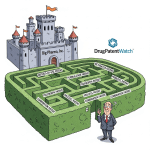
A pharmaceutical product’s commercial life is not defined by one expiry date. It is the product of two separate legal systems, each administered by a distinct federal agency, each operating under its own statutory logic, and each capable of extending or contracting the other’s effect. The USPTO grants patents. The FDA grants regulatory exclusivities. Patents are property rights. Regulatory exclusivities are statutory privileges, prohibitions on FDA action rather than enforceable property claims against infringers. Both run concurrently on the same drug, and their interaction, not either alone, determines the actual date on which a competitor can legally enter the market.
The practical consequence of this architecture is that analyzing patent expiration in isolation, as many financial models do, produces systematically wrong LOE forecasts. A drug can be off-patent and still protected by three overlapping FDA exclusivities. It can hold an unexpired compound patent and simultaneously face generic entry because the relevant regulatory exclusivity has lapsed. The timeline that matters is the later of the two systems’ final expiry dates, adjusted for the 30-month Hatch-Waxman stay where applicable. Building that timeline requires fluency in both systems.
1.2. The Patent System: Building a Legal Fortress
A U.S. patent runs for 20 years from the application’s filing date, not its grant date, which means years consumed in prosecution at the USPTO erode the commercial life of the patent before the drug ever reaches patients. The USPTO grants patents on inventions that satisfy three requirements: novelty (the invention must not appear in prior art), non-obviousness (it must not be an obvious extension of known technology to a person skilled in the art), and utility (it must have a specific, credible, and substantial practical application). For pharmaceutical patents, the composition-of-matter claim on the active pharmaceutical ingredient is the foundational asset. Everything filed after it is, in varying degrees, a defensive supplement.
Innovator companies build what the industry calls a ‘patent estate,’ a layered set of filings that cover the molecule, its formulations, its manufacturing process, its crystalline polymorphs, its individual enantiomers, and its therapeutic applications. A well-constructed estate converts what would otherwise be a single point of vulnerability, the compound patent, into a multidimensional legal problem for any challenger. The compound patent expires, but the generic company still faces six active formulation patents, three method-of-use patents, and two polymorph patents, each requiring its own invalidity or non-infringement argument.
Key Takeaways, Section 1.2
Patents and regulatory exclusivities are separate legal instruments that require integrated analysis. A pure patent expiry analysis understates or overstates the actual LOE date in the majority of cases. The composition-of-matter patent is the single most valuable IP asset in any pharmaceutical estate, but its expiration does not open the market if secondary patents and regulatory exclusivities remain active.
1.3. The Taxonomy of Pharmaceutical Patents: What Each Protects and Why It Matters
Composition-of-Matter / Compound Patents
These cover the chemical structure of the API itself. Filed during pre-clinical or early clinical development, they provide the broadest and legally strongest protection. A valid composition-of-matter patent blocks every possible formulation, every possible route of administration, and every possible use of that molecule, all without requiring a use code listing in the Orange Book. Generic companies understand this and direct their primary invalidity arguments at compound patents first. The Paragraph IV case against AstraZeneca’s esomeprazole (Nexium) compound patent, for example, consumed years of litigation before challengers succeeded.
When assessing the IP value of any drug franchise, a compound patent with seven or more years of remaining life accounts for the majority of the asset’s risk-adjusted net present value. Analysts at IQVIA and ZS Associates routinely apply a steep NPV discount to revenue streams dependent solely on secondary patents, because secondary patents carry materially higher invalidity risk.
Formulation Patents
These cover a specific drug product configuration: an extended-release capsule, a transdermal patch, a liposomal encapsulation. Their commercial rationale is to create a therapeutically superior product version, typically one with improved patient adherence due to reduced dosing frequency or a better side-effect profile, that can be promoted and priced independently while the original formulation’s compound patent expires. Eli Lilly’s once-weekly fluoxetine formulation patent (protecting Prozac Weekly) is the canonical example. The compound patent on fluoxetine had long expired; the formulation patent gave Lilly a new, separately listed product.
The IP valuation of formulation patents is highly variable. A formulation that demonstrably improves clinical outcomes (better bioavailability, reduced peak-trough fluctuation) carries more licensing and litigation value than one that merely repackages the same release profile. Challengers frequently argue that formulation patents are obvious to a person of ordinary skill, given the known toolbox of polymer matrices, coating technologies, and excipient systems available to pharmaceutical scientists. Courts have invalidated formulation patents at a meaningfully higher rate than compound patents.
Method-of-Use Patents
These cover a specific therapeutic application of the drug. They are filed whenever a new indication is discovered, whether through systematic drug repurposing research or as a serendipitous clinical observation. Method-of-use patents require a Patent Use Code (U-XXXX) listing in the Orange Book, which links the patent to a specific FDA-approved indication. This use code link is the mechanism that allows generic companies to pursue the ‘skinny label’ or ‘carve-out’ strategy: by omitting the patented indication from their ANDA label, generic applicants can certify under Paragraph III (patent not applicable) rather than Paragraph IV for that specific patent, bypassing the litigation trigger.
The IP valuation of method-of-use patents is context-dependent. A patent covering the primary commercial indication of a blockbuster drug is enormously valuable as a litigation tool, because any generic product with a full label will inevitably infringe it. A patent covering a narrow, lower-revenue indication may be circumvented via label carve-out, reducing its deterrent value but preserving some degree of market segmentation.
Process Patents
These cover the manufacturing method used to produce the drug substance or drug product. Unlike the other patent categories, process patents are not typically listed in the Orange Book, because the FDA does not require ANDA applicants to certify against them. Their value lies in trade secret overlap and in the ability to enforce them against generic API manufacturers whose process, even if independently developed, might infringe. They are most commercially significant in biologics, where the manufacturing process is so intertwined with product quality that a biosimilar made via a different process is a different product at the molecular level.
Polymorph and Enantiomer Patents
Crystalline polymorphs are different solid-state arrangements of the same molecular compound. A drug substance can exist in multiple polymorphic forms, each with different physical properties including solubility, stability, and dissolution rate, all of which affect the drug product’s bioavailability. Patenting a specific polymorph that is demonstrably superior in drug product performance is legitimate. Patenting polymorphs primarily to generate an Orange Book listing that triggers the 30-month stay on generic ANDAs, however, is the practice that critics characterize as ‘polymorph abuse.’
The enantiomer (or ‘chiral switch’) strategy produces the most commercially durable secondary patents in this category. AstraZeneca’s conversion of omeprazole (Prilosec), a racemic mixture, into esomeprazole (Nexium), the single active S-enantiomer, generated billions of dollars in revenue and years of additional exclusivity. The compound patent on esomeprazole itself was challenged via PIV certification, but the market transition strategy, including heavy direct-to-consumer promotion of Nexium before Prilosec lost exclusivity, was highly effective at shifting the prescription base to the patent-protected product.
Combination Product Patents
These protect fixed-dose combinations (FDCs) of two or more active ingredients. In HIV, for example, where three or four antiretroviral drugs are co-formulated into a single daily tablet, the combination patent covers the specific ratio and formulation of the co-packaged actives. Gilead’s Biktarvy (bictegravir/emtricitabine/tenofovir alafenamide) is protected by a combination of composition patents on bictegravir (the new integrase strand transfer inhibitor) and formulation patents on the three-drug combination. The IP valuation of combination patents depends on whether each component has independent compound patent coverage. Where one component is unpatented or going off-patent, the combination patent may be the primary remaining barrier to generic entry.
Section 2: Regulatory Exclusivity, The FDA’s Parallel Shield
2.1. Why Regulatory Exclusivity Often Matters More Than the Patent
Regulatory exclusivity is the feature of the pharmaceutical IP system that most consistently surprises financial analysts unfamiliar with FDA law. It does not require a novel invention. It does not depend on USPTO examination. It attaches to the regulatory event, drug approval or the completion of a required clinical study, and it operates as a direct prohibition on FDA action rather than as a property right enforceable in court. In practical terms, regulatory exclusivity can protect a drug that has no remaining patent coverage, and it can extend effective market protection for drugs whose compound patents expired years earlier.
The most consequential regulatory exclusivities are the New Chemical Entity (NCE) five-year exclusivity, the Orphan Drug Exclusivity (ODE) at seven years, and the 12-year Reference Product Exclusivity for biologics under the BPCIA. Each of these can be extended or amplified by two additive provisions: the six-month Pediatric Exclusivity, which attaches to all existing patents and exclusivities for the same active moiety, and the five-year GAIN extension for Qualified Infectious Disease Products.
2.2. New Chemical Entity (NCE) Exclusivity: The Foundational Five Years
The NCE exclusivity, codified in the Hatch-Waxman Amendments, attaches to the first FDA approval of a drug containing an active moiety not previously approved. ‘Active moiety’ means the molecule or ion responsible for the drug’s physiological activity, excluding salt, ester, or other non-covalent derivative forms. This distinction matters: the FDA does not grant a new NCE exclusivity for a new salt form of a previously approved active moiety.
NCE exclusivity blocks ANDA and 505(b)(2) submission for four years from approval (the NCE-1 date), and blocks approval for five years. The NCE-1 rule creates the Paragraph IV filing race: the earliest a generic company can submit an ANDA with a PIV certification against an NCE drug is year four. If the brand sues within 45 days of receiving the PIV notice letter, the 30-month stay does not expire until at minimum 6.5 years post-approval, even if the underlying patent expires earlier. This interaction between NCE exclusivity and the 30-month stay is one of the most important, and most frequently underappreciated, features of the Hatch-Waxman framework.
For IP valuation purposes, NCE exclusivity should be modeled as a guaranteed floor on the commercial exclusivity period. A brand-name drug with a weak compound patent but a fresh NCE grant has at least 6.5 years of risk-adjusted market protection if the company litigates aggressively. The NPV contribution of the NCE exclusivity to a drug’s IP asset value is therefore not trivial.
2.3. The Three-Year New Clinical Investigation Exclusivity
Where NCE exclusivity is unavailable (because the active moiety was previously approved), an innovator can obtain three-year exclusivity for a new or supplemental NDA or 505(b)(2) application that requires new, essential clinical investigations. This exclusivity protects only the specific change, a new formulation, a new dosage form, or a new indication, for which those clinical studies were conducted. It does not block generic versions of the original formulation.
The three-year exclusivity is widely used in lifecycle management. A brand company seeking to extend protection on an aging drug can conduct and submit the results of a new clinical study (for example, a study in a patient subpopulation, or a new dosing regimen study) to support a supplemental NDA, securing three additional years of exclusivity on that specific protected element. The commercial value of this exclusivity depends on whether the protected change represents a meaningful portion of the drug’s prescribing volume.
2.4. Orphan Drug Exclusivity: Seven Years of Scope-Limited Protection
The Orphan Drug Act of 1983 grants seven years of marketing exclusivity to drugs designated as orphan products and approved for a qualifying rare disease or condition, defined as one affecting fewer than 200,000 people in the U.S. Orphan drug exclusivity (ODE) blocks the FDA from approving another sponsor’s application for the same drug for the same orphan indication, but it does not block approval for the same drug in a different indication, nor does it block a structurally different drug that treats the same orphan condition.
The ODE’s scope-limited nature creates strategic opportunities and limitations. An innovator can stack multiple ODEs by obtaining designation and approval for several rare indications of the same drug. Celgene pursued this strategy aggressively with lenalidomide (Revlimid), securing orphan designations for multiple hematologic malignancies. Each designation added potential ODE coverage for that indication. However, because ODE blocks only the same drug for the same indication, a competitor developing a structurally distinct molecule targeting the same orphan disease is not blocked by ODE, only by any relevant patents.
IP Valuation: Revlimid (Lenalidomide) as an ODE Case Study
At its commercial peak, Revlimid generated approximately $12.8 billion in annual global revenue. Celgene’s intellectual property architecture for the drug included at minimum 206 patent applications (117 granted in the U.S.) plus multiple orphan drug designations for myeloma, myelodysplastic syndromes, and mantle cell lymphoma. When Bristol Myers Squibb acquired Celgene in 2019 for $74 billion, analysts attributed a significant portion of the acquisition premium to Revlimid’s remaining IP fortress. At the time of acquisition, the drug’s U.S. primary compound patent had already expired (2019), but the combination of the patent thicket, ODE coverage for individual indications, and the negotiated volume-limited generic entry agreements (which delayed unlimited competition until January 31, 2026) preserved the asset’s cash flow stream for years post-acquisition. This is a concrete example of how a multi-layered IP structure, rather than any single patent, generates acquisition value in pharmaceutical M&A.
2.5. Pediatric Exclusivity: The Six-Month Universal Extender
Pediatric exclusivity (PED) is structurally unique among FDA exclusivities. The FDA does not grant it as a standalone protection. It attaches, as an additive six-month extension, to all existing patents and exclusivities held by the same sponsor for the same active moiety. When the Orange Book reflects pediatric exclusivity, each covered patent appears listed twice: once with the original expiry and once with the extended date six months later. Every regulatory exclusivity for that moiety similarly extends by six months.
The mechanism for obtaining PED is the Written Request. The FDA issues a Written Request to a sponsor, specifying the pediatric studies it believes are needed to evaluate the drug’s safety and efficacy in children. The sponsor is not obligated to conduct the studies. If it does and submits the results (whether the studies support the pediatric use or not), the PED attaches. The FDA’s requirement that the studies need only be conducted, not that they produce positive results, makes PED one of the most reliable value-creation mechanisms in lifecycle management. The six months of additional exclusivity on a blockbuster drug generating $5 billion annually is worth approximately $2.5 billion in incremental revenue.
2.6. GAIN Exclusivity: Doubling the Runway for Antimicrobials
The Generating Antibiotic Incentives Now (GAIN) Act of 2012 added a five-year exclusivity extension for antibiotics and antifungals that qualify as Qualified Infectious Disease Products (QIDPs), drugs intended to treat serious or life-threatening infections where there is an unmet medical need. GAIN exclusivity adds five years to whatever other exclusivity the drug qualifies for. An NCE QIDP gets 10 years (5 + 5). An orphan drug QIDP gets 12 years (7 + 5). A QIDP that also earns pediatric exclusivity extends by an additional six months on top.
For antimicrobial developers, the GAIN extension is the dominant factor in IP valuation. A novel antibiotic with strong efficacy against resistant pathogens can receive 10 years of regulatory exclusivity, pushing the earliest possible generic ANDA submission to nine years post-approval and the earliest possible generic approval to approximately 11.5 years, with the 30-month stay factored in. This extended runway has become central to the investment thesis for companies like Paratek Pharmaceuticals (omadacycline) and Iterion Therapeutics.
2.7. Biologics Exclusivity Under the BPCIA: The 12-Year Baseline
The Biologics Price Competition and Innovation Act (BPCIA) of 2010 created a 12-year reference product exclusivity for innovative biologics. From the biologic’s first licensure date, no biosimilar application can be submitted for four years, and no biosimilar can receive FDA approval for 12 years. Pediatric exclusivity extends this by six months.
The 12-year baseline reflects Congress’s judgment that biologics require substantially longer exclusivity periods than small-molecule drugs, given the complexity and cost of their development. Biologics are large, complex protein molecules manufactured in living cell systems; their development cost is typically 50 to 100 percent higher than for a small molecule, and their development timeline is comparably longer. The 12-year period was, however, a compromise. The Obama administration initially proposed a five-year exclusivity; the enacted 12-year figure represented a concession to the biopharmaceutical industry.
Key Takeaways, Section 2
Regulatory exclusivity is a mandatory input in any pharmaceutical LOE model, not an optional supplement. The stacking potential of NCE plus GAIN plus PED can produce a total exclusivity runway exceeding 10.5 years from approval, independent of any patent. For biologics, the 12-year BPCIA baseline makes the regulatory exclusivity, not the patent estate, the primary market protection instrument in the asset’s early commercial life. ODE is scope-limited and can be circumvented by structurally distinct competitors targeting the same condition.
Investment Strategy Note
For portfolio managers modeling drugs approaching LOE, the correct inputs are the later of: (a) the final patent expiration date in the Orange Book, inclusive of any PTE or PED extensions, or (b) the applicable regulatory exclusivity expiration date. Drugs like those with stacked GAIN and PED exclusivities may have LOE dates that are two to three years later than a simple patent expiry analysis would suggest. This gap represents material revenue that revenue-at-risk models routinely undercount.
Section 3: The Orange Book as a Strategic Battlefield
3.1. Anatomy of the Orange Book Database
The FDA’s Orange Book (‘Approved Drug Products with Therapeutic Equivalence Evaluations’) is the public registry where the patent system and the regulatory system officially intersect. Established by the Hatch-Waxman Amendments, it requires every NDA holder to list all patents that the company reasonably believes could be asserted against an ANDA or 505(b)(2) for the same drug. ANDA applicants must then certify against every listed patent. The Orange Book therefore converts the innovator’s patent portfolio into a set of binary legal questions that challengers must answer, and those answers trigger or avoid litigation.
The Orange Book’s downloadable data files are the primary input for competitive intelligence in the small-molecule drug market. The core analytical files are three: ‘products’ (linking trade name, active ingredient, NDA number, and RLD designation), ‘patents’ (listing each listed patent, its expiry date, and its applicable use code), and ‘exclusivity’ (listing each granted regulatory exclusivity, its type code, and its expiry date). For competitive surveillance, the patent file’s Patent_Use_Code field and the Drug_Substance_Flag/Drug_Product_Flag fields are the most strategically informative fields after the expiry date.
The Drug_Substance_Flag identifies patents the innovator claims cover the active ingredient itself. The Drug_Product_Flag identifies patents claimed to cover the formulated product. Use codes link specific patents to specific FDA-approved indications. A patent with a use code can potentially be carved around. A patent with a Drug_Substance_Flag and no use code cannot.
3.2. The Orange Book as a Signaling Mechanism
Every patent listing decision an innovator makes is a public strategic signal. Adding a formulation patent to the Orange Book announces that the innovator intends to litigate if a generic product copies that formulation. Adding a method-of-use patent with a narrow use code signals that the innovator knows the indication-specific scope of its protection. Choosing a broad use code signals an attempt to block all generic entry by claiming that any ANDA for the drug necessarily implicates the patented use.
Generic challengers read these signals precisely. A dense listing of formulation and method-of-use patents, even if each patent is individually weak, raises the expected cost of litigation and pushes potential challengers toward carve-out strategies or toward other therapeutic targets altogether. A thin listing (one or two patents, compound and formulation only) invites early PIV challenges by signaling that the brand has not built a deep secondary defense.
The listing of patents with narrow use codes, particularly in complex neurological or oncological indications, is the brand’s strategic invitation for a skinny-label generic. In Allergan v. Sandoz (involving Combigan, a fixed-dose combination of brimonidine and timolol), Sandoz filed an ANDA with a skinny label that carved out the patented method of use. Allergan argued that the skinny label still induced infringement because physicians prescribing the generic would inevitably prescribe it for the patented use. The resulting litigation over label carve-out sufficiency has defined a still-evolving area of pharmaceutical patent law.
3.3. A Practical Analytical Workflow: From Raw Data to an LOE Forecast
The process of building a defensible LOE model from Orange Book data requires five sequential analytical steps, each building on the last.
First, the analyst must identify the Reference Listed Drug (RLD) and obtain its NDA number. The NDA is the key linking all downstream data. Where a drug is marketed as multiple products (different strengths or dose forms), each product number within the NDA has its own patent and exclusivity listing.
Second, the analyst must extract and map the complete patent estate from the Orange Book patents file. Each patent’s expiry date, use code, and substance/product flags should be plotted chronologically. The resulting timeline shows the evolution of the patent portfolio from the compound patent (typically earliest) through successive waves of formulation, method-of-use, and polymorph patents.
Third, the analyst must decode the character of each patent. Drug_Substance_Flag patents carry more litigation risk. Use-code-limited patents are candidates for label carve-out. Patents expiring near the compound patent create a ‘thin’ period of secondary protection; patents expiring years later define the maximum possible patent-based LOE date, subject to invalidity challenges.
Fourth, the analyst must map regulatory exclusivities from the Orange Book exclusivity file. Each exclusivity code should be matched to its statutory type (NCE, ODE, PED, GAIN, etc.), and its expiry date added to the timeline created in steps two and three.
Fifth, the analyst synthesizes both timelines. The final LOE date, absent successful patent challenges, is the later of the last patent expiry and the last regulatory exclusivity expiry. Where the 30-month stay is relevant (i.e., the drug is an NCE and a PIV challenge is anticipated at the NCE-1 date), the analyst should also model a ‘challenged entry’ scenario, calculating the earliest possible FDA approval for a PIV challenger as NCE-1 date plus 30 months, and determine whether that date falls before or after the patent/exclusivity-based LOE date.
3.4. Beyond the Orange Book: Commercial Intelligence Platforms
The Orange Book covers U.S.-listed patents and FDA-granted exclusivities only. It does not contain information on international patent status, ongoing litigation outcomes, settlement terms, patent challenge outcomes at the Patent Trial and Appeal Board (PTAB), or clinical pipeline data for follow-on drugs that might cannibalize existing products before their LOE dates. For a complete competitive intelligence picture, practitioners supplement Orange Book analysis with commercial platforms including DrugPatentWatch, Clarivate Cortellis, IQVIA’s Competitive Intelligence products, and Evaluate Pharma.
The most operationally useful capabilities these platforms provide include real-time Paragraph IV litigation monitoring (identifying which brands are under active challenge and by whom), PTAB inter partes review (IPR) tracking (which patents are being challenged via administrative review, a faster and often cheaper alternative to district court litigation), and API source mapping (identifying which generic manufacturers have secured API supply chains, a leading indicator of near-term ANDA filing activity). For biosimilar intelligence, tracking aBLA filing dates and the biosimilar applicant’s decision on the patent dance provides early warning of competitive timing.
Key Takeaways, Section 3
Orange Book data is a legal document, not just a commercial database. Each field, especially the use code, carries strategic meaning. LOE forecasting requires integrating both the patent file and the exclusivity file; neither alone is sufficient. Commercial intelligence platforms add the litigation, PTAB, and pipeline data that make the difference between a static model and a real-time competitive picture.
Section 4: The Hatch-Waxman Paragraph IV Challenge, Step by Step
4.1. The Statutory Logic of the PIV Pathway
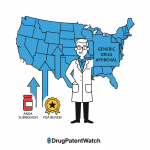
The Paragraph IV certification is the primary mechanism for generic market entry before all Orange Book patents for a brand-name drug have expired. It is an assertion by the generic applicant that the listed patent is invalid, unenforceable, or not infringed by the proposed generic product. Congress created the PIV pathway in 1984 to balance two competing policy goals: rewarding innovative research through patent protection, and accelerating generic entry to reduce drug costs. The mechanism it chose was an artificial act of infringement: the ANDA filing itself constitutes a statutory act of patent infringement, creating an immediate right to sue without requiring the generic to actually make or sell the infringing product.
This construct allows patent disputes to be litigated before generic products reach pharmacy shelves, providing an orderly pre-market forum for resolving IP questions that would otherwise need to be litigated post-launch (which is more expensive and more disruptive for healthcare markets). The tradeoff is that it insulates the branded drug from price competition during the litigation period, which can last years.
4.2. The PIV Process: Mechanics and Timelines
The PIV process runs through a sequence of steps with strict statutory deadlines, and each step carries strategic implications.
The generic company files its ANDA with a Paragraph IV certification against one or more listed patents. This filing, to be complete, must include a full bioequivalence data package, chemistry and manufacturing information, and the PIV certifications. For an NCE drug, the earliest this can occur is four years post-approval. Once the FDA acknowledges the ANDA as ‘substantially complete,’ the applicant has 20 days to send a detailed Notice Letter to the brand company and patent owner. The Notice Letter must provide a claim-by-claim analysis explaining the specific factual and legal basis for invalidity, unenforceability, or non-infringement. Courts have increasingly required that Notice Letters be technically detailed and complete; generic companies have lost 180-day exclusivity for deficient notice.
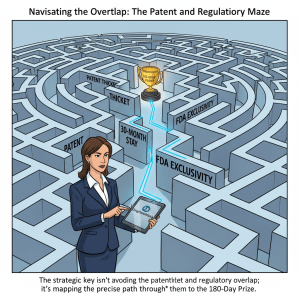
Upon receiving the Notice Letter, the brand has 45 days to file a patent infringement suit. Filing within this window triggers an automatic 30-month stay of FDA approval. The 30-month stay is computed from the date the brand receives the Notice Letter, not from the filing of the lawsuit. It runs until the earlier of the 30-month expiry, a court decision finding the patent invalid or not infringed, or a settlement of the litigation. During the stay, the FDA can continue reviewing the ANDA and may even issue a ‘tentative approval,’ but it cannot grant final approval.
If the brand does not sue within 45 days, the 30-month stay does not attach. The FDA can approve the ANDA as soon as it is otherwise ready, subject only to the regulatory exclusivity constraints. Brands almost always sue within the 45-day window for commercially significant drugs, making the 30-month stay nearly automatic in practice.
4.3. The 180-Day First-Filer Exclusivity: The Prize That Defines the Race
The 180-day marketing exclusivity is the economic engine of the Paragraph IV challenge. The first generic applicant (or group of applicants filing on the same day) to submit a substantially complete ANDA with a PIV certification against an unexpired patent listed for an NCE drug earns 180 days during which the FDA will not approve any other ANDA for the same drug. This effectively creates a temporary duopoly between the brand and the first generic filer, allowing the first generic to capture substantial market share at a price modestly below the brand’s, before the market is flooded by subsequent generics at much lower prices.
The 180-day exclusivity triggers on first commercial marketing by the first filer, not on ANDA approval. If the first filer fails to launch, the exclusivity may be forfeited under a set of ‘failure to market’ triggers. The exclusivity can also be forfeited if the first filer’s PIV certification is found to be invalid by a court, or if the first filer enters into a settlement agreement with the brand that the FTC determines violates antitrust law.
Because the 180-day exclusivity is awarded only to the first PIV filer for an NCE, it creates an intensely competitive race to file. Generic companies invest in ANDA development years before they can legally file, precisely timing their submission for the NCE-1 date. For a drug generating $3 billion to $5 billion in annual revenue, the first-filer position is worth hundreds of millions of dollars in incremental profit relative to a subsequent filer’s position. This explains why some ANDAs are filed within hours of the NCE-1 date opening.
4.4. The Information Asymmetry at the Core of the PIV Race
Every generic company filing a first-day PIV challenge is making a multi-hundred-million-dollar investment decision with incomplete information. It knows what patents the brand has listed in the Orange Book. It does not know: the full strength of each patent’s claim scope as it will be construed by a court; whether the brand holds unlisted patents (process patents, for example, which are not Orange Book-listed) that could complicate commercial launch; whether the brand is preparing an authorized generic to launch simultaneously and undercut the 180-day premium; or whether the brand has a product hop planned, a reformulation under a new NDA that could shift the market away from the challenged formulation before the generic launches.
This information asymmetry is most acute in complex biologics and specialty pharma categories, where the innovator’s manufacturing and clinical data are highly proprietary. In small-molecule generics, the asymmetry is partially mitigated by public litigation records, PTAB filings, and commercial intelligence platforms tracking PIV activity. But for the first challenge against a new NCE with minimal prior litigation history, the generic filer is operating with structurally limited visibility into the brand’s defensive strategy.
Key Takeaways, Section 4
The PIV pathway is a structured pre-market litigation system, not just a regulatory certification process. The 30-month stay is an automatic near-guarantee of additional exclusivity for brands that sue within 45 days. The 180-day first-filer exclusivity creates a race dynamic that determines which generic companies will capture disproportionate economic value in the LOE event. The information asymmetry between brand and first PIV filer is a structural feature of the system that systematically favors innovators with dense patent estates and active lifecycle management programs.
Investment Strategy Note
For investors modeling the LOE event, the relevant question is not just ‘when does the first generic launch?’ but ‘how many generic competitors enter within the first 12 months?’ A drug facing a single first-filer with negotiated entry faces a different price erosion curve than one facing simultaneous entry by six or eight generic manufacturers. Orange Book data, ANDA filing counts, and 180-day exclusivity status are all public inputs to this modeling question.
Section 5: The BPCIA Patent Dance, Mechanics, Strategy, and IP Valuation
5.1. Why Biologics Require a Different Framework
The Hatch-Waxman Act was designed for small-molecule drugs, where a generic product can be chemically identical to the brand and demonstrated as such via bioequivalence testing. Biologics are a fundamentally different class of therapeutic. They are large, complex protein molecules (antibodies, fusion proteins, cytokines, coagulation factors) manufactured in living cell systems: bacteria, yeast, Chinese hamster ovary (CHO) cells, or hybridoma cell lines. No biosimilar is chemically identical to its reference product. Differences in glycosylation patterns, protein folding, post-translational modifications, and aggregation state are inherent to the biological manufacturing process.
The BPCIA created a separate approval pathway (the abbreviated Biologics License Application, or aBLA) for ‘biosimilar’ products demonstrated to be highly similar to an FDA-licensed reference product, with no clinically meaningful differences in safety, purity, or potency. The additional status of ‘interchangeable biosimilar,’ which allows pharmacists to substitute the biosimilar for the reference product without prescriber intervention (paralleling the automatic substitution rules for small-molecule generics), requires additional clinical data demonstrating that switching between the reference product and the biosimilar does not produce adverse outcomes. Biosimilar interchangeability is therefore a higher and more expensive evidentiary bar than biosimilarity alone.
The BPCIA’s reference product exclusivity (12 years from first licensure) is the dominant market protection mechanism for biologics during their early commercial life. The corresponding patent framework, the ‘patent dance,’ is structured differently from Hatch-Waxman’s PIV process and carries different strategic options.
5.2. The Patent Dance: A Multi-Step Pre-Litigation Protocol
The patent dance is a sequenced information exchange designed to allow biosimilar applicants and reference product sponsors (RPS) to identify, narrow, and sequence patent disputes before litigation begins. The BPCIA codified this process in 42 U.S.C. Section 262(l).
Within 20 days of FDA acceptance of the aBLA, the biosimilar applicant may voluntarily provide the RPS with a copy of its aBLA and detailed manufacturing process information. The optional nature of this initial disclosure was confirmed by the Supreme Court in Sandoz Inc. v. Amgen Inc. (2017). The Court held that the dance is not mandatory; a biosimilar applicant cannot be compelled by state law injunction to provide the aBLA information, and the only consequence of refusing to provide it is that the RPS may immediately sue on any potentially relevant patent.
If the applicant provides the aBLA, the RPS has 60 days to respond with a list of patents it believes are ‘reasonably could be asserted’ against the biosimilar. The applicant then has 60 days to respond with its own patent list and a claim-by-claim statement explaining why each RPS patent is invalid, unenforceable, or not infringed. The RPS has 60 days to rebut. The parties then have 15 days to negotiate and agree on which patents will be litigated in the first wave. If they agree, the RPS files suit within 30 days on the agreed list. If they cannot agree, each party submits its own list, and the RPS files suit on those patents within 30 days.
A second wave of litigation, on patents not in the first wave, is permitted but must be filed no later than 30 days before commercial marketing begins. The biosimilar applicant must provide 180 days’ advance commercial marketing notice to the RPS, which triggers this second-wave filing window.
5.3. Strategic Choice: Dance or Don’t Dance
The decision to participate in the patent dance requires weighing two sets of trade-offs.
Participating in the dance provides the biosimilar applicant with early visibility into the RPS’s patent strategy and the specific claim-by-claim positions the RPS intends to take. This information has value for litigation preparation and settlement negotiation. The structured process may also concentrate the litigation into a defined scope of patents, reducing the risk of the RPS filing on an unexpectedly broad set of patents later.
Opting out of the dance gives the biosimilar applicant more control over the timing of litigation initiation (since not providing the aBLA delays the start of the clock) but eliminates the applicant’s ability to shape the scope of the first patent wave. The RPS can immediately file on any patent it believes is relevant, including patents that a fully-engaged dance might have excluded from the agreed first-wave list. In markets where the RPS holds a large and complex patent estate (as Amgen did for adalimumab and as several companies hold for their anti-VEGF biologics), opting out of the dance may expose the biosimilar applicant to broader and less predictable initial litigation.
The absence of a 30-month automatic stay in the BPCIA context is the most structurally significant difference from Hatch-Waxman. An aBLA filing does not automatically halt FDA’s approval process. The FDA can approve a biosimilar while patent litigation is ongoing. The biosimilar applicant must then decide whether to launch at-risk (commercially marketing the product while litigation continues, exposed to potential damages if it ultimately loses), or to wait for a favorable court decision or settlement.
IP Valuation: Humira (Adalimumab) and the Biosimilar Entry Timeline
AbbVie’s adalimumab is the single most commercially important test case for biosimilar IP strategy. At peak, Humira generated approximately $21 billion in annual global revenue. AbbVie’s patent estate around adalimumab comprised approximately 136 patents. The primary composition patent on the antibody expired in 2016 in the U.S. AbbVie then defended the drug through a combination of manufacturing process patents, formulation patents, and method-of-use patents covering specific autoimmune indications.
Every major biosimilar competitor, including Amgen (Amjevita), Samsung Bioepis, Sandoz, and others, entered into settlement agreements with AbbVie rather than fight the full thicket. The settlements allowed U.S. biosimilar entry beginning in January 2023, roughly seven years after the primary composition patent’s expiration, but 11 years before the last patents in AbbVie’s estate are scheduled to expire. In Europe, where AbbVie’s patent thicket was thinner (the European Patent Office invalidated key patents earlier), biosimilar competition began in October 2018, creating a roughly five-year U.S.-Europe gap in competitive exposure.
For institutional investors, the adalimumab case established that a large, well-structured biologic patent estate, even one in which most individual patents are secondary and independently contestable, generates substantial settlement leverage by converting a single litigation risk into a multi-front war of attrition. The IP valuation of AbbVie’s adalimumab estate at the time of the first settlement negotiations was effectively the present value of the revenue stream between 2016 (when compound patent protection expired) and 2023 (when competitors actually entered), discounted for litigation risk. That figure was in the billions of dollars.
Key Takeaways, Section 5
The BPCIA patent dance is optional, and the strategic choice whether to engage is one of the first and most consequential decisions in biosimilar development. The absence of a 30-month stay means biosimilar FDA approval does not automatically pause; at-risk launch decisions require explicit commercial risk analysis. Biosimilar interchangeability is a higher evidentiary standard than biosimilarity and carries significant additional development cost, but it unlocks pharmacy-level substitution economics. Biologic patent estates routinely generate settlement leverage that extends effective market protection well past the compound patent’s expiration date.
Section 6: Innovator Lifecycle Management, Evergreening Strategies and Their IP Architecture
6.1. The Economics of Evergreening
Evergreening refers to the systematic use of secondary patents to extend a drug’s commercial exclusivity past the expiration of its primary compound patent. The term is used neutrally by IP lawyers and pejoratively by healthcare economists. Its commercial logic is straightforward: a blockbuster drug generating $5 billion per year faces catastrophic revenue erosion once generics enter. If the company can shift 60 percent of prescriptions to a new, patent-protected formulation before that event occurs, it preserves a substantial portion of the revenue base even after generic entry.
Critics note that most evergreening innovations, extended-release formulations, new salts, new isomers, delivery system changes, are available in the pharmaceutical scientist’s standard toolkit and represent incremental rather than inventive steps. Peer-reviewed analyses have found that the majority of new pharmaceutical patents filed in the last decade of a drug’s commercial life cover incremental modifications rather than therapeutic advances. A 2017 study published in JAMA Internal Medicine found that of 1,375 patents associated with 108 drugs, only 38 percent were for new formulations or new routes of administration, with the remainder covering minor modifications or manufacturing steps.
The policy tension this creates is real. Evergreening has produced genuinely better products: extended-release metformin has a meaningfully superior tolerability profile compared to immediate-release; the esomeprazole/omeprazole chiral switch produced a drug with moderately better acid suppression. But the primary commercial purpose of these filings is exclusivity extension, and the secondary patents that accomplish it are frequently invalidated by courts when challenged.
6.2. The Technology Roadmap of Evergreening Tactics
Innovator lifecycle management teams work from a playbook that has expanded considerably over the past 20 years. The following describes the core tactics in the order they are typically deployed during a drug’s commercial life, along with the IP and regulatory mechanisms each uses.
During years one through five post-approval, the primary activity is building secondary patent depth. The formulation development team evaluates extended-release technology platforms (polymer matrix systems like HPMC, reservoir membrane systems using Eudragit polymers, osmotic controlled-release systems like OROS) for suitability with the specific molecule. Each commercially viable controlled-release formulation is patented and eventually submitted for FDA approval under a supplemental NDA or a new NDA (505(b)(2)), with a new three-year clinical investigation exclusivity claim.
Simultaneously, the clinical team pursues additional indications through systematic disease area expansion. New method-of-use patents are filed for each new indication entered into clinical trials. The regulatory team manages the timing of supplemental NDA filings to maximize the stacking of three-year exclusivities. If the molecule is relevant to any pediatric population, the team proactively requests a Written Request from FDA to initiate the pediatric exclusivity clock.
During years five through ten, the focus shifts to formulation optimization and delivery innovation. New delivery systems, subcutaneous autoinjectors for drugs previously given IV, nasal spray formulations for previously oral drugs, transdermal patches for drugs with appropriate lipophilicity, are developed and patented. The goal is to give the prescribing community a compelling clinical reason to prefer the new formulation over the original, ensuring that the generic entry against the original drug does not capture the market being shifted to the new, patent-protected variant.
Beginning around year seven to ten, the most sophisticated operators execute what the industry calls a ‘product hop’: a coordinated strategy of launching the new formulation, redirecting promotional spending to the new version, and potentially withdrawing the original formulation from the market (or removing it from the formulary through payer contract negotiations) to make the generic target the old formulation commercially irrelevant. The FTC and some courts have characterized aggressive product hopping as anticompetitive where it is timed specifically to deny the 180-day first-filer generic its commercial prize. Abbott Laboratories’ conversion of Tricor (fenofibrate) from capsule to tablet form, executed multiple times as generic challengers approached the original formulation, is the textbook product-hop case.
From year eight onwards, if the clinical program supports it, the team targets additional orphan drug designations for rare subtypes of the drug’s primary indication (for example, a specific genetic subtype of the main disease). Each designation provides potential ODE protection for the subtype indication and may independently support a seven-year exclusivity period for that specific patient population segment.
6.3. Case Study in Depth: AbbVie’s Humira Estate, IP Valuation and Settlement Economics
Humira’s patent estate is the most extensively documented example of a systematically constructed pharmaceutical patent thicket. The strategic narrative divides into three phases: foundational protection, thicket construction, and settlement enforcement.
The foundational composition-of-matter patent on adalimumab (the fully human anti-TNF monoclonal antibody) was licensed from Cambridge Antibody Technology and expired in the U.S. in December 2016. Had this been AbbVie’s only protection, biosimilar entry would have been possible in late 2016 or early 2017 at the latest. AbbVie’s IP team recognized this timeline and spent the years between Humira’s 2002 approval and the compound patent’s approaching expiry systematically filing secondary patents.
The resulting 136-patent estate covered formulation (the specific aqueous adalimumab formulation with defined excipient concentrations, the citrate-free high-concentration formulation used in the pen injector), manufacturing process (specific cell culture conditions, purification steps, and control methods), and methods of use (separate method claims for each approved indication: rheumatoid arthritis, ankylosing spondylitis, psoriatic arthritis, plaque psoriasis, Crohn’s disease, ulcerative colitis, and others). An independent analysis by I-MAK found that approximately 80 percent of these patents were for incremental modifications or duplicative claims, rather than substantively new inventions.
The settlement leverage this estate created was enormous. Amgen, Samsung Bioepis, Sandoz, Mylan, Fresenius Kabi, and others all settled rather than litigate the thicket. The settlement terms, which AbbVie disclosed publicly in its filings, permitted U.S. entry starting January 2023 for most settlees, with volume and geographic restrictions in some cases during an initial period. The NPV of the revenue stream from January 2017 (approximate compound patent expiry plus biosimilar development lead time) to January 2023 (actual entry), at Humira’s $20 billion-plus annual run rate, represents the financial value AbbVie extracted from its secondary patent thicket, monetized via settlement rather than through individual patent validity determinations.
For investors analyzing biologic assets with approaching reference product exclusivity expiries, the AbbVie/Humira playbook provides a calibration point: a 136-patent estate with deep secondary coverage generated approximately six to seven years of post-compound-patent protection in the world’s most aggressive biosimilar litigation environment. Fewer patents or patents of narrower scope should be expected to generate correspondingly shorter delays.
6.4. Case Study in Depth: Revlimid’s Multi-Domain Defense and the Volume-Limited Settlement Model
Bristol Myers Squibb’s management of lenalidomide (Revlimid), inherited from its Celgene acquisition, is a more sophisticated lifecycle management case than Humira because it combined patent litigation, regulatory weaponization, and commercial settlement architecture across three simultaneous domains.
The patent estate, comprising 117 granted U.S. patents from approximately 206 applications, provided the legal foundation. The primary compound patent expired in 2019. BMS litigated the secondary thicket aggressively, pursuing cases against multiple generic filers across multiple district courts.
The regulatory weaponization component involved Revlimid’s REMS program (called RevAssist, now integrated into REMS with ETASU for the lenalidomide/pomalidomide program). Lenalidomide is a thalidomide analogue with a well-established teratogenicity risk. The FDA’s approval conditions require that the drug be dispensed only through a restricted distribution network. Celgene, and later BMS, used the REMS program’s restricted distribution architecture to refuse to supply samples to generic manufacturers for bioequivalence testing. Without samples, generic companies could not generate the FDA-required bioequivalence data to support their ANDAs.
This sample-withholding tactic blocked or significantly delayed at least 14 different generic manufacturers. Congressional investigators and the FTC characterized it as an anticompetitive abuse of a mandatory safety program. Antitrust litigation followed. Critically, the sample-withholding delay operated independently of the patent litigation timeline: even if a generic company had strong invalidity arguments ready, it could not file a complete ANDA without completing bioequivalence studies, and it could not complete those studies without samples.
The commercial settlement architecture that emerged from this combined legal and regulatory pressure was structurally distinct from the typical Hatch-Waxman settlement, which simply sets an entry date. The Revlimid settlements with Dr. Reddy’s, Natco, and others permitted generic entry beginning in March 2022 (three years before the last key patent’s scheduled expiration), but with volume restrictions: the initial generic volume was capped at a low single-digit percentage of the total market, with caps increasing gradually over time until unlimited competition is permitted beginning January 31, 2026.
This volume-limited structure is analytically significant. Instead of the typical sharp patent cliff (where brand revenue drops 80 percent or more in year one of generic competition), BMS engineered a managed glide path. Lenalidomide brand revenue declined gradually from the March 2022 generic entry date, preserving a large majority of the revenue stream through a period when, under normal patent cliff dynamics, it would have already collapsed. This is the most sophisticated implementation of multi-domain IP strategy in recent pharmaceutical history: legal pressure (the patent thicket), regulatory leverage (REMS-based sample withholding), and commercial negotiation (volume-limited settlement terms) were coordinated to produce a specific, manageable revenue erosion trajectory rather than a cliff.
Investment Strategy Note
The volume-limited settlement model has potential applicability to other high-value drugs where innovators hold both strong secondary patent estates and REMS programs. Analysts covering BMS’s portfolio should model Revlimid’s revenue trajectory to 2026, incorporating the settlement volume caps rather than using a standard generic penetration curve. For drugs under active REMS-based sample access litigation (which the FTC has made a priority enforcement area post-Revlimid), the sample withholding tactic is increasingly legally risky, which may reduce its future utility as a delay instrument.
Key Takeaways, Section 6
Evergreening is most effective when secondary patents cover formulation changes that generate genuine prescriber preference, because product hop strategies depend on physician and payer adoption of the new formulation. Patent thickets without corresponding product transitions simply delay generic entry; patent thickets paired with product hops can make generic entry commercially irrelevant for the original formulation. The Revlimid model represents the current ceiling of innovator defensive strategy: three independent legal and commercial tools deployed in coordination to convert a patent cliff into a managed revenue glide path.
Section 7: The Overlap Zone, Stacking, Shadow Exclusivity, and Antitrust
7.1. Stacking Mechanics: How Multiple Protections Create Compounding Timelines
The most important analytical principle in pharmaceutical exclusivity management is this: the effective market protection period for a drug is always determined by the later of all applicable protections, not the average or median. Stacking occurs when two or more exclusivities, or a regulatory exclusivity and a late-expiring secondary patent, extend sequentially such that the total protection significantly exceeds what any single protection alone would provide.
The most powerful stacking combinations are NCE plus GAIN (producing 10 years of regulatory exclusivity), NCE plus GAIN plus Pediatric Exclusivity (10.5 years), Orphan Drug plus GAIN (12 years), and Orphan Drug plus GAIN plus PED (12.5 years). In the biologic context, the 12-year BPCIA exclusivity plus PED produces 12.5 years of regulatory protection, independent of any patent.
Consider a concrete stacking scenario: a novel antibiotic approved in 2024, designated as a QIDP and an orphan drug for a specific resistant pathogen indication, and for which the FDA subsequently issues a Written Request for pediatric studies. The ODE runs seven years (to 2031). GAIN adds five years (to 2036). PED, granted after pediatric study completion in 2028, adds six months (to June 2036). The compound patent, filed in 2016 with standard prosecution time, has a 20-year term from filing (to 2036), possibly extended by Patent Term Extension for regulatory review delay. In this scenario, the regulatory exclusivity and the compound patent expire within months of each other, producing a clean 12-year commercial runway from approval. But if the compound patent is extended by PTE to 2038, the combined protection runs to 2038, two years beyond the regulatory exclusivity, and the drug carries additional secondary patent coverage out to potentially 2042.
7.2. The ‘Shadow Exclusivity’ Phenomenon
‘Shadow exclusivity’ refers to the de facto extension of market protection beyond the last formal expiry date, produced by the strategic interaction of the patent thicket and the 30-month stay mechanism. No agency grants this extension. It is an emergent property of the Hatch-Waxman litigation framework.
Here is the mechanism: A drug’s NCE exclusivity expires at year five. Its last important secondary patent expires at year 12. A generic company files a PIV challenge at year four (NCE-1 date). The brand sues within 45 days, triggering the 30-month stay. The generic cannot receive FDA approval before approximately year 6.5. The district court litigation runs for three years, resolving at year 7.5 in the generic’s favor. The brand immediately sues on the next set of secondary patents in its thicket, triggering additional litigation. The generic faces two choices: launch at-risk while the second case is pending (with exposure to substantial damages if it loses) or wait for the second case to resolve. The second case takes another two to three years. The generic launches at approximately year 10 or 11, despite the brand’s last significant compound patent expiring at year 12.
The period from year 7.5 (when the first patent litigation resolved in the generic’s favor) to year 10 or 11 (when the generic actually launched) represents shadow exclusivity: a period of continued market protection produced not by any formal legal right but by the economics of serial litigation and at-risk launch risk. Challengers in this scenario are not legally blocked from the market; they are economically deterred.
Shadow exclusivity is most prevalent in high-revenue drug categories where the at-risk launch downside is largest. It is less common in lower-revenue categories where the generic company’s potential damages exposure is modest relative to the value of early market entry.
7.3. Antitrust Guardrails: FTC v. Actavis and the Rule of Reason
The convergence of high revenue, high litigation cost, and the economic logic of settlement produces a recurring antitrust issue: reverse payment settlements, or ‘pay-for-delay’ agreements. In a reverse payment settlement, the brand-name drug company pays the generic challenger to drop its PIV challenge and agree to delay its market entry. The payment flows from the defendant (the brand) to the plaintiff (the generic), the reverse of the normal direction, because the brand has more to lose from generic entry than it costs to buy the generic’s cooperation.
In FTC v. Actavis (2013), the Supreme Court addressed whether such settlements are subject to antitrust review. The FTC had argued that a large, unexplained payment from a brand to a generic challenger to settle a PIV case should be presumptively illegal. The pharmaceutical industry argued that settlements within the life of the patent should be presumptively legal, as they merely define the allocation of rights under a valid patent.
The Court rejected both extremes. Large reverse payments are not presumptively illegal, but they are not immune from antitrust scrutiny simply because they fall within the scope of a patent’s term. Courts must apply the ‘rule of reason’: weigh the anticompetitive harms (delayed generic entry, preserved brand pricing) against any procompetitive justifications (settlement of uncertain litigation, avoiding protracted court battles). A payment that is ‘large and unjustified,’ relative to what the patent holder would have received in a fully litigated victory, is evidence that the parties are dividing monopoly profits rather than resolving a legitimate legal dispute.
Post-Actavis, the definition of ‘payment’ has expanded significantly. Courts have held that a brand’s agreement not to launch an authorized generic during the settling generic’s 180-day exclusivity period (a ‘no-AG’ agreement) constitutes a form of value transfer equivalent to a cash payment, given the significant revenue difference for the generic company between a duopoly and a three-way competitive market during the 180-day period. Other non-cash payments, including favorable supply agreements, license grants for other products, and promotional services arrangements, have been analyzed under the same framework.
The legal uncertainty post-Actavis remains significant. Rule of reason litigation is inherently fact-intensive and unpredictable. Companies settling PIV cases now routinely seek antitrust counsel review of settlement terms and maintain detailed records of the commercial justifications for any value transfer. The FTC continues to actively monitor PIV settlements under its statutory obligation to review all such agreements filed with the agency.
Key Takeaways, Section 7
Exclusivity stacking requires systematic modeling of all applicable protections and their additive interactions; single-protection analysis consistently produces wrong LOE forecasts. Shadow exclusivity is a real but legally unstructured phenomenon that can add one to four years of effective market protection beyond formal patent expiry for drugs with large secondary patent estates. Post-Actavis, reverse payment settlements require antitrust-sensitive structuring; no-AG agreements carry the same scrutiny as cash payments.
Section 8: Emerging Threats and Opportunities, AI, Global Fragmentation, and the Biosimilar Technology Roadmap
8.1. AI’s Dual Role: Accelerating Drug Discovery and Inflating Patent Thickets
Artificial intelligence is restructuring the economics of pharmaceutical R&D across the full value chain, from target identification through clinical development to competitive intelligence. Machine learning models trained on genomic, proteomic, and structural biology datasets can identify novel therapeutic targets in weeks rather than years. Generative AI platforms, including those developed by Insilico Medicine, Recursion Pharmaceuticals, and Exscientia (now part of Recursion following acquisition), can design candidate molecules with specified biophysical properties in computational cycles rather than synthetic chemistry cycles.
The IP implications of AI-assisted drug discovery are substantial and largely unsettled. The core legal challenge is inventorship. U.S. patent law requires a human inventor, a requirement confirmed in Thaler v. Vidal (Fed. Cir. 2022), where the Federal Circuit held that an AI system (‘DABUS’) cannot be listed as an inventor under the Patent Act’s use of the word ‘individual.’ For AI-assisted discoveries, the human inventorship question requires fact-specific analysis: the human scientist who designed the AI model, selected the training data, formulated the design parameters, and validated or modified the AI’s output can qualify as an inventor. Someone who merely submitted a query to an off-the-shelf AI platform and accepted its output without further creative input faces a much harder argument.
The USPTO issued guidance in 2024 clarifying that AI-assisted inventions are patentable if a human made a significant contribution to each claim of the patent, using the Pannu factors for joint inventorship as the analytical framework. This requires documentation throughout the R&D process: design records showing the human researcher’s specific contributions, lab notebooks or computational logs demonstrating validation steps, and evidence that the human made creative decisions beyond simply accepting AI output.
The less-discussed implication of AI in drug development is thicket inflation. Current physical and financial constraints on secondary patent filing reflect the cost of laboratory experiments needed to validate each claimed invention. An extended-release formulation patent requires actual formulation development work. A polymorph patent requires crystal form screening experiments. These activities take months and cost millions of dollars, which practically limits the number of secondary patents any company can pursue per drug.
Generative AI eliminates most of that constraint for the computational phase. An AI system can generate thousands of plausible alternative polymorphic forms, formulation variants, or dosing regimens for a given molecule in hours. A company with AI-driven discovery tools can computationally characterize and claim hundreds of candidate secondary inventions at a cost that is orders of magnitude lower than physical laboratory development. Even if only a fraction of these survive USPTO examination and court scrutiny for non-obviousness, the volume of applications would substantially exceed what human chemistry teams could historically produce.
The practical consequence, projected over five to seven years as these tools mature, is that patent thickets for major commercial drugs will become substantially larger, more heterogeneous, and more expensive for challengers to litigate. The Humira thicket of 136 patents may look modest compared to the AI-assisted thickets that a well-resourced innovator can build for a newly approved blockbuster in the early 2030s. Generic and biosimilar companies will need to invest in corresponding AI-powered patent analysis capabilities, including automated invalidity screening, claim mapping, and prior art identification, simply to assess the litigation cost of challenging these expanded estates.
8.2. The Biosimilar Technology Roadmap: From aBLA to Interchangeability
The biosimilar development pathway is technically complex in ways that differ qualitatively from small-molecule generics. Understanding the technology stages helps IP and portfolio teams anticipate the competitive timeline and associated cost, which in turn defines the threshold revenue at which biosimilar development becomes commercially rational.
The first stage is reference product characterization. Because biosimilar development does not begin with a known molecular structure (as ANDA development begins with the generic’s API specification), biosimilar developers must reverse-engineer the reference product’s structural and functional attributes using a suite of analytical techniques: multi-attribute mass spectrometry for glycosylation and sequence variant profiling, dynamic light scattering and analytical ultracentrifugation for aggregation and size distribution, cell-based potency assays for functional comparability, and forced degradation studies for stability comparability. This analytical phase typically requires 12 to 18 months and direct access to multiple lots of the reference product.
The second stage is process development and cell line establishment. The biosimilar manufacturer develops its own expression system (typically CHO cells for monoclonal antibodies), selects a high-expressing clone, and develops upstream (cell culture) and downstream (purification) processes designed to produce a protein with analytical attributes matching the reference product’s defined ranges. This is the stage at which the manufacturing process patents held by the RPS become most directly relevant: if the biosimilar developer uses a purification technique that is substantially similar to one covered by an RPS process patent, it faces infringement risk.
The third stage is analytical biosimilarity demonstration. The developer compiles a comprehensive analytical comparability package showing head-to-head data across structural, functional, and pharmacological attributes. The FDA’s tiered approach to biosimilarity evidence means that a strong analytical package can reduce the clinical data requirements.
The fourth stage is clinical development. FDA typically requires at least one comparative pharmacokinetic study and often a comparative efficacy and safety study for a major indication. The clinical package required for an interchangeability designation is more extensive: it must include switching study data demonstrating that patients who switch between the reference product and the biosimilar (in both directions) do not experience adverse outcomes compared to patients maintained on either product alone.
The fifth stage is the regulatory and patent strategy, which includes the patent dance decision and the aBLA submission. The total development timeline from start to aBLA submission is typically six to eight years for a monoclonal antibody biosimilar, with total development costs ranging from $100 million to $300 million depending on clinical complexity. These costs determine the market size threshold below which biosimilar development is not economically rational: as a rule of thumb, biosimilar development is commercially viable for reference products with at least $250 million to $500 million in annual U.S. revenue, with the specific threshold varying with the complexity of the development program.
8.3. Global Patent Fragmentation: Key Jurisdictional Differences
A pharmaceutical patent granted by the USPTO provides no protection in Europe, Japan, India, China, or Brazil. Each of these major markets requires separate patent prosecution through its own national or regional patent office, and each applies its own standards for novelty, inventive step, and patentability subject matter.
In Europe, the European Patent Office (EPO) grants European Patents, which must then be validated in individual member states. The EPO applies a stricter ‘inventive step’ standard than the USPTO, which historically has invalidated a higher proportion of pharmaceutical secondary patents on formulation and polymorph grounds. EPO’s Technical Board of Appeal has consistently held that a new polymorphic form of a known compound lacks inventive step unless unexpected technical advantages are demonstrated. This makes European polymorph patent prosecution more demanding than U.S. prosecution and has resulted in several high-profile European patent invalidations that did not parallel U.S. outcomes.
In India, Section 3(d) of the Patents Act 1970 (as amended in 2005) prohibits patents on new forms of known substances unless the applicant demonstrates significantly enhanced therapeutic efficacy. This provision directly targets evergreening. The Supreme Court of India’s 2013 decision in Novartis AG v. Union of India upheld the rejection of Novartis’s patent application on the beta-crystalline form of imatinib mesylate (Gleevec/Glivec), finding that it did not meet the Section 3(d) enhanced efficacy requirement. Section 3(d) has made India one of the most hostile environments globally for secondary pharmaceutical patent protection.
In Japan, the Japan Patent Office applies a rigorous examination standard for pharmaceutical patents, with particular attention to the adequacy of working examples in the specification. Japanese courts have shown a greater willingness than U.S. courts to find patent claims invalid for insufficient experimental support, which can be problematic for composition-of-matter patents claiming broad structural families based on limited synthetic examples.
In China, pharmaceutical patent prosecution has become more rigorous following the 2021 patent law amendments, which introduced a linkage system for pharmaceutical patents broadly analogous to Hatch-Waxman (though with important structural differences). Chinese courts have awarded increasingly substantial damages in pharmaceutical patent cases, making China a more significant enforcement jurisdiction than it was a decade ago.
For multinational pharmaceutical companies, the implication is that intellectual property portfolio planning must be jurisdiction-specific from the outset of patent prosecution. A strategy that relies heavily on formulation patents to protect a U.S. franchise provides little effective protection in India and faces elevated invalidity risk in Europe. Conversely, a strong compound patent with broad claim scope, validated across major jurisdictions, provides a robust global exclusivity foundation that secondary patents can supplement.
Key Takeaways, Section 8
AI-assisted drug discovery requires meticulous human inventorship documentation to preserve patentability; the Pannu factors define the sufficiency standard. The same AI tools that accelerate discovery will enable denser secondary patent thickets, structurally disadvantaging challengers who lack corresponding AI-powered patent analysis capabilities. Biosimilar development economics are driven by reference product revenue scale and reference product exclusivity timing; the interchangeability designation unlocks pharmacy substitution economics but requires significantly more clinical investment. Secondary pharmaceutical patents, particularly formulation and polymorph patents, face materially higher invalidity risk in Europe and India than in the U.S., which requires jurisdiction-differentiated IP portfolio planning.
Section 9: Strategic Recommendations by Stakeholder
9.1. For Innovator IP and R&D Teams
Start building the secondary patent estate before the compound patent issues, not after it is challenged. The optimal secondary filing window is years three through eight post-IND: early enough to generate meaningful patent term, late enough to incorporate clinical learnings about which formulations and indications will have commercial significance. Each secondary patent application should clear the non-obviousness bar independently, not merely repeat claims visible in the compound patent, because courts invalidate secondary patents that lack genuine inventive step at a high rate when they are challenged.
Pursue every applicable regulatory exclusivity through deliberate clinical program design. GAIN designation should be evaluated for all anti-infective drugs at the IND stage; the eligibility criteria (a serious or life-threatening infection caused by qualifying pathogens) are broader than many development teams assume. Pediatric exclusivity requires an FDA Written Request, but companies can proactively communicate their pediatric development plans to the agency to increase the likelihood of receiving one. The six-month PED extension on a $3 billion product is worth approximately $1.5 billion; it should be pursued as a line-item investment decision, not as an afterthought.
Integrate commercial and legal lifecycle strategy from year five post-approval. The product hop decision, whether to reformulate and shift the commercial franchise to a new patent-protected product version, requires at least three years of advance preparation: formulation development, clinical studies to support a new NDA, FDA review time, and payer formulary negotiation time. A product hop initiated at year eight of a 10-year exclusivity window is too late. The most successful product transitions (Prilosec to Nexium, Concerta ER to various branded ER formulations, Lipitor pre-cliff brand promotion) were initiated five or more years before the compound patent’s expiration.
9.2. For Generic and Biosimilar Business Development Teams
Do not use patent expiry dates as a primary target-selection filter without first confirming the regulatory exclusivity landscape. NCE exclusivity, ODE, and GAIN extensions frequently push the legally permissible ANDA submission date well beyond the first patent expiry. A drug with a compound patent expiring in year eight and a stacked NCE plus GAIN exclusivity running to year 10 cannot receive a generic approval until year 11.5 at the earliest, even with aggressive PIV litigation. Modeling this correctly requires reading the Orange Book exclusivity file, not just the patents file.
Prioritize use code analysis for every PIV target. Where method-of-use patents cover discrete indications rather than the drug’s primary use, a label carve-out strategy may permit ANDA approval for the primary indications without triggering litigation on the method patent. This reduces litigation cost and timeline. The carve-out strategy carries induced infringement risk (particularly in markets where prescribers routinely use the drug for the carved-out indication), so it requires specific legal analysis of prescribing patterns and promotional materials.
For biosimilar developers, the reference product exclusivity timeline is the dominant planning variable, not the patent expiration dates. A biosimilar program initiated before the 12-year BPCIA exclusivity expires is commercially rational only if the development timeline is long enough that aBLA approval will coincide with exclusivity expiration. A biosimilar program that is developmentally ready three years before the exclusivity expires is simply waiting; that capital is deployed earlier than necessary and earns no commercial return until approval.
9.3. For Institutional Investors and Portfolio Managers
When stress-testing LOE assumptions for pharmaceutical equities, run a three-scenario model: a base case using the latest applicable patent or exclusivity expiry (no successful challenges, no settlements), a challenged-entry case assuming a PIV filer succeeds at the NCE-1 date plus 30 months plus average litigation duration (roughly six to eight years post-approval for NCE drugs), and an early-settlement case assuming the brand settles on terms comparable to the drug’s competitive peer group. The difference between these scenarios can represent three to five years of blockbuster revenue and, for a concentrated holding, hundreds of basis points of portfolio impact.
For biologic holdings, the 12-year BPCIA exclusivity is the dominant risk anchor. Biosimilar development programs typically take six to eight years from inception to aBLA approval. This means credible biosimilar competition for a newly approved biologic is unlikely to appear before year 10 post-approval under any scenario that assumes normal development timelines. The more relevant question for investors is not ‘when does biosimilar entry occur?’ but ‘how many biosimilar developers are in active development, and what is the settlement track record of this specific RPS?’ AbbVie settled with all comers; that behavioral precedent should be factored into projections for other large biologic franchises whose exclusivity periods are approaching inflection points.
Consolidated Key Takeaways Across All Sections
The effective market protection period for any pharmaceutical product is the later of all applicable patent and regulatory exclusivity expiry dates, adjusted for the mechanics of Hatch-Waxman and the BPCIA. Neither system alone is sufficient for accurate LOE forecasting.
Compound patents are the highest-value IP assets in a pharmaceutical estate; secondary patents add defensive depth but carry materially higher invalidity risk in litigation.
Regulatory exclusivities are statutory privileges granted by the FDA, not property rights, and they can protect a drug that has no remaining patent coverage.
Stacking NCE, GAIN, and Pediatric Exclusivity can produce total regulatory protection exceeding 10 to 12 years from approval, independent of any patent.
The Orange Book is a strategic signaling mechanism as much as a data source; use code listing decisions, patent type composition, and filing timing all communicate competitive intent.
The 180-day first-filer exclusivity creates a race dynamic in the generic industry that concentrates economic value among the fastest and most well-prepared challengers.
The BPCIA patent dance is optional; the decision to engage or opt out is a first-principle strategic choice that reshapes the scope and timeline of biosimilar patent litigation.
Multi-domain innovator defense strategies, coordinating patent thicket depth, regulatory exclusivity stacking, REMS program architecture, and volume-limited settlement terms, produce managed revenue glide paths rather than patent cliffs.
Post-Actavis reverse payment settlements require antitrust-sensitive structuring; no-AG agreements carry the same scrutiny as cash payments.
AI will materially increase the density of pharmaceutical patent thickets, creating a structural arms race in patent analysis capability between innovators and challengers.
Pharmaceutical patent protection is jurisdiction-specific; secondary patents that survive USPTO examination and U.S. litigation face significantly higher invalidity risk in Europe and near-certain rejection under India’s Section 3(d).