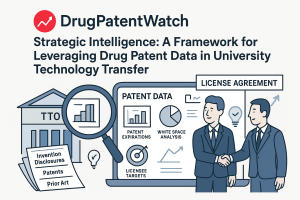
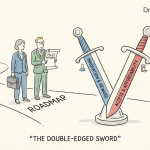
University Technology Transfer Offices (TTOs) sit at one of the most commercially consequential intersections in American innovation: the point where federally funded science becomes licensable intellectual property. For most of the past four decades, that role has been defined by process — receiving invention disclosures, prosecuting patents, finding licensees, and negotiating royalty terms. The operational model was reactive by design.
That model no longer works at the level the current environment demands.
The financial reality is blunt. According to Association of University Technology Managers (AUTM) survey data, the vast majority of TTOs do not generate enough licensing revenue to cover their own operating costs. A small number of elite institutions, Stanford, MIT, Columbia, and the University of California system, capture disproportionate royalty income while most offices run as cost centers subsidized by institutional overhead budgets. Meanwhile, the competitive sophistication of pharmaceutical and biotech licensees has risen dramatically. Industry IP teams routinely deploy commercial patent intelligence platforms, freedom-to-operate (FTO) analyses, and Paragraph IV filing history before any licensing conversation begins. A TTO that does not match that analytical depth enters every negotiation at a structural disadvantage.
This guide is a technical and strategic framework for closing that gap. It covers the full architecture of pharmaceutical patent data, from the mechanics of FDA Orange Book use codes to biosimilar exclusivity structures in the Purple Book, from patent term extension (PTE) calculation to Inter Partes Review (IPR) probability scoring. It addresses how TTOs can use this data to make sharper patenting decisions, identify underexploited white space, construct a credible IP valuation model, qualify and approach commercial partners, and negotiate from a position of empirical evidence rather than instinct.
The target audience is TTO directors, licensing officers, IP counsel embedded in research institutions, portfolio managers at institutional investors with university spin-out exposure, and R&D leads who manage the inventor relationship with their TTO.
Part I: The Data Ecosystem — What Exists and What It Actually Tells You
The Orange Book: Far More Than an Expiration Date List
Most licensing professionals know the Orange Book as ‘Approved Drug Products with Therapeutic Equivalence Evaluations,’ the FDA’s official register of approved small-molecule drugs and their associated patents. That summary description understates what the database actually contains by a factor of several.
The Orange Book links each approved drug to its NDA or ANDA number, its patent portfolio, the specific use codes attached to each patent, and the regulatory exclusivity periods layered on top of or running alongside those patents. For a TTO evaluating a new invention, each of these fields is analytically distinct and serves a different strategic purpose.
NDA Numbers as Regulatory History Trackers
The NDA number is not just an identifier. It is a direct link to the complete FDA regulatory history of an approved product, including the basis for approval, any post-market supplement approvals that added new indications or formulations, and the full timeline of patent listings and delistings. A TTO working on a novel method-of-use or formulation improvement for an existing drug can trace that drug’s entire commercial and regulatory lifecycle through its NDA number. This matters for two reasons: it reveals whether the target drug has been subject to previous label expansions that might compete with or complement the university invention, and it maps the population of prior ANDA filers who have already engaged with the drug’s IP landscape and may be prospective licensees for new IP protecting a next-generation formulation.
Patent Use Codes: The Most Underused Strategic Tool in the Database
Patent use codes, each formatted with the ‘U-‘ prefix and unique per submission, specify the exact approved methods of use covered by a listed patent. They are consistently underanalyzed by TTOs and, when misread by brand manufacturers, have generated some of the most commercially significant litigation in the Hatch-Waxman era.
For a TTO, use code analysis accomplishes something specific: it maps which therapeutic indications for an approved drug are currently covered by Orange Book-listed patents and, by subtraction, which indications are not. That second category is the white space. A university invention covering a new indication, patient population, dosing regimen, or biomarker-defined use for an existing drug may qualify for its own method-of-use patent precisely because no use code in the Orange Book currently covers it.
The commercial logic is tight. A new method-of-use patent, once listed in the Orange Book against an approved or subsequently approved NDA for that indication, forces any ANDA filer to either challenge it via Paragraph IV certification or carve it out via a Section viii statement (a ‘skinny label’). A vague or broadly drafted use code makes the skinny label pathway difficult, creating de facto market protection for the patented indication even after the original compound patent expires. TTOs that understand this mechanism can specifically draft method-of-use claims and corresponding use code submissions that close the skinny label escape route.
It is worth noting that the FTC’s September 2023 policy statement explicitly targeted improper Orange Book listings. A use code strategy must be accurate — overly broad codes that encompass unpatented indications now attract regulatory scrutiny and create Caraco counterclaim exposure in Paragraph IV litigation. The drafting precision required is higher than it was five years ago.
Regulatory Exclusivity Periods as Licensing Negotiation Anchors
Orange Book exclusivity codes define periods during which the FDA cannot approve a competing ANDA or 505(b)(2) application, independent of patent status. The most commercially significant exclusivity types for TTO purposes include five-year New Chemical Entity (NCE) exclusivity, three-year new clinical investigation exclusivity for approved supplements covering new indications or formulations, and seven-year Orphan Drug exclusivity for qualifying rare disease indications.
For a TTO with a university invention that adds a new indication to an approved drug, the three-year clinical investigation exclusivity is the floor of the licensing value calculation. It guarantees a period of market protection even if no new patent issues or if the issued patent is subsequently challenged. For a TTO considering whether to prosecute a patent at all, the availability of regulatory exclusivity as a backstop changes the go/no-go calculus significantly.
The Purple Book: Biologics IP and the Biosimilar Interchangeability Standard
The Purple Book is the biologics analog to the Orange Book, maintaining a list of approved biological products, their reference product status, and the biosimilar applications filed against them. Its structure reflects the Biologics Price Competition and Innovation Act (BPCIA), enacted as Title VII of the Affordable Care Act in 2010. The mechanics of biologic exclusivity differ from Hatch-Waxman in ways that directly affect how a TTO should evaluate and commercialize biologics inventions.
The foundational exclusivity is twelve years of reference product exclusivity from the date of first licensure, during which the FDA cannot approve a biosimilar application for the same reference product. There is also a four-year data exclusivity period preventing biosimilar applicants from even filing during the first four years. These exclusivity periods run independent of patent protection and represent a commercially meaningful floor for any biologic developed at least in part from university research.
Biosimilar interchangeability, the FDA designation indicating that a biosimilar can be substituted for the reference product at the pharmacy without a prescriber’s separate authorization, carries additional economic significance. Interchangeable biosimilars have a one-year period of exclusivity for the first approved interchangeable product, creating an additional IP-adjacent competitive advantage. For TTOs working on antibody engineering, protein formulation, or manufacturing platform innovations, the interchangeability pathway is a distinct commercial endpoint that should be evaluated separately from simple biosimilar approval.
The biologic IP stack is considerably more complex than small-molecule evergreening. Three biologic categories generating the highest current patent filing activity are antibody-drug conjugates (ADCs), bispecific antibodies, and cell and gene therapies including CAR-T and AAV-based delivery. Each has a different IP protection architecture.
For ADCs, the patent landscape covers four layers simultaneously: the antibody component (target antigen specificity, binding epitope, CDR sequences), the linker chemistry (cleavable versus non-cleavable, stability profile, drug-to-antibody ratio range), the cytotoxic payload, and the site-specific conjugation chemistry. A TTO with a university invention that improves any one of these four layers enters a competitive IP landscape where Pfizer (which acquired Seagen in 2023 for $43 billion, a transaction driven substantially by ADC IP assets), AstraZeneca (through its Daiichi Sankyo collaboration), and Roche/Genentech hold multi-hundred-patent portfolios. A freedom-to-operate analysis for a new ADC component cannot stop at the compound or the antibody; it must traverse all four layers to reach a defensible position.
For bispecific antibodies, the relevant IP claims cover the bispecific format itself (the molecular architecture connecting two binding domains), the target pair selection, and the manufacturing process. Because bispecific antibody formats include dozens of structural variations, many of which are independently patented, TTO counsel working with a faculty inventor developing a new bispecific must conduct a format-specific freedom-to-operate analysis rather than a generic antibody landscape review.
CAR-T and gene therapy IP has its own complexity. The foundational CAR construct patents originated in academic labs. The University of Pennsylvania, St. Jude Children’s Research Hospital, and Memorial Sloan Kettering Cancer Center all hold or have held key CAR-T patents that were licensed and subsequently sublicensed into commercial products. A TTO today evaluating a CAR-T improvement must understand which of these foundational patents remain in force, which have been challenged via IPR proceedings, and whether its institution’s invention represents a genuine improvement on expired or licensable foundational IP or an independent technical development.
Key Takeaways: Data Sources
The Orange Book and Purple Book, used together with Paragraph IV litigation dockets, PTAB IPR petition records, and prosecution history files, produce a complete picture of an approved drug’s IP position. Neither database alone is sufficient. Patent expiration dates, use codes, NDA regulatory history, exclusivity period codes, and litigation history must be layered to generate the timeline that governs competitive entry. For a TTO, this analysis precedes patenting decisions, not follows them.
Part II: The Go/No-Go Patenting Decision — Using Patent Data to Allocate Scarce Resources
Why Most TTOs Patent Too Much of the Wrong Things
AUTM survey data consistently shows that the ratio of invention disclosures received to patents prosecuted to licenses executed is sharply pyramidal. Institutions receive hundreds of disclosures; they prosecute a fraction; fewer still generate licensing revenue; a very small number generate royalties that justify the full cost of prosecution and maintenance. The problem is not primarily a business development problem — it is a triage problem. TTOs allocate prosecution resources based on incomplete information about the competitive context into which each invention would enter.
A patent prosecution decision made without a landscape analysis is, at minimum, missing the most commercially relevant information in the decision. The key analytical questions are: Does the invention cover a composition, method, or formulation for which there is current or projected commercial market activity? Are there already one or more Orange Book-listed patents covering the same or adjacent space? Has any generic company filed a Paragraph IV certification against those patents, which would signal active commercial interest and litigation risk that a new TTO patent could either benefit from or be caught in? Is there a biosimilar application in the Purple Book that suggests a biologic market is approaching competitive entry?
Patent data answers most of these questions before prosecution begins. The cost differential is significant. A full patent prosecution from provisional application through issue, including attorney fees, runs $20,000 to $50,000 per U.S. patent and multiples of that for a PCT filing strategy covering major ex-U.S. markets. Annual maintenance fees add to the cumulative cost for patents that are prosecuted but never licensed. A TTO that uses landscape analysis to prune marginal applications by 20 to 30 percent directs those resources toward higher-quality prosecution and business development activity for the patents that survive triage.
The Patent Landscape Analysis: A Practical TTO Methodology
A patent landscape analysis for TTO purposes has four components: competitive density mapping, expiration timeline modeling, white space identification, and Paragraph IV history review.
Competitive density mapping uses the patent databases, specifically USPTO, EPO, WIPO, and commercial platforms that aggregate and normalize these sources, to identify all active patents in the technology space the invention occupies. For a small molecule in a defined therapeutic class, this typically means searching by compound class (IPC or CPC classification codes), by mechanism of action, and by target. For a biologic, it means searching by molecular format, by target antigen, and by manufacturing process class. The output is a visual or tabular map of which companies hold patents in the space, what claim scope those patents cover, and when they expire.
Expiration timeline modeling builds on this map by projecting when key blocking patents expire, when any applicable regulatory exclusivities end, and whether patent term extensions (PTEs) have been applied for or granted. PTE under 35 U.S.C. 156 compensates for regulatory review time, potentially adding up to five years to a patent term. For a TTO assessing whether a generic or biosimilar licensee would be interested in a university improvement patent, the expiration timeline of the reference drug’s compound patent is the single most important input. A licensee’s financial return on licensing a new formulation patent depends directly on how long after generic entry that formulation patent provides protection.
White space identification uses use code analysis (described above), CPC subclass mapping, and clinical trial registry review (ClinicalTrials.gov) to locate therapeutic niches, indications, patient subpopulations, or delivery mechanisms that the existing patent landscape does not cover. This is the analytical step most TTOs skip, because it requires familiarity with patent databases that licensing professionals may not have. The commercial payoff for doing it correctly is high. A university invention that occupies genuine white space has a longer window for exclusive commercialization, faces lower litigation risk from established IP holders, and is easier to license because the licensee’s FTO analysis does not require challenging existing patents.
Paragraph IV history review provides commercial validation. A drug that has attracted multiple Paragraph IV certifications has demonstrated that generic manufacturers have conducted their own landscape analyses, concluded that the IP is challengeable or circumventable, and invested the resources to file ANDA applications. This tells a TTO two things simultaneously: the commercial market is large enough to justify generic challenge activity, and the existing IP may be weaker than the Orange Book listing suggests. Both signals are relevant to licensing strategy. If the TTO’s invention strengthens the IP position of an NDA holder facing Paragraph IV challenge, that is a licensable asset. If the invention occupies a space the generics are not challenging because it is genuinely novel, that is a different kind of licensable asset.
IP Valuation Methodology: Moving Beyond the Royalty Rate Table
The standard TTO approach to IP valuation uses industry royalty rate benchmarks, typically drawn from ktMINE, RoyaltySource, or BioPharma Royalty Benchmarking databases, as a starting point for licensing negotiations. This approach has a fundamental problem: it values the license relative to other licenses, not relative to the commercial opportunity the patent actually protects.
A more rigorous valuation model for a pharmaceutical patent asset combines four quantitative inputs: the revenue at risk that the patent protects, the probability that the patent survives challenge, the time value of the exclusivity period, and the cost of the next-best commercial alternative for the licensee.
Revenue at risk is derived from sales data for the drug and indication the patent covers. For an approved drug, IMS Health (IQVIA) data provides U.S. and global prescription volume and revenue. For an early-stage invention covering a new indication, peak sales modeling from comparable approved drugs in the same therapeutic class is the baseline. The patent’s contribution to that revenue depends on the claim scope: a composition-of-matter patent on an NCE protects 100 percent of revenue from that compound; a method-of-use patent covering one of several indications protects a defined fraction of revenue attributable to that indication.
Patent survival probability combines prosecution history analysis (whether the claims have been narrowed, whether obviousness rejections were raised and overcome), IPR petition history (whether a PTAB challenge has been filed or is likely based on the prior art density in the field), and claim scope assessment. Machine learning models trained on PTAB decisions have demonstrated 70 to 75 percent accuracy in predicting institution decisions, and those tools are available through commercial platforms. For a TTO conducting a pre-licensing valuation, this probability adjustment is not optional — it is the difference between valuing the patent at face value and valuing it at its actual expected contribution to licensee revenue.
The cost-of-the-next-best-alternative quantifies what the prospective licensee would have to do to develop or acquire a comparable asset. If the TTO’s invention covers a formulation improvement that a company could alternatively develop internally in three years at a cost of $15 million, the license value ceiling is somewhere below that cost and time value equivalent. If the invention requires five years of clinical development and a Phase III trial to replicate, the ceiling is substantially higher. This parameter is almost never explicitly modeled in TTO negotiations, but prospective licensees use precisely this framework internally when evaluating whether to license or develop internally.
Key Takeaways: Patenting Decisions and IP Valuation
Patent landscape analysis before prosecution reduces wasted prosecution spend and concentrates resources on commercially viable IP. IP valuation using a revenue-at-risk framework combined with patent survival probability generates a defensible asking number. Both analyses require current patent data from the Orange Book, Purple Book, USPTO prosecution records, and PTAB filings. They cannot be approximated from royalty benchmarking tables alone.
Part III: Identifying and Qualifying Commercial Partners
Using Patent Filing Activity as a Business Development Signal
The most underutilized source of commercial partner intelligence available to a TTO is the patent filing behavior of pharmaceutical and biotech companies in the relevant technology space. Patent filings are public records. They represent the most accurate available signal of where a company is investing its R&D resources, because patents must be filed in proximity to actual technical development to be valid (a patent must have a clear, enabling disclosure and a claimed invention date proximate to actual reduction to practice).
A company that has filed 15 patents in the past three years covering a specific mechanism of action or formulation technology has disclosed its commercial priorities more reliably than any earnings call or pipeline press release. A company whose patent filings in a space have declined or stopped has either abandoned that program or concluded its IP strategy in that area. For a TTO, matching its invention portfolio to companies with active filing histories in the adjacent technology space identifies the highest-probability licensees before a single cold email is sent.
This analysis produces a tiered target list. Tier one consists of companies with active patent filings in the exact technology class, approved products or late-stage clinical assets in the therapeutic area, and a track record of in-licensing university IP. The in-licensing track record is critical because it indicates organizational comfort with the due diligence process for external IP and existing relationships with academic institutions that can be referenced. Tier two includes companies with technology adjacency but no current product in the therapeutic area, which may be seeking to enter via licensing. Tier three covers companies with a clear commercial need for the technology but whose IP filing history suggests they have been attempting to develop an internal solution.
Reading Paragraph IV History to Identify Generic Licensee Candidates
TTOs historically target large pharmaceutical companies as licensees because those are the organizations with the resources to run clinical development programs and commercialize approved drugs. For inventions that represent improvements to existing approved drugs rather than new molecular entities, generic pharmaceutical companies are often the better commercial partner, and Paragraph IV filing history identifies which ones.
When a generic company files a Paragraph IV certification against a brand’s Orange Book-listed patents, it is publicly disclosing its intent to compete in that market and its willingness to litigate or settle on the underlying IP. If a university TTO holds a new formulation or method-of-use patent on the same drug, that generic filer is a candidate licensee. The generic needs the university’s patent for two reasons: to strengthen its own non-infringement or invalidity position in Paragraph IV litigation by demonstrating that the technology can be commercialized without the brand’s formulation patents, or to obtain a license enabling it to launch a competing formulation-differentiated product the moment the compound patent expires.
The 180-day first-filer exclusivity provision gives the first successful Paragraph IV challenger a six-month window of exclusive generic marketing. For a drug generating $2 billion or more in annual U.S. sales, that six-month exclusivity period has a gross value in the hundreds of millions of dollars. A university patent that materially advances a generic company’s ability to capture that exclusivity window is worth substantially more to that company than a royalty benchmarking model would suggest.
505(b)(2) Applicants as a Specific TTO Licensing Target
The 505(b)(2) NDA pathway, which allows an applicant to rely on published literature or FDA findings from a previously approved drug’s clinical trials, is the most direct commercial route for many university inventions. A faculty invention covering a new dosage form, delivery mechanism, modified release formulation, or salt form of an approved drug is a natural 505(b)(2) candidate. Identifying which companies have an active 505(b)(2) pipeline in relevant therapeutic areas, and mapping those applications to the university’s own IP, generates a highly targeted licensing pipeline.
This is mechanically simpler than it sounds. The FDA’s publicly accessible ANDA and 505(b)(2) application database, combined with Orange Book patent listings and NDA numbers, provides a complete picture of who is currently pursuing what formulation modifications for which drugs. A TTO licensing officer who audits this data quarterly against the institution’s active patent portfolio will generate business development leads that no conference attendance or industry networking produces.
Investment Strategy Note
For institutional investors with portfolio companies that have licensed university IP, Paragraph IV filing activity against the licensed patents provides an early indicator of competitive entry timing that often precedes equity market pricing of that risk. When a first Paragraph IV certification is filed against a key Orange Book patent, the 45-day clock for triggering the 30-month stay begins. A portfolio company that successfully litigates or settles a Paragraph IV challenge during the 30-month stay preserves revenue for two to three years beyond what the initial filing might suggest. A portfolio company that fails to trigger the stay, or whose patent is found invalid, faces generic entry on a materially shorter timeline. Monitoring the PTAB and district court dockets for IPR petitions and Paragraph IV litigation outcomes on licensed university patents is a core intelligence function for any investor with meaningful life sciences exposure.
Part IV: Evergreening, Lifecycle Management, and the Academic IP Opportunity
The Technology Roadmap for Small-Molecule Evergreening
Evergreening is the practice of building secondary patent protection around an approved drug to extend the commercial exclusivity window beyond the expiration of the original compound patent. It has attracted substantial regulatory and policy scrutiny — the FTC’s 2023 Orange Book policy statement and multiple state-level pharmaceutical pricing transparency laws have increased the cost and risk of aggressive evergreening strategies. However, the underlying IP mechanisms remain valid, and for a TTO, understanding them is necessary because they define where licensees need IP help.
The standard small-molecule evergreening IP stack proceeds through a defined sequence. The compound patent, typically the broadest claim covering the active pharmaceutical ingredient (API), is filed during or shortly after discovery and expires roughly 20 years from filing, often less given the patent clock’s start at the provisional application date. Patent term extension under 35 U.S.C. 156 can add up to five years to compensate for time spent in FDA review, but PTE requires a formal application and is calculated based on regulatory review time minus one-half of any IND-to-NDA period where the applicant did not act with due diligence.
Formulation patents cover the specific dosage form, excipient composition, or release mechanism of the approved product. They typically issue well after the compound patent and can extend commercial protection by three to seven years depending on the specific claims and the Orange Book listing strategy. Polymorph patents cover crystalline forms of the API, which may have stability, bioavailability, or manufacturability advantages over the originally approved form. Process patents cover manufacturing methods. Method-of-use patents cover specific approved therapeutic indications or dosing regimens.
For a TTO with a university invention that falls into any of these secondary categories, the critical analysis is whether the invention represents a genuine technical advance that is independently patentable, or whether it is an obvious modification of the approved drug that would be vulnerable to an IPR petition on obviousness grounds. The post-KSR standard (KSR International Co. v. Teleflex Inc., 2007) gives PTAB panels considerable latitude in combining prior art references to establish obviousness for secondary pharmaceutical patents. A formulation patent that a TTO expects to use as a licensing asset must be stress-tested against the obviousness standard before prosecution, not after a Paragraph IV challenge arrives.
Biologics Lifecycle Management: A Four-Layer IP Protection Strategy
Biologics lifecycle management requires a different framework because the BPCIA’s twelve-year reference product exclusivity dominates the early commercial window and the patent strategy for a biologic evolves differently across the product lifecycle.
The first IP layer for a biologic is the sequence and structural patents covering the biologic molecule itself. For a monoclonal antibody, this includes the variable domain sequences, the complementarity-determining region (CDR) sequences, and the binding epitope claim if it is distinct from the sequence claim. These foundational patents, often originating from academic labs, typically form the basis of the original license from the TTO to a biotech sponsor.
The second layer covers formulation and delivery. A biologic formulation patent protecting a specific buffer composition, pH range, stabilizer system, or co-formulation is one of the most commercially durable IP assets in the lifecycle management toolkit, because it directly affects what biosimilar applicants can practically copy. FDA’s biosimilar approval standard requires demonstration of high similarity to the reference product in analytically measurable parameters, and a proprietary formulation that affects stability or immunogenicity profiles provides both commercial differentiation and IP protection.
The third layer covers manufacturing processes and cell lines. Upstream process patents (cell culture conditions, media composition, fed-batch versus perfusion culture), downstream purification methods, and the specific cell line used for production are all patentable and not typically disclosable in a product’s regulatory filing in sufficient detail for a biosimilar manufacturer to replicate without independent development. For a TTO with a university invention in bioprocess engineering, these manufacturing IP assets are licensable to both innovator companies seeking to improve their manufacturing economics and biosimilar developers seeking to differentiate their process.
The fourth layer covers next-generation molecular variants. This includes pH-dependent antibody modifications that affect neonatal Fc receptor (FcRn) recycling and half-life, bispecific variants that add a second therapeutic target, or antibody-drug conjugate formats that add cytotoxic payload capability. AbbVie’s strategy with adalimumab (Humira), whose ADC and bispecific follow-on pipeline generated a substantial multi-patent IP estate around the original anti-TNF antibody, illustrates how a four-layer strategy can extend commercial relevance even after biosimilar entry begins to erode reference product revenue.
For TTOs at research universities with strong bioprocess engineering or protein chemistry departments, the second, third, and fourth IP layers represent underexploited licensing opportunities precisely because they require technical depth that many commercial licensees prefer to acquire externally rather than develop de novo.
Patent Term Extension Calculations: What TTOs Routinely Miss
Patent term extension under 35 U.S.C. 156 is available for patents claiming an approved drug, biological product, or medical device where the regulatory review period consumed time that reduced the effective patent life. The maximum extension is five years, capped such that the total remaining patent life after extension does not exceed fourteen years from the date of FDA approval. Only one patent per approved product can receive a PTE.
The most common TTO error with PTE is failing to apply for it on the correct patent within 60 days of FDA approval. The 60-day window is strict. A TTO that discovers an approved product is practicing a university patent after that window has closed cannot retroactively apply. Monitoring NDA approval dates for drugs that might practice university-owned patents and flagging the 60-day PTE application window is an operational intelligence task that requires the same patent-to-approval linkage analysis that the Orange Book enables.
The second common error is choosing the wrong patent for PTE designation when multiple patents cover the approved product. Because only one patent per product receives PTE, and because the extension is calculated based on a formula involving the regulatory review period, the optimal choice is the patent with the longest base term combined with the most commercially significant claims. For a TTO with both a compound patent and a formulation patent covering the same product, the compound patent is almost always the better PTE candidate because its claims are broader and its expiration typically governs the revenue cliff for the licensee.
Part V: Negotiating from Empirical Strength
What Licensees Know That TTOs Often Do Not
Every pharmaceutical company with a developed IP and business development function runs a pre-negotiation analysis on any university IP it considers licensing. That analysis includes a validity opinion on the key claims (typically conducted by outside patent counsel), an FTO analysis confirming that commercializing the university invention does not require licenses to third-party patents, a market size estimate for the indication or product covered by the invention, a competitive landscape review covering other available technologies that address the same unmet need, and a royalty rate benchmarking exercise.
A TTO that does not conduct comparable analyses before entering a licensing negotiation is operating blind relative to its counterpart. The power asymmetry this creates is not theoretical. A licensee that has identified validity concerns the TTO does not know about will price those concerns into a lower royalty rate or milestone structure. A licensee that has identified superior competing technologies the TTO is unaware of will cite them to justify a lower upfront payment. A licensee that has modeled the market at a fraction of the TTO’s estimate will negotiate downward from that number.
The corrective is straightforward. Before any licensing negotiation, a TTO should have in hand: a claim chart mapping the university’s patent claims against the most relevant prior art; a review of whether any IPR petitions have been filed against patents with similar claims in the same technology space (which predicts litigation risk for the university’s patent); a market size estimate for the target indication using IQVIA prescription data or published drug revenue figures; a competitive technology review identifying at least the four or five other IP estates that cover adjacent approaches to the same problem; and a royalty benchmark derived from actual comparable pharmaceutical licensing transactions, not generic industry average tables.
Milestone Structuring and Royalty Rate Architecture
A licensing deal structure for pharmaceutical IP typically combines an upfront payment, development milestones, regulatory milestones, and a running royalty on net sales. For a university TTO, the balance between these components should reflect two variables: the risk profile of the underlying technology and the stage of development at the time of licensing.
Early-stage inventions (pre-IND, no human data) carry high development risk. The appropriate structure shifts royalties forward in the milestone schedule, because the running royalty may never materialize if the program fails in Phase II. Milestone payments at IND filing, Phase I completion, Phase II completion, Phase III initiation, NDA filing, and approval are each separately negotiable and separately meaningful as risk-adjusted return points. A TTO that waits for a running royalty as its primary revenue source from an early-stage license will, in most cases, see negligible returns because most licensed drugs do not reach commercialization.
For an improvement patent licensed to a company with an already-approved product, the economic structure is different. The commercial risk is lower; the licensee is protecting existing revenue, not developing a new product. The royalty rate should reflect the revenue-at-risk the patent protects rather than the development risk of a new program. A method-of-use patent that protects a $500 million indication from Paragraph IV challenge has a higher defensible royalty ceiling than a formulation patent that affects manufacturing cost without changing the commercial product profile materially.
Sublicensing terms require specific attention. For a fundamental platform technology, sublicensing to multiple commercial partners through a non-exclusive structure may generate more total royalty income than a single exclusive license, even accounting for the higher upfront an exclusive licensee typically pays. For a product-specific patent covering a single drug’s improvement, exclusivity is the commercially logical structure because a generic or competing formulation manufacturer would be the natural sublicensee, and the licensee’s exclusivity value is precisely in not sharing the patent with that competitor.
The Bayh-Dole Act: March-In Rights as a Negotiating Variable
The Bayh-Dole Act of 1980 grants universities title to inventions made with federal funding and requires that inventions be licensed to commercial partners on terms that make the technology available to the public on reasonable terms. The Act’s march-in provisions allow federal agencies to compel a university to license an invention to additional parties if the university or its licensee is not taking adequate steps to commercialize it or if the health or safety needs of the public are not being reasonably satisfied.
March-in rights have never been exercised by a federal agency to date, but the Biden administration’s 2023 and 2024 policy actions on pharmaceutical pricing created the most credible threat of march-in exercise in the Act’s history. The conceptual question the Biden NIST guidance raised, whether a high drug price constitutes failure to make technology available on reasonable terms, was not resolved before the administration changed. The status of this guidance under the current administration should be verified independently given the rapidly shifting regulatory posture.
For a TTO negotiating a license for a pharmaceutical invention made with NIH, NSF, or DOD funding, march-in rights are a variable that affects the exclusivity the TTO can credibly offer. A prospective licensee evaluating an exclusive license to a federally funded university patent is acquiring an exclusivity right that is subject to a contingent federal override. This should be priced. The probability of march-in exercise remains low, but it is not zero, and for a licensee planning to commercialize a drug at a price that attracts political attention, it is a material risk to model.
Part VI: Building the TTO Intelligence Function
The Commercial Platform Layer: What Free Databases Cannot Do
Public databases — USPTO, EPO Espacenet, WIPO PATENTSCOPE, the FDA Orange and Purple Books, ClinicalTrials.gov, and the PTAB’s electronic filing system — provide the raw material for pharmaceutical patent intelligence. They are free and comprehensive. They are also entirely unstructured relative to the analytical tasks a TTO needs to perform.
Commercial platforms normalize and cross-reference these data sources in ways that make the analytical workflow tractable for a team without dedicated data science staff. The minimum functionality a TTO intelligence platform should provide includes structured Orange Book search by active ingredient, NDA number, use code, and expiration date; Paragraph IV certification tracking with litigation outcome history; patent term extension status by drug; PTAB IPR petition history with institution rates and final written decision outcomes; and competitor patent filing monitoring with alert capability for new filings in defined technology spaces.
A platform that cannot support chemical structure search by SMILES or InChI notation is inadequate for FTO analysis of NCEs or biosimilars. Chemical structure search is not optional for a biologic TTO dealing with antibody sequence variations or for a small-molecule TTO evaluating whether a faculty invention’s compound is structurally novel relative to marketed drugs and pending applications.
Data security requirements for TTO platforms are non-negotiable because pre-filing invention disclosures are trade secrets until the patent application is filed. A commercial platform used to analyze an unpublished university invention must have data security protocols adequate for handling confidential pre-filing IP. Vendor due diligence on this point should include review of data handling agreements and, for institutions with significant federal research funding, compliance with any applicable export control or data security requirements.
Building a Patent Monitoring Protocol
A TTO intelligence function requires ongoing monitoring rather than point-in-time analyses. The patent landscape for any active program changes continuously: new patent applications publish 18 months after filing, new Orange Book listings appear when NDAs are approved or amended, new IPR petitions are filed, and new Paragraph IV certifications are submitted. A monitoring protocol ensures that the TTO’s strategic analysis of each major licensed technology remains current.
The minimum monitoring cadence covers four categories. New patent applications in the relevant technology class should be reviewed on a monthly basis; the 18-month publication delay means a competitor’s current development programs are partially visible through their published applications, and early awareness of competitive filings allows the TTO to respond with continuation applications or claims amendments if needed. Orange Book changes, including new patent listings and exclusivity grants for the drugs the TTO has licensed improvements to, should be tracked weekly, as changes can affect the commercial value of the TTO’s own patents. PTAB IPR petition filings against patents in the technology space are publicly available and should be reviewed as filed. Paragraph IV certification notices for relevant Orange Book drugs are disclosed in SEC filings by publicly traded companies and in litigation dockets.
For TTOs without the staff to run this monitoring internally, automated alert services provided by commercial patent intelligence platforms can substantially reduce the labor cost while maintaining coverage quality.
Connecting Patent Intelligence to Startup Formation Decisions
A material fraction of university licensing activity now flows to startup companies rather than established pharmaceutical manufacturers. AUTM data through 2021 shows that 78 percent of new licenses executed by university TTOs went to startups and small businesses with fewer than 500 employees. The economics of startup licensing differ from established-company licensing in ways that affect how the TTO should use patent intelligence.
A startup licensing a university invention often lacks the resources to conduct its own comprehensive IP landscape analysis before or after the license is executed. If the TTO conducts that analysis as part of the licensing process and shares the results with the startup, it reduces one of the most common causes of early-stage company failure: proceeding with product development toward a crowded IP space without an adequate FTO position. TTOs that provide this service create more durable startup relationships and more commercially viable spin-outs.
Startup licensing valuations also require different treatment. Because a startup typically cannot pay meaningful upfront fees or early milestone payments, TTO licensing economics for a startup license are usually weighted toward equity participation, late-stage milestones, and running royalties. Equity stakes must be sized against the dilution the TTO will face in subsequent financing rounds, and the terms should account for anti-dilution protections that preserve the institution’s economic interest through Series A and Series B financings.
The patent intelligence layer that matters most for startup licensing is the competitive landscape review that establishes the defensibility of the IP estate the startup is building on. A startup whose IP position is highly likely to be challenged via Paragraph IV or IPR proceedings within its first five years needs to know that before it raises Series A capital. A TTO that withholds or fails to develop that analysis is not serving the startup’s interests or its own long-term licensing reputation.
Key Takeaways: Building the TTO Intelligence Function
The intelligence function within a TTO is not a one-time project. It is an ongoing analytical capability that requires appropriate platform tools, monitoring protocols, and staff competency in reading patent databases. The cost of building this function is recoverable within the first licensing negotiation where it produces a materially better economic outcome. The cost of not building it is measured in licensing deals closed below the defensible value of the institution’s IP portfolio.
Investment Strategy: Applying University Patent Intelligence to Portfolio Management
For institutional investors with life sciences exposure, the analytical framework above is directly applicable to portfolio monitoring.
University patents are disproportionately represented in the foundational IP of biotech companies at the earlier stages of their development. By the time a company’s shares are publicly traded, the original TTO license may be several layers removed from the current patent estate, but the Orange Book listing analysis and the Paragraph IV monitoring discipline described in this guide remain directly applicable to assessing IP moat durability.
The practical actions for a portfolio manager are: first, identify which Orange Book patents covering a portfolio company’s key drugs originated from university licenses, and track any pending IPR petitions against those patents through PTAB’s public dockets; second, monitor Paragraph IV certification filing activity against the company’s Orange Book listings as a leading indicator of competitive entry timing; third, evaluate whether the company’s lifecycle management strategy includes the four-layer IP protection approach described above for both small molecules and biologics, because a company with only compound patent protection and no secondary IP estate is materially more exposed to revenue cliff risk than its headline patent expiry date suggests; fourth, assess whether the company’s method-of-use patents are at risk from Caraco counterclaim activity, which can open skinny label pathways for generics two to three years ahead of compound patent expiry.
None of this analysis requires proprietary data. It requires consistent use of the public and commercial databases described above, applied systematically rather than reactively.