A deep-dive reference on pipeline productivity, attrition economics, open innovation architecture, AI-driven discovery, and patent lifecycle strategy for biopharma decision-makers.
1. The Productivity Crisis in Numbers: What $300 Billion in Annual R&D Actually Buys
The Eroom’s Law Reality
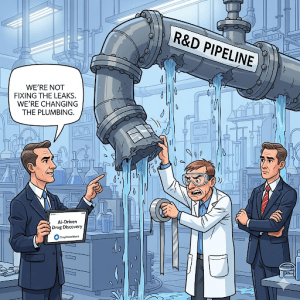
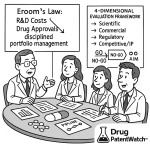
The pharmaceutical industry now spends more than $300 billion annually on R&D. The return on that spending, measured as new molecular entities (NMEs) approved per constant dollar invested, has declined by roughly half every nine years since 1950. Eroom’s Law, the deliberate inversion of Moore’s Law, is not a metaphor. It is a documented, compounding productivity failure that has persisted through every wave of technological optimism, from combinatorial chemistry in the 1990s to the genomics era and now into the AI period.
The headline attrition number captures the problem cleanly: of every 5,000 to 10,000 compounds that show initial preclinical promise, one reaches approval. Of drugs that make it into Phase I human testing, only 7.9% will ultimately get an FDA label. The industry’s response has been to spend more, run more trials, and acquire more assets. The result, measured in inflation-adjusted cost per approved drug, is a continuous deterioration.
The question for R&D leadership is not whether the system is broken. It clearly is. The question is which specific interventions, applied in which sequence, can bend the productivity curve without sacrificing scientific ambition. That is the framing this report uses throughout.
R&D IRR: The Rebound and What It Actually Signals
Deloitte’s annual benchmarking of R&D internal rate of return (IRR) for the top 20 drugmakers hit a trough of 1.5% in 2019. By 2024, the same cohort showed an average forecast IRR of 5.9%. That rebound is real, but it requires a precise reading. Strip out GLP-1 assets from the 2024 cohort and the IRR falls to 3.8%. Average peak-sales forecasts per asset drop from $510 million to $370 million without GLP-1 drugs in the model.
What this means practically: the industry’s aggregate productivity recovery is concentrated in a single drug class discovered decades ago and repurposed through a combination of target re-evaluation and formulation innovation. The lesson is not that the system is recovering. The lesson is that one category of novel science, pursued by a handful of companies willing to fund obesity research when payers and prescribers were skeptical, is carrying the cohort’s financial metrics. Companies not positioned in GLP-1 or its downstream indications (NASH, cardiovascular, Alzheimer’s) are operating at the 3.8% IRR floor.
R&D strategy cannot afford to be a consensus exercise. The productivity data rewards first-mover positioning in under-researched mechanisms, not fast-following in competitive indications.
Key Takeaways: Section 1
Annual R&D investment exceeds $300 billion with declining cost-efficiency. The 2024 IRR recovery at the top-20 pharma level is a GLP-1 artifact, not a systemic improvement. True first-in-class programs in overlooked therapeutic areas generate disproportionate returns. Institutional investors should model pipeline IRR with and without category-defining assets to assess underlying productivity.
Investment Strategy Note
When evaluating a pharma company’s R&D productivity narrative, ask for pipeline IRR disaggregated by therapeutic area and by first-in-class versus best-in-class positioning. An aggregate IRR figure that looks healthy may be masking a mediocre base portfolio propped up by one outlier asset, exactly the Deloitte GLP-1 dynamic playing out at the company level.
2. The Patent Cliff as a Strategic Forcing Function
The $350 Billion Revenue Exposure Window: 2025 to 2029
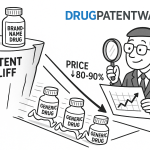
Between 2025 and 2029, drugs with combined annual revenues of approximately $350 billion face patent expiration. The most prominent near-term expirations include Keytruda (pembrolizumab, Merck), with U.S. composition-of-matter patents beginning to expire from 2028, and Eliquis (apixaban, Bristol-Myers Squibb / Pfizer), where U.S. exclusivity losses are projected for 2026-2028 pending litigation outcomes. Humira’s biosimilar wave, already underway since 2023, is the recent precedent for how rapidly revenue can erode: AbbVie lost approximately 35-40% of its Humira U.S. revenue within 18 months of the first biosimilar entry.
The cliff is not a ‘one-time event’ for any given company. It is the recurring structural condition of a patent-dependent business model. Companies that treat each loss of exclusivity (LOE) event as a crisis to be managed, rather than a predictable cycle to be planned around, consistently underperform on pipeline replenishment timelines.
Defensive Strategy Taxonomy for LOE Events
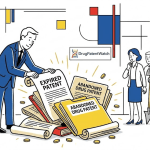
Branded companies use several well-documented mechanisms to extend effective commercial exclusivity beyond the base patent term.
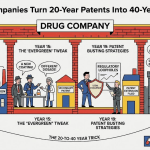
Formulation evergreening converts a composition-of-matter-expired molecule into a new patent-protected dosage form with demonstrable clinical differentiation. Extended-release formulations, new fixed-dose combinations, and specialized delivery systems (transdermal patches, inhalation devices, implants) each generate independent Hatch-Waxman or NDA protections. The legal durability of each claim depends on whether the clinical benefit is real and documentable, not merely cosmetic. Merck’s pursuit of a subcutaneous Keytruda formulation is the current highest-profile example: a successful SQ approval before IV Keytruda faces generic biosimilar entry would shift a substantial patient segment to the new formulation with its own patent term.
New indication strategies rely on method-of-use patents and, in pediatrics, on PREA/BPCA exclusivity extensions. A drug approved for a new indication receives new patent protection on that use, and clinical data from a BPCA pediatric program adds 6 months of exclusivity across all listed patents, regardless of whether the pediatric indication is approved. For a drug generating $2 billion annually, 6 months of extended exclusivity is worth $1 billion at current revenue rates, a figure that easily justifies a $50-100 million pediatric clinical program.
Supplementary Protection Certificates (SPCs) in the EU allow extension of effective exclusivity beyond the 20-year patent term, up to 5 additional years, to compensate for regulatory review time. SPC strategy requires filing within 6 months of first marketing authorization in the EU, and the calculation of SPC duration is mechanically defined by the gap between patent filing date and authorization date. Companies that file SPCs late, or fail to file at all, forfeit billions in protected revenue.
Paragraph IV challenge defense requires active patent portfolio management. A generic filer submitting a Paragraph IV certification effectively tells the branded company that one or more Orange Book-listed patents are invalid or not infringed. The branded company has 45 days to sue and trigger a 30-month stay of ANDA approval. The decision to sue, and on which patents, is a litigation-weighted commercial calculation: the branded company needs the stay to buy time, even if specific patent claims are vulnerable. Coordinating the formulation patent thicket, the SPC strategy, the pediatric exclusivity timing, and the Paragraph IV litigation posture into a single coherent LOE defense requires IP leadership at the C-suite level, not departmental coordination.
IP Valuation: Quantifying the Patent Portfolio as a Financial Asset
For institutional investors assessing a pharma company’s IP position, the Orange Book is a starting point but insufficient for full valuation. Orange Book listings show which patents are asserted for exclusivity purposes, but the commercial durability of those patents, their invalidation risk under IPR (Inter Partes Review) proceedings at the USPTO, and their breadth relative to the compound’s likely generic entry routes require independent analysis.
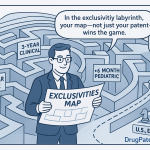
The FDA’s Orange Book lists three types of IP instruments with different exclusivity implications: patents (with specific claim types noted), NCE exclusivity (5-year exclusivity for new chemical entities regardless of patent status), and pediatric exclusivity (6-month addition, activated by BPCA compliance). A drug that has both NCE exclusivity and a robust formulation patent portfolio is materially more protected than one relying on a single composition-of-matter patent.
DrugPatentWatch provides Orange Book patent expiry timelines, Paragraph IV certification histories, and litigation tracking that let analysts reconstruct the full exclusivity timeline for any branded product. When building a revenue model for a drug approaching LOE, the platform’s Paragraph IV alert data shows how many generics have already certified against listed patents and whether any 30-month stays are in effect, giving a more accurate first generic entry date than the nominal patent expiry.
Key Takeaways: Section 2
The 2025-2029 patent cliff represents $350 billion in at-risk revenue across the industry. Effective LOE defense requires coordinated execution of formulation evergreening, SPC filing, pediatric exclusivity strategy, and Paragraph IV litigation posture, treating them as one integrated program rather than separate department-level workstreams. IP portfolio valuation for investment purposes requires analysis of invalidation risk and claim scope, not just Orange Book expiry dates.
Investment Strategy Note
When evaluating a pharma company’s LOE exposure, map not just the nominal patent expiry but the SPC-adjusted date, the pediatric exclusivity add-on potential, and the number of Paragraph IV certifications already on file. A company with multiple Paragraph IV challenges and no active litigation stays is significantly more exposed than its Orange Book dates suggest.
3. Attrition Economics: Where Capital Goes to Die, and How to Stop It
Phase-by-Phase Failure Rate Analysis
Phase I success rates (drug reaching Phase II without safety-related termination) have fallen to approximately 52% across the industry, down from higher historical rates as more complex molecules and novel mechanisms enter human testing. Phase II remains the catastrophic choke point: success rates of only 28.9% reflect the fundamental disconnect between preclinical target validation and clinical efficacy in heterogeneous patient populations. Phase III success rates of approximately 58% look healthier, but they mask a selection bias: only programs that survived Phase II’s brutality reach large-scale trials, creating an artificially favorable Phase III numerator.
The cumulative math is stark. A compound with average transition probabilities has roughly a 7-8% chance of reaching approval from Phase I entry. The industry spent an estimated $7.7 billion on clinical assets that were terminated in the most recent cycle without producing an approved product. This is not sunk cost in any academically abstract sense. It is capital that could have funded 15-20 additional lead optimization programs or 3-4 full Phase III trials in high-probability indications.
Pfizer’s SOCA Paradigm: A Stage-Gate Framework That Works
Pfizer’s transformation from a 2% Phase I-to-approval success rate in 2010 to 21% by 2020 was driven by a specific operational framework, not by general exhortations toward ‘innovation culture.’ The Signs of Clinical Activity (SOCA) paradigm is a prospective, pre-specified stage-gate system that requires every early clinical program to answer three questions before additional investment is committed: is the drug reaching its intended site of action at adequate concentrations, is it binding to its pharmacological target in patients, and is that binding producing the expected downstream pharmacological response?
SOCA operationalizes these questions through two complementary evidentiary standards: Proof of Mechanism (POM), which confirms target engagement through biomarker data, and Early Signal of Efficacy (ESOE), which requires pre-specified early clinical outcome signals before pivotal trial investment. Programs that cannot meet their pre-specified SOCA targets are terminated, not progressed on the basis of strategic fit or organizational momentum.
The mechanism for termination is as important as the criteria themselves. Many organizations articulate similar stage-gate frameworks but lack the decision discipline to kill programs that have internal champions. Pfizer’s SOCA implementation explicitly required go/no-go decisions to be made against pre-committed criteria reviewed before the relevant studies begin, removing post-hoc rationalization from the termination calculus.
The GLP-1 example from Pfizer’s own pipeline illustrates the upside: oral danuglipron was accelerated by 12 months specifically because strong ESOE data triggered a pre-specified fast-track decision. The domagrozumab case (anti-myostatin antibody for Duchenne muscular dystrophy) illustrates the cost of the opposite: the program progressed without clear POM or SOCA documentation, producing a longer, more expensive trial that generated a late, expensive negative result. The counterfactual cost of that delay, measured in capital and time diverted from SOCA-compliant programs, is the true cost of poor stage-gate discipline.
Development Timeline Inflation: 100 Months from Phase I to Filing
Total development time from Phase I initiation to regulatory filing now exceeds 100 months, a 7.5% increase over the prior 5-year period. The inflation is not uniform: Phase II timelines have extended the most, driven by larger trials, more complex patient stratification requirements, and expanded safety data packages. The direct financial cost of timeline inflation is compounded by the effective patent term consumed during extended development. Every additional month of clinical development is a month of commercial exclusivity consumed before first sale.
Adaptive trial designs, pre-specified interim analyses, and seamless Phase II/III designs (where a Phase II can roll directly into a registrational Phase III if pre-specified criteria are met) are the primary tools for timeline compression. FDA’s Complex Innovative Trial Design (CID) program explicitly supports these approaches, and the agency’s Bayesian clinical trial framework allows for smaller initial sample sizes with pre-planned adaptive enrollment based on interim data. The Bayesian approach does not eliminate risk; it redistributes it toward earlier, cheaper experiments and away from late, expensive failures.
Key Takeaways: Section 3
Phase II is the primary capital consumption choke point in drug development, with a 28.9% success rate reflecting insufficient preclinical-to-clinical translation. The SOCA paradigm demonstrates that pre-specified, criteria-driven go/no-go decisions, applied consistently across a portfolio, can raise Phase I-to-approval rates from 2% to 21% over a decade. Development timeline inflation (now over 100 months from Phase I to filing) erodes effective patent life and multiplies the financial cost of late-stage failures.
4. AI and Machine Learning in Drug Discovery: Target to Candidate
Target Identification: From Gene Lists to Causal Mechanisms
AI-driven target identification has moved well beyond the first generation of association analysis (finding genes that correlate with disease in GWAS data) toward causal inference. The distinction matters commercially. An association between a gene variant and a disease phenotype does not tell you whether modulating that gene will treat the disease or whether it is an upstream bystander. Mendelian randomization studies, which use genetic variants as natural experiments in observational data, provide stronger causal inference. Large-scale, multi-omic datasets (whole-genome sequencing, transcriptomics, proteomics, metabolomics from biobanks like UK Biobank’s 500,000-patient cohort or the All of Us Research Program’s 1 million participants) now allow AI models to triangulate genetic causality with protein expression and metabolic phenotypes simultaneously.
Platforms like BenevolentAI, Recursion Pharmaceuticals, and Exscientia use graph neural networks (GNNs) applied to biological knowledge graphs, where nodes represent genes, proteins, metabolites, and disease states, and edges represent experimentally validated interactions. The predictive task is identifying non-obvious paths through the graph: a protein that sits 3 degrees of separation from a validated drug target but whose modulation may have equivalent therapeutic effect with lower toxicity risk. The commercial value of identifying such targets early is asymmetric: first-to-file composition-of-matter patents on previously unvalidated targets establish blocking positions that are expensive for competitors to design around.
Lead Optimization and ADMET Prediction: The Chemistry Intelligence Layer
AI’s most mature commercial application in drug discovery is lead optimization, specifically the iterative cycle of proposing chemical modifications, predicting their effect on binding affinity and selectivity, synthesizing the highest-priority candidates, and feeding experimental results back into the model. Traditional medicinal chemistry ran this cycle in months; AI-assisted platforms can run it in days by prioritizing synthesis decisions based on predicted outcomes.
Transformer-based molecular models, including ChemBERTa and its successors trained on billions of molecular structures and their properties, predict solubility, membrane permeability, metabolic stability, hERG channel binding (a cardiac toxicity predictor), and protein binding affinity with accuracy that now rivals wet-lab screening for many molecular classes. This does not replace synthesis. It prioritizes it: instead of synthesizing 200 lead candidates to identify 5 with acceptable ADMET profiles, a chemistry team synthesizes 30 and identifies 4. The efficiency gain is 85% reduction in synthetic effort for equivalent output, which translates directly to lower preclinical spend and faster IND-enabling timelines.
The IP implication of AI-accelerated lead optimization is significant. Generative AI models that propose novel chemical scaffolds can, in principle, generate patentable structures that no human chemist has previously conceived. The legal status of AI-generated inventions remains unsettled at the USPTO: current doctrine requires a human inventor named on every patent, which means that AI outputs can be patented only if a human chemist made an inventive contribution to the selection or optimization of the AI’s proposals. Companies building IP strategies around generative chemistry must ensure that human inventorship is documentable in lab notebooks and decision records, or their patents may face inventorship challenges.
Preclinical Safety: Reducing Animal Testing and Attrition
Predictive toxicology models trained on historical ADMET datasets from approved and failed compounds now provide in silico safety screens that can flag candidates with elevated risks of hepatotoxicity, cardiotoxicity, phospholipidosis, and idiosyncratic adverse reactions before the first animal study. The regulatory acceptance of in silico toxicology data is growing: FDA’s Microphysiological Systems Program actively accepts organ-chip data (liver-on-a-chip, gut-on-a-chip) as supporting evidence in IND submissions, and the FDA Modernization Act 2.0 (signed in 2022) explicitly removed the requirement for animal testing as a precondition for IND filing, creating legal space for AI/in vitro safety packages.
This matters for pipeline economics because preclinical animal studies are not just expensive (a standard 28-day toxicology study in rodents and non-rodents costs $500,000 to $1.5 million per candidate), they are slow (6-18 months for GLP-compliant studies). A validated in silico filter that screens out 30% of candidates before animal testing begins saves 30% of preclinical costs and shortens preclinical timelines by 3-6 months per program.
Key Takeaways: Section 4
AI’s highest-value contribution to pipeline productivity is in target identification (causal inference from multi-omic data) and lead optimization (reducing synthesis cycles before ADMET screening). Generative AI-designed chemical scaffolds are patentable only with documentable human inventorship. Predictive toxicology is gaining regulatory acceptance under FDA Modernization Act 2.0, creating the possibility of IND submission without traditional animal studies for certain compound classes.
Investment Strategy Note
When evaluating a biotech company’s AI discovery claims, distinguish between AI used for efficiency within a conventional workflow (legitimate but incremental) versus AI that has generated genuinely novel patented targets or scaffolds with competitive exclusivity implications. The latter creates IP moats; the former creates cost savings but no defensible competitive advantage.
5. Clinical Trial Transformation: Adaptive Design, RWE, and AI-Driven Enrollment
Adaptive Trial Designs: Regulatory Framework and Commercial Mechanics
An adaptive trial design is any prospectively planned modification to one or more aspects of a clinical trial based on accumulating data, without undermining the validity and integrity of the trial. The FDA’s 2019 Adaptive Designs for Clinical Trials of Drugs and Biologics guidance and the corresponding EMA reflection paper both endorse adaptive designs as scientifically valid when pre-specified and statistically rigorous.
The most commercially valuable adaptive designs for pipeline revitalization are: seamless Phase II/III designs (which eliminate the gap between proof-of-concept and registrational studies), platform trials (which test multiple interventions simultaneously in a master protocol with shared control arms, dramatically reducing sample size requirements across programs), and response-adaptive randomization (which dynamically shifts enrollment toward arms showing superior interim efficacy). Each of these requires sophisticated Bayesian statistical infrastructure, pre-agreed FDA/EMA Type B or Scientific Advice meeting sign-off, and a data monitoring committee with adaptive statistical expertise.
The commercial benefit is timeline compression. A seamless Phase II/III design, if the interim analysis crosses the pre-specified efficacy threshold, can roll directly into a pivotal expansion without a formal pause, a new protocol submission, or a new informed consent cycle. For a drug in a priority area (Breakthrough Therapy designation, Orphan, Fast Track), this can shave 12-24 months from the development timeline, converting that time into additional months of patent-protected revenue.
Real-World Evidence: Regulatory Utility and IP Implications
FDA has accepted RWE to support new indication approvals, label modifications, and post-approval commitment fulfillment with increasing regularity. The agency’s 2023 guidance on RWE for drug effectiveness uses the conceptual framework established in the 21st Century Cures Act (2016): RWD includes EHRs, claims data, registries, and patient-generated data; RWE is the analysis of RWD to generate clinical evidence.
The IP implication of RWE-supported new indications is straightforward: an approved new indication, even for a composition-of-matter-expired drug, generates a new method-of-use patent. That patent can then be listed in the Orange Book if the indication is included on the approved label, creating a new Paragraph IV barrier for generics seeking to market the same drug for the RWE-supported indication. This is the regulatory-to-IP flywheel for real-world indication expansion: generate observational evidence of efficacy in a new population, file a supplemental NDA or sNDA, receive label expansion, file method-of-use patent, list in Orange Book.
Decentralized and AI-Enabled Enrollment
Patient recruitment accounts for approximately 30% of clinical trial costs and is the primary reason for timeline delays. Sites enroll below projections in more than 80% of trials. The root cause is predictable: sites are selected based on investigator relationships and geographic convenience, not based on data showing which sites have the right patient populations with adequate screen failure rates.
AI-driven site selection uses EHR data, claims data, and historical enrollment rate data to rank potential sites by predicted enrollment performance. Companies like Medidata (Dassault Systemes) and Veeva Systems provide this analysis as part of their clinical data management platforms. Trials that use AI-driven site selection consistently outperform investigator-network-selected trials on enrollment rate and patient eligibility per screened patient, reducing screen failure rates that can otherwise exceed 50% in rare disease or precision oncology studies.
Decentralized clinical trials (DCTs), which use telemedicine, wearables, and home nursing for data collection and dosing, extend geographic reach beyond academic medical centers. FDA’s 2023 DCT guidance provides a framework for remote assessments, electronic consent, and direct-to-patient drug shipment, all of which reduce the site-dependency that limits enrollment in traditional trials.
Key Takeaways: Section 5
Adaptive trial designs endorsed by FDA and EMA can compress Phase II/III timelines by 12-24 months when pre-specified and statistically rigorous. RWE-supported new indication approvals generate method-of-use patents that can be Orange Book-listed, creating new Paragraph IV barriers. AI-driven site selection addresses the 30% of trial cost attributable to patient recruitment by predicting enrollment performance rather than relying on investigator relationships.
6. Drug Repurposing as a Primary Strategy: IP Architecture, Cost Economics, and Case Studies
The Economic Case: $300 Million vs. $2.3 Billion
The cost to bring a repurposed drug to approval averages approximately $300 million, versus $2.3 billion for a de novo NME. The cost differential derives from the evidentiary head start: Phase I human safety data already exists, allowing Phase II to begin immediately, and many repurposed drugs have existing manufacturing processes, formulation data packages, and clinical pharmacology characterizations. Timeline compression is equally dramatic: 3-12 years to approval for a repurposed drug versus 10-17 years for a de novo program.
The risk profile is the most commercially compelling argument. Repurposed drugs have established human safety data, meaning the most common reason for Phase II/III failure (unexpected toxicity) is partially de-risked from the outset. Published probability-of-success data shows repurposed drug candidates succeed at approximately 3x the rate of de novo candidates through Phase II, which directly translates to higher expected NPV per development dollar.
The global drug repurposing market was valued at approximately $35 billion in 2024 and is projected to reach $59 billion by 2034 at a CAGR of 5.4%. North America holds a 47% market share, driven by the oncology, Alzheimer’s, and neurodegeneration segments where off-patent compounds are being systematically evaluated for new indications.
IP Architecture for Repurposed Drugs: Protecting Value When the API Is Off-Patent
The central IP challenge in drug repurposing is that the original composition-of-matter patent has frequently expired. The IP protection strategy must therefore rely on other claim categories. Method-of-use patents covering the new indication are the primary tool: a claim to ‘a method of treating [new indication] by administering [known drug]’ is patentable if the new use is non-obvious and is supported by adequate experimental data. The non-obviousness threshold requires showing that the new indication was not predictable from the prior art on the compound’s mechanism of action.
Formulation patents covering a novel dosage form developed specifically for the new indication (e.g., a new extended-release formulation optimized for a pediatric population with the new indication) add a second patent layer. Process patents on a new manufacturing method for the repurposed indication can add a third. Each layer must be independently defensible, but together they create a thicket that raises the entry cost for generic challengers attempting to market the drug for the new indication.
Orphan Drug Designation (ODD) is a critical regulatory exclusivity tool for rare disease repurposing. ODD grants 7 years of market exclusivity in the U.S. and 10 years in the EU for drugs treating conditions affecting fewer than 200,000 patients (U.S.) or 5 per 10,000 EU population. ODD exclusivity applies regardless of patent status, meaning a composition-of-matter-expired generic drug that receives ODD approval for a rare indication gets 7 years of exclusivity against any competing drug for that same indication. This is a legally distinct, patent-independent exclusivity period that repurposing programs targeting orphan indications can access at relatively low clinical cost.
Case Studies with IP Annotation
Semaglutide (Ozempic / Wegovy, Novo Nordisk)
Semaglutide received its initial approval for type 2 diabetes as a GLP-1 receptor agonist in 2017. Novo Nordisk’s obesity indication approval (Wegovy, 2.4 mg weekly SQ) came in 2021, based on the STEP trial program demonstrating 15-17% mean body weight reduction. The IP architecture supporting the obesity indication relies on a new method-of-use patent (treating obesity at the higher dose), new formulation patents covering the 2.4 mg autoinjector device, and a new composition patent on the specific semaglutide salt and formulation used in Wegovy. Emerging Phase III programs in NASH (liver disease), cardiovascular outcomes (SELECT trial, published 2023), and potential Alzheimer’s indications each generate new clinical data supporting further method-of-use patent filings.
The IP valuation implication: Novo Nordisk’s market capitalization reached approximately $570 billion at its 2023 peak, largely driven by GLP-1 obesity franchise value. The core semaglutide composition patent expires in the early 2030s, but the device patents, formulation patents, and indication-specific method-of-use patents span well beyond that, providing a layered exclusivity profile that should sustain premium pricing through the 2030s even as biosimilar competition on the base molecule intensifies.
Fenfluramine (Fintepla, Zogenix / UCB)
Fenfluramine, originally approved as an appetite suppressant in the 1960s and withdrawn in 1997 due to valvular heart disease concerns, was repurposed and received FDA approval in 2020 for seizures associated with Dravet syndrome and in 2022 for Lennox-Gastaut syndrome. The IP protection strategy centered on Orphan Drug Designation for both indications (which provided 7 years of U.S. exclusivity per indication), method-of-use patents covering the specific fenfluramine dose and dosing regimen for childhood-onset seizure disorders, and a REMS program requiring cardiac monitoring that functions as a practical market barrier even independent of patent protection.
Zogenix was acquired by UCB for $1.9 billion in 2022, largely on the strength of Fintepla’s orphan exclusivity and seizure indication franchise. The acquisition price validated the commercial thesis that a decades-old, composition-of-matter-expired compound, protected only through indication-specific exclusivity and method-of-use patents on a new therapeutic use, can command a multi-billion dollar strategic premium.
COVID-19 Emergency Repurposing: Remdesivir and Dexamethasone
The pandemic validated AI-accelerated repurposing at scale. Remdesivir (Gilead), initially developed for Ebola and hepatitis C, was identified through computational screening of antiviral compound libraries as a candidate for SARS-CoV-2 RNA polymerase inhibition. Emergency Use Authorization followed clinical evidence of reduced hospitalization duration. Dexamethasone’s mortality benefit in severe COVID-19 was identified through the RECOVERY trial, a master protocol adaptive platform trial that simultaneously evaluated multiple repurposing candidates and produced actionable results within months.
Both cases demonstrate the operational speed advantage of repurposing in public health emergencies: the clinical programs bypassed early safety work entirely (established human safety profiles from prior indications), used adaptive platform designs to accelerate hypothesis testing, and moved from hypothesis to EUA in timeframes that de novo programs cannot approach.
Key Takeaways: Section 6
Repurposed drugs cost approximately 85% less to develop than de novo NMEs and succeed at 3x the rate through Phase II. The IP strategy for off-patent APIs relies on method-of-use patents (non-obvious new indication), formulation patents (novel delivery for the new use), and Orphan Drug Designation (7 years of indication-specific exclusivity in the U.S.). The Fintepla/UCB transaction at $1.9 billion demonstrates that repurposing-built IP portfolios can command strategic M&A premiums.
Investment Strategy Note
Identify approved drugs with established safety profiles, expired composition-of-matter patents, and no existing method-of-use patents in high-unmet-need orphan indications. Computational target-to-indication matching tools from platforms like Exscientia, BenevolentAI, or inSilico Medicine can prioritize this screen systematically. The ODD application cost is low (~$500,000 for the clinical data package); the 7-year exclusivity payoff is structurally superior to a formulation patent that can be designed around.
7. Open Innovation Models: FIPNet, Licensing Economics, and the CDMO Shift
The Death of FIPCo and the Rise of FIPNet
The Fully Integrated Pharmaceutical Company model, under which a single organization manages discovery, development, manufacturing, and commercialization internally, has become economically unsustainable for all but the largest companies. Development costs for complex modalities (biologics, antibody-drug conjugates, cell and gene therapies, RNA medicines) require specialized manufacturing infrastructure that no single company can maintain across all platforms simultaneously. The response, articulated first by Eli Lilly and subsequently adopted across the industry, is the Fully Integrated Pharmaceutical Network (FIPNet), in which a hub company orchestrates a networked ecosystem of CDMOs, CROs, academic collaborators, and biotech licensors.
The CDMO sector has grown proportionally: industry spending on contract R&D and manufacturing is projected to more than double its 2014 total within the next several years. The drivers are not just cost arbitrage. They are platform specialization: companies like Samsung Biologics, Lonza, and Catalent have invested in platform-specific biomanufacturing capabilities (monoclonal antibody production, AAV gene therapy manufacturing, lipid nanoparticle formulation) that no in-house operation can replicate at equivalent quality and scale without decade-long capital commitments.
In-Licensing Economics: The China Biotech Arbitrage
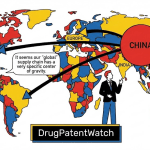
The 14 licensing deals completed by U.S. pharma firms with Chinese biotechs in the first half of 2025, totaling $18.3 billion in aggregate deal value, represent the clearest current arbitrage in biopharmaceutical licensing. Chinese biotech companies, benefiting from significant government R&D subsidies, lower clinical trial costs in China, and a large patient population for pivotal trial enrollment, have produced clinical-stage assets (particularly in oncology) at development costs substantially below U.S. equivalents. U.S. majors are buying access to these assets through upfront payments, milestones, and royalty structures that reflect the risk-adjusted NPV of late-stage Western approval programs.
The IP structure of these deals is instructive. Licensing agreements typically grant the U.S. company rights to commercialize the asset in territories outside mainland China (often North America, Europe, and Japan), while the Chinese originator retains Chinese rights. The composition-of-matter patent on the molecule may have been filed in both the USPTO and CNIPA, creating a complex ownership structure that requires careful FTO analysis before any U.S. deal closes. Patent claims filed in China and subsequently prosecuted in the U.S. under PCT procedures carry their original Chinese priority date, which means the effective U.S. patent term begins earlier than the U.S. filing date. Deal teams that miss this distinction miscalculate the effective U.S. exclusivity window.
Out-Licensing IP Strategy: Monetizing Stranded Assets
Most large pharma companies have portfolios of assets that were deprioritized for strategic, not scientific, reasons: a compound in a therapeutic area the company has exited, a late-stage asset that failed on commercial, not clinical, grounds, or a platform technology not needed for the current pipeline. Out-licensing these assets to smaller biotechs or academic spinouts generates royalty streams, milestone payments, and potential equity upside while recovering some development cost and maintaining the compound’s IP position.
The royalty rate structure for pharmaceutical out-licensing follows a tiered convention: preclinical or Phase I assets typically command 3-7% royalties on net sales; Phase II assets 7-12%; Phase III or late-stage assets 12-20%; approved products 15-25%. These rates are modified by exclusivity (exclusive licenses command higher royalties than non-exclusive), territory (global rights command lower per-territory rates), and field-of-use restrictions (a license limited to a specific indication leaves the licensor free to license other indications independently).
Eli Lilly’s Chorus unit exemplifies internal out-licensing logic applied to deprioritized programs: Chorus takes Lilly compounds that have been de-prioritized from the main development track and runs them through a lean-to-proof-of-concept (L2POC) model using external CROs and regulatory consultants. Successful programs are optioned back into Lilly’s main pipeline or out-licensed to third parties. This model reduces the capital Lilly expends on uncertain early-stage work while maintaining option value on potentially significant assets.
Key Takeaways: Section 7
FIPNet supersedes FIPCo as the dominant operating model because platform-specific CDMO capabilities in biologics, gene therapy, and RNA medicine cannot be economically internalized. The U.S.-China biotech licensing arbitrage ($18.3 billion in H1 2025) reflects genuine cost differentials in clinical development, but IP analysis of Chinese-origin PCT patents requires attention to priority date mechanics. Stranded asset out-licensing at tiered royalty rates recovers capital and option value from deprioritized programs without fully releasing the IP.
8. M&A for Pipeline Replenishment: Integration Risk, Legacy Data, and IP Preservation
The M&A Productivity Paradox
Pharmaceutical M&A activity accelerates at patent cliffs. AstraZeneca, Bristol-Myers Squibb, Merck, and Pfizer have each executed multi-billion-dollar acquisitions in the 2022-2025 period explicitly to acquire late-stage or recently approved assets that offset LOE exposure. AstraZeneca’s $39 billion acquisition of Alexion (2020) bought an established rare disease franchise. Pfizer’s $43 billion Seagen acquisition (2023) acquired an ADC platform and oncology pipeline. BMS’s $74 billion Celgene acquisition (2019) was the period’s defining pipeline purchase.
The paradox: acquired companies show higher Phase I and Phase III failure rates post-acquisition compared to industry benchmarks, despite increased R&D spending by the acquirer. The mechanism is not fully understood but involves several compounding factors. Organizational disruption post-acquisition causes key scientific staff departures, with the scientists who understood the program’s biology often being the same people who leave. Development strategies evolve under new management, sometimes changing the indication or patient population that the program was optimized for. Resource reallocation that prioritizes the acquirer’s legacy programs can starve the acquired pipeline of talent and capital during the integration period.
Legacy Data Preservation: The Regulatory and IP Obligation
Post-merger IT integration in pharma is uniquely hazardous because R&D data has regulatory and IP preservation obligations that commercial IT data does not. Every experiment that generated data supporting a regulatory filing, whether IND, NDA, BLA, or clinical study report, must be reconstructable from primary data under 21 CFR Part 11 (electronic records) and FDA’s data integrity guidance. If the ELN (Electronic Lab Notebook) or LIMS (Laboratory Information Management System) hosting that data is decommissioned as part of IT rationalization, and the data cannot be migrated in a validated, readable format, the company faces regulatory liability and IP evidentiary gaps.
The IP evidentiary issue is particularly acute: conception and reduction-to-practice dates documented in lab notebooks establish inventor priority for patent claims. If lab notebooks are in a decommissioned ELN system that cannot be authenticated after merger, patent counsel cannot rely on those records to establish priority in interference proceedings or IPR challenges. This is not a hypothetical risk. Several large pharma IP disputes have turned on the availability of original lab records to establish priority dates, with outcomes costing hundreds of millions in revenue.
A structured digital preservation plan for acquired R&D data requires three components: a validated data migration to a format that remains readable without the original ELN application, an authentication protocol that preserves the electronic signatures and timestamps that establish 21 CFR Part 11 compliance, and a retention schedule aligned with FDA’s 15-year post-approval record-keeping requirement.
Key Takeaways: Section 8
M&A accelerates pipeline acquisition but consistently underperforms organic development on clinical success rates post-merger, driven by talent disruption and resource reallocation. Legacy R&D data from acquired companies carries regulatory obligations (21 CFR Part 11) and IP evidentiary obligations (inventor priority documentation) that require a dedicated digital preservation plan as part of integration, not as an IT housekeeping afterthought.
9. Agile and Lean Methodologies Applied to R&D Operations
Agile in Pharma: What It Actually Changes
Agile’s pharmaceutical application differs meaningfully from software development, where it originated. In software, ‘done’ is defined by a working product. In drug development, ‘done’ at each phase is defined by a regulatory filing and a clinical outcome, neither of which can be iterated as rapidly as a software sprint. The pharma-specific adaptation of Agile focuses on two areas where the methodology’s principles apply cleanly: the internal decision cycle (how quickly a team can process data and make a resource allocation decision) and the cross-functional integration problem (ensuring that clinical, regulatory, CMC, and commercial perspectives are incorporated at each decision point rather than in sequential hand-offs).
The example of reducing brand strategy development from over 2 years to 90 days, by cutting team size from 40+ members to 8-12 and introducing Scrum-like daily standups, reflects Agile’s core insight: the bottleneck in complex organizations is rarely technical difficulty. It is coordination overhead. Large teams with overlapping mandates and unclear decision rights produce slower outputs than small, accountable teams with explicit decision authority.
Pfizer’s ‘Dare to Try’ program represents the cultural implementation layer: a formal mechanism for proposing, running, and learning from rapid experiments outside the standard development process, with explicit organizational protection for teams that try and fail. Without that protection, the ‘fail fast, fail cheap’ philosophy collides with career risk management and produces the opposite of the intended behavior: scientists overinvest in programs before presenting them for review to avoid the career consequences of early termination.
Lean Value Stream Mapping in Clinical Development
Lean’s value stream mapping applied to a Phase II clinical trial reveals predictable waste patterns. Protocol amendments, which occur in over 50% of Phase II trials and are the leading cause of enrollment delay, represent the failure to identify ambiguities in eligibility criteria and endpoints before the protocol is finalized. A Lean pre-protocol review that maps every protocol element to a downstream cost (consent requirement, site training requirement, data collection burden, amendment risk) reduces amendment rates by surfacing problems before the trial is active.
Cycle time from last patient visit to database lock is another high-waste step. Industry median is approximately 6-8 months post-last-patient-last-visit. Lean data cleaning protocols, pre-specified edit checks, and risk-based monitoring (which focuses auditor time on high-risk data fields rather than 100% source data verification) consistently reduce database lock timelines to 3-4 months without compromising data quality.
Key Takeaways: Section 9
Agile’s pharma value is concentrated in decision cycle compression and cross-functional integration, not in sprint-based product iteration. Cultural protection for failure (Pfizer’s ‘Dare to Try’) is the prerequisite for genuine Agile adoption. Lean value stream mapping applied to protocol design and data management reduces amendment rates and database lock timelines, directly translating to trial cost and timeline reduction.
10. Portfolio Strategy: Right-to-Win Framing, Novel Modalities, and the GLP-1 Lesson
Right-to-Win Portfolio Analysis
‘Right-to-win’ analysis asks a specific question about each therapeutic area in a company’s portfolio: given our scientific capabilities, IP position, clinical development infrastructure, and commercial relationships, is this an area where we can credibly achieve leadership, or are we a follower competing on price? The honest answer to that question should drive capital allocation more than historical momentum or legacy organizational relationships.
Areas of genuine right-to-win share common characteristics: the company has filed composition-of-matter or formulation patents on the most promising targets before competitors, it has clinical infrastructure (key opinion leader relationships, established trial sites, biomarker platforms) that competitors cannot quickly replicate, and it has manufacturing capability (particularly for complex modalities like ADCs, gene therapies, or RNA medicines) that creates a cost or quality barrier against fast followers.
Areas where a company is a follower, running ‘me-too’ programs in indications already dominated by approved products with established efficacy profiles, should receive minimal new capital. The Deloitte data on IRR by first-in-class versus best-in-class is unambiguous: me-too drugs generate lower peak sales, reach peak sales later, and generate lower IRR across the investment horizon.
Novel Modalities: The ADC, RNA Medicine, and Cell Therapy Pipeline
The three modalities most actively shifting the portfolio composition of large pharma are antibody-drug conjugates (ADCs), RNA medicines (including mRNA, siRNA, and antisense oligonucleotides), and cell therapies (CAR-T and next-generation cell therapies). Each has a distinct IP architecture and manufacturing challenge.
ADCs combine a targeting antibody with a cytotoxic payload through a chemical linker, creating a molecule whose composition-of-matter patent covers the conjugate itself. The linker chemistry and payload are independently patentable. Seagen (acquired by Pfizer for $43 billion) built its commercial franchise on proprietary linker-payload technology. The patent portfolio covering Seagen’s linker technology (particularly the maleimide-based cleavable linker system) is what Pfizer paid the bulk of the acquisition premium for, because it enables Pfizer to apply the ADC platform to its own antibody portfolio, generating new ADC candidates protected by patents on the novel conjugate.
RNA medicines have emerged from a single transformative success: the Alnylam Pharmaceuticals siRNA platform and Moderna/BioNTech mRNA vaccine technology validated lipid nanoparticle (LNP) delivery as a commercially viable oral or injectable RNA drug vehicle. Alnylam’s market capitalization (approximately $30 billion in 2024) rests primarily on the IP covering its GalNAc-siRNA conjugate delivery platform, not on the composition-of-matter of any single siRNA sequence. Building a platform IP position in a novel delivery modality, rather than individual drug patents, creates a royalty-generating foundation that can outlast any single product’s exclusivity.
The GLP-1 Lesson for Portfolio Strategy
The GLP-1 obesity franchise illustrates the right-to-win portfolio dynamic at its most commercially extreme. The GLP-1 receptor agonist mechanism was identified in the 1980s. Clinical development for type 2 diabetes began in the 1990s. The class produced its first approvals in the mid-2000s. Novo Nordisk’s investment in semaglutide’s higher-dose obesity program, at a time when the obesity market had failed commercially for multiple prior drug attempts, represented a contrarian bet that obesity pharmacotherapy was technically possible with sufficient efficacy.
The commercial lesson is not that obesity was a hidden opportunity. It is that the companies willing to fund clinical programs in mechanistically validated but commercially unproven areas, over multi-year timelines, before payer and prescriber receptivity was established, captured the IP and clinical data positions that were impossible to replicate after the category was validated. First-to-clinic with the right mechanism, in an area of high unmet need and uncertain commercial reception, is the highest-risk and highest-return portfolio position available in pharma R&D.
Key Takeaways: Section 10
Right-to-win portfolio analysis should drive capital allocation away from me-too programs and toward areas where composition-of-matter or platform IP has already been filed and clinical infrastructure creates replication barriers. ADC platform IP (linker-payload technology), RNA medicine delivery platform IP (LNP/GalNAc), and cell therapy manufacturing IP are the three most competitively significant modality-level IP positions in the current market. The GLP-1 example argues for contrarian funding of mechanistically validated programs before commercial receptivity is established.
11. Patent Intelligence as Competitive Infrastructure
Patent Filing Patterns as R&D Roadmaps
A competitor’s patent portfolio, properly analyzed, is a detailed forward-looking disclosure of their scientific strategy. Patent applications are published 18 months after filing, meaning the strategic information they contain is roughly 18 months old at publication but may reflect programs that will not reach clinical stage for another 3-5 years. For a company monitoring competitive activity, a cluster of patent filings in a specific target class or mechanism of action is a 3-7 year advance warning of a competitive program entering clinical development.
The most revealing competitive signal is not a single patent filing but a cluster of related filings: a composition-of-matter patent on a novel scaffold, followed by formulation patents on a delivery system, followed by method-of-use patents on a specific indication. This cluster pattern indicates a company that has progressed from target identification to lead compound to IND-enabling studies, and is preparing a multi-layer IP thicket around a commercial asset. Companies that track these clusters across competitors can anticipate where competitive pressure will emerge and either accelerate their own programs in the same space or reallocate capital to indications where patent white space remains clean.
Paragraph IV Strategy: Attack and Defense
A Paragraph IV certification is the formal legal mechanism through which a generic manufacturer challenges one or more Orange Book-listed patents, claiming they are invalid or not infringed by the proposed generic product. Filing a Paragraph IV triggers the 45-day period during which the branded company can sue and initiate a 30-month stay. The 30-month stay is the commercial value of the lawsuit from the branded company’s perspective: it delays generic approval by 30 months while litigation proceeds, regardless of the ultimate litigation outcome.
For generic companies, the 180-day exclusivity period granted to the first successful Paragraph IV filer is the financial incentive: the first generic approved has 180 days of the market to itself before other generics can enter, typically at 80% of branded price rather than the eventual 20-30% generic commodity price. The first-to-file advantage in Paragraph IV litigation is substantial; companies like Teva, Mylan (now Viatris), and Sun Pharma have built commercial strategies around systematic Paragraph IV first-filing on approaching patent cliffs.
For branded companies, the counter-strategy requires knowing exactly which patents in their Orange Book listings are most vulnerable to invalidity challenges. A patent with a narrow claim scope that reads on the exact branded product but can be designed around by a generic reformulation is less valuable than a broad claim that covers the mechanism of drug action regardless of formulation. IP teams that have not done this internal vulnerability analysis before a Paragraph IV is filed are reacting, not managing.
DrugPatentWatch as Patent Intelligence Infrastructure
DrugPatentWatch provides integrated access to Orange Book patent expiry data, Paragraph IV certification histories, global patent databases across 130+ countries, litigation tracking, and FDA regulatory filing data. For a drug approaching LOE, the platform enables a reconstruction of the complete competitive picture: how many generics have certified, whether stays are in effect, which patents have been challenged and on what grounds, and what the projected first generic entry date is after adjusting for litigation, pediatric exclusivity, and SPC terms.
The platform’s global patent data is specifically useful for companies operating in markets outside the U.S. European SPC expiry dates, Japanese patent term extension calculations, and patent status in emerging markets (Brazil, India, China) all affect the commercial timeline for a product approaching LOE. Companies that model LOE exposure only on U.S. Orange Book data are missing the global revenue picture.
Key Takeaways: Section 11
Patent filing cluster analysis provides 3-7 year advance warning of competitive programs. Paragraph IV first-filer exclusivity is the financial incentive driving systematic generic company challenges of approaching patent cliffs. Internal patent vulnerability analysis, conducted before Paragraph IV filings arrive, is the foundational element of LOE defense. DrugPatentWatch integrates Orange Book data, global patent timelines, and litigation tracking into a single competitive intelligence platform.
12. Case Study Analyses: Pfizer, AstraZeneca, Eli Lilly
Pfizer: SOCA, GLP-1 Positioning, and the Seagen ADC Bet
Pfizer’s decade-long productivity improvement from 2% to 21% Phase I-to-approval rate reflects the compounding effect of the SOCA framework applied across the full portfolio. The framework’s 2020 retrospective validation showed that programs with clear POM/ESOE data had approval rates significantly above the company baseline, while programs that progressed without pre-specified SOCA criteria clustered at the bottom of the success distribution.
The Seagen acquisition at $43 billion represents Pfizer’s portfolio strategy response to anticipated LOE exposure from Eliquis and Ibrance. The commercial thesis is explicit: Pfizer’s oncology commercial infrastructure, applied to Seagen’s ADC pipeline (which had 4 approved ADCs at acquisition, including Padcev and Adcetris, with multiple late-stage programs), creates a scale advantage in ADC commercial execution that neither company had alone.
The IP valuation rationale: Seagen’s linker-payload platform patents, which cover a broad range of ADC architectures using proprietary cleavable linker chemistry, create licensing revenue from third-party ADC developers and provide IP protection for Pfizer’s own internal ADC programs built on the acquired technology. Pfizer paid approximately $8-10 billion in platform IP premium above the NPV of Seagen’s approved products.
AstraZeneca: 450 Collaborations and the Open Innovation Infrastructure
AstraZeneca’s open innovation model, which has generated 450 new collaborations across 40 countries since 2014, reflects a pipeline replenishment strategy that deliberately externalizes early-stage discovery risk. AZ shares compound libraries and internal screening platforms with academic partners under terms that give AZ priority rights to any active compounds identified, without requiring upfront payment for the compounds provided.
The IP structure of these collaborations is specifically designed to capture value without upfront cost: AZ licenses its internal compounds to external researchers, retaining an option to in-license any resulting discoveries on pre-agreed terms. If the collaboration produces nothing, AZ has lost only the cost of compound supply. If it produces an active candidate, AZ can exercise its option at a pre-agreed price, acquiring the IP before the asset has been competitively bid up by other parties.
The 90 late-stage studies running in AZ’s pipeline in 2025 reflect both organic development and the fruits of this collaboration model: programs that entered at low cost through the external discovery network, validated by SOCA-equivalent gate criteria, and then invested into full development internally.
Eli Lilly: The GLP-1 First-Mover Advantage and Tirzepatide’s Platform Value
Eli Lilly’s tirzepatide (Mounjaro/Zepbound), a dual GIP/GLP-1 receptor agonist approved for type 2 diabetes and obesity, generated $5.2 billion in revenue in the first 9 months after obesity approval. The composition-of-matter patent on tirzepatide provides exclusivity protection into the 2030s, but Lilly’s more durable competitive position derives from clinical data on tirzepatide’s superior weight loss efficacy versus semaglutide (SURMOUNT-5 head-to-head trial data, 2025, showing approximately 47% greater weight loss with tirzepatide), which creates a clinical differentiation argument that supports premium pricing even if future GLP-1 biosimilar competition erodes the broader class’s margins.
The IP portfolio around tirzepatide follows the layered thicket model: composition-of-matter patents on the molecule, manufacturing process patents on the synthesis of the dual agonist scaffold, formulation patents on the specific autoinjector delivery device, and method-of-use patents filing in progress for cardiovascular outcomes (SURMOUNT-CVOT), sleep apnea (FDA approval received 2024), NASH, and additional indications. Each new indication approval generates a new Orange Book-listable method-of-use patent entry.
Key Takeaways: Section 12
Pfizer’s SOCA framework and ADC platform acquisition (Seagen) represent the two dominant R&D revitalization levers in a single company: operational discipline in the internal portfolio and platform IP acquisition through M&A. AstraZeneca’s collaboration model externalizes early discovery cost while capturing option rights on external innovations. Tirzepatide’s clinical superiority data, combined with a layered IP thicket spanning 6 indication categories, is the current industry benchmark for multi-layer lifecycle defense of a first-in-class asset.
13. Talent and Culture: The Structural Bottleneck No One Budgets For
The Digital Skills Gap: Quantified
Demand for digital skills in pharma R&D (AI/ML expertise, digital trial enablement, bioinformatics, computational chemistry) has grown 2-3x over the past 5 years. The talent pool with these skills grew by only 15% in the same period. The 26% year-over-year growth in pharma-employed AI/ML professionals from 2023 to 2024 is encouraging but insufficient: demand is growing faster than supply, and compensation for top computational biology and machine learning scientists in pharma now rivals Big Tech, a competitive context that most pharma HR frameworks were not designed to manage.
The organizational consequence is predictable: AI-driven drug discovery initiatives that are funded and strategically endorsed fail at the implementation level because the internal team lacks the technical depth to use the platforms effectively, evaluate vendor claims critically, or build internal models on proprietary data. Money spent on AI platform licenses without commensurate investment in talent capable of using them generates negative returns.
Cross-Functional Integration: The Pfizer ‘Dare to Try’ Model
Pfizer’s ‘Dare to Try’ program institutionalizes the cultural conditions required for genuine experimentation. The program provides a formal mechanism for proposing fast experiments, with pre-agreed criteria for what success and failure look like, and explicit organizational cover for failure outcomes. It combines Agile software tools (Jira-based sprint tracking applied to research hypotheses), structured cross-functional teams (clinical, translational, CMC, regulatory represented from Day 1), and a governance layer that separates ‘dare to try’ experiments from the main portfolio review process.
The cultural breakthrough is the separation of experimental failure from career risk. In organizations without this separation, scientists protect themselves from career consequences by inflating the evidence base before presenting a program for review, investing more in programs than their current data justifies. ‘Dare to Try’ explicitly reframes early program termination as a positive learning outcome rather than a scientific failure to be avoided, producing the fast-fail culture that the SOCA paradigm requires at the decision level.
Key Takeaways: Section 13
The digital skills gap in pharma R&D is structural and widening: demand is growing 2-3x faster than supply. AI platform investment without commensurate talent investment generates negative returns. Cultural frameworks like ‘Dare to Try’ are the organizational prerequisites for SOCA-style stage-gate discipline, because they separate experimental failure from career risk and enable the fast-fail decisions the framework requires.
14. Investment Strategy Appendix
Screening Framework for Pipeline Revitalization Investments
Institutional investors evaluating pharma companies for R&D revitalization potential should apply a five-factor screen.
The first factor is LOE exposure concentration. What percentage of the company’s revenue comes from products within 5 years of their LOE horizon, adjusting for SPC extensions and pediatric exclusivity? Companies with more than 40% of revenue in this exposure window without a credible late-stage pipeline replacement have a structural problem that no operational improvement can solve quickly.
The second factor is first-in-class positioning. What fraction of the pipeline is first-in-class versus best-in-class or me-too? The Deloitte IRR data is unambiguous: first-in-class programs in high-unmet-need areas generate 1.5-2x the IRR of best-in-class and 3x the IRR of me-too programs. A pipeline predominantly composed of me-too programs will generate below-cost-of-capital IRR over a full development cycle.
The third factor is stage-gate discipline evidence. Does the company publish or disclose data on program termination rates and the criteria used? A company running fewer early-stage terminations than its attrition statistics predict is likely carrying under-performing programs that will consume capital in later, more expensive phases.
The fourth factor is platform IP vs. product IP concentration. A company whose IP portfolio is concentrated in single-product composition-of-matter patents faces a binary cliff when each patent expires. A company with platform technology patents (delivery systems, manufacturing processes, formulation technologies) has a royalty-generating and blocking-position IP base that survives the expiry of any single compound’s exclusivity.
The fifth factor is M&A integration track record. For companies that have made multiple large acquisitions, what is the post-acquisition Phase II and Phase III attrition rate of acquired assets relative to the acquiring company’s internal programs? A materially higher attrition rate in acquired programs is a warning signal of integration failure that will repeat in future transactions.
Valuation Metrics: R&D Productivity Ratios
For direct R&D productivity comparison across companies, three ratios are most informative. R&D spend per approved NME, calculated as cumulative R&D expenditure over a rolling 10-year period divided by approved NMEs in the same period, provides a normalized cost-per-output metric. Phase II success rate by indication, which requires clinical trial registry data (ClinicalTrials.gov) cross-referenced with approval records, reveals whether the company’s drug discovery quality is above or below industry average in its specific therapeutic focus areas. And pipeline rNPV to R&D spend ratio, comparing the risk-adjusted NPV of the current pipeline (using published probability-of-success data and analyst consensus peak-sales estimates) to current annual R&D expenditure, indicates whether the company is generating enough expected value from each R&D dollar to justify continued investment at current levels.
Key Takeaways: Section 14
LOE exposure concentration, first-in-class pipeline fraction, stage-gate discipline evidence, platform vs. product IP balance, and M&A integration track record are the five factors that predict whether a pharma company’s R&D revitalization strategy is structural or cosmetic. The three R&D productivity ratios (cost per NME, Phase II success rate by indication, pipeline rNPV to R&D spend) provide quantitative benchmarks for cross-company comparison.
15. Key Takeaways by Segment
For R&D Leadership
The SOCA paradigm is a replicable, data-supported framework for improving Phase I-to-approval rates from single digits to above 20%. Its core requirement is pre-specified go/no-go criteria, reviewed and agreed before the relevant studies begin, with institutional discipline to act on negative results. Phase II is the highest-leverage intervention point: improving Phase II success rates by 10 percentage points has a larger cumulative portfolio impact than any other single attrition-reduction measure. AI-assisted lead optimization and predictive toxicology are the most mature and immediately applicable AI tools, with regulatory acceptance growing under FDA Modernization Act 2.0.
For IP Teams
The patent thicket for any significant asset should span composition-of-matter (where remaining term exists), formulation, manufacturing process, new indication method-of-use, and pediatric method-of-use, with each layer timed to its optimal filing window relative to clinical data generation. Paragraph IV vulnerability analysis must be completed proactively, before the first Paragraph IV certification arrives. SPC filing in EU member states requires strict attention to the 6-month post-authorization filing deadline. Platform IP (delivery technology, linker chemistry, manufacturing process) generates royalty revenue and blocking positions that survive any single product’s LOE event.
For Regulatory Affairs
Adaptive trial designs require Type B meeting alignment with FDA and EMA before protocol finalization: agencies that have endorsed adaptive design in principle will still require pre-specified statistical plans submitted for review. RWE-based sNDA strategies generate new method-of-use patents eligible for Orange Book listing, creating a regulatory-to-IP pathway worth building proactively into LOE defense plans. Breakthrough Therapy Designation, Orphan Drug Designation, and Fast Track collectively accounted for 75% of Pfizer’s approvals between 2016 and 2020: regulatory pathway selection is a commercial decision as much as a scientific one.
For Institutional Investors
Strip GLP-1 assets from any pharma R&D IRR analysis before drawing conclusions about underlying portfolio productivity. Apply the five-factor screen (LOE concentration, first-in-class fraction, stage-gate discipline, platform IP weight, M&A integration track record) to every company in a pharma portfolio. The drug repurposing segment, particularly orphan indication programs on off-patent compounds with ODD-protected exclusivity, offers risk-adjusted returns that are structurally superior to de novo early-stage programs. The Fintepla/UCB transaction at $1.9 billion for an off-patent API protected only through ODD and method-of-use patents is the current benchmark for repurposing program exit valuation.
For real-time patent expiry tracking, Paragraph IV filing alerts, Orange Book data, and competitive pipeline patent landscape analysis, DrugPatentWatch provides the integrated business intelligence infrastructure required to execute the strategies described in this report.