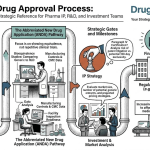
Generic drugs are not simplified copies. They are pharmaceutical products held to the same evidentiary standard as their reference listed drugs (RLDs), required to demonstrate bioequivalence across active ingredient composition, pharmacokinetic profile, dosage form, route of administration, strength, and labeling. The abbreviated pathway that gets them there, the ANDA, strips out the duplicative clinical work but adds nothing in terms of product quality tolerance.
The U.S. healthcare system saved $373 billion through generic and biosimilar drugs in 2021 alone. Between 2007 and 2016, cumulative savings hit $1.67 trillion. In 2014, generics contributed $253 billion in savings in a single year. These are not projections. They are retrospective measures from CMS data, FDA cost modeling, and Association for Accessible Medicines (AAM) analyses.
The utilization statistics are equally stark: generic prescriptions accounted for 91% of all U.S. prescriptions filled in 2021, yet those prescriptions represented only 18.2% of total drug spending. Brand-name drugs, filling the remaining 9% of prescription volume, consumed over 80% of pharmaceutical expenditure. The average generic copay is $6.16 versus $56.12 for a brand. That 9:1 spending ratio, inverted from the prescription share ratio, is the defining structural tension of the U.S. pharmaceutical market. It explains why almost every cost-control policy debate, from IRA drug price negotiation to PBM transparency reform, traces back to the brand-side of this ledger.
Key Takeaways: Economic Baseline
The savings from generic utilization are real and large, but they operate in a market where brand-name drugs still dominate spending. Any analyst modeling total pharmaceutical cost trends must account for both the absolute savings from generic penetration and the countervailing pressure from specialty drug launches priced at $100,000+ per year. Generics win on volume; brands win on revenue. Those two facts coexist without contradiction.
Investment Strategy Note
For portfolio managers evaluating generic-heavy companies like Teva Pharmaceutical Industries, Viatris (formed from the Mylan/Pfizer Upjohn merger in 2020), or Dr. Reddy’s Laboratories, the relevant valuation input is not gross revenue but revenue-per-ANDA at time of launch, particularly for first-to-file exclusivity positions. The 180-day market exclusivity on a high-volume molecule can be worth $200M-$500M in operating contribution. That figure is time-bounded and non-renewable, which creates an acute portfolio concentration risk when a company’s near-term earnings depend on a handful of exclusivity windows. Tracking those windows is the job.
The Hatch-Waxman Framework: IP Architecture That Built the Generic Industry
What the Act Actually Does
The Drug Price Competition and Patent Term Restoration Act of 1984, universally called Hatch-Waxman, accomplished two things simultaneously: it created the ANDA pathway for generic approval, and it gave brand manufacturers patent term restoration to compensate for regulatory delay during the NDA process. The result was a deliberate policy bargain, accelerated generic entry in exchange for preserved innovator returns during exclusivity.
The ANDA pathway’s core innovation was scientific substitution. Rather than requiring a generic applicant to repeat the full preclinical and clinical program that supported the original NDA, the FDA accepts bioequivalence data as sufficient proof of therapeutic equivalence. Bioequivalence, under 21 CFR Part 320, means the rate and extent of absorption of the generic drug do not show a statistically significant difference from the RLD under similar experimental conditions. The standard 90% confidence interval criterion requires the geometric mean ratio of the generic to the RLD to fall between 80% and 125% for Cmax and AUC.
Before Hatch-Waxman, only 35% of off-patent brand drugs had generic equivalents. By the late 1990s, that figure approached 100%. The Act converted a market where patent expiration meant very little into one where patent expiration triggers a predictable and often intensely competitive generic entry process.
Paragraph IV Certifications: Where IP Strategy Gets Expensive
The ANDA process requires a patent certification for each patent listed in the FDA’s Orange Book for the RLD. When a generic applicant believes a listed patent is invalid or would not be infringed by the generic product, it files a Paragraph IV certification. That filing immediately triggers a 45-day window during which the brand holder can sue for patent infringement. If the brand files suit within that window, the FDA imposes an automatic 30-month stay on generic approval. During those 30 months, the branded product retains its market exclusivity by default, regardless of the underlying patent strength.
This is the mechanism that makes patent litigation central to generic market entry, not peripheral to it. A Paragraph IV filing is simultaneously a regulatory action and an opening of litigation hostilities. The brand’s legal response is often reflexive, filed not because the patent is clearly valid but because the cost of inaction, losing a 30-month stay, is too high. The generic company, in turn, accepts litigation as the cost of the 180-day first-filer exclusivity that awaits if it prevails.
The 180-day exclusivity is granted to the first substantially complete ANDA applicant to submit a Paragraph IV certification for a given drug. This exclusivity runs from the earlier of the first commercial marketing date by the first-filer, or a court decision finding the challenged patent invalid or not infringed. During this window, no other ANDA for the same drug can be approved. The first filer prices its generic at 80-90% of brand WAC, capturing the bulk of the volume with margins substantially above what will exist once exclusivity expires and competition arrives.
IP Valuation: The Paragraph IV Pipeline as a Balance Sheet Item
For any generic company carrying active Paragraph IV certifications, those filings represent contingent assets that do not appear on the balance sheet but materially drive enterprise value. A filed Paragraph IV certification against a $2 billion brand franchise, where the patent challenge succeeds, generates a 180-day exclusivity period worth hundreds of millions in contribution margin. The probability-adjusted expected value of that outcome is what analysts should be discounting when evaluating a company’s pipeline.
Teva’s historical leadership in Paragraph IV filings was a core driver of its market position through the 2000s and early 2010s. The company built an IP litigation operation that systematically challenged Orange Book patents, accumulated first-filer positions, and converted legal wins into exclusivity revenue. The strategy worked until it didn’t: when the first-filer pipeline dried up and Actavis, Mylan, and others scaled the same playbook, price erosion accelerated faster than new exclusivity revenue could replace it.
The lesson for IP teams and portfolio managers is that the Paragraph IV pipeline is a depleting asset class. Each exclusivity period, once it expires, is gone. Sustaining the strategy requires continuously filing against new compounds reaching patent expiration, which is itself a function of the innovator pipeline. When the innovator pipeline produces fewer blockbusters, there are fewer high-value Paragraph IV targets. The current environment, where many remaining large-molecule biologics face biosimilar rather than small-molecule generic competition, has reduced the addressable market for traditional ANDA Paragraph IV strategy.
Key Takeaways: Hatch-Waxman and IP
The Paragraph IV mechanism converted patent expiration into an active litigation trigger rather than a passive date. First-filer exclusivity is the financial prize that makes this litigation economically rational. For IP teams, every Orange Book patent listing, method-of-use code, and pediatric exclusivity attachment is a potential delay mechanism. For generic analysts, those same listings are the map of obstacles between the ANDA and commercial launch.
Bioequivalence Science: What ‘AB-Rated’ Actually Means and Where It Gets Complicated
The FDA’s Orange Book Rating System
The Orange Book lists approved drug products with their therapeutic equivalence evaluations. A product rated ‘A’ is considered therapeutically equivalent to the RLD; a product rated ‘B’ is not. The most common ‘A’ subcategory is ‘AB,’ which applies to products where the FDA has evaluated and approved bioequivalence data. Generic products rated AB can be substituted for the RLD at the pharmacy counter under most state substitution laws without prescriber intervention.
The ‘AB’ rating is the operational prerequisite for generic market success. A generic product without an AB rating cannot be automatically substituted, which means it competes commercially against the brand on price alone, without the benefit of pharmacist substitution. Almost no generic product succeeds commercially under those conditions.
Bioequivalence studies typically use a two-period, two-sequence crossover design in healthy adult volunteers, measuring plasma concentrations of the active moiety at multiple time points after a single dose of each formulation. The primary PK parameters are AUC0-t, AUC0-inf, and Cmax. Both must fall within the 80-125% confidence interval boundary. For highly variable drugs (those with intrasubject variability above 30%), the FDA permits reference-scaled average bioequivalence, which allows wider acceptance limits proportional to the RLD’s own variability.
Where Standard Bioequivalence Breaks Down
For a growing number of drugs, standard oral bioequivalence methodology is scientifically insufficient. Complex drug products, including locally acting drugs, inhaled therapies, transdermal patches, ophthalmic solutions, and injectable depot formulations, cannot be adequately characterized by plasma PK alone. For these products, the site of action is not the systemic circulation but rather the lung, skin, eye, or injection site. Plasma levels may bear no reliable relationship to local drug concentrations at the therapeutic target.
Inhaled corticosteroids like fluticasone propionate are the textbook example. The FDA requires a combination of in vitro aerodynamic particle size distribution studies, pharmacokinetic studies with charcoal blockade to isolate lung absorption, and pharmacodynamic studies for some products. The complexity of demonstrating bioequivalence for Advair Diskus (fluticasone/salmeterol) kept generic competition off the market for years after GlaxoSmithKline’s composition patents expired. Mylan’s generic version received approval only in 2019, representing roughly a decade of post-patent-expiration brand exclusivity achieved not through additional IP but through regulatory complexity.
For dermatological products, the FDA has moved toward in vitro dermal absorption modeling and comparative dermatopharmacokinetic studies. For complex injectables like Copaxone (glatiramer acetate), which Teva markets, characterizing the active moiety is itself analytically challenging because the drug is a mixture of polypeptides with no single defined structure. Sandoz received FDA approval for a generic glatiramer acetate in 2015 after years of development and a $250 million pre-approval investment, illustrating the capital intensity of complex generic development.
Biowaivers: When In Vivo Studies Are Not Required
The FDA grants biowaivers for certain dosage forms where in vivo bioequivalence is considered self-evident based on physicochemical and formulation data. Parenteral solutions for IV, SC, or IM administration qualify when the generic is qualitatively (Q1) and quantitatively (Q2) the same as the RLD and shares the same physicochemical characteristics (Q3). Oral solutions for highly soluble, rapidly absorbed drugs in the BCS Class I or III categories can qualify for biowaivers under the Biopharmaceutics Classification System framework.
Biowaivers reduce development timelines and costs. For a generic company filing an ANDA for a simple oral solution of a BCS Class I compound, the absence of required PK studies can shave 12-18 months off the development program and eliminate $2-5 million in clinical study costs. Those savings translate directly into earlier filing dates and earlier potential market entry.
Key Takeaways: Bioequivalence and Regulatory Science
The AB rating is the market access threshold for generic drugs. Standard two-sequence crossover PK bioequivalence works for most oral solid dosage forms. For complex products, inhaled therapies, transdermal systems, and locally acting agents, demonstrating bioequivalence requires product-specific study designs that can take a decade and hundreds of millions of dollars. The regulatory complexity protecting complex brand products post-patent expiration is, in effect, a non-IP market exclusivity mechanism. Generic IP teams must assess this regulatory barrier as carefully as the patent thicket.
Investment Strategy Note
For investors evaluating generic pipeline assets, the distinction between simple oral generics (commoditized, low margin, high competition) and complex generic targets (high development cost, high regulatory barrier, few competitors, preserved margin) is critical. A company with a pipeline of AB-rated generics for post-patent brand drugs with $500M+ in U.S. sales, where the regulatory pathway requires product-specific bioequivalence studies, is sitting on materially more defensible economics than a company filing ANDAs for simple tablet formulations. The regulatory complexity is the moat.
Market Dynamics After Patent Expiration: Price Erosion Curves and Competitive Entry
The Generic Entry Timeline
Patent expiration does not produce overnight generic competition. The typical timeline from ANDA filing to commercial launch runs 24-36 months, accounting for FDA review time (currently averaging around 15-18 months for standard ANDAs), patent litigation, and manufacturing scale-up. For Paragraph IV filings in litigation, the 30-month stay can extend the timeline further.
FDA priority review, available for ANDAs targeting drugs in shortage or with no approved generics, can compress the timeline. The FDA has also worked through its ANDA backlog since the Generic Drug User Fee Act (GDUFA) of 2012 and its 2017 renewal, which funded additional FDA reviewers in exchange for application fees from generic manufacturers. GDUFA created enforceable review goals, targeting 90% of standard ANDAs reviewed within 10 months by fiscal year 2017. Prior to GDUFA, the average ANDA review time exceeded 30 months.
Price Erosion by Competitor Count
The price erosion curve post-generic entry follows a well-documented pattern. When the first generic enters with 180-day exclusivity, average selling price falls to roughly 80-85% of brand WAC. As exclusivity expires and additional generics enter, price compression accelerates. By the time six or more generic manufacturers are competing, generic prices average 5-10% of the original brand WAC. With ten or more competitors and sustained price competition, the economics of remaining in the market become marginal for any manufacturer without significant scale.
The HHS ASPE analysis of Medicare data from 2007-2022 confirms this pattern across hundreds of molecules. In the first year post-generic entry, the number of competing products is the single strongest predictor of price levels. Volume follows price: as generics get cheaper, PBM formularies shift prescriptions aggressively toward generics, which further fuels volume but compresses per-unit margins.
The aggregate effect is captured in a single supply-side dynamic: the generic market, measured by revenue, grows as new molecules lose exclusivity but shrinks per-product as competition intensifies. This means a generic company’s revenue is perpetually cycling, with new exclusivity revenue replacing eroding commodity revenue. When the new exclusivity pipeline is thin, revenue falls. When it’s rich, revenue grows, but only until the next set of exclusivity periods expire.
Teva, Viatris, and the Scale Model Under Pressure
Teva and Viatris (the successor entity to Mylan and Pfizer Upjohn) built their business models on scale: manufacturing thousands of generic SKUs across global facilities, leveraging consolidated procurement of API and excipients, and using distribution scale to win PBM preferred formulary positions. The logic was that margin compression on any single product was acceptable if the portfolio breadth was sufficient to sustain aggregate profitability.
That model worked through approximately 2015. Since then, both companies have faced sustained margin pressure as the commodity generic segment repriced, key exclusivity periods expired without equivalent replacements, and payer consolidation gave PBMs more leverage in contract negotiations. Teva’s response has been to pivot toward branded specialty drugs, including its CGRP franchise with Ajovy (fremanezumab) for migraine. Viatris has pursued a different path, spinning off its biosimilars business into Biocon Biologics in 2022 and focusing on branded and complex generics.
The IP valuation implication is direct: for both companies, the branded and complex generic assets now carry most of the enterprise value. The commodity generics, while generating cash flow, are valued at low multiples. Investors evaluating these companies should model the two segments separately, applying higher multiples to branded/complex assets and lower multiples, or discounted cash flows with high competition sensitivity, to the commodity generic base.
Sun Pharma, Lupin, and the India-Based Global Model
Sun Pharmaceutical Industries, Lupin, and Aurobindo Pharma operate a vertically integrated model in which API synthesis, formulation development, and ANDA filing all occur within integrated Indian operations, with U.S. and European sales forces distributing the output. This model achieves cost structures that are difficult for U.S.- or European-based manufacturers to match on a per-ANDA basis.
The India-based generic model has significant IP and regulatory surface area. Each of these companies maintains large U.S. ANDA portfolios, active Paragraph IV litigation positions, and manufacturing facilities that are subject to FDA inspection. A Form 483 observation at a major API or formulation facility can halt approvals across a wide product range, as Sun Pharma experienced with its Halol facility from 2014 to 2017, a period during which the FDA’s import alert effectively blocked new U.S. approvals from that site.
Key Takeaways: Market Dynamics
Price erosion post-generic entry is predictable and steep. The first-filer with 180-day exclusivity captures the most value. After exclusivity expires, competition compresses margins to near-commodity levels for standard oral generics. The scale model built by Teva and Mylan faces structural pressure. The vertically integrated India model offers cost advantages but carries regulatory concentration risk. For analysts, the key variables are competitor count, time to exclusivity expiration, and API source diversification.
Evergreening: Brand IP Lifecycle Strategies That Generic Teams Must Map
What Evergreening Actually Is
Evergreening is the practice of obtaining sequential patent protection on derivative features of an approved drug, including new formulations, new dosage forms, new dosing frequencies, new polymorphs, new salts, new combinations, new manufacturing processes, and new indications. Each new patent can reset the period of effective market exclusivity, even when the original compound patent has expired. The result is that the economic life of a franchise often extends well beyond the original compound patent term.
This is not illegal. Patents on genuine innovations in formulation, process, or indication are legitimate under patent law. The policy dispute concerns whether the scale and systematic application of evergreening appropriately balances innovation incentives against access. From a generic IP team’s perspective, the practical problem is that evergreening creates a thicket of patents that must be challenged, designed around, or waited out.
The Technology Roadmap for Common Evergreening Tactics
Extended-Release Reformulation. The most common evergreening mechanism is reformulating an immediate-release compound into a controlled-release or extended-release version, combined with voluntary withdrawal of the IR form from the market. AstraZeneca executed this with omeprazole (Prilosec) and esomeprazole (Nexium), obtaining new composition patents on the esomeprazole enantiomer as the racemic omeprazole patents expired. The esomeprazole formulation carried patents extending exclusivity by more than a decade beyond the original omeprazole compound expiration. Generic companies were left competing for a commodity IR omeprazole market while Nexium’s ER formulation maintained brand-level pricing.
The generic counter-strategy is to challenge the ER formulation patents via Paragraph IV certification and, where possible, develop a competing ER formulation that does not infringe the specific delivery mechanism patents. Alternatively, generic companies can pursue authorized generic agreements or design-around formulations that achieve comparable PK profiles through different release technology.
Pediatric Exclusivity. The Best Pharmaceuticals for Children Act (BPCA) grants six months of additional exclusivity to any drug for which the FDA requests and the manufacturer conducts qualifying pediatric studies. These six months attach to all existing patents and exclusivities, not just compound patents. On a high-revenue molecule, six months of delayed generic entry can be worth more than $1 billion to the brand holder. The generic consequence is that every First-to-File exclusivity period is automatically extended by six months for any molecule with a BPCA grant, because the 180-day exclusivity cannot begin until the pediatric exclusivity expires.
Authorized Generics. A brand manufacturer can license a pharmaceutical company to sell a generic version of its own drug, typically at a price between the brand and the generic, during the first-filer’s 180-day exclusivity period. The authorized generic (AG) directly competes with the first-filer during the exclusivity window, eroding the first-filer’s volume and pricing power. The FTC has documented that first-filers earn substantially less when facing an authorized generic during exclusivity than when they do not.
From a competitive intelligence standpoint, predicting whether a brand will launch an authorized generic requires assessing the brand’s channel strategy, its relationships with generic distribution partners, and the specific molecule’s revenue profile. Brand companies with high-margin specialty drugs are less likely to authorize generics that cannibalize their own revenue. Those in later lifecycle phases with declining brand revenue may prefer the AG revenue stream to complete brand loss.
No-AG Commitments. In some pay-for-delay settlement agreements, the brand manufacturer commits not to launch an authorized generic during the first-filer’s exclusivity period. This ‘no-AG’ commitment is a valuable concession that the brand provides in exchange for the generic’s agreement to delay commercial launch. The FTC tracks these agreements and treats the no-AG commitment as equivalent economic value to a cash reverse payment, even when the settlement involves no cash changing hands.
New Indication Patents. A brand manufacturer can file use patents on new indications for an already-approved drug, listing those patents in the Orange Book under method-of-use codes. A generic ANDA applicant who wants to carve out the patented indication can file a ‘Section viii’ statement, acknowledging the method-of-use patent and limiting its labeling to non-patented uses. This ‘skinny labeling’ approach is legally permitted but practically risky, as the GSK v. Teva decision in the Federal Circuit established that a generic manufacturer can be liable for inducing infringement of a method-of-use patent even with a skinny label, if its promotional activities or labeling context leads physicians to use the drug for the patented indication.
IP Valuation for Evergreening Assets
For brand IP teams, the evergreening portfolio represents the revenue protection layer beyond the compound patent. Each evergreening patent has a discrete expected value calculated as the probability-weighted revenue protected by that patent multiplied by the margin during the additional exclusivity period it provides.
For a $4 billion annual revenue drug with 60% operating margin, a single patent that delays generic entry by 12 months has an expected value of approximately $2.4 billion at face value (ignoring discounting). Even a patent with 30% litigation survival probability is worth $720 million in expected value. That math drives the investment in evergreening IP strategy at every major pharmaceutical company.
Generic IP teams mirror this calculation from the other side. A Paragraph IV challenge to an evergreening patent with 30% validity probability, on a drug generating $4 billion in brand revenue, has an expected 180-day exclusivity value that can be modeled explicitly. If the generic captures 80% of volume at 15% of brand price during exclusivity, that 180-day window yields approximately $240 million in revenue. At 50% operating margin, the contribution is $120 million. Even at 30% probability, the risk-adjusted expected value is $36 million, often well in excess of the litigation cost. That arithmetic is why Paragraph IV challenges persist regardless of how aggressive evergreening strategies become.
Key Takeaways: Evergreening
Evergreening is a systematic IP lifecycle management strategy, not an anomaly. Extended-release reformulation, pediatric exclusivity, authorized generics, no-AG commitments, and method-of-use patents are all tools in the brand playbook. Generic IP teams must map the full Orange Book patent constellation for each target molecule, including listing dates, expiration dates, and use codes, before committing to an ANDA. Failing to account for a pediatric exclusivity grant or a no-AG commitment in a settlement can materially alter the first-filer’s economics.
Pay-for-Delay: The Antitrust Battleground Worth $16 Billion
Mechanics of Reverse Payment Settlements
When a brand manufacturer sues a Paragraph IV filer for patent infringement, both parties have strong financial incentives to settle before trial. The brand avoids the risk of a ruling that invalidates its patent. The generic avoids the cost and duration of multi-year litigation and the risk of an adverse ruling that delays market entry entirely. The natural settlement structure is a date-certain license, where the generic company receives permission to enter the market at a specific future date, typically one that does not dramatically front-load the brand’s exclusivity loss.
What makes these settlements legally problematic is when the brand company transfers value to the generic company in exchange for agreeing to a later entry date. The FTC calls this a ‘reverse payment’ because money flows from plaintiff (brand) to defendant (generic), the opposite of conventional lawsuit economics. The transferred value can be cash, a no-AG commitment, a side supply agreement at favorable terms, a co-promotion arrangement, or any combination of these.
The economic logic is straightforward. Both parties are better off sharing the monopoly profit of the brand drug than competing. If the brand is earning $1 billion annually and the expected generic competition would drop that to $150 million, there is roughly $850 million in annual value that could be shared between the parties through a settlement that delays generic entry. The consumer and the government pay for that shared value through higher prices.
FTC Enforcement and the Actavis Decision
The Supreme Court’s 2013 decision in FTC v. Actavis established that reverse payment settlements can violate antitrust law and are subject to a rule-of-reason analysis. Prior to Actavis, several circuit courts had held that settlements within the ‘scope of the patent,’ including settlements that delayed generic entry until before the patent’s expiration, were immune from antitrust challenge. Actavis rejected that framework.
Since Actavis, the FTC has pursued enforcement actions against multiple reverse payment arrangements. The most significant ongoing litigation involves AbbVie’s Humira (adalimumab) settlement agreements, where AbbVie entered into patent settlements with biosimilar applicants that delayed U.S. biosimilar entry. While Humira’s situation involves biosimilars rather than small-molecule generics, the legal and competitive dynamics are structurally identical.
Between 2014 and 2023, the estimated impact to federal expenditures from delayed generic market entry via pay-for-delay was as high as $16.1 billion, with Medicare bearing $9.9 billion of that cost. Private insurance premiums were as much as $12.2 billion higher over the same period. The FTC reports that while explicit cash payments have become less common under post-Actavis scrutiny, no-AG commitments have grown as a substitute mechanism.
Strategic Intelligence for Generic Companies
Detecting an implicit no-AG commitment requires analyzing settlement agreements filed with the FTC under the Medicare Modernization Act, which mandates disclosure of all Paragraph IV settlements within five business days of execution. These filings, combined with the FTC’s annual pay-for-delay report, provide the public record. For competitive intelligence purposes, tracking these settlements identifies which molecules have had their first-filer exclusivity compromised by no-AG commitments and which first-filer exclusivity periods remain clean.
For institutional investors, pay-for-delay enforcement risk is a real liability at brand companies whose revenue projections depend on delayed generic entry. An FTC enforcement action or private antitrust suit can trigger mandatory licensing terms that accelerate generic entry years ahead of the anticipated date. Quantifying that tail risk requires monitoring the FTC’s docket and the settlement disclosure database, not just the Orange Book patent expiration dates.
Key Takeaways: Pay-for-Delay
Reverse payment settlements impose measurable costs on federal healthcare programs and private payers, totaling tens of billions of dollars over the past decade. Actavis made these arrangements legally vulnerable but did not eliminate them. No-AG commitments have replaced explicit cash payments as the primary mechanism. Competitive intelligence teams at generic companies should monitor settlement disclosures as a standard input to ANDA market entry planning, and brand company IP teams should model post-Actavis antitrust exposure before structuring any settlement involving value transfers to generic applicants.
PBMs, Formularies, and the Market Access Layer
How PBMs Shape Generic Utilization
Pharmacy Benefit Managers administer drug benefits for roughly 266 million Americans. Their core market power is formulary design: they determine which drugs appear on preferred tiers, what cost-sharing applies at each tier, and which drugs require step therapy or prior authorization. Formulary placement is the single most powerful non-regulatory lever on generic utilization rates.
For generic drugs, PBMs typically place them on Tier 1, the lowest patient cost-sharing tier, to drive utilization through financial incentives. When a brand-name drug loses exclusivity and generics enter, PBMs routinely shift the brand to a non-preferred tier or require a generic step. This formulary management can shift 85-95% of prescriptions from brand to generic within six months of generic entry for standard oral solid-dose products.
The PBM revenue model complicates this picture. PBMs earn rebates from brand manufacturers, typically structured as a percentage of WAC paid quarterly, with additional performance rebates contingent on formulary positioning. Because generic drugs are priced at a fraction of brand WAC, they generate negligible rebate income. The rebate flow from brand manufacturers creates a financial incentive structure where, for certain high-rebate brand drugs, keeping the brand on a preferred formulary tier can be more profitable for the PBM than aggressive generic substitution.
The three dominant PBMs, Express Scripts (owned by Cigna), CVS Caremark, and OptumRx (UnitedHealth Group), collectively manage roughly 70-80% of U.S. commercial prescription drug benefits. The Inflation Reduction Act’s drug price negotiation provisions, which apply to drugs without generic or biosimilar competition, represent a structural change to the underlying economics that partially reduces the brand rebate advantage for negotiated drugs. Longer-term, if negotiated prices replace or supplement rebate flows, the financial incentive distortion in formulary management may partially self-correct.
Generic Substitution Laws: Mechanics and Gaps
Every U.S. state has enacted a generic substitution law that permits or requires pharmacists to substitute an AB-rated generic for a brand-name prescription. The specific mechanics vary by state. Some states require pharmacist substitution unless the prescriber writes ‘dispense as written’ or the patient requests the brand. Others permit but do not require substitution. Some require the pharmacist to notify the prescriber. All require that the substituted product be therapeutically equivalent under the FDA’s Orange Book criteria.
The effect on utilization has been substantial. Generic substitution at the pharmacy counter, operating without any patient or prescriber decision-making in most transactions, drives the majority of the 91% generic fill rate for drugs where AB-rated generics exist. Without automatic substitution, the fill rate for generics would be substantially lower, because prescribers often write brand names by habit rather than intent, particularly for established chronic medications.
The gap in these laws concerns products without clean AB ratings: complex drug products for which the FDA has not established bioequivalence, including certain combination products, drug-device combinations, nasal sprays, and inhalation products. For these products, therapeutic equivalence has not been established, which means pharmacist substitution is legally impermissible even when a generic version exists. The FDLI has documented this gap specifically for combination products, where state substitution law machinery, written for simple oral solids, does not map cleanly onto multi-component regulatory categories.
Key Takeaways: PBMs and Formularies
PBM formulary design is the most powerful non-regulatory driver of generic utilization, shifting prescription volumes rapidly after generic entry through tiered cost-sharing. The rebate model creates structural incentives that can slow brand-to-generic transition for high-rebate branded products. State substitution laws automate generic fill decisions at the pharmacy counter for AB-rated products but have documented gaps for complex drug products. Generic manufacturers entering complex product categories must plan for reduced automatic substitution and invest in targeted physician and patient communication that simple oral generic launches do not require.
Investment Strategy Note
The Inflation Reduction Act’s Medicare Part D redesign, which caps out-of-pocket costs and restructures plan liability, creates new generic utilization tailwinds. When patient cost-sharing drops for brand drugs in Part D under the revised catastrophic threshold structure, the financial incentive for patients to actively request generics is reduced. Paradoxically, this could slow some brand-to-generic switching for patients who were cost-sensitive to brand copays but who now face lower out-of-pocket exposure on the brand. Analysts modeling generic utilization in Medicare Part D post-IRA should incorporate this behavioral dynamic.
The Generic Drug Supply Chain: API Concentration Risk and Resilience Strategy
API Geographic Concentration as a Structural Vulnerability
The active pharmaceutical ingredient supply chain for generic drugs is heavily concentrated in China and India. FDA data and IQVIA sourcing analyses consistently show that these two countries account for the majority of API production for U.S. generic drugs, with China dominant in the upstream chemical synthesis and key starting material (KSM) supply, and India dominant in final API synthesis and generic formulation.
This concentration creates a well-defined risk profile: any supply disruption in China or India, whether from manufacturing quality failures, regulatory enforcement, geopolitical tension, or logistics disruption, propagates directly into generic drug shortages in the United States. The COVID-19 pandemic exposed this dependency acutely. When Wuhan-area chemical manufacturing was disrupted in early 2020, downstream API availability for multiple generic drug categories was affected within 90 days.
The FDA’s Drug Shortages Task Force and the ASPR’s strategic review of pharmaceutical supply chain resilience have identified API geographic concentration as the primary structural vulnerability. The response policy toolkit includes the CARES Act of 2020, which directed the FDA to establish a list of essential medicines and track their domestic manufacturing capacity, and subsequent proposals for domestic manufacturing incentives under the National Defense Authorization Act frameworks.
The economic constraint is real. Domestic U.S. API manufacturing for commodity generics is not cost-competitive with Indian or Chinese production, often by a factor of three to five times. Reshoring API production requires either sustained government subsidy, which has been proposed but not yet implemented at scale, or premium pricing for domestically sourced drugs, which would undermine the cost-saving rationale for generics.
OTIF Performance and Shortage Prevention
On-Time, In-Full (OTIF) delivery performance in the generic supply chain is a function of API availability, manufacturing batch release timing, and distribution logistics. For drugs in shortage, the FDA has authority to expedite ANDA reviews, request additional manufacturing data, and facilitate temporary imports of foreign-sourced product. But shortage response is reactive; shortage prevention requires supply chain transparency.
The FDA’s Drug Shortages Staff monitors early warning signals from manufacturers, including notification requirements under 21 USC 506C when a manufacturer discontinues a drug or identifies a potential supply disruption. Not all manufacturers comply fully with these reporting requirements, which limits the effectiveness of early warning systems.
Manufacturing quality failures cause more drug shortages than raw material shortages. FDA inspection data shows that Warning Letter issuance to a manufacturing facility is a leading indicator of subsequent product shortages, often by 12-24 months. Quality systems failures, whether in process validation, sterility assurance, or analytical testing, require remediation that takes the facility out of full production. For drugs made at a single facility with no second-source qualification, any significant quality event creates a shortage.
Digitization and Supply Chain Transparency
The industry’s response to supply chain fragility has been partial and uneven. The largest generic manufacturers, Teva, Viatris, and the major Indian companies, have invested in SAP-based demand sensing systems, cold chain tracking infrastructure for temperature-sensitive products, and serialization compliance systems required under the Drug Supply Chain Security Act (DSCSA). Serialization, fully implemented by the DSCSA’s November 2023 deadline, provides lot-level traceability from manufacturer to dispenser, which improves recall execution and counterfeit detection but does not directly address shortage risk.
True supply chain resilience for generic drugs requires multi-source API qualification, which most generic manufacturers have under-invested in relative to brand companies, who maintain dual-source API programs as standard practice. The cost of maintaining a second qualified API source is real, involving additional analytical characterization, supplier audits, and regulatory filings. For commodity generics with thin margins, that cost is difficult to absorb. For complex generics where the manufacturing economics support it, dual-source API strategy is standard.
Key Takeaways: Supply Chain
API geographic concentration in China and India is the primary structural vulnerability in the generic drug supply chain. Manufacturing quality failures, not raw material shortages, are the most common proximate cause of drug shortages. Full supply chain transparency requires multi-tier visibility that most generic companies have not yet achieved. DSCSA serialization improves recall and traceability but does not address shortage risk. For generic companies, multi-source API qualification is the single most effective supply resilience investment, and for analysts evaluating these companies, the presence or absence of dual-source API programs is a meaningful indicator of supply risk and operational maturity.
Prescriber Behavior, Pharmacist Counseling, and the ‘Trust Gap’
The Physician Perception Problem
Survey data consistently finds that physicians harbor residual skepticism about generic drug performance even while routinely prescribing generics. In one study, 70% of physicians perceived generics as ‘sometimes less effective’ than brand products. In another, only 26.6% of surveyed physicians knew generics were therapeutically equivalent to brands. A third found that 55% of physicians would recommend generics only when bioequivalence was specifically confirmed.
This skepticism persists despite the regulatory fact that FDA approval of an ANDA requires demonstrated bioequivalence, and that the AB rating in the Orange Book is the explicit FDA statement of therapeutic equivalence. The knowledge-perception gap is not a knowledge failure in the sense of physicians being unaware that generics exist or that they require approval; it is a deeper credibility gap where the regulatory assurance is not fully internalized.
The mechanisms driving this gap are multiple. Pharmaceutical brand promotion, which historically has been extensive and targeted at physicians, creates associations between brand names and therapeutic efficacy that persist long after a drug loses exclusivity. Anecdotal patient reports of different clinical responses to generics, which are statistically expected to occur occasionally in any patient population experiencing any medication change regardless of formulation, get attributed to generic quality differences rather than normal clinical variability. Academic medical center prescribing cultures, which are set by faculty physicians with strong brand-name orientation, propagate through training programs.
The generic industry has generally not invested in physician-directed promotion at the scale that brand companies invest in pre-launch and in-market promotion. The economics do not support it: a commodity generic generating 5-10% of brand revenue per unit cannot sustain the same sales force infrastructure. The result is a persistent marketing asymmetry where brand perception is actively cultivated and generic perception is left to regulation and price signals alone.
Pharmacist Counseling as a Utilization Lever
Pharmacists are the last clinical contact before a patient takes a medication. For the 91% of prescriptions filled as generics, pharmacist counseling is rarely required; the automatic substitution process handles the transaction. But for the segment of patients who express concern about generic medications, who request brands by name, or who are being switched from a brand they have been taking for years, pharmacist counseling is the most direct intervention point.
Research from Ethiopian hospital pharmacy settings (PMC 6842711) found that pharmacist counseling on dispensed medications was infrequent in practice, driven by workload constraints, inadequate training, and physical pharmacy layout that limits private consultation. This finding generalizes broadly. U.S. chain pharmacies, operating under dispensing volume pressures measured by prescriptions per hour, have limited capacity for individualized counseling beyond standardized dispensing information.
The demonstrated benefits of pharmacist counseling, including reduced Adverse Drug Events and improved medication adherence, create a policy argument for structural changes to pharmacy workflow. Automated dispensing technology that handles routine fills reduces pharmacist dispensing time and creates capacity for counseling. Pharmacist-only clinical consultation appointments, now reimbursable under several state Medicaid programs and commercial plans, create a billing infrastructure that incentivizes counseling time.
For generic manufacturers, pharmacist education programs, including continuing education on bioequivalence science and product-specific quality data, are a cost-effective investment relative to physician detailing. Pharmacists, reached through professional association channels and retail chain education platforms, can be equipped to answer patient questions with scientific specificity that self-directed patients cannot access.
Patient Behavior and the Value-Action Gap
Patient survey data presents a consistent pattern: most patients accept generics intellectually but do not uniformly prefer them behaviorally. In one national NIH survey, 87% of patients considered generics as effective as brands and 88% considered them equally safe, yet only 37.6% personally preferred to take generics. Price was the primary factor driving generic acceptance, particularly among lower-income patients. A 2008 survey found that 40% of patients were unaware that generics were cheaper than brands, a knowledge gap that price transparency tools and pharmacy labeling have partially addressed since.
The demographic dimension of this gap is underreported. The NIH PMC analysis found that non-Caucasian patients were more likely than Caucasian patients to request brand-name drugs. The mechanism likely involves differential exposure to pharmaceutical brand advertising, historical experience with healthcare systems, and culturally mediated trust in medication quality signals. Culturally targeted generic patient education, which is rare, could address this gap more effectively than universal campaigns.
Patient preference for brands, where it persists, costs the U.S. healthcare system an estimated $12 billion annually. That figure is the excess cost of filling prescriptions with brand drugs when AB-rated generics are available and the patient actively requests the brand.
Key Takeaways: Stakeholder Behavior
The persistent physician perception gap about generic quality is not a science communication problem amenable to a single educational intervention. It is a deeply embedded behavioral pattern reinforced by years of brand promotion and anecdotal clinical experience. Pharmacists have structural capacity to address patient-level concerns but are constrained by workflow economics. Patient preference for brands adds $12 billion annually in unnecessary pharmaceutical costs. For generic manufacturers, the most cost-effective levers are pharmacist education programs, clear plain-language bioequivalence communication at the product label and pharmacy level, and price transparency tools that make generic cost savings visible at the point of prescribing.
Biosimilars: The Complex Generic Frontier
Biosimilar Interchangeability: How It Differs from ANDA AB-Rating
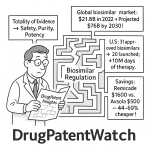
Biologics are large-molecule drugs manufactured in living cells, and their molecular complexity means that no two manufacturing processes produce strictly identical products. The legal and regulatory framework for biosimilar approval, established by the Biologics Price Competition and Innovation Act (BPCIA) of 2009, reflects this: biosimilar approval requires demonstrating ‘no clinically meaningful differences’ from the reference product in terms of safety, purity, and potency, a standard that is necessarily more qualitative than the quantitative 80-125% PK confidence interval required for small-molecule bioequivalence.
The BPCIA creates a two-tier status system. A biosimilar can be approved as ‘biosimilar’ to the reference product without being rated as ‘interchangeable.’ Interchangeability is a higher standard that requires demonstrating that the biosimilar can be expected to produce the same clinical result as the reference product in any given patient, and, for products administered more than once, that the risk of alternating between the biosimilar and the reference product is no greater than the risk of using the reference product alone.
An interchangeable biosimilar can be automatically substituted at the pharmacy counter under state substitution laws, in the same way that an AB-rated small-molecule generic can be substituted. A biosimilar without interchangeability designation cannot be automatically substituted and must compete commercially, requiring prescriber or patient-level decisions to capture market share.
The distinction matters commercially. Sandoz’s Zarxio (filgrastim-sndz), the first biosimilar approved in the U.S. in 2015, achieved interchangeability designation in 2021, six years after its initial approval. During those six years, automatic substitution was unavailable, and market penetration depended on prescriber and payer-level interventions. Amgen’s Amjevita (adalimumab-atti), a biosimilar to AbbVie’s Humira, received interchangeability designation, which it has deployed commercially in the U.S. market that opened to biosimilar competition in January 2023.
The Humira Biosimilar Situation: A Case Study in IP Lifecycle Management
Humira (adalimumab) generated $21.2 billion in global revenue for AbbVie in 2022. Its U.S. market remained free of biosimilar competition until January 2023, despite the core composition patent expiring in 2016, because AbbVie had assembled a patent estate of over 200 additional patents covering formulations, manufacturing processes, dosing regimens, and specific indications. These patents were the subject of settlement agreements with all major biosimilar applicants, under which biosimilar manufacturers received licenses to enter the U.S. market at negotiated dates in exchange for not challenging the remaining patent estate in court.
The first U.S. biosimilar launches in January 2023, by Amgen and Sandoz, did not produce the immediate price collapse seen with small-molecule generic launches. By mid-2023, biosimilar adalimumab was priced at roughly 40-85% discounts to Humira’s list price, but Humira’s net price, after rebates, was already substantially below WAC. The commercial outcome has been mixed, with AbbVie retaining a large portion of the market through rebate strategies that made Humira’s effective payer cost competitive with biosimilar list prices.
The Humira situation illustrates a broader pattern: for high-revenue biologics, the brand manufacturer can deploy rebate strategies that structurally disadvantage biosimilars even after interchangeability is granted, because payer formulary decisions are driven by net cost, not list price, and the brand’s rebate scale is hard for biosimilars to match.
Key Takeaways: Biosimilars
Biosimilar interchangeability is not equivalent to small-molecule AB-rating in its commercial effect. Automatic substitution for non-interchangeable biosimilars does not apply, creating a higher market access burden. The Humira biosimilar launch demonstrated that rebate-based brand defense strategies can significantly slow biosimilar market penetration even after patent resolution. For biosimilar developers, the relevant competitive variable is not interchangeability designation alone but the brand’s net price position relative to biosimilar launch price, accounting for rebates that do not appear in list price data.
Investment Strategy Note
Investors evaluating biosimilar-focused companies, including Sandoz (now independent from Novartis as of 2023), Celltrion, and Samsung Bioepis (a Biogen partnership), should model market penetration scenarios based on net price competition, not list price discounts. For a reference product with 50% list-to-net spread driven by PBM rebates, a biosimilar launched at 40% list price discount may actually be more expensive to the payer on a net basis. Market share projections that ignore the rebate dynamic will systematically overestimate biosimilar penetration in the U.S. market.
Patent Intelligence as a Competitive Weapon
The Orange Book as a Strategic Map
The FDA Orange Book lists every patent that the brand manufacturer has certified as relevant to the approved drug product, including compound patents, formulation patents, method-of-use patents, and metabolite patents. Each listing includes the patent number, expiration date, and, for method-of-use patents, a use code that specifies the patented indication. The patent listing determines which patents require Paragraph IV certifications from ANDA filers, which patents are subject to the 30-month stay, and which exclusivity periods apply.
For a generic IP team, reading the Orange Book for a target molecule is step one of market entry analysis. But the Orange Book tells only part of the story. It does not include process patents, which are not listable in the Orange Book but can still support infringement claims against generic manufacturers. It does not include patents that the brand has decided not to list. It does not include potential citizen petition strategies, where a brand manufacturer files FDA petitions designed to delay ANDA review. And it does not include non-patent exclusivities, including new chemical entity (NCE) exclusivity (five years from approval), new clinical investigation exclusivity (three years from approval for products supported by new clinical studies), and orphan drug exclusivity (seven years from approval for drugs treating rare diseases).
A complete competitive intelligence picture for a generic target requires integrating Orange Book data with USPTO patent database searches, FDA exclusivity listings, citizen petition filings in the FDA docket, Paragraph IV certification history from prior ANDA applicants, and litigation history from PACER.
The 505(b)(2) Pathway: IP Strategy for the Middle Ground
The 505(b)(2) NDA pathway is not a generic route but an abbreviated NDA pathway for new drug applications that rely on existing published literature or the FDA’s prior findings of safety and efficacy for a reference product. The 505(b)(2) applicant must demonstrate that its product is appropriately related to the reference product but can introduce changes in formulation, dosage form, strength, route of administration, indication, or combination. Because the 505(b)(2) product is not seeking to be therapeutically equivalent to the reference product, it cannot receive an AB rating and is not subject to automatic pharmacy substitution.
The strategic value of 505(b)(2) lies in its ability to obtain new patent protection on innovations layered onto existing molecules. A 505(b)(2) applicant who develops a genuinely improved formulation, for example, an extended-release version with a once-daily dosing profile for a drug currently available only twice-daily, can patent that formulation and obtain NCE exclusivity if the reference’s NCE exclusivity has already expired. This is the mechanism by which specialty pharmaceutical companies like Supernus, Assertio (formerly Depomed), and Ironshore Pharmaceuticals built branded product positions on reformulated generics.
From a generic competitive intelligence standpoint, 505(b)(2) products require different analysis than ANDAs. The 505(b)(2) product has its own patent estate, its own exclusivity periods, and typically its own clinical data package supporting a different label. A generic company targeting a 505(b)(2) product must file a standard NDA referencing the 505(b)(2) product as the reference listed drug and conduct the full bioequivalence program relative to the 505(b)(2) formulation, not the original molecule.
Key Takeaways: Patent Intelligence
Complete generic market entry analysis requires integrating Orange Book patent and exclusivity data with USPTO searches, FDA citizen petition monitoring, Paragraph IV litigation history, and non-patent exclusivity tracking. The Orange Book alone does not capture process patents, unlisted patents, or citizen petition strategies. The 505(b)(2) pathway creates branded positions on reformulated generics with their own IP estates. For generic teams targeting 505(b)(2) products, the reference listed drug is the 505(b)(2) product itself, not the original molecule, which changes both the bioequivalence program and the patent challenge analysis.
Investment Strategy Note
Real-time patent intelligence platforms, specifically those that track Orange Book changes on a daily basis, monitor ANDA filing disclosures, and maintain litigation databases with settlement term access, create a direct competitive advantage. Patent expiration dates, exclusivity listings, and Paragraph IV certification histories are the foundational inputs to generic pipeline valuation. For institutional investors analyzing a generic company’s pipeline, the accuracy of projected launch dates is a direct function of the quality of the underlying patent intelligence. A launch date that ignores a pediatric exclusivity extension by six months, or a settlement that pushed a first-filer’s entry date back by 18 months, will overestimate near-term revenue by a corresponding margin.
Global Generic Markets: Regional Dynamics and Regulatory Divergence
North America: The Dominant Market with Structural Pressure
North America accounts for approximately 32-33% of global generic pharmaceutical revenues and is driven primarily by U.S. market dynamics. The U.S. market’s defining characteristics are the Hatch-Waxman framework for small molecules, the BPCIA for biosimilars, the PBM-driven formulary system, and the 180-day exclusivity incentive structure. Canadian generic policy operates differently, with a provincial drug benefit formulary system and price regulation through the Patented Medicine Prices Review Board (PMPRB).
The U.S. generic market is projected to face increasing pricing pressure from consolidation on the buyer side. Express Scripts, CVS Caremark, and OptumRx collectively negotiate on behalf of a majority of U.S. commercial lives. Their combined leverage, and their willingness to use formulary exclusion as a negotiating tool, has contributed to the 60%+ decline in generic drug prices since 2008. Further consolidation in the PBM space is unlikely given current antitrust attention, but the existing concentration already produces near-monopsonistic pricing conditions for commodity generics.
Asia-Pacific: Volume Leadership with Regulatory Complexity
The Asia-Pacific region is the fastest-growing generic market globally, driven by population scale in China and India, increasing insurance coverage in Southeast Asia, and government generic promotion programs across the region. India is simultaneously the world’s largest producer of generic drugs by volume and a growing domestic market, though domestic pricing is subject to government price controls through the National List of Essential Medicines and Drug Price Control Orders enforced by the National Pharmaceutical Pricing Authority (NPPA).
China’s generic market has undergone structural reform under the Volume-Based Procurement (VBP) program, launched in 2018 and expanded substantially since. VBP is a centralized tendering system where provincial or national purchasing groups award multi-year contracts to the lowest-price qualified bidder for specified generic products. The winning bidder secures volume across the procurement group; losers receive nothing. The result has been dramatic price reductions, often 90%+ below pre-VBP prices, and rapid consolidation among Chinese generic manufacturers toward those who can compete at scale.
For multinational generic companies, VBP represents both an opportunity and a structural challenge. The volume is enormous, but the pricing required to win is incompatible with the cost structures of companies that have not invested in low-cost Chinese manufacturing. Indian generic companies with Chinese API sourcing and integrated supply chains are positioned to compete in VBP more effectively than U.S.- or European-based manufacturers.
Europe: Reference Pricing and INN Prescribing
European generic markets are structured differently from the U.S. in two key respects. First, most European countries operate reference pricing systems that link generic reimbursement to the lowest available price in a competitive cluster of therapeutically equivalent drugs. This creates automatic price pressure without requiring the private PBM negotiation infrastructure that characterizes U.S. payer dynamics. Second, several European countries, including the U.K., Sweden, and Denmark, mandate International Nonproprietary Name (INN) prescribing rather than brand-name prescribing, which structurally disadvantages brand loyalty and facilitates generic dispensing.
The European Medicines Agency’s centralized procedure, which produces a single marketing authorization valid across all EU member states, allows generic companies to obtain pan-European approval through a single regulatory process. This reduces the cost and complexity of multi-country European market entry compared to pursuing individual national authorizations in each member state.
Key Takeaways: Global Markets
The global generic market is not uniform. U.S. market dynamics are driven by the Hatch-Waxman framework and PBM consolidation. China’s VBP program has restructured that market around centralized procurement at commodity prices. European reference pricing and INN prescribing create different incentive structures than U.S. PBM formulary management. Generic companies optimizing for global market presence must adapt strategy by region, recognizing that a first-filer strategy built for U.S. success does not translate directly to VBP competition in China or reference pricing competition in Germany.
Full Key Takeaways Summary
The utilization of generic drugs is not a single phenomenon with a single driver. It is the output of an interlocking system that includes IP law, regulatory science, market competition, supply chain economics, PBM power, prescriber behavior, patient psychology, and geopolitics.
On the IP side: Hatch-Waxman’s Paragraph IV mechanism converts patent expiration into active litigation. First-filer exclusivity is the primary financial incentive for challenging patents, worth hundreds of millions of dollars on high-volume molecules. Evergreening through extended-release reformulation, pediatric exclusivity, and method-of-use patents can extend brand effective exclusivity by a decade or more beyond compound patent expiration. Pay-for-delay settlements, particularly no-AG commitments, remain an active tool for delaying generic competition despite post-Actavis antitrust exposure.
On the regulatory side: Bioequivalence science provides a rigorous evidentiary foundation for generic approval for standard oral solid-dose products. For complex drug products, inhaled therapies, locally acting drugs, and biologics, demonstrating equivalence requires product-specific studies that can take a decade and hundreds of millions of dollars, creating a regulatory complexity barrier that functions as effective exclusivity. Biosimilar interchangeability differs structurally from small-molecule AB-rating and does not produce equivalent automatic substitution dynamics at the pharmacy counter.
On the market dynamics side: Generic price erosion post-exclusivity is steep and predictable. Commodity generic economics are under sustained pressure from PBM consolidation and the legacy of post-Hatch-Waxman competitive entry. Complex generics and biosimilars carry higher development costs but more durable competitive positions. The supply chain is geographically concentrated in India and China for API sourcing, creating a structural vulnerability that neither the market nor policy has adequately addressed.
On the human element: Physicians maintain residual skepticism about generic quality that persists despite regulatory assurances. Pharmacists are structurally positioned but operationally constrained to address patient concerns at the dispensing counter. Patients exhibit a well-documented value-action gap where intellectual acceptance of generics does not uniformly translate into personal preference or behavior.
For IP teams, the strategic priority is complete patent intelligence: tracking Orange Book listings, exclusivity dates, citizen petition activity, and settlement disclosures as inputs to market entry timing and litigation strategy. For portfolio managers, the key variable is the composition of the pipeline between commodity generics (low margin, high volume, high competition) and complex generics or biosimilars (high development cost, durable competitive position, higher margin). For R&D leads, the regulatory complexity barrier for complex products is the most defensible source of competitive insulation available in the post-patent generic market.
Copyright notice: This article synthesizes publicly available regulatory, patent, and market data for analytical and educational purposes. Patent expiration dates and exclusivity information should be independently verified through FDA Orange Book, USPTO databases, and DrugPatentWatch’s real-time patent intelligence platform before use in commercial decision-making.