The Eliquis composition patent in the FDA Orange Book expires on November 21, 2026. [1] Bristol Myers Squibb and Pfizer say the earliest date a generic company may launch apixaban in the United States is April 1, 2028. [2] That date is 497 days after the listed patent date (our calculation). Eliquis still sold $14.4 billion worldwide in 2025, 8% more than in 2024. [3]
A forecaster who read only the patent table would have planned for 2026. The settlements said 2028. The same split appears in other drugs, in both directions. Revlimid generics became unrestricted 451 days before the earliest listed patent that remains in the Orange Book. Entresto generics launched in July 2025 while the Orange Book still lists a patent that runs to 2036. Humira’s first biosimilar won FDA approval in September 2016 and reached US patients in January 2023. The core semaglutide patent expired in India and China on March 20, 2026, but the core US patent runs to December 5, 2031.
This article compares listed patent dates with real entry dates for five products. It shows why the two differ, offers a six-clock framework to forecast the difference, and lists the questions a team should ask before it treats an expiration date as an opportunity. DrugPatentWatch compiles many of the records behind this analysis, and the article explains where it fits in the workflow.
The Short Answer: Expiration Dates Mark Legal Risk, Not Revenue Timing
What Is the Difference Between Patent Expiration and Commercial Opportunity?
A patent expiration date is the day a legal right ends. A commercial opportunity is the day a competitor can sell a product and earn a profit. The two days differ because courts, contracts, FDA, and the market each add a separate clock. The clock that ends last sets the real launch date.
The Seven Findings That Matter
Each finding below is a documented fact or a labeled calculation. We list the source after each claim.
Eliquis: the first listed patent expires November 21, 2026. [1] Settling generic companies may launch on April 1, 2028. [2] The launch right comes 497 days after the first listed expiry (calculation).
Revlimid: licenses to settling generic companies stopped being volume-limited on January 31, 2026. [4] The earliest listed patent expires April 27, 2027, and the latest expires March 8, 2028. [5] Unrestricted entry came 451 and 767 days before those dates (calculation).
Entresto: MSN Pharmaceuticals opened the US generic market in late July 2025. [6] The Orange Book lists a patent that expires May 9, 2036. [7] The launch came about 10.8 years before that date (calculation).
Humira: FDA approved the first biosimilar, Amjevita, in September 2016. [8] Amgen launched it in the United States on January 31, 2023. [9] The gap is about six years and four months (calculation).
Semaglutide: the compound patent expired in India on March 20, 2026, and 12 generic makers sold 20 brands by October 9, 2026. [10] The listed US core patent expires December 5, 2031. [11] That date is 5.7 years after the first Indian launch on March 21, 2026 (calculation). [12]
Price: FDA found that generic prices fall about 39% with one generic producer, 54% with two, 79% with four, and more than 95% with six or more. [13]
Revenue: Humira US revenue fell 61.6% from $18.6 billion in 2022 to $7.142 billion in 2024 (calculation). [14][15] Revlimid worldwide revenue fell 75.7% from $12.15 billion in 2020 to $2.951 billion in 2025 (calculation). [16][3]
Orange Book Date vs. Real Entry Date for Three US Blockbusters
The table compares the dates in the Orange Book with the dates on which US generic entry was permitted or began. The gap columns are our calculations. Dates for the Orange Book come from pages we retrieved on October 16, 2026.
Drug (active ingredient)
Company
First listed patent expiry
Last listed patent expiry (with pediatric exclusivity)
US generic entry date
Gap (calculation)
Source
Eliquis (apixaban)
Bristol Myers Squibb and Pfizer
Nov. 21, 2026
Aug. 24, 2031
Apr. 1, 2028 (settling filers)
497 days after first expiry; 1,240 days before last expiry
What Does ‘Patent Expiration’ Mean in the Orange Book?
The Orange Book lists patents that the brand company submits to FDA. BMS states in its annual report that an innovator company must list certain patents that cover the medicine. [4] Each listing shows an expiration date. That date is a legal date. It does not tell you when a generic product can reach a pharmacy.
How Long Does a US Drug Patent Last?
A new US patent lasts 20 years from the date the application was filed. [17] The brand company often files years before FDA approves the drug. This shortens the time on the market. Two mechanisms add time back.
Patent term extension: the five-year and 14-year limits
Patent term extension restores part of the time lost during FDA review. The formula counts only one-half of the time in the testing periods that the statute lists. [18] The extension may not exceed five years. [18] The statute also reduces the extension if the remaining term plus the extension would exceed 14 years after approval. [18]
Pediatric exclusivity: six months added to patents and exclusivities
Pediatric exclusivity adds six months to all existing patents and exclusivities. [17] The Eliquis listing shows the effect. Patent 6,967,208 expires on November 21, 2026, and the entry marked as pediatric exclusivity runs to May 21, 2027. [1]
Which FDA Exclusivities Run Separately From Patents?
FDA exclusivity is a regulatory right. It does not depend on a patent. FDA lists four types with fixed terms: new chemical entity exclusivity (5 years), orphan drug exclusivity (7 years), new clinical investigation exclusivity (3 years), and patent challenge exclusivity (180 days, for ANDAs only). [17]
These rights can end after the last listed patent or before it. The Revlimid listing shows two orphan exclusivities that expire on May 28, 2026. [5] That date is 117 days after unrestricted generic entry began (calculation). [4]
Why Does a Biologic Follow a Different Timeline?
Biosimilars use a different statute. FDA may not make a biosimilar application effective until 12 years after the reference product was first licensed. [19] An applicant may not submit the application until 4 years after that date. [19] Humira shows the effect of these rules. FDA approved Humira in December 2002. [8] Twelve years after that date is December 2014 (calculation). The regulatory bar had ended before the first biosimilar won approval in 2016. Patents and settlement licenses decided the launch date.
Methodology: How We Compared Dates and Calculated Gaps
Data Sources and Retrieval Dates
We analyzed public records for five products: Eliquis, Revlimid, Entresto, Humira, and semaglutide. We added Stelara and Keytruda as shorter cases. We chose products where primary documents gave dates and where the gaps show different mechanisms. The selection is not a random sample. The findings describe these cases and do not describe all drugs.
We took patent and exclusivity dates from the FDA Orange Book patent pages for Eliquis, Revlimid, Entresto, and Ozempic. We retrieved each page on October 16, 2026. We took settlement terms and revenue from SEC filings, company statements, trade press, and law-firm summaries. We took price data from an FDA analysis of generic entries between January 2015 and December 2017. [13]
Calculation Rules and Limits
We counted a listed patent once. We treated a pediatric exclusivity entry as an extension of its parent patent and not as a new patent. We counted days between calendar dates. We converted days to years by dividing by 365.25.
Four limits apply. First, each Orange Book page shows one product strength, and other strengths can differ. Second, some settlement dates are confidential, so we use the dates that companies disclosed. Third, an Orange Book page changes over time, so our dates may differ from later pages. Fourth, an entry date that applies to a settling filer does not apply to a filer that has no license. We label every calculated figure as a calculation.
The Six Clocks: A Framework for Forecasting Generic and Biosimilar Entry
The framework in this section is our original classification. It is not an established industry taxonomy. It sorts the forces that set a launch date into six clocks.
Definition: What Is a Binding Clock?
A binding clock is the clock that blocks a given launch for the longest time. Every product has up to six clocks. The earliest launch date for a given company is the latest date among the clocks that apply to that company. We call this the binding-clock rule.
Clocks 1 to 3: Patent, Exclusivity, and Litigation
Clock 1: the patent clock
The patent clock holds the expiration dates of listed patents, with any patent term extension and pediatric exclusivity. It is the only clock that most databases show. It binds when no other clock ends later.
Clock 2: the regulatory exclusivity clock
This clock holds FDA exclusivities such as orphan drug exclusivity. [17] It binds when a drug has few patents. It can also bind a single indication while a generic launches with the rest of the label.
Clock 3: the litigation clock
A brand company that sues within 45 days of a patent challenge notice can start a 30-month stay. [20] For a new chemical entity challenged in year four, the stay can run to seven and one-half years after approval. [20] Court rulings can end the stay early, as the Entresto case shows.
Clocks 4 to 6: Contract, Approval, and Market
Clock 4: the contract clock
A settlement can grant a license on a fixed date or with a volume cap. This clock replaces the patent clock for the settling company. Eliquis and Revlimid show it.
Clock 5: the approval and supply clock
A generic company needs a regulator to approve its product. It also needs a supply of product that meets quality rules. Canada shows this clock. Novo Nordisk’s data protection ended on January 4, 2026, and Health Canada announced its first generic semaglutide approval on April 29, 2026. That is 115 days later (calculation). [21][22]
Clock 6: the market clock
The market clock holds price erosion and payer rules, plus formulation changes by the brand company. It does not block a launch. It decides whether the launch earns a profit. Later sections measure it.
Which Clock Bound Each Case Study?
Product
Binding clock
Evidence
Source
Eliquis
Contract
Settling filers may launch April 1, 2028, between the 2026 and 2031 listed patent dates.
Eliquis Patent Expiration Timeline: Four Listed Dates and One Launch Date
What Does the Orange Book List for Eliquis?
The Orange Book page for Eliquis (NDA 202155) lists two patents. Patent 6,967,208 covers the drug substance and drug product. Patent 9,326,945 covers the drug product. [1] The table puts each date in order.
From approval to the settled launch date is 15.3 years (calculation). The launch date falls between the two patent dates and equals none of them.
What Did the Courts Decide?
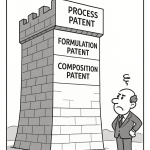
The Federal Circuit affirmed a district court decision on September 3, 2021. The district court had ruled in August 2020. [2] The ruling dealt with the composition patent and the formulation patent. [2] Four companies took their arguments to court: Sigmapharm, Sunshine Lake, Hec Pharm, and Unichem. [27] A law-firm summary reports that the asserted claims of both patents were found infringed and not invalid. [28]
BMS describes the result in its annual report. It states that the generic companies with which it settled are permitted to launch in 2028, subject to additional challenges. [4]
Why Does the Entry Date Depend on the Filer?
A drug has no single entry date. Each filer has its own date. The binding-clock rule explains the difference.
Settling filers
A settling filer holds a license. Its binding clock is the contract clock. The license date is April 1, 2028. [2] The statement from BMS and Pfizer adds that the date is subject to additional appeals and challenges. [2]
Litigating filers
A filer that lost in court holds no license. Its binding clock is the patent clock. The formulation patent expires on February 24, 2031, or August 24, 2031 with pediatric exclusivity. [1] The filer can still appeal, redesign its product, or file a new challenge. Each route has its own timeline.
The patent calendar did not cap revenue. Eliquis worldwide revenue rose from $9.17 billion in 2020 to $14.443 billion in 2025, a 57.5% increase (calculation). [27][3] US revenue grew 6% in 2025 to $10.239 billion. [3]
Revlimid Generic Entry: A Volume-Limited Staircase
What Did the Revlimid Settlements Fix?
Sun Pharma announced a settlement with Celgene on June 22, 2021. Sun could sell limited quantities of generic Revlimid after March 2022, if FDA approved its product. From January 31, 2026, Sun could sell an unlimited quantity. The exact launch date and the volume were confidential. [16]
BMS confirms the structure. Certain generic companies have begun to market lenalidomide under volume-limited licenses, and the licenses are no longer volume-limited from January 31, 2026. [4] I-MAK, a patent reform group, reports that settling generic companies could sell no more than 7% of the total market from early 2022. [29] I-MAK also reports that Celgene and BMS filed 206 patents on Revlimid and that 117 were granted. [29]
The Orange Book now lists two patents. Patent 7,465,800 expires on April 27, 2027, and patent 8,741,929 expires on March 8, 2028. [5] The licenses ended 451 and 767 days before those dates (calculation). The settlement date replaced the patent date for every licensed company.
What Happened to Revlimid Revenue Before and After Unrestricted Entry?
Revlimid worldwide revenue was $12.15 billion in 2020. [16] It was $5.773 billion in 2024, a fall of 52.5% before the volume limits ended (calculation). [3] It was $2.951 billion in 2025, a fall of 49% from 2024. [3] Fourth-quarter worldwide revenue fell from $1.339 billion in 2024 to $602 million in 2025. [3]
The revenue curve followed the license schedule. It did not wait for the patent schedule. A forecast built on the 2027 and 2028 patent dates would have missed most of the decline.
Entresto Generic Launch: What Happens If a Court Ends the Wait Early?
How Did Pediatric Exclusivity Set the July 2025 Date?
The ‘659 patent had expired, but it received pediatric exclusivity that extended it to mid-July 2025. [23] The Federal Circuit reversed the district court’s invalidity ruling on that patent. [30] That ruling kept the patent alive until the pediatric period ended. The court also denied Novartis an injunction pending appeal in the week of July 25, 2025. [30] MSN opened the US generic market in late July 2025. [6]
A second patent, the ‘918 patent, did not stop MSN. After a bench trial, the district court found that MSN did not infringe it. [30]
The Orange Book still lists six more patents. The earliest expires on November 8, 2026, and the latest expires on May 9, 2036. [7] Generic entry happened while those listings stood. The listing is a claim by the brand company. A court decides whether it blocks a product.
Ron Daignault, quoted in a Jenner & Block profile, said that patients would have access to affordable heart medication ‘over a year earlier’ than the date other generic makers had settled for. [30] The profile states that those makers settled to enter in late 2026. [30]
What Did Early Entry Do to Entresto Sales?
Entresto sold more than $7.8 billion for Novartis in 2024. [23] Global sales fell from $2.36 billion in the second quarter of 2025 to $1.88 billion in the third quarter, a fall of 20.3% (calculation). [6] US sales in the third quarter fell 13% year over year to below $800 million. [6] That quarter held about two months of generic competition (calculation).
The decline grew. Global Entresto sales in the second quarter of 2026 were $1.18 billion, down 50%, after a 42% fall in the first quarter. Novartis expects a sales decline of about $4 billion this year from generic competition. [31]
Humira Biosimilar Timeline: Approval in 2016, Launch in 2023
How Large Was the Humira Patent Estate?
I-MAK counted 247 US patent applications for Humira and found that 89% were filed after FDA approval. [24] It also reports that the first European biosimilar entry came in October 2018 and the first US entry came in January 2023. [24] The US launch came more than four years after the European launch (calculation).
The regulatory bar did not explain the gap. It ended in December 2014 (calculation). Patents and a settlement license decided the US date. Amgen and AbbVie settled in 2017, and AbbVie agreed to grant licenses worldwide. [9]
What Did Humira Revenue Do After Entry?
Humira US revenue was $18.6 billion in 2022 and $12.2 billion in 2023, a fall of one-third. [14] It was $7.142 billion in 2024, down 41.3%. [15] US revenue lost $11.458 billion in two years, a fall of 61.6% (calculation).
AbbVie replaced much of it. Skyrizi earned $11.718 billion and Rinvoq earned $5.971 billion in 2024, a combined $17.689 billion (calculation). [15] Humira worldwide revenue that year was $8.993 billion. [15]
Semaglutide Patent Expiration by Country: One Molecule, Four Timelines
Semaglutide shows that a patent date is a national date. The same compound has different dates and different launch paths in each market.
India: Generic Launches One Day After Patent Expiry
The compound patent expired in India on March 20, 2026. [10] Dr. Reddy’s, Zydus, Alkem, Sun Pharma, and Glenmark launched products on March 21, 2026. [12] Zydus agreed to share marketing rights with Lupin. [12] Launch prices included prices from about INR 1,800 per month (Alkem) and about INR 4,200 per month (Dr. Reddy’s). [12]
By October 9, 2026, 12 generic makers sold 20 brands, with monthly prices from Rs 1,290 to about Rs 8,000. [10] In April 2026 the semaglutide market was Rs 88 crore, and generics held Rs 44 crore of it, or 50% by value. Generics sold 137,000 of 170,000 injectable units, or 80.6% (calculation). [10]
Novo Nordisk cut prices. From April 1, 2026 the starting dose of Ozempic and Wegovy cost Rs 1,415 per weekly shot. The Ozempic starting dose fell about 36% and the Wegovy starting dose fell about 48%. [10] Entry opened the market, and the brand company changed its price in response.
Canada: A Lapsed Patent and an Approval Queue
Canadian patent 2,601,784 was the compound patent. Novo Nordisk filed it on March 20, 2006, and it would have expired on March 20, 2026. It lapsed because the company did not pay the 2019 maintenance fee of CAD 450. [21] Data protection ran until January 4, 2026. [21] No semaglutide patent sits on the Canadian Patent Register, so the linkage regime could not trigger an automatic stay. [21]
The patent clock ended in 2019. The approval clock then set the date. Dr. Reddy’s announced approval on April 29, 2026, and Apotex followed on May 1, 2026. [22] On June 29, 2026, Health Canada announced that Apotex’s Sevmia was the first generic semaglutide for weight loss and the third generic semaglutide product it had approved. It was reviewing six other submissions. [32]
China and the United States: Two Different Waits
The China patent expired on March 20, 2026. As of October 9, 2026, the regulator had approved no generic semaglutide, and 10 to 12 applications were under review. Novo Nordisk says Ozempic holds data protection in China until April 2027. [10]
The United States has a patent wait. The Ozempic Orange Book page lists 16 patent entries. Patent 8,129,343 covers the drug substance and drug product and expires on December 5, 2031. The latest entry, patent 10,335,462, expires on June 21, 2033. [11] Eleven of the 16 entries show dates on or before August 3, 2026, so they have passed (calculation). [11] Thirteen carry a ‘Delist Requested’ flag. [11] The core US date is 5.7 years after the first Indian launch (calculation). We found no source that reports a marketed US generic semaglutide product.
Stelara and Keytruda: Clustered Entry and Moving Targets
Stelara: Four Settlement Dates in 104 Days
Settlements can bring several entrants to the market at once. Stelara shows it. Johnson & Johnson reached settlements with biosimilar makers on these dates: Amgen could launch on January 1, 2025, and Samsung Bioepis on February 22, 2025. Teva and Alvotech could launch no later than February 21, 2025, and Fresenius Kabi and Formycon no later than April 15, 2025. [25] The window from the first date to the last is 104 days (calculation).
Stelara earned $9.7 billion for J&J in 2022. [25] A market of that size drew many entrants into one narrow window. The timing of the first entrant said little about the number of rivals that would arrive within four months (analysis).
Keytruda: What Happens If the Brand Changes the Formulation Before 2028?
Merck expects the intravenous form of Keytruda to lose patent protection in 2028. [33] FDA approved a subcutaneous form, Keytruda Qlex, in September 2025 for 38 indications. [34] Merck projects that early-stage patients and patients on oral combinations will make up about 50% of the Keytruda patient population by 2028. [33] Those patients suit the subcutaneous form.
The new form faces its own patent fight. Halozyme sued Merck on April 24, 2025 and alleged that Qlex infringes 15 patents. [34] On May 12, 2026 the Patent Trial and Appeal Board found claims 1 to 4 and 8 to 21 of Halozyme’s patent 11,952,600 invalid. [34] Merck filed post-grant review petitions against 14 other Halozyme patents, and the Board instituted 13. [34]
A biosimilar developer that plans for 2028 must ask which product will hold the patients in 2028. The patent date for the old product does not answer that question (analysis).
Price Erosion and the Value of the Entry Window
How Much Do Generic Prices Fall as Competitors Enter?
FDA analyzed generic entries from January 2015 to December 2017. Median generic prices fell about 39% below the brand price with one generic producer, 54% with two, 79% with four, and more than 95% with six or more. [13]
The result is simple. Each added competitor lowers the price the first entrant can charge.
Scenario Analysis: Entrant Revenue at 1, 2, 4, and 6 Competitors
The table is an illustration, not a forecast. It uses the FDA median figures. It sets the brand price at 100. It also assumes that FDA medians apply to one product and that costs stay equal. It ignores volume effects other than the volume an entrant needs to hold its revenue.
Generic producers
Median price fall (FDA)
Generic price if brand = 100 (calculation)
Volume needed to match one-producer revenue (calculation)
1
39%
61
1.0x
2
54%
46
1.3x
4
79%
21
2.9x
6 or more
More than 95%
Below 5
More than 12x
The source for the first two columns is the FDA analysis. [13] DrugPatentWatch lists 25 ANDAs in one Eliquis Paragraph IV entry. [26] A filing is not a launch, but the count shows that the six-producer case is possible for Eliquis (analysis).
How Does Medicare Price Negotiation Change the Opportunity?
Medicare negotiated prices took effect on January 1, 2026. The Eliquis price is $231 for a 30-day supply, against a 2023 list price of $521. That is a 56% discount. [35] The law defines a qualifying drug as one that is not the listed drug for a generic approved and marketed under the ANDA pathway. [36]
For a generic company, the brand price in Medicare is already lower when entry starts. This lowers the price gap that a generic product can offer (analysis).
Why Orange Book Dates Mislead
FTC Challenges to Orange Book Listings
On May 21, 2025, the Federal Trade Commission sent seven warning letters that challenged 200 Orange Book patent listings across 17 NDAs. The patents cover inhalers and drug delivery devices. [37] A listing that fails the challenge can leave the Orange Book. A listing that stays can start a 30-month stay. A forecaster who counts both kinds of listing in the same way overstates the barrier.
The Ozempic page shows a related pattern. Thirteen of its 16 entries carry a ‘Delist Requested’ flag. [11] The flag alone does not say why the request was made. It does tell the reader to check the status of each entry before counting it.
Skinny Labels After Hikma v. Amarin
On June 4, 2026, the Supreme Court unanimously reversed the Federal Circuit in Hikma Pharmaceuticals USA Inc. v. Amarin Pharma, Inc. Justice Jackson wrote the opinion. The Court held that the complaint did not plausibly allege induced infringement. A skinny label, together with the company’s website statements and press releases, was not affirmative conduct that encouraged infringement of the patented method of use. [38] A method-of-use patent therefore blocks a carved-out generic launch less than a date-only reading suggests (analysis).
What This Means for Generic Manufacturers, Biosimilar Developers, Brand Manufacturers, and Investors
What This Means for Generic Manufacturers
Plan for a date per filer. The Eliquis case shows a settling filer with a 2028 date and a litigating filer with a 2031 patent. [2][1] Build the launch case on the binding clock and not on the first patent date. Then test the case against the price table: the value of the window falls fast as filers enter. [13]
What This Means for Biosimilar Developers
The Humira case shows that approval and launch can sit more than six years apart. [8][9] Include the settlement path in the plan. Also track the formulation of the reference product, as the Keytruda case shows. [34]
What This Means for Brand Manufacturers
Revlimid and Humira show that a brand company can control the shape of the decline. Revlimid revenue fell by half before its licenses became unrestricted. [3] AbbVie replaced much of its Humira decline with two newer products. [15] The patent date is one input to the plan. The contract schedule and the next product matter more.
What This Means for Analysts and Investors
A revenue model that reads one patent date can miss the real decline by years. Entresto sales fell 50% in the second quarter of 2026, although the Orange Book still lists patents to 2036. [31][7] Check each model for the binding clock.
How to Screen a Patent Expiration Date Before You Treat It as an Opportunity
Eight Questions Before You Plan a Launch
Legal questions
Which patents are listed, and does each listing have a pending challenge?
Do pediatric exclusivity or other FDA exclusivities extend the date?
Did a court rule on the patents, and who won?
Does the filer hold a settlement license, and what are its terms?
Commercial questions
Has the regulator approved the product, and is supply ready?
How many other filers can enter in the same window?
Has the brand company changed the formulation or the price?
Do payer rules change the price gap at entry?
Where DrugPatentWatch Fits in the Workflow
DrugPatentWatch collects patents, exclusivities, Paragraph IV challenges, and litigation by drug. Its Eliquis page lists 25 ANDAs in one Paragraph IV entry dated December 28, 2016. It also states that settlement entry rights generally begin on April 1, 2028, subject to the individual agreements. [26] Use it to find the records quickly. Then confirm each date in the Orange Book, court dockets, and company filings. A database date is a lead. A primary document is the proof.
Key Takeaways
The first listed Eliquis patent expires 497 days before the earliest permitted generic launch (calculation). [1][2]
Revlimid licenses became unrestricted 451 days before the earliest listed patent expiry (calculation). [4][5]
Entresto generics launched in July 2025, and the Orange Book lists a patent to 2036. [6][7]
Humira’s first biosimilar took about six years and four months to move from approval to US launch (calculation). [8][9]
Semaglutide has four timelines in four markets. [10][32][11]
Generic prices fall about 39% with one producer and more than 95% with six or more. [13]
The binding clock, not the patent clock, sets the launch date (our framework).
FAQ
What is a 30-month stay, and when does it start?
A 30-month stay delays FDA approval of a generic product while the brand company’s patent suit runs. It can start when the brand company sues within 45 days of the patent challenge notice. For a new chemical entity challenged in year four, the stay can run to seven and one-half years after approval. [20]
What is the 180-day exclusivity period?
FDA lists patent challenge exclusivity as a 180-day right that is open to ANDA applicants only. [17] FDA lists a separate 180-day right for competitive generic therapy. [17]
When can a generic company file an application for a new chemical entity?
New chemical entity exclusivity bars a generic application for five years after approval. An application that contains a patent challenge may be submitted after four years. [20] Patent challenges therefore start the litigation clock early.
How soon can a biosimilar win approval after the reference product?
FDA may not make a biosimilar application effective until 12 years after the first licensure of the reference product. An applicant may not submit the application until 4 years after that date. [19]
Which drugs can Medicare negotiate, and when does eligibility end?
A small-molecule drug must have been approved for at least 7 years, and a biologic must have been licensed for at least 11 years. A drug does not qualify if it is the listed drug for a generic that is approved and marketed. A biologic does not qualify if it is the reference product for a biosimilar that is licensed and marketed. [36]
What does ‘permitted to launch’ mean in a settlement?
It means the brand company licenses the settling filer to launch on a stated date. The date is conditional. BMS states that its settling generic companies are permitted to launch in 2028, subject to additional challenges. [4] The BMS and Pfizer alliance used the same condition for the April 1, 2028 date. [2]
How do I read a use code in the Orange Book?
A use code names the approved use that a listed patent covers. The Ozempic page uses code U-2202 for adjunct use with diet and exercise for glycemic control in adults with type 2 diabetes. [11] The Revlimid page uses code U-1983 for the treatment of mantle cell lymphoma. [5] Check whether the proposed generic label includes the coded use.
What is the new patient population exclusivity listed for Eliquis?
The Orange Book lists a new patient population exclusivity for Eliquis through April 17, 2028, and through October 17, 2028 with pediatric exclusivity. [1] The listing ties to one patient population. A generic filer must ask whether its label can omit that population (legal analysis needed).
How many companies challenged Eliquis, and how many went to court?
DrugPatentWatch lists 25 ANDAs in one Paragraph IV entry for Eliquis dated December 28, 2016. [26] Four companies took their arguments to court: Sigmapharm, Sunshine Lake, Hec Pharm, and Unichem. [27]
How much of a brand’s lost revenue does the first biosimilar capture?
Very little in the first year of Humira. Amjevita earned $126 million in US sales in 2023, while Humira US revenue fell by more than $6 billion. [14] Amjevita’s sales equal about 2% of that fall (calculation). The brand’s loss does not become the entrant’s revenue.
References
U.S. Food and Drug Administration. (2026, October 16). Orange Book: Patent and exclusivity data for Eliquis, NDA 202155, product 001 [Database page retrieved October 16, 2026]. https://www.accessdata.fda.gov/scripts/cder/ob/patent_info.cfm?Product_No=001&Appl_No=202155&Appl_type=N
Bristol Myers Squibb-Pfizer Alliance. (2021, September 3). Bristol Myers Squibb-Pfizer Alliance pleased with decision of U.S. Court of Appeals for the Federal Circuit [Press release]. Pfizer. https://www.pfizer.com/news/announcements/bristol-myers-squibb-pfizer-alliance-pleased-decision-us-court-appeals-federal
Bristol-Myers Squibb Company. (2026, February 5). Fourth quarter and full year 2025 financial results [Exhibit 99.1, Form 8-K]. U.S. Securities and Exchange Commission. https://www.sec.gov/Archives/edgar/data/14272/000001427226000002/a2025q4ex991.htm
Bristol-Myers Squibb Company. (2025). Form 10-K for the fiscal year ended December 31, 2024. U.S. Securities and Exchange Commission. https://www.sec.gov/Archives/edgar/data/14272/000001427225000039/bmy-20241231.htm
U.S. Food and Drug Administration. (2026, October 16). Orange Book: Patent and exclusivity data for Revlimid, NDA 021880, product 001 [Database page retrieved October 16, 2026]. https://www.accessdata.fda.gov/scripts/cder/ob/patent_info.cfm?Product_No=001&Appl_No=021880&Appl_type=N
Fierce Pharma. (2025, October 28). Newer drugs came to Novartis’ aid as 2 top-selling blockbusters stalled in Q3. https://www.fiercepharma.com/pharma/newer-drugs-came-novartis-aid-2-top-selling-blockbusters-stalled
U.S. Food and Drug Administration. (2026, October 16). Orange Book: Patent and exclusivity data for Entresto, NDA 207620, product 001 [Database page retrieved October 16, 2026]. https://www.accessdata.fda.gov/scripts/cder/ob/patent_info.cfm?Product_No=001&Appl_No=207620&Appl_type=N
U.S. Food and Drug Administration. (2016, September). FDA approves Amjevita, a biosimilar to Humira [Press announcement]. https://www.fda.gov/news-events/press-announcements/fda-approves-amjevita-biosimilar-humira
Goodwin Procter LLP. (2023, February). Amgen launches Amjevita, first biosimilar to Humira, in the United States. Big Molecule Watch. https://www.goodwinlaw.com/en/insights/blogs/2023/02/amgen-launches-amjevitafirst-biosimilar-to-humira-in-the-united-states
BioPharma APAC. (2026, October 9). Semaglutide generics, six months in: Every launch in India, every price, and where China stands. https://biopharmaapac.com/analysis/23/8540/semaglutide-generics-six-months-in-every-launch-in-india-every-price-and-where-china-stands.html
U.S. Food and Drug Administration. (2026, October 16). Orange Book: Patent and exclusivity data for Ozempic, NDA 209637, product 001 [Database page retrieved October 16, 2026]. https://www.accessdata.fda.gov/scripts/cder/ob/patent_info.cfm?Product_No=001&Appl_No=209637&Appl_type=N
Pearce IP. (2026, March 21). Generic semaglutide launches in India, including by Dr Reddy’s, Zydus, Alkem, Sun Pharma & Glenmark. https://www.pearceip.law/2026/03/21/generic-semaglutide-launches-in-india-including-by-dr-reddys-zydus-alkem-sun-pharma-glenmark/
U.S. Food and Drug Administration. (2019, December). Generic competition and drug prices: New evidence linking greater generic competition and lower generic drug prices. Center for Drug Evaluation and Research. https://www.fda.gov/media/133509/download
Managed Healthcare Executive. (n.d.). AbbVie plays its ace cards against Humira’s decline. https://www.managedhealthcareexecutive.com/view/abbvie-plays-its-ace-cards-against-humira-s-decline
AbbVie Inc. (2025). AbbVie reports full-year and fourth-quarter 2024 financial results [Press release]. https://investors.abbvie.com/news-releases/news-release-details/abbvie-reports-full-year-and-fourth-quarter-2024-financial
Fierce Pharma. (2021, June 22). Bristol Myers settles with Sun Pharma for limited Revlimid generic launch in 2022. https://www.fiercepharma.com/manufacturing/bristol-myers-settles-sun-pharma-for-limited-revlimid-generic-launch-2022
U.S. Food and Drug Administration. (n.d.). Frequently asked questions on patents and exclusivity. https://www.fda.gov/drugs/development-approval-process-drugs/frequently-asked-questions-patents-and-exclusivity
35 U.S.C. § 156. Extension of patent term. Legal Information Institute, Cornell Law School. https://www.law.cornell.edu/uscode/text/35/156
42 U.S.C. § 262. Regulation of biological products. Legal Information Institute, Cornell Law School. https://www.law.cornell.edu/uscode/text/42/262
21 U.S.C. § 355. New drugs. Legal Information Institute, Cornell Law School. https://www.law.cornell.edu/uscode/text/21/355
Patent Lawyer Magazine. (n.d.). The semaglutide story: Highlighting the need to maintain patent protection in Canada. https://patentlawyermagazine.com/the-semaglutide-story-highlighting-the-need-to-maintain-patent-protection-in-canada/
Pearce IP. (2026, April 29). First generic Ozempic (semaglutide) approved in Canada for Dr. Reddy’s, Apotex. https://www.pearceip.law/2026/04/29/first-generic-ozempic-semaglutide-approved-in-canada-for-dr-reddys-apotex/
IP Fray. (2025, June 17). Novartis and MSN settle part of chronic heart failure patent fight, but key patent remains. https://ipfray.com/novartis-and-msn-settle-part-of-chronic-heart-failure-patent-fight-but-key-patent-remains/
I-MAK. (2020, October 6). Report on Humira patenting (revised edition). https://www.i-mak.org/wp-content/uploads/2020/10/i-mak.humira.report.3.final-REVISED-2020-10-06.pdf
Fierce Pharma. (2023, November 30). With J&J settlement, Samsung Bioepis and Sandoz lock down Stelara biosimilar license. https://www.fiercepharma.com/pharma/jj-settlement-samsung-and-sandoz-lock-down-stelara-biosimilar-license
DrugPatentWatch. (n.d.). Eliquis (apixaban): Patents, exclusivity, and generic entry. https://www.drugpatentwatch.com/p/tradename/ELIQUIS
Fierce Pharma. (2021, September 7). Bristol Myers, Pfizer score another win in their Eliquis patent defense, protecting the blockbuster until 2028. https://www.fiercepharma.com/pharma/bristol-myers-pfizer-score-another-win-their-eliquis-defense-protecting-blockbuster
Finnegan. (2021, September 27). Federal Circuit crystallizes BMS apixaban district court win. IP FDA Blog. https://www.finnegan.com/en/insights/blogs/ip-fda-blog/federal-circuit-crystallizes-bms-apixaban-district-court-win.html
I-MAK. (2025, April 4). How Celgene and Bristol Myers Squibb used volume restrictions to delay Revlimid competition. https://www.i-mak.org/2025/04/04/how-celgene-and-bristol-myers-squibb-used-volume-restrictions-to-delay-revlimid-competition/
Jenner & Block. (2025, July 25). Litigator of the week: Clearing the path for a potential July 2025 launch [Profile, PDF]. https://www.jenner.com/a/web/aJ7xKmaUxVkttT5mdYgkkq/litigator-of-the-week_clearing-the-path-for-a-potential_july-2025.pdf
Health Canada. (2026, June 29). Canada approves first generic semaglutide for weight loss [News release]. https://www.canada.ca/en/health-canada/news/2026/06/canada-approves-first-generic-semaglutide-for-weight-loss.html
Fierce Pharma. (n.d.). In patent clash over injectable Keytruda, Merck and Halozyme dig in for a fight. https://fiercepharma.com/pharma/patent-clash-over-injectable-keytruda-merck-and-halozyme-dig-fight
Pearce IP. (2026, May 12). MSD invalidates US Halozyme patent in SC pembrolizumab dispute. https://www.pearceip.law/2026/05/12/msd-invalidates-us-halozyme-patent-in-sc-pembrolizumab-dispute/
Centers for Medicare & Medicaid Services. (n.d.). Fact sheet: Negotiated prices for initial price applicability year 2026. https://www.cms.gov/files/document/fact-sheet-negotiated-prices-initial-price-applicability-year-2026.pdf
42 U.S.C. § 1320f-1. Selection of negotiation-eligible drugs. Legal Information Institute, Cornell Law School. https://www.law.cornell.edu/uscode/text/42/1320f-1
IPWatchdog. (2025, May 22). FTC renews campaign to remove ‘junk’ inhaler and device patents from Orange Book listings. https://ipwatchdog.com/2025/05/22/ftc-renews-campaign-remove-junk-inhaler-device-patents-orange-book-listings/
American Intellectual Property Law Association. (2026, June 4). Supreme Court issues unanimous decision in Hikma Pharmaceuticals USA Inc. v. Amarin Pharma, Inc. https://www.aipla.org/detail/news/2026/06/04/supreme-court-issues-unanimous-decision-in-hikma-pharmaceuticals-usa-inc.-v.-amarin-pharma–inc