Merck reports that the main US patent on Keytruda expires in 2028, and the same table shows 2031 for the EU and 2032 to 2033 for Japan [1]. One drug, three dates, and a list of 500 drugs holds 500 such puzzles. A list of expiry dates is a starting point. It is not a forecast.
This article explains what to do after a screen returns 500 drugs with patents that expire in the next five years. It uses public records from the FDA, the SEC, the Centers for Medicare and Medicaid Services (CMS), and a federal appeals court. It also uses five drug cases to show where a raw expiry date and the real market date part ways. The 500-drug list in the title is a planning scenario. I did not screen a specific list of 500 drugs for this article.
The Short Answer: Cut the List by Date, Challenger, and Cash
After you find 500 drugs, you remove most of them. You check each patent date against a primary source, look for legal challengers, test whether a rival can make the product, and estimate the revenue left. Then you check whether federal price rules change the timeline. The drugs that survive all five checks are your real targets.
What a 500-Drug Expiry List Does Not Tell You
A patent date does not tell you when a generic or biosimilar will launch. Settlements, court rulings, exclusivity periods, manufacturing limits, and Medicare price rules all move the real date. In the Eliquis case, the brand owners stated that the earliest generic launch date is April 1, 2028, and that date depended on further appeals [2].
The size of the list is also a warning sign. Evaluate counted more than 400 brands that face expiry or loss of exclusivity in its window, and 68 of them are blockbusters at expiry, according to a summary on DrugPatentWatch [15]. A list of 500 is larger than that count. It probably contains patents that do not block anyone.
The Five Findings That Matter
These findings come from the sources cited in this article. Findings marked as analysis are my own calculations.
Keytruda has US, EU, Japan, and China patent expiry dates that differ by up to five years: 2028, 2031, 2032 to 2033, and 2028 [1].
Entresto net sales fell 43% in Q4 2025 after US generic entry in Q3 2025, but fell only 1% for the full year [6]. A full-year figure hides the cliff.
Stelara sales fell 41.3% to $6.08 billion in 2025 [7]. Analysis: that implies 2024 sales of about $10.36 billion.
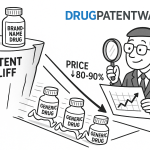
The FDA found that median generic prices fall to 61.4% of the pre-entry brand price with one generic maker and to 1.0% with ten or more (AMP basis, entries from 2015 to 2017) [3].
Eliquis has a Medicare negotiated price of $231 for a 30-day supply, 56% below its $521 list price, effective January 1, 2026 [4]. Analysis: that price applies for 27 months before the earliest stated generic date of April 1, 2028.
What Does “Patent Expiring” Mean for Generic Entry?
A patent expiry date is the last day a listed patent can block a competitor. Generic entry depends on every barrier ending, not on one date. Patents, FDA exclusivity periods, court orders, and settlement terms each act as a separate barrier.
Definition: Loss of Exclusivity (LOE)
Loss of exclusivity (LOE) is the date on which the last barrier to competition ends. The barrier can be a patent, an FDA exclusivity period, or a contract. Analysts use LOE for the market event and “patent expiry” for the legal one. They are often different dates.
Orange Book Patents vs. FDA Exclusivity
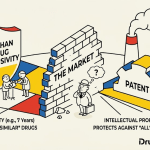
The Orange Book lists approved drug products and their patent and exclusivity information. FDA states that it will not accept or approve applications that a qualifying exclusivity blocks [17]. Patents work differently. FDA decides the approval date of an ANDA from the applicant’s patent certifications [17].
FDA Exclusivity Types and Lengths
FDA lists these exclusivities in its patent and exclusivity guidance: new chemical entity exclusivity (5 years), new clinical investigation exclusivity (3 years), orphan drug exclusivity (7 years), patent challenge exclusivity (180 days, ANDAs only), and pediatric exclusivity (6 months added to existing patents and exclusivity) [10].
Protection
Length
Who holds it
Source
New chemical entity (NCE) exclusivity
5 years
NDA holder
[10]
New clinical investigation exclusivity
3 years
NDA holder
[10]
Orphan drug exclusivity
7 years
NDA holder
[10]
Patent challenge (PC) exclusivity
180 days
Qualifying ANDA applicant
[10]
Competitive generic therapy (CGT) exclusivity
180 days
Qualifying ANDA applicant
[10]
Pediatric exclusivity
6 months, added to existing protection
NDA holder
[10]
Why Biologics Sit Outside the Orange Book
The Orange Book covers prescription and over-the-counter drug products and discontinued drug products. It has four parts [17]. Biologics follow a separate pathway. FDA keeps a list of approved biosimilars, and that list held 89 entries on October 5, 2026 [13]. If your 500-drug list mixes small molecules and biologics, split it first. The legal tools differ.
Methodology: How This Article Built Its Numbers
This section states what data I used, how I handled it, and where it is weak. A reader can repeat each calculation from the cited figures.
Sources and As-Of Date
I collected facts on October 16, 2026. I used SEC filings (Merck Form 10-K for fiscal 2025, Novartis Form 6-K for Q4 2025), FDA documents, CMS fact sheets, a Federal Circuit decision as described by a law firm, and press releases from companies. I used secondary sources only for context. Where I relied on a secondary source for a figure, the text names it.
Derived Figures and Limits
Every figure labeled “analysis” is my own arithmetic on cited inputs. No source reports it. I did not pull the full Orange Book, so I make no count of patents across all 500 drugs. Some inputs are old. The BMS and Pfizer statement on Eliquis dates from September 2021 [2], and the FDA price study covers generic entries from 2015 to 2017 [3]. Check current status before you act on any date.
Gate 1: How Do You Verify a Patent Expiration Date?
You verify an expiration date by reading the patent type, the listing, and any extension. Each drug on the list needs its blocking patent identified. The blocking patent is the one with the latest valid date that a generic must avoid or defeat.
Compound, Formulation, and Method-of-Use Patents
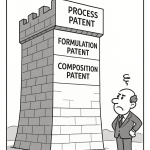
A compound patent claims the active ingredient. A formulation patent claims how the drug is made up. A method-of-use patent claims a medical use. Compound patents are the hardest to design around. In the Eliquis case, a composition of matter patent (US 6,967,208) and a formulation patent (US 9,326,945) were both found valid and infringed by the Federal Circuit in September 2021 [2].
Patent Term Extension: The Arithmetic
US law lets a patent owner recover some of the time lost to FDA review. Under 35 U.S.C. § 156, the extension cannot exceed five years, and the total patent term after approval cannot exceed fourteen years. Only half of the testing phase counts, and the full review phase counts [12]. When a screen shows an expiry date, check whether the date already includes the extension.
Pediatric Exclusivity Adds Six Months
Pediatric exclusivity attaches to existing patents and exclusivity and adds 6 months [10]. It does not stand alone. A drug with a patent date in March can have an effective barrier that runs to September.
Why Not Every Listed Patent Blocks a Generic: Teva v. Amneal
On December 20, 2024, the Federal Circuit held that device patents that do not claim the active ingredient cannot be listed in the Orange Book. The court affirmed an order that required Teva to delist five patents on ProAir HFA inhaler components, and it cited 21 U.S.C. § 355(b)(1)(A)(viii) [9]. This matters for your screen. Some patents in older records may no longer block anyone, and some may face challenges to their listing.
Gate 2: Who Is Challenging the Patents? Paragraph IV and ANDA Litigation
A drug with a challenger is more likely to lose exclusivity early than a drug with none. Generic firms challenge patents by filing a Paragraph IV certification with an abbreviated new drug application (ANDA). The certification says the patent is invalid or not infringed.
How a Paragraph IV Certification Starts the Clock
After the generic firm gives notice, the brand company has 45 days to sue. A timely suit triggers a 30-month stay on FDA approval of the ANDA, with exceptions [18]. The statute also contains a provision that extends the stay in some cases until seven and one-half years have passed since NDA approval [18]. Read the docket, not only the headline.
What Is 180-Day Exclusivity and Who Gets It?
Patent challenge exclusivity gives a qualifying first ANDA applicant 180 days in which FDA does not approve later ANDAs for the same drug [10]. A list that shows only expiry dates will not show which firm holds this right.
Authorized Generics and the First Filer
A brand company can also sell an authorized generic. I did not verify a current figure for how much that cuts first-filer revenue, so I give none. Note it as a risk for each drug.
Settlement Dates: The Eliquis Example
Some patent cases end in a settlement with a fixed entry date. For Eliquis, the BMS-Pfizer Alliance stated in September 2021 that generic makers may launch their apixaban products no earlier than April 1, 2028, subject to additional appeals and challenges [2]. When you plan a launch or a defense, a court or settlement date outranks a patent estimate.
Gate 3: Can Anyone Make It? Generic Capacity, Biosimilars and Manufacturing
A drug with no capable rival stays expensive even after its patents end. Check how hard each product is to copy. Injectables, inhalers, and biologics need more work than a tablet.
How Many ANDAs Does FDA Actually Approve?
In fiscal year 2025, FDA approved 689 original ANDAs and issued 250 tentative approvals, according to Lachman Consultants’ summary of the official statistics. The same report counts 600 original ANDA receipts, which it says is 140 lower than the prior year, and 1,281 complete response letters [11]. Analysis: 137 of the 689 approvals came in the first cycle, which is 19.9%, so about four of five approvals needed more than one review round.
What a Tentative Approval Tells You
A tentative approval is an FDA decision short of final approval. For this screen, treat it as a sign that a firm has finished the review work and waits on a legal or exclusivity barrier. Analysis: tentative approvals were 26.6% of all full and tentative approvals in fiscal year 2025 (250 of 939). Tentative approvals are a useful signal of who is ready to launch.
Biosimilar Launch Timeline: What Stelara Shows
J&J’s Stelara lost US patent exclusivity in 2025. Amgen, Teva, and Samsung Bioepis with Sandoz, among others, launched biosimilars that year [7]. Stelara sales fell 41.3% to $6.08 billion in 2025, and analysts expect the effect to be more pronounced in 2026 [7]. J&J also states that it expects continued biosimilar launches worldwide to weigh on Stelara sales [19].
Gate 4: How Much Revenue Is Left? Revenue Exposure and Price Erosion
Revenue exposure ranks the 500 drugs by money. The industry-level numbers are large, and the drug-level numbers are uneven. Rank first, then model.
How Much Revenue Faces Loss of Exclusivity by 2030?
IQVIA states that more than $230 billion of biopharma revenue faces LoE exposure by 2030. GlobalData gives more than $230 billion for the US market from 2025 to 2030, and Evaluate states that the ten largest expiries share $126 billion of at-risk revenue [15].
“Over $230Bn of biopharma industry revenue will face LoE exposure by 2030.” (IQVIA, as quoted in DrugPatentWatch, 2026) [15]
Why Annual Sales Hide the Cliff: The Entresto Quarter
Novartis reported Entresto net sales of $1,253 million in Q4 2025, down 43%, after US generic entry in Q3 2025. For the full year, sales were $7,748 million, down 1% [6]. Analysis: a 43% drop implies Q4 2024 sales of about $2,198 million. Model by quarter. A yearly average can hide the fall.
Generic Price Erosion by Number of Competitors
FDA studied products with first generic entry from January 2015 to December 2017. It compared generic prices to the brand’s average price in the three months before entry. The median generic price ratio fell as makers entered [3]. The right-hand column is my conversion of the AMP ratio to a unit price, with the pre-entry brand price set at $100.
Generic makers
Median price ratio (AMP)
Median price ratio (invoice)
Analysis: unit price if brand = $100 (AMP)
Source
1
0.614
0.696
$61.40
[3]
2
0.465
0.562
$46.50
[3]
3
0.322
0.447
$32.20
[3]
4
0.212
0.268
$21.20
[3]
5
0.144
0.152
$14.40
[3]
6
0.061
0.099
$6.10
[3]
7
0.040
0.059
$4.00
[3]
10 or more
0.010
0.022
$1.00
[3]
The pooled medians across all competition levels were 0.40 on an AMP basis and 0.49 on an invoice basis [3]. The practical reading is simple. The number of makers drives the price more than the expiry date does. Count likely entrants for each drug, using tentative approvals and Paragraph IV filers.
Gate 5: Does Policy Move the Clock? Medicare Price Negotiation
For a drug that sells heavily to Medicare, federal price negotiation can cut revenue before any generic arrives. Add this check to your screen. A drug can lose half its price while its patents still stand.
The First Ten Negotiated Prices (Effective January 1, 2026)
CMS reported negotiated prices for ten drugs for 2026. It estimated that these prices would have saved about $6 billion in net covered prescription drug costs, about 22% lower net spending, had they applied in 2023 [4].
Drug
2023 list price (30 days)
Negotiated price, 2026
Discount stated by CMS
Source
Januvia
$527.00
$113.00
79%
[4]
Fiasp/NovoLog
$495.00
$119.00
76%
[4]
Farxiga
$556.00
$178.50
68%
[4]
Enbrel
$7,106.00
$2,355.00
67%
[4]
Jardiance
$573.00
$197.00
66%
[4]
Stelara
$13,836.00
$4,695.00
66%
[4]
Xarelto
$517.00
$197.00
62%
[4]
Eliquis
$521.00
$231.00
56%
[4]
Entresto
$628.00
$295.00
53%
[4]
Imbruvica
$14,934.00
$9,319.00
38%
[4]
Two Price Events on One Drug: Entresto and Stelara
Entresto and Stelara both appear on this list, and both faced generic or biosimilar entry in 2025 [4][6][7]. A negotiated price and a competitive price can stack. If you model only one, you will overstate the revenue that remains.
The Eliquis Timeline Stack
Eliquis has a negotiated price from January 1, 2026 [4] and an earliest stated generic launch date of April 1, 2028 [2]. Analysis: those two dates are 27 months apart. Net revenue for the brand falls first from price, then from volume.
The 2028 Selection List: 15 More Drugs
CMS published its third selected drug list on January 27, 2026. It covers Part B and Part D spending from November 1, 2024 to October 31, 2025 [5]. Analysis: the 15 drugs total about $27.0 billion in spending. Trulicity alone is 18.1% of that total, and the top five drugs are 57.5%.
Drug
Total Part B and Part D spending
Source
Trulicity
$4,898,378,000
[5]
Biktarvy
$3,904,486,000
[5]
Orencia
$2,450,065,000
[5]
Cosentyx
$2,327,442,000
[5]
Erleada
$1,947,504,000
[5]
Kisqali
$1,578,679,000
[5]
Entyvio
$1,483,348,000
[5]
Verzenio
$1,428,714,000
[5]
Botox; Botox Cosmetic
$1,143,070,000
[5]
Lenvima
$1,088,498,000
[5]
Xolair
$1,077,271,000
[5]
Rexulti
$1,075,274,000
[5]
Xeljanz; Xeljanz XR
$1,013,332,000
[5]
Anoro Ellipta
$812,772,000
[5]
Cimzia
$786,790,000
[5]
Merck states that it expects Keytruda to be selected in 2027, with price setting effective January 1, 2029, and that it expects US sales of Keytruda to decline materially after that [1]. That is a company expectation, not a CMS announcement.
Case Study: Keytruda Patent Expiration and Merck’s Subcutaneous Bet
Keytruda (pembrolizumab) is the clearest example of a drug whose expiry date and market date differ. Merck reported Keytruda and Keytruda Qlex sales of $31,680 million for 2025 [1]. BioSpace reported 2024 sales of $29.5 billion [16]. Analysis: that is growth of about 7.4% between the two figures, which come from two different sources.
Keytruda Patent Expiry by Region
Market
Expiry year (original Keytruda)
Keytruda Qlex
Source
United States
2028
2043
[1]
EU (France, Germany, Italy, Spain)
2031
2031 (a pending application would expire 2040 if granted)
[1]
Japan
2032 to 2033
Not stated
[1]
China
2028
Not stated
[1]
The Two 2029 Patents
Merck states that its compound patent family contains two additional patents that expire in 2029 because of patent term adjustment. Merck also states that it expects them to be the subject of litigation [1]. Use 2028 as the first date to test, not the last.
Qlex Shifts the Patent Clock by 15 Years in the US
The US patent date for Keytruda Qlex is 2043, against 2028 for the original product [1]. Analysis: that is a 15-year gap. In the EU the two dates are the same year, 2031 [1]. Merck’s spokesperson said Qlex would be priced at parity with the intravenous version, as reported by BioSpace [16].
Halozyme Wins an Injunction Against Keytruda SC in Eight European Markets
On October 7, 2026, a Dutch patent court in The Hague found that MSD infringes Halozyme’s European patent EP 2,797,622 and ordered MSD to stop supplying Keytruda SC in Belgium, Denmark, France, Ireland, Italy, Sweden, Switzerland, and the Netherlands. The court rejected MSD’s invalidity argument [8]. Halozyme also won a preliminary injunction in Germany in December 2025 and has a US suit in federal court in New Jersey [8]. Keytruda SC brought in $463 million of $8.4 billion in Keytruda sales in Q2 2026 [8]. Analysis: that is 5.5% of Keytruda sales.
The lesson for your screen: a lifecycle product has its own patents and its own risks. Do not assume the new formulation shields the old one.
Case Study: Stelara Biosimilar Entry and the First Year of Erosion
Stelara lost US exclusivity in 2025, and sales fell 41.3% to $6.08 billion [7]. Analysis: sales in 2024 were about $10.36 billion. Medicare also set a negotiated price for Stelara of $4,695 for 30 days, 66% below the $13,836 list price [4]. J&J states that Stelara made up about 6.5% of its fiscal 2025 revenue [19].
Case Study: Entresto Generic Entry and the Quarter That Broke the Year
Novartis states that Entresto sales fell because of US generic entry in Q3 2025 [6]. Q4 net sales were $1,253 million, down 43%. Excluding US revenue deduction adjustments, the decline was 32% [6]. The company’s own adjustment shows why you should read the footnotes of any revenue-at-risk number. Entresto also has a Medicare negotiated price of $295, 53% below its $628 list price [4].
Four Classes of Expiring Drug: An Original Framework
This framework is my own. It is not an industry standard. It sorts a long expiry list into four groups based on how the date is set. Each class needs a different action.
Class A: Court-Dated
A court decision sets the effective date. Eliquis is an example: the Federal Circuit affirmed the validity of two patents, and the earliest generic date followed from that outcome [2]. Action: track appeals and any related suits.
Class B: Settlement-Dated
A contract between the brand firm and challengers sets the date. Confirm the date in company filings and court records, because settlement terms often change the entry date from the patent estimate.
Class C: Unchallenged
No Paragraph IV filer has come forward, so the patent date is the working date. Action: check whether the lack of challengers reflects weak economics or strong patents. Both are possible.
Class D: Structurally Protected
The product is hard to copy, or a lifecycle product replaces the original. Biologics, inhalers, and injectables often fall here, as does Keytruda with its subcutaneous form [1]. Action: model the switch rate to the new form, not only the date of generic entry.
What This Means for Generic Manufacturers
You win by being early and by being one of few. FDA’s data show that price falls steeply with each added maker [3]. Rank targets by revenue, then by the number of rivals you expect. Check your own tentative approvals and your rivals’ filings first. Then check manufacturing fit and the settlement terms.
What This Means for Brand Manufacturers
You defend by extending the product, not only the patent. Merck’s approach shows the pattern: a new subcutaneous form with a 2043 US patent date [1]. Merck’s experience in Europe shows the risk. A court can block the new form on a third party’s patent [8]. Test each lifecycle product for freedom to operate before you rely on it.
Brand companies also buy growth. IQVIA reports that aggregate biopharma M&A deal value reached $130 billion across 42 deals in the first half of 2026, an average of $3.1 billion per deal, and it cites the need to replenish revenue ahead of a looming patent cliff as a driver of expected deal flow [14]. If your list covers a brand company’s portfolio, expect the company to answer with deals as well as lifecycle products.
What This Means for Biosimilar Developers and Payers
The Stelara case shows a launch of multiple biosimilars in a single year [7]. For a developer, the question is how many rivals will arrive at once. For a payer, the question is how the negotiated price and the biosimilar price interact. FDA lists 89 approved biosimilar entries as of October 5, 2026 [13].
What This Means for Medical Affairs, Pharmacovigilance and Med-Comms Teams
Analysis: an expiring patent changes your workload. Generic and biosimilar launches bring new labels, new manufacturers, and new safety reports for the same active ingredient. Plan for four changes: a larger source base for adverse event reports, new product names in the literature, new labeling to track, and changed brand messaging as the owner shifts to a lifecycle product. Contract research organizations and agencies that serve these teams can use the same five-gate screen to pick which drugs need support first.
What to Do in the First 30 Days After You Build the List
A 500-drug list is too large for manual review of every drug. Work in passes. Each pass removes drugs and costs less per drug than the one after it.
Week 1: Remove Drugs That Cannot Matter
Remove any drug with no meaningful revenue for your purpose. Remove any drug that already has generic or biosimilar competition. Remove any drug whose only listed patents are device patents, and check each one against the Teva v. Amneal holding first [9]. Split the remaining list into small molecules and biologics, because the legal tools differ [13][17].
Week 2: Verify the Blocking Patent for Each Remaining Drug
For each drug, record the patent number, the patent type, the stated expiry date, and any extension. Check the date against the Orange Book or the company filing. For a large company, read the patent table in its annual report. Merck’s table is a good model, because it lists the US, EU, Japan, and China dates for each product [1].
Week 3: Add the Legal and Competitive Layer
Record every known Paragraph IV challenger, every court ruling, and every settlement date. Count tentative approvals as a sign of who is ready to launch [11]. Mark each drug as Class A, B, C, or D from the framework above.
Week 4: Add Revenue and Policy, Then Rank
Pull quarterly sales for each remaining drug. Check whether the drug is on a CMS list, and note the effective date of any negotiated price [4][5]. Then rank by expected revenue loss in each of the next eight quarters. Keep the ranking short enough to act on, and write down your assumptions beside every date.
Scenario Analysis: What a Generic Entry Does to Price in a Hypothetical Market
This scenario is hypothetical. It uses the FDA ratios in the table above and assumes that the brand’s pre-entry price is $100 per unit and that unit volume does not change. It does not predict any real drug.
Slow Entry: One Generic Maker
With one generic maker, the median generic price is 61.4% of the pre-entry brand price [3]. Analysis: a unit sells for about $61.40 at the generic price. A payer that switches all volume to the generic saves about $38.60 per unit. The generic maker still earns a high margin, because only one firm competes.
Fast Entry: Four Generic Makers
With four makers, the median generic price is 21.2% of the pre-entry brand price [3]. Analysis: a unit sells for about $21.20. If volume holds, the generic market is worth about a fifth of the pre-entry brand market. A firm that enters this market late earns far less per unit than the first filer did.
Crowded Entry: Ten or More Makers
With ten or more makers, the median generic price is 1.0% of the pre-entry brand price on an AMP basis [3]. Analysis: a unit sells for about $1.00. At that price, only low-cost producers stay in the market. Treat a drug with many likely entrants as a volume business, not a margin business.
What Happens If the Brand Wins or Loses in Court?
The brand wins and the generic date moves out, or the brand loses and the generic date moves in. The Eliquis case shows the first outcome. The Federal Circuit affirmed that two patents were valid and infringed, and the earliest generic date was April 1, 2028 [2]. A loss would have moved the date earlier.
When a Court Order Hits a Lifecycle Product
The Keytruda SC case shows a third outcome. A court can rule against a new formulation on a third party’s patent. The Hague court found infringement and rejected MSD’s invalidity argument in October 2026 [8]. The result affects supply of the new form in eight European markets. It does not change the patent date of the original drug [1][8].
Common Errors in Patent Expiry Lists
These errors recur when a team builds a list from a database and moves straight to a revenue model. Each one has a fix in the five-gate screen.
Using One Global Date for One Drug
Keytruda has four different expiry years across four markets [1]. A single date misstates at least three of them. Record dates by market.
Treating a Patent Date as a Launch Date
Settlements, appeals, stays, and exclusivity periods all move the launch date [2][10][18]. Record the source of every launch date and label it as confirmed, stated, or estimated.
Ignoring Price Policy
Entresto, Stelara, and Eliquis all have Medicare negotiated prices [4]. A model that applies only generic erosion overstates the revenue that remains in 2026 and later.
Counting the Lifecycle Product as Safe
The Qlex patent date in the US is 2043 [1]. The Keytruda SC order in Europe shows that a new formulation can face its own legal limit [8]. Add each lifecycle product to the list as a separate row.
Patent Expiry Timeline: Dates to Watch Through 2028
The table lists only events that appear in the sources above. It is not a complete calendar.
Date
Event
Status
Source
Q3 2025
US generic entry for Entresto
Confirmed
[6]
2025
US biosimilar launches for Stelara
Confirmed
[7]
December 2025
German preliminary injunction against Keytruda SC
Confirmed
[8]
January 1, 2026
Medicare negotiated prices begin for ten drugs
Confirmed
[4]
January 27, 2026
CMS publishes the 2028 selected drug list
Confirmed
[5]
October 7, 2026
Dutch court order on Keytruda SC in eight markets
Confirmed
[8]
2027
Merck expects Keytruda to be selected for price setting
Company expectation
[1]
April 1, 2028
Earliest stated US generic launch for Eliquis
Stated in 2021, subject to appeals
[2]
2028
Keytruda US and China patent expiry
Company-reported patent date
[1]
January 1, 2029
Expected effective date of Keytruda price setting
Company expectation
[1]
How Does DrugPatentWatch Fit Into the Workflow?
DrugPatentWatch is a business-intelligence platform for biologic and small-molecule drug data. Use it to assemble patent, exclusivity, and litigation records for each drug in one place and to pull the first draft of your 500-drug list. Then verify each important date against the Orange Book, the court docket, or the company filing. The platform speeds up the search. It does not replace the primary record.
Glossary: Terms Used in This Article
These definitions are working definitions for this article. Where a term has a legal meaning, read the statute or the FDA guidance for the exact text. ANDA An abbreviated new drug application. A generic maker files it to ask FDA to approve a copy of an approved drug. The ANDA must include patent certifications and an exclusivity statement [17]. Paragraph IV certification A statement in an ANDA that a listed patent is invalid or not infringed. After notice, the brand owner has 45 days to sue, and a timely suit can start a 30-month stay [18]. Loss of exclusivity (LOE) The date on which the last barrier to competition ends. The barrier can be a patent, an FDA exclusivity period, a court order, or a contract. Patent challenge exclusivity A 180-day exclusivity for qualifying ANDA applicants [10]. Pediatric exclusivity Six months added to existing patents and exclusivity. It does not stand alone [10]. Negotiated price (maximum fair price) The Medicare price that CMS sets for a selected drug. For the first ten drugs it took effect on January 1, 2026 [4]. Biosimilar A product that FDA lists as a biosimilar to an approved biologic. FDA’s table held 89 entries on October 5, 2026 [13]. Lifecycle product A new form, dose, or delivery method of an existing drug, such as Keytruda Qlex [1].
Key Takeaways
A 500-drug expiry list needs filtering. Evaluate counts more than 400 brands in its window [15].
Patent date, settlement date, and market date are three separate things. Eliquis shows a stated earliest generic date of April 1, 2028 [2].
Regional dates differ. Keytruda is 2028 in the US and China, 2031 in the EU, and 2032 to 2033 in Japan [1].
Quarterly data show the cliff. Entresto fell 43% in Q4 2025 and 1% for the year [6].
The count of generic makers drives price. The median generic price was 61.4% of the brand price with one maker and 1.0% with ten or more [3].
Medicare negotiation can cut price before generic entry. Eliquis has a negotiated price 56% below list [4].
A lifecycle product can fail on its own patents. A Dutch court ordered MSD to stop supplying Keytruda SC in eight markets [8].
FAQ
How do I find drugs with patents expiring in the next five years?
Start with the Orange Book patent and exclusivity data for small molecules and a commercial database for the rest [17]. Then verify the blocking patent for each drug, because a listed patent may not block a generic [9].
Does a patent expiry date mean a generic launches that day?
No. A settlement, a court ruling, or an exclusivity period can set a different date. The Eliquis launch date came from a court outcome and stayed subject to appeals [2].
How long can pediatric exclusivity delay generic entry?
It adds 6 months to existing patents and exclusivity [10].
How much can patent term extension add?
The extension cannot exceed five years, and the total patent term after approval cannot exceed fourteen years [12].
What happens to price when more generics enter?
In FDA’s study of entries from 2015 to 2017, the median generic price ratio was 0.614 with one maker and 0.212 with four makers (AMP basis) [3].
What is the difference between a tentative approval and a final approval?
A tentative approval is an FDA decision short of final approval. It signals that a firm has finished its review work and waits on a barrier. FDA issued 250 tentative approvals in fiscal year 2025 [11].
Can a device patent block a generic inhaler?
Not if it sits in the Orange Book without claiming the active ingredient. The Federal Circuit ordered Teva to delist five ProAir HFA device patents on December 20, 2024 [9].
Does Medicare negotiation apply before patents expire?
Yes. Eliquis has a negotiated price effective January 1, 2026, and an earliest stated generic date of April 1, 2028 [2][4].
Which drugs will Medicare negotiate next?
CMS selected 15 drugs for the 2028 cycle, including Trulicity, Biktarvy, Orencia, and Cosentyx [5]. Merck expects Keytruda to be selected in 2027 [1].
How many biosimilars has FDA approved?
FDA’s biosimilar table held 89 entries as of October 5, 2026. Some entries cover two brand names [13].
References
Merck & Co., Inc. (2026). Form 10-K for the fiscal year ended December 31, 2025. U.S. Securities and Exchange Commission. https://www.sec.gov/Archives/edgar/data/310158/000031015826000063/mrk-20251231.htm
Bristol Myers Squibb-Pfizer Alliance. (2021, September 3). Bristol Myers Squibb-Pfizer Alliance pleased with decision by U.S. Court of Appeals for the Federal Circuit [Press release]. Pfizer. https://pfizer.com/news/press-release/press-release-detail/bristol-myers-squibb-pfizer-alliance-pleased-decision-us
U.S. Food and Drug Administration. (2019). Generic competition and drug prices: New evidence linking greater generic competition and lower generic drug prices. https://fda.gov/media/133509/download
Centers for Medicare & Medicaid Services. (2024, August). Fact sheet: Negotiated prices for initial price applicability year 2026. https://cms.gov/files/document/fact-sheet-negotiated-prices-initial-price-applicability-year-2026.pdf
Centers for Medicare & Medicaid Services. (2026, January 27). Fact sheet: Medicare drug price negotiation selected drug list, initial price applicability year 2028. https://www.cms.gov/files/document/factsheet-medicare-negotiation-selected-drug-list-ipay-2028.pdf
Novartis AG. (2026, February). Form 6-K: Fourth quarter and full year 2025 results. U.S. Securities and Exchange Commission. https://www.sec.gov/Archives/edgar/data/1114448/000111444826000007/a260204-99_2.htm
Zacks Investment Research. (2026). J&J posts innovative medicine growth in 2025 amid Stelara patent loss. https://www.zacks.com/stock/news/2841213/jj-posts-innovative-medicine-growth-in-2025-amid-stelara-patent-loss
pharmaphorum. (2026, October 7). MSD ordered to pull injectable Keytruda from sale in Europe. https://pharmaphorum.com/news/msd-ordered-pull-injectable-keytruda-sale-europe
Crowell & Moring LLP. (2024). Only drugs allowed: Federal Circuit affirms order to delist device patents from the Orange Book. https://crowell.com/en/insights/client-alerts/only-drugs-allowed-federal-circuit-affirms-order-to-delist-device-patents-from-the-orange-book
U.S. Food and Drug Administration. (2020). Frequently asked questions on patents and exclusivity. https://www.fda.gov/drugs/development-approval-process-drugs/frequently-asked-questions-patents-and-exclusivity
Patent term extension, 35 U.S.C. § 156. Legal Information Institute, Cornell Law School. https://www.law.cornell.edu/uscode/text/35/156
U.S. Food and Drug Administration. (2026, October 5). Biosimilar product information. https://www.fda.gov/drugs/biosimilars/biosimilar-product-information
DrugPatentWatch. (2026). From patent cliff to partnership pipeline: A 7-step framework built on 2026 deal data. https://www.drugpatentwatch.com/blog/from-patent-cliff-to-partnership-pipeline-a-7-step-framework-built-on-2026-deal-data/
BioSpace. (2025, September 22). As exclusivity loss looms, Merck wins subcutaneous approval for Keytruda. https://www.biospace.com/fda/as-exclusivity-loss-looms-merck-wins-subcutaneous-approval-for-keytruda
U.S. Food and Drug Administration. (n.d.). Orange Book preface. https://www.fda.gov/drugs/development-approval-process-drugs/orange-book-preface
Federal Food, Drug, and Cosmetic Act, 21 U.S.C. § 355. Legal Information Institute, Cornell Law School. https://www.law.cornell.edu/uscode/text/21/355
Johnson & Johnson. (2026). Form 10-K for the fiscal year ended December 28, 2025. U.S. Securities and Exchange Commission. https://www.sec.gov/Archives/edgar/data/200406/000020040626000016/jnj-20251228.htm