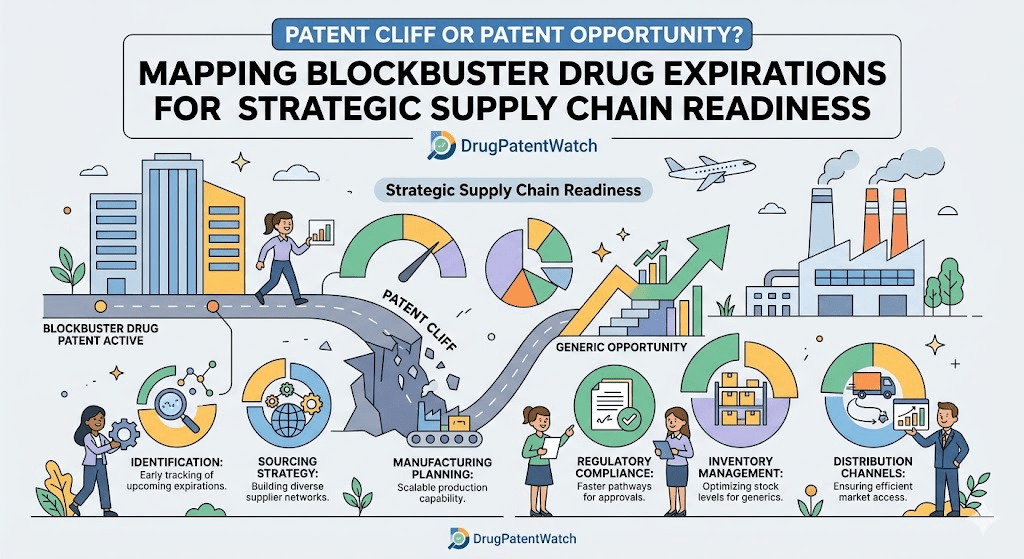
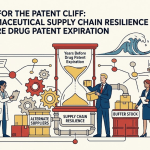
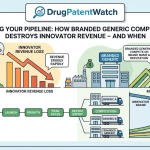
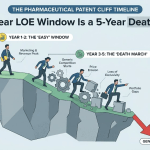
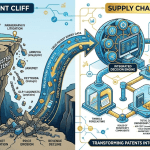
Every year, somewhere between $20 billion and $80 billion in branded drug revenue falls off a cliff. Not metaphorically. Literally: one day a drug sells for $400 a tablet, and the next quarter it sells for $4. The patent expires, the generics arrive, and the originator’s market share collapses by 80 to 90 percent within twelve months. Supply chains built around those branded volumes scramble. API suppliers lose contracts overnight. Generic manufacturers race to capture share they’ve been preparing for years to seize.
The window between knowing a patent expires and being ready to capitalize on it is everything. Companies that treat patent expiration as a legal event rather than a supply chain trigger get left behind. Companies that build manufacturing capacity, qualify suppliers, file ANDAs or BLAs years in advance, and read the patent landscape with the same rigor as a litigator turn patent expirations into revenue events.
This piece maps the blockbuster drug expirations coming between 2025 and 2032, identifies which ones carry the most strategic weight for supply chain planners, and explains how to read patent data intelligently enough to act on it before your competitors do.
The Scale of What’s Coming: $300 Billion in Revenue Up for Grabs
The 2025 to 2032 window is not a routine patent cycle. It is, by revenue exposure, one of the largest patent expiration periods in pharmaceutical history. Analysts at IQVIA estimate that more than $300 billion in branded drug sales will face generic or biosimilar competition by 2030 [1]. That figure dwarfs the 2011 to 2016 ‘patent cliff’ that saw drugs like Plavix, Lipitor, and Singulair go generic and reshape the generic manufacturing industry for a decade.
The current wave differs from that earlier one in three structural ways. First, a higher proportion of expiring drugs are biologics, not small molecules. Biologics require biosimilar development rather than traditional generic development, which means longer timelines, more capital, and fewer competitors. Second, the concentration of revenue is more extreme: a handful of individual drugs account for disproportionate shares of the expiring revenue. Third, the geographic fragmentation of patent protection has increased, meaning a drug may lose exclusivity in the EU two or three years before the US, creating sequential opportunities rather than a single expiration date.
‘The patent cliffs of the 2020s will be defined not by chemistry but by biology. Biosimilar entrants face regulatory, manufacturing, and commercial hurdles that small-molecule generics never did — which means the market dynamics after expiration will look nothing like what happened to Lipitor.’ — IQVIA Institute for Human Data Science, Global Use of Medicines 2024 [1]
For supply chain professionals, this distinction matters enormously. A small-molecule patent expiration typically triggers a commodity market within 18 months. A biologic patent expiration may sustain the originator’s pricing at 60 to 70 percent of list price for years, simply because biosimilar manufacturing complexity limits the number of credible entrants.
Reading the Patent Landscape: What the Numbers Actually Mean
Patent Expiration vs. Market Exclusivity: A Distinction That Costs Billions
The first thing supply chain strategists get wrong about patent cliffs is conflating patent expiration with the start of generic competition. These are different dates, and the gap between them can span years. A drug’s base composition-of-matter patent may expire in 2026, but if the originator holds method-of-use patents, formulation patents, or has secured pediatric exclusivity extensions, actual generic entry could be delayed until 2028 or 2029. The FDA’s Orange Book and Purple Book list these exclusivities explicitly, but reading them requires knowing what you’re looking for.
Exclusivity periods recognized by the FDA include: new chemical entity (NCE) exclusivity of five years, orphan drug exclusivity of seven years, new clinical investigation exclusivity of three years, and pediatric exclusivity of six months added onto any existing exclusivity period. Biologics get twelve years of reference product exclusivity under the Biologics Price Competition and Innovation Act (BPCIA), plus a potential four-year ‘first biosimilar’ exclusivity for the first approved biosimilar [2]. Stacking these exclusivities on top of patent terms is standard practice for originator companies, and understanding the stack is the difference between entering a generic market at first opportunity and entering it two years late.
The Orange Book and Purple Book as Supply Chain Intelligence Tools
The FDA’s Orange Book (Approved Drug Products with Therapeutic Equivalence Evaluations) and Purple Book (Biological Product Reference Lists) are public databases that contain patent and exclusivity data for every approved drug. They are updated daily. They tell you which patents are listed, their expiration dates, and what exclusivities are in effect. What they do not tell you is which of those patents are likely to be challenged, which have been successfully invalidated in litigation, or which represent the real barrier to generic entry versus a paper deterrent that will fall in Paragraph IV litigation.
This is where commercial patent intelligence platforms provide leverage. DrugPatentWatch, for instance, aggregates Orange Book data, ANDA filing history, patent challenge litigation records, settlement agreements, and court decisions into a unified view of each drug’s competitive patent landscape. For a supply chain planner trying to determine whether a drug’s listed 2028 patent expiration is the real entry date or a best-case scenario for the originator, that litigation history is indispensable. A patent that has been challenged and survived is a different risk profile than a patent that has never been tested. A patent that has been challenged and invalidated in district court — even if the originator is appealing — signals an accelerated entry timeline that supply chain planners need to model.
Paragraph IV Challenges as Leading Indicators
Under the Hatch-Waxman Act, a generic manufacturer that files an ANDA and certifies that a listed patent is invalid or will not be infringed (a Paragraph IV certification) triggers a 30-month stay of FDA approval while the patent dispute resolves. The first generic filer gets 180 days of marketing exclusivity before other generics can enter. This creates a predictable intelligence signal: when multiple companies file Paragraph IV ANDAs for a drug, it indicates that sophisticated generic manufacturers believe they can challenge the patents and win, or that they expect settlement agreements that allow early entry. The volume and timing of Paragraph IV filings, available through DrugPatentWatch and the FDA’s ANDA database, is one of the best leading indicators of when generic competition will actually begin [3].
For supply chain planning, this means watching ANDA filing activity for drugs whose patent expiration dates are still 18 to 36 months away. A surge in ANDA filings today tells you the competitive window is likely to open earlier than the listed expiration date suggests.
The Blockbuster Drug Expirations: Drug by Drug, 2025 to 2032
Keytruda (Pembrolizumab): The Largest Single Patent Cliff in History
Merck’s Keytruda generated $25 billion in global sales in 2023, making it the world’s best-selling drug [4]. Its composition-of-matter patent expires in 2028 in the US, though Merck has built a portfolio of formulation and method patents that extend certain protections into the early 2030s. The biosimilar development race for pembrolizumab is already underway: Samsung Bioepis, Celltrion, and at least six other manufacturers are in various stages of development or regulatory submission.
The supply chain implications are layered. Pembrolizumab is a monoclonal antibody produced through mammalian cell culture, requiring large-scale bioreactor capacity, specialized fill-finish capabilities, and cold chain management. The API manufacturing for a biosimilar pembrolizumab requires cell line development, process characterization, and analytical comparability work that takes three to five years minimum from program initiation to regulatory submission. Companies that are not already in late-stage development will not be competitive at launch. Those that are will face a market where, unlike small-molecule generics, pricing erosion will be gradual rather than immediate — originator pembrolizumab will likely maintain 50 to 70 percent of list price for several years after biosimilar entry, based on patterns from adalimumab biosimilar uptake.
For hospital systems and payers, the Keytruda biosimilar window represents the single largest potential procurement cost reduction in pharmaceutical history. A 30 percent price reduction on $25 billion in annual sales is $7.5 billion in system-wide savings. Planning for formulary switches, contracting strategies, and clinical equivalence reviews should be underway now, not when the first biosimilar receives FDA approval.
Eliquis (Apixaban): Small Molecule, Giant Stakes
Bristol Myers Squibb and Pfizer’s Eliquis (apixaban) generated combined global revenues of approximately $12 billion in 2023 [5]. The core patent covering apixaban’s composition of matter expired in 2019, but BMS and Pfizer listed additional patents in the Orange Book covering crystalline forms and methods of treatment that extended protection significantly. After years of Paragraph IV litigation involving manufacturers including Mylan (now Viatris), Sigmapharm, and others, US generic entry was settled and structured to begin in April 2028.
Apixaban is a factor Xa inhibitor that requires precise particle size control and a specific polymorphic form for bioequivalence. The API synthesis involves multiple synthetic steps with chirally pure intermediates. India-based manufacturers — primarily Sun Pharma, Aurobindo, and Macleods — have been qualifying API production for years in anticipation of the 2028 market opening. The finished dose manufacturing challenge is equally significant: apixaban tablets require tight dissolution specifications, and any supply chain entrant will need to demonstrate bioequivalence under stringent FDA standards.
For pharmacy benefit managers and payers, the April 2028 date for apixaban generics is as close to a certain date as exists in the patent landscape, precisely because it is the result of settled litigation rather than a contested patent expiration. Supply chain planning for this drug is less about predicting the date and more about capacity planning: which generic manufacturers will be first-to-market with sufficient volume to drive meaningful price competition, and how do procurement contracts account for the transition?
Revlimid (Lenalidomide): The Generic Ramp-Up Already in Progress
Bristol Myers Squibb’s Revlimid (lenalidomide), used in multiple myeloma and other hematologic malignancies, began its US generic entry in January 2022 under a volume-limited settlement agreement. That settlement allowed a small number of generics to enter with capped volumes through 2025, with uncapped generic entry beginning January 2026 [6]. The current phase, where multiple manufacturers including Natco Pharma, Mylan, and Dr. Reddy’s hold ANDA approvals, provides a live case study in how generic ramp-up works in practice.
Lenalidomide is a thalidomide analogue distributed under a REMS (Risk Evaluation and Mitigation Strategy) program due to teratogenicity. The REMS requirement does not legally prevent generic manufacturers from entering the market — the FDA has confirmed this — but it adds administrative complexity that slows generic uptake. Each generic manufacturer must participate in the REMS program and educate prescribers and pharmacies on the system. This is not a supply chain barrier per se, but it is a market access barrier that affects how quickly volume shifts from branded to generic.
Revlimid’s supply chain story illustrates a pattern relevant to any high-value, complex generic: settlement-structured entry creates a defined window for volume-limited generics to build manufacturing experience and market relationships before uncapped competition begins. Manufacturers who entered under the settlement are now better positioned for the post-2026 open market than any manufacturer attempting to enter at full volume from scratch.
Stelara (Ustekinumab): The Biosimilar Battle Already Decided
Johnson & Johnson’s Stelara (ustekinumab) lost US market exclusivity in September 2023. Biosimilar approvals followed rapidly: the FDA approved biosimilars from Amgen (Wezlana), Alvotech (Selarsdi), Teva/Alvotech, Samsung Bioepis, and others through 2024. US biosimilar launches occurred in 2023 and accelerated through 2024 [7]. Ustekinumab biosimilars represent the most active US biosimilar launch environment in years, and the market dynamics are instructive for future biologic patent expirations.
The ustekinumab biosimilar launch demonstrates several things simultaneously. First, it shows that the US biosimilar market can absorb multiple entrants within a short window when the reference product is sufficiently large — Stelara generated about $10 billion annually at peak. Second, it shows that interchangeability designations (which allow pharmacists to substitute without physician intervention) are increasingly attainable and strategically important. Third, it shows that formulary placement decisions by payers and pharmacy benefit managers lag behind approval timelines by six to twelve months, creating a period where biosimilars are approved but not yet broadly accessible to patients.
For supply chain planners, the ustekinumab biosimilar market is a real-time laboratory. The companies gaining share are not necessarily those that launched first but those that secured favorable formulary positions and exclusive preferred biosimilar status with major PBMs. Manufacturing scale alone does not determine commercial success in the biosimilar market.
Humira (Adalimumab): The First True US Biosimilar Competition and What It Taught Everyone
AbbVie’s Humira (adalimumab), the best-selling drug in the world for most of the 2010s, saw its first US biosimilar competition begin in January 2023 after AbbVie’s US patent estate finally allowed entry [8]. The launch was anticipated for years; biosimilar manufacturers including Amgen, Samsung Bioepis, Organon, Sandoz, Boehringer Ingelheim, Pfizer, and Coherus had all secured FDA approval and prepared for the US market. The result was the largest single biosimilar launch event in US pharmaceutical history.
The market dynamics that followed surprised many analysts. AbbVie maintained far more share than expected in the initial months, primarily because its existing rebate structures with PBMs — some reportedly offering rebates exceeding 60 percent of list price — made the net cost of branded adalimumab competitive with biosimilar list prices. The biosimilar manufacturers who succeeded were those that offered comparable or deeper rebates, interchangeability designations, or exclusive biosimilar preferred positioning on specific formularies.
By mid-2024, biosimilar adalimumab had captured meaningful market share, though AbbVie retained the majority of US Humira volume through aggressive contracting. The lesson for supply chain strategists: in a highly rebated market, launching a biosimilar at list price without a sophisticated contracting strategy is insufficient. Volume projections that assume straightforward price-based substitution routinely overestimate biosimilar uptake in the first two years.
Ozempic and Wegovy (Semaglutide): Patent Cliffs as Moving Targets
Novo Nordisk’s semaglutide products — Ozempic for type 2 diabetes and Wegovy for chronic weight management — represent one of the most complex patent situations in contemporary pharmaceutical history. The core semaglutide composition-of-matter patent, US Patent 9,457,066, expires in 2032 in the US [9]. Additional method and formulation patents extend certain aspects of protection further. Novo Nordisk has filed additional patents in the US Patent and Trademark Office covering device components, injection systems, and specific dosing regimens.
The practical significance is that semaglutide generic or biosimilar competition in the US is unlikely before 2032 at the earliest, and Novo Nordisk will use every available mechanism to extend that timeline. Outside the US, the situation is different: semaglutide has already faced challenges in several markets, and compounding pharmacy activity in the US (driven by the FDA’s shortage designations for Ozempic and Wegovy) created a temporary parallel market that is now being wound down as Novo Nordisk restores supply.
For supply chain strategists, the semaglutide situation illustrates the danger of building supply chain plans around a single expiration date without accounting for the full patent portfolio. A company that began API synthesis capacity investment for semaglutide generics based on the 2032 core patent expiration would need to assess the full blocking patent landscape before committing capital. The cost of being wrong — either entering too early and facing successful patent enforcement, or entering too late and ceding first-mover advantage — is measured in hundreds of millions of dollars.
Xarelto (Rivaroxaban): Lessons from a Complex Generic Entry
Johnson & Johnson and Bayer’s Xarelto (rivaroxaban) represents a case where the generic supply chain faced unexpected complexity even after patent expiration. Core rivaroxaban patents expired in the US in late 2024, and multiple generic manufacturers had filed ANDAs years in advance [10]. The FDA approved generic rivaroxaban from multiple manufacturers through 2024, triggering immediate market entry and the typical 80-plus-percent price erosion within the first six months.
The supply chain lesson from rivaroxaban involves API sourcing. Rivaroxaban has a complex multi-step synthesis with intermediates that must be produced to tight specifications. The primary API manufacturing base shifted to India and China during the generic development phase, concentrating supply in a small number of manufacturers. When demand for generic rivaroxaban spiked faster than projected — driven by rapid formulary adoption and Medicare Part D cost sensitivity — several finished dose manufacturers found themselves constrained by API availability from a concentrated supply base. Diversifying API sourcing for high-demand generic drugs, even when a single supplier offers better economics, is a risk management decision that the rivaroxaban market validated.
Ibrance (Palbociclib): CDK4/6 Inhibitors and the Coming Small-Molecule Oncology Wave
Pfizer’s Ibrance (palbociclib), the first CDK4/6 inhibitor approved for breast cancer, generated approximately $5 billion in annual sales at peak. Its primary US patent expires in 2027, with additional method patents extending certain claims into 2033 [11]. Eli Lilly’s competing CDK4/6 inhibitor, Verzenio (abemaciclib), and Novartis’s Kisqali (ribociclib) face similar timelines, with abemaciclib’s core patents expiring in 2028 and ribociclib’s in 2027.
The CDK4/6 inhibitor market represents a cluster expiration event: multiple drugs in the same therapeutic class losing exclusivity within a few years of each other. For generic manufacturers, this creates an opportunity to build specialized oncology formulation capabilities that serve multiple product opportunities simultaneously. For supply chain planners, cluster expirations in a therapeutic class often trigger rapid generic entry across the class once the first entrant establishes bioequivalence standards and manufacturing requirements.
Palbociclib’s synthesis involves kinase inhibitor chemistry that is technically demanding but reproducible by experienced API manufacturers. The drug’s oral solid formulation — hard gelatin capsules with specific dissolution requirements — is accessible to standard pharmaceutical manufacturing facilities. The combination of manageable API complexity and broad formulation accessibility suggests that the post-2027 palbociclib generic market will be competitive, with multiple manufacturers entering within the first 18 months.
Dupixent (Dupilumab): Biologic Dominance with a 2031 Horizon
Sanofi and Regeneron’s Dupixent (dupilumab) is one of the fastest-growing drugs in the world, with 2023 revenues exceeding $10 billion and indications expanding continuously across atopic dermatitis, asthma, chronic rhinosinusitis with nasal polyps, eosinophilic esophagitis, and prurigo nodularis [12]. The primary composition-of-matter patent expires in 2031 in the US. Given the biologic complexity of dupilumab — a fully human monoclonal antibody requiring cell culture manufacturing — biosimilar development is already underway at multiple companies.
The dupilumab biosimilar market will be particularly competitive given the drug’s size and growth trajectory. By 2031, dupilumab could be generating $20 billion annually if current growth continues and new indications are approved. That revenue magnitude will attract substantial biosimilar investment despite the manufacturing complexity. Companies including Samsung Bioepis, Formycon, and Celltrion are reportedly in various stages of dupilumab biosimilar development, though none had publicly disclosed FDA submissions as of early 2025.
For supply chain planners in specialty pharmacy, hospital formulary management, and managed care contracting, the dupilumab patent cliff is a 2031 event that requires procurement strategy development now. The analogy is the Humira situation: waiting until biosimilar approvals arrive to begin thinking about contracting leaves money on the table and formulary positions in competitor hands.
Novartis’s Entresto (sacubitril/valsartan) treats heart failure with reduced ejection fraction and generated approximately $6 billion in global revenue in 2023 [13]. The drug is a fixed-dose combination of sacubitril (a neprilysin inhibitor prodrug) and valsartan. Its patent situation is particularly complex because it involves patents on the individual components, the combination, the specific molecular co-crystal form, and multiple dosing and formulation elements.
Novartis has defended Entresto’s patent estate aggressively, winning initial patent litigation against generic challengers. Generic entry was delayed into the late 2020s as a result. Multiple manufacturers including MSN Laboratories, Torrent Pharmaceuticals, and Alembic Pharmaceuticals have filed ANDAs and challenged Entresto patents, with litigation still active as of 2025 [14]. The ultimate generic entry date will depend on the outcome of ongoing appeals.
The sacubitril/valsartan combination also presents formulation challenges for generics: the active co-crystal must be manufactured with precise polymorphic control, and both sacubitril and valsartan have chiral centers that require enantioselective synthesis. API manufacturers in India have developed synthetic routes for both components, but demonstrating the stability and bioequivalence of the combination tablet requires significant analytical investment.
Xtandi (Enzalutamide): Prostate Cancer and Patent Litigation Complexity
Pfizer and Astellas’s Xtandi (enzalutamide) treats metastatic castration-resistant prostate cancer and generated approximately $6 billion in combined global revenue in 2023 [15]. Its core patents expire in 2027, but Pfizer and Astellas have litigated Xtandi’s patent estate globally in ways that created significant controversy. University of California patents underlying enzalutamide’s development became subjects of public debate regarding pharmaceutical pricing when the originator companies argued that the patent’s expiration timeline justified pricing above $100,000 annually per patient.
Paragraph IV ANDA filings for enzalutamide came from multiple manufacturers, and patent litigation resolved in ways that established a generic entry date. For supply chain planners, Xtandi represents a relatively clean small-molecule generic opportunity: the synthesis is complex but established in the literature, and multiple API manufacturers in India have disclosed synthetic routes. The prostate cancer patient population is large and will not shrink, ensuring sustained demand for a generic product at dramatically lower cost than the branded version.
Geographic Patent Fragmentation: Sequencing Your Entry Across Markets
Why the EU Typically Leads the US on Generic Entry
European patent terms and supplementary protection certificates (SPCs) often yield different effective expiration dates than US patents. The SPC system, which extends patent protection to compensate for regulatory review time, caps protection at fifteen years from first marketing authorization or five years of extension, whichever is less. Because the EU often grants marketing authorization earlier than the FDA, and because the SPC calculation methodology differs from US patent term extension calculations, European effective patent terms are frequently shorter than US terms by two to four years [16].
This means generic manufacturers often launch in European markets first, using those markets to build manufacturing experience, accumulate real-world bioequivalence data, and generate revenue before US entry. For supply chain strategists planning US generic market entry, the European launch of a competitor is a signal: it means API manufacturing is at commercial scale, finished dose processes are validated, and the competitive landscape is already forming. US supply chain planning that ignores European launch activity misses critical intelligence.
Japan and Emerging Markets: The Third Wave
Japanese pharmaceutical market dynamics differ significantly from the US and EU. Japan has pursued aggressive drug price reductions through its biennial NHI drug pricing revision system, which cuts prices for drugs that have been on the market for multiple years and for drugs facing generic competition. Japanese generic penetration rates, which were historically low, have been growing as government policy explicitly encourages substitution [17].
Emerging markets including India, China, Brazil, and South Africa have their own patent frameworks, often with more limited protection than developed markets or with compulsory licensing provisions that allow generic production regardless of patent status. India’s Patents Act, for instance, has Section 3(d), which prohibits new-form patents that do not demonstrate enhanced efficacy over known substances — a provision that has been used to deny patents on several blockbuster drugs’ secondary applications [18].
For global pharmaceutical supply chain planning, these regional differences mean that API manufacturers in India often begin commercial production for Indian and emerging market generics years before US or EU entry. The infrastructure built for those markets is then available for US and EU generic launches, providing a manufacturing experience advantage that latecomers cannot easily replicate.
The Biosimilar Manufacturing Imperative: Why Scale and Science Both Matter
Bioreactor Capacity: The Hard Constraint
Biosimilar manufacturing for large monoclonal antibodies — Keytruda, Dupixent, Stelara, Humira — requires mammalian cell culture production at scale. The standard platform uses Chinese hamster ovary (CHO) cell lines grown in stainless steel or single-use bioreactors ranging from 2,000 to 20,000 liters. Building a new large-scale biomanufacturing facility from concept to GMP production takes five to seven years and costs $200 million to $1 billion depending on scale and location [19].
This capital intensity creates a natural barrier to entry that does not exist in small-molecule generic manufacturing. A company that decides today to enter the biosimilar market for a drug expiring in 2028 does not have enough time to build new bioreactor capacity from scratch. It must either access existing capacity through contract development and manufacturing organizations (CDMOs), acquire a manufacturer with existing capacity, or partner with a company that has idle bioreactor space.
The CDMO market for biologics — companies including Samsung Biologics, Lonza, WuXi Biologics, Fujifilm Diosynth, and Catalent — has expanded significantly to meet biosimilar demand. CDMO capacity bookings for biosimilar programs are competitive, and lead times for new manufacturing slots extend years into the future. Supply chain strategies that depend on late CDMO engagement for a biosimilar program are strategies for missing the market.
Analytical Comparability: The Scientific Differentiator
FDA biosimilar approval requires demonstrating that the proposed biosimilar is ‘highly similar’ to the reference product, with no clinically meaningful differences in safety, purity, or potency. The analytical comparability package — the set of structural and functional characterization data supporting this claim — is where biosimilar programs succeed or fail. Analytical methods including mass spectrometry-based peptide mapping, glycan analysis, and cell-based potency assays must demonstrate that the biosimilar’s critical quality attributes match those of the reference product within acceptable ranges [20].
Companies with deep analytical capability — the ability to characterize complex protein structures with the resolution needed to demonstrate comparability — have a sustainable advantage in biosimilar development. This is not primarily a manufacturing capability; it is a scientific capability. Building it requires years of investment in analytical infrastructure and scientific talent. Companies that outsource analytical comparability work to CDMOs rather than building internal capability are exposed to timeline risks and do not accumulate the expertise needed to execute multiple biosimilar programs efficiently.
Interchangeability Designations: The Commercial Differentiator
An FDA interchangeable biosimilar can be substituted for the reference product at the pharmacy level without physician intervention, in states that permit pharmacist-level substitution. As of 2024, nearly all US states permit pharmacist substitution of interchangeable biosimilars. Interchangeability requires additional clinical switching study data — typically demonstrating no increased risk or diminished effect from alternating between the biosimilar and reference product — but provides a substantial commercial advantage by enabling automatic substitution programs at large pharmacy chains and through PBM formulary management [21].
Amgen’s Cyltezo, an interchangeable adalimumab biosimilar, received the first interchangeability designation for a monoclonal antibody in 2021 and used that designation to secure preferred formulary positions with major PBMs. The pattern has since repeated across multiple biosimilar markets. For supply chain planners, an interchangeable biosimilar designation is a commercial trigger: it changes the procurement conversation from clinical equivalence evaluation to straightforward substitution logistics.
Tracking the Patent Landscape: Tools, Data Sources, and Analytical Frameworks
The FDA Orange Book and Purple Book: Starting Points, Not Endpoints
Every strategic analysis of pharmaceutical patent expirations begins with the FDA’s public databases. The Orange Book covers small-molecule drugs approved under NDAs; the Purple Book covers biologics approved under BLAs. Both are updated regularly and provide patent expiration dates and exclusivity information. The FDA’s Paragraph IV certification database tracks when generic manufacturers have challenged patents, providing an early warning system for accelerated generic entry.
However, these databases have significant limitations. They capture only patents that originators have chosen to list, and listing decisions are strategic — originators sometimes list weak patents defensively to trigger the 30-month stay of generic approval, knowing the patent will not survive litigation. They do not capture European or other international patent status. They do not show which patents have been invalidated in ongoing litigation. They do not reflect settlement agreement terms that may allow early entry for specific manufacturers. Reading the Orange Book in isolation, without litigation history and ANDA filing data, produces an incomplete picture that systematically overstates the duration of branded exclusivity.
DrugPatentWatch: Commercial Intelligence That Goes Deeper
DrugPatentWatch synthesizes FDA Orange Book and Purple Book data with ANDA and BPCIA filing records, patent litigation history, settlement agreement terms (where publicly available), and international patent data into a searchable, regularly updated platform. For supply chain professionals, business development teams, and investment analysts tracking the competitive patent landscape, DrugPatentWatch provides visibility that public sources alone cannot offer.
The platform’s value is particularly high for tracking the gap between listed patent expirations and actual generic entry dates. By mapping the litigation history for a given drug — how many Paragraph IV challenges have been filed, which courts are hearing the cases, what the litigation timeline looks like — DrugPatentWatch users can develop more realistic entry timing models than those based solely on listed patent dates. This is especially valuable for drugs with complex patent estates like Entresto, where listed patents suggest protection deep into the 2030s but active litigation may accelerate the timeline significantly.
For companies doing supply chain capacity planning, the difference between a 2027 and a 2029 generic entry date for a major drug is not a scheduling footnote — it is the difference between a profitable market entry and a capacity investment that generates no return. Using commercial patent intelligence to narrow that uncertainty range is not optional due diligence; it is a basic requirement of responsible planning.
USPTO Patent Full-Text Database: Going to the Source
For analysts who need to go beyond aggregated databases to the actual patent claims, the USPTO’s Patent Full-Text database provides access to every US patent. Reading patent claims directly — specifically the independent claims, which define the legal scope of protection — is the only way to assess whether a listed patent actually covers the commercial drug formulation or whether it is a peripheral patent that a generic challenger could design around.
Patent claim analysis requires some legal training, but pharmaceutical scientists with API synthesis experience can often assess independently whether a formulation or method patent covers the practical manufacturing process they would use. A patent claiming a specific crystalline form at a specific particle size distribution does not necessarily block a generic manufacturer using a different process that achieves the same dissolution profile through a different physical form. Understanding what the patent actually claims versus what the originator says it claims is a competitive analysis skill that pays for itself many times over.
International Patent Databases: ESPACENET, Global Dossier, and Country-Specific Resources
The European Patent Office’s Espacenet database provides access to patents filed through the EPO system and national patents from more than 90 countries. The USPTO’s Global Dossier system links US patent applications to their international equivalents through the Patent Cooperation Treaty (PCT). Country-specific patent offices in India (IPO), China (CNIPA), Japan (J-PlatPat), and Brazil (INPI) maintain their own searchable databases.
For pharmaceutical supply chain strategies that include non-US markets, tracking international patent status is essential. A drug whose US patent expires in 2030 may have EU protection expiring in 2027 and Indian protection that was never granted because of Section 3(d) challenges. Each jurisdiction represents a potential first-mover market where API manufacturing experience can be accumulated before US entry.
Supply Chain Readiness: The Operational Framework
The Three-Horizon Planning Model for Patent-Driven Supply Chain
Patent-driven supply chain planning requires three distinct planning horizons with different analytical priorities.
The first horizon covers drugs expiring within 18 months. For these, the supply chain response is primarily execution: ANDA or BPCIA submissions should be filed or nearing approval, manufacturing processes validated, API supply secured, and commercial launch readiness underway. The competitive intelligence question shifts from ‘will we be able to enter?’ to ‘which competitors are entering and with what volume?’ Pricing strategy, formulary access plans, and distribution agreements take priority.
The second horizon covers drugs expiring 18 to 48 months out. This is where patent landscape analysis is most actionable. Paragraph IV challenge decisions, CDMO capacity reservations, API supplier qualification, and process development investment should all be underway for priority drugs in this window. The critical decisions about whether to pursue a biosimilar program or a small-molecule generic, which markets to enter first, and how to sequence market entry geographically are best made with 24 to 36 months of lead time.
The third horizon covers drugs expiring 48 months and beyond. At this distance, the primary activity is competitive scanning: identifying which drugs in the pipeline represent significant revenue opportunities, monitoring biosimilar development programs for upcoming reference products, assessing whether the patent estate is likely to hold or faces vulnerability to challenge. This is where tools like DrugPatentWatch’s pipeline tracking capabilities provide the most strategic value — identifying opportunities before they are obvious enough to generate crowded competitive response.
API Supplier Qualification: The Long Lead-Time Item
For pharmaceutical supply chain planners, API supplier qualification is the longest lead-time item in the generic market entry process. Qualifying a new API supplier — auditing the facility, completing analytical method transfers, running comparative studies, and obtaining regulatory approval for the supplier — typically takes 18 to 24 months. For a drug with a known expiration date, API supplier qualification cannot start too early.
The concentration of API manufacturing capacity in India and China is both an advantage and a vulnerability. India accounts for approximately 40 to 50 percent of generic drug ANDA approvals submitted to the FDA and a comparable share of API supply for generic drugs consumed in the US [22]. Chinese API manufacturers supply approximately 80 percent of the active ingredients used in Indian finished dose manufacturing for export. This concentration creates supply chain resilience risks that were demonstrated during the COVID-19 pandemic disruptions and have driven ongoing regulatory focus on API supply chain diversification.
US and European government initiatives to reshore or near-shore pharmaceutical manufacturing have provided some impetus for new API capacity investment in North America and Europe, but the economics remain challenging. Labor costs, regulatory compliance infrastructure, and environmental requirements make US API manufacturing significantly more expensive than Indian or Chinese production for most compounds. The result is a supply chain that is more resilient in theory than in practice, with domestic capacity investments concentrated in strategically important but commercially limited categories.
Finished Dose Capacity Planning: Matching Manufacturing to Market Size
Generic market entry requires matching manufacturing capacity to projected market share with enough precision to avoid both underinvestment (leaving share to competitors) and overinvestment (committing capacity to a drug that does not achieve the projected share). This capacity planning exercise requires market size estimates, competitive entry counts, pricing assumptions, and formulary access forecasts — all of which carry significant uncertainty.
The standard analytical approach for generic market planning uses revenue-equivalent capacity planning: estimating the number of doses or units the drug produces annually at current prescription volumes, projecting the generic manufacturer’s target market share (typically 15 to 30 percent for a non-exclusive entrant in a competitive generic market), and sizing manufacturing capacity to supply that share plus a buffer. For controlled substances with DEA production quota limits, quota allocation adds another constraint to capacity planning.
For biologics and biosimilars, capacity planning is more complex because bioreactor scale-up is not linear. A program that achieves satisfactory titers at 500-liter scale does not automatically scale to 5,000 liters without process optimization. Planning for commercial-scale bioreactor capacity requires process development investment before commercial launch, not after.
Regulatory Strategy Integration: Making ANDA and BLA Timelines Realistic
FDA review timelines for generic drug applications (ANDAs) have improved significantly since the 2012 Generic Drug User Fee Amendments (GDUFA) established performance goals for FDA review. The target for generic drug application review is ten months for priority applications and twelve months for standard applications, though actual cycle times vary based on deficiency letters, complete response actions, and inspection requirements [23].
For biosimilar applications (BLAs), the FDA has a twelve-month review target for standard applications and six months for priority review applications. The complexity of the biosimilar review — which requires a totality-of-evidence assessment across analytical, nonclinical, and clinical data packages — means that complete response letters are more common for biosimilar submissions than for small-molecule ANDAs. First-cycle approval without a complete response is the exception rather than the rule for biosimilar applications.
Regulatory strategy that does not account for one or more review cycles adds 12 to 18 months to a program’s timeline. Supply chain capacity planning that assumes first-cycle approval is optimistic and risks either underutilizing committed capacity while awaiting approval or being caught with insufficient capacity if approval comes faster than the conservative scenario.
The Payer and Pharmacy Perspective: Capturing Savings from Patent Expirations
Formulary Management: Converting Patent Expirations into Budget Relief
Payers — health insurers, pharmacy benefit managers, integrated delivery networks — translate pharmaceutical patent expirations into cost reduction through formulary management. The formulary is the list of drugs a health plan covers, organized by tier with different patient cost-sharing levels. When a generic becomes available, payers can move the branded drug to a non-preferred or non-covered tier while placing the generic on a preferred tier with lower cost-sharing. This formulary switch accelerates generic uptake and captures cost savings that otherwise accrue to pharmacy margins or remain uncaptured in plans that do not actively manage formulary transitions.
The timing of formulary changes matters as much as the decision to change. Plans that proactively communicate formulary changes to prescribers and patients before a generic launch achieve faster substitution rates. Plans that wait for members to encounter the new cost-sharing at the pharmacy counter face adherence risks — patients who can’t afford the branded cost-sharing may abandon therapy rather than switch to the generic. For drugs with serious therapeutic consequences for non-adherence (anticoagulants, immunosuppressants, oncology agents), formulary management around patent expirations requires clinical protocol as well as administrative action.
340B Program Implications for Generic Transitions
The 340B Drug Pricing Program requires pharmaceutical manufacturers to provide outpatient drugs to covered entities — certain hospitals, community health centers, and other safety-net providers — at deeply discounted ceiling prices. For branded drugs, 340B ceiling prices are calculated as a percentage of average manufacturer price. When a drug goes generic, the 340B pricing implications shift: the originator’s drug may no longer be the subject of 340B discounts, and covered entities must evaluate whether the generic’s commercial price is lower than the branded 340B price [24].
For 340B covered entities, the patent expiration of high-cost specialty drugs represents both an opportunity and a complexity. Covered entities that have been generating significant savings from 340B pricing on branded drugs need to recalculate their economics when generics enter: in many cases, the generic’s commercial price will be lower than the 340B ceiling price within 12 to 18 months of generic entry, making 340B participation on the branded product obsolete while generic formulary management becomes the primary savings lever.
Medicare Part D and the Inflation Reduction Act: New Incentives for Generic Transition
The Inflation Reduction Act (IRA) of 2022 made structural changes to Medicare Part D that affect incentives around generic drug use. The IRA’s redesigned Part D benefit, fully effective in 2025, caps out-of-pocket drug costs for Medicare beneficiaries at $2,000 annually and restructures manufacturer and plan cost-sharing in the catastrophic coverage phase [25]. These changes alter the financial calculus for both plans and manufacturers around patent expirations in ways that are still being fully understood.
For plans, the reduced catastrophic liability after the $2,000 cap changes their incentive structure around expensive specialty drugs. For manufacturers of generic drugs entering markets previously dominated by high-cost branded products, the IRA creates an environment where Medicare plan formulary managers have stronger financial incentives to drive generic adoption quickly. The combination of the IRA’s restructured benefit with the coming wave of small-molecule specialty drug patent expirations (CDK4/6 inhibitors, oral oncology agents) will likely accelerate generic uptake rates for these drugs compared to historical patterns.
Investment Implications: Where Patent Cliffs Create Equity Opportunities
Originator Company Risk: Quantifying Revenue at Stake
For equity investors, pharmaceutical patent expirations are among the most predictable revenue discontinuities in any industry. The challenge is not identifying when a drug will lose exclusivity — that date is publicly known, subject to litigation risk — but accurately modeling the post-expiration revenue trajectory and the company’s ability to offset patent losses through new product launches, pipeline advancement, or cost reduction.
Merck’s situation with Keytruda illustrates the scale of the challenge. Keytruda represents approximately 40 percent of Merck’s total revenue as of 2023. Even with a gradual biosimilar uptake post-2028, Merck faces a multi-billion dollar revenue challenge that requires successful pipeline advancement in oncology, vaccines, and cardiometabolic disease to maintain long-term earnings growth. Investors who model Merck’s revenue solely based on Keytruda’s listed patent expiration dates, without accounting for the regulatory complexity of biosimilar entry, the multiple indications Keytruda covers, and the likely speed of formulary switching, will systematically mismis-price the company’s risk profile [26].
Generic and Biosimilar Company Opportunity: The Other Side of the Cliff
For pure-play generic manufacturers and biosimilar developers, patent expirations represent revenue opportunities that must be sized, sequenced, and financed. Companies including Teva, Viatris, Dr. Reddy’s, Sun Pharma, and Sandoz have portfolios of ANDA and BLA filings tracking dozens of patent expirations simultaneously. Their capital allocation decisions — which drugs to prioritize for development investment, which to license or partner on, which to pass on — represent real-time tests of their patent intelligence capabilities.
The biosimilar market has attracted dedicated investment from companies including Amgen, Sandoz, Samsung Bioepis, Celltrion, Alvotech, and Coherus, as well as vertically integrated companies in South Korea and India that see biosimilar export to the US market as a long-term growth strategy. For investors in these companies, assessing the quality of their patent intelligence — do they know which biosimilar programs are likely to face crowded competition, and which have strategic differentiation through interchangeability designation, CDMO relationships, or proprietary formulation — is central to portfolio analysis.
Contract Manufacturing Organizations: Infrastructure for the Entire Sector
CDMOs that serve both small-molecule generic and biosimilar manufacturing represent indirect plays on the patent expiration wave. As originator companies seek to reduce fixed manufacturing costs and generic/biosimilar developers lack scale to justify dedicated manufacturing investment, CDMO capacity utilization benefits from both sides of the patent expiration ledger. Companies including Catalent, Lonza, Samsung Biologics, WuXi AppTec, and Patheon (now part of Thermo Fisher Scientific) have built substantial capacity specifically targeted at the wave of generic and biosimilar manufacturing demand through the early 2030s.
The CDMO market’s investment thesis around patent expirations is straightforward: more patent expirations mean more manufacturing transitions, more ANDA and BLA submissions requiring validation batches, more commercial-scale production of new generic and biosimilar products, and more demand for the specialized formulation, fill-finish, and packaging capabilities that CDMOs provide. CDMO capacity expansion investments made in 2022 to 2024 are positioned to capture demand from patent expirations occurring 2025 to 2030.
Case Study: The Humira Playbook and What to Replicate for Keytruda
Humira’s Timeline as a Reference Case
The adalimumab biosimilar market provides the most complete reference case for planning Keytruda (pembrolizumab) biosimilar strategy. AbbVie’s Humira faced its first US biosimilar competition in January 2023, roughly 14 years after the first biosimilar was approved in Europe. The extended US delay was the result of AbbVie’s settlement agreements with biosimilar developers that established a structured entry timeline, combined with AbbVie’s aggressive patent listing and defense strategy [27].
In Europe, adalimumab biosimilars launched in 2018. Within 18 months of European launch, biosimilar adalimumab had captured approximately 70 percent of new patient starts in Germany and Scandinavia, while markets with less active formulary management (southern Europe, UK private sector) showed slower adoption. The European experience gave biosimilar manufacturers five years of commercial manufacturing experience before US entry — experience that proved valuable in building the supply reliability track record that PBMs required before granting preferred formulary status.
The US Humira biosimilar market, when it finally launched in January 2023, attracted seven distinct biosimilar manufacturers within the first six months. AbbVie responded with aggressive rebate offers that made net-price competition with biosimilars viable for the original product, at least for the first 12 to 18 months. The result was a market where biosimilar penetration was slower in the first year than European precedents had suggested, but accelerated significantly as PBM preferred placement decisions drove formulary switching through 2024.
Applying Humira Lessons to Keytruda
Pembrolizumab biosimilar development faces constraints that adalimumab biosimilar development did not. Adalimumab is a relatively high-concentration, high-volume subcutaneous product with extensive published literature on its structure and manufacturing. Pembrolizumab is an intravenous product administered in oncology settings at doses calculated by body weight, with a complex dosing schedule and a requirement for dilution preparation at the point of care. The oncology administration environment — hospital infusion centers, community oncology clinics — creates different formulary decision dynamics than the subcutaneous autoinjector market Humira serves.
Keytruda’s biosimilar market will likely show slower institutional formulary switching than Humira, because oncology prescribers are more conservative about switching patients to biosimilars mid-treatment and because institutional pharmacy committees in cancer centers have historically been slow to mandate biosimilar substitution. The commercial playbook for pembrolizumab biosimilars will need to prioritize new patient starts (where biosimilar-first prescribing is easier) over switching established patients, at least in the initial years.
For supply chain planners at hospital systems with significant oncology infusion volume, the Keytruda biosimilar window starting around 2028 to 2029 represents a major cost reduction opportunity that requires pharmacy committee preparation now. Building the clinical case for formulary inclusion of biosimilar pembrolizumab, developing pharmacist and nursing education programs for interchangeable or preferred biosimilar products, and establishing procurement contracting frameworks ahead of biosimilar approval are all activities that pay dividends when the biosimilar market opens.
The Regulatory Pipeline: Upcoming Decisions That Will Shape Market Entry Timing
FDA PDUFA Dates and ANDA Action Dates as Calendar Anchors
Prescription Drug User Fee Act (PDUFA) dates for NDA and BLA applications, and FDA’s internal performance goals for ANDA review, provide public calendar anchors for regulatory decisions. When an ANDA is filed with a Paragraph IV certification and the 30-month litigation stay expires, FDA can approve the application if it has been reviewed. Tracking the intersection of litigation stay expiration dates and ANDA review timelines identifies the earliest possible FDA approval date for a specific generic product.
For biosimilar applications, the FDA’s advisory committee meetings (adcoms) for complex biosimilar programs provide public signals about the agency’s assessment of the clinical data package before a final approval decision. Adcoms for biosimilar applications are not always required, but when the agency schedules one, the adcom outcome is a strong predictor of approval timing and any conditions the agency might attach to approval.
European Medicines Agency and Parallel EU Approval Processes
The European Medicines Agency (EMA) centralized procedure approves biosimilars across all EU member states simultaneously. EMA biosimilar guidelines, which have been in place since 2005 and are among the most mature in the world, provide a detailed framework for the comparability data required for approval. EU approval often precedes US approval for biosimilar programs that target both markets, because the EU’s more established biosimilar regulatory pathway reduces first-cycle uncertainty for experienced developers.
EMA approval timelines have contracted as the agency has built institutional expertise in biosimilar assessment. Programs from experienced biosimilar developers with comprehensive analytical packages can move through EMA review in 12 to 15 months from submission to approval, provided the application is complete and the scientific questions are resolved without a clock stop. US FDA timelines are comparable but more variable, particularly for novel biosimilar reference products where the agency’s analytical reviewers are less familiar with the molecule’s structural complexity.
Building the Internal Patent Intelligence Capability
What a Pharmaceutical Intelligence Function Looks Like
Large pharmaceutical companies — both originators and generics — that manage patent expiration risk effectively have dedicated patent intelligence functions that combine legal, scientific, and commercial expertise. These teams track patent estate changes for priority drugs, monitor ANDA and BPCIA filing activity, follow patent litigation in real time, and translate patent intelligence into commercial and supply chain decisions.
For smaller companies, or for non-pharmaceutical entities like hospital systems, pharmacy benefit managers, and specialty distributors that need patent intelligence to inform procurement strategy, building an internal function may not be cost-effective. The combination of public databases (Orange Book, Purple Book, PACER for litigation records) with commercial platforms like DrugPatentWatch provides most of the intelligence needed to make informed supply chain decisions without a dedicated internal team. The key is ensuring that someone in the organization is responsible for monitoring this intelligence and translating it into operational decisions, rather than treating patent expiration tracking as an occasional research exercise.
Integrating Patent Intelligence into S&OP and Category Management
Sales and operations planning (S&OP) processes in pharmaceutical supply chains rarely integrate patent intelligence explicitly. Supply and demand signals, capacity planning, and procurement decisions are driven by current market dynamics rather than anticipated regulatory or competitive events. Integrating a ‘patent event calendar’ into S&OP processes — identifying which drugs in the supply portfolio face patent expirations or generic competition risk within the planning horizon — can significantly improve supply chain decision quality.
For pharmaceutical distributors and pharmacy operators, category management that accounts for patent expiration timing optimizes generic substitution programs, formulary conversion protocols, and private label or house brand opportunities. A category manager who knows that a high-volume branded product will face generic competition in 22 months can negotiate contract terms with the branded manufacturer today that reflect the approaching competitive pressure, rather than waiting for generic entry to shift negotiating leverage.
The Next Wave: Drugs to Watch Beyond 2030
CAR-T Therapies and the Gene Therapy Patent Horizon
Chimeric antigen receptor T-cell (CAR-T) therapies — Novartis’s Kymriah, Gilead/Kite’s Yescarta and Tecartus, Bristol Myers Squibb’s Breyanzi and Abecma — represent a drug class where the patent landscape is still forming and biosimilar or generic equivalents are not yet practically feasible. CAR-T products are manufactured from the patient’s own cells (autologous) or from donor cells (allogeneic), using gene transfer processes that are highly proprietary and technically demanding. The concept of a ‘biosimilar’ for an autologous CAR-T product does not map cleanly onto the reference product substitution model used for monoclonal antibodies [28].
However, intellectual property protection for CAR-T foundational technologies is aging. Patents covering key chimeric antigen receptor designs filed in the 2010s will expire in the late 2020s and 2030s. Second-generation CAR-T programs from companies including Precision BioSciences, Poseida Therapeutics, and others may benefit from reduced IP constraints as foundational patents expire, potentially enabling a competitive CAR-T market that did not exist when the first-generation products were approved.
For supply chain planners in cell therapy manufacturing, the relevant patent intelligence question is not about generic entry but about freedom to operate: which manufacturing technologies, which gene transfer vectors, and which CAR construct designs are available without license fees from originator companies? As patents expire, the answer to that question expands, enabling new entrants to build cell therapy manufacturing capabilities without the royalty burdens that currently constrain cost structures.
GLP-1 Agonists Beyond Semaglutide: Tirzepatide and the Next Generation
Eli Lilly’s tirzepatide (Mounjaro for diabetes, Zepbound for obesity) is on an even faster growth trajectory than semaglutide, with patents extending into the mid-2030s. The GLP-1 and GIP dual agonist mechanism that tirzepatide exploits may face earlier patent pressure in some markets if foundational mechanism patents expire before product-specific patents, though Lilly’s patent estate covering tirzepatide’s specific peptide sequence and formulation is robust [29].
The supply chain implications of the GLP-1 class broadly are already reshaping pharmaceutical manufacturing. Peptide synthesis at commercial scale — required for GLP-1 based therapies — depends on solid-phase peptide synthesis (SPPS) capacity, specialized purification equipment, and sterile fill-finish for injectable dosage forms. The rapid growth of semaglutide and tirzepatide has strained global peptide synthesis capacity significantly, driving capital investment in SPPS capacity expansion by CDMOs including Bachem, PolyPeptide Group, and AmbioPharm. That capacity, once built, will serve generic and biosimilar GLP-1 programs when patents eventually expire — but the capital cycle for peptide synthesis expansion runs 3 to 5 years, meaning investment decisions made today are already positioning for the 2030s generic market.
Oral Small-Molecule Oncology: The Second Wave of Kinase Inhibitor Expirations
Following the CDK4/6 inhibitors, the next cluster of oral oncology patent expirations involves other kinase inhibitor classes. Ibrutinib (Imbruvica, Johnson & Johnson/AbbVie), a Bruton’s tyrosine kinase (BTK) inhibitor for hematologic malignancies, faces US generic competition beginning in 2027 [30]. Venetoclax (Venclexta, AbbVie/Roche), a BCL-2 inhibitor, has core patents expiring around 2026 in some markets. Osimertinib (Tagrisso, AstraZeneca), a third-generation EGFR inhibitor for non-small cell lung cancer with approximately $5 billion in annual revenue, has patents extending into the late 2020s.
Each of these represents a different chemistry challenge for generic API development. Ibrutinib involves specific acrylamide warhead chemistry. Venetoclax is a large, complex molecule with multiple stereocenters. Osimertinib involves fluorinated pyrimidine chemistry. In each case, the generic API development timeline started years before patent expiration for manufacturers who are monitoring the patent landscape proactively.
Practical Recommendations: What to Do With This Information Now
For Pharmaceutical Manufacturers (Generic and Biosimilar)
If you do not have an active patent monitoring program that tracks at minimum the top 50 drugs by US revenue, their full patent estates, ANDA and BPCIA filing activity, and litigation status, you are operating without adequate market intelligence. The tools exist — DrugPatentWatch, FDA public databases, USPTO Patent Center — and the analysis is not prohibitively expensive. The cost of missing a first-to-file 180-day exclusivity opportunity because your patent intelligence identified the opportunity six months late is measured in tens of millions of dollars of foregone exclusivity profit.
For biosimilar programs targeting 2028 to 2030 expiration dates, CDMO engagement should be underway now. Bioreactor capacity bookings for commercial-scale production are limited. The companies that secure capacity slots at Samsung Biologics, Lonza, or WuXi Biologics for 2027 to 2028 commercial production are doing so in 2024 and 2025, not closer to approval.
For small-molecule generic programs, API supplier qualification for drugs expiring in 2026 to 2027 should be in process. The 18-to-24-month qualification timeline means that API qualification started in early 2025 positions a manufacturer for commercial launch at patent expiration rather than six months after it.
For Payers, PBMs, and Health Systems
Patent expiration calendars should be integrated into formulary planning cycles at least 24 months in advance. Formulary committees that begin clinical and economic evaluation of anticipated generics or biosimilars 18 to 24 months before expected market entry are positioned to make coverage decisions quickly after approval, capturing savings in the first month of generic availability rather than 6 to 12 months later.
For biosimilar markets specifically, developing preferred biosimilar contracting frameworks before the biosimilar launches — identifying what interoperability, reliability, and pricing terms you require from a preferred biosimilar partner — positions the payer to move fast when multiple biosimilars enter a market simultaneously. The first 90 days of a major biosimilar market are when formulary positioning is determined and market share trajectories set. Payers who are not prepared to make fast contracting decisions cede negotiating leverage to manufacturers who have prepared for this moment.
For Investors and Analysts
Patent cliff modeling that relies solely on listed patent expiration dates and standard revenue erosion curves systematically underestimates originator resilience in biologic markets and overestimates it in small-molecule specialty markets where generic chemistry is accessible. Build patent intelligence into your models by incorporating litigation history (patents that have been challenged are more vulnerable), ANDA filing counts (high counts indicate crowded generic markets with faster price erosion), and geographic sequencing (EU market dynamics preview US outcomes by 1 to 3 years).
For positions in generic and biosimilar developers, assess the quality of the company’s patent intelligence and pipeline selection. A biosimilar developer with a crowded reference product list — pursuing the same 8 to 10 biosimilars that every other company is chasing — faces commoditized competition. A developer that has identified less-obvious biosimilar opportunities with fewer competitors, longer runways to market, or therapeutic niches that limit price competition may be significantly undervalued by standard pipeline analysis.
Key Takeaways
The 2025 to 2032 patent expiration wave will expose more than $300 billion in global branded drug revenue to generic or biosimilar competition, with a higher proportion of biologics than any previous expiration cycle.
Patent expiration date and actual generic market entry date are different. Litigation history, settlement agreement terms, and ANDA filing activity — accessible through platforms like DrugPatentWatch — narrow the uncertainty around real entry timing.
Biosimilar market dynamics differ fundamentally from small-molecule generic dynamics: slower price erosion, higher development costs, manufacturing complexity that limits the number of credible entrants, and commercial differentiation through interchangeability designations and formulary access.
Keytruda (pembrolizumab) at $25 billion in annual revenue represents the largest single patent cliff event in pharmaceutical history. Biosimilar manufacturers, hospital systems, and payers should be in active preparation now for a 2028 to 2029 market opening.
Geographic patent fragmentation means that EU generic launches (typically 2 to 4 years before US) provide real-time intelligence on competitive dynamics, manufacturing readiness, and pricing trajectories that informs US supply chain planning.
Supply chain planning that integrates patent event calendars into S&OP processes, CDMO capacity booking timelines, and API qualification schedules will outperform reactive planning by 12 to 24 months on market entry timing.
For GLP-1 agonists (semaglutide, tirzepatide) and CAR-T therapies, patent protection extends into the mid-2030s. However, SPPS capacity investments being made today for GLP-1 generic development infrastructure will define who is positioned to capture the eventual generic market.
Frequently Asked Questions
1. What is the difference between a drug’s patent expiration date and its market exclusivity end date, and why does it matter for supply chain planning?
A drug’s patent expiration date is when the underlying intellectual property protection lapses, determined by the filing date plus the statutory patent term (twenty years in the US) and any patent term extensions. Market exclusivity end date is when a competitor can actually receive FDA approval to enter the market, accounting for regulatory exclusivity periods (five-year NCE exclusivity, twelve-year biologic exclusivity, six-month pediatric exclusivity extensions) that exist independently of patent protection. A drug can be patent-expired but still exclusively protected by regulatory exclusivity — and vice versa, a drug’s patents may still be listed and active even though its regulatory exclusivity has expired. For supply chain planning, the relevant date is when generic or biosimilar competition can legally begin, which requires analyzing both patent and exclusivity timelines simultaneously. Relying on patent expiration dates alone, without checking the Orange Book or Purple Book for active regulatory exclusivities, can result in premature market entry planning for products where the exclusivity clock has not yet run.
2. How does the 180-day exclusivity for first-filers affect supply chain strategy for generic manufacturers?
Under Hatch-Waxman, the first generic manufacturer to file an ANDA with a Paragraph IV patent challenge certification receives 180 days of market exclusivity after its product launches (or after a specific triggering event). During this period, the FDA will not approve other generic ANDAs for the same drug. This creates a duopoly market between the branded product and the single generic, where the first-filer typically prices its product at a modest discount to the branded product (10 to 30 percent) rather than the deep discounts that emerge when multiple generics compete. For supply chain planners, a 180-day exclusivity window means that procurement planners expecting substantial generic price reduction in the first six months of market entry will be disappointed — the major price drop (typically 70 to 90 percent of branded price) comes when the exclusivity expires and multiple generics enter simultaneously. Contracting strategies need to account for the two-phase pricing trajectory: modest initial discount during 180-day exclusivity, then rapid price erosion when exclusivity ends.
3. Why do biosimilar markets in the United States show slower price erosion than European biosimilar markets, and is this likely to change?
US biosimilar markets show slower price erosion than European markets for several structural reasons. First, the US rebate system — where PBMs extract large rebates from originators that are reflected in net prices but not list prices — means that branded products are often cost-competitive at net price even when biosimilars are priced at 30 to 40 percent discounts to list price. Second, the US lacks the government-mandated formulary switching programs that European national health systems use to accelerate biosimilar uptake; the US relies on voluntary PBM formulary management. Third, physician prescribing inertia in therapeutic areas like oncology and immunology is greater in fee-for-service US practice than in European settings where prescribing is more centrally guided. The IRA’s Part D redesign, interchangeability designations enabling pharmacist-level substitution, and growing PBM willingness to make biosimilars mandatory preferred products suggest that US biosimilar market dynamics will move closer to European patterns over the next five to seven years — but the transition will be gradual rather than rapid.
4. How should a hospital pharmacy or integrated delivery network think about formulary preparation for the Keytruda biosimilar market expected around 2028?
A hospital pharmacy committee that waits for the first pembrolizumab biosimilar FDA approval to begin its formulary evaluation is already behind. The preparation work starts now with three parallel tracks. First, clinical education: developing P&T committee familiarity with biosimilar regulatory standards, the concept of totality-of-evidence comparability, and the clinical evidence base for biosimilar oncology agents. The Stelara (ustekinumab) and Humira (adalimumab) biosimilar experiences provide committee members with real-world data on efficacy and safety outcomes in biosimilar-treated populations. Second, procurement framework: establishing the criteria by which the institution will evaluate pembrolizumab biosimilars when multiple options are available — interchangeability designation, vendor rebates, supply reliability, preferred contracting terms. Third, inventory management protocols: determining how the institution will manage transition for established patients receiving branded Keytruda versus new patient starts on biosimilar, and what clinical decision support tools will be needed to guide prescriber and pharmacist decisions at the point of dispensing or administration.
5. What are the most common mistakes companies make when using patent databases to forecast generic market entry, and how do you avoid them?
The most common mistakes fall into four categories. First, relying on a single database without cross-referencing: the Orange Book lists patents the originator has chosen to list, but it does not capture all relevant patents, patent challenge outcomes, or settlement agreement terms. Cross-referencing Orange Book data with PACER court records, USPTO Patent Center, and commercial platforms like DrugPatentWatch catches omissions that single-source analysis misses. Second, treating listed expiration dates as firm entry dates: litigation can accelerate entry (invalidating a patent before it expires) or delay it (injunctions or settlements pushing entry past the expiration date). Forecasting models that do not incorporate litigation probability and outcome distributions will be systematically biased. Third, ignoring international patent data: EU, Japanese, and Indian patent landscapes often differ materially from US patents, and international launches preview US competitive dynamics. Fourth, underweighting regulatory exclusivity: a drug whose composition-of-matter patent expired three years ago may still have years of regulatory exclusivity remaining that blocks FDA approval of generic or biosimilar applications. Checking the Orange Book or Purple Book exclusivity columns as a mandatory step in any patent expiration analysis prevents this error.
Citations
IQVIA Institute for Human Data Science. (2024). Global Use of Medicines 2024: Outlook to 2028. IQVIA Institute. https://www.iqvia.com/insights/the-iqvia-institute/reports/the-global-use-of-medicines-2024
U.S. Food and Drug Administration. (2023). Biosimilar Product Information: Reference Product Exclusivity. FDA. https://www.fda.gov/drugs/biosimilars/biosimilar-product-information
U.S. Food and Drug Administration. (2024). Paragraph IV Patent Certifications. FDA. https://www.fda.gov/drugs/abbreviated-new-drug-application-anda/paragraph-iv-certifications
Merck & Co., Inc. (2024). 2023 Annual Report. Merck. https://www.merck.com/investor-relations/financials/annual-report/
Natco Pharma Limited v. Bristol-Myers Squibb Company. (2020). Settlement Agreement for Revlimid (Lenalidomide). U.S. District Court of New Jersey. Case No. 2:17-cv-05987.
U.S. Food and Drug Administration. (2024). Biosimilar Product Information: Ustekinumab Biosimilars. FDA Purple Book. https://www.fda.gov/drugs/biosimilars/biosimilar-product-information
AbbVie Inc. (2023). 2022 Annual Report and Adalimumab U.S. Patent Estate. AbbVie. https://www.abbvie.com/investors/annual-reports.html
Novo Nordisk A/S. (2024). 2023 Annual Report. Novo Nordisk. https://www.novonordisk.com/investors/annual-report.html
U.S. Food and Drug Administration. (2024). Orange Book: Rivaroxaban (Xarelto) Patent and Exclusivity Data. FDA. https://www.accessdata.fda.gov/scripts/cder/ob/
U.S. Food and Drug Administration. (2024). Orange Book: Palbociclib (Ibrance) Patent and Exclusivity Data. FDA. https://www.accessdata.fda.gov/scripts/cder/ob/
MSN Pharmaceuticals Inc. v. Novartis Pharmaceuticals Corporation. (2023). Sacubitril/Valsartan Patent Litigation. U.S. District Court for the District of New Jersey. Case No. 2:20-cv-09815.
Pfizer Inc. (2024). 2023 Annual Report: Xtandi Revenue. Pfizer. https://www.pfizer.com/investors/financial-reports/annual-reports
European Patent Office. (2024). Supplementary Protection Certificates: A Guide for Applicants. EPO. https://www.epo.org/law-practice/legal-texts/html/epc/2020/e/ma3.html
Ministry of Health, Labour and Welfare (Japan). (2023). NHI Drug Price Revision 2022: Generic Drug Promotion Policy. MHLW. https://www.mhlw.go.jp/stf/seisakunitsuite/bunya/kenkou_iryou/iryouhoken/kouhatu-iyaku/
The Patents Act 1970 (India), Section 3(d). Government of India. http://www.ipindia.nic.in/writereaddata/Portal/IPOAct/1_31_1_patent-act-1970-11march2015.pdf
Evaluate Pharma. (2023). World Preview 2023: Outlook to 2028 — Biomanufacturing Capacity Analysis. Evaluate Ltd.
U.S. Food and Drug Administration. (2024). Biosimilars: Scientific Considerations in Demonstrating Biosimilarity to a Reference Product. FDA Guidance for Industry. https://www.fda.gov/media/82647/download
U.S. Food and Drug Administration. (2024). Considerations in Demonstrating Interchangeability with a Reference Product: Guidance for Industry. FDA. https://www.fda.gov/media/124907/download
U.S. Food and Drug Administration. (2023). Generic Drug Access and Savings in the U.S. 2023. FDA. https://www.fda.gov/media/173285/download
U.S. Food and Drug Administration. (2024). GDUFA Reauthorization Performance Goals and Program Enhancements FY 2023-2027. FDA. https://www.fda.gov/media/154953/download
Health Resources and Services Administration. (2024). 340B Drug Pricing Program: Overview and Eligibility. HRSA. https://www.hrsa.gov/opa/index.html
Centers for Medicare and Medicaid Services. (2024). Inflation Reduction Act: Medicare Part D Redesign. CMS. https://www.cms.gov/inflation-reduction-act-and-medicare/inflation-reduction-act-lowers-prescription-drug-costs
Morgan Stanley Research. (2024). Merck: Keytruda Patent Cliff Analysis 2028-2032. Morgan Stanley Equity Research.
Bernstein Research. (2023). Humira Biosimilar Launch: One Year Assessment. Bernstein Research.
American Society of Gene and Cell Therapy. (2023). CAR-T Cell Therapy: Intellectual Property Landscape and Future Directions. ASGCT. https://www.asgct.org/research/news/2023/car-t-ip-landscape
Eli Lilly and Company. (2024). 2023 Annual Report: Tirzepatide Patent Portfolio. Eli Lilly. https://investor.lilly.com/annual-reports
U.S. Food and Drug Administration. (2024). Orange Book: Ibrutinib (Imbruvica) Patent and Exclusivity Data. FDA. https://www.accessdata.fda.gov/scripts/cder/ob/