Who this is for: Formulation scientists, regulatory affairs directors, IP counsel, and business development executives at generic and specialty pharmaceutical companies evaluating targets with active secondary patent estates.
The composition-of-matter patent is gone. The molecule is yours to copy. But the drug is not.
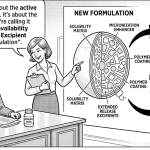
Between the open molecule and the shelves of a pharmacy sits a thicket of secondary patents on formulations, excipient combinations, release mechanisms, particle geometries, and coating systems. These patents do not protect the active pharmaceutical ingredient. They protect every commercially viable way to deliver it. And when the innovator has done their job well, they make the molecule’s expiry almost irrelevant.
This is the real terrain of generic competition. The composition-of-matter battle ended years ago. The formulation war is ongoing, active, and increasingly consequential. Between 2025 and 2030, drugs generating more than $200 billion in annual revenue will lose primary patent protection. DrugPatentWatch data on the current patent cliff makes clear that for a large fraction of these products, the primary patent’s expiry is not the decisive date. The decisive date is buried somewhere in a nest of secondary claims on specific polymorphic forms, coating polymers, osmotic delivery systems, excipient ratios, and particle size distributions that the original filing left unchallenged.
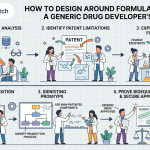
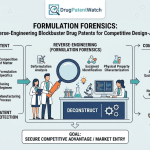
This article is a working guide for the generic developer’s side of that problem. It covers how secondary formulation patents are constructed, how to read them with clinical precision, how courts have treated them, and how formulation science can open paths around them that litigation alone cannot.
It does not assume the innovator’s patents are weak. Some are. Many are not. The appropriate starting point is to understand what they actually claim, measured against what the science requires, and then design the best non-infringing formulation the data will support.
Part I: The Architecture of the Secondary Patent Estate
How the Thicket Gets Built
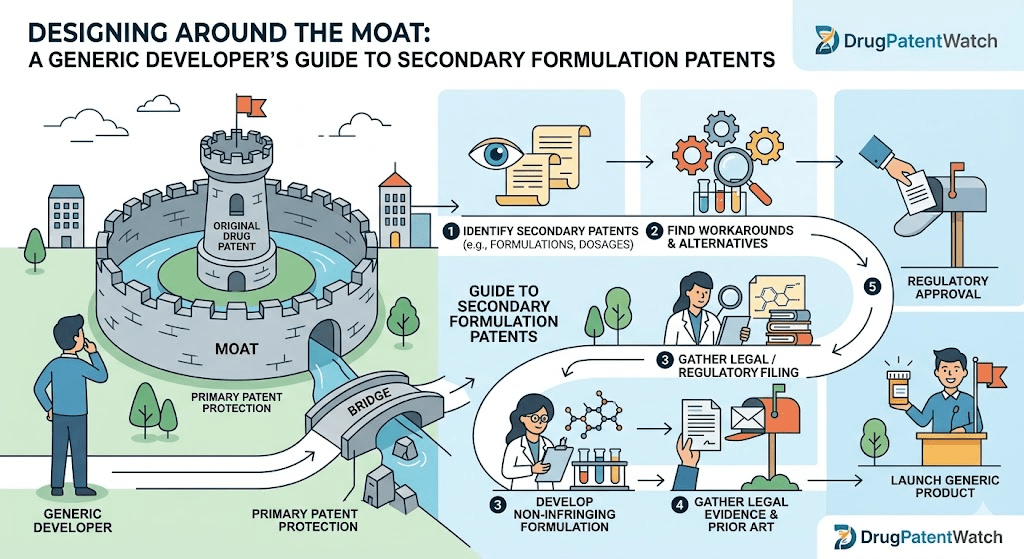
The pharmaceutical patent system as Congress designed it in 1984 assumed a clean binary: a primary composition patent protecting the molecule, and a Hatch-Waxman framework that let generics enter once that patent expired. The composition-of-matter patent was the moat. Everything else was assumed to be either unpatentable or already disclosed.
That assumption has not survived contact with the pharmaceutical industry’s IP departments.
What emerged over the following four decades is a systematic practice of filing secondary patents after a drug’s commercial launch, layering claims on every aspect of the product that is not the molecule itself. A landmark 2024 study found that 72% of the 1,429 patents and applications associated with the ten top-selling drugs in the U.S. were filed after the drug had already received FDA approval. For biologics, the figure rises to 80%. [1]
The timing reveals the strategy. Primary patents are filed pre-approval because they must be — the composition needs to be patented before the IND. But the bulk of patenting activity concentrates post-launch, when commercial success creates the economic incentive and clinical use generates the data for new claims. The result is that a drug reaching its composition patent expiry faces not the open market the Hatch-Waxman Act envisioned, but a secondary estate built specifically to delay what comes next.
For small molecules, this secondary estate typically includes some combination of the following:
Formulation patents on specific excipient combinations, polymorphic forms, particle size ranges, or solid dispersions
Controlled-release delivery patents on mechanisms that produce specific release profiles
Method-of-use patents on indications or dosing regimens discovered after initial approval
Salt and polymorph patents covering specific physical forms of the API
Device patents on delivery systems, auto-injectors, or inhalation hardware
Each category has its own litigation history, its own validity vulnerabilities, and its own design-around implications. They interact: a formulation change that avoids one patent may walk straight into another. Understanding the full architecture before starting development is not optional. It is the difference between a fundable program and a five-year detour through district court.
Why Formulation Patents Are the Dominant Battleground
Method-of-use patents generate more litigation volume in raw certification terms — by 2024, they represented approximately 55% of all Paragraph IV certifications, up from 30% in 2000 — but formulation patents present a different and in some ways harder problem for the generic developer. [2]
A method-of-use patent can often be avoided through label carve-outs. The generic files a skinny label that omits the patented indication. The drug is still approved, still bioequivalent, still reimbursable. The patented method is not practiced, at least not by the generic manufacturer. Skinny labeling has real risks around induced infringement (the Amarin v. Hikma line of cases makes clear it is not a guaranteed shelter), but the basic mechanism works when the clinical overlap between indications is manageable.
Formulation patents offer no equivalent escape. If the patented formulation is the only commercially viable way to make the product bioequivalent, the generic must either challenge the patent’s validity, design around it, or wait. There is no label amendment that fixes a release mechanism that infringes a coating patent. The science has to change, and it has to change in a way the FDA accepts as equivalent.
This creates the core tension in generic formulation development: the ANDA pathway requires bioequivalence to the reference listed drug (RLD), but the RLD’s formulation may be covered by valid patents. The generic must achieve equivalent performance through a non-infringing formulation. That is a design problem, not just a legal one.
‘The top-selling drugs in the U.S. carry an average of 74 granted patents each. For drugs that have already lost their composition-of-matter protection, the remaining exclusivity depends almost entirely on secondary patents.’DrugPatentWatch, ‘Method-of-Use Patents: The Definitive Analyst’s Guide,’ March 2026 [3]
Mapping the Patent Landscape Before You Formulate
The standard approach to patent landscape analysis in generic development begins with the Orange Book and stops there. That is a mistake that costs time and money at the worst possible moment — in litigation, after a formulation program has already been completed and an ANDA filed.
The Orange Book lists only the patents the innovator has certified as covering the approved drug product or method of use. It does not list every patent that could be asserted. Non-Orange Book patents covering manufacturing processes, intermediates, crystal forms not currently approved, or formulations the innovator chose not to commercialize are not listed — but they can be asserted in district court after ANDA filing if the generic’s product implicates them.
A complete freedom-to-operate (FTO) analysis for a generic program therefore requires pulling the full U.S. patent portfolio of the reference product holder and its relevant affiliates, not just the Orange Book listing. It also requires reviewing continuation applications — patents not yet issued from pending continuation filings can issue after ANDA filing, and if properly claimed, can be listed in the Orange Book and asserted. The innovator’s prosecution history before the USPTO matters too: arguments made to distinguish prior art during prosecution can define the actual scope of issued claims through prosecution history estoppel.
Tools like DrugPatentWatch make this analysis substantially more efficient. Their patent tracking database covers Orange Book listings, continuation chains, application-level data, and litigation history across ANDA programs, letting IP teams see not just what patents exist but what challenges others have brought, how courts have ruled, and what claim constructions have been litigated to final decision. For a generic developer evaluating a new target, that litigation history is as important as the patent text itself.
Part II: Reading Formulation Patent Claims Like a Practitioner
The Anatomy of a Formulation Claim
Patent claims on pharmaceutical formulations come in several structural types, and each type has a different design-around profile. Understanding the structure before reading the claim text saves considerable time.
Composition claims cover the formulation itself — a composition comprising specific components in specific amounts or ranges. These are the strongest formulation patents because they cover the physical product regardless of how it is used or made. A composition claim that reads ‘a controlled-release tablet comprising methylphenidate hydrochloride, hydroxypropyl methylcellulose having a viscosity grade of 4,000 to 100,000 mPa-s, and a water-insoluble coating comprising ethylcellulose, wherein the coating comprises from 4% to 12% by weight of the tablet’ is quite specific. Designing around it requires using different release polymers, different viscosity grades, different coating compositions, or different coating weight percentages — and then demonstrating that the resulting formulation achieves bioequivalent release.
Process claims cover the method of making the formulation. These are generally weaker competitive barriers than composition claims because the product, if identical to an unpatented composition, can be made by any non-infringing process. They matter most when the process is inseparable from the product’s properties — when the manufacturing method determines the physical form of the API, the structure of the release mechanism, or the performance characteristics of the coating.
Method-of-administration claims can overlap with formulation patents when the claimed method specifies particular release kinetics, plasma profiles, or delivery characteristics that the formulation must achieve. A claim to ‘a method of treating hypertension by administering a once-daily controlled-release formulation that achieves a Cmax/AUC ratio of X and maintains plasma concentrations above the therapeutic threshold for at least 22 hours’ functionally requires a specific type of formulation even if it does not name the excipients.
Claim Range Strategies and the Doctrine of Equivalents
Most formulation patents claim ranges rather than point values: ‘from 5% to 40% by weight,’ ‘a viscosity of 50 to 10,000 mPa-s,’ ‘a particle size D90 of less than 100 micrometers.’ The design-around question is whether the non-infringing alternative must fall outside those ranges while still achieving bioequivalence, or whether there is a path through the claim space that avoids infringement on a different claim element.
Courts applying the doctrine of equivalents can extend claim coverage beyond the literal language to formulations that perform the same function, in the same way, to achieve the same result. But the doctrine has real limits in pharmaceutical cases. Where the patentee surrendered claim scope during prosecution — for instance, by narrowing a range from 1-50% to 5-40% to overcome a prior art rejection — the prosecution history estoppel doctrine generally bars recapture of the surrendered subject matter under equivalents. This is where prosecution history analysis becomes a design-around tool: the narrowed claim range is not just a validity argument, it defines the scope of what equivalents can cover.
The Federal Circuit’s decision in Warner-Jenkinson Co. v. Hilton Davis Chemical Co. (1997) established that the doctrine of equivalents applies on a claim element-by-element basis, not to the claim as a whole. A generic formulation that differs from the patented formulation in two elements is analyzed separately for each: does the equivalent of one element compensate for the difference in the other? In complex formulation cases with multiple interacting components, this element-by-element analysis can be remarkably favorable for the generic challenger.
Written Description and Enablement as Validity Levers
Secondary formulation patents are frequently vulnerable to invalidity challenges on written description and enablement grounds. The USPTO examiner reviewing a broad formulation claim covering a wide range of excipient types, ratios, or particle sizes may not have asked whether the specification adequately describes the full range claimed or whether a skilled formulator could make the entire claimed genus without undue experimentation.
The Supreme Court’s 2023 decision in Amgen Inc. v. Sanofi, while arising in the antibody context, articulated an enablement standard that is increasingly applied to broad pharmaceutical claims: a patent must enable what it claims. A formulation claim that sweeps across ‘controlled-release polymer matrices comprising any cellulose ether having a viscosity of 10 to 100,000 mPa-s’ when the specification exemplifies only three viscosity grades within a narrow sub-range is potentially vulnerable. Whether the vulnerability translates into invalidity depends on the specific claim language, the specification examples, the scope of the art at the time of filing, and ultimately on a court or PTAB panel.
The practical design-around implication is that broad formulation claims, even when they appear to block a specific non-infringing alternative, may be narrowed on claim construction to exclude that alternative. A generic developer facing a broad claim should always analyze whether the specification supports the claim in its full apparent breadth, because a narrowing construction may create room the literal language seems to close.
Part III: Core Design-Around Strategies
Excipient Substitution: Finding the Functional Equivalent Outside the Claim
The most direct design-around strategy is excipient substitution: replace the patented excipient or excipient combination with a functionally equivalent alternative that falls outside the literal claim language and cannot be captured by equivalents due to prosecution history estoppel.
This sounds straightforward, and in simple cases it is. A formulation patent claiming a specific grade of hydroxypropyl methylcellulose (HPMC) can potentially be avoided by using hydroxypropyl methylcellulose acetate succinate (HPMC-AS), polyvinylpyrrolidone-vinyl acetate (PVP-VA), or a copovidone-based solid dispersion that achieves equivalent dissolution performance through a different mechanism. A patent claiming a specific ethylcellulose-based membrane coating can potentially be avoided by using a polymethacrylate-based coating system like Eudragit RS/RL that achieves the same release profile through ionic interaction rather than diffusion through a neutral polymer membrane.
The complexity arises in three ways. First, the innovator’s patent may claim broad generic categories — ‘a water-insoluble polymer coating’ — that encompass many alternatives. Second, the design-around excipient may produce a different release mechanism, requiring more elaborate bioequivalence work to demonstrate equivalent systemic exposure. Third, the patent thicket may include additional patents filed on obvious excipient alternatives, specifically anticipating substitution strategies.
Sophisticated innovator IP departments file continuation patents that explicitly claim the design-around alternatives they anticipated competitors would use. Review the full continuation chain, not just the issued patents, and pay attention to pending applications. A continuation filing that claims ‘a controlled-release formulation comprising polymethacrylate coatings achieving a release profile substantially equivalent to…’ is an early warning that the anticipated substitution route is already claimed.
Release Mechanism Redesign
Extended-release and controlled-release formulation patents are among the most commercially valuable secondary patents because they protect the drug’s most clinically attractive attributes — once-daily dosing, reduced peak-to-trough fluctuation, improved tolerability — and because these attributes are precisely what generics must replicate to achieve bioequivalence.
The Concerta case is the canonical example of what happens when a design-around fails to fully reckon with this constraint. Janssen’s Concerta uses the Alza-developed OROS (Osmotic Release Oral System) technology: a trilayer osmotic core inside a semipermeable membrane with laser-drilled delivery orifices, producing a characteristic ascending plasma concentration profile over 10-12 hours. The OROS technology was patented by Alza (later acquired by J&J), and the patents were sufficiently broad and valid to block direct replication.
Generic manufacturers including Mallinckrodt and Kudco received FDA approval for methylphenidate extended-release tablets by demonstrating bioequivalence under the standard population-level AUC and Cmax criteria. Both failed on a more clinically relevant metric: the rate of absorption over the course of the day. Without the ascending delivery profile produced by the OROS osmotic pump, their coated-bead and bilayer formulations produced release patterns closer to Ritalin LA. The FDA eventually downgraded their therapeutic equivalence rating from AB to BX following patient and physician reports of inadequate duration. [4]
The lesson is not that design-around formulations always fail at bioequivalence. The lesson is that complex delivery mechanisms create complex bioequivalence challenges, and those challenges need to be fully characterized in development before ANDA filing, not discovered by clinicians after approval. Actavis, which designed an alternative osmotic delivery system that matched the OROS release profile — using a different but functionally equivalent osmotic mechanism — achieved and maintained AB equivalence.
That is the correct model: not avoiding the mechanism, but reengineering it through a different technical path to the same clinical result.
Key Approaches to Controlled-Release Design-Around
The four primary mechanisms for controlled oral drug release each have distinct patent landscapes and design-around characteristics:
Matrix systems rely on drug diffusion through a polymer matrix that swells or erodes. The commercially dominant matrix polymers (HPMC, carrageenan, xanthan gum) are widely patented in specific grades, concentrations, and combinations. Design-around options include different polymer grades outside the claimed viscosity or substitution ratio ranges, novel polymer blends, or hot-melt extrusion-based matrix systems that achieve equivalent release through a different physical structure.
Reservoir systems use membrane-coated cores where drug release is controlled by diffusion through a rate-controlling membrane. Patent claims often specify coating thickness as a weight percentage, membrane composition including plasticizer type and ratio, and drug-to-membrane weight ratios. Design-around involves alternative membrane polymer systems (switching from ethylcellulose to polymethacrylate or vice versa), different plasticizer chemistry, or modifying the core-to-coating geometry.
Osmotic pump systems use osmotic pressure to drive drug delivery at a controlled rate through one or more orifices. These are mechanically complex and highly patentable — the physical structure, the composition of the osmotic agent layer, the geometry of the push-pull configuration, and the orifice characteristics are each independently patentable. Design-around requires either developing an alternative osmotic mechanism (as Actavis did for Concerta) or demonstrating that a non-osmotic mechanism can achieve an equivalent plasma profile.
Multiparticulate systems — pellets, beads, or mini-tablets in capsule shells — distribute the dose across many small units that can each have different coating weights or compositions for biphasic or multiphasic release. Patent claims on multiparticulate systems often specify the ratio of immediate-release to extended-release particles, the coating weight range on the ER particles, the pellet size distribution, and the specific polymer system. These claims can have complex combinatorial structure that makes literal infringement analysis difficult.
Particle Engineering and Solid State Design-Around
For BCS Class II and IV drugs, where bioavailability is limited by poor aqueous solubility, the innovator’s formulation patent often covers the technique used to enhance solubility — spray-drying to form amorphous dispersions, hot-melt extrusion, nanosizing, co-precipitation, or co-crystallization with specific coformers. These techniques produce product forms that may be patented both as compositions (covering the amorphous dispersion or co-crystal itself) and as processes (covering the manufacturing method).
The design-around question is whether an alternative particle engineering approach can achieve equivalent solubility enhancement through a different physical mechanism. A spray-dried amorphous dispersion using PVP-VA can sometimes be substituted with a hot-melt extrudate using copovidone, if both achieve supersaturation sufficient for equivalent AUC. A co-crystal with one coformer may be substituted with a co-crystal using a different coformer that is not covered by the innovator’s claims, provided the FDA-required pharmaceutical coformer qualification data can be generated.
Polymorph patents deserve particular attention because they frequently have no relation to the API’s composition-of-matter patent. The patent on the anhydrous Form I crystalline structure of a drug molecule may have been filed by the innovator fifteen years after the composition patent, based on a crystal screen performed when Form I was discovered to have superior stability. A generic using a different crystalline form — Form II, Form III, a hydrate, or a solvate — may be outside the literal scope of the polymorph patent even if it uses the same API. But it must achieve bioequivalence, which can be complicated if the reference product’s bioavailability depends on the specific dissolution rate of Form I.
Skinny Formulation: Avoiding the Patented Upgrade
A distinct design-around strategy applies when the innovator has reformulated their product — moving from immediate release to extended release, from daily to three-times-weekly dosing, from a 20 mg to a 40 mg concentration — and obtained secondary patents on the new formulation while the original formulation has lost patent protection.
Teva’s Copaxone strategy is the defining example. After the primary patents on the 20 mg/mL daily formulation of glatiramer acetate expired and generic competition entered, Teva had already pivoted commercially to the 40 mg/mL three-times-weekly formulation. This new formulation was protected by a cluster of secondary patents covering the concentration, the dosing frequency, and the formulation parameters of the 40 mg/mL product.
Generic developers faced a choice: challenge the 40 mg/mL secondary patents, or pursue the 20 mg/mL market that was already open. Most pursued both simultaneously, filing for both strengths and challenging the 40 mg/mL patents on obviousness grounds. The Federal Circuit ultimately invalided Teva’s 40 mg/mL formulation patents as obvious, ruling in 2018 that the dosing regimen was not sufficiently inventive to merit patent protection. [5] But the litigation spanned multiple court proceedings and PTAB reviews, consumed years of generic developer resources, and was still unresolved when Novartis and Mylan received approval for 40 mg/mL generic glatiramer acetate in 2017-2018.
The strategic lesson: an innovator’s secondary patent on an upgraded formulation does not automatically protect the upgraded product if the upgrade itself is obvious. But winning the invalidity argument takes time even when you are right, and in pharmaceutical markets, time lost is revenue lost. The design-around path — if one exists — is frequently faster than the litigation path.
For Copaxone specifically, the design-around question was whether a different dosing frequency (not three-times-weekly) or a different concentration could achieve equivalent clinical outcomes. The clinical trial data did not obviously support a different regime. When the formulation change that gives rise to the secondary patent is also the clinically necessary change, the design-around space is limited, and the invalidity challenge is the primary tool.
Part IV: The ANDA as a Litigation Document
Designing Non-Infringement Into the ANDA
The ANDA is simultaneously a regulatory submission and, in most cases where secondary patents remain active, the primary piece of evidence in impending patent litigation. Generic companies that treat these as sequential activities — file the ANDA, then think about litigation — have not fully internalized what the Paragraph IV pathway means.
The factual record that will determine infringement in a Hatch-Waxman trial is almost entirely the ANDA itself. The specification of the generic formulation, the batch records, the dissolution data, the bioequivalence study, and the expert declarations all become exhibits. Ambiguity in the ANDA specification is not a regulatory problem that can be resolved by an amendment; it is a litigation risk that can be used to argue that the generic’s product falls within the literal scope of the patent’s claims or within equivalents.
Non-infringement must be engineered before formulation finalization, not after. The formulation development team, the regulatory affairs team, and the IP team need to be in the same room at the design-around stage, not communicating through memos after the critical decisions have been made. Specifically, the IP team needs to have done claim construction on every Orange Book-listed patent before the formulation scientists commit to a specific excipient system.
This is not a small organizational change for many generic companies. Formulation development and IP analysis have historically operated in parallel rather than in series, with the IP team doing FTO analysis on the completed formulation rather than shaping the formulation’s design from the outset. The economics of the current secondary patent environment — where patent claims are more numerous, more specific, and more carefully prosecuted than they were twenty years ago — have made that historical workflow dangerously inadequate.
ANDA Specification Precision and Infringement Risk
Specific ANDA specification choices can significantly affect infringement risk. A specification that describes the coating system as ‘an ethylcellulose-based extended-release coating applied at 6-10% weight gain’ is more precise than one that describes ‘a rate-controlling membrane coating.’ The more precise specification is easier to defend as non-infringing against a claim that specifies different coating parameters, but it also commits the applicant to a narrower range of acceptable manufacturing variation.
Working ranges in ANDA specifications — the ranges within which batch-to-batch variation is acceptable — can inadvertently straddle patent claim boundaries. A specification that permits coating weight gain from 4% to 12% w/w may be within the literal scope of a patent that claims coating weights of 6% to 14% w/w for a significant portion of its permitted range. Identifying these overlaps before filing, and either tightening the specification to exclude the infringing range or challenging the patent, is a basic ANDA preparation step that is frequently underperformed.
The Federal Circuit has repeatedly held that an ANDA applicant’s product is defined by the specification of the ANDA, not by the specific batch manufactured to demonstrate bioequivalence. A product specification that permits a range of particle sizes, coating weights, or excipient ratios is analyzed against the patent’s claims for potential infringement across the full permitted range, not just the specific values tested in the bioequivalence study. This ‘worst case’ analysis is standard practice in ANDA patent litigation, and it needs to be standard practice in pre-filing ANDA design as well.
The 30-Month Stay: Managing the Litigation Clock
When an ANDA with a Paragraph IV certification is filed and the brand company receives the statutory notice and sues within 45 days, FDA approval is automatically stayed for 30 months — or until the court renders a final decision on validity and infringement, whichever is earlier. [6] The stay is triggered by any Orange Book-listed patent against which the Paragraph IV certification is filed, and it runs separately for each patent. An innovator that lists additional Orange Book patents during the 30-month stay period cannot use those patents to stack additional stays, but patents listed before the ANDA filing date are each eligible to trigger their own 30-month stay when challenged.
The commercial consequence of the 30-month stay is straightforward: a generic developer that files against a drug with four Orange Book-listed patents and triggers four separate lawsuits is facing 30 months of blocked approval, during which the brand continues to collect revenue at branded prices. Even if the generic wins all four cases, the delay has transferred billions of dollars in revenue from patients and payers to the innovator.
This economics calculus affects design-around strategy. A design-around that successfully avoids some but not all of the Orange Book-listed patents reduces the number of Paragraph IV certifications required, potentially reducing litigation exposure. A design-around that avoids all listed patents allows the ANDA to be filed with Paragraph III certifications (acknowledging the patents but filing for approval after their expiry) or Paragraph II certifications (acknowledging that the patents do not cover the generic product), neither of which triggers a 30-month stay.
The value of a complete design-around — one that avoids all Orange Book-listed patents — is therefore not only the litigation cost savings. It is the ability to file an ANDA and receive approval on the FDA’s standard timeline, without a 30-month stay, and launch at the patent expiry date of the composition patent. For a drug generating $3 billion annually in brand revenue, that timeline advantage is worth hundreds of millions of dollars per month of acceleration.
Part V: Litigation vs. Design-Around: When to Do Which
The PTAB Alternative
Since the America Invents Act of 2011 created the Patent Trial and Appeal Board’s Inter Partes Review proceeding, generic developers have had a second forum for patent validity challenges that is cheaper, faster, and in some ways more favorable than district court. In fiscal year 2024, the institution rate for bio/pharma IPR petitions was approximately 73%, and of those instituted, a substantial fraction resulted in cancellation of at least some challenged claims. [7]
For secondary formulation patents specifically, the invalidity rates are structurally favorable. Analysis by DrugPatentWatch of Orange Book-listed patent challenges at PTAB shows that method-of-treatment patents are the most vulnerable category, formulation patents occupy the middle ground, and API composition-of-matter patents are the most resistant. The ‘middle ground’ characterization understates the practical utility: many secondary formulation patents, particularly those claiming obvious combinations of known excipients or predictable modifications to dosing regimens, have been invalidated at the PTAB on obviousness grounds. [8]
The strategic deployment of IPR petitions as a parallel-track challenge during Hatch-Waxman district court litigation creates multiple advantages. First, IPR proceedings typically resolve within 18 months — faster than the 30-month stay period in most district court cases. A successful IPR can eliminate a blocking patent entirely before the stay expires, clearing the path to approval without waiting for the district court decision. Second, the threat of a meritorious IPR petition creates settlement leverage: a brand company facing likely claim cancellation at the PTAB has reason to negotiate an earlier generic entry date in exchange for IPR withdrawal. Third, a successful IPR on a formulation patent can have ripple effects on related patent families, since claim constructions and prior art findings in IPR proceedings can be used in district court proceedings on continuation patents.
The main constraint on IPR strategy is estoppel. An IPR petitioner who grounds a petition on specific prior art references, and who obtains a final written decision from the PTAB, is estopped from raising in district court ‘any ground that the petitioner raised or reasonably could have raised’ during the IPR. Ground selection for IPR therefore requires deliberate calibration — raising the strongest prior art arguments at the PTAB while preserving secondary arguments for district court is a coherent strategy, but it requires careful planning before the petition is filed.
When Invalidity Beats Design-Around
There are situations where the correct strategy is invalidity challenge, not formulation redesign. They are fewer than many generic developers assume, but they are real.
When the claimed formulation is narrow, the prior art clearly anticipates or renders it obvious, and the commercial timeline of a formulation redesign would exceed the time required to obtain a favorable IPR decision or district court ruling, the litigation path can be faster. This scenario arises most commonly with dosing regimen patents (three times weekly instead of daily, specific dose escalation protocols) and with secondary formulation patents that are obvious variants of published formulation science.
Teva’s 40 mg/mL Copaxone dosing patents ultimately fell on obviousness grounds precisely because there was published clinical data suggesting that three-times-weekly administration of a higher dose could achieve equivalent efficacy. When the scientific literature already suggests what the patent claims is inventive, the invalidity case is correspondingly strong.
When the claimed formulation encompasses all commercially viable alternatives, and there is strong prior art that the USPTO examiner did not consider (or considered inadequately), IPR proceedings can be the only viable path to market. Some formulation patents are simply too broadly written across the viable excipient space to design around without compromising bioequivalence. In those cases, the IPR is the mechanism, not an alternative to it.
When Design-Around Beats Litigation
When the formulation patent is narrow and specifically claims the innovator’s commercial formulation, when prior art is limited, and when there is scientific room to achieve bioequivalence through a different technical approach, the design-around is almost always faster and cheaper than litigation. The typical Hatch-Waxman trial takes 28-34 months from filing to decision. A formulation redesign on a standard oral solid dosage form, done with the ANDA specification in mind from the outset, can be completed in 18-24 months. A design-around program that produces a bioequivalent, non-infringing formulation avoids both the 30-month stay and the litigation itself.
The cost differential is substantial. ANDA-related Hatch-Waxman litigation on a complex secondary patent case runs $5-15 million per case for the generic defender, not including the cost of any adverse decision. [9] A formulation redesign program for a complex oral solid dosage form runs $2-8 million including the bioequivalence study, substantially less if the design-around is straightforward. When there are multiple patents to challenge, the litigation cost multiplies; the design-around cost does not.
The design-around is also the only path that generates proprietary formulation know-how. A generic company that wins an invalidity case ends up with the right to copy the innovator’s formulation. A generic company that successfully designs around ends up with a non-infringing formulation it owns, which can be patented and which creates barriers for subsequent generic entrants. This is not a hypothetical advantage — the first-filer’s 180-day exclusivity is worth more when the first-filer has a superior non-infringing formulation that is itself patentable.
Part VI: Case Studies in Formulation Design-Around
Methylphenidate Extended Release: The OROS Lesson
The Concerta generic story illustrates the central tension in extended-release design-around with unusual clarity. Janssen’s Concerta, approved in 2000, used Alza’s OROS platform to create a product with a unique pharmacokinetic profile: an initial immediate-release pulse (22% of dose) providing rapid onset, followed by ascending delivery of the remaining 78% over 10-12 hours. This ascending profile distinguished Concerta from all previous methylphenidate formulations and was the primary driver of its clinical differentiation.
When the OROS patents expired, generic manufacturers faced a choice: replicate the osmotic mechanism or develop an alternative that matched the plasma profile. Mallinckrodt and Kudco took the second path and failed. Their formulations passed the FDA’s standard AUC and Cmax bioequivalence criteria because the aggregate absorption was equivalent. But the rate of delivery over time was not, producing a release profile that looked more like the pulsatile delivery of a two-pulse bead system than the steady ascending curve of the OROS pump. Physicians and patients noticed the difference, and the FDA’s subsequent downgrade to BX status formalized what clinical practice had already established. [10]
Actavis took the first path and succeeded. Their methylphenidate extended-release tablets also passed standard bioequivalence criteria, but critically, the FDA’s dissolution testing during the review process confirmed that the release profile matched the OROS reference. Actavis had developed an alternative osmotic pump mechanism — using the same trilayer push-pull architecture as OROS but with different membrane chemistry and osmotic agent composition — that replicated the reference product’s in vitro and in vivo behavior without infringing the Alza patents on the specific OROS formulation parameters.
This is what successful design-around looks like at the delivery system level: understanding the clinical consequence of the patented mechanism, developing a non-infringing alternative that produces the same consequence through different chemistry, and generating the dissolution and pharmacokinetic data to prove equivalence.
Glatiramer Acetate: When the Clinically Necessary Change Is the Patented Change
Copaxone presents the opposite scenario: a case where the innovator’s secondary patent covered a clinically meaningful advance, the advance was obvious, and the design-around space was essentially zero because no alternative approach could achieve the same clinical result through a different route.
Teva’s commercial strategy was textbook lifecycle management. Copaxone 20 mg/mL was a once-daily subcutaneous injection. Before generic competition entered the 20 mg/mL market, Teva pivoted commercially to Copaxone 40 mg/mL, a three-times-weekly formulation supported by clinical data showing equivalent efficacy with reduced injection burden. The 40 mg/mL formulation was patent-protected by secondary patents covering the concentration, the dosing regimen, and specific formulation parameters. [11]
Generic developers had no viable design-around. You cannot achieve three-times-weekly glatiramer acetate therapy at 40 mg/mL by varying the excipients or the injection delivery mechanism. The clinical outcome is locked to the dose and frequency. If those are the patented elements, the only path is invalidity.
Mylan, Novartis, and others ultimately prevailed on invalidity grounds at both the PTAB and the Federal Circuit. The court’s invalidation of Teva’s dosing regimen patents as obvious reflected the principle that a clinically obvious improvement — higher dose, less frequent administration — does not become patentable simply because it required a clinical trial to prove it. But the process consumed nearly eight years of multi-jurisdictional litigation across the U.S., Europe, and the UK, involving four waves of U.S. patent litigation and more than 15 regulatory and litigation proceedings globally. [12]
The lesson for generic developers is not that evergreening always fails. It is that the design-around analysis must honestly assess whether the design-around space exists at all before committing to a program. Some formulation patents on clinically necessary advances must be challenged on validity, and that process takes time regardless of outcome.
Lisdexamfetamine Dimesylate: Prodrug Patents and the Composition Trap
Takeda’s Vyvanse franchise illustrates a different secondary patent structure: the prodrug patent. Lisdexamfetamine dimesylate (LDX) is not a formulation of dextroamphetamine. It is a covalently bonded prodrug in which the lysine amino acid is linked to the amphetamine molecule, generating a compound that is absorbed intact and then cleaved to release active dextroamphetamine during first-pass metabolism. This prodrug architecture is both the active ingredient and the extended-release mechanism.
The Orange Book for Vyvanse listed patents covering not just the LDX compound itself but its salt forms, pharmacokinetics, pharmacodynamics, and methods of treatment — the same ‘nine Orange Book-listed patents’ asserted in the 2022 trial against Norwich Pharmaceuticals, where Judge Chesler found all asserted patents infringed and not invalid. [13]
For a generic developer, ‘designing around’ a prodrug patent is effectively impossible if what you are trying to make is the same prodrug with bioequivalent performance. The prodrug is the mechanism. You cannot replace the mechanism without replacing the drug. What Norwich and the other ANDA filers were therefore pursuing was not a design-around in the formulation sense — it was a validity challenge to the compound patent itself, arguing that the lisdexamfetamine-lysine conjugate was obvious in light of the prior art on amphetamine prodrugs.
The primary U.S. patent on lisdexamfetamine dimesylate expired on February 16, 2023, with pediatric exclusivity extending to August 24, 2023. Following expiry, Actavis Elizabeth received the first generic approval, and multiple generic manufacturers began shipping in August 2023. The design-around was therefore temporal — waiting for expiry — rather than formulation-based. [14]
What the Vyvanse example illustrates is the boundary condition of the design-around analysis. When the secondary patent is effectively an integral part of the active ingredient’s mechanism, the formulation design-around approach has no meaningful application. The generic developer’s tools are invalidity challenge, pediatric exclusivity waiting, and post-expiry competition.
Part VII: The Formulation Scientist’s Toolkit for Design-Around
Pre-Formulation Analysis for Patent Navigation
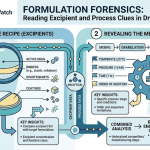
Pre-formulation work sits at the exact intersection of scientific necessity and legal strategy. The physical and chemical characterization of the API — aqueous solubility, crystal form and polymorphic landscape, hygroscopicity, chemical stability in the presence of specific excipient classes — provides the scientific foundation for formulation selection. It also defines the constraints within which the patent design-around must operate.
A BCS Class II API with three known polymorphic forms, where Form A is thermodynamically stable, Form B is kinetically stable and has 3x higher apparent solubility, and Form C is covered by a patent filed by the innovator — presents a specific design problem. Using Form A may require enhanced solubility techniques (nanoparticulation, amorphous dispersion) not required for Form B, potentially implicating additional formulation patents. Using Form B may be the straightforward path but requires demonstrating that Form B remains stable in the intended dosage form and does not convert to Form A during storage. Using Form C is excluded by the patent.
Pre-formulation analysis therefore needs to explicitly map the patent estate’s physical chemistry implications, not just the formulation-level claims. The API’s biophysical profile determines what excipient functions are required. The patent estate determines which implementations of those functions are available. The design-around formulation must achieve the required functions through non-infringing implementations.
Quality by Design and the Freedom-to-Operate Report
The FDA’s Quality by Design (QbD) framework, established through ICH Q8(R2), Q9, and Q10, requires that formulation development identify the Quality Target Product Profile (QTPP), define Critical Quality Attributes (CQAs), and systematically investigate the design space connecting process parameters and material attributes to CQAs. For ANDA development, the QTPP includes bioequivalence parameters that set the performance requirements the design-around formulation must meet.
The design space investigation — the experimental mapping of how formulation variables affect CQAs — is simultaneously the technical foundation of the ANDA and the scientific basis of the non-infringement analysis. A design space that shows bioequivalent dissolution and pharmacokinetic performance using HPMC-AS concentration from 30-50% w/w at a 1:1 drug-to-polymer ratio, combined with Tween 80 at 0.5-1.5% w/w as a solubilizing agent, defines the technical parameters of the non-infringing formulation with the precision that an IP attorney and a court require.
The formal output of this combined analysis is what the industry sometimes calls a ‘freedom-to-operate formulation report’ — a document that maps the design space to the patent claims, identifies the regions of the design space that fall outside all identified patent claims, and characterizes the CQA performance within those regions. This document does not exist as a standard regulatory requirement, but the legal and strategic benefits of having it are substantial: it gives both the regulatory filing and any subsequent litigation a coherent, documented basis for the non-infringement position.
Analytical Characterization for Differentiation
Sophisticated dissolution method development is critical to the design-around strategy for extended-release formulations. The standard USP dissolution apparatus and conditions were developed for immediate-release products and may not differentiate meaningfully between an infringing and a non-infringing extended-release formulation. Biopredictive dissolution methods — using biorelevant media, physiologically relevant hydrodynamics, and in vitro-in vivo correlation (IVIVC) models — provide both a more discriminating quality control tool and a more defensible basis for demonstrating clinical equivalence through alternative mechanisms.
For a design-around extended-release formulation using a different release mechanism than the innovator’s product, IVIVC development is worth the investment. A Level A IVIVC demonstrates a point-to-point relationship between in vitro dissolution and in vivo pharmacokinetics, providing the scientific basis for using dissolution testing as a surrogate for bioequivalence in scale-up, post-approval changes, and multi-strength waivers. More importantly in the context of design-around, a validated IVIVC demonstrates that the non-infringing formulation produces equivalent in vivo performance through a mechanistically different in vitro profile — exactly what regulatory reviewers and litigation experts need to see.
Manufacturing Process as Design-Around Tool
Process patents on pharmaceutical formulations are less common than composition patents, but when they exist, they must be addressed. More importantly, the manufacturing process affects the formulation’s physical properties in ways that can create or eliminate infringement of composition patents.
Hot-melt extrusion (HME) produces solid dispersions with physical and chemical characteristics different from spray-dried dispersions (SDD) of the same API and polymer, even when the composition is nominally the same. An HME-produced solid dispersion may have a different particle morphology, different glass transition temperature, different dissolution mechanism, and different stability profile than an SDD — all of which may be relevant to whether the product falls within a claim that specifies structural or performance characteristics of the amorphous dispersion, rather than just its chemical composition.
Wet granulation versus dry granulation produces tablets with different internal structures, different disintegration characteristics, and different dissolution profiles even when the formulation composition is identical. If the innovator’s formulation patent specifies structural characteristics that are produced by their specific manufacturing process, a generic manufacturer using a different process may produce a product with genuinely different structural characteristics that falls outside the claim, even with the same excipient list.
This is why formulation scientists and IP counsel need to work through the manufacturing process implications of patent claims together, not separately. The IP analysis that stops at the composition claim without considering how manufacturing process affects the physical product covered by that claim is incomplete.
Part VIII: Orange Book Listings and the Improper Listing Defense
Challenging the Legitimacy of the Listing
A secondary patent that is improperly listed in the Orange Book should not be triggering a 30-month stay when challenged. The FD&C Act requires that listed patents have claims that cover the approved drug product or method of use. FDA’s historical practice of accepting innovator listing certifications without independent review created a mechanism for listing patents that do not meet this standard — and using them to trigger stays and create litigation expense even when the underlying patents are non-infringers rather than valid claims.
The Federal Trade Commission has documented this pattern extensively, and the Federal Circuit has ruled in several cases that specific patent types should not be Orange Book-listed. The 2024 Federal Circuit ruling in Teva v. Amneal found that patents on metered-dose inhalers (MDIs) used to deliver Teva’s ProAir HFA should not have been listed in the Orange Book, because device patents that cover the container or device but not the drug product itself do not qualify for listing. [15] Earlier rulings reached similar conclusions about REMS-related patents and patents covering aspects of the manufacturing process.
For generic developers, improper listing challenges provide a path to removing the triggering basis for 30-month stays without a full validity or infringement trial. A successful improper listing challenge does not invalidate the patent — it merely removes it from the Orange Book, which means a Paragraph IV certification against it no longer triggers an automatic stay. The patent can still be asserted after ANDA approval, but the generic can receive approval and launch while that litigation proceeds.
The 2021 Hatch-Waxman reform provisions that enhanced FDA’s authority to remove improperly listed patents, combined with the Federal Circuit’s increasingly firm standards for what can be listed, have made improper listing challenges a viable and increasingly common component of ANDA strategy for complex generics with device components, combination products, or manufacturing-tied Orange Book patents.
Patent Listing Manipulation and the FTC
The broader policy environment has become less tolerant of aggressive Orange Book listings. The FTC sued Shire (now part of Takeda) in 2021 over the Orange Book listing of patents for its Intuniv and Adderall XR products, alleging that the listed patents did not actually cover the approved drugs and that their listing was designed to trigger stays and delay generic competition. The FTC’s increased enforcement posture, combined with the expanded ability under the 2021 reforms to challenge improper listings directly with FDA, has shifted the cost-benefit calculus for innovators considering borderline listings.
For generic developers, the practical implication is that aggressive use of the FDA petition process to challenge Orange Book listings — particularly for device patents, REMS patents, and manufacturing process patents — has become a more productive strategic avenue. A well-supported citizen petition documenting why a specific patent does not meet the listing standard, filed concurrently with or prior to ANDA submission, can accelerate FDA’s review of the listing and reduce the litigation exposure from improperly listed patents before the 45-day window for brand suit is triggered.
Part IX: The Drug Pricing and Policy Context
How Secondary Patent Proliferation Affects the Generic Industry’s Economics
The secondary patent problem is not a static one. The number of patents per medicine has tripled over the past two decades, according to I-MAK analysis of branded pharmaceutical IP portfolios. [16] The top-selling drugs now average 74 patents each. For generic developers building pipeline models, this means that the financial case for any specific ANDA program must explicitly account for secondary patent litigation costs and timelines, not just the API patent cliff.
The 180-day first-filer exclusivity — the Hatch-Waxman Act’s primary incentive for Paragraph IV challenges — is worth substantially less in a secondary patent environment. A first-filer that challenges a composition patent and wins the exclusivity period to co-launch with other generics at patent expiry now faces the additional cost of secondary patent litigation on all remaining Orange Book-listed patents, each of which may trigger additional 30-month stays or produce adverse judgments that further delay the exclusive launch date. The expected value of first-filer status has declined as secondary patent estates have grown.
This has produced a structural shift in how generic companies prioritize pipeline targets. Targets with thin secondary patent estates — molecules that were never commercially successful enough to justify extensive lifecycle management, or where the innovator’s IP team failed to adequately build the secondary estate — are disproportionately attractive. Targets with extensive secondary estates require correspondingly larger projected market opportunities to justify the litigation investment.
‘The pharmaceutical industry spent roughly $260 billion on R&D globally in 2023, according to IQVIA estimates. A substantial fraction of that capital goes toward formulation patents on existing molecules — secondary claims that extend exclusivity rather than advance the science.’DrugPatentWatch, ‘Drug Patent Formulation Intelligence: The Definitive Guide,’ April 2026 [17]
The Inflation Reduction Act and Its Secondary Patent Implications
The Inflation Reduction Act’s Medicare drug price negotiation provisions, which took effect with the first negotiated drugs in 2026, create an indirect but meaningful incentive effect on secondary patent strategy. Drugs subject to price negotiation face government-set prices that reduce the revenue available to fund ongoing secondary patent litigation. For an innovator whose secondary patent estate is the primary barrier keeping generic competition off the market, the reduced revenue from negotiated pricing means reduced resources for litigation at exactly the time when the secondary patents are the last line of defense.
For generic developers, this creates a potentially more favorable litigation environment for drugs that are also subject to IRA price negotiation. A brand company defending secondary patents while simultaneously facing negotiated Medicare pricing for the same drug is under significantly greater financial pressure than was the case in the pre-IRA environment. Settlement terms may be more favorable, and the brand’s willingness to sustain multi-year patent litigation over formulation claims may be reduced.
This is speculative at the scale of individual cases — the actual litigation calculus depends on drug-specific economics, litigation risk assessment, and settlement leverage that vary widely by molecule. But the directional effect of IRA pricing on secondary patent litigation is worth factoring into pipeline strategy for drugs where IRA negotiation is expected.
Part X: Building a Design-Around Program
The Team Structure That Works
Effective design-around programs are organizational products, not scientific ones. The science is necessary but not sufficient. The organizational structure that consistently produces successful non-infringing formulations treats the IP analysis and the formulation science as genuinely integrated functions from the project’s outset, with defined accountability and a single project leader who can reconcile scientific feasibility with legal strategy.
The minimum viable team for a design-around program on a complex oral solid dosage form includes an experienced pharmaceutical IP attorney with Hatch-Waxman litigation background (not a patent prosecution specialist alone), a senior formulation scientist with hands-on experience in the relevant delivery technology, a regulatory affairs director who has filed ANDAs for complex dosage forms, and a project manager with the standing to hold all three accountable to integrated decisions rather than siloed outputs.
The team’s first deliverable is a joint patent-formulation analysis report that maps the claims of every relevant patent to specific formulation design variables. This is not an FTO opinion alone (a legal document) and not a pre-formulation report alone (a scientific document). It is a combined document that specifies, for each claim limitation in each patent, what formulation parameter corresponds to that limitation and what range of non-infringing parameter values is scientifically viable given the API’s biophysical profile.
That combined document is the design-around specification. Everything that follows — the formulation screening program, the DoE, the dissolution development, the bioequivalence study design — flows from it. Organizations that produce this document at the start of a design-around program and update it as experimental data comes in produce better formulations faster and arrive at ANDA filing with a legally defensible non-infringement position built into the product specification.
Using DrugPatentWatch for Target Identification and Landscape Analysis
DrugPatentWatch provides one of the most comprehensive structured datasets for Orange Book patent tracking, ANDA filing history, litigation history, and patent expiry forecasting available to the generic industry. For a generic company building a design-around program, the platform’s value lies specifically in the combination of these data streams.
The patent expiry tracking — which covers not just the Orange Book listed expiry dates but also patent term adjustment (PTA) and patent term extension (PTE) data, plus continuation patent families filed on the same molecule — tells the story of how much secondary estate remains after the composition patent. A drug where the composition patent expires in 2026 but the Orange Book currently lists formulation and method-of-use patents expiring through 2034 is an 8-year exclusivity gap that the secondary estate is filling. Understanding that gap, and whether it can be closed through formulation design-around or requires invalidity challenge, is the first-order strategic question for any ANDA program targeting that molecule.
The ANDA filing history data shows who else is in the same race. If five other filers have already submitted ANDAs with Paragraph IV certifications against the same patents, the first-filer exclusivity period is already claimed, and the economic rationale for a Paragraph IV challenge on those specific patents is substantially reduced. A design-around that avoids the challenged patents entirely — filing with Paragraph III or Paragraph II certifications — can actually be the faster and economically superior path even if it requires more formulation work, because it avoids both the litigation cost and the exclusivity competition with earlier filers.
The litigation history data from DrugPatentWatch is particularly valuable for identifying claim constructions. If a specific Orange Book patent has been litigated to a Markman hearing and the court construed a key claim term narrowly, that construction is highly relevant to the design-around analysis — it may open technical space that the patent’s literal language appeared to close. Courts are not bound by prior claim constructions in different cases, but Federal Circuit precedent on the same patent is persuasive, and district court Markman rulings provide at minimum the strongest available signal of how a subsequent court is likely to approach the same claims.
The 18-Month Development Timeline: What ‘On Time’ Requires
A realistic timeline for a design-around formulation program on a complex oral solid dosage form, starting from a completed patent landscape analysis and ending at ANDA filing, runs 18-30 months depending on dosage form complexity, API availability, and the number of bioequivalence studies required.
The compressed end of this range — 18 months — requires API supply secured at program start, a clear design-around strategy from the outset (not a broad exploration of alternatives), formulation screening using QbD design-of-experiments methodology rather than sequential one-variable-at-a-time approaches, dissolution method development completed in parallel with formulation optimization rather than sequentially, and a pilot-scale batch manufactured and analyzed before the pivotal bioequivalence study is run. Any of these steps done sequentially instead of in parallel adds months.
The commercial deadline driving this timeline is typically the composition patent expiry date minus the expected ANDA review time. For standard oral solid dosage forms, the FDA’s target action date from ANDA filing is 10 months for non-complete response letter (CRL) applications. For complex dosage forms, bioequivalence study requirements are more demanding and review timelines extend. A generic developer planning to launch at patent expiry needs to have the ANDA filed and complete approximately 12-18 months before that date, which means formulation development completed 30-48 months before patent expiry.
Most generic developers know this arithmetic. Fewer execute to it. The formulation development timeline slippage that forces expedited bioequivalence studies, reduces pre-pilot characterization time, or compresses ANDA preparation time is a recurring feature of underfunded or understaffed design-around programs. The $200 billion patent cliff that DrugPatentWatch and IQVIA have documented for the 2025-2030 period will be contested heavily by companies that started development in 2022-2024. The ones that started on time will have complete, defensible formulations at ANDA filing. The ones that did not will be making expensive tradeoffs at the worst moment.
Part XI: Post-Launch Considerations
Protecting the Design-Around With Your Own IP
A successful design-around formulation is potentially patentable. If the non-infringing formulation involves a genuinely novel excipient combination, a novel manufacturing process, a novel particle engineering approach, or a novel delivery mechanism, filing for IP protection before ANDA submission creates competitive advantages for the first-filer that persist beyond the 180-day exclusivity period.
This is not a common move in the generic industry, which has historically competed on manufacturing cost and speed to market rather than formulation IP. But the structural evolution of the secondary patent environment is pushing sophisticated generic developers toward it. A first-filer generic company that has developed a superior non-infringing extended-release formulation — one that achieves equivalent or better clinical performance through a different mechanism — can patent that formulation and use the patent to exclude subsequent generic entrants who would otherwise copy the design-around rather than developing their own.
The patent strategy for a design-around formulation must be carefully coordinated with the ANDA disclosure. Material not disclosed in the patent application before ANDA filing becomes prior art against subsequent patent applications on the same formulation. And the ANDA specification, which is a public document after approval, provides detailed formulation information that competitors and continuation patent filers will mine. Working with IP counsel to secure patent protection on the design-around formulation before ANDA submission, and to identify what specific elements are patentable versus what must be disclosed for ANDA purposes, is the final step in a complete design-around program.
Managing Post-Launch Formulation Patent Risk
The 30-month stay and the Paragraph IV litigation framework protect the generic’s launch position during pre-approval proceedings. Post-approval, the generic faces a different risk profile: the innovator can file suit on non-Orange Book patents not previously asserted, continuation patents that issued after the ANDA filing date, or newly discovered formulation patents that were not in the Orange Book at the time of filing.
Post-launch infringement claims are less common than pre-approval Paragraph IV litigation because the economics are different — an at-risk launch exposes the generic to substantial damages if the subsequent suit succeeds — but they are not rare. The generic developer’s best defense is the quality of the design-around analysis: a formulation that was designed from the outset to avoid all identifiable patent claims, with a documented technical rationale for non-infringement that has been reviewed by experienced Hatch-Waxman counsel, is substantially harder to successfully sue than a formulation that was designed to meet bioequivalence criteria first and checked for infringement second.
Continuation patent monitoring after ANDA filing is also essential. Continuation applications pending at the time of ANDA filing can issue as patents with new claims that were not in the Orange Book when the Paragraph IV certification was filed. While these late-issuing patents cannot trigger additional 30-month stays (the stay mechanism requires patents to be listed before the ANDA is filed), they can be asserted in a separate infringement action. Systematic monitoring of the innovator’s prosecution portfolio, and rapid assessment of newly issued continuations for claims that might read on the approved generic formulation, allows the generic company to respond quickly rather than discovering the problem at a preliminary injunction hearing.
Part XII: The Future of Formulation Patent Litigation
AI-Assisted Formulation Discovery and Its Patent Implications
Machine learning models for pharmaceutical formulation optimization — predicting excipient compatibility, polymer selection, and process parameters from chemical structure data — are now commercially available and in active use at generic development companies and CDMOs. These tools accelerate the experimental screening phase of formulation development, which has historically been the rate-limiting step in design-around programs.
AI-assisted formulation discovery also has IP implications that the industry has not fully worked through. If a machine learning model identifies a novel excipient combination that achieves bioequivalent performance outside the patent’s claimed space, is that combination patentable by the generic developer? Current USPTO guidance requires that AI-generated inventions have a human inventor who contributed to the conception of the invention. The formulation scientist who directed the AI query, evaluated the model’s outputs, and selected the specific combination for experimental testing likely qualifies as the inventor under current standards. But the line between human-directed AI tool use and AI-generated invention is contested, and the USPTO’s evolving guidance will shape this landscape over the next several years.
More immediately relevant: if an innovator uses the same AI formulation tools to prospectively generate and patent large numbers of alternative excipient combinations — combinations that are AI-generated design-around alternatives to their own patented formulation — they can theoretically block design-around routes that have not been experimentally validated. Whether such prophylactic AI-generated patents meet the enablement and written description requirements of 35 U.S.C. § 112 is a question that will occupy the Federal Circuit and the PTAB for years. The Supreme Court’s Amgen v. Sanofi framework, requiring that a patent enable the full scope of what it claims, is the likely limiting principle.
Complex Dosage Forms and the Rising Technical Bar
The FDA’s complex generics program, established to accelerate approval of hard-to-characterize products including topical semisolids, locally-acting GI products, inhaled drug products, and transdermal delivery systems, implicitly acknowledges that bioequivalence demonstration for complex products requires more than AUC and Cmax matching. The complex generics program has generated a substantial body of product-specific guidance that defines what additional data (Q1/Q2 compositional equivalence, in vitro release testing, pharmacodynamic studies) is needed for specific product types.
For design-around purposes, complex dosage form guidance is a double-edged tool. On the design-around side, product-specific guidance sometimes specifies that a generic must match the qualitative (Q1) and quantitative (Q2) composition of the reference product to within specific tolerances — meaning the generic must use the same excipients in similar amounts. If the innovator’s excipients are patented, this Q1/Q2 requirement creates a direct conflict between the bioequivalence standard and the patent landscape. The FDA has not resolved this conflict systematically; the generic developer is left to navigate it case by case.
On the invalidity side, FDA product-specific guidance that requires compositional matching implicitly acknowledges that the composition achieves something clinically meaningful that cannot be reproduced through an alternative. That acknowledgment can inform the obviousness analysis for a secondary formulation patent: if the regulatory standard requires the specific composition, was it obvious to arrive at that composition? Not necessarily — but it is relevant evidence of non-obviousness, which the innovator will use in litigation.
Key Takeaways
The composition patent expiry is not the market entry date. For most commercially significant drugs, secondary formulation patents extend effective exclusivity by 3-10 years beyond the API patent. Any ANDA program that does not map the full secondary estate before development begins is flying blind.
Design-around and invalidity challenge are complementary, not competing, strategies. The correct choice between them depends on the specific patent’s claim scope, the prior art landscape, the scientific feasibility of a non-infringing alternative, and the commercial timeline. Many programs will use both.
Non-infringement must be designed in, not checked afterwards. The ANDA specification is the primary evidence in Hatch-Waxman litigation. Ambiguity in the specification is a litigation liability. The IP team needs to be in the room when formulation decisions are made, not reviewing completed work.
The Concerta case remains the definitive illustration of design-around failure. Matching bioequivalence criteria is necessary but not sufficient for complex delivery systems. The mechanism matters. A non-infringing mechanism that produces the same in vivo profile as the reference product is the goal, not just numerical AUC equivalence.
PTAB IPR proceedings are a parallel-track tool, not an alternative to Hatch-Waxman litigation. Used strategically alongside district court proceedings, they create settlement leverage and can eliminate blocking secondary patents faster than the 30-month stay timeline.
Improper Orange Book listing challenges are underutilized. Device patents, REMS patents, and manufacturing process patents that do not meet the statutory listing standard should be challenged proactively, before they trigger stays that delay ANDA approval.
The design-around formulation is potentially patentable. First-filer generic companies with novel non-infringing formulations should evaluate IP protection on those formulations before ANDA submission, creating competitive barriers against subsequent generic entrants who would otherwise copy the design-around.
Start 30-48 months before the composition patent expiry. The arithmetic of ANDA timelines and FDA review periods leaves no room for formulation program slippage if the goal is launch at patent expiry. Companies that started late for the 2025-2030 patent cliff are already facing that problem.
Frequently Asked Questions
Q1: If we achieve standard AUC and Cmax bioequivalence with our non-infringing formulation, can the innovator still argue that our formulation infringes a secondary release-mechanism patent?
Yes, and this is one of the most important practical points in extended-release design-around work. Bioequivalence is a regulatory standard, not a patent law defense. A formulation that is bioequivalent by FDA criteria — demonstrating that the 90% confidence intervals for AUC and Cmax ratios fall within the 80-125% range — may still use a release mechanism that infringes a process or composition patent covering how the drug is released, even if the cumulative amount released is equivalent. The Concerta example illustrates this: Mallinckrodt’s formulation passed standard bioequivalence criteria but its release rate profile over time differed from the OROS reference because it used a different mechanism. A non-infringing formulation must achieve equivalent performance through a mechanism that does not use the patented delivery system, coating composition, or polymer network. This is why biopredictive dissolution methods and release rate profiling are essential to complex design-around programs — they characterize the mechanism, not just the aggregate outcome.
Q2: How should we prioritize IPR petitions versus litigation when facing a cluster of secondary formulation patents?
The prioritization depends on four variables: patent validity vulnerability, prior art quality, timeline, and estoppel risk. Target IPR proceedings first at the patents with the weakest claim support — broad formulation claims that sweep across large compositional ranges without adequate specification examples, or dosing regimen patents where published clinical literature suggests the claimed improvement was obvious. These patents have the highest probability of claim cancellation at the PTAB (in fiscal year 2024, the PTAB institution rate for bio/pharma petitions was approximately 73%, with substantial cancellation rates among instituted petitions). For patents with stronger validity footing — composition claims with narrow, well-exemplified scope and limited prior art — district court litigation may be more appropriate, where the presumption of validity applies and the burden of proof is higher. The critical coordination requirement is estoppel management: IPR ground selection must be made with full knowledge of what arguments need to be reserved for district court, because IPR estoppel applies to grounds that ‘reasonably could have been raised’ in the IPR proceeding.
Q3: Can a design-around formulation that uses a completely different excipient system still be found to infringe under the doctrine of equivalents?
Yes, potentially. The doctrine of equivalents can extend patent coverage to formulations not literally within the claim language if the accused formulation performs the same function, in the same way, to achieve the same result as the claimed formulation. However, several doctrines limit this extension and are frequently applicable in pharmaceutical design-around cases. Prosecution history estoppel bars the patentee from recapturing subject matter surrendered during prosecution to overcome prior art rejections: if the innovator narrowed a claimed excipient range from ‘1-50%’ to ‘5-40%’ to distinguish a prior art reference, the surrendered range cannot be recaptured under equivalents. The all-elements rule requires that every claim element must be satisfied (literally or equivalently) — a design-around that differs from the claim in two independent elements is analyzed for equivalence on each element separately, not on the claim as a whole. And the public dedication doctrine bars equivalents for subject matter that was disclosed in the patent specification but not claimed. Taken together, these doctrines substantially narrow the scope of equivalents in pharmaceutical formulation cases, particularly for well-crafted design-around formulations where the prosecution history of the innovator’s patent has been fully analyzed.
Q4: What specific data should we be generating during formulation development to support a non-infringement position at ANDA filing?
The data package that best supports a non-infringement position includes, at minimum: dissolution profiles using multiple methods (USP Apparatus 1 and 2 at multiple pH values, plus biopredictive media if applicable) that characterize the release mechanism rather than just the cumulative amount released; physical characterization data confirming that key formulation parameters (particle size distribution, coating weight, polymer grade) fall outside the patent’s literal claim ranges; excipient identity and specification data confirming that substituted excipients are not within the patent’s claimed chemical species or functional categories; and a documented formulation development rationale explaining why specific parameters were selected and how they relate to the patent’s claim limitations. This data package, assembled during development and reviewed by IP counsel before ANDA preparation, is the factual foundation of the non-infringement analysis. In litigation, the formulation development reports and analytical characterization data become exhibits — their quality and completeness directly affects the credibility of the non-infringement position. Gaps in characterization data that are filled by litigation-stage declarations from formulation experts are viewed with more skepticism than development-stage data generated contemporaneously with the program.
Q5: How does the 180-day first-filer exclusivity interact with a design-around strategy that avoids all Orange Book-listed patents?
A design-around that avoids all Orange Book-listed patents means the ANDA can be filed without any Paragraph IV certifications — instead with Paragraph II certifications (no applicable patents) or Paragraph III certifications (patents exist but the ANDA will not launch until after their expiry). Neither of these certifications triggers the 30-month stay, and neither qualifies the filer for the 180-day first-filer exclusivity period, which requires at least one Paragraph IV certification. This appears to be a tradeoff: the first-filer exclusivity is valuable, and forgoing it means surrendering six months of monopoly on the generic market. But the calculation is more nuanced. A Paragraph III filer launches on the exact day the composition patent expires, with no stay, no litigation costs, and no risk of an adverse judgment extending the stay. A Paragraph IV filer may face a 30-month stay, years of litigation, and substantial legal costs, even if the exclusivity period ultimately is secured. For large markets where the secondary patent litigation risk is substantial, the risk-adjusted economics frequently favor the clean design-around with Paragraph III filing over the Paragraph IV challenge with exclusivity upside. DrugPatentWatch’s litigation history data can help calibrate this tradeoff for specific targets by showing what prior challengers spent and won against the same patents.
References
[1] I-MAK. (2024). Post-approval patent filings and the secondary patent estate: Analysis of the top-selling U.S. drugs. Retrieved from https://www.i-mak.org/wp-content/uploads/2023/12/Addressing-Patent-Thickets-Blueprint_2023.pdf
[2] DrugPatentWatch. (2026, March 24). Method-of-use patents: The definitive analyst’s guide to the new front line in generic drug litigation, IP valuation, and strategic defense. Retrieved from https://www.drugpatentwatch.com/blog/method-of-use-patents-the-new-front-line-in-generic-drug-litigation/
[3] DrugPatentWatch. (2026, March 24). Method-of-use patents: The definitive analyst’s guide. Retrieved from https://www.drugpatentwatch.com/blog/method-of-use-patents-the-new-front-line-in-generic-drug-litigation/
[4] Carlat Report. (2017, January 1). Concerta: Brand vs. generic. Retrieved from https://www.thecarlatreport.com/articles/2553-concerta-brand-vs-generic
[5] BioPharma Dive. (2018, October 15). Mylan’s generic Copaxone wins in court, but market barriers remain. Retrieved from https://www.biopharmadive.com/news/mylans-generic-copaxone-wins-in-court-but-market-barriers-remain/539666/
[6] Congressional Research Service. (2026, January 21). Hatch-Waxman Act: Overview and selected issues (IF12644). Retrieved from https://www.congress.gov/crs_external_products/IF/PDF/IF12644/IF12644.4.pdf
[7] DrugPatentWatch. (2026, April 19). Drug patent challenges: The complete strategic playbook for IP teams and portfolio managers. Retrieved from https://www.drugpatentwatch.com/blog/when-science-meets-law-the-art-and-strategy-of-challenging-drug-patents/
[8] DrugPatentWatch. (2025, August 1). Drug patent portfolio strategy: The complete playbook for market exclusivity, IP valuation, and competitive defense. Retrieved from https://www.drugpatentwatch.com/blog/leveraging-a-drug-patent-portfolio-for-success/
[9] DrugPatentWatch. (2025, November 20). Landmark Paragraph IV patent challenge decisions: A strategic playbook for generic manufacturers. Retrieved from https://www.drugpatentwatch.com/blog/landmark-paragraph-iv-patent-challenge-decisions-a-strategic-playbook-for-generic-manufacturers/
[10] MedXDrg. (2025, December 1). Does generic Concerta have osmotic release? What you need to know. Retrieved from https://medxdrg.com/does-generic-concerta-have-osmotic-release-a-look-at-oros-technology
[11] DCAT Value Chain Insights. (2021). Teva loses court ruling to allow generics of top-selling drug Copaxone. Retrieved from https://www.dcatvci.org/top-industry-news/teva-loses-court-ruling-to-allow-generics-of-ms-drug-copaxone/
[12] Times of Israel. (2017, October 26). In blow to Teva, UK court rules in favor of Copaxone patent challenge. Retrieved from https://www.timesofisrael.com/in-blow-to-teva-uk-court-rules-in-favor-of-copaxone-patent-challenge/
[13] Business Wire. (2022, December 28). Haug Partners successfully defends Takeda’s Vyvanse patents at trial against generic challenge. Retrieved from https://www.businesswire.com/news/home/20221228005341/en/Haug-Partners-Successfully-Defends-Takeda%E2%80%99s-Vyvanse%C2%AE-Patents-At-Trial-Against-Generic-Challenge
[14] DrugPatentWatch. (n.d.). Generic lisdexamfetamine dimesylate INN entry, pharmaceutical patent expiry and freedom to operate. Retrieved from https://www.drugpatentwatch.com/p/generic-api/lisdexamfetamine+dimesylate
[15] Congressional Research Service. (2026, January 21). Hatch-Waxman Act: Overview and selected issues (IF12644), citing Teva v. Amneal Pharmaceuticals, Federal Circuit (2024). Retrieved from https://www.congress.gov/crs_external_products/IF/PDF/IF12644/IF12644.4.pdf
[16] I-MAK. (2023, December). Addressing patent thickets to improve competition and access. Retrieved from https://www.i-mak.org/wp-content/uploads/2023/12/Addressing-Patent-Thickets-Blueprint_2023.pdf
[17] DrugPatentWatch. (2026, April). Drug patent formulation intelligence: The definitive guide to decoding competitor strategy. Retrieved from https://www.drugpatentwatch.com/blog/cracking-the-code-using-drug-patents-to-reveal-competitor-formulation-strategies/