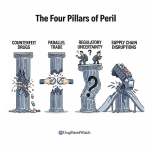
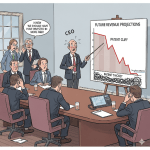
The commercial model that generated decades of reliable profit for large-cap pharmaceutical companies was built on three linked pillars: a blockbuster drug generating more than $1 billion in annual revenue, a patent providing twenty years of nominal exclusivity, and a large field sales force that translated that exclusivity into physician prescribing behavior. All three pillars are now structurally compromised. Companies still optimizing for this architecture are not managing a headwind. They are managing a slow collapse.
The diagnosis requires specificity. The blockbuster model has not failed because drugs have gotten worse or because doctors have stopped prescribing. It has failed because the conditions that made it profitable, including undifferentiated payer markets, passive physician audiences, and patent portfolios that faced limited legal scrutiny, no longer exist. Each of those conditions has been reversed simultaneously, and the reversal is not cyclical. It is permanent.
Section 1.1: The Blockbuster Model’s Structural Breakdown
The Old Economics, Precisely
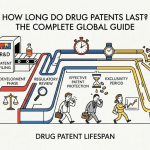
For the better part of four decades, large-cap pharma operated a well-defined financial engine. The composition-of-matter patent on a new chemical entity (NCE) provided the foundation. With a typical NCE patent filed during Phase I or Phase II development, by the time the FDA granted approval and the drug reached market, the effective remaining exclusivity period was often twelve to fourteen years, not twenty. That window had to generate enough free cash flow to repay the average $2.6 billion in capitalized R&D costs per approved drug (the 2022 figure from a Tufts Center for the Study of Drug Development study, widely cited though also widely contested), fund ongoing pipeline investment, and satisfy shareholder return expectations.
The system worked because payers, dominated by fee-for-service Medicare and relatively passive commercial insurers, were poor negotiators. A brand holding 80 percent formulary access and a sales force maintaining prescriber relationships could extract near-list pricing for years. That dynamic started breaking down in the mid-2000s as pharmacy benefit managers (PBMs) consolidated into three entities, Express Scripts, CVS Caremark, and OptumRx, that collectively manage pharmacy benefits for roughly 270 million Americans. These three organizations now wield formulary exclusion as a negotiating weapon, forcing manufacturers into rebate structures that can reduce net realized price by 50 percent or more on contested brand franchises.
The second structural break came from the shift in the pipeline itself. The era of mass-market primary care drugs, treating hypertension, hypercholesterolemia, or type 2 diabetes in millions of low-acuity patients, is essentially over for the large-cap innovators. The easy molecular targets were prosecuted long ago. What remains are high-science specialty and rare-disease assets, biologics and small molecules targeting specific genetic mutations, dysregulated pathways, or rare enzyme deficiencies. These drugs treat hundreds of thousands of patients, not tens of millions. They demand a completely different commercial architecture: one organized around specialist mapping, rare disease patient finding, genetic testing partnerships, and reimbursement navigation rather than reach-and-frequency detailing.
Blockbuster drugs still exist, defined as those with greater than $1 billion in annual net sales, but they now constitute a much smaller fraction of approved NCEs and new biological license applications (BLAs). And the ones that do reach blockbuster status, like Keytruda, Dupixent, or Ozempic, do so through deep penetration within well-defined specialist communities, not through mass-market reach.
The Biosimilar Compression
For biologics, the patent cliff is further complicated by the arrival of biosimilar competition. The Biologics Price Competition and Innovation Act (BPCIA) of 2010 created an abbreviated approval pathway for biosimilars, but the law’s patent dispute resolution mechanism, known colloquially as the ‘patent dance,’ gave reference product sponsors multiple legal levers to delay biosimilar entry. Those levers are now being tested with significant data accumulating on outcomes.
The net result is a class of drugs facing a distinctly different competitive curve than small-molecule generics. Small-molecule generics are substitutable at the pharmacy counter under state automatic substitution laws. Biosimilars require either FDA designation as interchangeable, which enables pharmacy-level substitution, or active physician and payer switching. Biosimilar interchangeability status has been granted to a growing list of products, including Cyltezo (adalimumab-adbm), Hadlima (adalimumab-bwwd), and Semglee (insulin glargine-yfgn). As more biosimilars achieve interchangeability designation, the market share erosion curve for reference biologics will steepen.
Institutional investors should note that biosimilar market penetration rates in the United States remain significantly below European norms. In Germany, biosimilar penetration for off-patent biologics routinely exceeds 80 percent within twelve months of entry. In the United States, comparable figures are often below 30 percent in the first year, partly due to PBM contract structures and partly due to prescriber inertia. That gap is narrowing as payer pressure intensifies, representing both a risk to reference product revenues and an opportunity for biosimilar manufacturers willing to invest in payer and provider education.
Section 1.2: The $400 Billion Patent Cliff: Revenue at Risk by Drug, Year, and Therapeutic Class
Quantifying the Exposure
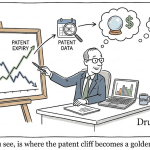
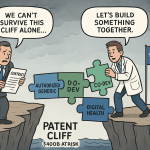
The phrase ‘patent cliff’ has appeared in pharma investor presentations for more than a decade. The numbers have gotten significantly larger. Current industry estimates place total global revenue at risk from patent expirations between 2025 and 2033 at approximately $400 billion. The near-term exposure is more acute: $200 billion in annual revenue faces generic or biosimilar competition by 2030, with $236 billion in cumulative risk identified across the 2025-2030 window by analyses aggregating Orange Book and Purple Book expiration data.
These figures require disaggregation by asset class to be actionable for commercial or investment planning.
Small-molecule drugs facing Loss of Exclusivity (LOE) in the 2025-2030 window include several franchise-defining assets. Eliquis (apixaban), Bristol-Myers Squibb and Pfizer’s oral anticoagulant, generated approximately $12.1 billion in global net revenues in 2023 and faces a complex patent expiration timeline with composition-of-matter patents expiring in 2026 in the United States, subject to ongoing Paragraph IV litigation by multiple ANDA filers. The first generic entry date will depend on whether the 30-month stay triggered by BMS and Pfizer’s patent infringement lawsuits results in a court-ordered entry date or a settlement.
For biologics, Keytruda (pembrolizumab), Merck’s PD-1 checkpoint inhibitor and the world’s top-selling drug at approximately $25 billion in 2023 net revenues, faces a primary composition-of-matter patent expiration around 2028. Merck has constructed a secondary patent portfolio of more than 100 granted U.S. patents covering formulation, dosing regimens, and specific treatment combinations. Whether that portfolio will achieve meaningful delay of biosimilar competition, or whether it will be eroded by Paragraph IV-equivalent challenges under the BPCIA patent dance, is one of the central patent strategy questions of the next five years.
The Velocity Problem
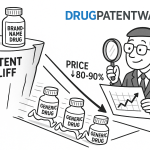
The financial destruction from LOE events is not gradual. Upon the entry of the first generic filer in a market with no other generics, brand-name small-molecule drug market share typically drops 80 to 90 percent within twelve months. This pattern, documented across hundreds of LOE events, reflects the economics of the generic business model: the first filer captures volume at prices 80 to 85 percent below brand WAC, and subsequent generic entrants drive prices down toward marginal cost of production, which for many molecules is under $0.10 per unit.
For a franchise generating $5 billion annually, this velocity translates to $4 billion to $4.5 billion in revenue disappearing in twelve months, not across a multi-year transition. The company’s equity multiple, which during the protected period reflects the annuity-like quality of that revenue stream, reprices rapidly. This is why patent expiration timelines are not merely legal data points. They are valuation determinants with direct implications for terminal value calculations in any discounted cash flow model of a pharmaceutical asset.
M&A as the Structural Response
The scale of this exposure is the primary driver of the current pharmaceutical M&A cycle. A 2025 Deloitte Life Sciences survey found 77 percent of executives anticipating increased M&A activity. This is not opportunism. It is structural necessity. Companies facing $5 billion to $15 billion in LOE-driven revenue erosion over five years have two options: develop replacement revenue from their own pipeline, or acquire it. The data on internal R&D productivity makes the acquisition case more compelling by the year. Deloitte’s 2024 pharma R&D returns analysis found that the internal rate of return on pharmaceutical R&D has been declining for more than a decade, reaching approximately 4.1 percent in the most recent cohort analyzed, well below most companies’ weighted average cost of capital.
The assets being acquired to fill these gaps are increasingly high-price, high-science specialty drugs targeting small patient populations. Pfizer’s $43 billion acquisition of Seagen in 2023 is the archetype: a transaction explicitly designed to acquire antibody-drug conjugate (ADC) technology and a commercial oncology franchise capable of replacing Xeljanz, Ibrance, and Inlyta LOE exposure over the coming decade.
Section 1.3: Power Shift: Empowered Patients, Overwhelmed Physicians, and the Engagement Gap
The Physician-as-Sole-Customer Model Is Broken
The traditional pharma commercial model treated the prescribing physician as the primary and often the only customer that mattered commercially. The patient was, in this framework, a passive recipient. The payer was an obstacle to be managed. The pharmacist was a dispenser. This physician-centric model was coherent when physicians had near-total authority over prescribing decisions and when patients received minimal health information outside of a clinical encounter.
Both of those conditions have changed. Patients now arrive at clinical encounters with extensive prior research, drawn from sources ranging from peer-reviewed literature accessed through PubMed to condition-specific online communities with tens of thousands of members. For rare diseases in particular, many patients know more about the specific molecular biology of their condition than the generalists seeing them. This creates both an opportunity and a risk for pharmaceutical companies: an opportunity to build direct, high-trust relationships with patient communities, and a risk that poorly designed or perceived-as-manipulative direct-to-patient outreach will backfire with extraordinary speed in the social media environment.
The physician side of the equation has changed with equal speed. The time constraints facing practicing physicians are severe. Primary care physicians in high-volume practices see 20 to 25 patients per day in clinical encounters averaging 15 to 18 minutes. Their time for engagement with pharmaceutical sales representatives has collapsed. A 2023 survey from Veeva Systems found that 55 percent of physicians in the United States were classified as ‘access-restricted,’ meaning they limit, or have entirely eliminated, in-person meetings with pharmaceutical sales representatives. This figure has risen from approximately 20 percent in 2010.
Deloitte’s survey data captures the consequences of this gap sharply: more than 80 percent of pharma executives expressed satisfaction with their customer engagement strategy, while only about one-third of physicians reported that a pharmaceutical company’s customer-facing resources actually met their needs. The companies generating that executive satisfaction are, in many cases, measuring activity (calls made, emails sent, events attended) rather than outcomes (clinical decisions influenced, prescriber behavior changed).
The New Power Architecture
The power structure in pharmaceutical purchasing decisions now distributes across six distinct decision-makers: the prescribing physician, the specialty pharmacist, the payer or PBM formulary committee, the patient or caregiver, the patient advocacy organization, and, for complex specialty therapies, the patient support program navigator or specialty hub. No single-channel strategy that focuses on only the prescribing physician can adequately address this architecture. The commercial model must be multi-stakeholder by design, not as an afterthought.
Key Takeaways: Part I
The blockbuster era ended not because of any single disruption, but because payer consolidation, biosimilar competition, pipeline science migration to specialty therapeutics, and patient empowerment all converged simultaneously. The patent cliff through 2033 represents approximately $400 billion in revenue that will require replacement. The velocity of generic or biosimilar erosion, 80 to 90 percent market share loss within twelve months, makes the timing of patent protection as commercially critical as the scientific quality of the drug itself. The engagement gap between pharma executive satisfaction and physician or patient reality is not a perception problem. It is a data problem that requires measurement, not better marketing.
Investment Strategy: Part I
Companies with greater than 35 percent of their 2025 revenue concentrated in assets facing LOE events before 2030, and without late-stage pipeline or completed acquisitions to offset that exposure, carry a structural discount that conventional P/E multiples may not fully reflect. Investors should map LOE exposure as a percentage of five-year projected revenue, not as an absolute dollar figure, and weight that analysis against the depth and legal defensibility of each company’s secondary patent portfolio. A company with a primary patent expiring in 2027 but a credible secondary patent estate running to 2032 carries meaningfully different risk than one with only a composition-of-matter patent.
Part II: The Data and AI Engine
The pharmaceutical industry generates and possesses more consequential data than virtually any other sector: genomic sequences, clinical trial datasets, real-world prescribing and outcomes records, patient-reported outcomes, medical claims, and laboratory results. For most of its history, the industry analyzed only a fraction of this data, primarily within the controlled boundaries of clinical trials, and used it almost exclusively for regulatory purposes. The commercial applications of that data remained largely underdeveloped. That gap is now being closed at speed, and the companies closing it fastest are building durable competitive advantages that compound over time.
Section 2.1: Beyond the RCT: The RWD/RWE Infrastructure Stack
Why Randomized Controlled Trial Data Alone Is No Longer Sufficient
Randomized Controlled Trials (RCTs) are the evidentiary gold standard for regulatory approval, and they will remain so. The FDA requires adequate and well-controlled studies to demonstrate substantial evidence of effectiveness, and the RCT design, with its randomization, blinding, and controlled comparators, is the most reliable method for isolating a drug’s causal effect on a defined endpoint. Nothing in the data revolution changes that.
What the RCT cannot do is answer the questions that payers, integrated delivery networks, and health technology assessment bodies are now asking with increasing force: How does this drug perform in the real patient population covered by our specific plan, with their comorbidities, their polypharmacy burden, and their actual adherence rates? What happens to total cost of care when this drug is prescribed at scale, accounting for avoided hospitalizations, disease progression events prevented, and productivity effects? These questions require a different category of evidence: Real-World Evidence (RWE) generated from Real-World Data (RWD).
The RWD Source Stack
RWD is not a single data type. It is a category covering multiple source streams, each with different strengths, limitations, and appropriate analytical uses.
Medical claims data from commercial insurers, Medicare, and Medicaid provides longitudinal records of procedures, diagnoses, medications dispensed, and healthcare resource utilization for large populations, often tens of millions of covered lives. It captures what was paid for, not what was done clinically, which creates systematic gaps in clinical detail. Its strength is population-level epidemiological analysis and healthcare resource utilization measurement.
Electronic Health Record (EHR) data provides richer clinical detail: laboratory values, vital signs, physician notes, diagnostic imaging reports. The challenge is fragmentation. The United States has more than 1,000 distinct EHR systems, and interoperability remains partial despite the 21st Century Cures Act’s information-blocking prohibitions. Companies like Flatiron Health (acquired by Roche in 2018 for $1.9 billion), Veeva Systems, and Komodo Health have built proprietary data assets by aggregating and harmonizing EHR data across large provider networks, creating linked datasets that can be licensed to pharmaceutical companies for RWE generation.
Patient-Generated Health Data (PGHD) from wearables, remote monitoring devices, and validated patient-reported outcome (PRO) instruments provides continuous longitudinal data outside the clinical encounter. For conditions like heart failure, Parkinson’s disease, or type 1 diabetes, PGHD can capture disease activity and treatment response at a granularity that clinic visits every three to six months cannot.
Genomic data from sequencing platforms provides the molecular substrates for precision medicine evidence generation. When linked to clinical outcomes data, genomic sequences enable the identification of biomarker-defined patient subgroups with differential response to treatment, the foundation of companion diagnostic development and indication-specific pricing strategies.
The FDA’s Evolving RWE Framework
The FDA has been building its regulatory framework for RWE use since 2016, accelerating under the 21st Century Cures Act mandate that directed the agency to develop a program for evaluating RWE to support regulatory decisions. The agency has published multiple guidance documents covering RWD data standards, electronic health records as a data source, and control arms in clinical trials. Several post-marketing commitments and label expansions have now been supported by RWE submissions, and the FDA’s Real-World Evidence Program continues to expand the use cases where high-quality RWE can substitute for or supplement traditional clinical trial evidence.
For pharmaceutical commercial teams, the FDA’s expanding acceptance of RWE creates a strategic imperative: generate the RWE data infrastructure during clinical development, not after launch. Companies that design their Phase III trials to collect RWD-linkable identifiers and pre-specify RWE analyses can generate label-expansion or indication-broadening data at a fraction of the cost of a new RCT.
Section 2.2: The AI Intelligence Layer: From Predictive Analytics to NPI-Level Attribution
The Market Context
The market for AI applications in healthcare marketing will reach approximately $187.95 billion by 2030 according to multiple market sizing analyses, with a compound annual growth rate in the 35 to 45 percent range depending on the scope definition. A survey by Invoca found 93 percent of healthcare marketers currently using AI-powered strategies in at least one part of their workflow. McKinsey’s generative AI analysis estimated $60 to $100 billion in total value creation for the pharmaceutical sector from AI and machine learning (ML) applications, with the commercial function, covering marketing, medical affairs, and market access, accounting for $18 to $30 billion of that range.
These aggregate numbers are useful for establishing strategic importance. The more precise question for commercial planning is: what specific AI applications deliver the highest measurable return on investment in pharma marketing, and what data infrastructure is required to run them?
Predictive HCP Segmentation
The foundational AI application in pharmaceutical marketing is predictive physician segmentation. Traditional segmentation relied on static categorical variables: specialty, practice setting, prescribing volume in the therapeutic category, and decile rank based on total prescriptions (TRx). This approach treats a cardiologist who wrote 150 Entresto prescriptions last quarter identically to a cardiologist who wrote 150 prescriptions two years ago and none since.
AI-based segmentation replaces static categories with dynamic propensity scores. The model ingests multiple data streams: NPI-level prescribing data from Symphony Health or IQVIA, conference attendance records, medical journal publication history, clinical trial investigator status, payer mix in the physician’s patient panel, and digital engagement signals such as content downloads or webinar attendance. The output is a probability estimate for each physician in the target universe of prescribing within the next 30, 60, or 90 days, branching into new prescribers, growth prescribers, retention targets, and lapsed prescribers.
The commercial value is resource allocation efficiency. A specialty drug targeting 15,000 potential prescribers in the United States does not generate equal return from equal investment across all 15,000. An AI-generated propensity model that correctly identifies the 3,000 physicians with the highest likelihood of prescribing in the next quarter allows the commercial team to concentrate promotional spend, sales rep time, and medical science liaison engagement where it will have the greatest impact.
NPI-Level Attribution and Closed-Loop Marketing
The most technically sophisticated application of pharma marketing analytics is closed-loop attribution at the National Provider Identifier (NPI) level. The architecture works as follows: a physician’s NPI, a unique 10-digit identifier assigned by the Centers for Medicare and Medicaid Services, is used as the linking key to connect promotional exposure data with prescribing behavior data. When physician NPI XYZ receives a targeted email, sees a programmatic digital ad through a HCP-credentialed ad network like Doceree or Veeva Vault PromoMats, attends a web-based CME event, or receives a sales rep visit, each of those touchpoints is logged with a timestamp and channel identifier. Prescribing data from claims feeds updates weekly or biweekly. The attribution model then estimates, controlling for secular trend and natural prescribing variation, whether the promotional touchpoints generated incremental prescribing behavior.
This is the pharmaceutical equivalent of e-commerce attribution modeling. Its output, incremental prescriptions per thousand impressions by channel and message type, transforms promotional spending from a cost-center allocation exercise into an optimization problem with a measurable objective function. One published analysis found that e-detailing generated $2.48 for every promotional dollar invested, compared with $1.72 for traditional in-person sales detailing and $1.68 for direct-to-consumer advertising. These ROI figures are not static across all drugs and market conditions, but they provide an empirically grounded starting point for budget reallocation decisions.
Generative AI in Promotional Content Operations
Generative AI’s most immediately deployable commercial application in pharmaceuticals is not customer-facing. It is internal: accelerating the Medical-Legal-Regulatory (MLR) review cycle that governs all promotional content before it reaches healthcare professionals or consumers.
The MLR process is a documented bottleneck. A single promotional piece, such as a detail aid, a web page, or a patient brochure, can require 8 to 16 weeks to move from initial brief through internal medical, legal, and regulatory review to final approval. Companies running multi-channel campaigns across dozens of markets with localized content adaptations face MLR queues that consume significant team bandwidth. Generative AI tools from vendors including Veeva Vault, Salesforce Health Cloud, and specialist startups like Luminance can pre-screen content submissions against a codified set of promotional rules, flag potential compliance issues with citation to the specific regulatory guideline triggered, and generate compliant content variants for human review.
McKinsey’s analysis found that generative AI-assisted content operations could reduce MLR cycle time by 30 to 50 percent in organizations with well-codified regulatory rule sets and clean content architecture. This is a meaningful operational improvement with direct commercial impact: faster MLR clearance means earlier launch of campaign adaptations, faster response to competitive events, and reduced content production costs.
Section 2.3: ROI Quantification of Data-Driven Marketing
The Measurement Architecture
Measuring return on pharmaceutical marketing investment requires a multi-layer framework that goes well beyond the simple calculation of revenue attributed to a promotional program divided by program cost. That calculation is necessary but not sufficient. It misses long-term brand effects, does not account for the counterfactual of what would have happened without the promotion, and fails to capture the value of the data infrastructure itself as a depreciating asset.
A complete pharmaceutical marketing ROI framework has four measurement layers. The first layer is channel-level attribution: which promotional channels, at which investment levels, generate what volume of incremental prescriptions per dollar invested. This is the closed-loop NPI attribution analysis described above. The second layer is campaign-level effectiveness: did a specific creative message, a new indication expansion, or a disease education campaign shift HCP awareness, knowledge, or prescribing intent in the measured direction? This layer typically requires primary market research before and after campaign execution.
The third layer is brand-level equity tracking: is the brand’s spontaneous unaided awareness, overall satisfaction, and net promoter score among prescribers trending in the right direction over the protected period? These metrics are leading indicators of prescribing behavior change; they move before the TRx data moves. The fourth layer is portfolio-level optimization: given total commercial budget and a portfolio of assets at different lifecycle stages, what allocation across brands, geographies, and channels maximizes total portfolio NPV?
McKinsey’s data on this last question is striking: organizations that deploy data-driven commercial strategies are 23 times more likely to acquire new customers than their less analytically sophisticated peers, and six times more likely to retain existing customers. In pharmaceutical terms, this translates to faster new prescriber acquisition rates at launch and higher prescriber retention rates during the LOE runway.
The Short-Term ROI Benchmark Problem
A common error in pharmaceutical marketing ROI measurement is applying a short time horizon to programs whose value is long-cycle. A medical education initiative targeting residents and fellows in a specialty will generate minimal prescribing returns within 12 months. Its commercial value accrues over five to ten years as those physicians complete training and build their practices. Attributing zero ROI to this program based on a 12-month measurement window and reallocating the budget to high-frequency digital detailing of established prescribers is a rational response to a bad measurement framework.
A more defensible approach uses cohort-level analysis: track the prescribing behavior of HCPs first exposed to the brand during their training years versus those first exposed after entering practice. This cohort analysis typically shows significantly higher lifetime prescribing value for early-exposure cohorts, providing the evidentiary basis for a long-horizon ROI attribution to medical education investment.
Key Takeaways: Part II
RWD and RWE are not supplements to clinical trial data. They are distinct evidentiary assets that answer different questions for different decision-makers. Payers and HTA bodies require them. The FDA is expanding their regulatory acceptance. Building the data infrastructure to generate high-quality RWE at launch, rather than retroactively, is now a market access capability. NPI-level closed-loop attribution is the technical standard for HCP-directed marketing ROI measurement. Companies that cannot close the loop between promotional exposure and prescribing behavior are operating with a fundamental informational disadvantage. Generative AI’s near-term commercial value is in operational efficiency, specifically MLR acceleration, rather than in customer-facing content generation, where regulatory risk remains high.
Investment Strategy: Part II
Pharmaceutical companies that have built proprietary patient-level data assets through patient support programs, companion diagnostic programs, or registry partnerships hold IP-adjacent value that is not captured in any standard asset valuation. Access to longitudinal, linked patient data is a barrier to RWE competition that is difficult and slow to replicate. Companies like Roche, whose 2018 acquisition of Flatiron Health gave it access to one of the largest oncology real-world datasets in existence, and companies with large market-access analytics teams capable of generating payer-grade RWE submissions, command a market access premium. Investors should assess data asset quality alongside drug asset quality when valuing companies with significant specialty or rare disease franchises.
Part III: Three Commercial Blueprints
The commercial models emerging from the data and AI infrastructure described in Part II are not independent experiments. They form an interconnected system. Patient-centricity generates the longitudinal adherence and outcomes data that makes value-based contracting viable. Value-based contracting creates the financial architecture that rewards demonstrated patient outcomes rather than prescription volume. Hyper-personalized optichannel engagement drives both the patient adherence and physician behavior change that determines whether those outcomes are achieved. A company that attempts to implement only one of these three blueprints without the others will not produce a self-reinforcing commercial system.
Section 3.1: Blueprint 1 — Patient-Centricity as Operational Infrastructure
Beyond the Brochure
Patient-centricity in pharmaceutical marketing spent approximately fifteen years as a brand positioning concept. Companies described themselves as patient-centric in their annual reports and investor presentations while operating commercial models that had no systematic mechanism for incorporating patient preferences, measuring patient outcomes in the real world, or acting on patient feedback in near-real time. The credibility gap was wide and widely noted by patient advocacy organizations.
The shift to genuine patient-centricity requires treating patient support not as a supplemental service but as core commercial infrastructure. This is not a philosophical claim. It is a financial one. For specialty drugs where list price exceeds $5,000 per month and where adherence to a complex dosing regimen determines whether the patient achieves the clinical outcome that justifies that price, the patient support program is a direct driver of revenue and outcomes data quality. A patient who discontinues therapy in month three due to injection site anxiety, insurance navigation failure, or inadequate side-effect management represents both a lost revenue event and a lost outcomes data point for the payer-facing RWE submission.
Regulatory Mandates Accelerating the Shift
The FDA’s Patient-Focused Drug Development (PFDD) program, codified in PDUFA VII (2022-2027), requires sponsors to systematically identify and incorporate patient perspectives into drug development programs. FDA guidance on Core Patient-Focused Drug Development documents (Core PFDDs) specifies that sponsors must collect and report patient-experience data that covers what aspects of their disease matter most to patients, and how specific treatment modalities affect those aspects. This regulatory requirement has a commercial corollary: the patient insights gathered for FDA PFDD submissions are directly applicable to market access value dossiers, payer contracting conversations, and patient support program design.
The Zepbound Support Infrastructure Case
Eli Lilly’s Zepbound (tirzepatide) for chronic weight management illustrates the operational challenge of scaling patient support infrastructure for a blockbuster launch. Tirzepatide received FDA approval for weight management in November 2023, following its existing approval as Mounjaro for type 2 diabetes. The overlap in active ingredient, combined with extraordinary consumer demand driven by media coverage of GLP-1 agonist effectiveness, created an immediate surge in patient inquiries that exceeded the capacity of existing support operations.
Lilly partnered with Emerge Growth to deploy a scaled Business Process Outsourcing (BPO) model: 15 Patient Care Representatives initially deployed in under 30 days, trained to Lilly’s compliance and clinical standards, scaling to more than 100 representatives within six months. The critical commercial insight is that this operational response was not a customer service improvement initiative. It was a direct protection of the brand’s revenue trajectory. A patient experiencing 45-minute hold times or dropped chat sessions at the point of enrollment in a patient assistance or copay support program is a patient at high risk of therapy discontinuation, regardless of clinical efficacy.
Patient-Centric Sampling (PCS) in Clinical Development
The patient-centricity framework now extends backward into clinical development through Patient-Centric Sampling (PCS), which uses microsampling technologies such as dried blood spot (DBS), volumetric absorptive microsampling (VAMS), and microneedle patch collection to enable remote at-home sample collection for pharmacokinetic and biomarker monitoring. A review of seven clinical trial implementations of PCS published in 2025 documented improvements in trial recruitment, participant diversity, protocol compliance, and data quality across disease areas including asthma, oncology, and rare metabolic disorders.
The commercial relevance extends beyond trial efficiency. A trial designed with PCS from the outset generates participant experience data, participant diversity metrics, and sample collection compliance rates that directly inform the post-approval patient support program design. Companies that treat trial operations and commercial operations as entirely separate functions are leaving this translational intelligence on the table.
Section 3.2: Blueprint 2 — Value-Based Contracting: Architecture, IRA Implications, and PBM Resistance
The Structural Logic
Value-Based Contracts (VBCs), also known as outcomes-based agreements or risk-sharing contracts, are payment models that link a drug’s reimbursement level to its performance in a defined patient population under specified clinical conditions. The structural logic is clear: if the manufacturer believes its drug will deliver the clinical outcomes described in the label, it should be willing to accept financial accountability for those outcomes. A payer that accepts price-for-performance terms gets budget predictability. A manufacturer that achieves the agreed outcomes gets preferred formulary position. A patient gets access to the drug on the basis of its expected value rather than waiting for its post-market evidence base to mature.
Four VBC Structures in Clinical Use
Outcomes-Based Rebates, the most commonly implemented structure, require the manufacturer to provide the payer with a defined rebate, typically calculated as a percentage of total paid claims, if the drug fails to achieve pre-specified clinical metrics across the covered population. The clinical metric must be measurable, attributable, and collectible within the payer’s data environment. Cholesterol reduction, HbA1c reduction in type 2 diabetes, and viral suppression in HIV therapy have been used as outcome anchors. The operational requirement is a claims data feed that allows outcomes tracking at the member level, which most large commercial payers can produce but many regional or smaller payers cannot.
Indication-Specific Pricing sets different net prices for a single drug product across its different FDA-approved indications. This structure is most commercially relevant for oncology and immunology drugs with multiple approvals, where clinical value, measured in quality-adjusted life years (QALYs) or response rates, varies significantly by indication. A drug approved as first-line therapy for advanced non-small cell lung cancer and also approved as second-line therapy after prior chemotherapy generates different clinical value in each setting. Indication-specific pricing attempts to align payment with value in each use case. The operational complexity for payers, who must track and bill based on indication rather than simply drug identity, has limited widespread adoption, but several large payers and pharmacy benefit managers have piloted the model.
Shared Savings contracts direct a portion of demonstrated total cost of care reductions back to the manufacturer. The typical trigger is avoided acute care: fewer hospitalizations, fewer emergency department visits, lower rate of disease progression events. The mechanism requires a control population to establish the baseline cost trajectory against which savings are measured, which is methodologically challenging in the absence of randomization.
Utilization or Cost Caps commit the manufacturer to cover therapy costs exceeding a per-patient threshold, providing the payer with budget predictability for high-cost or long-duration therapies. Gene therapies in particular, where a single one-time administration may cost $2 to $4 million, have driven interest in annuity-like payment structures that spread the cost over the period during which the therapy provides benefit.
The IRA Disruption to VBC Economics
The Inflation Reduction Act (IRA) of 2022 introduced Medicare drug price negotiation, with the first ten drugs selected for negotiation in 2023 and negotiated prices effective January 1, 2026. The IRA’s drug selection criteria focus on drugs with high Medicare Part D spending, no generic or biosimilar competition, and market entry of at least nine years for small molecules or thirteen years for biologics.
The IRA’s Medicaid Best Price rule creates a specific VBC complication. Under existing law, manufacturers must offer Medicaid the lowest price available to any commercial payer in the market. A VBC that results in a very low realized net price for a specific payer due to large outcomes-based rebates has historically created Best Price exposure, potentially requiring the manufacturer to extend that low price to all Medicaid beneficiaries. CMS issued guidance in 2022 creating a defined voluntary Medicaid VBC exception pathway, but its operational implementation remains complex and the legal risk of Best Price violations is real.
PBM Structural Resistance
The three dominant PBMs, Express Scripts, CVS Caremark, and OptumRx, have mixed incentives with respect to VBC adoption. Their existing business model generates revenue from manufacturers through volume-based rebates: the larger the rebate per unit sold, the greater the spread between the rebate the PBM collects from the manufacturer and the portion passed through to the plan sponsor. An outcomes-based contract that reduces or eliminates the rebate in favor of a lower net price does not fit the PBM’s conventional revenue architecture.
This structural resistance does not mean VBCs are not being executed. Employers purchasing pharmacy benefits directly, large self-insured health systems, and the PBM subsidiaries of integrated payers like UnitedHealth Group and CVS Health have more aligned incentives. The VBC pipeline is growing: the Tufts Medical Center Program on Health System Innovation identified more than 40 active pharmaceutical VBCs in the United States as of 2024, up from fewer than 15 in 2020.
Section 3.3: Blueprint 3 — Optichannel Precision Engagement at Scale
Optichannel vs. Omnichannel: A Technical Distinction
The pharmaceutical industry spent the 2015 to 2020 period building omnichannel marketing capabilities, defined as coordinated customer engagement across multiple digital and human channels with a unified customer view. Omnichannel execution in practice, however, frequently produced exactly the opposite of its intent: more channels, more messages, more contacts, more complaints from physicians about irrelevant promotional overload. The problem was additive deployment rather than selective deployment. Adding channels to the promotional mix without removing lower-value touchpoints produces fragmented experience, not coherent engagement.
Optichannel is the corrective framework. The core principle is channel selection based on individual preference data rather than channel availability or commercial convenience. For a specific cardiologist who reviews clinical content primarily through a medical news aggregator on a tablet during hospital rounds, delivers continuing medical education attendance primarily at national conferences, and has declined in-person sales representative meetings for three consecutive years, the optimal channel mix is digital content through HCP-verified publisher networks, scientific exchange at the American College of Cardiology annual meeting, and remote scientific advisory engagement, not a field sales call plus an email plus a direct mail piece.
Building this individual-level channel preference model requires three data inputs. First, declared preferences, collected through HCP portal registration or representative conversations. Second, inferred preferences, derived from digital engagement behavior such as content type clicked, device used, time of day, and content completion rates. Third, historical response data, showing which channel and message combinations have generated engagement or prescribing behavior changes for similar physicians.
The Field Force Transformation
The field sales force is not disappearing from pharmaceutical commercialization. It is transforming. The in-person sales call, once the dominant channel by resource allocation, is becoming one tactical option within an optichannel system, deployed selectively based on AI-predicted receptivity rather than call plan mandates.
The representative’s role is shifting from message delivery to relationship orchestration. The most effective field force deployments now use CRM systems integrated with AI to provide call-day briefings that tell the representative what digital content the target physician reviewed in the past week, what conference abstracts they have co-authored, and what patient types dominate their practice panel. This enables a conversation that begins from where the physician actually is, clinically and intellectually, rather than from where the brand team’s promotional plan assumes they should be.
The staffing implications are significant. A data-augmented representative capable of delivering this level of contextual engagement can maintain productive relationships with a larger physician panel than a non-augmented representative, reducing total headcount requirements per revenue dollar while improving engagement quality. Several large-cap pharma companies, including Pfizer and Novartis, have reduced total field force headcount by 15 to 25 percent since 2020 while maintaining or increasing promotional reach through investment in digital channels.
Patient-Directed Hyper-Personalization
For patients, hyper-personalization requires navigating a more complex regulatory environment than HCP-directed promotion. Direct-to-consumer pharmaceutical advertising is regulated by FDA’s Office of Prescription Drug Promotion (OPDP), and the requirements for fair balance between benefit and risk communication in any patient-directed material constrain the creative latitude available to personalization algorithms.
Within those constraints, the personalization opportunity is substantial. A patient enrolled in a multiple sclerosis patient support program has documented disease history, treatment experience, and contact preference data. A text message arriving on the morning of a scheduled injection reminding the patient of proper injection technique, linked to a 2-minute instructional video, is a personalized intervention derived from that data. Compared with a generic monthly newsletter, it has been shown across multiple adherence support programs to generate meaningful improvements in on-time injection rates.
Key Takeaways: Part III
Patient support infrastructure is a revenue protection asset, not an optional service enhancement. Operational failures in support at launch directly translate to adherence failures and lost RWE data quality. VBCs require a data infrastructure investment that many smaller commercial organizations and regional payers currently lack. The IRA’s Best Price rules create ongoing VBC design constraints that require active legal and regulatory strategy, not just commercial negotiation. Optichannel is not a channel strategy. It is a data strategy expressed through channel selection. Companies that cannot generate and act on individual HCP channel preference data cannot execute true optichannel engagement.
Investment Strategy: Part III
VBC adoption rates are a useful indicator of manufacturer confidence in their drug’s real-world effectiveness relative to clinical trial results. A manufacturer unwilling to offer outcomes-based terms to a large payer, despite having compelling Phase III data, is communicating something about their expectations for real-world performance. Analysts should track VBC announcements and disclosed terms as an independent evidence signal on clinical confidence. Companies that proactively pursue VBC structures in competitive categories are often better positioned for sustainable formulary access than those relying solely on traditional rebate negotiations.
Part IV: Intellectual Property as Commercial Weapon
The pharmaceutical patent is simultaneously the most important and the most misunderstood asset class in the industry’s financial architecture. It is treated in most commercial discussions as a legal input to the revenue model, a start date and an end date that frame a drug’s protected period. This is an impoverished view. The patent portfolio of a major pharmaceutical franchise is a constructed competitive advantage, built through deliberate legal and scientific strategy, capable of being valued, extended, licensed, and weaponized against competitors with a level of precision that most commercial discussions never examine.
Section 4.1: The Patent Portfolio as Primary Revenue Asset: Valuation Methodology
IP Valuation Is Not Accounting
The book value of a pharmaceutical company’s intangible assets, as reported under GAAP or IFRS, has almost no relationship to the economic value of its patent portfolio. Accounting rules require amortization of capitalized development costs over the estimated useful life of the resulting IP asset, and this amortized balance sheet figure reflects sunk cost recovery rather than forward-looking economic value. The forward-looking value of a patent portfolio depends on variables that accounting rules do not capture: the strength and scope of the claims, the vulnerability of individual patents to invalidity challenges, the competitive landscape in the relevant therapeutic class, and the probability that specific secondary patents will withstand Paragraph IV or BPCIA challenge.
Four methodologies are used in practice for pharmaceutical patent valuation, each appropriate for different purposes.
The Discounted Cash Flow (DCF) method is the most commonly used for individual drug asset valuation. The analyst projects the drug’s commercial revenue trajectory, including peak sales, market penetration rate, and LOE timing, then discounts projected free cash flows back to present value at a risk-adjusted discount rate. The patent’s contribution to value is quantified as the difference between the DCF with the current patent expiration date and the DCF under a scenario where the patent expires earlier due to successful invalidity challenge. This delta represents the economic value of the contested patent.
Risk-Adjusted Net Present Value (rNPV) applies the DCF methodology with explicit probability weightings at each stage of clinical or legal development. For a patent facing Paragraph IV litigation, the rNPV model assigns a probability of patent validity being upheld (typically drawn from historical Paragraph IV litigation outcomes, where innovators prevail in approximately 45 to 55 percent of contested cases according to FDA Orange Book litigation data) and weights the cash flow streams accordingly.
The Relief-from-Royalty method estimates the value of a patent as the present value of royalty payments the company would be required to make if it had to license the IP from an external party. This requires identification of comparable royalty rates in the therapeutic class and application to the drug’s projected royalty base (net sales). Relief-from-royalty is commonly used in transfer pricing analysis for multinational pharma companies allocating IP ownership across legal entities in different jurisdictions.
The Incremental Income method quantifies the revenue premium the drug earns during its patent-protected period above what it would earn in a fully generic market. This premium, discounted to present value, represents the economic rent created by the patent. The method requires a counterfactual estimate of generic pricing, which is derivable from historical data on generic price erosion curves in the relevant therapeutic class.
IP Valuation as an M&A Tool
These valuation frameworks are not academic exercises. They are the analytical foundation of pharmaceutical M&A pricing. When Pfizer agreed to acquire Seagen for $43 billion in 2023, the acquisition price reflected a detailed analysis of the clinical and commercial trajectory of Seagen’s ADC portfolio, the strength and duration of the patent protection surrounding each asset, the probability of successful biosimilar or generic entry, and the synergistic value of combining Seagen’s ADC technology with Pfizer’s oncology commercial infrastructure. The patents were not a background consideration. They were the central determinant of the acquisition premium.
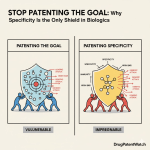
The composition-of-matter patent, protecting the novel chemical structure or biologic sequence of a new active pharmaceutical ingredient, is the foundational IP asset in pharmaceutical development. It is also the most vulnerable. Its claims are broad and often challenged, and its expiration date is fixed relative to the filing date. Sophisticated pharmaceutical companies have developed a multi-layer secondary patent strategy to supplement the composition-of-matter patent with additional exclusivity layers that extend protection into periods well beyond the primary patent’s expiration.
This strategy is broadly referred to as ‘evergreening’ in the academic and policy literature, though the term is used in both neutral and pejorative senses. The neutral description is that secondary patents protect genuinely novel improvements to a drug product that provide clinical benefit, such as a sustained-release formulation that reduces dosing frequency and improves patient adherence. The pejorative use applies when secondary patents protect trivial or obvious modifications with minimal clinical benefit, filed primarily to extend the exclusivity period rather than to protect a genuine innovation.
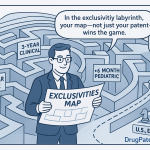
The secondary patent taxonomy covers at least six distinct claim categories. Formulation patents protect specific drug delivery systems: extended-release matrices, modified release coatings, fixed-dose combination products, or novel excipient systems. These patents can run 20 years from filing, which if filed late in the originator drug’s commercial life, can substantially extend effective market exclusivity. Polymorph patents protect specific crystalline forms of the active ingredient, which may have different solubility, stability, or manufacturability characteristics. Method-of-use patents protect specific therapeutic applications of the drug, including new indications, patient subpopulations, dosing regimens, or combination treatment protocols. Dosing and regimen patents protect specific dose levels, dosing intervals, or titration schedules that are non-obvious relative to the prior art. Process patents protect novel manufacturing methods, including synthetic routes for small molecules or cell culture processes for biologics. Device patents protect drug delivery systems such as autoinjectors, inhaler devices, or infusion systems, which are often integral to the drug’s commercial presentation.
Terminal Disclaimers and the Continuation Chain
In the United States patent system, a continuation application allows a pharmaceutical company to file new patent claims that share the priority date of an earlier, pending parent application, as long as at least one inventor is common and the specification adequately supports the new claims. A terminal disclaimer, required when a continuation application has claims that are not patentably distinct from claims in a related patent, limits the continuation’s term to expire no later than the related patent, but eliminates the obviousness-type double patenting rejection that would otherwise block the continuation.
The strategic use of continuation chains allows companies to file additional claims derived from the same original specification years after the parent application was filed, and to do so in response to emerging competitive threats. As a generic or biosimilar competitor’s product development becomes public, the originator can analyze the competitor’s product and file continuation claims specifically designed to cover it, while still claiming the parent application’s priority date. This is not hypothetical; it is documented practice in hundreds of Orange Book patent listings.
AbbVie’s Humira patent portfolio demonstrated this practice at maximum scale. Of the 247 U.S. patent applications filed, 89 percent were filed after Humira was already on the market. The primary composition-of-matter patent on adalimumab, the active biologic, expired in 2016. AbbVie’s continuation and secondary patent filings, covering formulation changes, manufacturing processes, concentration variants, and dosing regimens, extended effective U.S. exclusivity to 2023, generating approximately $47.5 million per day in revenues during those final years of protected market. Biosimilar entry in Europe, where the secondary patent portfolio was far smaller (eight distinct patents compared with approximately 73 in the U.S.), occurred in 2018, five years earlier.
Section 4.3: The Patent Thicket Deep Dive: Humira, Keytruda, and Eliquis
The Humira Precedent: Numbers Behind the Strategy
The quantitative analysis of AbbVie’s Humira patent strategy, documented most comprehensively in the I-MAK (Initiative for Medicines, Access and Knowledge) 2020 analysis, provides the clearest data set available on the economics of a pharmaceutical patent thicket.
AbbVie filed 247 patent applications covering Humira in the United States. Of these, 165 were granted. The original composition-of-matter patent for the adalimumab sequence expired in 2016. The secondary patent estate ran through 2034 for the last-expiring patents. Of the approximately 73 core U.S. patents analyzed in a peer-reviewed 2022 study in BMC Medicine, roughly 80 percent were non-patentably distinct from other patents in the portfolio, linked by terminal disclaimers. In Europe, the patent portfolio comprised eight non-duplicative patents.
The consequence of this jurisdictional discrepancy was five years of additional U.S. exclusivity. At an estimated daily revenue rate of $47.5 million, that five-year delay is worth approximately $86.7 billion in gross revenues. Even accounting for the biosimilar market share erosion that would have occurred under earlier U.S. competition, the net present value of the additional U.S. exclusivity period runs to several tens of billions of dollars. This explains both the scale of AbbVie’s patenting investment and the intensity of the antitrust litigation it subsequently faced.
AbbVie settled with nine biosimilar developers between 2016 and 2022 through agreements that granted U.S. market entry licenses beginning January 1, 2023, and earlier international entry. The antitrust lawsuits, which argued that AbbVie’s patent thicket constituted illegal monopolization under the Sherman Act, were dismissed on the grounds that filing patent applications and pursuing litigation against infringers is constitutionally protected petitioning activity, not an antitrust violation. The district court rulings reflect current law accurately: the patent thicket is legal.
Keytruda: The Next Major Test
Merck’s Keytruda (pembrolizumab), an anti-PD-1 monoclonal antibody approved across more than 40 oncology indications, generated approximately $25 billion in net revenues in 2023. The primary biologic composition patent expires around 2028 in the United States, setting up the next major patent cliff event in the pharmaceutical industry.
Merck has constructed a secondary patent portfolio estimated at more than 100 granted U.S. patents, covering specific formulations, dosing regimens, combination treatment protocols, and manufacturing processes. The BPCIA patent dance provisions give Merck additional procedural tools: a biosimilar applicant that enters the patent dance must provide Merck with a list of patents it considers potentially infringed, and Merck must respond with a list of patents it believes are infringed and that it intends to assert. This exchange drives a negotiated lawsuit schedule and, in practice, a 30-month negotiating and litigation period during which the biosimilar is typically not launched.
Multiple biosimilar developers, including Samsung Bioepis, Amgen, and Sandoz, have initiated development programs for pembrolizumab biosimilars. The first Paragraph IV equivalent notifications under the BPCIA are expected in 2025-2026, with the first potential biosimilar launch window dependent on both litigation outcomes and the durability of Merck’s secondary patent estate. Industry analysts monitoring this space should track the patent dance notifications filed with the FDA’s Purple Book and the subsequent litigation filings in the District of Delaware, where the majority of BPCIA cases are filed.
Eliquis: Small Molecule LOE in the Near Term
Eliquis (apixaban), co-promoted by Bristol-Myers Squibb and Pfizer for stroke prevention in atrial fibrillation and venous thromboembolism treatment, is the highest-revenue small-molecule drug in the current U.S. patent cliff window. BMS and Pfizer’s primary composition-of-matter patent expires in 2026 in the United States. Secondary patents covering crystalline polymorph forms and the manufacturing process of the commercial salt form extend the listed Orange Book patents into 2031.
Multiple ANDA filers have submitted Paragraph IV certifications asserting that Eliquis’ secondary patents are invalid, unenforceable, or will not be infringed by the proposed generic. BMS and Pfizer have responded with infringement suits, triggering the 30-month stay that prevents FDA from granting final ANDA approval until the stay expires or a court issues a final judgment. The outcome of the polymorph and process patent litigation will determine whether generic entry occurs in 2026 or is delayed to 2028 or beyond.
For analysts modeling BMS and Pfizer revenues, the Eliquis LOE timing represents among the largest single revenue risk events in the 2025-2030 window. Eliquis generated approximately $12.1 billion in combined 2023 revenue. At the historical 80 to 90 percent market share erosion rate, the net revenue impact of generic entry, even assuming a gradual multi-filer entry scenario, will exceed $8 billion in annualized revenue loss for the two companies combined.
Section 4.4: Biologics Under the BPCIA: The Patent Dance, Purple Book, and Biosimilar Interchangeability
The BPCIA Framework
The Biologics Price Competition and Innovation Act, enacted as part of the Affordable Care Act in 2010, created an abbreviated approval pathway for biosimilars under section 351(k) of the Public Health Service Act, parallel to the Hatch-Waxman abbreviated pathway for small-molecule generics under section 505(j) of the Federal Food, Drug, and Cosmetic Act. The BPCIA also created a complex patent dispute resolution process that operates differently from Hatch-Waxman in several important respects.
Under the BPCIA patent dance, the biosimilar applicant may (but is not required to) provide the reference product sponsor with its biosimilar application and information about the manufacturing process 20 days after the FDA acknowledges receipt of the 351(k) application. The reference product sponsor then has 60 days to provide a list of patents it believes are infringed. The parties engage in a structured exchange of patent lists, infringement contentions, and invalidity arguments before a negotiated or default lawsuit is filed. Critically, participation in the patent dance is optional for the biosimilar applicant; the Supreme Court’s 2017 ruling in Sandoz v. Amgen confirmed that biosimilar applicants are not legally required to provide the 20-day notice, though they must provide 180-day notice of commercial marketing to allow the reference product sponsor to seek a preliminary injunction.
The Purple Book, maintained by the FDA and analogous to the Orange Book for small molecules, lists reference biologic products and their associated patent information. Unlike the Orange Book, which lists patents submitted by the innovator with a presumption of relevance, the Purple Book does not currently list all patents the reference product sponsor may assert in BPCIA litigation. This informational asymmetry creates a more complex patent landscape for biosimilar developers attempting to clear freedom-to-operate before committing to a biosimilar development program.
Biosimilar Interchangeability: The Substitution Standard
The FDA’s interchangeability designation, available to biosimilars that meet the additional standard of demonstrating that switching between the reference product and the biosimilar produces no greater risk or reduced effectiveness than continued use of the reference product, is the regulatory gateway to pharmacy-level automatic substitution. Without interchangeability designation, a biosimilar requires a physician to actively switch a patient from the reference product to the biosimilar, introducing a prescriber decision step that, in practice, significantly slows market penetration.
As of 2025, the FDA has granted interchangeability designation to more than 15 products, predominantly insulin analogs and adalimumab biosimilars. The competitive dynamics following interchangeability designation for adalimumab biosimilars have been mixed. Payer formulary restructuring, including excluding reference Humira in favor of one or more interchangeable biosimilars, has driven meaningful market share shifts. But at the physician and patient level, switching inertia remains. Several PBMs have adopted hard exclusion policies for reference Humira, which will accelerate biosimilar penetration through a channel that has historically been the most effective driver of biosimilar market share gain.
Section 4.5: Hatch-Waxman Mechanics: Paragraph IV, 30-Month Stays, and First-Filer Exclusivity
The Legislative Framework
The Drug Price Competition and Patent Term Restoration Act of 1984, Hatch-Waxman, created the current framework for generic drug entry in the United States. The Act’s fundamental bargain was to allow generic manufacturers to file Abbreviated New Drug Applications (ANDAs) relying on the innovator’s safety and efficacy data, while providing innovators with patent term restoration to compensate for time lost during FDA review, and with procedural mechanisms to protect their patents against ANDA challenges.
The Paragraph IV certification is the mechanism through which a generic manufacturer asserts that a listed Orange Book patent is invalid, unenforceable, or will not be infringed by the proposed generic product. When the ANDA filer includes a Paragraph IV certification, it must notify the patent owner and NDA holder. If the patent holder files a patent infringement lawsuit within 45 days of receiving that notice, an automatic 30-month stay of FDA final approval for the ANDA goes into effect. This stay prevents the FDA from granting final approval until the earlier of the stay’s expiration, a court decision finding the patent invalid or not infringed, or a settlement agreement.
The 30-month stay is a powerful tool for innovators. A company that receives a Paragraph IV notice on a drug generating $3 billion annually and files suit immediately gains 30 months of legally protected revenue while litigation proceeds. Even if the innovator ultimately loses on the merits, the stay has provided approximately $7.5 billion in revenue that would not have been available under faster generic entry.
First-Filer Exclusivity: The Generic Company’s Prize
Hatch-Waxman provides the first ANDA filer with a Paragraph IV certification a 180-day period of market exclusivity beginning upon the earlier of the first commercial marketing of the generic or a court decision holding the relevant patent invalid. This exclusivity period prevents other ANDA filers from receiving final approval during the 180-day window, allowing the first-to-file generic to capture substantial market share at prices that, while below brand, are well above the fully generic-competitive floor that will prevail once multiple filers enter.
The financial value of first-filer exclusivity varies dramatically by drug. For a small-molecule product generating $2 billion in annual U.S. brand revenue, a first-filer generic typically captures 80 percent market share within the 180-day exclusivity window at prices approximately 80 percent below brand WAC, generating approximately $320 million in revenues for the first-filer generic manufacturer in that window alone. This is the economic incentive that motivates generic companies to mount aggressive Paragraph IV challenges even against seemingly strong patent estates.
Pay-for-Delay: The Reverse Payment Settlement
One of the most controversial outcomes of the Paragraph IV system is the reverse payment, or ‘pay-for-delay,’ settlement. In a standard patent infringement case, the defendant, if found liable, pays the plaintiff. In a reverse payment pharmaceutical settlement, the innovator pays the generic challenger a sum of money in exchange for the generic’s agreement to delay market entry until a specified date, often close to the patent’s natural expiration. The innovator pays the generic because the economic value of extending the monopoly period, even by months, exceeds the settlement payment.
The FTC has pursued dozens of reverse payment challenges, and the Supreme Court’s 2013 decision in FTC v. Actavis established that such settlements are subject to antitrust scrutiny under a rule-of-reason analysis. Pay-for-delay settlements have declined in frequency since Actavis, but they have not disappeared. Analysts and IP teams should monitor FTC consent decrees and merger reviews for settlements that contain delayed-entry provisions, which remain a meaningful form of market-entry management for innovator companies.
Section 4.6: Patent Landscape Analysis as Competitive Intelligence
Proactive Patent Intelligence
Patent landscape analysis, the systematic search and analysis of global patent databases to generate a current map of IP positions in a therapeutic area or technology space, is now a core function in sophisticated pharmaceutical commercial and BD&L operations. The output of a patent landscape analysis answers four commercially relevant questions: who holds the IP in this space, what specific claims they hold, what freedom-to-operate risks face a new entrant, and where gaps in the patent landscape create unprotected innovation opportunities.
Tools including Derwent Innovation, PatSnap, and Cipher now provide AI-assisted landscape analysis that can process tens of thousands of patent documents across multiple jurisdictions, cluster them by technology domain, and generate freedom-to-operate assessments with claim-level granularity. The analysis can be run on therapeutic targets, on drug modality classes, or on specific drug products to map the secondary patent estates that will govern LOE timing.
For commercial teams at pharmaceutical companies, patent landscape intelligence has a specific tactical application: identifying the expiration dates and claim scope of competitor patents with enough lead time to plan launch strategy. A drug scheduled for Phase III initiation in 2025 with projected NDA filing in 2028 will launch into a competitive landscape shaped by patent expiration events, new molecular entity approvals, and biosimilar entries that are determinable today from public patent data, FDA approval schedules, and ANDA filing disclosures.
Platforms like DrugPatentWatch aggregate Orange Book data, patent expiration dates, Paragraph IV filing histories, and litigation outcomes into a searchable database that allows commercial analysts to generate forward-looking patent cliff calendars by therapeutic class, identify drugs approaching LOE that represent competitive opportunities or threats, and track the legal status of specific patent challenges in real time. This intelligence allows companies to move from reactive LOE management to proactive competitive positioning, which is the difference between scrambling to respond to a generic launch and having a launch-response strategy finalized and staged twelve months in advance.
ROI of the Patent Portfolio
The intellectual property team’s traditional role in pharmaceutical companies has been cost management: prosecute patents efficiently, maintain or abandon based on renewal cost relative to commercial relevance, manage litigation when challenged. The emerging role is commercial value optimization: quantify the revenue contribution of each patent, identify the patents whose invalidation would have the greatest commercial impact, and prioritize legal defense resources accordingly.
A patent portfolio ROI analysis requires four data inputs: the revenue directly attributed to or protected by each patent’s exclusivity, the cost of prosecution and maintenance, the cost of litigation defense, and a risk-adjusted estimate of the probability that each patent survives the expected challenges. The delta between full patent protection value and contested patent risk-adjusted value is the portfolio’s risk exposure, which should be disclosed, at least internally, as a forward-looking risk metric alongside traditional financial forecasting.
Companies that conduct this analysis find, consistently, that a small fraction of their patent portfolio accounts for a large fraction of its commercial value. The 80/20 pattern is common: 20 percent of the patents generate or protect 80 percent of the financially relevant exclusivity. This concentration guides both litigation resource allocation and the business case for continuation filing strategies to strengthen the high-value patents with additional claim coverage.
Key Takeaways: Part IV
The composition-of-matter patent is the foundation, not the whole structure, of pharmaceutical exclusivity. Secondary patent strategies, executed through continuation applications, terminal disclaimers, and strategic secondary claim filing, determine whether effective exclusivity runs 12 years or 20 years from launch. The Humira case provides the quantitative proof: five additional years of U.S. exclusivity relative to European entry, generating tens of billions in incremental revenue, attributable entirely to a secondary patent estate with no European equivalent. The Keytruda and Eliquis LOE events in the 2026-2030 window are the next major tests. Biosimilar interchangeability designation is the regulatory gateway to pharmacy-level substitution, and its importance to biosimilar market penetration rates in the United States cannot be overstated. Patent landscape analysis is now a commercial intelligence function, not just a legal function.
Investment Strategy: Part IV
Institutional investors should maintain a patent-by-patent LOE calendar for any pharmaceutical holding representing more than 5 percent of portfolio weight. This calendar should distinguish between composition-of-matter patent expiration, secondary patent expiration, and expected first-generic or first-biosimilar entry dates, which may differ by two to five years depending on litigation outcomes. Pay-for-delay settlement monitoring via FTC enforcement records and court dockets provides advance notice of delayed entry commitments that do not appear in standard patent databases. For companies with drugs in the Paragraph IV litigation pipeline, district court ruling dates in the District of Delaware and the Eastern District of Texas are material events requiring monitoring.
Part V: Implementation Roadmap and 2030 Outlook
Executing the commercial transformation described in Parts I through IV requires more than budget allocation to new technologies and channels. It requires a deliberate restructuring of organizational capabilities, governance frameworks, and cultural norms. The technologies are available. The data is abundant. The commercial models are proven in pockets of the industry. The constraint is organizational: most large pharmaceutical companies are structured, staffed, and incentivized for the model they are trying to leave, not the one they are trying to build.
The commercial use of patient health data at the scale required by modern pharmaceutical analytics creates specific governance obligations that go beyond regulatory compliance with HIPAA and GDPR. These regulations set minimum requirements for de-identification and data handling. Building a trustworthy, sustainable data-driven commercial operation requires governance that goes further, encompassing active bias management, transparent consent processes, and accountability frameworks for AI-assisted decisions.
The HIPAA Safe Harbor method, which allows data to be treated as de-identified if 18 specific identifiers are removed, provides a legal standard but not a technical guarantee of privacy. Research has demonstrated that de-identified datasets can be re-identified with moderate accuracy using machine learning techniques applied to indirect identifiers such as age, geography, diagnosis codes, and prescription history. For pharmaceutical companies building longitudinal patient analytics platforms, this risk requires the Expert Determination method of de-identification, under which a qualified expert certifies that the residual risk of re-identification is very small, as a higher and more defensible standard than Safe Harbor alone.
Algorithmic bias in AI-driven commercial and clinical decision support tools is a governance risk with both ethical and regulatory dimensions. The FDA’s guidance on AI/ML-based Software as a Medical Device (SaMD) requires developers to document known limitations and performance characteristics across patient subgroups. For pharmaceutical companies using AI in commercial applications, such as propensity-to-prescribe models or patient risk stratification tools, the governance requirement is analogous: document the training data’s demographic composition, test the model’s predictive accuracy across subgroups, and establish a monitoring process to detect performance drift over time.
Dynamic consent, an emerging framework that allows research participants and patients to update their consent preferences over time through digital platforms, is the appropriate response to the inadequacy of one-time broad consent for data research programs. The UK Biobank’s implementation of dynamic consent provides a model: participants can log into a portal at any time to review the studies using their data, withdraw consent for specific study types, or grant additional consent for new research applications. Several pharmaceutical patient registry programs are moving toward similar models, driven by participant trust considerations and by the practical commercial benefit of maintaining engaged, longitudinal participant relationships.
The MLR AI Accountability Requirement
When generative AI tools are used in the MLR process to generate content suggestions or pre-screen submissions, the accountability framework must clearly assign human responsibility for the final content decision. FDA OPDP holds the pharmaceutical manufacturer, not its technology vendor, responsible for the accuracy and balance of promotional materials. This means that AI-generated content flags, suggestions, or initial drafts cannot be adopted without human pharmacist, physician, and regulatory reviewer sign-off. The appropriate AI governance framework treats the AI as a first-pass filter that improves human reviewer efficiency, not as an autonomous decision-maker.
Section 5.2: Organizational Transformation: Breaking Functional Silos and Building Hybrid Capability Architectures
The Silo Problem Is Structural
Pharmaceutical companies are organized around functions that were optimized for the old commercial model: separate brand marketing, medical affairs, market access, and field force organizations with separate budgets, separate data systems, separate KPIs, and separate management chains. This functional structure generates internal competition for budget, conflicting customer engagement priorities, and a fragmented customer experience for the HCPs and patients who interact with multiple company functions simultaneously.
A physician who receives a sales representative call focused on prescription volume metrics, a medical science liaison call focused on clinical data discussion, a market access team interaction focused on formulary support documentation, and a patient services team outreach about a patient assistance program enrollment, all from the same company in the same week, with none of these interactions coordinated or aware of the others, has a worse customer experience than if the company had no multichannel coordination at all. The channels compound confusion rather than adding value.
Breaking this silo requires more than an organizational chart change. It requires unified data infrastructure, specifically a single customer data platform (CDP) that maintains a consolidated, real-time record of each HCP’s and patient’s interactions across all company touchpoints. It requires shared KPIs that measure customer outcomes, such as treatment completion rates, physician net promoter score, and formulary access velocity, rather than functional outputs such as call volumes, content pieces produced, or educational events held.
The In-House versus Hybrid Agency Debate
The industry’s discussion about whether to build commercial capabilities in-house or rely on external agencies has moved from theoretical to operational. A Fierce Pharma analysis of industry practice found a clear trend toward hybrid models: companies maintaining strong internal strategic and data analytics capabilities while using specialist agencies for creative execution, technology implementation, and channel-specific expertise.
The economic case for in-house investment in specific capabilities is strongest where proprietary data assets create durable advantage: first-party HCP relationship data, patient registry data, and closed-loop attribution infrastructure are capabilities that generate increasing returns the longer they are maintained, and their value is highest when they cannot be simply replicated by purchasing the same agency service a competitor is buying.
The economic case for agency partnership is strongest where scale and breadth of cross-industry experience matter: creative development, media buying optimization, and AI tool implementation benefit from exposure to many different product launches and market conditions that no single pharmaceutical brand team can replicate internally.
Section 5.3: 2030 Outlook: IRA Negotiations, GLP-1 Competition, and AI Operationalization
IRA Drug Price Negotiation: Structural Market Impact
The Inflation Reduction Act’s drug price negotiation provision is the most significant structural change to pharmaceutical pricing policy in the United States since the Medicare Modernization Act of 2003. The first ten drugs selected for negotiation in 2023, including Januvia, Jardiance, Xarelto, Eliquis, Farxiga, and several oncology agents, will have negotiated prices effective January 1, 2026. The negotiated prices, which CMS reports as the Maximum Fair Price (MFP), were disclosed in August 2024 and ranged from approximately 38 to 79 percent discounts from 2023 list prices.
The IRA negotiation provision will expand to 20 drugs per year by 2029, with the small-molecule eligibility threshold dropping from 9 years post-approval to 7 years. This ratchet effect means that over time, the IRA will cover an increasingly large share of high-revenue drugs in the Medicare Part B and Part D programs. For pharmaceutical commercial planning, this creates a direct incentive to prioritize biologic development over small-molecule development at the margin, since biologics retain the 13-year threshold versus 7 years for small molecules.
The IRA’s interaction with VBC development is complex. If CMS negotiates a drug’s MFP downward, a manufacturer that had also entered a VBC with a commercial payer may find that the MFP’s disclosure creates downward pressure on the commercial VBC’s reference price. Managing the relationship between IRA negotiated pricing and commercial VBC structures is an emerging market access challenge with no settled legal or commercial precedent.
GLP-1 Competition and the Revitalization of Primary Care
The commercial success of GLP-1 receptor agonists for obesity and type 2 diabetes, anchored by Novo Nordisk’s semaglutide products (Ozempic, Wegovy) and Eli Lilly’s tirzepatide products (Mounjaro, Zepbound), is revitalizing large-volume primary care markets that many large-cap companies had deprioritized in favor of rare diseases and specialty oncology. The GLP-1 class generated combined global revenues exceeding $30 billion in 2023, with analysts projecting the market could reach $100 billion annually by 2030 as treatment penetration increases across obesity-related comorbidities.
This trajectory is attracting significant competitive entry. Pfizer, Amgen, Roche, AstraZeneca, and multiple biotechs have GLP-1 or next-generation incretin programs in clinical development. The competitive dynamics will play out at the intersection of clinical differentiation (oral versus injectable formulations, weekly versus daily dosing, cardiovascular outcomes data, renal protection data), patent strategy (each new formulation and combination seeking its own exclusivity layer), and commercial execution (patient support program scale, payer access management, and prescriber engagement in the primary care channel).
AI Operationalization Across the Value Chain
By 2030, Deloitte’s life sciences projections indicate that nearly 60 percent of life sciences executives plan to increase generative AI investment across the value chain. McKinsey’s estimates suggest AI could generate cost savings equivalent to 12 percent of total revenue for medtech companies and value generation of 11 percent of revenue for biopharma over five years.
The near-term reality is that AI operationalization in pharmaceutical commercialization is at the transition point between pilot and scale. Most large-cap companies have run ten to twenty AI marketing pilots in the past three years. The companies that will generate competitive advantage from AI are not those that ran the most pilots, but those that selected the right pilots for organizational scaling, built the data governance infrastructure required to maintain high-quality training data over time, and established clear accountability frameworks for AI-assisted decisions.
The specific AI applications most likely to reach full-scale deployment by 2030 are NPI-level propensity modeling, MLR automation, medical information response generation for standard queries, and patient adherence prediction and intervention. These applications have clear ROI cases, manageable regulatory risk profiles, and sufficient precedent in other industries for pharmaceutical companies to adapt proven implementation patterns rather than building from scratch.
Key Takeaways: Part V
HIPAA Safe Harbor de-identification is a legal minimum, not a data governance best practice. Expert Determination and dynamic consent frameworks provide higher standards appropriate for longitudinal commercial analytics platforms. The IRA’s drug price negotiation will cover an expanding drug list through 2029, creating an increasing structural preference for biologic over small-molecule development pathways in commercial portfolio planning. GLP-1 competition will reshape primary care commercialization at scale, requiring large-field commercial operations that most large-cap companies have been systematically dismantling. AI operationalization requires organizational scaling of proven pilots, not continued proliferation of new experiments.
Investment Strategy: Part V
The IRA’s Maximum Fair Price disclosures for the first ten negotiated drugs provide the most concrete data yet available on the magnitude of pricing concessions CMS will extract. Investors modeling future years’ drug price negotiations should use the 2026 MFP schedule as a calibration anchor for assumptions about CMS negotiating aggressiveness in subsequent years. Companies with large Medicare revenue concentrations in drugs approaching the IRA eligibility thresholds should be carrying forward-looking IRA revenue adjustments in their internal financial models. If those adjustments are not explicitly disclosed in investor guidance, the implicit discount to long-term revenue projections deserves analyst scrutiny.
Conclusion: The Commercial Moat of 2030 Is Built on Data, Not Just IP
The pharmaceutical industry’s transition from a blockbuster-centric, sales-force-driven commercial model to a data-intelligent, patient-centered, IP-offensive architecture is not a future possibility. It is a present operational reality for the companies already executing it, and an existential challenge for those that are not.
The revenue mathematics are unambiguous. Approximately $400 billion in global drug revenues faces generic or biosimilar competition by 2033. The companies that survive this wave with their earnings power intact will be those that maximized revenue per protected year through precise commercial execution, extended their effective exclusivity periods through legally defensible secondary patent strategies, built the RWE infrastructure to demonstrate value and win VBC negotiations, and developed the patient engagement infrastructure that drives both adherence and outcomes data quality.
The companies that do not survive intact will be those that treated the patent cliff as a financial planning problem rather than a commercial transformation imperative, failed to break down the organizational silos that prevent unified customer engagement, and invested in AI pilot programs without building the data governance infrastructure needed to scale them.
The competitive moat of 2030 will be built from multiple integrated components: a secondary patent portfolio that buys years of additional exclusivity beyond the composition-of-matter expiration, a proprietary patient-level data asset that generates RWE no competitor can replicate, a closed-loop HCP attribution system that optimizes promotional investment with measurable precision, and a patient support infrastructure that converts prescriptions into adherence and adherence into outcomes data. These components reinforce each other. A company that builds all of them builds a competitive position that takes years for a challenger to erode. A company that builds only one or two will find itself outcompeted by those that built the full system.
The old playbook was built for a world of long monopolies, passive payers, and physician-directed prescribing. That world is gone. The new playbook, built on data intelligence, IP offense, value-based economics, and patient-centric engagement, is the operating system for the world that replaced it.
Sources and data points referenced throughout this analysis are drawn from publicly available pharmaceutical industry reports, peer-reviewed literature, FDA regulatory documents, patent office data, and analyses from IQVIA, Deloitte, McKinsey, and the Initiative for Medicines, Access and Knowledge (I-MAK). All financial figures are approximations drawn from publicly disclosed sources and are intended for analytical framing, not as investment advice.