The New Mandate: Understanding China’s IP Transformation
For years, the narrative surrounding intellectual property in China has been one of challenge, a story of an IP system often perceived as a weak point in the global supply chain. This view, however, is a relic of the past. Today, China’s drug patent strategy is not merely a reaction to external pressure but a fundamental component of its national economic and public health policy. A profound shift has occurred, moving the country from a model of imitation to one of innovation, driven by a deliberate and self-interested act of national will. To succeed in this market, pharmaceutical and biotech leaders must move past outdated perceptions and embrace this new reality.
This strategic evolution has deep historical roots. For a significant period, China’s intellectual property regime, particularly concerning pharmaceuticals, was designed to prioritize the public health of its citizens and the rapid dissemination of medical knowledge. Laws often prohibited pharmaceutical monopolies, a direct reflection of a different philosophical approach to technology and medicine.1 This historical stance, while well-intentioned, created a complex environment for foreign innovators. The turning point arrived with China’s entry into the World Trade Organization (WTO), which necessitated a massive overhaul of its IP regime to align with international agreements like the Agreement on Trade-Related Aspects of Intellectual Property Rights (TRIPS).1 This pivotal moment signaled the beginning of a strategic pivot, transforming China from an IP follower into a global competitor.
The true catalyst for the current landscape came in the form of a landmark legal event: the Fourth Amendment to the Patent Law of the People’s Republic of China. This legislation, passed on October 17, 2020, and which officially came into effect on June 1, 2021, introduced a series of transformative changes directly relevant to the pharmaceutical sector.2 At the heart of these revisions were two new systems: the patent linkage mechanism, which links drug approval to patent status, and a patent-term extension (PTE), which compensates for regulatory review delays.2 Beyond these, the amendments also paved the way for higher damages in infringement cases, altered patent examination guidelines to allow for the use of post-filing supplementary experimental data, and laid the groundwork for a new system of regulatory data exclusivity.5
These reforms are not isolated legislative acts; they are a direct outcome of a coherent and ambitious national strategy. They are a tangible manifestation of long-term national mandates such as the “Healthy China 2030” and “Made in China 2025” initiatives, which aim to transform the country from a pharmaceutical manufacturing hub into a global biopharmaceutical innovation powerhouse.6 The government is actively creating a favorable ecosystem for innovation by implementing measures like expedited approval pathways for new and innovative drugs, particularly in high-demand areas.6 By bolstering IP protection, China is incentivizing the very innovation it seeks to cultivate domestically. It’s a strategic move that not only attracts foreign R&D and technology but also provides a robust legal framework that domestic companies can leverage to compete on an equal footing. The system that protects foreign IP today is the same system that will empower China’s own biopharmaceutical champions tomorrow.
The Pillars of Protection: Key Legal and Regulatory Mechanisms
Navigating China’s pharmaceutical market requires a deep understanding of its core legal and regulatory mechanisms. The recent reforms have introduced a powerful set of tools that, when understood and leveraged correctly, can provide a significant competitive advantage. These mechanisms—patent linkage, patent term extension, and regulatory exclusivities—work together to form an interconnected system designed to create a predictable and profitable environment for innovators.
The “Chinese Orange Book”: China’s Patent Linkage System
China’s new drug patent linkage system, formally known as the Drug Patent Dispute Early Resolution Mechanism, is a critical piece of the new IP framework. It is analogous in some respects to the U.S. FDA’s Orange Book and provides a fresh way to link a patent covering an originator’s drug to its marketing approval.5 The system is built around a public database, the Patent Information Registration Platform for Drugs Marketed in China, managed by the National Medical Products Administration (NMPA). Drug marketing authorization holders must register their relevant patent information on this platform within 30 days of receiving their drug registration certificate.5
The power of this system lies in its ability to force a legal reckoning before a generic drug even hits the market. When a generic applicant seeks marketing approval, it must make one of four declarations to the NMPA regarding the originator’s registered patents.2 These declarations are:
No relevant patent information is registered on the platform.
The relevant patents have lapsed, are invalid, or the generic applicant has a license.
A patent exists, but the generic will not be marketed until after its expiration.
A patent exists, but it should be declared invalid (Category 4.1) or does not cover the generic drug (Category 4.2).2
For a chemical drug, a crucial feature is the nine-month regulatory approval stay triggered when a patent holder challenges a Category 4 declaration.2 This pause in the NMPA approval process provides the innovator with a vital window to initiate legal action, with joint authority for resolving these proceedings held by the Beijing IP Court and the China National Intellectual Property Administration (CNIPA).5 This mechanism fundamentally alters the competitive landscape, empowering innovators to proactively defend their market exclusivity rather than waiting for an infringing generic to launch.
The Innovation Lifeline: Patent Term Extension (PTE)
The pharmaceutical industry’s business model hinges on a simple reality: the years lost during clinical trials and regulatory review are the most valuable years of a patent’s life. China’s new Patent Term Extension (PTE) system directly addresses this concern, providing a mechanism to compensate for the time elapsed between a patent’s filing and the drug’s first marketing approval in China.3
The PTE system has clear rules for eligibility and calculation. A patent is eligible if it relates to a product, preparation method, or medical use of a new drug.4 The compensation period is calculated as follows:
PTE = (China marketing approval date – the filing date of the Chinese patent) – 5 years.4
There are two critical caps to this calculation: the extension cannot exceed five years, and the total effective patent term after marketing approval cannot exceed 14 years.3 A request for PTE must be filed within three months of receiving the drug’s marketing approval in China.4
The efficacy of this system was recently demonstrated in a landmark case involving the Chinese biopharmaceutical company RemeGen.
“The 1,827-day extension granted to RemeGen’s Telitacicept serves as a real-world ‘success model,’ demonstrating the system’s practical effectiveness rather than remaining a theoretical concept. This case provides a significant benchmark for both domestic and international pharmaceutical companies”.16
The CNIPA granted the core patent for RemeGen’s injectable drug, Telitacicept, a maximum extension of 1,827 days (approximately five years), moving its expiration date from June 15, 2027, to June 15, 2032.16 This was the first pharmaceutical case to receive the maximum extension, providing a clear blueprint for future applications.16 The PTE and patent linkage systems are not independent; they are designed to work in concert. A longer patent term from a PTE is only valuable if it can be effectively enforced, and the patent linkage system provides the legal mechanism to do exactly that, deterring generic entry and creating a robust, predictable market for innovative drugs.
Beyond Patents: Data and Market Exclusivity
For the uninitiated, the distinctions between patent, data, and market exclusivity can be confusing. However, for a sophisticated audience, understanding these differences is vital for a comprehensive IP strategy.
Patent Exclusivity: This is a legal right to exclude others from making, using, or selling a patented invention. It is a monopoly on the technical solution described in the patent claims and is the cornerstone of the IP system.17
Data Exclusivity: This is a regulatory protection for a drug applicant’s undisclosed trial data, preventing a competitor from using that data for a specified period to gain their own marketing approval.6 This forces generic applicants to undertake their own, often expensive, clinical trials to prove safety and efficacy.
Market Exclusivity: This is a period during which a regulatory authority, such as the NMPA, will not accept or approve applications from a competitor, regardless of the patent status. It is a purely regulatory tool designed to reward certain categories of innovation.6
The Chinese government recognizes the importance of these protections. The 2025 Opinions propose expanding data exclusivity to cover additional drug types, including biologics, orphan drugs, and pediatric drugs, a significant change from previous limitations.7 The proposed market exclusivity terms are equally encouraging, with provisions for up to seven years of exclusivity for orphan drugs and up to 12 months for new pediatric drugs.7 While a draft of these amendments was published in 2022, their final implementation will provide much-needed clarity for innovators.
The Pharmaceutical Playbook: Filing, Prosecution, and Strategic Planning
A successful IP strategy in China is not about simply filing patents. It is about understanding the intricacies of the CNIPA system and tailoring a proactive, data-driven approach. The rules of the game have changed, and a one-size-fits-all global patent strategy will inevitably fail here.
Choosing Your Weapon: Invention, Utility Model, and Design Patents
A foundational decision for any company entering the Chinese market is selecting the appropriate type of patent protection. The country offers three distinct types, each serving a different purpose and providing varying levels of protection.20
Table 1: China’s Patent Types: A Comparative Overview
Patent Type
Protection Period
Examination Process
Best Use Case
Invention Patent
20 years
Substantive
Breakthrough innovations, novel compounds, and new manufacturing processes 20
Utility Model Patent
10 years
Preliminary
Minor technical solutions, structural improvements, and simple product modifications 20
Design Patent
15 years
Preliminary
New, aesthetically appealing product designs 20
For a pharmaceutical company, the invention patent is the cornerstone of its portfolio. It provides the most comprehensive protection for new drug products and processes and is the only type of patent eligible for a PTE. However, the utility model patent, often referred to as a “petty patent” in other jurisdictions, can be a valuable complementary tool. With a grant time of 6-8 months, it provides a quicker and less expensive route to protection for practical improvements and can be particularly useful for speed-to-market in a crowded space.21
Filing for Success: The Nuances of the CNIPA Process
The CNIPA’s patent examination process is governed by three fundamental criteria: novelty, inventiveness, and practical applicability.21 Foreign applicants are required to use a qualified Chinese patent agency to file their applications, a non-negotiable legal requirement that is also a strategic necessity.21 The agency acts as a crucial liaison, helping to navigate linguistic and cultural nuances.
One of the most notable changes to the system is its newfound efficiency. The CNIPA is targeting an examination period of 15 months or less for invention patents, a timeline that would make it one of the most efficient patent offices in the world.21 This streamlined process, coupled with the ability to submit post-filing supplementary data, signals a commitment to a faster, more predictable path to patent approval.5
Advanced Patenting: Protecting the Unconventional
China has unique and demanding standards for certain types of IP, which requires a tailored approach.
Medical Use Patents: The Swiss-Type Claim Conundrum: Consistent with international norms, Article 25 of China’s Patent Law explicitly excludes “methods for diagnosing or treating diseases” from patent eligibility.1 To work around this statutory exclusion, Chinese law has adopted the “Swiss-type claim,” a mechanism that protects medical uses by framing them as an industrial manufacturing process. A typical claim is drafted as “The use of compound X in the preparation of a drug for treating disease Y”.23 This nuance is critical for protecting new indications or uses for existing drugs.
Polymorphs and Formulations: Meeting China’s Stricter Standards: This is a particularly high-value area for a pharma company’s portfolio. While many jurisdictions will grant patents for new polymorphs or formulations based on structural novelty alone, China has one of the strictest standards in the world. To be granted and upheld, these patents must demonstrate a “surprising” or “unexpected effect”.24 This means that simply showing a new crystal form exists is not enough; an applicant must provide robust comparative data demonstrating superiority over prior art forms in areas like stability, bioavailability, or manufacturability.24 This requires a fundamental shift in strategy. Instead of treating patenting as a post-R&D task, the IP team must collaborate with the R&D team to generate and meticulously document this comparative data in their lab notebooks at the earliest stages of development. A strategy that works in the U.S. or Europe may be inadequate in China.
The Final Frontier: Enforcement and Litigation
For years, many foreign companies viewed China as an IP enforcement “black hole,” a market where litigation was a last resort with a low probability of success. That perception is now dangerously outdated. China’s patent litigation system has evolved into a legitimate and, in many cases, a highly attractive venue for enforcing IP rights.
The Judicial Evolution: A Pro-Patentee Climate
The most compelling evidence of this shift comes from the data itself.
Table 2: Comparative Litigation Outcomes in China
Metric
2022 Statistics 13
Implications
Foreign Plaintiff Success Rate
77%
Foreign plaintiffs have a higher success rate than domestic plaintiffs (74%), challenging perceptions of bias and signaling a level playing field in major jurisdictions 13
Average Damages in Beijing
$450,000
The average damages award has risen significantly from $80,000 in 2018, reflecting the courts’ growing recognition of IP value and the potential for a meaningful return on investment for litigation 13
Punitive Damages
Up to 5x actual damages
The introduction of punitive damages for willful infringement signals a strong judicial deterrent against bad-faith actors 13
The high success rate for foreign plaintiffs is not an accident; it is the result of a deliberate judicial reform. China has established specialized IP courts in major cities like Beijing, Shanghai, and Guangzhou, staffed with technically proficient judges.13 Furthermore, the creation of a national-level IP tribunal within the Supreme People’s Court (SPC) is designed to unify legal standards for technical cases, ensuring consistency across the country.13 For a pharmaceutical company, where a single patent can represent billions in R&D, a high-probability win with a potentially significant damage award fundamentally alters the risk-reward calculus of enforcement.
The Double-Edged Sword: Navigating Key Challenges
Despite the favorable statistics, China’s IP litigation system is a “double-edged sword” that offers immense opportunities but also presents significant challenges that require careful handling.13
The most significant hurdle is the absence of a U.S.-style discovery process.13 The burden of evidence collection falls squarely on the plaintiff, who must independently gather the necessary proof of infringement, a task that is particularly difficult for complex pharmaceutical technologies.13
However, this paradox can be overcome with a proactive strategy. The Chinese legal system provides two highly effective solutions for gathering credible evidence:
Notarized Purchases: A plaintiff can purchase a suspected infringing product in the presence of a public notary, who then seals the product and issues a notary report detailing the process.27 This evidence is highly credible in Chinese courts and leaves little room for the defendant to question its authenticity.
Evidence Preservation Orders: When evidence is not publicly available, a plaintiff can apply to the court for an evidence preservation order, which empowers the court to collect evidence directly from the defendant’s premises.27 This is a powerful tool that requires a strong prima facie case to secure.
The need for this proactive approach cannot be overstated. A company that waits for a generic to launch before reacting will find itself at a significant disadvantage. A successful litigation strategy in China must begin long before any dispute arises, by building a “litigation war chest” of notarized evidence and having a clear plan for seeking a court preservation order. This transforms the lack of discovery from a hurdle into an opportunity for those who are prepared.
Real-World Battlegrounds: Litigation Case Studies
Recent and historical cases provide valuable insights into how the system works in practice.
The First Linkage Case: Chugai v. Haihe: This case was a crucial test of China’s new patent linkage system. Chugai Pharmaceutical sued Wenzhou Haihe Pharmaceutical over a generic version of Eldecalcitol Soft Capsules.13 While the Beijing IP Court ultimately ruled that the generic drug did not fall within the scope of Chugai’s patent, the case established a clear precedent and provided a blueprint for future patent linkage litigation.13 It demonstrated that the system is a legitimate venue for challenging generic applications.
The Power of Injunctions: The AstraZeneca v. Zhejiang Haizheng Case: This case highlights the effectiveness of injunctive relief. AstraZeneca successfully secured a preliminary injunction against Zhejiang Haizheng, supported by a 15 million yuan litigation preservation guarantee.13 The court’s swift action and the subsequent settlement demonstrated the power of this tool in stopping a generic drug’s market entry, a critical outcome where timing is everything.
The Old Guard’s Battle: Pfizer v. “Weige Alliance”: Looking back, a pivotal pre-reform case involving Pfizer’s Viagra patent set a key precedent. In a 2006 case, a Beijing court sided with Pfizer, overturning an earlier decision to invalidate its patent and reaffirming the court’s willingness to rule on the technical merits of a case, even against a large alliance of domestic competitors.30 This case, though old, signaled a long-standing judicial trend that has now been codified into law, proving that China’s pro-patentee stance is a long-term evolution, not a recent anomaly.
From Data to Domination: Leveraging Patent Intelligence
In the high-stakes, rapidly evolving Chinese pharmaceutical market, instinct is a poor substitute for data. Patent intelligence is no longer merely a legal tool; it is a strategic asset that can be leveraged by every team, from R&D to business development, to gain a competitive edge and inform critical business decisions.13 With over 1.5 million patent applications filed in China in 2022 alone, navigating this landscape without a data-driven approach is a recipe for failure.13
A sophisticated patent intelligence platform can provide a single source of truth for an IP strategy in China. For example, platforms like DrugPatentWatch offer a fully integrated database of drug patents, suppliers, generics, litigation histories, and clinical trials in over 130 countries.32 For a foreign company, this data is invaluable.
For a business development or mergers and acquisitions team, platforms like DrugPatentWatch allow for rigorous due diligence by providing access to patent status, expiration dates, and litigation history, enabling them to assess market entry opportunities and analyze competitor activity.13 For the R&D team, analyzing patent trends, particularly in emerging fields like AI-driven drug discovery, can help identify white space opportunities and map the research paths of competitors.31
For the IP team, this type of intelligence is a strategic necessity. In the absence of a U.S.-style discovery process, a comprehensive patent intelligence platform provides the “raw data” necessary to build a case.33 It allows companies to monitor the NMPA’s public platform, identify generics challenging their patents under the new patent linkage system, and take timely legal action.13 This turns the major challenge of evidence collection into a surmountable opportunity for those who invest in the right tools and take a proactive approach to enforcement.
This is particularly relevant in the new frontier of AI-driven drug discovery. China leads the world in generative AI patent applications, with a significant portion dedicated to drug development.34 This signals a new IP arms race, where patents protect not just the drug compounds but the algorithms and platforms used to find them.34 Platforms that provide visibility into this nascent field, highlighting companies like CarbonSilicon and their AI-driven workflows, are essential for anticipating the next wave of innovation and staying ahead of the curve.34
Future Trends and Strategic Recommendations
The trajectory of China’s pharmaceutical IP landscape is clear: it is evolving rapidly, becoming more sophisticated, and aligning itself with global standards. The ultimate goal is not just to attract foreign innovation but to become a world leader in it. For foreign companies, understanding this path is the key to turning the IP landscape from a risk into a competitive advantage.
Based on this comprehensive analysis, a few strategic imperatives emerge for any company operating in China:
Act Early and Strategically: A one-size-fits-all global patenting strategy will fail. It is imperative to align your China patent strategy with the R&D and drafting stages, particularly for complex assets like polymorphs and formulations, to ensure you can provide the robust comparative data required by the CNIPA.24
Proactively Monitor and Enforce: Do not wait for an infringement to occur. Use patent intelligence platforms to monitor the NMPA’s public platform and competitor activities. This allows for timely action under the new patent linkage system, enabling you to secure a regulatory stay and preserve your market share.13
Choose Partners Wisely: When entering into joint R&D collaborations, meticulously address IP ownership, confidentiality, and China’s unique “claw-back” rights in the R&D agreement. This is essential to prevent the loss of valuable innovation and to avoid future disputes.35
Invest in Litigation: The data clearly demonstrates that China is no longer an IP enforcement black hole. With high win rates for foreign plaintiffs and increasing damages awards, litigation is now a viable and powerful strategic tool for enforcing IP rights and protecting high-value assets.13
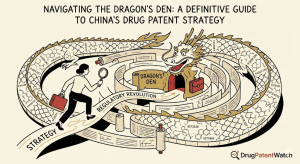
The future of pharmaceutical innovation will be shaped in no small part by the actions taken in China. For those who understand its strategic intent, master its new legal frameworks, and leverage the power of data, the Dragon’s Den is not a place to be feared, but a market ripe for competitive domination.
Key Takeaways
China’s IP reforms, including the new patent linkage and patent-term extension systems, are a deliberate move to transition from an IP follower to a global innovation leader.
The system is now demonstrably pro-patentee, with foreign plaintiffs having a higher success rate (77%) than domestic plaintiffs against Chinese defendants in 2022.
The average damages awarded in Chinese IP cases have risen significantly, providing a meaningful financial incentive for enforcing patent rights.
A key challenge is the lack of a U.S.-style discovery process, which places a high burden on the plaintiff to independently collect evidence.
A successful strategy in China requires a proactive, data-driven approach, including tailoring patent applications to meet China’s stricter standards and using patent intelligence platforms to monitor competitor activities and plan for litigation in advance.
Frequently Asked Questions (FAQ)
1. How has the introduction of punitive damages fundamentally changed the landscape of patent litigation in China for pharmaceutical companies?
The introduction of punitive damages, which allow courts to award up to five times compensatory damages for willful infringement, has fundamentally altered the risk-reward calculus of litigation. For pharmaceutical companies with billions in R&D investment, this signals a stronger judicial deterrent against infringement and increases the potential financial recovery from a successful lawsuit. This makes litigation a far more attractive and necessary option for protecting high-value assets and market exclusivity, turning it into a core component of a company’s strategic playbook.
2. What is the practical difference between a Swiss-type claim and a traditional U.S. method-of-treatment claim in China?
In China, “methods of medical treatment” are explicitly excluded from patentability. As a result, a direct claim such as “a method for treating disease Y using compound X” is invalid. The Swiss-type claim, conversely, protects the same invention by framing it as a manufacturing process: “The use of compound X in the preparation of a drug for treating disease Y”.23 This nuance is critical for patent drafters, as it ensures the invention is protected as an industrial process rather than an unpatentable medical method.
3. Why is the Telitacicept patent term extension case a landmark for foreign pharmaceutical companies, even though the drug is a domestic innovation?
The decision to grant the maximum five-year extension to RemeGen’s Telitacicept is a landmark because it demonstrates that China’s new PTE system is a legitimate and fully functional mechanism, not just a theoretical concept. The fact that the first maximum extension was awarded to a domestic company proves that the system is fair and provides a crucial, real-world “success model” for both domestic and international pharmaceutical companies. It serves as tangible evidence that foreign innovators can expect the same level of market protection.
4. How does the lack of a discovery process in China impact a pharmaceutical company’s pre-litigation strategy?
The absence of a discovery process means that a plaintiff cannot rely on the defendant to provide evidence. The burden of proof is on the plaintiff to collect and preserve evidence independently, a difficult task for complex pharmaceutical technologies.13 This requires a proactive pre-litigation strategy that involves working with local counsel and utilizing tools like notarized purchases and court-ordered evidence preservation orders to build a comprehensive case long before a lawsuit is filed. This approach transforms the process from a reactive defense into a strategic, forward-looking enforcement effort.
5. What is the “triple threat” of IP protection in China and how do companies need to prepare for it?
The “triple threat” refers to the three distinct forms of IP protection available to innovators: patent exclusivity, data exclusivity, and market exclusivity.7 These are separate but complementary tools. To prepare, companies must develop a holistic strategy that accounts for all three. This involves aligning R&D to generate data for robust patent applications and data exclusivity, meticulously tracking regulatory and legal deadlines to file for PTE and engage in patent linkage litigation, and leveraging market exclusivity provisions for specific drug categories, such as orphan or pediatric drugs.7 A comprehensive approach that understands the interplay between these three pillars is necessary to secure full market protection.