Business Intelligence on Biologic and Small Molecule Drugs
Generic Drug Formulation: The Complete Technical and Strategic Playbook From Pre-Formulation Science to Patent Thicket Navigation, Bioequivalence Mastery, and Biosimilar Development
Generic drug development has a public relations problem. The phrase ‘generic drug’ suggests a simple act of copying, the pharmaceutical equivalent of a knockoff handbag. The actual work is nothing like that. Getting a small molecule ANDA approved requires reverse-engineering a competitor’s product to atomic precision, constructing a bioequivalent formulation without infringing a patent thicket that may contain dozens of actively litigated claims, running pivotal bioequivalence studies that cost millions and admit no margin for statistical failure, and surviving a pre-approval inspection that can erase years of development in a single 483. Do it faster than your competitors or the economics collapse entirely.
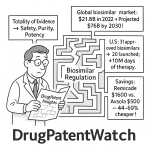
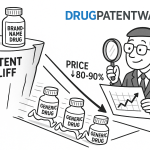
The global generic drug market ran at approximately $450 billion in the mid-2020s and consensus forecasts from Precedence Research, IMARC, Mordor Intelligence, and Grand View Research converge on a range of $680-$800 billion by the early 2030s, reflecting a compound annual growth rate of 5-8% depending on whether biosimilars are counted in the denominator. In the United States, generics fill over 90% of all prescriptions while accounting for roughly 18% of total prescription drug spend. The gap between those two numbers, 90% of volume at 18% of cost, generated approximately $408 billion in savings to the US healthcare system in 2022 alone. That efficiency is not an accident. It is the output of a regulatory and legal architecture created by the Hatch-Waxman Act and sustained by thousands of formulation scientists, patent litigators, and regulatory affairs professionals executing at high speed under intense competitive pressure.
This pillar page is written for that audience: portfolio managers and business development executives who need to understand formulation well enough to make capital allocation decisions, IP teams who need to connect patent claim language to bench-level scientific choices, R&D leads managing ANDA programs, and institutional investors building positions in generic or specialty pharma companies. Every section adds technical depth that the standard overview article leaves out.
Table of Contents
Generic Drug Regulatory Architecture: Hatch-Waxman, BPCIA, and the 505(b)(2) Pathway
Pre-Formulation Science: API Characterization, Biopharmaceutics Classification, and Polymorphism Control
Reverse Engineering the Reference Listed Drug: Q1/Q2/Q3 Analysis, QTPP Construction, and Deformulation Technology
The Formulation Toolkit: Excipients, Their Functions, and Their Patent Exposure
Dosage Form Engineering: Immediate-Release Manufacturing Process Selection and Its Strategic Implications
Modified-Release Formulation: Polymer Science, Matrix vs. Reservoir Architecture, and the IP Value of Complexity
Complex Generics: Inhalables, Topicals, Long-Acting Injectables, and Drug-Device Combinations
Bioequivalence Science: PK Parameters, Study Design, ICH M13A, and the One-Study Shift
FDA vs. EMA Bioequivalence Requirements: Divergence Points That Break Global Programs
The Patent Thicket: Orange Book Mechanics, Secondary Patent Architecture, and Designing Around
Freedom-to-Operate Analysis and ANDA Paragraph IV Strategy
IP Valuation in Generic Development: Calculating the Value of a First-Filer Position
Nitrosamine Impurity Compliance: Formulation and Sourcing Implications
Biosimilar Development: Process Science, Analytical Characterization, and the Totality-of-Evidence Standard
Manufacturing Scale-Up: SUPAC Guidance, Process Validation, and Continuous Manufacturing
The AI-Driven Formulation Lab: Where Machine Learning Actually Adds Value (and Where It Does Not)
Investment Strategy Summary for Institutional Analysts
1. Generic Drug Regulatory Architecture: Hatch-Waxman, BPCIA, and the 505(b)(2) Pathway
1.1 Hatch-Waxman: The Framework That Built the Industry
The Drug Price Competition and Patent Term Restoration Act of 1984, known universally as Hatch-Waxman, created the Abbreviated New Drug Application pathway. Before it, a generic manufacturer had to conduct its own full safety and efficacy trials to obtain FDA approval, which was economically unworkable and medically pointless given that the originator had already established safety and efficacy for the same molecule. Hatch-Waxman allowed a generic applicant to rely on the FDA’s prior findings for the Reference Listed Drug and substitute bioequivalence data for new clinical trials, collapsing the development cost by roughly 90%.
The trade Hatch-Waxman made was straightforward: generic manufacturers gained an abbreviated pathway, and innovators received Patent Term Extension (PTE) to recover exclusivity time lost during FDA regulatory review, capped at five years and subject to a maximum total exclusivity period of 14 years post-approval. The Act also created the Orange Book mechanism, requiring innovators to list patents claiming the approved drug or its approved method of use, and established the Paragraph IV certification process by which generic applicants could challenge those patents before expiry.
The 180-day first-filer exclusivity provision is the economic centerpiece of Hatch-Waxman for generics. A company that files a Paragraph IV certification challenging Orange Book-listed patents and prevails (either in litigation or by triggering a 30-month stay and launching at risk) earns 180 days during which no other ANDA for the same drug can be finally approved. In a large market, that exclusivity is worth hundreds of millions of dollars. In a very large market, it can exceed $1 billion.
1.2 The 505(b)(2) Pathway: The Hybrid That Creates Exclusivity for Generics
The 505(b)(2) New Drug Application pathway occupies a strategic middle ground between the full NDA required for a new molecular entity and the ANDA for a standard generic. Under 505(b)(2), an applicant submits a full NDA but relies, in part, on published literature or FDA’s prior findings of safety and efficacy for an already-approved drug. The applicant supplies its own data supporting whatever modification it is developing: a new dosage form, a new route of administration, a new strength, a new indication, or a new formulation for an existing molecule.
The commercial advantage of 505(b)(2) over a standard ANDA is the potential for three-year market exclusivity for a new clinical investigation that was essential to approval, or five-year exclusivity for a new chemical entity. A generic company that takes an established API and develops a differentiated formulation via 505(b)(2) can compete on innovation rather than pure cost, capture a segment of the market at a premium price, and maintain exclusivity before other generics can enter. This is especially relevant for patient-convenience improvements: abuse-deterrent formulations, faster-dissolving films, smaller-volume injectables, or pediatric liquid formulations where the brand never developed one.
The legal complexity is higher because 505(b)(2) applicants must conduct their own Orange Book patent listing analysis and may face Paragraph IV challenges on their own patents once approved. But for a company that has invested in novel drug delivery platform technologies, the 505(b)(2) route is often the most profitable way to monetize those assets on established molecules.
1.3 The BPCIA Pathway for Biosimilars
The Biologics Price Competition and Innovation Act of 2009 created the biosimilar approval pathway under Section 351(k) of the Public Health Service Act, paralleling what Hatch-Waxman did for small molecules. The 12-year reference product exclusivity period under BPCIA is substantially longer than small molecule exclusivity, and the development costs for biosimilars are orders of magnitude higher than for standard ANDAs, but the revenue at stake per approved biosimilar is correspondingly larger.
The critical distinction between ANDA bioequivalence and 351(k) biosimilarity is the standard of proof. Bioequivalence for a small molecule generic requires demonstrating that the test and reference products deliver the same rate and extent of API absorption within a defined statistical window. Biosimilarity requires demonstrating, through a ‘totality of the evidence’ approach, that the biosimilar is highly similar to the reference biologic notwithstanding minor differences in clinically inactive components, and has no clinically meaningful differences in safety, purity, and potency. The analytical demands of meeting that standard, and the additional FDA designation of interchangeability for biosimilars that can be substituted at the pharmacy without prescriber intervention, are covered in detail in Section 14.
Key Takeaways: Section 1
Hatch-Waxman’s 180-day first-filer exclusivity is the primary economic incentive driving generic Paragraph IV litigation. Any ANDA portfolio analysis should track first-filer positions by product as a discrete IP asset.
The 505(b)(2) pathway creates new-drug-style exclusivities for modified formulations of established APIs. It is systematically underused by companies that think purely in ANDA terms and represents a value-creation opportunity at the intersection of formulation science and regulatory strategy.
BPCIA’s 12-year reference product exclusivity, combined with the analytical complexity of the biosimilarity standard, creates a much longer and more expensive development cycle than Hatch-Waxman generics. The return profile is correspondingly different and requires different capital allocation logic.
2. Pre-Formulation Science: API Characterization, Biopharmaceutics Classification, and Polymorphism Control
2.1 Why Pre-Formulation Data Is the Most Leveraged Investment in the Development Program
Pre-formulation studies on the active pharmaceutical ingredient generate the scientific intelligence that drives every downstream formulation decision. A poorly characterized API leads to formulation choices that look reasonable on paper but fail in pivotal bioequivalence studies, at commercial scale, or on long-term stability. The cost of discovering an API characterization gap at the BE study stage, where a failed study costs $1-3 million and loses 12-18 months, is exponentially higher than discovering it in a 200-gram pre-formulation screen.
The core question pre-formulation science answers is: what are this molecule’s fundamental biopharmaceutical liabilities, and how does the formulation need to compensate for them? Every API has a biopharmaceutical profile that determines how it will behave from ingestion through systemic absorption. Understanding that profile before designing the formulation is not optional.
2.2 The Biopharmaceutics Classification System: Framework for Risk Assessment
The Biopharmaceutics Classification System (BCS) divides APIs into four classes based on aqueous solubility and intestinal membrane permeability. The classification determines the formulation strategy more than any other single factor.
BCS Class I drugs, high solubility and high permeability, dissolve easily and cross the gut wall without resistance. These molecules are relatively straightforward to formulate for standard ANDA development, and for many, a BCS-based biowaiver (an in vitro dissolution test substituting for an in vivo BE study) is available from both FDA and EMA, saving time and cost.
BCS Class II drugs, low solubility and high permeability, are the most technically demanding and commercially interesting category. The molecule wants to cross the gut wall, but getting it into solution is the rate-limiting step. Bioavailability for Class II drugs is typically dissolution-rate limited, meaning that formulation technology directly determines how much drug reaches systemic circulation and how fast. These molecules are where solubility-enhancement technologies, amorphous solid dispersions, lipid-based formulations, nanocrystal milling, and cyclodextrin complexation, add the most value and carry the most formulation patent exposure.
BCS Class III drugs, high solubility and low permeability, dissolve easily but cross the gut wall poorly. Permeability-enhancing excipients and specialized absorption-promotion strategies apply here, though the regulatory path for Class III bioequivalence remains more complex than for Class I.
BCS Class IV drugs, low solubility and low permeability, present the most challenging biopharmaceutical profile. These molecules are where absorption enhancement technologies addressing both solubility and permeability barriers simultaneously come into play, at a cost and development timeline commensurate with the difficulty.
2.3 Polymorphism Control: The Formulation Variable That Can Destroy a BE Study
Polymorphism, the ability of a solid API to adopt multiple distinct crystalline arrangements, is one of the most commonly underestimated liabilities in small-molecule generic development. Each polymorph of a given API can exhibit meaningfully different physical properties: different melting points, different solubilities, and different intrinsic dissolution rates. A polymorph that dissolves twice as fast as another form of the same molecule will produce materially different plasma pharmacokinetics. If the batch used in the pivotal BE study contains a different polymorph proportion than the batch used in commercial manufacturing, the commercial product may not replicate the BE study outcome.
The regulatory expectation is that the manufacturer specifies and controls the polymorphic form throughout the product lifecycle. This requires: identifying all accessible polymorphs through comprehensive screening using techniques such as differential scanning calorimetry (DSC), X-ray powder diffraction (XRPD), solid-state NMR, and Raman spectroscopy; determining the thermodynamic stability relationships between polymorphs at both room temperature and elevated storage conditions; establishing whether any manufacturing step, granulation solvent, milling, compaction, or drying, can cause polymorph conversion; and setting in-process controls and finished product specifications to verify polymorphic form consistency batch to batch.
Patent implications are direct. Originator companies routinely file polymorph patents claiming the most stable, most soluble, or most easily manufactured crystal form of their API. A generic developer who inadvertently selects a patented polymorph, or who is forced to use a specific polymorph to achieve bioequivalence with the RLD, can face infringement liability even after the composition-of-matter patent expires. The pre-formulation polymorph screen is therefore simultaneously a scientific necessity and a freedom-to-operate exercise.
2.4 Solubility Measurement and pH-Dependent Dissolution Profiling
Solubility measurements should be conducted across the full pH range encountered in the gastrointestinal tract: pH 1.2 (fasted stomach), pH 4.5 (fed stomach), pH 6.8 (proximal small intestine), and pH 7.4 (distal small intestine and colon). Measuring solubility at a single pH, typically pH 7, provides a fragment of the picture. A drug that is soluble at pH 7 but nearly insoluble at pH 1.2 will have dramatically different absorption profiles if taken fasted versus fed, a critical variable for bioequivalence study design and for predicting food-effect risk.
Permeability should be characterized using established in vitro models, Caco-2 monolayer transport assays or PAMPA (parallel artificial membrane permeability assay), alongside any available clinical data from the originator’s NDA dossier if accessible through publicly available FDA review documents.
Key Takeaways: Section 2
BCS classification determines the formulation complexity floor. A BCS Class II or IV molecule will require technology-enabled solubility enhancement; understanding the originator’s approach to that enhancement is the starting point for both the formulation design and the freedom-to-operate analysis.
Polymorphism control failures are a leading cause of batch-to-batch BE variability and commercial scale-up failures. Polymorph screening is an investment that pays back in BE study success rates.
Pre-formulation data, when combined with patent claim analysis, identifies which API liabilities the originator already patented solutions for. That intersection defines the ‘designing around’ mandate for the project.
3. Reverse Engineering the Reference Listed Drug: Q1/Q2/Q3 Analysis, QTPP Construction, and Deformulation Technology
3.1 Q1, Q2, and Q3 Similarity: What Regulators Mean and Why It Matters Strategically
The Q1/Q2/Q3 framework defines the levels of similarity between a generic formulation and its RLD. Q1 (qualitative sameness) means the generic contains the same excipients as the RLD. Q2 (quantitative sameness) means those excipients are present at equivalent amounts. Q3 (microstructural similarity) means the physical arrangement of ingredients at the product level, particle size distribution, dissolution profile, viscosity, or internal structure, matches the RLD’s.
Full Q1/Q2/Q3 similarity is the standard for complex generics where bioequivalence cannot be demonstrated through standard PK blood sampling, particularly topical products, inhalation products, and ophthalmic formulations. Achieving Q1/Q2/Q3 similarity is itself a form of ‘design-around’ challenge: if the originator has patents covering the specific combination of excipients that defines Q1/Q2 sameness, the generic developer may be in an infringement position if they try to match the formulation exactly. Regulators require it; the patent estate may prohibit it. Resolving that conflict is one of the most technically and legally complex challenges in complex generic development.
For standard oral solid generics, Q1/Q2/Q3 is not required. The formulator has flexibility to select different excipients, provided the bioequivalence data demonstrates equivalent performance. That flexibility is the design space for patent avoidance.
3.2 Deformulation Analytical Methods
Deformulating the RLD requires a battery of analytical techniques applied to multiple lots of the reference product to establish a statistically representative picture of its composition. Common methods include high-performance liquid chromatography (HPLC) for API identity and quantity, liquid chromatography-mass spectrometry (LC-MS) for excipient identification at trace levels, thermogravimetric analysis (TGA) for moisture content, DSC for thermal characterization and detection of amorphous content, XRPD for polymorphic form identification, and scanning electron microscopy (SEM) for particle morphology.
Dissolution testing across multiple pH values, with and without surfactant, is used to establish the reference dissolution profile that the generic must match. For modified-release products, dissolution testing at multiple time points using rotating basket and paddle apparatus at several rotation speeds provides the data used to construct the dissolution specifications in the ANDA.
The Quality Target Product Profile (QTPP) is the formal document that consolidates all of this analytical intelligence into a set of target critical quality attributes (CQAs) for the generic product. The QTPP defines the target dosage form, strength, route of administration, container-closure system, drug release rate and mechanism, and all relevant physical and chemical attributes. It is the contractual document between the formulator and the rest of the organization: every formulation decision made downstream must be traceable to the QTPP, and any deviation from QTPP targets is a signal that the BE study may not succeed.
3.3 The Metoprolol Succinate Case: Deformulation in Practice
Metoprolol succinate extended-release tablets (Toprol-XL) provide a well-documented example of the deformulation challenge. The originator product uses a matrix system in which metoprolol succinate beadlets coated with a semipermeable ethylcellulose membrane are compressed into tablets. The rate of drug release depends on the membrane thickness and porosity, which are controlled by the ethylcellulose-to-plasticizer ratio and the coating process parameters.
A generic developer must characterize not just the API (metoprolol succinate, a hygroscopic compound sensitive to humidity-driven particle size changes) but the entire bead architecture: bead core composition, coating polymer identity and molecular weight grade, plasticizer identity and concentration, and the resulting membrane permeability. Achieving a dissolution profile that matches Toprol-XL across the USP testing conditions specified in the ANDA requires replicating those membrane parameters, either exactly (potentially infringing formulation patents if the coating system is claimed) or through an alternative coating system that produces equivalent release kinetics without literal infringement.
The particle size of metoprolol succinate API is also a critical variable. Metoprolol succinate forms needle-like crystals with strong tendency toward agglomeration. If the API particle size distribution is not tightly controlled, the bead coating uniformity will be inconsistent, the membrane permeability will vary lot to lot, and the dissolution profile will shift. This API particle size sensitivity is exactly the kind of finding that pre-formulation API characterization is designed to surface before manufacturing development begins.
Key Takeaways: Section 3
The QTPP is the highest-leverage document in the development program. A QTPP built on thorough RLD characterization data collapses the probability of late-stage failures. One built on assumptions accelerates them.
Q1/Q2/Q3 similarity requirements for complex generics create a patent-regulatory conflict that must be resolved before development begins, not during the BE study.
Deformulation is a competitive intelligence activity as much as a scientific one. The excipients identified in the RLD, and the patents that cover them, define the formulation design space for the generic.
4. The Formulation Toolkit: Excipients, Their Functions, and Their Patent Exposure
4.1 From Inactive to IP-Active: Why Excipient Selection Is a Legal Decision
Excipients have been called ‘inactive’ ingredients in drug product labeling since the beginning of pharmaceutical regulation, and that label continues to mislead. An excipient is inactive in the sense that it does not provide direct therapeutic effect. It is not inactive in its influence on drug release kinetics, API stability, bioavailability, patient tolerability, or the formulation’s relationship to the innovator’s patent portfolio.
For a BCS Class II drug where a specific combination of surfactant and hydrophilic polymer creates a supersaturation system that dramatically improves AUC, that excipient combination is almost certainly patented by the innovator. For an extended-release product where a specific grade of hydroxypropyl methylcellulose (HPMC) controls the release rate through a specific matrix swelling mechanism, the HPMC grade and concentration range may be exactly what the formulation patent claims. Selecting excipients without concurrent patent review is a development error that produces bioequivalent formulations that cannot be commercialized.
4.2 Core Excipient Categories and Their Formulation Roles
Fillers and diluents add the bulk needed to make a tablet manufacturable and handleable. Microcrystalline cellulose (MCC) is the workhorse of direct compression: it has excellent compressibility, acceptable flow, and low hygroscopicity, making it compatible with a wide range of APIs. Lactose is widely used but presents API compatibility risks for molecules with primary or secondary amine groups, where Maillard reaction between the lactose aldehyde and the amine can generate colored degradation products and reduce potency. Dicalcium phosphate is chosen for moisture-sensitive APIs that require the lowest possible water activity in the formulation.
Binders provide the cohesive strength that makes the tablet survive the mechanical stresses of compression, coating, packaging, and shipping. Povidone (PVP) is the most common solvent-based binder in wet granulation. Hypromellose (HPMC) is preferred when the formulation requires a polymer that is also compatible with extended-release mechanisms. The concentration of binder directly controls tablet hardness and dissolution: too much binder retards disintegration; too little produces tablets that fracture.
Disintegrants enable tablet break-up in the GI environment. Croscarmellose sodium, crospovidone, and sodium starch glycolate work through different mechanisms (swelling, capillary action, and mixed) and perform differently depending on tablet porosity, compression force, and the presence of hydrophobic lubricants. The selection of disintegrant type and quantity must account for the dissolution profile requirement from the QTPP.
Lubricants are essential for high-speed tablet press operation and represent one of the most formulation-critical excipients despite being used at very low concentrations, typically 0.25-1% w/w. Magnesium stearate is the dominant lubricant but is hydrophobic and can coat API and excipient particles during blending, creating a hydrophobic film that retards dissolution. Over-blending with magnesium stearate is one of the most common causes of unexpected dissolution slowdown in scale-up batches. Sodium stearyl fumarate (Pruv) is a less hydrophobic alternative that provides adequate lubrication with lower dissolution impact and is preferred for dissolution-sensitive formulations.
Glidants improve powder flow without the film-forming risk of lubricants. Colloidal silicon dioxide at 0.1-0.5% w/w significantly improves the flow index of cohesive powder blends, enabling consistent die fill at high press speeds.
4.3 Solubility-Enhancing Technologies and Their Patent Landscape
Solubility enhancement for BCS Class II molecules is where formulation science intersects most directly with IP value and IP risk. The major platform technologies are:
Amorphous solid dispersions (ASDs) convert the crystalline API to its amorphous form, which is thermodynamically higher in energy and therefore higher in apparent solubility relative to the stable crystal polymorph. The ASD is typically prepared by hot melt extrusion (HME) or spray drying, using a hydrophilic polymer matrix (most commonly HPMC-AS or polyvinyl caprolactam-polyvinyl acetate-polyethylene glycol copolymer, known commercially as Soluplus) to stabilize the amorphous API and prevent recrystallization during storage and dissolution. ASD technology is extensively patented, both by originator companies for their specific formulations and by CDMO and excipient suppliers for their platform systems.
Lipid-based drug delivery systems (LBDDS) include self-emulsifying drug delivery systems (SEDDS) and self-microemulsifying systems (SMEDDS), where the API is dissolved or dispersed in a mixture of oils, surfactants, and co-solvents that form a fine emulsion or microemulsion on contact with aqueous GI fluids. The large oil-water interface created during emulsification enhances dissolution rate and, for highly lipophilic APIs, partitioning into intestinal lymphatic absorption pathways that bypass first-pass hepatic metabolism. Cyclosporine A (Sandimmune to Neoral) is the canonical example of lipid-based reformulation that both enhanced bioavailability and generated significant new formulation IP.
Cyclodextrin complexation creates inclusion complexes between hydrophobic API molecules and the cyclodextrin cavity, dramatically increasing apparent aqueous solubility. Beta-cyclodextrin and its hydroxypropyl derivative (HP-beta-CD) are the most commonly used. Cyclodextrin-based formulations are common in ophthalmic, oral, and injectable products where other solubilization approaches are not feasible. Patent exposure varies by application; the basic cyclodextrin complexation concept is long off-patent, but specific inclusion complex compositions for specific drugs may still be protected.
Nano-milling reduces API particle size to the sub-micron range, dramatically increasing surface area and, for dissolution-rate-limited compounds, improving the rate and extent of dissolution. Nanocrystal technology as used by Elan and others in the early 2000s generated significant patent estates that have now largely expired, but application-specific nanoformulation patents remain active.
Key Takeaways: Section 4
Excipient selection is a patent decision as much as a formulation science decision. The identification of patented excipient combinations from RLD deformulation must feed directly into the FTO analysis before formulation development begins.
Magnesium stearate over-blending is a manufacturing process variable that causes dissolution failures during scale-up. Process controls on blending time and speed are mandatory CQAs for any tablet formulation containing this lubricant.
ASD platform technologies, HME and spray drying with HPMC-AS or Soluplus, represent the current frontier for BCS Class II generic formulation. Mastery of this technology differentiates companies that can access the most commercially valuable complex generic opportunities.
Investment Strategy: Section 4
Companies with validated ASD platform capabilities (in-house HME and spray drying) have a meaningful technical moat in BCS Class II complex generics. When evaluating generic companies for investment, assess not just their ANDA count but the proportion of their pipeline requiring solubility enhancement technology and whether their manufacturing infrastructure can support it. A company filing 50 ANDAs per year on IR tablets faces different margin dynamics than one filing 15 ANDAs per year on controlled-release and ASD-enabled products.
5. Dosage Form Engineering: Immediate-Release Manufacturing Process Selection and Its Strategic Implications
5.1 Direct Compression vs. Wet Granulation: A Manufacturing Economics Decision
Immediate-release tablet manufacturing relies on three core process architectures. Direct compression, dry granulation via roller compaction, and wet granulation differ in cost, complexity, and applicability to different API and excipient combinations. The choice is not purely technical; it has direct COGS implications and affects how quickly the manufacturing process can be validated at commercial scale.
Direct compression is the most efficient process. The API and excipients are blended and compressed directly into tablets without any intermediate granulation step. It has the lowest equipment investment, the fewest process steps, and the shortest cycle time. It works when the API has adequate flow and compressibility, which is often achievable through selection of compressible excipient grades (for example, co-processed grades of MCC and mannitol that have been engineered for direct compression properties). If direct compression is achievable, it should be the target process, because it minimizes manufacturing cost and reduces the number of critical process parameters that must be validated.
Wet granulation is used when the API’s inherent properties, poor flow, poor compressibility, low bulk density, or sensitivity to segregation, make direct compression impractical. Wet granulation binds particles together using a liquid binder, producing granules with superior flow and compressibility compared to the original powder blend. The trade-off is process complexity: the equipment train includes a high-shear or fluid-bed granulator, a dryer, and a mill, each with its own set of critical process parameters. Wet granulation also introduces water into direct contact with the API during processing, which is problematic for hydrolytically sensitive molecules.
Roller compaction (dry granulation) is the intermediate option, applied when wet granulation is not feasible due to API moisture sensitivity but direct compression does not provide adequate content uniformity or tablet hardness. The powder blend is compacted under high pressure between two rollers to form ribbons, which are then milled into granules. No liquid is involved, making it suitable for moisture-sensitive APIs.
5.2 Continuous Manufacturing: The Competitive Moat That Process Investment Creates
Continuous manufacturing (CM) for oral solid dosage forms has moved from regulatory experiment to established commercial technology since FDA’s 2016 guidance on CM and Vertex Pharmaceuticals’ approval of the first continuously manufactured new drug product. In CM, API and excipients are fed at controlled rates into an integrated line of unit operations, with finished tablets emerging at the other end in a continuous stream rather than discrete batches.
The advantages of CM over batch manufacturing are material. Real-time release testing (RTRt) using process analytical technology (PAT) instruments, near-infrared (NIR) spectroscopy for blend uniformity, Raman spectroscopy for polymorphic form monitoring, and inline dissolution testing allow product quality to be monitored continuously rather than assessed retrospectively on a finished batch. Cycle times collapse from days to hours. Lot sizes can be varied by running time rather than by equipment changeover. The smaller physical footprint relative to batch equipment reduces facility cost.
The competitive implications for generic manufacturers are significant. A company that has invested in continuous manufacturing can produce a complex tablet formulation with more consistency, faster cycle time, and at lower per-unit cost than a competitor running batch processes. This matters most in high-volume commodity generics, where cost of goods is the primary competitive variable, and in complex extended-release products, where blend uniformity and in-process coating weight are the primary quality control challenges.
Key Takeaways: Section 5
Manufacturing process selection determines COGS at commercial scale as much as it determines regulatory risk. The target process should be direct compression whenever the API and excipient combination makes it feasible, because the cost difference over a commercial product lifecycle is substantial.
Continuous manufacturing represents a durable capital-based competitive advantage in oral solid manufacturing. Companies that have validated CM lines can produce complex products with better quality and lower cost than batch-process competitors.
6. Modified-Release Formulation: Polymer Science, Matrix vs. Reservoir Architecture, and the IP Value of Complexity
6.1 Extended-Release Technology Architectures
Extended-release (ER) oral solid dosage forms control drug release over an extended period, typically 8-24 hours, through one of two primary physical architectures: matrix systems and reservoir (or membrane-controlled) systems.
In a matrix system, the API is distributed throughout a polymer matrix. Drug release occurs by diffusion through the matrix (for hydrophilic or swellable matrices) or erosion of the matrix at its surface (for eroding matrices), or a combination of both. Hydrophilic matrix systems based on HPMC are the most widely used platform. The release rate is controlled primarily by the HPMC viscosity grade (which determines polymer chain length and swelling behavior), the HPMC loading, and the tablet geometry. HPMC grades designated K4M, K15M, and K100M provide a range of viscosities that can be blended to target specific release rates. The formulator adjusts HPMC viscosity grade and concentration to match the target dissolution profile identified during RLD deformulation.
In a reservoir system, a drug-containing core is coated with a rate-controlling polymer membrane. Drug diffuses through the membrane at a rate determined by membrane thickness, membrane permeability (controlled by the polymer type and plasticizer concentration), and the concentration gradient across the membrane. Ethylcellulose is the most common reservoir coating polymer for oral solid ER products. Aqueous dispersion systems (Aquacoat or Surelease) allow ethylcellulose coating to be applied from water rather than organic solvents, which has both environmental and safety advantages at manufacturing scale.
The patent implications differ between the two architectures. A matrix system patent typically claims specific HPMC grades at specific concentration ranges, often combined with other excipients that contribute to rate control or improve physical robustness. A reservoir system patent typically claims the coating polymer, plasticizer ratio, film thickness, and resulting in vitro release characteristics. Either type of claim requires a generic developer to analyze whether their proposed ER formulation system falls within the patent claims and, if so, to identify a non-infringing alternative system that produces equivalent release kinetics.
6.2 The 505(b)(2) ER Opportunity: From Generic ANDA to Proprietary IP
An extended-release formulation developed by a generic manufacturer that is differentiated from the originator’s approach (different release mechanism, different polymer system, different dosing interval) may qualify for 505(b)(2) approval rather than standard ANDA approval, with attendant three-year clinical investigation exclusivity. This requires that the developer conduct at least one clinical investigation that is essential to approval: typically a human food-effect study, a dose-dumping study for alcohol interaction, or a comparative clinical efficacy study demonstrating that the new ER profile produces equivalent or superior clinical outcomes.
The economics of this pathway can be superior to standard ANDA even accounting for the higher clinical development cost: the three-year exclusivity prevents other generic ANDAs on the new formulation from being approved during that window, allowing the 505(b)(2) holder to price at a meaningful premium above standard generic levels. For companies with ER formulation platform expertise, the 505(b)(2) ER pipeline represents a recurring source of differentiated, exclusivity-protected revenue.
Key Takeaways: Section 6
Matrix and reservoir ER architectures have different patent exposure profiles. Identifying which architecture the originator uses, and what the patent claims cover, determines whether a design-around is needed and in which direction.
ER formulation expertise creates a dual commercial opportunity: standard ANDA development for established ER generics and 505(b)(2) development for new ER formulations that can carry exclusivity.
7. Complex Generics: Inhalables, Topicals, Long-Acting Injectables, and Drug-Device Combinations
7.1 The FDA Definition and Its Commercial Implication
FDA defines complex generics as products with complex active ingredients, complex formulations, complex routes of delivery, or complex drug-device combinations. The commercial significance of this definition is that complexity limits competition. Where a standard oral tablet market with a large brand may attract 15-20 ANDA filers within two years of patent expiry, a complex inhaled product with the same brand revenue may attract four to seven. The market clearing price in the low-competition scenario is correspondingly higher, and price erosion is slower.
This explains the strategic pivot of the Indian generic industry’s largest players toward complex generics. Teva, Sun Pharma, Hikma, Amneal, and Dr. Reddy’s have all made explicit portfolio commitments to increasing complex generic share as a percentage of total ANDA filings, precisely because the margin structure of complex generics is sustainably better than commodity oral solids.
7.2 Inhalation Products: Bioequivalence Without Blood Levels
Inhaled products, metered-dose inhalers (MDIs), dry powder inhalers (DPIs), and nasal sprays, present the most technically demanding bioequivalence challenge in the generic industry. The drug is delivered directly to the lung, which is the site of action for respiratory drugs (salbutamol, fluticasone, budesonide), and measuring blood levels is not a reliable proxy for pulmonary drug delivery. FDA’s approach for locally acting inhalation products requires a combination of in vitro and, in some cases, pharmacodynamic and clinical studies.
For MDIs and DPIs, FDA typically requires in vitro characterization of: particle size distribution of the aerosol generated, measured by cascade impaction (NGI or ACI), with cascade impaction data demonstrating Q1/Q2/Q3 equivalence or in vitro bioequivalence; device performance, including dose uniformity over the labeled number of actuations and across the labeled temperature and humidity range; spray pattern and plume geometry; and formulation composition.
Critically, the delivery device is an inseparable part of the drug product. A generic MDI is a drug-device combination product: the propellant formulation and the actuator/valve assembly together determine the aerosol characteristics. The originator’s specific device design, valve seat dimensions, orifice diameter, and actuator geometry, are often patented separately from the drug formulation itself. A generic developer must either license the device design, develop an equivalent device that does not infringe device patents, or challenge those patents under Paragraph IV. The device patent challenge adds legal cost and timeline to what is already a technically demanding development program.
7.3 Topical Products and the Q3 Microstructure Challenge
Topical semisolid products, creams, ointments, gels, and lotions, present a different but equally difficult bioequivalence problem. These products act locally at the skin surface or in superficial skin layers, and blood level measurements rarely correlate with skin-level drug concentration. FDA’s Product-Specific Guidance for most topical products requires Q1/Q2/Q3 sameness as the primary approach to demonstrating bioequivalence: the generic must match the originator’s excipient composition exactly (Q1/Q2) and match the physical microstructure of the semisolid system (Q3).
Q3 microstructure similarity is characterized by rheological testing (viscosity and viscoelastic properties), microscopy (optical and electron), droplet/particle size analysis for emulsion products, and in vitro release testing (IVRT) through a synthetic membrane that measures drug flux as a function of time. For some products, FDA also requires in vitro skin permeation testing (IVPT) using human skin.
The Q1/Q2 requirement creates a direct tension with the innovator’s formulation patents: to match the Q1/Q2 composition exactly may require using the exact excipient combination the originator patented. Generic developers and FDA regulators have engaged in extended product-specific guidance negotiations over whether Q1/Q2 sameness is truly required for topical bioequivalence, and whether alternative approaches (such as demonstrating Q3 microstructure equivalence through a different excipient system) are scientifically valid. This remains one of the most contentious regulatory policy debates in the complex generic space.
7.4 Long-Acting Injectables: Particle Engineering and the Manufacturing Barrier
Long-acting injectable (LAI) formulations include microsphere products (PLGA-encapsulated APIs providing weeks to months of sustained release), nanosuspensions, and lipid-based depot formulations. The complexity of LAI products creates barriers to entry that are both scientific and manufacturing-based.
For PLGA microsphere LAIs, the particle engineering required to produce microspheres with the correct size distribution, polymer composition, encapsulation efficiency, and drug release kinetics demands specialized equipment, controlled spray drying or emulsion-solvent extraction processes, and lyophilization capability. Scale-up from lab to commercial is notoriously challenging: small changes in process parameters (spray drying inlet temperature, emulsion agitation rate, solvent composition) produce large changes in microsphere morphology and drug release kinetics. The RLD characterization challenge is particularly severe because microsphere internal structure and drug distribution within the polymer matrix cannot be determined by surface analysis alone.
Key Takeaways: Section 7
Complex generics face fewer competitors at market entry due to technical and regulatory barriers, producing better margin profiles than oral solid commodity generics. The strategic case for building complex generic capability is a margin defense argument.
Inhalation product development requires mastery of aerosol particle engineering and device design in addition to formulation science. Device patents often extend market exclusivity well beyond drug formulation patent expiry.
LAI microsphere development is among the most capital-intensive generic development programs, typically requiring $50-100 million in development investment per product. The reward is a market where brand erosion to generics is measured in years, not months.
8. Bioequivalence Science: PK Parameters, Study Design, ICH M13A, and the One-Study Shift
8.1 The PK Metrics That Determine Approval
Bioequivalence for standard oral drug products is assessed by comparing two pharmacokinetic parameters between the test (generic) and reference (RLD) products: Cmax (peak plasma concentration) and AUC (area under the plasma concentration-time curve). Cmax reflects the rate of drug absorption; AUC reflects the total extent of absorption over the study period.
The regulatory standard, which is harmonized across FDA, EMA, and most other major agencies, requires that the 90% confidence interval for the test/reference geometric mean ratio of both Cmax and AUC falls entirely within the bounds of 80.00% to 125.00%. This is not an 80-125% tolerance for individual subjects. It is a statistical confidence interval: the study must be powered to demonstrate, with 90% confidence, that the true ratio lies within those bounds. The distinction matters for study design. A study that is underpowered may fail not because the formulations are inequivalent but because the study did not enroll enough subjects to generate a sufficiently narrow confidence interval.
Tmax, the time to reach Cmax, is measured but not part of the formal acceptance criteria for most drugs, though FDA and EMA may request it as a descriptive parameter and for some drugs with narrow therapeutic windows, particularly modified-release products, Tmax equivalence has clinical relevance that the agency may address through its product-specific guidance.
8.2 ICH M13A and the Single-Study Shift for IR Products
The International Council for Harmonisation’s M13A guideline on bioequivalence for immediate-release oral solid dosage forms, finalized and adopted by FDA in 2024, replaces the prior standard of separate fasting and fed bioequivalence studies for most IR products with a single study recommendation. For the majority of IR oral solids, a fasting study is recommended as the primary (and often sole) study, because fasting conditions are considered more sensitive for detecting formulation differences: the absence of food-induced GI motility changes, bile secretion, and gastric pH modulation means the formulation properties of the tablet drive absorption more directly.
The commercial impact of this change is significant. For a large generic portfolio, cutting the standard two-study requirement to one reduces clinical development cost by approximately 40-50% per product, accounting for the fact that most fasting and fed BE studies run at similar cost. Over a pipeline of 30-50 products, this represents tens of millions of dollars in development cost reduction, and a corresponding acceleration in ANDA filing timelines.
The risk of the single-study approach is that there is no second chance within the same study design. A failed single study means a full new study must be run. This places additional pressure on the pre-formulation and formulation development program to get the product right before the BE study runs.
8.3 Highly Variable Drugs: Scaled Average Bioequivalence
Highly variable drugs (HVDs) are compounds where intra-subject pharmacokinetic variability, measured by the within-subject coefficient of variation (CV), exceeds 30%. For an HVD, achieving a 90% confidence interval within 80-125% for Cmax with a standard crossover design of 24-36 subjects may require an impossibly large sample size, because the inherent variability of the drug’s pharmacokinetics widens confidence intervals regardless of formulation similarity.
Both FDA and EMA have accepted reference-scaled average bioequivalence (RSABE) approaches for HVDs, where the acceptance limits for Cmax are widened proportionally to the reference product’s within-subject variability, subject to the constraint that the widened limits cannot exceed 69.84% to 143.19%. The applicant demonstrates RSABE using a replicate crossover study design, where subjects receive the reference product twice (and the test product twice), allowing within-subject variability for the reference product to be directly estimated from the study data.
FDA and EMA differ in how they apply RSABE. FDA applies it to both Cmax and AUC for qualifying drugs. EMA applies it to Cmax only; AUC must still meet the standard 80-125% criterion. A global development program for an HVD must be designed to satisfy the stricter EMA constraint on AUC, which may require a larger replicate study than FDA alone would require.
Key Takeaways: Section 8
BE study failure is the most expensive single event in a generic development program. Study design must be based on rigorous sample size calculations using estimated CV from the literature or pilot PK data, not conservative assumptions.
ICH M13A’s single-study recommendation for IR products saves clinical cost and time but increases the penalty for failure. Investment in formulation development quality directly reduces the probability of a costly restudy.
HVD scaled average bioequivalence programs are more complex and costly than standard BE studies. Identifying a candidate as HVD during pre-formulation planning, not after a failed standard study, is the correct sequence.
9. FDA vs. EMA Bioequivalence Requirements: Divergence Points That Break Global Programs
9.1 Narrow Therapeutic Index Drug Requirements
For narrow therapeutic index (NTI) drugs, where small changes in blood level can cause therapeutic failure or serious toxicity, both FDA and EMA tighten the acceptance criteria beyond the standard 80-125% window. FDA’s recommendation for NTI drugs is a tightened window of 90.00% to 111.11% for both AUC and Cmax, with a replicate crossover study design. EMA applies the 90.00% to 111.11% criterion to AUC but may allow the standard 80-125% range for Cmax if clinically justified.
The drugs subject to NTI criteria include warfarin, cyclosporine, tacrolimus, carbamazepine, phenytoin, and a handful of others where the therapeutic window is genuinely narrow. Developing a generic for these molecules requires formulation precision and study conduct that exceeds standard ANDA requirements: the BE study must be larger (due to the tighter acceptance window), the study must be replicate design, and the formulation must have demonstrably low within-batch and between-batch variability in its release characteristics.
9.2 BCS Biowaiver Divergence: The EMA Class 3 Advantage
FDA’s BCS biowaiver guidance allows biowaivers (substituting in vitro dissolution for in vivo BE studies) for BCS Class 1 drugs that meet specific dissolution criteria. FDA is more conservative about Class 3 biowaivers, requiring that the generic formulation be both qualitatively and quantitatively similar (Q1/Q2) to the RLD in excipient composition. EMA’s biowaiver guideline is more permissive for Class 3 drugs: it allows biowaivers based on rapid dissolution without requiring Q1/Q2 similarity to the same degree.
For a company developing a BCS Class 3 generic targeting the EU market first, the EMA biowaiver pathway can save 12-18 months and $1-2 million per product relative to a full comparative BE study. This creates a sequencing argument for some products: complete the EU filing under biowaiver, then address the FDA filing with a full BE study without the EU timeline being held up.
9.3 Reference Product Sourcing as a Logistical Constraint
FDA requires that the BE study use the specific RLD listed in the FDA Orange Book, sourced commercially in the US. EMA requires that the study use the reference medicinal product sourced from within the EU, typically from a major market such as Germany, France, or the UK. For products where the EU reference product is manufactured by a different company or at a different site than the US RLD, the two reference products may differ in excipient composition, coating, or manufacturing process, meaning the generic formulation optimized for one reference product may not perform identically against the other.
This problem is most acute for modified-release products where the reference products in different markets were developed independently. Building the dissolution specification for the generic requires dissolution data against both reference products, and designing a single formulation to satisfy both is a constrained optimization problem that cannot be solved with a single reference product lot during development.
Key Takeaways: Section 9
NTI drug development requires formulation precision and study rigor that goes significantly beyond standard ANDA requirements. Build the NTI drug case into the investment thesis for any generic company pursuing this segment.
The EMA Class 3 biowaiver opportunity is a meaningful cost and time advantage for qualifying products. Global ANDA programs that do not consider regional biowaiver opportunities before study design are leaving efficiency on the table.
10. The Patent Thicket: Orange Book Mechanics, Secondary Patent Architecture, and Designing Around
10.1 How the Orange Book Works as a Legal Barrier
The Orange Book (Approved Drug Products with Therapeutic Equivalence Evaluations) lists all patents that the NDA holder claims cover the approved drug or its approved method of use. Any patent submitted within 30 days of NDA approval must be listed. An ANDA filer must certify with respect to each listed patent: that the patent has expired (Paragraph III), that the patent is not valid or would not be infringed by the proposed generic (Paragraph IV), or, for method-of-use patents only, that the method covered by the patent is not included in the proposed labeling (Section viii carve-out).
A Paragraph IV certification triggers the innovator’s right to file suit within 45 days. Filing suit automatically imposes a 30-month stay on FDA final approval of the ANDA, regardless of the merits of the case. This 30-month stay is the mechanism by which originator companies can delay generic entry by filing suit on even relatively weak patents. A generic company with a strong Paragraph IV case may still face 30 months of litigation delay, during which the originator retains market exclusivity.
Orange Book patent listings are subject to gaming by innovator companies: listing patents of questionable relevance or validity to extend the 30-month stay benefit. The 2003 Medicare Modernization Act amendments restricted NDA holders to one 30-month stay per ANDA, reducing but not eliminating the stay-stacking problem.
10.2 Reading a Patent Claim as a Formulation Specification
A patent claim is not written for formulation scientists. It is written for patent litigators. But formulation scientists who cannot read a patent claim accurately are navigating the most consequential document in their development program without understanding it.
The claim is the legal boundary of the invention. Only subject matter described in the claims is legally protected. The claim has a preamble (describing the type of invention), a transition phrase (usually ‘comprising,’ which means ‘including at least the following elements but not limited to them,’ or ‘consisting of,’ which is closed and means ‘only the following elements’), and a body (the specific elements of the invention).
The distinction between ‘comprising’ and ‘consisting of’ is commercially critical. A claim reading ‘a pharmaceutical composition comprising API X, excipient A, and excipient B’ encompasses a formulation containing API X, excipient A, excipient B, and any additional excipients. A formulation with API X, A, B, and C is within the scope of a ‘comprising’ claim. A claim reading ‘a pharmaceutical composition consisting essentially of API X, excipient A, and excipient B’ is narrower but still problematic: it allows ingredients that do not materially affect the basic and novel characteristics of the invention. ‘Consisting of’ is the strictest form and would exclude any additional ingredient.
The designing-around strategy begins with identifying the specific elements of each claim and asking whether the proposed formulation can achieve bioequivalence without each of those elements. If a claim covers the specific combination of excipient A and excipient B, can the generic achieve equivalent dissolution and stability using excipient C and excipient D instead? If a claim covers a specific HPMC viscosity grade at a specific concentration range, can an alternative polymer system at a different concentration range achieve equivalent release kinetics? These are simultaneously patent law questions and formulation science questions, and they require a collaboration between patent counsel and formulation scientists that generic companies sometimes fail to execute before development begins.
10.3 Secondary Patent Architecture: The Full Thicket Map
Innovator companies protect their products through multiple layers of secondary patents that extend well beyond the original composition-of-matter patent. The layers relevant to generic development are:
Formulation patents, covering the specific combination of excipients used in the commercial product. These are the most directly relevant to the generic formulation design and are the primary target of designing-around efforts.
Polymorph patents, covering specific crystalline forms of the API that are used in the commercial product and may be required to achieve bioequivalence with the RLD. If the RLD uses a specific polymorph and that polymorph is patented, the generic developer faces a choice between challenging the polymorph patent on validity grounds or demonstrating that an alternative polymorph achieves equivalent performance.
Process patents, covering the manufacturing method for the API or the drug product. These are less commonly litigated than formulation patents but can be significant when the patented process is the only practical route to the target product quality.
Method-of-use patents, covering specific clinical indications, patient subpopulations, or dosing regimens. Generic developers can potentially avoid these through skinny labeling, a Section viii carve-out that removes the patented indication from the generic’s label. The clinical and legal validity of skinny labeling as an infringement shield has been contested in courts, with inconsistent outcomes. The GlaxoSmithKline v. Teva decision in the Federal Circuit created significant concern about the sufficiency of skinny labeling for avoiding induced infringement liability.
Device and delivery system patents, particularly relevant for inhalation, injectable, and transdermal products, covering the device component that delivers the drug. These often expire after the drug formulation patents and may constitute the final barrier to generic entry for complex drug-device combinations.
Key Takeaways: Section 10
The Orange Book 30-month stay is a litigation tactic as much as a patent enforcement mechanism. Any Paragraph IV filing must be accompanied by a litigation readiness plan, not filed as a purely formulation or regulatory exercise.
Patent claim interpretation at the ‘comprising’ vs. ‘consisting of’ level determines the designing-around space. Formulation scientists and patent counsel must analyze claims together, not sequentially.
Skinny labeling, carving out patented indications from the generic label, reduces infringement risk but does not eliminate it under recent Federal Circuit jurisprudence. Companies relying on skinny labeling should have counsel assess the specific method-of-use patent claims against the specific proposed label carve-out.
11. Freedom-to-Operate Analysis and ANDA Paragraph IV Strategy
11.1 The FTO Analysis as the Gate to Development Investment
A Freedom-to-Operate (FTO) analysis answers a specific question: can the proposed product be manufactured and sold in a target market without infringing any in-force patents? It is not the same as a patentability analysis (whether new patents can be obtained) or a validity analysis (whether existing patents would survive challenge). A positive FTO opinion means the proposed product does not fall within the claims of any in-force, unexpired patent in the jurisdiction analyzed. A negative FTO opinion, or an FTO with significant uncertainty, means development should either be paused pending invalidity analysis, or the formulation should be redesigned to avoid the at-risk patents.
The FTO must cover not just Orange Book-listed patents but any other patent that could be enforced against the generic product. This includes non-listed formulation patents (which cannot trigger a 30-month stay but can still be infringed), process patents covering the generic manufacturer’s manufacturing process, and patents held by API suppliers or excipient manufacturers that may be enforced upstream.
The scope of a thorough FTO typically covers: all Orange Book-listed patents with active claims; all published US patent applications in the same family; corresponding international patents in key commercial markets (EU, Japan, Canada, major emerging markets); patents on API synthetic routes if the API is manufactured in-house; and patents on excipient systems if proprietary excipient technology is being used.
11.2 Paragraph IV Challenge Strategy: Invalidity Arguments That Win
Paragraph IV challenges succeed or fail primarily on the strength of the invalidity argument against the asserted patents. The two primary invalidity grounds in Hatch-Waxman litigation are anticipation (the claimed invention was already disclosed in a prior art reference before the patent filing date) and obviousness (the claimed invention would have been obvious to a person of ordinary skill in the art at the time of the filing date, based on the combination of prior art references).
For formulation patents, the most productive prior art search focuses on: published academic and clinical research on the excipient systems at issue, predating the patent filing date; prior formulation patents in the same therapeutic class that disclose similar excipient combinations; FDA guidance documents and regulatory submissions that might have disclosed the formulation approach; and international patent applications filed before the US patent that describe the same technology.
The obviousness argument for formulation patents typically follows this logic: the problem the formulation patent solves was a known problem in the field (demonstrated by prior art discussing it), the excipient solution the patent claims was a known solution to that type of problem (demonstrated by prior art disclosing the excipient technology for other drugs), and a person of ordinary skill in formulation science would have had a reasonable expectation of success in applying the known solution to the known problem. The ‘reasonable expectation of success’ element is where formulation expertise becomes legally operative: the court must understand what a competent formulation scientist in the relevant time period would have known and tried.
Key Takeaways: Section 11
FTO analysis is the gate, not the afterthought. Committing to a development program without a completed FTO on the full patent landscape, including non-listed patents, is a capital allocation error.
Strong Paragraph IV challenge arguments are built on prior art identified during FTO, not assembled at the litigation stage. The development team’s document-building discipline around pre-formulation and formulation decisions creates the contemporaneous record that supports invalidity arguments.
Investment Strategy: Section 11
The value of a first-filer ANDA with a Paragraph IV certification depends on the probability of winning the litigation and the expected value of the 180-day exclusivity period if the challenge succeeds. For products with large brand revenues, $500 million or more in annual US sales, even a 30-40% probability of winning a Paragraph IV challenge produces positive expected value given the magnitude of the exclusivity prize. Model expected value as: probability of win x expected 180-day exclusivity revenue, discounted to present value, minus expected litigation cost (typically $5-15 million to trial). Generic companies with strong litigation track records and robust FTO/invalidity processes are better positioned to generate consistent first-filer value from their Paragraph IV pipeline.
12. IP Valuation in Generic Development: Calculating the Value of a First-Filer Position
12.1 The 180-Day Exclusivity as a Discrete Financial Asset
A first-filer Paragraph IV ANDA, if the patent challenge succeeds, generates a period of 180-day market exclusivity during which no other ANDA for the same drug in the same dosage form can be finally approved. This exclusivity can be valued as a discrete financial asset, separate from the ongoing commercial value of the generic product after exclusivity ends.
A simplified valuation of a 180-day first-filer position:
Expected 180-day revenue = (daily brand volume at time of generic launch) x (generic market share at launch) x (generic price at launch) x 180
During the first 180 days, the first generic typically captures 70-80% of new prescriptions for the drug, with the brand holding most of its existing patient base through managed care contracts and manufacturer patient assistance. The generic launch price is typically 80-85% of brand WAC in the first weeks, declining moderately over the 180-day period as pharmacy purchasing patterns adjust. After the 180-day period ends and additional generics enter, price falls to the competitive commodity level of 15-30% of brand WAC within 12-18 months.
For a brand with $1 billion in annual US sales, a conservative 180-day exclusivity valuation might run: 365-day brand revenue / 365 x 180 = $493 million in reference market x 75% generic share x 82% of brand WAC = approximately $304 million in gross revenue during exclusivity. Net of COGS, litigation costs, and SG&A, the net value of the exclusivity position might be $100-200 million for a well-positioned first filer.
This calculation explains why the litigation cost of Paragraph IV challenges, at $5-15 million through trial, is economically rational for any product with brand revenues above $200-300 million. The expected value of the exclusivity prize overwhelms the litigation cost even at sub-50% probability of success.
12.2 Valuing a Complex Generic Pipeline
Complex generics carry higher development investment than standard ANDA products but benefit from lower competitor counts and slower price erosion. A LAI microsphere generic that costs $80 million to develop but enters a market with two other competitors rather than twelve will sustain prices at 40-60% of brand WAC for 3-5 years rather than eroding to 10-15% of brand WAC within 18 months.
Portfolio managers and investors should model complex generic product values using product-specific competitor count assumptions (derived from ANDA filing data and conference presentations) and product-specific price erosion curves (adjusted for the observed historical behavior of each product category). A generic topical or inhaler product modeled with the same price erosion curve as an oral solid will be materially mis-valued.
Key Takeaways: Section 12
First-filer 180-day exclusivity is a financial asset with a calculable expected value. Paragragph IV filing decisions should be made through an explicit NPV calculation, not by reference to strategic priority alone.
Complex generic products require product-category-specific price erosion assumptions in valuation models. Applying oral solid commodity erosion curves to inhaler or topical generics will systematically undervalue those products.
13. Nitrosamine Impurity Compliance: Formulation and Sourcing Implications
13.1 How Nitrosamines Form in Drug Products
The discovery beginning in 2018 that N-nitrosodimethylamine (NDMA) and related nitrosamines were present in sartan and metformin drug products at levels exceeding acceptable daily intake (ADI) limits sent a regulatory shockwave through the global generic industry. Nitrosamines are potent genotoxic carcinogens with ADI limits typically in the range of 18-177 ng per day depending on the specific nitrosamine compound and its potency classification.
Nitrosamines can form in drug products through multiple mechanisms. In API synthesis, trace levels of nitrous acid or nitrite can react with secondary or tertiary amines in intermediates or the API itself to form N-nitroso compounds. In the final formulation, nitrosamines can form through reactions between residual secondary amines (from degradation products of certain API classes, or from amine-containing excipients) and nitrite contamination in excipients or packaging materials. They can also form slowly during long-term storage, meaning a batch that passes release testing may still develop a nitrosamine issue over its shelf life.
13.2 Regulatory Requirements: NDMA Risk Assessment and Control
FDA guidance from 2020 and subsequent updates require manufacturers to conduct nitrosamine risk assessments for all drug products. The risk assessment must consider all potential sources of nitrosamines in the manufacturing process (API synthesis routes, excipient compositions, equipment surfaces, nitrogen purging gas purity), all potential nitrosamine-forming reactions in the formulated product, and the proposed analytical method for detecting nitrosamines at the relevant ADI-based specification limits.
Limits are typically expressed in nanograms per day of patient exposure. Setting a specification requires an analytical method capable of detecting nitrosamines at those trace levels, typically liquid chromatography-tandem mass spectrometry (LC-MS/MS) with detection limits in the low parts-per-billion range. Developing and validating such methods adds cost and time to the analytical development program.
The formulation implication is that excipient selection must now include a formal assessment of nitrosamine formation potential. Excipients containing amine groups, or excipients that may contain trace nitrite as an impurity, are flagged for enhanced compatibility testing. API suppliers must provide detailed synthesis route information and demonstrate that their process controls minimize nitrosamine precursor formation. The supply chain transparency that nitrosamine compliance requires is substantially greater than what pre-2018 ANDA development demanded.
Key Takeaways: Section 13
Nitrosamine risk assessment is now a standard part of ANDA development and cannot be deferred to post-approval. Products launched without a complete nitrosamine assessment face recall risk if postmarket testing identifies exceedances.
LC-MS/MS analytical method development for nitrosamines adds 3-6 months to analytical development timelines for products where formation risk is non-trivial. Build this into ANDA development project plans.
14. Biosimilar Development: Process Science, Analytical Characterization, and the Totality-of-Evidence Standard
14.1 ‘The Process Is the Product’: What This Means Operationally
The phrase ‘the process is the product’ captures a genuine scientific constraint on biosimilar development: a therapeutic protein’s three-dimensional structure, post-translational modifications (glycosylation, phosphorylation, disulfide bond formation), aggregation state, and host cell protein impurity profile are all determined by the manufacturing process used to produce it. Two recombinant antibodies with the same amino acid sequence but made in different cell lines, different culture media, or different purification trains will differ in their glycosylation patterns, which in turn affects their pharmacokinetics, Fc receptor binding, and immunogenicity profile.
This is the scientific basis for the biosimilarity standard’s emphasis on analytical comparability rather than just chemical identity. FDA and EMA require biosimilar developers to demonstrate that the totality of the analytical, nonclinical, and clinical evidence supports a finding of high similarity to the reference product. The analytical data is the primary evidentiary layer: it must demonstrate similarity across dozens of critical quality attributes (CQAs), covering primary structure (amino acid sequence by peptide mapping), secondary and tertiary structure (by circular dichroism, intrinsic fluorescence), post-translational modifications (glycan profile by LC-MS), particle size and aggregation state (by dynamic light scattering and SEC), biological activity (cell-based and binding assays), and purity/impurity profile.
14.2 The Cell Line, Media, and Process Development Investment
Developing a biosimilar starts with establishing a suitable cell line expressing the biosimilar protein. For a monoclonal antibody, the gene encoding the antibody is transfected into a production cell line (typically Chinese Hamster Ovary, CHO, cells), and high-expressing, stable clones are selected. The cell culture media composition, fed-batch feeding strategy, bioreactor operating conditions (pH, dissolved oxygen, temperature, agitation), and culture duration collectively determine the protein product’s CQA profile.
Because the reference product’s exact process parameters are proprietary, the biosimilar developer cannot replicate the originator’s process. Instead, they develop their own process and then iteratively adjust it, guided by analytical comparability data, to bring the biosimilar’s CQA profile into alignment with the reference product. This iterative alignment is the core technical challenge of biosimilar process development. It typically requires dozens to hundreds of small-scale bioreactor runs (2-200L) before the desired CQA alignment is demonstrated consistently enough to begin process characterization studies at GMP scale.
The purification process, involving protein A affinity chromatography, ion exchange steps, viral inactivation and filtration, and ultrafiltration/diafiltration, must also be developed to achieve the required purity profile while managing host cell protein levels, aggregated species, and product-related variants within the comparability range.
14.3 Interchangeability: The Commercial Prize That Drives Pharmacy-Level Substitution
FDA’s interchangeability designation, granted under the BPCIA framework, requires a higher evidentiary standard than basic biosimilar approval. An interchangeable biosimilar must demonstrate that it can be expected to produce the same clinical result as the reference product in any given patient, and that the risk of alternating or switching between the biosimilar and the reference product is not greater than continuing on the reference product.
As of 2024, FDA has granted approximately 12-15 interchangeable biosimilar designations, primarily for insulin products and certain adalimumab biosimilars. The commercial difference between an interchangeable and a non-interchangeable biosimilar is material: interchangeable biosimilars can be dispensed by pharmacists without prescriber intervention, following the same automatic substitution rules that apply to small molecule generics. Market share uptake for interchangeable biosimilars in pharmacy-dispensed drug categories has been significantly higher than for non-interchangeable biosimilars.
For biosimilar developers, the additional investment to achieve interchangeability designation (which typically requires an additional switching study demonstrating equivalent immunogenicity and efficacy in a population that alternates between the biosimilar and the reference product) is usually justified for pharmacy-dispensed biologics where automatic substitution drives market share. For infused biologics where the dispensing decision is made by the clinical facility rather than the retail pharmacy, interchangeability provides less commercial advantage and the additional study investment may not be economically justified.
Key Takeaways: Section 14
Biosimilar development investment runs $100-300 million per product, versus $2-10 million for a standard ANDA. The return profile must be modeled against products with billion-dollar brand revenues to justify the capital.
Interchangeability designation is the correct target for all pharmacy-dispensed biosimilars. The switching study investment is justified by the pharmacy substitution market share advantage.
Cell line development and process alignment to reference product CQAs is the primary technical risk in biosimilar development. Companies without in-house bioreactor capability and analytical characterization platforms are dependent on CDMO partners for the most knowledge-intensive work in the development program.
Investment Strategy: Section 14
The biosimilar market is bifurcating between commodity (insulin, adalimumab) and high-value emerging (oncology checkpoint inhibitors, IL-17/23 agents). The commodity segment is experiencing aggressive pricing competition as multiple interchangeable biosimilars compete. The emerging segment offers higher margins but requires larger analytical and clinical investment. Investors assessing biosimilar-focused companies should evaluate: depth of analytical characterization capability (in-house mass spec, binding assays, cell assays), cell culture process development track record, and the specific reference products targeted in the pipeline relative to their expected exclusivity cliff dates and competitive BPCIA filing landscape.
15. Manufacturing Scale-Up: SUPAC Guidance, Process Validation, and Continuous Manufacturing
15.1 SUPAC: Managing Post-Approval Changes Without Losing Approval Status
The FDA’s Scale-Up and Post-Approval Changes (SUPAC) guidance documents define how manufacturers can make changes to an approved ANDA’s manufacturing process without automatically requiring a new BE study or prior FDA approval, depending on the level of change and the product category.
SUPAC classifies manufacturing changes into three levels. Level 1 changes are minor and include component or composition changes within a pre-specified range, site changes within the same facility, and batch size changes up to 10-fold. Level 1 changes require only annual report notification to FDA. Level 2 changes are moderate, such as equipment changes (using similar equipment of different design), batch size increases beyond 10-fold, or site transfers to a different facility. Level 2 changes require a 30-day prior notice to FDA. Level 3 changes are major, such as changes in the drug release mechanism, changes in manufacturing process that may affect product performance, and site transfers to a facility in a different country. Level 3 changes require a Prior Approval Supplement and may require new BE data.
The strategic implication for generic companies is that early process development decisions constrain future manufacturing flexibility. A process that requires Level 3 SUPAC changes to optimize at commercial scale will impose Prior Approval Supplement delays on any future efficiency improvement. Designing the manufacturing process for scalability and flexibility from the start, documenting process understanding through the Quality by Design (QbD) framework, and building in-process controls that provide real-time quality assurance reduce post-approval SUPAC risk.
15.2 Process Validation: The Three-Batch Standard and Its Evolution
FDA’s expectation for process validation for commercial manufacturing has been articulated in the 2011 Process Validation Guidance, which shifted the framework from the traditional three-batch validation model (three consecutive successful commercial batches at commercial scale as the validation criterion) to a lifecycle model emphasizing continued process verification. Under the lifecycle model, process validation occurs in three stages: Process Design (development and characterization of the process), Process Qualification (demonstrating that the process design can be reproducibly manufactured at commercial scale), and Continued Process Verification (ongoing monitoring to confirm the process remains in a state of control throughout commercial manufacturing).
The three-batch expectation has not disappeared: FDA still expects at least three process qualification batches as part of Stage 2 validation, and many reviewers treat three consecutive batches within the established control space as the minimum for acceptable process qualification. But the ongoing monitoring requirements of Stage 3 mean that process validation is not a one-time event at the time of ANDA filing. It is a continuing obligation that requires statistical process control, annual product review data, and trend analysis documentation.
Key Takeaways: Section 15
SUPAC level classification of planned manufacturing changes should be assessed before a commercial process is finalized. Designing the process to stay within Level 1 or Level 2 change categories for foreseeable efficiency improvements avoids future Prior Approval Supplement delays.
Continued Process Verification under the 2011 Process Validation Guidance is a quality system obligation, not a bureaucratic formality. Companies that run adequate CPV programs catch process drift early; those that do not face both 483 observation risk and batch failure risk.
16. The AI-Driven Formulation Lab: Where Machine Learning Actually Adds Value (and Where It Does Not)
16.1 What AI Can Do in Formulation Science
Machine learning applications in pharmaceutical formulation are advancing, but require honest assessment of where they add value versus where they replace the need for scientific judgment with a different form of uncertainty.
The most credible ML application in formulation is predictive modeling for excipient compatibility and stability. Large datasets of drug-excipient interaction outcomes from published literature and proprietary screening studies can be used to train models that predict whether a proposed excipient combination will produce degradation for a given API, based on the API’s functional groups, pKa, solubility, and known reactive liabilities. This accelerates the drug-excipient compatibility screening phase by prioritizing excipient combinations most likely to be stable and flagging those most likely to fail. It does not replace the stability study; it improves its design.
ML can also accelerate dissolution profile prediction. Quantitative structure-property relationship (QSPR) models trained on dissolution data from formulations of structurally related compounds can provide initial estimates of how a proposed formulation change (HPMC grade, concentration, or particle size) will affect dissolution rate. These predictions reduce the number of experimental formulation iterations needed before the design is close enough to the QTPP target to run a formal pilot BE study.
Generative AI tools for patent claim analysis are beginning to offer value in FTO workflows: identifying structurally similar claims across large patent datasets that a manual search might miss, flagging potential design-around approaches based on claim language analysis, and generating first-pass assessments of claim scope. These tools require patent counsel verification of any output before it is acted on.
16.2 Where AI Does Not Replace Scientific Judgment
AI tools in formulation do not replace the need for a competent formulation scientist who understands the physical chemistry of the system. A model trained on historical stability data can flag risk patterns, but it cannot reason about a novel excipient system or an API degradation mechanism that is not well-represented in the training data. The model produces a confidence score, not a guarantee.
Similarly, AI-assisted dissolution modeling requires calibrated physicochemical input data (polymorphic form, particle size, solubility) that must be experimentally measured. Garbage input data produces confident-looking garbage output. The value of AI in formulation is in accelerating the experimental cycle, not in replacing the experimental foundation.
Key Takeaways: Section 16
AI tools for excipient compatibility prediction and dissolution profile modeling are validated use cases that reduce experimental iteration and accelerate development. They should be part of any modern formulation platform.
AI tools for patent claim analysis can identify coverage gaps and design-around opportunities at scale, but all outputs require expert legal review before formulation decisions are made on their basis.
17. Investment Strategy Summary for Institutional Analysts
17.1 The Generic Company Valuation Framework
Generic pharmaceutical companies are infrastructure businesses for drug access, and their economic value is determined by four variables: ANDA pipeline productivity (number of first-filers, Paragraph IV success rate, complex vs. simple product mix), manufacturing capability (oral solid vs. complex capabilities, continuous manufacturing investment, sterile injectable capacity), regulatory standing (FDA Warning Letter history, 483 observation frequency, Form 483 response effectiveness), and financial structure (leverage relative to patent cliff timing on first-filer positions).
17.2 First-Filer Position Count as a Forward Revenue Signal
A company’s first-filer Paragraph IV position count is among the most reliable forward revenue signals available in public disclosure. Each first-filer position represents a probability-weighted option on 180-day exclusivity revenue. Companies with large first-filer Paragraph IV portfolios in large-revenue brand markets are building 3-5 year forward revenue visibility that does not depend on new molecule discovery or clinical trial outcomes.
Track not just the count of first-filer positions but their distribution across brand revenue sizes and the litigation status of each Paragraph IV challenge. A first-filer portfolio concentrated in small-revenue products does not carry the same value as one concentrated in markets with $500 million or more in annual brand sales.
17.3 Complex Generic Capability as a Margin Defense
Companies investing in complex generic platforms, MDI development, LAI microsphere manufacturing, semisolid Q1/Q2/Q3 equivalence programs, and ASD technology for BCS Class II products, are building margin defense against the commodity oral solid market’s declining economics. The margin differential between complex and simple generics has widened over the 2020-2025 period and will continue to do so as oral solid commoditization deepens.
Assess manufacturing investment disclosures carefully. Capex for complex sterile injectable capacity, MDI manufacturing lines, or continuous manufacturing systems is the leading indicator of a company’s competitive positioning for the next 5-10 year cycle.
17.4 Biosimilar Pipeline Assessment
Biosimilar-focused companies should be evaluated on reference product target selection (products with large US revenues facing imminent patent cliff vs. products with distant exclusivity windows), analytical characterization depth (in-house vs. CDMO-dependent), interchangeability designation track record, and commercial execution capability (managed care contracting, specialty pharmacy relationships, rebate positioning relative to the reference product and other biosimilars).
The transition from originator-dominated to multi-biosimilar markets in adalimumab (Humira), ustekinumab (Stelara), and etanercept (Enbrel) provides the clearest current data on biosimilar price erosion curves and market share capture dynamics. These data should be the calibration dataset for any forward model of biosimilar market economics.
Methodological Note
This analysis draws on publicly available FDA guidance documents including the 2024 ICH M13A adoption, SUPAC IR and MR guidance, process validation guidance (2011), the FDA OGD product-specific guidance library, EMA bioequivalence guideline (2010, CPMP/EWP/QWP/1401/98 Rev. 1), and BPCIA statutory framework. Market size data reflects a synthesized consensus from Precedence Research, IMARC Group, Grand View Research, Stellar MR, and Mordor Intelligence research published through early 2026. Patent claim analysis methodology reflects standard FTO practice as described in Hatch-Waxman litigation case law through 2025. All IP analysis and investment commentary is for informational purposes and does not constitute legal or investment advice.
This analysis is written for pharmaceutical IP professionals, R&D leads, portfolio managers, and institutional investors. Nothing in this document constitutes legal advice, regulatory guidance, or an investment recommendation. Regulatory expectations and patent status change continuously and should be verified against current primary sources before any development or investment decision.