Part One: What GPT-Rosalind Is and What OpenAI Is Selling
The Model Architecture
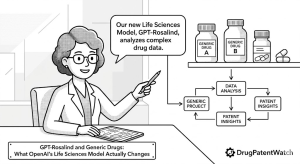
GPT-Rosalind is the first in what OpenAI explicitly frames as a ‘Life Sciences model series.’ It is a frontier reasoning model, meaning it sits in the same architectural family as the chain-of-thought models that power extended multi-step reasoning. What distinguishes it from GPT-5 and its immediate predecessors is fine-tuning on life sciences corpora, integration with a 50-plus tool biological database ecosystem, and optimization for what OpenAI calls ‘long-horizon, tool-heavy scientific workflows’ [1].
The naming is worth a paragraph. Rosalind Franklin was a British chemist and X-ray crystallographer whose Photo 51 — a diffraction image of the B-form of DNA — was the key piece of experimental evidence that allowed Watson and Crick to propose the double helix structure in 1953. She received no credit in the original Nature paper. Watson, Crick, and Wilkins received the 1962 Nobel Prize in Physiology or Medicine; Franklin had died of ovarian cancer four years earlier. OpenAI named its most consequential scientific AI tool after her. The choice is both symbolically appropriate and, given OpenAI’s history of centralizing access to powerful technology, faintly ironic.
The model integrates with a Codex plugin that connects users to more than 50 public databases spanning human genetics, functional genomics, protein structure, biochemistry, clinical evidence, and public study discovery [2]. The plugin itself is available for free. The model is not.
The Benchmark Numbers
OpenAI published performance data against three evaluation frameworks. On BixBench — a bioinformatics benchmark developed by Edison Scientific that tests models on real-world computational biology tasks — GPT-Rosalind achieved a Pass@1 score of 0.751. For reference, GPT-5.4 scored 0.732, Grok 4.2 hit 0.728, and Gemini 3.1 Pro landed at 0.550 [3].
On LABBench2, which covers literature research, database access, sequence manipulation, and protocol design, the model outperformed GPT-5.4 on six of eleven tasks. Its biggest advantage was in CloningQA, which requires end-to-end design of DNA and enzyme reagents for molecular cloning protocols [3].
The third evaluation is the one that will attract the most sustained scrutiny. In partnership with Dyno Therapeutics — a gene therapy company focused on designing AAV capsid proteins — OpenAI tested GPT-Rosalind on RNA sequence-to-function prediction and generation using unpublished, previously unseen sequences specifically to avoid benchmark contamination. The model’s best ten submissions in Codex ranked above the 95th percentile of human experts on the prediction task and around the 84th percentile on the sequence generation task, based on comparisons with 57 historical expert scores [4].
That 95th-percentile figure is the number the pharmaceutical industry needs to sit with. It does not mean the model is universally better than experts. It means that in a specific, bounded task — predicting the function of an RNA sequence — a model running ten attempts outperforms the vast majority of human specialists. In drug development, where the cost of running the wrong experiment is measured in months and millions of dollars, that kind of triage capability has real economic value.
The Access Strategy
OpenAI is not releasing GPT-Rosalind as an open-weight model, nor as a standard API product. The model requires organizations to pass through a qualification and safety review covering intended use, governance, safety oversight, and controlled access. Organizations must conduct ‘legitimate scientific research with clear public benefit,’ maintain compliance and misuse-prevention controls, and restrict access to approved users in secure environments [5].
Joy Jiao, OpenAI’s life sciences research lead, was direct with reporters: ‘We do not yet believe AI can create new disease treatments on its own’ [6]. The model is positioned as a triage and acceleration tool, not a replacement for experimental science.
The gated access structure reflects two things. The first is genuine biosecurity concern — a model capable of sophisticated protein and RNA sequence design has obvious dual-use implications. The second is business strategy. By running GPT-Rosalind through a trusted-access program for vetted enterprise customers, OpenAI is building a premium pricing structure and a defensible customer base before competitors can copy the product. As one close observer of the launch noted, ‘the model is not just OpenAI’s biology model. It is a test of whether governed access, Codex tools, pharma workflows, and biosecurity controls can become the product’ [7].
Part Two: The Patent Landscape GPT-Rosalind Is Entering
The Super-Cliff and What It Means for Generic Manufacturers
The pharmaceutical industry is heading into the largest patent cliff in its history. Between 2026 and 2030, over $236 billion in brand revenue is exposed globally to generic or biosimilar competition [8]. The 2026–2027 window alone involves major assets including apixaban (Eliquis), sitagliptin (Januvia), and ustekinumab (Stelara) — three products that collectively generated tens of billions in annual revenue for Bristol-Myers Squibb, Pfizer, Merck, and Johnson & Johnson.
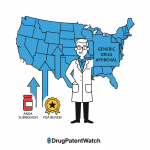
For generic manufacturers, a patent cliff is an opportunity, but not a guaranteed one. The Abbreviated New Drug Application (ANDA) pathway, established by the Hatch-Waxman Act in 1984, allows a generic manufacturer to demonstrate bioequivalence to the Reference Listed Drug (RLD) without repeating the full clinical development program [9]. The economic structure of that pathway is well understood: the first manufacturer to file an ANDA with a Paragraph IV certification — alleging that the innovator’s patents are invalid or not infringed — earns a 180-day period of market exclusivity before other generics can enter [10].
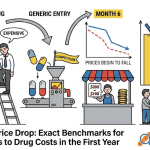
That 180-day exclusivity period is where the money is. A generic drug at day one of competition typically prices at 15 to 20 percent below brand, capturing substantial volume while maintaining margin. By month seven, when additional generics enter, prices collapse — often to 10 to 20 percent of brand price within 18 months of multi-generic competition. The generic manufacturer that captures the 180-day window earns returns that are structurally different from those that enter as the fifth or sixth filer.
The competitive intelligence question that drives every generic drug program is therefore not ‘when does the patent expire?’ It is ‘which patents are vulnerable to Paragraph IV challenge, what is the probability of winning that challenge, and who else is already filing?’ Tools like DrugPatentWatch — which aggregates ANDA filing data, tracks Paragraph IV certifications, and provides patent expiration intelligence for pharmaceutical professionals — exist precisely because that intelligence is the critical variable in ANDA program selection [11].
The Anatomy of a Multi-Patent Drug Defense
Understanding where GPT-Rosalind could intervene requires understanding how branded pharmaceutical companies actually structure their IP defense.
A drug protected by a composition-of-matter patent expiring in 2027 is not a drug with a 2027 cliff. It has a 2027 cliff for Paragraph IV challenges to the composition patent, but formulation and method-of-use patents often run years longer. A compound patent on the active molecule might expire in 2027. A formulation patent covering the extended-release mechanism might run to 2030. A method-of-use patent targeting a specific indication might hold until 2031. Each represents a separate legal barrier to generic entry, a separate litigation risk, and a separate opportunity for the generic manufacturer with the scientific capability to design around it [12].
The generic manufacturer’s task is therefore formulation design — creating a bioequivalent product that does not infringe the secondary patents. For a simple oral tablet, that is often straightforward: change the excipient profile, demonstrate bioequivalence in pharmacokinetic studies, file the ANDA. For complex drug products — inhaled drugs, transdermal patches, long-acting injectables, modified-release formulations — ‘design around’ work requires significantly more scientific sophistication [13].
This is the first place where a tool like GPT-Rosalind could, over the next three to five years, change the economics of generic drug development.
The 55% Paragraph IV Challenge Rate and What Drives It
Research published in PMC examined 210 new small-molecule drugs approved by the FDA between 2007 and 2018 and found that 55 percent experienced Paragraph IV challenge initiation within the first year of eligibility [14]. The most important predictor of challenge was market size — larger markets attract more challengers. Anti-infective drugs and fast-track approvals were less likely to be challenged.
This predictive framework matters because it reveals the selection logic of generic manufacturers: they go where the revenue is. A blockbuster drug with a composition-of-matter patent expiring in 2027 will face challenges regardless of the complexity of its secondary patent portfolio. The question is whether the challengers have the scientific capability to execute the design-around work fast enough and well enough to win.
Between 2012 and 2023, approximately 67 percent of pharmaceutical patent claims that went to final written decision in Inter Partes Review (IPR) proceedings at the USPTO were found unpatentable [15]. That rate is substantially higher than the 40 to 50 percent invalidity rate in federal court litigation, which is why IPR has become a key tool in the generic manufacturer’s arsenal. <blockquote> ‘Generic drug applications that included Paragraph IV certifications increased by 12% year-over-year in 2023, reaching a record high of 1,067 total Paragraph IV certifications on file, with biologics-adjacent small molecules accounting for the fastest-growing segment.’ (DrugPatentWatch Patent Cliff Analysis, 2024 [15]) </blockquote>
The trend line is clear: generic manufacturers are filing more Paragraph IV certifications against more drugs with more complex patent estates. The question GPT-Rosalind raises is whether AI-assisted scientific analysis will accelerate that trend — and which side of the table it accelerates it for.
Part Three: Where GPT-Rosalind Touches the Generic Drug Development Process
Stage One: Target Selection and Patent Landscaping
The first decision a generic drug manufacturer makes is which molecule to target. That decision involves patent landscaping — mapping the full IP estate of the branded product, identifying the expiration dates of each patent, assessing the probability of successful Paragraph IV challenge for each, and modeling the expected revenue given the competitive field of other ANDA filers.
DrugPatentWatch and analogous intelligence platforms provide the patent data layer for that analysis. What they cannot yet do is the scientific synthesis layer: determining, from a reading of the patent claims, whether a proposed formulation approach would likely design around a given secondary patent, or whether specific claims are vulnerable to invalidity arguments based on prior art in the scientific literature.
That is precisely the kind of multi-step, evidence-synthesis task that GPT-Rosalind is designed for. A well-structured prompt asking the model to analyze the claims of a given formulation patent, cross-reference them against the scientific literature for prior art, and assess the technical feasibility of a design-around approach would, on the basis of the published benchmark data, likely produce a more thorough and faster analysis than a team of human scientists could generate from a standing start.
The caveat is legal: AI-generated prior art searches are not yet accepted as a substitute for human expert testimony in patent litigation. They are, however, useful as a screening tool — narrowing the list of patents worth spending legal budget on and identifying the scientific arguments worth developing.
Stage Two: Bioequivalence Study Design
Bioequivalence is the scientific heart of the ANDA pathway. A generic drug must demonstrate that it delivers the same amount of active ingredient into systemic circulation at the same rate and extent as the RLD. For most simple oral formulations, this means a standard single-dose, two-period crossover pharmacokinetic study in healthy volunteers [13].
For complex products, the study design becomes considerably more difficult. An inhaled drug requires device characterization, particle size distribution matching, and often in vitro–in vivo correlation data. A transdermal patch requires skin permeation modeling. A long-acting injectable requires sophisticated pharmacokinetic modeling to demonstrate that depot release kinetics are equivalent.
GPT-Rosalind’s demonstrated capability in multi-step experimental planning and protocol design — particularly its CloningQA performance — suggests it could contribute to bioequivalence study design for these complex cases. The model can, by OpenAI’s own account, suggest ‘new experimental pathways’ within a single interface by querying specialized databases, parsing recent scientific literature, and interacting with computational tools [2].
The practical application: a generic manufacturer’s formulation team could use GPT-Rosalind to rapidly prototype study designs for complex bioequivalence programs, cross-reference FDA product-specific guidance documents, and identify potential failure modes before committing to a full study. That kind of pre-study analytical work currently takes weeks of skilled scientist time. If the model reduces that to days, the impact on ANDA program timelines is material.
Stage Three: Formulation Development and Design-Around Work
The most commercially consequential application for generic drug manufacturers is formulation design — specifically, designing a product that is bioequivalent to the RLD while not infringing secondary patents covering the brand’s specific formulation approach.
Secondary formulation patents are the primary tool of pharmaceutical evergreening. A company with a composition-of-matter patent expiring in 2027 will spend the years before expiry filing patents on specific excipient combinations, particle sizes, coating technologies, and manufacturing processes. Each of those patents is listed in the FDA’s Orange Book if it covers the drug substance, drug product, or method of use for an approved indication. Each Orange Book listing triggers the 30-month stay of ANDA approval upon Paragraph IV certification — a stay that costs the generic manufacturer three years of potential revenue if the litigation goes against them [16].
The design-around task requires scientific creativity: finding a formulation approach that achieves bioequivalence without using the patented approach. For a controlled-release tablet, that might mean using a different polymer matrix, a different coating system, or a different drug-loading approach that achieves the same pharmacokinetic profile by a different mechanism.
GPT-Rosalind’s ability to query protein structure databases, analyze molecular interactions, and suggest new experimental pathways translates, in the generic drug context, to an ability to rapidly survey the formulation science literature, identify prior art demonstrating alternative approaches to a given release mechanism, and generate novel formulation hypotheses. This is not speculation. It is a direct application of the capabilities OpenAI has already validated in the molecular biology context.
The same model that designs DNA and enzyme reagents for molecular cloning protocols — the CloningQA task — is structurally capable of designing excipient systems for modified-release drug products. The scientific reasoning is the same kind of multi-step, constraint-satisfying problem-solving. The domain is different; the cognitive architecture is the same.
Stage Four: Chemistry, Manufacturing, and Controls (CMC) Documentation
The ANDA submission requires extensive CMC documentation: analytical methods, stability data, manufacturing process descriptions, and quality control specifications. This documentation is heavily standardized — FDA has detailed guidance on what each section must contain — but generating it is labor-intensive. Scientific writers, regulatory specialists, and analytical chemists spend months assembling and reviewing CMC packages.
GPT-Rosalind’s evidence synthesis and document structuring capabilities — already demonstrated in its ability to handle long-horizon, tool-heavy scientific workflows — could accelerate CMC documentation significantly. The model does not replace the analytical data; it organizes, synthesizes, and presents it against the regulatory template. For a mid-sized generic manufacturer filing 20 to 30 ANDAs per year, even a 20 percent reduction in CMC documentation time translates to meaningful resource reallocation.
Stage Five: Paragraph IV Litigation Support
The most technically demanding application, and the one that branded pharmaceutical companies will find most threatening, is litigation support.
When a generic manufacturer files a Paragraph IV certification, they are alleging that the brand’s listed patents are either invalid or not infringed by the generic product. The brand manufacturer typically responds by filing suit within 45 days, triggering the 30-month stay. The litigation that follows is expensive — a contested pharmaceutical patent case in federal court can cost each side $5 million to $20 million through trial — and scientifically complex [16].
The invalidity arguments rely on prior art: evidence that the claimed invention was already known or obvious at the time of filing. Finding that prior art requires surveying the scientific literature, the patent database, and sometimes unpublished experimental data. This is a core GPT-Rosalind use case: the model’s BixBench performance demonstrates strong capability in real-world bioinformatics and data analysis, and its LABBench2 results show it can navigate literature research and database access tasks that directly parallel prior art searches.
The branded pharmaceutical industry is already aware of this threat. As DrugPatentWatch noted in its analysis of AI-driven patent intelligence: ‘The same AI tools that originator companies use to discover drugs are now in the hands of generic manufacturers and their Paragraph IV litigation counsel. AI-powered patent landscape analysis tools can identify potential invalidity vectors in AI-drug discovery patents faster than conventional manual analysis’ [17].
GPT-Rosalind, once available to generic manufacturers, is a materially better version of those tools. The question of access timing — when OpenAI expands the trusted-access program beyond its initial enterprise cohort — is therefore not merely an operational question. It is a competitive strategy question for every generic company with active Paragraph IV programs.
Part Four: What GPT-Rosalind Means for Branded Pharmaceutical Companies
The Innovator’s Dilemma, Restated
The branded pharmaceutical company faces a structurally awkward situation. GPT-Rosalind was developed and deployed by OpenAI with the stated goal of accelerating drug discovery — and branded companies stand to benefit from that acceleration in their own pipelines. Amgen, Moderna, and the other launch partners are not using the model to attack their own patents. They are using it to find new targets, design better experiments, and compress their discovery timelines.
But the same model, once available to a sophisticated generic manufacturer, can be turned against them. The formulation design capabilities, the prior art search capabilities, and the experimental planning capabilities that make GPT-Rosalind valuable for drug discovery are the same capabilities that make it valuable for Paragraph IV litigation.
This is not a new dynamic — branded companies have always known that their chemistry and formulation science could be replicated — but it is an accelerated one. If generic manufacturers can reduce ANDA development timelines from the current average of three to four years [18] by 20 to 30 percent through AI-assisted formulation design and documentation, the effective commercial exclusivity window for branded drugs shortens.
The Evergreening Arms Race
Branded pharmaceutical companies will respond by filing more secondary patents, earlier, with broader claims. This is already happening. The 2026 AI-assisted patent landscape analysis at DrugPatentWatch documents ‘the integration of agentic AI into pharmaceutical CI teams’ that enables a ‘War Room approach to Paragraph IV preparation’ — on both sides [19].
The result is an arms race in IP filing. Branded companies will use AI to generate more patent applications covering more formulation variations, excipient combinations, and process parameters. Generic companies will use AI to find the prior art that invalidates those patents faster. The litigation costs for everyone — branded companies, generic manufacturers, and ultimately consumers who pay higher prices during contested exclusivity periods — will increase.
The net social welfare effect of this dynamic is ambiguous. Faster generic entry is good for drug affordability. More aggressive secondary patenting is bad for it. The degree to which GPT-Rosalind accelerates the former relative to the latter depends substantially on access policy — specifically, whether OpenAI provides the same quality of access to generic manufacturers as to branded innovators.
The Novo Nordisk Alliance and What It Signals
OpenAI’s launch of GPT-Rosalind coincided with the announcement of a strategic alliance with Novo Nordisk covering AI applications ‘from drug discovery to commercial’ [20]. The Novo Nordisk partnership is the more revealing data point about OpenAI’s actual business strategy in life sciences.
Novo Nordisk is not a generic manufacturer. It is the company whose GLP-1 franchise — Ozempic and Wegovy — has generated some of the largest drug revenue figures in pharmaceutical history. Its patent estate around semaglutide and its successors is among the most aggressively defended in the industry. An AI partnership that covers Novo Nordisk’s full pipeline is an enterprise software deal, not a scientific philanthropy exercise.
OpenAI is building a premium life sciences customer base of branded pharmaceutical companies who will pay enterprise prices for proprietary AI access while the generic manufacturers — who cannot afford or who are not yet qualified for the trusted-access program — operate with inferior tools. That access asymmetry, if it persists, is actually a feature for OpenAI’s branded pharmaceutical customers. They get the better AI while their competitors do not.
This asymmetry will not last forever. The trusted-access program will expand. OpenAI will face competition from Anthropic, Google DeepMind, and a growing cohort of life sciences-specific AI startups who do not apply the same access restrictions. But in the 2026–2028 window — the critical period for the patent cliff super-cycle — the access gap matters.
Part Five: The Competitive Landscape Around GPT-Rosalind
What Google DeepMind Already Has
OpenAI is not first to this space. Google DeepMind’s AlphaFold protein structure prediction system won its creators a share of the 2024 Nobel Prize in Chemistry. AlphaFold3, released in 2024, extended the prediction capability from proteins to protein-nucleic acid complexes and small molecules — covering the structural biology that underlies both drug discovery and bioequivalence science [21].
DeepMind’s Isomorphic Labs is explicitly positioned as a drug discovery company using AI to identify novel therapeutic targets. It has partnerships with Eli Lilly and Novartis and has published structure predictions for protein targets that conventional methods had failed to crack. AlphaFold’s structural biology capabilities are deeper and more validated than GPT-Rosalind’s at launch. What GPT-Rosalind offers that AlphaFold does not is the reasoning and workflow orchestration layer — the ability to synthesize evidence, write protocols, and navigate multi-step scientific workflows in natural language.
Amazon Bio Discovery and the Platform Race
OpenAI’s launch came two days after Amazon unveiled Amazon Bio Discovery (ABD), its own AI-powered drug discovery platform [20]. The platform race is accelerating. NVIDIA’s Kimberly Powell described the convergence of domain reasoning and accelerated computing as a way to ‘compress years of traditional R&D into immediate, actionable scientific insights’ [22].
The competitive dynamic in the AI drug discovery platform market is familiar from the cloud infrastructure wars of the 2010s: multiple well-capitalized providers will establish anchor enterprise customers, differentiate on integration depth and proprietary data, and race to sign pharmaceutical companies before their competitors do. The long-term outcome will likely be consolidation around two or three dominant platforms with deep integration into specific laboratory information management systems (LIMS) and electronic laboratory notebook (ELN) infrastructure.
For generic drug manufacturers evaluating AI infrastructure spending, the platform proliferation is simultaneously an opportunity — more competition means lower prices — and a risk. A manufacturer that standardizes its formulation development workflow on a platform that loses the platform war will face costly migration three years from now.
Anthropic’s Presence and the Open Science Tension
Anthropic has expanded its AI tools for science and healthcare, with Claude models showing strong performance on scientific reasoning benchmarks. OpenAI’s own GPT-Rosalind announcement implicitly positioned it against Anthropic as well as DeepMind, though Anthropic was not named in the press materials [21].
The more interesting competitive tension is between the gated-access model that OpenAI has adopted and the more open academic tradition in life sciences AI. The AlphaFold database is publicly available. Many bioinformatics tools are open source. The life sciences research community has a cultural expectation of open access that sits uncomfortably with OpenAI’s enterprise pricing model.
OpenAI’s free Codex life sciences plugin — which connects to 50-plus databases without requiring GPT-Rosalind access — is a deliberate concession to that open-access expectation. It is also a customer acquisition strategy: researchers who use the free plugin discover its limitations, upgrade to GPT-Rosalind, and bring their enterprise contracts with them.
Part Six: The Specific Patent Cliff Drugs and the AI Opportunity
Apixaban (Eliquis) and the Multi-Patent Defense
Apixaban, Bristol-Myers Squibb and Pfizer’s anticoagulant, is one of the highest-revenue drugs facing loss of exclusivity in the 2026–2027 window. The composition-of-matter patent has been the subject of Paragraph IV challenges from multiple generic manufacturers. The secondary patent estate includes formulation patents covering particle size, crystal form, and the specific tablet manufacturing process.
For a generic manufacturer targeting apixaban, the formulation design challenge is substantial. The API has notoriously difficult physicochemical properties — low aqueous solubility, polymorphism risk — that require sophisticated formulation approaches. Patent claims covering specific particle size distributions, crystalline forms, and excipient systems create a complex design-around landscape.
A GPT-Rosalind-assisted formulation team could, in principle, survey the prior art literature on BCS Class II drug formulation, identify alternative approaches to solubility enhancement that are not covered by the existing patent claims, and generate a formulation hypothesis with a preliminary assessment of its bioequivalence potential. That kind of analysis currently requires months of specialist work. AI assistance does not replace that work, but it accelerates the hypothesis generation phase significantly.
DrugPatentWatch tracks the current status of apixaban ANDA filings, the expiration dates of each Orange Book-listed patent, and the litigation outcomes for each Paragraph IV certification — providing the strategic intelligence layer that AI-assisted formulation work needs to connect to commercial reality [11].
Sitagliptin (Januvia) and the Simple Cliff
Sitagliptin represents the other end of the spectrum: a drug where the primary composition-of-matter patent expiration is the critical date, the secondary patent estate is relatively thin, and the ANDA development challenge is primarily bioequivalence science rather than formulation design-around work.
For drugs like sitagliptin, GPT-Rosalind’s most direct application is in CMC documentation and regulatory submission support. The formulation chemistry is not particularly complex; what takes time is assembling, organizing, and reviewing the documentation package. AI-assisted documentation could compress sitagliptin ANDA preparation timelines by weeks, not months — useful, but not strategically decisive given the competitive field.
The more interesting question for sitagliptin is the 180-day exclusivity race. If 15 generic manufacturers are filing ANDAs within the same narrow window, the determinant of who wins the first-filer exclusivity is not formulation sophistication. It is filing speed. AI tools that accelerate CMC documentation and pre-submission review could meaningfully affect that race.
Ustekinumab (Stelara) and the Biosimilar Complexity
Ustekinumab is a biologic, not a small molecule. Its generic equivalents are biosimilars, regulated under the Biologics Price Competition and Innovation Act (BPCIA) pathway rather than Hatch-Waxman. The scientific complexity of demonstrating biosimilarity to an antibody is vastly greater than demonstrating bioequivalence to a small molecule — and this is where GPT-Rosalind’s biological reasoning capabilities are most directly relevant.
A biosimilar development program requires demonstrating structural similarity at the molecular level, comparable binding to the target receptor, equivalent pharmacokinetics, and clinical equivalence. The analytical characterization alone — glycoform profiling, higher-order structure analysis, functional assay development — requires months of laboratory work and substantial scientific judgment.
GPT-Rosalind’s protein engineering and molecular interaction analysis capabilities, as demonstrated by its Dyno Therapeutics collaboration and its CloningQA performance, are directly applicable to biosimilar analytical characterization. The model can assist with assay design, comparative molecular analysis, and the generation of regulatory-quality analytical method descriptions. For a mid-tier biosimilar developer without deep structural biology expertise, access to GPT-Rosalind-quality scientific reasoning could be the difference between a competitive biosimilar program and one that fails analytical comparability.
The catch is that biosimilar development is already dominated by companies — Celltrion, Samsung Bioepis, Amgen Biosimilars, Sandoz — with deep in-house biological sciences expertise. GPT-Rosalind lowers barriers for entrants; it does not eliminate the advantage of companies that have been running biosimilar programs for a decade.
Part Seven: Regulatory Implications and FDA’s Role
The FDA’s Current Position on AI in Drug Development
The FDA has been cautious but progressive on AI in drug development. Its 2023 discussion paper on AI/ML in drug development acknowledged the potential for AI to accelerate pre-clinical research and regulatory submission, while emphasizing the need for validation, transparency, and human oversight of AI-generated outputs [23].
The agency has not yet issued specific guidance on AI-assisted ANDA development. It has, however, published product-specific guidance for hundreds of drug products covering the acceptable approaches to bioequivalence demonstration. Those guidance documents are exactly the kind of structured, specialized regulatory knowledge that a domain-specific AI model like GPT-Rosalind can be trained on and queried against.
The practical question for generic manufacturers is whether FDA will accept AI-assisted scientific analyses as part of ANDA submissions. The answer, based on current agency posture, is ‘yes, with appropriate validation.’ The FDA already accepts computational models for various aspects of bioequivalence assessment — physiologically based pharmacokinetic (PBPK) modeling, for example, is accepted for waiving clinical bioequivalence studies in some circumstances. The precedent for accepting validated computational methods exists; extending it to AI-assisted formulation analysis is a matter of regulatory development, not a conceptual barrier.
GDUFA III and the Review Timeline
Under the Generic Drug User Fee Amendments, Third Iteration (GDUFA III), covering fiscal years 2023 through 2027, the FDA’s standard review goal date for an original ANDA is 10 months from the date of receipt [9]. That 10-month clock does not start when the generic manufacturer begins formulation development. It starts when the ANDA is filed.
The 10-month review goal is a relatively predictable variable in the ANDA development timeline. The unpredictable variable is Complete Response Letters (CRLs) — FDA requests for additional information that reset or extend the review clock. CRLs most commonly result from deficiencies in bioequivalence data, CMC documentation, or labeling. Each CRL typically adds 12 to 18 months to the approval timeline.
AI-assisted pre-submission review — using a model like GPT-Rosalind to check CMC documentation against FDA guidance before filing, identify potential bioequivalence study design deficiencies, and flag labeling inconsistencies — could reduce CRL rates. For a generic drug program with a projected approval timeline of four years from initiation to approval, reducing the probability of a CRL by 20 percent is worth tens of millions of dollars in accelerated revenue.
The Data Integrity Question
Any discussion of AI in pharmaceutical development must address data integrity. The FDA’s data integrity guidance requires that all data used in regulatory submissions be attributable, legible, contemporaneous, original, and accurate. AI-generated analyses must be traceable to their source data and subject to human expert review.
This is not a hypothetical concern. The pharmaceutical industry has seen multiple enforcement actions for data integrity violations that resulted in import alerts and manufacturing consent decrees. An AI model that generates a plausible-sounding but incorrect scientific analysis — and a regulatory professional who does not catch the error — is a data integrity risk.
OpenAI’s governance requirements for GPT-Rosalind access — requiring organizations to ‘maintain compliance and misuse-prevention controls’ and ‘restrict access to approved users in secure environments’ — address part of this risk. They do not eliminate it. Generic drug manufacturers who integrate GPT-Rosalind into their development workflows will need to build validation protocols that document how AI outputs are reviewed, corrected, and translated into regulatory submissions. That validation infrastructure is a cost that will be unevenly distributed: large generic manufacturers with existing quality systems can absorb it; smaller companies will struggle.
Part Eight: The Economics of AI Adoption in Generic Drug Development
Who Can Actually Afford This
GPT-Rosalind’s trusted-access program targets enterprise customers. Amgen’s annual R&D spend is approximately $4.5 billion. Thermo Fisher’s revenue exceeds $40 billion. These are not the generic drug manufacturers who most need cost-reduction tools.
The companies that would benefit most from AI-assisted ANDA development are the mid-tier generic manufacturers — Hikma, Aurobindo, Dr. Reddy’s, Hetero — who run dozens of ANDA programs simultaneously with constrained scientific resources. For a company spending $200 million per year on generic drug development across 30 active programs, a 20 percent reduction in development costs through AI assistance is worth $40 million annually. That is a compelling ROI for a serious enterprise AI subscription, even at significant annual cost.
The barrier is not price alone. It is integration complexity. A generic drug manufacturer’s formulation development workflow typically runs through a LIMS, an ELN, a document management system, and a regulatory submission platform. Integrating GPT-Rosalind into that stack requires IT infrastructure investment, validation work, and training. Companies that lack the digital infrastructure to use AI tools effectively will not capture the efficiency gains even if they have access to the model.
Precedence Research estimates pharmaceutical AI investment will reach $2.51 billion in 2026 and $16.49 billion by 2034 [21]. The growth trajectory suggests the industry is making that infrastructure investment. The question is who is ahead and who is behind.
The First-Mover Calculus
In the ANDA business, first-mover advantage is structural: the 180-day exclusivity period is worth capturing at almost any cost. A generic drug program that reaches FDA approval 90 days ahead of its nearest competitor because of AI-accelerated development captures the full exclusivity window while its competitor waits outside.
The calculation is straightforward: if an ANDA targeting a drug with $3 billion in annual brand revenue captures a 30 percent market share at 80 percent of brand price during the 180-day exclusivity period, the revenue from that window is approximately $360 million. If AI-assisted development accelerates approval by 90 days in a competitive field, and that acceleration is worth $360 million in first-filer exclusivity, the cost of AI infrastructure is easily justified.
The math works differently for complex generics where the development timeline is 5 to 7 years and the bioequivalence science is the rate-limiting step. AI can accelerate hypothesis generation and documentation, but it cannot replace the laboratory work of running bioequivalence studies, characterizing analytical methods, and building the stability data package. For those programs, AI is a marginal efficiency improvement, not a strategic differentiator.
The Ginkgo Bioworks Precedent
OpenAI’s prior collaboration with Ginkgo Bioworks achieved a 40 percent reduction in protein production costs [22]. That number is worth examining carefully. Protein production cost reduction translates directly to API manufacturing cost reduction for biologics and some complex small molecules. A 40 percent cost reduction in protein production, applied to a biosimilar manufacturing program, is a significant margin improvement.
The Ginkgo result is not directly transferable to standard small-molecule ANDA development. Protein production is a different scientific problem from tablet formulation. But it establishes that AI-assisted molecular biology work can produce cost reductions of a magnitude that changes business economics — not marginal gains, but transformative improvements in unit economics.
For biosimilar developers, the Ginkgo precedent is the most relevant data point available. If GPT-Rosalind can achieve comparable results in biosimilar manufacturing process development, the economic case for enterprise access is compelling for any company with an active biologics pipeline.
Part Nine: The Broader Strategic Picture
AI as Infrastructure, Not Tool
The frame that most pharmaceutical executives are using for GPT-Rosalind — ‘a useful tool that might speed up some research tasks’ — is probably the wrong frame. The more accurate frame is ‘AI is becoming pharmaceutical infrastructure, and GPT-Rosalind is one of the first serious attempts to build that infrastructure at scale.’
Infrastructure takes time to integrate, validate, and deploy. The pharmaceutical companies that are building AI infrastructure now — training their scientists to use AI-assisted workflows, building the data systems that feed AI models, and validating AI outputs against regulatory standards — will have a structural advantage in three to five years that cannot be quickly replicated by companies that wait.
This is not speculation. The same dynamic played out with high-throughput screening in the 1990s, computational chemistry in the 2000s, and PBPK modeling in the 2010s. Each time, the companies that integrated new scientific computing capabilities first achieved efficiency advantages that took late movers years to close.
The Generic Manufacturer’s Priority List
For a generic drug manufacturer considering how to respond to GPT-Rosalind and the broader AI-in-pharma movement, the strategic priority order is:
Access to patent intelligence data is the foundation. Before AI-assisted formulation development makes sense, a manufacturer needs accurate, real-time intelligence on the patent landscape for target drugs. DrugPatentWatch provides that layer — ANDA filing data, patent expiration tracking, Paragraph IV certification status, and competitive intelligence on the ANDA field for any drug on the approved drug products list. Without that foundation, AI-assisted formulation development is optimizing the wrong problems.
Formulation science AI is the second layer. Once a manufacturer has identified the right targets and understood the patent design-around challenge, AI-assisted formulation hypothesis generation and experimental planning provides the most direct efficiency gain. This is where GPT-Rosalind’s capabilities are most immediately applicable.
Documentation automation is the third layer. CMC documentation and regulatory submission support is lower-risk than scientific design decisions and amenable to AI assistance without requiring the same level of human expert oversight. Starting here allows manufacturers to build confidence in AI-assisted workflows before extending AI involvement to more consequential scientific decisions.
Litigation support is the highest-value but most complex application. Using AI to assist with Paragraph IV prior art searches and invalidity argument development requires the most careful integration with legal strategy and the most rigorous validation of AI outputs. It is also the application with the highest potential return, given the stakes of Paragraph IV litigation.
The Regulatory Arbitrage Window
There is a specific time-limited opportunity that sophisticated generic manufacturers should consider. The period between now and when FDA issues definitive guidance on AI-assisted ANDA development is a regulatory arbitrage window. Companies that develop AI-assisted workflows now, build their internal validation protocols, and begin submitting ANDAs with AI-assisted development documentation will accumulate the track record and the regulatory interaction history that shapes future guidance.
FDA guidance on novel scientific approaches is heavily influenced by the industry’s experience base. Companies that are early users of AI-assisted formulation development will have the opportunity to shape how the FDA thinks about AI in ANDA submissions — a governance advantage that compounds over time.
Part Ten: The Questions the Industry Isn’t Asking
Who Trains the Model on What?
GPT-Rosalind is trained on life sciences data. OpenAI has not disclosed in detail what that data includes — which scientific publications, which proprietary datasets, which regulatory documents. For a pharmaceutical application, the training data composition is not a minor technical detail. A model trained primarily on published academic literature will reflect the state of knowledge as of its training cutoff. A model fine-tuned on proprietary pharmaceutical company data — which is what the Amgen, Moderna, and Allen Institute partnerships potentially enable — will have access to unpublished experimental knowledge that competitors cannot access.
If OpenAI’s launch partner relationships involve fine-tuning GPT-Rosalind on proprietary data from those companies, the result is a model that is better at those companies’ specific scientific problems than it is at the scientific problems of companies without similar data-sharing arrangements. The generic manufacturer who licenses GPT-Rosalind four years from now may be licensing a model that has been shaped by the data and priorities of its current branded pharmaceutical customers.
This is not a reason to avoid the technology. It is a reason to understand what you are actually licensing, and to ensure that any generic drug manufacturer’s AI deployment strategy includes building proprietary data assets — experimental data, formulation databases, analytical results — that can be used to fine-tune models in ways that reflect the specific drug programs and scientific priorities of the generic business.
The Patent Inventorship Problem
A separate legal question is emerging around AI-assisted drug discovery and generic drug development: if AI contributes substantially to the scientific design of a new formulation, does that affect the inventorship of the resulting patent?
The USPTO has ruled that AI systems cannot be named as inventors under current US patent law, which requires inventors to be natural persons. If a GPT-Rosalind-assisted formulation design becomes the basis for a generic manufacturer’s design-around patent — a patent on a new formulation approach that avoids the brand’s secondary patents while achieving bioequivalence — the human scientists who directed the AI and interpreted its outputs are the inventors, not the model [17].
This legal structure creates practical risk for generic manufacturers. If a competitor can demonstrate that a given formulation design was substantially generated by AI, they may attempt to challenge the inventorship of the resulting patent. The legal precedent for AI-assisted invention is still being developed, but the risk is real enough that generic manufacturers should document their AI-assisted development workflows carefully, preserving evidence of human scientific judgment at each key design decision.
The Biosecurity Constraint as Competitive Moat
OpenAI’s biosecurity controls on GPT-Rosalind — the qualification reviews, the restricted access, the requirement for legitimate research with clear public benefit — look like safety policy. They also function as competitive strategy.
By restricting access to vetted enterprise customers in the United States, OpenAI is creating a domestic pharmaceutical AI advantage. Non-US generic manufacturers — including the large Indian generic companies that supply the majority of generics consumed in the US market — may face significant barriers to GPT-Rosalind access under the trusted-access program’s current geographic and governance requirements.
If that access asymmetry persists, US generic manufacturers who qualify for the trusted-access program will have an AI capability advantage over Indian and European generic manufacturers who do not. The competitive implications for the US generic drug market — which already faces concerns about supply chain concentration in India — are worth watching.
Part Eleven: The Next Five Years
What Changes by 2028
The most confident prediction about GPT-Rosalind’s impact on generic drug development is that its influence will be larger in three years than it is today, for reasons that have nothing to do with the model itself improving.
The current ANDA pipeline includes programs that started in 2022 and 2023, before AI tools of this quality existed. Those programs will reach FDA approval in 2026 and 2027 using conventional development methods. The ANDA programs that start in 2026 — informed by GPT-Rosalind and its competitors — will reach approval in 2029 and 2030. That is when the AI acceleration shows up in the approval statistics.
The patent cliff assets most at risk from AI-accelerated generic entry are not the drugs whose exclusivity expires in 2026. They are the drugs whose exclusivity expires in 2029 and 2030 — drugs like Keytruda (pembrolizumab) and Ibrance (palbociclib) — for which generic manufacturers are beginning development programs now, with access to AI tools that did not exist when previous generic programs started.
Keytruda’s composition-of-matter patents begin expiring in 2028, with clinical method-of-use patents extending to 2036. The biosimilar development programs targeting Keytruda are among the most complex in pharmaceutical history. GPT-Rosalind’s protein engineering capabilities, if they develop as OpenAI projects, could compress biosimilar development timelines for monoclonal antibody products by reducing the time required for analytical comparability studies and manufacturing process optimization [19].
The Landscape by 2031
By 2031, the pharmaceutical AI landscape will look substantially different from today. Multiple competing life sciences foundation models will be in the market, at multiple price points, with varying access policies. The open-source movement — which is already producing competitive biological foundation models like ESM-2 from Meta and Evo from Arc Institute — will have produced freely available models capable of significant biological reasoning.
The competitive advantage from GPT-Rosalind will have been partially commoditized by competition. The durable advantages will accrue to companies that built proprietary data assets, validated AI-assisted workflows against regulatory standards, and accumulated the institutional knowledge to use AI tools effectively in pharmaceutical development.
For generic drug manufacturers, the strategic imperative is clear: the time to build AI competency is now, not when the technology is mature and universally available. The first movers will have closed the regulatory interaction gap, built the data infrastructure, and trained the scientific workforce. Late movers will pay higher prices for inferior positioning in a technology that has become table stakes.
Conclusion
GPT-Rosalind is a real technological advance. Its BixBench score, its LABBench2 performance, and its 95th-percentile result on RNA sequence prediction with Dyno Therapeutics demonstrate capabilities that are meaningfully better than what general-purpose AI models offered before April 2026. Named for a scientist whose work was systematically attributed to others, it now exists in a market where the question of who controls AI capabilities, and who benefits from them, is similarly contested.
For the pharmaceutical industry, the near-term impact is concentrated in three areas. First, early-stage discovery and target validation — where branded companies with trusted-access relationships will benefit disproportionately in the near term. Second, complex generic development, particularly for biosimilars and complex formulations — where AI-assisted analytical science and experimental design could materially compress timelines. Third, patent intelligence and Paragraph IV litigation — where AI-assisted prior art search and invalidity argument development will raise the quality and speed of generic IP challenges.
The access asymmetry that OpenAI has built into the product’s launch favors branded pharmaceutical companies in 2026. That asymmetry will erode as competition grows and access expands. Generic manufacturers who wait for that erosion before building AI competency will have missed the window in which AI skills are a differentiator rather than a baseline requirement.
The patent cliff between now and 2030 will drive more Paragraph IV filings than any previous period in pharmaceutical history. The manufacturers who navigate it most effectively will be those with the best intelligence about the patent landscape — DrugPatentWatch and comparable platforms provide that foundation — combined with the most capable scientific tools for formulation design, documentation, and litigation support. GPT-Rosalind is the most advanced publicly announced tool in that scientific stack. It will not be the last.
Key Takeaways
GPT-Rosalind is OpenAI’s first domain-specific AI model series, fine-tuned for biology, drug discovery, and translational medicine. It achieved a 0.751 Pass@1 score on BixBench and outperformed GPT-5.4 on 6 of 11 LABBench2 tasks.
The model’s strongest demonstrated capability — end-to-end reagent design in CloningQA and RNA sequence prediction above the 95th percentile of human experts — translates directly to formulation design-around work for complex generic drugs and biosimilar analytical characterization.
Access is currently restricted to a trusted-access program for qualified US enterprise customers. The initial cohort is dominated by branded pharmaceutical companies (Amgen, Moderna, Novo Nordisk), creating a near-term access asymmetry that favors innovators over generic manufacturers.
Between 2026 and 2030, over $236 billion in brand pharmaceutical revenue is at risk from generic and biosimilar competition. AI-accelerated ANDA development could compress development timelines by 20 to 30 percent for programs where hypothesis generation and documentation are rate-limiting.
The most strategically consequential near-term application for generic manufacturers is AI-assisted prior art search for Paragraph IV litigation — an application that branded companies are also pursuing aggressively, creating an AI-driven IP arms race.
Generic manufacturers should begin building AI integration infrastructure now, using patent intelligence platforms like DrugPatentWatch to identify high-value targets and building proprietary experimental data assets that can be used to fine-tune AI models for specific drug development programs.
The regulatory framework for AI-assisted ANDA development is forming. Companies that engage early with FDA on AI-assisted submission approaches will have a governance advantage as formal guidance develops.
The Ginkgo Bioworks precedent — a 40 percent reduction in protein production costs from AI collaboration with OpenAI — is the most concrete data point on the magnitude of AI-driven cost reduction available. For biosimilar developers, it suggests the economic case for GPT-Rosalind access is compelling.
FAQ
Q1: Can a generic drug manufacturer use GPT-Rosalind right now to accelerate its ANDA programs?
Not without qualification. Access currently requires passing through OpenAI’s trusted-access program, which involves a qualification and safety review covering intended use, governance, misuse-prevention controls, and proof that the organization is conducting legitimate scientific research with public benefit. A qualified generic drug manufacturer with enterprise-grade governance infrastructure could apply, but the current enrollment emphasis appears to be on branded pharmaceutical companies and academic research institutions. The Codex life sciences plugin — which connects to 50-plus biological databases — is freely available and provides a meaningful subset of the workflow integration capability without requiring GPT-Rosalind access.
Q2: How does GPT-Rosalind’s protein engineering capability actually apply to small-molecule generic drug formulation design?
The connection is less direct than it is for biosimilars, but it exists. Small-molecule pharmaceutical formulation involves understanding how drug molecules interact with excipient matrices — polymer carriers, surfactants, lipid systems — and how those interactions affect dissolution rate, bioavailability, and stability. The molecular interaction modeling that GPT-Rosalind applies to protein-ligand binding is structurally similar to the modeling needed for drug-excipient interaction prediction. The model can also assist with mining the scientific literature for prior art on alternative formulation approaches — the step that precedes hands-on formulation work. For complex formulations where the design-around challenge is scientifically demanding, the literature mining and hypothesis generation capabilities are the most immediately useful.
Q3: Will the FDA accept AI-assisted ANDA submissions, and what documentation will be required?
FDA has not issued specific guidance on AI in ANDA submissions, but its broader framework for computational modeling and simulation — which includes acceptance of PBPK modeling for biowaiver applications — establishes the precedent for accepting validated computational methods in regulatory submissions. AI-generated analyses would need to be validated against empirical data, documented with clear traceability to source information, and reviewed by qualified human experts before inclusion in regulatory submissions. The FDA’s data integrity requirements apply fully to AI-assisted analyses: all data must be attributable, legible, contemporaneous, original, and accurate. Generic manufacturers should expect FDA to request detailed method descriptions for any AI-assisted analytical work included in ANDA submissions.
Q4: How does the 180-day exclusivity race change if AI compresses ANDA development timelines?
If AI compresses ANDA development timelines uniformly across all filers, it does not change the race dynamics — everyone reaches the finish line faster, but in the same relative order. The dynamics change if AI benefits are asymmetrically distributed: if some filers have better AI tools, more integrated data infrastructure, or more experienced AI-assisted development teams. The manufacturer that deploys AI-assisted formulation development six months before its nearest competitor will reach filing — and potentially final approval — six months earlier. In the 180-day exclusivity race, six months is structurally decisive. This is the competitive strategy logic for early AI adoption in generic drug development: it does not just reduce costs, it potentially determines who wins the exclusivity window.
Q5: What is the most plausible threat that GPT-Rosalind poses to branded pharmaceutical companies’ secondary patent strategies?
The most plausible threat is AI-assisted prior art identification in Paragraph IV IPR proceedings. Between 2012 and 2023, approximately 67 percent of pharmaceutical patent claims that went to final written decision in IPR proceedings were found unpatentable. Those decisions depend heavily on the quality of prior art identified by generic manufacturers’ litigation teams. A model capable of surveying the global scientific literature, including non-English language publications, conference abstracts, and PhD theses, for relevant prior art — at a speed and thoroughness that human researchers cannot match — will systematically identify more and better invalidity arguments against secondary patents. The brands that are most exposed are those with secondary patent portfolios that rely on formulation or method-of-use claims where substantial prior art exists in the academic literature but has not been surfaced in previous litigation.
Citations
[1] OpenAI. (2026, April 16). GPT-Rosalind: A frontier reasoning model for life sciences research. OpenAI Blog. https://openai.com/blog/gpt-rosalind
[2] The Next Web. (2026, April 16). OpenAI launches GPT-Rosalind, a specialised AI model for drug discovery and life sciences research. https://thenextweb.com/news/openai-gpt-rosalind-life-sciences-drug-discovery-ai-model
[3] The Decoder. (2026, April 17). OpenAI launches GPT-Rosalind, a reasoning model built for life sciences research. https://the-decoder.com/openai-launches-gpt-rosalind-a-reasoning-model-built-for-life-sciences-research/
[4] CFO Tech News. (2026, April 17). OpenAI launches GPT-Rosalind for life sciences research. https://cfotech.news/story/openai-launches-gpt-rosalind-for-life-sciences-research
[5] Manufacturing Chemist. (2026, April 17). OpenAI launches GPT-Rosalind to accelerate life sciences research and drug discovery workflows. https://manufacturingchemist.com/openai-launches-gpt-rosalind-to-accelerate-life-sciences
[6] Quartz. (2026, April 16). OpenAI launches GPT-Rosalind AI model for drug discovery. https://qz.com/openai-gpt-rosalind-drug-discovery-life-sciences-041726
[7] Implicator AI. (2026, April 16). OpenAI GPT-Rosalind Sells Access, Not Discovery. https://www.implicator.ai/openais-biology-model-is-not-a-lab-breakthrough-it-is-an-access-strategy/
[8] DrugPatentWatch. (2026, January 22). A framework for multi-year pharmaceutical patent cliff impact modeling and strategic response. https://www.drugpatentwatch.com/blog/a-framework-for-multi-year-pharmaceutical-patent-cliff-impact-modeling-and-strategic-response/
[9] DrugPatentWatch. (2026). Generic drug development timelines: The definitive playbook for faster ANDA approval. https://www.drugpatentwatch.com/blog/how-to-manage-generic-drug-development-timelines-strategies-for-successv/
[10] DrugPatentWatch. (2026, March 12). Follow the patent, find the generic: The complete lifecycle of how cheap drugs win. https://www.drugpatentwatch.com/blog/understanding-the-lifecycle-of-generic-drugs-from-development-to-market-impact/
[11] DrugPatentWatch. (2026). United States: These 54 drugs face patent expirations and generic entry from 2026–2027. https://www.drugpatentwatch.com/p/expiring-drug-patents-generic-entry/index.php
[12] DrugPatentWatch. (2026, March 8). Know before the cliff: How AI and patent analytics let you see generic competition coming. https://www.drugpatentwatch.com/blog/know-before-the-cliff-how-ai-and-patent-analytics-let-you-see-generic-competition-coming/
[13] DrugPatentWatch. (2026). United States: These 48 drugs face patent expirations and generic entry from 2026–2027. https://www.drugpatentwatch.com/p/expiring-drug-patents-generic-entry/
[14] Westerfield, H. V., Hernandez, I., & Shrank, W. H. (2021). Predicting patent challenges for small-molecule drugs: A cross-sectional study. PLOS ONE / PMC. https://www.ncbi.nlm.nih.gov/pmc/articles/PMC11867330/
[15] DrugPatentWatch. (2026, January 28). Navigating Paragraph IV challenges, the biologic super-cliff, and AI-driven IP valorization. https://www.drugpatentwatch.com/blog/what-every-pharma-executive-needs-to-know-about-paragraph-iv-challenges/
[16] DrugPatentWatch. (2026, January 22). The patent cliff and beyond: A definitive guide to generic and biosimilar market entry. https://www.drugpatentwatch.com/blog/generic-drug-entry-timeline-predicting-market-dynamics-after-patent-loss/
[17] DrugPatentWatch. (2026). Who owns the AI-discovered drug? The patent ownership guide pharma IP teams need now. https://www.drugpatentwatch.com/blog/ai-meets-drug-discovery-but-who-gets-the-patent/
[18] DrugPatentWatch. (2026, March 11). The predictive pipeline: The complete technical guide to AI-driven patent intelligence for pharmaceutical R&D timelines. https://www.drugpatentwatch.com/blog/the-predictive-pipeline-structuring-drug-development-timelines-with-ai-driven-patent-intelligence/
[19] DrugPatentWatch. (2026, March 10). The patent cliff playbook: Pharmaceutical IP valuation, generic entry timing, and biosimilar strategy. https://www.drugpatentwatch.com/blog/patent-expirations-seizing-opportunities-in-the-generic-drug-market/
[20] Pharmaphorum. (2026, April 16). OpenAI introduces GPT-Rosalind, its drug discovery AI. https://pharmaphorum.com/news/openai-introduces-gpt-rosalind-its-drug-discovery-ai
[21] The Outpost AI. (2026, April 16). OpenAI GPT-Rosalind: New AI model for drug discovery. https://theoutpost.ai/news-story/open-ai-launches-gpt-rosalind-ai-model-to-accelerate-drug-discovery-and-life-sciences-research-25453/
[22] VentureBeat. (2026, April 16). OpenAI debuts GPT-Rosalind, a new limited access model for life sciences, and broader Codex plugin on GitHub. https://venturebeat.com/technology/openai-debuts-gpt-rosalind-a-new-limited-access-model-for-life-sciences-and-broader-codex-plugin-on-github
[23] U.S. Food and Drug Administration. (2023). Artificial intelligence and machine learning in drug development: Discussion paper. FDA. https://www.fda.gov/media/167973/download
[24] DrugPatentWatch. (2026, March 12). The future of patent intelligence tools: How AI is revolutionizing the landscape. https://www.drugpatentwatch.com/blog/the-future-of-patent-intelligence-tools-how-ai-is-revolutionizing-the-landscape/
[25] ResultSense. (2026, April 17). OpenAI’s GPT-Rosalind targets drug discovery workflows. https://www.resultsense.com/news/2026-04-17-openai-gpt-rosalind-life-sciences