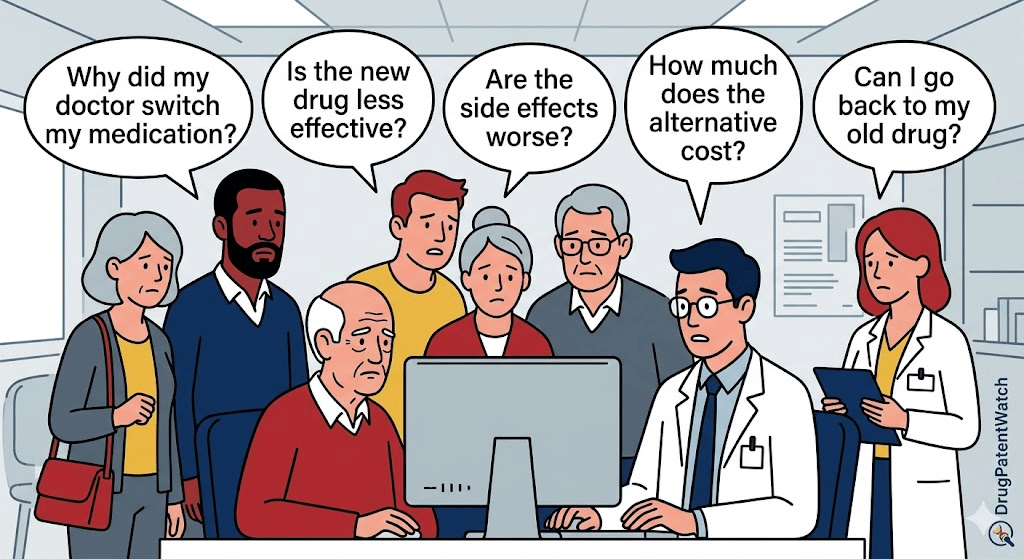
Across hundreds of DrugChatter queries, a clear pattern emerges: patients and caregivers are not just asking about drugs—they’re asking what happens when they switch them. Whether it’s moving from a brand to a generic, adding supplements, or substituting entirely different therapies, the underlying concern is consistent: what changes when the treatment changes?
Below is a summary of the most common drug-switching themes, drawn from recent DrugChatter questions and answers.
1. The Statin Switch: Lipitor at the Center of Substitution Anxiety
No drug dominates switching questions more than Lipitor (atorvastatin). As one of the most widely prescribed cholesterol-lowering therapies, it anchors a large share of “what if I change something?” concerns.
Patients frequently explore:
- Switching to alternatives or generics
- Adjusting dose due to side effects
- Combining with diet, exercise, or supplements
- Comparing long-term outcomes post-patent
Examples include:
- How long before alternatives show results: https://www.drugchatter.com/chat/14306/how-long-before-seeing-results-with-lipitor-alternatives
- Whether herbal remedies can replace it: https://www.drugchatter.com/chat/20545/can-herbal-supplements-replace-lipitor-entirely
- How switching affects muscle recovery or exercise: https://www.drugchatter.com/chat/27447/can-lipitor-impact-muscle-gain-in-workouts
A recurring theme is uncertainty around whether lifestyle changes (diet, yoga, swimming) can function as a “soft switch” away from medication:
- https://www.drugchatter.com/chat/5960/can-lipitor-be-replaced-with-exercise
- https://www.drugchatter.com/chat/1871/how-could-yoga-boost-lipitor-s-cardiovascular-effects
The underlying concern: is switching off or away from a statin ever truly equivalent?
2. Switching Pain Medications: OTC Substitution Risks
Over-the-counter analgesics like Advil (ibuprofen) and Aspirin generate frequent substitution questions—especially around safety when switching between pain relievers or combining them with other medications.
Common concerns include:
- Interaction risks when switching between NSAIDs or antidepressants
- Timing and effectiveness differences
- Side effect variability when rotating therapies
Examples:
- Interaction between Advil and antidepressants: https://www.drugchatter.com/chat/61222/is-combining-advil-with-antidepressants-linked-to-serotonin-syndrome
- Switching-related rash or overdose concerns: https://www.drugchatter.com/chat/41060/are-there-any-specific-symptoms-that-indicate-aspirin-overdose
- Safety when combining with antibiotics: https://www.drugchatter.com/chat/48648/are-there-any-interactions-between-advil-and-doxycycline
A key pattern: patients often assume OTC drugs are “interchangeable,” but switching raises pharmacologic questions similar to prescription therapies.
3. Cardiometabolic Switching: Vascepa, Omega-3s, and Statin Adjuncts
Cardiovascular patients frequently explore whether they can switch between prescription omega-3 therapies, supplements, or statins.
Vascepa (icosapent ethyl) is central here, especially in combination or substitution scenarios:
- Whether it works with all statins: https://www.drugchatter.com/chat/3819/does-vascepa-work-synergistically-with-all-statins
- Whether it can replace or reduce need for other therapies: https://www.drugchatter.com/chat/53783/does-taking-fish-oil-reduce-the-need-for-lipitor
- Savings programs influencing switching decisions: https://www.drugchatter.com/chat/61597/can-vascepa-savings-program-be-used-with-medicare-coverage
These questions highlight a second-order issue: switching is often financial as much as clinical.
4. Neurology and Psychiatry Switches: High-Stakes Transitions
Switching questions become more sensitive when they involve CNS-active drugs like:
- Lyrica (pregabalin)
- Ozempic (semaglutide, metabolic but neurologically experienced side effects)
- benzodiazepines such as clonazepam or alprazolam equivalents
Key concerns include withdrawal, rebound symptoms, and safety:
- Withdrawal symptoms after stopping Lyrica: https://www.drugchatter.com/chat/37022/any-withdrawal-symptoms-after-stopping-lyrica
- Alcohol interaction risks when switching or combining therapies: https://www.drugchatter.com/chat/17119/is-it-safe-to-consume-alcohol-with-lyrica
- Dose consistency and injection timing for Ozempic: https://www.drugchatter.com/chat/39323/is-one-ozempic-injection-enough-for-a-week
The dominant switching anxiety here is not efficacy—it’s stability of neurochemistry during transition.
5. Biosimilars, Oncology, and Antibiotic Substitution Complexity
In specialty medicine, switching is less about patient preference and more about protocol, availability, or cost.
Drugs such as:
- Keytruda
- Cosentyx
- Tigecycline
generate switching questions around efficacy equivalence, immune response, and combination regimens:
- Biosimilar comparisons and real-world outcomes: https://www.drugchatter.com/chat/59204/what-is-the-real-world-success-rate-of-kadcyla-vs-biosimilars
- Vaccine response changes under biologic therapy: https://www.drugchatter.com/chat/24356/how-does-cosentyx-impact-live-vaccine-potency
- Antibiotic switching and resistance concerns: https://www.drugchatter.com/chat/30897/why-is-c-difficile-resistant-to-tigecycline
Here, switching is not optional—it is structurally embedded in healthcare economics and hospital formularies.
6. The Emerging Meta-Question: “Should I Switch at All?”
Across categories, a deeper pattern emerges: many users are not simply asking how to switch drugs—they are asking whether switching is justified.
This shows up in questions about:
- Herbal or OTC substitution for statins
- Diet or exercise replacing medication
- Insurance-driven medication changes
- Long-term tradeoffs of staying vs switching
Example:
- Can lipitor be replaced with exercise: https://www.drugchatter.com/chat/5960/can-lipitor-be-replaced-with-exercise
- Can herbal supplements fully replace statins: https://www.drugchatter.com/chat/20545/can-herbal-supplements-replace-lipitor-entirely
Conclusion: Switching Is the New Default Concern
Drug switching questions reveal a broader shift in patient behavior. Treatment is no longer seen as static. It is iterative—adjusted for cost, lifestyle, side effects, and online information.
But the underlying tension remains: switching is easy to ask about, but rarely simple in practice.
Across Lipitor, Vascepa, Lyrica, Advil, and beyond, patients are essentially asking the same question in different forms:
What changes in me if I change this drug?
Make Better Decisions with DrugPatentWatch
Related Posts: