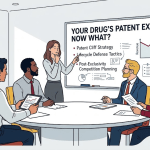
The blockbuster drug model has a built-in expiration date. From the moment a pharmaceutical company files its first patent, the clock starts. Twenty years sounds generous until you subtract the decade typically consumed by clinical trials, FDA review, and commercial launch. What remains is often a seven-to-ten-year window to recoup billions in R&D investment before generic manufacturers flood the market and prices collapse by 80 to 90 percent [1].
That pressure has made pharmaceutical lifecycle management one of the most consequential strategic disciplines in the industry. The goal is not to cheat the patent system. The goal is to use every legitimate tool the law provides to extend commercial exclusivity on a proven drug while new candidates work their way through the pipeline. Reformulation and new indications are the two most powerful tools in that kit, and the companies that execute them well can add hundreds of millions in annual revenue past what the original patent would have protected.
This article breaks down exactly how those strategies work, what they cost, and where they can fail.
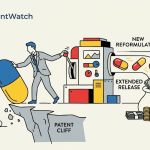
The Patent Cliff Is Not a Metaphor
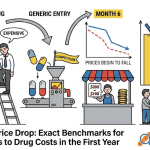
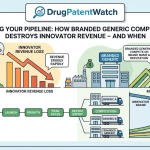
When a branded drug loses patent protection, the revenue drop is abrupt and severe. IMS Health data tracked the pattern across multiple major expirations and found that branded products typically shed 80 to 90 percent of their market share within 12 months of generic entry [1]. For a drug generating $3 billion annually, that means losing $2.4 billion in year one alone.
The pharmaceutical industry hit a particularly brutal stretch between 2011 and 2016, when patents covering more than $150 billion in annual global sales expired [2]. Pfizer’s Lipitor (atorvastatin), the best-selling drug in history at peak revenue, lost its primary patent in November 2011. Within six months, Ranbaxy had captured roughly 80 percent of new prescriptions [3]. AstraZeneca, Eli Lilly, and Bristol-Myers Squibb all faced similar experiences within the same five-year window.
This wasn’t bad luck. It was structural. And it forced every major pharmaceutical company to build lifecycle management teams years earlier in a drug’s commercial life.
How Pharmaceutical Patents Actually Work
Before you can understand how companies extend exclusivity, you need to understand the layered structure of pharmaceutical patent protection.
The first patent filed on a new drug typically covers the active molecule itself: the chemical composition of the compound. This is the primary composition-of-matter patent, and it carries the most weight. Once it expires, generics can manufacture the molecule without restriction, provided it’s not protected by other means.
But a commercially successful drug accumulates secondary patents over its commercial life. These cover:
Specific salt or polymorph forms of the active ingredient
Manufacturing processes
Drug formulations (the vehicle that delivers the compound)
Methods of use for specific diseases or patient populations
Secondary patents are individually weaker than composition-of-matter patents. Any one of them can be challenged and defeated. But in combination, they create what IP attorneys call a “patent thicket,” a cluster of overlapping protections that forces generics to navigate around each one independently. A 2018 study published in JAMA Internal Medicine found that the 12 best-selling drugs in the United States had accumulated an average of 71 patents each, with 78 percent of those patents covering secondary claims rather than the original molecule [4].
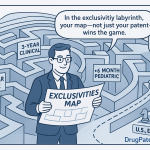
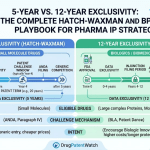
Beyond patents, pharmaceutical companies can also claim regulatory data exclusivity through the FDA. A New Drug Application grants five years of exclusivity for a new chemical entity and three years for a new clinical investigation supporting a new indication or formulation. These periods can overlap with or extend beyond underlying patent terms, and they block generic manufacturers from relying on the brand’s clinical data to support their own applications.
The Hatch-Waxman Framework
Any analysis of drug patent strategy runs through the Drug Price Competition and Patent Term Restoration Act of 1984, universally called Hatch-Waxman. The law created the modern generic drug industry by establishing the Abbreviated New Drug Application process, which lets generics reference the brand’s existing safety and efficacy data rather than conducting full clinical trials.
In exchange, Hatch-Waxman gave branded companies two structural advantages. First, it allowed patent term restoration for time lost during FDA review, up to five additional years, capped at 14 years of remaining exclusivity after approval. Second, it created a 30-month stay of generic approval whenever a branded company sues a generic for patent infringement after a Paragraph IV challenge. That 30-month stay, which begins automatically upon filing suit, buys time even when a brand’s legal position is weak.
These mechanisms are not loopholes. They are the explicit bargain Congress struck to balance innovation incentives against generic competition. What has changed over time is the sophistication with which branded companies use them.
Reformulation: What It Is and What It Buys You
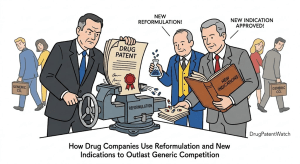
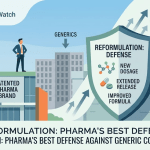
Reformulation means changing the physical or chemical form of a drug without changing the active molecule. The FDA will grant new regulatory exclusivity for a reformulation if the company submits new clinical data supporting the change. A successful reformulation also supports new patent claims.
The most commercially significant reformulation strategy targets drug delivery: shifting a molecule from immediate-release to extended-release. Extended-release formulations release the active ingredient gradually over hours rather than minutes, which typically reduces dosing frequency, smooths out peak-trough plasma concentration swings, and can improve tolerability. All of those clinical benefits are real and documentable. They also happen to be patentable.
AstraZeneca’s move from Prilosec (omeprazole) to Nexium (esomeprazole) illustrates the strategy at its most effective and most controversial. Omeprazole was a proton pump inhibitor that became one of the best-selling drugs of the 1990s. As its patent expiration approached, AstraZeneca isolated the S-enantiomer of omeprazole, which is what esomeprazole is. Enantiomers are mirror-image versions of the same molecule. AstraZeneca conducted trials showing that esomeprazole produced slightly higher systemic exposure, then obtained new patents and launched Nexium in 2001, pricing it above the generic omeprazole that hit the market the same year.
Nexium went on to generate more than $6 billion annually at peak, despite widespread criticism that it offered minimal clinical advantage over cheap generic omeprazole [5]. Whether that criticism is fair is a separate debate. From a lifecycle management perspective, it worked: AstraZeneca protected enormous revenue past the Prilosec cliff.
Not all reformulations are that aggressive. Purdue Pharma’s abuse-deterrent OxyContin reformulation, approved by the FDA in 2010, introduced a physical barrier that made the tablets difficult to crush or dissolve, which addressed a genuine public health problem. The FDA subsequently declined to approve generic versions of the original OxyContin formulation, ruling that it had been voluntarily withdrawn for safety reasons [6]. The result was effective exclusivity for the reformulated product for years beyond the primary patent.
Other reformulation categories worth tracking include:
Transdermal delivery (patches, gels) that replace oral dosing
Subcutaneous or intramuscular injectable formulations of previously oral drugs
Inhalation formulations for systemic drugs
Nanotechnology-based delivery that alters bioavailability
Each of these requires clinical data, requires a supplemental NDA or new NDA depending on the degree of change, and can support new patent claims covering the formulation itself, the delivery device, or both.
What New Indications Actually Cost and Earn
New indication development is more expensive than reformulation because it almost always requires Phase II and Phase III clinical trials in the new patient population. A single Phase III trial in a new indication can cost $100 million to $300 million and take three to seven years [7]. That investment is not trivial, which is why companies only pursue new indications when the commercial logic is clear.
The FDA’s supplemental NDA pathway governs new indication approvals. If the new indication requires new clinical investigations, it earns three years of data exclusivity upon approval. If the drug qualifies as an orphan drug for a rare disease indication, it earns seven years of orphan drug exclusivity for that specific indication.
AbbVie’s Humira (adalimumab) is the most studied example of indication expansion as a protection strategy. Humira launched in 2002 for rheumatoid arthritis and ultimately received FDA approval for 10 distinct indications, including plaque psoriasis, Crohn’s disease, ulcerative colitis, ankylosing spondylitis, and juvenile idiopathic arthritis [8]. Each approval added a layer of clinical data and market positioning that made the drug harder for biosimilar competitors to displace cleanly, since a biosimilar approved for one indication is not automatically approved for all originator indications.
Humira’s patent protection was reinforced by what commentators called the most extensive secondary patent portfolio in pharmaceutical history: more than 130 patents listed in the FDA’s Orange Book, covering formulation, manufacturing, dosing regimens, and combinations [9]. AbbVie used the constant threat of litigation to delay U.S. biosimilar entry until 2023, despite the core composition-of-matter patent expiring in 2016.
The indication expansion strategy also worked transformatively for Pfizer’s sildenafil. Developed and patented as a treatment for angina, sildenafil’s unexpected efficacy in erectile dysfunction drove Pfizer to pursue that indication, which launched as Viagra in 1998. When Viagra’s patent protection weakened, Pfizer pursued pulmonary arterial hypertension as a distinct indication and launched Revatio in 2005, securing new regulatory exclusivity for sildenafil in that therapeutic context. Two drugs, one molecule, two exclusivity periods [10].
Pediatric Exclusivity: Six Months for Two Studies
One of the most efficient lifecycle management mechanisms in U.S. pharmaceutical law is pediatric exclusivity. Under the Best Pharmaceuticals for Children Act, the FDA can request that a company study a drug in pediatric populations. If the company conducts and submits the requested studies, it receives six months of additional exclusivity tacked onto every existing patent and exclusivity period covering that drug.
Six months sounds modest. For a drug generating $1 billion monthly, six months is worth $6 billion in protected revenue. The cost of the pediatric studies required is usually $20 to $50 million. The return on that investment has made pediatric exclusivity extensions nearly universal among major branded drugs facing expiration [11].
The Pediatric Research Equity Act requires pediatric studies for certain new drugs and biologics, while BPCA creates the voluntary incentive. Together, they’ve generated genuine pediatric safety data that didn’t previously exist, while giving companies a commercially valuable tool. This is the tension at the core of lifecycle management policy: mechanisms designed to produce a social benefit can also function as revenue protection tools.
DrugPatentWatch and the Intelligence Layer
Patent strategy doesn’t happen in a vacuum. Competitive intelligence about competitor patent expirations, upcoming generic challenges, and formulation pipelines shapes every lifecycle management decision a pharmaceutical company makes.
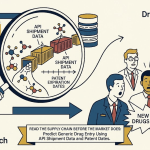
DrugPatentWatch is the most widely used commercial database for pharmaceutical patent and exclusivity tracking. It aggregates FDA Orange Book data, USPTO patent filings, litigation records, and ANDA application data to give users a consolidated view of where specific drugs stand in their exclusivity lifecycle. Pharmaceutical companies use it to track when competitor products face their own patent cliffs, which informs both commercial strategy and M&A targeting. Generic manufacturers use it to identify the next high-value challenge opportunities.
For analysts and journalists, DrugPatentWatch provides the raw patent term data that makes it possible to verify claims that companies make about their exclusivity positions. When AbbVie, for example, cited ongoing patent protection in investor presentations, DrugPatentWatch data made it possible to audit that claim against the actual Orange Book listings and identify which specific patents were at risk of challenge.
The database also tracks Paragraph IV certifications, which are the formal notices that generic manufacturers file when they believe a listed patent is invalid or won’t be infringed by their product. A Paragraph IV filing is typically the first public signal that a specific patent is under legal attack. For a brand company monitoring its exclusivity portfolio, it’s an early warning system. For a generic company, it starts the 30-month clock under Hatch-Waxman.
The Paragraph IV Challenge: How Generics Fight Back
Reformulations and new indications buy time, but they don’t buy immunity. Generic manufacturers and their law firms have become highly sophisticated at challenging secondary patents, and the success rate of those challenges has risen substantially over the past two decades.
A Paragraph IV challenge certification asserts either that the listed patent is invalid or that the generic product doesn’t infringe it. The brand company then has 45 days to sue, triggering the automatic 30-month FDA approval stay. The resulting litigation plays out in federal district court, often followed by appeal. <blockquote> “Generic pharmaceutical companies have successfully invalidated or designed around secondary patents in approximately 75 percent of cases where they chose to mount a Paragraph IV challenge, according to analysis of FDA litigation outcomes from 2000 to 2015.” [12] </blockquote>
That 75 percent success rate should inform how brand companies price their litigation risk. A reformulation patent or new indication patent may add three to five years of expected exclusivity, but if the probability of surviving challenge is 25 percent, the expected value of that extension is one to one-and-a-half years, not three to five. Companies that model this honestly make better lifecycle management investment decisions than those that assume their secondary patents will hold.
Inter partes review proceedings at the USPTO, established by the America Invents Act in 2012, added another challenge mechanism. IPR proceedings are faster and cheaper than district court litigation and have invalidation rates for challenged claims above 70 percent [13]. The combination of IPR availability and rising Paragraph IV challenge success has put real pressure on the defensive value of secondary patent portfolios.
Fixed-Dose Combinations: The Dual Protection Play
Combining two approved drugs into a single fixed-dose product creates new patent claims and can earn new regulatory exclusivity if the combination requires clinical data demonstrating safety and efficacy. For patients, the appeal is obvious: one pill instead of two. For companies, the appeal is a new patent life on molecules that might otherwise be approaching expiration.
HIV therapy has produced the clearest examples of combination strategy. Gilead Sciences built its commercial dominance in HIV treatment through sequential fixed-dose combinations of antiretroviral agents. Truvada combined tenofovir disoproxil fumarate and emtricitabine. Atripla added efavirenz. Stribild and then Genvoya reformulated the tenofovir component into a prodrug with an improved safety profile. Each step required clinical data, each step generated new patents, and each step allowed Gilead to migrate patients to newer combination products before generics could enter the market for the earlier formulations [14].
The HIV combination strategy is legitimate because it generated genuine therapeutic advances: improved safety, simpler dosing, better tolerability. The lifecycle management benefit was real but secondary to clinical progress. That’s the defensible version of the combination strategy.
The less defensible version involves combinations where the clinical benefit is marginal and the primary purpose is exclusivity extension. The FTC has taken an increasing interest in these cases, particularly when combination products are paired with patient switching programs designed to redirect prescriptions before the generic of the individual components can enter.
Orphan Drug Designation as a Protection Tool
The Orphan Drug Act of 1983 created incentives for companies to develop drugs for rare diseases affecting fewer than 200,000 Americans. Those incentives include a 50 percent tax credit on clinical trial costs, fee waivers, and seven years of market exclusivity after approval for the orphan indication.
For lifecycle management purposes, orphan designation offers a path to additional exclusivity on a well-characterized molecule if a rare disease indication can be supported. The FDA granted more than 600 orphan drug designations in 2022 alone [15], and a meaningful fraction of those involved drugs with existing broader indications seeking protection in a niche population.
Thalidomide illustrates this dynamic, though in an unusual direction. The drug, infamous for its teratogenic effects when used in pregnant women in Europe in the 1950s, was approved by the FDA in 1998 for erythema nodosum leprosum under orphan designation. Celgene acquired the rights, priced it aggressively, and then developed analogs including lenalidomide (Revlimid) and pomalidomide (Pomalyst), building a $20 billion franchise from a compound nearly everyone had written off [16].
The European Regulatory Difference
The analysis above is U.S.-centric, and that matters because lifecycle management strategy looks different in Europe. The European Medicines Agency operates under a supplementary protection certificate system rather than Hatch-Waxman. SPCs extend patent term by up to five years for pharmaceutical products that spent time awaiting regulatory approval. Pediatric extensions in Europe add six months to SPC terms, parallel to the U.S. system.
The critical difference is in data exclusivity. The EU’s “8+2+1” system gives branded drugs eight years of data exclusivity, two years of market exclusivity during which generics cannot launch, and one additional year if a new indication is approved within the first eight years that represents a significant clinical benefit. This creates different strategic incentives for new indication development: in Europe, the new indication year is only valuable if the company can demonstrate clinically significant benefit, not merely a new use.
European regulatory authorities have also been more aggressive than the FDA in scrutinizing whether reformulations and new indications represent genuine therapeutic advances or primarily serve exclusivity extension purposes. The EMA’s Committee for Medicinal Products for Human Use applies a clinical benefit standard that has blocked or delayed some approvals that U.S. companies might have expected to obtain more easily.
Building a Lifecycle Management Strategy
A well-constructed lifecycle management strategy starts years before patent expiration, typically at the point of Phase II proof-of-concept, when the company has enough clinical data to project the primary patent expiration date and begin assessing secondary protection options.
The IP audit is the necessary first step. It maps every existing patent, its expiration date, its vulnerability to challenge, and any restoration or extension options available. A complete audit also assesses the regulatory exclusivity stack: what periods of data exclusivity attach to each existing approval, when they expire, and what new exclusivity periods could be earned.
From that baseline, lifecycle management planning typically runs through four parallel workstreams:
The formulation development track evaluates whether extended-release, combination, or novel delivery options for the molecule can be clinically and commercially justified. This is a chemistry and clinical question before it’s a patent question: a reformulation that doesn’t provide a clinically meaningful benefit will struggle to earn patient and prescriber adoption, which is the actual commercial protection mechanism.
The indication expansion track reviews the existing scientific literature and ongoing investigator-initiated research to identify plausible new uses for the molecule. Internal biomarker and mechanistic data may suggest indications that haven’t been pursued commercially. Patient advocacy relationships may surface unmet needs in specific populations.
The pediatric planning track is often the most mechanically straightforward. If the drug hasn’t received pediatric labeling, and if the FDA has issued or is likely to issue a Written Request under BPCA, the company should begin pediatric studies early enough to have data in hand before the primary patent expiration.
The combination product track assesses whether the molecule has synergistic activity with other agents, particularly those in the company’s existing portfolio, and whether a fixed-dose combination could offer demonstrable clinical value.
The FTC’s Position and Its Limits
The Federal Trade Commission has challenged several aspects of pharmaceutical lifecycle management, most prominently “pay-for-delay” settlements, also called reverse payment settlements, in which a branded company pays a generic manufacturer to delay market entry. The Supreme Court’s 2013 ruling in FTC v. Actavis established that such settlements can violate antitrust law when the payment exceeds the value of any litigation risk being settled [17].
Pay-for-delay settlements are distinct from reformulation and new indication strategies, but the FTC’s posture toward pharmaceutical patent practices generally has become more skeptical. The agency has studied so-called “product hopping,” where a branded company reformulates primarily to shift patients to a new protected version before the original goes generic, and has brought enforcement actions in specific cases [18].
The antitrust risk of product hopping turns on whether the company withdrew or restricted supply of the original product in a way that forced patient switches, rather than allowing patients to choose the reformulation on clinical merits. Reformulations that compete on a level playing field with generic versions of the original drug are significantly less vulnerable to antitrust challenge than those accompanied by formulary manipulation or supply restriction.
The Financial Model
How much does lifecycle management actually cost, and what does it return? The honest answer is that it varies widely by strategy and asset.
A pediatric extension costs $20 to $50 million in study expenses and earns six months of exclusivity. On a drug with $500 million in annual sales, that’s $250 million in protected revenue for a fraction of the cost. Return on investment is typically better than 4:1.
A new indication development program that requires Phase III trials costs $100 million to $300 million and earns three years of new data exclusivity in the U.S. If the new indication adds a modest incremental patient population, the revenue upside may justify the cost. If it primarily preserves the existing patient base against biosimilar or generic competition, the financial model depends on how many patients the company expects to migrate to the new protected indication.
A new formulation development program costs $30 million to $100 million and earns three years of data exclusivity plus whatever new patent term attaches to formulation claims. The commercial success depends on whether prescribers and patients adopt the new formulation at a meaningful rate before the primary drug goes generic.
Combination product development costs vary enormously depending on whether the partner compound already has existing data. A combination of two well-characterized approved drugs with existing safety profiles requires a smaller clinical program than a combination involving a new molecule.
What these numbers share is the need for honest probability-weighting. The expected revenue from any exclusivity extension must be discounted by the probability that the new protection survives patent challenge, that the FDA grants the desired approval, and that the commercial product achieves sufficient market adoption to justify the development cost.
What Biosimilars Change for Biologics
The analysis above applies primarily to small-molecule drugs. For biologics, the regulatory framework is fundamentally different, and lifecycle management strategies require adjustment.
Biologics receive 12 years of reference product exclusivity under the Biologics Price Competition and Innovation Act of 2009. No biosimilar can receive FDA approval within 12 years of the reference biologic’s approval date, regardless of patent status [19]. That 12-year floor is substantially longer than the five-year new chemical entity exclusivity that applies to small molecules.
Reformulation of a biologic is also technically and clinically more complex than small-molecule reformulation. A biologic is a large, complex protein molecule. Changing its formulation, delivery device, or dosing frequency requires demonstrating that the change doesn’t affect the product’s immunogenicity or efficacy profile. That’s a harder scientific and regulatory bar than reformulating a small-molecule tablet.
For biologics, the most effective lifecycle management strategies have focused on indication expansion, since each new indication earns an additional 12 months of exclusivity under BPCA if supported by new clinical studies, and combination approaches where the biologic is combined with a small molecule or second biologic in a regimen that becomes the standard of care.
The Ethical Dimension
There is no honest treatment of this topic that ignores its policy implications. Pharmaceutical lifecycle management strategies that extend exclusivity also extend the period during which patients pay branded drug prices rather than generic prices. On a widely used drug, that difference can translate to hundreds of dollars per patient per month, multiplied across hundreds of thousands of patients.
The argument for strong patent protection is straightforward: without the prospect of protected returns, companies won’t invest in the early-stage research that produces new molecules. The argument against aggressive secondary patent strategies is equally straightforward: a 130-patent portfolio on a drug whose core molecule has been understood for 25 years is not protecting innovation, it’s protecting revenue.
Neither argument resolves the empirical question of where the line is. What’s clear is that lifecycle management strategies vary widely in their clinical justification. A new indication for a drug in a patient population with no existing treatment is different from a slightly different polymorph form of the same molecule with identical clinical performance. The patent system doesn’t draw that distinction clearly. Commercial payers and formulary committees increasingly do.
For companies with long-term brand reputations to protect, the most defensible lifecycle management programs are those where the clinical benefit is genuine and demonstrable, the patent claims are specific to a real innovation, and the pricing of the new product reflects its clinical value rather than simply the absence of generic competition.
Key Takeaways
Patent lifecycle management is a legitimate and well-established strategic discipline in pharmaceutical development. Companies that execute it well use reformulation and new indication development to generate genuine clinical value while also extending the commercial exclusivity of their most important assets.
Reformulation works best when the new delivery system solves a real clinical problem: improving adherence, reducing side effects, or enabling use in populations where the original formulation wasn’t suitable. Extended-release formulations, abuse-deterrent technologies, and novel delivery platforms have all produced both clinical improvements and commercially meaningful patent protection.
New indication development requires substantial clinical investment but can earn three years of data exclusivity per approved indication, plus seven years for orphan designations. Pediatric exclusivity remains the highest return-on-investment mechanism available, offering six months of universal exclusivity across all patents for a few tens of millions in study costs.
The Hatch-Waxman framework creates both the threat that drives lifecycle management investment and the tools that support it. Paragraph IV challenges succeed at high rates against secondary patents, so companies must model the probability-weighted value of any protection they expect from reformulation or new indication claims.
Competitive intelligence from databases like DrugPatentWatch allows both brand and generic companies to anticipate each other’s moves, making lifecycle management increasingly a game of visible hands where the question is not what you’re doing but whether you’re doing it better than your competitors expect.
The regulatory and antitrust environment has become more hostile to lifecycle management strategies that prioritize exclusivity over clinical value. Product hopping with supply restriction and pay-for-delay settlements are genuinely legally vulnerable. Reformulations and new indications supported by honest clinical data and competing on a level playing field with generics are not.
Every lifecycle management decision is ultimately a capital allocation decision. The question is always whether the expected revenue from extended exclusivity justifies the clinical development cost and the probability-discounted litigation risk.
FAQ
Q: How long can pharmaceutical companies realistically extend exclusivity through reformulation and new indications combined?
A: It depends entirely on how many secondary patents survive challenge and how many new indications receive approval. In aggressive cases like Humira, AbbVie extended effective U.S. exclusivity roughly seven years past the core composition-of-matter patent expiration through a combination of formulation patents, device patents, and litigation settlements. More typical lifecycle management programs add two to four years of protected exclusivity. The key variable is not what patents are filed but which ones survive Paragraph IV challenge and IPR proceedings.
Q: What’s the difference between data exclusivity and patent protection, and which matters more?
A: Patent protection is enforced through litigation: a brand company must identify infringement and sue to enforce its rights. Data exclusivity is enforced by the FDA itself, which won’t approve a generic application that relies on the brand’s data until the exclusivity period expires. Data exclusivity doesn’t require a lawsuit. For that reason, data exclusivity is more reliable protection than patent protection, though it expires on a fixed schedule that can’t be extended through litigation tactics the way patent protection can. The best position is holding both simultaneously.
Q: Can a company pursue orphan drug designation for a new indication even if the drug already has a large-market approval?
A: Yes. FDA orphan drug designation is indication-specific. A drug approved for a broad indication can receive orphan designation for a separate rare disease indication, earning seven years of market exclusivity for that orphan use. The exclusivity is limited to the orphan indication: it doesn’t extend protection for the broader indication. Companies must conduct clinical trials supporting safety and efficacy in the rare disease population, and the FDA evaluates whether the drug provides a clinical benefit to those patients.
Q: How do fixed-dose combinations earn new exclusivity when both component drugs are already approved?
A: The FDA requires clinical data demonstrating that the combination product is safe and effective and that each component contributes to the claimed effect. If new clinical investigations are required to support the combination application, and the FDA grants approval, three years of data exclusivity attach to the combination product. New patents can also be filed on the specific formulation, the ratio of components, or the delivery technology used in the combination product. Neither the three-year exclusivity nor the new patents extend the individual components’ protection, only the combination product itself.
Q: When does lifecycle management cross into anticompetitive behavior, and how can companies assess that risk?
A: The clearest anticompetitive trigger is conditioning market behavior on patent enforcement rather than clinical merit. If a company reformulates a drug and simultaneously withdraws the original product from the market or restricts its availability in ways that force patients to switch to the reformulated version, courts and the FTC have found that to be product hopping in violation of antitrust law. Companies can assess their risk by asking whether the reformulation product competes transparently against generic versions of the original compound. If the reformulation has to eliminate generic competition through supply restriction rather than winning on clinical merit, the antitrust vulnerability is material.
References
[1] IMS Health. (2014). The global use of medicines: Outlook through 2018. IMS Institute for Healthcare Informatics.
[2] EvaluatePharma. (2012). World preview 2018: Embracing the patent cliff. Evaluate Ltd.
[3] Hemphill, C. S., & Bhaven Sampat. (2012). Evergreening, patent challenges, and effective market life in pharmaceuticals. Journal of Health Economics, 31(2), 327-339. https://doi.org/10.1016/j.jhealeco.2012.01.004
[4] Feldman, R. (2018). May your drug price be evergreen. Journal of Law and the Biosciences, 5(3), 590-647. https://doi.org/10.1093/jlb/lsy022
[5] Angell, M. (2004). The truth about the drug companies: How they deceive us and what to do about it. Random House.
[6] U.S. Food and Drug Administration. (2013). Determination that OxyContin (oxycodone hydrochloride) tablets, 10 milligrams, 15 milligrams, 20 milligrams, 30 milligrams, 40 milligrams, 60 milligrams, and 80 milligrams, were withdrawn from sale for reasons of safety or effectiveness (Docket No. FDA-2012-P-0887). FDA.
[7] DiMasi, J. A., Grabowski, H. G., & Hansen, R. W. (2016). Innovation in the pharmaceutical industry: New estimates of R&D costs. Journal of Health Economics, 47, 20-33. https://doi.org/10.1016/j.jhealeco.2016.01.012
[9] Robbins, R. (2020, January 28). Humira has been the world’s best-selling drug for years. Why can’t Americans get a generic? The New York Times. https://www.nytimes.com/2020/01/28/health/humira-drug-prices-generic.html
[10] Ghofrani, H. A., Osterloh, I. H., & Grimminger, F. (2006). Sildenafil: From angina to erectile dysfunction to pulmonary hypertension and beyond. Nature Reviews Drug Discovery, 5(8), 689-702. https://doi.org/10.1038/nrd2030
[11] U.S. Government Accountability Office. (2012). Brand-name prescription drug pricing: Lack of therapeutically equivalent drugs and limited competition may contribute to extraordinary price increases (GAO-13-62). U.S. GAO.
[12] Berndt, E. R., Cockburn, I. M., & Grepin, K. A. (2006). The impact of incremental innovation in biopharmaceuticals: Drug utilization in original and supplemental indications. PharmacoEconomics, 24(Suppl 2), 69-86. https://doi.org/10.2165/00019053-200624002-00006
[13] Vishnubhakat, S., Rai, A. K., & Kesan, J. P. (2016). Strategic decision making in dual PTAB and district court proceedings. Berkeley Technology Law Journal, 31(1), 45-117.
[14] Gallant, J. E., & DeJesus, E. (2014). Fixed-dose combinations for HIV treatment. The Lancet, 384(9941), 392-393. https://doi.org/10.1016/S0140-6736(14)60605-5
[15] U.S. Food and Drug Administration. (2023). Orphan drug designations and approvals: 2022 annual report. FDA Office of Orphan Products Development.
[16] Rajkumar, S. V. (2016). Thalidomide: Tragic past and promising future. Mayo Clinic Proceedings, 79(7), 899-903. https://doi.org/10.4065/79.7.899
[17] Federal Trade Commission v. Actavis, Inc., 570 U.S. 136 (2013).
[18] Federal Trade Commission. (2017). Anticompetitive product reformulations: An overview of FTC enforcement actions and policy considerations. FTC Bureau of Competition.
[19] Patient Protection and Affordable Care Act, Pub. L. No. 111-148, § 7002, 124 Stat. 119 (2010) (codified as amended at 42 U.S.C. § 262).