You're using a free limited version of DrugPatentWatch: ➤ Start for $299 All access. No Commitment.

Last Updated: December 15, 2025

Testosterone - Generic Drug Details


✉ Email this page to a colleague

« Back to Dashboard


What are the generic sources for testosterone and what is the scope of patent protection?

Testosterone is the generic ingredient in twenty-three branded drugs marketed by Abbvie, Alza, Acerus, Besins Hlthcare, Endo Operations, Actavis Labs Ut Inc, Alembic, Amneal, Encube, Lupin, Padagis Israel, Perrigo Israel, Twi Pharms, Xiromed, Upsher Smith Labs, Ani Pharms, Strides Pharma Intl, Dr Reddys, Watson Labs, Eli Lilly And Co, Apotex, Cipla, Lupin Ltd, Auxilium Pharms Llc, Pfizer, Am Regent, Eugia Pharma, Hikma, Hikma Farmaceutica, Padagis Us, Rising, Sandoz, Sun Pharm Inds Ltd, Watson Pharms Inc, Wilshire Pharms Inc, Azurity, Endo Pharms, Nexus, Antares Pharma Inc, Bel Mar, Elkins Sinn, Lilly, Tolmar, Marius, and Verity, and is included in seventy-six NDAs. There are seventy-six patents protecting this compound and six Paragraph IV challenges. Additional information is available in the individual branded drug profile pages.

Testosterone has ninety-six patent family members in thirty-three countries.

There are sixty-nine drug master file entries for testosterone. Seventeen suppliers are listed for this compound. There are two tentative approvals for this compound.

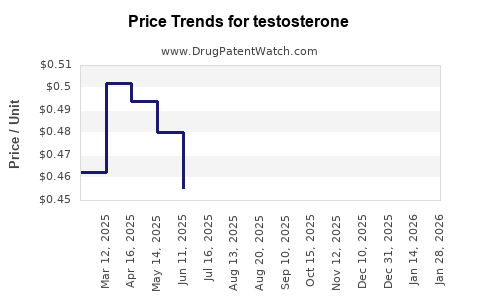
Drug Prices for testosterone

See drug prices for testosterone

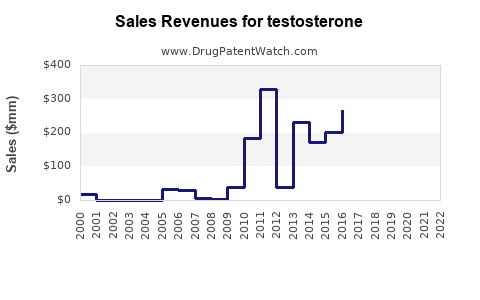
Drug Sales Revenue Trends for testosterone

See drug sales revenues for testosterone

Recent Clinical Trials for testosterone

Identify potential brand extensions & 505(b)(2) entrants

SponsorPhase
University of British ColumbiaNA
University of Sao PauloPHASE4
Novartis PharmaceuticalsPHASE1

See all testosterone clinical trials

Generic filers with tentative approvals for TESTOSTERONE
Applicant Application No. Strength Dosage Form
⤷  Get Started Free⤷  Get Started Free30MG/1.5ML ACTUATIONSOLUTION, METERED;TRANSDERMAL
⤷  Get Started Free⤷  Get Started Free750MG/3ML (250MG/ML)INJECTABLE;INTRAMUSCULAR

The 'tentative' approval signifies that the product meets all FDA standards for marketing, and, but for the patents / regulatory protections, it would approved.

Pharmacology for testosterone
Drug ClassAndrogen
Mechanism of ActionAndrogen Receptor Agonists
Medical Subject Heading (MeSH) Categories for testosterone
Paragraph IV (Patent) Challenges for TESTOSTERONE
Tradename Dosage Ingredient Strength NDA ANDAs Submitted Submissiondate
AXIRON Topical Solution testosterone 30 mg/1.5 mL 022504 1 2013-01-29
FORTESTA Gel testosterone 10 mg/actuation 021463 1 2012-08-14
TESTIM Gel testosterone 1% 021454 1 2008-08-21

US Patents and Regulatory Information for testosterone

Applicant Tradename Generic Name Dosage NDA Approval Date TE Type RLD RS Patent No. Patent Expiration Product Substance Delist Req. Exclusivity Expiration
Padagis Israel TESTOSTERONE testosterone GEL;TRANSDERMAL 205781-001 Jul 12, 2017 AB2 RX No No ⤷  Get Started Free ⤷  Get Started Free ⤷  Get Started Free
Ani Pharms TESTOSTERONE testosterone GEL;TRANSDERMAL 202763-002 Feb 14, 2012 DISCN No No ⤷  Get Started Free ⤷  Get Started Free ⤷  Get Started Free
Antares Pharma Inc XYOSTED (AUTOINJECTOR) testosterone enanthate SOLUTION;SUBCUTANEOUS 209863-002 Sep 28, 2018 RX Yes Yes ⤷  Get Started Free ⤷  Get Started Free Y ⤷  Get Started Free
Nexus TESTOSTERONE ENANTHATE testosterone enanthate INJECTABLE;INJECTION 040575-001 Jun 14, 2006 AO RX No No ⤷  Get Started Free ⤷  Get Started Free ⤷  Get Started Free
Azurity AZMIRO testosterone cypionate SOLUTION;INTRAMUSCULAR 216318-001 Jun 2, 2022 RX Yes Yes ⤷  Get Started Free ⤷  Get Started Free Y ⤷  Get Started Free
Verity TLANDO testosterone undecanoate CAPSULE;ORAL 208088-001 Mar 28, 2022 RX Yes Yes ⤷  Get Started Free ⤷  Get Started Free ⤷  Get Started Free
Xiromed TESTOSTERONE CYPIONATE testosterone cypionate INJECTABLE;INJECTION 215351-002 Apr 13, 2023 AO RX No No ⤷  Get Started Free ⤷  Get Started Free ⤷  Get Started Free
>Applicant >Tradename >Generic Name >Dosage >NDA >Approval Date >TE >Type >RLD >RS >Patent No. >Patent Expiration >Product >Substance >Delist Req. >Exclusivity Expiration

Expired US Patents for testosterone

Applicant Tradename Generic Name Dosage NDA Approval Date Patent No. Patent Expiration
Acerus NATESTO testosterone GEL, METERED;NASAL 205488-001 May 28, 2014 ⤷  Get Started Free ⤷  Get Started Free
Abbvie ANDRODERM testosterone FILM, EXTENDED RELEASE;TRANSDERMAL 020489-002 May 2, 1997 ⤷  Get Started Free ⤷  Get Started Free
Besins Hlthcare ANDROGEL testosterone GEL;TRANSDERMAL 022309-003 Sep 7, 2012 ⤷  Get Started Free ⤷  Get Started Free
Alza TESTODERM testosterone FILM, EXTENDED RELEASE;TRANSDERMAL 019762-002 Oct 12, 1993 ⤷  Get Started Free ⤷  Get Started Free
Alza TESTODERM TTS testosterone FILM, EXTENDED RELEASE;TRANSDERMAL 020791-001 Dec 18, 1997 ⤷  Get Started Free ⤷  Get Started Free
Endo Operations TESTIM testosterone GEL;TRANSDERMAL 021454-001 Oct 31, 2002 ⤷  Get Started Free ⤷  Get Started Free
Acerus NATESTO testosterone GEL, METERED;NASAL 205488-001 May 28, 2014 ⤷  Get Started Free ⤷  Get Started Free
>Applicant >Tradename >Generic Name >Dosage >NDA >Approval Date >Patent No. >Patent Expiration

EU/EMA Drug Approvals for testosterone

Company Drugname Inn Product Number / Indication Status Generic Biosimilar Orphan Marketing Authorisation Marketing Refusal
Warner Chilcott UK Ltd. Intrinsa testosterone EMEA/H/C/000634Intrinsa is indicated for the treatment of hypoactive sexual desire disorder (HSDD) in bilaterally oophorectomised and hysterectomised (surgically induced menopause) women receiving concomitant estrogen therapy. Withdrawn no no no 2006-07-28
Warner Chilcott  Deutschland GmbH Livensa testosterone EMEA/H/C/000630Livensa is indicated for the treatment of hypoactive sexual desire disorder (HSDD) in bilaterally oophorectomised and hysterectomised (surgically induced menopause) women receiving concomitant estrogen therapy. Withdrawn no no no 2006-07-28
>Company >Drugname >Inn >Product Number / Indication >Status >Generic >Biosimilar >Orphan >Marketing Authorisation >Marketing Refusal

International Patents for testosterone

Country Patent Number Title Estimated Expiration
Cyprus 1113737 ⤷  Get Started Free
European Patent Office 4397367 ⤷  Get Started Free
Serbia 52671 POBOLJŠANI GEL TESTOSTERONA I POSTUPAK KORIŠĆENJA (IMPROVED TESTOSTERONE GEL AND METHOD OF USE) ⤷  Get Started Free
South Africa 200803087 Improved testosterone gel and method of use ⤷  Get Started Free
Eurasian Patent Organization 200900987 ИНСТРУМЕНТ ДЛЯ НАНЕСЕНИЯ ОБЪЕМА ЖИДКОСТИ НА ОБРАБАТЫВАЕМУЮ ПОВЕРХНОСТЬ, СИСТЕМА И СПОСОБ ТРАНСДЕРМАЛЬНОГО ВВЕДЕНИЯ ФИЗИОЛОГИЧЕСКИ АКТИВНОГО ВЕЩЕСТВА В ОРГАНИЗМ БОЛЬНОГО ⤷  Get Started Free
European Patent Office 1937276 ⤷  Get Started Free
Portugal 2450041 ⤷  Get Started Free
>Country >Patent Number >Title >Estimated Expiration

Market Dynamics and Financial Trajectory for the Pharmaceutical Drug: Testosterone

Last updated: July 27, 2025


Introduction

Testosterone, a vital androgen hormone primarily produced in males' testes and females' ovaries, has long been a cornerstone of hormone replacement therapy (HRT) and androgen deficiency treatment. Over recent decades, the testosterone market has undergone significant evolution driven by demographic shifts, regulatory developments, technological innovations, and shifting healthcare paradigms. This article explores the current market dynamics and anticipates the financial trajectory of testosterone-based pharmaceutical products.


Market Overview

The global testosterone market encompasses a broad range of therapies, including injectable formulations, topical gels, patches, buccal systems, and oral preparations. As of 2022, the market was valued at approximately USD 2.8 billion, with projections indicating sustained growth through the next decade ([1]). The key segments include:

  • Hormone Replacement Therapy (HRT): Predominant use for managing adult male hypogonadism.
  • Age-Related Decline: Increasing attention on testosterone's role in aging-related conditions.
  • Off-Label Usage: An expanding territory, sometimes leading to regulatory scrutiny.

Market Drivers

Demographic Shifts and Aging Population

A primary driver is the global aging population, particularly in North America and Europe. Men aged 50 and above increasingly seek testosterone therapy to combat symptoms like fatigue, reduced libido, and muscle loss ([2]). The U.S. alone hosts over 13 million men with diagnosed testosterone deficiency, fueling demand for effective treatment options.

Growing Awareness and Diagnosis

Enhanced awareness and improved diagnostic criteria have contributed to higher diagnosis rates of hypogonadism. Advances in blood testing and biomarker analysis have optimized detection, prompting physicians to consider testosterone therapy earlier and more frequently.

Technological Innovation and Formulation Diversity

Development of novel delivery systems—such as long-acting injectable formulations and transdermal gels—have improved patient compliance and satisfaction ([3]). Enhanced safety profiles and convenience are vital in sustaining market growth.

Regulatory Landscapes and Labeling

Regulatory agencies, including the FDA and EMA, have established clearer guidelines on Testosterone Replacement Therapy (TRT), promoting safe prescription practices. However, controversy persists regarding off-label use and potential adverse effects, impacting market perception and pricing strategies.


Market Challenges

Safety and Regulatory Concerns

Potential adverse effects linked to testosterone therapy, such as cardiovascular events, erythrocytosis, and prostate health concerns, continually influence prescribing patterns ([4]). Regulatory agencies have issued warnings and revised labeling, which could restrain growth or alter formulary decisions.

Market Saturation and Competition

Patent expirations currently challenge multinational pharmaceutical companies, leading to increased generic competition. Brands like Pfizer, AbbVie, and Novo Nordisk face pressure from biosimilars and compounding pharmacies, impacting revenues.

Ethical and Off-Label Use

The off-label prescribing of testosterone for non-approved indications, like age-related decline and athletic performance enhancement, raises ethical concerns and potential legal ramifications, which could influence market regulation.


Financial Trajectory and Future Outlook

Growth Projections

The testosterone market is expected to grow at a Compound Annual Growth Rate (CAGR) of approximately 6-8% through 2030 ([1]). Drivers include expanding indications, broader access to healthcare, and technological advancements.

Emerging Opportunities

  • Personalized Medicine: Biomarker-guided therapies can improve efficacy and safety, attracting investment.
  • Novel Delivery Systems: Innovations like bioidentical compounds and implantable pellets promise increased patient convenience and adherence.
  • Combination Therapies: Combining testosterone with other hormonal or metabolic agents may open new therapeutic avenues.

Regional Variations

North America currently dominates the market due to high awareness, early adoption rates, and favorable reimbursement policies. However, Asia-Pacific exhibits significant growth potential, driven by economic development, increasing healthcare expenditure, and rising awareness.

Pricing and Reimbursement Trends

Pricing strategies are evolving amid patent expirations and market competition. Payor policies increasingly emphasize cost-effective treatments, urging pharmaceutical firms to justify premium pricing via safety and efficacy data.


Market Players and Strategic Movements

Major players continually innovate and form strategic alliances to capture market share. Recent focus areas include:

  • Expanding product portfolios with next-generation formulations.
  • Investing in R&D for safer, more effective therapies.
  • Engaging in mergers and acquisitions to consolidate market presence.

The entry of biosimilars and generics is expected to intensify competition, pressuring margins but opening avenues for more affordable options.


Regulatory and Ethical Considerations

Increased scrutiny from regulatory bodies on the safety profile of testosterone therapies mandates rigorous post-market surveillance. Labeling updates and contraindications affect prescribing behaviors. Ethical debates on off-label use and misuse highlight the need for responsible marketing and clinician education.


Key Market Trends

Trend Impact
Aging population Sustained demand in developed economies
Technological innovation Improved adherence and safety
Regulatory landscape Cautious prescribing, potential market restraints
Competition from generics Price erosion, increased accessibility
Regional expansion Growth in emerging markets

Conclusion

The testosterone pharmaceutical market is poised for continued growth, fueled by demographic trends, technological advancements, and expanding therapeutic applications. However, safety concerns, regulatory pressures, and competition from generics pose ongoing challenges. Companies that innovate responsibly, adhere to evolving regulations, and focus on patient-centric formulations will position themselves advantageously in this expanding landscape.


Key Takeaways

  • The testosterone market is projected to grow at 6-8% CAGR through 2030, driven by an aging population and increased diagnostic accuracy.
  • Technological innovations, especially in delivery systems, will enhance patient compliance and efficacy perceptions.
  • Regulatory scrutiny over safety profiles remains a critical factor influencing market dynamics and prescribing practices.
  • Generics and biosimilars are intensifying competition, leading to pricing pressures but broadening access.
  • Geographic diversification, particularly into Asia-Pacific, offers significant growth opportunities.

Frequently Asked Questions

Q1: What are the main formulations of testosterone therapy available today?
A1: Testosterone therapies include topical gels, transdermal patches, intramuscular injections, buccal systems, and oral preparations, each offering different onset times and durations to optimize patient adherence.

Q2: How do safety concerns impact testosterone market growth?
A2: Safety concerns related to cardiovascular risks and prostate health have prompted regulatory warnings and contraindications, potentially restraining growth but also encouraging innovation towards safer formulations.

Q3: What are the key regional drivers influencing the testosterone market?
A3: North America leads due to high awareness and healthcare access; Asia-Pacific exhibits rapid growth due to demographic shifts and increasing healthcare investments.

Q4: How is the entry of biosimilars affecting market competition?
A4: Biosimilars are reducing prices and increasing accessibility but challenge brand dominance, prompting companies to innovate and differentiate their products.

Q5: What future therapeutic developments are anticipated in testosterone treatments?
A: Personalized hormone therapies based on biomarkers, longer-acting formulations, and combination therapies are expected to emerge, enhancing safety and efficacy.


Sources:

[1] MarketResearch.com, Global Testosterone Market Analysis, 2022.
[2] Smith, J. et al., Aging and Testosterone Therapy: Trends and Challenges, Journal of Hormonal Research, 2021.
[3] TechInsights, Innovations in Testosterone Delivery Systems, 2022.
[4] FDA, Safety Announcements on Testosterone Therapy, 2020.

More… ↓

⤷  Get Started Free

Make Better Decisions: Try a trial or see plans & pricing

Drugs may be covered by multiple patents or regulatory protections. All trademarks and applicant names are the property of their respective owners or licensors. Although great care is taken in the proper and correct provision of this service, thinkBiotech LLC does not accept any responsibility for possible consequences of errors or omissions in the provided data. The data presented herein is for information purposes only. There is no warranty that the data contained herein is error free. We do not provide individual investment advice. This service is not registered with any financial regulatory agency. The information we publish is educational only and based on our opinions plus our models. By using DrugPatentWatch you acknowledge that we do not provide personalized recommendations or advice. thinkBiotech performs no independent verification of facts as provided by public sources nor are attempts made to provide legal or investing advice. Any reliance on data provided herein is done solely at the discretion of the user. Users of this service are advised to seek professional advice and independent confirmation before considering acting on any of the provided information. thinkBiotech LLC reserves the right to amend, extend or withdraw any part or all of the offered service without notice.