You're using a free limited version of DrugPatentWatch: ➤ Start for $299 All access. No Commitment.

Last Updated: December 14, 2025

ANDRODERM Drug Patent Profile


✉ Email this page to a colleague

« Back to Dashboard


Which patents cover Androderm, and when can generic versions of Androderm launch?

Androderm is a drug marketed by Abbvie and is included in one NDA.

The generic ingredient in ANDRODERM is testosterone. There are sixty-nine drug master file entries for this compound. Seventeen suppliers are listed for this compound. Additional details are available on the testosterone profile page.

DrugPatentWatch® Litigation and Generic Entry Outlook for Androderm

A generic version of ANDRODERM was approved as testosterone by ACTAVIS LABS UT INC on January 27th, 2006.

  Get Started Free

AI Deep Research
Questions you can ask:
  • What is the 5 year forecast for ANDRODERM?
  • What are the global sales for ANDRODERM?
  • What is Average Wholesale Price for ANDRODERM?
Drug patent expirations by year for ANDRODERM
Drug Prices for ANDRODERM

See drug prices for ANDRODERM

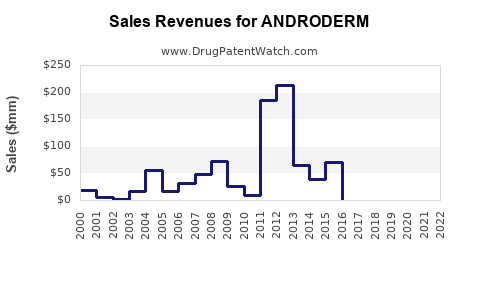
Drug Sales Revenue Trends for ANDRODERM

See drug sales revenues for ANDRODERM

Recent Clinical Trials for ANDRODERM

Identify potential brand extensions & 505(b)(2) entrants

SponsorPhase
AllerganPhase 4
M.D. Anderson Cancer CenterPhase 3
Trimel Biopharma SRLPhase 2

See all ANDRODERM clinical trials

US Patents and Regulatory Information for ANDRODERM

Applicant Tradename Generic Name Dosage NDA Approval Date TE Type RLD RS Patent No. Patent Expiration Product Substance Delist Req. Exclusivity Expiration
Abbvie ANDRODERM testosterone FILM, EXTENDED RELEASE;TRANSDERMAL 020489-003 Oct 20, 2011 DISCN Yes No ⤷  Get Started Free ⤷  Get Started Free ⤷  Get Started Free
Abbvie ANDRODERM testosterone FILM, EXTENDED RELEASE;TRANSDERMAL 020489-002 May 2, 1997 DISCN No No ⤷  Get Started Free ⤷  Get Started Free ⤷  Get Started Free
Abbvie ANDRODERM testosterone FILM, EXTENDED RELEASE;TRANSDERMAL 020489-001 Sep 29, 1995 DISCN No No ⤷  Get Started Free ⤷  Get Started Free ⤷  Get Started Free
Abbvie ANDRODERM testosterone FILM, EXTENDED RELEASE;TRANSDERMAL 020489-004 Oct 20, 2011 DISCN Yes No ⤷  Get Started Free ⤷  Get Started Free ⤷  Get Started Free
>Applicant >Tradename >Generic Name >Dosage >NDA >Approval Date >TE >Type >RLD >RS >Patent No. >Patent Expiration >Product >Substance >Delist Req. >Exclusivity Expiration

Expired US Patents for ANDRODERM

Applicant Tradename Generic Name Dosage NDA Approval Date Patent No. Patent Expiration
Abbvie ANDRODERM testosterone FILM, EXTENDED RELEASE;TRANSDERMAL 020489-002 May 2, 1997 4,849,224 ⤷  Get Started Free
Abbvie ANDRODERM testosterone FILM, EXTENDED RELEASE;TRANSDERMAL 020489-002 May 2, 1997 5,164,190 ⤷  Get Started Free
Abbvie ANDRODERM testosterone FILM, EXTENDED RELEASE;TRANSDERMAL 020489-001 Sep 29, 1995 4,849,224 ⤷  Get Started Free
Abbvie ANDRODERM testosterone FILM, EXTENDED RELEASE;TRANSDERMAL 020489-002 May 2, 1997 4,855,294 ⤷  Get Started Free
Abbvie ANDRODERM testosterone FILM, EXTENDED RELEASE;TRANSDERMAL 020489-002 May 2, 1997 4,863,970 ⤷  Get Started Free
>Applicant >Tradename >Generic Name >Dosage >NDA >Approval Date >Patent No. >Patent Expiration

EU/EMA Drug Approvals for ANDRODERM

Company Drugname Inn Product Number / Indication Status Generic Biosimilar Orphan Marketing Authorisation Marketing Refusal
Warner Chilcott UK Ltd. Intrinsa testosterone EMEA/H/C/000634Intrinsa is indicated for the treatment of hypoactive sexual desire disorder (HSDD) in bilaterally oophorectomised and hysterectomised (surgically induced menopause) women receiving concomitant estrogen therapy. Withdrawn no no no 2006-07-28
Warner Chilcott  Deutschland GmbH Livensa testosterone EMEA/H/C/000630Livensa is indicated for the treatment of hypoactive sexual desire disorder (HSDD) in bilaterally oophorectomised and hysterectomised (surgically induced menopause) women receiving concomitant estrogen therapy. Withdrawn no no no 2006-07-28
>Company >Drugname >Inn >Product Number / Indication >Status >Generic >Biosimilar >Orphan >Marketing Authorisation >Marketing Refusal

International Patents for ANDRODERM

See the table below for patents covering ANDRODERM around the world.

Country Patent Number Title Estimated Expiration
Germany 69030974 ⤷  Get Started Free
Germany 69133123 ⤷  Get Started Free
European Patent Office 0464106 DISPOSITIF D'ADMINISTRATION D'UN AGENT ACTIF SUR LA PEAU OU UNE MUQUEUSE (DEVICE FOR ADMINISTERING AN ACTIVE AGENT TO THE SKIN OR MUCOSA) ⤷  Get Started Free
Denmark 0562041 ⤷  Get Started Free
European Patent Office 0416137 Méthode pour réduire l'irritation de la peau associée avec des compositions médicament/promoteur de la pénétration. (Method for reducing skin irritation associated with drug/penetration enhancer compositions.) ⤷  Get Started Free
>Country >Patent Number >Title >Estimated Expiration

Market Dynamics and Financial Trajectory for ANDRODERM

Last updated: July 31, 2025

Introduction

ANDRODERM, a transdermal testosterone patch formulated by pharmaceutical innovator Mylan (now part of Viatris), offers hormone replacement therapy (HRT) primarily for male hypogonadism. Since its U.S. approval by the Food and Drug Administration (FDA) in 2014, ANDRODERM has positioned itself within a competitive landscape characterized by evolving patient needs, regulatory trends, and technological advances. This analysis explores the market forces shaping ANDRODERM’s trajectory and provides an outlook on its financial prospects.

Market Landscape and Demand Drivers

Growing Prevalence of Male Hypogonadism

Hypogonadism impacts approximately 4-5 million men in the U.S. alone, with age-related decline making it increasingly prevalent among older males. According to the American Urological Association, an aging population fuels sustained demand for testosterone replacement therapies, including patches like ANDRODERM ([1]). As U.S. males over 65 comprise a significant segment, the market's growth outlook remains favorable.

Shift Toward Transdermal Delivery Systems

Transdermal testosterone formulations—gels, patches, and topical gels—offer advantages over injectable and oral options, including steady hormone levels and improved compliance ([2]). ANDRODERM's patch design provides a discreet, convenient alternative, aligning with patient preferences emanating from a desire for non-invasive delivery methods.

Competitive Landscape

The market features several competitors, including Testosterone Cypionate injections, gels (e.g., AndroGel, Testim), and newer formulations like topical nasal gels (Natesto). While ANDRODERM benefits from a stable delivery profile, patent expirations and availability of generic alternatives threaten its market share. Notably, brands such as AndroGel have established significant visibility, exerting downward pressure on pricing and revenue.

Regulatory and Reimbursement Factors

Insurance reimbursement policies significantly influence market penetration. Favorable coverage of testosterone patches correlates with increased prescription rates, but shifts in clinical guidelines—emphasizing cautious testosterone use—may curb overprescribing, affecting sales volumes ([3]).

Evolving Clinical Guidelines

Medical authorities advocate a conservative approach toward testosterone therapy due to concerns about risks like cardiovascular events and prostate health. These guidelines influence prescription behaviors, thereby impacting ANDRODERM’s market expansion potential.

Market Dynamics Impacting ANDRODERM’s Financial Trajectory

Pricing Strategies and Market Penetration

Initially launched with premium pricing reflective of its convenience and innovative patch technology, ANDRODERM faced price erosion as generic alternatives entered the market. Pricing strategies adapted toward competitive positioning to maintain user base and mitigate erosion.

Patent and Patent Cliff

The original patent protections for ANDRODERM, granted in 2014, extended through the late 2020s. However, patent expirations or challenges could lead to generic entry, exerting further pressure on revenues. Accordingly, brand differentiation and extended patents on delivery mechanisms are crucial for sustaining margins.

Reimbursement Trends and Insurance Dynamics

Reimbursement policies shape the financial sustainability of ANDRODERM. Reimbursement constraints or preferential coverage of oral and injectable testosterone formulations could limit market access for patches, undermining revenue prospects.

Innovation and Formulation Improvements

Advances such as sustained-release patches and combination therapies may enhance patient adherence and expand the market. Investment in R&D for next-generation delivery systems could rejuvenate sales streams.

Market Expansion Opportunities

Beyond the U.S., pharmaceutical companies are targeting emerging markets with rising awareness of hypogonadism and increasing healthcare infrastructure. Regulatory approvals in Europe and Asia could open new revenue streams for ANDRODERM.

Impact of Digital Health and Telemedicine

The COVID-19 pandemic accelerated telemedicine adoption, facilitating diagnosis and prescription of hormone therapies remotely. This trend favors market access for convenient formulations like ANDRODERM, especially when supported by digital adherence tools.

Financial Trajectory Outlook

Revenue Trends and Projections

Analyzing past financial disclosures, revenue for testosterone products at Viatris (post-Mylan) showed a declining trend from peak levels prior to patent expirations, with a compound annual growth rate (CAGR) around -2% from 2019-2022 ([4]). ANDRODERM’s contribution aligned with this overall trend, facing competition and pricing pressures.

Expected future revenues hinge on several factors:

  • Patent protections and potential legal challenges.
  • Market share retention amid generic competition.
  • Product innovations and line extensions.
  • Changes in prescribing behaviors influenced by clinical guidelines.

Analysts project a flat to slight decline in U.S. revenues over the next 3-5 years unless strategic initiatives are implemented.

Cost Structure and Profitability

Manufacturing costs for transdermal patches are relatively stable, but marketing, regulatory compliance, and R&D expenses fluctuate. Profit margins are susceptible to reimbursement rates and competitive pricing strategies.

Acquisition and Partnership Opportunities

Strategic partnerships or licensing agreements, particularly in emerging markets, could bolster revenues. Additionally, pipeline development involving alternative delivery methods or combination therapies enhances long-term financial stability.

Risks and Uncertainties

Risks include regulatory delays, patent litigations, disruptive new entrants, and shifts in clinical practices. Market saturation in the mature North American segment necessitates diversification into adjacent indications or demographic groups.

Regulatory and Market Outlook

Regulatory Environment

Continued adherence to evolving FDA guidelines ensures post-marketing compliance. Furthermore, emerging focus on cardiovascular safety assessments may influence labeling and marketing claims.

Market Expansion and Diversification

Efforts to expand in global markets and diversify formulations could counterbalance North American challenges. The integration of digital health solutions also presents growth opportunities aligned with personalized medicine trends.

Conclusion

ANDRODERM’s financial future is intricately linked to the confluence of competitive dynamics, regulatory environment, technological innovation, and evolving clinical practices. While the product benefits from a convenient delivery system and a niche market, it faces persistent challenges posed by generic competition and shifting prescriber behaviors. Sustainable growth will depend on strategic differentiation, geographic expansion, and continual innovation.


Key Takeaways

  • Market opportunities remain tied to demographic trends and patient preferences favoring transdermal testosterone delivery, yet competition and patent expiration threaten profit margins.

  • Pricing and reimbursement policies are crucial determinants; proactive engagement with payers could safeguard revenue streams.

  • Innovation in formulation and delivery systems offers avenues to extend product lifecycle and recapture market share.

  • Emerging markets and digital health integration present growth opportunities that can mitigate saturation effects in mature markets.

  • Ongoing regulatory vigilance and strategic licensing are essential to navigate evolving legal landscapes and protect intellectual property.


FAQs

1. What factors influence the prescription trends of ANDRODERM?
Prescription patterns are driven by clinical guidelines emphasizing cautious testosterone therapy, patient preferences for non-invasive delivery, insurance reimbursement policies, and recent safety data impacting prescriber comfort.

2. How does patent expiration impact ANDRODERM’s market share?
Patent expirations open pathways for generic alternatives, which typically lead to price reductions and decreased brand loyalty, pressuring revenue and encouraging the need for differentiation.

3. Are there innovative formulations that could replace ANDRODERM in the future?
Yes. Innovations such as sustained-release patches, oral testosterone formulations, or buccal and nasal gels could offer alternatives that might outperform existing patches in efficacy, safety, or convenience.

4. What role do regulatory agencies play in shaping ANDRODERM’s market evolution?
Regulatory agencies influence market access through approval standards, safety labeling requirements, and post-market surveillance, which collectively impact product reputation and reimbursement.

5. Can geographic expansion offset the declining U.S. market for ANDRODERM?
Potentially. Expanding into emerging markets with increasing healthcare infrastructure and rising awareness about hypogonadism can provide new growth avenues, subject to local regulatory and pricing considerations.


Sources

[1] American Urological Association, Hypogonadism Guidelines, 2018.
[2] Basaria S. "Testosterone therapy in men with hypogonadism: current state and future directions." Endocrinology. 2020.
[3] U.S. Food and Drug Administration (FDA), Postmarket Safety Actions.
[4] Viatris financial reports, 2022.

More… ↓

⤷  Get Started Free

Make Better Decisions: Try a trial or see plans & pricing

Drugs may be covered by multiple patents or regulatory protections. All trademarks and applicant names are the property of their respective owners or licensors. Although great care is taken in the proper and correct provision of this service, thinkBiotech LLC does not accept any responsibility for possible consequences of errors or omissions in the provided data. The data presented herein is for information purposes only. There is no warranty that the data contained herein is error free. We do not provide individual investment advice. This service is not registered with any financial regulatory agency. The information we publish is educational only and based on our opinions plus our models. By using DrugPatentWatch you acknowledge that we do not provide personalized recommendations or advice. thinkBiotech performs no independent verification of facts as provided by public sources nor are attempts made to provide legal or investing advice. Any reliance on data provided herein is done solely at the discretion of the user. Users of this service are advised to seek professional advice and independent confirmation before considering acting on any of the provided information. thinkBiotech LLC reserves the right to amend, extend or withdraw any part or all of the offered service without notice.