1. What the 505(b)(2) Pathway Actually Is (and What It Isn’t)
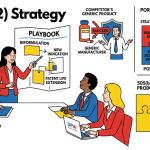
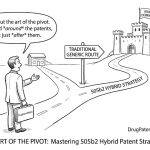
The 505(b)(2) New Drug Application (NDA) is a hybrid regulatory submission under Section 505(b)(2) of the Federal Food, Drug, and Cosmetic Act (FD&C Act). It permits an applicant to rely, at least in part, on data that the applicant did not itself generate, including published literature or the FDA’s own prior findings of safety and effectiveness for a Reference Listed Drug (RLD), without requiring a formal right of reference to that RLD’s original studies.
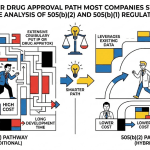
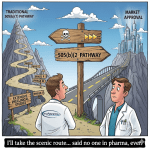
The phrase ‘hybrid’ is accurate. A 505(b)(2) NDA is not a full NDA (505(b)(1)), which demands that the sponsor generate all preclinical and clinical data from scratch. It is also not an Abbreviated New Drug Application (ANDA, or 505(j)), which requires pharmaceutical equivalence and bioequivalence to an RLD while prohibiting meaningful product differentiation. The 505(b)(2) occupies the space between those poles: it allows a modified drug to borrow existing safety/efficacy evidence for the unmodified portions of the molecule while requiring the applicant to provide new data addressing the modification.
That modification is precisely where IP is created. A company developing a once-daily extended-release capsule of an off-patent molecule relies on FDA findings for the molecule’s established pharmacology, then conducts pharmacokinetic bridging studies and any additional safety work needed for the new dosage form. The new dosage form itself, the formulation excipients, the delivery mechanism, or the manufacturing process can all be independently patented. The 505(b)(2) NDA is the regulatory vehicle; the IP filing is the financial instrument that converts development work into long-duration cash flows.
Key distinction for IP teams: 505(b)(2) approval does not itself create IP. It creates the regulatory approval that makes IP enforceable in a commercial context. A formulation patent on an unapproved product has no commercial value. A formulation patent on an approved 505(b)(2) product, listed in the Orange Book, triggers automatic 30-month litigation stays against any ANDA filer who challenges it via a Paragraph IV certification. That stay is what gives Orange Book-listed patents their outsized economic value relative to patents in other industries.
2. The Hatch-Waxman Architecture: Why 505(b)(2) Exists
The Drug Price Competition and Patent Term Restoration Act of 1984, universally called Hatch-Waxman after its sponsors, restructured the entire economics of the US pharmaceutical market. Its central bargain was to accelerate generic entry (by creating the ANDA pathway and allowing Paragraph IV patent challenges with 180-day exclusivity as incentive) while simultaneously strengthening branded company protections (through patent term restoration under 35 U.S.C. § 156 and FDA data exclusivity periods).
Section 505(b)(2) was not the headline provision in 1984, but it became one of the most exploited. Congress intended it to prevent wasteful duplication of animal and human studies for products that clearly relied on existing pharmacological knowledge. The FDA’s 1999 guidance ‘Applications Covered by Section 505(b)(2)’ expanded the practical scope, clarifying that 505(b)(2) applicants could cite published literature, FDA drug approval packages, or the FDA’s own prior safety findings, as long as sufficient bridging data linked the new product to the relied-upon evidence.
What Congress did not fully anticipate was how systematically brand companies would use 505(b)(2) to build multi-layer IP estates around post-patent molecules, or how specialty pharma companies would use it to enter markets with differentiated products priced between generics and novel branded drugs. Both uses are commercially rational and legally valid. The FDA approved roughly 60% of all NDAs via 505(b)(2) in recent years. That statistic reflects both the pathway’s efficiency and the degree to which the pipeline of genuinely novel molecules (505(b)(1) territory) remains constrained by attrition, capital costs, and clinical risk.
The 1999 FDA Guidance and Its Practical Implications
The 1999 guidance established three categories of reliance under 505(b)(2):
The first category covers reliance on the FDA’s own findings for an RLD, meaning the applicant can reference the summary basis of approval and published FDA review documents without accessing the original sponsor’s data package. This is the most common form of reliance and covers situations where a new formulation of a known molecule is sought.
The second category covers reliance on published scientific literature. Here, the applicant cites peer-reviewed studies that the FDA may then weigh as supporting evidence for the new product’s safety or efficacy. Literature reliance is more common for repurposed indications than for new formulations, because pharmacokinetic bridging for a new formulation generally requires prospective studies that cannot be replaced by published data.
The third category, the least commonly used, covers situations where the FDA’s prior findings support the new product but the product differs from any currently approved RLD in a way that makes direct comparison imprecise. This applies to prodrugs, stereoisomers, and novel salts of known molecules.
3. 505(b)(2) vs. 505(b)(1) vs. ANDA: A Technical Decision Framework
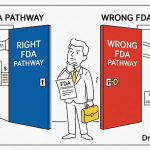
Choosing the wrong submission pathway wastes capital, delays approval, and can forfeit IP opportunities. The decision tree is more nuanced than most introductory treatments suggest.
505(b)(1): Full NDA
A 505(b)(1) NDA is appropriate when the active moiety has never been approved in the United States, the drug differs sufficiently from any approved product that reliance on existing data would not adequately characterize safety or efficacy, or the sponsor is pursuing breakthrough or accelerated approval for a novel mechanism. Development costs for a 505(b)(1) program typically range from $500 million to $2.6 billion in capitalized terms, with timelines of 10 to 15 years from IND filing to approval.
From an IP perspective, a successful 505(b)(1) approval earns 5-year New Chemical Entity (NCE) exclusivity, the most valuable FDA-granted exclusivity because it bars all 505(b)(2) and ANDA applications referencing the RLD for five years (four years with a Paragraph IV filing). The molecule’s composition-of-matter patent, if well-drafted, typically runs for 20 years from filing, often extended by patent term restoration under Hatch-Waxman to recover time lost during clinical development.
505(b)(2): Hybrid NDA
A 505(b)(2) is appropriate when the product has a known active moiety (or relies substantially on one), the modification can be characterized through targeted studies rather than a full Phase I/II/III program, and the sponsor can construct a clear bridging argument linking the modified product’s safety and efficacy to existing data. Common candidates include: new salts or esters, new dosage forms (immediate-release to extended-release), new routes of administration, new fixed-dose combinations (FDCs), new indications for approved molecules, and new patient populations (pediatrics, geriatrics) for drugs previously approved only in adults.
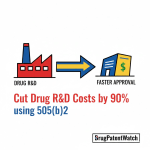
Development costs for 505(b)(2) programs vary widely by complexity, but typically fall between $10 million and $100 million, with timelines of two to five years from pre-IND meeting to NDA submission. FDA review runs approximately 10 months for standard review, six months for priority review. The IP opportunity depends entirely on the nature of the modification; formulation patents, method-of-use patents, dosage form patents, and device patents covering delivery systems are all available, with durations of 20 years from the earliest effective filing date.
ANDA: Abbreviated NDA
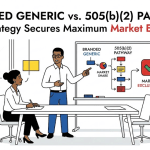
An ANDA (505(j)) requires pharmaceutical equivalence (same active ingredient, dosage form, route, strength, conditions of use) and bioequivalence (same rate and extent of absorption) to the RLD. ANDAs cannot include innovations that differentiate the product from the RLD in clinically meaningful ways. An ANDA applicant who wants to modify the product must file a 505(b)(2). Generics companies increasingly use 505(b)(2) for this reason, developing slightly differentiated products that they can price above pure generic levels while maintaining manufacturing cost advantages over branded originators.
Decision Matrix for IP Teams
For a molecule with expired composition patents, the relevant question is whether a modification would qualify for new FDA exclusivity or generate Orange Book-listable patents. If the answer to either question is yes, 505(b)(2) merits serious analysis. If the modification generates neither new exclusivity nor listable patents, the commercial case for a 505(b)(2) over a straightforward ANDA weakens considerably, unless the product has clinical advantages (improved tolerability, better adherence) that support premium pricing independent of exclusivity.
4. The IP Valuation Engine: How 505(b)(2) Creates and Captures Asset Value
Most IP valuation frameworks treat patents as binary assets: either the claim is valid and infringed, conferring market exclusivity and pricing power, or it is not. That framing understates the economic complexity of 505(b)(2)-derived IP estates.
Multi-Layer IP Estates and Their Valuation Components
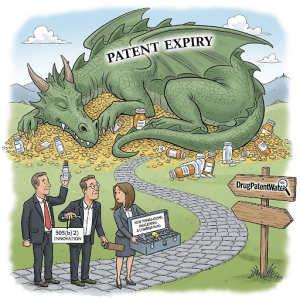
A well-executed 505(b)(2) program generates a stack of overlapping protections, each with a different expiration date, a different litigation profile, and a different economic duration. The composition-of-matter patent on the RLD’s active ingredient is typically expired or expiring when a 505(b)(2) sponsor enters the picture. That is often the entry point: patent expiry on the RLD creates freedom to operate on the molecule, while opening space to build a new IP estate around the modification.
The new IP estate might include a formulation patent covering the extended-release matrix, with claims to specific polymer combinations, release rate parameters, or bead configurations. It might include a method-of-use patent covering the new indication or the specific patient population. It might include a device patent covering a prefilled autoinjector or nasal spray device. Each of these patents is separately Orange Book-listable if it covers the approved drug and has a claim that could be infringed by an ANDA or 505(b)(2) applicant making the same product.
For valuation purposes, the critical variable is not the raw patent count but the expected duration of commercial exclusivity at each layer. A formulation patent expiring in 2035 is worth far less if the underlying molecule’s composition patent expires in 2034 and ten generic manufacturers are already approved, because an ANDA filer for the generic could simply argue non-infringement on the formulation patent by using a different polymer system to achieve immediate-release bioequivalence. Conversely, if the 505(b)(2) product has a new indication with method-of-use patents running to 2036, and the label is specific enough that generic carve-outs are impractical, the exclusivity profile changes substantially.
DCF Modeling for 505(b)(2) Programs
Discounted cash flow analysis for 505(b)(2) programs requires modeling several scenarios simultaneously. The base case assumes the full exclusivity stack holds through its stated expiration dates, with branded pricing power throughout. The bear case models an early Paragraph IV filing by a generics company that successfully invalidates the primary formulation patent, collapsing exclusivity to whatever FDA-granted exclusivity remains. The stress case models an ‘at-risk’ ANDA launch after a district court win by the filer, even while appeal is pending, which occurred in several high-profile cases involving specialty pharma 505(b)(2) products.
The discount rate applied to a 505(b)(2) program’s cash flows should reflect not only the standard cost of capital but also the patent litigation probability, which can be estimated from Paragraph IV filing rates for comparable products in the therapeutic class, the density of the IP estate (more patents, more litigation risk, but also more defensive ammunition), and the FDA exclusivity status, since products under active 5-year or 7-year exclusivity cannot be challenged via Paragraph IV until the exclusivity begins to expire.
IP as Balance Sheet Asset: Accounting Treatment
Under ASC 805 and IFRS 3, acquired intangible assets including patents and FDA exclusivity must be separately recognized at fair value in business combinations. This creates significant M&A implications: a 505(b)(2) product with a dense IP estate and intact exclusivity trades at a premium to one with a thin patent position approaching cliff. Buyers using the Multi-Period Excess Earnings Method (MPEEM) to value 505(b)(2) drug assets typically apply relief-from-royalty rates of 8% to 25% of net revenue, calibrated against observed pharmaceutical royalty transactions in the RoyaltyStat and ktMINE databases.
5. Innovation Typology: Eight Routes to New IP via 505(b)(2)
The original drug may be the same, but what the 505(b)(2) sponsor builds around it determines the IP value created. Below are the eight principal modification strategies, with their clinical development requirements, patent typology, and expected exclusivity outcomes.
New Extended-Release or Modified-Release Formulations
Converting an immediate-release (IR) drug to an extended-release (ER) or modified-release (MR) form is the most common 505(b)(2) strategy. The pharmacokinetic bridging package requires a food-effect study, a mass balance study if metabolic exposure shifts significantly, and typically a relative bioavailability study comparing the ER formulation to the IR RLD. Steady-state pharmacokinetics must demonstrate the intended release profile.
From a patent perspective, the formulation itself (the polymer matrix, the multiparticulate coating system, the osmotic delivery mechanism) is patentable as composition-of-matter or as a manufacturing method. OROS (osmotic release oral system) technology, MELT (melt extrusion), and BEADS-based multiparticulate systems each have extensive patent thickets of their own. A sponsor building an ER formulation must conduct thorough freedom-to-operate analysis against the technology licensor’s estate, because the most commercially proven delivery technologies (Alza/J&J’s OROS, Flamel’s Micropump, Depomed’s AcuForm) carry licensing obligations and residual IP that can constrain competitor entry separately from Orange Book-listed patents.
New Routes of Administration
Switching a drug from oral to injectable, from injectable to transdermal, or from any systemic route to a local delivery route (intravitreal, intranasal, intrathecal) typically requires full PK bridging plus additional safety studies addressing the new administration site. The clinical and regulatory burden increases if the new route changes the systemic exposure profile substantially.
IP generated by route-of-administration switches typically covers the device or delivery system (autoinjectors, prefilled syringes, transdermal patches, nasal spray devices) rather than the molecule itself. Device patents are listed in the Orange Book when they claim the approved combination product, and they can run independently of the drug’s formulation patents. A transdermal patch covering a widely used analgesic molecule exemplifies this: the patch’s adhesive composition, flux-enhancer combination, and rate-controlling membrane are patentable and Orange Book-listable regardless of the molecule’s IP status.
New Indications (Method-of-Use Extensions)
Seeking a new indication via 505(b)(2) requires full clinical evidence for the new use, typically from Phase II/III trials. The reliance on existing data is primarily for the safety portion of the NDA, not the efficacy portion, since efficacy in the new indication is by definition not established by prior approval. This pathway is appropriate when preclinical or published clinical data strongly suggests efficacy, reducing Phase II risk, or when the drug has established safety at doses relevant to the new indication.
Method-of-use patents on new indications are patentable under Section 101 and are Orange Book-listable under 21 CFR 314.53(b)(1). Their commercial value depends heavily on whether generic manufacturers can carve out the new indication from their labeling (a ‘skinny label’ strategy) while still selling the product for the original indication at generic prices. If the new indication accounts for the majority of prescriptions, skinny labeling is not a viable threat. If the original indication drives most volume and the new indication is niche, method-of-use patents provide limited commercial protection.
New Fixed-Dose Combinations
FDCs combine two or more active ingredients into a single dosage form. The 505(b)(2) NDA relies on existing data for each component individually, then bridges to the combination through drug-drug interaction studies, comparative bioavailability studies, and potentially a clinical trial demonstrating that the combination’s efficacy and safety are consistent with the individual components’ known profiles. If the combination has a genuinely novel pharmacological interaction (synergy, complementary mechanisms), a Phase III trial is typically required.
FDC patents can cover the specific ratio of active ingredients, the formulation preventing physical or chemical incompatibility between the actives, or the method of treating a condition with the particular combination. Cardiovascular FDCs (antihypertensive combinations), HIV antiretroviral regimens, and diabetes combination tablets have all generated substantial 505(b)(2) franchises with multi-patent estates.
New Patient Populations: Pediatric Extensions
Reformulating a drug for pediatric use under the Pediatric Research Equity Act (PREA) and Best Pharmaceuticals for Children Act (BPCA) generates 6-month pediatric exclusivity tacked onto any existing exclusivity or patent protection. While 6 months sounds modest, on a blockbuster product generating $1 billion or more annually, that exclusivity extension is worth $500 million in pre-tax protected revenue. The pediatric reformulation itself (an oral liquid, a chewable tablet, a dispersible mini-tablet) generates its own formulation IP.
New Salts, Esters, and Prodrugs
Switching from one salt form to another (e.g., from hydrochloride to mesylate) can change solubility, bioavailability, physical stability, or hygroscopicity. The FDA treats these as requiring a 505(b)(2) unless the salt is pharmaceutically equivalent to the RLD, in which case an ANDA would suffice. Prodrugs, which are inactive molecules that convert to the active moiety in vivo, require a 505(b)(2) and generate composition-of-matter patents on the prodrug itself, separate from any patents on the parent molecule.
New Dosage Strengths
Adding a new strength to an existing product’s lineup is the lightest-touch 505(b)(2) application. It requires a dose-proportionality study and, in some cases, additional clinical data if the new strength falls outside the studied range. Patent protection for new strengths alone is thin; the value is primarily in extending the product’s commercial differentiation and giving prescribers additional flexibility that generics cannot immediately match.
Combination Drug-Device Products
Drug-device combinations (prefilled syringes, auto-injectors, inhalers, transdermal systems, drug-eluting implants) are among the most IP-rich 505(b)(2) product types. The drug component and the device component can each carry independent patents. The combination can carry additional patents. Device patents are typically harder to design around than formulation patents because the physical geometry, material specifications, and user-interface elements of a delivery device are constrained by manufacturing feasibility and human factors requirements. Orexigen’s Contrave, Noven’s transdermal patches, and various branded inhaler products illustrate how device IP can sustain commercial exclusivity for years after molecule patents expire.
6. Market Exclusivity: FDA-Granted Protection as a Balance Sheet Asset
FDA-granted exclusivities are statutory protections that bar FDA from approving competing applications for a defined period. They are entirely separate from patents and operate independently of the patent term. Understanding their precise contours is essential for modeling the full exclusivity profile of any 505(b)(2) product.
3-Year New Clinical Investigation Exclusivity
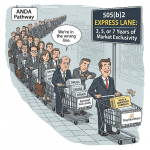
A 505(b)(2) NDA qualifies for 3-year exclusivity under 21 USC 355(c)(3)(E)(iii) if it contains ‘new clinical investigations (other than bioavailability studies) conducted or sponsored by the applicant’ that are ‘essential to the approval’ of the application. This is the most commonly earned exclusivity for 505(b)(2) products and is triggered by approvals for new dosage forms, new strengths, new routes of administration, and new indications that require clinical trial data.
The 3-year exclusivity bars submission of ANDAs or 505(b)(2) applications for the same drug (same active ingredient, same formulation type, same indication) for three years from approval. It does not bar all competition; a 505(b)(2) competitor could potentially earn its own approval during the three-year period for a sufficiently differentiated product. The practical effect is to create a three-year runway during which the 505(b)(2) holder faces no direct FDA-approved competition that relied on its own clinical data.
5-Year NCE Exclusivity
New Chemical Entity exclusivity applies when the approved NDA contains an active moiety ‘that has never been approved in any other application.’ For 505(b)(2) applicants, NCE exclusivity is available when the 505(b)(2) product contains an entirely new active moiety, which is uncommon since 505(b)(2) products typically use known molecules. It does occur with prodrugs (where the prodrug itself is the new moiety) and with stereoisomers or active metabolites that have not previously been approved as standalone drugs.
NCE exclusivity is the most protective of all exclusivity types: it bars any ANDA or 505(b)(2) referencing the RLD for five years, and even a Paragraph IV certification can only be filed four years into the exclusivity period. The commercial value of NCE exclusivity on a high-revenue product is substantial; it defines the outer boundary of the branded product’s protected window regardless of the patent estate’s status.
7-Year Orphan Drug Exclusivity
Products designated as orphan drugs (treating diseases affecting fewer than 200,000 patients in the United States, under the Orphan Drug Act) receive 7-year exclusivity upon approval. This exclusivity bars FDA from approving the same drug for the same orphan indication, not merely from approving the same formulation. The orphan exclusivity is indication-specific: if a drug is approved for a common indication and an orphan indication, the 7-year exclusivity covers only the orphan indication.
For 505(b)(2) sponsors, orphan drug exclusivity is particularly valuable because rare disease markets are often inadequately served by existing therapies, the patient populations may be unable to use generic formulations (requiring specialized delivery), and orphan drug designation also provides federal tax credits covering 25% of qualified clinical testing expenses incurred in 2026, along with FDA fee waivers. The combination of tax benefits, fee waivers, and 7-year exclusivity makes 505(b)(2) programs for rare diseases among the most capital-efficient in the pharmaceutical sector.
Pediatric Exclusivity: The 6-Month Bonus
Pediatric exclusivity is not a standalone exclusivity period; it attaches 6 months to any existing exclusivity or patent protection. If a product has an Orange Book-listed patent expiring January 1, 2030, and the sponsor successfully completes pediatric studies under a Written Request from FDA, the patent’s effective enforcement period extends to July 1, 2030. This 6-month extension applies to all Orange Book-listed patents for the drug, not just those related to the pediatric formulation. On a mature blockbuster with multiple Orange Book listings, this can be worth hundreds of millions of dollars.
Stacking Exclusivities: The Full Protection Analysis
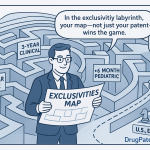
The most sophisticated 505(b)(2) programs are designed to stack exclusivities so that when one expires, another begins. An idealized protection profile might look like this: NCE exclusivity runs for five years from initial approval. At year four, a new indication 505(b)(2) NDA earns 3-year new clinical investigation exclusivity running to year seven. Pediatric studies completed during year three add 6 months to the primary patent, which expires at year twelve. A second-generation formulation filed as a 505(b)(2) (a new extended-release version of the drug) earns its own 3-year exclusivity from year six, running to year nine. The cumulative effect is protected commercial space through year twelve, by which point the product’s clinical franchise and physician familiarity create their own switching barriers.
7. Patent Strategy Playbook: Certifications, Thickets, and Orange Book Listings
The Orange Book and Its Strategic Importance
The FDA’s Approved Drug Products with Therapeutic Equivalence Evaluations, universally called the Orange Book, lists every patent that the NDA holder claims covers the approved drug or the approved use of the drug. Only patents meeting specific criteria under 21 CFR 314.53 are listable: composition-of-matter patents on the drug substance, formulation patents on the drug product, and method-of-use patents claiming the approved indication. Process patents, patents on metabolites, and patents on packaging are not Orange Book-listable.
Orange Book listing transforms a patent from a private property right into a regulatory weapon. Any ANDA or 505(b)(2) applicant who seeks to market a product before listed patents expire must certify, under 21 CFR 314.94(a)(12), one of four positions: that the patent information has not been filed (Paragraph I), that the patent has expired (Paragraph II), that the applicant will not market its product until the patent expires (Paragraph III), or that the patent is invalid or will not be infringed by the proposed product (Paragraph IV). A Paragraph IV certification triggers a 30-month automatic stay of FDA approval if the NDA holder sues for infringement within 45 days of receiving the Paragraph IV notice letter.
Building an Impenetrable Orange Book Position
The number of Orange Book-listed patents for a 505(b)(2) product directly affects the cost and complexity of generic entry. Each additional listable patent is a potential 30-month stay trigger. A 505(b)(2) product with eight Orange Book-listed patents, covering the formulation, the delivery device, two method-of-use claims, and three process-related composition claims, faces a qualitatively different generic entry threat than a product with a single formulation patent.
The strategic objective is to file, prosecute, and list patents in a sequence that maximizes the temporal coverage of the Orange Book position while minimizing prosecution overlap (which can trigger estoppel arguments during litigation). Patents filed during development, at approval, and through lifecycle management programs can collectively create an Orange Book position whose final expiration date extends 15 to 20 years beyond the original RLD’s composition patent.
Paragraph IV Filing Dynamics and 505(b)(2) Products
For 505(b)(2) products specifically, the Paragraph IV dynamic is different from that of first-in-class novel drugs. First, generics companies may file ANDAs seeking to market a generic version of the RLD that is not identical to the 505(b)(2) product, potentially carving around the 505(b)(2) holder’s formulation IP entirely. Second, rival 505(b)(2) applicants may file Paragraph IV certifications against the original 505(b)(2) holder’s listed patents if they seek approval for a competing modified product. This creates a two-front patent litigation risk: traditional ANDA challengers on one side, 505(b)(2) competitors on the other.
The 180-day first-filer exclusivity that generics companies earn for successful Paragraph IV challenges does not apply to 505(b)(2) applicants, which removes one of the principal incentives driving aggressive Paragraph IV filings in the ANDA context. However, a 505(b)(2) applicant who successfully invalidates or designs around a patent held by the original 505(b)(2) holder gains a free-market entry that can be commercially quite valuable.
Patent Term Extension under Hatch-Waxman
Under 35 U.S.C. § 156, NDA holders can petition the USPTO for patent term extension to compensate for time spent in FDA review after the patent was granted. The extension is calculated as half the time from IND filing to NDA submission, plus the full time from NDA submission to FDA approval, up to a maximum of 5 years. The extended patent term cannot run more than 14 years from FDA approval. Only one patent per approved product is eligible for term extension.
For 505(b)(2) programs, the patent term extension strategy is to select the most commercially valuable patent (usually the primary formulation patent or the method-of-use patent covering the major indication) for the extension petition. If the 505(b)(2) development timeline was compressed (2 to 3 years) relative to a traditional 505(b)(1) NDA (10 to 15 years), the patent term extension available under § 156 will be smaller. This is a genuine disadvantage of the 505(b)(2) pathway relative to 505(b)(1) for NCE programs with long development histories.
Extended-release formulations are the most frequently used 505(b)(2) innovation pathway. Their commercial success depends not only on the clinical profile of the ER formulation but on the defensibility of the underlying delivery platform’s IP. The major platform technologies in use as of 2026 include the following.
Osmotic delivery systems (OROS) use a semipermeable membrane surrounding a drug-containing core with an osmotic push layer. Water enters through the membrane, expanding the push layer and driving drug release through a laser-drilled orifice at a controlled rate. OROS technology generates flat, zero-order release profiles, particularly valuable for drugs where peak-to-trough concentration fluctuations drive adverse events (CNS stimulants, antihypertensives). The core OROS patents held by Alza Corporation (now part of Johnson & Johnson) have largely expired, but derivative patents on specific configurations, drug-specific formulations, and manufacturing improvements continue to be filed. A 505(b)(2) sponsor using an OROS-type system should conduct freedom-to-operate analysis specific to the drug and any proprietary modifications before filing.
Multiparticulate systems (pellets, mini-tablets, microspheres) release drug from multiple discrete units, each coated with a rate-controlling polymer such as ethylcellulose, polyvinyl acetate, or Eudragit-family methacrylic acid copolymers. Because release kinetics arise from the coating thickness and polymer composition rather than a single monolithic matrix, multiparticulate systems offer more variable and customizable release profiles than OROS. From an IP perspective, the pellet coating composition, the coating thickness distribution, and the blend of fast and slow pellets in a capsule are all independently claimable. The Flamel Micropump system and Eurand’s Diffucaps technology are examples of proprietary multiparticulate platforms that carry licensing requirements.
Matrix systems use hydrophilic polymers (HPMC, CMC, guar gum) or hydrophobic waxes (glyceryl behenate, hydrogenated castor oil) dispersed in a single solid oral dosage form. Drug diffuses through the matrix or is released as the matrix erodes. Matrix ER tablets are the simplest and cheapest to manufacture but generate the least distinctive IP, because the structural principle (drug in polymer matrix, releasing by diffusion or erosion) is well-established in the art. Patent protection for matrix ER 505(b)(2) products generally focuses on specific polymer combinations, drug-loading ranges, and the resulting in-vitro dissolution profiles rather than the matrix concept itself.
Drug-Device Combination Roadmap
Drug-device combination products have become the dominant 505(b)(2) innovation area in specialty pharma. The FDA’s Center for Drug Evaluation and Research (CDER) has primary jurisdiction over drug-device combinations when the drug component is the primary mode of action, but the device component triggers parallel consultation with the Center for Devices and Radiological Health (CDRH). This dual regulatory involvement creates a more complex pre-NDA meeting process and a longer CMC review, but also generates device patents that fall outside the traditional pharmaceutical patent landscape and are therefore less familiar to generics challengers.
The development roadmap for a drug-device 505(b)(2) product proceeds through four phases. The first phase covers feasibility: device design concepts are evaluated for drug compatibility, user interface requirements are mapped through human factors studies, and preliminary freedom-to-operate analysis is conducted against existing device platform patents. The second phase covers formative design: selected device concepts are prototyped, drug-device compatibility studies (leachables, extractables, device impact on drug stability) are conducted, and the primary patent applications for the device are filed. The third phase covers pivotal development: human factors validation studies confirm that the intended user population can use the device correctly without training errors, bioequivalence or PK bridging studies with the device are conducted, and the IND is amended to cover the combination product. The fourth phase covers NDA preparation: the device master file or device section of the NDA is assembled, all human factors data are integrated into the 505(b)(2) submission, and Orange Book-listable device claims are identified for listing at approval.
Nanotechnology and Particle Engineering Platforms
Nanotechnology-based drug delivery (nanoparticles, liposomes, polymeric micelles, nanoemulsions, solid lipid nanoparticles) has generated a wave of 505(b)(2) programs over the past decade, primarily in oncology and central nervous system indications. The clinical rationale for nanoformulations is typically improved bioavailability (for poorly water-soluble BCS Class II/IV drugs), modified tissue distribution (targeting tumor vasculature via EPR effect), or reduced systemic toxicity through encapsulation.
From an IP perspective, nanoformulation patents cover particle size ranges (often defined by D90, D50, and D10 measurements), surface modification strategies (PEGylation, receptor targeting ligands), lipid or polymer matrix compositions, and the manufacturing process (high-pressure homogenization, solvent injection, spray drying). These patents are typically harder to design around than simple matrix ER patents because the particle engineering parameters interact in complex ways: changing one element (e.g., the PEG chain length) can invalidate multiple other claims simultaneously, making true design-around difficult without extensive reformulation work.
9. Case Studies with IP Valuation Analysis
Case Study 1: Emflaza (Deflazacort) – PTC Therapeutics
Regulatory and Clinical Background
Deflazacort is a corticosteroid developed in Europe in the 1960s and used informally in the United States under compassionate use programs for Duchenne muscular dystrophy (DMD) prior to 2017. PTC Therapeutics filed a 505(b)(2) NDA relying on published literature and existing studies conducted outside the United States, without generating a full Phase III program. FDA approved Emflaza in February 2017 for DMD in patients 5 years and older, granting 7-year orphan drug exclusivity.
IP Valuation Analysis
At approval, Emflaza had no US patents listed in the Orange Book, relying entirely on the 7-year orphan drug exclusivity (running through approximately February 2024) for commercial protection. This is an unusually thin IP position for a specialty pharma product: no Orange Book patents means no potential 30-month stays against generic challengers, no Paragraph IV process to delay entry, and no IP overhang beyond the statutory exclusivity date.
PTC priced Emflaza at approximately $35,000 per year at launch, compared to the $1,000 to $2,000 annual cost that US families had previously paid to import deflazacort from Europe. The pricing decision immediately drew congressional scrutiny and media attention. Medivation had acquired the Emflaza rights for approximately $145 million and sold them to PTC as part of Pfizer’s acquisition of Medivation; the complex ownership history and thin IP position contributed to pricing pressure.
For IP teams, Emflaza is the case study in what happens when a 505(b)(2) program relies entirely on FDA exclusivity without a corresponding patent estate. The 7-year orphan exclusivity provided a defined commercial window, but without Orange Book-listed patents, PTC had no mechanism to delay generic entry beyond February 2024. A more complete IP strategy would have included filing and listing formulation patents (even modest ones covering the specific tablet composition) to create at least the procedural barriers of the Paragraph IV process. The lesson is that FDA exclusivity and Orange Book patent protection are complementary, not interchangeable.
Case Study 2: Narcan (Naloxone Nasal Spray) – Emergent BioSolutions
Regulatory and Clinical Background
Naloxone is a mu-opioid receptor antagonist with a pharmacological history dating to 1960 and existing in approved injectable forms for decades before Adapt Pharma (later acquired by Emergent BioSolutions) developed a 4 mg intranasal formulation. The FDA approved Narcan Nasal Spray in November 2015 via 505(b)(2), relying on existing injectable naloxone safety and efficacy data for the drug substance and requiring only bridging PK studies to characterize the nasal delivery.
The public health context was urgent: opioid overdose deaths had exceeded 33,000 annually in the US, and bystander administration of naloxone was being promoted as a harm reduction strategy. The FDA approved Narcan with priority review and expanded access programs. In 2023, the FDA approved Narcan as an over-the-counter product, the first over-the-counter naloxone product.
IP Valuation Analysis
Narcan’s IP estate centers on the nasal spray device and formulation patents rather than on naloxone itself. Key Orange Book-listed patents cover the nasal spray device design (the proprietary single-dose intranasal delivery system), the formulation (the specific pH and concentration of naloxone hydrochloride in the intranasal solution), and a method-of-use patent for the treatment of opioid overdose via intranasal administration. These patents create the Orange Book position that obligated any ANDA filer to certify, triggering potential 30-month stays.
Hikma Pharmaceuticals filed an ANDA for a generic naloxone nasal spray with a Paragraph IV certification, arguing non-infringement or invalidity of the listed patents. The resulting litigation illustrates the commercial importance of device patents in 505(b)(2) programs: Hikma’s competing product used a different nasal spray device and a different formulation concentration, making its design-around strategy center on the device geometry rather than the molecule’s pharmacology.
From a valuation standpoint, the OTC conversion in 2023 dramatically expanded the addressable market but also increased competitive pressure: without a prescription requirement, insurers’ formulary controls no longer provided a reimbursement barrier to competing products. The OTC transition required its own supplemental 505(b)(2) or NDA amendment, and the associated exclusivity and patent positions had to be re-evaluated relative to the OTC market context.
Case Study 3: Zembrace SymTouch (Sumatriptan Injection 3 mg) – Upsher-Smith
Regulatory and Clinical Background
Sumatriptan injection for acute migraine has been available in the United States since 1992 in 4 mg and 6 mg prefilled autoinjector formats under the Imitrex brand (GSK/Allergan). Upsher-Smith filed a 505(b)(2) NDA for Zembrace SymTouch, a 3 mg prefilled autoinjector, approved by FDA in June 2016. The lower dose (3 mg vs. 6 mg) was designed to reduce triptan-associated adverse events (chest tightness, flushing, paresthesia) while maintaining efficacy in a significant proportion of migraineurs.
The 505(b)(2) relied on existing sumatriptan pharmacology and safety data for the drug substance, with bridging PK studies for the 3 mg dose and a Phase III clinical trial demonstrating efficacy at the lower dose.
IP Valuation Analysis
Zembrace’s Orange Book listings include the autoinjector device patent and the method-of-use patent for treating migraine with the 3 mg dose. The device patent is particularly significant: the Zembrace autoinjector uses a needle-shielded, thumb-trigger design that is ergonomically differentiated from the conventional sumatriptan autoinjectors. This device-specific patent created a Paragraph IV barrier distinct from any sumatriptan compound patent (which had expired) or Imitrex formulation patents.
The 3-year new clinical investigation exclusivity from the Phase III trial supporting the 3 mg dose ran from June 2016 through June 2019. After exclusivity expiration, the patent estate alone protected the commercial position. This case illustrates the important principle that FDA exclusivity provides the initial protected window while the patent estate determines long-duration protection.
For portfolio managers, Zembrace represents a specialty pharma 505(b)(2) model with modest revenue ceiling but strong IP construction: the device patent is harder to design around than a typical formulation patent, and the clinical rationale (lower adverse event burden) provides physician preference even against generic 6 mg sumatriptan autoinjectors. The product was acquired by Upsher-Smith and later by other specialty pharma entities, with each transaction placing a valuation on the residual patent term and the prescription franchise.
10. Regulatory Execution: What the FDA Actually Requires
Pre-NDA Meeting Strategy
The pre-NDA meeting (Type B meeting) with FDA is the single most important event in a 505(b)(2) program. At this meeting, the applicant presents its reliance arguments (which existing data it will rely upon and why it adequately characterizes the RLD’s safety and efficacy), its bridging data package (what studies it will conduct to link the modified product to the RLD), and its labeling strategy (which RLD safety language it will carry over and what new safety language the modified product requires).
FDA responses to Type B meeting requests are typically received within 30 days, and the FDA’s written minutes of the meeting create a de facto development agreement that will be referenced throughout the NDA review. Disagreements with FDA’s written minutes should be resolved promptly in writing; allowing incorrect FDA minutes to stand unchallenged creates precedent that can complicate the NDA review.
Bridging Study Design: PK, PD, and Safety Bridging
Bridging studies establish the scientific link between the modified 505(b)(2) product and the RLD’s established safety and efficacy profile. For formulation changes, the primary bridging instrument is a relative bioavailability study measuring the modified product’s AUC, Cmax, and Tmax relative to the RLD under fasting and fed conditions. The study must be conducted in a sufficient number of healthy subjects (typically 24 to 48 per cohort) to characterize the mean ratios with adequate confidence intervals.
For new indications, the bridging package must address whether the dose used in the new indication produces drug exposure comparable to doses used in the approved indication, because the existing safety database was collected at specific doses and exposures. If the new indication requires substantially higher doses, the safety bridging is more demanding and may require dedicated Phase I studies at the higher doses before Phase II/III efficacy work.
For route-of-administration switches, PD bridging (demonstrating comparable pharmacodynamic effect at matched systemic exposures) may supplement or replace traditional PK bridging. An intranasal anti-migraine drug whose Cmax is lower than the oral product’s but whose Tmax is substantially faster may have a clinically important pharmacodynamic advantage (faster onset of migraine relief) despite different PK parameters.
CMC Requirements for 505(b)(2) Applications
Chemistry, manufacturing, and controls (CMC) requirements for 505(b)(2) applications are essentially equivalent to those for 505(b)(1) applications, with one important difference: the drug substance section can typically reference the existing regulatory information for the approved RLD’s active ingredient rather than generating an entirely new ICH Q7 Active Pharmaceutical Ingredient (API) manufacturing package. This reference is particularly valuable when the API is sourced from the same manufacturer as the RLD or from a Drug Master File (DMF) holder already referenced by the RLD’s NDA.
The drug product CMC section, covering the formulation composition, manufacturing process, analytical methods, and stability data, must be fully developed by the 505(b)(2) applicant, because the modified product’s manufacturing and quality attributes are specific to the modification. Stability data is particularly critical: the 505(b)(2) product’s stability specification and shelf life must be supported by real-time data (preferably 12 months minimum at long-term ICH conditions) at the time of NDA submission. An application submitted with insufficient stability data will receive a refuse-to-file letter or a complete response letter.
11. Patent Litigation Dynamics: 30-Month Stays and Paragraph IV Economics
The 30-Month Stay Mechanism
When an NDA holder receives a Paragraph IV notice letter from an ANDA or 505(b)(2) applicant challenging Orange Book-listed patents, the NDA holder has 45 days to file an infringement lawsuit in federal district court. Filing within this window automatically triggers a 30-month stay of FDA approval of the challenger’s application. During the stay, FDA cannot approve the challenger’s ANDA or 505(b)(2) even if the application is otherwise approvable.
The 30-month stay is calculated from the date of the NDA holder’s receipt of the Paragraph IV notice letter, not from the filing of the lawsuit. It runs until the earlier of the stay’s 30-month expiration, a court ruling that the challenged patents are invalid or not infringed, or withdrawal of the Paragraph IV certification by the challenger.
For 505(b)(2) products with multiple Orange Book-listed patents, each patent can trigger its own 30-month stay as it is challenged sequentially. Staggered Paragraph IV certifications (challenging patent A first, then patent B in a second filing after patent A’s stay expires) can extend the litigation period substantially. NDA holders filing additional patents in the Orange Book after the initial ANDA or 505(b)(2) challenge is filed do not receive new 30-month stays for those later-listed patents; only patents listed before the challenger’s application date trigger the stay mechanism.
Litigation Costs and Settlement Economics
Hatch-Waxman patent litigation is among the most expensive in the US legal system. A fully contested trial through appeal can cost each side $10 million to $30 million in legal fees, expert witness costs, and discovery expenses. For 505(b)(2) products, the calculus is similar to that for branded 505(b)(1) drugs: the expected cost of litigation must be weighed against the expected cash flows from maintaining exclusivity through the full patent term.
Settlement economics in Hatch-Waxman litigation historically involved reverse payments (branded company paying the generics challenger to drop the Paragraph IV certification), sometimes called ‘pay-for-delay.’ The Supreme Court’s 2013 FTC v. Actavis decision held that reverse payment settlements can violate antitrust law under a rule-of-reason analysis. Since Actavis, settlement structures have shifted toward authorized generic licenses (allowing the challenger to launch an authorized generic at a negotiated date) and cash-free settlements where the generics company receives an early entry date rather than a cash payment. These settlement structures remain legally permissible but are subject to FTC scrutiny.
Inter Partes Review: The IPR Threat
Since the America Invents Act of 2011, ANDA and 505(b)(2) applicants can challenge Orange Book-listed patents before the Patent Trial and Appeal Board (PTAB) via inter partes review (IPR), in parallel with or as an alternative to district court Paragraph IV litigation. IPR proceedings are typically faster (final written decisions within 12 months of institution) and cheaper than district court trials, and PTAB has historically shown higher patent invalidation rates than district courts for pharmaceutical patents.
For 505(b)(2) products, the IPR threat is particularly acute for formulation patents with broad claims, because PTAB applies a claim construction standard (Phillips standard since 2019) under which prior art combinations from scientific literature can anticipate or render obvious formulation inventions that a skilled formulator would have developed without special insight. Method-of-use patents with specific dosing claims tend to fare better at PTAB because the clinical evidence supporting the specific dose or administration regimen is often not present in the prior art.
12. Evergreening Mechanics: A Full Taxonomy
‘Evergreening’ is the industry and academic term for strategies that extend a branded drug’s commercial exclusivity beyond the expiration of the original composition-of-matter patent. The 505(b)(2) pathway is the most systematic and legally defensible evergreening mechanism in US pharmaceutical law. A complete taxonomy includes the following strategies.
Formulation switching involves developing an improved formulation (ER, FDC, novel delivery system) of an off-patent or near-patent-expiry drug, filing a 505(b)(2) NDA, listing new patents in the Orange Book, and earning new FDA exclusivity. The commercial strategy pairs formulation switching with aggressive promotion of the new formulation to physicians, combined with discontinuation of the original formulation or conversion of managed care formulary coverage to the new product. Concerta (methylphenidate ER via OROS), AstraZeneca’s Nexium (esomeprazole, the single S-enantiomer of omeprazole), and Forest Laboratories’ Namenda XR (memantine ER) are frequently cited examples.
Indication expansion involves filing a 505(b)(2) for a new approved use, earning new clinical investigation exclusivity, and obtaining new method-of-use patents. The commercial execution relies on the new indication driving prescription volume away from the original indication, where generic versions compete. If the new indication accounts for 80% of prescriptions, generic manufacturers cannot carve out the indication without becoming commercially irrelevant.
Pediatric reformulation, as described in the exclusivity section, adds 6 months to existing exclusivity. The commercial execution requires conducting pediatric studies under an FDA Written Request, completing them within the requested timeframe, and submitting results even if negative. The exclusivity attaches regardless of whether the pediatric studies demonstrate clinical benefit.
Salt or polymorph optimization involves filing a 505(b)(2) for a new salt form or crystalline polymorph of an existing drug, arguing that the new form has improved physicochemical properties (higher bioavailability, better stability, easier manufacture) that warrant new IP and FDA approval. Regulatory scrutiny of this strategy has increased; FDA requires a clear bridge between the new form’s physicochemical profile and a clinical benefit, and PTAB has been skeptical of polymorph patents that merely claim a different crystal structure without evidence of non-obvious properties.
Authorized generics, strictly speaking, are not 505(b)(2) strategies but are relevant to the competitive dynamics: an NDA holder can license an authorized generic to a subsidiary or third party to compete with the first ANDA filer’s 180-day exclusivity, reducing the economic value of the first-filer’s exclusivity period and, in some cases, deterring additional Paragraph IV filings.
13. Investment Strategy for Analysts
Identifying 505(b)(2) Value Creation Opportunities
Institutional investors evaluating pharmaceutical and specialty pharma companies should assess 505(b)(2) pipelines across four dimensions.
The first dimension is IP estate quality: how many Orange Book-listed patents does the product have, when do they expire, and how defensible are the claims against prior art? Thin IP estates (one or two formulation patents) facing compounds with crowded prior art are higher-risk positions. Dense estates with device patents, method-of-use patents, and formulation patents covering multiple aspects of the product are more durable.
The second dimension is exclusivity stacking: has the sponsor earned stacked FDA exclusivity, or does the product rely on a single exclusivity type? Products with overlapping patent protection and FDA exclusivity are more valuable than those relying on either alone.
The third dimension is clinical differentiation: does the 505(b)(2) product have a genuine clinical advantage (better safety, faster onset, improved adherence) that supports physician preference independent of exclusivity? Products that physicians prefer on clinical grounds command longer-lasting pricing power than those relying purely on regulatory barriers.
The fourth dimension is genericization risk: have Paragraph IV certifications already been filed? If so, what is the litigation status, and what is the probability of an adverse ruling? An adverse district court ruling on a primary formulation patent can be the proximate trigger for at-risk generic launches, even while appeal is pending.
Valuation Comps for M&A Analysis
Recent M&A transactions involving 505(b)(2) franchises have priced at 4x to 8x trailing twelve-month net revenue for products with 5 or more years of estimated IP-protected exclusivity. Products within 2 to 3 years of expected generic entry have traded at 1.5x to 3x NTM revenue, reflecting the compressed remaining cash flow window. Orphan 505(b)(2) products with intact 7-year exclusivity and thin competition have commanded premium multiples of 8x to 12x, reflecting the scarcity of orphan disease market data and the barriers to entry.
The MPEEM methodology for standalone IP asset valuation applies royalty rates of 10% to 20% of net revenue for formulation patents on high-revenue products, 20% to 30% for device patents in combination products where the device is the primary commercial differentiator, and 15% to 25% for method-of-use patents covering a dominant indication. These ranges are calibrated against observed royalty rates in the Pharma sector as reported in RoyaltyStat and ktMINE.
Analysts building bearish cases on 505(b)(2)-dependent specialty pharma companies should focus on patent quality, not just patent count. A company with 10 Orange Book-listed patents on a single product may have a weaker commercial position than one with 4 well-drafted patents, if the 10 patents are variants of the same basic formulation claim or have prior art vulnerabilities that make IPR invalidation likely.
Signals of IP weakness include: patents filed after the product was already in advanced development (suggesting the IP strategy was reactive rather than proactive), patents with claim limitations that closely mirror specific commercial product parameters (making design-arounds straightforward for a reformulator), and Orange Book listings covering patents that were subject to terminal disclaimers or double-patenting rejections during prosecution (indicating the estate is a cluster of related claims rather than independent layers of protection).
14. Competitive Intelligence and Patent Monitoring
Tracking RLD Patent Expiry for Opportunity Identification
The first step in identifying 505(b)(2) opportunities is systematic monitoring of RLD patent expirations. When a composition-of-matter patent on a major drug approaches expiry, the window for ANDA entry opens, but so does the window for 505(b)(2) development of improved formulations that can occupy the premium pricing space above the generic floor.
Platforms like DrugPatentWatch provide machine-readable patent expiration data for all Orange Book-listed drugs, including primary composition patents, secondary formulation patents, method-of-use patents, and pediatric exclusivity dates. The combination of patent expiry date and current NDA holder identity allows systematic screening for molecules where the composition patent is expiring within a 3 to 5 year horizon, the molecule has demonstrated commercial viability (peak sales above $200 million), and the existing formulation landscape has obvious improvement opportunities.
Monitoring Competitor 505(b)(2) Pipelines
FDA’s Drugs@FDA database, the Orange Book, and ClinicalTrials.gov collectively provide the raw material for competitive 505(b)(2) pipeline intelligence. Active INDs for established molecules, Type B meeting requests (visible through FOIA requests with a lag), and new Orange Book patent listings all provide advance signals of competitor 505(b)(2) programs in development.
Patent publication searches (USPTO, EPO, WIPO) for known molecules, particularly claims covering new formulation types or delivery systems, provide the earliest signals of competitor activity. A competitor who has filed patents on an ER matrix for a specific molecule and simultaneously registered a clinical study on ClinicalTrials.gov involving a modified release formulation of that molecule has almost certainly initiated a 505(b)(2) program.
15. Challenges, Failure Modes, and Risk Mitigation
Regulatory Refusals and Complete Response Letters
FDA issues complete response letters (CRLs) to 505(b)(2) NDAs that have deficiencies preventing approval. Common CRL triggers for 505(b)(2) applications include insufficient bridging data (the PK study did not adequately characterize bioequivalence between the modified product and the RLD under all relevant conditions), CMC deficiencies (stability data showing out-of-specification degradation at real-time or accelerated conditions), and labeling disputes (FDA’s proposed labeling for the modified product includes safety language the applicant disputes or excludes efficacy claims the applicant believes are supported).
Mitigation requires thorough pre-NDA meetings, conservative CMC program design (generating stability data with adequate headroom), and experienced regulatory counsel reviewing the labeling strategy before submission. The average time from CRL issuance to resubmission is 6 to 12 months for a Class 1 CRL (minor deficiencies) and 12 to 24 months for a Class 2 CRL (significant deficiencies requiring new studies).
At-Risk Generic Launches
An ‘at-risk’ launch occurs when a generic manufacturer launches its product immediately after winning a district court patent ruling, without waiting for the appellate decision. If the appellate court reverses the district court, the at-risk launcher faces potential damages liability covering the branded product’s lost sales during the at-risk period. At-risk launches have materially damaged several 505(b)(2) products’ commercial trajectories. Mitigation options include seeking a preliminary injunction (rarely granted absent a strong IP position) and negotiating a stay of the launch pending appeal.
Payer Access and Formulary Coverage
Even a well-protected 505(b)(2) product with clean IP and valid FDA exclusivity can fail commercially if payer coverage is inadequate. Pharmacy Benefit Managers (PBMs) and managed care organizations routinely place 505(b)(2) products on Tier 3 or non-preferred status, requiring substantial patient cost-sharing, unless the clinical data package demonstrates a meaningful advantage over currently covered generic alternatives. Products approved on a bioequivalence or bridging rationale alone, without a clinical trial demonstrating patient benefit, are particularly vulnerable to non-preferred formulary positioning.
The pricing strategy for a 505(b)(2) product must be calibrated to the cost-effectiveness data the sponsor is prepared to generate and defend before PBM formulary committees. A product priced at a 30% premium to the branded RLD, with a clinical dataset showing 20% improvement in adherence and documented reduction in emergency department visits, has a defensible value proposition. A product priced at a 500% premium over the generic equivalent, with only PK bridging data, does not.
Key Takeaways by Segment
For IP Teams
The 505(b)(2) pathway generates IP value only when the underlying modification is both patentable and Orange Book-listable. A 505(b)(2) program without a clear IP filing strategy for the modification delivers a temporary FDA exclusivity window, not a durable commercial asset. Patent filings should be made before IND submission wherever possible to maximize the patent term available for prosecution and extension under 35 U.S.C. § 156.
The Orange Book listing is the commercial activation step for pharmaceutical patents. A patent that is never listed provides no 30-month stay mechanism. IP teams should conduct a listing analysis at approval and for every continuation or divisional patent granted during the product’s commercial life.
Paragraph IV litigation planning should begin at approval, not at the first receipt of a notice letter. Modeling the likely challenger pool (which generics companies have the relevant API supply chain, device manufacturing capability, or 505(b)(2) development infrastructure to file a competing application) allows the IP team to prioritize which patents to strengthen through continuation prosecution and which to prepare for IPR defense.
For Portfolio Managers and R&D Leads
505(b)(2) programs at their best are capital-efficient, de-risked opportunities to build commercially significant products on established pharmacological foundations. The clinical risk is lower than for novel mechanisms because the molecule’s safety profile is established. The regulatory risk is lower than for 505(b)(1) programs because the reliance arguments reduce the data package required. The IP opportunity is real but requires proactive strategy, not passive reliance on FDA exclusivity.
Portfolio construction for 505(b)(2) programs should balance modification type diversity (formulation programs, indication programs, device programs), therapeutic area concentration (where the portfolio company has existing commercial infrastructure and physician relationships), and exclusivity maturity timing (staggering expiration dates to avoid simultaneous cliff exposure across multiple products).
For Institutional Investors
A 505(b)(2)-heavy specialty pharma company is best valued by building a patent-specific exclusivity model for each product, identifying the weakest link in each IP estate, and stress-testing the DCF under scenarios where that weakest link is successfully challenged. The common mistake is to treat the stated patent expiration date as the effective exclusivity date without adjusting for IPR probability, design-around feasibility, and at-risk launch risk. The adjusted expected exclusivity date, weighted by these probabilities, provides a more accurate revenue projection than a binary patent-in-force analysis.
Companies with 505(b)(2) pipelines that include drug-device combinations or orphan indications deserve higher multiples on expected exclusivity-period cash flows than those with pure formulation-only programs, because device patents are harder to design around and orphan exclusivity is non-patent-based and therefore not subject to IPR challenge.
FAQ
What distinguishes a 505(b)(2) application from an ANDA technically?
An ANDA requires pharmaceutical equivalence (same active ingredient, dosage form, route, strength) and bioequivalence to an RLD, and the applicant cannot differentiate the product from the RLD in any approved respect. A 505(b)(2) NDA allows modifications that make the product differ from the RLD in dosage form, route, strength, formulation, or indication, provided the applicant generates sufficient data to support the modification. The 505(b)(2) applicant can (and typically does) create a product that is clinically differentiated from the RLD, while an ANDA applicant cannot.
Can a 505(b)(2) application reference data from a biologic’s BLA?
No. The 505(b)(2) pathway applies exclusively to drugs approved under the FD&C Act as NDAs. Biologics licensed under the Public Health Service Act (via BLAs) are in a separate regulatory system. Biosimilar and interchangeable biosimilar applications go through the 351(k) pathway, not 505(b)(2). A small molecule drug that happens to compete with a biologic in the same therapeutic area can use 505(b)(2), but cannot rely on the biologic’s BLA data.
What is the typical FDA review time for a 505(b)(2) NDA?
Standard review is 10 months from the NDA filing date acceptance date (the date FDA confirms the application is complete and accepted for filing). Priority review, available for products offering serious conditions a substantial improvement over available therapies, runs 6 months from acceptance date. Breakthrough Therapy designation does not change the formal review clock but typically results in more intensive FDA engagement during development and faster resolution of CMC and labeling issues.
How does the Paragraph IV process differ for a 505(b)(2) challenger vs. an ANDA challenger?
Both ANDA and 505(b)(2) applicants must certify against Orange Book-listed patents for the RLD. Both can file Paragraph IV certifications challenging patent validity or non-infringement. Both trigger the 45-day window for the NDA holder to file a lawsuit and the 30-month stay. The key difference is that the 180-day first-filer exclusivity (the incentive for being the first to file a Paragraph IV) applies only to ANDA filers, not 505(b)(2) applicants. This asymmetry reduces the strategic incentive for 505(b)(2) applicants to race to file Paragraph IV certifications and means that aggressive Paragraph IV strategies are predominantly an ANDA phenomenon.
What triggers pediatric exclusivity for a 505(b)(2) product?
The sponsor must receive a Written Request from FDA asking the sponsor to conduct specific pediatric studies, complete those studies in accordance with the Written Request, and submit the pediatric study reports to FDA. If FDA determines the studies were conducted and the results reported, the 6-month pediatric exclusivity attaches to any existing patents or exclusivity periods for the drug, regardless of whether the pediatric studies showed efficacy. The Written Request can be requested by the sponsor or issued by FDA under PREA requirements.
Can a 505(b)(2) product use a ‘skinny label’ to avoid method-of-use patent infringement?
A 505(b)(2) applicant, unlike an ANDA filer, is generally seeking approval for a differentiated product that may include new indications. The skinny label strategy is primarily an ANDA tool, used by generic manufacturers to carve out patented indications from their labeling while seeking bioequivalence approval for the original indication. A 505(b)(2) applicant seeking approval for a new indication would not use a skinny label; the new indication is the point of the program. Conversely, a 505(b)(2) applicant who is essentially building a near-generic with a minor modification might attempt to carve out patented method-of-use claims from the label, but FDA’s regulations limit the degree of label divergence permissible under 505(b)(2) relative to the RLD.
Sources: FDA Guidance ‘Applications Covered by Section 505(b)(2)’ (1999, 2021 update); 21 CFR 314.53; 35 U.S.C. § 156; Hatch-Waxman Amendments (1984); FTC v. Actavis, 570 U.S. 136 (2013); DrugPatentWatch Orange Book data; IQVIA Institute for Human Data Science; BioPharma Services NDA pathway analysis; FDA Drugs@FDA approval records for Emflaza, Narcan, and Zembrace SymTouch.
Copyright notice: This content is an original analytical work. For proprietary patent expiration data, Orange Book monitoring, and Paragraph IV filing alerts, DrugPatentWatch provides the most comprehensive database of pharmaceutical IP intelligence available to industry professionals.