I. Introduction: Beyond the Courtroom – The Real Stakes of a Patent Challenge
In the high-stakes world of pharmaceuticals, the decision to challenge a brand-name drug patent is often viewed through the deceptively simple lens of a courtroom battle: a binary outcome of win or lose. This perspective, however, dangerously oversimplifies a complex and perilous reality. Challenging a pharmaceutical patent is not merely a legal action; it is a profound business decision that initiates a multi-front war. The true costs and risks extend far beyond legal fees and court judgments, permeating a company’s financial stability, market position, operational capacity, and even its future research and development (R&D) pipeline. The battle is not just for market entry, but for survival in an arena where the rules are complex, the stakes are existential, and the adversary is often a global titan with nearly limitless resources.
This conflict is defined by a fundamental asymmetry of risk. For the brand-name incumbent, litigation is a strategic defense of a revenue stream that can be worth billions of dollars annually. The cost of developing a new drug now frequently exceeds $2 billion, a figure that includes the immense cost of the thousands of compounds that fail for every one that succeeds.1 This monumental investment justifies a “spend-whatever-it-takes” approach to defending the temporary monopoly granted by a patent, as this period of exclusivity is when 80-90% of a drug’s lifetime revenue is generated.1 For the challenger, typically a generic or biosimilar manufacturer, the calculus is starkly different. A successful challenge can unlock a highly profitable, albeit temporary, market position, particularly for the first company to file.4 A loss, however, can be financially catastrophic, leading not only to sunk litigation costs but also to potentially massive damages that can dwarf the profits earned from an “at-risk” launch.5
The most significant dangers, however, are not always the most visible. They are the “hidden risks” that lurk beneath the surface of the legal proceedings. These include the chilling effect of litigation on investor confidence and stock price stability, which can cripple a challenger’s ability to raise capital.7 They encompass the sophisticated retaliatory strategies deployed by incumbents—from weaving impenetrable “patent thickets” to launching “authorized generics”—designed not just to win in court but to make the challenger’s potential victory economically meaningless.8 These risks also manifest internally, as the immense strain of litigation diverts key scientific and executive talent from innovation to defense, threatening the company’s long-term R&D pipeline.1 Finally, even a successful settlement, the most common outcome, is fraught with peril, as the agreement itself can attract the scrutiny of antitrust regulators, turning a negotiated victory into a new legal nightmare.10
This report moves beyond the courtroom to provide a comprehensive analysis of this multi-dimensional conflict. It is a strategic guide for executives, legal counsel, and investors who must navigate this treacherous landscape. By dissecting the legal framework, quantifying the full spectrum of financial risks, exposing the incumbent’s strategic playbook, and analyzing the paradox of settlement, this report aims to equip challengers with the foresight needed to understand that when you challenge Big Pharma, you are not just filing a lawsuit—you are waging a war.
II. The Arena: Understanding the Legal and Regulatory Framework
To comprehend the hidden risks of a patent challenge, one must first master the architecture of the battlefield. The conflict is governed by a complex interplay of legislation and administrative procedure, primarily the Hatch-Waxman Act for small-molecule drugs and the parallel, though distinct, administrative processes at the U.S. Patent and Trademark Office (USPTO). This framework was designed as a delicate balance, but in practice, it has created a highly structured arena for high-stakes corporate warfare.
A. The Hatch-Waxman Act: The Grand Compromise that Ignited the Patent Wars
Formally known as the Drug Price Competition and Patent Term Restoration Act of 1984, the Hatch-Waxman Act represents a “grand legislative compromise” that permanently altered the pharmaceutical industry.12 It was crafted to achieve two seemingly contradictory goals: to preserve the innovation incentives for brand-name drug manufacturers while simultaneously creating an expedited pathway to market for lower-cost generic competitors.14 This dual mandate is the source of the system’s inherent tension and the foundation of modern patent litigation strategy.
Key Provisions for Challengers
For generic companies, the Act’s most critical innovation was the creation of the Abbreviated New Drug Application (ANDA). Prior to Hatch-Waxman, a generic manufacturer was required to conduct its own costly and duplicative clinical trials to prove the safety and efficacy of its product.15 The ANDA process eliminated this prohibitive barrier by allowing a generic applicant to rely on the innovator’s original safety and efficacy data submitted to the Food and Drug Administration (FDA).13 The generic firm need only demonstrate that its product is “bioequivalent” to the brand-name drug—meaning it works in the same way and is as effective.14
This streamlined pathway is made possible by the Act’s “safe harbor” provision, codified at 35 U.S.C. § 271(e)(1). This clause provides a crucial legal shield, stipulating that it is not an act of patent infringement to make, use, or sell a patented invention “solely for uses reasonably related to the development and submission of information under a Federal law which regulates the manufacture, use, or sale of drugs”.17 This safe harbor is the legal bedrock that allows a generic company to perform the necessary bioequivalence testing and other development work using the patented brand-name drug without facing an immediate infringement lawsuit.13
Key Provisions for Incumbents
In exchange for facilitating generic competition, the Act provided significant benefits to innovator companies. The most direct compensation was the provision for Patent Term Extension (PTE). Recognizing that a substantial portion of a patent’s 20-year term is consumed by the lengthy clinical trial and FDA review process, the Act allows brand-name firms to apply to have the term of one patent on a new drug extended to restore some of that lost time.12 This ensures that the effective period of market exclusivity is not unduly eroded by regulatory delays, which can often reduce the profitable life of a patent to just 7 to 8 years.1
Crucially, the Act also established various forms of FDA-administered regulatory exclusivities that operate independently of patents. These are statutory grants of market protection that can block the FDA from approving a generic application for a set period, regardless of the patent status of the drug. Key examples include:
New Chemical Entity (NCE) Exclusivity: A five-year period of data exclusivity for drugs containing a new active moiety, during which the FDA cannot approve a generic version.13 A patent challenge can, however, be filed after four years.15
New Clinical Investigation Exclusivity: A three-year period of marketing exclusivity for drugs that have already been approved but for which new clinical trials were required to support a change, such as a new indication, dosage form, or a switch from prescription to over-the-counter status.15
Orphan Drug Exclusivity (ODE): A seven-year period of exclusivity for drugs developed to treat rare diseases.5
Pediatric Exclusivity: An additional six months of exclusivity added to existing patents and exclusivities as an incentive for conducting clinical studies in pediatric populations.15
This dual system of patent protection and regulatory exclusivity creates a formidable “double barrier” for challengers. A generic company might successfully invalidate every patent protecting a drug only to find its market entry is still blocked by a remaining period of regulatory exclusivity.19
The Orange Book: The Official Battlefield Map
At the center of this framework is the FDA’s publication, Approved Drug Products with Therapeutic Equivalence Evaluations, colloquially known as the “Orange Book”.16 As part of its New Drug Application (NDA), a brand-name company must submit to the FDA a list of all patents that it believes claim the drug substance, drug product (formulation), or method of use.16 The FDA publishes this list in the Orange Book, which serves as the official reference for any generic company wishing to file an ANDA. The Orange Book is, in essence, the battlefield map, transparently laying out the specific patent hurdles a challenger must overcome to bring its product to market.20
B. The Paragraph IV Gambit: A Calculated Act of Infringement
The Hatch-Waxman Act provides four ways for an ANDA filer to address the patents listed in the Orange Book for a reference drug. The first three are non-confrontational: certifying that no patent information has been filed (Paragraph I), that the patent has already expired (Paragraph II), or that the generic will wait to launch until the patent expires (Paragraph III).16 The fourth option, however, is an explicit declaration of war.
A Paragraph IV (PIV) certification is a statement by the generic applicant that, in its opinion, a listed patent is “invalid, unenforceable, or will not be infringed by the generic product”.16 Under U.S. law, this filing is considered a technical or “artificial” act of patent infringement, a feature designed specifically to allow patent disputes to be litigated and resolved
before the generic product actually enters the market and causes commercial harm.16
This certification initiates a highly choreographed legal dance with strict timelines:
The ANDA Filing and FDA Acknowledgment: The generic company submits its ANDA containing the PIV certification to the FDA. The clock does not start until the company receives a “paragraph IV acknowledgment letter” from the FDA confirming the application is sufficiently complete for review.22
The Notice Letter: The challenger then has a strict 20-day window to send a formal notice letter to the brand-name drug sponsor (the NDA holder) and the patent owner.16 This is a critical legal document that must contain a “full and detailed explanation” of the factual and legal basis for the PIV certification.22 It effectively serves as the opening salvo of the litigation, laying out the challenger’s case for non-infringement or invalidity.
The 45-Day Window to Sue: Upon receiving the notice letter, the patent holder has 45 days to file a patent infringement lawsuit against the ANDA filer.4 This deadline is a powerful incentive for the brand to initiate litigation promptly.24
The 30-Month Automatic Stay: If the brand company files suit within that 45-day window, it triggers an automatic 30-month stay of FDA approval for the generic’s ANDA.18 This stay period is intended to provide sufficient time for the parties to resolve the patent litigation in court before the generic can be marketed.24 For the brand, this stay is an invaluable protection, guaranteeing up to two and a half years of continued market exclusivity regardless of the litigation’s ultimate merit.20
The grand prize for navigating this gauntlet is the 180-day marketing exclusivity period. The first generic company to file a “substantially complete” ANDA with a PIV certification is rewarded, upon successfully defending against the patent suit or launching its product, with a six-month period of exclusivity.4 During this time, the FDA will not approve any subsequent ANDAs for the same drug, creating a lucrative duopoly between the brand and the first generic.20 This exclusivity period is often the most profitable phase of a generic drug’s lifecycle, allowing the first-filer to capture significant market share at prices only moderately discounted from the brand, before the entry of multiple other generics triggers a steep price decline.4 This powerful financial incentive is the primary engine driving PIV challenges against even the most profitable blockbuster drugs.
C. The Second Front: Inter Partes Review (IPR) at the PTAB
The legal landscape for patent challengers was further transformed by the Leahy-Smith America Invents Act (AIA) of 2011, which created new administrative trial proceedings at the USPTO to review the validity of issued patents.25 The most impactful of these is the
inter partes review (IPR), a proceeding conducted before the Patent Trial and Appeal Board (PTAB).26 The IPR process has become a powerful weapon for patent challengers, offering a faster, less expensive, and often more favorable alternative or parallel track to traditional district court litigation.
The strategic advantages of an IPR are rooted in its fundamental differences from a court proceeding:
The Adjudicators: An IPR is not decided by a generalist federal judge or a lay jury. Instead, it is adjudicated by a panel of at least three Administrative Patent Judges (APJs) who possess technical expertise in the relevant scientific field.26 This can be a significant advantage for a challenger whose case rests on complex scientific arguments about prior art.
The Burden of Proof: In district court, an issued patent is presumed to be valid, and a challenger must prove invalidity by “clear and convincing evidence”—a high legal standard.28 In an IPR proceeding, there is no presumption of validity, and the petitioner must only prove a claim is unpatentable by a “preponderance of the evidence,” a lower and more attainable standard.28
The Standard for Institution: To initiate an IPR, a petitioner must demonstrate a “reasonable likelihood” that it will prevail in invalidating at least one of the challenged patent claims.26 This threshold is a significant gatekeeping function, but PTAB data shows that a high percentage of petitions on pharmaceutical patents are instituted, suggesting the Board frequently finds merit in these challenges.25
Speed and Cost: The IPR process is designed for efficiency. By statute, the PTAB must issue a final written decision within one year of instituting the review (with a possible six-month extension for good cause).26 This 18-month maximum timeline stands in stark contrast to district court litigation, which can easily take 30 months or longer to reach a resolution.25 Consequently, the legal costs associated with an IPR are typically in the hundreds of thousands of dollars, as opposed to the millions required for a full court case.28
The creation of the PTAB has been a source of significant controversy. Proponents, including generic drug associations, argue that IPRs are a vital tool for “weeding out” low-quality patents that were improvidently granted by overworked USPTO examiners, thereby promoting competition and lowering drug prices.25 In contrast, brand-name industry groups like PhRMA contend that the IPR process creates profound uncertainty in the U.S. patent system, devaluing patents and disrupting the delicate balance of Hatch-Waxman.30 They argue that it forces innovators to defend their patents in two different tribunals simultaneously under different rules, giving generics an unfair “second bite at the same apple”.30
The existence of these two distinct forums—the district court and the PTAB—with their different rules, timelines, and standards of proof, creates a dual-front war that represents a significant hidden risk for both parties. For a challenger, the decision to pursue both avenues simultaneously can dramatically increase legal costs and complexity. It requires managing parallel discovery processes, coordinating legal arguments, and navigating the risk that a district court judge may stay the court case pending the outcome of the IPR, but is not required to do so. This creates a strategic quagmire where an unfavorable ruling in one forum can be used against the party in the other. For the brand-name company, the dual-front threat means defending a valuable patent under two different legal standards, significantly increasing the probability that at least one claim will be invalidated. This strategic complexity fundamentally alters the risk calculus, transforming a patent challenge from a single, high-stakes lawsuit into a complex and unpredictable multi-front campaign.
III. The Price of War: Quantifying the Direct and Indirect Financial Risks
While the legal framework sets the rules of engagement, the true nature of a patent challenge is defined by its immense financial stakes. The decision to initiate a PIV challenge is, at its core, a capital allocation decision that commits the company to a multi-year, multi-million-dollar investment with highly uncertain returns. The risks are not confined to the line items on a legal invoice; they manifest as direct litigation costs, the catastrophic potential of a failed “at-risk” launch, and the punishing volatility of the public markets.
A. The Visible Costs: The Multi-Million Dollar Litigation Budget
The direct financial outlay required to prosecute a pharmaceutical patent case is staggering and represents a formidable barrier to entry for all but the most well-capitalized challengers. These are not mere administrative expenses; they are a strategic weapon. For an incumbent defending a blockbuster drug, spending millions on litigation is a rational business decision to protect billions in revenue.2 For a challenger, these costs represent a massive diversion of capital that could otherwise be invested in R&D or other growth initiatives.2
The litigation budget is composed of several key elements:
Legal Fees: This is invariably the largest single expense. Elite patent litigation teams, with their specialized scientific and legal expertise, command premium hourly rates. A senior partner at a top-tier firm can bill upwards of $1,200 per hour, while even junior associates may charge $400 per hour.2 A complex case can involve a team of lawyers working for years, accumulating thousands of billable hours that quickly run into the millions.2
Expert Witness Fees: Pharmaceutical cases are scientifically dense and economically complex, making expert witnesses indispensable. Technical experts—such as medicinal chemists, pharmacologists, or molecular biologists—are required to explain the science to the court and provide opinions on infringement and validity. Economic experts are needed to calculate potential damages, such as lost profits or a reasonable royalty. These top-tier experts command substantial fees for their analysis, reports, depositions, and trial testimony, with costs easily running into the hundreds of thousands of dollars per expert.2
Discovery and E-Discovery Costs: The discovery phase, where each side requests and produces relevant documents and data, is a notorious cost driver. The sheer volume of electronic data—emails, lab notebooks, regulatory filings, and internal reports—that must be collected, processed, reviewed, and hosted by specialized e-discovery vendors can escalate into millions of dollars in large cases.2
The American Intellectual Property Law Association (AIPLA) provides a data-driven look at how these costs escalate with the amount of money at stake. For a typical high-stakes pharmaceutical patent case, the financial commitment is immense.
Table 1: Estimated Pharmaceutical Patent Litigation Costs by Amount at Risk2
Amount at Risk
Median Cost Through Discovery & Claim Construction (USD)
Median Total Cost Through Trial & Appeal (USD)
$1 Million – $10 Million
$600,000
$1,500,000
$10 Million – $25 Million
$1,225,000
$2,700,000
More than $25 Million
$2,375,000
$4,000,000
These figures reveal a critical strategic reality. The median cost just to get through the initial phases of a high-stakes case—discovery and claim construction—is nearly $2.4 million. This substantial upfront investment acts as a powerful “ante” to even sit at the litigation table. This is not just a cost; it is a strategic barrier to entry. It creates a “David vs. Goliath” dynamic where the high cost of litigation, a rational defense for incumbents, simultaneously stifles competition by precluding smaller, less-capitalized challengers from even attempting to invalidate a weak patent.2 This financial hurdle can lead to a market distortion where only the largest generic companies can afford to challenge the most profitable brand-name drugs, potentially leaving a wide array of mid-sized drugs with questionable patents unchallenged, thereby artificially extending their monopolies and keeping prices high for patients and payers.
B. The “At-Risk” Launch: The Ultimate High-Stakes Gamble
One of the most perilous decisions a generic company can make is the “at-risk” launch. This occurs when a challenger, having received FDA approval, decides to begin marketing its product after the 30-month stay has expired but before all patent litigation, including appeals, has been finally resolved.5 It is a bet-the-company move, a calculated gamble that the potential profits from early market entry will outweigh the risk of catastrophic damages if the courts ultimately rule against them.5
The financial exposure in a failed at-risk launch can be devastating. If the generic is ultimately found to infringe a valid patent, the damages awarded to the brand-name company are not limited to the profits the generic company made. Instead, damages are typically based on the brand’s lost profits during the period of infringement, which are substantially higher due to the brand’s monopoly pricing.5 In some cases, damages can be multiples of the generic’s total revenue from the product.33 Furthermore, if the infringement is found to be willful, a court can award enhanced damages of up to three times the actual damages.5
Case Study in Failure: The $2.15 Billion Protonix Catastrophe
The cautionary tale of Teva Pharmaceutical’s at-risk launch of generic Protonix (pantoprazole) serves as the quintessential example of this risk.
The Gamble: In late 2007, despite ongoing patent litigation with Wyeth (later acquired by Pfizer), Teva Pharmaceutical, along with Sun Pharmaceutical, made the bold decision to launch generic versions of the blockbuster heartburn drug Protonix.5 They were betting that Wyeth’s core patent covering the active ingredient would ultimately be invalidated in court.36
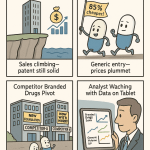
The Market Impact: The entry of the generic was swift and brutal. As is typical, the brand’s sales plummeted. In the face of Teva’s generic, Protonix sales fell by a staggering 80% in 2008.36
The Verdict: The gamble failed. In April 2010, a federal jury upheld the validity of the Protonix patent and found that Teva and Sun had infringed it.5 This verdict left the generic companies liable for the massive profits Wyeth had lost due to their premature market entry.
The Consequence: After years of further legal wrangling over the amount of damages, the parties reached a settlement in June 2013. Teva and Sun agreed to pay a combined $2.15 billion to Pfizer and its partner Takeda—one of the largest patent infringement settlements in pharmaceutical history.5 As part of the settlement, both companies had to formally admit that their sales had infringed the valid patent.6
The Protonix case is a stark illustration of the existential financial risk of an at-risk launch. It demonstrates that even a strong internal conviction in a patent’s weakness is no defense against a contrary court ruling. The potential damages are not a theoretical risk but a tangible threat capable of inflicting a multi-billion-dollar blow to a company’s balance sheet, making the at-risk launch the ultimate high-stakes gamble in the pharmaceutical industry.
C. Market Whiplash: Stock Price Volatility and Investor Confidence
Beyond the direct costs of litigation and the potential for massive damages, there is another potent, hidden financial risk: the immediate and often unforgiving judgment of the stock market. For publicly traded companies, patent litigation is not a background legal process; it is a series of material events that can trigger significant stock price volatility and erode investor confidence.2
Event-study analyses of pharmaceutical patent litigation have quantified this impact with precision. The market reacts swiftly and predictably to court decisions, rewarding winners and punishing losers in real-time:
When a brand-name firm wins a PIV court decision, its stock value rises by an average of approximately 2.1%, while the challenging generic firm’s value falls by an average of 1.6%.7
Conversely, when a brand-name firm loses, its value falls by an average of 2.4%, while the victorious generic’s value rises by an average of 3.1%.7
These movements reflect the market’s understanding of the enormous financial stakes involved. The asymmetry in these stakes is profound. One comprehensive study estimated that the average brand firm’s financial stake in a PIV case is $4.3 billion in potential revenue preservation. For the average generic firm, the stake—the potential profit from a successful challenge—is $204.3 million.7 The brand is defending a kingdom; the generic is fighting for a foothold.
This market reaction constitutes a significant hidden risk for the challenger. The very announcement of a PIV filing against a key product, or any subsequent negative ruling in the litigation, can act as a leading indicator of risk for investors. This can trigger a sell-off, depress the company’s valuation, make it more difficult and expensive to raise capital for ongoing operations (including the litigation itself), and attract the attention of short-sellers looking to profit from the uncertainty. This market volatility is a risk independent of the final legal outcome. It is a weapon that the larger, more financially stable brand-name company, with its diversified portfolio, can typically weather far more easily than the smaller challenger, whose fortunes may be heavily tied to the outcome of a single case. Managing this market perception and investor relations becomes a critical, and often costly, part of the overall battle.
IV. The Hidden Battlefield: Incumbent Retaliation and Operational Strain
The most sophisticated brand-name companies understand that patent defense is not limited to the courtroom. It is a continuous, strategic campaign waged on multiple fronts, employing a playbook of tactics designed to deter, delay, and devalue a challenger’s efforts. These retaliatory strategies, combined with the immense internal strain of litigation, constitute a hidden battlefield where many patent challenges are won or lost long before a judge ever rules.
A. The Innovator’s Retaliation Playbook
Innovator companies have developed a formidable arsenal of defensive strategies that extend far beyond simply arguing the merits of a single patent. These tactics are designed to transform a straightforward legal dispute into a grueling war of attrition.
“Patent Thickets”: Drowning Challengers in Complexity and Cost
One of the most effective defensive strategies is the creation of a “patent thicket”.8 This involves filing and accumulating dozens, or even hundreds, of secondary patents around a single blockbuster drug. These patents typically do not cover the core active ingredient but instead protect peripheral features: different formulations (e.g., extended-release versions), specific methods of use for particular patient populations, manufacturing processes, or even drug delivery devices.8
The strategic purpose of a patent thicket is not necessarily for every individual patent to be ironclad. Rather, the goal is to create a dense and overlapping web of intellectual property that exponentially increases the cost, complexity, and timeline of any potential challenge.1 Each additional patent represents another legal hurdle that a generic or biosimilar competitor must litigate and invalidate, turning a single lawsuit into a dozen or more. This transforms legal protection into a powerful economic deterrent, making it financially prohibitive for many would-be challengers to even attempt to clear the entire thicket.1
Expert Quote: “The study authors maintain the increased use of continuation patents makes it costlier and more time-consuming for would-be generic rivals to file patent challenges. Although they noted that continuation patents are typically invalidated at a higher rate than patents for active ingredients, lawsuits filed by brand-name drug companies can delay generic drug approvals for 30 months, even if they later fail.” 40
The quintessential example of this strategy is AbbVie’s defense of its mega-blockbuster drug, Humira (adalimumab). AbbVie constructed a formidable patent estate of over 100 patents around Humira, covering not just the biologic molecule itself but also numerous formulations, manufacturing methods, and indications.8 This thicket was instrumental in delaying the launch of biosimilar competitors in the United States until 2023, nearly seven years after the primary patent on the molecule expired and years after biosimilars had become available in Europe.1
“Authorized Generics”: Undermining the Challenger’s Reward
Even when a challenger successfully navigates the patent thicket, the brand-name company holds another powerful retaliatory weapon: the “authorized generic” (AG).41 An AG is the brand-name drug, produced by the innovator company itself or a licensed partner, but packaged and sold as a generic.42 Because it is the identical product covered by the original NDA, an AG does not require an ANDA and can be launched at any time, including during the first-filing generic’s coveted 180-day exclusivity period.41
The launch of an AG during this period is a devastatingly effective counter-move. It immediately introduces a second generic competitor into the market, shattering the first-filer’s temporary duopoly and triggering a more rapid price decline.41 The financial impact is severe. A 2011 Federal Trade Commission (FTC) report found that the presence of an AG during the 180-day exclusivity period reduces the first-filing generic’s revenues by an average of
40% to 52%.9 This tactic fundamentally devalues the prize that incentivized the risky and expensive patent challenge in the first place, serving as a powerful deterrent to future challengers. The threat of launching an AG can also be used as a potent bargaining chip in settlement negotiations.9
“Product Hopping”: Moving the Goalposts
“Product hopping” (also known as “evergreening”) is a more subtle but equally effective strategy to thwart generic competition.38 This tactic involves the brand company making a minor modification to its drug shortly before the original patent expires—such as switching from a tablet to a capsule, changing the dosage, or creating an extended-release formulation—and then obtaining new patent protection on this trivial change.39 The brand then aggressively markets the “new and improved” version to doctors and patients, often with the goal of transitioning the entire market to the new product before the generic version of the original drug can launch. This can effectively destroy the market for the generic competitor, leaving it with a product that doctors are no longer prescribing and pharmacies are no longer stocking.45
These retaliation strategies reveal a critical truth: brand-name companies view patent defense as a holistic war of attrition, not a series of isolated legal skirmishes. The patent thicket raises the cost of entry. The authorized generic devalues the potential reward. Product hopping can make the reward obsolete entirely. A challenger might “win” the legal battle by invalidating a key patent, only to find that the financial prize has been strategically diminished or moved out of reach. This reality means that a successful challenge requires not just a brilliant legal strategy focused on the patent’s merits, but a comprehensive business strategy that anticipates, models, and prepares for the full range of the incumbent’s retaliatory playbook.
B. The Operational Quagmire: The Internal Costs of War
One of the most insidious and frequently underestimated risks of challenging a major pharmaceutical patent is the immense internal operational strain it places on the challenger’s organization. This is a cost that never appears on a legal invoice but can be profoundly damaging to the company’s long-term health and innovative capacity.
A high-stakes patent lawsuit is not an affair fought solely by outside counsel. It is an all-consuming process that demands a significant and sustained commitment of time and attention from the company’s most valuable internal resources.2 Senior executives are pulled into strategic planning sessions and settlement negotiations. The in-house legal team is often stretched to its limits managing the complex litigation.
Most critically, the lawsuit diverts the company’s top scientific talent—the very inventors and researchers who developed the generic product and who are essential for developing the company’s future pipeline.2 These key personnel are required to spend countless hours assisting with discovery, preparing for and sitting for depositions, and helping outside counsel understand the complex science at the heart of the case.46
This diversion creates a massive and often unquantified opportunity cost. Every hour a lead formulation scientist spends in a deposition is an hour not spent working on the next difficult-to-formulate generic product.1 The constant pressure and distraction of litigation can stifle creativity and lead to a more risk-averse corporate culture, where resources and focus are shifted from innovation to defense.1 Over the long term, this can create a vicious cycle: the high cost and operational drain of litigation diminishes the company’s R&D capacity, leading to a weaker future product pipeline and making the company even more reliant on the success of its current challenges.1 This internal attrition is a hidden risk that can hollow out a company’s innovative core, even if it ultimately wins the legal battle.
V. The Settlement Paradox: When a Win Becomes a New Risk
In the grueling war of pharmaceutical patent litigation, the vast majority of battles do not end with a final court verdict. Instead, they conclude with a negotiated truce: a settlement agreement. While a settlement can offer a welcome escape from the crippling costs and uncertainty of a trial, it is not a risk-free harbor. The very act of settling, particularly the terms of the agreement, can introduce an entirely new and complex set of legal and financial risks, primarily from the watchful eyes of antitrust regulators.
A. The Allure of the Deal: Why Most Cases Settle
Despite the powerful incentives to litigate to a final decision—the brand’s desire to protect its monopoly and the generic’s quest for 180-day exclusivity—the economic realities of the conflict push most parties toward settlement. Data from 2023 shows that 40% of all patent litigation cases were settled before reaching trial.48 The rationale is compelling for both sides.
Litigation is inherently unpredictable. An unfavorable court decision can have devastating consequences for either party’s market valuation and future prospects.39 A settlement allows both the brand and the generic to mitigate this “all-or-nothing” risk. For the generic challenger, a settlement can provide a guaranteed market entry date, albeit later than it might have achieved through a court victory, thus securing a predictable return on its investment without the risk of a total loss.49 For the brand-name incumbent, a settlement provides a predictable end date to its monopoly, allowing it to plan for the eventual revenue decline and manage investor expectations, which is often preferable to the risk of an immediate and unexpected loss of exclusivity from a court decision.49 In essence, a settlement allows the two parties to share the monopoly profits for a defined period, an outcome that is often more economically rational for both than a winner-take-all fight to the death.50
B. Navigating the Antitrust Minefield: The Ghost of FTC v. Actavis
The greatest hidden risk in settling a pharmaceutical patent case is the threat of antitrust scrutiny from the Federal Trade Commission (FTC) and private plaintiffs. For years, the legality of these settlements was a hotly debated issue, culminating in a landmark Supreme Court decision that fundamentally reshaped the landscape.
The Pre-Actavis Era and the “Scope of the Patent” Test
Prior to 2013, many federal courts applied a legal standard known as the “scope of the patent” test to evaluate patent settlements.10 Under this permissive standard, a settlement was generally considered immune from antitrust challenge as long as it did not restrict competition beyond the exclusionary scope of the patent itself. In practice, this meant that if a brand-name company paid a generic challenger to delay its market entry until a date before the patent’s expiration, the agreement was typically deemed lawful.10 This approach made it very difficult for the FTC to successfully challenge what it viewed as anticompetitive “pay-for-delay” agreements.
The FTC v. Actavis Revolution (2013)
The Supreme Court’s 2013 decision in FTC v. Actavis, Inc. was a watershed moment that dramatically altered the legal calculus.51 The Court rejected the “scope of the patent” test, reasoning that it was not a sufficient shield for potentially anticompetitive conduct. The justices recognized that a large, unexplained payment from a brand to a generic could be a disguised way for the two to share the monopoly profits that would be lost if they actually competed.10
Instead of the permissive “scope of the patent” test, the Court ruled that these “reverse payment” or “pay-for-delay” settlements must be evaluated under the traditional antitrust “rule of reason”.10 This standard requires a court to conduct a detailed analysis of the agreement’s specific facts, its potential anticompetitive effects, and any procompetitive justifications to determine whether it unreasonably restrains trade.52 The Court suggested that a large payment from the brand to the generic, in exchange for a delay in generic entry, could be a strong indicator of an unlawful agreement, effectively shifting the burden to the settling parties to justify the payment.51
The Post-Actavis Landscape: The Rise of “Possible Compensation”
The Actavis decision empowered the FTC to more aggressively challenge patent settlements, and the agency has made it a top enforcement priority.52 In response, the pharmaceutical industry has adapted its settlement strategies. As detailed in a series of FTC reports monitoring agreements filed under the Medicare Modernization Act (MMA), explicit and large cash payments from brands to generics have become far less common.11
However, the FTC’s scrutiny has evolved to focus on more complex and subtle forms of “possible compensation” that can still function as an unlawful reverse payment.11 Recent FTC reports highlight several increasingly prevalent settlement terms that are now under the microscope 55:
No-AG Agreements: A commitment by the brand not to launch an authorized generic to compete with the settling first-filer. The FTC views the value of this promise—the preservation of the first-filer’s highly profitable 180-day exclusivity—as a significant transfer of value that can be anticompetitive.53
Side Deals: The settlement of the patent litigation is often accompanied by a separate business agreement, such as a co-promotion, manufacturing, or supply deal.53 The FTC closely examines these “side deals” to determine if their terms are commercially unjustified and are being used to funnel a hidden payment to the generic company.53
Quantity Restrictions: An increasingly common term is a restriction on the volume of generic product that the challenger can sell for a period of time after launch. The FTC has expressed concern that these restrictions may act as a de facto market allocation scheme, allowing the brand and generic to share monopoly profits at the expense of consumers.11
The evolution from explicit cash payments to these more complex and nuanced settlement terms demonstrates that the regulatory risk has not been eliminated; it has simply become more sophisticated. For a challenger, this creates a significant paradox. After spending millions of dollars on litigation and successfully pressuring the brand-name company to the negotiating table, the resulting settlement agreement itself becomes a new, long-tail legal and financial risk. The agreement could be challenged by the FTC or private plaintiffs years after it is signed, potentially leading to further litigation, fines, and the unwinding of the deal. The due diligence required to craft an antitrust-compliant settlement is now a major hidden cost and risk factor in its own right, requiring specialized antitrust counsel and complex economic modeling to justify the commercial reasonableness of every term in the agreement.
VI. The Challenger’s Playbook: Strategic Due Diligence and Risk Mitigation
Navigating the treacherous landscape of pharmaceutical patent challenges requires more than just legal acumen; it demands a holistic, proactive, and data-driven business strategy. The companies that succeed are those that meticulously assess risks, identify genuine patent vulnerabilities, and leverage competitive intelligence to gain a strategic edge. This playbook outlines the key elements of a resilient challenge strategy, designed to mitigate the hidden risks and maximize the probability of a successful market entry.
A. Picking the Right Fight: Identifying Vulnerable Patents
The foundation of any successful patent challenge is the selection of the right target. The most commercially attractive drug is not always the best candidate for a challenge; the ideal target is a drug protected by a genuinely weak or vulnerable patent. This requires a deep and rigorous pre-challenge due diligence process that goes far beyond a surface-level review.56
A comprehensive due diligence process should include several critical components:
Exhaustive Prior Art Search: The search for prior art—any evidence that the invention was already publicly known before the patent’s filing date—must be global and exhaustive. Under the America Invents Act, a scientific paper published in another country or a product sold anywhere in the world can be used to invalidate a U.S. patent on the grounds of novelty (lack of newness) or obviousness.19 This search is the primary tool for building a strong invalidity case.56
Prosecution History Analysis: A meticulous review of the patent’s “file wrapper” or “prosecution history” is essential. This is the complete record of all correspondence between the patent applicant and the USPTO examiner during the patent’s examination.19 This history often contains arguments, amendments, or admissions made by the applicant to overcome the examiner’s rejections. These statements can be used later in litigation to argue for a narrow interpretation of the patent’s claims or to expose inconsistencies that weaken the patent’s validity.19
Assessing Enablement and Written Description: A patent must adequately describe the invention and provide enough detail to enable a person of ordinary skill in the art (POSITA) to make and use the invention without “undue experimentation”.19 This requirement has become a particularly potent weapon for challenging overly broad patents, especially in the field of biologics.
Case Study: Amgen v. Sanofi and the Enablement Weapon
The Supreme Court’s unanimous 2023 decision in Amgen v. Sanofi has fundamentally elevated the importance of the enablement standard in patent litigation strategy.58 The case involved Amgen’s patents claiming an entire genus of antibodies that could perform a specific function: binding to the PCSK9 protein to lower cholesterol. While Amgen’s patents described the amino acid sequences for 26 specific antibodies, they claimed a potentially vast class of millions of other antibodies defined only by their function.58
The Supreme Court affirmed the lower courts’ invalidation of the patents, holding that they were not enabled.59 The Court’s reasoning was grounded in a simple but powerful principle: “The more one claims, the more one must enable”.59 Because Amgen had not provided a roadmap for a skilled scientist to reliably create the full scope of the claimed antibodies without engaging in “painstaking experimentation,” the broad claims were invalid.60 The
Amgen decision serves as a crucial lesson for all challengers. It has armed them, particularly in the unpredictable arts of biotechnology and biologics, with a powerful legal argument to invalidate overly broad, functionally-defined claims. As a result, a rigorous assessment of a patent’s enablement has become an indispensable component of modern due diligence.
B. Leveraging Competitive Intelligence for a Strategic Edge
A modern patent challenge should not be conducted in a vacuum. It must be informed by a continuous and sophisticated competitive intelligence operation that transforms raw data into actionable strategic foresight. This involves understanding not just the target patent, but the entire competitive, legal, and regulatory landscape surrounding the drug.
Data and analytics platforms have become indispensable tools in this process. A platform like DrugPatentWatch provides an integrated and comprehensive view of the pharmaceutical patent ecosystem, allowing companies to mitigate risk and identify opportunities more effectively. By consolidating disparate data sources into a single, analyzable platform, it enables a more strategic approach to planning a patent challenge.61
A challenger can use a platform like DrugPatentWatch to:
Identify and Prioritize Opportunities: Systematically screen the entire landscape of approved drugs to identify high-value targets with approaching patent expirations or those protected by secondary patents that may be vulnerable to challenge. By analyzing data on patent expiration dates, regulatory exclusivities, and sales figures, companies can prioritize their R&D and legal resources on the opportunities with the highest potential return on investment.61
Assess the Competitive Landscape: The platform allows a company to monitor all PIV filings against a particular drug in real-time. This intelligence is critical for determining how crowded a potential challenge might be. Knowing the number and identity of other generic filers can inform the decision of whether to proceed with a challenge, seek a partnership with another challenger, or avoid the race altogether.61
Inform Risk Assessment and Litigation Strategy: A robust competitive intelligence platform can provide historical litigation data associated with a specific patent, the brand-name company, or even the presiding judge. Analyzing past outcomes, settlement patterns, and judicial tendencies in a particular district court can help a challenger build more accurate predictive models, better forecast litigation costs, and tailor its legal strategy to the specific circumstances of the case.61
C. Building a Resilient Challenge Strategy
Ultimately, surviving the multi-front war of a patent challenge requires a holistic and resilient strategy that integrates legal, financial, and operational planning from the very beginning.
Key best practices for building such a strategy include:
Integrated Teams: The decision to challenge a patent cannot be made in a legal silo. It requires the seamless integration of the company’s legal, regulatory, scientific, and commercial teams from the earliest stages of consideration.19 The scientists must validate the technical weaknesses of the patent, the regulatory team must map the exclusivity landscape to ensure a clear path to market, the commercial team must model the financial risks and rewards (including potential retaliation), and the legal team must orchestrate the overall litigation strategy.
Comprehensive Contingency Planning: A challenger must plan for every possible outcome and eventuality. This includes developing detailed contingency plans for an early court victory, a protracted legal battle, a negative ruling at the district court level, an aggressive retaliatory move by the brand (such as an AG launch), or an FTC inquiry into a potential settlement.56 Each scenario should have a pre-defined response plan to avoid reactive and potentially disastrous decision-making under pressure.
Securing a Financial War Chest: A patent challenge is a war of financial attrition. A challenger must be adequately capitalized not only to fund the multi-million-dollar litigation itself but also to withstand the associated stock price volatility and potential delays in revenue. Entering such a conflict without a robust financial foundation is a recipe for failure, as a well-funded incumbent can often win simply by outlasting its less-capitalized opponent.
VII. Conclusion: Recalibrating the Risk of the Challenge
The decision to challenge a Big Pharma patent is one of the most consequential and high-risk gambits in modern business. The conventional view of this conflict as a straightforward legal dispute with a binary outcome is a dangerous oversimplification. As this report has detailed, the reality is a multi-dimensional strategic war, fraught with a complex web of hidden risks that extend far beyond the courtroom.
The financial risks are profound, encompassing not only the multi-million-dollar direct costs of litigation but also the existential threat of a failed “at-risk” launch and the punishing volatility inflicted by the public markets. The strategic risks are equally formidable, as challengers must contend with a sophisticated playbook of incumbent retaliation—from impenetrable patent thickets to market-destroying authorized generics—designed to render even a legal victory pyrrhic. Operationally, the strain of these protracted battles can divert critical resources and talent away from a company’s core mission of innovation, jeopardizing its future pipeline. Even the seemingly safe harbor of a settlement is a paradox, opening the door to a new and unpredictable front of antitrust scrutiny that can turn a negotiated peace into a prolonged regulatory war.
In this new paradigm, the successful challenger can no longer be merely a skilled litigator. They must be a master strategist, a savvy financial manager, a meticulous regulator, and a forward-thinking innovator. Success is not defined by a single favorable court ruling but by the ability to achieve profitable and timely market entry after navigating this gauntlet of financial, strategic, and operational hazards. This requires a fundamental recalibration of how risk is assessed and managed. It demands integrated, cross-functional teams, deep competitive intelligence powered by platforms like DrugPatentWatch, and comprehensive contingency planning for every possible outcome.
The path of the patent challenger is undeniably perilous. However, for those who possess the foresight to understand the full spectrum of hidden risks and the strategic discipline to prepare for them, the rewards remain immense. Tilting the odds in this high-stakes dilemma begins with the recognition that the battle is not just over the patent; it is for the market itself.
VIII. Key Takeaways
Asymmetric Warfare: Patent litigation is an asymmetric conflict. Brand-name firms defend multi-billion-dollar revenue streams and can justify enormous legal spending, while generic challengers risk catastrophic financial loss for a chance at a highly profitable but temporary market position.
The Dual-Front Battle: The existence of two litigation forums—U.S. District Courts and the USPTO’s Patent Trial and Appeal Board (PTAB)—with different rules and standards of proof creates a complex, dual-front war that increases costs and unpredictability for both sides.
Litigation Costs as a Barrier: The direct costs of a high-stakes patent challenge, often exceeding $4 million, function as a significant financial barrier to entry, potentially limiting challenges to only the best-capitalized generic firms and the most lucrative drugs.
“At-Risk” Launch is a Bet-the-Company Move: Launching a generic product before all patent litigation is resolved carries the risk of massive damages that can be multiples of the generic’s earned profits, as exemplified by the $2.15 billion Protonix settlement.
Market Volatility is a Weapon: Litigation news directly impacts stock prices, creating significant financial risk for publicly traded challengers. This market volatility can be more easily weathered by larger, diversified incumbents.
Incumbent Retaliation Devalues the Prize: Brand-name firms use a playbook of strategic retaliation—including “patent thickets,” “authorized generics,” and “product hopping”—to increase the cost of a challenge and diminish the financial reward of a victory.
Operational Drain Stifles Innovation: High-stakes litigation diverts key scientific and executive talent from R&D to legal defense, creating a significant opportunity cost and potentially weakening a company’s future innovation pipeline.
Settlements Carry Antitrust Risk: Following the Supreme Court’s FTC v. Actavis decision, patent settlements face intense antitrust scrutiny. “Pay-for-delay” schemes have been replaced by complex terms like “quantity restrictions” and “no-AG” agreements, which the FTC actively investigates as potential antitrust violations.
Due Diligence is Paramount: A successful challenge starts with rigorous due diligence to identify genuinely weak patents. The Supreme Court’s Amgen v. Sanofi decision has made the “enablement” standard a powerful tool for invalidating overly broad biologic patents.
Competitive Intelligence is a Strategic Imperative: Leveraging data platforms like DrugPatentWatch to analyze the patent, regulatory, and competitive landscape is essential for identifying opportunities, assessing risks, and formulating a resilient challenge strategy.
IX. Frequently Asked Questions (FAQ)
1. What is the single biggest hidden financial risk of an “at-risk” launch?
The biggest hidden financial risk is that damages are not based on the generic’s profits but on the brand-name company’s lost profits. Because the brand sells the drug at a much higher monopoly price, its lost profits can be multiples of what the generic company earned. As seen in the Protonix case, this can lead to damages in the billions of dollars, far exceeding the revenue generated by the at-risk launch and posing an existential threat to the challenger.
2. How has the FTC v. Actavis Supreme Court decision changed how companies should approach settlement talks?
FTC v. Actavis fundamentally changed the risk calculus of settlements. Before, any deal that allowed generic entry before patent expiration was largely considered safe. Now, any transfer of value from the brand to the generic to delay entry is subject to intense antitrust scrutiny. Companies must avoid not only explicit cash payments (“pay-for-delay”) but also more subtle forms of compensation like “no-AG” commitments or restrictive side deals. Any settlement must be structured with a clear, procompetitive justification and be prepared to withstand an FTC investigation, making specialized antitrust counsel essential during negotiations.
3. Why is the Inter Partes Review (IPR) process at the PTAB often considered more favorable for patent challengers than district court?
IPRs are often more favorable for three key reasons:
Lower Burden of Proof: Challengers only need to prove a patent is invalid by a “preponderance of the evidence,” which is a lower standard than the “clear and convincing evidence” required in district court.
No Presumption of Validity: Unlike in court, a patent is not presumed to be valid at the PTAB, leveling the playing field.
Expert Adjudicators: IPRs are decided by a panel of technically expert Administrative Patent Judges, who may be more receptive to complex scientific arguments for invalidity than a lay jury or a generalist judge.
4. Beyond legal fees, what is the most significant operational risk a company faces during a major patent challenge?
The most significant operational risk is the diversion of key scientific and R&D personnel. A patent lawsuit requires substantial time and focus from the very scientists who developed the challenging product and are responsible for the company’s future pipeline. This creates a massive opportunity cost, as their time is spent on depositions and legal support instead of innovation. This can lead to delays in other R&D projects and a long-term weakening of the company’s innovative capacity.
5. How can a smaller generic company realistically challenge a “patent thicket” created by a large pharmaceutical company?
Challenging a patent thicket head-on by litigating every single patent is often financially impossible. A more realistic strategy involves a multi-pronged approach:
Strategic Targeting: Conduct intensive due diligence to identify the one or two “keystone” patents that provide the most critical protection and focus legal resources on invalidating them.
Leverage IPRs: Use the faster, cheaper IPR process at the PTAB to challenge multiple secondary patents simultaneously or sequentially, putting broad pressure on the brand’s portfolio.
Design-Arounds: Invest in R&D to design a generic product that avoids infringing on the claims of the secondary patents (e.g., by using a different formulation or manufacturing process), thereby making them irrelevant.
Competitive Intelligence: Use platforms like DrugPatentWatch to monitor when other generics are challenging different patents in the thicket, potentially benefiting from their legal victories without incurring the full cost.
Strategic behavior and entry deterrence by branded drug firms: the case of authorized generic drugs – PubMed, accessed August 15, 2025, https://pubmed.ncbi.nlm.nih.gov/39316276/
The Impact of R&D Intensity on the Innovation Performance of Artificial Intelligence Enterprises-Based on the Moderating Effect of Patent Portfolio – MDPI, accessed August 15, 2025, https://www.mdpi.com/2071-1050/13/1/328
The Impact of Teva Pharmaceuticals v. Sandoz on Patent Claim Construction in the District Courts – YouTube, accessed August 15, 2025, https://www.youtube.com/watch?v=3En0KT_xxQ0