Pfizer’s annual report for 2025 lists four legal outcomes for generic Eliquis in the United States. Each outcome has a different entry date, from immediate entry to 2031. [1] Most executive dashboards show one date. A dashboard with one date hides the other three outcomes.
This guide shows how to read pharmaceutical patent, exclusivity, and litigation data as a set of clocks. It covers the legal rules, four product case studies, three recent changes in enforcement and law, and a method for building a competitive intelligence routine. The data is current to October 8, 2026.
We refer to DrugPatentWatch, a drug patent and generic-entry database, in the monitoring sections. DrugPatentWatch says it links regulatory filings to litigation records in district courts. [2] Use a database to find records. Confirm each legal fact in the primary document.
The Short Answer: What a Pharma Executive Needs to Know About Patent Strategy
An executive needs four tools. The first is a date table that shows every legal route to generic or biosimilar entry for each product. The second is a watch list of events that can move those dates. The third is a regular audit of Orange Book listings and settlement terms. The fourth is a model of how price rules, such as Medicare negotiation, change the value of each year of protection.
Patents come from the USPTO. Exclusivity comes from FDA. The two can run together or apart. [3]
One expiration date per drug is not enough. Court rulings and settlements create more than one entry date.
Regulators and courts changed the rules for Orange Book listings and skinny labels in 2024, 2025, and 2026.
The number of generic entrants matters as much as the first entry date. [15]
What Is Patent and IP Competitive Intelligence in Pharma?
In this guide, IP competitive intelligence means the routine collection and analysis of patent, exclusivity, litigation, regulatory, and transaction records to predict when and how competitors can enter a market. This is the working definition of this guide. It is not a formal industry standard.
The Eight Findings That Matter
Each finding below stands alone. Figures marked “calculated” are our own arithmetic on the cited dates and counts. They are not statistics reported by the source.
Pfizer’s fiscal 2025 Form 10-K gives four legal outcomes for US generic Eliquis entry: April 1, 2028 for settled generic companies; November 21, 2026 if the formulation patent falls; immediate entry if both listed patents fall; and the 2031 formulation-patent expiry for three generic companies that lost in court. [1] As of October 8, 2026, 541 days remain until April 1, 2028 (calculated).
A settlement announced in late December 2015 allowed unlimited generic Revlimid sales from January 31, 2026. [4] That date is about 14 to 15 months before the April 2027 expiry of the last Orange Book patent for the drug (calculated from [4]). Generic sales ran under volume limits for about 47 months, from March 2022 (calculated). [4][5]
I-MAK counted 247 US patent applications on Humira and 76 at the European Patent Office. [6][7] That is 3.25 times as many US filings (calculated). I-MAK reports that 89% of the US applications came after FDA approval, or about 220 applications (calculated). [6]
The first US Humira biosimilar launched on January 31, 2023, more than six years after FDA approved it in 2016 (calculated). [8]
FDA approved subcutaneous Keytruda Qlex on September 19, 2025, 148 days after Halozyme sued Merck over 15 patents on April 24, 2025 (calculated). [9] Infused Keytruda is due to lose patent protection in 2028. [10]
The FTC sent three rounds of warning letters on Orange Book listings: November 2023, April 2024, and May 2025. The May 2025 round disputed more than 200 patents across 17 brand-name products. [11] On December 20, 2024, the Federal Circuit held in Teva v. Amneal that a listed patent must claim the drug. [12]
On June 4, 2026, the Supreme Court ruled 9-0 in Hikma v. Amarin that Amarin had not plausibly alleged that Hikma induced infringement through a skinny label and public statements. [13]
Medicare negotiated prices for the first 10 drugs took effect on January 1, 2026. Prices for 15 more drugs take effect in 2027, and for 15 more in 2028. [14]
Methodology: What We Analyzed and What We Calculated
What Data Did We Use?
We used public records published through October 8, 2026: SEC filings, company press releases, FDA pages, law-firm case summaries, and nonprofit reports. We chose four products because each has public dates in a filing, a press release, or contemporaneous reporting. The four products show four delay methods: court-confirmed patents with settled entry (Eliquis), settlement-fixed entry with volume caps (Revlimid), a large patent estate (Humira), and a formulation switch (Keytruda).
How Did We Calculate the Figures?
Day and Month Counts
We counted calendar days between two stated dates. We converted days to months by dividing by 30.44 and rounding. Where a source gives only a month or year, we state a range.
Ratios and Percentages
We divided reported counts by reported counts. We multiplied a reported percentage by a reported total only when both came from the same source.
What Are the Limits of This Analysis?
We did not review court dockets. For the 2026 Supreme Court decision, we relied on law-firm summaries and did not read the opinion itself. I-MAK is an advocacy group, and it counts patent applications, not enforceable patents. Dates can change after October 8, 2026. Check each date before you act on it.
How Do Patents and FDA Exclusivity Work Together?
What Is the Difference Between a Patent and FDA Exclusivity?
A patent comes from the USPTO and can claim many parts of a drug. Exclusivity is a marketing right that FDA grants when it approves a drug. Exclusivity can run at the same time as a patent, but it does not have to. [3]
Which FDA Exclusivities Matter Most for Generic Entry?
Table 1 lists the main protections that a date table must include.
Protection
Length
Notes
Source
New chemical entity (NCE) exclusivity
5 years
A challenger with a Paragraph IV certification can file at year 4
[17]
New clinical investigation exclusivity
3 years
For a change supported by new clinical studies
[3]
Orphan drug exclusivity
7 years
For designated orphan uses
[3]
Pediatric exclusivity
6 months
Added to existing patents and exclusivity
[3]
180-day exclusivity
180 days
For generic applicants who challenge patents
[3][19]
Biologic reference product exclusivity
12 years
A biosimilar application cannot be submitted until year 4
[20]
Patent term extension
Up to 5 years
Remaining term after approval cannot exceed 14 years
[21]
NCE Exclusivity and the Year-4 Filing Date
NCE exclusivity blocks generic filings for five years. A generic company that certifies a listed patent is invalid or not infringed can file after four years. [17] A Paragraph IV certification states that a listed patent is invalid or will not be infringed. [19] If the brand company sues in time, FDA approval stays for 30 months, counted from the end of the five-year period for an NCE. [18] That sets a ceiling of 7.5 years after approval (calculated).
Orphan, Pediatric, and 180-Day Exclusivity
Orphan exclusivity lasts seven years. Pediatric exclusivity adds six months to existing patents and exclusivity. The first generic applicants that challenge patents can earn 180 days of exclusivity. [3]
Biologic Reference Product Exclusivity
FDA cannot approve a biosimilar until 12 years after the reference product’s first licensure. A biosimilar application cannot be submitted until four years after first licensure. [20] There is no 30-month stay under the biologics law. [19]
How Long Does Protection Last After FDA Approval?
Patent Term Extension: The 5-Year and 14-Year Limits
The USPTO can extend a patent to restore time lost in FDA review. The extension equals half of the clinical testing phase plus the full approval phase. [22] It cannot exceed five years. The patent’s remaining term after approval, plus the extension, cannot exceed 14 years. [21] The applicant must file within 60 days of approval. [22]
Illustration (our arithmetic, not a real product): a patent with 11 years left at approval can gain at most 3 years, because 11 plus 3 equals 14.
The Four Clocks Framework: An Original Taxonomy of Generic-Entry Risk
What Are the Four Clocks?
This framework is our own classification. It is not an industry standard. It sorts every date that can decide market entry into four groups.
Clock
What starts it
What stops it
Where the record sits
Example in this guide
Statutory
Patent issue and the 20-year term, plus any extension
Expiry or invalidation
USPTO and Orange Book [21]
Keytruda, 2028 [10]
Regulatory
FDA approval
End of an exclusivity period
Orange Book and Purple Book [3][20]
NCE and orphan periods
Litigation
Paragraph IV notice, lawsuit, or PTAB petition
Court decision, appeal, or settlement
Dockets, PTAB records, SEC filings [1]
Eliquis formulation patent
Contractual
Settlement or license
The agreed date or event
Press releases and SEC filings [4]
Revlimid volume-limited license
Why Does One Expiration Date Per Drug Mislead?
The Orange Book lists patents and exclusivity. It contains no litigation data. [23] A date from the Orange Book therefore ignores the litigation and contractual clocks. Those two clocks decided the entry dates for Eliquis and Revlimid, as the next sections show.
Eliquis Case Study: Why One Product Has Four Entry Outcomes
What Does Pfizer’s 10-K Say About Generic Eliquis Entry?
In 2021, the Bristol-Myers Squibb-Pfizer Alliance said the Federal Circuit had upheld its Eliquis patents. The Alliance stated that the earliest generic launch was April 1, 2028, “subject to additional appeals and challenges.” [24] Pfizer’s fiscal 2025 10-K repeats the April 1, 2028 date for generic companies that settled. It says three generic companies that kept litigating cannot launch until the 2031 expiry of the formulation patent. [1]
The 10-K also names two paths to earlier entry. If the formulation patent is held invalid or not infringed in future litigation, settled generic companies and any successful future litigant could launch on November 21, 2026. If both patents fall, they could launch immediately. [1]
What Are the Eliquis Scenarios, Side by Side?
Scenario
Trigger
Entry date
Source
Base case
Settlements stay in force
April 1, 2028
[1]
Formulation patent falls
Invalid or not infringed, through appeal
November 21, 2026
[1]
Both patents fall
Both invalid or not infringed, through appeal
Immediately on the decision
[1]
Litigated-loss generics
Court ruled for the brand
2031 formulation patent expiry
[1]
Base Case: Settled Entry on April 1, 2028
From October 8, 2026, this date is 541 days away (calculated). A supply planner can use this date as the central case. The 10-K warns that Pfizer cannot predict the outcome of future litigation. [1]
Formulation Patent Falls: November 21, 2026
This date is 44 days from October 8, 2026 (calculated). It applies only if a court invalidates the formulation patent or finds it not infringed, through appeal. [1] It is not a forecast. The gap between this date and April 1, 2028 is 497 days, or about 16 months (calculated). That gap is the value of the formulation patent in time.
Both Patents Fall: Immediate Entry
If both patents fall, entry can begin on the day of the final decision. [1] No calendar date exists for this case. A watch list must track the case, not a date.
Litigated-Loss Generics: 2031
Three generic companies lost their cases and face the 2031 formulation-patent expiry. [1] Two generic groups can therefore face different dates for the same drug.
Revlimid vs. Humira: Two Ways to Delay Competition
How Did a Settlement Fix Revlimid’s Generic Entry Dates?
In its settlement with Natco, Celgene allowed generic lenalidomide before the April 2027 expiry of its last Orange Book patent. Natco received a volume-limited license starting March 2022 and an unlimited license starting January 31, 2026. The first-year volume limit was a mid-single-digit percentage of US capsules dispensed. The limit was not to exceed one-third in the last year of the limited license. [4] Teva launched the first generic on March 7 of that year. [5]
Calculated metrics: unlimited entry came about 14 to 15 months before the last Orange Book patent expired. The volume-limited period ran about 47 months, from March 2022 to January 31, 2026.
I-MAK reports that Celgene and Bristol Myers Squibb filed 206 patents on Revlimid and that 117 were granted. [25] I-MAK opposes broad patenting. Treat its counts as advocacy data and check them against the patent record.
How Did Humira’s Patent Estate Delay Biosimilars?
I-MAK counted 247 US patent applications on Humira. It reports that 89% were filed after the drug reached the market. [6] The European Patent Office received 76 applications. [7] In the US, Amgen’s Amjevita launched on January 31, 2023, and a deal with AbbVie gave it six months before other adalimumab biosimilars could launch. [8]
Humira’s First-Year Erosion
Humira earned $21.2 billion worldwide in 2022. [26] In the first quarter of 2023, AbbVie’s global Humira revenue fell more than 25%. The company’s then-CEO said AbbVie was “managing the erosion well” and that price drove much of the decline. [27]
What One Product Teaches About Patent Estates
Analysis: a large estate did not stop entry. It set the date and the terms. Amgen and AbbVie agreed on a launch window, and other biosimilars were expected to follow within months. [8]
How Do the Four Products Compare?
Product
Delay method
Key dates
Calculated metric
Source
Eliquis
Court-confirmed patents plus settlements
April 1, 2028; 2031
541 days from October 8, 2026 to April 1, 2028
[1][24]
Revlimid
Settlement dates and volume caps
March 2022; January 31, 2026; April 2027
About 47 months of limited entry
[4]
Humira
Large patent estate plus launch-date settlements
Approved 2016; launched January 31, 2023
More than 6 years; 247 US vs. 76 EPO filings
[6][7][8]
Keytruda
Formulation switch
Qlex approved September 19, 2025; infused patents end 2028
148 days from lawsuit to approval
[9][10]
Keytruda: What Happens When a Blockbuster Changes Its Formulation?
Why Did Merck Launch a Subcutaneous Keytruda?
FDA approved Keytruda Qlex on September 19, 2025 for 38 indications. [9] Infused Keytruda is due to lose patent protection in 2028. Merck expects 30% to 40% of Keytruda use to move to the subcutaneous form within about 18 months to two years. [10] Analysis: Merck is moving patients to a product with a different patent position before the first one expires.
What Is the Halozyme Dispute?
Halozyme sued Merck in the District of New Jersey on April 24, 2025. It alleged that Qlex infringes 15 patents on its MDASE technology. [9] Merck said its enzyme was developed independently and that any Halozyme patents covering it are invalid. [9]
The PTAB Track
Merck filed petitions for post-grant review against 14 other Halozyme patents. On May 12, 2026, the PTAB issued a final decision that invalidated US Patent 11,952,600. Halozyme disclaimed claims 5 to 7 of that patent. [9]
What a Competitive Intelligence Team Should Track Here
This dispute runs in three places: district court, the PTAB, and European courts. [9] A team that watches only the Orange Book sees none of it. Set one owner for each track.
How Are Orange Book Rules and FTC Enforcement Changing Patent Strategy?
What Did Teva v. Amneal Decide?
On December 20, 2024, the Federal Circuit held that a patent must claim the drug from the applicant’s approved application to be listed in the Orange Book. [12] Teva had listed nine unexpired patents for its ProAir HFA inhaler. The district court ordered them delisted, and the Federal Circuit affirmed. [12]
What Is the Timeline of FTC Orange Book Action?
Date
Event
Source
September 14, 2023
FTC policy statement on improper Orange Book listings
[28]
November 10, 2023
Warning letters to 10 companies
[28]
March 22, 2024
FTC amicus brief in Teva v. Amneal
[28]
April 30, 2024
Second round of letters to 10 companies; about 300 more patents challenged
[28][29]
December 20, 2024
Federal Circuit decision in Teva v. Amneal
[12]
May 21, 2025
Third round: more than 200 patents across 17 brand-name products
[11]
What Should Brand Teams Audit?
Analysis: run four checks on every listed patent. First, does the patent claim the active ingredient or the approved product? Second, did the FTC list it in a warning letter? Third, do the company’s court positions match its listing? Fourth, would a delisting change the 30-month stay for that product?
What Did Hikma v. Amarin Change for Skinny Labels?
What Did the Supreme Court Hold?
On June 4, 2026, a unanimous Court reversed the Federal Circuit. It held that Amarin did not plausibly allege that Hikma actively encouraged infringement. [13] Amarin pointed to statements and omissions in Hikma’s skinny label and to Hikma’s public statements. [30] The Court found an obvious alternative explanation for the public statements: compliance with the law or standard industry practice. [30]
Amarin argued that Hikma’s label included clinical results covering patented uses and called the product a generic equivalent. The Court rejected both arguments. [31] Silence about a patented use in a skinny label does not support an inducement claim. [13] The Court did not end inducement theories. Implicit encouragement can still count. [13]
What Does This Mean for Brand and Generic Strategy?
Analysis for brand companies: method-of-use patents now carry less weight against a carefully drafted skinny label. Plan for entry on unpatented uses. Analysis for generic companies: keep launch statements consistent with the carved-out label. The Court left room for claims based on active steps.
How Does Medicare Price Negotiation Change the Value of a Patent?
What Is the Negotiation Timeline?
Negotiated prices for the first 10 Part D drugs took effect on January 1, 2026. Prices for 15 more drugs, including Ozempic and Wegovy, take effect in 2027. In January 2026, CMS selected 15 Part B and Part D drugs for prices that take effect in 2028. [14] CMS estimated that the first 10 prices would have saved Medicare $6 billion, or 22%, in 2023. [14]
Why Do Patents Matter for Negotiation Eligibility?
The program targets high-spending single-source drugs that lack generic or biosimilar competition. [32] Analysis: a patent that delays generic entry also keeps a drug in the pool of negotiation-eligible products. Add a column for negotiation status to the date table.
How Much Does Generic Competition Cut Prices?
What Does FDA Data Show?
FDA analysis of products with first generic entry between 2015 and 2017: generic prices were 54% below the pre-competition brand price with two generic makers and 79% below with four. (U.S. Food and Drug Administration, 2019) [15]
Generic makers
Discount
Source
1
39%
[33]
2
54%
[15]
4
79%
[15]
6 or more
More than 95%
[16]
Why Does the Number of Entrants Matter as Much as the Date?
Analysis: the FDA data show an association, not proof of cause. Even so, they help explain why settlement terms matter. A volume cap, such as the Revlimid cap, limits how much each early entrant can sell. [4] A date table that records only the first entry date misses that effect.
How Do You Build a Patent and IP Competitive Intelligence Program?
Which Signals Should a Team Track?
Signal
Where it appears
What it tells you
Source
Paragraph IV notice and lawsuit
Company disclosures and dockets
A generic firm says a patent is invalid or not infringed; a timely suit can stay approval for 30 months. Notice letters typically arrive 60 to 90 days after the ANDA is filed.
[17][18]
Settlement or license
Press releases and SEC filings
Fixed entry dates and volume limits
[4]
PTAB petition and decision
PTAB records and company filings
A validity challenge outside district court
[9]
Annual and quarterly reports
10-K and 10-Q
Company-stated entry dates and alternative outcomes
[1]
Orange Book changes
FDA Orange Book
Which patents the brand says cover the drug, and any delisting
[12][23]
Price rules
CMS and FTC announcements
Negotiation selection and listing enforcement
[11][14]
What Review Cadence Works?
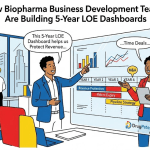
Analysis: use four cycles. Each week, check new filings and docket events. Each month, check Orange Book, Purple Book, and exclusivity changes. Each quarter, refresh the date table from 10-K and 10-Q language. Each year, audit the full portfolio and negotiation status.
Where Does DrugPatentWatch Fit?
The DrugPatentWatch blog notes that the Orange Book has no litigation data. [23] A database that links filings to litigation records can close that gap. [2] Use it to find the record, then read the filing, the court order, or the SEC document.
Primary Sources First
Cite the SEC filing before the news story. Cite the court order before the law-firm summary. Cite the FDA page before the blog.
Four Common Errors
Teams treat an Orange Book date as an entry date. They ignore settlement terms. They count patent applications as patents. They read a law-firm summary as if it were the opinion.
What This Means for Each Part of the Industry
What This Means for Brand Manufacturers
Audit every Orange Book listing against Teva v. Amneal. Build a formulation plan before the key patent expires, as Merck did. Expect more than one challenger.
What This Means for Generic and Biosimilar Developers
Read each brand company’s 10-K for stated alternatives, as the Eliquis 10-K shows. Use skinny labels with care after Hikma v. Amarin. Negotiate volume terms and dates together.
What This Means for Business Development and Investors
Value an asset by each legal route to entry, not by one date. Check the negotiation status of any target product. Ask which patents a court has tested.
What This Means for Supply Chain and Market Access Teams
Plan inventory around the base case and the earliest contingent date. Track court events that can move a date. Update contracts when a settlement fixes volumes.
The 90-Day Playbook
Days 1 to 30: Build the Date Table
List every product with a revenue exposure to generic or biosimilar entry.
Record each statutory, regulatory, litigation, and contractual date.
Record every contingent date, as Table 3 does for Eliquis.
Name one owner for each product.
Days 31 to 60: Audit Listings and Terms
Test each Orange Book listing against the Teva v. Amneal rule.
Read each settlement for date, volume, and acceleration terms.
Check each product for Medicare negotiation status.
List the patents that a court or the PTAB has tested.
Days 61 to 90: Start the Watch Routine
Set up the weekly, monthly, quarterly, and annual cycles.
Assign each signal in Table 7 to a named person.
Define the event that triggers an executive alert.
Review the first quarterly refresh with finance and supply.
Key Takeaways
Pfizer’s 10-K gives four legal outcomes for generic Eliquis entry. A single date hides them. [1]
A 2015 settlement fixed Revlimid’s unlimited generic date at January 31, 2026, before the last Orange Book patent expired. [4]
I-MAK counted 247 US patent applications on Humira against 76 at the EPO. [6][7]
Keytruda Qlex was approved while Halozyme’s lawsuit was pending. [9]
Teva v. Amneal limits which patents a company can list in the Orange Book. [12]
Hikma v. Amarin raised the bar for inducement claims against skinny labels. [13]
Medicare negotiated prices take effect in 2026, 2027, and 2028 for three groups of drugs. [14]
FDA data link more generic makers to deeper price discounts. [15][16]
FAQ
What Is the Difference Between a Drug Patent and FDA Exclusivity?
A patent comes from the USPTO. Exclusivity is a marketing right that FDA grants on approval. A drug can have one, both, or neither. [3]
What Is the Year-4 Filing Date for a New Chemical Entity?
A generic company can submit an application four years after NCE approval if it certifies that a listed patent is invalid or not infringed. Without that certification, it must wait five years. [17]
How Is Patent Term Extension Calculated?
The extension equals half the clinical testing phase plus the full approval phase. [22] The USPTO caps it at five years. [21]
How Long Do Biologics Have Before Biosimilar Approval?
FDA cannot approve a biosimilar until 12 years after the reference product’s first licensure. [20]
Why Can Generics Launch Before the Last Patent Expires?
A settlement can license early entry. Celgene’s Natco settlement allowed unlimited sales from January 31, 2026, before the April 2027 expiry of the last Orange Book patent. [4]
Can a Company List a Device Patent in the Orange Book?
Only if the patent claims the drug from the approved application. The Federal Circuit applied that rule to Teva’s inhaler patents. [12]
Does Hikma v. Amarin End Inducement Claims Against Skinny Labels?
No. The Court did not eliminate the theory. Implicit encouragement can still support a claim. [13]
Does Medicare Negotiation Apply to Drugs With Generic Competition?
The program targets single-source drugs without generic or biosimilar competition. [32]
What Does Pediatric Exclusivity Add?
It adds six months to existing patents and exclusivity. It does not stand alone. [3]
What Does a First Generic Filer Receive?
The first applicants that challenge a listed patent can earn 180 days of generic exclusivity. [3][19]
References
Pfizer Inc. (2026). Form 10-K for the fiscal year ended December 31, 2025. U.S. Securities and Exchange Commission. https://www.sec.gov/Archives/edgar/data/78003/000007800326000026/pfe-20251231.htm
DrugPatentWatch. (n.d.). Win the patent cliff: How to track patent expiry and exclusivity windows using the FDA Orange Book. https://www.drugpatentwatch.com/blog/win-the-patent-cliff-how-to-track-patent-expiry-and-exclusivity-windows-using-the-fda-orange-book/
U.S. Food and Drug Administration. (n.d.). How can I better understand patents and exclusivity? https://www.fda.gov/industry/fda-basics-industry/how-can-i-better-understand-patents-and-exclusivity
BioSpectrum Asia. (2015, December 28). Celgene settles litigation with India’s Natco. https://www.biospectrumasia.com/index.php/news/25/7502/celgene-settles-litigation-with-indias-natco.html
AIS Health. (n.d.). News briefs: Teva launches first generic of Revlimid in U.S. https://www.mmitnetwork.com/aishealth/radar-on-specialty-pharmacy/news-briefs-teva-launches-first-generic-of-revlimid-in-u-s/
Initiative for Medicines, Access & Knowledge. (2021). Overpatented, overpriced: Special edition, Humira. https://www.i-mak.org/wp-content/uploads/2021/09/i-mak.humira.report.3.final-REVISED-2021-09-22.pdf
Center for Biosimilars. (n.d.). I-MAK report takes on Humira’s patent estate. https://www.centerforbiosimilars.com/news/imak-report-takes-on-humiras-patent-estate
AJMC. (2023, January 31). First Humira biosimilar, Amjevita, launches in the United States. https://ajmc.com/view/first-humira-biosimilar-amjevita-launches-in-the-united-states
Pearce IP. (2026, May 12). MSD invalidates US Halozyme patent in SC pembrolizumab dispute. https://www.pearceip.law/2026/05/12/msd-invalidates-us-halozyme-patent-in-sc-pembrolizumab-dispute/
Fierce Pharma. (2025). Merck scores FDA approval for subcutaneous Keytruda, securing potential blockbuster protection. https://fiercepharma.com/pharma/merck-scores-fda-approval-subcutaneous-keytruda
National Law Review. (2025). FTC revives Orange Book listing challenges. https://natlawreview.com/article/ftc-revives-orange-book-listing-challenges
American Bar Association. (n.d.). Federal Circuit affirms device patent delisting in Teva v. Amneal. https://www.americanbar.org/groups/antitrust_law/resources/newsletters/federal-circuit-affirms-teva-amneal/
Greenberg Traurig. (2026, June). The skinny on the Supreme Court’s decision in patent infringement case Hikma v. Amarin. https://www.gtlaw.com/ar/insights/2026/6/the-skinny-on-the-supreme-courts-decision-in-patent-infringement-case-hikma-v-amarin
KFF. (n.d.). Key facts about Medicare drug price negotiation. https://www.kff.org/medicare/key-facts-about-medicare-drug-price-negotiation/
U.S. Food and Drug Administration. (2019). Generic competition and drug prices: New evidence linking greater generic competition and lower generic drug prices. https://fda.gov/media/133509/download
European Pharmaceutical Review. (n.d.). Report links greater generic competition and lower generic drug prices. https://www.europeanpharmaceuticalreview.com/?p=108189
FDA Law Blog. (2020, February 7). Dueling it out with FDA over NCE exclusivity. https://www.thefdalawblog.com/?p=11155
Fish & Richardson. (2021). Hatch-Waxman: How to prepare for the Paragraph IV letter [Slides]. https://www.fr.com/wp-content/uploads/2021/06/Hatch-Waxman-Paragraph-IV_Final-Copy.pdf
Berkeley Center for Law & Technology. (2025). BPCIA and Hatch-Waxman Act [Slides]. https://www.law.berkeley.edu/wp-content/uploads/archive/2025/09/BPCIA-and-Hatch-Waxman-Act_Berkely-Center-for-Law-and-Tech_2025.pptx.pdf
Alston & Bird. (2026, January 26). Biological products regulation part 3: Unlocking reference product exclusivity. https://www.alston.com/en/insights/publications/2026/01/biological-products-regulation-rpe
U.S. Patent and Trademark Office. (2024). MPEP 2758: Notice of final determination, calculation of patent term extension. https://www.uspto.gov/web/offices/pac/mpep/s2758.html
MDDI Online. (n.d.). Obtaining patent term extensions. https://www.mddionline.com/medical-device-markets/obtaining-patent-term-extensions
DrugPatentWatch. (n.d.). Read the Orange Book, then ignore it: How smart supply chains use patent intelligence. https://www.drugpatentwatch.com/blog/read-the-orange-book-then-ignore-it-how-smart-supply-chains-use-patent-intelligence/
Bristol-Myers Squibb-Pfizer Alliance. (2021, September 3). The Bristol-Myers Squibb-Pfizer Alliance is pleased with the decision by the U.S. Court of Appeals for the Federal Circuit upholding the Eliquis patents [Press release]. https://www.pfizer.com/news/announcements/bristol-myers-squibb-pfizer-alliance-pleased-decision-us-court-appeals-federal
Initiative for Medicines, Access & Knowledge. (2025, April 4). How Celgene and Bristol Myers Squibb used volume restrictions to delay Revlimid competition. https://www.i-mak.org/2025/04/04/how-celgene-and-bristol-myers-squibb-used-volume-restrictions-to-delay-revlimid-competition/
The Motley Fool. (2023, February 16). Is this the start of a nightmare for AbbVie stock? https://www.fool.com/investing/2023/02/16/is-this-the-start-of-a-nightmare-for-abbvie-stock
BioSpace. (2023). Humira sales down 25% as AbbVie cuts two programs. https://www.biospace.com/article/humira-sales-down-25-percent-as-abbvie-cuts-two-programs-/
Fish & Richardson. (2024, December 11). The FTC and the Orange Book [Webinar slides]. https://fr.com/uploads/4314-2024-12-11_the-ftc-and-the-orange-book_webinar-slides.pdf
Brattle Group. (2025, May). Federal Circuit affirms device patent delisting in Teva v. Amneal. https://www.brattle.com/wp-content/uploads/2025/05/Federal-Circuit-Affirms-Device-Patent-Delisting-in-Teva-v.-Amneal.pdf
Choate Hall & Stewart. (2026, June 5). Hikma v. Amarin: Supreme Court unanimously rejects induced infringement claims in generic “skinny label” case. https://www.choate.com/insights/hikma-v-amarin-supreme-court-unanimously-rejects-induced-infringement-claims-in-generic-skinny-label-case/
Honigman. (2026). Supreme Court reins in skinny label lawsuits. https://www.honigman.com/alert-3356
AmerisourceBergen. (2025). Understanding the Medicare Drug Price Negotiation Program: Overview. https://www.amerisourcebergen.com/-/media/assets/ira/understanding-the-mdpnp-overview-dec-2025.pdf
Center for Biosimilars. (n.d.). FDA analysis finds more evidence linking generic competition to lower prices. https://www.centerforbiosimilars.com/news/fda-analysis-find-more-evidence-linking-generic-competition-to-lower-prices