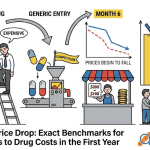
Generic imatinib entered the US market on February 1, 2016, at 96 percent of the price of branded Gleevec. Sun Pharmaceuticals had promised a 30 percent discount. It delivered 4 percent. [1][2] Eighteen months later, researchers at 46brooklyn Research found that the price managed-care plans and specialty pharmacies were charging Medicaid programs for the drug had not fallen. It had climbed 281 percent a year, from $14.03 a pill to $104.26 a pill. [3] The brand had gone generic. The margin had not gone anywhere.
That is not what the title of this article implies, and it is also the point. “The margin everyone protects disappears the day a generic launches” is the assumption baked into most loss-of-exclusivity planning: a drug goes multi-source, reimbursement collapses toward acquisition cost, and the specialty pharmacy that lived on that spread for years either finds a new revenue line or shrinks. Two Federal Trade Commission staff reports published in 2024 and 2025, plus five real launch events spanning a decade, show a more precise picture. The margin does disappear, reliably and fast, for one category of specialty pharmacy. For another category, the one that owns or is owned by the pharmacy benefit manager setting the reimbursement rate, it frequently does not disappear at all. It just gets relabeled.
This matters for DrugPatentWatch users tracking loss-of-exclusivity timing, because the identity of the dispensing channel, not just the date on the Orange Book patent expiration listing, now predicts how much of a drug’s specialty economics survive generic entry.
The Short Answer
Specialty pharmacy dispensing margin does not fall uniformly at generic or biosimilar launch. It falls hardest and fastest for independent and unaffiliated specialty pharmacies that have no control over the reimbursement rate they are paid. It falls slowest, or not at all for years, at pharmacies owned by or affiliated with the pharmacy benefit manager (PBM) that sets that rate. Federal Trade Commission staff found that pharmacies affiliated with the three largest PBMs generated more than 7.3 billion dollars in dispensing revenue above estimated acquisition cost on just 51 specialty generic drugs between 2017 and 2022, and that this revenue grew at a 42 percent compound annual rate over the period. [4] The mechanism is not that generics are priced high. It is that the affiliated pharmacy’s reimbursement rate is set by the same company that owns the pharmacy, and that rate does not have to track the acquisition cost the way an open, competitive market would force it to.
What “Specialty Pharmacy Margin” Actually Means
Before the case studies, three definitions matter, because “margin” in specialty pharmacy commentary gets used loosely enough to hide what is actually happening.
Acquisition Cost vs. Reimbursement Rate
A specialty pharmacy’s margin is the gap between what it pays to acquire a drug (its acquisition cost) and what it is paid to dispense that drug by a PBM, health plan, or Medicare Part D plan sponsor (its reimbursement rate). For a brand-name drug under patent, that gap is usually thin and is set largely by the manufacturer’s wholesale acquisition cost (WAC) plus a small dispensing fee. For a specialty generic, the gap can be enormous, because the drug’s acquisition cost falls toward the cost of manufacturing while the reimbursement rate is set independently, through a PBM contract that may not reference acquisition cost at all.
NADAC, the Federal Benchmark Nobody Prices Against
The National Average Drug Acquisition Cost (NADAC) is a Centers for Medicare and Medicaid Services survey-based estimate of what retail pharmacies actually pay to acquire a drug. It is the benchmark the FTC used in both of its 2024 and 2025 PBM staff reports to measure the gap between acquisition cost and reimbursement. [4][5] NADAC is public. Reimbursement rates paid to PBM-affiliated pharmacies are not, which is part of why the FTC needed subpoena authority to compare the two.
Limited Distribution vs. Open Distribution
Manufacturers of specialty drugs choose, before any generic exists, whether to sell through a small, contracted network of specialty pharmacies (a limited distribution drug, or LDD, network) or through the ordinary wholesale channel available to any licensed pharmacy (open distribution). [6] That decision, made years before patent expiration, determines whether a generic entrant can even reach an open channel on day one of its own launch, or whether the complexity of the drug (cold-chain handling, REMS enrollment, injection training) keeps distribution narrow long after the patent itself is gone.
The Five Findings That Matter
PBM-affiliated pharmacies generated over 7.3 billion dollars in dispensing revenue above NADAC on 51 specialty generic drugs from 2017 to 2022, and that revenue grew at a 42 percent compound annual rate. [4]
The top 10 of those 51 drugs accounted for 6.2 billion dollars of the 7.3 billion dollar total, or 85 percent, by DrugPatentWatch calculation from the FTC’s published figures. [4]
Generic imatinib (Gleevec) launched at 96 percent of the brand price in February 2016, and the managed-care markup on the drug then rose 281 percent a year over the following eighteen months. [1][3]
Adalimumab biosimilars held under 4 percent of the Humira market fifteen months after the first biosimilar launched, until CVS Caremark removed Humira from its major national formularies on April 1, 2024. [7][8]
Generic lenalidomide (Revlimid) launched under volume caps in March 2022 that limited entrants to a mid-single-digit percentage of total US capsules, rising toward one-third by 2025, with full unrestricted entry not arriving until January 31, 2026, almost four years after the first generic reached the market. [9][10]
Case Study One: Gleevec, the Margin That Grew After Generic Entry
Gleevec (imatinib mesylate) is the cleanest illustration of the gap between “a generic launched” and “the margin disappeared.” Novartis settled patent litigation with Sun Pharmaceuticals in May 2014, agreeing to let Sun launch a generic on February 1, 2016, in exchange for Sun dropping its challenge to the beta-crystal-form patent that would otherwise have run until 2019. [11] Sun’s CEO told reporters before launch that the generic would price roughly 30 percent below Gleevec. [12] When it launched, brand Gleevec cost about 146,000 dollars a year and Sun’s generic cost about 140,000 dollars, a discount of roughly 4 percent, not 30. [1][2]
The 46brooklyn Managed-Care Markup Finding
46brooklyn Research, analyzing Centers for Medicare and Medicaid Services claims data, found that as additional generic imatinib manufacturers entered through 2016 and 2017, the price some state Medicaid managed-care programs paid per pill did not fall with the acquisition cost. It rose from 14.03 dollars to 104.26 dollars a pill over roughly eighteen months, a 281 percent annualized increase, even as the underlying drug became genuinely multi-source and commoditized. [3] The researchers were explicit that this was one drug, not proof of an industrywide pattern on its own. Read next to the FTC’s later, much broader 51-drug analysis, it looks less like an outlier and more like an early sighting of the mechanism the FTC would go on to document at scale.
Why the Brand-to-Generic Price Gap Barely Moved
Imatinib is an oral, small-molecule oncology drug, the easiest kind of specialty product for a generic to displace quickly. Even there, the first-year price gap was single digits, not the 50 to 80 percent an investor modeling a typical small-molecule patent cliff might assume. The 180-day exclusivity period Sun held as first filer meant no second generic could enter until August 2016, and Teva did not launch its own version until August 5 of that year. [13] For six months, “generic Gleevec” meant exactly one seller, at a price the seller could set close to the brand’s.
Case Study Two: Copaxone, Still a Limited-Distribution Drug a Decade Later
Sandoz brought the first FDA-approved generic glatiramer acetate, Glatopa, to market as an AB-rated equivalent to Copaxone’s 20 mg dose, later adding a 40 mg version to match Teva’s three-times-weekly formulation. [14] Multiple sclerosis patients now have brand Copaxone, Sandoz’s branded Glatopa, and unbranded generic glatiramer acetate all competing for the same prescription. What has not changed is the channel. As of the July 2026 update to CVS Specialty’s distribution drug list, glatiramer acetate, branded as Copaxone or Glatopa, is still listed alongside other multiple sclerosis therapies such as Gilenya, Kesimpta, and Mavenclad as a limited-distribution specialty product. [15]
Why an Injectable Specialty Generic Doesn’t Open Up Like an Oral One
Glatiramer acetate is a self-injected, cold-chain product that requires patient training, adherence support, and, for many payers, prior authorization renewal. Those requirements do not expire when the patent does. A pharmacy dispensing the drug needs specialty accreditation, injection-training staff, and a payer contract that recognizes it as a specialty product, all of which are costly enough that most retail pharmacies never build them regardless of whether the drug is branded or generic. The result is that glatiramer acetate has been multi-source since 2015 and is still, a decade later, effectively confined to the same small set of specialty pharmacies that dispensed the brand. The margin did not disappear at generic launch here so much as the channel that protects it never opened.
Case Study Three: Revlimid, Engineering a Four-Year Disappearance
Revlimid (lenalidomide) shows what happens when the brand manufacturer negotiates the pace of the margin’s disappearance directly into the settlement terms. Celgene, later acquired by Bristol Myers Squibb, settled Hatch-Waxman litigation with Natco Pharma (marketed through Teva), Dr. Reddy’s Laboratories, Sun Pharma, and Alvogen between 2015 and 2020. [16][17] Each settlement granted the generic maker a volume-limited license, not an open one. Natco’s license, the first to take effect, permitted sales of a mid-single-digit percentage of total US lenalidomide capsules starting in March 2022, rising in stages to roughly one-third of the market by March 2025. [16] A full, unrestricted license for all four companies does not begin until January 31, 2026, nearly a decade after the settlements were signed and almost four years after the first generic capsule shipped. [9][17]
The Volume-Cap Mechanics
Teva and Natco launched the first generic lenalidomide capsules on March 7, 2022. [9] A myeloma patient interviewed by the International Myeloma Foundation’s patient network described being told by a specialty pharmacist that the price difference between brand Revlimid and the new generic was about 9 percent, and that generic supply was tightly rationed. [18] A parallel antitrust suit brought directly by Cigna against Celgene and Bristol Myers Squibb alleges that the volume caps, combined with most-favored-entry and most-favored-customer clauses in the settlements, were designed to preserve supracompetitive pricing throughout the volume-limited period rather than to manage a genuine manufacturing ramp. [19] Bristol Myers Squibb has defended the settlements as resolving good-faith patent litigation.
What a 9 Percent Brand-to-Generic Gap Tells You
The FDA’s own analysis of generic competition found that a drug facing a single generic competitor typically sees average manufacturer prices fall 39 percent below the pre-entry brand price, and that two competitors typically push the discount to 54 percent. [20] Revlimid, with four separate generic licensees active by 2022, produced a first-year discount of roughly 9 percent at the point of dispensing described above, an order of magnitude below what open, unrestricted multi-source competition would predict. The volume cap is doing the work that would normally be done by the number of competitors.
Case Study Four: Humira, the Fifteen-Month Delay Nobody Called a Delay
Amgen’s Amjevita became the first Humira biosimilar to launch, in January 2023. By early 2024, more than half a dozen adalimumab biosimilars were on the market, most priced 80 percent or more below Humira’s list price. [21][22] Biosimilar uptake stayed below 4 percent of the adalimumab market through that period, according to a Samsung Bioepis market-share report. [21] The reason was not clinical hesitancy. It was formulary placement. CVS Caremark did not remove Humira from its major national commercial template formularies until April 1, 2024, fifteen months after the first biosimilar reached pharmacy shelves. [7][22] Cigna’s Express Scripts followed with its own removal of Humira from major commercial formularies for 2025. [23]
Formulary Timing as a Margin-Protection Tool
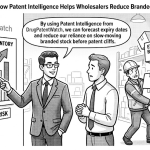
A biosimilar being FDA-approved, interchangeable, and available does not make it dispensable. A PBM’s formulary decides which product a pharmacy can fill a claim for at a given reimbursement tier, and the PBM controls that formulary. For fifteen months, the country’s largest PBMs kept branded Humira preferred over biosimilars that were, on average, more than 80 percent cheaper. [21] The delay was not a supply problem. It was a margin-timing decision.
The IQVIA $6 Billion / $2 Billion Split
An IQVIA analysis commissioned by the Biosimilars Council found that switching all US adalimumab-treated patients to biosimilars could have generated up to 6 billion dollars in savings for health plans, employers, and patients, but would have cut PBM profit by an estimated 84 percent on the drug category. [24][25] The Association for Accessible Medicines characterized the gap as PBMs protecting roughly 2 billion dollars in profit, much of it earned by specialty pharmacies that share corporate ownership with the PBM, at a cost of 6 billion dollars in foregone system-wide savings. [25] The 2 billion and 6 billion dollar figures are trade-association-commissioned analysis, not independently audited, but the underlying market-share and formulary-timing data behind them are drawn from IQVIA’s claims database and from the PBMs’ own published 2024 formulary decisions, both matters of public record.
CVS Cordavis and the Three-Tier Formulary
CVS Health’s response to the biosimilar transition illustrates the mechanism at its most deliberate. In August 2023, CVS launched Cordavis, a wholly owned subsidiary built to commercialize private-label biosimilars directly, rather than simply adding a manufacturer’s biosimilar to its formulary. [26][27] Cordavis’s first product, a private-label version of Sandoz’s Hyrimoz, launched in the first quarter of 2024 at a list price more than 80 percent below Humira’s. [26] CVS Caremark’s 2024 formulary then preferred three separate products simultaneously: branded Humira, Sandoz’s higher-list-price branded Hyrimoz, and the low-list-price unbranded Cordavis version of the same biosimilar. [28] The arrangement let CVS capture rebate-linked margin from whichever tier a given plan sponsor’s contract rewarded, rather than losing that margin entirely to an outside biosimilar manufacturer’s lower price. The specialty pharmacy margin here did not disappear at biosimilar launch. It was restructured into a private label CVS itself now owns.
The FTC’s Own Numbers: What Happens to Specialty Generic Margin After Day One
The two most direct pieces of evidence on this question came from the FTC’s own staff, not from industry critics or generic manufacturers. In July 2024, the Commission’s first interim staff report on PBMs used two specialty generic drugs, generic Gleevec and generic Zytiga (abiraterone acetate, for prostate cancer), as case studies. Staff found that health plans reimbursed PBM-affiliated pharmacies for these drugs at rates 20 to 40 times NADAC, and that the three largest PBMs’ affiliated pharmacies earned nearly 1.6 billion dollars in revenue on those two drugs alone between 2020 and part of 2022. [29][30]
Twenty to Forty Times NADAC
A drug’s NADAC reflects, by design, what an ordinary pharmacy pays to acquire it. A reimbursement rate 20 to 40 times that figure is not a dispensing fee. It is the specialty margin, relabeled as a reimbursement rate the affiliated pharmacy pays itself.
From $522 Million to $2.1 Billion in Four Years
In January 2025, the FTC published a second interim staff report, titled “Specialty Generic Drugs: A Growing Profit Center for Vertically Integrated Pharmacy Benefit Managers,” expanding the analysis to 51 specialty generic drugs across 882 National Drug Codes. [4][31] Staff found that PBM-affiliated pharmacy dispensing revenue in excess of NADAC across those drugs rose from 522 million dollars in 2017 to 2.1 billion dollars in 2021, a 42 percent compound annual growth rate, and totaled more than 7.3 billion dollars over the full 2017-to-2022 study period. [4][31] By DrugPatentWatch calculation, that trajectory means the excess-revenue figure roughly quadrupled in four years, a growth rate that outpaces both specialty drug spending growth generally and the rate at which new specialty generics were entering the market over the same period.
Tadalafil and Dimethyl Fumarate: Two Line Items
Two of the 51 drugs in the second report illustrate the mechanism in dollar terms rather than percentages. Generic tadalafil for pulmonary hypertension, acquired by PBM-affiliated pharmacies for roughly 27 dollars, was reimbursed to those pharmacies at 2,106 dollars for a 30-day supply in 2022, a markup exceeding 7,700 percent. [32] Generic dimethyl fumarate, the multiple sclerosis drug sold as generic Tecfidera, cost affiliated pharmacies about 177 dollars to acquire but was reimbursed at close to 4,000 dollars on average for a 30-day supply, a multiple of roughly 22 times acquisition cost by DrugPatentWatch calculation from the FTC’s published figures. [32] Both drugs had been multi-source generics for years by the time these figures were recorded. Genericization had happened. The margin had not left.
Who Actually Captures the $7.3 Billion
The FTC found that the top 10 of the 51 specialty generic drugs generated 6.2 billion dollars of the 7.3 billion dollar total, 85 percent of the excess revenue from just under a fifth of the drugs studied. [4] Cancer drugs accounted for roughly half of the total, and multiple sclerosis drugs for roughly a quarter, a concentration that lines up with the Gleevec and Copaxone case studies above. [33] Staff also found that in 2021, the top 10 specialty generic drugs alone generated dispensing income equal to nearly 11 percent of the relevant business segment’s operating income at the parent healthcare conglomerates that own the Big 3 PBMs. [4] Separately, the Big 3 PBMs earned an estimated 1.4 billion dollars from spread pricing, billing plan sponsors more than they reimbursed their own pharmacies, on the same set of drugs. [4] Commercial-plan members filled 69 percent of their specialty prescription dispensing revenue at PBM-affiliated pharmacies between 2017 and 2022, compared with 28 percent for Medicare Part D members, whose plans are required by law to contract with any willing pharmacy. [34] Pharmacies affiliated with the three largest PBMs accounted for 68 percent of all specialty drug dispensing revenue in 2023, up from 54 percent in 2016. [35]
“Staff found that pharmacies affiliated with the Big 3 PBMs received 68% of the dispensing revenue generated by specialty drugs in 2023, up from 54% in 2016.” — Federal Trade Commission, Second Interim Staff Report on Pharmacy Benefit Managers, January 2025 [35]
Cigna’s Express Scripts sued the FTC in September 2024, two months after the first interim report, seeking to have it retracted as unsupported and biased; the agency has moved to dismiss that suit, which remains pending. [36] The FTC separately sued Caremark, Express Scripts, and Optum Rx over insulin pricing practices, a related but distinct action. [36] The underlying NADAC-comparison methodology in the two interim reports has not itself been the subject of a published rebuttal from any of the three companies.
An Original Taxonomy: Five Control Points That Decide Who Keeps the Margin
Across the four case studies and the FTC’s 51-drug dataset, the deciding factor in whether specialty margin survives generic or biosimilar entry is never simply “how many competitors exist.” It is who controls one or more of five specific points in the dispensing chain.
Control Point One: Distribution Channel
If the drug’s complexity (cold chain, REMS, injection training) keeps it in a limited-distribution network after generic entry, as with Copaxone, the small set of pharmacies already in that network retains pricing power simply because few competitors can enter the channel at all, regardless of patent status.
Control Point Two: Reimbursement-Rate Setting
If the pharmacy dispensing the generic is owned by, or affiliated with, the PBM setting that pharmacy’s own reimbursement rate, the rate can be set independently of the drug’s falling acquisition cost, as the FTC’s 20-to-40-times-NADAC findings on Gleevec and Zytiga, and the 22-to-78-times findings on dimethyl fumarate and tadalafil, demonstrate. [4][29][32]
Control Point Three: Formulary Timing
Even when a lower-cost biosimilar is approved and available, as with Humira’s biosimilars from January 2023 onward, the PBM decides when that biosimilar becomes preferred. A fifteen-month gap between biosimilar availability and formulary preference is fifteen months of protected brand-level margin. [7][22]
Control Point Four: Private-Label Creation
A PBM or specialty pharmacy that creates its own private-label version of a biosimilar, as CVS did with Cordavis and Hyrimoz, converts what would otherwise be margin lost to an outside generic or biosimilar manufacturer into margin captured internally, at whichever price tier the PBM’s own contracts reward. [26][28]
Control Point Five: Settlement-Engineered Entry Curves
A brand manufacturer that negotiates volume-limited, staged generic licenses, as Celgene and Bristol Myers Squibb did with Revlimid, can convert what patent law treats as a single loss-of-exclusivity date into a four-year ramp during which supracompetitive pricing persists by contractual design rather than by patent right. [9][16][19]
Protected vs. Exposed Specialty Margin: The Pattern
A specialty pharmacy that holds none of these five control points, an independent pharmacy filling a specialty generic prescription at a PBM-set reimbursement rate it did not negotiate, in an open-distribution channel any competitor can enter, at a full and immediate generic launch, with no private-label option of its own, is the pharmacy for which the title of this article is accurate without qualification. The margin disappears on day one, because nothing protects it. Every case study above describes the opposite condition: a pharmacy holding at least one of the five control points, for whom the margin persists, sometimes for years, after the patent that was supposed to end it has expired.
What Happens to the Pharmacies Without a Control Point
The exposed side of this pattern is not hypothetical. Independent pharmacy closures have accelerated even as PBM-affiliated specialty pharmacy revenue has grown. More than 600 independent pharmacies closed in the first nine months of 2025 alone, and 30.3 percent of independent pharmacy owners surveyed said they were considering closing their business in 2025. [37][38]
DIR Fee Reform Reshuffled the Pain, It Didn’t End It
The Centers for Medicare and Medicaid Services required most Direct and Indirect Remuneration (DIR) fee concessions to move to the point of sale rather than being clawed back retroactively, a reform intended to bring transparency to what independent pharmacies were actually being paid. In practice, PBMs responded by shifting to performance-based reimbursement models with reimbursement rates for generics that can fall below the pharmacy’s own acquisition cost, and by increasing the frequency of post-payment audits that can trigger clawbacks through a different mechanism. [39][40] The reform changed the paperwork. It did not close the gap between what an unaffiliated pharmacy is paid and what an affiliated one is paid for the identical NDC.
The Closure Numbers in Context
Roughly one net independent pharmacy closure a day has been reported by industry advocacy groups tracking Medicare-related pharmacy access, a pace that predates and continues alongside the specialty generic markup pattern the FTC documented. [41] The two trends, rising PBM-affiliated specialty generic revenue and accelerating independent pharmacy closures, are not proven to be causally linked by any single study cited here. They are, however, measuring the same market from opposite ends: dispensing revenue concentrating at one type of pharmacy while the other type disappears.
Methodology
The dollar and percentage figures in this article are drawn from two Federal Trade Commission staff reports (July 2024 and January 2025), from Securities and Exchange Commission filings and company press releases documenting settlement and launch dates, from the FDA’s own published analysis of generic price competition, and from a 2018 46brooklyn Research analysis of CMS Medicaid managed-care claims data. Where a figure is labeled a DrugPatentWatch calculation, it was derived by DrugPatentWatch from numbers the FTC or a cited source published directly, such as the top-10-drug share of total excess revenue (6.2 billion of 7.3 billion dollars) and the acquisition-cost-to-reimbursement multiples for dimethyl fumarate and tadalafil. The IQVIA-derived 2 billion and 6 billion dollar Humira figures are trade-association-commissioned estimates and are labeled as such; DrugPatentWatch did not independently verify the underlying IQVIA model. Limitations: the FTC’s NADAC-based analysis covers only 51 specialty generic drugs the agency had relevant claims data for and does not claim to represent all specialty generics; the Revlimid volume-cap percentages beyond the initial mid-single-digit figure are drawn from settlement summaries and are confidential in the underlying agreements; and the Copaxone limited-distribution finding reflects CVS Specialty’s published list as of July 2026 and may not describe every payer’s network.
What This Means for Independent and Health-System Specialty Pharmacies
A pharmacy without one of the five control points above should expect a genuine, fast margin collapse at generic or biosimilar entry, roughly in line with the FDA’s documented price curve: a 39 percent average price decline with one generic competitor, 54 percent with two, 79 percent with four, and more than 95 percent with six or more. [20] Planning around anything better than that curve, for a drug the pharmacy does not have a private-label, formulary-timing, or distribution-channel advantage on, is planning around an exception rather than the rule the FTC’s 51-drug dataset describes.
What This Means for Manufacturers Planning Loss-of-Exclusivity
For a brand manufacturer negotiating a Hatch-Waxman or BPCIA settlement, the Revlimid and Humira cases show that the pace of margin erosion after “generic launch” is frequently more negotiable than the launch date itself. Volume caps, staged license terms, and the identity of which pharmacies control post-exclusivity distribution can extend a drug’s effective economics years past its legal loss-of-exclusivity date, a pattern DrugPatentWatch has tracked in prior analyses of patent-staircase and authorized-generic strategy. This article’s focus is narrower: what happens specifically to the pharmacy-level dispensing margin once a generic or biosimilar is legally on the market, not the manufacturer-side patent or settlement strategy that determines when that happens.
Frequently Asked Questions
Does specialty pharmacy margin always disappear when a generic launches? No. FTC staff found PBM-affiliated specialty pharmacies generated over 7.3 billion dollars in dispensing revenue above acquisition cost on 51 already-genericized specialty drugs between 2017 and 2022, with that revenue growing 42 percent annually. [4] The margin disappears reliably only for pharmacies that do not control the reimbursement rate they are paid.
What is NADAC and why does it matter for specialty generics? NADAC, the National Average Drug Acquisition Cost, is a CMS survey-based benchmark of what pharmacies actually pay to acquire a drug. The FTC used it to show PBM-affiliated pharmacies were reimbursed 20 to 40 times NADAC on two case-study cancer drugs, and up to roughly 78 times NADAC on generic tadalafil. [29][32]
Why did generic Gleevec launch at nearly the brand price instead of a steep discount? Sun Pharma held 180-day first-filer exclusivity, meaning no second generic competitor could enter until August 2016. A single generic competitor typically produces only a modest discount; the FDA’s own data shows about 39 percent on average, and Gleevec’s initial discount was closer to 4 percent. [1][20]
Why is Copaxone still dispensed through limited specialty pharmacy networks a decade after going generic? Glatiramer acetate is a self-injected, cold-chain product requiring specialty accreditation and patient training that most retail pharmacies never build, brand or generic. The drug remains on major payer limited-distribution lists as of mid-2026. [15]
How long did it take for Revlimid generics to reach full, unrestricted market entry? Generic lenalidomide first launched in March 2022 under volume caps limiting entrants to a mid-single-digit percentage of total US capsules. Full unrestricted licenses for all four settling generic makers do not begin until January 31, 2026, nearly four years later. [9][16]
Why did Humira biosimilars take so long to gain market share after launching? Biosimilars launched in January 2023 but stayed under 4 percent market share until CVS Caremark removed Humira from its major national formularies on April 1, 2024, fifteen months later. PBM formulary placement, not biosimilar availability, was the binding constraint. [7][21][22]
What is CVS Cordavis and how does it relate to specialty pharmacy margin? Cordavis is a CVS Health subsidiary launched in August 2023 that commercializes private-label biosimilars, starting with a version of Sandoz’s Hyrimoz. It lets CVS capture margin across multiple price tiers of the same biosimilar rather than losing that margin to an external manufacturer. [26][28]
Do independent pharmacies see the same markup opportunity on specialty generics that PBM-affiliated pharmacies do? No. The FTC found PBMs reimbursed their own affiliated pharmacies at significantly higher rates than unaffiliated pharmacies for nearly every specialty generic drug examined, and more than 600 independent pharmacies closed in the first nine months of 2025. [4][37]
Did DIR fee reform fix the reimbursement gap for independent pharmacies dispensing generics? Only partially. CMS required most DIR fee concessions to move to the point of sale, but PBMs shifted to performance-based reimbursement models and more frequent audits, and generic reimbursement can still fall below a pharmacy’s acquisition cost. [39][40]
What does the FDA’s own data say about how much generic competition should lower a drug’s price? FDA analysis of drugs with initial generic entry from 2015 to 2017 found average manufacturer prices fall about 39 percent with one generic competitor, 54 percent with two, 79 percent with four, and more than 95 percent with six or more competitors. [20]
Key Takeaways
PBM-affiliated specialty pharmacies generated over 7.3 billion dollars in dispensing revenue above NADAC on 51 specialty generic drugs from 2017 to 2022, growing 42 percent annually, per FTC staff findings. [4]
Generic Gleevec and generic Zytiga were reimbursed to PBM-affiliated pharmacies at 20 to 40 times NADAC; generic tadalafil and generic dimethyl fumarate showed markups of roughly 78 times and 22 times acquisition cost respectively. [29][32]
The top 10 of the 51 drugs the FTC studied accounted for 85 percent of the total excess revenue, concentrated in cancer and multiple sclerosis drugs. [4][33]
Humira biosimilars stayed under 4 percent market share for fifteen months after launch, until CVS Caremark’s April 2024 formulary change, illustrating formulary timing as a margin-protection tool independent of biosimilar price or availability. [7][21][22]
Generic Revlimid’s volume-capped entry, launched March 2022 with full unrestricted licenses not arriving until January 31, 2026, shows settlement terms can stage a legal loss-of-exclusivity date into a multi-year margin ramp. [9][16]
Independent and unaffiliated specialty pharmacies without distribution, reimbursement-rate, formulary-timing, private-label, or settlement-structure control see margin collapse closer to the FDA’s documented generic price-decline curve, and are closing at a pace exceeding 600 pharmacies in the first nine months of 2025 alone. [20][37]
References
GaBI Online. (2016). Sun Pharma launches imatinib mesylate in the US. https://gabionline.net/generics/news/Sun-Pharma-launches-imatinib-mesylate-in-the-US
Medscape. (2018). Two Generic Versions of Imatinib Launched — but Will Prices Drop? https://www.medscape.com/viewarticle/867272
46brooklyn Research. (2018). The cancerous design of the U.S. drug pricing system. https://www.46brooklyn.com/research/2018/7/23/the-cancerous-design-of-the-us-drug-pricing-system
Federal Trade Commission. (2025). Specialty Generic Drugs: A Growing Profit Center for Vertically Integrated Pharmacy Benefit Managers, Second Interim Staff Report. https://www.ftc.gov/system/files/ftc_gov/pdf/PBM-6b-Second-Interim-Staff-Report.pdf
Federal Trade Commission. (2025). FTC Second Interim Staff Report press release. https://www.ftc.gov/node/87172
IPD Analytics. (2025). Understanding Limited Distribution Networks. https://www.ipdanalytics.com/post/understanding-limited-distribution-networks
BioSpace. (2024). CVS to Remove AbbVie’s Humira from Reimbursement Lists, Cover Biosimilars. https://www.biospace.com/article/cvs-to-remove-abbvie-s-humira-from-major-reimbursement-lists-cover-biosimilars
BioSpace. (2024). AbbVie’s Humira Loses Only 4% of Market Share to Biosimilars: Report. https://www.biospace.com/abbvie-s-humira-has-lost-only-4-percent-of-market-share-to-biosimilars-report
International Myeloma Foundation. (2022). First Generic Revlimid (lenalidomide) Launched. https://www.myeloma.org/blog/lower-cost-revlimid-generic-lenalidomide-here
GaBI Online. Novartis settles Gleevec lawsuit with Sun Pharma. https://www.gabionline.net/generics/news/Novartis-settles-Gleevec-lawsuit-with-Sun-Pharma
WGBH News. (2016). Modest Price Cut Expected For Generic Version Of Cancer Pill Gleevec. https://www.wgbh.org/news/2016/02/01/modest-price-cut-expected-generic-version-cancer-pill-gleevec
Teva Pharmaceutical Industries. (2016). Form 6-K, Teva Announces Launch of Generic Gleevec Tablets. https://www.sec.gov/Archives/edgar/data/0000818686/000130901416001249/exhibit1.htm
CVS Specialty. (2026). CVS Specialty Pharmacy Distribution Drug List. https://www.cvsspecialty.com/content/dam/enterprise/specialty/pdfs/SpecialtyDrugs.pdf
HealthTree. (2024). Generic Revlimid in Myeloma: Don’t Get Too Excited. https://healthtree.org/myeloma/community/articles/generic-revlimid-in-myeloma–dont-get-too-excited
Fierce Pharma. (2021). Bristol Myers inks another Revlimid patent settlement, this time with Sun Pharma. https://www.fiercepharma.com/manufacturing/bristol-myers-settles-sun-pharma-for-limited-revlimid-generic-launch-2022
U.S. Food and Drug Administration. Generic Competition and Drug Prices: New Evidence Linking Greater Generic Competition and Lower Generic Drug Prices. https://fda.gov/media/133509/download
Biosimilars Council. (2024). PBM Rebate Schemes to Suppress Biosimilar Humira Cost U.S. Patients $6 Billion. https://biosimilarscouncil.org/news/pbm-rebate-suppress-biosimilar-humira/
Drug Store News. (2024). PBM rebate schemes to suppress biosimilar Humira cost patients $6B, IQVIA analysis finds. https://drugstorenews.com/pbm-rebate-schemes-suppress-biosimilar-humira-cost-patients-6b-iqvia-analysis-finds
BioSpace. Cigna’s Evernorth to Offer Humira Biosimilar with No Out-of-Pocket Cost. https://www.biospace.com/article/cigna-s-evernorth-to-offer-humira-biosimilar-with-no-out-of-pocket-cost
Axios. (2022). Cheaper versions of Humira won’t be adopted quickly. https://www.axios.com/2022/02/17/humira-biosimilars-pbm-health-plan-drug-prices
Biosimilars Council. (2024). Press statement, David Gaugh, Association for Accessible Medicines. https://biosimilarscouncil.org/news/pbm-rebate-suppress-biosimilar-humira/
CVS Health. (2023). CVS Health Launches Cordavis. https://cvshealth.com/news/pbm/cvs-health-launches-cordavis.html
Drug Channels. (2025). The Top 15 Specialty Pharmacies of 2024. https://www.drugchannels.net/2025/04/the-top-15-specialty-pharmacies-of-2024.html
Drug Channels. (2023). What’s Behind CVS Health’s Novel Vertical Integration Strategy for Humira Biosimilars. https://www.drugchannels.net/2023/12/whats-behind-cvs-healths-novel-vertical.html
Covington & Burling LLP. (2024). Federal Trade Commission Asserts Significant Anticompetitive Harms in Interim Staff Report on the Pharmacy Benefit Manager Industry. https://www.cov.com/en/news-and-insights/insights/2024/07/federal-trade-commission-asserts-significant-anticompetitive-harms-in-interim-staff-report-on-the-pharmacy-benefit-manager-industry
Healthcare Dive. (2024). FTC slams pharmacy benefit managers in first report from ongoing investigation. https://www.healthcaredive.com/news/ftc-pharmacy-benefit-manager-investigation-interim-report/720814/
Federal Trade Commission. (2024). FTC Releases Interim Staff Report on Prescription Drug Middlemen. https://www.ftc.gov/news-events/news/press-releases/2024/07/ftc-releases-interim-staff-report-prescription-drug-middlemen
FierceHealthcare. (2025). FTC: Big 3 PBMs generated $7.3B from specialty generic drug markups. https://www.fiercehealthcare.com/payers/ftc-big-3-pbms-generated-73b-specialty-generic-drug-markups
NBC News. (2025). Top three insurers reaped $7.3 billion through their drug middlemen’s markups, FTC says. https://www.nbcnews.com/health/health-news/top-three-insurers-reaped-73-billion-drug-middlemens-markups-ftc-says-rcna187640
Healthcare Dive. (2024). FTC slams pharmacy benefit managers in first report from ongoing investigation (commercial vs. Part D dispensing share). https://www.healthcaredive.com/news/ftc-pharmacy-benefit-manager-investigation-interim-report/720814/
Federal Trade Commission. (2025). Second Interim Staff Report summary. https://www.ftc.gov/node/87172
Axios. (2025). PBMs made more than $7B marking up specialty generics: FTC. https://www.axios.com/2025/01/14/pbms-marked-up-specialty-generics-ftc
PharmaTrust. (2025). The Economic Outlook for Independent Pharmacies in 2026. https://pharmatrusthealth.com/the-economic-outlook-for-independent-pharmacies-in-2026/
Drug Topics. (2026). Finance Strategies for Independent Pharmacies Facing Shrinking Margins. https://www.drugtopics.com/view/finance-strategies-for-independent-pharmacies-facing-shrinking-margins
Health Law Alliance. (2025). PBM Enforcement Trends Independent Pharmacies Must Prepare for in 2026. https://www.healthlawalliance.com/blog/pbm-enforcement-trends-independent-pharmacies-must-prepare-for-in-2026
Sofer Advisors. (2026). Independent Pharmacy Valuation: A Guide to DIR Fees and 2026 Multiples. https://soferadvisors.com/insights/blog/independent-pharmacy-valuation-a-guide-to-dir-fees-and-2026-multiples/
Office of Rep. Raja Krishnamoorthi. (2024). Letter to CMS on independent pharmacy closures. https://krishnamoorthi.house.gov/sites/evo-subsites/krishnamoorthi.house.gov/files/evo-media-document/2024.07.08%20KRISHN_CMS_0.pdf
DrugPatentWatch tracks patent expiration dates, exclusivity timelines, and generic and biosimilar entry across specialty and traditional drug categories, giving manufacturers, specialty pharmacies, and payers visibility into loss-of-exclusivity timing beyond the Orange Book listing date alone.