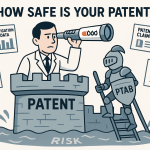
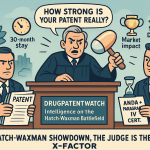
In 2015, a Delaware federal judge looked at prior art covering an antioxidant added to a rivastigmine skin patch and ruled that adding it was not obvious. The Federal Circuit affirmed. Two years later, the Patent Trial and Appeal Board (PTAB) looked at the same patent claims, a substantially similar obviousness argument, and ruled the opposite way. The Federal Circuit affirmed that too.[1] Same patents. Same active ingredient. Same appellate court signing off on both outcomes. The only variable that moved was the forum.
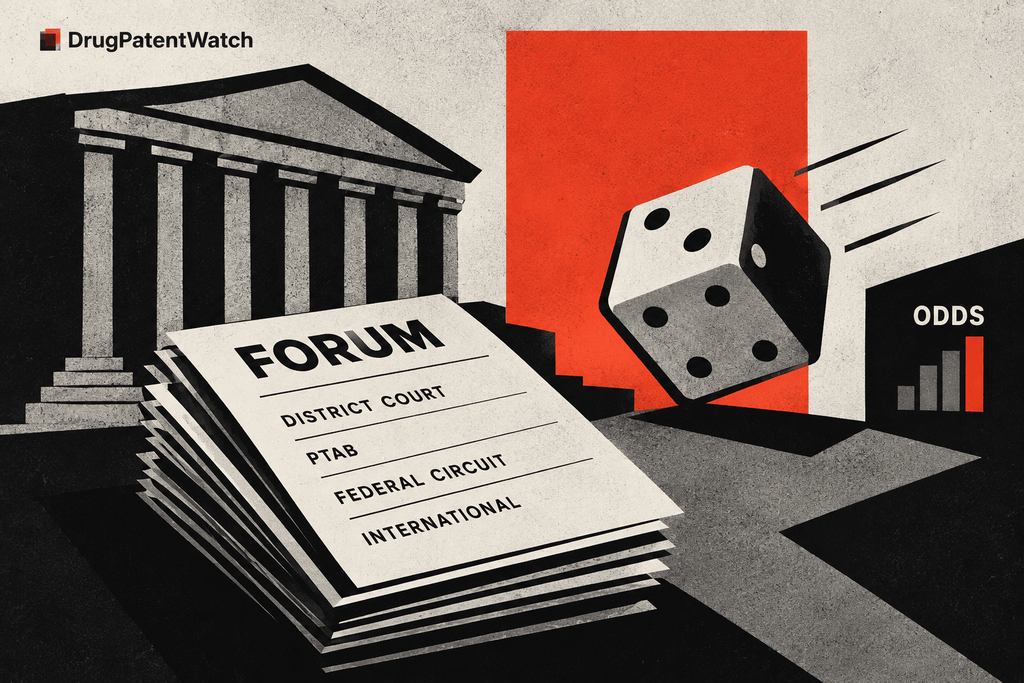
That case, Novartis AG v. Noven Pharmaceuticals, Inc., gets cited constantly in patent-litigation continuing-legal-education slide decks because it is the cleanest illustration on record of a structural fact that pharmaceutical patent holders and challengers spend enormous sums trying to exploit: the forum you land in does not just affect how fast a case moves or how much it costs. It can change whether a patent survives at all, independent of anything a scientist or a patent examiner would recognize as “the merits.”
The Short Answer
District courts and the PTAB apply different burdens of proof to the same validity question — clear and convincing evidence in court versus a preponderance of the evidence at the PTAB — and, until a 2018 rule change, used different claim construction standards entirely.[2] Add in narrow, statutorily engineered venue rules that route most Hatch-Waxman suits into two courthouses, an estoppel regime that punishes petitioners for choosing the wrong forum first, and a sovereign-immunity strategy that briefly promised patent owners an escape hatch from administrative review, and the result is a system in which where you file is frequently a bigger predictor of outcome than what you filed. DrugPatentWatch’s own review of district court patent-filing data shows this is not a static map either — it shifted meaningfully as recently as 2024.[3]
What “Forum” Actually Means in a Hatch-Waxman or BPCIA Dispute
A single pharmaceutical patent dispute can be litigated in as many as three different fora, each governed by its own procedural rules, and a strategic patent holder or challenger picks among them deliberately.
District Court Litigation Under 35 U.S.C. § 271(e)(2)
Filing an Abbreviated New Drug Application (ANDA) with a Paragraph IV certification is itself defined as an act of patent infringement, which lets a brand company sue before a single generic pill is sold.[4] The suit triggers an automatic 30-month stay of FDA approval, and the district court applies the ordinary civil litigation standard: a patent is presumed valid, and an infringer or generic challenger must prove invalidity by clear and convincing evidence under 35 U.S.C. § 282.
Inter Partes Review at the PTAB
Since 2012, generic and biosimilar companies have had a second track: petition the PTAB to cancel the patent administratively. The petitioner’s burden is a preponderance of the evidence — simply “more likely than not” — a meaningfully lower bar than clear and convincing evidence.[5] There is no presumption of validity to overcome in the same way, and no jury.
The Sovereign Immunity Off-Ramp (Mostly Closed)
For a brief window between 2017 and 2019, some patent owners tried a third option: transfer patents to an entity that claims sovereign immunity from IPR entirely, removing the administrative track altogether while leaving district court litigation untouched. As discussed below, the Federal Circuit closed this door for both tribal and state sovereign immunity, but the underlying asymmetry it exposed — between offensive and defensive posture — did not fully disappear.
Appeal: The One Forum Where Everyone Ends Up
Regardless of which track a case starts on, both district court judgments and PTAB final written decisions are appealed to the same court: the Federal Circuit. That single appellate backstop is precisely what makes divergent outcomes so notable — it is not that two different appellate systems disagree. It is that the same appellate court will affirm two contradictory findings on the same patent, because each lower tribunal applied a different, and equally lawful, standard.
The Case That Proves the Thesis: Novartis v. Noven and the Exelon Patch
Novartis’s Exelon Patch, a transdermal rivastigmine system for Alzheimer’s disease, was covered by two Orange Book–listed patents: U.S. Patent Nos. 6,316,023 and 6,335,031, both directed to a pharmaceutical composition combining rivastigmine with an antioxidant.[6]
Round One: Delaware Finds the Patents Not Obvious
In Novartis Pharmaceuticals Corp. v. Noven Pharmaceuticals, Inc., the District of Delaware held in 2015 that the asserted claims were not obvious in light of the prior art combination the generic challenger presented.[7] The Federal Circuit affirmed that finding the same year in a companion appeal, Novartis Pharmaceuticals Corp. v. Watson Laboratories, Inc.[7] As far as the district court track was concerned, the patents were valid, full stop.
Round Two: A Different Record, an Opposite Verdict
Noven had also filed IPR petitions against the same two patents. The PTAB, applying the preponderance standard and working from a record that included additional prior art and different expert testimony than the district court had seen, found the challenged claims unpatentable as obvious.[8] Novartis appealed, arguing that the PTAB was bound, or at least should have been persuaded, by the prior judicial findings of nonobviousness on the same subject matter.
The Federal Circuit’s Answer: Both Were Right, Because They Weren’t Playing by the Same Rules
In Novartis AG v. Noven Pharmaceuticals, Inc., 853 F.3d 1289 (Fed. Cir. 2017), the Federal Circuit affirmed the PTAB’s invalidation and rejected the argument that the agency was bound by the earlier court rulings.[1] The panel pointed to its own 2012 precedent, In re Baxter International, Inc., in which the Patent Office had likewise invalidated, in reexamination, claims that a district court had previously upheld.[1] The court’s reasoning was not that the PTAB found better evidence, though the record differed somewhat; it was that Congress built two tracks with two different burdens on purpose, and a patentee who wins in one is not thereby immunized in the other.[9] Legal commentators at the time noted the case meant a validity determination is never fully final until the losing side has exhausted both tracks — and that a petitioner who loses in district court can, within the statutory time limits, get what amounts to a second look at the PTAB.[9]
Feature
District Court (Hatch-Waxman)
PTAB (Inter Partes Review)
Burden to prove invalidity
Clear and convincing evidence
Preponderance of the evidence
Claim construction standard
Phillips (ordinary meaning to a skilled artisan)
Phillips for petitions filed on or after Nov. 13, 2018; broadest reasonable interpretation before that date[2]
Decision-maker
Judge (bench trial is typical in ANDA cases) or jury
Three-judge administrative panel
Presumption of validity
Statutory presumption under 35 U.S.C. § 282
No equivalent presumption
Typical timeline to decision
18–36+ months to trial, longer with appeals
12 months from institution to final written decision, by statute
Effect of a loss for the challenger
Right to appeal to the Federal Circuit
Estoppel under 35 U.S.C. § 315(e) on grounds raised or reasonably could have raised, in later district court or ITC proceedings
Why Two Government Bodies Can Legally Disagree About the Same Prior Art
The Burden-of-Proof Gap
The single biggest structural reason forum changes the odds is the gap between “clear and convincing” and “preponderance of the evidence.” Clear and convincing evidence is generally understood as requiring a much higher degree of certainty than the fifty-percent-plus threshold that governs civil litigation generally and PTAB proceedings specifically. A prior-art combination that leaves a district court judge with genuine doubt can still clear the preponderance bar at the PTAB. That is not the PTAB being more “correct.” It is the PTAB being asked a legally different question.
Claim Construction Used to Diverge Too — Until November 13, 2018
For the first six years of the inter partes review system, the PTAB construed claims under the “broadest reasonable interpretation” (BRI) standard used in original patent examination, while district courts and the International Trade Commission applied the narrower Phillips v. AWH Corp. standard, giving claim terms their ordinary and customary meaning to a person skilled in the art.[2] A broader construction is easier to find anticipated or obvious over prior art, which meant the PTAB’s claim-scope rules alone tilted outcomes toward invalidity relative to district court, on top of the burden-of-proof gap.
What Changed When the PTAB Adopted Phillips
Effective November 13, 2018, a USPTO final rule replaced BRI with the Phillips standard for all IPR, post-grant review, and covered-business-method petitions filed on or after that date, explicitly to promote “greater consistency and harmonization with the federal courts and the ITC.”[2] The rule also directed the PTAB to consider any prior claim construction from a civil action or ITC proceeding if timely placed in the record.[2] That closed one gap between the forums. It did not close the burden-of-proof gap, which is set by statute rather than agency rule and would require an act of Congress to change.
Different Records, Different Experts, Different Outcomes
Even with claim construction aligned, the Federal Circuit has repeatedly emphasized that a district court and the PTAB are not deciding the same case merely because the patent number matches. Petitioners routinely present additional prior art references, different combinations of references, and different expert obviousness opinions at the PTAB than were used at trial, and the Federal Circuit has held that divergent factual records can independently justify divergent conclusions, apart from any difference in legal standard.[9]
The IPR Estoppel Clock: Why Sequencing Is Its Own Forum Strategy
The One-Year Bar Under 35 U.S.C. § 315(b)
A generic or biosimilar company cannot file an IPR petition more than one year after being served with a complaint alleging infringement of the patent. In Hatch-Waxman practice, that clock starts running the moment the brand company files its ANDA infringement suit, which means the decision to pursue the PTAB track has to be made early, often before discovery has meaningfully shaped either side’s understanding of the prior art.
What a Petitioner Gives Up Once the PTAB Rules
Once the PTAB reaches a final written decision, the petitioner is estopped under 35 U.S.C. § 315(e) from later raising, in district court or before the International Trade Commission, any invalidity ground it raised or reasonably could have raised in the IPR.[10] That estoppel cuts only one way: it binds the petitioner, not the patent owner, and it does not prevent a different generic company — one that was not a party or privy to the IPR — from raising the same prior art in its own district court case. The practical effect is that the first generic filer to reach the PTAB effectively spends its own invalidity arguments on behalf of every later-filing competitor’s case as well, for better or worse.
Racing the 30-Month Stay
Because the PTAB’s one-year statutory deadline for a final written decision from institution runs on its own clock, independent of the district court’s schedule, a generic company that wants an invalidity ruling before the 30-month stay expires has a real incentive to file at the PTAB immediately rather than wait to see how discovery unfolds in the parallel Hatch-Waxman suit. That timing pressure is itself a forum-selection decision made under uncertainty, often before either side has taken a single deposition.
District Court Venue: Delaware, New Jersey, and the Map TC Heartland Drew
TC Heartland and Valeant v. Mylan Narrowed the Playing Field
Before 2017, a patent plaintiff could sue a corporate defendant almost anywhere it was subject to personal jurisdiction. The Supreme Court’s unanimous 2017 decision in TC Heartland LLC v. Kraft Foods Group Brands LLC held that a domestic corporation “resides,” for patent venue purposes, only in its state of incorporation, reviving a narrower reading of 28 U.S.C. § 1400(b) that had lain dormant for three decades.[11] The Federal Circuit narrowed the map further in Hatch-Waxman cases specifically: in Valeant Pharmaceuticals North America LLC v. Mylan Pharmaceuticals Inc., the court held in 2020 that venue in an ANDA suit is proper only in districts connected to where the ANDA itself was prepared or submitted — not in every district where the eventual generic product might someday be sold.[4] That ruling rejected New Jersey venue against Mylan entities with no ANDA-related presence there, even though Valeant’s own patents would ultimately be enforced nationwide if upheld.[4]
The 2024 Flip: New Jersey Passes Delaware
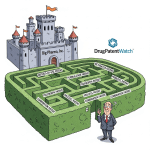
Because a large share of generic manufacturers are incorporated in Delaware and a large share of brand manufacturers keep their U.S. headquarters in New Jersey, those two districts have handled the overwhelming majority of ANDA litigation for more than a decade.[12] That duopoly is not static. Delaware’s share of ANDA filings ran as high as 68 percent in 2021 against New Jersey’s 24 percent, but by 2024 New Jersey had overtaken Delaware for the first time in a decade, drawing 51 percent of ANDA filings to Delaware’s 42 percent.[3][12] Analysts attribute part of the shift to Delaware Chief Judge Colm Connolly’s 2022 standing orders requiring disclosure of third-party litigation funding arrangements, which some funders and litigants have preferred to avoid, alongside judicial vacancies that left Delaware’s bench thinner than New Jersey’s full complement.[3]
Year
District of Delaware
District of New Jersey
2015
40.5%
40.5%
2021
68%
24%
2024
42%
51%
DrugPatentWatch has covered the judge-level and district-level mechanics of that shift in more depth elsewhere; the point for this piece is narrower: two courthouses eighty miles apart, applying the identical Hatch-Waxman statute and the identical Federal Circuit precedent, can still produce different practical odds of success simply because of docket speed, standing orders on funding disclosure, and which judges happen to be sitting.
The Sovereign Immunity Gambit and Why It Failed Twice
Saint Regis Mohawk Tribe and the Restasis Patents
In September 2017, Allergan assigned its Restasis patents to the Saint Regis Mohawk Tribe and licensed them back, betting that tribal sovereign immunity would let the Tribe simply refuse to participate in the pending IPR petitions Mylan, Teva, and Akorn had filed. Judge William Bryson, sitting by designation in the Eastern District of Texas, separately found the same patents invalid as obvious in October 2017 following a bench trial, while expressing what he called serious concerns about the legitimacy of the tribal transaction.[13] The Federal Circuit resolved the immunity question directly in Saint Regis Mohawk Tribe v. Mylan Pharmaceuticals Inc., holding in 2018 that tribal sovereign immunity does not apply to IPR proceedings at all, reasoning that IPR more closely resembles an agency enforcement action than a civil suit between private parties.[14]
Regents of the University of Minnesota v. LSI Corp.: Same Rule, Bigger Stakes
The Restasis ruling was about tribes specifically, and pharmaceutical, biotech, and university patent owners immediately asked whether state sovereign immunity under the Eleventh Amendment might fare better. The answer came in 2019. The University of Minnesota, having sued LSI Corporation and customers of Ericsson for infringing several of its patents, argued that state sovereign immunity should bar the resulting IPR petitions. The PTAB, in an expanded panel, held that state immunity did apply in principle but had been waived when the university sued in the first place. The Federal Circuit went further on appeal in Regents of the University of Minnesota v. LSI Corp., 926 F.3d 1327 (Fed. Cir. 2019), holding that state sovereign immunity does not protect a state-owned patent from IPR at all, extending the same three factors it had relied on in the tribal case.[15] The upshot for both rulings is identical: sovereign immunity, whichever flavor, is not a viable route to escape the PTAB.
The Asymmetry Nobody Talks About: A State University Can Be Immune From Suit, Yet Still Lose at the PTAB
Florida Prepaid: Why You Usually Can’t Sue a State University for Infringement
The Minnesota decision closed off immunity as a shield against IPR, but it did not touch a separate, older line of sovereign-immunity law that cuts the opposite direction. In Florida Prepaid Postsecondary Education Expense Board v. College Savings Bank, 527 U.S. 627 (1999), the Supreme Court held that Congress’s attempt to abrogate state sovereign immunity for patent infringement suits, through the Patent and Plant Variety Protection Remedy Clarification Act, exceeded Congress’s enforcement power under the Fourteenth Amendment.[16] One law review analysis of the decision put it plainly: the ruling effectively makes state universities immune from intellectual property infringement suits brought against them.[17] A private company generally cannot drag a state university into federal court for patent infringement unless the university has consented or waived that immunity.
The Catch: Suing to Enforce Waives the Shield
Put the two lines of cases side by side and an asymmetry appears that has nothing to do with the quality of any invention. A state university that licenses a patent to industry and never sues anyone keeps its Eleventh Amendment shield against being sued for infringing someone else’s patent. The moment that same university sues to enforce its own patent — the ordinary way patents generate licensing leverage and litigation settlements — the Minnesota rule kicks in on the other side: the infringement defendant can file an IPR, and the university, as patent owner, has no sovereign-immunity defense against that petition at all. Offense and defense are not symmetrical. A state-owned pharmaceutical patent is at its most legally protected when it sits quietly on a licensing shelf and at its most exposed the instant its owner tries to cash it in.
What This Means for In-Licensed University Patents in Pharma
A large share of foundational pharmaceutical composition-of-matter and method patents originate at state universities and are exclusively licensed to industry, so this asymmetry is not an academic curiosity. A licensee enforcing a state-university-owned patent against a generic or biosimilar challenger is enforcing an asset that has zero sovereign-immunity protection at the PTAB, even though the same asset would have been effectively unreachable in district court had the university been sued directly instead of suing. Forum posture, not the underlying science, decides which shield applies.
A Working Taxonomy: Five Ways Forum Choice Changes the Odds Before the Merits Are Even Reached
Pulling the mechanics above together, there are at least five distinct levers by which forum selection moves the odds of a pharmaceutical patent dispute independent of the underlying prior art or scientific merit.
1. Venue Arbitrage Under Hatch-Waxman’s Narrow Venue Rule
Because Valeant v. Mylan ties venue to where the ANDA was prepared, a brand company suing several generic filers with different corporate structures can be forced into multiple, non-consolidated suits in different districts over the identical patents, with different judges potentially reaching different claim construction or validity conclusions on the same claims.[4]
2. Forum Sequencing Between District Court and PTAB
As Novartis v. Noven shows, a patentee that wins at trial has not necessarily won the whole fight, and a challenger that loses in district court retains, until the one-year bar runs, a second bite at a lower evidentiary standard.[1]
3. Burden-of-Proof Arbitrage
Any invalidity argument that is close on the merits — strong enough to raise real doubt but not overwhelming — is far likelier to succeed at the PTAB’s preponderance standard than in district court’s clear-and-convincing regime, regardless of claim construction.[5]
4. Sovereign Immunity Posture
Immunity cannot shield a patent from IPR once its owner has sued to enforce it, but it can still shield the same owner from being sued for infringing someone else’s patent, an asymmetry that rewards defensive licensing over offensive enforcement for state and tribal patent holders.[15][16]
5. Speed as Leverage
A district known for a “rocket docket,” a PTAB petition timed to resolve before a 30-month stay expires, or a judge with a reputation for denying summary judgment and pushing cases to trial all change the settlement value of a case long before anyone rules on validity, because litigation speed itself is a bargaining chip in Hatch-Waxman practice.
What This Means for Brand Manufacturers
A brand company defending an Orange Book patent portfolio cannot treat a single favorable district court ruling as the end of the story while an IPR clock is still running, and cannot assume that winning the venue fight guarantees a friendly claim construction outcome now that PTAB and district courts largely apply the same Phillips standard. The more actionable lever is defensive drafting and litigation-record management: because the PTAB and a district court can reach opposite conclusions on materially the same prior art, the quality and completeness of the evidentiary record built in whichever forum comes first can shape, without controlling, what happens in the second. Monitoring which forum a specific generic or biosimilar competitor is likely to choose, and when its one-year IPR window closes relative to the ANDA litigation schedule, is the kind of forward-looking intelligence that platforms like DrugPatentWatch are built to surface from public Paragraph IV, litigation, and PTAB filing data.
What This Means for Generic and Biosimilar Challengers
For a challenger, the sequencing decision is close to irreversible: file an IPR petition and lose, and the estoppel provisions of 35 U.S.C. § 315(e) foreclose raising the same or reasonably available grounds again in the parallel district court case or before the ITC.[10] That makes the choice of which prior art to lead with at the PTAB, and whether to file there at all rather than wait for district court discovery to sharpen the invalidity case, a strategic decision with permanent consequences, not merely a procedural formality.
Methodology
This analysis is built from published federal appellate and district court opinions (Federal Circuit, Supreme Court, and the Eastern District of Texas, District of Delaware, and District of Minnesota dockets discussed above), the Federal Register text of the USPTO’s 2018 claim construction rule, the USPTO’s own PTAB Orange Book/Biologics trial statistics through July 2025, and law-firm and industry secondary analysis of each ruling, all cited inline. District court venue-share figures for 2015, 2021, and 2024 are drawn from third-party litigation-analytics reporting rather than an original DrugPatentWatch tabulation and are labeled as such; all other statistics are official USPTO figures. No patent numbers, case citations, dates, or outcomes in this article were estimated or inferred; where a source did not specify a figure precisely, that figure was omitted rather than approximated.
Cumulative PTAB institution rates for Orange Book–listed patents (62%) and biologic patents (61%) through July 2025 are close to the broader IPR docket’s institution rate, which undercuts the assumption that pharmaceutical patents get either an automatic pass or an automatic denial once a petition is filed — the real divergence from district court shows up later, at the final-written-decision stage, not at the institution gate.[18]
FAQ
1. Can the same pharmaceutical patent really be found valid in one forum and invalid in another? Yes. Novartis AG v. Noven Pharmaceuticals, Inc. is the clearest documented example: the same two Exelon Patch patents were found not obvious in Delaware district court and later found obvious by the PTAB, and the Federal Circuit affirmed both outcomes.[1]
2. Why doesn’t a district court ruling bind the PTAB on the same patent? The Federal Circuit has held that the two tribunals apply different burdens of proof and are not deciding identical questions, so a prior court ruling of validity does not estop the PTAB from reaching its own conclusion on a later petition.[9]
3. Is claim construction still different between district court and the PTAB? Not officially. Since November 13, 2018, the PTAB has applied the same Phillips claim construction standard used in federal courts and the ITC for all newly filed petitions, replacing the older, broader “broadest reasonable interpretation” standard.[2]
4. Did the Restasis tribal sovereign immunity deal work? No. The Federal Circuit held in 2018 that tribal sovereign immunity does not apply to IPR proceedings, and the underlying Restasis patents were separately found invalid as obvious by the district court the same year.[13][14]
5. Can a state university avoid IPR by claiming sovereign immunity? No. The Federal Circuit extended the same reasoning it used for tribes to state sovereign immunity in Regents of the University of Minnesota v. LSI Corp. in 2019, holding that state-owned patents are not shielded from IPR.[15]
6. Can a state university still be sued for patent infringement? Generally, no. Under Florida Prepaid Postsecondary Education Expense Board v. College Savings Bank, states retain Eleventh Amendment immunity from patent infringement suits, since the Supreme Court held Congress’s attempt to abrogate that immunity unconstitutional.[16]
7. Why did New Jersey overtake Delaware for ANDA filings in 2024? Reporting attributes the shift to a combination of Delaware Chief Judge Colm Connolly’s standing orders requiring disclosure of third-party litigation funding, judicial vacancies thinning Delaware’s bench, and New Jersey’s full complement of active judges.[3]
8. What happens if a generic company misses the one-year deadline to file an IPR? Under 35 U.S.C. § 315(b), a petition filed more than one year after being served with an infringement complaint on that patent is time-barred, leaving district court as the only remaining validity track for that party.
9. Does losing an IPR stop a generic company from raising the same invalidity argument in district court? Yes, for that petitioner. Section 315(e) estops a losing IPR petitioner from raising, in later district court or ITC proceedings, any ground it raised or reasonably could have raised in the IPR, though this does not bind other, unrelated defendants.[10]
10. Does venue selection under Valeant v. Mylan ever help brand companies consolidate cases against multiple generic filers? Not usually. The decision narrows venue to districts connected to each generic’s own ANDA preparation, which can force brand companies into multiple parallel suits in different districts rather than one consolidated case, increasing litigation cost and the risk of inconsistent rulings.[4]
Key Takeaways
In Novartis AG v. Noven Pharmaceuticals, Inc., the same two Exelon Patch patents were found not obvious by a district court and obvious by the PTAB, and the Federal Circuit affirmed both rulings, establishing that neither forum is bound by the other’s validity findings.[1]
District court requires clear and convincing evidence to invalidate a patent; the PTAB requires only a preponderance of the evidence, a structural gap set by statute that no rule change has closed.[5]
Claim construction, once a second axis of divergence, converged in November 2018 when the USPTO moved the PTAB from the broadest-reasonable-interpretation standard to the Phillips standard used in district courts.[2]
Tribal and state sovereign immunity both failed as shields against IPR, following Saint Regis Mohawk Tribe v. Mylan Pharmaceuticals (2018) and Regents of the University of Minnesota v. LSI Corp. (2019), but state entities retain a separate, older immunity from being sued for infringement in the first place under Florida Prepaid (1999) — an asymmetry that rewards licensing over litigating for state-owned pharmaceutical patents.[14][15][16]
District of New Jersey overtook the District of Delaware for ANDA case filings in 2024 for the first time in a decade (51% versus 42%), reversing years of Delaware dominance that followed TC Heartland and Valeant v. Mylan.[3][12]
IPR estoppel under 35 U.S.C. § 315(e), combined with the one-year filing bar under § 315(b), makes the sequencing of forum choice a largely irreversible strategic decision rather than a procedural afterthought.
References
Novartis AG v. Noven Pharmaceuticals, Inc., 853 F.3d 1289 (Fed. Cir. 2017); Foley & Lardner LLP. (2017, April). PTAB not bound by prior court decisions upholding Exelon patents. https://www.foley.com/insights/publications/2017/04/ptab-not-bound-by-prior-court-decisions-upholding/
Federal Register. (2018, October 11). Changes to the claim construction standard for interpreting claims in trial proceedings before the Patent Trial and Appeal Board. 83 Fed. Reg. 51340. https://www.federalregister.gov/documents/2018/10/11/2018-22006/changes-to-the-claim-construction-standard-for-interpreting-claims-in-trial-proceedings-before-the
Saul Ewing LLP. (2025). ANDA litigants flocking to New Jersey over Delaware. IAM. https://www.saul.com/sites/default/files/documents/2025-02/ANDA%20litigants%20flocking%20to%20New%20Jersey%20over%20Delaware%20-%20IAM.pdf
Valeant Pharmaceuticals North America LLC v. Mylan Pharmaceuticals Inc., 978 F.3d 1374 (Fed. Cir. 2020); Mintz. (2020, November 12). In Hatch-Waxman litigation, Federal Circuit restricts venue under the TC Heartland to districts relating to ANDA filings. https://www.mintz.com/insights-center/viewpoints/2231/2020-11-12-hatch-waxman-litigation-federal-circuit-restricts-venue
Cislo & Thomas LLP. (2017, June). PTAB is not bound to district court’s holding of nonobviousness and vice versa. https://cisloandthomas.com/ptab-is-not-bound-to-district-courts-holding-of-nonobviousness-and-vice-versa/
PTABWatch. (2017, December). PTAB not always bound by previous court decisions regarding patent validity. https://www.ptabwatch.com/2017/12/ptab-not-always-bound-by-previous-court-decisions-regarding-patent-validity/
Novartis Pharmaceuticals Corp. v. Noven Pharmaceuticals, Inc., 125 F. Supp. 3d 474 (D. Del. 2015), aff’d sub nom. Novartis Pharmaceuticals Corp. v. Watson Laboratories, Inc., 611 F. App’x 988 (Fed. Cir. 2015).
K&L Gates LLP. (2017, June 6). The PTAB can offer a second chance at obviousness—even after the Federal Circuit affirms the non-obviousness of the patent claims. https://www.klgates.com/The-PTAB-Can-Offer-A-Second-Chance-At-ObviousnessEven-After-The-Federal-Circuit-Affirms-The-Non-Obviousness-of-the-Patent-Claims-06-06-2017
PTAB Litigation Blog. (2017, April 19). Fed Circ affirms conflicting invalidity determinations from district court and PTAB. https://www.ptablitigationblog.com/fed-circ-affirms-conflicting-invalidity-determinations-district-court-ptab/
TC Heartland LLC v. Kraft Foods Group Brands LLC, 581 U.S. 258 (2017); Goodwin Procter LLP. (2017, May 23). TC Heartland LLC v. Kraft Foods Group Brands LLC: Supreme Court tightens venue rules for patent cases. https://www.goodwinlaw.com/en/insights/publications/2017/05/05_23_17-tc-heartland-llc-v-kraft-foods-group
DrugPatentWatch. (2026, January 28). Where are the most active U.S. district courts for drug patent litigation, why, and what does it mean? https://www.drugpatentwatch.com/blog/where-are-the-most-active-u-s-district-courts-for-drug-patent-litigation-why-and-what-does-it-mean/
Fierce Pharma. (2017, October 17). Allergan loses Restasis patent protections in federal court decision. https://www.fiercepharma.com/legal/allergan-loses-restasis-patent-protections-federal-court-decision
Saint Regis Mohawk Tribe v. Mylan Pharmaceuticals Inc., 896 F.3d 1322 (Fed. Cir. 2018); Winston & Strawn LLP. (2019, June). State sovereign immunity does not apply to IPR proceedings. https://www.winston.com/en/insights-news/state-sovereign-immunity-does-not-apply-to-ipr-proceedings
Regents of the University of Minnesota v. LSI Corp., 926 F.3d 1327 (Fed. Cir. 2019); AIPLA. (2019, June 18). No state sovereign immunity for University of Minnesota in IPR. https://www.aipla.org/detail/news/2019/06/18/no-state-sovereign-immunity-for-university-of-minnesota-in-ipr
Florida Prepaid Postsecondary Education Expense Board v. College Savings Bank, 527 U.S. 627 (1999). Cornell Law School Legal Information Institute. https://www.law.cornell.edu/supct/html/98-531.ZS.html
Washington Law Review. [Analysis of Florida Prepaid’s effect on state university patent liability]. https://digitalcommons.law.uw.edu/wlr/vol82/iss2/9
U.S. Patent and Trademark Office. (2025, October). Orange Book/biologics study update through July 2025. https://www.uspto.gov/sites/default/files/documents/Orange_Book_Biologics_Trial_Stats_July_2025.pdf; Finnegan, Henderson, Farabow, Garrett & Dunner, LLP. (2024). Trends in PTAB trials involving drug and biologic patents. https://www.finnegan.com/en/insights/blogs/at-the-ptab-blog/trends-in-ptab-trials-involving-drug-and-biologic-patents.html