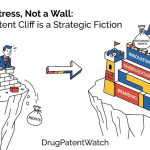
On May 18, 2026, a federal jury in Boston awarded purchasers of Amitiza (lubiprostone) $884,943,990 in single damages against Takeda, finding that a 2014 patent settlement with Par Pharmaceutical was an illegal reverse payment.[1] The wholesaler and retailer portions of that verdict, $821.7 million combined, are subject to mandatory trebling under federal antitrust law once judgment enters.[1][2] Takeda has said it will appeal.[1]
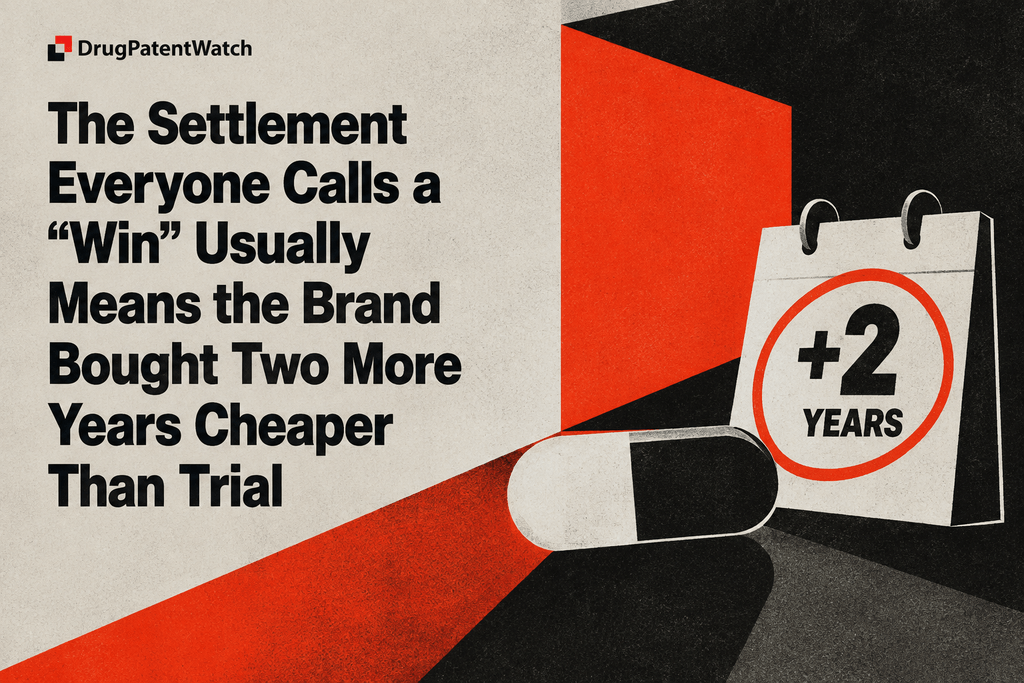
Twelve years earlier, when Takeda and Sucampo signed that settlement, it looked like the normal outcome of Paragraph IV litigation: the brand kept its generic competitor off the market until January 1, 2021, more than six years before Amitiza’s remaining patents were set to expire in October 2027.[3] Trade coverage at the time treated it as unremarkable. A jury in 2026 called it a $210 million payoff instead.[4]
That gap between how a settlement reads on the day it is signed and how it reads after a jury, an appellate panel, or an FTC investigation gets to it is the subject of this analysis. DrugPatentWatch reviewed nine reverse-payment settlements and the litigation that followed each one, spanning 1997 to 2026, to quantify how often the brand’s bet actually paid off.
The Short Answer
A brand that settles Paragraph IV litigation by paying a generic challenger to delay entry is making a bet: that the payment costs less than the expected value of losing at trial. In most of the settlements examined here, that bet paid off, sometimes for a decade at a time, at a fraction of what an adverse verdict would have cost. But the record also contains a growing number of settlements where the bet failed outright, including one, Amitiza, that turned an eight-figure payment into a nine-figure verdict headed toward ten figures on appeal.
What a Reverse-Payment Settlement Actually Buys
In Hatch-Waxman litigation, a generic manufacturer files an Abbreviated New Drug Application with a Paragraph IV certification, asserting that the brand’s listed patent is invalid or will not be infringed. The brand can sue for infringement, which triggers an automatic 30-month stay of FDA approval. Rather than litigate to judgment, the parties frequently settle, and the brand pays the generic in some form — cash, a license to enter early, a promise not to launch an authorized generic, or a supply and profit-share deal — in exchange for the generic agreeing to a fixed, later entry date.[5]
Two Different Kinds of “Years Bought”
Coverage of these settlements routinely conflates two distinct measurements, and the difference matters for anyone evaluating whether a deal was a good one.
Type A: Years short of full patent life
This is the gap between the negotiated entry date and the date the brand’s patent would otherwise expire. It is the easiest number to find, because it comes directly from the settlement and the Orange Book. In FTC v. Actavis, for example, the settlement fixed generic AndroGel’s entry at August 31, 2015, a date the Supreme Court’s opinion itself measured as 65 months, or roughly five and a half years, before Solvay’s patent expired.[6] This number tells a purchaser how much monopoly pricing the brand preserved relative to the patent’s nominal term. It says nothing about whether the brand would actually have kept that exclusivity had the case gone to trial.
Type B: Years earlier than the litigation counterfactual
This is the harder number: how much sooner the generic would have entered had the parties litigated to judgment instead of settling. It requires either an admission, an expert reconstruction accepted by a jury, or a contemporaneous finding on the patent’s merits. It is Type B that determines whether a settlement was genuinely cheaper than trial, and it is Type B that plaintiffs in every case examined below had to prove, and frequently failed to prove, to collect antitrust damages.
Methodology
DrugPatentWatch selected nine reverse-payment settlements where the underlying facts are documented in a Supreme Court, circuit court, or district court opinion, an FTC complaint or consent order, or a company’s own securities filing or press release, and where the settlement was later tested by adjudicated antitrust litigation, an FTC enforcement action, or a jury trial. Settlements that were merely alleged in a still-pending complaint, with no court or agency finding on the underlying facts, were excluded. Dollar figures are drawn from the cited primary source for each case; where a figure required combining multiple disclosed amounts across counterparties or years, it is labeled below as a DrugPatentWatch calculation. The period covered runs from the 1997 Bayer-Barr Cipro settlement to the May 2026 Amitiza verdict.
The Six Findings That Matter
Solvay paid an estimated $243 million to $342 million combined to three generic makers, calculated by DrugPatentWatch from the per-company figures in the settlement, to keep AndroGel generics off the market for 65 months before patent expiration; that settlement survived Supreme Court review of the underlying antitrust theory and was never overturned on the facts.[6][7] Cephalon paid more than $300 million combined to four generic makers to delay Provigil competition until April 2012, then was ordered nine years later to disgorge $1.2 billion, four times the original payment.[8][9] Schering-Plough paid $75 million combined to two generic makers in 1997 to buy five years of exclusivity on K-Dur, then paid $60.2 million more in 2017 to settle purchaser claims arising from that same payment.[10][11][12] Bayer paid Barr Laboratories and other generic makers roughly $398 million in 1997 to delay Cipro competition, then paid a nearly identical $399 million combined across four settlements between 2013 and 2017 to close the antitrust litigation the original payment provoked.[13][14] Takeda’s 2014 settlement with Par, characterized by plaintiffs’ counsel as a $210 million payoff, produced an $884.9 million jury verdict in May 2026, with $821.7 million of that subject to mandatory trebling.[1][4] A federal jury in the Nexium litigation found in December 2014 that AstraZeneca’s payment to Ranbaxy was “large and unjustified” and “unreasonably anticompetitive” — and then awarded zero damages, because plaintiffs could not prove Ranbaxy would have launched before the negotiated date anyway.[15][16]
Patent Timeline: How Nine Reverse-Payment Deals Compare
Drug
Brand / Generic
Settlement Year
Negotiated Entry Date
Reference Patent Date
Payment / Consideration
Later Outcome
Cipro
Bayer / Barr
1997
1997–2003 phased entry
Patent held until 2004
~$398.1M combined[13]
Cal. Supreme Court revived claims (2015); ~$399M paid across four settlements by 2017[14]
K-Dur 20
Schering-Plough / Upsher-Smith & AHP
1997
Sept. 2001
5 years before patent expiration[11]
$60M + $15M[10]
3d Cir. revived claims (2012); $60.2M purchaser settlement (2017)[12]
AndroGel
Solvay / Actavis, Paddock, Par
2006
Aug. 31, 2015
65 months before patent expiration[6]
$12M + $60M + $19–30M/yr × 9 yrs[6]
FTC v. Actavis (2013) allows antitrust scrutiny; case remanded[6]
Provigil
Cephalon / Teva, Barr, Mylan, Ranbaxy
2005–06
April 2012
Reissue patent valid to April 2015[9]
>$300M combined[8]
$1.2B FTC disgorgement (2015)[9]
Lamictal
GSK / Teva
c. 2011–12
Early chewables entry; ~2 yrs later for tablets
Main patent claim ruled invalid pre-settlement[18]
No-AG commitment (non-cash)[17]
3d Cir. King Drug (2015): non-cash payments count[17]
Nexium
AstraZeneca / Ranbaxy
2008
May 27, 2014
Ranbaxy admitted patents valid/infringed[15]
Cash payment (amount sealed)
Jury: anticompetitive but zero damages (2014)[15][16]
Truvada
Gilead / Teva
Undisclosed
Undisclosed
—
Disputed
Jury verdict for defendants (June 2023)[19]
Bystolic
Forest Labs / multiple generics
Undisclosed
Undisclosed
—
Disputed
2d Cir. affirmed dismissal (2024)[20]
Amitiza
Takeda, Sucampo / Par
2014
Jan. 1, 2021
More than 6 yrs before Oct. 2027 patent expiration[3]
For most of the 2000s, courts asked only whether a settlement kept the generic out of the market for no longer than the patent’s own exclusionary scope. Under that test, the Eleventh Circuit set aside the FTC’s challenge to the K-Dur settlement in 2005, rejecting the agency’s view that Schering-Plough’s $60 million payment to Upsher-Smith was anything other than fair consideration for the licenses Schering received in return.[21] If a settlement did not extend exclusivity beyond the patent’s stated term, it was lawful almost by definition, regardless of how weak the underlying patent actually was.
FTC v. Actavis: Rule of Reason Replaces the Bright Line
The Supreme Court rejected that framework in 2013. Writing for a 5-3 majority, the Court held that reverse-payment settlements are not immune from antitrust scrutiny simply because they fall within a patent’s nominal scope, and that courts should instead apply a rule-of-reason analysis weighing the payment’s size, its relationship to avoided litigation costs, and its independence from any other legitimate business justification.[6] The AndroGel settlement itself, five and a half years short of the full patent term and backed by tens of millions of dollars in annual payments, became the template case for what a “large and unjustified” payment looks like.
What Counts as a Payment: King Drug Extends Actavis to Non-Cash Deals
The Third Circuit closed an obvious workaround two years later. In King Drug Co. of Florence v. SmithKline Beecham, GSK had settled Lamictal litigation with Teva after a district judge had already ruled the drug’s main patent claim invalid.[18] Rather than pay cash, GSK gave Teva early entry into the smaller chewables market and promised not to launch its own authorized generic tablet during Teva’s 180-day exclusivity window, a promise plaintiffs valued at hundreds of millions of dollars in a $2 billion annual market.[17][18] The Third Circuit held that a no-authorized-generic commitment can constitute a reverse payment under Actavis even without a dollar changing hands, and noted that absent the settlement, Teva could plausibly have launched at risk almost two years earlier than the date it actually agreed to.[17]
The Buyout Math: When Is a Settlement Actually Cheaper Than Trial?
Every reverse-payment settlement is, from the brand’s side, a comparison of two numbers: the cost of paying the generic to wait, against the probability-weighted cost of losing the patent case outright and facing immediate, uncontrolled generic entry plus potential antitrust exposure on top of it. Four variables determine which side of that comparison wins.
Variable One: The Size of the Payment Relative to Annual Monopoly Profit
A payment that is small relative to what the brand earns each additional year of exclusivity is, almost by definition, a good trade for the brand. Cephalon’s combined $300 million in settlements, against Provigil sales that exceeded $1 billion in the year before generic entry, illustrates the ratio regulators find most suspicious: a payment worth a few months of monopoly profit in exchange for years of continued exclusivity.[8]
Variable Two: The Probability-Weighted Outcome at Trial
A brand confident of winning at trial has little reason to pay a large settlement; a brand that expects to lose has every reason to pay whatever is cheaper than the expected damages and lost exclusivity. Lamictal is the clearest documented example of a brand settling after a court had already signaled how the merits would come out: GSK negotiated its no-AG deal only after a judge ruled the drug’s core patent claim invalid.[18]
Variable Three: The Antitrust Exposure the Settlement Itself Creates
Since Actavis, the settlement is no longer the end of the brand’s legal exposure; it can become the basis of a second lawsuit, years later, brought by the purchasers who paid inflated prices during the delay. Cipro and K-Dur both show the same pattern: an original payment in the low hundreds of millions, followed roughly fifteen to twenty years later by a second round of settlements, brought by direct and indirect purchasers, that came close to matching the size of the original payment.[12][13][14]
Variable Four: Trebling
Federal antitrust law automatically trebles compensatory damages, which means a brand’s risk calculation cannot simply compare the settlement payment to a single-damages estimate of what a lost case would cost. Amitiza shows what that multiplier looks like once it is applied: $821.7 million in wholesaler and retailer single damages, headed toward roughly $2.5 billion once trebled, against a settlement that plaintiffs valued at $210 million.[1][4]
When the Math Worked: Three Settlements That Held Up
AndroGel: Nine Years for an Estimated $243–$342 Million
The AndroGel settlement remains, in one important sense, a success for Solvay: although the Supreme Court allowed antitrust scrutiny of the deal to proceed, the underlying settlement itself was never invalidated, no damages were ever assessed against Solvay on the merits, and the case is remembered today primarily as the vehicle for a new legal standard rather than as a financial loss for the company that signed it.[6][7]
K-Dur: Five Years, Twice
Schering-Plough’s $75 million in 1997 bought five years of exclusivity on a mature, low-margin supplement product.[10][11] Even after the Third Circuit revived the case in 2012 and the company (by then Merck) paid $60.2 million to purchasers in 2017, the combined lifetime cost of roughly $135 million across two decades is small next to two decades of branded K-Dur sales protected by that five-year delay.[12]
Cipro: Eighteen Years of Litigation, Roughly Matching the Original Payment
Bayer’s 1997 payment to Barr and its co-defendants, reported at $398.1 million, protected Cipro exclusivity through 2004.[13] The antitrust litigation that followed ran for eighteen years, through a Federal Circuit loss for plaintiffs, a California trial-court summary judgment for Bayer, and a 2015 reversal by the California Supreme Court that revived the case entirely.[14] By the time the last defendant, Barr, settled in January 2017, the combined purchaser settlements across all four defendants totaled roughly $399 million — a coincidence of scale, not identical dollars, but a useful illustration that even an eighteen-year fight can end up costing the defendants close to what they originally paid to avoid litigating the patent at all.[14]
When the Math Failed: Three Settlements That Cost More Than Trial Ever Would Have
Provigil: A $300 Million Deal That Became a $1.2 Billion Disgorgement
Cephalon’s exposure came from the quality of the patent it was protecting, not just the size of the payment. The FTC and, later, a coalition of 48 state attorneys general found that the formulation patent underlying the 2005–06 settlements had been obtained through inequitable conduct and was ultimately deemed invalid and unenforceable by a court.[22] The four settlements delayed competition until April 2012, years past the point regulators said generics would otherwise have entered.[8][22] Cephalon’s parent, Teva, ultimately paid $1.2 billion to resolve the FTC’s disgorgement claim, four times the roughly $300 million the original settlements cost.[9]
“Requiring wrongdoers to give up their ill-gotten gains is an important deterrent.” — FTC Chairwoman Edith Ramirez, announcing the $1.2 billion Cephalon settlement[9]
Lamictal: Settling After the Verdict Was Already Written
GSK’s Lamictal deal illustrates a different failure mode: settling for a non-cash concession after the merits had already turned against the brand does not make the antitrust exposure disappear, it just changes its shape. The Third Circuit’s 2015 ruling that a no-AG commitment can itself be an actionable reverse payment meant GSK faced the same rule-of-reason scrutiny it would have faced with a cash payment, on top of having already lost the underlying patent fight on the merits.[17][18]
Amitiza: The Verdict That Rewrote the Playbook
The Amitiza case is, according to the plaintiffs’ own counsel, the first time private antitrust plaintiffs have won a jury verdict at trial challenging a reverse-payment settlement rather than settling or losing.[4] Takeda’s defense at trial argued the deal was procompetitive because, absent the settlement, Amitiza’s patents would have run until October 2027 — six years past the negotiated entry date — and because Par’s own ANDA was not approved until roughly seventeen months after the January 2021 entry date the settlement actually granted.[3] The jury rejected that defense. It found the settlement’s profit-sharing structure with Sucampo functioned as an implicit no-AG payment, and it valued the harm at $884.9 million in single damages, with the largest components subject to automatic trebling.[1][4]
When Nobody Can Prove the Delay: Causation as the Real Battleground
Nexium: “Large and Unjustified” but Zero Dollars
The Nexium case shows that a settlement can be found anticompetitive in principle and still cost the brand nothing in damages, if plaintiffs cannot prove what would have happened without it. The jury in the consolidated Nexium litigation answered yes to three threshold questions: that AstraZeneca had market power, that its payment to Ranbaxy was large and unjustified, and that the settlement was unreasonably anticompetitive.[15] But it answered no to the next question — whether Ranbaxy would actually have launched before the negotiated May 27, 2014 date absent the settlement — and that single answer ended the case with zero damages awarded.[15][16] The First Circuit affirmed in 2016.[16]
Truvada and Bystolic: Two More Wins for the Causation Defense
The pattern held in more recent cases. In June 2023, a federal jury in the Northern District of California found that Gilead and Teva had not engaged in an anticompetitive reverse-payment scheme over generic Truvada.[19] In May 2024, the Second Circuit affirmed dismissal of claims that Forest Laboratories and seven co-defendants had unlawfully delayed generic Bystolic, finding no plausible basis to infer the settlement payments were made solely to delay competition.[20] Both cases reinforce that proving a large payment exists is only the first step; proving what would have happened without it remains the harder half of the plaintiff’s case.
What This Means for Generic Entry Timing
For a generic manufacturer weighing whether to settle or litigate to judgment, the case set above suggests the calculus should include the brand’s own probability of losing, not just the settlement offer on the table. Lamictal shows the clearest leverage point: once a court has ruled against the brand’s patent on the merits, a generic negotiating a settlement afterward is negotiating from a position closer to “at-risk launch is legally available now” than to “we might win eventually.” A settlement signed after an adverse merits ruling should be priced accordingly, and the Third Circuit’s King Drug decision means non-cash consideration, licenses, no-AG commitments, and profit-share deals, will be valued and scrutinized the same way a check would be.[17][18]
What This Means for Brand Manufacturers Weighing a Settlement Today
The Amitiza verdict changes the arithmetic for any brand still treating post-Actavis settlements as a solved problem. A structure that looked defensible in 2014, a profit-sharing license timed years ahead of nominal patent expiration, was found by a 2026 jury to function as an illegal reverse payment regardless of how it was papered.[1][4] Litigation counsel evaluating a proposed settlement now has a concrete, adjudicated data point for how large a trebled verdict can get relative to the settlement value: in Amitiza, roughly ten times the reported payoff amount before end-payor damages are even added.[1][4] That ratio, not the nominal years bought before patent expiration, is the number that should drive the internal cost-benefit analysis.
What This Means for Purchasers and Payers Evaluating a Settlement Headline
A press release announcing that a generic has secured a “licensed entry date” years before patent expiration is, on its face, favorable news for a generic maker and its investors. The record above suggests purchasers and payers should ask a narrower question: how does the negotiated date compare not to the patent’s nominal expiration, but to the date a court might plausibly have ordered had the case gone to judgment. Nexium shows that even a payment a jury calls “large and unjustified” can still leave purchasers with no recovery if that second, harder question cannot be answered with proof.[15][16]
Tracking the Gap Between Settlement Dates and Patent Expiration
Building the comparison in the table above required cross-referencing settlement terms disclosed in litigation and FTC filings against the Orange Book patent and exclusivity data for each drug, since the two data sets are rarely published side by side. DrugPatentWatch maintains patent-expiration and exclusivity timelines precisely so that the Type A gap, negotiated entry date versus nominal patent term, can be checked drug by drug rather than reconstructed case by case from litigation filings alone. That kind of cross-reference does not resolve the harder Type B question of what a court would have ordered, which remains a matter for the litigation record itself, but it is the starting point for evaluating whether a given settlement’s headline date looks generous or stingy relative to the patent it was resolving.
The FTC’s Shrinking Data Set on Explicit Pay-for-Delay Deals
The FTC’s own numbers show the settlement structures above becoming less common in their most explicit form. The agency’s 2010 staff study estimated that settlements including compensation delayed generic entry by 17 months longer on average than settlements without it, at a cost to consumers of roughly $3.5 billion a year.[23] Annual filings under the Medicare Modernization Act tracked a decline in settlements meeting that explicit-compensation-plus-restriction definition after Actavis, from 29 potential pay-for-delay deals in fiscal 2013 to 14 in fiscal 2015.[24][25] A January 2025 FTC review of its more recent MMA filings noted that the compensation in modern settlements increasingly takes the form the Third Circuit addressed in King Drug: quantity restrictions, licensing terms, and other non-cash consideration rather than a straightforward check.[26] DrugPatentWatch has previously tracked the full FY2004–FY2021 FTC settlement-share data in a separate analysis of ANDA litigation outcomes; that data is not repeated here.
Key Takeaways
Amitiza’s May 2026 jury verdict, $884.9 million in single damages against a settlement plaintiffs valued at $210 million, is the first jury trial win for private plaintiffs challenging a reverse-payment settlement on the merits.[1][4]
Cephalon’s roughly $300 million in Provigil settlements led to a $1.2 billion FTC disgorgement nine years later, a four-fold multiple.[8][9]
Bayer’s $398.1 million Cipro payment in 1997 was matched almost dollar for dollar, roughly $399 million, by the purchaser settlements it triggered over the following two decades.[13][14]
A federal jury can find a payment “large and unjustified” and the settlement “unreasonably anticompetitive,” as it did in Nexium, and still award zero damages if plaintiffs cannot prove an earlier entry date would otherwise have occurred.[15][16]
The Third Circuit’s King Drug decision means non-cash consideration, no-AG commitments, licenses, profit shares, is evaluated under the same Actavis rule-of-reason standard as a cash payment.[17][18]
Federal antitrust law’s automatic trebling means a brand’s risk model has to compare a settlement’s cost against triple the single-damages exposure of losing outright, not the single-damages figure alone.[1]
FAQ
What is a reverse-payment or “pay-for-delay” settlement? It is a settlement of Paragraph IV patent litigation in which the brand manufacturer, rather than the generic challenger, provides value, cash, a license, a promise not to launch an authorized generic, in exchange for the generic agreeing to delay entry to an agreed date.[5][6]
Did the Supreme Court ban reverse-payment settlements? No. FTC v. Actavis held that these settlements are not automatically lawful just because they fall within the patent’s nominal scope, but it also rejected the FTC’s position that they should be presumed illegal. Courts apply a case-by-case rule-of-reason analysis instead.[6]
Does a settlement have to involve cash to count as a reverse payment? No. The Third Circuit’s 2015 King Drug decision held that non-cash consideration, including a brand’s commitment not to launch its own authorized generic, can constitute an actionable reverse payment under Actavis.[17][18]
Why did AstraZeneca pay nothing in damages even after a jury called its Nexium settlement anticompetitive? Because antitrust damages require proof of causation. The jury found the payment large, unjustified, and anticompetitive, but plaintiffs failed to prove Ranbaxy would have launched generic Nexium earlier than the negotiated date absent the settlement, so there was no provable injury to compensate.[15][16]
What made the Amitiza verdict different from earlier reverse-payment cases? It is described by plaintiffs’ counsel as the first jury trial win for private antitrust plaintiffs challenging a reverse-payment settlement on the merits, rather than a case that settled before trial or ended in a defense verdict.[4]
How much did Cephalon ultimately pay for the Provigil settlements? The four original settlements totaled more than $300 million. Nine years later, the FTC required Cephalon’s parent, Teva, to disgorge $1.2 billion to resolve related antitrust claims, a separate and much larger payment.[8][9]
Is a settlement that delays generic entry until close to patent expiration automatically safe from antitrust challenge? Not necessarily. What matters under Actavis is the size and justification of any payment relative to litigation costs, not simply whether the negotiated date falls before or close to the patent’s nominal expiration.[6]
How long can reverse-payment litigation drag on after the original settlement? The Cipro case ran from the original 1997 settlement through a final 2017 purchaser settlement, roughly two decades, including a trip to the California Supreme Court in 2015.[13][14]
Are pay-for-delay settlements becoming less common? FTC filing data shows a decline in settlements with explicit cash compensation and a restriction on generic entry following the Actavis decision, alongside a documented shift toward non-cash consideration such as licensing terms and quantity restrictions.[24][25][26]
What is the difference between a settlement’s negotiated entry date and the date a generic might have won at trial? The negotiated date is fixed and disclosed in the settlement; the trial date is a counterfactual that plaintiffs must prove with evidence, such as an expert reconstruction or an admission, and courts frequently find that counterfactual cannot be established even when the settlement itself looks favorable to the brand.[15][16]
References
Takeda Pharmaceutical Company Limited. (2026, May 18). Takeda Provides an Update regarding Jury Verdict in AMITIZA® (lubiprostone) Antitrust Litigation in the U.S. and Related Revision to FY2025 Financial Results. https://www.takeda.com/newsroom/newsreleases/2026/takeda-provides-update-regarding-jury-verdict-in-amitiza-antitrust-litigation-in-the-us-and-related-revision-to-fy2025-financial-results/
Mogin Law LLP. (2026, May 22). Jury Hits Takeda with $885M Verdict in Pay-for-Delay Antitrust Case. https://moginlawllp.com/jury-hits-takeda-with-885m-verdict-in-pay-for-delay-antitrust-case/
Mogin Law LLP. (2026, May 22). Jury Hits Takeda with $885M Verdict in Pay-for-Delay Antitrust Case [patent expiration and ANDA timing detail]. https://moginlawllp.com/jury-hits-takeda-with-885m-verdict-in-pay-for-delay-antitrust-case/
Hagens Berman. (2026, May 18). Attorneys at Hagens Berman Announce $474M Win in Amitiza Jury Trial Against Takeda. https://www.hbsslaw.com/press/amitiza-antitrust/attorneys-at-hagens-berman-announce-474m-win-in-amitiza-jury-trial-against-takeda
Cardinal IP. Reverse Payment Settlement Agreements (Pay for Delay). https://cardinal-ip.com/reverse-payment-settlement-agreements-pay-for-delay/
FTC v. Actavis, Inc., 570 U.S. 136 (2013). Justia U.S. Supreme Court Center. https://supreme.justia.com/cases/federal/us/570/136/
Mondaq / Sheppard Mullin. (2013, June 28). Federal Trade Commission (FTC) v. Actavis: What Does It Mean for Reverse-Payment Settlements? https://natlawreview.com/article/federal-trade-commission-ftc-v-actavis-what-does-it-mean-reverse-payment-settlements
Federal Trade Commission. (2015, May 28). FTC Settlement in Cephalon Pay-for-Delay Case Ensures $1.2 Billion in Ill-Gotten Gains Relinquished, Refunds Will Go to Purchasers Affected by Anticompetitive Tactics. https://www.ftc.gov/news-events/news/press-releases/2015/05/ftc-settlement-cephalon-pay-delay-case-ensures-12-billion-ill-gotten-gains-relinquished-refunds-will
Federal Trade Commission. (2015, May 28). Ramirez – Cephalon Settlement Press Conference Opening Remarks. https://www.ftc.gov/system/files/documents/public_statements/645761/ramirez_-_cephalon_settlement_press_conference_opening_remarks_5-28-15.pdf
Federal Trade Commission. In the Matter of Schering-Plough Corporation, Upsher-Smith Laboratories, and American Home Products Corporation (Matter No. 9910256). https://www.ftc.gov/enforcement/cases-proceedings/9910256/schering-plough-corporation-upsher-smith-laboratories-american
In re K-Dur Antitrust Litigation. CourtListener. https://www.courtlistener.com/opinion/2332781/in-re-k-dur-antitrust-litigation/
Fierce Pharma. (2017, May 17). Merck, Upsher-Smith put ancient K-Dur pay-for-delay case to rest in $60M settlement. https://www.fiercepharma.com/legal/merck-upsher-smith-reach-60m-settlement-old-reverse-payment-case
Lieff Cabraser. Cipro Cases I and II. https://www.lieffcabraser.com/antitrust/cipro/
Joseph Saveri Law Firm. Cipro Buyers, Barr Reach $225M Deal in Pay-For-Delay Suit. https://www.saverilawfirm.com/press/cipro-buyers-barr-reach-225m-deal-pay-delay-suit
FindLaw. In re Nexium (Esomeprazole) Antitrust Litigation (2016). https://caselaw.findlaw.com/court/us-1st-circuit/1755142.html
Justia. In re Nexium Antitrust Litigation, No. 15-2005 (1st Cir. 2016). https://law.justia.com/cases/federal/appellate-courts/ca1/15-2005/15-2005-2016-11-21.html
Arnold & Porter. (2015, June 30). Antitrust Update: Third Circuit’s King Drug Decision. https://www.arnoldporter.com/en/perspectives/publications/2015/06/20150630_antitrust_update_third_circuits_11963
Justia. King Drug Co. of Florence v. Smithkline Beecham Corp., 791 F.3d 388 (3d Cir. 2015). https://law.justia.com/cases/federal/appellate-courts/ca3/14-1243/14-1243-2015-06-26.html
JD Supra / Wilson Sonsini Goodrich & Rosati. Jury Finds Gilead and Teva Did Not Engage in an Anticompetitive Pay-for-Delay Scheme for HIV Drugs. https://www.jdsupra.com/topics/antitrust-litigation/patents/pay-for-delay/
A&O Shearman. (2024, May 29). Second Circuit Affirms Dismissal Of “Pay For Delay” Case Alleging Patent Litigation Settlement Between Pharmaceutical Company And Generic Manufacturers Violated Antitrust Law. https://www.lit-antitrust.aoshearman.com/Second-Circuit-Affirms-Dismissal-Of-Pay-For
CourtListener. Schering-Plough Corp. v. Federal Trade Commission, 402 F.3d 1056 (11th Cir. 2005). https://www.courtlistener.com/opinion/76900/schering-plough-corp-v-federal-trade-commission/
Office of the Texas Attorney General. (2016, August 5). Attorney General Paxton Joins with 48 Other States to Secure Settlement with Cephalon Over Drug Monopoly. https://www.texasattorneygeneral.gov/news/releases/attorney-general-paxton-joins-48-other-states-secure-settlement-cephalon-over-drug-monopoly
Federal Trade Commission. (2010). Pay-for-Delay: How Drug Company Pay-Offs Cost Consumers Billions: A Federal Trade Commission Staff Study. https://www.ftc.gov/reports/pay-delay-how-drug-company-pay-offs-cost-consumers-billions-federal-trade-commission-staff-study
Federal Trade Commission. (2016, January). FTC Report on Drug Patent Settlements Shows Potential Pay-for-Delay Deals Decreased Substantially in the First Full Year Since Supreme Court’s Actavis Decision. https://www.ftc.gov/news-events/news/press-releases/2016/01/ftc-report-drug-patent-settlements-shows-potential-pay-delay-deals-decreased-substantially-first
Federal Trade Commission. Overview of Agreements Filed in FY 2015: A Report by the Bureau of Competition. https://www.ftc.gov/es/system/files/documents/reports/agreements-filed-federal-trade-commission-under-medicare-prescription-drug-improvement-modernization/overview_of_fy_2015_mma_agreements_0.pdf
Federal Trade Commission. (2025, January). Reverse Payments: From Cash to Quantity Restrictions and Other Possibilities. https://www.ftc.gov/enforcement/competition-matters/2025/01/reverse-payments-cash-quantity-restrictions-other-possibilities