Generic drug development has never been a solo endeavor, but the industry has spent the last decade pretending otherwise. Companies that built vertically integrated development and manufacturing operations to maintain control over their margins now face a reckoning: the products winning ANDA approval, securing 180-day exclusivity, and generating real returns are almost universally the products of well-structured external partnerships. This pillar page breaks down exactly why, covering deal structures, IP valuation mechanics, regulatory strategy, supply chain architecture, and the financial calculus that portfolio managers and R&D leads need to make better decisions.
The ANDA Pathway: What It Actually Demands From a Partnership Architecture
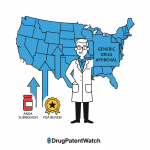
The Abbreviated New Drug Application pathway is widely mischaracterized as a simple copying exercise. It is not. The FDA requires a generic sponsor to prove pharmaceutical equivalence (same active ingredient, strength, dosage form, and route of administration as the Reference Listed Drug), demonstrate bioequivalence through pharmacokinetic or pharmacodynamic studies, and submit a complete Chemistry, Manufacturing, and Controls (CMC) package that describes every process step with enough specificity to survive a pre-approval inspection. For a straightforward oral solid, this is demanding. For a complex generic, it approaches the rigor of a 505(b)(2) NDA.
The consequence for partnership strategy is direct: no single generic company has all three competency clusters in-house at adequate depth. Bioequivalence demands clinical pharmacology expertise and specialized analytical labs. CMC demands manufacturing science and process validation capabilities. Regulatory intelligence demands active engagement with the FDA’s Office of Generic Drugs (OGD), familiarity with Product-Specific Guidances (PSGs), and counsel experienced in Paragraph IV litigation. Generic manufacturers who try to run all three from a single internal team almost always produce ANDA submissions with deficiencies that add 12 to 24 months to their timeline.
The GDUFA Effect on Partnership Urgency
The Generic Drug User Fee Amendments changed the competitive dynamics of the ANDA market by setting median review time targets (currently 10 months for a complete ANDA), creating a much tighter race to the market. Before GDUFA, a company that filed six months after a competitor had a realistic chance of catching up during lengthy FDA review. After GDUFA, that window has compressed sharply. A six-month delay in ANDA filing is increasingly a six-month delay to market entry, with corresponding revenue consequences.
This compression makes the speed advantages of partnerships in bioequivalence study execution, CMC package preparation, and Paragraph IV legal strategy more valuable than they were in the pre-GDUFA environment. A partnership with a CRO that can run a bioequivalence study 60 days faster is not merely an operational convenience. It is a competitive asset with a calculable NPV, particularly when first-generic 180-day exclusivity is on the table.
Key Takeaways
The ANDA pathway is more technically demanding than its ‘abbreviated’ label suggests, particularly for complex generics. GDUFA has compressed review timelines to the point where pre-filing speed, driven by partnership capability, is now a primary competitive variable. Companies that treat CRO and regulatory counsel partnerships as interchangeable vendor relationships rather than strategic assets consistently lose time at the critical pre-submission phase.
Investment Strategy
For portfolio managers evaluating generic companies: assess the quality and depth of a company’s CRO and regulatory counsel partnerships as a proxy for ANDA pipeline execution risk. A company with established relationships with first-tier bioequivalence CROs and Hatch-Waxman litigation specialists has a materially lower probability of major ANDA deficiencies and extended review timelines. This quality signal is often more predictive of near-term revenue than pipeline count alone.
IP Valuation in Generic Drug Partnerships: The Asset Most Teams Undercount
Every partnership negotiation in generic drug development rests, implicitly or explicitly, on IP valuation. Formulators frequently undervalue their process IP. CROs routinely undervalue their proprietary analytical methods. Paragraph IV challengers undervalue their litigation positions until a brand-name company files a 30-month stay and suddenly that litigation position is worth tens or hundreds of millions of dollars in delayed revenue. Structuring partnerships without rigorous IP accounting leads to misaligned economics and disputes that collapse deals mid-development.
How to Value a Paragraph IV Litigation Position
A Paragraph IV certification, filed as part of an ANDA, asserts that one or more of the brand-name drug’s listed patents is either invalid or will not be infringed by the generic product. The first applicant to file a Paragraph IV challenge and receive tentative or final approval gets 180 days of generic market exclusivity, during which no other generic can be approved. That exclusivity is worth the difference between duopolistic pricing (typically 20-40% below brand WAC) and fully commoditized pricing (typically 70-85% below brand WAC) on a high-volume molecule.
The financial value of a Paragraph IV position is straightforward to model: multiply the brand’s U.S. annual net sales by the expected generic market share during exclusivity (typically 30-50% of scripts within 90 days of launch for oral solids), apply the expected generic-to-brand price ratio, and discount back at an appropriate risk-adjusted rate that accounts for litigation loss probability. For a drug with $1 billion in U.S. annual net sales, a 40% market share capture at 30% of brand WAC over 180 days produces gross generic revenue in the $60-75 million range. That is the asset being negotiated when two companies discuss a co-development agreement targeting a Paragraph IV opportunity.
Generic companies that do not quantify this value explicitly before entering co-development negotiations routinely accept inferior profit-split terms. The company that files the ANDA and controls the litigation position typically holds the negotiating leverage. But if a CDMO partner is providing the process innovation that makes the generic manufacturable at scale, or if a CRO partner is providing the proprietary bioequivalence methodology that resolves a critical BE gap, those partners hold valuable IP of their own that should be priced accordingly.
Process Patent IP in CMC Partnerships
A generic drug’s manufacturing process is frequently protectable intellectual property. If a CMO or CDMO develops a novel process to achieve the required dissolution profile, particle size distribution, or sterility conditions, that process may support a patent that extends well beyond the primary active ingredient patent. In a co-development agreement, the question of who owns that process IP, and who holds licensing rights to it for subsequent products, is often the most commercially significant issue on the table.
The industry standard in co-development agreements distinguishes between ‘background IP’ (what each party brings to the agreement pre-existing) and ‘foreground IP’ (what is created during the collaboration). Most agreements assign foreground IP jointly, but joint ownership creates its own problems under U.S. patent law: either joint owner can license the patent to third parties without the consent of the other. Companies that accept boilerplate joint-ownership provisions without negotiating field-of-use restrictions or co-owner consent requirements for third-party licensing expose themselves to direct competitive harm from the partner that funded their development program.
IP Valuation in Biosimilar Partnerships: A Different Framework
Biosimilar development operates under a distinct IP framework. The Biologics Price Competition and Innovation Act (BPCIA) created a ’12-year data exclusivity’ period for reference biologic products, separate from patent protection. The biosimilar applicant must navigate not only the Orange Book-equivalent patent landscape but also the ‘patent dance’ disclosure process under BPCIA Section 351(l), which governs how the reference product sponsor and biosimilar applicant exchange patent lists and begin litigation.
The IP valuation model for a biosimilar partnership must account for both the reference product’s patent expiry dates and the data exclusivity end date, the latter being the binding constraint in some cases. Adalimumab (Humira) is the canonical example: AbbVie’s patent thicket, which included over 100 Orange Book-listed patents at peak, forced biosimilar entrants to negotiate settlement licenses rather than litigate their way to market. Sandoz, Amgen, Boehringer Ingelheim, and others secured licenses that allowed U.S. entry in 2023, years after European biosimilar competition began. The value of those settlement licenses, and the royalty rates embedded in them, was determined by each company’s specific biosimilar manufacturing process and its defensible differentiation from AbbVie’s listed patents.
For biosimilar partnership valuation, the key IP assets are the analytical characterization package (the higher-order structure, functional assay, and comparability data demonstrating biosimilarity), the manufacturing process patents owned by the biosimilar developer, and any clinical data generated to support interchangeability designation. Interchangeability, which allows pharmacist substitution without prescriber intervention, is particularly valuable: the first biosimilar product designated interchangeable for a given reference product gets one year of exclusivity against other interchangeable products. That exclusivity is independently valueable and should be priced as such in biosimilar partnership negotiations.
Key Takeaways
IP valuation in generic and biosimilar partnerships covers at minimum four asset classes: the regulatory exclusivity position (180-day for Paragraph IV, one-year for interchangeable biosimilars), process patents, proprietary analytical methods, and settlement license terms. Teams that do not model these assets explicitly before entering negotiations consistently leave value on the table or accept structures that misalign partner incentives after development is complete.
Investment Strategy
Analysts evaluating a generic or biosimilar company’s pipeline should map each ANDA or BLA to its specific IP position: which patents are challenged, what litigation timeline the 30-month stay implies, whether interchangeability is being sought, and who owns the underlying process IP. A pipeline of 40 ANDAs with weak Paragraph IV positions and no process IP ownership is materially less valuable than a pipeline of 15 ANDAs with defensible Paragraph IV certifications and proprietary manufacturing processes that block late entrants.
CRO and CDMO Partnerships: Deal Structures, Scope, and the True Cost of Getting It Wrong
Contract Research Organizations and Contract Development and Manufacturing Organizations are the operational backbone of generic drug development for all but the largest vertically integrated manufacturers. The structure of these partnerships determines not only development speed and quality but also the allocation of financial risk and, increasingly, the allocation of IP ownership.
Bioequivalence CRO Partnerships: What the Scope Should Cover
A bioequivalence study for a standard oral solid generic involves a crossover pharmacokinetic study in healthy volunteers, typically 24-36 subjects for a single-dose study, comparing the test product against the RLD. The study must deliver AUC and Cmax ratios with 90% confidence intervals that fall within the FDA’s 80-125% acceptance window. For narrow therapeutic index drugs, the window tightens to 90-111% for Cmax. For complex generics, such as locally acting drugs, orally inhaled products, or topical dermatologics, in vitro or pharmacodynamic endpoint studies may replace or supplement PK data entirely.
The CRO scope for a complete bioequivalence program should cover the analytical method development and validation (for quantifying the active pharmaceutical ingredient in plasma), the clinical protocol design and IEC/IRB submission, subject recruitment and clinical operations, bioanalytical sample analysis, pharmacokinetic data analysis, and the final bioequivalence report in FDA-ready format. A CRO that provides only clinical operations but requires the sponsor to source analytical method development separately is a cost-efficiency trap: handoffs between organizations at this stage produce delays and data-quality questions that generate FDA information requests.
The cost range for a complete oral solid bioequivalence program in 2024-2025 runs $300,000 to $600,000 for a standard crossover design, rising to $1.5 million to $3 million or more for complex generics requiring in vitro-in vivo correlation modeling, physiologically based pharmacokinetic (PBPK) simulation, or multiple formulation iterations. PBPK modeling, endorsed by the FDA as a tool under its Model-Informed Drug Development (MIDD) framework, can eliminate in vivo food effect or drug interaction studies when the model is adequately validated, saving $250,000 to $500,000 per study avoided. CRO partners with validated PBPK platforms for specific drug classes are therefore worth a meaningful premium over commodity bioequivalence houses.
CDMO Partnerships: Technical Risk Allocation and the Evergreening Counter-Move
A brand-name company’s evergreening playbook typically involves secondary patents on specific formulation technologies: extended-release polymer systems, particle morphology, crystalline forms, or drug-device combination elements. Each of these secondary patents creates a technical barrier that a generic developer must either design around or challenge. The CDMO partner’s formulation science capabilities determine which option is feasible and at what cost.
The evergreening counter-move for a generic developer depends on two decisions made at the partnership structure level. First, does the generic company license the formulation technology from the brand or a third party, paying royalties for the right to use the patented approach? Second, does the CDMO develop a non-infringing alternative formulation that achieves bioequivalence through a different technical path? The second route preserves margin and creates protectable process IP, but requires a CDMO with genuine formulation research capability. CDMOs that offer only manufacturing scale-up are incapable of executing route two.
The financial comparison is concrete. A royalty-bearing license for a controlled-release polymer system from a branded company might run 3-5% of net sales for the patent term. On a product with $50 million in annual generic net sales, that is $1.5-2.5 million per year in royalty costs that a non-infringing formulation would eliminate. The CDMO development premium for the alternative formulation work might run $500,000 to $2 million. The break-even on the non-infringing route occurs in the first year or two of sales, making it the correct economic choice for any product with a meaningful commercial life.
The Risk-Share Deal Structure
An emerging CDMO deal structure involves contingent milestone payments rather than full fee-for-service, where the CDMO accepts a lower upfront development fee in exchange for a royalty on commercial sales or a milestone payment upon ANDA approval. This model aligns CDMO incentives with the sponsor’s actual outcome rather than with the volume of work performed. CDMOs accepting risk-share structures must believe in the commercial viability of the product, which means they conduct their own due diligence on the patent landscape, the brand’s market position, and the generic pricing forecast.
For generic sponsors, the risk-share model converts a fixed capital outlay into a contingent cost that tracks revenue, improving the IRR on the development program if the product succeeds. The tradeoff is that the royalty commitment persists through the commercial life of the product, potentially becoming expensive if the product outperforms projections. Sponsors should cap the total royalty payment in absolute dollar terms, not just as a percentage, when negotiating these structures.
Key Takeaways
The scope of a bioequivalence CRO engagement must cover end-to-end analytical and clinical services to avoid inter-organizational handoff delays. CDMO formulation capability determines whether an evergreened brand patent is a licensing cost or a technical design-around opportunity: only CDMOs with genuine formulation R&D capacity can execute the more profitable path. Risk-share CDMO deals improve development-stage IRR but require careful royalty caps to avoid margin erosion at commercial scale.
Investment Strategy
Evaluate a generic company’s CDMO relationships by asking whether the CDMO is providing process development services or only commercial manufacturing. Companies that rely on CDMOs solely for manufacturing scale-up cannot execute design-around strategies against evergreened brands. Those without formulation development partnerships are structurally constrained to the royalty-bearing licensing route, which caps their gross margin on secondary-patent-protected products.
Co-Development Joint Ventures for Complex Generics: Structure, Economics, and the 505(b)(2) Adjacency
Co-development agreements for complex generics operate in a more commercially sophisticated space than standard ANDA co-development, because the regulatory pathway, the competitive dynamics, and the IP structure are all more complex.
Defining ‘Complex Generic’ and Why It Changes the Deal
The FDA’s definition of a complex generic covers products with complex active ingredients (e.g., peptides, complex mixtures, polymeric molecules), complex formulations (e.g., liposomes, nanoparticles), complex dosage forms or routes of administration (e.g., metered dose inhalers, transdermal systems, injectables with specific delivery characteristics), and complex drug-device combinations (e.g., auto-injectors, prefilled syringes with specific device specifications). The FDA published its ‘Complex Drug Substances and Products’ guidance framework in 2017, and Product-Specific Guidances for individual complex generics continue to be released on a rolling basis.
The commercial case for targeting complex generics is the scarcity premium. Standard oral solid generics typically attract 8-12 ANDA filers within the first year after a patent expiry, producing rapid price erosion. Complex generics attract 2-4 filers over a longer period, maintaining pricing at 40-60% of brand WAC rather than the 10-15% typical of commodity orals. The development cost is 5-10 times higher, but the sustained margin makes the NPV calculation favorable for well-capitalized teams.
A co-development agreement for a complex generic should divide responsibilities along technical competency lines rather than splitting the program arbitrarily. The party with stronger analytical science capabilities takes the lead on the physicochemical characterization package, which for a complex generic must prove that the drug substance and drug product share the same structural attributes as the RLD down to the particle size distribution, polymorphic form, and surface chemistry level. The party with stronger clinical infrastructure takes the lead on in vivo studies, which for inhaled or topical products may require pharmacodynamic clinical endpoint studies rather than PK bioequivalence. The regulatory lead should be the party with an established OGD relationship and a track record of complex generic ANDA approvals, because pre-submission meetings and controlled correspondence with OGD are relationship-dependent processes.
The 505(b)(2) Adjacency: Where Co-Development Creates Value-Added Medicine IP
A value-added medicine (VAM) is a modified version of an approved drug that offers a meaningful patient benefit through a new formulation, delivery system, strength, or indication. VAMs occupy a regulatory space between standard generics and full NDAs: they are approved under the 505(b)(2) pathway, which allows the applicant to rely on the FDA’s prior findings of safety and efficacy for the reference drug while submitting new data only for the modifications. This pathway reduces the clinical data burden compared to a full NDA while providing market exclusivity protections unavailable to standard ANDA filers.
A co-development agreement that targets a 505(b)(2) VAM should explicitly address the intellectual property generated by the program, because that IP is potentially patentable and its value differs fundamentally from the IP in a standard ANDA co-development. A new formulation that enables once-daily dosing of a currently twice-daily drug may support a composition-of-matter or formulation patent covering the extended-release system. A new delivery device that improves medication adherence may support a device patent. Both of these are foreground IP that, if owned by the co-development partnership rather than by a single party, require clear licensing and commercialization terms to avoid disputes at the commercialization phase.
The 505(b)(2) pathway also grants three-year market exclusivity for new clinical investigations essential to approval, and potentially five-year new chemical entity exclusivity or seven-year orphan drug exclusivity if the modification involves a new molecular entity or an orphan indication. These exclusivities are IP assets that must be accounted for in the deal economics.
Joint Venture Governance for Complex Generic Programs
A formal joint venture rather than a co-development agreement is warranted when the development program requires significant capital investment from both parties, when the commercial operation will require shared infrastructure, or when regulatory strategy requires a single legal entity to interface with the FDA as the ANDA/NDA applicant. The governance structure of such a joint venture should specify the decision-making authority for ANDA filing strategy (particularly Paragraph IV decisions, where timing is commercially critical), the budget authority for each development phase, the deadlock resolution mechanism, and the exit provisions that allow either party to acquire the other’s interest in the event of a material disagreement.
Paragraph IV timing decisions deserve special attention in joint venture governance. The party that controls the Paragraph IV filing decision controls whether the joint venture receives 180-day exclusivity or loses it to a competitor. In the AstraZeneca/Ranbaxy disputes over quetiapine and other molecules from the early 2010s, competing commercial incentives between brand and generic co-development partners created precisely this kind of strategic conflict. Governance documents that leave the Paragraph IV decision to unanimous board consent are a recipe for deadlock when partner interests diverge at the filing decision point.
Key Takeaways
Complex generics command sustained price premiums over commodity oral solids, justifying the higher development cost and the greater partnership complexity. Co-development agreements should assign technical responsibilities by competency, not by convenience. The 505(b)(2) VAM adjacency creates patentable foreground IP that substantially increases the deal’s value but requires explicit governance before the program generates the IP, not after. Joint venture governance must pre-specify Paragraph IV filing authority, because that decision is too commercially sensitive to leave to a deadlock-prone consent requirement.
Investment Strategy
A generic pipeline heavy with complex generic and 505(b)(2) targets, supported by co-development agreements with technically credible partners, is worth a higher valuation multiple than a pipeline of comparable size composed of commodity oral solids. The pricing premium on complex generics is durable over a longer commercial life, the IP created during development provides defensive moat, and the smaller number of competitors limits post-approval erosion. Analysts should weight these factors explicitly rather than applying a uniform generic pipeline discount.
Licensing and Authorized Generics: IP Monetization, Market Management, and the 180-Day Exclusivity Kill
Authorized Generics as a Brand Defense Tool
An authorized generic is a version of a brand-name drug marketed under the brand company’s own NDA but sold at a reduced price, typically by a generic partner. Crucially, an authorized generic does not count as an ‘approved ANDA’ under the Hatch-Waxman first-generic exclusivity provision, which means the brand company can launch an authorized generic during the 180-day exclusivity period of the first Paragraph IV filer, directly competing with the exclusivity holder in a duopoly that was supposed to be a monopoly.
The authorized generic strategy dramatically reduces the revenue value of 180-day exclusivity. FTC data indicates that authorized generic entry during the exclusivity period reduces the first-filer’s revenue by 40-50% compared to an exclusivity period without authorized generic competition. For a molecule with significant commercial value, this is a material reduction. The brand’s right to launch an authorized generic during the exclusivity period is legally established (the Supreme Court effectively confirmed it in the FTC v. Watson context), but the first-filer can structure its litigation settlement agreement to include an ‘authorized generic standstill’ provision, where the brand agrees not to launch an authorized generic during the exclusivity window. These standstill provisions are themselves subject to FTC antitrust scrutiny under the framework established by FTC v. Actavis (2013), but they remain in use when narrowly structured.
For generic companies, the strategic implication is clear: the commercial value of a Paragraph IV first-filing position must be modeled under two scenarios, with and without authorized generic competition during the exclusivity period, and the litigation settlement negotiation should treat an authorized generic standstill as a monetizable term with a calculable value.
Technology Licensing for Formulation IP
Out-licensing a proprietary formulation technology to another generic manufacturer is a revenue stream that most generic companies underutilize. A generic manufacturer that develops a novel controlled-release polymer system, a proprietary micronization process, or a unique particle-engineering approach to achieve the required dissolution profile for a specific drug class holds IP that other generic companies targeting the same drug or drug class may need. Licensing that IP on a non-exclusive basis to multiple licensees generates royalty income across the life of the patent without the licensor needing to manufacture or market the product in every geographic market.
The valuation framework for a formulation technology license starts with the cost the licensee would incur to develop an alternative non-infringing formulation. That cost is the floor on the license fee. The ceiling is the value of the royalty relative to the licensee’s expected margin: a licensor asking for royalties that eliminate licensee margin has a license that will not get signed. The negotiated rate typically sits at 2-5% of licensee net sales for formulation process IP, with the specific rate depending on the exclusivity terms, the strength of the patent, and the availability of non-infringing alternatives.
In-Licensing to Fill Pipeline Gaps
A generic company with strong commercial infrastructure but a thin development pipeline should use in-licensing to accelerate portfolio build rather than waiting for internally developed ANDAs. In-licensing candidates are most attractive when they are late-stage (ANDA submitted or approvable), when the licensor lacks commercial infrastructure in the target market, and when the patent exposure has been characterized and is manageable. Early-stage in-licensing, where the ANDA has not yet been submitted, transfers significant development risk to the licensee and requires a lower upfront payment or a larger back-end milestone structure.
The specific terms of exclusivity in a license agreement, whether exclusive in a territory, a distribution channel, or a dosage form, determine the license’s commercial value and its defensibility against the licensor’s own commercial decisions. A non-exclusive license to market a generic product in the U.S. has marginal value if the licensor can simultaneously provide the same product to five other distributors. An exclusive territory license with a performance milestone tied to a minimum supply commitment has substantially more value but requires the licensee to take on commercialization performance risk.
Key Takeaways
The authorized generic tactic during 180-day exclusivity periods is a legally established brand defense that reduces first-filer revenue by 40-50% and must be modeled explicitly in any Paragraph IV NPV calculation. Formulation technology licensing is an underutilized revenue stream for generic companies with proprietary process IP. In-licensing at the late ANDA stage is a capital-efficient approach to pipeline building for companies with strong commercial capabilities but thin development resources.
Investment Strategy
Analysts should look for evidence that a generic company has negotiated authorized generic standstill provisions in its litigation settlements, because these provisions are worth tens of millions in revenue on high-value molecules. Companies that have never negotiated a standstill are either not targeting high-value Paragraph IV opportunities or are leaving significant revenue on the table in settlement negotiations.
Supply Chain Architecture: API Sourcing, Geographic Risk, and the Drug Shortage Liability
The API Concentration Problem and Its Financial Consequences
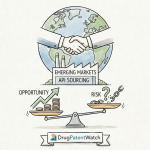
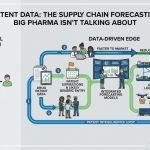
China and India collectively supply over 70% of active pharmaceutical ingredients consumed globally. For specific drug classes, the concentration is far higher. The sterile injectable supply chain, for example, is heavily dependent on a small number of Indian API manufacturers and Chinese precursor chemical suppliers. A quality failure at a single large-scale Indian API manufacturer, such as the NDMA contamination crisis that affected valsartan and other sartan-class drugs beginning in 2018, can simultaneously remove API supply for dozens of generic products across multiple manufacturers.
The financial consequences of an API supply disruption for a generic manufacturer without secondary sourcing are severe: lost market share to competitors with supply, potential FDA shortage notifications, and in some cases, contractual penalties to healthcare system customers under preferred supplier agreements. The cost of qualifying a second API source, which runs $200,000 to $500,000 including the analytical method validation, impurity profiling, and ANDA supplement filing required for each new API supplier, is modest relative to the revenue at risk in a supply disruption.
Generic manufacturers with preferred supplier agreements or long-term volume commitments to a single API source, without secondary qualification, carry a supply chain risk that is not fully reflected in standard financial models. Portfolio managers should treat unhedged single-source API exposure as a liability when valuing a generic company.
Nearshoring, Friendshoring, and the Partnership Implication
Post-pandemic supply chain vulnerabilities and post-2024 tariff threats on pharmaceutical imports have accelerated interest in domestic or allied-country manufacturing. The Biosecure Act and similar legislative proposals in the U.S. Congress have targeted Chinese CDMOs (specifically WuXi AppTec and WuXi Biologics) as potential national security risks, which would compel any U.S.-regulated generic manufacturer with Chinese manufacturing partners to qualify alternative sites.
The nearshoring trend creates partnership opportunities for U.S., European, and Indian manufacturers that can offer API supply or finished dosage form manufacturing outside the high-concentration geographies. A U.S. generic company that establishes a supply partnership with an Indian API manufacturer running a U.S. FDA-inspected facility and a European CDMO with sterile injectable capacity is more resilient than one dependent on a single Chinese API source, and that resilience has increasing regulatory and commercial value.
The cost premium of nearshored manufacturing relative to the lowest-cost offshore alternative runs 15-30% for API and 20-40% for finished dosage form, depending on the product and the manufacturing technology. That premium must be weighed against the probability and cost of a supply disruption, the potential regulatory and contractual penalties of a shortage, and the commercial benefits of being able to supply during a disruption that hits competitors.
Quality Agreements as Risk Management Instruments
A quality agreement between a generic manufacturer and its CMO or API supplier defines the quality responsibilities of each party: who conducts and approves batch release testing, who owns deviation investigations, who has audit rights, and how the parties handle a potential recall. A quality agreement that is poorly drafted or absent entirely is not merely a regulatory deficiency; it is a financial risk allocation failure.
The NDMA contamination crisis illustrated the consequence of inadequate quality agreements and inadequate supplier oversight. Brand and generic manufacturers whose quality agreements with API suppliers did not include provisions for genotoxic impurity screening were exposed to recall costs, regulatory penalties, and reputational damage that their quality agreements should have mitigated by placing the testing obligation squarely on the API supplier with contractual consequences for non-compliance.
Quality agreements should be reviewed and updated whenever an API manufacturer changes its synthetic route, scales up production, or changes facility or equipment. These process changes are required to be reported to the FDA under the ANDA’s CMC specifications, but the quality agreement must also reflect the change to maintain clear accountability.
Key Takeaways
Single-source API dependency without secondary qualification is a material financial risk that is underweighted in standard generic company valuations. The tariff and biosecurity policy environment has added regulatory dimension to the existing supply chain concentration risk, creating commercial value for nearshored manufacturing partnerships. Quality agreements are risk allocation instruments, not bureaucratic formalities, and their adequacy determines whether a supply chain disruption is an isolated supplier problem or a shared manufacturer liability.
Investment Strategy
Request a breakdown of API sourcing by geographic concentration for any generic company under evaluation. Treat more than 50% API sourcing from a single country as a supply chain risk factor that warrants a discount to enterprise value. Companies that have proactively qualified secondary API sources and executed robust quality agreements are demonstrably better managed and carry lower tail risk from the supply disruptions that have produced some of the industry’s most severe unexpected earnings misses.
Regulatory Partnership Strategy: FDA Engagement, EMA Alignment, and the Biosimilar BPCIA Dance
Pre-Submission Meetings and Controlled Correspondence: The OGD Relationship Advantage
The FDA’s Office of Generic Drugs offers two primary channels for pre-submission regulatory interaction: pre-ANDA meetings, which can be requested in-person or Type B teleconference format, and controlled correspondence, which is a written question-and-answer process with a 60-day FDA response target. Both channels allow generic sponsors to get FDA feedback on unresolved scientific or regulatory questions before investing in the full ANDA package.
Generic companies with experienced regulatory affairs teams who know which questions to ask in controlled correspondence, how to frame bioequivalence study designs to preempt FDA deficiency letters, and how to engage OGD reviewers at pre-ANDA meetings have a measurable time advantage over companies that file complete ANDAs without prior FDA engagement and then wait through review cycles to resolve avoidable deficiencies. That advantage is most pronounced for complex generics, where the FDA’s scientific expectations may not be fully articulated in a published PSG.
Regulatory affairs partnerships or in-house teams with deep OGD relationship capital are hard to quantify but easy to observe in outcomes: companies with these capabilities have lower ANDA deficiency rates, shorter total approval timelines from first submission to approval, and more successful pre-ANDA meeting outcomes. These are measurable operational advantages.
FDA-EMA Parallel Scientific Advice: The Multi-Jurisdictional Development Pathway
The FDA-EMA Parallel Scientific Advice pilot program allows a generic or biosimilar sponsor to receive simultaneous feedback from both agencies on a development program, reducing the redundant back-and-forth of sequential national regulatory submissions. For complex generics targeting both U.S. and European markets, this program can eliminate 12-18 months of sequential regulatory review cycle time.
The program is particularly valuable for complex generics where the FDA and EMA have different established approaches to demonstrating equivalence. Orally inhaled products are the canonical example: the FDA accepts an in vitro-only approach for establishing bioequivalence for most dry powder inhalers through matching device characteristics and aerodynamic particle size distribution, while EMA traditionally required pharmacodynamic clinical endpoint studies in some cases. The PSA program creates a forum where the sponsor can propose a unified development program that satisfies both agencies with a single dataset or minimally adapted data packages.
The operational prerequisite for participating in the PSA program is a regulatory affairs team experienced in both FDA and EMA standards, and usually external counsel or CRO support with EMA regulatory expertise. Most generic companies focused on the U.S. market lack this EMA capability in-house, making regulatory partnerships with European CROs or regulatory consultancies essential for accessing the efficiency benefits of the PSA program.
The Biosimilar BPCIA ‘Patent Dance’: Strategic Options and Their IP Implications
The BPCIA’s Section 351(l) patent exchange process, colloquially called the ‘patent dance,’ requires a biosimilar applicant to provide the reference product sponsor with its BLA and manufacturing information, receive a list of patents the reference product sponsor believes would be infringed, negotiate to identify which patents will be litigated and in what order, and provide 180 days’ notice of commercial launch. The process was designed to front-load patent disputes before commercial launch, but it has become a strategic tool on both sides.
Reference product sponsors use the patent dance to access detailed biosimilar manufacturing information that can inform their own process IP protection strategy. Biosimilar applicants have the option to partially opt out of the patent dance by declining to provide manufacturing information, which removes the reference product sponsor’s access to that information but also forfeits the biosimilar applicant’s right to use the negotiated litigation order as a defense against a later infringement suit.
The strategic choice between full participation and partial opt-out depends on the biosimilar applicant’s assessment of its own process IP security, the reference product sponsor’s litigation history and aggressiveness, and the specific patents at issue. Companies with highly proprietary manufacturing processes that they have not patented themselves may prefer partial opt-out to avoid disclosing process details. Companies with weaker process IP but stronger legal arguments on the reference product sponsor’s patents may prefer full participation to lock in a favorable litigation sequence.
Key Takeaways
Pre-ANDA meetings and controlled correspondence reduce ANDA deficiency rates and total approval timelines, particularly for complex generics, and the value of these interactions depends on regulatory affairs capability that is often more efficiently sourced through experienced partners than built internally. The FDA-EMA PSA program can eliminate 12-18 months from multi-jurisdictional development timelines for complex generics, but requires regulatory teams with genuine EMA expertise. The BPCIA patent dance is a strategic choice point, not a mandatory sequence, and the opt-out decision has IP security implications that require careful analysis before the BLA submission.
Evergreening Defense: How Generic Partnerships Counter the Brand’s Lifecycle Extension Playbook
Brand-name pharmaceutical companies use four primary tactics to extend commercially meaningful exclusivity beyond the primary compound patent expiry: secondary patents on formulations, delivery systems, or crystalline polymorphs; pediatric exclusivity extensions under the Best Pharmaceuticals for Children Act, which add six months to all patent terms and exclusivity periods for drugs tested in pediatric populations; authorized generic strategies during the 180-day Paragraph IV exclusivity window; and citizen petitions filed with the FDA to delay generic ANDA approval on safety or scientific grounds.
Technology Roadmap: Defeating Secondary Patents Through Formulation Science
A brand-name company’s extended-release formulation patent typically claims a specific polymer matrix, a specific drug-polymer ratio range, or a specific dissolution profile specification that the brand’s product meets. The generic developer has two options: design a formulation that meets the dissolution specification through a different technical approach (different polymer, different drug-polymer ratio, different manufacturing process), or challenge the secondary patent’s validity through a Paragraph IV certification arguing that the patent claims are obvious in light of prior art or insufficiently enabled.
The formulation design-around approach requires a CDMO with polymer formulation expertise and access to a library of pharmaceutical excipients to screen alternative controlled-release systems. The typical development workflow involves formulation screening to identify candidate polymer systems that achieve the target dissolution profile, stability testing under ICH conditions, and potentially a food effect study if the formulation’s in vivo performance is food-sensitive. If the design-around formulation achieves bioequivalence without using the patented polymer system, the generic product is non-infringing and the secondary patent is irrelevant to market entry.
The Paragraph IV invalidity challenge is the alternative when a design-around is technically infeasible or commercially uneconomical. Secondary formulation patents are frequently vulnerable to obviousness challenges because the range of pharmaceutical polymers and excipients available for controlled-release formulation is well-documented in the prior art, and incremental combinations are often predictable to a skilled formulator. Successfully invalidating a secondary formulation patent eliminates the barrier for all generic entrants, not just the challenger, which is why Paragraph IV challenges on secondary patents sometimes attract multiple filers who benefit from the first challenger’s litigation investment.
Pediatric Exclusivity: A Six-Month Window Worth Modeling Precisely
A six-month pediatric exclusivity extension applies to all forms of market exclusivity and all patents listed in the Orange Book for a drug that receives a Written Request from the FDA to conduct pediatric studies. For a drug with $500 million in annual U.S. net sales and a generic market share of 40% at 30% of brand WAC during the six months of delayed generic entry, the brand company preserves roughly $80-100 million in gross revenue that it would have lost to generic competition. For the generic developer, that six months of delay costs the same amount in lost revenue.
Generic developers who are monitoring a target molecule’s patent landscape through patent watch services should track not only Orange Book patent expiry dates but also the FDA’s pediatric exclusivity grant dates, which are publicly available in FDA records. A pediatric exclusivity grant discovered after an ANDA has been filed but before approval is not grounds for changing the filing, but it does change the commercial launch timeline by six months, which alters the NPV calculation for the development program.
Citizen Petition Defense: Legal and Regulatory Partnerships as Competitive Infrastructure
A citizen petition filed by a brand-name company asserting that the FDA should impose additional requirements on generic ANDA approvals for safety or scientific reasons is a legal instrument with the potential to delay generic market entry by six to twelve months. The FDA is required to respond to citizen petitions, and while the agency has become increasingly willing to deny petitions filed primarily to delay generic competition (FDA regulations explicitly prohibit using citizen petitions to delay competition), responding to a petition adds time.
Generic companies that have established relationships with FDA regulatory counsel and Hatch-Waxman litigation specialists are better positioned to submit rapid, technically credible responses to citizen petitions that move the FDA toward denial. Companies without these relationships are frequently caught flat-footed when a petition arrives and spend weeks locating counsel with the necessary expertise. In a market where six months of first-generic exclusivity can be worth $30-80 million, the legal partnership infrastructure to respond aggressively to citizen petitions is worth investing in before the petition is filed.
Key Takeaways
The brand-name lifecycle extension playbook is systematic and predictable: secondary patents, pediatric exclusivity, authorized generics, and citizen petitions. Generic development teams that partner with formulation science specialists, Paragraph IV litigation counsel, and regulatory affairs experts before entering a program, rather than as deficiencies arise, are structurally better positioned to defeat each element of the brand’s defense in sequence.
AI and Data Intelligence Partnerships in Generic Drug Development
Purpose-Built AI for Bioequivalence Prediction and Formulation Optimization
General-purpose AI models are largely unsuited for pharmaceutical development applications because they lack the domain-specific training data and the interpretability required for regulatory submissions. A bioequivalence prediction model that cannot explain its mechanistic basis in terms that satisfy an FDA scientific reviewer is not useful for regulatory purposes, regardless of its aggregate predictive accuracy. This is the core deficiency of applying large language model technology to pharmaceutical science without domain-specific fine-tuning.
Purpose-built AI systems for pharmaceutical formulation are built on mechanistic PBPK models, in vitro-in vivo correlation (IVIVC) datasets, and literature-trained models of drug-polymer interaction physics. These systems can predict the dissolution profile of a candidate formulation from its composition before a physical prototype is made, screen polymer libraries computationally to identify design-around candidates for evergreened formulation patents, and flag genotoxic impurity risk from synthetic route analysis before API manufacturing is initiated. Partnering with AI companies that have built these purpose-specific pharmaceutical models, rather than applying general AI tools to pharmaceutical problems, is the distinction that determines whether AI adds analytical value or merely adds a narrative.
The PBPK modeling application is particularly concrete. A validated PBPK model for a specific drug, built with the reference drug’s PK data, can predict the bioequivalence of a candidate generic formulation with different particle size distribution or dissolution rate, potentially replacing or reducing the number of in vivo bioequivalence studies required for ANDA approval. The FDA’s MIDD framework explicitly endorses this approach. The cost of building and validating a drug-specific PBPK model runs $150,000 to $400,000; the cost of an in vivo bioequivalence study it might replace runs $300,000 to $600,000 or more. The economics of the AI partnership are straightforward.
Patent Intelligence Platforms as Strategic Infrastructure
Real-time patent intelligence is not a research tool but an operational requirement for generic drug development at any meaningful scale. A generic company targeting 15-20 ANDA filings per year must track patent expiry dates across the Orange Book, litigation status in Paragraph IV proceedings, inter partes review (IPR) petitions at the PTAB that challenge brand patents, regulatory exclusivity end dates including pediatric exclusivity and data exclusivity for NCEs, and authorized generic licensing activity.
Patent intelligence platforms that aggregate and continuously update this data, with analytical overlays that model the competitive filing landscape for each molecule, provide the analytical foundation for portfolio prioritization decisions. A company that identifies a molecule with a primary patent expiring in 18 months, one secondary formulation patent with a pending IPR that is likely to be instituted, no first-generic ANDA filed yet, and no public licensing agreements for authorized generics has found a high-value, low-competition opportunity. Finding it before competitors requires systematic intelligence rather than periodic manual searches.
Key Takeaways
AI partnerships in generic drug development should be evaluated on whether the AI system is mechanistically grounded in pharmaceutical science, not on whether it can produce plausible-sounding output. PBPK-based formulation AI with FDA MIDD endorsement has concrete cost-avoidance applications. Patent intelligence platforms that provide real-time competitive landscape analysis are operational infrastructure for portfolio management, not optional research supplements.
Building and Managing the Alliance: Governance, Cultural Integration, and Long-Term Resilience
Alliance Governance: The Decisions That Cannot Wait for the Operating Committee
Most co-development and joint venture agreements establish a joint steering committee or operating committee as the primary governance body. These committees work well for routine decisions: budget approvals within authorized ranges, timeline adjustments within agreed tolerances, and personnel assignments for shared development work. They do not work well for time-sensitive strategic decisions where partner interests diverge.
The Paragraph IV filing timing decision is the clearest example. If one partner wants to file immediately upon completing the ANDA to maximize the first-generic window, and the other partner wants to delay filing to complete additional formulation optimization, the operating committee deadlock mechanism determines whether the company files on time or misses the window. An agreement that requires unanimous consent for ANDA filing decisions, with no deadlock resolution mechanism, is a structural risk that could cost the joint venture its entire first-generic exclusivity value.
Governance documents should pre-specify the decision authority and escalation path for at least six categories of decisions: Paragraph IV filing timing, litigation settlement authority, ANDA scope changes, budget overruns beyond specified thresholds, key personnel changes in the development team, and commercial launch decisions. Each of these has appeared in public litigation between pharmaceutical co-development partners when governance documents left them ambiguous.
Cultural Integration in International Partnerships
A U.S. generic company partnering with an Indian API manufacturer or a Korean CDMO is not simply executing a business transaction. It is integrating two organizational cultures with different assumptions about communication directness, hierarchy, contract interpretation, and risk tolerance. The practical consequence of ignoring these differences shows up in development timelines: a quality deviation that a U.S. team expects to be reported immediately may be managed locally and unreported by an international partner team operating under different assumptions about what constitutes a reportable event.
Quality agreements, as discussed in the supply chain section, are the formal mechanism for addressing this gap. But formal agreements are insufficient without active relationship management. Dedicated alliance managers who maintain ongoing contact with partner teams, conduct joint review of development progress on a regular schedule, and participate in partner site visits develop the relationship capital that allows problems to surface early. The FDA’s expectation that U.S. marketing authorization holders maintain active oversight of their contract manufacturers, including through regular audits, aligns with the operational necessity of active alliance management rather than passive contract reliance.
Key Takeaways
Alliance governance documents must pre-specify decision authority for time-sensitive commercial decisions, particularly Paragraph IV filing timing, using deadlock resolution mechanisms that do not require unanimous consent. Cultural integration in international partnerships requires active alliance management investment, not just contract formalization, to ensure quality events surface and are addressed before they become regulatory problems.
Key Takeaways Across the Pillar
The generic drug partnership landscape has evolved from a vendor-management exercise into a sophisticated IP, regulatory, and commercial strategy function. The companies generating the best returns in this market share several characteristics.
They target products where the IP landscape can be characterized precisely and the competitive filing window identified before competitors. They structure their development partnerships to generate and own process IP, not just to access external capacity. They model the value of their Paragraph IV litigation positions explicitly and negotiate their settlement and co-development agreements with that value quantified. They build supply chain partnerships that prioritize resilience over absolute lowest cost, because a drug shortage event has revenue consequences that dwarf the savings from single-source API purchasing. They invest in regulatory affairs capability, whether internal or through partnerships, that enables productive pre-ANDA FDA engagement rather than discovering deficiencies in the review cycle. They maintain quality agreements with API and CMO partners that specify accountability for impurity testing, process change notification, and deviation reporting in terms that hold up when a quality event occurs.
The companies that do not do these things are competing on price in a commodity market that is becoming more difficult to survive. The gap between commodity generic operators and strategic generic companies, measured in ANDA approval rates, margin on complex products, and supply chain reliability, is large and growing.
Frequently Asked Questions
What is the financial value of first-generic 180-day exclusivity, and how does authorized generic competition affect it?
The gross revenue value of 180-day exclusivity depends on the brand’s annual U.S. net sales, the first-generic’s expected market share capture rate, and the generic-to-brand price ratio during the exclusivity period. Authorized generic competition during the period, which is legally permissible unless blocked by a settlement standstill provision, reduces the first-filer’s revenue by roughly 40-50% according to FTC data. This reduction must be explicitly modeled in the NPV calculation for any Paragraph IV program, and the potential value of a standstill provision in settlement negotiations should be quantified and used as a negotiating objective.
What makes a complex generic’s IP position more defensible than a standard oral solid’s?
Complex generic development requires solving technical problems that are specific to each product, such as matching the aerodynamic particle size distribution of an inhaled product, the rheological properties of a semisolid, or the drug release kinetics of a liposomal injectable. The solutions to those problems, when implemented as manufacturing processes, are potentially patentable and are rarely replicable without significant investment by a late entrant. This creates a technical barrier that sustains the complex generic’s market position longer than a standard oral solid’s, where bioequivalence can typically be demonstrated by any manufacturer with basic solid dosage manufacturing capability.
How should a generic company evaluate whether to pursue a Paragraph IV challenge or a design-around strategy for a secondary formulation patent?
The decision depends on four factors assessed in combination: the technical feasibility of a non-infringing formulation that achieves bioequivalence, estimated at a preliminary level through consultation with a CDMO formulation team; the strength of the brand’s secondary patent claims assessed by Hatch-Waxman litigation counsel; the litigation cost and timeline if a Paragraph IV challenge results in a 30-month stay; and the first-generic competitive landscape, specifically whether a competitor has already filed a Paragraph IV on the secondary patent. If a competitor has already challenged the patent, the litigation is likely to resolve the question without the company needing to bear the litigation cost, and a design-around or waiting strategy may be more efficient than joining the litigation.
What supply chain metrics should a generic manufacturer track to assess partnership resilience?
Track the percentage of API volume sourced from a single country, the number of qualified API suppliers per product, the time required to qualify and ANDA-supplement a secondary API source, the percentage of API suppliers with FDA Warning Letters or Import Alerts in the preceding 24 months, and the quality agreement coverage rate across all CMOs and API suppliers. Companies with more than 60% of API volume from a single country and fewer than two qualified API suppliers per major product are structurally exposed to supply disruptions that their competitors with diversified supply bases will exploit.
How does PBPK modeling change the economics of bioequivalence study design?
A validated PBPK model for a specific drug can predict the plasma concentration-time profile of a candidate generic formulation as a function of its physicochemical properties and the GI physiology parameters relevant to its absorption. When the model predicts bioequivalence within the 80-125% CI window under multiple virtual patient scenarios, this provides a scientific basis for requesting a waiver of an in vivo bioequivalence study for specific strength or food effect conditions. The FDA’s MIDD program has approved PBPK-based biowaiver arguments for several ANDAs, and the approach is increasingly accepted for complex generics where in vivo studies are expensive or ethically difficult to execute. The net cost saving per waived study runs $300,000 to $600,000 for standard PK studies and more for studies requiring specialized patient populations.