Catalyst Pharmaceuticals sells a drug for Lambert-Eaton myasthenic syndrome, a disease that affects roughly 3 people per million. In the first half of 2025 alone, that drug, Firdapse, brought in $168.6 million in revenue and accounted for 62% of Catalyst’s net product sales in 2024 [16]. Firdapse’s active ingredient once cost about $100 a gram in bulk from a chemical supplier, and physicians at Duke University compounded it into capsules for a few hundred dollars a month [10]. When Catalyst brought an FDA-approved version to market in 2019, the price became $375,000 a year [11].
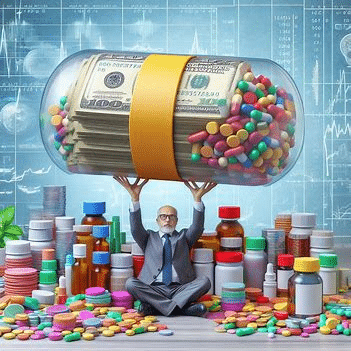
That gap between raw material cost and list price is the orphan drug business model in one sentence. It is also why four separate generic manufacturers have spent the last three years trying to break into a market most people have never heard of. This article is about that pattern: rare-disease drugs that carry thin, sometimes overlooked patent estates, generate blockbuster-level margins on non-blockbuster revenue, and increasingly attract exactly the kind of patent challenges their small addressable markets were supposed to discourage.
The Short Answer
Orphan drugs are not automatically safe from generic and biosimilar competition just because their patient populations are small. Firdapse has drawn four separate Paragraph IV challengers since 2023 [12]. Soliris has drawn two FDA-approved interchangeable biosimilars since 2024 [18][20]. What protects orphan revenue is not obscurity, it is the combination of a statutory seven-year exclusivity period that runs independently of patents, thin but strategically timed patent estates, and, increasingly, a lifecycle move to a next-generation product before the original one goes generic. Academic research finds that companies holding orphan drug approvals are measurably more profitable than matched non-orphan peers [27], which is precisely why “unloved” is starting to be the wrong word for this category.
What the Data Shows: Five Findings That Matter
The average price of the top 100 orphan drugs by 2014 sales was $137,782 per patient per year, more than six times the $20,875 average for a matched sample of non-orphan drugs [27].
A propensity-matched study of 86 orphan drug companies against 258 controls found orphan drug market authorization holders had 9.6% higher return on assets, a 9.9% higher Tobin’s Q, and 516% higher operating profit than non-orphan peers, after adjusting for confounders [27].
Firdapse’s Orange Book-listed patents run through 2032, 2034, and 2037; as of Catalyst’s most recent 10-K, three of four Paragraph IV challengers had settled for licensed entry no earlier than February 2035, while litigation against the fourth, Hetero, remains active [13][14].
Alexion settled U.S. patent litigation with Amgen over a Soliris biosimilar in 2020, four years before that biosimilar, Bkemv, reached the market in March 2025 under the terms of that settlement [18][23].
Roughly half of all novel FDA drug approvals in recent years have carried an orphan designation: CDER approved 50 novel drugs in 2024 and 55 in 2023 [32][33], and independent tracking puts the orphan share of those approvals in the high-40s to low-50s percent range across 2022 through 2024 [34].
How Rare Disease Drug Development Went From Ten Drugs to Six Thousand Designations
“Unloved” used to be literal. In the decade before the Orphan Drug Act passed in January 1983, fewer than ten drugs for rare diseases reached the U.S. market, and only 38 had ever been approved in American history [37][38]. Patient populations were too small, development costs too high relative to a viable return, and larger pharmaceutical companies routed their pipelines toward common conditions like arthritis, asthma, and heart disease instead [38].
A comprehensive FDA-database analysis covering the law’s first 40 years found that between 1983 and 2022, the agency granted 6,340 orphan drug designations spanning 1,079 distinct rare diseases, of which 882 designations produced at least one FDA approval, reaching 392 rare diseases [39]. Researchers estimate that between 7,000 and 10,000 rare diseases have been identified and described in total, meaning the overwhelming majority still have no approved treatment [39]. Oncology accounts for a disproportionate share of that activity: seven of the ten most-designated and most-approved rare diseases under the ODA are rare cancers [39].
That growth curve is the backdrop for every patent decision described in this article. A regulatory category built to rescue commercially unviable drugs from neglect now produces roughly half of all novel FDA approvals in a given year [32][33][34] and, per the profitability research above, outperforms the rest of the industry on several financial measures [27]. The patents protecting that revenue increasingly draw exactly the litigation attention that used to be reserved for blockbusters.
Orphan Drug Exclusivity vs. Patent Protection: Two Different Clocks
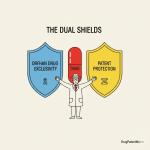
The Orphan Drug Act of 1983 created two distinct incentives that are frequently confused with each other, and the confusion has generated real litigation. Orphan drug designation, granted before approval, qualifies a sponsor for a tax credit on qualified clinical trial costs, a waiver of the FDA’s user fee (worth close to $3 million per application), and eligibility for grant funding [35][36]. Orphan drug exclusivity, granted at approval, is a separate benefit: a seven-year period in which the FDA cannot approve a competing application for the same drug for the same disease or condition, regardless of whether the sponsor holds any patents at all [1][35].
That second clock runs independently of the patent system tracked in the FDA’s Orange Book. A drug can lose patent protection and still be commercially exclusive under ODE, or it can hold patents that outlast its ODE by decades. DrugPatentWatch’s analysis of the mechanic notes that when a compound-of-matter patent expires before ODE runs out, “the protection hierarchy inverts,” and companies fall back on secondary patents covering formulation, dosing, or delivery to extend commercial exclusivity past the compound patent’s expiration [31].
Catalyst v. Becerra: The Case That Redefined “Same Disease”
The scope of that seven-year exclusivity was unsettled law for most of the 2020s. In 2018, the FDA approved Catalyst’s Firdapse for Lambert-Eaton myasthenic syndrome (LEMS) in adults and granted seven years of ODE. In 2019, the agency approved Jacobus Pharmaceutical’s Ruzurgi, the same active ingredient, amifampridine, for LEMS in pediatric patients [6]. The FDA’s long-standing position was that ODE attaches to the specific indication approved, not the disease as a whole, so a pediatric approval did not infringe on Catalyst’s adult exclusivity [1].
Catalyst sued. In September 2021, the Eleventh Circuit ruled for Catalyst in Catalyst Pharmaceuticals, Inc. v. Becerra, holding that the FDA’s “indication-specific” reading contradicted the statute’s plain text and that Firdapse’s exclusivity blocked approval of any amifampridine product for LEMS, pediatric or adult [8][9]. Catalyst and Jacobus resolved the underlying commercial dispute in July 2022, when Catalyst acquired Jacobus’s U.S. and Mexico rights to Ruzurgi and both sides dismissed their remaining claims [7]. But the legal question outlived that settlement: the FDA complied with the ruling for Firdapse specifically, then announced in a January 2023 Federal Register notice that it would keep applying its narrower interpretation to every other orphan drug pending further litigation [2].
That holding pattern didn’t last. A second case, Neurelis v. Brenner, produced the same result in the D.C. Circuit, again finding the FDA’s indication-specific interpretation inconsistent with the statute [5]. The FDA’s own public argument against the broader reading was that it would let sponsors “seek approval and exclusivity for their drugs by focusing on the smallest, easiest-to-study populations” and then block a fuller-population competitor [4]. Congress ultimately settled the question through the Consolidated Appropriations Act, signed February 3, 2026, which codified the FDA’s traditional narrower approach into statute [3][4]. For orphan sponsors, that legislative fix means ODE scope is no longer subject to case-by-case circuit litigation, but it took roughly five years and two federal appellate rulings to get there.
Why Orphan Drug Companies Are More Profitable Than the “Charity Case” Narrative Suggests
The Orphan Drug Act was written on the premise that rare-disease markets are too small to justify normal drug-development economics without a subsidy. The data on realized profitability tells a more complicated story. A 2016 propensity-matched case-control study published in PLOS ONE compared 86 publicly listed companies holding orphan drug market authorizations in the US or Europe between 2000 and 2012 against 258 matched non-orphan controls [27].
After adjusting for confounders, orphan drug market authorization holders showed 9.6% higher return on assets, a Tobin’s Q ratio 9.9% higher, a market-to-book value ratio 15.7% higher, and operating profit 516% higher than matched non-orphan drug companies [27].
The study’s authors, Hughes and Poletti-Hughes, note that the 516% operating-profit figure carries a wide confidence interval (19.8% to 1,011%), reflecting real variance across the sample, but the direction is consistent across every measure they tested: return on assets, market value, and profit all point the same way [27]. For each additional orphan drug a company had on the market, return on assets rose an additional 11.1% and Tobin’s Q rose an additional 2.7% [27]. The paper’s stated goal was to test, and ultimately reject, an earlier assumption in health-policy literature that orphan drug companies were less profitable because of elevated R&D costs relative to revenue [27].
Per-Patient Pricing Is the Mechanism
The pricing gap explains most of the profitability gap. The same research found that the 100 top-selling orphan drugs in 2014 averaged $137,782 in annual cost per patient, compared with $20,875 for a matched sample of non-orphan drugs, a 6.6x premium [27]. A separate cross-sectional analysis of European orphan drug pricing found annual per-patient costs ranging from €755 to just over €1 million, with a mean around €100,000, and found no statistically significant relationship between how rare a disease is and how the drug for it is priced [40]. In other words, orphan pricing tracks what a payer can be made to accept for a drug with no substitute, not the size of the population being treated.
Case Study: Firdapse’s Patent Thicket and the Four-Front ANDA War
Metric
Detail
Source
Active ingredient
Amifampridine (3,4-diaminopyridine)
[28]
Indication
Lambert-Eaton myasthenic syndrome (LEMS), adults
[6]
FDA approval
November 2018
[15]
Reported launch price
$375,000/year
[11]
Current cash price (sample)
~$31,112 for 120 tablets
[17]
2024 share of Catalyst net product sales
62%
[16]
H1 2025 revenue
$168.6 million
[16]
Orange Book patent expirations cited in litigation
Litigation with Hetero ongoing; no generic currently marketed
[13][17]
From a Free Compounded Drug to a $375,000 List Price
Amifampridine’s clinical history predates its patent history by decades. Duke neurologist Donald Sanders had been prescribing compounded 3,4-DAP to LEMS patients since the 1990s, sourced in bulk for about $100 a gram [10]. Jacobus Pharmaceuticals distributed an unapproved version for years at no charge under FDA’s compassionate-use framework [22]. A phosphate-stabilized version developed by Parisian researchers in 2000 changed hands between biopharma licensees before BioMarin acquired it in 2009, priced it at roughly $60,000 in Europe under the name Firdapse, and eventually licensed U.S. rights that Catalyst brought through FDA approval in 2018 [10]. Sen. Bernie Sanders publicly criticized the $375,000 launch price, pointing out that Jacobus had been giving the same active ingredient away [11].
The ANDA Cascade: Four Challengers, Four Different Outcomes
Firdapse’s patent estate has been tested by generic manufacturers on a rolling basis since 2023. Per Catalyst’s SEC filings, the company received Paragraph IV certification notices from three generic manufacturers and filed suit against each in the U.S. District Court for the District of New Jersey on March 1, 2023, triggering the automatic 30-month litigation stay [34]. A fourth manufacturer, Inventia Healthcare, filed its own ANDA later that year; Catalyst sued in November 2023 and settled in July 2024, with Inventia acknowledging the validity of Catalyst’s patents and its own product’s infringement [34].
The remaining three challengers split into different postures. In June 2024, Lupin converted five of its Paragraph IV certifications to Paragraph III, conceding the validity of five patents (the latest expiring in 2034) and dropping its challenge to them, while continuing to contest a sixth, U.S. Patent No. 10,626,088, expiring in 2037 [35]. Catalyst settled with Teva in January 2025, granting a license to enter no earlier than February 25, 2035 [15]. Catalyst settled the remaining claim against Lupin in August 2025 on the same February 2035 terms [14]. That left one active litigant: Hetero, whose challenge to Firdapse’s Orange Book-listed patents expiring in 2032, 2034, and 2037 was still unresolved as of Catalyst’s most recent annual report [13].
What the Settlement Pattern Reveals
None of the four challengers reached the market faster than a negotiated 2035 entry date, more than a decade after Firdapse’s 2018 approval and roughly ten years after Catalyst first disclosed to investors, in 2015, that it expected Firdapse sales in the range of $300 million to $900 million [10]. That outcome argues against the idea that small patient populations discourage generic competition. What discouraged faster entry was the patent estate itself, layered across a decade of expiration dates, plus a fully litigated defense against every challenger rather than an early, uncontested settlement.
Case Study: Soliris’s Retreat to Ultomiris Ahead of the Biosimilar Wave
Alexion’s eculizumab franchise is the clearest example in the orphan drug space of patent strategy blending into lifecycle strategy. Soliris, approved for paroxysmal nocturnal hemoglobinuria (PNH) and atypical hemolytic uremic syndrome (aHUS), generated $3.145 billion in worldwide sales in 2023 [22]. AstraZeneca acquired Alexion for $39 billion in 2021, largely to secure that rare-disease revenue base [23][42].
Building, and Losing, the Patent Wall
Alexion and Amgen litigated Soliris biosimilar patents through multiple inter partes review proceedings (IPR2019-00739, -00740, and -00741) before settling in June 2020. The settlement gave Amgen a non-exclusive, royalty-free license to market its biosimilar, later named Bkemv, for the PNH indication starting March 1, 2025, or earlier under undisclosed conditions [18][19]. On May 28, 2024, the FDA approved Bkemv (eculizumab-aeeb) as the first interchangeable biosimilar of Soliris [18][19][20]. FDA biosimilars director Sarah Yim said the approval reflected the agency’s effort to expand treatment access for rare-disease patients with limited options [20].
Alexion did not concede the rest of the field. Against a second biosimilar developer, Samsung Bioepis, Alexion pursued five separate IPRs (IPR2023-00933, -00998, -00999, -01069, -01070) plus BPCIA litigation in the District of Delaware, and sought a preliminary injunction that the court denied in May 2024; Alexion appealed to the Federal Circuit (Appeal No. 24-1829) [22]. Samsung Bioepis’s biosimilar, Epysqli, won FDA approval as an interchangeable biosimilar in July 2024, and the remaining IPR proceedings between the companies settled shortly after, on undisclosed terms [20]. Alexion separately brought one of the first biosimilar disputes before Europe’s new Unified Patent Court in March 2024, against Amgen’s EU-approved biosimilar Bekemv, alleging infringement of method-of-treatment patent EP3167888 [18][21].
The Lifecycle Escape Hatch
While that litigation played out, Alexion had already built its successor. Ultomiris (ravulizumab), an eight-week-dosing version of the same C5-inhibitor mechanism versus Soliris’s two-week schedule, was approved in adult PNH in late 2018, crossed $1 billion in sales by 2020, and generated $3.92 billion in 2024, up 32.3% year over year, followed by $2.23 billion in the first half of 2025 [42][25]. AstraZeneca’s own investor filings attribute that growth explicitly to “continued conversion from Soliris” in every region it reports [24][24][24]. Alexion priced Ultomiris roughly 30% below Soliris on an annual basis, according to the company’s own U.S. business lead, despite having room to price it higher [26]. Alexion also expanded Ultomiris into generalized myasthenia gravis in 2022 and added an add-on therapy, Voydeya, for the subset of PNH patients with residual extravascular hemolysis [43][26].
The commercial effect: by the time Bkemv and Epysqli reached the market in 2024 and 2025, the drug they were designed to compete against was already being deliberately phased out by its own manufacturer in favor of a differentiated, still-patented successor. Biosimilar competition arrived on schedule; it arrived for a product Alexion had already begun retiring.
Case Study: Voxzogo and the Ultra-Orphan Drugs Nobody Has Bothered to Challenge
Not every orphan drug draws a patent fight, and the reason is usually addressable market size rather than patent strength. BioMarin’s Voxzogo, approved in 2021 for achondroplasia, the most common form of dwarfism, generated $735 million in global revenue in 2024 and grew 20% year over year through the third quarter of 2025, helping push BioMarin’s full-year 2025 revenue guidance to $3.125–3.20 billion [30][41][29]. Roughly 28,500 diagnosed prevalent achondroplasia cases exist across the seven major pharmaceutical markets tracked by industry analysts [31], and as of the most recent public reporting, no competing therapy has reached approval since Voxzogo launched [31].
That absence of competition is not because Voxzogo’s underlying science is unusually well protected. It reflects the same calculation that eventually pulled four challengers toward Firdapse and two biosimilar developers toward Soliris: a generic or follow-on developer weighs the cost of clinical and regulatory development against the addressable peak revenue, and a drug generating a few hundred million dollars in a genuinely rare, hard-to-diagnose condition does not clear that bar as reliably as one approaching or exceeding a billion dollars. BioMarin’s broader enzyme-therapy portfolio, including Vimizim, Naglazyme, and Palynziq, follows the same pattern: durable, largely uncontested revenue on individually modest but collectively substantial sales [41][30].
What This Means for Generic and Biosimilar Challengers
The Firdapse and Soliris timelines both point to the same underlying threshold: a rare-disease drug becomes worth challenging once its annual revenue moves from the low hundreds of millions into the high hundreds of millions or billions, regardless of how small the patient population is on paper. Firdapse crossed roughly $300 million in annual sales before its first ANDA challenger appeared in 2023, five years after approval [10][34]. Soliris, a multi-billion-dollar franchise, drew two biosimilar developers simultaneously. Voxzogo, at $735 million and growing but still under a billion, has drawn none yet [30][31].
For a generic or biosimilar developer evaluating an orphan target, the practical screen is less “is this disease rare” and more “does current or near-term revenue justify a multi-year Orange Book or BPCIA litigation budget against a defendant with every incentive to litigate every patent to its expiration date.” Firdapse’s owner litigated all four challengers rather than settling early with any of them, and the earliest negotiated entry point four separate companies could secure was still a decade past approval [13][14][15][34].
What This Means for Brand Manufacturers Building an Orphan Portfolio
The Firdapse and Soliris cases point toward two distinct, complementary defenses. Firdapse’s strategy was patent depth: an estate spanning patents expiring from 2032 through 2037, filed and litigated so that even challengers who conceded most of the portfolio still faced live claims on the furthest-dated patent [35]. Soliris’s strategy was lifecycle succession: rather than relying solely on IPR victories and BPCIA litigation to hold off biosimilars indefinitely, Alexion built and priced a clinically differentiated successor and converted its own patient base before competitors arrived [26]. Ultomiris’s 2024 revenue of $3.92 billion already exceeded Soliris’s peak-year sales, meaning the “loss” of Soliris to biosimilars in 2025 landed on a company whose largest rare-disease revenue line was, by then, a different, still-exclusive product [25].
Both strategies depend on the same underlying discipline: treating Orange Book and Purple Book filings as a portfolio to be actively managed years before exclusivity runs out, rather than a formality completed at launch and revisited only when a Paragraph IV letter arrives. As DrugPatentWatch has noted regarding orphan-indication licensing, ODE can carry meaningful net-present-value into a deal even after a compound patent has expired, a dynamic that purely patent-focused due diligence tends to miss [31].
Why Orphan Patent Monitoring Increasingly Requires Both Orange Book and Litigation Tracking
The regulatory landscape underneath all of this shifted meaningfully in 2026. Before the Consolidated Appropriations Act codified ODE’s scope, an orphan drug’s effective competitive protection depended partly on which federal circuit its exclusivity dispute happened to land in [3][4][5]. That uncertainty is now resolved by statute, but it does not remove the need to track Orange Book patent listings, IPR and BPCIA dockets, and ANDA/aBLA filing activity in parallel: Firdapse and Soliris were both protected primarily by patents and litigation posture, not by the ODE clock, which had already run out or was running in parallel with active patent challenges in both cases [13][18]. A monitoring practice that tracks Orange Book and Purple Book exclusivity codes without also tracking the underlying patent litigation would have missed the entire Firdapse ANDA cascade and the entire Soliris biosimilar sequence, since both played out primarily in patent court rather than through an ODE challenge.
Definitions: The Layers of Orphan Drug Protection
Orphan drug revenue is typically protected by several overlapping mechanisms rather than one. This is not a formal FDA classification, but a practical taxonomy drawn from how the mechanisms function in the cases above:
Orphan drug exclusivity (ODE): Seven years of FDA-enforced market exclusivity for the approved indication, independent of patents [1][35].
Compound-of-matter (CoM) patent: Covers the active molecule itself; typically the broadest and most valuable patent in an estate, and the one most likely to draw an early Paragraph IV or IPR challenge [31].
Secondary or method patents: Cover specific formulations, dosing regimens, or methods of treatment; used to extend protection after a CoM patent expires or is invalidated, as in Firdapse’s multi-year patent estate [13][35].
Pediatric exclusivity (BPCA): An additional six months added to existing patents and exclusivities when a sponsor completes FDA-requested pediatric studies [31].
Lifecycle succession: Not a regulatory exclusivity at all, but a commercial strategy of launching and actively converting patients to a differentiated successor product before the original loses protection, as Alexion did with Ultomiris ahead of Soliris’s biosimilar entry [25][26].
Three Orphan Drugs, Three Outcomes: A Side-by-Side Comparison
Drug
Company
Approx. annual revenue (most recent reported)
Follow-on competition as of most recent reporting
Primary defense
Firdapse (amifampridine)
Catalyst Pharmaceuticals
~$337M annualized (H1 2025: $168.6M) [16]
4 ANDA challengers; 3 settled for Feb. 2035 entry, 1 (Hetero) still litigating [13][14][15]
Layered patent estate (2032–2037) [13]
Soliris (eculizumab)
Alexion / AstraZeneca
$3.145B (2023) [22]
2 FDA-approved interchangeable biosimilars (Bkemv, Epysqli) as of 2024 [18][20]
Patent litigation + lifecycle succession to Ultomiris [25][26]
Voxzogo (vosoritide)
BioMarin
$735M (2024) [30]
None identified in most recent public reporting [31]
No competitor has reached approval; addressable revenue has not yet drawn a sustained challenge [31]
Methodology
Case studies in this article were selected from FDA approval records, SEC filings, and company press releases for drugs with (a) an active orphan drug designation and exclusivity grant, (b) at least one documented ANDA, aBLA, or IPR challenge, or a documented absence of one as of the most recent public reporting, and (c) publicly available patent expiration or settlement-date information. Revenue and pricing figures are drawn from SEC filings (10-K, 10-Q, 6-K, and 8-K forms), company earnings releases, and named secondary sources; patent and litigation details are drawn from SEC exhibits, Federal Register notices, and law-firm litigation trackers that cite docket and IPR case numbers directly. Where sources reported different figures for the same metric (for example, the orphan share of annual FDA novel drug approvals), this article reports the range and cites each source rather than selecting a single number. No patent numbers, court outcomes, dates, or financial figures in this article were estimated or inferred; figures not independently confirmed in public filings were omitted.
Frequently Asked Questions
Does orphan drug exclusivity protect a drug from generic competition the same way a patent does? No. Orphan drug exclusivity (ODE) is a seven-year regulatory bar on FDA approving a competing application for the same drug and disease; it exists independently of patents and does not require the sponsor to hold any patent at all [1][35]. A generic manufacturer can still file an ANDA with a Paragraph IV certification against Orange Book-listed patents at any point, regardless of where the ODE clock stands [31].
Can two companies get orphan drug designation for the same disease? Yes. Multiple sponsors may hold orphan designation for the same rare disease at once; only the first to reach FDA marketing approval receives the seven-year exclusivity [9].
What did the Consolidated Appropriations Act of 2026 change about orphan drug exclusivity? It codified into statute the FDA’s traditional practice of tying ODE’s scope to the specific indication or use approved, rather than the entire disease, resolving conflicting appellate rulings in Catalyst v. Becerra and Neurelis v. Brenner [3][4][5].
Why did Firdapse face four separate generic challengers if its patient population is so small? Because patient count is not what generic manufacturers evaluate; revenue is. Firdapse generated $168.6 million in the first half of 2025 alone and made up 62% of Catalyst’s 2024 net product sales, a revenue base large enough to justify years of ANDA litigation [16].
How did Alexion respond to the loss of Soliris exclusivity? It built and commercialized Ultomiris, a longer-acting version of the same mechanism, priced roughly 30% below Soliris, and actively converted its Soliris patient base before biosimilars reached the market; Ultomiris’s 2024 revenue of $3.92 billion already exceeded Soliris’s historical peak [25][26].
What is an interchangeable biosimilar, and why does it matter for orphan drugs? An interchangeable biosimilar can be substituted for the reference product at the pharmacy without prescriber sign-off, subject to state law, giving it faster real-world uptake than a standard biosimilar. Bkemv, approved in May 2024, was the first interchangeable biosimilar of Soliris [20].
Do orphan drug companies actually make more money than other pharmaceutical companies? A peer-reviewed, propensity-matched study of 86 orphan drug companies found measurably higher return on assets, market value, and operating profit than matched non-orphan peers after controlling for company size and other confounders [27].
Why hasn’t a competitor to Voxzogo reached the market yet? Achondroplasia has an estimated 28,500 diagnosed prevalent cases across major markets, and Voxzogo’s 2024 revenue, while substantial at $735 million, has not yet reached the threshold that historically draws sustained generic or follow-on competition in this category [30][31].
What is a Paragraph IV certification? It is a certification in an ANDA asserting that a listed patent is invalid or will not be infringed by the generic product, which triggers an automatic 30-month stay on FDA approval if the brand manufacturer sues within 45 days [32].
Does losing a biosimilar or generic patent case always mean immediate market entry? No. Alexion settled its U.S. patent dispute with Amgen in 2020 but the agreed licensed entry date, March 1, 2025, was set years in advance regardless of the underlying patent merits, and Catalyst’s Firdapse settlements with Teva and Lupin similarly fixed entry dates (February 2035) well ahead of the underlying patents’ latest expiration [14][15][18].
Key Takeaways
Orphan drug exclusivity and patent protection are legally separate mechanisms; an orphan drug’s real competitive shelf life is usually set by whichever runs longer, and increasingly by lifecycle succession to a next-generation product [1][31][26].
The 2026 Consolidated Appropriations Act ended five years of circuit-court uncertainty over ODE’s scope by codifying the FDA’s indication-specific interpretation, following Catalyst v. Becerra and Neurelis v. Brenner [3][4][5].
Firdapse drew four ANDA challengers between 2023 and 2025; three settled for entry no earlier than February 2035, and litigation with the fourth, Hetero, remains active [12][13][14][15].
Soliris drew two FDA-approved interchangeable biosimilars, Bkemv and Epysqli, in 2024, but Alexion had already built Ultomiris into a larger revenue line ($3.92 billion in 2024) before either reached the market [18][20][25].
Peer-reviewed research finds orphan drug companies measurably more profitable than matched non-orphan peers, driven largely by a per-patient pricing premium of roughly 6.6x [27].
Ultra-orphan drugs like Voxzogo, with revenue still under roughly a billion dollars, have so far avoided the sustained patent challenges seen at Firdapse and Soliris, suggesting a revenue threshold, not disease rarity, is the operative variable in generic and biosimilar targeting decisions [30][31].
References
Congressional Research Service. (2026). The Orphan Drug Act: Legal Overview and Policy Considerations (IF12605). Congress.gov. https://www.congress.gov/crs-product/IF12605
U.S. Food and Drug Administration. (2023, January 24). Clarification of Orphan-Drug Exclusivity Following Catalyst Pharms., Inc. v. Becerra; Notification. Federal Register. https://www.federalregister.gov/documents/2023/01/24/2023-01179/
Cooley LLP. (2026, March 2). Better Late Than Never? FDA Receives Long-Awaited Statutory Fix for Orphan Drug Exclusivity in Recent Appropriations Act. https://www.cooley.com/news/insight/2026/2026-03-02-better-late-than-never-fda-receives-long-awaited-statutory-fix-for-orphan-drug-exclusivity-in-recent-appropriations-act
Sidley Austin LLP. (2026). The Evolving Global Landscape for Orphan Drug Exclusivity. https://www.sidley.com/en/insights/newsupdates/2026/07/the-evolving-global-landscape-for-orphan-drug-exclusivity
Mayer Brown. (2025, September 22). In Neurelis v. Brenner, The FDA’s “Indication-Specific” View of Orphan Exclusivity Is (Again) Struck Down. https://www.mayerbrown.com/en/insights/publications/2025/07/in-neurelis-v-brenner-the-fdas-indication-specific-view-of-orphan-exclusivity-is-again-struck-down
Healio. (2020, December 18). Court ruling in orphan drug lawsuit reframes outlook on market exclusivity. https://www.healio.com/news/rheumatology/20201218/court-ruling-in-orphan-drug-lawsuit-reframes-outlook-on-market-exclusivity
Catalyst Pharmaceuticals, Inc. (2022). Form 8-K, Exhibit 99.1. U.S. Securities and Exchange Commission. https://www.sec.gov/Archives/edgar/data/1369568/000119312522191772/d329751dex991.htm
Catalyst Pharmaceuticals, Inc. (2021, September 30). Catalyst Pharmaceuticals Receives Positive Decision from Appeals Court That Supports Orphan Drug Exclusivity for Firdapse for LEMS. GlobeNewswire. https://www.globenewswire.com/news-release/2021/09/30/2306460/
Catalyst Pharmaceuticals, Inc. v. Jacobus Pharmaceutical Co. (2021). 11th Cir. FindLaw. https://caselaw.findlaw.com/court/us-11th-circuit/2147011.html
Piller, C. (2018, November 30). An FDA approval could come at a major cost for patients. STAT News. https://www.statnews.com/2018/11/30/fda-approval-lems-drug-costs/
Fierce Pharma. (2019, May 7). First, a pricing scandal for Catalyst’s Firdapse. Next, off-label competition? https://www.fiercepharma.com/pharma/first-a-pricing-scandal-for-catalyst-s-firdapse-next-off-label-competition
Catalyst Pharmaceuticals, Inc. (2023). Form 8-K, Exhibit 99.1. SEC. https://www.sec.gov/Archives/edgar/data/1369568/000119312523014246/d447622dex991.htm
Catalyst Pharmaceuticals, Inc. (2026). Form 10-K, FY2025. SEC. https://www.sec.gov/Archives/edgar/data/1369568/000119312526071525/cprx-20251231.htm
Catalyst Pharmaceuticals, Inc. (2025, August 25). Catalyst Pharmaceuticals Announces Settlement of FIRDAPSE Patent Litigation with Lupin Pharmaceuticals. SEC Form 8-K. https://www.sec.gov/Archives/edgar/data/1369568/000119312525187733/d915025dex991.htm
Catalyst Pharmaceuticals, Inc. (2025, January 8). Catalyst Pharmaceuticals Announces Settlement of FIRDAPSE Patent Litigation with Teva Pharmaceuticals. GlobeNewswire. https://www.globenewswire.com/news-release/2025/01/08/3006570/
Zacks Equity Research. (2025, August 26). Catalyst Pharmaceuticals Settles Firdapse Patent Litigation With Lupin. Yahoo Finance. https://finance.yahoo.com/news/catalyst-pharmaceuticals-settles-firdapse-patent-151600307.html
Mondaq / Schwartz, R.S. (2024, June 5). FDA Approves First Interchangeable Biosimilar Of Alexion’s Soliris (Eculizumab) – Amgen’s Bkemv (Eculizumab-Aeeb). https://www.mondaq.com/unitedstates/patent/1474696/
Goodwin Procter LLP / Big Molecule Watch. (2024, June 7). FDA Approves Amgen’s BKEMV, the First Eculizumab Biosimilar. https://www.goodwinlaw.com/en/insights/blogs/2024/06/fda-approves-amgens-bkemv-the-first-eculizumab-biosimilar
Lexology. (2024, September 3). Alexion and Samsung Bioepis Settle Soliris Biosimilar Patent Proceedings for Epysqli. https://www.lexology.com/library/detail.aspx?g=82d08f52-2541-43f9-bc44-36f01547777f
Pearce IP / Lexology. (2024, August 19). Approval Alert: FDA Approves Amgen’s Bkemv (eculizumab) as the First Interchangeable Biosimilar Ahead of March 2025 Launch. https://www.pearceip.law/2024/05/28/
BiologicsHQ (Venable LLP). (2024, May 31). FDA Approves First Interchangeable Biosimilar of Alexion’s Soliris (eculizumab) – Amgen’s Bkemv (eculizumab-aeeb). https://biologicshq.com/fda-approves-first-interchangeable-biosimilar-of-alexions-soliris-eculizumab-amgens-bkemv-eculizumab-aeeb/
pharmaphorum. (2024). FDA clears Amgen’s Bkemv as first biosimilar of Soliris. https://pharmaphorum.com/news/fda-clears-amgens-bkemv-first-biosimilar-soliris
AstraZeneca PLC. (2024). Form 6-K, FY2024 (9M 2024 results). SEC. https://www.sec.gov/Archives/edgar/data/901832/000165495424014089/a7967l.htm
PharmaLive. (2025, November 21). AstraZeneca 2025: Getting bigger. https://www.pharmalive.com/astrazeneca-2025-getting-bigger/
PharmaVoice. (2024, December 3). How Alexion markets a rare disease drug by “starting with the end in mind.” https://www.pharmavoice.com/news/alexion-rare-disease-commercial-soliris-ultomiris-strensiq/734362/
Hughes, D., & Poletti-Hughes, J. (2016). Profitability and Market Value of Orphan Drug Companies: A Retrospective, Propensity-Matched Case-Control Study. PLOS ONE, 11(10), e0164681. https://journals.plos.org/plosone/article?id=10.1371%2Fjournal.pone.0164681
BioMarin Pharmaceutical Inc. (2025, October 27). BioMarin Reports Third Quarter 2025 Results and Provides Corporate Update. https://www.biomarin.com/news/press-releases/biomarin-reports-third-quarter-2025-results-and-provides-corporate-update/
BioMarin Pharmaceutical Inc. (2025, February 19). BioMarin Reports Fourth Quarter and Full Year 2024 Results; Sets Full Year 2025 Guidance. https://www.biomarin.com/news/press-releases/biomarin-reports-fourth-quarter-and-full-year-2024-results-sets-full-year-2025-guidance/
DelveInsight. (2025, November 21). Achondroplasia Treatment Pipeline and Market Evolution. https://www.delveinsight.com/blog/achondroplasia-treatment-landscape
DrugPatentWatch. Orphan Drug Exclusivity vs. Patent: Who Wins the Market War. https://www.drugpatentwatch.com/blog/orphan-drug-exclusivity-vs-patent-who-wins-the-market-war/
U.S. Food and Drug Administration. Novel Drug Approvals for 2024. https://www.fda.gov/drugs/new-drugs-fda-cders-new-molecular-entities-and-new-therapeutic-biological-products/novel-drug-approvals-2024
U.S. Food and Drug Administration. (2024). FDA Approves Many New Drugs in 2023 that Will Benefit Patients and Consumers. FDA Voices. https://www.fda.gov/news-events/fda-voices/fda-approves-many-new-drugs-2023-will-benefit-patients-and-consumers
Kinch, M.S., Schwartz, T., & Kraft, Z. (2023). 2022 in Review: FDA Approval of New Medicines. Drug Discovery Today. Purdue CRIB. https://crib.pharmacy.purdue.edu/publications/2022-in-review-fda-approval-of-new-medicines
Only Orphans Cote. Orphan Drug Designation Benefits & Exclusivity Explained. https://www.only-orphans-cote.com/benefits-of-orphan-drug-designation
BioPharma Dive. (2017, April 10). How the Orphan Drug Act changed the development landscape. https://www.biopharmadive.com/news/orphan-drug-act-development-rare-disease/440042/
Kivo / suncommercial.com. Half of newly developed drugs are the result of this 1983 Law. https://www.suncommercial.com/gcdailyworld/lifestyles/health/article_e212f67e-e3f8-5f2e-866c-ccaee335d7c5.html
Rare disease designations and approvals research team. A comprehensive study of the rare diseases and conditions targeted by orphan drug designations and approvals over the forty years of the Orphan Drug Act. PMC. https://www.ncbi.nlm.nih.gov/pmc/articles/PMC10290406/
Do payers value rarity? An analysis of the relationship between disease rarity and orphan drug prices in Europe. PMC. https://www.ncbi.nlm.nih.gov/pmc/articles/PMC5405566/
Finimize. (2025, October 9). BioMarin (BMRN) Asset Snapshot. https://finimize.com/content/bmrn-asset-snapshot
Fierce Pharma. (2021, July 29). Alexion’s new blockbuster Ultomiris keeps gaining steam as $39B AstraZeneca deal looms. https://www.fiercepharma.com/pharma/alexion-s-ultomiris-track-for-another-blockbuster-year-as-39b-astrazeneca-deal-looms
AstraZeneca PLC. (2026, February 10). AstraZeneca results: FY and Q4 2025 [PDF]. https://www.astrazeneca.com/content/dam/az/PDF/2025/Q4-FY/Full-year-Q4-2025-results-announcement.pdf