The immense economic impact of generic drugs on the United States healthcare system is not an incidental feature of market economics but the direct result of a meticulously constructed legal and scientific framework. This framework was deliberately designed to foster robust competition following a period of market exclusivity for innovator, or brand-name, drugs. Understanding this foundation—the regulatory definition of a generic drug and the legislative architecture that enables its market entry—is essential to appreciating both its profound successes in cost containment and the complex challenges that threaten its sustainability. This initial part of the report deconstructs these foundational pillars, examining the U.S. Food and Drug Administration’s (FDA) rigorous standards for equivalence and the landmark Hatch-Waxman Act, which created the modern pharmaceutical marketplace.
Section 1: Defining the Generic Drug: The FDA’s Framework for Equivalence
The term “generic drug” often carries connotations of being a lesser-quality or cheaper alternative. However, within the U.S. regulatory system, a generic drug is a product of exacting scientific standards, defined not by its lower price but by its proven sameness to its brand-name counterpart. The FDA’s framework ensures that a generic is, for all clinical purposes, a therapeutic substitute for the innovator product, a principle that underpins the entire generic drug value proposition. The cost savings that result are a direct consequence of an efficient regulatory pathway, not a compromise on quality, safety, or efficacy.
Deconstructing Bioequivalence: Active Ingredients, Dosage, and Performance Standards
At its core, a generic drug is a pharmaceutical product designed to be a “copy” of a brand-name drug whose patents and other exclusivities have expired.1 To be approved for marketing, the FDA mandates that a generic drug must be identical to its corresponding brand-name drug, known as the “reference listed drug” (RLD), in several critical aspects. These include having the same active pharmaceutical ingredient (API), the same strength, the same dosage form (e.g., tablet, capsule, injectable), and the same route of administration (e.g., oral, topical, intravenous).3
The cornerstone of the FDA’s approval standard is the concept of bioequivalence. A generic manufacturer must scientifically demonstrate that its product is bioequivalent to the RLD.3 Bioequivalence means that the generic drug is absorbed into the body and becomes available at the site of drug action at virtually the same rate and to the same extent as the brand-name drug.3 This is typically demonstrated by measuring key pharmacokinetic (PK) parameters, such as the maximum concentration of the drug in the blood (
Cmax) and the total drug exposure over time (Area Under the Curve, or AUC), in a small group of healthy volunteers.6 By proving bioequivalence, the generic drug is expected to have the same therapeutic effect and the same safety and risk profile as the brand-name drug it copies, making it an equal substitute.2
While the API must be chemically identical, the FDA permits differences in inactive ingredients, also known as excipients.1 These are substances like fillers, binders, dyes, and flavorings that are necessary to formulate the drug but are not therapeutically active.7 These differences are only allowed if the generic manufacturer provides evidence that they do not affect the drug’s overall performance, safety, or effectiveness.4 Similarly, U.S. trademark laws often prohibit a generic drug from having the same appearance—shape, color, or markings—as its brand-name counterpart.1
These permissible differences in inactive ingredients and appearance, while scientifically and clinically insignificant, represent a crucial point of divergence between regulatory reality and public perception. The very visual cues that distinguish a generic from a brand can fuel patient and physician skepticism, creating a tension between proven scientific equivalence and the perception of equivalence, which can have tangible effects on medication adherence and trust.9
An important exception to these visual differences is the “authorized generic” (AG). An AG is a prescription drug produced by the brand-name company (or with its authorization) and marketed under a private label as a generic.2 It is identical to the branded product in every way, including its active and inactive ingredients, appearance, and manufacturing process, effectively being the same physical product in a different box.2
The Abbreviated New Drug Application (ANDA) Pathway: Streamlining Approval Without Compromising Safety
The regulatory mechanism that enables the market entry of generic drugs is the Abbreviated New Drug Application (ANDA).6 The ANDA process, submitted to the FDA’s Center for Drug Evaluation and Research (CDER), is the primary driver of the cost advantage that generics provide.3 The application is considered “abbreviated” because it does not require the generic manufacturer to conduct independent, large-scale preclinical (animal) and clinical (human) trials to establish the drug’s safety and effectiveness from scratch.1 Instead, the ANDA applicant is permitted to rely on the FDA’s prior finding that the brand-name RLD is safe and effective.5
By eliminating the need to repeat these expensive and time-consuming trials, which represent the largest portion of a new drug’s development cost, the ANDA pathway dramatically lowers the barrier to market entry for competing manufacturers.2 This regulatory efficiency is the fundamental source of the cost savings associated with generic drugs; they are less expensive because the development and approval process is streamlined, not because their quality is inferior.2
Despite being abbreviated, the ANDA is a comprehensive and rigorous submission. The applicant must provide extensive data demonstrating not only bioequivalence but also that it can manufacture the drug safely, consistently, and to the same high-quality standards as the brand-name company.4 Key components of an ANDA submission include:
Detailed information on the drug’s formulation, chemical composition, and active and inactive ingredients.5
A thorough description of the manufacturing process and quality control measures, ensuring compliance with the FDA’s Current Good Manufacturing Practices (cGMP).4
Results from stability tests to prove that the generic drug maintains its quality and potency over its shelf life, which must be at least as long as the brand’s.4
Labeling information that is identical to the RLD’s label, with limited permissible differences such as the manufacturer’s name or information related to patented uses that the generic is not approved for.4
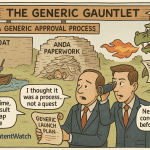
The entire process is highly regulated, with the FDA providing extensive guidance to applicants. Today, all ANDAs must be submitted in a standardized Electronic Common Technical Document (eCTD) format through the FDA’s Electronic Submissions Gateway, streamlining the review process.5 While federal law mandates an approval timeline of 180 days, the practical review process is often much longer, typically taking around 30 months, though this can be expedited for drugs addressing public health crises or shortages.5
Debunking the 80-125% Rule: The Statistical Rigor Behind Therapeutic Equivalence
A persistent and damaging myth surrounding generic drugs is the misinterpretation of the FDA’s bioequivalence standard, often referred to as the “80-125% rule”.16 The misconception holds that a generic drug’s potency or amount of active ingredient is allowed to vary by as much as 20% below or 25% above the brand-name drug, suggesting a wide and potentially clinically significant range of variability.16 This interpretation is fundamentally incorrect and fails to appreciate the statistical rigor of the FDA’s requirements.
To gain approval, a generic drug manufacturer must conduct a bioequivalence study and demonstrate that the 90% confidence interval (CI) of the ratio of the generic’s key pharmacokinetic measures (AUC and Cmax) to the brand’s measures falls entirely within the limits of 80% to 125%.8 A 90% confidence interval is a statistical range that, with 90% probability, contains the true value of the mean ratio. For the
entire range of this confidence interval to fit within the 80-125% window, the observed average (geometric mean) of the generic drug’s performance must be extremely close to that of the brand-name drug.16
In practice, this statistical constraint is far more stringent than a simple allowance of +/- 20% variance. The average difference between the generic and brand-name product in bioequivalence studies is typically very small. For example, one analysis of FDA data showed the average difference in absorption (AUC) between generic and brand-name drugs was approximately 3.5%.17 This level of variability is not considered medically important and is comparable to the slight, expected differences that occur between different manufacturing batches of the very same brand-name drug.3 The 80-125% boundary is a statistical tool to ensure this high degree of similarity, not a license for wide variation in drug content. This robust standard ensures that any FDA-approved generic drug can be considered therapeutically equivalent to its brand-name counterpart.
Section 2: The Hatch-Waxman Act: Architect of the Modern Pharmaceutical Marketplace
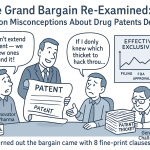
The modern generic drug industry in the United States, with its profound impact on healthcare costs and patient access, was not a spontaneous creation of the free market. It was deliberately engineered by a single piece of landmark legislation: the Drug Price Competition and Patent Term Restoration Act of 1984, informally known as the Hatch-Waxman Act.18 This Act established a grand bargain between innovator and generic drug manufacturers, creating the regulatory and legal architecture that has governed the pharmaceutical landscape for four decades.
A Grand Bargain: Balancing Innovator Exclusivity with Public Access
The Hatch-Waxman Act, named for its bipartisan sponsors Senator Orrin Hatch and Representative Henry Waxman, was designed to resolve a fundamental tension in pharmaceutical policy: the need to incentivize the costly and risky development of new drugs versus the need to ensure affordable access to medicines for the public.19 Before 1984, this balance was heavily skewed. Generic manufacturers faced a prohibitively difficult path to market, as they were typically required to conduct their own full suite of clinical trials to prove safety and effectiveness, even for drugs that had been on the market for years.19 Consequently, generic drugs were rare, accounting for only 19% of all U.S. prescriptions at the time the Act was passed.19
The Act struck a historic compromise that offered significant benefits to both sides of the industry 18:
For Generic Manufacturers: The Act created the ANDA pathway, which, as detailed in the previous section, is the most crucial provision for generics. It allowed them to rely on the brand’s established safety and efficacy data, dramatically reducing the time and cost of gaining FDA approval.19 Furthermore, the Act established a “safe harbor” provision, which protects generic manufacturers from patent infringement lawsuits for activities reasonably related to preparing and submitting an ANDA, such as manufacturing test batches and conducting bioequivalence studies.18
For Brand-Name Manufacturers: To compensate for the new, streamlined generic competition, the Act provided innovator companies with valuable tools to protect their investments. It established a system for extending patent terms to restore some of the patent life lost during the lengthy FDA regulatory review process.18 It also created new forms of market exclusivity, which are separate from patents. These exclusivities, such as a five-year data exclusivity for new chemical entities and a three-year marketing exclusivity for significant new clinical investigations (e.g., a new indication), prohibit the FDA from approving a generic application for a specified period, regardless of the patent status.20
This carefully balanced framework was intended to preserve the financial incentives for innovation while ensuring a predictable and efficient pathway for generic competition to emerge once those incentives had been realized.
Key Provisions: Patent Term Restoration, Data Exclusivity, and the 180-Day Incentive for First-to-File Generics
Beyond the grand bargain, the Hatch-Waxman Act introduced several specific mechanisms that continue to shape the strategic behavior of pharmaceutical companies. A critical component of the ANDA process involves how generic applicants address the patents that brand-name companies list in the FDA’s publication, Approved Drug Products with Therapeutic Equivalence Evaluations, commonly known as the “Orange Book”.19
When submitting an ANDA, a generic firm must make a certification for each patent listed for the RLD. The most consequential of these is the “Paragraph IV” (PIV) certification. By making a PIV certification, the generic company asserts that it believes the brand’s patent is invalid, unenforceable, or will not be infringed by the marketing of its proposed generic product.18 A PIV filing is an act of direct challenge to the brand’s patent monopoly and typically triggers a patent infringement lawsuit from the brand-name company within 45 days.18
To encourage these potentially costly and risky patent challenges, the Hatch-Waxman Act created a powerful incentive: a 180-day period of marketing exclusivity for the first generic applicant to file a substantially complete ANDA with a PIV certification.18 During this six-month period, the FDA is barred from approving any subsequent ANDAs for the same drug. This exclusivity allows the first-to-file generic to enjoy a duopoly with the brand-name drug, often capturing significant market share and profits before full, multi-competitor generic price erosion begins.21 This 180-day incentive has become a central element of generic business strategy and a major driver of patent litigation in the pharmaceutical industry.
However, this very incentive, designed to hasten competition, has also created unintended consequences. The 180-day exclusivity is a valuable asset that can be leveraged in settlement negotiations. A brand-name company, faced with a patent challenge, can offer a “pay-for-delay” settlement to the first-filer generic. By paying the first-filer to delay its market entry, the brand company can effectively bottleneck the entire generic pipeline for that drug, as no other generic can be approved until the first-filer’s 180-day exclusivity is triggered and expires.21 Thus, a provision intended to be a “carrot” for challenging weak patents has, in some cases, been co-opted into a tool for collusion to delay competition, a dynamic that will be explored further in Part III.
Legacy and Impact: From a 19% Market Share to a 90% Market Dominance
The legacy of the Hatch-Waxman Act is undeniable. It fundamentally reshaped the U.S. pharmaceutical market, transforming generic drugs from a niche segment into the dominant force in prescription volume. Generic utilization soared from 19% in 1984 to over 90% today, a figure that far surpasses that of other developed nations.19 For instance, the average generic uptake in other Organisation for Economic Co-operation and Development (OECD) countries is only 41%.25 This demonstrates the unparalleled success of the Act in achieving its primary goal of promoting widespread generic use and creating a robust competitive market for off-patent medicines.
The Act’s success also spurred the creation of a sophisticated ecosystem of legal and business intelligence services. The complex interplay of patent certifications, litigation, and exclusivity periods created a high-stakes environment where strategic navigation is paramount. Companies like DrugPatentWatch have emerged to provide critical intelligence on patent expiration dates, PIV filings, and litigation outcomes, helping both generic and brand-name firms make multi-million-dollar strategic decisions.22 The Act did not just create a market for generic drugs; it created a parallel market for the information and legal expertise required to compete within its intricate framework.
Part II: The Economic Engine of Savings
The regulatory and legislative foundation established by the FDA and the Hatch-Waxman Act set the stage for an unprecedented economic transformation in the U.S. pharmaceutical market. Generic drugs have become a powerful deflationary force, generating hundreds of billions of dollars in annual savings and fundamentally altering the financial lifecycle of prescription medicines. This part of the report quantifies this monumental impact, moving from a high-level analysis of system-wide savings to a detailed examination of the market mechanics that drive price erosion and create the “patent cliff” for innovator drugs.
Section 3: Quantifying the Impact: Trillions in Savings for the U.S. Healthcare System
The most direct and significant impact of generic drugs is the staggering cost savings they deliver to the U.S. healthcare system, including government payers, commercial insurers, and patients. Annual analyses consistently demonstrate a growing contribution, underscoring the role of generics as the primary bulwark against rising prescription drug expenditures.
A Decade of Deflation: Analyzing Annual Savings Reports
Data compiled by the IQVIA Institute on behalf of the Association for Accessible Medicines (AAM) provides a clear and consistent picture of the economic value generated by generic and, more recently, biosimilar medicines. Over the past decade, these products have saved the U.S. healthcare system trillions of dollars. For the ten-year period ending in 2016, the cumulative savings amounted to $1.67 trillion.28 This figure grew to $2.9 trillion for the decade ending in 2022 and reached an extraordinary $3.1 trillion for the decade ending in 2023.24
The annual savings have shown a consistent and impressive upward trend, reflecting the increasing number of blockbuster drugs coming off patent and the high utilization of their generic alternatives. A year-by-year analysis reveals this powerful growth trajectory:
2016: $253 billion in savings.28
2017: $265 billion in savings.31
2020: $338 billion in savings, demonstrating resilience even during the COVID-19 pandemic.32
2021: $373 billion in savings.33
2022: $408 billion in savings.30
2023: A record $445 billion in savings.24
This consistent deflationary pressure makes the generic and biosimilar industry the only segment of healthcare that consistently delivers lower costs year after year.24
Payer-Specific Analysis: Deep Dive into Savings for Medicare, Medicaid, and Commercial Health Plans
The benefits of generic drugs are distributed across all major payers in the healthcare system, with particularly significant impacts on large government programs and employer-sponsored insurance plans.
Medicare: As the largest single purchaser of prescription drugs, the Medicare program has realized enormous savings, which directly benefit both taxpayers and senior beneficiaries. The savings for Medicare have grown substantially:
In 2016, generics saved Medicare $77 billion, translating to an average of $1,883 for every enrollee.28
By 2017, this rose to $82.7 billion, or $1,952 per enrollee.31
In 2021, Medicare savings reached $119 billion.33
This climbed to $130 billion in 2022.30
In 2023, Medicare savings from generics and biosimilars totaled $137 billion, averaging an impactful $2,672 per beneficiary.24
Commercial Health Plans: The commercial market, which covers the majority of working-age Americans and their families, represents the largest pool of absolute savings.
In 2021, commercial plans saved $178 billion.33
This increased to $194 billion in 2022.30
By 2023, savings in the commercial sector reached $206 billion.24
Patient Out-of-Pocket Costs: For patients, the most tangible benefit is the dramatic reduction in out-of-pocket expenses. The average copayment for a generic prescription has remained remarkably low and stable, recorded at $6.06 in 2017, $6.16 in 2022, and $7.05 in 2023.24 This stands in stark contrast to the average copay for a brand-name drug, which is consistently four to nine times higher, reaching $56.12 in 2022.24 The affordability of generics is further highlighted by the fact that 93% of all generic prescriptions are filled for a patient copay of $20 or less.31
The 90/13 Disparity: How Generics Dominate Prescriptions While Minimizing Drug Spend
Perhaps the single most illuminating statistic in understanding the U.S. pharmaceutical market is the profound disparity between generic drug utilization and their share of spending. Year after year, generic medicines account for approximately 90% of all prescriptions dispensed in the United States.19 This near-total dominance in volume reflects their successful integration into clinical practice as the standard of care for off-patent treatments.
Despite this overwhelming volume, generics are responsible for a surprisingly small and shrinking portion of the nation’s total prescription drug spending. In 2016, they accounted for 26% of drug costs.28 This share fell to 18.2% in 2021, 17.5% in 2022, and a mere 13.1% in 2023.24 The mathematical inversion of this data is stark: the remaining 10% of prescriptions—overwhelmingly on-patent, brand-name drugs—are responsible for 86.9% of the country’s total pharmaceutical bill.
This “90/13” disparity powerfully reframes the policy debate. It indicates that the United States does not have a generalized “drug price problem” but rather a highly specific and acute brand-name drug price problem. The generic market is functioning as an efficient, deflationary engine, but its cost-saving effects are overshadowed by the hyper-inflationary pricing of the small fraction of medicines that remain under monopoly protection. When viewed in the context of the entire U.S. healthcare system, the efficiency of generics is even more striking. Total spending on these workhorse medicines constitutes a tiny fraction of all healthcare expenditures, estimated at less than 2% and as low as 1.2% in 2023.24
Year
Total Savings (Billions)
Medicare Savings (Billions)
Commercial Plan Savings (Billions)
Generic Share of Prescriptions (%)
Generic Share of Spending (%)
2020
$338
$109.6
Data Not Specified
90%
18.1%
2021
$373
$119
$178
91%
18.2%
2022
$408
$130
$194
90%
17.5%
2023
$445
$137
$206
90%
13.1%
Table 1: U.S. Generic & Biosimilar Savings (2020-2023). Data sourced from AAM annual reports.24
While the system-level savings are monumental, it is crucial to recognize that these benefits do not always translate perfectly to the individual patient’s experience at the pharmacy counter. The low average copay figures can mask underlying structural issues. As will be explored in Part III, the design of insurance benefits and the practices of pharmacy benefit managers (PBMs) can create scenarios where patients face unexpectedly high out-of-pocket costs for certain “cheap” generics.36 This disconnect between macro-level savings and micro-level patient costs highlights a key area for policy intervention, as evidenced by HHS initiatives like the Medicare $2 Drug List (M2DL) Model, which aims to ensure that a list of high-value generics are truly affordable for beneficiaries.37
Section 4: The Mechanics of Price Erosion and Market Transformation
The billions of dollars in savings quantified in the previous section are generated through a predictable and powerful market mechanism: price competition. The expiration of a brand-name drug’s patents and exclusivities opens the door for generic manufacturers to enter the market, fundamentally and permanently transforming the drug’s pricing and revenue trajectory. This section analyzes the mechanics of this transformation, from the step-wise price reductions caused by new competitors to the broader international context of the U.S. market.
The Power of Competition: Modeling Price Declines with Each New Market Entrant
The relationship between the number of generic competitors and the price of a drug is direct and dramatic. The introduction of even a single generic alternative creates immediate price pressure. According to FDA analysis, the entry of the very first generic competitor triggers an average price drop of 39% compared to the brand-name drug’s price before competition.39 This initial entrant captures the most significant single price reduction, opening the door for substantial patient savings.39
As more manufacturers enter the market, prices continue to fall precipitously. Research from the FDA and the Assistant Secretary for Planning and Evaluation (ASPE) at HHS provides a clear model of this price erosion based on the number of competitors 40:
With two generic competitors, the average generic price is 54% lower than the pre-entry brand price.
With four generic competitors, the average price plummets to 79% below the brand price.
Once six or more generic competitors are in the market, the price reduction is profound, with generic prices falling by more than 95% compared to the original brand price.
This demonstrates a clear, dose-response relationship: more competition leads to lower prices. The data confirms that promoting the entry of multiple generic manufacturers is a highly effective strategy for maximizing cost savings.41
Number of Generic Competitors
Average Generic Price Reduction vs. Brand Price (%)
1
39%
2
54%
4
79%
6+
>95%
Table 2: Impact of Competition on Generic Drug Prices. Data based on FDA analysis of Average Manufacturer Prices (AMP).40
Navigating the “Patent Cliff”: The Inevitable Revenue Decline for Blockbuster Drugs
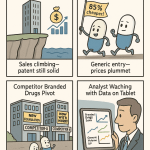
For innovator pharmaceutical companies, this predictable price erosion creates a phenomenon known as the “patent cliff.” This term describes the sudden, steep, and often dramatic loss of revenue that occurs when a high-revenue “blockbuster” drug loses its patent protection and is exposed to generic competition.44 The financial impact is severe, with brand-name drug revenues often declining by 80% to 90% within the first year of generic entry.44
A quintessential example of the patent cliff is Pfizer’s cholesterol drug, Lipitor. Once the world’s best-selling drug, its patent expiration in 2011 led to a rapid collapse in sales, with annual revenue falling from approximately $13 billion to under $3 billion within just a few years.45 This precipitous decline is a recurring event in the industry, with major drugs like Merck’s Keytruda, with over $29 billion in 2023 sales, facing its own patent cliff in 2028.44
The patent cliff is a fundamental driver of the pharmaceutical industry’s business cycle. The predictable and massive loss of revenue from aging blockbusters creates an intense and continuous pressure on innovator companies to invest in research and development (R&D) to discover new, patentable drugs to replenish their pipelines and sustain growth.44 In this sense, the success and efficiency of the generic market—the very force that creates the cliff—is a necessary precondition for fueling the engine of brand-name innovation. Without the existential threat of the patent cliff, the incentive for brand companies to undertake the risky and expensive process of developing new medicines would be significantly diminished.
An International Outlier: Comparing U.S. Generic Utilization and Pricing to OECD Nations
When placed in a global context, the U.S. pharmaceutical market presents a study in contrasts. The U.S. consistently has the highest overall prescription drug spending per capita and the highest prices for on-patent, brand-name drugs in the developed world.26 A 2022 analysis by HHS found that U.S. gross prices for brand-name drugs were 422% of the prices in 33 other OECD comparison countries—more than four times as high.26
Simultaneously, however, the U.S. market for off-patent drugs is arguably the most competitive and efficient in the world. This is reflected in three key metrics:
Generic Utilization: The U.S. has a far higher generic utilization rate, with generics accounting for 90% of prescription volume, compared to an average of just 41% in the other OECD countries studied.25
Generic Pricing: For unbranded generic drugs, U.S. prices are often lower than those in other high-income nations. The same HHS report found that U.S. prices for unbranded generics were, on average, only 67% of the prices in the 33 comparison countries.26 Separate analyses consistently show that U.S. generic prices are significantly cheaper than in Canada, where a smaller market size leads to less intense competition among generic manufacturers.49
Price Controls: This divergence stems from different policy choices. Most other OECD countries employ some form of centralized price negotiation or government price controls for on-patent drugs, which keeps brand-name prices lower.47 The U.S., by contrast, has historically resisted such direct price controls for brand drugs, while the Hatch-Waxman Act has created a uniquely hyper-competitive environment for off-patent drugs.
This reveals a bifurcated system. The U.S. has more aggressively embraced market-based competition for off-patent drugs than any other nation, leading to high utilization and low prices for generics. At the same time, it has more staunchly resisted market regulation for on-patent drugs, leading to the world’s highest brand-name prices. This policy dichotomy explains the paradox of how the U.S. can simultaneously have the world’s most robust generic market and the highest overall pharmaceutical spending.
Metric
United States
OECD Comparison Countries (Average)
Brand Drug Prices (as % of OECD price)
422%
100%
Unbranded Generic Prices (as % of OECD price)
67%
100%
Generic Prescription Volume (% of total)
90%
41%
Table 3: International Prescription Drug Price & Utilization Comparison (U.S. vs. OECD Average). Data based on 2022 analysis from HHS/RAND.26
Part III: Complexities, Challenges, and Countervailing Forces
While the generic drug model has been remarkably successful in generating savings, its full potential is often constrained by a complex web of strategic maneuvers, structural market flaws, and behavioral factors. This part of the report transitions from an analysis of the system’s successes to a critical examination of the countervailing forces that impede competition, destabilize the market, and limit the translation of system-level savings into patient-level benefits. It explores the sophisticated playbook used by innovator companies to delay generic entry, the unintended consequences of intense price competition, and the crucial role of human perception in drug utilization.
Section 5: The Innovator’s Playbook: Strategies to Delay Generic Entry
Faced with the certainty of the patent cliff, innovator pharmaceutical companies have developed a sophisticated and multifaceted playbook of legal and commercial strategies designed to extend their monopoly profits by delaying the market entry of generic competitors. These tactics often operate within the letter of patent and regulatory law but can undermine the spirit of the Hatch-Waxman Act, which was intended to facilitate timely competition.
Building the Fortress: An Analysis of “Patent Thickets” and “Product Hopping”
Two of the most effective strategies for extending market exclusivity involve manipulating the patent system and product lifecycles.
Patent Thickets: This strategy involves filing a large number of secondary patents covering various aspects of a drug, long after the original patent on the active molecule has been granted. These patents may cover minor features such as the drug’s formulation, coating, method of administration, or specific manufacturing processes.23 This creates a dense and overlapping web of intellectual property—a “patent thicket”—that a prospective generic competitor must navigate or challenge in court. The sheer volume of patents makes litigation extremely costly, complex, and time-consuming, thereby creating a formidable barrier to entry even if many of the individual patents are weak.44 The proliferation of this tactic is evident in the data: the median number of patents listed with the FDA for a new drug tripled between 1985 and 2005.23 The blockbuster biologic Humira is a prime example, where a vast patent thicket was used to delay biosimilar competition for years beyond the expiration of its primary patent, ultimately requiring settlement agreements to clear the way for competitors.53
Product Hopping (or Evergreening): This commercial strategy involves making a minor modification to a drug shortly before its primary patent is set to expire and then aggressively marketing the new version to switch patients and physicians away from the original formulation.11 For example, a company might launch a new extended-release version of a once-daily pill. By heavily promoting the “new and improved” product, which is protected by its own set of patents, the innovator company can effectively migrate the market away from the older version just as it is about to face generic competition. This tactic depletes the potential market for the impending generic, making entry less financially attractive for competitors.11
These strategies represent a form of “regulatory arbitrage,” where the very systems designed to protect legitimate innovation and resolve disputes are leveraged to stifle competition. By patenting trivial modifications or timing product reformulations to thwart generic entry, companies can exploit the rules of the patent and FDA systems to defeat their core purpose of balancing innovation with public access.
The “Pay-for-Delay” Dilemma: FTC Scrutiny and the Impact of Reverse-Payment Settlements
One of the most controversial strategies to delay generic competition is the “pay-for-delay” or “reverse-payment” settlement agreement. In this scenario, a brand-name drug company, after suing a generic challenger for patent infringement, pays the generic company to settle the lawsuit and agree to delay the launch of its generic product for a specified period.21 It is termed a “reverse payment” because the plaintiff (the brand company) pays the defendant (the generic company), which is the opposite of a typical legal settlement.
The Federal Trade Commission (FTC) has long contended that these agreements are inherently anti-competitive, as they serve to protect a brand’s monopoly and keep lower-cost alternatives off the market. The FTC estimates that these deals cost American consumers and taxpayers an estimated $3.5 billion annually in the form of higher drug prices.55
The legal landscape for these agreements was significantly altered by the 2013 Supreme Court decision in FTC v. Actavis, Inc. The Court ruled that pay-for-delay settlements are not immune from antitrust scrutiny and can be challenged in court if they involve a “large and unjustified” payment from the brand to the generic company.57 This decision empowered the FTC to continue its enforcement actions against such deals.
Since the Actavis ruling, the number of settlements involving explicit cash payments has declined significantly.53 However, the FTC remains vigilant, noting that payments can be disguised through other means, such as complex co-marketing or distribution agreements that provide value to the generic firm in exchange for delayed entry.23 Under the Medicare Modernization Act of 2003, all such patent settlement agreements must be filed with the FTC and the Department of Justice for review, allowing the agencies to monitor the market for potentially anti-competitive behavior.53 The FTC reviews more than 200 such agreements each year and maintains that the vast majority are lawful and pro-competitive, often providing a date-certain for generic entry sooner than would occur through prolonged litigation.53
Authorized Generics: A Brand-Driven Strategy to Compete in the Generic Space
Another defensive strategy employed by brand-name companies is the launch of an “authorized generic” (AG). As previously defined, an AG is the brand-name drug itself, marketed without the brand name and sold at a generic price, typically through a subsidiary or a partner generic firm.2 By launching its own AG, often on the same day the first independent generic enters the market, the brand company can accomplish several strategic goals. First, it can retain a portion of the market that would otherwise be lost to an independent generic, capturing a share of the generic revenue stream.11 Second, the presence of the AG immediately increases the level of competition, putting downward pressure on prices and reducing the profitability of the market for the independent generic challenger. This can serve as a deterrent, potentially delaying or preventing the entry of other generic competitors who may see the market as less financially attractive.58
The use of these complex legal and commercial strategies creates a significant information asymmetry in the market. Success in the generic space requires not only manufacturing prowess but also deep legal expertise and sophisticated business intelligence capabilities to analyze the patent landscape, assess litigation risk, and anticipate brand-company maneuvers.22 This high barrier to entry can favor large, well-capitalized generic firms and may contribute to market consolidation, which in turn can lead to less competition and blunted price reductions.
Section 6: Structural Flaws and Market Fragility
Beyond the direct anti-competitive strategies employed by innovator companies, the full cost-saving potential of generic drugs is also hampered by structural flaws within the broader U.S. healthcare system and by the unintended consequences of the very price competition that makes generics valuable. These systemic issues can create misaligned incentives, destabilize the supply of essential medicines, and introduce behavioral barriers to optimal drug use.
The PBM Conundrum: How Rebate Walls and Formulary Tiers Can Undermine Patient Savings
A critical structural impediment lies within the pharmaceutical supply chain, specifically with the role of Pharmacy Benefit Managers (PBMs). PBMs, which manage prescription drug benefits for health insurers, are compensated in part through rebates negotiated with brand-name drug manufacturers. These rebates are typically calculated as a percentage of a drug’s high list price. This creates a fundamental misalignment of incentives: a PBM may generate more revenue from a large rebate on an expensive brand-name drug than from the small (or nonexistent) margin on a low-cost generic alternative.25
This dynamic leads to several practices that undermine the value of generics for patients:
Rebate Walls: PBMs may construct formularies that favor incumbent brand-name drugs to protect their rebate revenue. They may agree to give a brand drug preferred status in exchange for a high rebate, effectively creating a “rebate wall” that makes it difficult for a new, lower-cost generic or biosimilar to gain favorable formulary placement.24
Adverse Tiering: To steer patients toward the preferred (and more profitable) brand drug, PBMs and health plans may place the competing generic on a higher, non-preferred formulary tier. This results in the patient facing a higher copayment for the generic than for the brand drug, directly penalizing them for choosing the more cost-effective option for the overall system.36
Disconnect Between System Savings and Patient Costs: The consequences of these practices are significant. One analysis found that shifting generics to higher brand tiers led to a 135% increase in annual patient spending on those drugs, even as the average acquisition price of the medicines fell by 38%.36 This demonstrates a clear disconnect where the system saves money, but the savings are captured by intermediaries in the supply chain and are not passed on to the patient. The number of Medicare beneficiaries forced to pay the full cash price for their generic medication at least once during the year has also been rising, increasing from 45% in 2017 to nearly two-thirds by 2020.36
The Race to the Bottom: Price Deflation, Market Exits, and the Rise of Drug Shortages
The intense price competition that drives the economic benefits of generics can, paradoxically, also be a source of market instability. For many older generic drugs, especially those that are complex to manufacture (such as sterile injectables) or serve smaller patient populations, the “race to the bottom” in pricing can make production unsustainable.24 When profit margins become razor-thin or disappear entirely, manufacturers may choose to exit the market.42
This erosion of the manufacturing base leads to market consolidation, where only a few, or sometimes just one, supplier remains for a given drug. This lack of competition makes the supply chain fragile and highly vulnerable to disruption. If the sole remaining manufacturer experiences a production problem, a drug shortage can quickly ensue. The number of drug shortages in the U.S., the vast majority of which involve generic drugs, has risen significantly in recent years.36 A telling statistic reveals the economic pressure: more than 60% of the generic drugs currently on the FDA’s shortage list are priced at $1 per unit or less.36 This highlights a critical market failure: the system that excels at driving down prices has, in some cases, made the production of essential medicines economically unviable, creating a public health risk. The generic drug market is thus simultaneously threatened by anti-competitive forces that keep prices too high and by hyper-competitive forces that drive prices too low to be sustainable, resulting in a state of market “fragility”.24
The Human Factor: The Impact of Public and Physician Perception on Medication Adherence
The final challenge is behavioral. Despite the FDA’s rigorous standards, both the public and healthcare professionals can harbor negative perceptions and misconceptions about the quality, safety, and effectiveness of generic drugs.10 Common myths include the beliefs that generics are less potent, take longer to work, or are made in substandard facilities.10
These perceptions are often fueled by two key factors:
Price-Quality Association: Consumers are often conditioned to believe that a lower price implies lower quality. It is an understandable, though incorrect, leap to apply this concept to medicines, reasoning that a less expensive generic must be inferior to its brand-name counterpart.10
Physical Differences: As noted earlier, generics often differ in color, shape, and size from the brand-name drug. When a patient receives a refill that looks different from their previous prescription without explanation, it can cause confusion, anxiety, and mistrust, leading them to question if they received the correct medication.9
This skepticism can have direct and detrimental effects on health outcomes by negatively impacting medication adherence. If a patient is switched to a generic and does not trust its efficacy or safety, they may be less likely to take it as prescribed, or may discontinue it altogether.9 While numerous studies demonstrate that the lower out-of-pocket costs associated with generics generally
improve medication adherence 62, the relationship is not always straightforward. One large study found that lower copayments improved adherence for some chronic conditions (like hypercholesterolemia) but were associated with lower adherence for others (like hypertension), suggesting a complex interplay of factors.64 Another recent study presented a “paradox of access,” finding that in the context of a specific policy involving steep price reductions, enhanced drug availability was counterintuitively associated with
reduced patient adherence.65 These findings underscore that while cost is a major factor in adherence, it is not the only one; patient trust, perception, and education are critically important variables.
Part IV: The Next Frontier and Strategic Recommendations
The evolution of the pharmaceutical market is continuous. As the small-molecule generic market matures, a new frontier of competition is opening up in the realm of large-molecule biologics. This final part of the report examines the emerging role of biosimilars, which hold the potential to replicate the cost-saving success of generics in one of the most expensive sectors of medicine. It then synthesizes the entirety of the report’s analysis—from regulatory foundations and economic impact to market challenges—into a set of concrete, evidence-based policy recommendations designed to optimize the generic and biosimilar marketplace for greater healthcare savings, market stability, and patient benefit.
Section 7: Biosimilars: The New Wave of Competition for Biologics
Biologic medicines, which include treatments for complex conditions like cancer and autoimmune diseases, represent one of the fastest-growing and most expensive segments of pharmaceutical spending. The introduction of “biosimilars” offers the promise of bringing competition and cost containment to this critical area, much as generics did for conventional small-molecule drugs. However, the scientific and regulatory landscape for biosimilars is inherently more complex.
Beyond the Copy: Defining “High Similarity” in Complex Molecules
The fundamental difference between a generic drug and a biosimilar lies in the nature of the molecules they replicate.
Generic Drugs are copies of small-molecule drugs, which are synthesized through predictable chemical reactions. This allows for the creation of identical copies of the active pharmaceutical ingredient (API).66
Biologic Drugs are large, complex molecules (often proteins) that are produced in or derived from living systems, such as genetically engineered cells or bacteria.68 Due to the inherent variability of these living systems and complex manufacturing processes, it is scientifically impossible to create an exact, identical copy of a biologic.66
Because of this complexity, the approval standard for a biosimilar is not “sameness” or “bioequivalence,” but rather “biosimilarity.” The FDA defines a biosimilar as a biological product that is highly similar to an already-approved reference biologic, notwithstanding minor differences in clinically inactive components. Crucially, there must be no clinically meaningful differences between the biosimilar and its reference product in terms of safety, purity, and potency (effectiveness).68
The approval pathway for biosimilars, established in the U.S. by the Biologics Price Competition and Innovation Act (BPCIA) of 2009, is an abbreviated pathway, but it is significantly more demanding than the ANDA process for generics.71 To demonstrate biosimilarity, a manufacturer must present a “totality of the evidence” that compares its product to the reference biologic. This typically includes 66:
Extensive Analytical Studies: Using state-of-the-art technology to compare the structural and functional characteristics of the biosimilar and reference product.
Animal Studies: To assess toxicity and pharmacology, if deemed necessary.
Clinical Pharmacology Studies: To compare the pharmacokinetics (PK) and pharmacodynamics (PD) of the two products in humans.
A Comparative Clinical Study: At least one clinical trial is typically required to confirm that there are no clinically meaningful differences in safety and efficacy between the biosimilar and the reference product.
This comprehensive comparative exercise allows the biosimilar to rely on the reference product’s original safety and efficacy data, but the development and approval process remains far more costly and time-consuming than for a typical generic drug.
A Tale of Two Agencies: Comparing the FDA and EMA Approval Pathways
The European Union has a longer history with biosimilars, with the European Medicines Agency (EMA) approving its first biosimilar product back in 2006.69 The EMA’s regulatory framework is conceptually similar to the FDA’s, centered on a rigorous demonstration of high similarity to a reference product through a comprehensive comparability exercise.67
A key point of divergence between the U.S. and E.U. regulatory approaches lies in the concept of interchangeability.
In the United States: The BPCIA created a separate, higher designation for an “interchangeable biosimilar.” To achieve this status, a manufacturer must meet additional requirements, including demonstrating that the biosimilar can be expected to produce the same clinical result as the reference product in any given patient and that switching back and forth between the two products poses no additional risk.71 An interchangeable designation allows a pharmacist to substitute the biosimilar for the prescribed brand-name biologic without consulting the prescriber, similar to how generics are substituted.70 This creates a perceived two-tiered system of “biosimilars” and “interchangeable biosimilars,” which can lead to the misconception that interchangeable products are superior in quality or safety, a notion the FDA actively works to dispel.70 Recognizing that this additional burden may be slowing approvals, the FDA is in the process of updating its guidance to streamline the requirements for an interchangeability designation.70
In the European Union: The EMA takes a different approach. From a scientific standpoint, the EMA and the Heads of Medicines Agencies (HMA) consider all biosimilars approved in the E.U. to be interchangeable with their reference product and with each other.69 This means a physician can switch between products with confidence. However, the authority to decide on automatic substitution at the pharmacy level is left to the individual E.U. member states.69 This approach avoids the creation of a two-tiered system and the potential for confusion it may cause among prescribers and patients.
Early Impact and Future Potential for Healthcare Cost Containment
Although the biosimilar market is still in its early stages in the U.S., it is beginning to deliver substantial savings. Total savings from biosimilars since their introduction in 2015 reached $36 billion by the end of 2023, with $12.4 billion saved in 2023 alone.24 Competition from biosimilars is proving effective at reducing prices; the average sales price for a biosimilar is approximately 50% lower than the reference brand’s price was at the time of the biosimilar’s launch, and this competition has also driven down the price of the reference biologics themselves by an average of 25%.30
However, the adoption of biosimilars has been slower than initially hoped and faces the same significant headwinds that challenge the generic market. The “innovator’s playbook” has been fully adapted for biologics, with brand companies employing extensive patent thickets and PBMs leveraging “rebate walls” to protect the market share of incumbent, high-priced reference products.24 The evolution of the biosimilar market is thus a replay of the generic drug story, but on a more complex, costly, and protracted timeline. The lessons learned from four decades of small-molecule generic competition have yet to be fully and effectively applied to the biologics space.
Attribute
Generic Drugs (Small Molecule)
Biosimilars (Large Molecule)
Active Ingredient
Identical chemical structure to the brand
Highly similar, but not identical, to the reference biologic
Source
Chemical synthesis
Produced in or derived from living cells or organisms
Size/Complexity
Small, simple, well-defined structure
Large, complex, heterogeneous structure
Approval Standard
Bioequivalence (same rate and extent of absorption)
Biosimilarity (highly similar with no clinically meaningful differences)
Typically requires at least one comparative clinical trial
Interchangeability (U.S.)
All approved generics are interchangeable
Separate, higher standard for an “interchangeable” designation
Table 4: Comparison of Generic Drugs and Biosimilars. Data synthesized from.3
Section 8: Policy Recommendations for a Sustainable Generic Marketplace
The evidence presented throughout this report demonstrates that while the U.S. generic and biosimilar drug market is a powerful engine for healthcare cost containment, its full potential is constrained by anti-competitive strategies, misaligned incentives, and market fragility. To ensure the long-term sustainability of this vital industry and maximize savings for patients and the healthcare system, a series of targeted policy reforms are necessary. The following recommendations are derived from the analysis of the regulatory framework, economic data, and market challenges detailed in the preceding sections.
Strengthening the Pipeline: Reforming Patent Law and Curbing Anti-Competitive Practices
The foundation of timely generic competition is a fair and balanced intellectual property system. Current strategies that exploit this system must be addressed.
Recommendation 1: Enhance Patent Quality and Scrutiny. To combat the proliferation of “patent thickets,” the U.S. Patent and Trademark Office (USPTO) should be empowered and directed to apply stricter review standards for secondary patents, particularly those covering trivial drug modifications that do not represent genuine innovation. Congress should also consider creating more accessible and efficient administrative pathways for challenging the validity of weak patents post-grant, reducing the need for costly and prolonged litigation.23
Recommendation 2: Prohibit Anti-Competitive “Pay-for-Delay” Settlements. Congress should enact legislation that establishes a legal presumption that reverse-payment settlements, where a brand company provides a “large and unjustified” payment to a generic challenger to delay market entry, are anti-competitive. This would shift the burden of proof to the settling parties to demonstrate that their agreement is pro-competitive. The FTC’s enforcement authority and resources to pursue these cases should be strengthened.23
Recommendation 3: Discourage “Product Hopping.” The FDA and FTC should clarify through guidance or regulation that the practice of “product hopping”—making minor product reformulations timed specifically to disrupt generic competition—is an anti-competitive practice subject to enforcement action.
Aligning Incentives: Addressing PBM Practices to Ensure Savings Reach Patients
The savings generated by generics must flow through the supply chain to benefit payers and patients, a process currently impeded by misaligned incentives.
Recommendation 4: Increase Rebate Transparency and Pass-Through. Policies should be implemented that require PBMs and health plans to share a specified, significant portion of negotiated brand-name drug rebates directly with patients at the pharmacy counter. This would lower patient out-of-pocket costs and reduce the incentive for PBMs to favor high-list-price, high-rebate drugs.
Recommendation 5: Dismantle “Rebate Walls” and Reform Formulary Design. Congress or regulatory agencies should prohibit PBM and health plan contract terms that penalize the placement of lower-cost generics and biosimilars on preferred formulary tiers. Formularies should be required to be structured in a way that financially incentivizes patients and providers to use the lowest net-cost medication available for a given condition.25
Recommendation 6: Expand Access to Low, Fixed-Cost Generics. The federal government should expand programs based on the principles of the Medicare $2 Drug List (M2DL) Model. Establishing a standardized list of essential, high-value generic drugs that must be offered by all Medicare Part D and commercial plans for a low, fixed copayment would insulate patients from the complexities of formulary tiering and ensure predictable access to affordable medicines.37
Ensuring Market Stability: Policy Levers to Mitigate Drug Shortages and Foster a Resilient Supply Chain
The hyper-competitive nature of the generic market requires policy interventions to ensure its long-term stability and prevent public health crises caused by drug shortages.
Recommendation 7: Create Incentives for Manufacturing Essential Generics. To prevent market exits for low-profit-margin but medically necessary generics, the government should explore mechanisms such as guaranteed volume-based purchasing contracts, tax incentives, or direct subsidies for manufacturers of these vulnerable products. This would ensure a stable and predictable market, encouraging manufacturers to remain in production.24
Recommendation 8: Promote Domestic Manufacturing and Supply Chain Resiliency. To reduce reliance on fragile global supply chains, particularly for critical APIs and finished generic drugs, the U.S. should invest in policies that promote advanced manufacturing technologies and onshore or “near-shore” production of essential medicines.
Building Trust: Strategies for Educating Patients and Providers to Improve Adherence and Outcomes
The clinical and economic benefits of generics can only be realized if patients take them. Overcoming skepticism through education is a critical final step.
Recommendation 9: Fund Public and Professional Education Campaigns. The FDA, in partnership with professional medical and pharmacy societies, should lead sustained educational campaigns targeted at both consumers and healthcare providers. These campaigns should clearly explain the rigorous scientific and regulatory standards for generic and biosimilar approval, explicitly debunk common misconceptions about quality and efficacy, and build trust in these products.9
Recommendation 10: Mandate Pharmacist Counseling for Generic Substitution. When a prescription is switched from a brand-name drug to a generic, pharmacists should be required to counsel the patient on the change. This counseling should explain that the medication is therapeutically identical, highlight the cost savings, and explicitly point out any differences in physical appearance (e.g., color, shape) to prevent confusion, build confidence, and mitigate the risk of non-adherence.9
Strategic behavior and entry deterrence by branded drug firms: the case of authorized generic drugs – PubMed, accessed July 29, 2025, https://pubmed.ncbi.nlm.nih.gov/39316276/