Welcome. If you’re a professional in the pharmaceutical and biotech space, you understand that the conversation about generic drugs goes far beyond a simple choice at the pharmacy counter. It’s a multi-trillion-dollar strategic imperative, a high-stakes arena where intellectual property, regulatory policy, and market economics collide. What if you could predict the precise moment a multi-billion dollar revenue stream would fall off a cliff? What if you could not only brace for the impact but also profit from it? This is the power of turning the generic vs. brand-name dynamic from a consumer-level curiosity into a forward-looking business strategy.
The global pharmaceutical market is a behemoth, valued at over $1.6 trillion in 2023, with a projected growth to over $3.1 trillion by 2032.1 Within this landscape, generic medicines are the bedrock of affordable healthcare. They account for an astounding 90% of prescriptions filled in the U.S. but represent only 13.1% of the country’s total prescription drug spending.2 This staggering imbalance is not a bug in the system; it is the fundamental feature that drives innovation, competition, and immense value for patients and payers alike. Understanding this dynamic is a critical first step for any business professional looking to leverage patent data for a competitive edge.
The Scientific Cornerstone: What Makes a Generic Truly Equivalent?
The popular notion that a generic drug is simply a cheaper, lower-quality imitation is a fundamental misunderstanding of the regulatory and scientific rigor that underpins the industry. At its core, a generic medicine is not an inferior substitute; it is a therapeutic equivalent. This is not a matter of opinion but of scientific fact, verified by regulatory bodies worldwide.3
To gain approval from the U.S. Food and Drug Administration (FDA), a generic medicine must meet a set of exacting standards. It must contain the identical active ingredient as the brand-name drug and be the same in dosage form, strength, and route of administration.4 The active ingredient is the “star player” of a medicine, the component that provides its therapeutic effect.6 For example, the active ingredient in Lipitor is atorvastatin, while the active ingredient in Prilosec is omeprazole.6 Generic manufacturers must provide scientific evidence to the FDA proving that their active ingredient is precisely the same as the innovator’s.4
This scientific “sameness” extends to performance inside the body. A generic drug must be “bioequivalent” to its brand-name counterpart.5 The FDA defines bioequivalence as the absence of a significant difference in the rate and extent to which the active ingredient becomes available at the site of drug action.9 To demonstrate this, generic manufacturers conduct small-scale bioequivalence studies, analyzing two key pharmacokinetic (PK) measures in the bloodstream:
Cmax and AUC.10
Cmax, or maximum concentration, measures the rate of absorption, while AUC (Area Under the Curve) measures the total extent of absorption.9 A manufacturer must demonstrate that the 90% confidence interval of the ratio of the generic’s measures to the brand’s measures falls entirely within a narrow range of 80% to 125%.3 In practice, a recent analysis of FDA data showed the average difference in absorption between generic and brand-name drugs was approximately 3.5%, a difference that is clinically insignificant for most medications.3
The one area where a generic drug can and must differ is in its inactive ingredients, or excipients.5 U.S. trademark law does not allow a generic to look exactly like the brand-name product, which is why generic pills often have different shapes, colors, or flavors.4 These inactive ingredients, which act as “unsung players” in a medicine’s formulation, serve vital functions such as providing bulk for tablets, helping them dissolve, or masking a bitter taste.6 As long as these differences do not affect the drug’s performance, safety, or effectiveness, they are considered acceptable by the FDA.4
The Hatch-Waxman Act: An Elegant Solution and a Strategic Battleground
The foundation of the modern generic pharmaceutical industry is the Drug Price Competition and Patent Term Restoration Act of 1984, widely known as the Hatch-Waxman Act.9 This landmark legislation was an elegant compromise designed to resolve a fundamental tension in pharmaceutical policy: the need to incentivize the costly and risky development of new drugs while ensuring affordable access to medicines for the public.3
For brand-name companies, the Act offered a mechanism to restore some of the patent life lost during the lengthy FDA approval process.9 For generic companies, it created the Abbreviated New Drug Application (ANDA) pathway, a streamlined and cost-effective route to market entry.3
The ANDA pathway allows generic manufacturers to bypass the need for expensive and time-consuming clinical trials by referencing the brand-name drug’s existing safety and efficacy data.3 This regulatory efficiency is the fundamental source of the cost savings associated with generic drugs; they are less expensive because the development and approval process is streamlined, not because their quality is inferior.3
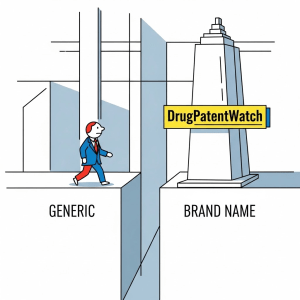
The genius of the Hatch-Waxman Act is that it did not just create a new market; it institutionalized a strategic cat-and-mouse game between brand-name innovators and generic competitors. The expedited pathway for generics forced brand companies to develop sophisticated legal and R&D countermeasures, while the potential for a first-mover advantage made intellectual property litigation a core competency for generic drug makers. This is the causal link that explains why the pharmaceutical industry’s legal landscape is so intensely competitive.
Here is a side-by-side comparison of the two primary regulatory pathways.
Feature
New Drug Application (NDA)
Abbreviated New Drug Application (ANDA)
Purpose
To approve a new, innovative drug for the first time.12
To approve a generic version of an already-approved drug.12
Primary Data Required
Full chemistry, manufacturing, and controls (CMC) data; extensive animal and clinical (human) studies; bioavailability data.9
Full CMC data; bioequivalence study results to a Reference Listed Drug (RLD).13
Clinical Trials
Required: New animal and human studies to prove safety and efficacy.3
Not Required: Relies on the brand’s pre-existing data.12
Typical Cost
Billions of dollars.14
A fraction of NDA costs, primarily for development and bioequivalence studies.3
Average Approval Time
A decade or more.11
Around 30 months.12
Strategic Goal
To secure patent protection and market exclusivity to recoup R&D investment.11
To demonstrate therapeutic equivalence and gain market entry upon patent expiration.13
The Economics of Disruption: The Financial Impact of Generic Competition
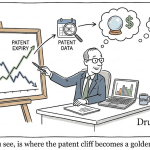
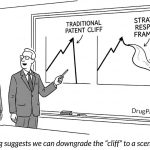
The expiration of a brand-name drug’s primary patents marks a pivotal moment in the industry, a phenomenon universally known as the “patent cliff”.16 This isn’t a gradual erosion of sales but a precipitous and predictable event. When a blockbuster drug—defined as having sales exceeding $1 billion a year—loses its patent exclusivity, its market share can plummet by 80% or more within the first year as generic competitors enter the market.16 This rapid decline places immense pressure on pharmaceutical companies to develop new therapies, but it also creates immense opportunities for those prepared to capitalize on the shift.
This market dynamic is a primary driver of the generic drug industry’s robust growth trajectory. The global generic drugs market, valued at approximately $445.62 billion in 2024, is forecasted to grow at a powerful rate, reaching an estimated $728.64 billion by 2034.18
The following table synthesizes key market forecasts, providing a consolidated view of the global strategic playing field.
Region
2024 Market Size (USD Billion, Est.)
Projected CAGR (%)
Global
$445.62 – $468.08 18
5.04% – 8.3% 18
North America
$173.79 18
3.53% – 5.24% 18
Europe
$118 20
~4.5% 20
Asia-Pacific
$105 20
~8.0% 20
Sources: Precedence Research, IMARC Group, Grand View Research, Vision Research Reports, DrugPatentWatch.18
The Trillion-Dollar Question: Quantifying the Savings for Patients and Payers
The economic impact of generic competition is not just a theoretical concept; it is a measurable, tangible force that saves the U.S. healthcare system hundreds of billions of dollars annually.
In 2023, generic and biosimilar medicines generated a record $445 billion in savings for patients and the U.S. healthcare system, contributing to over $3 trillion in savings over the last decade alone.2 This staggering figure underscores the critical role generics play in making medicine more accessible and affordable.3
These savings are not confined to a single sector; they are distributed across the entire healthcare ecosystem.3 In 2023 alone, generic competition saved the Medicare program $137 billion, while commercial health plans saved an impressive $206 billion.2 For patients, the benefit is even more direct. The average copayment for a generic prescription remains significantly lower than for a brand-name drug.3 This reduction in out-of-pocket costs is a major driver of medication adherence, leading to better patient outcomes and a reduction in the total cost of care.23
The Generics Paradox: When Competition Leads to Unintended Consequences
Here is a critical, often-overlooked dynamic in the generic market: While generic competition consistently drives down overall healthcare costs, it doesn’t always lead to a significant price drop for the original brand-name drug.24 In some cases, the price of the brand-name product can even increase, a phenomenon known as the “generics paradox”.24
How can this happen? The process is a matter of rational business strategy. When a brand-name drug’s patent expires, it typically loses the vast majority of its market share to cheaper generics.16 However, a small segment of the market remains loyal to the brand. This can include patients with a deep-seated distrust of generics, physicians who are hesitant to switch, or health plans that continue to favor the brand.24 This remaining customer base is often highly price-insensitive. To offset the lost sales volume, the brand-name company can strategically increase the price for this smaller, more valuable, and less price-sensitive segment of its customer base.24 This phenomenon highlights a unique strategic opportunity for brand-name companies to maintain profitability on a smaller but more valuable customer base while generic companies fight for share in a commoditized market.
The Price-Competition Curve: A Data-Driven Analysis of Price Erosion
For any company considering generic market entry, the critical data point is the predictable and steep curve of price erosion. This is not a linear decline but a rapid commoditization of the market that intensifies with each new competitor.10 The following table provides a clear, data-driven analysis of this effect.
Number of Generic Competitors
Approximate Price Reduction vs. Brand Price (%)
Strategic Implication
1
30% to 39% 26
The first-to-market generic has a brief, lucrative opportunity to capture market share at a high price point.10
2 to 3
50% to 70% 10
Competition intensifies, forcing price drops and pressuring margins. Entry at this stage requires a strong cost structure.10
6+
>85% to 95% 10
The market is now a high-volume, low-margin business. Only the most efficient manufacturers can sustain profitability.26
10+
70% to 80% (3 years after entry) 27
Margins are razor-thin or non-existent. At this point, companies compete almost exclusively on volume and operational efficiency.26
Sources: IQVIA, HHS ASPE, AAM.10
The data is unequivocal. The most lucrative period for a generic drug is the short window of time with limited competition. Once the number of competitors climbs, the market becomes a race to the bottom, where only the most operationally efficient companies can survive.26 This reality is forcing a fundamental strategic evolution for generic companies, prompting them to move beyond simple oral solids and focus on products with higher barriers to entry.
The Strategic Battleground: Navigating Legal and Commercial Frictions
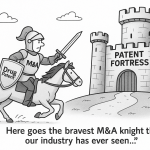
Branded pharmaceutical companies do not passively await the expiration of their patents. They have developed a sophisticated playbook of legal and commercial strategies to protect their intellectual property and prolong market exclusivity.14
One of the most common proactive defense strategies is “evergreening,” a practice where companies file new patents on a drug’s formulation, delivery mechanism, or new therapeutic uses to extend its period of market exclusivity.14 For example, a company with a patent on an oral drug might later file a patent for an injectable form, a sustained-release formulation, or a new dosage regimen.11 This is also known as life-cycle management, and the strength of this secondary patent portfolio is a direct indicator of how steep a company’s post-expiry revenue decline will be.29
A more controversial tactic is “product hopping,” where a brand-name company launches a slightly modified, newly patented version of a drug just before the original’s patent expires.28 The company then removes the original drug from the market, making it difficult for pharmacists to automatically substitute the generic version.28 This strategy effectively forces patients and prescribers to switch to the new, protected version, preserving the company’s revenue stream.
The Hatch-Waxman Act, in its elegant design, also institutionalized a high-stakes legal race for generic manufacturers. This race is centered around the “Paragraph IV” certification and the coveted “180-day exclusivity” prize.21
A generic manufacturer can file a Paragraph IV certification with the FDA’s Center for Drug Evaluation and Research (CDER), which asserts that the brand-name drug’s listed patents are invalid, unenforceable, or will not be infringed by their generic product.21 This certification is an act of legal aggression, a direct challenge to the brand’s intellectual property. If the generic company is the first to file a Paragraph IV certification against a specific patent, it is granted a “golden ticket”: 180 days of market exclusivity.30 This period allows the first-to-file generic to be the sole generic competitor to the brand for six months, an opportunity that can generate hundreds of millions of dollars in revenue.26 The promise of this financial windfall explains why high-stakes, multi-million-dollar patent litigation is not a defensive reaction but a core component of a generic company’s business strategy, a move that only well-capitalized players can afford to make.26
Case Study: Lessons from the Lipitor and Prilosec Sagas
The Lipitor and Prilosec sagas are not merely historical footnotes; they are living blueprints for brand defense and market capture. They provide a masterclass in both managing and capitalizing on a patent cliff.
Lipitor (Pfizer): The Masterclass in Brand Defense
When Pfizer’s blockbuster cholesterol drug, Lipitor, faced patent expiry, the company employed a multi-faceted strategy to protect its revenue.31 Before expiry, Pfizer used direct-to-consumer marketing to build brand loyalty and a powerful legal team to delay generic entry.31 After the patent expired, the company launched a price war, using a “Lipitor-For-You” coupon program that allowed privately insured patients to purchase the brand-name drug for a $4 copayment, often less than the copay for a generic.31
Pfizer’s most notable post-expiry strategy was the launch of an “authorized generic” (AG) through a partnership with Watson Pharmaceuticals.31 An AG is a generic drug that the brand company allows a partner to sell. This allowed Pfizer to recoup a significant portion of the sale revenue that would have otherwise been lost to competitors.31 This strategy was not without its risks; it led to an antitrust lawsuit and a $35 million settlement, underscoring the legal scrutiny of such tactics.32
Prilosec (AstraZeneca): The Power of Product Hopping
AstraZeneca’s approach to the impending patent expiry of its heartburn drug, Prilosec, was a textbook example of a life-cycle management strategy.7 Instead of waiting for the patent to expire, AstraZeneca successfully launched a next-generation drug, Nexium, just before the patent cliff.7 The company then actively marketed Nexium to both physicians and consumers, effectively “hopping” the market to the new, patented product.7 This allowed the company to protect its revenue stream and maintain a dominant market position even as generic versions of Prilosec became available.7 The company’s legal defense of its Prilosec patents was also a core part of this strategy, culminating in a successful patent infringement lawsuit against generic manufacturer Apotex, resulting in a $76 million damages award for AstraZeneca.33 The Prilosec saga demonstrates the power of a strategic R&D and marketing plan to protect revenue by transitioning to a new product with patent protection.
The Intelligence Advantage: Leveraging Patent Data for Strategic Decisions
In the capital-intensive pharmaceutical industry, where the cost of bringing a new drug to market can reach billions of dollars, making informed, data-driven decisions is no longer a luxury—it is a strategic necessity.15 Competitive intelligence is about shifting your perspective from rearview mirror analysis to predictive, forward-looking intelligence.29
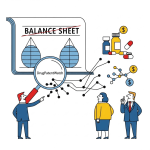
A company’s balance sheet tells you its financial health today. Its clinical pipeline tells you what it hopes to achieve tomorrow. But its patent portfolio tells you what it owns—the defensible, revenue-generating intellectual property that underpins its entire valuation.29 Analyzing this data allows you to predict market-shaking events like the patent cliff, de-risk investments, and map the competitive landscape with remarkable accuracy.29
Decoding the Patent Landscape: A Practical Guide for Professionals
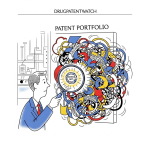
To the untrained eye, a drug’s patent portfolio can look like a complex web of legal jargon. However, a professional can decode this information to understand the strategic “fortress” a company has built around its product.29 A well-protected drug is typically surrounded by multiple layers of patents with staggered expiration dates. These include:
Composition of Matter Patents: The core, foundational patent on the active ingredient itself. The strength and remaining term of this single patent are often the most significant drivers of a small biotech’s valuation.29
Method-of-Use Patents: Patents that cover new indications or uses for an existing drug.14
Formulation and Process Patents: Patents on a drug’s specific formulation (e.g., a sustained-release tablet) or its manufacturing process. These patents can be surprisingly effective at preserving market share by forcing generics to use less convenient or effective formulations.14
Analyzing these layers tells a story about a company’s life-cycle management strategy. A company with a weak secondary patent portfolio will see its revenues plummet when the core patent expires.29 Specialized platforms like
DrugPatentWatch provide the tools to search, analyze, and track these patents, turning raw data into actionable business intelligence for law firms, investors, and business development teams.35
The Tactical Playbook: Using Patent Data to Find Opportunities and Mitigate Risk
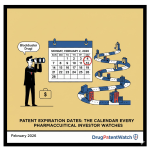
Leveraging patent data is not an academic exercise; it is a tactical playbook that can directly inform strategic decisions. By using patent expiration data, professionals can identify upcoming opportunities for generic market entry well in advance of the patent cliff.17 This is a critical first step in portfolio selection for a generic company.
For any company developing a new product, conducting a Freedom-to-Operate (FTO) analysis is a non-negotiable step.29 This analysis involves searching patent databases to ensure that a new product does not infringe on pre-existing “blocking patents” held by competitors.29 The discovery of a blocking patent is a major red flag that can lead to costly royalties or even force a company to abandon a product.29
Furthermore, monitoring patent litigation can provide an unvarnished view of a competitor’s vulnerabilities.29 Tracking a competitor’s patent challenges, such as Inter Partes Review (IPR) petitions before the Patent Trial and Appeal Board (PTAB), can anticipate market changes and provide a direct view into who is challenging a patent and what their legal strategy is.29
The following table provides a concrete example of this tactical playbook in action, showing how a professional can identify a predictable market event by analyzing patent expiration timelines.
Drug Name
Company
Key Patent Number
Patent Expiration Date
Plavix
Bristol-Myers Squibb/Sanofi
US4847265
May 17, 2012
Singulair
Merck
US5565473
August 3, 2012
Diovan
Novartis
US5399578
September 21, 2012
Lipitor
Pfizer
US5273995
November 30, 2011
Sources: Esko, Wikipedia, FDA, DrugPatentWatch.11
By mastering this information and using the tools available to them, professionals can move from being passive observers to active analysts, making decisions with conviction and clarity. Success in this market is not just about R&D or manufacturing; it is about a company’s ability to master and weaponize information.
The Human Factor: Addressing Misconceptions and Driving Patient Adoption
The strategic and economic benefits of generic drugs are clear, yet a significant barrier to their widespread adoption remains: the patient perception gap. Despite decades of evidence of their safety and effectiveness, a significant portion of the public still harbors misconceptions, viewing generics as inferior or unsafe.25
This disconnect is a strategic challenge that a professional cannot afford to ignore. Studies show that a patient’s negative perception can lead to a lack of medication adherence, which can result in poorer health outcomes and increased overall healthcare costs.38 The core of this challenge lies in a simple, deeply ingrained consumer bias: the association of low price with low quality.3 For the generic industry, its core value proposition—affordability—is also its Achilles’ heel in the mind of the consumer.
The solution lies in the hands of the most trusted sources of medical information: pharmacists and physicians.41 These frontline educators are in a pivotal position to bridge the trust gap. They can provide specific, actionable guidance to patients by explaining the concept of bioequivalence, clarifying the rigorous FDA approval process, and explaining the permissible differences in inactive ingredients.41 A clear explanation from a trusted medical professional has a significant impact on a patient’s willingness to use and adhere to a generic medication.41 The strategic goal is not just to get a product approved but to win the trust of the patient and the prescriber.
The Future of the Industry: Trends, Challenges, and a New Era of Innovation
The generic drug industry is in the midst of a profound transformation. The traditional business model of competing solely on price for simple oral solids is becoming increasingly unsustainable as markets become saturated and price erosion accelerates.10 This is forcing a strategic pivot up the value chain toward products that are inherently more difficult to develop, manufacture, and regulate.10 The future of generic drugs will be defined by three key trends.
The first is the shift to complex generics and biosimilars.10 These products, such as sterile injectables, require advanced manufacturing capabilities and present higher barriers to entry. This means less crowded competitive landscapes and more durable pricing power. For example, the global generic sterile injectable market is projected to reach over $116 billion by 2034, and biosimilars have already generated over $36 billion in savings since 2015.2 The companies that invest in these capabilities today will be well-positioned to lead tomorrow’s market.
The second trend is navigating the global supply chain and regulatory labyrinth.10 The discovery of nitrosamine impurities in certain drugs, for instance, has imposed new, unbudgeted costs for testing and reformulation.26 This is compounded by the fact that different regulatory agencies—like the FDA and the European Medicines Agency (EMA)—have divergent pathways and data requirements, creating a complex operational challenge for companies with global ambitions.26 The need for more resilient, geographically diverse supply chains will inevitably increase production costs, putting further pressure on the low-price generic model.10
Finally, the industry is poised to evolve from a “copycat” model to one of a true innovator.26 The future lies in leveraging technology to create “value-added” products. This could mean pairing a low-cost generic with an FDA-cleared digital therapeutic app to improve patient adherence or using artificial intelligence (AI) to streamline R&D and identify new, more complex opportunities.26 The companies that will lead the next generation will be those that use science, data, and technology to create products that are not only affordable but also demonstrably better, more effective, and more valuable to patients and the healthcare system as a whole.
Key Takeaways
Generics are Strategic Assets: Generic drugs are not inferior copies but therapeutic equivalents that adhere to rigorous scientific and regulatory standards. Their lower cost is a direct result of a streamlined approval process, not a compromise on quality.
The Hatch-Waxman Act is the Blueprint: This landmark legislation institutionalized a dynamic and competitive market by providing a clear, expedited pathway for generics while also allowing innovators to defend their intellectual property.
The Patent Cliff is a Predictable Event: Generic entry leads to a predictable and steep curve of price erosion. The first-to-market generic enjoys the most lucrative period, while intense competition quickly commoditizes the market. This makes timing and strategic entry paramount.
Patent Data is a Predictive Tool: Beyond legal compliance, patent data is a powerful business intelligence tool. It can be used to forecast the patent cliff, map the competitive landscape, de-risk investments, and identify strategic opportunities.
Patient Perception is a Strategic Challenge: Despite the scientific evidence, a patient trust gap persists. Addressing this requires a concerted effort from pharmacists, physicians, and companies to educate consumers and build trust.
The Future is in Complexity and Innovation: The generic industry’s future is moving beyond simple oral solids to complex products like sterile injectables and biosimilars. Future leaders will leverage technologies like AI and digital therapeutics to create “generic-plus” products that compete on value, not just price.
Frequently Asked Questions (FAQ)
Q1: What is the “generics paradox,” and why doesn’t the price of the brand-name drug always plummet after generic entry?
The “generics paradox” refers to the observation that while the entry of generic competitors significantly lowers overall prescription drug costs, the price of the original brand-name drug may not drop and can, in some cases, even increase. This occurs because the brand-name company’s customer base shrinks to a smaller, often more price-insensitive group of patients, who are either brand-loyal or whose health plans continue to favor the brand. To offset the loss of sales volume, the brand company can increase the price for this captive audience, a rational business strategy that complicates the simple supply-and-demand narrative of generic competition.
Q2: How do brand-name companies use “authorized generics” to compete with their own products?
An authorized generic (AG) is a generic version of a brand-name drug that is marketed under the brand company’s name or through a partner company. Brand-name companies may launch an AG just as their patent expires as a strategy to compete directly with independent generic manufacturers. This allows the brand to capture a portion of the generic market by retaining some revenue from the off-patent product and by making the market less attractive to other generic entrants, who must now compete with both the brand and its AG.
Q3: How can an investor use patent data to predict a company’s post-patent-cliff revenue decline?
An investor can use patent data to predict a company’s post-patent-cliff revenue decline by analyzing its life-cycle management (LCM) patent strategy. This involves looking beyond the core “composition of matter” patent and examining the number and strength of its secondary patents on a drug’s formulation, method of use, and delivery mechanism. A company with a robust and well-timed portfolio of these secondary patents can create high barriers to entry for generic competitors, which will slow the rate of revenue erosion. Conversely, a company with a weak secondary patent portfolio is likely to see its revenues plummet rapidly after the primary patent expires.
Q4: Why do some patients and physicians still mistrust generic drugs, and what can be done about it?
Misconceptions about generic drugs often stem from a deeply ingrained association between a low price and low quality. Patients may also be confused by the physical differences in a generic drug’s appearance (color, shape, size) compared to the brand, or fear different side effects. This mistrust can lead to a lack of medication adherence. The solution lies in clear communication and education from trusted healthcare professionals. Pharmacists and physicians can address these concerns by explaining the concept of bioequivalence, clarifying the rigorous FDA approval and manufacturing standards, and emphasizing that the generic contains the same active ingredient and has the same risk-benefit profile as the brand-name drug.
Q5: What is the strategic difference between developing a “simple generic” and a “complex generic”?
A “simple generic” is typically a small-molecule, oral solid tablet with a straightforward development and regulatory pathway. While the market for simple generics is large, it is also highly saturated, leading to intense price erosion and razor-thin margins. A “complex generic,” on the other hand, is a product like a sterile injectable or a transdermal patch that has a higher technical and regulatory barrier to entry. While these products are more expensive and time-consuming to develop, the payoff is a less crowded market and more durable pricing power. The strategic difference is a pivot from a high-volume, low-margin business to a more specialized, higher-margin one.
Effects of Generic Entry on Market Shares and Prices of Originator Drugs: Evidence from Chinese Pharmaceutical Market – PMC – PubMed Central, accessed September 1, 2025, https://pmc.ncbi.nlm.nih.gov/articles/PMC12209137/