A deep-dive for pharma IP teams, portfolio managers, R&D leads, and institutional investors
Executive Summary
The generic pharmaceutical industry is mid-transition, moving from a high-volume, cost-driven model to one defined by who can assemble and run the most capable partner network. This shift has been building for years, but the data now makes the direction unambiguous.
Price erosion on standard oral solids has pushed per-unit margins to levels that cannot support ongoing investment. Markets with ten or more generic entrants see prices fall 70% to 80% within three years of first generic launch. Meanwhile, the next major wave of patent expiries, now estimated to put more than $200 billion in annual branded revenue at risk through 2030, is dominated by biologics. These are not products that respond to the old generic playbook. Developing a biosimilar costs more than $100 million and takes five to nine years. A conventional generic costs $1 to $2 million and takes roughly two years. That gap defines the strategic problem.
No single company of mid-tier scale can build all the internal capabilities required to compete across both segments. The answer the industry has converged on is partnerships. Contract Development and Manufacturing Organizations (CDMOs), Contract Research Organizations (CROs), AI technology firms, and regional commercialization partners are no longer vendors hired to execute pre-defined tasks. They are now the functional R&D and manufacturing infrastructure for most generic firms operating above commodity economics.
For biosimilars specifically, the dominant market entry model is a multi-partner alliance ecosystem: one party covering cell-line development, another managing clinical trial operations, a CDMO handling large-scale bioreactor manufacturing, and a regional partner owning commercial distribution. Samsung Bioepis was structured as a joint venture (JV) between Samsung Biologics and Biogen precisely because neither party could carry the full cost and capability burden alone. The Celltrion/Teva arrangement for Truxima (rituximab biosimilar) followed the same logic, pairing Celltrion’s manufacturing with Teva’s U.S. commercial infrastructure.
Continuous manufacturing (CM), AI-driven formulation design, and blockchain-enabled supply chain traceability are also changing the competitive calculus. Access to these technologies does not come from internal capex alone. It comes from the right technology partnerships and consortia arrangements.
The legal and financial architecture underpinning these arrangements has grown correspondingly complex. Risk-adjusted net present value (rNPV) methodology is now the baseline for valuing development-stage biosimilar programs. Foreground IP allocation, joint inventorship protocols, and Alliance Manager governance structures are operational requirements, not optional overlays.
This pillar page provides a technical, commercially grounded analysis of every dimension of this partnership landscape: the economic pressures that made collaboration necessary, the specific structures being used for biosimilars and complex generics, the technology roadmaps for AI and continuous manufacturing, the IP and legal frameworks that make deals work, and the global regulatory environment that shapes market access. The final section translates the analysis into a concrete strategic blueprint for developers, CDMOs/CROs, and policymakers.
Master Key Takeaways
Generic drug markets with ten or more entrants see prices fall 70% to 80% within three years. The go-it-alone economics of standard oral solids are broken for most mid-tier manufacturers.
The $200 billion+ patent cliff through 2030 is dominated by biologics, not small molecules. Competing for this revenue requires biosimilar-capable partnerships, not internal ANDA factories.
CDMO market value is projected to reach $121.3 billion by 2034. The CDMO relationship has shifted from fee-for-service manufacturing to co-developer status on complex programs.
A typical biosimilar development program costs more than $100 million and takes five to nine years. Risk-sharing JVs and co-development agreements are the only financially rational entry model for most generic companies.
China’s National Volume-Based Procurement (VBP) policy is forcing Chinese pharma companies up the value chain, creating a new class of potential development partners and competitors simultaneously.
rNPV is the standard financial model for valuing biosimilar pipeline assets. Any deal valuation using simple DCF for a pre-approval biosimilar program is methodologically unsound.
Foreground IP ownership, joint inventorship protocols, and clear background IP licensing terms are non-negotiable components of any serious co-development agreement.
The FDA’s Generic Drug Cluster initiative has produced a 95% concordance rate with the EMA on generic drug approval decisions. Global dossier submissions are now feasible for well-structured programs.
Geopolitical risk is structural. India imports approximately 70% of its APIs from China. Any tariff escalation or supply shock in China propagates directly into U.S. generic supply.
Section 1: The Economics That Made Collaboration Mandatory
1.1 Price Decay Mechanics: What the Margin Curve Actually Looks Like
Nine out of every ten prescriptions dispensed in the United States are filled with a generic drug. That market penetration figure is quoted frequently as evidence of generic industry success. What it obscures is the profitability structure of supplying that demand.
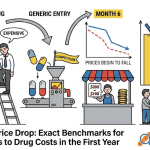
The Hatch-Waxman Act was designed to bring multiple competitors into a market quickly after branded patent expiry. It works. The problem is that it works too well for commodity products. When three generic manufacturers enter a market, prices fall approximately 20% relative to the pre-entry price. Ten or more entrants produce price collapses of 70% to 80% within three years. The resulting price curve flattens around 20% of original brand price at equilibrium, which for low-volume products can sit below the fully allocated cost of goods.
This trajectory is not new. What is new is the scale of its reach. From 2004 to 2016, approximately 40% of generic drug markets were supplied by a single manufacturer. That figure suggests not a hyper-competitive commodity market but a fragile oligopoly where economic rationality has driven competitors out. Single-source status creates the appearance of margin stability until a quality-related manufacturing shutdown or demand spike hits, at which point drug shortages follow.
The mechanism of exit matters strategically. When margins compress to near zero, manufacturers have no financial incentive to maintain buffer inventory, invest in redundant production capacity, or absorb the cost of quality remediation at a second facility. The result is a market structure that looks competitive on paper (multiple ANDAs on file) but is operationally brittle. Studies consistently show that shortages concentrate in markets with four or fewer active manufacturers and annual revenue below $5 million, where the economic incentive to maintain production is lowest.
Partnerships respond to this dynamic in a specific way. Horizontal consolidation through acquisition or production JVs increases scale and negotiating leverage against Group Purchasing Organizations (GPOs) and Pharmacy Benefit Managers (PBMs). Vertical integration into API manufacturing through CDMO alliances reduces cost of goods and supply chain dependency. Neither response eliminates the commodity margin problem, but both extend the window of economic viability for products that would otherwise exit the market.
1.2 The $200 Billion Patent Cliff: IP Valuation of the Core Assets at Stake
The patent cliff through 2030 is not a uniform event. Understanding which assets are expiring, what their IP estates look like, and how defensible their exclusivity periods remain is the foundation of any rational partnership strategy.
AbbVie’s Humira (adalimumab) is the most studied case. Peak annual sales exceeded $20 billion. U.S. biosimilar entry was delayed until 2023 not by a single patent but by a thicket of more than 100 Orange Book-listed patents covering formulation, manufacturing process, dosing regimen, device design, and indication-specific claims. AbbVie’s IP estate for adalimumab generated multiple Paragraph IV challenges, all of which were settled via licensing agreements that granted market entry dates ranging from 2023 to 2034 depending on territory. The IP valuation of this estate goes beyond the core composition-of-matter patent: the settlement terms themselves represent a monetizable asset, with AbbVie capturing billions in royalties from biosimilar entrants operating under license.
Merck’s Keytruda (pembrolizumab) presents a structurally different picture. The PD-1 monoclonal antibody franchise generates approximately $25 billion annually. Its core composition-of-matter patents begin expiring in the late 2020s, but the indication-specific data package, dosing optimization patents, and combination therapy exclusivities create a substantially more complex biosimilar development and approval challenge. Any company planning a pembrolizumab biosimilar must map not just the patent cliff date but the full indication-by-indication expiry schedule and the regulatory requirement to demonstrate clinical comparability across each approved use.
Bristol Myers Squibb’s Opdivo (nivolumab) adds a third variation. The PD-1 inhibitor competes directly with Keytruda, meaning biosimilar entrants will enter a market where the reference biologic itself faces generic-equivalent competition from another molecule. The IP valuation calculus here includes the relative timing of nivolumab versus pembrolizumab biosimilar entry, which affects both the peak market share available and the pricing floor that can be maintained.
For portfolio managers, the relevant IP analysis on each of these assets goes beyond expiry date. The questions that drive deal valuation are: How many Paragraph IV filings have been made? What is the litigation outcome probability on each challenged patent? Are there pending continuation applications that could extend the IP estate? Has the innovator filed for pediatric exclusivity or orphan drug designation that extends market protection beyond the primary patent? What is the biosimilar interchangeability designation status, and how does the answer affect pharmacy-level substitution rates and market penetration modeling?
Merck has been proactive about filing continuation patents and pursuing new formulation exclusivities for Keytruda. AbbVie’s Humira settlement strategy effectively converted a litigation liability into a licensing revenue stream. Both represent forms of patent lifecycle management that generic and biosimilar developers must account for when structuring their entry timelines and partnership investments.
1.3 The GPO/PBM Oligopsony: How Buyer Concentration Amplifies Margin Pressure
Price erosion from supply-side competition is one force on generic margins. Buyer-side concentration amplifies it structurally. A small number of GPOs and PBMs act as the dominant purchasers of generic drugs in the U.S. market, representing the combined purchasing power of major retail pharmacy chains, hospital systems, and insurance plans.
This is not a competitive buyer market. It is an oligopsony: many sellers competing for the favor of a few buyers with enormous negotiating power. The practical consequence is that even when a generic manufacturer has reduced its cost structure to competitive levels, the GPO or PBM can extract the majority of the cost savings as price concessions rather than allowing margin to accrue to the manufacturer.
The dynamic interacts directly with drug shortages. When GPO contracts are structured around lowest-price-wins tender logic, manufacturers face a binary choice: bid aggressively and accept margin compression, or exit the contract and lose volume. Those that win frequently find the contract pricing insufficient to support investment in quality systems, capacity redundancy, or inventory buffers. When something goes wrong at a single facility, the shortage is immediate because there is no slack in the system.
For generic developers evaluating partnership strategies, GPO dynamics influence the calculus in two specific ways. Larger combined entities have more negotiating leverage in GPO discussions. A manufacturer supplying ten products across multiple therapeutic categories has more room to negotiate than one supplying two. Partnerships that aggregate product portfolios, whether through in-licensing, co-commercialization agreements, or acquisitions, can improve GPO positioning. Separately, manufacturers with complex generics or biosimilars in their portfolio have pricing power that commodity oral solids cannot support. The GPO framework still applies to these products, but the lower number of competitors and the higher cost of market entry give the manufacturer more room.
1.4 Supply Chain Fragility: The India-China Dependency Map
India supplies approximately 50% of generic drugs consumed in the United States. India imports approximately 70% of its APIs from China. That two-step dependency is the structural fragility of the global generic supply chain, and it concentrates risk in a way that no single company can manage through internal controls alone.
The geographic concentration of API and Key Starting Material (KSM) production in China is a function of decades of cost optimization. Chinese chemical manufacturers have achieved scale and cost efficiency that Western producers cannot match on standard molecules. The trade-off is supply concentration: a regulatory shutdown, environmental compliance action, or geopolitical disruption affecting a single major Chinese manufacturing hub propagates directly into Indian finished dose production and then into U.S. pharmacy shelves.
This is not a theoretical risk. The COVID-19 pandemic produced documented supply disruptions for multiple essential medicines as Chinese API plants curtailed or suspended operations. Quality-related import alerts and warning letters from the FDA to Indian manufacturers with API dependency on single Chinese sources have repeatedly triggered shortages.
The response from governments has been to push for supply chain diversification through policy rather than market incentives alone. India’s Atmanirbhar Bharat program allocates substantial capital toward domestic API production capacity. U.S. legislation and executive orders have directed procurement preferences and manufacturing incentive funds toward domestic production of critical medicines. The BIOSECURE Act, targeting specific Chinese biotechnology companies, adds a compliance dimension to sourcing decisions that previously were purely economic.
For generic developers, the supply chain picture creates a specific partnership opportunity: dual-sourcing agreements with both a Chinese-based and an Indian or Western-based API supplier for critical products. These arrangements carry a cost premium that erodes margin on commodity products but may be commercially and regulatorily necessary for products with single-source API exposure. CDMOs with geographically diversified API networks are increasingly positioning this as a core differentiating service.
Key Takeaways: Section 1
The commodity generic business model generates inadequate returns for most mid-tier manufacturers when serving markets with more than five competitors. GPO pricing pressure and supply chain fragility compound the margin problem. The $200 billion patent cliff through 2030 is primarily a biologic cliff, requiring biosimilar capability that the traditional generic company does not possess internally. IP valuation of the expiring assets, including AbbVie’s Humira settlement estate and Merck’s Keytruda indication-specific exclusivities, requires analysis well beyond headline expiry dates. Partnership is the structural response to all four of these forces simultaneously.
Investment Strategy: Section 1
Institutional investors evaluating generic pharma should weight portfolio exposure toward companies with demonstrable biosimilar pipeline assets and established CDMO/CRO partner networks, rather than pure-play oral solid manufacturers with no complex product strategy. The financial screens that matter are: revenue mix between commodity generics and complex/specialty products, number of Paragraph IV first-to-file (FTF) positions held, and capital allocation split between sustaining existing production and investing in higher-barrier development programs. Companies dependent on a single GPO contract for more than 30% of revenue carry structural concentration risk that is not always visible in top-line growth figures.
Section 2: The New Development Engine: CDMOs and CROs as Strategic Co-Developers
2.1 From Fee-for-Service to Strategic Alliance: The Outsourcing Inflection Point
The standard CDMO relationship of fifteen years ago was transactional. A generic manufacturer held the ANDA, owned the product, and contracted out specific discrete tasks: batch manufacturing when internal capacity was full, stability studies, or bioequivalence (BE) clinical supplies. The CDMO executed the defined scope, invoiced for time and materials, and had no stake in the commercial outcome.
That model persists for simple oral solid products and is appropriate for them. What has changed is the nature of the products driving the industry’s growth agenda. A complex generic inhalation product or a biosimilar cannot be developed using a purely internal R&D capability for most mid-tier companies, because the specialized equipment, scientific expertise, and regulatory track record required simply do not exist inside those organizations at commercial scale.
The CDMO has responded by building integrated, end-to-end development capabilities that function as an external R&D organization. The transition from Contract Manufacturing Organization (CMO) to Contract Development and Manufacturing Organization (CDMO) is not semantic. It reflects a real expansion in scope: formulation science, analytical method development, process chemistry, regulatory affairs support, clinical supply manufacturing, and commercial scale-up, all under one partner relationship.
The global pharmaceutical outsourcing market is projected at $121.3 billion by 2034. The CRO market alone is expected to reach $127.3 billion by 2028. These figures reflect the structural shift toward outsourced development capability, not just manufacturing capacity.
2.2 IP Valuation of Major CDMO Platforms: What the Technology Assets Are Worth
When a generic developer enters a strategic CDMO relationship for a complex product, the value of that relationship is not just the manufacturing service. It is access to proprietary platform technology, validated analytical methods, and regulatory dossiers that the CDMO has built over years of prior programs. Understanding what that IP is worth, and who owns it when a new product is developed using it, is one of the most underanalyzed dimensions of CDMO deal-making.
Lonza’s mammalian cell expression platform (its IBEX line for large-scale biologic manufacturing) and Samsung Biologics’ proprietary cell culture media and process optimization protocols are examples of platform IP that determines the technical feasibility and cost structure of any biosimilar program built on top of them. A developer licensing access to these platforms via a manufacturing agreement is effectively accessing patented and trade-secret-protected technology. The licensing terms, whether the CDMO retains all foreground IP generated during process development for a client’s product or whether a negotiated split applies, determine whether the developer can switch CDMOs mid-program without losing all the development work invested.
Patheon (now part of Thermo Fisher Scientific), Catalent, and WuXi Biologics have all built substantial platform IP portfolios through hundreds of client programs. The cumulative analytical methods, formulation databases, and process control models these organizations hold are core competitive assets. For biosimilar programs specifically, where the cell-line development and upstream bioprocess optimization represent the majority of total development cost, the CDMO’s existing platform IP can reduce total development spend by 20% to 35% relative to starting from scratch with a less-experienced partner.
From an IP ownership standpoint, CDMO agreements for complex programs should explicitly address at minimum: which aspects of the production process use the CDMO’s background IP (licensed to the developer for program purposes only), what foreground IP arises from the specific program (analytical methods developed for the client product, process optimizations unique to the client’s molecule), and how inventorship is determined when a developer’s scientists and CDMO scientists collaborate on a technical solution. Developers who sign standard CDMO master service agreements without negotiating these terms frequently discover at program completion or partner transition that they do not own the process dossier they need to qualify an alternative manufacturer.
2.3 The Integrated CDMO Model: Technology Roadmap for Complex Generic and Biosimilar Development
The end-to-end CDMO development pathway for a complex product follows a phased structure that differs materially from the simple generic development process. Understanding this roadmap is essential for generic developers selecting partners and for investors modeling development timelines and milestone payments.
For a biosimilar program, the integrated CDMO pathway begins with cell-line development: the selection and engineering of a host cell line (typically Chinese Hamster Ovary, or CHO cells) capable of producing the target biologic at sufficient yield and with the correct post-translational modification profile, particularly glycosylation patterns. This phase alone can take twelve to eighteen months and costs $5 to $15 million depending on the complexity of the reference molecule. CDMOs with proprietary CHO cell expression systems, such as WuXi Biologics’ WuXiaTM platform, offer pre-optimized host cells that compress this timeline.
Upstream bioprocess development follows, covering bioreactor scale-up from bench (0.5 to 5 liters) through pilot (50 to 200 liters) to commercial scale (2,000 to 15,000 liters depending on dose and patient population). Each scale transition requires process characterization studies demonstrating that product quality attributes are maintained. The FDA’s Process Analytical Technology (PAT) framework and Quality by Design (QbD) principles require developers to define a Design Space for critical process parameters and demonstrate that the process produces consistent quality within those boundaries.
Downstream purification process development runs in parallel: protein A affinity chromatography, viral inactivation steps, ion exchange polishing, and final filtration. For each step, the CDMO must develop and validate the unit operation at commercial scale. Analytical method development and qualification is concurrent, producing the characterization package that forms the backbone of the biosimilar comparability exercise.
For complex generics in non-biologic categories (metered-dose inhalers, nasal sprays, transdermal patches, complex injectables), the CDMO roadmap is different but equally specialized. A metered-dose inhaler (MDI) program requires characterization of aerodynamic particle size distribution (APSD) using cascade impaction methods, valve and actuator performance testing, and dose content uniformity across the product life. The FDA’s Product-Specific Guidances (PSGs) for complex generics under the Drug Competition Action Plan (DCAP) specify, for each reference product, the recommended BE approach and the specific parameters that must be matched. A CDMO selected for an MDI program must have the cascade impactor equipment, validated methods, and regulatory history with the FDA’s Office of Pharmaceutical Quality for inhaled products. These are not generic analytical capabilities.
The selection of a CDMO for a complex program should, therefore, be evaluated on the basis of: platform IP relevance to the specific molecule and delivery system, prior regulatory submissions in the relevant product category (particularly any FDA inspection history at the relevant facility), analytical characterization capacity and equipment specific to the product type, and commercial-scale manufacturing experience for products of comparable complexity and batch size.
2.4 CRO Partnerships: Clinical Development Strategy for Biosimilar Comparability Studies
While CDMOs handle the analytical and manufacturing backbone of biosimilar development, CROs manage the clinical comparability exercise that constitutes the most expensive single component of the regulatory pathway. For most biosimilars targeting indications with large, multi-geographic patient populations, the CRO selection and clinical strategy is as consequential as the manufacturing partner selection.
The FDA’s biosimilar regulatory framework, as defined by the Biologics Price Competition and Innovation Act (BPCIA) and implemented under 351(k) of the Public Health Service Act, requires a stepwise “totality of evidence” approach to demonstrating biosimilarity. The analytical comparability data package generated by the CDMO informs the clinical program design: if analytical characterization and pharmacology/toxicology studies demonstrate a high degree of similarity, the FDA may accept a clinical program limited to PK/PD studies without requiring a separate efficacy study. This is the preferred commercial outcome, as full efficacy trials are the single largest cost driver in biosimilar development.
CROs with experience in biosimilar-specific clinical programs, particularly in the therapeutic categories most affected by the biologic patent cliff (oncology, immunology, ophthalmology), can design the clinical package to minimize exposure. The selection criteria for a biosimilar CRO include: prior FDA and EMA interaction on biosimilar submissions in the relevant therapeutic category, patient recruitment capability in markets with adequate patient populations for the reference indication, bioanalytical laboratory capability for the immunogenicity assays (anti-drug antibody, neutralizing antibody testing) required by the FDA and EMA, and regulatory affairs expertise specifically in biosimilar dossier preparation and agency-specific submission formats.
Key Takeaways: Section 2
CDMO relationships for complex programs require IP ownership analysis that goes well beyond standard fee-for-service contracts. The CDMO’s platform IP is a core asset being accessed through the partnership, and foreground IP allocation terms determine portability of the development investment. The integrated CDMO pathway for a biosimilar spans cell-line development through commercial manufacturing scale-up, with each phase requiring specialized equipment, validated methods, and regulatory track record. CRO selection for biosimilar programs must account for clinical program design efficiency, since the totality of evidence approach allows a well-designed analytical package to reduce or eliminate the clinical efficacy study requirement.
Investment Strategy: Section 2
CDMO stocks and private CDMO assets trade at premiums that reflect their scarcity in biologic manufacturing capacity. Samsung Biologics’ capacity expansion investments, WuXi Biologics’ global facility network, and Lonza’s IBEX large-scale manufacturing lines represent concentrated bets on continued outsourcing growth in the biologic segment. For generic developers, the investment signal is whether the company has secured CDMO supply agreements with Tier 1 biologic manufacturers for its biosimilar pipeline assets. A biosimilar program without a committed manufacturing partner at the correct scale is not commercially credible.
Section 3: Biosimilars and Complex Generics: Development Frameworks and Partnership Models
3.1 The Biosimilar Development Gap: Cost, Timeline, and Regulatory Architecture
The comparison between a conventional generic and a biosimilar is not a matter of degree. It is a categorical difference in development paradigm, regulatory pathway, and commercial risk profile.
A conventional generic requires a developer to demonstrate that its product delivers the same amount of active pharmaceutical ingredient to the bloodstream over the same time period as the reference drug, measured by AUC and Cmax in a standard bioequivalence study. The molecule itself is chemically defined, reproducible, and structurally identical to the reference. Cost: $1 to $2 million. Timeline: approximately two years from development start to ANDA submission.
A biosimilar requires the developer to demonstrate that its product is “highly similar” to the reference biologic, with no clinically meaningful differences in safety, purity, and potency. The molecule is produced in living cells, which introduces biological variability that cannot be fully eliminated. Glycosylation patterns, charge variants, aggregation profiles, and higher-order protein structure must all be characterized and compared across multiple lots of reference product. Cost: more than $100 million. Timeline: five to nine years.
The regulatory pathway is correspondingly more demanding. The FDA requires a comparability exercise structured around a “fingerprint-like” analytical characterization package, covering primary structure (amino acid sequence), higher-order structure (secondary, tertiary, and quaternary), biological activity (functional assays), immunochemical properties, and product-related impurities (aggregates, fragments, variants). Each attribute must be assessed across multiple lots of the reference product, including both U.S.-sourced and, where relevant, ex-U.S.-sourced lots for global dossier purposes.
The FDA’s concept of “biosimilar interchangeability” adds a second, higher regulatory threshold. An interchangeable biosimilar must demonstrate not just high similarity to the reference biologic but that switching between the biosimilar and reference product produces the same clinical result as not switching. This requires an additional switching study. The commercial consequence of achieving interchangeability is pharmacy-level substitution without physician intervention, equivalent to the automatic substitution that applies to conventional generics in most U.S. states. The EMA does not have an interchangeability designation; substitution policy is determined at the member state level.
3.2 IP Valuation: The Humira Biosimilar Ecosystem as a Case Study in Patent Thicket Economics
AbbVie’s adalimumab IP estate is the most studied example of biosimilar entry barrier construction in pharmaceutical history. The strategy illustrates how a biologic franchise can remain commercially dominant for a decade beyond its primary composition-of-matter patent expiry.
Humira’s composition-of-matter patents on the adalimumab antibody began expiring in 2016. AbbVie responded by building a surrounding estate of more than 100 Orange Book-listed patents covering: the citrate-free formulation used in current Humira pens, the specific antibody concentration in the pre-filled syringe presentation, the manufacturing process parameters for cell culture and purification, dosing regimens for individual indications (rheumatoid arthritis, Crohn’s disease, psoriasis), and the drug delivery device itself.
Each additional patent added to the estate represented a potential 30-month stay under the Hatch-Waxman Act’s equivalent BPCIA mechanism, the “patent dance.” AbbVie pursued Paragraph IV litigation against every biosimilar applicant that challenged these secondary patents. It then settled those suits, granting U.S. market entry dates ranging from 2023 onward in exchange for patent licensing fees. International entry was granted earlier, typically 2018 onward in Europe, generating years of U.S. market exclusivity beyond what the primary patents warranted.
The financial value of this strategy is quantifiable. U.S. Humira sales between 2016 and 2023 totaled approximately $85 billion, generated in a period when the product could have faced biosimilar competition had the patent estate been thinner. The royalty streams from the settlement agreements with Amgen (Amjevita), Sandoz (Hyrimoz), Pfizer (Abrilada), AstraZeneca/Medimmune (Hadlima), and others represent additional monetization of the IP estate post-entry. AbbVie’s strategy effectively converted a fixed-term patent into a recurring licensing revenue stream.
For biosimilar developers, the Humira case provides several IP valuation lessons. First, the headline composition-of-matter patent expiry date is rarely the operative market entry date. The formulation, manufacturing process, and device patents surrounding the reference biologic must be individually analyzed for validity, enforceability, and likely litigation outcome. Second, settlement terms with the reference product originator determine economic viability: a developer that settles for entry in year three of the biosimilar window, with a royalty rate of 10% on net sales, has a materially different rNPV than one that settles for entry in year one with a 5% royalty. Third, the device patent protection on auto-injectors and pen delivery systems is increasingly important for subcutaneous biologics, where patient preference for a specific device can delay clinical adoption even when the biosimilar is approved and priced competitively.
3.3 Complex Generics: The Scientific Hurdles and CDMO Requirements by Product Category
The FDA defines complex generics as products with complex active ingredients (peptides, complex mixtures of multiple active moieties, polymeric molecules), complex formulations (liposomes, colloids, nanoemulsions), complex routes of delivery (locally acting dermatological products, metered-dose inhalers, nasal sprays), or complex drug-device combinations (auto-injectors, prefilled syringes, implantable delivery systems).
Each product category presents different scientific and CDMO requirements.
For topical products (creams, ointments, gels), the standard bioequivalence approach is inapplicable. Drug concentration in blood does not reflect local activity at the dermal target site. The FDA accepts two alternative methodologies: in vitro release testing (IVRT) and in vitro permeation testing (IVPT). IVRT measures the rate at which the drug diffuses out of the formulation through a synthetic membrane. IVPT measures drug permeation through ex vivo human skin. The analytical challenge is that these measurements are exquisitely sensitive to formulation microstructure. Particle size distribution of the active ingredient, droplet size in emulsions, rheological properties, and pH all affect the IVRT and IVPT results. A CDMO for topical complex generics must have the analytical equipment, validated methods, and formulation science expertise to characterize these parameters and match them to the reference product.
For metered-dose inhalers and dry powder inhalers, the critical quality attributes are aerodynamic particle size distribution (APSD), emitted dose, and device-specific performance characteristics. APSD is measured using Next Generation Impactors (NGI) or Andersen Cascade Impactors, generating a deposition profile across particle size fractions that determines where in the lung the drug deposits. The FDA requires that a generic inhaler match the reference product’s APSD profile across the full range of flow rates that patients are likely to generate. CDMOs for inhaled complex generics must have validated cascade impaction methods, particle engineering capabilities (milling, spray drying, particle coating), and the formulation expertise to work with propellant-based and dry powder systems.
For drug-device combination products, the regulatory pathway spans two FDA centers: the Center for Drug Evaluation and Research (CDER) for the drug component and the Center for Devices and Radiological Health (CDRH) for the device component. CDMOs that have worked through this dual-center jurisdiction, managed pre-submission meetings with both, and have clean FDA inspection records for both GMP and design controls are rare and command pricing premiums accordingly.
3.4 Technology Roadmap: Building a Biosimilar from Cell Line to Commercial Launch
A full biosimilar development roadmap from program initiation to commercial launch covers eight to ten distinct technical and regulatory workstreams that run partially in parallel and are subject to interdependencies that must be actively managed.
Stage 1, spanning months one through eighteen, covers expression system selection and cell-line development. The developer and CDMO select a host cell system (CHO, NS0, or E. coli for some simpler biologics), transfect the target gene sequence into the host cells, screen resulting clones for yield and product quality, and select a lead clone for development. Proprietary expression vectors and selection systems at the CDMO level can materially affect the timeline and the ultimate productivity of the cell line.
Stage 2, months twelve through thirty-six, covers upstream and downstream bioprocess development. Bioreactor operating conditions (temperature, pH, dissolved oxygen, agitation), media composition, feeding strategies, and harvest timing are optimized. Downstream purification steps are defined and characterized. Process analytical technology tools, including Raman spectroscopy for in-line monitoring and multivariate data analysis, are implemented per QbD principles.
Stage 3, months twenty-four through forty-two, covers analytical development and comparability. A comprehensive panel of analytical methods characterizes the biosimilar across all structural and functional attributes and compares it to multiple lots of the reference product. This work generates the analytical similarity data package submitted to regulators.
Stage 4, months thirty through fifty-four, covers non-clinical and clinical development. If the analytical package supports a high degree of similarity, the developer may be able to limit clinical work to pharmacokinetic and pharmacodynamic (PK/PD) bridging studies, followed by immunogenicity assessment in a target patient population. If clinical comparability is less clear from analytics, a larger clinical study with efficacy endpoints may be required.
Stage 5, months forty-eight through seventy-two, covers process validation and manufacturing scale-up at commercial scale. Three consecutive commercial-scale batches must be manufactured and tested against predetermined specifications. This work must occur at the facility that will supply the commercial market.
Stage 6, months sixty through eighty-four, covers regulatory submission (BLA under 351(k) in the U.S., marketing authorization application to the EMA in Europe), agency review, and pre-approval inspection of the manufacturing site.
Throughout this roadmap, the multi-partner ecosystem operates concurrently. The cell-line development CDMO may differ from the commercial manufacturing CDMO. The CRO managing clinical operations is a separate organization from both. A regulatory affairs partner or consultant manages dossier preparation and agency interactions. An IP counsel monitors the reference product’s patent estate and advises on freedom-to-operate and any Paragraph IV filing strategy. A commercialization partner, if not the developer itself, begins market access groundwork during Stage 5.
3.5 Risk-Sharing and Co-Development: Structuring Deals That Reflect Actual Risk
The financial logic of risk-sharing in biosimilar co-development is straightforward. A program with a total expected development cost of $150 million and a 60% probability of reaching commercial launch, discounted at a 12% cost of capital over eight years, has an rNPV that most mid-tier generic companies cannot absorb on a single-program basis without unacceptable portfolio concentration risk. Splitting that cost and risk with a co-developer effectively allows the company to maintain a portfolio of four to six biosimilar programs rather than one or two.
The IP and financial terms of co-development agreements for biosimilars reflect this logic in their structure. The most common arrangements allocate development costs in proportion to the parties’ relative contributions of capital, know-how, and infrastructure. Revenue splits (profit sharing or royalty streams) are then negotiated based on the relative value attributed to each party’s contribution. A developer contributing cell-line development expertise and early-stage clinical data but relying on the partner’s commercial infrastructure will typically receive a smaller share of gross profits than one that also carries the commercial risk.
The Samsung Bioepis/Biogen JV illustrates the operational version of this logic. Samsung Biologics provided the manufacturing platform and scale-up expertise. Biogen contributed clinical development experience, regulatory track record in the relevant therapeutic categories, and commercial infrastructure. The JV was structured as a separate legal entity, which clarified IP ownership (foreground IP created by the JV belongs to the JV, not to either parent), governance (a board with representation from both parents), and exit provisions (Biogen sold its stake in 2022, demonstrating that JV exit can be achieved commercially even on a program that was not yet complete).
The Celltrion/Teva arrangement for Truxima (rituximab biosimilar) used a commercialization partnership rather than a JV. Celltrion held the biosimilar BLA and owned the development and manufacturing. Teva held exclusive U.S. commercialization rights, supplying its distribution network and payer relationships. The deal structure gave Celltrion access to Teva’s commercial infrastructure without the complexity of a JV, but it also gave Teva control over pricing and market access strategy, which creates alignment challenges when the parties have different views on launch pricing or formulary positioning.
Key Takeaways: Section 3
Biosimilar development is a $100 million-plus, five-to-nine-year investment requiring a multi-partner ecosystem that spans cell-line development, bioprocess engineering, analytical comparability, clinical operations, regulatory affairs, and commercial distribution. IP estate analysis of the reference biologic, including formulation, manufacturing process, and device patents beyond the composition-of-matter, is essential to determine realistic market entry timelines and negotiate informed settlement terms. Complex generics require CDMO partners with category-specific analytical capabilities: IVRT/IVPT for topicals, cascade impaction for inhalers, dual CDER/CDRH expertise for drug-device combinations. Risk-sharing co-development structures, whether JVs or commercialization partnerships, are the financially rational model for most mid-tier generic developers pursuing biosimilar programs.
Investment Strategy: Section 3
For analysts evaluating biosimilar pipeline assets, the rNPV of any program should incorporate at minimum five variables: total development cost estimate, probability of achieving regulatory approval (segmented by analytical similarity outcomes), market entry date as a function of patent estate analysis (including expected Paragraph IV litigation duration and settlement probability), projected penetration rate against the reference product (distinguishing interchangeable vs. non-interchangeable status), and the royalty or profit-sharing terms of any co-development or commercialization partner. A biosimilar BLA with interchangeability designation commands a 15% to 25% premium on market penetration rates relative to non-interchangeable approvals in markets with active automatic substitution laws.
Section 4: Technology Catalysts: AI, Continuous Manufacturing, and Data Analytics
4.1 AI in Generic and Biosimilar Development: What the Technology Actually Does
Artificial intelligence applications in pharmaceutical development range from genuinely transformative to marketing-driven noise. For generic drug development specifically, the applications that have moved from proof-of-concept to operational use fall into four areas.
The first is formulation prediction. Machine learning models trained on databases of physicochemical properties, excipient interactions, and historical formulation outcomes can predict solubility, stability, and release profiles for new molecular entities and reformulation candidates. For complex generic developers attempting to match the reference product’s formulation performance without copying its exact composition, these models reduce the experimental cycle from dozens of physical batches to a smaller set of model-guided experiments. The FDA’s Quality by Design framework explicitly supports this approach, encouraging developers to use statistical models to define design spaces for critical formulation attributes.
The second is manufacturing process optimization. In continuous manufacturing systems, real-time sensor data from multiple process analytical technology (PAT) instruments (Raman spectroscopy, near-infrared spectroscopy, focused beam reflectance measurement) generates streams of process data that must be interpreted and acted on in near-real time. Machine learning models trained on historical process data can identify patterns that precede quality deviations, enabling intervention before out-of-specification product is generated.
The third is analytical characterization for biosimilar comparability. The analytical data package for a biosimilar involves hundreds of assays across multiple structural and functional attributes. Machine learning approaches can integrate this multi-dimensional dataset to generate an overall similarity score and identify attributes where the biosimilar is most divergent from the reference product, directing additional characterization work and informing the clinical study design.
The fourth is clinical trial optimization. AI-driven patient stratification and site selection models, used by CRO partners, reduce enrollment timelines by identifying patient populations most likely to meet eligibility criteria and respond to treatment in ways that support the study endpoints.
Teva’s collaborations with Immunai (immune cell profiling for clinical decision-making) and Insilico Medicine (AI-driven target identification) represent the more speculative end of this spectrum, where the return on investment is measured in pipeline options rather than near-term development efficiency gains. Sanofi’s partnership with OpenAI and Formation Bio, and Pfizer’s AI-for-manufacturing work with AWS, are further along the deployment curve, applying language model and predictive analytics capabilities to specific operational problems.
The FDA’s AI Council and its emerging framework for AI-assisted submissions signal that regulatory acceptance is developing. The FDA has stated it will evaluate AI-generated analytical predictions using the same evidentiary standards applied to conventionally generated data, provided the underlying model has been adequately validated and its uncertainty quantified.
4.2 IP Valuation of AI Platform Partnerships: Who Owns the Model?
When a pharmaceutical developer licenses an AI formulation prediction platform from a technology vendor, the IP architecture of the resulting collaboration requires the same scrutiny applied to a CDMO relationship. The AI vendor’s trained model is a trade-secret asset. The developer’s compound-specific experimental data, used to fine-tune or validate the model for a particular product, generates derivative value. Ownership of that derivative value, and the right to use it independently of the vendor relationship, is a negotiating point that is frequently overlooked.
Most AI platform licensing agreements in pharmaceutical development include terms that: grant the developer a license to use the model for its specified compound and program, restrict the developer from reverse-engineering or replicating the underlying model architecture, and grant the AI vendor the right to incorporate learnings from the developer’s program into continued model training (subject to confidentiality protections on compound identity). These terms are commercially standard but create a dependency: if the developer terminates the vendor relationship, it loses access to the model and any compound-specific tuning it paid to develop.
Pharmaceutical developers with significant AI investment programs, including Pfizer, Sanofi, and Novartis, have negotiated partnership terms that retain the company’s rights to compound-specific model outputs and require the vendor to provide model weights or API access in a form that allows the company to continue using the trained model independently if the relationship ends. Mid-tier generic developers rarely negotiate at this level of technical specificity, which means their AI investment may not translate to durable competitive capability if the vendor relationship ends.
The emerging alternative is open-weight or open-source AI models for pharmaceutical applications, which several academic and consortium efforts are developing. The Open PHACTS and Pistoia Alliance data consortium models, and more recently large language model fine-tuning efforts using publicly available chemical and biological databases, provide a baseline capability without vendor lock-in. The trade-off is that proprietary vendor models trained on larger and more diverse pharmaceutical datasets are currently more predictively accurate for specific formulation and process optimization tasks.
4.3 Continuous Manufacturing: Technology Roadmap and the Consortium Model
Pharmaceutical continuous manufacturing (CM) replaces the traditional batch-by-batch production process with an integrated, uninterrupted flow where raw materials enter one end of a closed system and finished dosage forms emerge from the other. The FDA has published draft guidance specifically encouraging CM adoption and has processed multiple CMC supplements for marketed products transitioning from batch to continuous production.
The manufacturing efficiency case for CM is well established. Facilities can be up to 70% smaller than comparable batch facilities. Real-time product release (RTRT), enabled by continuous PAT monitoring, eliminates the weeks-long hold time required for batch release testing. Process variability is lower because the process is continuously monitored and controlled. For a generic manufacturer supplying time-sensitive products in shortage-prone categories, RTRT capability means the lead time from production to available inventory compresses significantly.
The adoption barrier is capital cost and regulatory complexity. A greenfield continuous manufacturing facility for oral solid dosage forms requires $50 to $150 million in equipment and validation investment. Retrofitting an existing batch facility is often more complex than building new, because continuous equipment (loss-in-weight feeders, continuous granulators, real-time NIR analyzers, continuous tablet presses with in-line checkweighing) must be integrated with existing facility infrastructure and utility systems. The regulatory consequence is that any CMC change from batch to continuous requires a Prior Approval Supplement to the existing ANDA, with a review period that can extend 12 months or longer.
The consortium model has emerged as the primary vehicle for generic industry CM adoption because it allows companies to share both the capital cost and the regulatory development burden. A consortium of five to eight generic manufacturers, each contributing funding and product-specific programs, can collectively fund development of a shared continuous manufacturing platform and a shared regulatory strategy, including pre-submission meetings with FDA to align on data requirements. GEA and Siemens have both built dedicated pharmaceutical continuous manufacturing equipment lines and have participated in multi-company development consortia, providing the engineering and automation expertise that pharmaceutical manufacturers typically lack internally.
The Sandoz/Just-Evotec Biologics partnership for continuous biologic manufacturing represents the highest-profile example of CM consortium thinking applied to biosimilars. The arrangement, where Sandoz committed multiple biosimilar programs to Just-Evotec’s AI-driven continuous bioreactor platform, reached a logical conclusion when Sandoz agreed to acquire the Toulouse manufacturing facility for approximately $300 million. The acquisition reflects the validation of the technology through the partnership: Sandoz used the CDMO relationship to de-risk its own assessment of the manufacturing platform before committing acquisition capital.
4.4 Advanced Analytics and Supply Chain Intelligence: Building Predictive Visibility
Supply chain opacity is a root cause of drug shortages. When a generic manufacturer cannot see in real time the inventory status at its API supplier, the work-in-progress at its CDMO, or the distribution pipeline to its GPO customers, it cannot respond to early warning signals of impending supply disruption. By the time a shortage is visible in retail and hospital inventory data, the upstream causes, whether a manufacturer quality hold, a shipping delay, or a demand spike, are typically weeks or months old.
AI-driven demand forecasting models, applied to historical dispensing data, seasonal patterns, and indication-level patient population projections, can improve forecast accuracy for generic drugs by 20% to 35% relative to simple moving-average models. For drugs with stable, predictable demand (chronic condition oral solids), this accuracy improvement primarily reduces excess inventory cost. For drugs with volatile or episodic demand (injectable antibiotics, anesthetics), accurate forecasting can mean the difference between adequate buffer stock and a shortage.
Blockchain-based traceability platforms, implementing the Drug Supply Chain Security Act (DSCSA) serialization requirements, create an audit trail from manufacturing lot to patient-level dispensing. The DSCSA’s 2023 interoperability requirements pushed the industry toward systems where trading partners can share serialized transaction data electronically. The commercial consequence for generic manufacturers is that lot-level traceability data is now available as a supply chain intelligence input, not just a regulatory compliance output.
The TriNetX/Fujitsu JV, combining real-world electronic health record data with pharmaceutical supply analytics, illustrates the data partnership model at the intersection of demand intelligence and clinical operations. For generic developers managing biosimilar or complex generic supply chains, where demand is more heterogeneous and patient-level dosing patterns more variable than for oral solid generics, access to real-world utilization data through such partnerships can materially improve supply planning accuracy.
Key Takeaways: Section 4
AI formulation prediction, manufacturing process optimization, and analytical characterization support are operational realities in sophisticated generic and biosimilar development programs, not future capabilities. The IP architecture of AI platform partnerships requires specific negotiation attention: model access rights, compound-specific tuning ownership, and vendor termination provisions determine whether AI investment generates durable competitive capability or creates dependency. Continuous manufacturing adoption in generics is advancing through consortium models that distribute capital and regulatory development costs. Supply chain analytics partnerships, combining dispensing data, EHR data, and manufacturing execution system data, create a predictive layer that standard ERP-based supply planning cannot replicate.
Investment Strategy: Section 4
Companies that have integrated CM capability into their manufacturing network, whether through internal capital investment, CDMO partnership, or consortium participation, have a structural cost and lead-time advantage over batch-only competitors for the products where the technology has been validated. This advantage is not yet fully priced into generic manufacturer valuations, because the production efficiency gains appear in cost of goods improvement that is often masked by concurrent product mix changes. Analysts should request CM-specific margin data for products where the technology has been implemented, comparing gross margin per unit on CM-produced product versus the batch baseline.
Section 5: Legal, Financial, and IP Architecture of Pharmaceutical Partnerships
5.1 Partnership Structure Selection: A Decision Framework
The selection of a partnership structure is not a preference decision. It is a function of four variables: the risk profile of the underlying asset, the nature of the capabilities each party contributes, the regulatory and tax environment in which the structure must operate, and the exit preferences of each party. Choosing the wrong structure creates governance problems, IP conflicts, and tax inefficiencies that can erode the economic rationale of the deal entirely.
The spectrum runs from simple contractual arrangements to fully integrated joint ventures. A fee-for-service CDMO contract for routine manufacturing is a contractual arrangement. The CDMO accepts a defined scope, executes it, and has no stake in the commercial outcome. Transaction costs are low, alignment requirements are minimal, and IP complexity is limited to background IP licensing for standard platform processes.
A strategic CDMO alliance for a complex product, as described in Section 2, is a more integrated arrangement. It typically involves a master development and supply agreement with a defined development plan, milestone payments tied to technical achievements, volume-based manufacturing commitments for commercial supply, and IP provisions governing foreground IP generated during development. The alignment requirement is higher: both parties have made material commitments, and misalignment on technical strategy or commercial expectations can strand significant investment on both sides.
A co-development agreement between two pharmaceutical companies sharing the development cost and future commercial rights of a complex generic or biosimilar program is more complex still. These agreements must define: the development budget and how costs are allocated, the decision-making authority for each development phase (unanimous consent for major investment decisions, lead party authority for operational decisions), the mechanism for handling a partner that wants to exit the program mid-development, the IP ownership of foreground inventions, and the commercial rights split by geography and indication.
A joint venture is the most structurally complex option. It requires a shareholders’ agreement, articles of incorporation for the JV entity, contribution agreements (defining what each parent contributes to the JV, whether cash, IP licenses, employee secondments, or infrastructure access), a technology license from each parent to the JV for background IP used in the program, and a commercialization agreement between the JV and one or both parents for product distribution rights. The governance structure of the JV board, the mechanisms for resolving deadlocks between parent shareholders, and the exit provisions (drag-along and tag-along rights, right of first refusal on partner stake sales) are the most heavily negotiated elements and the most consequential for long-term relationship stability.
The relevant choice is rarely between the extremes. Most complex generic and biosimilar partnerships sit in the middle of this spectrum: a development agreement with risk-sharing provisions and co-commercialization rights, structured as a contractual arrangement rather than a new legal entity, but with governance mechanisms (joint steering committees, defined decision rights, formal escalation protocols) that function like those of a JV.
5.2 Financial Modeling for Development-Stage Partnership Assets
Standard discounted cash flow (DCF) or net present value (NPV) models use a single discount rate to reflect the time value of money and are appropriate for assets with predictable, low-risk cash flows. A biosimilar development program is not that asset. It has a binary outcome at each regulatory gate, and the probability of successfully clearing each gate differs materially by gate.
Risk-adjusted NPV (rNPV) addresses this by applying a probability of success to each stage of development and discounting each future cash flow not only by time value but also by the cumulative probability of reaching the stage at which that cash flow occurs. For a biosimilar program, a representative probability-of-success structure might be: 75% for successfully completing analytical development and non-clinical studies (Stage 1 to 2), 65% for completing clinical PK/PD studies and submitting the BLA (Stage 2 to 3), and 80% for regulatory approval given a complete submission (Stage 3 to 4). The cumulative probability of reaching commercial launch is approximately 39%. Applied to projected peak sales and margin, discounted at 10% to 12% over the development timeline, this structure produces an rNPV that reflects the true expected value of the program.
Real Options Analysis provides an additional valuation tool for programs where strategic flexibility has measurable value. The option to expand a biosimilar program into additional indications once the first indication is approved, the option to delay commercial launch in a market pending competitor pricing data, or the option to out-license commercialization rights in a specific geography once the product is approved each have quantifiable value using Black-Scholes or binomial option pricing frameworks adapted for pharmaceutical applications. These values are not captured in a simple rNPV and can be material for programs with flexible geographic or indication strategies.
For milestone payment structures in co-development agreements, the financial model must also capture the timing mismatch between development cost outflows and commercial revenue inflows, and the cash flow implications of milestone payments that are received when specific technical or regulatory achievements are met. Milestone timing is a key negotiating variable: a developer that needs capital to fund clinical development has a strong preference for larger, earlier milestones, while the paying partner typically prefers back-loaded milestones tied to commercial success events like approval and launch.
5.3 Governance of Multi-Partner Ecosystems
Multi-partner ecosystems for complex generics and biosimilars typically involve four to seven organizations operating under a web of bilateral and multilateral agreements. The governance challenge is ensuring that decisions requiring input from multiple partners are made at the right level, at the right speed, and with the right information.
The standard governance structure for a biosimilar alliance includes a Joint Steering Committee (JSC) meeting quarterly with senior representatives from each partner, responsible for strategic decisions (major program changes, budget reallocations, geographic expansion decisions). Below the JSC, a Joint Project Team (JPT) meets monthly with operational leads from each organization, responsible for day-to-day program execution, technical problem-solving, and tracking against the development plan. Functional subteams for manufacturing, clinical, regulatory, and commercial operate continuously between JPT meetings.
Decision rights must be defined explicitly in the agreement. For decisions requiring unanimous JSC consent, a deadlock resolution mechanism is necessary: the most common approach is escalation to the CEOs of the respective partner organizations, with a defined time limit for resolution, followed by a defined default action if no resolution is reached. For biosimilar programs where a technical decision made at month eighteen has commercial consequences at month seventy, the speed and quality of governance decision-making is a genuine risk factor for program success.
A dedicated Alliance Manager, typically employed by the lead developer and granted authority to convene governance meetings, escalate issues, and track contractual obligations, is the operational mechanism for keeping multi-partner programs on track. The Alliance Manager is not a project manager; the role requires negotiating skill, cross-organizational influence, and the ability to identify relationship tensions before they become contractual disputes.
Post-mortem analyses of failed pharmaceutical partnerships consistently identify the same failure modes: misaligned expectations about development timelines and costs, cultural friction between organizations with different risk tolerances and decision-making styles, inadequate communication protocols that allow issues to escalate before they reach governance attention, and poorly defined IP ownership that becomes a dispute when the program generates commercially valuable technology. Addressing each of these failure modes proactively at the deal structuring stage is the function of the legal and governance framework.
5.4 IP Management in Collaborative Development: Protecting and Monetizing the Core Asset
Pharmaceutical IP is not a static asset. It is generated continuously throughout the development process, and its ownership, defensibility, and commercial value depend on how it is documented, filed, and managed from the moment of conception.
Background IP, meaning each party’s pre-existing IP that is brought into the collaboration and licensed for program use, must be inventoried and defined at the outset of any partnership. This inventory is more complex than it appears. A CDMO’s “platform IP” for biologic manufacturing is not a single patent; it is a portfolio of patents, trade secrets, know-how, and validated methods that are embedded in every process the CDMO runs. A developer contributing its cell-line selection know-how is contributing trade secrets as much as patents. The partnership agreement must specify exactly which background IP is licensed to the collaboration, at what scope, and whether the license is exclusive to this program or retained for other uses.
Foreground IP, meaning inventions generated during the collaboration, requires a clear ownership allocation framework. The three most common approaches are: all foreground IP owned by the lead developer (with the CDMO or co-developer receiving a royalty-free license for internal use); foreground IP owned by the inventing party (requiring robust inventorship determination procedures); and foreground IP owned jointly (which creates administrative complexity, since joint IP in most jurisdictions requires mutual consent for licensing or enforcement). For pharmaceutical development programs, joint ownership of foreground IP is generally the least desirable outcome, because it can prevent either party from fully commercializing the technology without the other’s consent.
Evergreening tactics, which are patent strategies used by branded drug companies to extend their effective market exclusivity beyond the primary composition-of-matter patent, are relevant to generic developers in two ways. First, as described in the Humira case, they create IP obstacles that must be analyzed and addressed before a generic or biosimilar program can proceed to market. Second, for generic and biosimilar developers that invest in the formulation innovation required to develop a complex product, the same patent strategies are available to protect the generic formulation. A developer that invents a novel delivery system for a complex generic can file composition-of-matter patents on the delivery system, method-of-treatment patents on the specific dosing regimen, and manufacturing process patents on the production method, creating a defensive IP position that deters follow-on generic-of-generic entrants.
Key Takeaways: Section 5
Partnership structure selection is a substantive strategic and legal decision that must align with the risk profile, contribution nature, and exit preferences of each partner. rNPV is the appropriate valuation methodology for development-stage biosimilar assets; simple NPV models materially overvalue these programs by ignoring stage-specific failure probabilities. Multi-partner ecosystems require explicit governance structures (JSC, JPT, functional subteams), clearly defined decision rights, and a dedicated Alliance Manager role to function effectively. Foreground IP ownership must be addressed at the outset of every co-development agreement; joint ownership is generally the least commercially workable outcome.
Investment Strategy: Section 5
For M&A due diligence on generic and biosimilar companies, the IP audit should cover at minimum: the scope and defensibility of background IP licensed from CDMO and technology partners (and whether the company’s commercial freedom-to-operate is contingent on those licenses remaining in force), the ownership allocation of foreground IP in all co-development programs, any existing JV structures and their governance and exit provisions, and the company’s exposure to Paragraph IV litigation on products that have challenged originator patent estates. A generic company that has built its biosimilar manufacturing capability entirely on CDMO platform IP, with no independent process patents of its own, has a more fragile commercial position than its pipeline count suggests.
Section 6: Global Regulatory and Market Dynamics: Region-by-Region Playbook
6.1 United States: ANDA Economics, BPCIA Mechanics, and the Interchangeability Premium
The U.S. generic drug regulatory framework, established by the Hatch-Waxman Act in 1984 and extended to biologics by the Biologics Price Competition and Innovation Act (BPCIA) in 2010, is the most commercially lucrative market in the world for off-patent drug competition. It is also the most strategically complex to navigate from a patent perspective.
The Abbreviated New Drug Application (ANDA) pathway is the standard generic approval mechanism. The ANDA references the innovator’s New Drug Application (NDA) for safety and efficacy evidence, and the generic developer must demonstrate bioequivalence to the reference listed drug (RLD) and that the manufacturing facility meets cGMP standards. For products with Orange Book-listed patents, the applicant must certify to those patents, and a Paragraph IV certification (claiming the listed patent is invalid, unenforceable, or not infringed by the generic product) triggers the 30-month stay mechanism and initiates potential litigation.
The 180-day exclusivity period granted to the first Paragraph IV filer is the financial engine of the U.S. generic industry’s most lucrative opportunities. A first-to-file (FTF) generic entrant that survives the 30-month stay and launch challenges can sell the reference product equivalent at 50% to 70% of brand price while facing no ANDA competition for 180 days. For a drug with $1 billion in annual U.S. branded sales, the 180-day exclusivity window can generate $200 to $400 million in gross revenue. IP strategy, specifically the decision to file a Paragraph IV challenge and the quality of the invalidity or non-infringement arguments supporting it, is thus a direct financial decision for generic portfolio managers.
For biosimilars under the BPCIA’s 351(k) pathway, the interchangeability designation is the most consequential regulatory outcome beyond basic approval. An interchangeable biosimilar can be substituted for the reference biologic at the pharmacy level without physician authorization, in states that have enacted automatic substitution laws. As of 2025, more than 40 U.S. states have such laws in effect. The FDA has granted interchangeability to a growing number of biosimilars, including Boehringer Ingelheim’s Cyltezo (adalimumab), which was the first adalimumab biosimilar to achieve interchangeability designation.
Market penetration data shows that interchangeable biosimilars achieve 20% to 40% higher market share within the first 24 months of launch compared to non-interchangeable biosimilars in the same reference product market, controlling for launch timing and price. This premium reflects the operational convenience of pharmacy-level substitution, which removes a key physician behavioral barrier to biosimilar adoption.
6.2 European Union: Centralized Approval, Fragmented Reimbursement
The European Medicines Agency (EMA) centralized approval pathway covers the scientific assessment of generic and biosimilar marketing authorizations, producing a single approval decision valid across all 27 EU member states. The EMA’s scientific standards for biosimilar approval are broadly comparable to the FDA’s, with a totality-of-evidence framework and a formal concept of extrapolation (accepting clinical data from one indication as supporting approval in additional indications where the biological mechanism of action is shared).
The EMA does not have an interchangeability designation. Each member state determines its own substitution policy, and these policies vary from automatic substitution at the pharmacy level (allowed in France and some Nordic countries for specific products) to physician-driven substitution only (the predominant model in Germany). This heterogeneity creates a commercial challenge: a biosimilar developer must manage individualized market access strategies in each major EU market rather than a single EU-wide approach.
Pricing and reimbursement decisions are made entirely at the national level. Each member state’s health technology assessment (HTA) body evaluates the clinical and economic evidence for a new generic or biosimilar and determines the reimbursed price or price-volume category. Germany’s IQWiG and France’s HAS are the two most influential HTA bodies in terms of market size. The UK’s NICE, now operating outside EU processes post-Brexit, has its own methodology. Germany’s AMNOG process requires biosimilar manufacturers to submit a dossier demonstrating that the biosimilar provides comparable benefit to the reference biologic; where no additional benefit is demonstrated (the standard outcome for biosimilars), the manufacturer negotiates a price directly with the national payer body GKV-Spitzenverband.
The practical consequence of this two-tiered system (centralized approval, national pricing) is that a biosimilar developer must budget for country-by-country HTA submissions and pricing negotiations in addition to the EMA centralized procedure. The timelines, dossier requirements, and pricing outcomes differ enough across major EU markets that regional partnership with a European commercialization partner, or a country-by-country licensing strategy, is often more cost-effective than building internal market access capability in each jurisdiction.
6.3 China: Volume-Based Procurement and Its Strategic Consequences
China’s National Volume-Based Procurement policy is the most consequential recent change to a major pharmaceutical market’s competitive structure. VBP is a tender system through which the National Healthcare Security Administration (NHSA) invites manufacturers to bid for the right to supply a defined annual volume of a specific generic drug to China’s public hospital system. The winning bidder (or bidders, as some rounds allow multiple winners) receives a guaranteed volume commitment at the tendered price. Prices in VBP rounds have fallen 50% to 90% from pre-VBP levels for many products.
The effect on Chinese generic manufacturers has been structural. Companies that win VBP tenders for high-volume products achieve scale and cash flow stability, but at margin levels that make further pipeline investment difficult. Companies that lose tenders or choose not to participate lose their hospital channel volume almost entirely, since VBP-winning products are given preferential formulary placement in public hospitals. This pressure has accelerated market consolidation among domestic Chinese generic manufacturers and has driven a strategic shift among the larger players toward complex generics, novel drugs, and international market expansion as margin-preservation strategies.
For foreign generic companies, VBP has reshaped the China market from one accessible through direct entry to one where local partnership is a practical necessity. A foreign generic manufacturer without a Chinese partner faces VBP pricing competition from domestic producers with significantly lower cost structures. The dominant entry model for foreign generics in post-VBP China is a commercialization or co-development partnership with a domestic Chinese pharmaceutical company: the foreign partner contributes the ANDA (or its Chinese equivalent, the registration dossier), the product development data, and potentially regulatory affairs expertise; the domestic partner contributes manufacturing at China-competitive cost, VBP bidding strategy, and hospital channel relationships.
Chinese biotech companies are simultaneously evolving into potential development partners for Western generic and biosimilar developers. Firms including WuXi Biologics, BioThera Solutions, and Henlius Biopharmaceuticals have developed manufacturing platforms and biosimilar development capabilities that meet FDA and EMA quality standards, as evidenced by their U.S. and European product approvals. These companies can function as biologic CMDOs for Western developers seeking to access low-cost, high-quality biologic manufacturing capacity.
6.4 India: The Supply Chain Backbone and Its Structural Tensions
India’s pharmaceutical industry supplies approximately 50% of U.S. generic drugs by volume and is a critical supplier to over 200 countries. The industry’s competitive position rests on cost-efficient manufacturing, a large pool of chemistry and pharmaceutical sciences talent, and an established track record with the FDA and EMA. The largest Indian generic manufacturers, including Sun Pharmaceutical, Dr. Reddy’s Laboratories, Cipla, and Lupin, operate FDA-inspected U.S.-facing manufacturing facilities alongside domestic operations.
The structural tension in the Indian industry is the dependency on Chinese API supply. Most Indian finished-dose manufacturers have not backward-integrated into API production for the majority of their products. The economic rationale for Chinese API sourcing (30% to 50% cost advantage for many standard molecules) has historically outweighed the supply security argument for domestic API investment. India’s Production-Linked Incentive (PLI) scheme for pharmaceuticals, allocating approximately $2 billion in subsidies for domestic API manufacturing investment, is designed to shift this calculus. Progress has been measurable for a defined list of critical APIs (antibiotics, antivirals, vitamins) but is slow for the broader catalogue of products where China holds the cost advantage.
For Western generic developers sourcing APIs from Indian manufacturers, the India-China supply chain dependency creates a due diligence requirement. API vendor qualification should include an assessment of the Indian manufacturer’s own API sourcing: whether the vendor has dual-sourced its critical raw materials, whether any non-China-sourced API options exist at commercially viable cost, and whether the vendor’s manufacturing facilities have contingency plans for a Chinese supply disruption. Developers that rely on a single Indian API supplier who in turn relies on a single Chinese KSM supplier have, in effect, a single-source supply chain despite the appearance of a two-tier structure.
Geopolitical risk adds a further layer. Proposed U.S. tariffs on Indian pharmaceutical exports, which have been discussed but not definitively implemented as of early 2026, would directly affect the economics of Indian generic exports to the U.S. market. A 25% tariff on Indian pharmaceutical goods would, on current margin structures, be commercially unsustainable for many products and would force a repricing of U.S. generic formulary contracts or a reduction in supply, or both.
6.5 Regulatory Harmonization and the Global Dossier Opportunity
The FDA’s Generic Drug Cluster initiative connects U.S. regulatory reviewers with counterparts at the EMA, Health Canada, the Australian TGA, and other reference market regulators. The stated goal is alignment on scientific standards and, where possible, recognition of each agency’s review work to reduce duplicative assessment.
The practical output of this collaboration is measurable. An analysis of generic drug applications submitted to both the FDA and EMA by the same applicant between 2017 and 2020 found a 95% concordance rate in final approval decisions. Where the agencies diverged, the differences were primarily in the specific impurity specifications accepted and in the timing of approval decisions rather than in fundamental scientific disagreements about the product’s approvability.
For generic developers with global ambitions, this convergence reduces the marginal cost of multi-regional submissions. A dossier built to FDA standards, with appropriate supplements for EMA-specific format and regional API sourcing documentation, can support parallel or sequential submissions to both agencies. For biosimilars, where the analytical comparability data package is the common scientific core of both the U.S. and EU submissions, the ability to use a single analytical data set for both agencies is a material cost reduction.
The geopolitical headwind is the counterforce to this harmonization trend. The BIOSECURE Act’s restrictions on certain Chinese biotechnology companies create sourcing compliance requirements that affect developers using WuXi AppTec or BGI-related services for any step in their development or manufacturing chain. Tariff risk on Indian and Chinese pharmaceutical goods adds cost uncertainty to supply chains that were structured for efficiency. Developers building global supply chains for complex generics and biosimilars must now balance regulatory harmonization opportunities against geopolitical supply chain requirements, which may point in opposite directions.
Key Takeaways: Section 6
Biosimilar interchangeability designation in the U.S. drives a 20% to 40% market penetration premium, making the additional regulatory investment to achieve the designation commercially justified for high-volume reference products. EU market access for biosimilars requires country-by-country HTA and pricing negotiations after centralized EMA approval; regional commercialization partnerships or country-specific licensing are the cost-effective market access models for most developers. China’s VBP policy has made local partnerships effectively mandatory for foreign generic developers seeking hospital channel access. India’s supply chain role is strategically essential but structurally fragile; API sourcing due diligence for Indian suppliers must penetrate to the KSM level. The 95% FDA/EMA approval concordance rate supports global dossier submission strategies that can reduce overall regulatory development costs.
Investment Strategy: Section 6
Portfolio managers should differentiate generic and biosimilar companies by the geographic diversity and resilience of their manufacturing and supply chain footprints. A company with manufacturing in the U.S. or Europe, API sourcing from multiple geographies, and commercial infrastructure in both the U.S. and EU carries substantially lower geopolitical supply risk than one concentrated in a single manufacturing region. The BIOSECURE Act compliance dimension is increasingly material for companies with Chinese CRO or CDMO relationships: developers should be asked to disclose the proportion of their development and manufacturing spend directed to BIOSECURE Act-implicated entities, and what their transition plan is if that spend must be redirected.
Section 7: The 2030 Playbook: Strategic Recommendations and Future Outlook
7.1 The Partnership-Centric Generic Company of 2030: Organizational Design
The generic pharmaceutical company that outperforms in 2030 will look different from today’s leading manufacturers in several specific ways.
Its internal organization will be leaner and more specialized. The functions it retains internally are those where internal ownership creates durable competitive advantage: portfolio strategy and asset selection, deal-making and partnership management, regulatory affairs leadership (not execution), and commercial strategy. The functions it externalizes are those where scale economies, specialized expertise, or capital efficiency favor a partner: complex formulation development, large-scale biologic manufacturing, clinical trial operations, and regional market access in non-core geographies.
Its revenue mix will be structured to support investment in high-barrier products. A balanced portfolio means the cash flow from established oral solid generic products (even at compressed margins) funds the development investment in complex generics and biosimilars. Companies that exit commodity oral solids entirely lose the cash generation engine that makes pipeline investment possible. Companies that remain purely in commodity generics have no margin to invest in higher-barrier products. The management challenge is sustaining both.
Its partnership network will be actively managed as a strategic asset. This means maintaining active CDMO relationships across multiple product categories (oral solids, injectables, topicals, biologics), managing CRO relationships capable of supporting both standard BE studies and complex biosimilar clinical programs, and maintaining technology partnerships that provide access to AI-driven development tools and advanced manufacturing platforms. The Alliance Manager function is not a coordinator role; it is a strategic function with direct line of sight to the executive team.
Its supply chain will be designed for resilience, not minimum cost. This means dual-sourced APIs for all products generating more than $20 million in annual revenue, geographic diversification of manufacturing across at least two regulatory jurisdictions, and real-time inventory visibility at the API, work-in-process, and finished goods levels through ERP-integrated supply chain analytics.
7.2 Recommendations for Generic Developers
The first recommendation is to build an explicit partnership portfolio strategy separate from the product portfolio strategy. This means defining, for each product category in the pipeline, the optimal partnership model (fee-for-service CDMO, strategic CDMO alliance, co-development agreement, JV) and the criteria for partner selection in that category. Most generic companies have an ad hoc approach to partnership development, responding to opportunities as they arise rather than systematically building the partner network that their pipeline requires.
The second recommendation is to invest in Alliance Management as an organizational competency, not a title. Alliance Managers at the generic companies that manage the most complex biosimilar and complex generic programs are senior professionals with pharmaceutical development expertise, deal-making experience, and cross-organizational influence. They are not contract administrators. The competency requires specific training (the Association of Strategic Alliance Professionals provides certification programs recognized in the industry), dedicated headcount (one Alliance Manager per three to five active strategic partnerships is a workable ratio), and direct executive access to escalate issues before they become disputes.
The third recommendation is to conduct a systematic IP portfolio audit with a specific focus on partnership-generated IP. For every active CDMO and co-development partnership, the audit should answer: what foreground IP has been generated, who owns it, is it protected (by patent or trade secret), and does the company have the freedom-to-operate to use it independently if the partner relationship ends? For many mid-tier generic companies, this audit will reveal gaps in IP documentation and ownership clarity that require immediate remediation.
The fourth recommendation is to model biosimilar programs using rNPV from the outset of portfolio prioritization. Programs selected on the basis of simple peak-sales projections without probability-of-success adjustment will systematically consume more capital than they generate because high-development-cost programs will be prioritized based on optimistic revenue assumptions rather than risk-adjusted returns.
7.3 Recommendations for CDMOs and CROs
CDMOs and CROs that served the generic industry primarily through fee-for-service manufacturing and standard BE studies are facing the same strategic inflection point as their clients. The products driving growth in the generic sector are complex; the clients developing them need partners with deep scientific expertise, advanced analytical capabilities, and regulatory track records in the relevant product categories. A CDMO that cannot demonstrate prior FDA approval of a topical complex generic or a biologic CDMO that has not been through a pre-license inspection will not win the strategic partnerships that generate the most revenue and margin.
The differentiation investment should be in capability-specific technology that generic clients are unlikely to build internally. For biologics CDMOs, this means continuous bioreactor manufacturing, high-throughput analytical characterization, and process analytical technology integration. For complex formulation CDMOs, this means category-specific capabilities: cascade impaction equipment for inhalers, IVRT/IVPT testing for topicals, implant and controlled-release formulation technology for drug-device combinations.
The business model should evolve from pure fee-for-service to performance-aligned. Risk-sharing arrangements, where the CDMO accepts lower upfront fees in exchange for milestone payments tied to regulatory approval or commercial launch, align the CDMO’s incentives with the client’s commercial success. Not every program is appropriate for this structure, but for high-value biosimilar programs where the CDMO’s manufacturing quality directly determines approval probability, a performance-aligned structure can differentiate a CDMO partner from a fee-for-service vendor.
7.4 Recommendations for Policymakers
Regulatory harmonization between the FDA, EMA, and other reference market agencies should continue to accelerate. The Generic Drug Cluster model works: 95% approval concordance demonstrates that scientific alignment is achievable. The next step is formal mutual recognition of specific review work, which would allow a developer to rely on a completed FDA review in lieu of duplicative EMA scientific assessment for products where the science is equivalent. This would reduce total development cost for globally distributed generic programs and accelerate patient access in all participating markets.
Drug shortage prevention policy must address the supply chain economic structure that produces shortages, not just the shortages themselves. Policies that drive generic drug prices below the cost of maintaining a resilient, multi-source supply chain generate shortages as a predictable consequence. A value-based procurement framework for critical generic drugs, which weights supply chain reliability and redundancy alongside price in contract award decisions, would change the incentive structure for GPO procurement. The FDA’s Meaningful Difference standard, applied to complex generics, already implicitly acknowledges that regulatory complexity has commercial value. A similar framework for supply chain quality in critical drug categories would create the market incentive for manufacturers to maintain buffer inventory and redundant supply.
Supply chain investment incentives, whether through the PLI model used by India, direct manufacturing subsidies, or tax credits for domestic API production, should be targeted at the products where geographic concentration creates the most acute shortage risk. A mapping of the top 100 drugs by shortage frequency against their API sourcing geography would identify the specific molecules where investment incentives would have the highest public health impact.
Key Takeaways: Section 7
The generic company of 2030 is defined by the quality of its partner network rather than the scale of its physical assets. Alliance Management is a core organizational competency, not a support function. rNPV is the non-negotiable methodology for biosimilar portfolio prioritization. CDMOs and CROs that invest in category-specific scientific differentiation and performance-aligned business models will displace commodity service providers in the strategic partnership market. Regulatory harmonization has reached a point where global dossier submission strategies are commercially viable. Drug shortage prevention requires supply chain economic reform, not just monitoring.
Appendix: Comparative Framework Tables
Table 1: Development Complexity and Partnership Requirements by Product Type
Metric
Traditional Small Molecule Generic
Complex Generic (Topical, Inhaler, or Injectable)
Biosimilar
Estimated Development Timeline
~2 years
3 to 6 years
5 to 9 years
Estimated Development Cost
$1 to $2 million
$5 to $25 million
$100 million or more
Primary Scientific Challenge
Matching pharmacokinetic profile via bioequivalence study
Matching formulation microstructure and delivery system performance
Matching complex protein structure including glycosylation and higher-order conformation
Primary Regulatory Hurdle
In vivo bioequivalence (PK endpoints)
IVRT/IVPT, pharmacodynamic studies, or clinical endpoint studies depending on product type
Totality of evidence comparability exercise: analytical, non-clinical, and clinical data
Medium: IP ownership from university research requires negotiation (Bayh-Dole implications in U.S.)
Low: sponsored research agreement framework
Low: standard sponsored research agreement expiry
This analysis draws on publicly available regulatory filings, peer-reviewed literature, industry financial data, and disclosed partnership terms. It does not constitute investment advice. Company-specific financial projections referenced are illustrative rNPV models based on published development cost and probability-of-success benchmarks. Readers requiring deal-specific analysis should consult their legal, regulatory, and financial advisors.