Teva Pharmaceutical Industries paid Pfizer and Takeda $1.6 billion in 2013. Sun Pharma paid another $550 million. The combined $2.15 billion settlement closed out a dispute that started with a single business decision made six years earlier: whether to sell a generic version of Protonix before a court ruled on whether doing so was legal.[1][2] Teva and Sun launched anyway. A jury later found the underlying patent valid. The two generic companies ended up paying for a decision that, at the time, looked like straightforward arithmetic: the expected value of early revenue outweighed the discounted cost of losing.
That decision has a name in pharmaceutical law: the at-risk launch. A generic manufacturer with FDA approval sells its product while patent litigation with the brand company is still unresolved, betting that a court will eventually side with it, or accepting the financial consequences if a court does not.[3] The Hatch-Waxman Act built the incentive structure that produces this bet, and four decades of case law now show what happens on both sides of it. This article walks through the statutory mechanics that force the decision, the financial model generic companies use to make it, and four real launches — Protonix, Plavix, Neurontin, and the still-unfolding Myrbetriq dispute — that show what “the math says go” looks like when it works and when it does not.
The Short Answer: What “At-Risk” Actually Means Under Hatch-Waxman
An at-risk launch is the commercial sale of a generic drug after FDA approval but before patent litigation between the generic and brand manufacturer has reached a final, non-appealable judgment.[3] The term applies specifically to Hatch-Waxman disputes because the statute created a mechanism found nowhere else in patent law: a generic company can be sued for patent infringement before it has sold a single pill, simply by filing an Abbreviated New Drug Application (ANDA) containing a Paragraph IV certification that a listed patent is invalid or not infringed.[3][4] That filing is treated as an act of infringement under 35 U.S.C. § 271(e)(2), which lets courts resolve the dispute before any product reaches a pharmacy shelf.[4]
The system generally works as designed. Most Paragraph IV disputes settle before trial, and settlement usually sets a negotiated entry date rather than forcing either side to gamble on a verdict.[6] The at-risk launch is what happens when that system runs out of road: the 30-month regulatory stay on FDA approval expires before litigation concludes, or a generic wins at the district court level while the brand pursues an appeal, and the generic has to decide whether to start shipping product into a market that a higher court could later say it was never entitled to enter.[1][6]
How the 30-Month Stay Turns a Filing Deadline Into a Launch Decision
The Paragraph IV Certification and Artificial Infringement Under 35 U.S.C. § 271(e)(2)
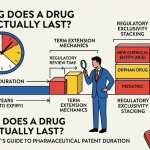
Before Hatch-Waxman passed in 1984, a generic company that wanted to challenge a patent had no way to get a court ruling without first manufacturing and selling its product, exposing itself to the exact treble-damages risk the current at-risk framework still carries.[3] The Act’s answer was to make ANDA filing itself an act of “artificial” infringement, giving courts jurisdiction to decide validity and infringement years before a generic company would otherwise have standing to sue.[4] The tradeoff for that early access to court is the 30-month stay: once a brand company sues over a Paragraph IV certification, the FDA is barred from granting final ANDA approval for up to 30 months, or until a court rules in the generic’s favor, whichever comes first.[1]
What Happens When the Stay Expires Before Trial Ends
The 30-month stay is a deadline, not a resolution mechanism. If litigation is still pending when the stay expires, the FDA can grant final approval regardless of how the case is going, and the generic manufacturer is left holding a marketable product and an unresolved lawsuit at the same time.[1] That is the fork in the road: wait for the appeals process to finish, which can take years and forfeit revenue the generic can never recover, or launch immediately and accept the risk of having to disgorge those same profits, and more, if the brand ultimately wins.[6]
The Five Findings That Matter
Teva and Sun paid a combined $2.15 billion to settle damages from their 2007 at-risk launch of generic Protonix, the largest reported patent settlement of its kind at the time it was announced.[2][7]
Apotex’s 2006 at-risk launch of generic Plavix cut Bristol-Myers Squibb’s quarterly U.S. Plavix sales from $988 million to $474 million in a single quarter, and Apotex ultimately paid $442,209,362 in damages, interest, and costs.[16][17][18]
Wyeth’s branded Protonix sales fell from $1.9 billion in 2007 to roughly $395 million in 2008, an 80 percent decline in the first full year after Teva’s at-risk launch.[13]
In the 2024-2026 Myrbetriq dispute, Lupin and Zydus launched generic mirabegron at risk in April 2025 against a branded product worth $2.4 billion in combined U.S. market size, and Astellas settled the litigation in February 2026 for a combined $60 million in settlement payments plus $150 million in upfront license fees from both companies.[28][23]
Academic research on first-filer generics found that once a company wins its case at the district court level, it almost always launches at risk rather than waiting for an appeal to conclude, because appellate reversals of district court patent rulings are uncommon enough that the expected value of waiting rarely exceeds the cost of delay.[6]
The At-Risk Launch Calculus: How Generic Manufacturers Actually Run the Numbers
Expected Value of Launching vs. Waiting
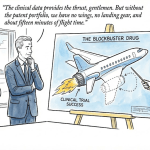
The commercial logic behind an at-risk launch weighs the profit available during the at-risk window against the probability-weighted cost of losing: forced withdrawal, disgorged profits, and enhanced damages if a court finds the infringement willful.[5] For a brand drug generating $1 billion a year in U.S. sales with 18 months left before litigation resolves, the foregone revenue from waiting can exceed $1.5 billion, a number large enough on its own to justify entering the market even against real litigation risk.[5] This is the arithmetic embedded in the title of this piece: the math frequently says go even when a final court judgment has not yet said the generic is legally entitled to be there.
The calculation is asymmetric in a way that favors entry. The brand company has a revenue stream that a single adverse ruling turns off immediately. The generic company, before it launches, has no revenue at stake at all, only litigation costs and the option value of a market it has not yet entered.[9] Once FDA approval is in hand, that asymmetry flips: every quarter the generic waits is a quarter of exclusivity-period revenue it can never recapture, while the brand’s downside from the generic’s eventual entry is the same regardless of when it happens.[9]
Why 180-Day Exclusivity Forfeiture Forces the Decision
Waiting is not free even when a generic company would otherwise prefer to avoid risk entirely. The first company to file a Paragraph IV certification against a given patent earns 180 days of marketing exclusivity against other generic filers, a prize the Supreme Court itself has described as capable of being worth several hundred million dollars.[10] That exclusivity is not guaranteed simply by filing first. It can be forfeited, and forfeiture converts a strategic choice about whether to launch at risk into something closer to a use-it-or-lose-it deadline.
The Failure-to-Market Forfeiture Trigger
Under 21 U.S.C. § 355(j)(5)(D)(i)(I), a first-filer forfeits its 180-day exclusivity if it fails to begin marketing the drug by the later of two dates: 75 days after its ANDA approval becomes effective, or 75 days after the last court ruling of invalidity or non-infringement on every patent it certified against.[8][9] Once that clock starts, a generic company sitting on FDA approval and choosing not to launch is not just leaving revenue on the table. It is actively running down the exclusivity window that makes the first-filer position valuable in the first place.[7]
Tentative Approval Deadlines Under § 355(j)(5)(D)(i)(IV)
A related forfeiture provision requires a first-filer to obtain tentative FDA approval within 30 months of submitting its ANDA or lose exclusivity outright, subject to a narrow exception for delays caused by regulatory changes imposed after filing.[8] The FDA applies this deadline as what industry counsel describe as a bright-line rule: miss it by even a day, and exclusivity is generally gone.[8] DrugPatentWatch’s patent-expiration and first-filer tracking exists specifically to help IP teams monitor these forfeiture dates against active Paragraph IV litigation, since the failure-to-market and tentative-approval clocks run independently of how a given case is actually going in court.
Case Study: Teva and Sun’s $2.15 Billion Protonix Gamble
The Launch and the Patent Behind It
Wyeth marketed Protonix (pantoprazole) for erosive esophagitis and GERD under a patent, U.S. Patent No. 4,758,579, owned by Takeda and exclusively licensed to Wyeth in the United States.[11] In December 2007, Teva and Sun Pharma launched generic pantoprazole before the patent’s January 2011 expiration date, betting that the patent would ultimately be found invalid or not infringed.[11] Wyeth’s branded sales absorbed the impact almost immediately: from $1.9 billion in 2007 to about $395 million the following year, and by mid-2009 generic pantoprazole sales in the market had overtaken what remained of branded Protonix revenue.[13]
The Verdict and the Six-Year Path to Settlement
In April 2010, a jury in the District of New Jersey found the patent valid and found that Teva’s launch infringed it.[13][14] Because the infringement was found willful, Hatch-Waxman’s damages framework exposed Teva to double the damages its launch had caused Wyeth to lose, on top of the underlying lost-profits award itself.[13] Teva initially set aside $670 million to cover potential liability; by 2013, facing a trial specifically to determine damages, it disclosed that its exposure could run as much as $2 billion above that reserve.[12] The case settled shortly after the damages trial began, with Teva and Sun paying a combined $2.15 billion, split $1.6 billion and $550 million respectively, an amount that at the time exceeded any previously reported patent verdict in any industry.[2][15]
What Wyeth v. Teva Reveals About Damages Calculations After a Loss
The gap between Teva’s original $670 million reserve and its eventual $1.6 billion payment illustrates a pattern that recurs across at-risk launch litigation: early damages estimates tend to reflect the brand’s lost sales in isolation, while final settlements or verdicts also capture years of accrued interest, the enhanced-damages multiplier for willfulness, and the brand’s own litigation costs.[12][13] A generic company modeling the cost of being wrong needs to price in more than the headline revenue figure the brand reports losing in a given quarter.
Case Study: Apotex’s Plavix Launch and the Limits of a Preliminary Injunction
The 23-Day Window Between Launch and Injunction
Plavix (clopidogrel bisulfate), sold jointly by Sanofi and Bristol-Myers Squibb, generated roughly $3.2 billion in U.S. sales in 2005, making it BMS’s largest product by net sales.[16] On August 8, 2006, Apotex launched a generic version at risk. Sanofi and BMS moved immediately for a preliminary injunction, and the U.S. District Court for the Southern District of New York granted it on August 31, 2006, 23 days after the launch. The court did not, however, order Apotex to recall product already shipped into the distribution channel.[16][21]
Those 23 days did lasting commercial damage. BMS estimated the at-risk launch reduced its Plavix net sales by $525 million to $600 million in the third quarter of 2006 alone, with U.S. sales falling from $988 million in the second quarter to $474 million in the third.[17] Because the court left previously shipped generic product in the channel, BMS itself acknowledged the launch would likely continue satisfying a majority of prescription demand for the rest of the year, well beyond the 23-day window in which Apotex was actually shipping new units.[17]
Five and a Half Years to Final Payment
Apotex appealed the injunction and continued litigating the underlying patent case. The Federal Circuit ultimately upheld a damages award against Apotex, and in March 2012, nearly six years after the original launch, Apotex paid Sanofi and BMS $442,209,362 in damages, plus $1,258,682 in post-judgment interest and $900,000 in costs.[18][19]
Case Study: The Multi-Generic Neurontin Launch and a Confidential Ending
Four Companies, Two Launch Windows
Pfizer’s Neurontin (gabapentin), generating more than $2 billion a year in sales at the time, drew at-risk launches from multiple generic manufacturers rather than a single challenger.[20] Ivax launched gabapentin tablets at risk on August 20, 2004. Alpharma and Teva followed with AB-rated capsules on October 15, 2004, and Pfizer’s own generics division, Greenstone, launched its authorized generic the same day to compete on equal footing.[22] Apotex, in its own account of the litigation, described itself as having launched generic gabapentin capsules and tablets at risk in April 2005.[19]
Why This Case Settled Instead of Producing a Verdict
In 2005, the New Jersey district court initially ruled that Pfizer could not prove infringement and granted summary judgment to the generic manufacturers. The Federal Circuit reversed that ruling in 2007, holding that a full trial was required, which reopened Pfizer’s path to the damages it said it was owed for the 2004 at-risk launches.[20][21] Rather than proceed to that trial, Apotex and Pfizer settled all outstanding patent and antitrust litigation in February 2008 on confidential terms, closing out nearly a decade of dispute and leaving Apotex free to continue selling the product it had been shipping since 2005.[19]
The Neurontin case is a useful counterweight to Protonix and Plavix specifically because it shows the same fact pattern — multiple generics launching before final judgment — resolving through a negotiated, undisclosed settlement instead of a public damages figure. Not every at-risk launch produces a headline verdict; a meaningful share end in confidential terms that leave the actual cost of the bet undisclosed to anyone outside the settling parties.
Case Study: Lupin and Zydus vs. Astellas Over Myrbetriq
Timeline: From Patent Invalidation to At-Risk Launch
Astellas markets Myrbetriq (mirabegron) for overactive bladder. Branded U.S. sales reached roughly $1.35 billion in the fiscal year before generic competition intensified, protecting a franchise with a combined U.S. market size of about $2.4 billion as of early 2024.[25][28] Astellas sued Lupin and Zydus for infringing patents covering mirabegron’s extended-release formulation, filing the underlying action on July 28, 2023.[26] A Delaware district court invalidated one of the asserted patents, and in April 2024 the same court declined to enjoin the generics from proceeding while Astellas pursued an appeal over a second patent, No. 10,842,780.[24]
Lupin and Zydus launched their generic mirabegron products at risk in April 2025, proceeding even though Astellas was still litigating the ‘780 patent and had warned that a win on appeal could expose the generics to damages.[28] That same month, the court found the ‘780 patent valid and barred further sales pending a consolidated jury trial on infringement and damages set for 2026.[27] In June 2025, the court allowed Lupin and Zydus to expand the scope of their invalidity arguments ahead of that trial.[28]
The February 2026 Settlement
Astellas announced on February 12, 2026 that it had reached separate settlements with Lupin and Zydus, together worth $60 million in settlement payments and $150 million in upfront license fees, plus per-unit license fees on future U.S. sales through the patents’ expiration.[23] Zydus separately entered a consent judgment on February 19, 2026, stipulating that four Astellas patents — including U.S. Patent Nos. 10,842,780, 11,707,451, and 12,097,189 — are valid and infringed, and agreeing to stop selling its generic products until those patents expire.[29]
Zydus’s Consent Judgment vs. Lupin’s Licensed Settlement
The two companies’ outcomes diverged in structure even though both resulted from the same underlying at-risk launch. Zydus’s consent judgment functions as an admission of liability paired with an injunction, ending its ability to sell generic mirabegron before patent expiration.[29] Lupin’s settlement, by contrast, is reported to include a per-unit licensing structure that lets it continue selling in the U.S. market under license through September 2027, when Astellas’s claimed protection expires.[30] Two generic companies took the same at-risk bet on the same drug and arrived at materially different commercial outcomes once the litigation resolved.
What Happens If You’re Wrong: Damages, Enhanced Damages, and Halo v. Pulse
Lost-Profits Damages Under Hatch-Waxman
When an at-risk launch is found to infringe a valid patent, the generic manufacturer becomes liable under the same general patent damages framework that applies to any commercial infringement: compensation for the brand’s lost profits, or a reasonable royalty if lost profits cannot be shown.[35] In practice, the Protonix and Plavix cases show this measured directly against the brand’s own sales decline during the at-risk window, using the brand’s actual quarterly revenue before and after the generic entered as the baseline for what was lost.[13][17]
How Halo Electronics v. Pulse Electronics Changed the Willfulness Standard
Enhanced damages, up to treble the base award, are available under 35 U.S.C. § 284 when infringement is found willful, and the standard for proving willfulness changed materially in 2016.[31][32] Before that year, the Federal Circuit’s Seagate test required a patent holder to prove by clear and convincing evidence that the infringer’s legal position was objectively reckless, a standard that let defendants shield themselves with defenses developed after the fact for litigation purposes, regardless of what they actually believed when they launched.[32]
In Halo Electronics, Inc. v. Pulse Electronics, Inc., the Supreme Court unanimously discarded that two-part test, lowered the evidentiary bar to a preponderance of the evidence, and directed courts to focus on the infringer’s subjective state of mind at the time of the infringing conduct rather than on defenses constructed later for trial.[31][32] For a generic manufacturer weighing an at-risk launch, the practical effect is that a strong non-infringement or invalidity argument developed only after the launch decision offers less protection against enhanced damages than a documented, good-faith legal position held at the time the company actually decided to ship product.[32]
The Alternative to At-Risk Launch: Reverse-Payment Settlements and FTC v. Actavis
Why Brands Sometimes Prefer to Pay Rather Than Litigate to Verdict
Not every brand-generic dispute reaches the fork between at-risk launch and final judgment. In a reverse-payment settlement, the brand company pays the generic challenger to end the patent litigation, and the generic agrees to enter the market at an agreed future date rather than immediately or after a full trial.[33] These settlements let both sides avoid the binary risk of an at-risk launch: the brand avoids the chance of an early, uncompensated loss of exclusivity, and the generic avoids the chance of ending up on the wrong side of a damages verdict.
The Rule-of-Reason Test
In FTC v. Actavis, decided in 2013, the Supreme Court held that large reverse-payment settlements are not automatically shielded from antitrust scrutiny simply because they arise from patent litigation, and are not automatically presumed illegal either.[33][34] Instead, courts must apply an antitrust rule-of-reason analysis, weighing the size of the payment against the paying company’s own anticipated litigation costs and any procompetitive justification for the deal.[34] The decision reshaped how brand and generic companies structure settlements, since a payment large enough to look like it is simply buying delayed entry now carries real antitrust exposure rather than automatic patent-law protection.[33]
What This Means for Generic Manufacturers
The four cases here point to a consistent pattern rather than four unrelated outcomes. Launching immediately after winning at the district court level, while an appeal is pending, is close to standard practice among first-filers, not an aggressive outlier strategy, because appellate reversals of district court patent rulings are infrequent enough that the expected value calculation usually favors entry.[6] The riskier version of the bet — launching before any court has ruled in the generic’s favor at all, as Teva and Sun did against Protonix — carries materially higher exposure, and the Protonix outcome shows what that exposure can look like when a jury ultimately sides with the brand.[11][13]
Forfeiture deadlines compress the decision window regardless of how confident a generic company feels about the underlying patent dispute. A first-filer sitting on FDA approval past the failure-to-market deadline is not preserving optionality; it is giving away the 180-day exclusivity that made pursuing first-filer status valuable in the first place.[7][8]
What This Means for Brand Manufacturers Defending a Patent Estate
For brand companies, the preliminary injunction is the primary tool for limiting at-risk launch damage, and the Plavix case shows its limits even when granted. A court can halt further sales without ordering a recall of product already in the distribution channel, meaning a brand’s commercial harm can persist for months after an injunction takes effect, driven entirely by inventory shipped during a launch window measured in weeks.[16][17] Brand companies that want to minimize at-risk exposure need patent estates strong enough to win preliminary injunction motions quickly, since the gap between launch and injunction, not the gap between launch and final verdict, is often where the largest and least recoverable commercial damage occurs.
Definitions: Three Types of At-Risk Entry
Industry usage treats “at-risk launch” as a single category, but the four cases above actually fall into three distinct situations with different risk profiles. Separating them clarifies why otherwise similar-looking decisions produce such different outcomes. This is an original classification built from the pattern of the cases discussed here, not an established industry taxonomy, and is offered as a way to compare cases rather than as a term of art used by courts or regulators.
Pre-Ruling Entry
The generic launches before any court, at any level, has ruled in its favor on the merits. Teva and Sun’s 2007 Protonix launch fits this category: no district court had yet found the patent invalid or not infringed when the companies began shipping product.[11] This is the highest-risk variant, since the generic is betting entirely on its own legal analysis rather than on a favorable ruling it can point to if challenged later, and it is the variant most exposed to a finding of willfulness under the post-Halo standard.[31][32]
Post-District-Court-Win Entry
The generic launches after winning at the district court level, while the brand’s appeal is still pending. Academic research on first-filer conduct found this to be the dominant pattern: once a generic wins at trial, it almost always launches immediately rather than waiting out the appeal, because reversals at the appellate stage are infrequent enough that the expected value of waiting rarely justifies the lost revenue.[6] Lupin and Zydus’s 2025 Myrbetriq launch, made after the district court declined to enjoin them while an appeal proceeded on a separate patent, sits closer to this category, though the litigation over the ‘780 patent was still active rather than fully resolved in their favor.[24][28]
Forfeiture-Driven Entry
The generic launches primarily because a statutory deadline, rather than confidence in the underlying case, forces the issue. A first-filer approaching the failure-to-market or 30-month tentative-approval forfeiture triggers under 21 U.S.C. § 355(j)(5)(D) faces a choice between launching with incomplete legal certainty or forfeiting exclusivity that may be worth hundreds of millions of dollars regardless of how the litigation eventually resolves.[8][10] This category is defined by the calendar rather than by the strength of any particular ruling, which is what makes it distinct from the other two.
The Social Welfare Argument for At-Risk Entry
Economists who study at-risk entry have made a case that it is not simply a private gamble between two companies but a mechanism with broader effects on drug pricing and innovation incentives. Researchers behind the NBER working paper on at-risk entry describe it as functionally similar to a generic company “buying out” the patent: consumers get lower prices immediately, during the at-risk window, rather than waiting for litigation to fully conclude, and if the generic loses, the brand is made whole through damages that approximate what it would have earned without the early entry.[6]
That framing has a direct commercial implication for how brand and generic companies should think about litigation strategy. If damages calculations reliably restore the brand to the position it would have occupied absent the at-risk launch, as they did in the Protonix and Plavix cases when the brands ultimately prevailed, then at-risk entry does not undermine the long-run incentive to invest in patented drug development the way outright infringement without consequence would.[6][13][18] The risk to that logic is asymmetric information: a brand company has to actually detect the infringement, sue successfully, and collect a judgment from a generic company that may not have the balance sheet to pay it, which is a meaningfully harder proposition than the clean economic model suggests.
Original Analysis: Comparing Outcomes Across Four At-Risk Launches
Methodology
The following table compiles publicly reported facts from company press releases, SEC filings, and court records for each case discussed above. “Time to resolution” is a calculated figure measuring the interval between the date of at-risk launch and the date of final settlement or damages payment reported in the cited sources; it is not an independently reported statistic and is included here as original analysis rather than as a sourced fact in its own right.
Two patterns stand out from this comparison. Time to resolution has been shrinking across four decades of Hatch-Waxman litigation, from roughly six years for Protonix down to under a year for Myrbetriq, which is consistent with courts and litigants both having more settled case law to work from than they did in the mid-2000s. Second, outcomes for at-risk launchers split evenly between disclosed nine-figure-or-larger payments (Plavix, Protonix, and the disclosed portion of Myrbetriq) and confidential settlements that withhold the actual cost from public view (Neurontin), meaning any generic company using public case outcomes to model its own risk is working from an incomplete sample by definition.
At-Risk Launch vs. Waiting vs. Settlement: A Decision Framework
Three Paths After a Favorable District Court Ruling
Once a generic company wins at the district court level, it faces three distinct paths rather than a single choice. It can launch immediately and accept appellate risk, which research on first-filer behavior shows is the modal choice given how rarely district court patent rulings get reversed on appeal.[6] It can wait for the appeal to resolve, accepting certain lost revenue in exchange for eliminating litigation risk entirely, a path more attractive when the generic has already forfeited its 180-day exclusivity and therefore has less to lose by waiting.[6] Or it can settle with the brand before the appeal concludes, trading some of the upside of an outright win for certainty on both sides, subject to the rule-of-reason antitrust scrutiny that now applies to large reverse payments.[33][34]
The Supreme Court has described the 180-day exclusivity period as capable of proving “worth several hundred million dollars” to the generic company that holds it.[10]
Frequently Asked Questions
Is an at-risk generic launch illegal?
No. Launching a generic drug after FDA approval but before final resolution of related patent litigation is legal. The risk is financial, not criminal: if a court later finds the underlying patent valid and infringed, the generic company can be ordered to pay damages, and enhanced damages if the infringement is found willful.[3][31]
Why would a generic company launch before winning its case?
Because forfeiture deadlines under 21 U.S.C. § 355(j)(5)(D) can eliminate a first-filer’s 180-day exclusivity if it delays too long, and because the revenue lost by waiting for a final judgment is often larger than the probability-weighted cost of losing.[5][8]
Can a court stop an at-risk launch after it has already started?
Yes, through a preliminary injunction, but the injunction typically halts future sales without necessarily requiring a recall of product already shipped into the distribution channel, as happened in the Plavix case.[16]
What is the difference between an at-risk launch and an authorized generic?
An authorized generic is the brand company’s own version of its drug, sold by the brand or a licensed partner under the original NDA rather than a competing ANDA, and it carries no patent infringement risk because the brand owns the underlying patent. An at-risk launch is a competing generic entering the market without the patent holder’s permission, before litigation over that patent has concluded.[6]
How much can a generic company owe if an at-risk launch is found to infringe?
There is no fixed cap; damages are based on the brand’s actual lost profits or a reasonable royalty, and can be doubled or tripled under 35 U.S.C. § 284 if the infringement is found willful. Reported outcomes have ranged from confidential settlements to payments exceeding $2 billion.[2][31][35]
Does winning at the district court level guarantee a generic company can launch safely?
No. A district court win establishes only that the generic prevailed at that stage; the brand can still appeal, and research on first-filer conduct shows companies launch anyway in most cases because appellate reversals are relatively rare, not because the appeal risk is zero.[6]
What is a reverse-payment settlement and how does it relate to at-risk launches?
A reverse-payment settlement is an agreement in which the brand company pays the generic challenger to accept a specific, often delayed, market entry date instead of litigating to a verdict or launching at risk. Since FTC v. Actavis, these settlements are subject to antitrust rule-of-reason review rather than automatic legality.[33][34]
How did the standard for enhanced damages change after Halo v. Pulse?
The Supreme Court replaced a rigid two-part test requiring clear and convincing evidence of objective recklessness with a more flexible standard focused on the infringer’s subjective conduct at the time of infringement, judged by a preponderance of the evidence and reviewed only for abuse of discretion.[31][32]
Can a generic company lose its 180-day exclusivity even if it wins its patent case?
Yes. Exclusivity can be forfeited for reasons unrelated to the litigation’s merits, including failing to market the drug within the statutory window after approval or failing to obtain tentative approval within 30 months of filing the ANDA.[8][9]
Where can I track which drugs currently have active Paragraph IV litigation or approaching forfeiture deadlines?
Patent-expiration and generic-entry tracking resources such as DrugPatentWatch compile Orange Book listings, first-filer disclosures, and Paragraph IV certification data that IP and commercial teams use to monitor these deadlines against active litigation status.
Key Takeaways
An at-risk launch is a legal, financially calculated decision to sell a generic drug before patent litigation with the brand company has reached final judgment, not a regulatory violation.[3]
Forfeiture rules under 21 U.S.C. § 355(j)(5)(D) can strip a first-filer of its 180-day exclusivity for delay alone, which pushes many generic companies toward launching even when litigation risk remains unresolved.[8]
Teva and Sun’s at-risk Protonix launch cost them $2.15 billion; Apotex’s at-risk Plavix launch cost $442.2 million; the Neurontin at-risk launches settled confidentially; and the Myrbetriq dispute closed in February 2026 with $210 million in disclosed payments from Lupin and Zydus combined plus per-unit licensing.[2][18][19][23]
The 2016 Halo Electronics v. Pulse Electronics decision made enhanced damages easier for courts to award, raising the stakes of launching without a well-documented, contemporaneous legal basis for believing the underlying patent is invalid or not infringed.[31][32]
Reverse-payment settlements, now governed by the FTC v. Actavis rule-of-reason standard, remain the primary alternative path that lets both brand and generic companies avoid the binary risk of an at-risk launch entirely.[33][34]
References
Congressional Research Service. (2025, June 12). Pharmaceutical Patent Disputes: Generic Entry for Small-Molecule Drugs Under the Hatch-Waxman Act. Congress.gov. https://www.congress.gov/crs-product/IF13028
Torres, R. (2013, June 2). Pfizer settles Teva, Sun patent infringement case for $2.15B. GEN – Genetic Engineering & Biotechnology News. https://www.genengnews.com/news/pfizer-settles-teva-sun-patent-infringement-case-for-2-15b/
Managed Healthcare Executive. (2026). “At-risk” generic launches can be unpredictable. https://www.managedhealthcareexecutive.com/view/risk-generic-launches-can-be-unpredictable
DrugPatentWatch. (2025, December 18). ANDA Litigation Strategies: An Expert Defense Guide. https://www.drugpatentwatch.com/blog/anda-litigation-strategies-an-expert-defense-guide/
DrugPatentWatch. (2026, March 8). Win the Patent Fight: Hatch-Waxman Litigation Strategies for Brand and Generic Manufacturers. https://www.drugpatentwatch.com/blog/win-the-patent-fight-hatch-waxman-litigation-strategies-for-brand-and-generic-manufacturers/
Drake, K. M., He, R., McGuire, T., & Ndikumana, A. K. (2021). No Free Launch: At-Risk Entry by Generic Drug Firms (NBER Working Paper No. 29131). National Bureau of Economic Research. https://www.nber.org/papers/w29131
DrugPatentWatch. (2026, May 3). Win the 180-Day FDA Exclusivity Race: Legal, Regulatory, and Commercial Playbook. https://www.drugpatentwatch.com/blog/win-the-180-day-fda-exclusivity-race-legal-regulatory-and-commercial-playbook/
DrugPatentWatch. (2026, February 7). Launch or Lose: Master the 180-Day Generic Forfeiture Rules. https://www.drugpatentwatch.com/blog/launch-or-lose-master-the-180-day-generic-forfeiture-rules/
Legal Information Institute. 21 U.S.C. § 355(j)(5)(D) – Forfeiture of 180-day exclusivity period. Cornell Law School. https://www.law.cornell.edu/definitions/uscode.php?def_id=21-USC-1727272510-174134459
Wasson, A. (2024). 180-Day Exclusivity [Conference materials]. American Conference Institute Hatch-Waxman Proficiency series, citing FTC v. Actavis, Inc., 570 U.S. 136, 144 (2013). https://www.americanconference.com/hatch-waxman/wp-content/uploads/sites/2119/2024/10/ACI-Proficiency-180-day-exclusivity.pdf
Pfizer Inc. (2013, June 10). Pfizer Obtains $2.15 Billion Settlement From Teva And Sun For Infringement Of Protonix® Patent [Press release]. https://www.pfizer.com/news/press-release/press-release-detail/pfizer_obtains_2_15_billion_settlement_from_teva_and_sun_for_infringement_of_protonix_patent
Kling, J. (2023, June 2). Teva eyes $2B+ charges from its generic Protonix launch. GEN – Genetic Engineering & Biotechnology News. https://www.genengnews.com/news/teva-eyes-2b-charges-from-its-generic-protonix-launch/
Fierce Pharma. (2013, February 14). Teva’s at-risk Protonix launch could cost $2B-plus. https://www.fiercepharma.com/regulatory/teva-s-at-risk-protonix-launch-could-cost-2b-plus
Fierce Pharma. (2010, April 26). Will Teva rethink at-risk launches after Protonix loss? https://www.fiercepharma.com/pharma/will-teva-rethink-at-risk-launches-after-protonix-loss
Quinn, G. (2018, July 10). Largest Patent Settlement Scores $2.15 Billion for Pfizer, Takeda. IPWatchdog. https://ipwatchdog.com/2013/06/26/largest-patent-settlement-scores-2-15-billion-for-pfizer-takeda/
Bristol-Myers Squibb Co. (2006). Form 8-K, Exhibit 99.2. U.S. Securities and Exchange Commission. https://www.sec.gov/Archives/edgar/data/0000014272/000119312506185268/dex992.htm
Bristol-Myers Squibb Co. (2006). Form 10-Q, Q3 2006. U.S. Securities and Exchange Commission. https://www.sec.gov/Archives/edgar/data/0000014272/000119312506222282/d10q.htm
Bristol Myers Squibb. (2012, March 25). Sanofi and Bristol-Myers Squibb Collect Damages in Plavix Patent Litigation with Apotex [Press release]. https://news.bms.com/news/details/2012/Sanofi-and-Bristol-Myers-Squibb-Collect-Damages-in-Plavix-Patent-Litigation-with-Apotex/default.aspx
Howard, S. (2008, February 26). Apotex, Pfizer Make Peace On Generic Neurontin. Law360. https://www.law360.com/articles/48211/apotex-pfizer-make-peace-on-generic-neurontin
Pfizer Inc. (2007, September 21). Court Rules for Pfizer in Patent Infringement Case on Neurontin [Press release]. https://www.pfizer.com/news/press-release/press-release-detail/court_rules_for_pfizer_in_patent_infringement_case_on_neurontin
Pfizer Inc. (2004). Form 8-K, Exhibit 99. U.S. Securities and Exchange Commission. https://www.sec.gov/Archives/edgar/data/0000078003/000089109204004908/e19346ex99.txt
Health Affairs Scholar. (2025, December 1). Serial patent litigation: an emerging strategy to delay entry of generic competition. https://academic.oup.com/healthaffairsscholar/article/3/12/qxaf240/8382246
Astellas Pharma Inc. (2026, February 12). Astellas Reaches Settlement Agreements with Lupin and Zydus in Myrbetriq® Patent Litigation [Press release]. https://newsroom.astellas.com/2026-02-12-astellas-reaches-settlement-agreements-with-lupin-and-zydus-in-myrbetriq-patent-litigation
Pharmaphorum. (2024, April 22). Astellas’ generic Myrbetriq defence knocked back again. https://pharmaphorum.com/news/astellas-generic-myrbetriq-defence-knocked-back-again
MedPath. (2023). Astellas Faces Setback as US Court Invalidates Key Myrbetriq Patent. https://trial.medpath.com/news/astellas-faces-setback-as-us-court-invalidates-key-myrbetriq-patent
PatSnap. (2026, April 2). Astellas v. Lupin: Consent Judgment Upholds Mirabegron Patent Portfolio. https://www.patsnap.com/resources/blog/litigation/astellas-v-lupin-consent-judgment-upholds-mirabegron-patent-portfolio-patsnap-eureka/
Drug Store News. (2025, April 18). U.S. Federal Court blocks Lupin, Zydus Life from bringing generic Myrbetriq to market. https://drugstorenews.com/us-federal-court-blocks-lupin-zydus-life-bringing-generic-myrbetriq-market
MedPath. (2025, June 3). US Court Allows Lupin and Zydus to Expand Patent Defense Arguments in Myrbetriq Generic Drug Case. https://trial.medpath.com/news/527cf946dede2ac4/us-court-allows-lupin-and-zydus-to-expand-patent-defense-arguments-in-myrbetriq-generic-drug-case
PatSnap. (2026, May 7). Astellas vs. Zydus: Consent Judgment Blocks Generic Myrbetriq® Entry. https://www.patsnap.com/resources/blog/litigation/astellas-vs-zydus-consent-judgment-blocks-generic-myrbetriq-entry-patsnap-eureka/
Pharmaphorum. (2026, February 10). Lupin settles Myrbetriq patent spat with Astellas for $90m. https://pharmaphorum.com/news/lupin-settles-myrbetriq-patent-spat-astellas-90m
Honigman LLP. Supreme Court ruling in Halo Electronics, Inc. v. Pulse Electronics, Inc. relaxes standard for enhanced damages in patent cases. https://www.honigman.com/alert-1157
Fish & Richardson. (2016, June 14). Halo Electronics, Inc. v. Pulse Electronics, Inc. https://www.fr.com/insights/thought-leadership/blogs/scotus-halo-v-pulse-electronics
WilmerHale. (2013, June 18). FTC v. Actavis: Supreme Court Adopts Rule of Reason for “Reverse Payment” Settlements. https://www.wilmerhale.com/en/insights/client-alerts/ftc-v-actavis-supreme-court-adopts-rule-of-reason-for-reverse-payment-settlements
Justia US Supreme Court Center. FTC v. Actavis, Inc., 570 U.S. 136 (2013). https://supreme.justia.com/cases/federal/us/570/136/
Noonan, K. E. (2025, September 25). More Ill-conceived Remedies from Congress Regarding Prescription Drug Costs. Patent Docs. https://patentdocs.org/2019/04/21/more-ill-conceived-remedies-from-congress-regarding-prescription-drug-costs/