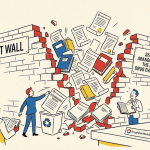
Every generics attorney has heard some version of the same sentence from a nervous client: “They have over a hundred patents on this molecule, there’s no way we can launch.” It sounds definitive. It is usually wrong, or at least incomplete. A patent thicket is not a wall. It is a pile of claims of wildly uneven strength, stacked in front of a product to make the pile look taller than any single patent inside it actually is.
This matters more now than it did five years ago. The Federal Trade Commission has spent 2023 through 2025 formally disputing hundreds of Orange Book patent listings. A federal appeals court just forced Teva to delist five inhaler patents because they protected a dose counter, not a drug. AbbVie’s own 132-patent Humira thicket survived an antitrust challenge in court, and yet biosimilar makers still found their way in through gaps the litigation revealed. The pattern is consistent: thickets get built, thickets get tested, and some of the patents inside them turn out to be much weaker than the headline count suggests.
This piece is a working guide to reading a pharmaceutical patent estate the way a Paragraph IV litigator or an FTC staff attorney would read one: not by counting patents, but by sorting them into the ones that actually block a generic or biosimilar and the ones that just sit there looking intimidating. Along the way, we will walk through the Humira litigation in detail, the Restasis tribal sovereign immunity deal that failed, the Namenda “product hop” that got enjoined, and the December 2024 Federal Circuit ruling that is now the clearest statutory test for spotting an improperly listed patent.
What Is Patent Evergreening, Really?
Short answer: Evergreening is the practice of filing successive, overlapping patents and regulatory exclusivities on a drug so that the effective monopoly period extends well past the 20-year term of the original composition-of-matter patent, usually without a matching improvement in clinical benefit.
The term gets used loosely, so it is worth being precise. A drug’s original patent, covering the molecule itself, is filed early in development and runs 20 years from the filing date. By the time the drug is approved and selling, a decade or more of that term is often already gone, chewed up by clinical trials and FDA review. Patent term extension and regulatory exclusivities (five years of New Chemical Entity exclusivity, three years for a new use, and so on under the Hatch-Waxman framework) claw some of that time back. Evergreening is what happens next: filing new patents on formulations, crystal forms, dosing schedules, combination products, and delivery devices, each with its own 20-year clock that starts running from whenever that particular application was filed, not from the original molecule patent.
None of that is illegal in itself. The Seventh Circuit made that point bluntly in the Humira litigation, discussed in detail below. The legal and commercial question is not whether a company filed a lot of patents. It is whether those patents actually cover something inventive, whether they were asserted in good faith, and whether the resulting Orange Book listings meet the statutory requirements for being there at all. Those three questions are where the real analysis starts, and they are where a lot of thicket coverage in the trade press stops short.
Evergreening vs. Patent Thicket: Are They the Same Thing?
They overlap but are not identical. A patent thicket describes the structure: a dense, overlapping cluster of patents around one product, regardless of why it exists. Evergreening describes the intent and effect: using that structure specifically to extend market exclusivity beyond what the original invention would have supported. A company can have a legitimate patent thicket, built from genuinely separate inventions covering a genuinely novel drug-device combination. A company can also evergreen with just two or three well-timed patents, no thicket required, if a formulation patent filed in year eighteen buys another decade of exclusivity on a low-therapeutic-value change. Thicket is about density. Evergreening is about purpose. Most of the cases that draw regulatory attention involve both.
Why Courts Keep Saying Patent Thickets Are Legal
US patent law sets no cap on how many patents one entity can hold on related subject matter. Courts have said this repeatedly, most pointedly in the Humira litigation covered in the next section. The reasoning tracks ordinary patent doctrine: if a company makes 130 separate inventions, each one individually meeting the novelty and non-obviousness bar, it is entitled to 130 separate patents. The number alone does not establish an antitrust violation. What can establish liability is fraud on the Patent Office in obtaining the patents, sham litigation to assert patents known to be invalid, or anticompetitive agreements layered on top of the patent portfolio, like the reverse-payment settlements addressed in FTC v. Actavis. A plaintiff has to prove one of those things. Counting patents is not proof of anything by itself, which is exactly why courts keep dismissing thicket-based antitrust claims that stop at the headline number.
The Anatomy of a 20-Patent Thicket: How Companies Build Them
A mature patent estate around a blockbuster drug is not one filing event. It is a layered construction project that runs for a decade or more after approval. Understanding the layers is the first step in figuring out which ones are load-bearing.
Continuation Applications and the Patent Term Trick
The most common mechanical tool is the continuation application. A company files an initial patent application with broad claims, then before that application is fully resolved, files one or more continuation applications from the same original disclosure, each with narrower or differently worded claims. Because continuations can be filed years apart while still claiming priority back to the original filing date, a single underlying invention can spawn a dozen or more issued patents, each with a slightly different claim scope, each expiring on a slightly different date, each requiring a separate invalidity or non-infringement analysis from anyone trying to launch a competing product. A patent attorney does not need to invent anything new to build a thicket this way. Continuation practice alone, applied patiently over the life of one core disclosure, can produce the kind of numbers that make headlines.
Formulation, Method-of-Use, and Device Patents: The Three Layers of a Thicket
Beyond continuations, a mature thicket typically stacks three distinct categories of protection, and they are not equally strong.
Composition-of-Matter Patents (the strong core)
These claim the drug molecule itself, or a specific salt, polymorph, or enantiomer of it. This is the strongest layer. A generic or biosimilar maker cannot design around a valid composition-of-matter patent by reformulating; they need a bioequivalent version of the same active ingredient, which means they infringe unless the patent is invalid or has expired. When people talk about a drug’s “real” patent expiration date, they usually mean this patent.
Method-of-Use Patents (the soft shell)
These claim a specific way of using the drug: a dosing regimen, a patient population, a combination with another therapy, a new indication. They are weaker for one structural reason: a generic manufacturer can often get FDA approval for the original, off-patent indications while carving out the still-patented use through a Section viii statement, allowing launch without directly infringing the newer method patent. This carve-out mechanic is one of the more reliable cracks in a thicket, and it is a large part of why method-of-use patents, however numerous, often do not extend a drug’s practical market exclusivity as far as the raw patent count implies.
Device and Delivery Patents (the outer wall)
These claim the injector pen, the inhaler mechanism, the auto-injector cartridge, or other hardware bundled with the drug. This is the layer the FTC has targeted hardest since 2023, and the layer that the Federal Circuit weakened substantially in the December 2024 Teva v. Amneal decision covered later in this piece. The core problem is legal, not just competitive: the Orange Book listing statute requires a listed patent to claim the drug itself, and a patent that only claims a dose counter or a canister housing, without reciting the active ingredient, does not meet that bar no matter how central the device is to how patients actually take the drug.
Why the Vast Majority of Applications Get Granted
One structural fact makes thicket-building a low-risk strategy for the company doing it: most pharmaceutical patent applications succeed. In the Humira litigation, the district court found that AbbVie’s patent applications had a success rate above half, specifically 53.4 percent, which the court treated as evidence the applications were not objectively baseless. That is a meaningfully higher hit rate than most areas of technology, and it means a company filing 200 applications around a molecule can reasonably expect well over 100 of them to issue as granted patents, each one adding to the thicket’s apparent size regardless of how commercially important any individual claim turns out to be.
Humira’s 247 Patent Applications: The Case Study Everyone Cites
No drug illustrates the mechanics of a patent thicket better than Humira (adalimumab), AbbVie’s anti-inflammatory biologic and, for over a decade, the best-selling drug in the world. The nonprofit research group I-MAK documented that AbbVie filed 247 patent applications on Humira in the United States, aimed at extending exclusivity for as long as 39 years from the drug’s original approval. Not all of those applications issued as patents, and not all of the ones that issued were ever asserted against a competitor, which is itself an important distinction covered later in this piece.
“An average of 124 patents have been granted on these three drugs” — Humira, Revlimid, and Eylea — which together generate roughly 30 to 48 percent of their makers’ total revenue.
— I-MAK, Overpatented, Overpriced: 2022
Timeline: From 2016 Patent Expiry to 2023 Biosimilar Entry
2002: Humira receives FDA approval for rheumatoid arthritis.
End of 2016: The main composition-of-matter patent protecting Humira expires, per the Federal Circuit’s later summary of the case (Lexology, 2022).
2016 onward: AbbVie continues to hold and assert a body of what became 132 additional patents relating to the drug, with the last one not expiring until 2034.
2016 to 2019: AbbVie settles with roughly ten biosimilar makers, setting staggered US entry dates that all fall in 2023, years after the settling companies had FDA-approved biosimilars ready to launch.
2019: Indirect purchasers of Humira file a class action antitrust suit alleging the patent thicket and settlements amounted to an unlawful conspiracy to keep biosimilars out.
June 2020: The district court, Judge Manish Shah presiding, dismisses the case.
August 1, 2022: The Seventh Circuit affirms, in an opinion written by Judge Frank Easterbrook.
January 31, 2023: Amgen’s Amjevita becomes the first Humira biosimilar to launch in the US, with roughly nine more following through the rest of the year.
Mayor and City Council of Baltimore v. AbbVie: What the Seventh Circuit Actually Said
The case, formally Mayor and City Council of Baltimore et al. v. AbbVie Inc. et al., was brought by welfare benefit plans and other indirect purchasers of Humira. Their argument had two parts. First, that AbbVie’s 132-patent thicket deterred biosimilar competitors even though many of the patents were, in the plaintiffs’ framing, weak. Second, that the settlement agreements AbbVie reached with the biosimilar makers, which set entry dates clustered in 2023, reflected an unlawful agreement to divide the market rather than good-faith litigation compromises.
The court rejected both theories, and it is worth being specific about why, because the reasoning shapes how thicket challenges get framed today.
Why the Plaintiffs Lost
On the patent-count theory, the plaintiffs had not alleged that the patents were invalid, nor that AbbVie had committed fraud on the Patent Office in obtaining them. The court recognized that invalid patents cannot be used to create or maintain a monopoly, but noted the plaintiffs never claimed all of the patents were invalid or that AbbVie defrauded the Patent Office. Without one of those two theories, a large patent count is just a large patent count. The court also rejected the “weak patents” framing on its own terms, reasoning that a patent with narrow claim scope is not the same thing as an illegitimate one. On the settlement theory, the court found AbbVie had not paid the biosimilar makers to stay out. The agreed 2023 entry dates were the product of ordinary litigation settlement, not a payment-for-delay scheme, which meant the reverse-payment framework from FTC v. Actavis did not apply.
What the Ruling Means for Future Thicket Challenges
The practical lesson for anyone evaluating a competitor’s or a target company’s patent estate is that the number on the cover page is not the analysis. A plaintiff, a would-be generic entrant, or a licensing team doing diligence has to get inside the portfolio and ask which specific patents were actually asserted, whether any of them have already been challenged and survived or failed, and whether the settlement terms (if any exist) reveal a real expiration date that differs from the last patent’s nominal term. AbbVie’s own litigation record supplies a useful data point here: of the 132 patents in the thicket, AbbVie reportedly asserted only about 60 to 80 of them against would-be biosimilar makers. That is the number that mattered commercially, not 132 and not 247.
“What’s Wrong With Having Lots of Patents?” — Judge Easterbrook’s Question, Explained
Judge Easterbrook’s opinion became widely quoted for a rhetorical question: “What’s wrong with having lots of patents?” He went on to ask why a company that made 132 inventions should not be allowed to hold 132 patents, backing the point with a comparison to major technology companies and to Thomas Edison, who alone held over a thousand US patents. The line is often read in industry commentary as a green light for aggressive patenting. A more accurate reading is narrower: the opinion establishes that patent count is not itself an antitrust theory, not that patent thickets are immune from all legal scrutiny. The same opinion left open exactly the kind of statutory listing challenge that succeeded two years later in Teva v. Amneal, covered below, because that case was never about how many patents Teva held. It was about whether five specific patents met the technical requirements for Orange Book listing at all.
Beyond Humira: Four More Thickets Worth Knowing
Humira gets the headlines, but it is not an outlier. The same playbook shows up across biologics and small molecules alike, with enough variation in the details to be genuinely useful as a comparison set.
Imbruvica: AbbVie’s Second Wall (165 Patents, $41B Estimated Cost)
Imbruvica (ibrutinib), AbbVie’s blood cancer therapy, followed a similar pattern to Humira, compressed into a shorter timeframe. I-MAK found that AbbVie filed for 165 patents on Imbruvica, with 88 granted, adding roughly nine years of additional protection for a total of about 29 years of commercial exclusivity on a drug that generates more than $4.5 billion annually. A distinguishing detail: AbbVie filed 55 percent of Imbruvica’s patent applications after FDA approval, which is a useful red flag in itself. Pre-approval patents usually reflect genuine early-stage invention; a heavy skew toward post-approval filing suggests the portfolio is being built defensively, around a product whose commercial value is already established, rather than to protect the underlying discovery. I-MAK’s own estimate put the added cost to payers from Imbruvica’s extended exclusivity at $41 billion or more.
Lantus: Sanofi’s 74 Add-On Patents on an Insulin Pen
Sanofi’s long-acting insulin Lantus (insulin glargine) shows the device layer of a thicket in isolation. The original Lantus patent expired in 2015, but Sanofi filed an additional seventy-four patent applications in the United States, with ninety-five percent of them filed after the drug had already reached the market in 2000, according to I-MAK’s Lantus-specific report as summarized in a 2020 Indiana Law Review analysis. The heavy post-market filing skew mirrors the Imbruvica pattern and points to the same conclusion: a portfolio built to extend an existing revenue stream, layered mostly around the injector pen delivery mechanism rather than the insulin molecule itself, which was already off-patent.
Revlimid and the Slow-Bleed Settlement Strategy
Celgene’s multiple myeloma drug Revlimid (lenalidomide) illustrates a different mechanism entirely: not a patent thicket defeating challengers outright, but a settlement structure that delays the commercial impact of generic entry even after a settlement date is set. In its December 2015 settlement with Natco Pharma, Celgene agreed to let generic lenalidomide enter starting in March 2022, years before the last Orange Book patent’s April 2027 expiration, but capped at a volume limit expected to be a mid-single-digit percentage of total US lenalidomide sales in the first year. The volume cap was structured to rise gradually, not exceeding one-third of the market until a final unrestricted entry date of January 31, 2026. Litigation brought by direct purchasers later characterized the arrangement as producing ongoing supracompetitive pricing despite generic entry having technically begun in March 2022. The lesson: a settlement date is not the same thing as a competitive market. Volume-capped licenses can make a headline entry date almost meaningless for years.
Enbrel: The Patent That Outlived Its Own Molecule Class
Amgen’s Enbrel (etanercept) shows what happens when a thicket survives direct, well-funded litigation. Sandoz’s biosimilar Erelzi received FDA approval back in 2016, but was kept off the US market by patent litigation over two patents covering the fusion protein and its manufacturing process. Amgen had filed roughly 68 patent applications related to Enbrel. A New Jersey district court upheld the patents in 2019, the Federal Circuit affirmed in 2020, and the Supreme Court declined further review in 2021, meaning Sandoz cannot launch its biosimilar in the US until 2029, thirty years after Enbrel was first marketed. Sandoz had conceded infringement outright and staked its entire defense on invalidating the patents through the obviousness-type double patenting doctrine; that defense failed at every level. Enbrel is the counter-example worth keeping in mind alongside Humira and the Teva inhaler case: not every thicket has a structural crack, and a well-drafted composition-of-matter and process patent pair, properly examined and litigated, can hold for the full term even against a determined, well-resourced challenger.
Product Hopping: Evergreening’s Cousin, Not Its Twin
Short answer: Product hopping is when a brand manufacturer withdraws an older, about-to-go-generic version of a drug from the market and replaces it with a reformulated version, forcing patients and prescribers to switch before cheaper substitutes can gain traction under state generic-substitution laws. It is a commercial and marketing strategy that often rides on top of a new patent, but the anticompetitive conduct is the withdrawal and switch, not the patent filing itself.
Namenda IR to XR: How Forest Laboratories Tried to Force a Switch
Forest Laboratories, later acquired by Actavis, sold Namenda IR, a twice-daily Alzheimer’s drug, alongside a once-daily reformulation called Namenda XR. Forest’s patent exclusivity on Namenda IR, covering the molecule memantine, was set to expire on July 11, 2015. Before that date arrived, Forest planned to discontinue Namenda IR entirely and steer the roughly $1.5 billion in annual Namenda revenue toward the newer, still-patented XR version, which would not face generic competition until 2029.
New York Attorney General Eric Schneiderman sued in September 2014, seeking to block the withdrawal. The state’s theory was not that the XR patent was invalid or improperly obtained. It was that combining a hard withdrawal of the old formulation with an aggressive marketing push toward the new one, timed specifically to beat generic entry, crossed from ordinary product innovation into exclusionary conduct.
New York v. Actavis: What the Second Circuit Ruled About “Hard Switches”
The Second Circuit affirmed a preliminary injunction in May 2015, becoming the first appellate court to rule on the antitrust implications of pharmaceutical product hopping. The court’s reasoning drew a specific line: a company is free to improve its product, and it is free to stop selling an old product. Doing both at once, in a way clearly designed to defeat the operation of state generic-substitution laws (which let pharmacists automatically substitute a generic for the brand-name drug they were originally prescribed, but only if that exact brand-name product is still on the market), is different. The court found Actavis’s combined plan to withdraw Namenda IR and introduce Namenda XR simultaneously would coerce patients into switching rather than persuading them on the product’s merits, and that this crossed into anticompetitive territory under Section 2 of the Sherman Act.
The $300 Million Question: How Courts Calculate Harm
The financial stakes the court weighed were concrete. Blocking generic entry into the XR market would have cost payors roughly $300 million more than if generic memantine IR had been allowed to compete normally once its patent expired. The court also noted that Forest had shown it was willing to forgo short-term profits on the older formulation, worth well over a billion dollars annually, in exchange for the long-term market power a successful switch would secure, and treated that willingness to sacrifice near-term revenue as itself evidence of anticompetitive intent rather than ordinary product lifecycle management.
The practical distinction for anyone evaluating a company’s lifecycle strategy: a voluntary, marketing-led migration to a new formulation, where the old version stays available and patients choose to switch, sits on one side of the line. An involuntary hard withdrawal timed to patent expiry, paired with a promotional campaign to move prescribers before generics can gain a foothold, sits on the other. The Namenda case, along with a parallel Third Circuit case the FTC weighed in on around the same period, established that the second pattern carries real antitrust exposure, independent of whether the underlying reformulation patent is itself valid.
Copaxone’s 40mg Switch: A Product Hop That Never Got Enjoined
Teva’s multiple sclerosis drug Copaxone (glatiramer acetate) shows the other half of this comparison: a reformulation-driven switch that courts left alone, because Teva never withdrew the older version. The FDA approved a three-times-weekly 40 mg/mL dose of Copaxone in January 2014, while the original once-daily 20 mg/mL formulation remained available and continued to be sold. Teva promoted the new dose heavily, on genuine clinical grounds this time, since the lower injection frequency reduced injection-site reactions relative to daily dosing. By 2017, around 85 percent of Copaxone patients had voluntarily switched to the 40 mg dose, well before any generic competitor reached the market for either strength.
The patents protecting the 40 mg formulation did not fare well once tested. The PTAB invalidated three of the Orange Book-listed 40 mg patents in an inter partes review in August 2016, and the District of Delaware invalidated a fourth in January 2017, clearing the way for generic 40 mg competitors from Mylan, Sandoz, and Momenta. But the invalidation came after Teva had already captured most of its patient base on the new formulation. Because Teva never discontinued the 20 mg product, there was no hard switch for a court to enjoin under the Namenda theory, and no product-hopping suit was ever filed over the Copaxone transition. The commercial effect on generic entrants was nonetheless similar to a product hop: analysts flagged at the time that the three-times-weekly reformulation could play a significant role in limiting how much market share generic 20 mg competitors would be able to capture, since most patients had already moved to a dose those generics did not yet match. The comparison to Namenda is instructive. A patent thicket does not need to survive litigation to work commercially if the underlying formulation switch is voluntary, clinically justified, and completed before the thicket gets challenged.
When Evergreening Crosses a Legal Line: Four Landmark Cases
Not every thicket challenge fails the way the Humira case did. Four decisions define the current legal landscape, and each one attacks a different structural weakness.
FTC v. Actavis (2013): The Reverse-Payment Precedent
The foundational case predates most of the thickets discussed above. Solvay Pharmaceuticals held a patent on AndroGel, a prescription testosterone gel. When Actavis and Paddock Laboratories filed applications to market generic versions, Solvay sued for infringement, then settled by paying the generic companies millions of dollars in exchange for their agreement not to launch a competing generic for a set number of years, and to promote AndroGel to physicians instead. The FTC challenged this as an unlawful agreement to divide the market and share monopoly profits, rather than a genuine litigation settlement.
The Supreme Court held, 5 to 3, that reverse-payment settlements are subject to antitrust scrutiny under a rule-of-reason analysis, rejecting both the industry’s preferred “scope of the patent” test, which would have made such settlements essentially immune from antitrust review, and the FTC’s preferred “quick look” standard, which would have made large reverse payments presumptively illegal. The compromise standard the Court adopted, examining the size of the payment, whether it exceeds the litigation costs it purports to cover, and whether independent business justifications explain it, remains the framework courts apply today. It is the reason the AbbVie settlements in the Humira case got scrutinized for cash payments in the first place, and the reason the court’s finding that AbbVie made no payment to the settling biosimilar makers was decisive in defeating that theory.
Saint Regis Mohawk Tribe v. Mylan: The Sovereign Immunity Gambit That Failed
This is the strangest entry in the evergreening playbook, and a useful illustration of how far companies will go to insulate a thicket from the one review mechanism, inter partes review before the Patent Trial and Appeal Board, specifically designed to knock out weak patents cheaply and quickly.
How the Restasis Patent Transfer Deal Worked
Allergan’s dry-eye drug Restasis (cyclosporine) faced eighteen pending PTAB inter partes review proceedings, along with district court litigation, from generic challengers including Mylan and Teva. Rather than defend the patents directly, Allergan transferred six Restasis patents to the Saint Regis Mohawk Tribe of New York in September 2017, then licensed them back in exchange for an upfront payment of $13.75 million and royalties of up to $15 million annually. The theory, advanced by IP lawyer Michael Shore, was that tribal sovereign immunity would let the Tribe move to dismiss the pending IPR proceedings entirely, shielding the patents from review that Allergan feared it might lose on its own.
Why the Federal Circuit Rejected It
The Patent Trial and Appeal Board denied the motion to dismiss. On appeal, the Federal Circuit affirmed in Saint Regis Mohawk Tribe v. Mylan Pharmaceuticals, holding that tribal sovereign immunity does not apply in inter partes review proceedings, reasoning that an IPR functions more like a federal agency’s reconsideration of its own prior grant than like a private civil lawsuit, and that this administrative character puts it outside the scope of immunity the Tribe was claiming. The Supreme Court declined to hear a further appeal in April 2019, ending the maneuver for good. The episode is worth remembering less for its outcome, which was a clear loss, than for what it reveals about how far a company will go to protect a thicket it privately doubts can survive ordinary review. If the underlying patents had been confident wins on the merits, there would have been little reason to attempt an immunity transfer in the first place.
Teva v. Amneal (2024): Why Device Patents Can’t Save an Orange Book Listing
This is the most consequential recent decision for anyone trying to spot cracks in a device-heavy thicket, and it arrived after years of FTC pressure on exactly this category of patent.
The ProAir HFA Dose Counter Patents, Explained
Teva’s ProAir HFA asthma inhaler contains albuterol sulfate as its active ingredient. Teva listed nine patents against the product in the Orange Book; five of them, referred to in the litigation as the Inhaler Patents, covered components of the inhaler device itself, such as the dose counter, and did not claim albuterol sulfate anywhere in their claims. When Amneal filed an ANDA for a generic version and Teva sued for infringement, Amneal counterclaimed, arguing the five device-only patents had no business being in the Orange Book at all and seeking their delisting along with antitrust claims.
What “Claiming the Drug” Actually Means Under the Statute
The district court agreed with Amneal in June 2024, and the Federal Circuit affirmed in December 2024. The court held that to be properly listed in the Orange Book, a patent must claim the drug for which the application was submitted and approved, and that claiming the drug requires the patent to claim at least the active ingredient. Teva had argued that a patent should be listable if it could be infringed by some part of the approved product, even a component like a canister or a counter. The court rejected that reading directly: patents claiming only the device components of an approved drug-device combination do not meet the Orange Book’s listing requirement of claiming the drug itself. The FTC, which had filed amicus briefs supporting delisting at both the district court and appellate level, called the ruling a win against improper listings that can delay or deter cheaper generic competition.
The test this decision establishes is mechanical and checkable: pull the patent’s independent claims and see whether the active ingredient itself appears in them. If a patent claims only a housing, a counter, an actuator, or an assembly method, and never recites the drug substance, it fails the listing statute regardless of how central that hardware is to the product’s real-world function. This is now the single most useful screening question for evaluating the outer, device layer of any thicket.
The FTC’s Orange Book Crackdown: 2023-2025 Timeline
The Teva v. Amneal ruling did not happen in a vacuum. It is the judicial capstone of a two-year regulatory campaign the FTC built specifically around the theory that later prevailed in that case.
September 2023: The Policy Statement That Started It
The FTC opened with a policy statement warning that listing patents in the Orange Book that do not meet the statutory listing criteria may constitute an unfair method of competition under Section 5 of the FTC Act. The statement specifically flagged patents that claim neither the reference listed drug nor a method of using it as improperly listed, articulating almost exactly the theory the Federal Circuit would later adopt in Teva v. Amneal.
November 2023 and April 2024: Inhalers, EpiPens, and Ozempic
The FTC followed through with two rounds of formal notice letters. The first round, sent November 7, 2023, went to ten branded manufacturers and alleged more than 100 improperly listed patents, covering thirteen inhaler products and four epinephrine injector-pen products, including Mylan’s (now Viatris’s) EpiPen. The second round, sent April 30, 2024, expanded the challenge to more than 300 additional patent listings across twenty brand-name products, targeting diabetes, weight-loss, asthma, and COPD drugs, including Novo Nordisk’s Ozempic. In both rounds the FTC used the FDA’s own regulatory dispute process under 21 C.F.R. § 314.53(f)(1) to formally contest the listings, rather than filing a lawsuit outright.
Which Companies Delisted Patents — and Which Refused
The results were mixed, and instructive. After the first round, some manufacturers voluntarily withdrew patents, and several announced caps on patient out-of-pocket costs for asthma inhalers at $35 per month, a result FTC Chair Lina Khan publicized as a win. But in response to the second round of letters, the FDA’s database showed none of the targeted manufacturers actually removed patents; instead, they all recertified that the listings complied with statutory requirements. That refusal pattern is a useful signal in itself: a company confident its device patents meet the active-ingredient test has little reason to fold on an FTC letter that carries no independent enforcement teeth of its own. The companies that held firm in April 2024 were, in effect, betting on exactly the argument that later lost in Teva v. Amneal.
May 2025: The Third Round, Post-Teva v. Amneal
With the Federal Circuit’s decision now on the books, the FTC issued a third round of letters in May 2025, this time citing the ruling directly as legal authority. A letter to Viatris regarding EpiPen listings invoked the Teva v. Amneal decision explicitly and reiterated that patents improperly listed in the Orange Book may harm competition and delay generic entry, as courts have now recognized. The leverage the FTC has in these disputes changed meaningfully the moment a circuit court, rather than just an agency policy statement, endorsed the underlying legal theory. Recertifying a device-only patent listing after Teva v. Amneal carries materially higher litigation risk than recertifying one before it.
How to Read a Patent Thicket Like a Litigator: Five Structural Weaknesses
Pulling together the case law above, five checks separate a patent that actually blocks entry from one that just adds to the count.
Weakness One: Patents That Don’t Claim the Active Ingredient
This is the Teva v. Amneal test, and it is the single most mechanical, checkable weakness in any device-heavy thicket. Pull the independent claims of every listed patent and check whether the active ingredient itself is recited. If it is not, the patent is vulnerable to a delisting challenge regardless of how essential the hardware is to actually administering the drug. This test applies cleanly to inhalers, autoinjectors, and prefilled pens, the exact categories the FTC has targeted since 2023.
Weakness Two: Continuation Chains With Narrowing Claims
When a family of patents traces back to one original disclosure through a chain of continuations, later members of the chain often have progressively narrower claims than the parent application, a natural consequence of examiners rejecting broader claims and applicants amending down to secure allowance. A narrow claim is not invalid, but it is easier to design around. A generic or biosimilar formulation that avoids the narrowest limiting element in a late-chain continuation patent may clear the entire family without needing to challenge the earlier, broader patents at all, since those may have already expired by the time the narrow continuation issues.
Weakness Three: Post-Approval Filing Timing
The Imbruvica and Lantus examples above both showed heavy skews toward patents filed after the drug was already approved and selling, 55 percent and 95 percent respectively. This timing is not, by itself, evidence of invalidity. But it is a reliable proxy for which patents in a portfolio are defensive additions built around an established commercial product rather than genuine early-stage inventions, and defensive additions tend to claim narrower, more incremental improvements that are more susceptible to obviousness challenges.
Weakness Four: Unlitigated (Untested) Patents
In the Humira litigation, AbbVie held 132 patents but reportedly asserted only 60 to 80 of them against actual biosimilar challengers. The patents that were never asserted were never tested in litigation, which cuts two ways: they could be strong patents AbbVie simply never needed to use, or they could be weak patents AbbVie chose not to risk in court. A company’s own litigation history, which patents it has chosen to assert and which it has left on the shelf even when defending the same product against multiple challengers, is a more reliable strength signal than the patent’s mere existence in the portfolio.
Weakness Five: Settlement Terms That Reveal the Real Expiration Date
The Revlimid settlements show why a headline entry date in a press release is not the end of the analysis. Celgene’s agreement with Natco set a 2022 entry date but capped volume at a mid-single-digit percentage for the first year, not reaching full unrestricted competition until 2026, five years after the nominal settlement date and roughly a year and a half before the patents’ actual 2027 expiration. Reading a settlement agreement’s volume caps, step-up schedules, and most-favored-licensee clauses is often more informative than reading the patents it resolves, because those terms show what the parties themselves believed the underlying patent position was actually worth in negotiation.
Patent Thicket vs. Legitimate Lifecycle Management: How to Tell the Difference
Not every layered patent portfolio is an evergreening scheme, and the courts discussed above have been consistent about drawing a line between the two. The table below summarizes the practical distinctions.
Signal
Legitimate Lifecycle Management
Evergreening / Thicket Red Flag
Timing of new patent filings
Spread across development and early post-launch years
Heavily concentrated after the product is already commercially established (Imbruvica: 55%; Lantus: 95% post-approval)
Old formulation availability
Remains on the market alongside the new version; patients choose to switch
Withdrawn and discontinued specifically ahead of generic entry (Namenda IR)
Device patent claims
Recite the active ingredient alongside the delivery mechanism
Claim only the device component, not the drug substance (Teva ProAir HFA)
Response to formal delisting challenges
Willing to litigate the merits or voluntarily narrow overbroad listings
Structural workaround to avoid review entirely (Restasis tribal transfer)
Settlement structure with challengers
Litigation risk-adjusted compromise with no direct payment
Payment or economically equivalent benefit flowing to the challenger in exchange for delay (FTC v. Actavis fact pattern)
Clinical justification for new patent
Documented efficacy, safety, or adherence improvement
Reformulation with no demonstrated therapeutic advantage over the prior version
What Happens When the Cracks Are Found? The Humira Biosimilar Reality Check
Finding a crack in a thicket and winning market access are not the same event, and Humira’s own aftermath is the clearest evidence available. This is the part of the evergreening story that gets left out of most coverage, and it matters for anyone doing commercial forecasting rather than pure legal analysis.
Ten Biosimilars, One Year, Four Percent Market Share
Ten FDA-approved Humira biosimilars reached the US market, with nine of them launching within days of each other in July 2023, following Amgen’s Amjevita, which had a head start in January. It was, by a wide margin, the largest simultaneous biosimilar launch event in US history. And yet as of February 2024, Humira still controlled 96 percent of the market, meaning biosimilars had captured only about 4 percent share despite discounts reaching as high as 86 percent off Humira’s list price. By comparison, in the European Union, where Humira biosimilars launched in 2019, it took four years to bring Humira’s market share down to 34 percent, a far faster erosion than the US pattern so far.
Why PBM Rebate Walls Matter More Than Patent Expiry
The gap between “the patent cliff has arrived” and “patients are actually getting the cheaper product” comes down almost entirely to pharmacy benefit manager formulary dynamics, not patent law. AbbVie shifted its marketing focus toward Rinvoq and Skyrizi, two other anti-inflammatory drugs still under patent protection, rather than defending Humira’s list price directly, a strategy that let AbbVie’s rebate relationships with PBMs keep Humira competitively positioned on formularies even as biosimilars undercut it on net price. Humira retained 97 percent of its market share for adalimumab through March 2024, and the biosimilar makers that gained the most ground did so not through price alone but through co-promotion partnerships with PBM-affiliated specialty pharmacies. This is the part of the “spot the crack” exercise that a purely legal read of the patent estate will never surface: even a genuinely successful challenge that clears every patent in a thicket still runs into a second, non-patent barrier built from rebate contracts and formulary placement.
The Interchangeability Bottleneck
A further structural drag on Humira biosimilar uptake was interchangeability status, an FDA designation, separate from basic biosimilar approval, that allows a pharmacist to substitute the biosimilar for the reference product without a new prescription, similar to how small-molecule generics work. Only a subset of the ten approved Humira biosimilars, including Cyltezo and later Simlandi, achieved interchangeability status, and Simlandi did not reach the market with that designation until February 2024, well after the initial July 2023 launch wave. Biosimilars without interchangeability require the prescriber, not the pharmacist, to actively choose to switch a patient, which is a meaningfully higher-friction path to adoption than automatic substitution and helps explain why treatment-naive patients, not existing Humira patients, accounted for most early biosimilar uptake.
Forecasting the Next Thicket: Which Blockbusters Are Building Walls Now
The same playbook is visible in real time on drugs currently approaching their own patent cliffs, which makes them useful live test cases for applying the five weaknesses above before the litigation record even exists.
Keytruda’s Subcutaneous Formulation Strategy
Merck’s Keytruda (pembrolizumab), the world’s best-selling drug at roughly $29.5 billion in 2024 revenue, faces its core US composition-of-matter patent expiration in 2028. Merck’s primary defense is a subcutaneous reformulation, approved by the FDA under the brand name Keytruda Qlex for most of Keytruda’s 38 approved solid-tumor indications, priced at parity with the intravenous version. The company has stated it intends to have the subcutaneous injection available in the US shortly after approval, well ahead of the 2028 cliff, giving prescribers years to build the new formulation into standard practice before biosimilar pembrolizumab can compete for it. Applying the five-weakness framework here in advance: the relevant question for a biosimilar maker or an FTC-style reviewer will be whether Keytruda Qlex’s supporting patents claim pembrolizumab itself, which would make them a genuine composition-level barrier, or only the co-formulation excipient (berahyaluronidase alfa) and delivery mechanism, which would leave them vulnerable to the same active-ingredient test that sank Teva’s inhaler patents.
GLP-1 Drugs and the New Device-Patent Playbook
Novo Nordisk’s Ozempic was one of the specific products named in the FTC’s April 2024 expanded Orange Book challenge, alongside diabetes, weight-loss, asthma, and COPD drugs from other manufacturers. The GLP-1 category is instructive because its commercial value sits substantially in the injector pen, not just the peptide, which creates exactly the incentive structure that produced the inhaler and autoinjector disputes: a manufacturer with a molecule patent nearing expiry has a strong reason to build a secondary wall around the pen mechanism, and the Teva v. Amneal precedent now gives challengers a clear statutory test to apply against exactly that kind of wall the moment it gets listed.
Due Diligence Checklist: How to Audit a Patent Thicket Before You Rely On It
For a licensing team, a generic or biosimilar developer, or an investor evaluating loss-of-exclusivity exposure, the following sequence turns the analysis above into a repeatable process.
Pull the complete Orange Book listing history for the product, including any patents that were listed and later removed, since a removal history signals a company’s own doubts about a listing’s durability.
For every listed patent, read the independent claims and check whether the active ingredient is explicitly recited, not just implied by the product’s function.
Map the patent family tree to identify continuation chains, and note where claim scope narrows from parent to child applications.
Cross-reference filing dates against the drug’s original FDA approval date to calculate what percentage of the portfolio was filed post-approval.
Search Paragraph IV certification records and PTAB trial history to see which patents in the family have already been formally challenged, and how those challenges resolved.
Review any existing settlement agreements with earlier challengers for volume caps, step-up schedules, and the actual date of unrestricted market entry, not just the first headline entry date.
Check whether any patents in the portfolio were transferred to a third party, university, or other entity after litigation was filed, a pattern the Restasis case shows is a signal of low confidence in a direct defense.
If the product includes a delivery device, separately model the PBM formulary and interchangeability landscape, since a cleared patent thicket does not guarantee rapid market share erosion, as the Humira biosimilar rollout demonstrated.
Running a portfolio through a database that consolidates Orange Book listings, USPTO filing histories, PTAB outcomes, and Paragraph IV litigation records, such as DrugPatentWatch, turns this checklist from a multi-week manual research project into something that can be done for a single product in an afternoon, and done systematically across a portfolio of dozens of products for ongoing loss-of-exclusivity monitoring.
Key Takeaways
A large patent count around a drug is not, by itself, evidence of an antitrust violation. Courts require proof of fraud on the Patent Office, sham litigation, or an anticompetitive agreement layered on top of the patents, as the Seventh Circuit made clear in the Humira litigation.
Device and delivery patents are the weakest layer of a modern thicket. The Federal Circuit’s Teva v. Amneal decision established that a listed patent must claim the drug’s active ingredient, not just the hardware around it, and the FTC has been targeting this exact category since 2023.
Structural workarounds to avoid patent review, like Allergan’s tribal sovereign immunity transfer for Restasis, are a reliable signal that a company doubts its own patents can survive ordinary scrutiny.
Hard product withdrawals timed to patent expiry, like Namenda IR’s discontinuation, carry independent antitrust exposure under Section 2 of the Sherman Act, separate from whether the replacement product’s patent is valid.
Settlement dates are not competitive market dates. Revlimid’s 2022 settlement entry was capped at single-digit volume percentages for years before reaching unrestricted competition in 2026.
Clearing a patent thicket does not guarantee rapid price relief. Humira retained roughly 96 to 97 percent market share more than a year after ten biosimilars launched, due to PBM rebate structures and uneven interchangeability status, not remaining patent barriers.
Not every thicket has a crack. Enbrel’s composition and process patents survived direct litigation at every level, keeping biosimilar Erelzi off the US market until 2029, thirty years after Enbrel’s original launch.
FAQ
Is patent evergreening illegal in the United States?
Not by itself. Filing multiple patents on a drug is lawful; what can create liability is fraud on the Patent Office, asserting patents known to be invalid, or pairing the patents with an anticompetitive agreement such as a reverse-payment settlement, per FTC v. Actavis.
How many patents does the average blockbuster drug actually have?
It varies enormously by category. I-MAK’s research found the twelve top-selling US drugs it studied averaged over a hundred patent applications each, with Humira’s 247 applications standing as the highest count among them, but many blockbuster small molecules carry far fewer, sometimes under a dozen listed Orange Book patents.
What is the difference between a patent and an FDA exclusivity period?
A patent is a property right granted by the USPTO that can be challenged and invalidated in court or before the PTAB. An FDA exclusivity, like the five-year New Chemical Entity exclusivity, is a statutory market protection that runs independently of patent status and generally cannot be challenged through patent litigation at all.
Can a generic company launch before every patent on a drug expires?
Yes, through several mechanisms: a Paragraph IV certification asserting a patent is invalid or not infringed, a Section viii carve-out that avoids only a still-patented method of use while launching for off-patent indications, or a successful delisting challenge like the one in Teva v. Amneal.
What triggers the FDA’s 30-month stay in Paragraph IV litigation?
When a brand manufacturer sues a generic ANDA filer within 45 days of receiving a Paragraph IV certification notice, the FDA is automatically barred from granting final approval to the generic for up to 30 months, or until the litigation resolves, whichever comes first.
Why did the FTC target inhalers and autoinjectors specifically?
Device-combination products concentrate a large share of their patent protection in delivery hardware rather than the drug substance itself, which made them the clearest test case for the FTC’s theory that patents failing to claim the active ingredient do not belong in the Orange Book, a theory the Federal Circuit later confirmed in Teva v. Amneal.
Does winning an inter partes review guarantee a generic or biosimilar can launch?
No. Invalidating one patent in a family only clears that specific patent. If other patents in the thicket remain unchallenged and valid, including method-of-use or formulation patents not addressed in the IPR, they can still block launch independently.
What is product hopping, and is it the same as evergreening?
Product hopping is withdrawing an older drug formulation from the market and replacing it with a newer, still-patented version, timed to defeat generic substitution laws. It often accompanies evergreening but is a distinct legal theory, addressed under Section 2 of the Sherman Act rather than through patent invalidity challenges, as in New York v. Actavis.
Why did Humira biosimilars capture so little market share so quickly after launch?
Primarily due to pharmacy benefit manager rebate structures that kept Humira competitively positioned on formularies despite lower biosimilar net prices, combined with uneven FDA interchangeability designations across the ten approved biosimilars, which limited automatic pharmacy-level substitution for much of the first year.
How can a company track upcoming patent expirations across its own portfolio or a competitor’s?
Specialized databases such as DrugPatentWatch consolidate FDA Orange Book listings, USPTO filing and prosecution data, PTAB trial outcomes, and Paragraph IV litigation records into a single searchable source, which is materially faster than assembling the same picture manually from separate government databases.
References
American Action Forum. (2024, May 15). Primer: FTC scrutinizes Orange Book listings. https://www.americanactionforum.org/insight/primer-ftc-scrutinizes-orange-book-listings/
Bloomberg Law. (2022, August 4). AbbVie win on Humira patent portfolio thwarts antitrust attacks. https://news.bloomberglaw.com/us-law-week/abbvie-win-on-humira-patent-portfolio-thwarts-antitrust-attacks
Bloomberg Law. (2015, July 24). Five takeaways from the Second Circuit’s Namenda decision. https://news.bloomberglaw.com/pharma-and-life-sciences/five-takeaways-from-the-second-circuits-namenda-decision
BioSpace. (2025, February 19). 5 pharma powerhouses facing massive patent cliffs—and what they’re doing about it. https://www.biospace.com/business/5-pharma-powerhouses-facing-massive-patent-cliffs-and-what-theyre-doing-about-it
BioSpace. As exclusivity loss looms, Merck wins subcutaneous approval for Keytruda. https://www.biospace.com/fda/as-exclusivity-loss-looms-merck-wins-subcutaneous-approval-for-keytruda
BioSpace. AbbVie’s Humira loses only 4% of market share to biosimilars: Report. https://www.biospace.com/abbvie-s-humira-has-lost-only-4-percent-of-market-share-to-biosimilars-report
Momenta Pharmaceuticals Inc. (2018, November). Form 10-Q, Q3 2018. U.S. Securities and Exchange Commission. https://www.sec.gov/Archives/edgar/data/0001235010/000123501018000017/mnta3q201810-q.htm
pharmaphorum. (2017, October 5). Copaxone first on FDA’s list for faster complex generic approvals. https://pharmaphorum.com/news/mylan-targets-teva-ms-blockbuster-copaxone-us
Teva Pharmaceutical Industries Ltd. (2014, January 28). Teva announces U.S. FDA approval of three-times-a-week Copaxone (glatiramer acetate injection) 40mg/mL [Form 6-K exhibit]. U.S. Securities and Exchange Commission. https://www.sec.gov/Archives/edgar/data/0000818686/000130901414000066/exhibit1.htm
Chemistry World. US Supreme Court ends Sandoz-Amgen biosimilar dispute. https://www.chemistryworld.com/news/us-supreme-court-ends-sandoz-amgen-biosimilar-dispute/4013746.article
Cooley LLP. (2025, January 2). Teva v. Amneal ruling interprets Orange Book listing statute, affirms delisting of device patents. https://www.cooley.com/news/insight/2025/2025-01-02-teva-v-amneal-ruling-interprets-orange-book-listing-statute-affirms-delisting-of-device-patents
Crowell & Moring LLP. (2024, June 27). The FTC strikes out: Drug manufacturers refuse to play ball and delist Orange Book patents in response to FTC warning letters. https://www.crowell.com/en/insights/client-alerts/the-ftc-strikes-out-drug-manufacturers-refuse-to-play-ball-and-delist-orange-book-patents-in-response-to-ftc-warning-letters
Federal Trade Commission. (2024, April 30). FTC expands patent listing challenges, targeting more than 300 junk listings for diabetes, weight loss, asthma and COPD drugs. https://www.ftc.gov/news-events/news/press-releases/2024/04/ftc-expands-patent-listing-challenges-targeting-more-300-junk-listings-diabetes-weight-loss-asthma
Federal Trade Commission. (2024, December 20). FTC statement on appellate court decision ordering delisting of Teva inhaler patents. https://www.ftc.gov/news-events/news/press-releases/2024/12/ftc-statement-appellate-court-decision-ordering-delisting-teva-inhaler-patents
FirstWord Pharma. ViewPoints: Teva files fifth Citizen Petition as it seeks to delay generic Copaxone ahead of much anticipated 2014 guidance. http://www.firstwordpharma.com/node/1168071
Federal Trade Commission, Bureau of Competition. (2025, May 21). Improper Orange Book patent listings for EpiPen and EpiPen Jr. [Warning letter to Mylan Specialty LP]. https://www.ftc.gov/system/files/ftc_gov/pdf/2025-05-21-mylan-specialty-orange-book-warning-letter.pdf
Fierce Pharma. AbbVie, already famous for its Humira strategy, forms another ‘patent wall’ around Imbruvica: report. https://www.fiercepharma.com/pharma/abbvie-already-famous-for-its-humira-strategy-forms-another-patent-wall-for-imbruvica-report
Fierce Pharma. Allergan and Mohawk tribe ask SCOTUS to review controversial Restasis patent licensing deal. https://www.fiercepharma.com/pharma/allergan-and-mohawk-tribe-ask-scotus-to-review-controversial-restasis-patent-licensing-deal
Foley Hoag LLP. (2018, July 26). Federal Circuit nixes PTAB sovereign immunity for Saint Regis Mohawk Tribe. https://foleyhoag.com/news-and-insights/publications/alerts-and-updates/2018/july/federal-circuit-nixes-ptab-sovereign-immunity-for-saint-regis-mohawk-tribe/
Haug Partners LLP. (2025, July 2). FTC issues a third round of warning letters over improper Orange Book listings. https://haugpartners.com/article/ftc-issues-a-third-round-of-warning-letters-over-improper-orange-book-listings/
Healthcare Huddle. (2025, April 15). The rise of Humira biosimilars and the battle for market share. https://www.healthcarehuddle.com/p/rise-humira-biosimilars-battle-market-share
I-MAK. (2020). Overpatented, Overpriced: Special Edition Humira. https://www.i-mak.org/wp-content/uploads/2020/10/i-mak.humira.report.3.final-REVISED-2020-10-06.pdf
Justia U.S. Supreme Court Center. FTC v. Actavis, Inc., 570 U.S. 136 (2013). https://supreme.justia.com/cases/federal/us/570/136/
Justia. Teva Branded Pharmaceutical Products R&D, Inc. v. Amneal Pharmaceuticals of New York, LLC, No. 24-1936 (Fed. Cir. 2024). https://law.justia.com/cases/federal/appellate-courts/cafc/24-1936/24-1936-2024-12-20.html
Lexology. (2022, August 8). What’s wrong with having lots of patents? Humira ‘patent thicket’ survives antitrust challenge. https://www.lexology.com/library/detail.aspx?g=80412d04-8389-4dba-9427-efe424a6f794
Lexology. Federal Circuit upholds Enbrel patents and blocks biosimilar. https://www.lexology.com/library/detail.aspx?g=95a59d75-fa6f-493f-8aae-458cc236421a
Managed Healthcare Executive. ‘Tis the year of the Humira biosimilars. https://www.managedhealthcareexecutive.com/view/-tis-the-year-of-the-humira-biosimilars
Managed Healthcare Executive. (2023, July 4). 8 Humira biosimilars are on the market. https://www.managedhealthcareexecutive.com/view/8-humira-bosimilars-are-on-the-market
MedCity News. (2019, April). Supreme Court rejects Allergan, Saint Regis Mohawk appeal in patent case. https://medcitynews.com/2019/04/supreme-court-rejects-allergan-saint-regis-mohawk-appeal-in-patent-case/
Mintz. (2015, June 4). Second Circuit holds a hard switch between drugs is an unlawful product hop under Section 2. https://www.mintz.com/insights-center/viewpoints/2015-06-04-second-circuit-holds-hard-switch-between-drugs-unlawful
National Law Review. (2022, August 10). The Seventh Circuit asks, “What’s wrong with having lots of patents?” https://www.natlawreview.com/article/seventh-circuit-asks-what-s-wrong-having-lots-patents
National Law Review. In affirming a preliminary injunction against drug companies, Second Circuit finds coercion in product hopping scheme. https://natlawreview.com/article/affirming-preliminary-injunction-against-drug-companies-second-circuit-finds
Natural Law Review / Practical Law summary of Second Circuit product hopping ruling. https://natlawreview.com/article/second-circuit-appellate-court-weighs-pharmaceutical-product-hopping
RxBenefits. (2024, August 2). Biosimilars to watch in 2024. https://www.rxbenefits.com/blogs/biosimilars-to-watch-in-2024/
Wilson Sonsini. (2023, November 15). FTC disputes patent listings of 10 brand drug makers as improperly listed in FDA’s Orange Book. https://www.wsgr.com/en/insights/ftc-disputes-patent-listings-of-10-brand-drug-makers-as-improperly-listed-in-fdas-orange-book.html