A deep-dive reference for pharma/biotech IP teams, R&D leads, and institutional investors operating in or sourcing from the European market.
1. Executive Summary and Market Positioning
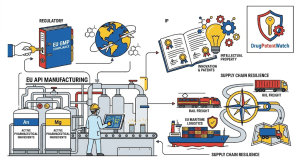
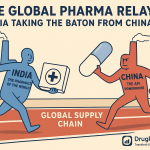
The European Active Pharmaceutical Ingredients market is valued at $45.4 billion as of 2024 and is projected to reach $79.69 billion by 2033, compounding at 5.9% annually through 2035. Those numbers reflect both the scale and the structural complexity of a sector that the EU has publicly identified as a strategic vulnerability. An estimated 60-80% of APIs consumed in Europe originate from China and India – a concentration that the COVID-19 pandemic, China’s 2022 zero-Covid factory lockdowns, and escalating US-EU tariff friction have repeatedly exposed as a material risk to patient access.
Regulatory scrutiny is tightening from multiple directions simultaneously. The EU AI Act (Regulation (EU) 2024/1689), fully enforceable by August 2026, places high-risk AI systems deployed in pharmaceutical manufacturing under mandatory conformity assessments. The Ecodesign for Sustainable Products Regulation (ESPR), adopted April 2025, mandates Digital Product Passports for most pharmaceutical products. GMP certificate validity extensions introduced during COVID-19 expired in 2025, returning inspectorate pressure to pre-pandemic levels. The Falsified Medicines Directive continues to demand real-time serialization verification at unit level.
For pharma IP teams and institutional investors, the compliance landscape has shifted from a checklist exercise into a structural determinant of market access. Companies that have embedded GMP compliance, data integrity governance, and supply chain diversification into their operating architecture hold a measurably stronger position than those that have not. The EFPIA’s 2025 warning to European Commission President von der Leyen that pharmaceutical R&D and manufacturing is migrating toward the US – citing gaps in capital availability, IP protection, and regulatory speed – adds a policy risk layer that investors cannot ignore.
Key Takeaways: Section 1
The EU API market compounds at 5.9% annually through 2035, with biotech APIs growing at 6.55% CAGR and oncology applications at 7.45%, creating distinct investment windows within the same regulatory environment.
The EU’s simultaneous legislative push across GMP enforcement, digital transformation mandates (ESPR DPP), and AI regulation (EU AI Act) creates a compliance convergence that requires integrated strategic planning rather than siloed responses.
EFPIA’s warning of potential pharmaceutical investment exodus to the US introduces a policy volatility premium that investors in EU-dependent API supply chains should price.
Generic APIs hold 58% of the European API market by revenue, driven entirely by patent expirations – making patent cliff surveillance a core input to supply chain planning.
2. The EU Regulatory Framework for API Manufacturing: A Technical Breakdown
2.1 GMP Foundations: Legal Instruments, Inspectorate Architecture, and Enforcement Mechanics
The Statutory Layer
EU GMP for APIs rests on a multi-statute foundation. Regulation (EC) No 1252/2014 establishes GMP principles specifically for active substances used in human medicines. Directive 2001/83/EC and its implementing Directive (EU) 2017/1572 govern finished product manufacturing but create binding obligations on API suppliers that feed into those finished-product pipelines. Veterinary API manufacture falls under Directive 91/412/EEC and Regulation (EU) 2019/6. Investigational medicinal products operate under Directive 2001/20/EC and Regulation (EU) 536/2014.
EudraLex Volume 4 is the operational reference. Part II, ‘Basic Requirements for Active Substances used as Starting Materials,’ translates the statutory requirements into process-level obligations covering everything from personnel qualifications to reprocessing criteria. The ICH Q7 guideline sits alongside Part II as the internationally harmonized technical standard for API GMP, covering the full manufacturing spectrum from raw material controls through distribution.
The Inspectorate Architecture
The EMA and National Competent Authorities divide inspection responsibilities along product authorization lines. The EMA coordinates GMP inspections for medicines authorized via the centralized procedure and facilitates harmonization through the GMP/GDP Inspectors Working Group. NCAs in each of the 30 EEA member states issue manufacturing authorizations to entities in their territory, conduct routine and triggered on-site inspections, and perform laboratory sample controls. Post-inspection outcomes go directly into EudraGMDP – a public database of manufacturing authorizations, GMP certificates, and non-compliance statements.
The IRIS platform handles inspection logistics and communication. EudraGMDP handles the output. The practical effect is that a non-compliance statement entered by one NCA propagates immediately to regulators across all 30 EEA member states. A manufacturer with a critical deficiency finding in Germany faces exposure in France, Italy, and the Netherlands simultaneously. This is not theoretical risk management – it has caused supply disruptions when large API producers have received non-compliance statements for facilities supplying multiple finished-product manufacturers across the bloc.
Enforcement: The Return to Pre-Pandemic Rigor
The temporary extension of GMP certificate validity introduced in 2021, which allowed certificates to remain valid beyond their normal expiry date, ended in 2025. NCAs have resumed full inspection capacity. The practical consequence for manufacturers that relied on extended certificates during the 2021-2024 period is a compressed renewal pipeline requiring immediate audit readiness, updated site master files, and current Pharmaceutical Quality System documentation. Any facility that has not had an on-site inspection since 2019 should treat a 2025-2026 inspection as near-certain and prepare accordingly.
Risk-based inspection scheduling means inspection frequency is not uniform. Facilities with prior deficiency findings, those introducing new processes or products, and those with complex or opaque supply chains receive more frequent attention. An API manufacturer that proactively demonstrates robust internal audit outcomes, current data integrity controls, and low deviation rates can make a genuine argument to NCAs for reduced inspection frequency – though this requires documented evidence, not assertions.
Table 1: Key EU GMP Legal Instruments for API Manufacturing
Instrument
Scope
Key Obligation
Regulation (EC) No 1252/2014
Active substances, human use
GMP principles for API manufacture
Directive 2001/83/EC
Medicines for human use
Finished product GMP; chain of responsibility to API supplier
Directive (EU) 2017/1572
Medicines for human use (implementing)
Detailed GMP principles
Directive 91/412/EEC
Veterinary medicinal products
Veterinary API GMP
Regulation (EU) 2019/6
Veterinary medicines (updated)
Updated veterinary framework
Directive 2001/20/EC
Investigational medicinal products
IMP GMP obligations
Regulation (EU) 536/2014
Clinical trials
Clinical trial authorization and IMP standards
EudraLex Volume 4, Part II
APIs as starting materials
Operational GMP requirements for API production
ICH Q7
APIs, international harmonization
Process-level API GMP requirements
ICH Q9 (R1)
Quality risk management
Risk-based approach to quality decisions
ICH Q10
Pharmaceutical Quality System
Lifecycle quality system model
2.2 Quality Management Systems: ICH Q10 Implementation and Data Integrity Obligations
ICH Q10: What Regulators Actually Inspect
ICH Q10 describes a Pharmaceutical Quality System (PQS) that spans the entire product lifecycle – from development and technology transfer through commercial manufacturing to discontinuation. Its three operating principles are product realization (defining processes and controls sufficient to consistently manufacture to specification), state of control (ongoing monitoring and trend analysis confirming those controls remain effective), and continual improvement (systematic use of quality data to reduce process variation over time).
During GMP inspections, the EMA and NCAs assess PQS implementation through several specific mechanisms. Management review is a recurring inspection focus: regulators want evidence that senior leadership has reviewed quality performance metrics, product quality reviews (Annual Product Quality Reviews), and process capability data at defined intervals and has driven corrective actions from those reviews. The PQS is not a paper system managed by the quality unit in isolation; it requires demonstrable engagement from manufacturing, supply chain, and R&D leadership.
Corrective and Preventive Action (CAPA) effectiveness is a second major inspection lens. Regulators look not just for CAPA records but for evidence that root cause analysis was rigorous, that implemented corrections actually resolved the deviation, and that trend monitoring confirmed recurrence prevention. Inadequate CAPA investigation remains one of the most frequently cited critical deficiencies in EU API inspections, particularly at sites with high deviation volumes where investigation quality is diluted by workload.
Change control is the third area of sustained scrutiny. Any change to a manufacturing process, raw material supplier, critical piece of equipment, or analytical method for a product authorized in the EU must flow through the change control system and, depending on its regulatory impact classification, through a variation application. The ICHQ12 guideline on lifecycle management, increasingly referenced in EU inspection contexts, is shifting how regulators assess which changes require formal regulatory notification versus those manageable through the PQS with post-implementation review.
Data Integrity: ALCOA+ in Practice
ALCOA+ (Attributable, Legible, Contemporaneous, Original, Accurate, Complete, Consistent, Enduring, Available) describes the minimum data quality standard for GMP records. EU inspections consistently identify data integrity failures as the most consequential deficiency category, with critical findings capable of triggering import bans or consent-decree-equivalent enforcement.
The specific failure modes identified across EDQM inspection data from 2006-2018 and more recent MHRA and EMA guidance include falsification of batch records and laboratory test results, the deletion or overwriting of out-of-specification (OOS) analytical results prior to investigation, pretesting of samples to identify a batch that will pass before generating the official record, and inadequate access controls in computerized systems allowing unauthorized data modification.
EudraLex Volume 4, Annex 11 governs computerized systems specifically. Its validation requirements cover system qualification, user access controls based on roles and responsibilities, audit trail functionality that records who created, modified, or deleted records and when, data backup and recovery procedures, and periodic review of audit trails as part of quality oversight. The Annex 11 requirements extend to all software used in GMP-relevant functions – laboratory information management systems (LIMS), manufacturing execution systems (MES), electronic batch record systems (EBRS), and process control systems (DCS/SCADA).
The regulatory direction from EU agencies since 2018 has been clear: paper-based backup systems and hybrid paper/electronic record environments create inherent data integrity risk because they enable parallel record-keeping with divergent data sets. Regulators favor fully validated, access-controlled electronic systems with complete and immutable audit trails. Manufacturers maintaining hybrid systems face increasing pressure to demonstrate equivalent data integrity controls for paper records.
Table 2: Common Critical Deficiency Categories in EU API GMP Inspections
Deficiency Category
Specific Observations
Regulatory Consequence
Data Integrity – Laboratory
OOS result deletion; pretesting; falsified chromatograms
Critical finding; potential import alert
Data Integrity – Production
Retrospective batch record completion; undated entries
No process validation for recovered solvents; inadequate blending validation
Major finding
Equipment
Missing user requirement specifications; inadequate cleaning validation
Major finding
2.3 Import Regulations and the Falsified Medicines Directive: Operational Depth
Written Confirmation: The Third-Country Compliance Gate
Since July 2, 2013, every API imported into the EU for use in human medicines must be accompanied by Written Confirmation from the competent authority of the exporting country, certifying that the manufacturing site operates under GMP standards equivalent to those of the EU and is subject to regular and effective control. The Written Confirmation requirement applies unless the exporting country appears on the EU’s whitelist of countries with equivalent GMP frameworks – currently a short list that includes Switzerland, Australia, Japan, Brazil, Canada, Israel, and the United States for specific product categories.
China and India, which together supply 60-80% of APIs used in European medicines, are not on the whitelist for all product categories. Chinese and Indian API manufacturers must therefore obtain individual Written Confirmations for export to the EU. These certificates are issued by the NMPA (National Medical Products Administration) in China and the CDSCO (Central Drugs Standard Control Organisation) in India following inspections by those authorities. The certificates typically remain valid for three years and are recorded in EudraGMDP.
The practical compliance burden on EU importers is significant. They must verify that each API supplier’s Written Confirmation is current, covers the specific manufacturing site being used, and has not been withdrawn following a non-compliance finding. An EU pharmaceutical manufacturer sourcing an API from a Chinese supplier whose Written Confirmation expires or is withdrawn mid-supply relationship faces an immediate regulatory supply interruption requiring either a qualified alternative supplier or an expedited regulatory variation.
The Falsified Medicines Directive: System Architecture
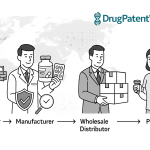
Directive 2011/62/EU introduced two parallel safety mechanisms. The first is end-pack serialization: prescription medicines require a unique identifier (a 2D data matrix code containing the product code, serial number, batch number, and expiry date) applied to the outer packaging, plus a tamper-evident anti-tampering device. The second is the European Medicines Verification System (EMVS), a distributed database network connecting manufacturers, wholesalers, and pharmacies that allows real-time verification of individual pack authenticity at the point of dispensing.
Manufacturers must upload pack-level serialization data to national verification systems (NVS) that interface with the EMVS at batch release. Wholesalers must verify authenticity before distribution. Pharmacies must verify and decommission each pack at the point of dispensing to the patient. The entire chain generates a real-time audit trail that can identify a counterfeit or diverted product at any node.
The compliance investment required to operate within the EMVS is not trivial. Pharmaceutical manufacturers needed to install serialization hardware on packaging lines, integrate those lines with validated serialization software, establish electronic connections to the EMVS via national organization membership, and implement procedures for managing exceptions such as damaged codes or system downtime. For API manufacturers supplying to finished-product manufacturers, the FMD obligations land primarily at the finished-product level, but API supply chain traceability records feed into batch release documentation that regulators inspect.
3. IP Valuation as a Core Asset in EU API Strategy
3.1 Small Molecule API Patents: Protection Architecture and EU Paragraph IV Equivalents
In the US, Paragraph IV certifications under the Hatch-Waxman Act create the formal mechanism for generic manufacturers to challenge branded drug patents before loss of exclusivity (LOE). The EU has no direct structural equivalent, but the economic dynamics are comparable. Generic manufacturers file Marketing Authorization Applications (MAAs) that reference the originator’s dossier under the generic application route, relying on the originator’s clinical data after data exclusivity periods expire (8 years of data exclusivity, with a further 2 years of market exclusivity under the EU’s ‘8+2+1’ framework). IP challenges occur through national patent litigation rather than through a centralized administrative process.
An API’s patent estate typically consists of multiple overlapping protection layers. The compound patent (protecting the active moiety itself) represents the highest-value asset, with an effective life of approximately 20 years from filing minus the development timeline. Supplementary Protection Certificates (SPCs) extend compound patent protection by up to five years post-authorization, compensating for the time lost during regulatory review. Process patents protect specific synthetic routes. Formulation patents cover dosage form innovations. Method-of-use patents protect specific therapeutic applications.
For generic API manufacturers, the relevant question is which of these patent layers is actually enforceable at the time of planned entry. Process patents covering specific synthetic routes can often be designed around – a generic manufacturer using a different synthesis pathway does not infringe. Compound patents and SPCs cannot be designed around; they require either expiry, successful invalidity challenge, or a license. The EU’s SPC framework means that a branded compound patent expiring in 2026 may carry SPC-extended protection to 2030 or beyond in specific member states, creating non-uniform LOE dates across Europe that complicate generic launch planning.
3.2 Biotech API Patent Estates: Biologic Evergreening Roadmap
Biologic drugs follow a different IP lifecycle than small molecules. The active substance itself – a protein, monoclonal antibody, or fusion protein – may be protected by composition-of-matter patents, but the complexity of biologic manufacturing means that manufacturing process patents carry extraordinary commercial value. A biosimilar manufacturer must demonstrate not just that its product has the same primary amino acid sequence as the reference biologic but that its physicochemical properties, biological activity, and safety/immunogenicity profile are sufficiently similar to the reference product. The manufacturing process is inseparable from the product.
Biologic Evergreening Technology Roadmap
The standard biologic evergreening sequence proceeds through several stages, each generating protectable IP and regulatory exclusivity that extends commercial life beyond the initial compound patent.
Stage 1 is compound and early-process protection (typically granted 10-14 years before LOE). This covers the primary biologic molecule, initial cell line, and foundational manufacturing process. It is the core patent estate.
Stage 2 is formulation and delivery device innovation (typically 6-10 years before LOE). New formulations – subcutaneous delivery versions of intravenous biologics, co-formulations with other agents, concentration-enhanced formulations enabling reduced injection volumes – generate new patents and new regulatory exclusivity periods. The subcutaneous conversion of AbbVie’s adalimumab (Humira) into the Citrate-free High Concentration version, for example, generated extended market protection and required biosimilar manufacturers to develop matching delivery device capabilities to achieve substitutability.
Stage 3 is indication expansion (5-8 years before LOE). New regulatory approvals for additional therapeutic indications generate new exclusivity periods for those indications. The core biologic is not re-protected, but prescribing physicians moving to established brands for new indications create commercial stickiness that market share data shows is durable even after biosimilar entry in original indications.
Stage 4 is manufacturing process optimization patents (ongoing). As cell culture processes, purification methods, and quality control assays are improved to enhance yield, reduce impurity profiles, or improve product consistency, each material change generates potentially patentable innovations. These manufacturing process patents are particularly difficult for biosimilar manufacturers to navigate because they are often not disclosed in detail in the originator’s regulatory filings and must be reverse-engineered from product quality data.
Stage 5 is biosimilar interchangeability strategy (post-LOE). In the EU, automatic substitution of a reference biologic with a biosimilar is not permitted at the pharmacy level in most member states – a regulatory constraint that significantly limits biosimilar market penetration compared to the US post-Biden IRA environment. Originators use this regulatory asymmetry to maintain premium pricing and prescriber loyalty programs that slow biosimilar uptake even when biosimilar manufacturing costs are substantially lower.
3.3 Company-Level IP Profiles: API Valuation Contexts
AstraZeneca
AstraZeneca’s most IP-intensive API assets in the EU context include osimertinib (Tagrisso), the EGFR inhibitor for non-small cell lung cancer. The compound patent estate for osimertinib extends into the early 2030s in major EU markets, supported by SPCs filed across EU member states. The API is manufactured through a complex multi-step synthesis where key intermediates are under separate process patent protection. AstraZeneca has set carbon-zero targets for its own operations by 2025 and supply chain by 2030, and these sustainability commitments are increasingly integrated into its API sourcing criteria – a development that creates competitive exposure for API suppliers that cannot demonstrate credible Environmental, Social, and Governance (ESG) performance. The company’s $45 billion revenue run-rate as of 2024 rests disproportionately on oncology products whose API supply security is therefore strategically critical.
Sanofi
Sanofi’s Dupixent (dupilumab), a biologic IL-4/IL-13 receptor antagonist, is its primary growth driver and the highest-value biologic API asset in its current portfolio. The biologic’s manufacturing process – developed jointly with Regeneron – is protected by a combination of composition-of-matter patents on the antibody itself, manufacturing process patents covering the specific Chinese hamster ovary (CHO) cell expression system, and formulation patents on the pre-filled pen delivery device. Sanofi’s biodegradable solvent development program and renewable energy sourcing at several European sites represent both IP-generating activity and regulatory positioning for ESPR compliance. Its EU API supply chain for small molecule products carries meaningful Indian API supplier exposure, particularly in its specialty medicines division.
GSK
GSK’s API IP strategy in the EU has two distinct faces. Its innovative medicines portfolio, anchored by Blenrep (belantamab mafodotin, though recently facing approval complications) and the RSV vaccine portfolio, concentrates IP value in biologic manufacturing know-how and viral production processes. Its generic-adjacent ViiV Healthcare HIV portfolio faces increasing biosimilar-equivalent pressure from generic antiretroviral manufacturers, with cabotegravir compound patents representing the primary remaining protection for its long-acting injectable HIV franchise. GSK’s sustainable packaging commitments and reduction of single-use plastic across its EU sites position it for ESPR compliance but require capital investment that its CDMO partners must match.
Pfizer
Pfizer’s EU API strategy post-COVID has been shaped by the renegotiation of mRNA manufacturing capacity from COVID vaccine production toward oncology and rare disease biologics. The Paxlovid (nirmatrelvir/ritonavir) franchise created a complex IP situation: nirmatrelvir is a novel protease inhibitor compound with a patent estate extending to the early 2030s, but ritonavir is an off-patent boosting agent whose API is supplied predominantly from Indian manufacturers. The API supply chain for Paxlovid therefore crosses the EU’s Written Confirmation requirements for ritonavir while relying on Pfizer-controlled synthetic capacity for nirmatrelvir. Pfizer’s process redesign programs aimed at reducing solvent use and energy consumption in small molecule synthesis represent patentable green chemistry innovations with secondary IP value.
Merck KGaA
Merck KGaA’s pharma division carries IP value concentrated in its oncology pipeline, particularly tepotinib (Tepmetko) for MET-exon 14 skipping NSCLC. The compound patent for tepotinib runs into the late 2030s in the EU market, with SPC applications filed in major member states. Merck KGaA’s process intensification investments in microreactor technology for API synthesis at its Darmstadt site represent a genuine operational IP position – these process patents protect not just against generic competitors but against the risk of process efficiency-driven cost disadvantage in a market where synthetic API production economics are under sustained pressure from lower-cost Asian manufacturers.
Novo Nordisk
Novo Nordisk’s IP position in the EU is structured almost entirely around insulin and GLP-1 receptor agonist biologics. Semaglutide (Ozempic/Wegovy) is the dominant asset. The biologic peptide’s composition-of-matter patents are in the process of expiring in select EU markets, and the company’s commercial durability depends on formulation patents covering its once-weekly injection formulation, device patents on the FlexTouch delivery pen, and regulatory data exclusivity for specific indications. The company’s zero water waste target by 2030 and its fermentation-based peptide synthesis approach – which uses yeast expression systems rather than chemical synthesis for some peptide building blocks – generate patentable bioprocess innovations that extend IP coverage into manufacturing methodology. Its EU API supply chain is almost entirely captive, with manufacturing concentrated at Danish and French sites.
Key Takeaways: Section 3
SPC expiry timelines in major EU member states are non-uniform, creating fragmented LOE windows that generic manufacturers must map at the country level, not the product level.
Biosimilar interchangeability restrictions in most EU member states provide originators with structural commercial advantages post-LOE that do not exist in the US market.
Manufacturing process patents for biologics are the most durable IP protection layer because they are not fully disclosed in regulatory filings and must be independently reproduced by biosimilar manufacturers.
Green chemistry innovations and continuous manufacturing process improvements generate secondary patent estates that extend effective IP protection for both small molecule and biologic APIs.
4. Supply Chain Vulnerability: Geopolitical Risk Map and Concentration Analysis
4.1 The China-India Dependency: Quantified Exposure
The aggregate EU API import dependency on China and India is estimated at 60-80% across all API categories. The concentration is more acute for generic small molecule APIs, which dominate by volume, than for innovative biologic APIs, which are predominantly manufactured in-house or at qualified CDMOs in the US, EU, or Japan. EFPIA data indicates that 77% of APIs for innovative EU-manufactured medicines are sourced within the EU, with 9% from Asia – but this self-reported figure covers only EFPIA member companies and does not capture the generic supply chain, where the Asia-origin proportion is substantially higher.
The 2022 antibiotic shortage, triggered by China’s zero-Covid factory closures, offers the clearest quantified example of what concentrated supply exposure means in practice. Amoxicillin, the most widely prescribed antibiotic in Europe, saw wholesale price increases of 30-50% across EU member states and pharmacy-level stockouts lasting weeks in several countries. The supply disruption traced directly to a small number of Chinese API producers supplying the majority of European amoxicillin API demand. A single policy decision by Chinese health authorities created simultaneous shortage conditions across 27 EU member states.
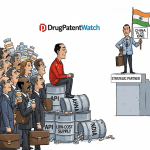
Chinese APIs are approximately 40% cheaper to procure than European-produced equivalents at comparable quality specifications. This cost differential is the commercial driver that created the concentration in the first place: decades of price competition in generics markets pushed finished-product manufacturers toward the lowest-cost API source, which was China and India. Reversing that concentration requires either regulatory mandates, financial incentives sufficient to close the cost gap, or market events that make supply security worth paying a premium for.
4.2 Tariff Mechanics and Trade Policy Risk
US tariff proposals on EU pharmaceutical exports, which were under active discussion in 2025, create a second-order supply chain risk for EU API manufacturers. EU pharmaceutical companies that export finished products to the US would face cost increases that could incentivize US repatriation of production – reducing demand for EU-manufactured APIs that feed those export supply chains. Simultaneously, US tariff pressure on Chinese goods has already prompted some Chinese API manufacturers to explore European market positioning as a hedge, potentially increasing Chinese API competition within the EU market at lower price points.
For EU API manufacturers with US exposure, the tariff environment creates a scenario modeling obligation. The PwC supply chain resilience framework explicitly recommends AI-driven digital twin simulations to assess how tariff scenarios affect cost structures and regulatory compliance across the product portfolio. This is not optional risk management – it is a direct operating requirement for companies with material US revenue exposure.
4.3 Medicine Shortage Pathways: How Disruptions Cascade
Medicine shortage generation follows a predictable cascade when API supply is disrupted. The sequence begins with an API-level event – a GMP non-compliance finding at a primary supplier, a factory fire, a regulatory inspection-triggered production halt, or a geopolitical restriction on export. The finished-product manufacturer’s safety stock absorbs the first impact, typically providing 4-12 weeks of buffer depending on inventory management practices. When that buffer depletes without a qualified alternative supplier, the manufacturer files a medicine shortage notification with the relevant NCA. The NCA activates shortage response protocols, which may include expedited alternative supplier qualification, import authorization from non-approved markets, dose rationing guidance, or parallel import authorization.
The EMA’s SCENIHR shortage reporting system and the Critical Medicines Alliance’s mapping of dependencies are designed to identify shortage risks before the cascade reaches patients. The Critical Medicines Alliance’s 2024 strategic report specifically targets APIs where fewer than three qualified global manufacturers exist – the structural chokepoints where a single disruption is most likely to translate into patient-level shortage.
Key Takeaways: Section 4
Generic API supply chains carry materially higher Asian concentration risk than innovative biologic API supply chains, requiring differentiated risk assessment by product category.
The 40% cost differential between Chinese and EU-produced APIs is the structural driver of concentration, and no resilience strategy succeeds without a credible plan to manage that cost gap.
US tariff developments create second-order supply chain effects for EU API manufacturers with US finished-product exposure that require active scenario modeling.
Shortage cascade timelines run 4-12 weeks from primary API supply failure to patient impact, compressing the window for alternative supplier qualification.
5. Proactive Resilience Architecture: Dual Sourcing, Stockpiling, and Near-Shoring
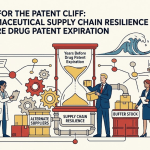
Dual sourcing – dividing API procurement for critical materials between two independently qualified suppliers from distinct geographies – is the most operationally mature resilience lever available to EU pharmaceutical manufacturers. Its implementation requires more than a commercial decision to split purchase orders.
From a regulatory standpoint, both suppliers must appear in the Marketing Authorization Application (MAA) dossier. Adding a second API supplier to a previously single-sourced product requires a variation application to the relevant NCA or the EMA. Type IA or Type IB variations cover most standard API supplier additions where the new supplier meets the same API specification and the analytical method has been validated equivalently. Type II variations are required where the addition involves a new synthetic route, a new impurity profile, or a significant change in API specifications. The variation process timeline adds 2-18 months depending on classification, meaning dual sourcing implementation planning must begin 24-36 months before the supply security benefit is realized.
An IMF working paper from 2025 on supply chain diversification provides quantitative support for dual sourcing economics: the strategy improves welfare outcomes by reducing transition losses from trade rigidities and is most effective when applied to products with high upstream exposure, high shock sensitivity, and structural supply rigidities. The higher procurement cost from a second, potentially more expensive supplier is partially offset by the reduction in shortage-related losses, including regulatory non-compliance costs, lost revenue, and reputational damage.
5.2 EU Stockpiling Strategy: Structure and Mechanics
The EU Preparedness Union Strategy’s stockpiling component, unveiled in 2024, creates a layered reserve architecture. EU-level centralized reserves managed through the European Health Emergency Preparedness and Response Authority (HERA) sit above member state-level stockpiles. Public-private partnerships with pharmaceutical manufacturers contribute to both layers. The strategy includes a strategic foresight mechanism that monitors supply concentration data, geopolitical risk indicators, and demand forecasting to identify materials requiring proactive stockpile increases before shortage conditions materialize.
For API manufacturers, the stockpiling strategy creates both a commercial opportunity and a compliance planning obligation. HERA’s framework contracts for strategic reserve supply require GMP compliance documentation and supply reliability guarantees that not all manufacturers can meet. Companies that qualify as HERA strategic reserve suppliers gain commercial volume security and regulatory visibility that smaller competitors cannot match.
The case for reshoring EU API manufacturing rests on supply security, not cost economics. EU-produced APIs cost more than Asian-sourced equivalents across virtually all major generic categories, with the 40% cost differential on Chinese APIs representing the upper bound and 15-25% differentials common for Indian-sourced material. Closing that gap requires either sustained European production subsidies, a restructuring of pharmaceutical pricing frameworks that allows finished-product manufacturers to pass through higher API costs, or enough regulatory risk premium on Asian APIs to make the cost differential commercially tolerable.
The EU’s Critical Medicines Alliance is structured to provide partial solutions to this equation through public funding for capacity investment and regulatory incentives for EU manufacturing. The Horizon Europe program has funded green chemistry and bioprocessing research that can reduce EU manufacturing costs over a 5-10 year horizon. But no honest cost-benefit analysis shows reshoring making EU API production cost-competitive with Chinese manufacturing in the near term for commodity generics. The honest framing is: some categories of API merit reshoring for security reasons even at premium cost; others are better served by dual sourcing strategies that maintain Asian supply at lower cost while adding geographic redundancy.
Key Takeaways: Section 5
Dual sourcing requires regulatory variation applications that add 24-36 months of lead time before supply security benefits are realized, making early planning essential.
The EU stockpiling framework creates a tiered commercial opportunity for GMP-compliant API manufacturers with the documentation infrastructure to qualify as HERA strategic reserve suppliers.
Reshoring is economically justified for security-critical APIs even at premium cost; it is not economically viable as a cost reduction strategy and should not be positioned as one.
The shift from ‘just-in-time’ to ‘just-in-case’ supply models requires explicit financial commitment from pharmaceutical company boards, since the cost of resilience inventory appears on the balance sheet before the avoided shortage costs do.
6. Digital Transformation: DPPs, AI/ML in GMP, and the EU AI Act
6.1 Digital Product Passports: Regulatory Mechanics and System Requirements
The Ecodesign for Sustainable Products Regulation (ESPR), adopted April 2025, mandates Digital Product Passports (DPPs) for most products sold in the EU, including pharmaceuticals. The DPP is a digital record linked to an individual product or batch, containing the product’s unique identifier, its material composition and origin, its environmental footprint as calculated using the Product Environmental Footprint (PEF) methodology, compliance documentation, and end-of-life guidance.
The practical system requirements for pharmaceutical DPP implementation are substantial. Each product or batch needs a unique identifier encoded in a machine-readable carrier (expected to be a data matrix code consistent with FMD serialization infrastructure, reducing dual-carrier requirements). The back-end system must store DPP data in a format accessible to supply chain partners, regulators, and ultimately consumers. Data must be accurate and verifiable, which creates a data integrity requirement layered on top of existing GMP data integrity obligations.
For API manufacturers, the DPP’s requirement for material origin and manufacturing site disclosure creates supply chain transparency obligations that extend backward to Key Starting Materials (KSMs) and raw material suppliers. An EU finished-product manufacturer whose product’s DPP must disclose API origin cannot maintain that disclosure without reliable origin tracking from its API supplier. This creates a downstream commercial requirement on API suppliers to implement origin traceability systems meeting EU data standards.
6.2 AI/ML in GMP Environments: Validation Obligations Under the EU AI Act
The EU AI Act (Regulation (EU) 2024/1689), fully enforceable by August 2026, classifies AI systems by risk level. AI systems deployed in pharmaceutical manufacturing quality control, real-time process monitoring, adaptive batch release, or clinical trial analysis are likely to qualify as high-risk systems under Annex III of the regulation, given their application in safety-critical processes. High-risk AI systems require mandatory conformity assessments before deployment, comprehensive technical documentation, human oversight mechanisms, post-market monitoring plans, and registration in the EU’s database of high-risk AI systems.
The intersection of the EU AI Act with existing GMP validation frameworks creates a compliance convergence challenge. Under Annex 11 and ICH Q7, computerized systems used in GMP-relevant functions must be validated – User Requirement Specifications, Installation Qualification, Operational Qualification, and Performance Qualification documents are required. The EU AI Act adds conformity assessment requirements that partially overlap with but are not identical to existing validation frameworks. Regulatory guidance harmonizing the two frameworks is still being developed; in the meantime, manufacturers deploying AI/ML in GMP settings must address both frameworks independently.
The specific technical challenge for AI/ML validation in GMP is model stability over time. A machine learning model trained on historical batch data will experience ‘model drift’ as manufacturing conditions, raw material sources, or equipment characteristics change. A GMP-validated model must either remain static (in which case it cannot adapt to the process evolution that continuous improvement requires) or be revalidated each time its parameters update. Process Analytical Technology (PAT) frameworks provide some existing guidance on adaptive models, but the EU AI Act’s conformity assessment requirements for ongoing model monitoring add a regulatory layer that existing PAT guidance does not address.
AI-driven compliance copilots, increasingly deployed by pharmaceutical companies for real-time regulatory monitoring, automated audit trail review, and predictive deviation risk scoring, occupy a regulatory gray zone under the current AI Act framework. If the output of the compliance copilot is used to make GMP-related decisions – flagging a batch for enhanced review, triggering a CAPA investigation, or recommending a process change – the system may qualify as a high-risk AI tool. Companies deploying these systems should establish their regulatory risk classification before full commercial deployment, not after.
The FMD’s unit-level serialization requirement covers the finished-product packaging layer. The emerging DPP framework extends traceability requirements to product composition, material origin, and environmental footprint. AI/ML tools enable real-time monitoring at the process level. Together, these three layers constitute an end-to-end traceability architecture that EU pharmaceutical supply chains are being progressively required to implement.
For API manufacturers, the most immediate operational implication is the KSM-to-API traceability requirement. APIC’s Best Practices Guide for Managing Suppliers of API Manufacturers (Version 2, March 2024) establishes specific expectations for container identification, chain of custody documentation, and supplier audit trails. The DPP framework will likely require API manufacturers to generate machine-readable identifiers at the batch level that downstream finished-product manufacturers can incorporate into their own DPP data structure.
Blockchain-based traceability systems have been piloted in pharmaceutical supply chains but have not achieved widespread commercial deployment in the EU API sector. The primary barrier has not been technical but governance-related: no single actor controls the information needed for a blockchain ledger, and establishing multi-party data governance agreements across complex supply chains involving 8-15 distinct parties per product has proven commercially difficult. The EMVS architecture used under the FMD, which relies on centralized national verification systems with standardized API connections, offers a more practically achievable model for multi-party traceability than blockchain implementations.
Key Takeaways: Section 6
DPP implementation requires backward traceability from finished product through API to KSMs, creating data infrastructure obligations for every tier of the supply chain, not just finished-product manufacturers.
AI/ML systems used in GMP-relevant quality functions likely qualify as high-risk under the EU AI Act, requiring conformity assessments that run parallel to and do not replace existing Annex 11 validation requirements.
Model drift is the primary technical barrier to validated adaptive AI in GMP settings, requiring clear protocols for monitoring, revalidation triggers, and human override that must be documented in the system’s technical file.
Centralized verification system architectures, as demonstrated by the EMVS, are more commercially achievable for multi-party pharmaceutical traceability than blockchain-based alternatives.
7. Green Chemistry and the ESPR: Manufacturing Roadmap
7.1 Regulatory Drivers: ESPR, PEF Methodology, and Chemicals Action Plan
The ESPR, adopted April 2025, is the primary EU regulatory driver for pharmaceutical manufacturing sustainability. Its Product Environmental Footprint (PEF) methodology requires lifecycle assessment of products across 16 impact categories, including climate change, resource depletion, water use, and ecotoxicity. For pharmaceutical manufacturers, this means commissioning PEF studies for each product, implementing data collection systems across the manufacturing supply chain to populate those studies, and publishing the results in DPP-linked format.
The European Commission’s Action Plan for the Chemicals Industry, published July 2025, directly addresses the pharmaceutical API sector’s chemical manufacturing base. The plan establishes a Critical Chemical Alliance to address capacity closure risks for strategically important chemical intermediates, mirrors the Critical Medicines Alliance model applied to API supply. It commits to an Affordable Energy Action Plan targeting energy and feedstock cost reductions for EU chemical manufacturers – directly relevant to API synthesis economics, where energy costs represent 8-15% of total production cost for complex multi-step syntheses. The plan’s commitment to minimizing PFAS (per- and polyfluoroalkyl substance) emissions carries specific implications for pharmaceutical manufacturing, where certain fluorinated solvents and reagents are used in API synthesis routes.
7.2 Technology Roadmap: Continuous Manufacturing, Biocatalysis, and Solvent Substitution
Continuous Manufacturing
Traditional batch API synthesis generates waste at each stage of the synthetic route – solvent residuals from purification steps, reagent excesses, mother liquors from crystallization. Continuous flow chemistry eliminates the batch boundaries, allowing reagents and intermediates to flow through a connected series of reactors with precise residence time control, higher heat and mass transfer efficiency, and substantially reduced solvent inventory at any given moment.
The regulatory pathway for continuous manufacturing in EU API production is defined by EMA’s reflection paper on continuous manufacturing and the FDA-EMA joint pilot program on PAT and continuous manufacturing. A manufacturer transitioning from batch to continuous synthesis for an existing approved API must file a Type II variation covering the manufacturing process change, including a full process validation package demonstrating equivalence of product quality between the batch and continuous processes. For new API development, designing the synthesis as a continuous process from the outset avoids the variation process, but requires PAT-enabled real-time release testing capabilities.
Biocatalysis
Enzymatic synthesis routes for API manufacture have advanced from niche applications to mainstream consideration for complex chiral molecule synthesis. The biocatalytic production of atorvastatin intermediates, sitagliptin (Merck’s approach replacing a rhodium-catalyzed asymmetric synthesis with a transaminase-catalyzed step), and various beta-lactam antibiotics demonstrate commercial viability. Biocatalysis typically reduces the number of synthetic steps required for chiral center generation, eliminating protection-deprotection sequences and reducing overall process mass intensity (PMI).
From a regulatory perspective, biocatalytic processes introduce novel considerations for GMP documentation: enzyme sourcing (GMO status, origin traceability), enzyme lot-to-lot variability controls, and the potential for enzyme-related impurities in the API product. The ICH Q11 guideline on development and manufacture of drug substances addresses starting material definition in biocatalytic routes – a classification that determines which manufacturing steps fall within the GMP-controlled portion of the process.
Solvent Substitution
The pharmaceutical solvent landscape is under regulatory pressure from two directions simultaneously. The ESPR’s PEF methodology penalizes high-PMI solvents with significant environmental burden. The PFAS restrictions in the Chemicals Action Plan affect fluorinated solvents used in specific synthesis and purification steps. The REACH regulation’s Substances of Very High Concern (SVHC) authorization requirements already restrict certain chlorinated solvents commonly used in pharmaceutical synthesis.
The replacement of dichloromethane (DCM), N-methyl-2-pyrrolidone (NMP), and dimethylformamide (DMF) – all under regulatory pressure in the EU – with bio-based alternatives (ethyl lactate, 2-methyltetrahydrofuran, cyrene) or aqueous systems requires process redevelopment that generates new intellectual property in solvent selection and process conditions. The ACS Green Chemistry Institute’s Pharmaceutical Roundtable publishes a widely-used Solvent Selection Guide that maps replacements by environmental, health, and safety criteria, providing a starting framework for EU-regulated substitution programs.
7.3 Company Green Chemistry Profiles and IP Positioning
AstraZeneca’s carbon-zero manufacturing target by 2025 has driven investment in renewable energy sourcing across its EU API manufacturing sites and in process redesign programs aimed at reducing step count and PMI across its small molecule portfolio. These process redesign programs systematically generate new process patents as synthetic route optimizations are developed.
Sanofi’s biodegradable solvent development work, conducted partly in partnership with academic green chemistry groups, has produced pilot-scale demonstrations of bio-based solvent performance in API synthesis applications. The company’s patent filings in this area reflect an IP strategy that treats solvent substitution as a protectable innovation rather than a compliance cost.
Pfizer and Merck (US) participated in the ACS Green Chemistry Institute Pharmaceutical Roundtable’s 2025 sustainability strategy analysis, which assessed the environmental footprint of API manufacturing across the pharmaceutical industry and established sector-level PMI reduction targets. Their internal process redesign programs generate patentable green chemistry innovations as a secondary output of compliance-driven process optimization.
The EU-funded Biocascades project is developing multi-enzyme cascade reactions for API precursor synthesis, specifically targeting high-value chiral intermediates where current chemical synthesis routes involve 4-8 synthetic steps with significant waste generation. Successful commercialization of Biocascades outputs would represent patentable biocatalytic processes with first-mover IP positions for participant companies.
Key Takeaways: Section 7
The ESPR’s PEF methodology creates a quantified, audit-grade environmental performance requirement for pharmaceutical manufacturers operating in the EU – not a voluntary reporting framework.
Continuous manufacturing transition requires a Type II variation for existing approved APIs, adding 18-24 months of regulatory timeline to process change programs that must be integrated into LOE and generics competition planning.
Solvent substitution programs driven by REACH, PFAS restrictions, and ESPR simultaneously generate new process IP and satisfy regulatory obligations, making them double-value investments.
Biocatalysis commercial viability for complex chiral APIs is demonstrated, with ICH Q11’s starting material classification framework the primary regulatory management challenge.
8. Market Dynamics: Segment Analysis and Competitive Positioning
8.1 Generic vs. Biotech API Growth Bifurcation
The European API market’s 5.9% CAGR through 2035 masks a bifurcated growth structure. Synthetic generic APIs – the dominant volume category at 72% of revenue by synthesis type and 58% by product type – grow at rates tied to patent expiration calendars. The LOE wave from 2024-2028 covers several large-volume molecules whose API demand will shift from captive to merchant supply as generic manufacturers enter markets. The oncology segment’s 7.45% CAGR in this period reflects the concentration of upcoming patent expirations in branded cancer therapies.
Biotech APIs grow faster, at 6.55% CAGR, driven by the continued expansion of biologic prescribing in autoimmune, oncology, and rare disease markets and by biosimilar entry for legacy biologics (adalimumab, rituximab, trastuzumab) creating new API manufacturing demand. The manufacturing complexity and capital intensity of biologic API production create structural barriers to entry that sustain margin premiums unavailable in small molecule generics.
The OTC API segment is projected to grow at 5.87% CAGR through 2033, reflecting European demographics driving demand for self-care products in analgesics, antacids, and allergy categories. The regulatory pathway for OTC APIs is less intensive than for prescription products but is not exempt from GMP requirements.
8.2 Captive vs. Merchant Manufacturing: Strategic Trade-offs
Captive API manufacturing (53% of the 2023 EU market by revenue) reflects a deliberate vertical integration strategy by large pharmaceutical companies seeking supply control, quality assurance, and competitive information protection. When a company manufactures its own API, it denies competitors visibility into process parameters, impurity profiles, and manufacturing cost structure that an API purchased from a merchant supplier would reveal through routine GMP documentation exchanges.
Merchant API manufacturing (projected at 7.72% CAGR, the fastest-growing segment) serves the generics industry, smaller innovators without API manufacturing capacity, and companies that have outsourced API production to CDMOs as part of asset-light manufacturing strategies. The merchant segment’s faster growth reflects the generics LOE wave and the continued trend toward outsourcing at mid-tier pharmaceutical companies managing capital allocation trade-offs.
8.3 Oncology API as the Growth Vector
Oncology API demand at 7.45% CAGR through 2033 is driven by several converging factors. The global cancer incidence increase creates volume demand growth independent of patent dynamics. The LOE wave covering major branded oncology compounds – including multiple kinase inhibitors, PARP inhibitors, and immunotherapy checkpoint inhibitors with patents expiring from 2025-2030 – creates the conditions for significant generic API demand growth in a product category where API synthesis complexity has historically limited the number of qualified global manufacturers. The technical difficulty of oncology API synthesis, including high potency active pharmaceutical ingredient (HPAPI) handling requirements (operational at occupational exposure limits below 1 microgram per cubic meter), creates EU regulatory and engineering requirements for containment that further limit competitive entry.
Key Takeaways: Section 8
The LOE wave from 2024-2028 in oncology will drive disproportionate merchant API demand growth, benefiting EU-based API manufacturers with established HPAPI synthesis capabilities.
Captive API manufacturing’s supply control and information security rationale is strongest for complex, patent-protected biologics where process IP is a primary competitive asset.
Merchant API manufacturers should model the OTC API growth trajectory against the generics LOE wave when allocating capacity investment, as OTC margin structures differ materially from prescription generics.
9. Investment Strategy: Positioning for the Compliance-Driven Cycle
The EU API sector’s investment thesis runs through compliance capability more directly than in most manufacturing sectors. Regulatory risk – specifically the risk of a GMP non-compliance finding that triggers an import ban or supply disruption – is a primary valuation risk for API manufacturing assets. Companies and facilities with a documented history of clean inspections, current GMP certificates, and robust QMS infrastructure trade at fundamentally different risk profiles than those with compliance deficiency history.
For institutional investors evaluating EU API manufacturing exposure, the following analytical framework applies.
Due Diligence on GMP Compliance History
The EudraGMDP database is publicly searchable and provides complete records of GMP certificates and non-compliance statements for all EU-registered API manufacturers and their third-country equivalents. A facility with a non-compliance statement within the last five years, or with a pattern of repeat deficiency citations in similar categories across multiple inspection cycles, represents elevated operational risk. Companies that have invested in validated electronic QMS systems, comprehensive audit trail coverage, and documented management review processes are demonstrably lower-risk assets.
Supply Chain Concentration Scoring
For finished-product manufacturers, the investor-relevant question is what proportion of their API supply is single-sourced from Asia-origin suppliers without validated EU alternatives. Companies with 60%+ of their API supply concentrated in single-supplier, single-geography sources for products representing more than 20% of revenue carry material supply disruption risk that should be reflected in discount rates. The EU’s Critical Medicines Alliance mapping of concentration risk provides a reference framework for scoring portfolio-level exposure.
Digital Transformation Readiness
Companies that have implemented validated electronic batch record systems, real-time process monitoring, and AI/ML quality tools compliant with Annex 11 are positioned to absorb the EU AI Act’s 2026 enforcement requirements at lower marginal cost than companies still operating paper-based or hybrid GMP documentation systems. This digital readiness differential will increasingly translate into regulatory inspection outcomes and time-to-market advantages for new product approvals, which compound as pipeline value.
Green Chemistry Investment as IP Generator
Companies actively converting API synthesis routes to continuous manufacturing, replacing REACH/PFAS-restricted solvents, and investing in biocatalytic process development are simultaneously generating new patent estates, positioning for ESPR compliance, and reducing operational costs through lower PMI. These investments merit positive weighting in IP valuation models beyond their direct cost reduction impact, as the secondary patent protection they generate extends the commercial value of affected API products.
EFPIA Policy Risk Premium
The EFPIA warning about potential pharmaceutical investment migration to the US warrants a policy risk premium in EU pharmaceutical asset valuations, particularly for innovative company assets that depend on EU market exclusivity periods and IP protection frameworks. If the EU revises data exclusivity periods or SPC frameworks in ways that shorten effective protection windows, the discounted cash flow models for pipeline assets with 2030+ projected LOE dates will require revision. Investors should monitor EU pharmaceutical legislation developments – particularly the ongoing pharmaceutical legislation review covering exclusivity periods and conditional approval frameworks – as a primary policy risk variable.
10. Forward Recommendations: Operational Priorities by Stakeholder Type
For API Manufacturers (EU-Based)
Treat the end of GMP certificate validity extensions as the starting point for an inspection readiness program, not its endpoint. Commission a gap assessment against current Annex 11 and ALCOA+ requirements. Identify hybrid paper/electronic systems and develop migration plans. File Written Confirmation documentation for any non-EU source site in your supply chain that feeds EU-marketed products. Begin DPP data infrastructure planning now – the ESPR’s 2025 adoption means DPP implementation timelines are running against your product development and supply chain planning cycles.
Dual sourcing implementation requires initiating variation applications for all critical single-sourced APIs. The 24-36 month regulatory timeline means that dual sourcing approved and commercially operational by 2027 requires variation filing no later than Q1 2025. For any API where you cannot identify a second qualified global supplier within a distinct geography from your primary source, evaluate safety stock increases as the interim resilience measure.
For Finished-Product Manufacturers
Map your entire API supply chain to its KSM origins. The DPP requirement will require you to disclose API origin, and that disclosure is only accurate if you have verified chain of custody documentation from your API supplier back to their raw material sources. Supplier audits that have not included KSM sourcing verification need to be updated.
Review your marketing authorization dossiers for single-sourced APIs. Identify which products carry the highest revenue risk if their primary API source is disrupted. Prioritize dual sourcing variation applications for those products first, working backward through revenue exposure to lower-priority products.
For IP and Regulatory Affairs Teams
Audit your SPC portfolio by member state. SPC expiry dates are not uniform across EU member states due to differences in patent filing timelines and national SPC application outcomes. A product with SPC protection expiring in Germany in 2027 may retain SPC protection in Italy or France until 2029. Generic manufacturers will enter in the unprotected markets first; your commercial model and API supply agreements should account for the staggered LOE calendar.
Assess every AI/ML system deployed in GMP-relevant functions against the EU AI Act’s high-risk classification criteria before August 2026. This classification assessment should involve your quality assurance team, IT validation group, and external regulatory counsel familiar with the AI Act’s technical documentation requirements.
For Institutional Investors
Use EudraGMDP as a primary due diligence source for any pharmaceutical manufacturing investment. A facility’s inspection history is public record and is one of the most predictive data points available for assessing operational risk before financial disclosure would reveal it.
Score EU pharmaceutical portfolio companies on their API supply chain concentration and dual-sourcing coverage. Companies with undiversified Asian API sourcing and no active variation pipeline for alternative suppliers represent elevated, near-term supply risk that is not always priced into equity valuations before a disruption occurs.
Monitor EU pharmaceutical legislation developments affecting data exclusivity and SPC frameworks as a primary policy risk input to DCF models for innovative company pipeline assets with long projected exclusivity windows.
Data Tables Reference
Table 3: European API Market Segment Projections (2024-2033)
Segment
2023 Revenue Share
Projected CAGR
Key Driver
Generic APIs
58%
~5.0%
Patent expirations; LOE wave
Synthetic APIs
72%
~5.0%
Availability; cost competitiveness
Captive Manufacturing
53%
~5.5%
Quality control; IP protection
Merchant Manufacturing
47%
7.72%
Generics outsourcing; CDMOs
Biotech APIs
~28%
6.55%
Biologics expansion; biosimilars
Oncology Application
23%
7.45%
Cancer incidence; LOE wave in oncology
Cardiology Application
23%
~4.5%
Established prescribing volumes
OTC APIs
~20%
5.87%
Demographics; self-care trends
Prescription APIs
80%
~5.8%
Dominant prescribing channel
Table 4: EU API Supply Chain Resilience Strategy Matrix
Strategy
Lead Time to Benefit
Cost Impact
Regulatory Requirement
Priority Applications
Dual Sourcing
24-36 months
+5-15% on second-source unit cost
Variation application (Type IA-II)
Critical APIs, single-geography sources
Safety Stock Build
0-6 months
Working capital increase
None (inventory management decision)
Interim resilience before dual sourcing
Reshoring/Nearshoring
3-5 years
+15-40% on unit cost
New site qualification, MAA amendment
Security-critical APIs; HPAPIs
HERA Strategic Reserve Contract
12-18 months qualification
Revenue certainty (long-term contract)
Full GMP compliance documentation
GMP-compliant manufacturers
DPP Data Infrastructure
12-24 months
IT infrastructure; data governance
ESPR compliance (mandatory)
All products sold in EU
AI/ML Quality Monitoring
18-30 months (incl. validation)
System investment; validation cost
Annex 11 + EU AI Act (if high-risk)
Continuous manufacturing; real-time release
This analysis incorporates market data from Vision Research Reports, OMR Global, EFPIA, EMA, the European Parliament, IMF Working Papers, PwC, and EDQM inspection records through mid-2025. Data represents the state of the field as of the time of composition and should be verified against current regulatory guidance before application to specific compliance or investment decisions.