Generic drugs account for roughly 91% of all U.S. prescriptions filled while representing only about 18% of total drug spend. In 2022, they generated $408 billion in savings for the U.S. healthcare system, contributing to a cumulative $2.9 trillion over the prior decade. That gap between volume and cost does not happen by accident. It is the result of a regulatory architecture designed, from the Hatch-Waxman Act forward, to make patent cliffs consequential and to make generic entry fast enough to be economically meaningful.
This guide is written for IP counsel, portfolio managers, regulatory affairs leads, and institutional investors who need to understand the full technical and commercial machinery behind generic drug approval, not just the headlines. It covers the ANDA pathway in granular detail, the science of bioequivalence for both simple and complex products, cGMP obligations across 21 CFR Parts 210 and 211, the strategic mechanics of Paragraph IV certifications, IP valuation frameworks for generic assets, and the technology roadmaps shaping the next generation of complex generic development.
I. The Generic Drug Regulatory Framework: Architecture and Purpose
What a Generic Drug Actually Is
A generic drug is an FDA-approved pharmaceutical product that is identical to a Reference Listed Drug (RLD) in active ingredient, dosage form, strength, route of administration, and labeling, and that has demonstrated bioequivalence to that RLD. The FDA formally codifies this in 21 CFR 314.3(b). What the definition permits to differ: excipient composition, shape, color, scoring configuration, packaging materials, and minor labeling variations reflecting permissible omissions.
The term ‘equivalent’ carries precise legal and scientific weight here. It does not mean ‘similar.’ A generic manufacturer who cannot demonstrate quantitative sameness on pharmacokinetic endpoints within the FDA’s acceptance criteria will not reach the market, regardless of how closely their formulation resembles the innovator’s.
The Hatch-Waxman Architecture
The Drug Price Competition and Patent Term Restoration Act of 1984, universally called Hatch-Waxman, created the statutory foundation for generic drug competition in the U.S. The Act established two things simultaneously: the ANDA pathway that allows generic applicants to reference an innovator’s safety and efficacy data, and a patent restoration mechanism that partially compensates brand manufacturers for time lost during FDA review.
Hatch-Waxman also created the patent certification system that makes Paragraph IV challenges possible, the 30-month litigation stay, and the 180-day first-filer exclusivity that has driven billions of dollars in generics litigation since 1984. The statutory design is explicitly a bargain: generic manufacturers get a shortcut to market, brand manufacturers get partial patent term restoration and litigation rights, and the public gets lower drug prices faster than they would otherwise.
The global generic drug market was valued at roughly $491 billion in 2024 and is projected to reach $926 billion by 2034, a compound annual growth rate of approximately 6.5%. That growth trajectory reflects both patent expiries in the branded pipeline and increasing generic penetration in markets outside the U.S.
Key Takeaways: Section I
The ANDA pathway is not a regulatory shortcut in the safety or efficacy sense. It reassigns the evidentiary burden by letting applicants reference existing clinical data rather than generating their own. This reassignment is the structural source of the generic industry’s economics: lower development costs, faster timelines, and ultimately lower prices. Understanding that structure is prerequisite to understanding why some drug classes generate robust generic competition and others do not.
II. The ANDA Pathway: Process, Timelines, and GDUFA III Mechanics
Pre-ANDA Preparation: The Work That Determines Approval Speed
Most ANDA deficiencies are traceable to decisions made before a single page of the application is drafted. The FDA’s Complete Response Letter (CRL) data consistently shows that manufacturing gaps and bioequivalence study design flaws account for the largest share of application failures. Both are preventable with disciplined pre-submission work.
Reference Listed Drug Analysis
The RLD analysis goes well beyond chemistry. Applicants need the RLD’s full regulatory history: original NDA approval date, any post-approval labeling changes, any safety communications or REMS requirements, any prior approval supplements that changed formulation or manufacturing process, and the current approved labeling in its most recent version. The FDA publishes all of this through Drugs@FDA. Gaps in RLD intelligence translate directly into labeling deficiencies and, eventually, CRLs.
The RLD also determines the Orange Book patent and exclusivity landscape the applicant must navigate. A full patent map at the pre-ANDA stage, cross-referenced against the applicant’s formulation, manufacturing process, and methods of use, is not optional for any product where brand revenue exceeds a few hundred million dollars annually. The cost of a thorough patent clearance analysis is trivial relative to the cost of a post-filing patent infringement suit with a 30-month stay.
Product-Specific Guidances
The FDA publishes Product-Specific Guidances (PSGs) for hundreds of drug products. These documents specify the FDA’s current thinking on bioequivalence study design, acceptable in vitro methods, and any special regulatory considerations for a given RLD. For complex products, PSGs often specify the exact study design required, including whether fed and fasted studies are both needed, which pharmacokinetic parameters are primary endpoints, and what dissolution profile data must accompany the submission.
Applicants who proceed without reviewing the current PSG risk designing a bioequivalence study that the FDA will not accept. The agency updates PSGs and issues new ones regularly. Checking the FDA’s PSG database at the time of study design, not at the time of submission, is the minimum standard of care.
ANDA Submission Content: What the FDA Actually Reviews
A complete ANDA must contain, at minimum: a detailed description of the drug formulation and composition; a full manufacturing process description with in-process controls; proposed labeling identical to the RLD’s approved labeling (with permissible modifications); bioequivalence study reports with full datasets; analytical method validation data; stability study reports sufficient to support the proposed shelf life and storage conditions; and patent certifications for all patents listed in the Orange Book for the RLD.
The Chemistry, Manufacturing, and Controls (CMC) section is where most technical deficiencies appear. The FDA’s review of CMC covers raw material specifications, the drug substance’s physical and chemical characterization, the drug product’s formulation and manufacturing process validation, container-closure system suitability, and the analytical methods used to test both in-process materials and the finished product.
For complex formulations such as modified-release tablets, transdermal patches, inhalation products, or ophthalmic emulsions, the CMC section must include extensive characterization data that goes beyond what a simple oral immediate-release tablet requires. The FDA increasingly expects applicants for complex products to provide comparative Q1/Q2/Q3 data: Q1 (same active and inactive ingredients as the RLD), Q2 (same concentrations of each ingredient within approved ranges), and Q3 (same microstructural arrangement of those ingredients). Q3 sameness is the most technically demanding, particularly for semisolid products.
Electronic Submission via the FDA Electronic Submissions Gateway
The FDA requires electronic submission of ANDAs through the Electronic Submissions Gateway (ESG) in electronic Common Technical Document (eCTD) format. The eCTD structure organizes the submission into five modules: regional administrative information, common technical document summaries, quality (CMC), nonclinical, and clinical. For ANDAs, modules four and five are typically not applicable, but the quality module requires complete population.
Technical submission failures, including improper eCTD file structure, missing or corrupted files, and non-conforming document formats, are a preventable cause of submission delays. The FDA’s Electronic Submissions Standards website publishes detailed technical specifications, and the agency’s CDER Electronic Submissions team can be consulted before submission for complex cases.
The FDA Review Process: What Happens After Filing
Upon receipt, the FDA conducts a completeness assessment, or ‘filing review,’ within 60 days. If the application is filed, the clock for the review period starts. If the application is refused to file (RTF), the applicant receives a notification of the specific deficiency and must resubmit.
The formal review period covers several parallel tracks: the Office of Generic Drugs (OGD) reviews the CMC and bioequivalence data, the labeling team reviews proposed labeling against the RLD’s approved label, and the Office of Pharmaceutical Quality (OPQ) may conduct a separate technical review for complex products. For applications involving manufacturing sites not previously inspected by the FDA, a pre-approval inspection (PAI) is required before approval can be granted.
Federal law specifies a 180-day review period for ANDAs, but the median actual review time, accounting for multiple review cycles, currently runs closer to 24 to 30 months. The gap reflects the iterative nature of FDA review, in which the agency issues information requests (IRs) and discipline review letters (DRLs) that stop the review clock while awaiting applicant responses.
GDUFA III: Performance Goals and What They Mean Operationally
The Generic Drug User Fee Amendments, now in their third iteration (GDUFA III, covering FY2023-FY2027), establish FDA performance goals funded by user fees collected from generic manufacturers. Under GDUFA III, the FDA commits to reviewing 90% of standard original ANDAs within 12 months of receipt and 90% of priority ANDAs within 8 months.
GDUFA III also introduced enhancements to the ANDA assessment program specifically designed to reduce the number of review cycles. The FDA now provides applicants with a single, consolidated assessment letter rather than sequential discipline-by-discipline reviews, reducing the back-and-forth that previously extended timelines. The ANDA assessment program also includes structured milestones for applicant responses and FDA re-review, creating greater predictability for both parties.
User fee rates under GDUFA III are substantial. A drug master file (DMF) fee for a Type II ANDA-referenced DMF currently runs in the range of $50,000 to $60,000. Facility fees for finished dosage form manufacturers exceed $300,000 annually. These costs factor materially into the economics of generic development, particularly for products with smaller projected market sizes.
Complete Response Letters: Anatomy and Response Strategy
A CRL is the FDA’s formal communication that a deficiency prevents approval. It is not a rejection. The FDA must approve or issue a CRL; there is no intermediate disposition. The CRL specifies every deficiency the agency has identified, organized by discipline, and the applicant must address all of them before approval can issue.
Under 21 CFR 314.127, the FDA can refuse to approve an ANDA on the following grounds: manufacturing methods, facilities, or controls insufficient to ensure identity, strength, quality, and purity; failure to demonstrate that proposed conditions of use have been approved for the RLD; active ingredient(s) not shown to be the same as the RLD’s; route of administration, dosage form, or strength differences without an approved petition; insufficient bioequivalence data; labeling not identical to the approved RLD labeling beyond permissible changes; unsafe inactive ingredients; withdrawal or suspension of the RLD’s approval; or failure to permit facility inspection.
Manufacturing-related CRLs arising from pre-approval inspections (PAIs) are particularly costly because they require physical remediation at the manufacturing site, a re-inspection, and a separate response to the FDA, often adding 12 to 18 months to the approval timeline. Companies with strong internal cGMP programs and prior FDA inspection experience consistently outperform peers in first-cycle approval rates.
Key Takeaways: Section II
GDUFA III has meaningfully improved review timeline predictability, but it has not eliminated the gap between the statutory 180-day goal and real-world approval timelines. First-cycle approval rates remain the most important operational metric for any generic pipeline. Companies that invest in robust pre-submission work, including complete PSG review, early CMC development, and pre-approval inspection readiness, generate materially better approval rates and shorter timelines than those that treat submission as the starting line.
III. Demonstrating Sameness: Pharmaceutical Equivalence, Bioequivalence, and Therapeutic Equivalence
Pharmaceutical Equivalence: The Baseline Requirement
Pharmaceutical equivalents are drug products that contain the same active drug ingredient(s) in the same amount, the same dosage form, and the same route of administration. The FDA’s Orange Book preface defines the standard, and 21 CFR 314.94(a) codifies the ANDA requirements that implement it.
‘Same active ingredient’ has a specific technical meaning. For small molecules, sameness is evaluated at the level of the active moiety in the finished dosage form, not the salt or ester form. A generic manufacturer using a different pharmaceutical salt of the same active moiety (e.g., amlodipine besylate versus amlodipine maleate) must file a suitability petition with the FDA demonstrating that the difference does not affect safety or efficacy. The FDA’s 2022 draft guidance on active ingredient sameness clarified the agency’s expectations for complex molecules, including biologics and fixed-dose combinations, where sameness determination requires multi-method characterization across multiple batches.
Pharmaceutical equivalents may differ in excipient composition, physical form, scoring, color, flavor, and other attributes that do not affect performance. These permitted differences are commercially and technically meaningful: they allow generic manufacturers to optimize their formulations for manufacturability and stability without replicating the innovator’s proprietary excipient choices.
Bioequivalence: The Scientific Core of ANDA Approval
Bioequivalence is the absence of a significant difference in the rate and extent to which the active ingredient or active moiety becomes available at the site of drug action when administered at the same molar dose under similar conditions. This definition, from 21 CFR 320.1(e), is operationalized through pharmacokinetic studies that measure systemic exposure to the drug.
The primary pharmacokinetic endpoints are Cmax (peak plasma concentration), AUC0-t (area under the plasma concentration-time curve from time zero to the last measurable concentration), and AUC0-inf (area under the curve extrapolated to infinity). Tmax (time to peak concentration) is typically a secondary endpoint; it is not part of the acceptance criterion but is reported and discussed in the study report.
Bioequivalence is established when the 90% confidence interval for the geometric mean ratio (GMR) of test to reference for both Cmax and AUC falls within the acceptance limits of 80% to 125%. This criterion is not arbitrary. It is derived from a clinical judgment that differences in exposure within this range are unlikely to produce clinically meaningful differences in response for most drugs. For drugs with narrow therapeutic indices (NTI drugs), the FDA applies tighter limits.
The Orange Book’s Therapeutic Equivalence Coding System
The Orange Book assigns a two-letter therapeutic equivalence (TE) code to every listed drug product. The first letter indicates whether the product is therapeutically equivalent (‘A’) or not (‘B’). The second letter indicates the dosage form category. Common codes include:
‘AA’ for products in conventional dosage forms not presenting bioequivalence problems. ‘AB’ for products meeting bioequivalence requirements for solid oral dosage forms. ‘AN’ for solutions and powders for aerosolization. ‘AO’ for injectable oil solutions. ‘AP’ for injectable aqueous solutions. ‘AT’ for topical products. ‘BC’ for extended-release tablets and capsules with documented bioequivalence problems. ‘BD’ for documented bioequivalence problems but no bioequivalence standard. ‘BN’ for aerosols with no bioequivalence standard. ‘BP’ for products with active ingredient and/or route of administration issues. ‘BR’ for suppositories with bioequivalence problems. ‘BS’ for products with drug standard deficiencies. ‘BT’ for topical products with bioequivalence problems. ‘BX’ for products with insufficient data for a determination.
Only ‘A’-coded products can be substituted for the RLD by pharmacists in states that allow or require substitution. Generic manufacturers with ‘AB’ codes carry the full therapeutic equivalence designation needed for automatic substitution, which is the primary commercial lever driving generic uptake.
IV. Bioequivalence Science: From Simple Oral Solids to Complex Drug Products
Study Design for Immediate-Release Oral Solids
The standard bioequivalence study for an immediate-release oral solid is a single-dose, two-period, two-sequence crossover in healthy adults, with both fasted and fed arms if the product’s labeling includes food effect data. Subjects receive the test (generic) formulation in one period and the reference (innovator) formulation in the other, with a washout period between periods sufficient to eliminate residual drug (typically five or more half-lives).
Sample sizes are calculated based on the expected intra-subject variability of the pharmacokinetic endpoints, the assumed GMR between test and reference, and the desired power to demonstrate bioequivalence. For drugs with moderate variability (intra-subject CV of 20-30%), typical study sizes run 24 to 36 subjects. For highly variable drugs (HVDs, with intra-subject CV above 30%), the FDA permits reference-scaled average bioequivalence (RSABE) approaches that adjust the acceptance criterion based on the reference’s variability, subject to a minimum GMR of 80% to 125%.
Highly Variable Drugs and Reference-Scaled Average Bioequivalence
RSABE for HVDs is one of the more technically complex areas of FDA bioequivalence science. Under RSABE, the acceptance criterion for Cmax (and sometimes AUC) expands proportionally with the reference’s intra-subject standard deviation (swR). The regulatory scaling factor for Cmax is 0.760; when swR exceeds this value, the expanded limits apply. The point estimate of the GMR must still fall within 80% to 125%, and the scaled criterion must be met simultaneously.
RSABE studies require replicate crossover designs (four-period studies are typical) to estimate swR from the reference period data. The statistical analysis is more complex than the standard two-period design, and study reports must include the scaled criterion calculation explicitly. The FDA’s 2011 guidance on progesterone and the 2013 guidance on warfarin and other NTI drugs clarify product-specific expectations.
Narrow Therapeutic Index Drugs: Tighter Criteria and Additional Requirements
NTI drugs require special treatment because small differences in plasma exposure can produce clinically significant differences in pharmacological response or toxicity. The FDA identifies NTI drugs on a product-by-product basis; examples include warfarin, phenytoin, cyclosporine, tacrolimus, digoxin, and lithium.
For NTI drugs, the FDA applies both a tighter bioequivalence criterion (typically 90% CI within 90% to 111.11% for AUC and Cmax) and requires within-subject variability to be comparable between the test and reference products. The within-subject standard deviation of the test product must not exceed that of the reference, within a specified margin. This requirement prevents a generic from passing bioequivalence based on favorable central tendency while exhibiting greater variability that could produce erratic clinical responses in individual patients.
The commercial implications of NTI status are significant. Many prescribers and pharmacists are reluctant to substitute generics for NTI innovators without additional assurance, particularly for products used in transplant medicine or anticoagulation management. Several states have enacted specific legislation restricting automatic substitution for immunosuppressants or anticonvulsants, creating a market access barrier that exists independent of the FDA’s TE coding.
Complex Drug Products: Topicals, Inhalation Products, and Drug-Device Combinations
Complex drug products represent both a scientific challenge and a commercial opportunity. Because they are harder to develop, the generic competition is thinner, and first-to-market advantages are more durable.
Topical Semisolids: The Q1/Q2/Q3 Framework
For topical drug products such as creams, ointments, gels, and lotions, traditional pharmacokinetic bioequivalence studies are often scientifically uninformative because systemic absorption is minimal and does not correlate well with local drug activity. The FDA has developed an alternative framework centered on Q1/Q2/Q3 sameness combined with in vitro release testing (IVRT) and, where appropriate, in vitro permeation testing (IVPT) using human skin.
Q1 sameness requires that the generic product contain the same active and inactive ingredients as the RLD. Q2 sameness requires the same concentrations of those ingredients, within specified ranges. Q3 sameness requires that the microstructural arrangement of those ingredients (droplet size distribution for emulsions, crystal polymorphism for ointments, gel network structure for gels) be similar enough to ensure comparable drug release kinetics. Demonstrating Q3 sameness typically requires a battery of characterization techniques: dynamic light scattering, rheological testing, microscopy, differential scanning calorimetry, and X-ray diffraction.
When Q1/Q2/Q3 sameness is established, the FDA may grant a biowaiver from in vivo studies, accepting IVRT data as the primary evidence of bioequivalence. When the generic formulation differs in Q1 or Q2 from the RLD, in vivo studies using human volunteers with dermatopharmacokinetic (DPK) methods or the vasoconstrictor assay (for corticosteroids) are required.
Orally Inhaled Drug Products: The Most Complex Generic Pathway
Orally inhaled drug products (OIDPs), including metered-dose inhalers (MDIs), dry powder inhalers (DPIs), and nebulized solutions, represent the most technically demanding category in generic drug development. The active ingredient must be delivered in the correct particle size distribution to reach the target airway region, and the delivery device is integral to the drug product’s performance.
The FDA’s current OIDP bioequivalence framework requires a ‘totality of evidence’ approach: in vitro aerosol performance testing (cascade impactor studies at multiple flow rates), pharmacokinetic bioequivalence in healthy adults under defined inhalation conditions, and for locally acting drugs without systemic PK sensitivity, pharmacodynamic bioequivalence (for bronchodilators, this means bronchoprovocation or exercise challenge studies). The FDA also expects device characterization studies demonstrating that the generic device produces comparable aerosol performance across the full range of labeled inhalation conditions.
For reference, Teva’s generic version of GlaxoSmithKline’s Advair Diskus (fluticasone/salmeterol) required more than a decade of development and multiple FDA cycles before the generic (Wixela) received approval in 2019. The 505(b)(2) applicants (Mylan’s AirDuo RespiClick, approved in 2017) took a different regulatory route. The pure ANDA pathway for Advair remained closed for years specifically because of the complexity of the OIDP bioequivalence standard. The FDA has since published more detailed PSGs for fluticasone/salmeterol and other high-complexity inhalers, reducing the scientific uncertainty that previously made OIDP generics commercially prohibitive.
Drug-Device Combinations
Drug-device combinations, such as autoinjectors, prefilled syringes, and insulin delivery systems, present a hybrid regulatory challenge. The drug component is regulated under the drug provisions of the FD&C Act, while the device component may be subject to 510(k) or PMA requirements. For generic drug-device combinations seeking ANDA approval, the FDA requires bioequivalence of the drug component and device comparability of the delivery system.
Device comparability studies assess whether the generic device produces a dose that is equivalent to the RLD device in terms of dose accuracy, dose precision, and consistency across use conditions. Human factors studies may also be required to confirm that users can operate the generic device correctly based on the same or comparable labeling.
Biowaivers: The BCS Framework
The Biopharmaceutics Classification System (BCS) classifies drugs by their aqueous solubility and intestinal permeability. BCS Class I drugs (high solubility, high permeability) are candidates for dissolution-based biowaivers when the generic product meets specified dissolution criteria. The FDA’s BCS-based biowaiver guidance allows applicants to forego in vivo pharmacokinetic bioequivalence studies for Class I drugs when the product dissolves rapidly (85% or more in 30 minutes at all three pH levels: 1.2, 4.5, and 6.8).
BCS Class III drugs (high solubility, low permeability) may also qualify for dissolution-based biowaivers when the generic formulation is qualitatively and quantitatively the same (Q1/Q2) as the RLD, reflecting the rationale that absorption is the rate-limiting step and formulation differences are less likely to matter when solubility is not the barrier.
BCS Class II (low solubility, high permeability) and Class IV (low solubility, low permeability) drugs do not qualify for standard BCS biowaivers, with limited exceptions. For Class II drugs where solubility is the limiting factor, dissolution profiles rather than systemic PK may be relevant to bioequivalence, particularly when in vitro-in vivo correlations (IVIVCs) have been established.
Key Takeaways: Section IV
Bioequivalence science is not static. The FDA continues to update its approach for complex products, and PSG updates represent real commercial risk for applicants who designed studies before the guidance was revised. For complex generics, the investment in early scientific advice meetings with OGD is recoverable many times over in avoided development costs. The FDA’s Complex Drug Substances and Drug Products program, established within OPQ, is specifically available to support early development discussions for novel complex generic strategies.
Investment Strategy: Complex Generics
For institutional investors, the complexity premium in generic drug development is real and quantifiable. A company with an approved complex generic (particularly an OIDP or transdermal system) typically faces two to four competitors at launch rather than eight to twelve. Gross margins on approved complex generics commonly run 60% to 75% versus 20% to 35% for conventional oral solids at steady state. The capital cost to develop a complex generic is higher ($5-20 million versus $1-3 million for a standard oral solid), but the return profile is substantially more favorable on a risk-adjusted basis. Portfolio screening for companies with complex generic pipelines and established OIDP or topical development capabilities is a productive strategy for accessing this premium.
V. Current Good Manufacturing Practice: 21 CFR Parts 210 and 211 in Full
The cGMP Framework: Minimum Standards, Not Best Practices
Current Good Manufacturing Practices represent the minimum requirements for manufacturing, processing, packing, and holding drug products intended for human or animal use in the U.S. The word ‘current’ is operationally significant: it obligates manufacturers to adopt technologies and systems that represent the current state of the art, not those that were adequate when the regulations were last revised. The FDA interprets cGMP expectations through both codified regulations and an evolving body of guidance documents, inspection precedents, and warning letters.
21 CFR Part 210 establishes the general applicability and definitions of the cGMP framework. It clarifies that the regulations apply to finished pharmaceuticals (including prescription drugs, OTC drugs, and veterinary drugs), active pharmaceutical ingredients (APIs) when specifically required, and drug product components. Part 210 also defines the terms ‘batch,’ ‘lot,’ ‘lot number,’ ‘component,’ ‘drug product,’ and ‘drug substance,’ among others, which carry specific regulatory meaning throughout the compliance framework.
21 CFR Part 211 is the working document for pharmaceutical manufacturers. Its subparts cover the full manufacturing lifecycle, from organization and personnel through returned and salvaged drug products.
Organization and Personnel (Subpart B)
The quality control unit (QCU) requirement is foundational to the cGMP system. The QCU must be independent of production and must have authority to approve or reject all components, drug product containers, closures, labeling, in-process materials, packaging, and finished drug products. The QCU’s authority extends to reviewing production records and approving or rejecting all processes, procedures, specifications, and standards relevant to drug product quality.
Personnel qualifications require that all individuals involved in the manufacture, processing, packing, or holding of drug products have education, training, and experience sufficient to perform their assigned functions. This is not a credentials requirement alone; it requires documented training specific to cGMP and to the particular operations the individual performs. Training records must be maintained and are routinely reviewed during FDA inspections.
Buildings and Facilities (Subpart C)
Facility design under 21 CFR Part 211 must prevent contamination, mix-ups, and errors at every stage. Requirements cover adequate space for each manufacturing step; controlled airflow with appropriate filtration; temperature, humidity, and pressure differential controls for areas requiring environmental control; potable water and appropriate process water systems; sanitary disposal of sewage and refuse; and adequate lighting and ventilation.
For aseptic processing facilities, the environmental control requirements are substantially more demanding. ISO 5 (Grade A) conditions must be maintained in critical zones where product is exposed to the environment. ISO 7 (Grade B) conditions are required for background environments surrounding ISO 5 zones. Cleanroom qualification, environmental monitoring, and personnel gowning procedures for aseptic operations are areas of consistent FDA inspection focus and a frequent source of manufacturing-related CRLs.
Penicillin contamination is subject to specific regulatory requirements. Facilities that manufacture penicillin or other beta-lactam antibiotics must be designed and controlled to prevent cross-contamination of non-penicillin drug products.
Equipment (Subpart D)
Equipment must be constructed such that surfaces contacting drug products are not reactive, additive, or absorptive under normal processing conditions. Equipment must be of appropriate size and design for its intended use, and must be installed to facilitate cleaning and maintenance. Preventive maintenance procedures must be written, followed, and documented.
Calibration of measuring, weighing, and analytical equipment is a specific requirement. Calibration records must specify the equipment, the calibration frequency, the standard used, and the results. Equipment found to be out of calibration must be assessed for impact on product quality, and that assessment must be documented.
For computerized manufacturing systems, 21 CFR Part 11 (Electronic Records and Electronic Signatures) overlays with Part 211 to govern data integrity. FDA inspection emphasis on data integrity, including audit trail completeness, audit trail review procedures, access controls, and the handling of out-of-specification (OOS) results, has intensified substantially since 2015. Warning letters citing data integrity deficiencies are a leading cause of import alerts affecting facilities outside the U.S.
Control of Components and Drug Product Containers and Closures (Subpart E)
All components used in the manufacture of a drug product must be received, identified, sampled, tested, and approved or rejected before use. Written procedures must govern each step. Components must be stored in a manner that prevents contamination and deterioration, and must be identified by status (quarantined, approved, rejected, or returned) at all times.
Identity testing is required for each shipment of each lot of a component. For drug substances (APIs), identity testing must be performed on each lot received, regardless of the supplier’s certificate of analysis. For excipients, identity testing is required on each lot unless the manufacturer has established a reliable supplier qualification program with documented evidence of supplier reliability, in which case reduced testing may be justified.
Container and closure systems must be suitable for the intended use. This means they must not interact with the drug product in a way that alters its strength, quality, or purity, and they must protect the product from environmental contamination and degradation throughout its shelf life.
Production and Process Controls (Subpart F)
Every production operation must be documented in a master production record (MPR) and a corresponding batch production record (BPR). The MPR specifies the complete formulation, the list of materials required, the complete manufacturing instructions including all in-process controls and tests, and the acceptable yield ranges. The BPR documents the actual performance of each step in the MPR for a specific batch, including weights and measurements of materials used, equipment used, environmental conditions, in-process test results, and the signatures of operators and supervisors.
In-process controls are tests and examinations performed during manufacturing to ensure batch uniformity and product quality. For solid oral dosage forms, typical in-process controls include blend uniformity testing, tablet weight variation, tablet hardness and friability, and disintegration time. For sterile products, in-process controls include container closure integrity testing, bioburden testing, and endotoxin testing.
Process validation is required before commercial distribution of any drug product. For new products, this means prospective validation: three or more commercial-scale batches manufactured under representative conditions, with all critical quality attributes (CQAs) demonstrating the process is capable of consistently producing product meeting specifications. For established processes, ongoing process verification (OPV) data collected during routine manufacturing must demonstrate continued process capability.
Laboratory Controls (Subpart I)
All laboratory testing must be performed in accordance with written procedures, using validated analytical methods. Out-of-specification (OOS) results must be investigated according to a written OOS investigation procedure. The investigation must determine whether the OOS result has a laboratory cause (an assignable cause related to the testing process itself) or a manufacturing cause (an assignable cause related to the product or process). When no laboratory cause is found, the investigation must proceed to a full production investigation. Invalidating an OOS result without a confirmed laboratory cause is a cGMP violation.
Stability testing programs must be in place for all marketed drug products. The stability data submitted in an ANDA represents the data generated during development; post-approval, manufacturers must maintain ongoing stability programs that place production batches into long-term stability studies to confirm that commercial product continues to meet specifications throughout its labeled shelf life.
Records and Reports (Subpart J)
Documentation requirements under Part 211 are extensive. Production records must be retained for at least one year after the expiration date of the batch, or one year after the date of distribution, whichever is longer. For controlled substances, longer retention requirements may apply. Equipment cleaning and use logs must document each use and each cleaning of every piece of equipment.
The complaint handling system must provide for the receipt, evaluation, and investigation of all complaints about a drug product’s quality, safety, or labeling. Any complaint that could represent a serious adverse event must be reported to the FDA under pharmacovigilance requirements. All complaints must be reviewed for any indication of a product defect or failure mode that requires corrective action.
Key Takeaways: Section V
cGMP compliance is not a one-time achievement. It is a continuous operational commitment that requires sustained investment in training, equipment qualification, data integrity systems, and quality culture. The FDA’s pre-approval inspection program means that manufacturing deficiencies discovered after ANDA submission can block approval even when the clinical and scientific data are complete. Companies that treat cGMP as a cost center rather than a strategic asset consistently face higher rates of import alerts, warning letters, and CRLs.
VI. Stability Testing, Impurity Control, and Dissolution: The Quality Triad
Stability Testing: Designing for Shelf Life Claims
Stability testing establishes the retest period for drug substances and the shelf life (expiration date) for drug products. The FDA’s stability requirements for generic drugs are governed by 21 CFR 211.166 and are aligned with ICH Q1A(R2), the harmonized guideline for stability testing of new drug substances and products, which the FDA applies to generic drugs through its own guidance documents.
A complete stability program includes: long-term testing at the intended storage conditions (25°C/60% relative humidity for room temperature products, or 5°C for refrigerated products); accelerated testing at 40°C/75% RH, designed to accelerate degradation and identify potential stability failures; and intermediate testing at 30°C/65% RH, used when the product fails accelerated conditions. Testing intervals are typically 0, 3, 6, 9, 12, 18, 24, and 36 months for long-term studies, with the full number of time points required to justify the proposed shelf life.
Stability testing must use samples packaged in the same container-closure system proposed for marketing. Testing in alternative packaging is not acceptable for establishing the shelf life claim, though it may be used for research purposes or to characterize degradation pathways.
Analytical methods used in stability studies must be ‘stability-indicating,’ meaning they can separately quantify the intact drug substance and each of its degradation products. A method that co-elutes a degradation product with the parent compound is not stability-indicating, and the resulting data cannot be used to support a shelf life claim.
Impurity Control: ICH Q3A, Q3B, and FDA Guidance
Impurity control in generic drug products is governed by ICH Q3B(R2) (impurities in drug products) and the FDA’s product-specific guidance document ‘ANDAs: Impurities in Drug Products.’ These documents define the thresholds above which impurities must be identified and qualified.
Reporting thresholds are: 0.1% or 1.0 mg total daily intake (TDI), whichever is lower. Identification thresholds are: 0.1% or 1.0 mg TDI for drug products with a maximum daily dose of 1 mg or more; 0.2% or 2.0 mg TDI, whichever is lower, for lower-dose products. Qualification thresholds are higher than identification thresholds and depend on the TDI.
For degradation products observed in stability studies, the acceptance criteria must be set based on the levels observed in batches of the RLD (or its equivalent), clinical safety data if available, and calculated safety thresholds. A degradation product present in the generic at levels exceeding those observed in the RLD requires additional toxicological qualification before it can be accepted in the specification.
Elemental impurities (metals) in drug products are governed by ICH Q3D, which the FDA implemented for ANDAs through a guidance document published in 2019. The Q3D framework requires a risk assessment of all potential elemental impurity sources: the drug substance, excipients, manufacturing equipment, container-closure systems, and processing aids. For products where the risk assessment identifies potential elemental impurity concerns, quantitative testing must be performed.
Genotoxic impurities (GTIs) represent a special category requiring particularly stringent control. ICH M7(R1) governs the assessment and control of DNA-reactive (mutagenic) impurities in pharmaceuticals. GTIs must be controlled to levels below the threshold of toxicological concern (TTC), typically 1.5 micrograms per day for lifetime exposure, unless compound-specific safety data support a higher limit.
Dissolution Testing: Profile Comparison and the f2 Statistic
Dissolution testing for generic oral solid dosage forms serves two purposes: quality control (to verify lot-to-lot consistency of the commercial product) and, where relevant, bioequivalence support (to demonstrate similarity between the generic and RLD dissolution profiles across the full range of pH conditions the product encounters in vivo).
For standard immediate-release products with an established USP monograph, the USP dissolution method and specifications apply. When no USP method exists, the FDA’s Dissolution Methods Database lists recommended methods, and applicants are expected to use them.
For modified-release products, dissolution profile similarity between the generic and the RLD is assessed using the f2 similarity factor. An f2 value of 50 or greater indicates that dissolution profiles are similar, where f2 is calculated as: f2 = 50 log{[1 + (1/n) sum(Rt – Tt)^2]^-0.5 × 100}, with Rt and Tt being the mean percent dissolved for the reference and test products at each time point. The f2 calculation requires: at minimum twelve units of both test and reference product; time points at 15, 30, 45, 60, and 120 minutes at a minimum; and only one time point past 85% dissolution of both products.
When mean dissolution exceeds 85% within 15 minutes at all pH values tested, the f2 calculation is not required, and the profiles are considered similar regardless of the computed value.
VII. The Orange Book: Strategic Use for Market Intelligence and IP Navigation
What the Orange Book Contains
The FDA’s Approved Drug Products with Therapeutic Equivalence Evaluations (the Orange Book) contains four types of information: the drug product listings (all approved prescription and OTC drugs), the therapeutic equivalence evaluations, the patent listings associated with approved drug products, and the exclusivity listings.
The patent and exclusivity listings are the commercially critical sections. Brand manufacturers are required by law to list all patents they claim cover an approved drug product’s active ingredient, formulation, or method of use in the Orange Book within 30 days of patent issuance. The FDA does not verify the validity or enforceability of listed patents; it lists them as submitted. This creates both the strategic challenge and the strategic opportunity of the Orange Book: a brand manufacturer can list a weak or overbroad patent to trigger a 30-month stay against a generic applicant, but that same generic applicant can challenge the patent’s validity in a Paragraph IV proceeding.
Patents eligible for Orange Book listing include composition of matter patents (covering the active moiety), formulation patents (covering specific excipient combinations or physical forms), and method of use patents (covering approved indications). Process patents are not listable in the Orange Book. This distinction matters for generic strategy: a generic manufacturer who designs around a listed formulation patent but does not infringe the brand’s process patents may be able to proceed without triggering a Paragraph IV dispute.
Reading the Patent Expiry Landscape
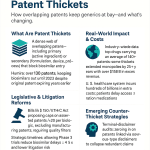
The Orange Book displays each listed patent’s expiration date, but the effective market exclusivity of any given drug product may be longer than any single patent expiration date suggests. Multiple patents covering different aspects of the same product, with staggered expiration dates, create a ‘patent thicket’ that requires systematic analysis to navigate.
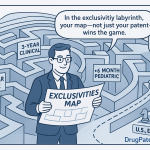
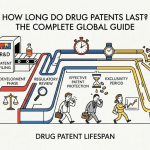
For any target product, the full patent map should cover: the primary composition of matter patent (typically the oldest and most fundamental claim); any secondary formulation or manufacturing patents; method of use patents; pediatric exclusivity extensions; patent term extensions (PTEs) granted under 35 USC 156 for time lost during FDA review; and any Orange Book exclusivity periods (NCE, ODE, PED, or other exclusivities) that run independently of patent protection.
Patent term extensions under 35 USC 156 are particularly important. A brand manufacturer can obtain a PTE of up to five years (total patent term with extension capped at fourteen years of post-approval exclusivity) for regulatory review time. PTE calculations are complex, involving actual testing phase time, application pendency, and approval date. Errors in PTE calculations, whether by the brand manufacturer or the USPTO, can materially affect the date a generic can launch.
Key Takeaways: Section VII
The Orange Book is the starting point for generic market entry analysis, not the ending point. A complete market intelligence picture requires cross-referencing Orange Book data with USPTO patent records (for claim scope), PTAB proceedings (for inter partes review petitions challenging patent validity), court dockets (for pending Paragraph IV litigation), and the FDA’s Paragraph IV certification database. Platforms like DrugPatentWatch aggregate and synthesize this data, reducing the research time from weeks to hours for complex products.
VIII. Paragraph IV Certifications and 180-Day Exclusivity: The Full Playbook
The Four Patent Certifications
When an ANDA applicant submits an application for a drug product covered by Orange Book-listed patents, the applicant must certify with respect to each listed patent. The four possible certifications are:
Paragraph I: No patent information has been filed in the Orange Book. Paragraph II: The patent has expired. Paragraph III: The applicant will wait until the patent expires before seeking approval. Paragraph IV: The patent is invalid, unenforceable, or will not be infringed by the manufacture, use, or sale of the generic drug product.
Paragraph IV certifications are the strategic instrument. They are the mechanism by which a generic applicant seeks market entry before the listed patent(s) expire, and they trigger both the notification requirement to the brand and the 45-day window for the brand to file suit.
The 30-Month Stay: Mechanics and Implications
When a brand manufacturer receives notification of a Paragraph IV certification and files suit within 45 days, an automatic 30-month stay goes into effect. During this stay, the FDA cannot grant final approval to the ANDA, even if the application is otherwise complete and approvable. The stay runs from the date the brand receives the Paragraph IV notice, not from the filing date of the suit.
The 30-month stay can be shortened in two ways: the generic applicant can move for a preliminary injunction denial, or a court can enter a declaratory judgment of non-infringement or invalidity before the stay expires. The stay can also be extended if the case is not resolved within 30 months and neither party has prevailed, but this is relatively rare in practice.
The commercial significance of the stay is substantial. A product with $1 billion in annual U.S. sales and a 30-month stay costs the generic applicant approximately $2.5 billion in foregone revenue during the stay period, before even accounting for price erosion that would occur at generic entry. This loss is why Paragraph IV litigation settlements (often called ‘pay-for-delay’ or ‘reverse payment’ settlements) were, until the Supreme Court’s Actavis decision in 2013, extremely common. Post-Actavis, reverse payment settlements are subject to antitrust scrutiny under a rule-of-reason standard.
180-Day Exclusivity: Calculating and Defending the First-Filer Advantage
The 180-day exclusivity period is one of the most valuable commercial assets in generic drug development. It is granted to the first ANDA applicant(s) who submit a substantially complete application containing a Paragraph IV certification for a given RLD and patent. During the 180-day period, which begins upon commercial marketing by the first filer, the FDA cannot approve any other ANDA for the same drug product. This creates a duopoly (brand and first-filer generic) during which the first-filer can price at a modest discount to the brand (typically 20-30%) before subsequent generics drive prices down to commodity levels.
Barr Laboratories’ generic fluoxetine (Prozac) is a canonical example. Following its successful Paragraph IV challenge, Barr’s 180-day exclusivity on 20mg generic fluoxetine capsules generated sales of approximately $367.5 million in the first eleven months post-launch, at margins substantially higher than what it achieved in competitive multi-source markets. The exclusivity period effectively allowed Barr to participate in the brand’s economics temporarily, before price erosion accelerated.
The rules governing 180-day exclusivity have been amended several times since Hatch-Waxman’s passage. Under the Medicare Prescription Drug Improvement and Modernization Act of 2003 (MMA), the exclusivity can be forfeited in several circumstances: if the ANDA is withdrawn; if the applicant fails to market within 75 days of obtaining approval or of a court judgment of invalidity/non-infringement; if the RLD is withdrawn from sale; if the exclusivity is relinquished; if the applicant’s application is not approvable due to manufacturing deficiencies; or if an agreement with the NDA holder is found to violate antitrust laws.
Forfeiture risk is real. Companies that obtain first-filer status and then fail to maintain their ANDA in approvable condition, whether due to manufacturing site problems, data integrity issues, or CMC deficiencies, risk losing the exclusivity to subsequent filers. IP counsel and regulatory affairs teams at first-filer companies should maintain an active forfeiture risk assessment throughout the development and approval process.
Authorized Generics: The Brand’s Response to 180-Day Exclusivity
Brand manufacturers have developed a counter-strategy to the 180-day exclusivity: the authorized generic (AG). An authorized generic is a drug product marketed by the brand manufacturer (or a licensee) that is identical to the innovator product but sold at generic prices. Because the AG is marketed under the brand’s NDA rather than a generic ANDA, it is not subject to the 30-month stay and does not trigger its own 180-day exclusivity period. During a first-filer’s 180-day exclusivity window, the brand can introduce an AG that competes directly with the generic, effectively halving the first-filer’s market share.
The economic impact of an AG launch during 180-day exclusivity is significant. An authorized generic during the exclusivity period reduces the first-filer’s typical revenue capture from roughly 80-90% of unit volume (in a duopoly) to something closer to 40-50%. This reduction has led some first-filers to negotiate AG provisions as part of patent settlement agreements, either preventing the brand from launching an AG during the exclusivity period or receiving a revenue share from AG sales.
Key Takeaways: Section VIII
The 180-day exclusivity is the primary financial driver of Paragraph IV litigation strategy. A company with a credible first-filer position on a product with $500 million or more in annual brand sales has an asset worth potentially $100-200 million in net revenue, depending on the product, the AG strategy, and the speed of subsequent ANDA approvals. That asset requires active management throughout development and approval, including forfeiture risk monitoring and commercial launch readiness planning.
IX. IP Valuation in Generic Drug Development
Valuing the ANDA Portfolio
An approved ANDA is a regulatory asset with a defined useful life. Its value depends on: the size of the target market (brand revenue at time of generic entry); the number of competing ANDAs approved for the same product (competitive intensity); whether the applicant holds 180-day exclusivity and for how long; the gross margin profile of the product given its manufacturing complexity; and the length of the remaining period before the next generic entrant becomes approvable.
Standard valuation approaches for ANDA portfolios include risk-adjusted net present value (rNPV) models that discount projected cash flows by the probability of FDA approval and commercial launch. For products still in development, probability of approval is estimated based on product class (complex products have lower approval rates), applicant’s historical approval rates, and the quality of the development program. A conventional oral solid ANDA with a complete study package has an approval probability above 85%; a complex OIDP product in early development might be assigned 40-55%.
Market size projections must account for price erosion curves, which are steep and predictable. On average, U.S. generic drug prices decline to 20% of pre-generic brand prices within two years of the first generic entry for high-competition products. For low-competition products (two or fewer generics), prices may stabilize at 30-50% of pre-generic levels for years.
Patent Portfolio Valuation for Innovator Drugs: The Generic’s Mirror
From the generic manufacturer’s perspective, the innovator’s patent portfolio is the primary barrier to entry and the primary target for challenge. Valuing an innovator’s patent protection requires analyzing not just the patent expiration dates but the claim scope of each patent, the prosecution history (which may limit claim interpretation), the availability of prior art that could support invalidity arguments, and the patent’s survival record in any prior litigation.
Composition of matter patents are typically the most valuable and most durable. Once a composition of matter patent is invalidated in Paragraph IV litigation, the generic entry path opens for all applicants. Formulation and method of use patents are more commonly designed around, and their validity is more frequently challenged successfully in PTAB inter partes review (IPR) proceedings. IPR petitions at the PTAB have become a significant tool in generic patent strategy, with petitions sometimes filed concurrent with or even before ANDA submission to create litigation optionality.
Case Study: The Humira Patent Thicket
AbbVie’s adalimumab (Humira) is the most studied example of patent portfolio construction as a market exclusivity strategy. AbbVie built a portfolio of more than 130 patents covering adalimumab’s formulation, manufacturing process, dosing regimens, delivery devices, and disease-specific methods of use. The original composition of matter patent expired in 2016, but through systematic portfolio extension, AbbVie maintained effective U.S. market exclusivity until 2023, when the first biosimilar competitors entered under a series of settlement agreements.
AbbVie’s settlement strategy involved licensing agreements with biosimilar developers that delayed U.S. entry while permitting earlier entry in European markets. The commercial result: Humira generated approximately $21 billion in global revenue in 2022, its last year as the market leader, with U.S. sales protected by the settlement structure. The Humira example illustrates that IP valuation for a major biologic or specialty drug must account for both the patent portfolio’s technical scope and the brand manufacturer’s litigation and licensing strategy. A strong patent portfolio without the financial resources to enforce it is worth less than a moderate portfolio backed by a manufacturer with demonstrated willingness to litigate.
For small-molecule drugs, comparable dynamics play out at smaller scale. Celgene’s thalidomide (Thalomid) and lenalidomide (Revlimid) franchise benefited from a combination of composition of matter protection, REMS-based distribution restrictions, and method of use patents to maintain exclusivity well past what the primary composition patents alone would have supported. Generic manufacturers challenging these products faced both patent litigation risk and the complexity of the REMS shared system as a practical market access barrier.
Key Takeaways: Section IX
IP valuation in pharmaceutical development requires integrating patent analytics, regulatory exclusivity data, litigation history, and commercial market modeling. The Orange Book provides the starting dataset, but the investment-grade analysis requires patent claim mapping, prosecution history review, PTAB petition tracking, and district court docket monitoring. Firms that build or access these analytical capabilities have a systematic advantage in generic pipeline selection and in identifying the highest-return Paragraph IV opportunities.
For portfolio managers with pharma/biotech exposure, the key IP-driven metrics for generic company evaluation are: first-filer exclusivity inventory (number and revenue size of products where the company holds unchallenged 180-day exclusivity); complex generic pipeline depth (number of OIDP, topical, or drug-device combination ANDAs in development); litigation track record in Paragraph IV disputes (win rate, settlement terms, AG provisions obtained); and ANDA approval cycle time (first-cycle approval rate, median time from filing to approval). Companies with above-average performance on these metrics command higher multiples on earnings, and the market premium is often understated relative to the intrinsic value of the exclusivity pipeline.
X. Complex Generic Drug Development: Technology Roadmaps
The FDA’s Complex Drug Substances and Products Initiative
The FDA defines ‘complex drug products’ as those with complex active ingredients (peptides, polymeric compounds, complex mixtures of active moieties), complex formulations (liposomes, colloids, emulsions, suspensions, gels), complex routes of delivery (inhalation, transdermal, nasal, ophthalmic), or complex drug-device combinations. Products in these categories have historically had insufficient generic competition, leading to prices that remain elevated for years after the innovator’s primary patents expire.
The FDA launched several specific initiatives to address the complex generics gap: the Complex Drug Substances and Products program within OPQ, the Priority Review program for complex ANDAs, the Research Exchange program allowing generic developers to discuss scientific and regulatory issues with FDA staff prior to ANDA submission, and the Public Workshop series on specific complex product classes (inhalation, topical semisolids, ophthalmic emulsions, transdermal systems).
Liposomal Drug Products
Liposomes are vesicular drug delivery systems that encapsulate drug within lipid bilayers. The first approved liposomal drug was liposomal doxorubicin (Doxil), and the generic landscape for these products remained thin for years because the FDA lacked a clear bioequivalence framework.
The FDA’s current thinking on liposomal bioequivalence requires a tiered approach: in vitro characterization of liposome particle size, drug encapsulation efficiency, in vitro drug release, and lipid composition (Q1/Q2/Q3 sameness); pharmacokinetic bioequivalence comparing total and encapsulated drug in plasma; and, for products where the liposome modifies biodistribution (such as pegylated liposomal doxorubicin), additional comparative distribution data may be needed.
The development timeline for a generic liposomal product typically runs six to nine years from initiation to ANDA approval, with capital requirements in the $15-30 million range. First-to-file for a major liposomal product (annual brand revenue of $300 million or more) can generate 180-day exclusivity economics competitive with a conventional Paragraph IV challenge on a billion-dollar oral product.
Extended-Release Injectable Microspheres
Extended-release (ER) injectable microsphere products, such as Risperdal Consta (risperidone microspheres) and Lupron Depot (leuprolide acetate microspheres), present among the most technically demanding generic development challenges in the ANDA system.
These products require: matching the polymeric matrix composition (PLGA molecular weight, end groups, and ratios); matching the microsphere particle size distribution across a target range; matching the drug loading and encapsulation efficiency; and demonstrating in vitro release profiles that correlate with in vivo PK profiles (IVIVC). In vivo PK bioequivalence must compare both early-release (burst) pharmacokinetics and steady-state exposure over the full duration of the product’s activity.
The FDA’s PSG for leuprolide acetate for injectable suspension (Lupron Depot) specifies the in vitro and in vivo study requirements in detail. Generic developers who have pursued this target have consistently found that matching Q3 microsphere characteristics requires proprietary polymer synthesis capabilities, not just drug formulation expertise. The polymer supply chain for PLGA microspheres is itself a potential IP constraint.
Complex Topical Drug Products: A Regulatory Roadmap
The development roadmap for a complex topical generic, such as a generic for a reference emulsion cream with multiple active components, proceeds through roughly six phases:
Phase 1 involves RLD characterization: exhaustive physical and chemical analysis of the RLD using techniques including rheology, dynamic light scattering, cryo-TEM, small-angle X-ray scattering, and Franz cell IVRT across multiple pH conditions and temperatures. This phase typically runs six to twelve months and is primarily a scientific investment; it produces no regulatory deliverable but generates the target product profile.
Phase 2 is formulation development: iterative development of a generic formulation that achieves Q1 and Q2 sameness and that produces IVRT and rheological profiles matching the RLD. Excipient ratios are optimized within Q2 constraints to achieve Q3 microstructural similarity. This phase may require twenty to sixty formulation iterations over twelve to twenty-four months.
Phase 3 is process development and scale-up: transfer of the lead formulation from laboratory to pilot scale, then to commercial scale, with demonstration that the manufacturing process is capable of consistently producing product meeting the target microstructural and IVRT specifications. Critical process parameters are identified, and a design space is defined.
Phase 4 is analytical method validation: validation of all analytical methods to be used in the ANDA, including the IVRT method, particle size method, rheology method, and the stability-indicating assay. ICH Q2(R1) validation requirements apply.
Phase 5 is bioequivalence study execution: if Q1/Q2/Q3 sameness has been established and a biowaiver is justified, IVRT data from this phase supports the bioequivalence claim. If Q1 or Q2 differences exist, an IVPT study using human skin (cadaveric or excised) must be conducted, potentially with a large number of skin donors to achieve statistical power.
Phase 6 is ANDA compilation and submission. Total development time for a moderately complex topical product is four to seven years; for a highly complex emulsion or suspension with multiple actives, it can exceed eight years.
Key Takeaways: Section X
Complex generic development is capital-intensive and time-consuming, but it is also the highest-return segment of the generic business when executed successfully. Companies with dedicated analytical capabilities for microstructural characterization, established OIDP development programs, or platform PLGA microsphere technology have durable competitive advantages that are difficult to replicate. These capabilities are legitimate components of enterprise value in a pharma M&A context.
XI. Evergreening: Brand Tactics and Generic Counter-Strategies
The Evergreening Toolkit
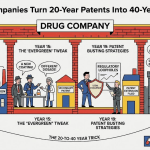
Evergreening refers to the practice of extending market exclusivity for an established drug product through incremental innovations, each of which may generate a new patent, a new regulatory exclusivity period, or both. The tactic is not illegal; it is a rational response to the patent system’s structure. But it creates a specific set of challenges for generic developers.
The primary evergreening tools are: reformulation (new dosage form, new strength, new release mechanism, new route of administration); enantiomer switching (marketing the pure active enantiomer of a racemic drug as a new chemical entity, as with esomeprazole after omeprazole’s composition of matter patent expired); metabolite claims (patenting the active metabolite of a prodrug, as Sepracor did with fexofenadine after terfenadine’s problems opened the market); pediatric formulations and pediatric exclusivity (filing for pediatric studies to obtain a six-month exclusivity extension); and indication expansion (new method of use patents for new indications).
The 505(b)(2) regulatory pathway, which allows applicants to reference published literature or an existing NDA rather than conducting full clinical trials, is the primary regulatory vehicle for evergreened products. A brand manufacturer who reformulates a drug and obtains approval via 505(b)(2) gets a new drug application, new patent rights, and potentially a new three-year clinical investigation exclusivity period, all of which reset the generic competition timeline for the reformulated product.
Generic Counter-Strategies
Generic manufacturers have developed counter-strategies to each evergreening tactic. Against new formulation patents, the primary tools are Paragraph IV challenges to validity (the formulation patent may be obvious in light of the prior art on the original drug) and design-around formulations that provide comparable performance without infringing the new patent’s claims.
Against enantiomer switches, generics can file ANDAs for the racemate as it becomes off-patent and rely on the clinical equivalence data for the racemate as the RLD. Patients and prescribers who are price-sensitive may substitute the generic racemate, even if the brand promotes the single-enantiomer product as therapeutically superior.
Against pediatric exclusivity extensions, the only generic strategy is to wait. The six-month pediatric exclusivity attaches to all existing patents and exclusivities for the drug, creating a mandatory delay that generic manufacturers cannot circumvent.
Against product hopping (where the brand manufacturer switches patients to a new formulation and removes the original RLD from the market), the generic industry has achieved some success in antitrust litigation. Courts have found in several cases that withdrawing an RLD from the market to prevent therapeutic substitution can constitute an antitrust violation if the withdrawal lacks a legitimate procompetitive justification.
Key Takeaways: Section XI
Evergreening is most effective for high-revenue products where the brand manufacturer has the litigation resources to enforce secondary patents aggressively. For smaller products, the economics of secondary patent litigation are less favorable to the brand, and generic entry on the original formulation is often not substantially delayed. Generic developers should model the full exclusivity stack, including secondary patents and their estimated litigation risk, before committing capital to any ANDA targeting an evergreened product.
XII. Market Dynamics, CDMOs, and the Economics of Generic Competition
Price Erosion Curves and Market Structure
The economics of generic drug competition follow a consistent and well-documented pattern. At the moment of first generic entry, the generic typically prices at 70-80% of the pre-generic brand price. As additional generics enter the market, prices decline rapidly: two generic entrants typically produce prices at 50-60% of brand, four or more entrants drive prices to 30-40%, and in highly competitive markets with eight or more filers, prices may fall to 15-25% of brand or lower.
Price erosion speed depends on the number of approved ANDAs, the number of actual market entrants, whether an authorized generic is present, and the product’s inclusion in retail pharmacy chain formularies. IQVIA data shows that brand prices decline to approximately 20% of pre-generic levels within 24 months of first generic entry for products with four or more competing generics.
For generic manufacturers, this erosion curve defines the optimal launch timing strategy. A company that holds 180-day exclusivity should be positioned to launch on day one of exclusivity availability to capture the maximum revenue during the exclusive period. A company that is the fifth or sixth generic entrant may find that the marginal revenue from launching barely covers manufacturing and distribution costs unless it can achieve significant volume through large retail or institutional contracts.
The CDMO Option: Strategic Make-or-Buy
Contract Development and Manufacturing Organizations (CDMOs) have become essential infrastructure for the generic industry, particularly for complex products requiring specialized manufacturing capabilities. CDMOs provide access to lyophilization, sterile fill-finish, spray drying, hot-melt extrusion, and other advanced manufacturing technologies that would require hundreds of millions of dollars in capital to build internally.
The strategic logic for CDMO partnership in generic development is most compelling for: first-time entries into complex dosage forms (where the CDMO’s existing capability and regulatory track record reduce development risk); small-to-mid cap generics companies that cannot justify the capital commitment to build specialized manufacturing infrastructure; and products with modest projected volumes (where in-house manufacturing would result in low equipment utilization and high per-unit costs).
The risks of CDMO dependence include: supply disruption if the CDMO faces its own manufacturing or regulatory problems; loss of process knowledge if the relationship terminates; and reduced gross margins relative to fully vertical manufacturing. CDMO selection should include a thorough assessment of the facility’s FDA inspection history, current cGMP status, and financial stability.
Tariffs and Supply Chain Concentration
The generic drug supply chain has substantial concentration risk in API sourcing from India and China. Approximately 80% of APIs consumed in the U.S. are manufactured in India or China, and the FDA’s import alert database shows persistent cGMP violations at facilities in both countries. Tariff escalations in 2025-2026 have added cost pressure to API-dependent generic manufacturers, particularly those without domestic or Western European alternative sources.
Generic companies with diversified API supply chains, including qualified secondary suppliers and access to U.S. or EU-based API manufacturing, are better positioned for supply continuity and cost management under trade policy uncertainty. This supply chain characteristic has begun to appear as a factor in investor due diligence and in government procurement preferences for ‘essential medicines.’
Key Takeaways: Section XII
Generic drug economics reward scale, speed, and technical differentiation. The conventional oral solid business is approaching commodity status in most therapeutic categories, with margins insufficient to fund meaningful R&D or support premium valuations. The next decade’s value creation in the generic industry will come disproportionately from complex generic approvals, first-filer exclusivities on high-revenue products, and supply chain resilience that commands government and institutional payer preference.
XIII. Investment Strategy for Analysts and Portfolio Managers
Screening the Generic Pipeline for Value
For institutional investors with pharma sector coverage, the generic drug pipeline is a predictable, analytically tractable source of value creation events. Unlike drug development in novel therapeutics, the generic pipeline’s revenue upside is defined by the brand’s existing commercial performance, the timeline to generic entry is estimable from patent expiration dates and litigation status, and the technical risk is lower than for novel drugs because the regulatory pathway is established.
The highest-value screening criteria for generic pipeline analysis are:
The 180-day exclusivity pipeline: identify companies with pending first-filer ANDAs on products with $500 million or more in annual brand sales. These exclusivities are worth $50-150 million in net revenue each, and a portfolio of six to eight such exclusivities represents a multi-year revenue runway. The FDA’s Paragraph IV certification database and periodic OGD reports on pending applications are public sources for this data.
Complex generic pipeline depth: assess the number and stage of complex ANDA filings (OIDP, topical, injectable microsphere, transdermal, liposomal) in each company’s pipeline. Complex generics command higher margins and face less competition at launch. A company with two or more complex generics in late-stage development represents a disproportionate opportunity relative to its pipeline disclosure.
First-cycle ANDA approval rates: track companies’ historical approval rates on first review cycle. Top-quartile companies achieve first-cycle approval on 60-70% of ANDAs; bottom-quartile companies are below 30%. First-cycle approval rate is a proxy for manufacturing quality and regulatory affairs capability, both of which affect the speed and cost of commercializing the pipeline.
API supply chain resilience: assess whether key APIs in the pipeline are single-sourced from high-risk geographies. Companies with domestic or EU API sourcing for essential medicines products face lower supply disruption risk and, increasingly, preferential government procurement positioning.
Event-Driven Opportunities in Generic Drug Stocks
Generic drug stocks generate predictable event-driven catalysts that are trackable with patent database monitoring. The most common catalysts are: ANDA approval announcements (particularly for first-filer exclusivities); court decisions in Paragraph IV litigation (invalidity or non-infringement rulings remove a stay and open the market); PTAB decisions in IPR proceedings (successful invalidation of a listed patent removes a patent barrier without the 30-month stay); and FDA import alerts or warning letters (which disrupt the supply of competing generic manufacturers and create temporary market share opportunities for unaffected competitors).
Calendar-driven catalysts include: patent expiration dates (the date a composition of matter patent expires is the date on which generic ANDAs previously blocked by that patent become approvable, assuming no other stay is in effect); FDA approval action dates (PDUFA dates for priority ANDA reviews are sometimes publicly estimable from GDUFA III performance goals); and exclusivity expiration dates (the date a brand’s NCE exclusivity expires is the first date the FDA can accept any ANDA for a new chemical entity, creating a filing surge and predictable approval pipeline).
M&A Implications
Generic drug M&A is driven primarily by pipeline scale and complex generic capabilities. The largest transactions of the past decade, including Teva’s acquisition of Allergan’s generic business and Viatris’s formation from Mylan and Pfizer’s Upjohn, were predicated on achieving the scale necessary to operate profitably in a commoditizing oral solid market while building complex generic platforms.
For acquirers, the primary IP valuation considerations are: the target’s approved ANDA count (breadth of product coverage); the first-filer exclusivity inventory (value of exclusivity pipeline); complex generic capabilities (manufacturing platforms, analytical capabilities, regulatory affairs expertise for complex products); and the absence of import alerts or cGMP consent decrees (which would require remediation before the acquired facilities could operate normally under an acquiring company’s quality standards).
Sellers in generic M&A should prepare an ANDA portfolio valuation that explicitly models exclusivity timing, competitive intensity, and price erosion for each product in the portfolio. A generic portfolio valued purely on trailing revenues will consistently be undervalued, because the forward revenue profile depends on exclusivity events and competitive dynamics that are not visible in historical financials.
Key Takeaways: Section XIII
The generic drug sector rewards analysts who invest in developing deep understanding of the patent and regulatory databases that define the timing and economics of market entry. The public data available through the FDA’s Orange Book, PTAB, federal court dockets, and GDUFA performance reports is sufficient to construct a rigorous investment thesis for any major generic drug stock. The edge for institutional investors is not access to proprietary information but the depth and consistency of the analytical framework applied to public data.
Appendix A: Key Regulatory References
21 CFR Part 210: General requirements for cGMP. 21 CFR Part 211: Current good manufacturing practice for finished pharmaceuticals. 21 CFR Part 314: Applications for FDA approval to market a new drug. 21 CFR Part 314.127: Refusal to approve an ANDA. 21 CFR Part 320: Bioavailability and bioequivalence requirements. ICH Q1A(R2): Stability testing of new drug substances and products. ICH Q2(R1): Validation of analytical procedures. ICH Q3B(R2): Impurities in drug products. ICH Q3D: Elemental impurities in drug products. ICH M7(R1): Assessment and control of DNA-reactive (mutagenic) impurities. ICH Q10: Pharmaceutical quality system. ICH Q11: Development and manufacture of drug substances. FDA Orange Book: Approved Drug Products with Therapeutic Equivalence Evaluations. FDA Product-Specific Guidances for Generic Drug Development. FDA Dissolution Methods Database. FDA Paragraph IV Certifications for Approved Drug Products.
Appendix B: Glossary of Key Terms
ANDA: Abbreviated New Drug Application. The regulatory submission used to seek FDA approval for a generic drug product.
Bioequivalence (BE): The absence of a significant difference in the rate and extent to which the active ingredient becomes available at the site of drug action when administered at the same molar dose under similar conditions.
cGMP: Current Good Manufacturing Practices. The minimum standards for methods, facilities, and controls used in manufacturing drug products for human use.
CRL: Complete Response Letter. FDA’s formal communication that deficiencies in an ANDA prevent approval.
First-filer exclusivity: The 180-day period of market exclusivity granted to the first ANDA applicant to file a substantially complete application with a Paragraph IV certification.
GDUFA: Generic Drug User Fee Amendments. The statutory framework authorizing the FDA to collect user fees from generic drug manufacturers to fund enhanced review capacity.
NTI drug: Narrow therapeutic index drug. A drug for which small differences in dose or plasma concentration lead to clinically meaningful differences in therapeutic or adverse effects.
Orange Book: The FDA’s Approved Drug Products with Therapeutic Equivalence Evaluations, listing approved drugs, therapeutic equivalence codes, and patent and exclusivity information.
Paragraph IV certification: A certification by an ANDA applicant that a patent listed in the Orange Book for the RLD is invalid, unenforceable, or will not be infringed by the generic product.
PK: Pharmacokinetics. The study of how the body absorbs, distributes, metabolizes, and excretes drugs, including the measurement of Cmax, AUC, and Tmax.
PSG: Product-Specific Guidance. FDA guidance documents specifying the agency’s current thinking on bioequivalence study design and other requirements for specific drug products.
Q1/Q2/Q3 sameness: A framework for complex generic products specifying sameness of active and inactive ingredients (Q1), ingredient concentrations (Q2), and microstructural arrangement (Q3).
RLD: Reference Listed Drug. The specific drug product that an ANDA applicant must demonstrate equivalence to in order to obtain approval.
RSABE: Reference-Scaled Average Bioequivalence. A statistical approach for highly variable drugs that adjusts the bioequivalence acceptance criterion based on the reference product’s intra-subject variability.
TE code: Therapeutic Equivalence code. The Orange Book designation (e.g., AB, BC) indicating whether a drug product is therapeutically equivalent to the RLD.
Patent and exclusivity information changes continuously; verify against current FDA databases before making regulatory or commercial decisions.