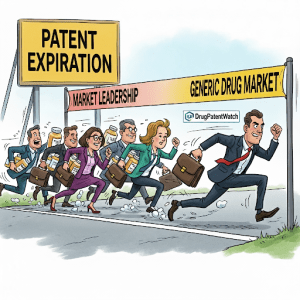
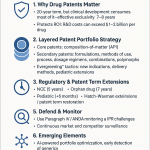
A technical deep dive for pharma IP teams, R&D leads, and institutional investors
Master Key Takeaways
A drug’s market monopoly rests on two legally distinct systems: USPTO-granted patents and FDA-granted regulatory exclusivities. These run on separate clocks, overlap in unpredictable ways, and must both be exhausted before generic entry is legally permissible. The first legal opportunity to launch a generic is determined by whichever protection expires last.
The pharmaceutical industry’s upcoming patent cliff is the largest in its history. An estimated $200-$230 billion in annual branded revenue will lose exclusivity protection between 2025 and 2030, with drugs like Keytruda ($29B+ in 2024 sales), Eliquis ($13B+ for BMS alone), and Opdivo concentrated in a narrow 2026-2028 window.
The Hatch-Waxman Act of 1984 did not merely create a generic approval pathway. It created a litigation framework. Filing an Abbreviated New Drug Application (ANDA) with a Paragraph IV certification is the legal equivalent of suing the patent holder before a single tablet is manufactured. The 180-day marketing exclusivity granted to the first successful Paragraph IV filer can be worth hundreds of millions of dollars and transforms generic development into an information race as much as a scientific one.
Biosimilars are not generics. The distinction is molecular, regulatory, and commercial. Developing a biosimilar costs $100-$250 million over 7-8 years, versus $1-$4 million over 2-4 years for a typical small-molecule generic. Biosimilar interchangeability, the regulatory designation that permits automatic pharmacy-level substitution, requires separate clinical studies beyond the baseline biosimilarity showing.
Competitive intelligence, drawn from the Orange Book and enriched by platforms such as DrugPatentWatch, is the critical input that separates predictive strategy from reactive market participation. The question is not ‘when does the patent expire?’ but ‘given current litigation status, competitive filings, and the patent thicket structure, what is the probability-weighted timeline to first-generic-entry, and does the expected margin profile justify the R&D and legal spend?’
Part I: The Architecture of Market Monopoly
Section 1: Patents, the Composition Molecule, and the Thicket
Developing a drug from a promising molecule to an FDA-approved product takes between 5 and 15 years and costs between $300 million and $4.5 billion, with the majority of candidates failing in clinical development. The patent system exists to make that risk economically rational: a temporary, legally enforced monopoly gives the innovator time to recoup investment and earn a return before generic competition arrives.
Under the Agreement on Trade-Related Aspects of Intellectual Property Rights (TRIPS), all WTO member nations grant a standard patent term of 20 years from the filing date. In practice, the effective market exclusivity period is significantly shorter. Because 10-15 years of the 20-year term is typically consumed by preclinical research, clinical trials, and FDA review, the average drug enjoys only 7-10 years of commercial exclusivity from its approval date. This compression creates the foundational economic pressure that drives both evergreening by innovators and the aggressive Paragraph IV challenge activity by generic manufacturers.
What most observers call ‘the drug’s patent’ is, in reality, a coordinated portfolio of multiple patent types, each covering a different dimension of the product. This portfolio is the ‘patent thicket.’
Composition of matter patents are the most valuable intellectual property in the pharmaceutical sector. These cover the active pharmaceutical ingredient (API) molecule itself: its chemical structure, its stereochemistry, and its salts or esters. A composition of matter patent is extremely difficult to design around without creating an entirely different drug. It is the asset that anchors the innovator’s exclusivity and the one generic manufacturers most want to invalidate or wait out. Its expiration date, more than any other, defines the true patent cliff.
Formulation patents protect the method of delivering the active molecule, not the molecule itself. An extended-release capsule, a nanoparticle encapsulation system, a transdermal patch, a liposomal formulation, or a combination of the API with specific inactive ingredients can each be patented independently. These are typically filed later in the product’s lifecycle as the brand company develops improved delivery systems, and they have a different 20-year clock from the original composition patent.
Method of use patents cover specific therapeutic applications of a compound. A molecule initially approved for cardiovascular disease may later be found effective in oncology. The new indication can be independently patented even if the composition patent has expired, creating a distinct barrier to generic entry for that specific use. From a generic strategy standpoint, method of use patents create ‘carve-out’ situations where a generic can be approved for all non-patented indications but must omit the patented indication from its label, a regulatory procedure known as ‘skinny labeling.’
Process patents protect the manufacturing method: a specific synthesis route, a novel purification technique, a unique crystallization process. These are not listed in the FDA’s Orange Book and therefore do not trigger the Hatch-Waxman paragraph certification and litigation framework, but they can still be enforced in court against a generic manufacturer whose production process infringes the claimed method.
Ancillary patents extend the thicket further. These cover specific crystalline polymorphs of the API (the same molecule arranged differently in a solid-state structure), metabolites, prodrugs, dosage regimen patents, and combination products. Each represents a distinct patent filing and a potential litigation target.
The combined effect of these patent types is a multi-layered defense structure that a generic challenger must analyze in its entirety. Invalidating or designing around a composition of matter patent does not clear formulation, method of use, or polymorph patents. A complete freedom-to-operate analysis must address all layers before any generic product can reach market.
Key Takeaways for This Section
The IP asset underlying a blockbuster drug is not a single patent but a structured portfolio. A generic strategy that focuses only on the composition of matter patent without analyzing formulation, method of use, and polymorph coverage is materially incomplete. Every patent in the Orange Book listing for the reference drug requires a certification and, potentially, a litigation defense.
Section 2: FDA Regulatory Exclusivities, the Parallel Shield
Patents and regulatory exclusivities are legally distinct instruments issued by different government agencies for different purposes. A patent is issued by the USPTO and protects the invention. A regulatory exclusivity is issued by the FDA upon drug approval and protects either the clinical data submitted in the application or the market itself. They run on separate clocks, and a generic manufacturer must respect both systems simultaneously.
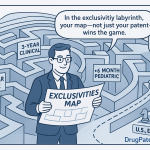
The most strategically significant exclusivity is New Chemical Entity (NCE) exclusivity, granted for a duration of 5 years upon approval of a drug containing an active moiety that the FDA has never previously approved. During the first 4 years of NCE exclusivity, the FDA will not even accept an ANDA submission for a generic version. Between years 4 and 5, an ANDA with a Paragraph IV certification can be submitted, but FDA approval cannot be granted until the 5-year period expires. This creates an absolute, non-negotiable floor on generic entry regardless of the patent status of the drug.
Orphan Drug Exclusivity (ODE) grants 7 years of market protection for approved therapies targeting rare diseases, defined as those affecting fewer than 200,000 patients in the U.S. ODE prevents the FDA from approving any other application for the same drug in the same orphan indication. A critical nuance: ODE is indication-specific. A generic manufacturer may be able to obtain approval for a different, non-orphan indication while the ODE for the original rare disease indication remains in force, provided the underlying patents permit it.
The 3-year ‘New Clinical Investigation’ exclusivity applies to applications for supplements to existing approvals, such as a new dosage form, a new strength, or a new indication, where the applicant conducted new and essential clinical investigations. This exclusivity is narrower than NCE protection: it prevents approval of a generic for the specific change covered by the application but does not affect generics referencing the original formulation.
Pediatric exclusivity adds 6 months to all existing patents and exclusivities for a drug whose sponsor conducted pediatric clinical studies in response to an FDA Written Request. This is the only exclusivity type that operates as an extension rather than a standalone period. It attaches to the end of every other applicable patent and exclusivity, and a generic manufacturer planning a launch based on a specific expiration date must account for a potential 6-month extension that may arrive late in the planning cycle.
Under the Biologics Price Competition and Innovation Act (BPCIA), reference biologic products receive 12 years of market exclusivity from approval. No biosimilar application under Section 351(k) can receive approval during this period, regardless of patent status. The 12-year period reflects the substantially higher cost and complexity of biologic development and the inherent scientific limitations on demonstrating biosimilarity.
The operational implication of this dual-system architecture is straightforward but commonly underweighted in generic strategy: the true first date of generic entry is the later of the last patent expiration and the last regulatory exclusivity expiration, considering all applicable protections. A development program that targets the composition of matter patent without confirming the NCE exclusivity status, or that overlooks a late-arriving pediatric exclusivity add-on, will produce an incorrect launch timeline.
Key Takeaways for This Section
Regulatory exclusivities are independent of patents and cannot be challenged through Paragraph IV litigation. They are absolute bars to generic entry that must be mapped alongside patent timelines in every strategic assessment. A complete exclusivity analysis requires checking NCE status, orphan designation, pediatric studies, and biologics exclusivity for any target product.
Section 3: IP Valuation, What Patent Portfolios Are Worth as Balance Sheet Assets
For institutional investors and M&A analysts, pharmaceutical patents are not merely legal instruments. They are cash-flow-generating assets whose present value can be modeled, hedged, and transacted. Understanding how the market prices pharmaceutical IP is the foundation of any investment analysis related to patent cliffs or generic launches.
The most widely used framework for pharmaceutical patent valuation is discounted cash flow (DCF) analysis applied to the expected revenue stream protected by the IP. The inputs are the annual revenue the drug generates, the probability that the patent survives a validity challenge, the probability of a generic entrant launching ‘at risk’ before final litigation resolution, the expected timing of first generic entry, and the rate of post-entry price erosion based on the expected number of generic competitors.
For a blockbuster drug with a robust composition of matter patent, minimal Paragraph IV activity, and no near-term NCE exclusivity issues, the IP portfolio supporting that drug can account for 60-80% of the product’s net present value. When Pfizer’s atorvastatin patent was approaching expiration, analysts estimated that Lipitor’s patent cliff would erase approximately $10 billion in annual revenue. The market capitalization implications were direct and immediate.
Patent quality is a distinct dimension from patent breadth. A composition of matter patent with well-drafted claims covering the API and its pharmaceutically acceptable salts, filed in a jurisdiction with robust patent courts, and not subject to any post-grant review proceedings, has a high quality score. A late-filed formulation patent with narrow claims that were added to the Orange Book years after launch, particularly if the patent has prior art exposure, has a lower quality score. Market analysts who treat all Orange Book-listed patents as equivalent are systematically overestimating IP value.
The patent expiration of a drug like Keytruda (pembrolizumab) illustrates the scale of IP-embedded value at stake. With 2024 annual sales exceeding $29 billion, Keytruda represents roughly 40% of Merck’s pharmaceutical revenue. The composition of matter patents protecting pembrolizumab expire around 2028. A defensible DCF model for Merck must haircut Keytruda’s revenue contribution post-2028 by 70-80% within 2-3 years of generic entry. That single patent expiration event has an NPV impact measured in the tens of billions of dollars, which is why Merck is actively pursuing a subcutaneous formulation that would carry its own patent protection and convert patients to a new, protected product before the cliff.
For Eliquis (apixaban), the Bristol Myers Squibb and Pfizer co-marketing arrangement creates an additional IP complexity. The API patent, the formulation patents, and the method of use patents for various anticoagulation indications are held by different entities. Multiple Paragraph IV challenges from generic manufacturers are already in litigation. BMS has publicly acknowledged the Eliquis patent cliff as one of the most significant near-term financial risks facing the company, and has structured cost reduction programs specifically sized to offset the anticipated revenue loss.
Stelara (ustekinumab), Johnson & Johnson’s IL-12/IL-23 inhibitor approved for psoriasis and Crohn’s disease, had its first biosimilar approvals in the U.S. in late 2023. The commercial launch of biosimilar ustekinumab represents a direct valuation event: the erosion of Stelara’s IP value from an exclusive biologic to a reference product competing in a multi-entrant biosimilar market. J&J’s strategic response has been to accelerate the commercialization of its next-generation immunology assets, particularly the IL-23-specific agent guselkumab (Tremfya), which carries its own independent patent estate.
Investment Strategy for Analysts
For institutional investors, the practical implication of pharmaceutical IP valuation is a framework for pricing patent cliff risk into equity positions. Stocks of companies with near-term, high-concentration patent cliffs (a single drug representing more than 20% of revenue with a cliff inside 5 years) typically trade at a multiple discount relative to peers. The size of that discount depends on pipeline strength, the probability of successful evergreening, and the expected speed of generic market uptake.
A long/short strategy can be constructed around patent cliff asymmetries: short the innovator in the 12-18 months before generic entry when revenue erosion begins to be reported, and long the first-to-file generic challenger at the moment litigation resolves in their favor, giving them 180-day exclusivity. The latter position captures the period of maximum generic profitability before the price erosion of multiple market entrants compresses margins.
Section 4: Evergreening, A Technology Roadmap for Lifecycle Extension
‘Evergreening’ is the commercial term for pharmaceutical lifecycle management strategies that extend a drug’s IP-protected revenue stream beyond the expiration of its original composition of matter patent. These strategies are legal, they are practiced by every major pharmaceutical company, and they represent the primary battlefield where generic and innovator companies compete in the courts rather than the lab.
Understanding the specific technology roadmap available for evergreening is essential for any generic strategist modeling the true first date of generic entry. A composition of matter patent expiration does not open the market if a robust formulation patent, a new indication, or a new delivery system adds a decade to the effective exclusivity timeline.
The most common evergreening pathway is extended-release (ER) or modified-release formulation development. A drug originally approved as an immediate-release tablet taken twice or three times daily is reformulated as a once-daily extended-release product. The new formulation requires its own clinical development program to demonstrate equivalence or superiority to the immediate-release version, and upon approval it receives new formulation patents and potentially 3-year new clinical investigation exclusivity. The innovator then markets the ER formulation aggressively, and in many cases withdraws the immediate-release product from the market. This forces generic manufacturers who challenged the original composition patents to contend with the reality that the commercially dominant product is now the ER version, which carries its own patent thicket.
Drug delivery system innovation is a closely related but technically distinct evergreening path. Transitioning a drug from an oral tablet to a long-acting injectable, a subcutaneous auto-injector, an inhaled formulation, or a transdermal patch changes the product’s delivery characteristics sufficiently to support new patent filings. Merck’s subcutaneous pembrolizumab program is a current example of this approach applied to a biologic. If the subcutaneous formulation demonstrates non-inferior efficacy and superior patient convenience relative to the intravenous infusion, Merck can convert patients to the new, patent-protected delivery system before the 2028 IV formulation cliff.
Fixed-dose combination (FDC) products are another standard evergreening mechanism. Combining two established drugs into a single pill produces a new product that may qualify for new formulation patents, new method of use patents covering the combination’s unique pharmacological profile, and potentially 3-year exclusivity for the combination data. The cardiovascular and diabetes therapeutic areas have seen extensive FDC activity, with products like Janumet (sitagliptin plus metformin) being a direct example of this strategy applied to Januvia’s component molecule.
New indication development creates method of use patents that extend exclusivity for specific therapeutic applications. An oncology drug initially approved for one tumor type that shows activity in additional cancers can accumulate method of use patents covering each new indication, creating a portfolio of exclusivities that collectively extend the commercial protection timeline well beyond any single patent’s life.
Pediatric exclusivity is technically a regulatory mechanism rather than an evergreening strategy, but innovator companies actively pursue it because it adds 6 months to all existing protections at the cost of conducting pediatric clinical studies. Given that a blockbuster drug generating $5 billion annually earns approximately $2.5 billion in 6 months, the economics of pediatric studies costing $10-50 million are immediately apparent.
For generic strategists, the operational output of an evergreening analysis is a timeline map showing when each layer of the patent thicket expires and what commercial share the protected formulation holds at each expiration point. A company that targets the original composition patent may succeed legally but find the commercial opportunity substantially smaller than anticipated if 80% of prescriptions have migrated to the ER formulation protected by patents expiring 10 years later.
Key Takeaways for This Section
Evergreening is not a single tactic but a layered technology roadmap. A complete generic market entry analysis must model not only when each patent layer expires but also the commercial formulation share at each expiration date. The true opportunity is the revenue at risk at the time of the specific entry, not the brand’s peak historical revenue.
Part II: The Patent Cliff, Anatomy of a Revenue Redistribution Event
Section 5: Defining and Measuring the Revenue Collapse
The patent cliff is the period during which a pharmaceutical company’s revenue collapses following the loss of market exclusivity for a high-revenue product. The term ‘cliff’ reflects the speed of the decline as much as its magnitude. Unlike gradual competitive erosion from new entrant branded drugs, generic entry produces near-vertical revenue decline because generics enter at a significant price discount, health plans immediately adjust formularies to direct patients toward the lower-cost alternative, and pharmacists substitute generics by default under state substitution laws.
The standard revenue erosion curve is well-documented and highly predictable. A brand-name drug typically retains 80-100% of its revenue in the months before generic entry, then loses 40-60% within the first 90 days, reaching 20% of pre-generic revenue levels within 12-18 months when 5 or more generic manufacturers are in the market. Drugs with once-daily dosing convenience, strong physician habit, or branded patient assistance programs retain revenue slightly longer. Drugs in competitive therapeutic categories where payers have strong substitution incentives lose revenue faster.
The price erosion curve for generics is equally well-documented. With one generic entrant, the generic price is approximately 60-80% of the brand’s price, and brand market share erosion is moderate. With two generic entrants, generic prices fall to approximately 50% of brand. With four or more entrants, prices reach 20-30% of brand. With ten or more entrants, prices reach commodity levels of 10-15% of brand, leaving only the most cost-efficient manufacturers with viable margins.
This erosion dynamic has two direct implications for generic strategy. First, the financial value of being the first generic to market is an order of magnitude higher than being the fifth. Second, generic drugs in categories where the number of potential manufacturers is structurally limited by technical barriers, such as complex injectables, metered-dose inhalers, or transdermal systems, sustain higher prices longer because the ‘four or more entrants’ threshold is never reached.
Key Takeaways for This Section
Brand revenue typically falls 80% within 18 months of generic entry in competitive markets. Generic price erodes from 60-80% of brand with one entrant to 10-15% with ten or more. The business case for a generic launch is fundamentally driven by the projected number of competitors at entry, not by the brand’s absolute revenue level.
Section 6: The 2025-2030 Blockbuster Expiration Wave
The pharmaceutical industry is entering what may be the most concentrated patent cliff in its history. Between 2025 and 2030, drugs collectively generating over $200 billion in annual revenue will lose market exclusivity, creating the largest single wave of generic and biosimilar development opportunity on record.
Entresto (sacubitril/valsartan), Novartis
Annual 2024 revenue of approximately $7.8 billion with loss of exclusivity in mid-2025. Entresto is a fixed-dose combination of sacubitril (a neprilysin inhibitor prodrug) and valsartan (an angiotensin receptor blocker). The combination’s patent thicket includes composition of matter protection on sacubitril-valsartan as a molecular complex, formulation patents on the specific tablet architecture, and method of use patents covering heart failure with reduced ejection fraction. Generic manufacturers must contend with each layer. The sacubitril component is the novel patented entity; valsartan is already generic. Demonstrating bioequivalence for the combination product is technically complex due to sacubitril’s prodrug metabolism to LBQ657.
IP valuation note: At $7.8 billion in annual revenue and assuming 75% revenue erosion within 24 months of generic entry, the NPV of Entresto’s remaining IP as of early 2025 is approximately $4-6 billion, depending on the discount rate and erosion speed assumptions.
Eliquis (apixaban), Bristol Myers Squibb / Pfizer
BMS reported over $13 billion in 2024 Eliquis revenue. Key patents expire in 2026, though BMS and Pfizer have mounted an aggressive litigation campaign against generic challengers. Multiple Paragraph IV ANDAs have been filed, and the 30-month stay has been triggered. A court ruling invalidating or narrowing the apixaban formulation patents could open generic entry before the nominal expiration date. BMS has announced cost restructuring programs explicitly linked to anticipated Eliquis revenue decline.
IP valuation note: Eliquis represents the largest single near-term patent cliff event in pure revenue terms. A scenario in which generic entry occurs in 2026 on schedule produces an NPV impact to BMS in the range of $25-35 billion in lost future cash flows, discounted at a standard pharmaceutical cost of capital. This explains the scale of the litigation investment.
Keytruda (pembrolizumab), Merck
2024 global sales exceeded $29 billion. Keytruda accounted for roughly 40% of Merck’s total pharmaceutical revenue. The primary composition of matter patent for pembrolizumab expires in 2028. Biosimilar development is underway at multiple companies. The commercial complexity here is significant: pembrolizumab is a biologic, not a small-molecule drug. Biosimilar applicants face a 351(k) regulatory pathway requiring a totality-of-evidence demonstration package, not a simple ANDA bioequivalence study. Merck’s subcutaneous formulation program is the primary evergreening defense.
IP valuation note: At $29+ billion in annual revenue, Keytruda’s IP estate is arguably the most valuable single pharmaceutical patent portfolio in existence. A DCF model assigning 80% probability of successful biosimilar entry by 2030 and 60% revenue erosion over 3 years produces an NPV of remaining IP in the range of $90-120 billion, depending on the discount rate. This figure explains both the magnitude of Merck’s pipeline investment and the intensity of biosimilar development competition.
Opdivo (nivolumab), Bristol Myers Squibb
Opdivo’s loss of exclusivity is projected for 2028, compounding BMS’s simultaneous Eliquis cliff. Unlike Eliquis, which is a small molecule with a relatively straightforward ANDA pathway for generic challengers, Opdivo is a biologic anti-PD-1 monoclonal antibody. Biosimilar applicants face the same totality-of-evidence pathway as Keytruda biosimilar developers. For BMS, the simultaneous cliffs of Eliquis (2026) and Opdivo (2028) represent a compounded revenue risk that the company is attempting to offset through pipeline acceleration of drugs like Breyanzi (lisocabtagene maraleucel) and Camzyos (mavacamten).
Stelara (ustekinumab), Johnson & Johnson
First biosimilar approvals in the U.S. arrived in 2023. Multiple biosimilar manufacturers have received or are seeking FDA approval. J&J’s primary strategic response is to accelerate Tremfya (guselkumab), which targets IL-23 specifically rather than the IL-12/IL-23 dual targeting of ustekinumab, and which offers a competitive clinical profile in psoriasis and psoriatic arthritis. The Stelara biosimilar market is already active and represents the current-cycle case study for how the biologic patent cliff plays out commercially.
Farxiga (dapagliflozin), AstraZeneca
2024 sales of approximately $7.7 billion with patent expiration in 2025. Farxiga has expanded beyond its original Type 2 diabetes indication to heart failure and chronic kidney disease, with each new indication protected by its own method of use patents. AstraZeneca’s 90-plus late-stage clinical studies are the pipeline defense strategy, with the company banking on next-generation SGLT2 inhibitors and combination products to replace Farxiga revenue.
All three products face loss of exclusivity in 2027-2028, adding to Pfizer’s post-COVID revenue normalization challenge and Merck’s Keytruda cliff. Ibrance, as a CDK4/6 inhibitor tablet, will face a straightforward ANDA pathway. Xtandi involves a complex commercial structure given the Pfizer/Astellas co-commercialization. Gardasil’s vaccine product IP presents a technically distinct challenge from standard small-molecule generics, as demonstrating equivalence for a quadrivalent or nonavalent virus-like particle vaccine involves analytical complexity not captured by standard bioequivalence studies.
Key Takeaways for This Section
The 2025-2030 patent cliff is geographically concentrated in oncology immunotherapy (Keytruda, Opdivo), cardiovascular medicine (Eliquis, Entresto), and metabolic disease (Farxiga, Januvia). Analysts building pharmaceutical equity models must separately assess the biologic patent cliffs (Keytruda, Opdivo, Stelara) from the small-molecule cliffs (Eliquis, Ibrance) because the biosimilar market development timeline is structurally longer and the revenue erosion is typically slower.
Part III: The Legal Architecture of Generic Competition
Section 7: The Hatch-Waxman Act, Structural Analysis
The Drug Price Competition and Patent Term Restoration Act of 1984, known as Hatch-Waxman after its sponsors, is the legislative foundation of the modern generic pharmaceutical industry. Before 1984, generic manufacturers were required to submit a full New Drug Application (NDA) including independent clinical trial data proving safety and efficacy. Generic drugs were rare: approximately 19% of prescriptions. The economic barrier was prohibitive.
Hatch-Waxman resolved this by recognizing that a generic manufacturer’s scientific burden is not to re-prove that a drug works but to prove that its version performs identically to a drug already proven to work. The Act created the ANDA pathway, which allows a generic applicant to reference the FDA’s prior finding of safety and efficacy for the branded reference listed drug (RLD), substituting a bioequivalence demonstration for a full clinical trial program.
The Act also created mechanisms to protect innovator companies from the loss of effective patent protection caused by the regulatory review period. Patent term extension allows innovators to recover up to 5 years of patent life consumed by FDA review, capped at a total of 14 years of effective exclusivity from the approval date. This provision was the direct legislative concession to innovators that made the broader generic framework politically viable.
The ‘safe harbor’ provision is essential to the entire generic development system. Without it, any laboratory work or testing conducted by a generic manufacturer before a patent’s expiration would technically constitute patent infringement, making it impossible to prepare an ANDA for launch on the day of expiration. The safe harbor exempts all activities ‘reasonably related to the development and submission of information under a Federal law which regulates the manufacture, use, or sale of drugs.’
The patent certification system is the mechanism that channels commercial competition into a formal legal process. When filing an ANDA, the applicant must certify its position with respect to each patent listed in the Orange Book for the RLD. The four available certifications, ranging from a statement that no patents exist to a direct challenge claiming invalidity or non-infringement, define the legal relationship between the generic applicant and the innovator and determine the litigation timeline.
Key Takeaways for This Section
Hatch-Waxman created three structural pillars for generic development: a streamlined approval pathway through the ANDA process, a pre-litigation conflict framework through the patent certification system, and an incentive for early patent challenge through the 180-day exclusivity award. Every generic strategy is built on these pillars.
Section 8: The ANDA Pathway, Technical and Regulatory Requirements
The ANDA is the regulatory submission vehicle through which a generic manufacturer obtains FDA approval. Its central scientific premise is bioequivalence: the demonstration that the generic drug is absorbed into systemic circulation at the same rate and to the same extent as the brand-name RLD under similar conditions.
Bioequivalence is typically demonstrated through a pharmacokinetic (PK) study in healthy adult volunteers. The study design is a crossover, meaning each subject receives both the generic (test) and the brand (reference) product in separate periods, allowing direct within-subject comparison. Blood samples are collected at standardized intervals and assayed for drug concentration. The two key parameters measured are AUC (area under the concentration-time curve, representing total drug exposure) and Cmax (maximum plasma concentration, representing peak exposure).
The FDA’s acceptance criterion requires that the 90% confidence interval of the geometric mean ratio of the test product to the reference product falls entirely within 80.00% to 125.00% for both AUC and Cmax. This range is a statistical criterion designed to ensure that the generic and brand are clinically interchangeable. It does not mean the generic is permitted to be 25% different from the brand; it means the confidence interval of the mean ratio must fit entirely within that range, which in practice requires the point estimate to be close to 100% with sufficient study power to produce a narrow confidence interval.
Complex generics, products that are not simple oral solid dosage forms, require additional or different types of bioequivalence evidence. Inhaled products such as metered-dose inhalers require both device characterization (aerodynamic particle size distribution) and clinical evidence in the target patient population. Topical dermatological products require a pharmacodynamic endpoint study or a clinical endpoint study. Ophthalmic products may require Q1/Q2 sameness (qualitatively and quantitatively the same inactive ingredients) combined with comparative physicochemical testing. Complex injectables, particularly liposomal and nanoparticle formulations, require Q1/Q2/Q3 assessments and specialized characterization of the formulation’s physical structure.
The ANDA dossier itself is a structured technical submission covering the drug’s composition and formulation, the manufacturing process and facility information, bioequivalence data, stability data, and the proposed labeling. All four patent certifications must be included for each Orange Book-listed patent. FDA review averages approximately 30 months, though the agency offers an expedited ‘priority review’ designation for first generics of products without current generic competition and for drugs in shortage.
Key Takeaways for This Section
Bioequivalence demonstration is the scientific core of the ANDA, but ‘abbreviated’ does not mean simple. The complexity of the bioequivalence requirement scales with the complexity of the dosage form. An ANDA for a standard oral tablet is straightforward; an ANDA for a liposomal injectable or a metered-dose inhaler is scientifically demanding enough to deter most potential competitors, which is precisely the market opportunity for companies with the relevant technical expertise.
Section 9: The Paragraph IV Challenge, Mechanics, Risk, and the 180-Day Prize
The Paragraph IV certification is the most strategically consequential single document in the generic pharmaceutical industry. It is a formal declaration to the FDA that one or more of the patents listed in the Orange Book for the reference drug is either invalid, unenforceable, or not infringed by the generic product. Filing a Paragraph IV ANDA is the legal trigger for patent infringement litigation under Hatch-Waxman.
The mechanics are tightly structured. Within 20 days of FDA acceptance of the ANDA, the generic applicant must provide written notice to both the patent owner and the NDA holder. This notice letter must contain a detailed technical and legal statement explaining the factual and legal basis for the non-infringement or invalidity assertion. The quality of this notice letter is a strategic document: it defines the scope of the patent challenge and is the first formal statement of the generic company’s legal theory.
Upon receiving the notice letter, the innovator has a 45-day window to file a patent infringement lawsuit in federal court. If the innovator sues within this period, an automatic 30-month stay of FDA approval is triggered. The FDA cannot grant final approval to the ANDA until the earlier of the resolution of the patent litigation or the expiration of the 30-month period. This stay is the innovator’s most powerful defensive tool under Hatch-Waxman: it guarantees a minimum of 2.5 additional years of market exclusivity to fund and conduct the litigation.
If the court rules in the generic’s favor during the 30-month stay, the stay terminates and FDA approval can proceed. If the 30-month stay expires before the litigation is resolved, the generic company may choose to launch ‘at risk,’ meaning it markets its product before the court has definitively resolved the patent dispute. An at-risk launch is legally permissible but exposes the generic company to a damages award if the court subsequently rules in the innovator’s favor. Damages are calculated as the brand’s lost profits during the at-risk period, which for a $10 billion annual revenue drug can be a billion-dollar liability.
The 180-day first-filer exclusivity is the prize that makes this litigation gamble rational. The first generic applicant to submit a substantially complete ANDA with a Paragraph IV certification is eligible for a 180-day period during which no subsequent ANDA filer can receive final FDA approval for the same drug. This creates a temporary duopoly: the brand-name product at its full branded price, and one generic at a significant but not yet maximally eroded discount. During these 6 months, the first generic captures volume rapidly while sustaining margins that will compress once additional generics arrive.
The financial calculus is compelling. For a drug with $3 billion in annual sales, the generic market during the 180-day exclusivity window (with typical generic pricing at 30-50% of brand) represents approximately $200-300 million in revenue for the single first-filer, against litigation costs typically in the range of $5-30 million. The return on legal investment is several multiples even accounting for litigation risk.
The ‘forfeiture’ provisions added to Hatch-Waxman by the Medicare Modernization Act of 2003 prevent first-filer hoarding. A first-filer forfeits the 180-day exclusivity if it fails to market within a specified period after a court decision or FDA approval, or if it enters into a settlement that is found to be anticompetitive. These provisions were specifically designed to address ‘pay-for-delay’ arrangements, discussed further in the case study section.
Key Takeaways for This Section
The 180-day exclusivity is not guaranteed to the first filer; it must be actively earned through either a successful court ruling or commercial launch after FDA approval. The at-risk launch decision requires a quantitative risk model weighing expected profits during the exclusivity window against the probability and magnitude of an adverse court ruling and subsequent damages award.
Part IV: Competitive Intelligence and Target Selection
Section 10: The Orange Book, Data Architecture and Practical Limitations
The FDA’s Orange Book (formally, Approved Drug Products with Therapeutic Equivalence Evaluations) is the authoritative public registry of approved drug products, their associated patents, and their regulatory exclusivities. It is both the starting point and the limiting factor for generic intelligence derived from public sources alone.
By statute, the Orange Book lists patents covering the drug substance (API), the drug product (formulation or composition), and approved methods of use. Critically, it does not list process patents, packaging patents, or patents on metabolites or synthetic intermediates. These non-listed patents can still be infringed by a generic manufacturer and can be litigated even outside the Hatch-Waxman paragraph certification framework, but they are invisible to a generic strategist who relies solely on the Orange Book.
The Therapeutic Equivalence (TE) codes in the Orange Book serve a distinct commercial function. An ‘AB’ code indicates that the FDA has determined the generic to be therapeutically equivalent to the RLD, meaning the generic can be substituted by a pharmacist under state law without specific physician authorization. An ‘BX’ or other non-AB code indicates that equivalence has not yet been established, which can significantly impair a generic’s commercial uptake since automatic substitution at the pharmacy level is the primary mechanism of generic adoption.
For tracking real-time competitive activity, the Orange Book’s static patent listings must be supplemented with the FDA’s Paragraph IV Certifications database, which records ANDAs filed with Paragraph IV certifications for specific products. This database reveals how many generic manufacturers have targeted a product, who was the first to file, and whether the 30-month stay has been triggered. It is an essential input for competitive intelligence but provides no information on the underlying litigation strategy or the technical merits of the patent challenge.
Key Takeaways for This Section
The Orange Book provides the foundation: patent and exclusivity dates, RLD identification, and TE codes. It does not provide litigation status, international patent exposure, competitive filing counts, API supplier availability, or financial modeling inputs. Each of those dimensions requires supplementary data sources.
Section 11: Advanced Business Intelligence Platforms and Their Strategic Value
Platforms such as DrugPatentWatch aggregate the Orange Book’s foundational data and enrich it with patent litigation records, ANDA filing data, API sourcing information, international patent databases, and drug pricing data to produce a decision-support environment for generic portfolio strategy.
The core analytical capability of these platforms is the ability to synthesize disparate data streams into a coherent view of a drug’s competitive timeline. A strategist querying a single product can obtain the full Orange Book patent and exclusivity listing, a count of existing ANDA filers with their Paragraph IV certification dates, the status of any associated litigation (case numbers, district courts, key rulings), the identity of the current first-filer for 180-day exclusivity purposes, international patent expiration dates across major markets, and the names of qualified API manufacturers.
This synthesis enables a qualitatively different type of strategic question. Instead of asking ‘when does the composition patent expire,’ a strategist with access to this data can ask ‘given that four Paragraph IV challenges have been filed against the formulation patent, two cases have been settled under terms that suggest the innovator paid to delay, and the composition patent was already found invalid in a related proceeding in Germany, what is the probability-weighted date of U.S. generic entry, and is the expected market competitive enough to make our development investment rational?’
Monitoring tools within these platforms provide automated alerts on new ANDA filings, patent litigation filings and decisions, and FDA approval actions. For a generic manufacturer racing to be the first filer on a new target, real-time monitoring is the mechanism for detecting whether a competitor has already filed and claimed the 180-day exclusivity. For a brand company, these tools track the emergence of generic challengers and provide advance warning of imminent litigation.
Portfolio managers at institutional investors use the same platforms to track the pipeline of generic competition facing their branded pharmaceutical holdings. A holding in a company with one or more major brands approaching expiration requires regular monitoring of ANDA filing activity, first-filer identification, and litigation progress to refine revenue forecasts and adjust position sizing.
Key Takeaways for This Section
Business intelligence platforms transform raw patent and regulatory data into decision-support tools. The strategic value is not data storage but data synthesis across dimensions that no single regulatory database captures in isolation. For generic companies, payers, and institutional investors, these platforms are necessary infrastructure for any analysis involving product lifecycle or competitive entry timing.
Section 12: Quantitative Framework for Target Selection
A rigorous generic target selection process begins with a financial screen and then applies qualitative filters for technical complexity, competitive landscape, and legal exposure. The goal is to identify the ‘sweet spot’: products with high brand revenue, limited generic competition, and a patent thicket that is either vulnerable to challenge or near its natural expiration.
The financial model inputs are brand peak sales (the high-water revenue mark before generic entry), current sales trajectory (are sales still growing, or have they peaked), prescription volume (the unit volume that will drive generic demand), and the patient population demographics. For chronic disease drugs used by aging populations, the demographic tailwind sustains prescription volume even after generic entry and price compression, because the patient base grows as the drug becomes more affordable.
The price erosion model is the most critical financial modeling component. The practitioner must estimate the number of generic entrants at launch and over the following 24 months. With one entrant, the generic price stabilizes at 60-80% of brand; with two entrants, approximately 50%; with four or more, 20-30%; with ten or more, commodity pricing at 10-20%. Profit margin depends on the relationship between the stabilized price and the cost of goods sold (COGS), which itself depends on API sourcing costs, manufacturing efficiency, and regulatory overhead per SKU.
A DCF model for a generic launch incorporates the expected month of first-patient-shipment (the launch date), the revenue ramp curve (how quickly volume is captured from the brand and competing generics), the price curve over 36 months, the COGS structure, the allocated R&D and legal costs, and the terminal value of any ongoing product contribution once the market matures. For a first-filer with 180-day exclusivity, the model separates the exclusivity period economics from the post-exclusivity period, because the economics are materially different.
Qualitative filters include formulation complexity (a technical barrier that limits potential entrants), API availability (whether qualified API manufacturers exist or must be developed), the patent thicket vulnerability assessment (which patents are weakest and most susceptible to invalidity challenge), and the innovator’s litigation history (aggressive litigants with a pattern of successful patent defense present a different risk profile than innovators who routinely settle).
Key Takeaways for This Section
The most profitable generic targets are not always the largest blockbusters. High absolute brand revenue attracting 30 or more generic competitors produces a market structure where only the most cost-efficient manufacturers survive at commodity prices. A smaller brand revenue product with a formulation complexity barrier limiting entrants to four or five may produce superior risk-adjusted returns.
Part V: Development and Manufacturing
Section 13: Formulation Science, De-formulation, and Bioequivalence
The generic development process begins with reverse-engineering the reference listed drug. The goal is to determine the full qualitative and quantitative composition of the RLD, the physical structure of the dosage form, and the manufacturing process characteristics that produce a product with equivalent in vitro and in vivo performance.
For standard oral solid dosage forms, de-formulation typically involves dissolution profile characterization, differential scanning calorimetry, X-ray powder diffraction, scanning electron microscopy, and high-performance liquid chromatography analysis of the extract to identify and quantify excipients. The output is a formulation hypothesis that the R&D team then optimizes to achieve bioequivalence in a formal PK study.
Critical Quality Attributes (CQAs) are the properties that must be controlled to ensure the product performs as intended. For an oral tablet, CQAs include dissolution rate, disintegration time, tablet hardness, assay and impurity profile, and content uniformity. For a parenteral product, CQAs include particulate matter, sterility, pH, osmolality, and container-closure integrity. For an inhaled product, CQAs include mass median aerodynamic diameter, fine particle fraction, and delivered dose uniformity.
The Q1/Q2 sameness requirement for parenteral, ophthalmic, and otic products adds a layer of formulation constraint that does not apply to standard oral products. Meeting Q1/Q2 means the generic must use exactly the same inactive ingredients at essentially the same concentrations. This requirement, combined with the proprietary nature of some excipients used in complex biologics or specialty injectables, can make exact Q1/Q2 matching technically challenging.
Bioequivalence failure is the most common and expensive setback in generic development. A failed PK study does not merely delay the program; it requires a complete formulation revision and re-optimization cycle before a new study can be conducted. Given that a 90-day cycle for study design, volunteer recruitment, sample analysis, and statistical evaluation is typical, a single BE failure can cost 6-12 months and $2-5 million. For a first-filer race, this timing loss is potentially catastrophic. Investment in advanced formulation modeling and in vitro-in vivo correlation (IVIVC) development before committing to the pivotal BE study reduces this risk materially.
Key Takeaways for This Section
Bioequivalence is a pass/fail scientific hurdle. Formulation optimization before the pivotal BE study, using predictive in vitro tools and IVIVC modeling where applicable, is the most cost-effective risk mitigation strategy in generic development. A BE failure on a first-filer target costs not only the direct study expense but potentially the entire first-filer advantage.
Section 14: API Sourcing Strategy and Supply Chain Resilience
The active pharmaceutical ingredient is the single highest-cost component in most generic drugs and the most critical input from both a quality and supply continuity standpoint. Strategic API sourcing decisions cascade through cost structure, regulatory compliance, supply reliability, and ultimately commercial profitability.
Supplier qualification is the foundation of a defensible API supply chain. Qualified API manufacturers must comply with FDA current Good Manufacturing Practice (cGMP) regulations as specified in 21 CFR Part 211 and the ICH Q7 guideline for Active Pharmaceutical Ingredients. Pre-approval inspections by the FDA are routine for any API manufacturer named in an ANDA, and a Form 483 observation or warning letter issued to an API supplier can delay or prevent ANDA approval regardless of the finished dosage form’s own compliance status.
Geographic concentration risk is the structural vulnerability of the current global API supply chain. Approximately 70-80% of India’s API requirements are imported from China, and India supplies a significant share of the world’s generic finished dosage forms. This creates a two-link supply chain where disruption at the Chinese API level propagates directly to Indian generic manufacturers and then to global pharmaceutical markets. COVID-19 demonstrated this vulnerability at scale, and the resulting drug shortages triggered regulatory and legislative action in multiple countries to encourage API supply diversification and domestic manufacturing.
Dual-sourcing for critical API materials is the standard risk mitigation strategy. A company that qualifies two geographically independent API suppliers for each critical product does not eliminate supply risk, but it ensures that a single facility closure, a geopolitical disruption, or a quality event at one supplier does not halt production. The cost of maintaining dual-source qualifications, including regulatory filings, supplier audits, and safety stock requirements, is directly offset by the commercial value of supply continuity.
Long-term supply agreements with API partners reduce price volatility and ensure capacity reservation, but they require the generic manufacturer to commit to minimum purchase volumes. The balance between supply security through committed volumes and margin flexibility through spot purchasing is a tactical decision that depends on the drug’s competitive position and price trajectory.
Key Takeaways for This Section
API sourcing strategy determines both the cost structure and the supply reliability of a generic product. Companies that invest in dual-sourcing and geographic diversification accept higher near-term costs in exchange for supply continuity that can be a differentiated commercial advantage, particularly with hospital systems and government payers that have experienced shortage disruptions.
Section 15: Manufacturing Scale-Up and SUPAC Compliance
The FDA’s Scale-Up and Post-Approval Changes (SUPAC) guidance defines the regulatory framework for transitioning a generic product from development-scale batches to commercial-scale production while maintaining the equivalence to the pivotal BE study batch that justified FDA approval.
For solid oral dosage forms, the pilot-scale batch used in the BE study must be manufactured at a scale representing at least one-tenth of the proposed commercial scale or 100,000 units, whichever is larger. This requirement ensures that the pilot batch is sufficiently representative of commercial manufacturing conditions that scale-up does not alter the product’s performance characteristics.
Post-approval changes to manufacturing process, formulation, or equipment must be categorized under SUPAC guidance as Level 1 (minor, no filing required), Level 2 (moderate, requires ‘changes being effected’ supplement to the ANDA), or Level 3 (major, requires prior approval supplement and potentially a new BE study). The categorization determines the regulatory timeline for implementing the change and has direct production planning implications.
Manufacturing site changes require separate ANDA supplements and may trigger new facility inspections. For a generic company with multiple products manufactured at the same facility, a facility inspection finding affects the entire portfolio. Maintaining manufacturing site compliance is not only a regulatory obligation but a commercial risk management priority.
Key Takeaways for This Section
Commercial-scale manufacturing must replicate the performance of the pilot-scale BE study batch. Post-approval changes require SUPAC categorization and the appropriate regulatory filing before implementation. Manufacturing site compliance is a portfolio-level risk: a facility finding can delay approvals or require market withdrawals across all products manufactured at that site.
Part VI: Commercialization Strategy
Section 16: Pricing Models for Generic Drugs
Generic drug pricing is fundamentally different from branded drug pricing. A brand price is set based on the value delivered relative to existing treatments, the cost of development, and the length of effective exclusivity. A generic price is set by market dynamics: the relationship between supply (number of qualified manufacturers) and demand (total prescription volume), moderated by payer formulary leverage.
Market-based pricing is the baseline approach: monitor the prices of competitors in the market and price to remain competitive for formulary placement and wholesaler purchasing. This is a reactive strategy that stabilizes post-competitive-entry margins but does not create pricing power.
Volume-based pricing offers tiered discounts to large-volume buyers, typically pharmacy benefit managers (PBMs), large pharmacy chains, and institutional purchasers. For a generic manufacturer, securing a preferred contract with a major PBM is the equivalent of securing formulary placement that drives high prescription volume. The trade-off is margin compression in exchange for volume that supports manufacturing scale and capacity utilization.
First-filer pricing during the 180-day exclusivity window operates under different economics than post-exclusivity pricing. With no competing generics in the market, the first generic can price at 30-50% of brand and still capture significant volume from payers motivated to switch patients to the lower-cost option. This pricing maintains a substantial gross margin relative to COGS. The strategic discipline required is to avoid pricing so aggressively that it invites early formulary exclusion of the brand or accelerates payer attention before the exclusivity window has delivered its full value.
Value-based pricing, primarily the domain of branded drugs, has limited but growing application in complex generics and biosimilars. A complex generic that offers a demonstrably superior delivery device, a more convenient dosing schedule, or a formulation with a better tolerability profile can command a modest premium relative to a commodity generic. This premium depends on the ability to communicate the differentiating value to prescribers and payers, which requires a marketing investment not typical of commodity generic launches.
Key Takeaways for This Section
Generic pricing is set by market dynamics, not product value per se. The 180-day exclusivity window is the exception: it permits premium generic pricing before competition arrives. After exclusivity expiration, pricing is determined by the number of competitors and payer contracting leverage. Cost structure, not pricing power, is the primary profitability driver in the commodity generic segment.
Section 17: Multi-Stakeholder Marketing and Market Access
Generic drug marketing targets three distinct audiences with three distinct value propositions, and the commercial launch fails if any of the three alignment conditions is absent.
Payers, including health insurers and pharmacy benefit managers, receive the most important communication: a financial case for formulary placement at the preferred generic tier. This communication is prepared months before launch, because formulary decisions are made in advance planning cycles. The data package includes the expected price differential versus the brand, the projected total cost savings for the plan, and the supply reliability credentials of the manufacturer. Payers with experience of drug shortages weight supply reliability heavily, which is a direct commercial benefit of demonstrable supply chain investment.
Prescribers receive a clinical confidence communication: evidence that the generic product is bioequivalent to the brand and will perform identically for their patients. Physicians managing complex or high-risk patients, particularly in oncology, neurology, and transplant medicine, are more resistant to generic substitution than prescribers in less critical therapeutic areas. For these specialists, the marketing investment must include rigorous bioequivalence data presentation, published peer-reviewed studies where available, and direct engagement from medical affairs personnel.
Pharmacists and pharmacy chains are the operational gateway to generic dispensing. A pharmacist substitutes a generic for a branded prescription when the generic is on the approved formulary, available in the dispensing system, in stock, and priced to generate adequate margin. All four conditions must be met simultaneously. A generic manufacturer that secures formulary placement but fails to maintain supply continuity, or that does not offer competitive pharmacy margins, will underperform its market share potential regardless of payer tier placement.
The ‘value triangle’ model for generic market access requires that all three stakeholders have their primary decision criteria satisfied simultaneously. Payer cost savings, prescriber clinical confidence, and pharmacy supply reliability and margin must all be addressed by the commercial launch plan.
Part VII: Biosimilars, A Distinct Asset Class
Section 18: Scientific and Regulatory Differences from Small-Molecule Generics
The molecular distinction between a small-molecule drug and a biologic is the foundation of every difference between generic drugs and biosimilars. Small molecules are synthesized through defined chemical reactions and produce compounds with a fixed, reproducible molecular structure. Two manufacturers following the same synthesis route produce identical API molecules that can be analyzed and confirmed as chemically identical.
Biologics are proteins, peptides, or other complex molecular entities produced in living cells: bacteria, yeast, Chinese hamster ovary (CHO) cells, or other biological expression systems. The molecular structure of a biologic protein, including its glycosylation pattern (the sugar residues attached at specific positions), its three-dimensional folding configuration, and its higher-order structural characteristics, depends on the specific cell line used, the culture conditions, the purification process, and dozens of other manufacturing variables. No two manufacturers using different cell lines and processes will produce proteins with identical post-translational modifications. The resulting product can be characterized as ‘highly similar’ to the reference biologic, but not identical.
This is not a technical inadequacy; it is a fundamental characteristic of biologically derived molecules. Even the originator company’s own biologic product varies slightly from batch to batch within defined specifications. A biosimilar is approved based on the demonstration that the difference between the biosimilar and the reference biologic is not clinically meaningful, not that the difference is zero.
The FDA’s approval pathway for biosimilars under 351(k) of the Public Health Service Act requires a ‘totality of the evidence’ demonstration. This means an extensive analytical characterization comparing the biosimilar’s structural and functional attributes to the reference product, followed by non-clinical studies if needed, clinical pharmacology (PK/PD) studies, and in many cases a comparative clinical trial with a clinical efficacy and safety endpoint. The specific components of the package depend on the extent to which the analytical and pharmacological data can reduce or eliminate uncertainty about clinical comparability.
Biosimilar interchangeability is a distinct and higher regulatory designation than biosimilarity. An interchangeable biosimilar has been shown, through additional studies typically including a switching study, that alternating between the reference product and the biosimilar poses no additional safety or efficacy risk compared to remaining on the reference product alone. Only an interchangeable biosimilar can be automatically substituted at the pharmacy without a new physician prescription, which is the primary mechanism of market penetration for small-molecule generics.
As of mid-2025, the FDA has designated several biosimilars as interchangeable, including multiple insulin products and Humira (adalimumab) biosimilars. The commercial impact of interchangeability designation is significant: it enables automatic substitution in the pharmacy dispensing workflow, reducing the marketing burden from physician-to-physician detailing to formulary-level decisions.
Key Takeaways for This Section
The core distinction between biosimilarity and small-molecule generic equivalence is molecular: a generic is chemically identical to the brand; a biosimilar is ‘highly similar’ with no clinically meaningful differences. Biosimilar interchangeability is a separate, higher standard that enables automatic pharmacy substitution and requires additional switching study data.
Section 19: Biosimilar Development Cost Roadmap and Commercial Barriers
Developing a biosimilar requires $100-$250 million over 7-8 years, versus $1-$4 million over 2-4 years for a typical small-molecule ANDA. This cost difference reflects the analytical complexity of characterizing a large protein molecule, the expense of clinical trials required by the totality-of-evidence standard, and the significantly higher cost of mammalian cell culture manufacturing facilities relative to chemical synthesis plants.
The development process begins with cell line development and analytical method establishment, typically requiring 2-3 years of work before a meaningful similarity comparison to the reference product can be conducted. Establishing validated analytical methods for structural characterization (mass spectrometry for primary sequence and glycosylation mapping, circular dichroism for secondary structure, dynamic light scattering for higher-order structure, cell-based assays for biological activity) is itself a major scientific program.
The ‘patent dance’ under the BPCIA is the biosimilar analog of the Hatch-Waxman paragraph certification process, but substantially more complex. The biosimilar applicant and the reference product sponsor exchange lists of potentially relevant patents, engage in a defined negotiation process about which patents to litigate, and then proceed through a structured two-phase litigation framework. The first phase covers a negotiated list of patents, and a second phase covers patents not included in the first. This process can take years and involves significantly more potential IP claims than a typical Hatch-Waxman paragraph certification proceeding.
Physician adoption is the most significant commercial barrier for biosimilars that lack interchangeability designation. Because automatic pharmacy substitution is not permitted, a biosimilar can only gain volume if physicians actively choose to prescribe it over the reference biologic or if health plans construct formulary architectures that create strong financial incentives for biosimilar prescription. Building this adoption requires a medical affairs and commercial infrastructure comparable in scale to a branded pharmaceutical launch, not a standard generic distribution and formulary contracting approach.
Investment Strategy for Analysts
Biosimilar market participation requires a hybrid business model that combines generic manufacturing efficiency with branded pharmaceutical commercial and clinical capabilities. The companies best positioned in this space are large-capitalization generic manufacturers that have built dedicated biosimilar business units, and established branded pharmaceutical companies that have entered the biosimilar space as a complementary line. Pure-play small-molecule generic manufacturers without existing biologic manufacturing infrastructure face a capital investment requirement in the hundreds of millions before they can enter the biosimilar market competitively.
For institutional investors, biosimilar pipeline assets in development at companies with established biologic manufacturing capacity represent a distinct risk/return profile from small-molecule ANDA portfolios. The development risk is higher, the timeline is longer, but the potential reward, particularly for interchangeable designations of high-revenue reference biologics, is substantially larger.
Part VIII: International Market Strategy
Section 20: European Union, Harmonized Regulation and Fragmented Market Access
The EMA’s centralized procedure provides a single application pathway for marketing authorization valid across all EU member states for most biologics and innovative medicines. Generic and biosimilar applications can use centralized, decentralized, or mutual recognition procedures depending on the product type and the applicant’s market access strategy. The scientific standard for generic approval in the EU is substantively similar to the U.S.: bioequivalence to the reference medicinal product, demonstrated through PK studies using the same statistical criteria.
The structural challenge in Europe is the complete separation between regulatory approval and market access. The EMA grants centralized marketing authorization, but pricing and reimbursement decisions are made independently by each of the 27 member states. A generic manufacturer with EU-wide marketing authorization must negotiate separately with the national health authorities of Germany, France, the UK (post-Brexit, under the MHRA’s own framework), Italy, Spain, and other major markets. Each country has its own health technology assessment body, its own reference pricing system, and its own formulary decision timeline.
Germany is the EU’s largest pharmaceutical market and operates under a unique system where generic drugs are substituted at the pharmacy level based on a ‘aut idem’ (or the same) dispensing rule, with the lowest-cost alternative in the pharmacist’s dispensing system typically selected. This creates a highly price-competitive environment where rebate contracts with health insurers (Krankenkassen) drive volume.
France uses a system of administrative price-setting for generic drugs, with generic prices set as a fixed percentage discount to the brand reference price. Italy and Spain have their own national reference pricing systems with regional variations in reimbursement rates that add another layer of complexity. The commercial implication is that a European generic market access program requires country-by-country pricing and contracting expertise that is fundamentally different from the U.S. payer contracting model.
Section 21: Japan, Generics by Mandate and the Quality Imperative
Japan has pursued the most aggressive government-led generic utilization expansion program of any major pharmaceutical market. Over a 15-year period, the government used a combination of physician incentive payments, prescription format changes (mandatory printing of drug names rather than brand names), patient surcharges for brand preferences when generics exist, and pharmacist dispensing incentives to push generic utilization from below 30% to approaching 90% by volume.
Despite this success in volume adoption, the Japanese generic market is under structural pricing pressure. The National Health Insurance (NHI) pricing system sets all drug prices administratively, and periodic price revisions consistently reduce prices over time. A generic approved in Japan at 40% of the brand’s NHI price will face further reductions in subsequent annual revision cycles. The deflationary trajectory compresses product lifecycles and makes it economically difficult to sustain investment in new generic product development for the Japanese market relative to the U.S. opportunity.
The quality crisis of the early 2020s, when multiple major Japanese generic manufacturers were found to have engaged in data falsification and manufacturing compliance failures, transformed the government’s regulatory approach. Quality and supply stability have replaced price minimization as the primary policy objectives. The government is restructuring the market to favor larger, demonstrably compliant manufacturers, and is linking drug prices to a company’s verified ability to supply reliably. For foreign generic manufacturers with strong quality systems and established FDA compliance records, this shift creates a strategic entry point that did not exist under the pure price-competition framework.
Section 22: India and China, Manufacturing Powerhouses with Distinct Domestic Dynamics
India is the world’s largest generic drug manufacturer by volume, supplying approximately 20% of global generic medicines by volume and 40% of U.S. generic demand. The domestic Indian pharmaceutical market is growing, supported by government price control policies, expanding health insurance coverage, and rising chronic disease prevalence in a population of 1.4 billion. The government’s ‘Jan Aushadhi’ program for affordable generic dispensing and ‘Atmanirbhar Bharat’ self-reliance initiatives actively promote domestic pharmaceutical capacity.
India’s structural vulnerability is its API dependence on China. Approximately 70% of India’s API requirements are imported from China, including key starting materials for antibiotics, vitamins, and cardiovascular drugs. This single-point dependency creates supply chain fragility that has produced multiple drug shortage episodes and is driving both government-subsidized domestic API manufacturing programs and commercial diversification investments by major Indian generic manufacturers.
China’s domestic pharmaceutical market underwent a fundamental transformation through the Volume-Based Procurement (VBP) program, which uses government tender processes to award large, guaranteed supply contracts for generic drugs at prices set through competitive bidding. VBP tender awards have driven price reductions of 50-90% on targeted products, rapidly eroding margins for participants but guaranteeing volume access to public hospital channels. For international generic manufacturers, VBP creates a market access pathway but requires a cost structure compatible with VBP clearing prices, which in many cases is below the cost floor for manufacturers not operating at Chinese manufacturing scale.
China’s bioequivalence consistency evaluation program, which since 2016 has required all previously approved generic drugs to demonstrate bioequivalence to the reference standard, is a generational quality upgrade. Products that fail the evaluation are withdrawn from the market. This program is eliminating sub-standard generics from the Chinese market and creating room for quality-differentiated manufacturers, including foreign entrants with established bioequivalence data packages.
Part IX: Case Studies
Section 23: Atorvastatin (Lipitor), The Anatomy of a Blockbuster Generic War
Pfizer’s atorvastatin calcium, marketed as Lipitor, was the world’s best-selling drug for multiple consecutive years, with peak annual sales exceeding $12 billion. Its patent expiration was the most anticipated generic launch event in pharmaceutical history and remains the definitive case study for high-stakes Hatch-Waxman strategy.
The first-to-file rights for generic atorvastatin, and the coveted 180-day exclusivity, were held by Ranbaxy Laboratories. Ranbaxy’s Paragraph IV challenge to the atorvastatin patents succeeded: the court found that Pfizer’s patent covering the atorvastatin calcium crystalline form was invalid and not infringed. This ruling cleared the path for Ranbaxy to launch and triggered the 180-day exclusivity clock.
The complication was Ranbaxy’s simultaneous regulatory crisis. The FDA had issued a warning letter to Ranbaxy’s Paonta Sahib manufacturing facility over data integrity and cGMP failures, barring certain Ranbaxy products from the U.S. market. Ranbaxy’s ability to actually supply generic atorvastatin under its 180-day exclusivity was in legal and operational uncertainty for months before the actual launch date. This uncertainty created a strategic problem for all subsequent generic filers: they could not launch until Ranbaxy’s exclusivity expired or was forfeited, but Ranbaxy’s ability to exercise that exclusivity was unclear.
The situation also produced allegations of anticompetitive settlement arrangements. Multiple lawsuits alleged that Pfizer had entered into agreements with potential generic manufacturers to delay their entry. These ‘pay-for-delay’ or ‘reverse payment’ arrangements, in which a brand company pays a generic challenger to settle patent litigation and agree to a delayed launch date, were the subject of the Supreme Court’s 2013 FTC v. Actavis ruling, which held that such arrangements can violate antitrust law and must be evaluated under a ‘rule of reason’ standard.
The Lipitor case establishes several durable strategic principles. First, first-filer exclusivity is commercially valuable only if the first filer can actually supply. A manufacturing compliance failure at the first-filer’s facility creates commercial uncertainty that neither the brand nor subsequent filers can fully exploit. Second, the pay-for-delay risk is real and post-Actavis legally precarious: settlements that include any form of compensation to the generic challenger for agreeing to a delayed launch date face serious antitrust exposure. Third, the scale of the litigation around a $12 billion drug produces complex multi-party arrangements that go well beyond a simple two-party patent infringement dispute.
Section 24: Epinephrine Auto-Injector (EpiPen), Pricing, Public Accountability, and the Authorized Generic Defense
Mylan’s management of the EpiPen product line is the pharmaceutical industry’s canonical case study in the intersection of pricing strategy, political risk, and the authorized generic as a commercial defense mechanism.
Mylan acquired the EpiPen commercial rights in 2007 at a price point of approximately $100 for a two-pack. Over the following decade, the company raised the price progressively to over $600, a cumulative increase exceeding 500%. The product enjoyed a near-monopoly position in the epinephrine auto-injector market due to FDA approval challenges experienced by competitors, and the pricing strategy exploited this lack of therapeutic substitutes.
The political and public backlash in 2016 was immediate and severe. Congressional hearings, DOJ and state attorney general investigations, and coordinated media pressure created a crisis that threatened both the product’s commercial position and the company’s broader relationships with payers and regulators. Mylan’s defense, which emphasized improvements to the delivery device and blamed high-deductible insurance design for patients’ out-of-pocket costs, was not persuasive to the public or to lawmakers.
Mylan’s commercial response was to launch its own authorized generic (AG) at $300 per two-pack, 50% of the branded price. An AG is a drug produced by the brand manufacturer and marketed under a generic label, effectively bypassing the standard ANDA process since the brand manufacturer is the NDA holder. The strategic logic of the AG was threefold: it addressed the public pricing narrative by offering a ‘lower cost option,’ it preempted independent generic competition by establishing a Mylan-controlled generic presence in the market before competitors received ANDA approval, and it retained within Mylan’s consolidated revenue a portion of the market share that would otherwise migrate to independent generic manufacturers.
The AG’s impact on independent generic competition is well-documented. When an AG is present in the market during the 180-day exclusivity window, it erodes the revenue premium that the first-filer would otherwise capture. Studies have found that authorized generic presence reduces first-filer revenues by 40-52% during the exclusivity period. This is why pay-for-delay settlements sometimes include provisions prohibiting the brand from launching an AG during the generic’s 180-day exclusivity window as part of the settlement consideration.
The EpiPen case establishes two principles relevant to any pricing analysis for a high-visibility, life-saving product. First, pricing decisions for drugs with limited therapeutic substitutes and significant patient population visibility (in this case, parents of children with severe allergies) are subject to political and reputational constraints that can override conventional pharma pricing models. Second, the authorized generic is a powerful and legal competitive tool that brand companies (or, as here, branded generic companies) can deploy to shape the generic competitive landscape on terms more favorable to the incumbent.
Investment Strategy for Analysts: A Framework for the 2025-2030 Patent Cliff
The 2025-2030 patent cliff creates a defined set of investment opportunities and risks for institutional investors in pharmaceutical equities, with specific playbooks applicable to innovator companies, generic manufacturers, and biosimilar developers.
For innovator companies, the primary analytical task is quantifying the patent cliff impact per company and assessing the adequacy of pipeline replacement revenue. BMS faces simultaneous Eliquis and Opdivo cliffs; Merck faces a Keytruda cliff of historic scale; Pfizer faces multiple mid-tier cliffs across its oncology and vaccine portfolios. The equity valuation discount for cliff-exposed companies is a function of the revenue concentration in expiring products, the quality and probability of success for pipeline candidates meant to replace that revenue, and the company’s financial flexibility (leverage, cash flow) to fund defensive M&A if pipeline development underperforms.
The ‘buy the cliff’ thesis argues that innovator stocks are often over-discounted for patent risk because markets price the revenue loss immediately but undervalue the retained profitability on the non-cliff portions of the portfolio, the pipeline optionality, and the company’s capacity to acquire replacement revenue through M&A. This thesis has historically worked best when the company’s cliff is concentrated in one or two products (making it discretely priceable) and when the pipeline contains at least one high-probability late-stage asset.
For generic manufacturers, the 2025-2030 wave creates a straightforward portfolio construction opportunity: build ANDA programs for the small-molecule components of the cliff (Eliquis, Ibrance, Entresto) and biosimilar programs for the biologic components (Keytruda, Opdivo), with the development investment timed to be ready for launch at the moment exclusivity expires. The risk-adjusted prioritization of this portfolio should weight first-filer probability, formulation complexity as a barrier to competition, and the expected number of entrants at each cliff event.
For biosimilar-focused investors, the Keytruda and Opdivo cliffs represent the largest single biosimilar development opportunities in the industry’s history. Companies with established biologic manufacturing capabilities and clinical development infrastructure for oncology monoclonal antibodies are best positioned. The 7-8 year development timeline means that companies beginning pembrolizumab biosimilar development in 2025 will be ready for a 2028-2030 launch window. Monitoring BPCIA patent dance filings and biosimilar 351(k) applications for these reference products is the key intelligence activity for investors tracking this opportunity.
FAQ
What is the practical difference between a Paragraph IV ‘at-risk’ launch and launching after a favorable court ruling?
An at-risk launch occurs when the generic company begins commercial distribution after the 30-month stay expires but before the patent litigation has concluded. The commercial upside is capturing market share earlier. The financial risk is a damages award if the court ultimately finds the patent valid and infringed, calculated as the innovator’s lost profits during the at-risk period. For a $10 billion annual revenue drug, a 6-month at-risk period with an adverse ruling could produce a multi-billion dollar damages liability. A launch after a favorable district court ruling on invalidity or non-infringement eliminates this risk but may mean launching later if the litigation extends beyond the 30-month stay. The decision requires a quantitative risk model that explicitly prices the probability of an adverse ruling, the expected damages quantum, and the time value of earlier revenue capture.
How does the Inflation Reduction Act’s Medicare price negotiation program affect generic targeting strategy?
The IRA permits CMS to negotiate prices for high-expenditure Medicare Part D and Part B drugs that have been on the market for a defined period without generic or biosimilar competition. When a brand drug’s price is reduced through IRA negotiation before generic entry, the generic price ceiling, which is typically benchmarked against the brand price, is also reduced. A drug that would have provided a $3 billion generic market opportunity at its pre-negotiation brand price may represent a $1.8 billion opportunity after a 40% IRA-negotiated price reduction. Generic companies must track the CMS negotiation selection list and incorporate expected negotiated prices into their revenue forecasts for targeted products. The IRA also creates a potential perverse incentive: generic entry of any kind resets the ‘small molecule with no competition’ clock and may remove a drug from IRA negotiation eligibility, which in some cases makes generic entry commercially more attractive for the innovator than remaining in the IRA negotiation pool.
What are the most reliable analytical signals that a patent thicket is vulnerable to a Paragraph IV challenge?
Patent vulnerability analysis combines legal and technical inputs. On the legal side: patents filed many years after initial drug approval are typically narrower and more likely to represent secondary protection rather than core composition coverage; claims that read on prior art publications or earlier patents from the same company are inherently weak; patents that have already been invalidated in inter partes review (IPR) proceedings at the USPTO or in foreign courts have demonstrated invalidity that can be used in U.S. federal court proceedings. On the technical side: patents claiming obvious modifications of known chemistry (e.g., standard prodrug conversions, routine salt screening results, straightforward extended-release formulations without novel mechanisms) are more vulnerable to obviousness challenges than patents claiming genuinely novel structural or mechanistic innovations. A litigation history showing that the innovator routinely settles Paragraph IV cases rather than taking them to trial can indicate either weakness in the patent position or a litigation-cost risk assessment by the innovator; distinguishing between these interpretations requires careful analysis of the settlement terms.
How should a smaller generic company compete against large manufacturers on major blockbuster targets?
Scale determines competitiveness in commodity generics with many entrants and extreme price compression. Smaller manufacturers lack the cost structure to sustain margins at commodity pricing levels and should not compete on those terms. The rational alternative is niche specialization: identifying product categories where technical complexity, regulatory requirements, or specialized manufacturing capabilities limit the potential entrant pool to four or fewer competitors. Complex injectables, ophthalmic emulsions, metered-dose inhalers, transdermal systems, and modified-release oral products with complex multi-layer tablet architectures are categories where a company with the specific technical capability can build a defensible portfolio position. The development investment is higher per product, but the return per approved product is substantially higher than a commodity oral solid dosage form in a market with 20 competitors.
What single capability matters most for a foreign company entering the U.S. generic market?
U.S. regulatory and legal expertise. The FDA’s ANDA review standards, the cGMP inspection expectations, the Paragraph IV litigation framework, and the specific data formatting and content requirements for ANDA submissions are all highly specific to the U.S. regulatory system. Manufacturing quality capability is necessary but not sufficient; a company with excellent manufacturing quality that submits a deficient ANDA or mismanages a Paragraph IV notice letter loses time that cannot be recovered. The first-filer race is won by the fastest compliant filer, not by the highest-quality manufacturer. Either building an in-house U.S. regulatory affairs team with specific ANDA experience or retaining specialist U.S. regulatory consultants and Hatch-Waxman litigation counsel is the necessary prerequisite for U.S. market participation.
This document is produced for informational and strategic analysis purposes. It does not constitute legal, regulatory, or investment advice. Patent and exclusivity data should be verified against current FDA Orange Book listings and USPTO records. Drug revenue figures are approximate and drawn from public company disclosures.
For real-time patent expiration tracking, ANDA filing monitoring, and competitive intelligence, refer to the DrugPatentWatch platform and the FDA’s official Orange Book database.